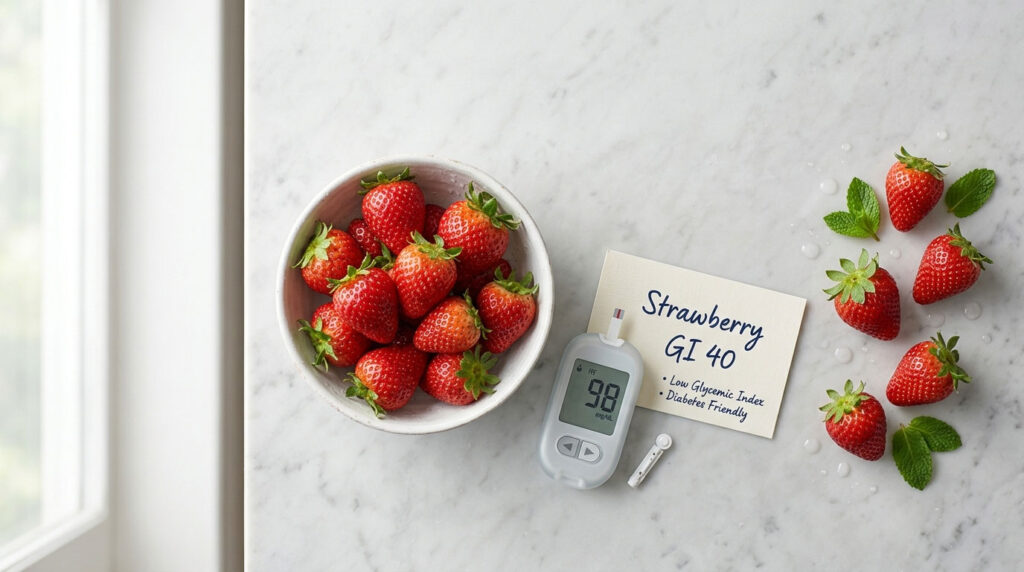
A single cup of fresh strawberries carries less sugar than one tablespoon of honey. Yet plenty of Americans with diabetes still treat the berry like a forbidden treat, shoving it aside next to the cake and the soda.
Table of Contents
That instinct is understandable, and it’s also mostly wrong. In late 2025, researchers at the Oklahoma Medical Research Foundation and the University of Nevada, Las Vegas reported that every one of 25 prediabetic adults had lower blood sugar after twelve weeks of daily strawberries, with many sliding back into the normal range.
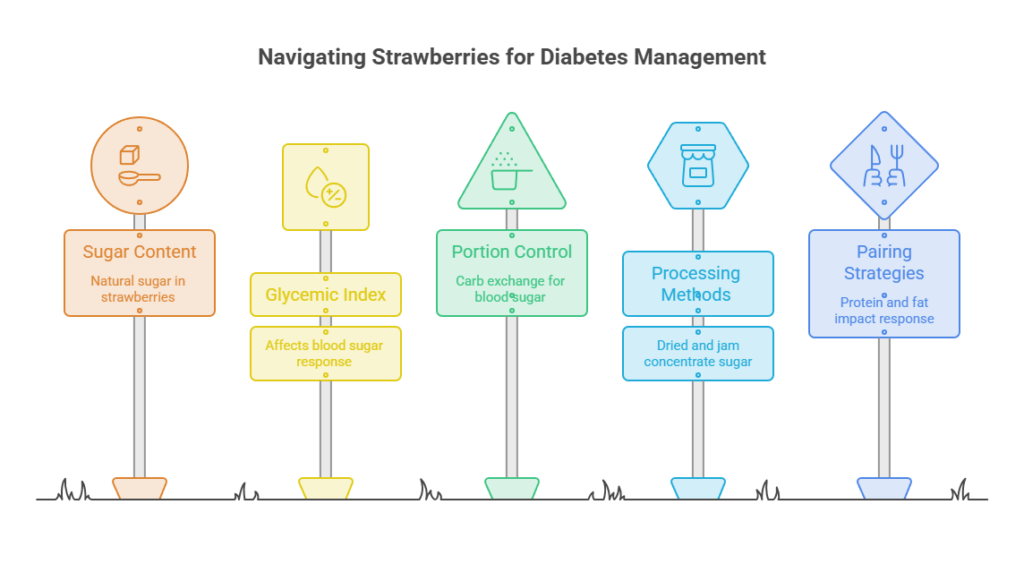
So the real question was never whether strawberries belong in a diabetes-friendly diet. It’s how to eat them in a way that works for your numbers. This guide breaks down the sugar, the glycemic index, the portion math, and the smartest ways to put strawberries on your plate, all in plain English.
Quick Answer: Yes, strawberries are good for most people with diabetes. They have a low glycemic index near 40, only about 7 grams of natural sugar per cup, and 3 grams of fiber that slows how fast that sugar reaches your bloodstream. Stick to a 3/4 to 1 cup serving (roughly 15 grams of carb), pick fresh or plain frozen over dried or jam, and pair them with protein or healthy fat for the steadiest response.
At a Glance
- Glycemic index of strawberries is about 40, which counts as low (under 55).
- One cup holds roughly 7 grams of natural sugar and 3 grams of fiber.
- A 3/4 to 1 cup serving equals about one 15 gram carb fruit exchange.
- Fresh and plain frozen win; dried strawberries and jam concentrate the sugar.
- Recent US trials link daily strawberries to better blood sugar in prediabetes.
- Pairing berries with protein or fat blunts the post-meal rise.
Strawberries and Diabetes, the Short Answer
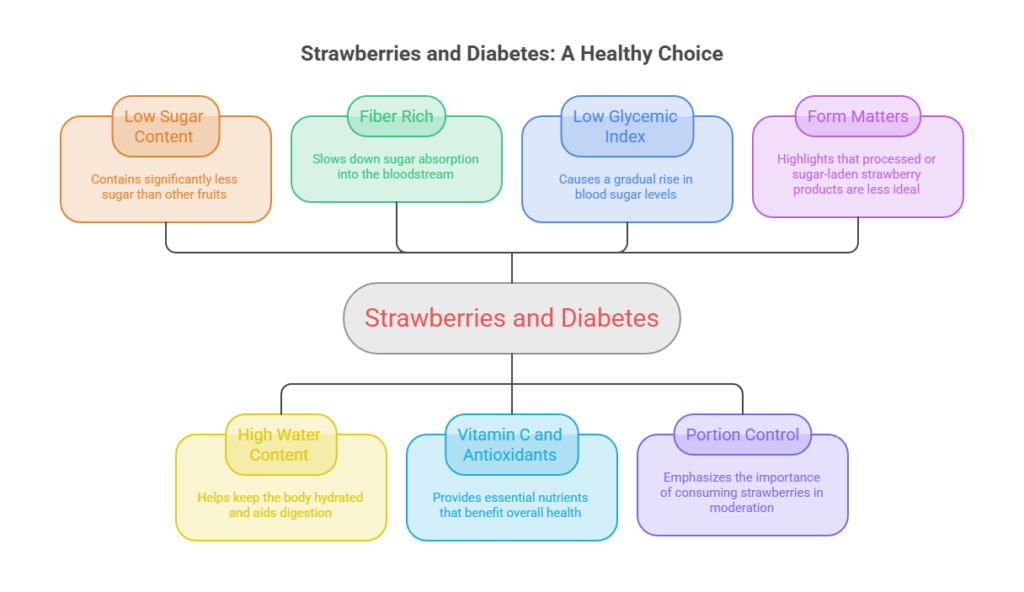
Strawberries are one of the friendliest fruits you can choose when you’re watching your blood sugar. They’re low in sugar, high in water, and loaded with fiber and vitamin C, a combination that keeps their effect on glucose gentle.
The American Diabetes Association puts berries near the top of its recommended fruit list, and most diabetes dietitians agree. Whole fruit, eaten in sensible portions, is part of a healthy diabetes diet, not something to fear.
Our medical reviewers note that the worry usually comes from lumping all sugar together. The sugar in a strawberry behaves nothing like the sugar in a cola, because it shows up wrapped in fiber, water, and plant compounds that slow digestion.
Why strawberries get a green light
Three things make strawberries a smart pick. First, they’re genuinely low in sugar, with about 7 grams per cup, far below grapes, mango, or even a banana. Second, that low glycemic index means a slow, modest rise instead of a sharp spike.
Third, the fiber does real work. Harvard Health explains that fruit sugars come packaged with fiber and water, which slows their flow into the blood and produces a gradual rise and fall rather than a jolt.
There’s a bonus, too. Strawberries are rich in vitamin C and antioxidants, nutrients that matter more for people with diabetes, who face higher rates of heart disease and inflammation. So the berry isn’t just safe, it’s actively useful.
The one caveat: portion and form
Here’s where people slip up. Strawberries are safe, but a giant bowl drowning in sugar, or a stack of strawberry pancakes with syrup, is a different food entirely. Portion and form decide whether the berry helps or hurts.
Patients who book A1C tests through HealthCareOnTime often ask whether they can eat strawberries freely. The honest answer is close to yes for fresh berries, as long as you keep servings reasonable and skip the added sugar.
The Numbers: Sugar, Carbs, and Glycemic Index
Numbers settle the argument faster than reassurance does. Once you see what a cup of strawberries actually contains, the fear tends to fade quickly.
How much sugar is really in strawberries
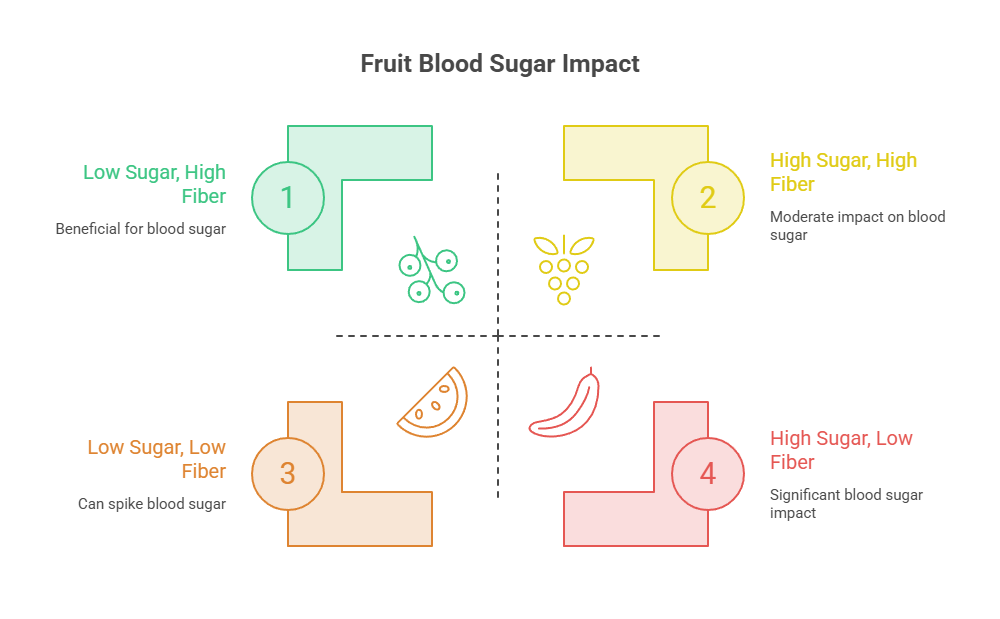
According to Mayo Clinic Health System, one cup of strawberries has only about 45 calories, 3 grams of fiber, and just 7 grams of natural sugar, while delivering more vitamin C than an orange.
Put that 7 grams in context. A single tablespoon of honey carries about 17 grams of sugar, and a 12 ounce cola holds roughly 39 grams. A whole cup of strawberries doesn’t come close to either.
Strawberries are also about 91 percent water, which is part of why they fill you up without loading you with carbs. That high water content is a quiet advantage for both blood sugar and weight, since you eat real volume for very few carbohydrates.
Glycemic index vs. glycemic load (why GL matters more)
The glycemic index ranks how fast a food raises blood sugar on a scale to 100. Low is 55 or under, medium is 56 to 69, and high is 70 and above. Cleveland Clinic lists strawberries among the low-GI fruits that won’t cause major swings.
Strawberries score around 40, comfortably in the low range. But glycemic index has a blind spot, since it doesn’t account for how many carbs you actually eat in a normal serving.
That’s where glycemic load comes in, and it’s the better number to watch. Glycemic load combines the GI with the real carb amount in a portion. A cup of strawberries has a glycemic load of roughly 1 to 3, which is about as low as fruit gets.
In plain terms, a normal serving barely moves your blood sugar. Our nutrition team often reminds patients that a low GI plus a low glycemic load is the one-two punch that separates a true blood-sugar-friendly fruit from a merely natural one.
Net carbs and fiber math
Total carbs in strawberries run about 7.7 grams per 100 grams, or close to 11 to 12 grams per cup of whole berries. Subtract the fiber and the net carbs drop under 6 grams per 100 grams.
Fiber is the hero here. Roughly a quarter of the carbohydrate in strawberries is fiber, the kind that feeds healthy gut bacteria and slows sugar absorption. That’s why the same gram of sugar lands softer from a berry than from candy.
The table below shows how strawberries stack up against four other popular fruits. The pattern is hard to miss once you line them up side by side.
| Fruit (about 1 cup) | Glycemic Index (approx.) | Sugar (g) | Net Carbs (g) | Fiber (g) |
| Strawberries | 40 (low) | 7 | 9 | 3 |
| Blueberries | 53 (low) | 15 | 18 | 3.6 |
| Grapes | 53 (low-med) | 23 | 26 | 1.4 |
| Banana (1 medium) | 51 (low-med) | 14 | 24 | 3 |
| Watermelon | 72 (high) | 10 | 11 | 0.6 |
Strawberries deliver the least sugar and the lowest glycemic index of the group, with a fiber count that beats grapes and watermelon outright. Our nutrition team flags this as the single clearest reason berries outrank sweeter fruits for blood sugar control.
What Recent US Research Actually Shows
Reassurance is one thing, evidence is another. The good news is that the science on strawberries and blood sugar has grown stronger and more specific over the last few years, much of it run in American clinics.
The prediabetes strawberry trials
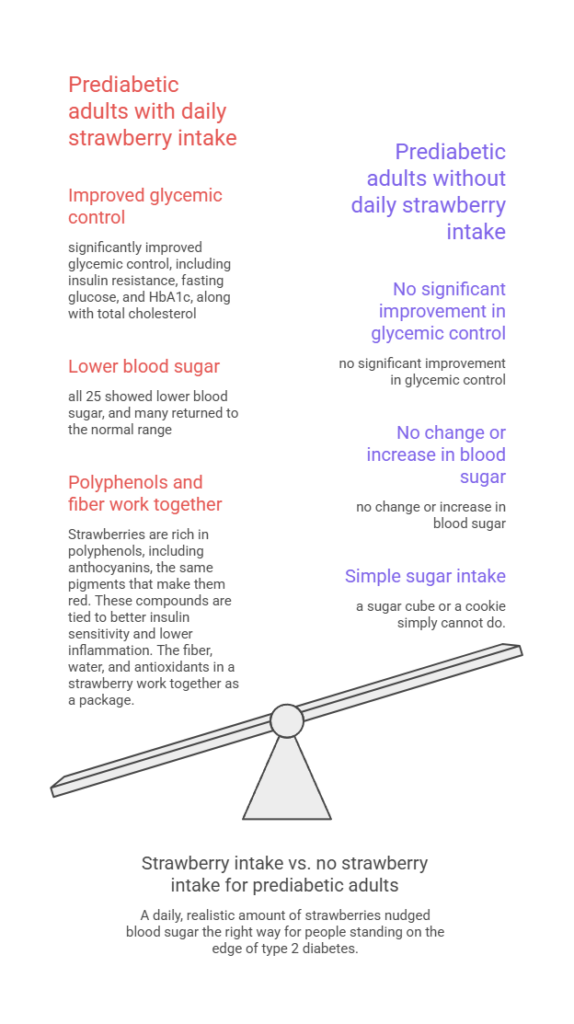
The most talked-about work comes from nutrition professor Arpita Basu and colleagues. In a randomized controlled crossover trial, a strawberry phase significantly improved glycemic control, including insulin resistance, fasting glucose, and HbA1c, along with total cholesterol, compared with the control phase in adults with prediabetes.
A separate study covered by the Oklahoma Medical Research Foundation followed 25 prediabetic patients from a UNLV clinic. After twelve weeks of daily strawberry intake, all 25 showed lower blood sugar, and many returned to the normal range.
These were small studies, and the researchers are upfront that larger, longer trials are still needed. Even so, the direction is consistent. A daily, realistic amount of strawberries nudged blood sugar the right way for people standing on the edge of type 2 diabetes.
It helps to understand what realistic meant in these trials. The doses studied translated to roughly one to two and a half servings of strawberries a day, the kind of amount any American could fit into breakfast and a snack. This wasn’t a megadose or a supplement nobody could replicate at home.
Why berries behave differently than candy
The why matters, because it tells you the effect is real rather than a fluke. Strawberries are rich in polyphenols, including anthocyanins, the same pigments that make them red. These compounds are tied to better insulin sensitivity and lower inflammation.
A broad look backs this up. A meta-analysis of nineteen randomized controlled trials in Frontiers in Endocrinology, cited by Harvard Health, found that eating whole fresh and dried fruit in moderation significantly lowered fasting blood glucose in people with diabetes.
In questions sent to our diabetes educators, the surprise is usually that fruit can help at all. The fiber, water, and antioxidants in a strawberry work together as a package, which is something a sugar cube or a cookie simply cannot do.
The statistics below put the stakes in a US context. Diabetes and prediabetes now touch a staggering share of the country, which is exactly why low-impact foods like strawberries matter so much.
| US Diabetes Statistic | Figure | Source |
| Americans with diabetes (2023) | 40.1 million (about 1 in 8) | CDC |
| US adults with prediabetes | 115.2 million (more than 2 in 5) | CDC |
| Adults with prediabetes who don’t know it | 8 in 10 | CDC |
| Type 2 share of diagnosed cases | 90 to 95% | CDC |
| Total cost of diagnosed diabetes (2022) | $412.9 billion | ADA / NIDDK |
| Prediabetic adults with lower blood sugar after 12 weeks of daily strawberries | 25 of 25 | OMRF / UNLV |
With more than 115 million American adults in the prediabetes zone, a simple, affordable food that nudges glucose down is no small thing. That’s the practical promise behind the strawberry research.
How Many Strawberries Can a Diabetic Eat?
Most people with diabetes can safely eat about 3/4 to 1 cup of fresh strawberries per serving, which equals roughly 15 grams of carbohydrate, and one to two servings spread across the day. That single sentence answers the question almost no competing article states this plainly.
The ADA serving rule in plain English
The American Diabetes Association builds fruit portions around 15 grams of carbohydrate, which it calls one serving. For most fresh berries and melons, that serving lands at about 3/4 to 1 cup.
Because strawberries are so low in carbs, a full cup of whole berries actually comes in around 11 to 12 grams of carb, often a touch under that 15 gram mark. In practice, you can enjoy a generous cup and still stay inside one fruit serving.
Dietitians quoted by TODAY stress that portion size usually matters more than the glycemic load itself. Keeping to one serving at a time is the simplest rule there is.
A simple daily and weekly framework
A practical target for many people with diabetes is one to two fruit servings a day, spread out rather than eaten all at once. A cup of strawberries at breakfast and another in the afternoon works well for most.
Spacing them out keeps each blood sugar rise small. Two servings in one sitting stack the carbs and can push glucose higher than the same fruit eaten hours apart.
Across the patients our diagnostic network serves, the people who do best with fruit treat it like any other carb. It gets counted, portioned, and paired, not banned and not eaten without limit.
What too many looks like
Strawberries are forgiving, but they’re not free calories without end. Eating an entire two-pound clamshell in one go would deliver 40 grams of carb or more, enough to matter for blood sugar.
The trouble usually isn’t the berry itself. It’s what gets added on top: sugar, whipped cream, chocolate dip, shortcake, or sweetened yogurt. Those extras can turn a smart snack into a glucose spike in a hurry.
If you use a continuous glucose monitor or test at home, a quick reading before and two hours after eating tells you exactly how your body handles a given portion. That personal data beats any general rule, because two people can respond to the same cup of berries differently.
Fresh vs. Frozen vs. Dried vs. Jam
Not all strawberries are equal once they leave the field. The form you choose can change the carb count dramatically, and this is where many well-meaning eaters get tripped up.
Fresh and plain frozen (the winners)
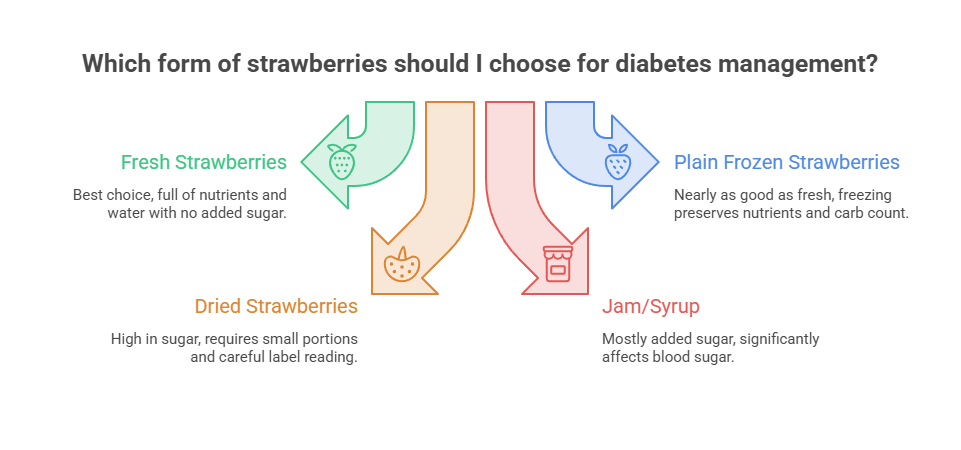
Fresh strawberries are the gold standard, full of water, fiber, and nutrients with nothing added. Plain frozen strawberries are nearly as good, since freezing locks in most of the vitamins and the carb count stays identical.
The catch with frozen is the label. Plain, unsweetened frozen berries are great, but frozen strawberries in syrup or sweetened sliced strawberries can carry two to three times the sugar of the fresh fruit.
Here’s a small but useful detail. Frozen berries are often picked and frozen at peak ripeness, so their nutrient content can rival or beat out-of-season fresh berries that traveled a long way. Our nutrition team’s only rule is to buy frozen bags with a single ingredient: strawberries.
Dried strawberries and the sugar trap
Dried fruit is where things get sneaky. Drying removes the water, which shrinks the volume and concentrates the sugar into a small, easy-to-overeat package.
The ADA notes that just 2 tablespoons of dried fruit can hold about 15 grams of carbohydrate, the same as a full cup of fresh berries. Many commercial dried strawberries also have added sugar layered on top of that.
So dried strawberries aren’t off-limits, but the portion has to shrink. Two level tablespoons is one serving, not the handful most people pour straight from the bag. Freeze-dried strawberries with no added sugar are a slightly better pick, since they skip the syrup, but the portion rule still holds.
Jam, syrup, and strawberry-flavored products
Strawberry jam, preserves, syrups, and strawberry cereals or pastries are mostly added sugar with a little fruit for flavor. A single tablespoon of regular jam can carry 12 grams of sugar or more.
These products affect blood sugar far more than the whole fruit ever would. If you love jam, sugar-free or no-added-sugar versions are a smarter swap, and even then a measured amount should be counted toward your carbs.
Reading the label like a pro
Scan the ingredient list and the added sugars line on the Nutrition Facts panel. If sugar, corn syrup, or cane juice sits near the top, you’re buying candy with a strawberry on the label.
Compare the total carbohydrate per serving against a cup of fresh berries, which sits around 11 to 12 grams. Anything dramatically higher is a clear signal the product has been sweetened or concentrated.
Smart Ways to Eat Strawberries with Diabetes
Eating strawberries well is less about restriction and more about pairing and timing. A few simple moves keep the blood sugar response flat and the snack genuinely satisfying.
Pair with protein or healthy fat
This is the most useful trick in the whole guide. Combining strawberries with protein or healthy fat slows digestion and softens the post-meal glucose rise.
The NIH and ADA both point out that pairing carbs with protein or fat is a proven way to reduce blood sugar spikes. A handful of nuts, a slice of cheese, plain Greek yogurt, or a spoon of nut butter all do the job.
So instead of berries alone on an empty stomach, build a small combo. Strawberries plus plain Greek yogurt is close to a perfect diabetes snack, since the protein and fat blunt the rise while the fiber keeps you full.
Timing: with meals vs. as a snack
When you eat fruit can matter as much as how much. Eating strawberries as part of a meal, rather than solo, tends to flatten the glucose curve because the other foods slow everything down.
If you snack on them between meals, the protein-or-fat pairing becomes even more important. A berry-only snack on an empty stomach can rise faster than the same berries eaten alongside lunch.
Some people also find that fruit sits better earlier in the day, when the body tends to handle carbs more efficiently. If you notice your evening readings climb, shifting berries to breakfast or lunch is an easy experiment.
5 diabetes-friendly serving ideas
Here are five easy, blood-sugar-smart ways to enjoy strawberries:
- Sliced over plain Greek yogurt with a sprinkle of chia seeds.
- Tossed into a spinach salad with walnuts and a light vinaigrette.
- Blended into a smoothie with unsweetened protein powder and ice.
- Paired with a small handful of almonds as an afternoon snack.
- Folded into plain oatmeal in place of brown sugar or syrup.
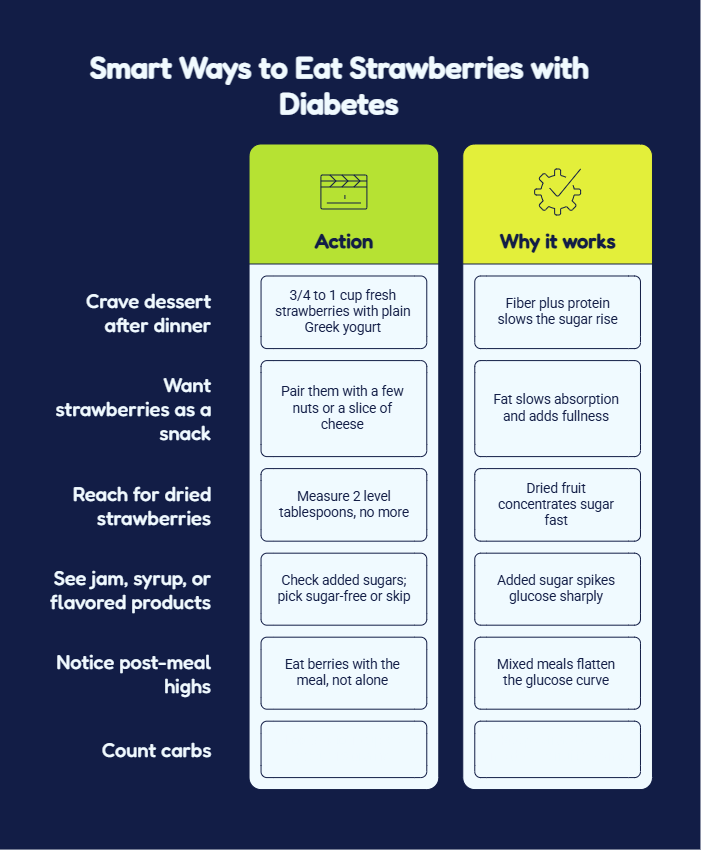
The table below turns common situations into quick decisions. Patients commonly ask us what to do in the moment, and this is the cheat sheet our educators hand out.
| If you… | Then… | Why it works |
| Crave dessert after dinner | Have 3/4 to 1 cup fresh strawberries with plain Greek yogurt | Fiber plus protein slows the sugar rise |
| Want strawberries as a snack | Pair them with a few nuts or a slice of cheese | Fat slows absorption and adds fullness |
| Reach for dried strawberries | Measure 2 level tablespoons, no more | Dried fruit concentrates sugar fast |
| See jam, syrup, or flavored products | Check added sugars; pick sugar-free or skip | Added sugar spikes glucose sharply |
| Notice post-meal highs | Eat berries with the meal, not alone | Mixed meals flatten the glucose curve |
| Count carbs | Log 3/4 to 1 cup as about 15 grams | Keeps strawberries inside one fruit serving |
Strawberries vs. Other Fruits for Blood Sugar
Strawberries don’t have to compete alone. They sit in a small club of fruits that are especially kind to blood sugar, which makes building variety into your week easy.
Where strawberries rank among low-GI fruits
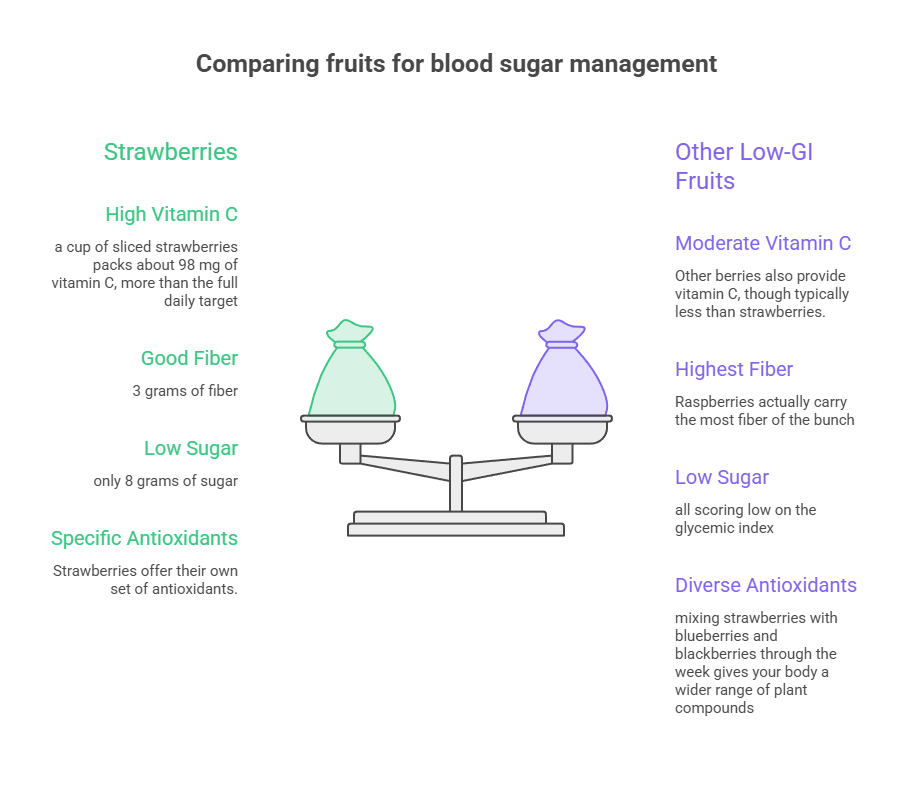
Among the best low-GI options, strawberries are near the front of the pack alongside the other berries. GoodRx notes that a cup of sliced strawberries packs about 98 mg of vitamin C, more than the full daily target, with only 8 grams of sugar and 3 grams of fiber.
Blueberries, raspberries, and blackberries round out the berry group, all scoring low on the glycemic index. Raspberries actually carry the most fiber of the bunch, which is why dietitians reach for them so often.
A smart move is to rotate. Different colored berries bring different antioxidants, so mixing strawberries with blueberries and blackberries through the week gives your body a wider range of plant compounds without raising the sugar load.
Fruits to enjoy freely vs. portion carefully
Lower-sugar fruits like berries, cherries, apples, and citrus can be enjoyed more liberally within sensible servings. Higher-sugar or higher-GI fruits like watermelon, pineapple, mango, and grapes call for tighter portions.
None of these fruits is truly bad, and cutting fruit out entirely is the wrong move. The goal is matching portion size to the fruit’s sugar and glycemic load, which berries make about as simple as it gets.
Building Strawberries Into a Diabetes-Friendly Routine
A single smart snack is good, but a repeatable habit is what actually moves your numbers over time. The trials that showed benefit all relied on daily, consistent intake, not the occasional bowl.
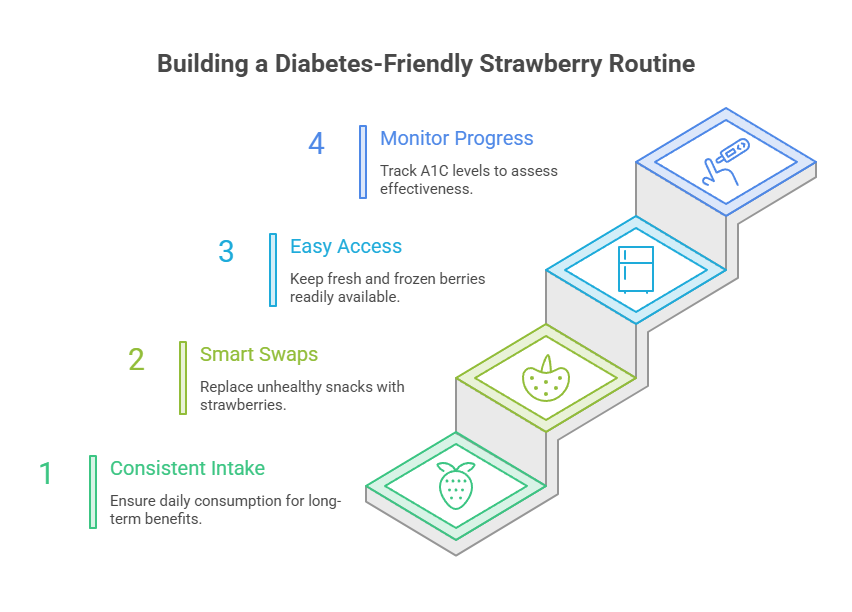
Think in terms of swaps rather than additions. Strawberries shine when they replace something worse, like a cookie after dinner, the brown sugar on your oatmeal, or the sweetened granola in your yogurt.
Keep a bag of plain frozen berries in the freezer and a clamshell of fresh ones washed and ready in the fridge. The easier the healthy choice is to grab, the more often it wins over the processed snack in the pantry.
For anyone tracking progress through regular A1C testing, building in a daily serving of berries is a low-risk, low-cost habit to test. Pair it with the rest of your plan and watch your own readings tell the story.
Risks, Limits, and Who Should Be Cautious
Strawberries are safe for the vast majority of people with diabetes, but a few situations call for extra care. Being honest about the limits is part of using any food well.
When to talk to your care team
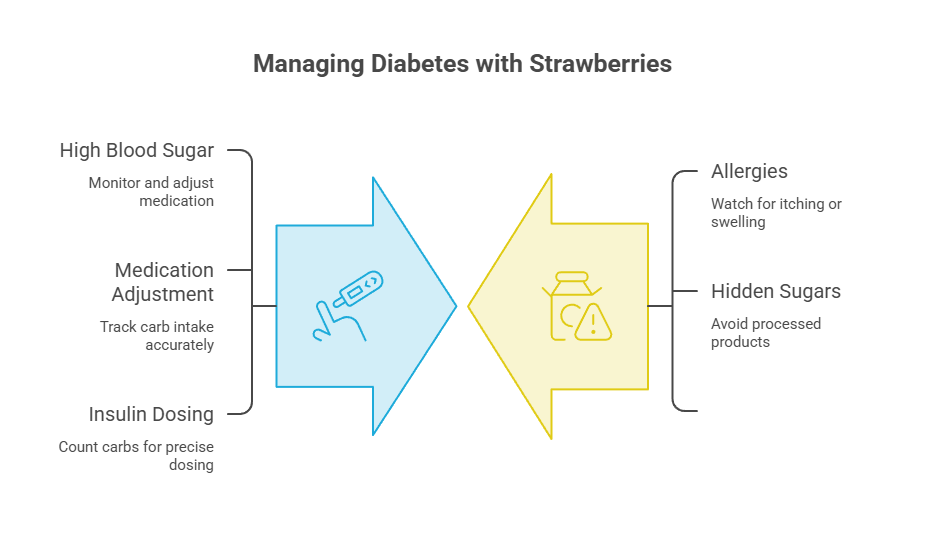
If your blood sugar runs high and hard to control, or you’re adjusting medications, check with your doctor or a registered dietitian before making big diet changes. Individual responses to carbs vary, and your plan should be built around your own numbers.
People on insulin or certain glucose-lowering drugs need to count strawberry carbs into their dosing, just like any other carbohydrate. The fruit is friendly, but it isn’t carb-free.
Carb counting and medication timing
For anyone matching insulin to carbs, a cup of strawberries counts as roughly 11 to 15 grams. Logging it accurately keeps your dosing on target and helps prevent both highs and lows.
If you’ve recently changed medication, watch how strawberries affect your readings for a few days. What worked at one dose may shift at another, so a short check-in with your numbers pays off.
Allergies and additives
Strawberry allergies are uncommon but real, and they have nothing to do with blood sugar. If you notice itching, swelling, or hives after eating them, stop and talk to a provider.
The bigger everyday risk is hidden sugar in processed strawberry products. The whole fruit is the safe bet; the syrups, jams, and candies are where the trouble usually hides.
Frequently Asked Questions
Are strawberries high in sugar?
No. Strawberries are among the lowest-sugar fruits, with only about 7 grams of natural sugar per cup. That’s far less than grapes, mango, or a banana. The sugar also arrives paired with fiber and water, which slows how quickly it reaches your bloodstream.
Do strawberries raise blood sugar?
Strawberries cause only a small, slow rise in blood sugar thanks to their low glycemic index near 40 and their fiber content. A normal 3/4 to 1 cup serving has a very low glycemic load, so it barely nudges glucose compared with sweets or juice.
How many strawberries can a diabetic eat per day?
Most people with diabetes can enjoy one to two servings daily, with a serving being about 3/4 to 1 cup of fresh berries (roughly 15 grams of carb). Spreading them across the day, instead of eating them all at once, keeps each blood sugar rise small.
Are frozen strawberries good for diabetics?
Plain, unsweetened frozen strawberries are nearly as good as fresh, since freezing preserves the fiber and nutrients without changing the carbs. Just avoid frozen berries packed in syrup or labeled sweetened, which can carry two to three times the sugar of plain fruit.
Can type 2 diabetics eat strawberries every day?
Yes. Daily strawberries fit well into a type 2 diabetes diet, and recent US trials even linked everyday strawberry intake to improved blood sugar in prediabetic adults. Keep portions to about a cup, choose fresh or plain frozen, and pair with protein or fat.
Are dried strawberries bad for diabetes?
Dried strawberries aren’t off-limits, but they concentrate sugar into a small volume. Just 2 tablespoons can equal 15 grams of carb, the same as a full cup of fresh berries, and many brands add sugar. If you eat them, measure a small portion carefully.
Can I eat strawberries at night with diabetes?
A small serving of strawberries can work as an evening snack, especially paired with protein or fat like Greek yogurt or a few nuts. The pairing slows the sugar rise overnight. If you notice morning highs, test to see how the timing affects your numbers.
Are strawberries better than blueberries for diabetes?
Both are excellent low-GI choices, but strawberries are slightly lower in sugar and carbs per cup, while blueberries pack more anthocyanins. Either fits a diabetes diet beautifully. Rotating between berries gives you variety and a broader range of antioxidants and nutrients.
Can a diabetic eat a whole box of strawberries?
A full two-pound clamshell can hold 40 grams of carb or more, enough to push blood sugar higher than a single serving. It’s better to portion strawberries into 3/4 to 1 cup servings spread through the day than to eat the entire container at once.
Do strawberries lower blood sugar?
Whole strawberries won’t drop blood sugar on the spot, but research suggests regular intake may improve glucose control over time. A meta-analysis of nineteen trials found whole fruit in moderation lowered fasting blood glucose, and strawberry trials in prediabetes showed similar benefits.
Are strawberries safe during gestational diabetes?
Yes, strawberries are generally a good fruit choice during gestational diabetes because of their low sugar and glycemic load. Keep to measured servings, pair with protein, and follow the carb targets your provider or dietitian set, since gestational diabetes plans are highly individual.
Is strawberry jam OK for diabetics?
Regular strawberry jam is mostly added sugar and can spike blood sugar quickly, with about 12 grams of sugar per tablespoon. A no-added-sugar or sugar-free version is a better choice, and even then a measured amount should be counted toward your daily carbs.
Disclaimer: This article is for general information only and is not medical advice. Diabetes management is highly individual, and your response to any food can differ from the averages described here. Talk with your doctor, a registered dietitian, or your diabetes care team before making changes to your diet or medications.
References
- CDC, National Diabetes Statistics Report
- CDC, Diabetes Statistics, A U.S. Report Card
- American Diabetes Association, Best Fruit Choices for Diabetes
- American Diabetes Association, Should People With Diabetes Eat Fruit?
- NIDDK, Diabetes Statistics
- Mayo Clinic Health System, Strawberries, A Nutrient Powerhouse
- Harvard Health, Blood Sugar Friendly Fruits If You Have Diabetes
- Cleveland Clinic, Best Fruits for Diabetes
- Oklahoma Medical Research Foundation, Strawberries Likely Reduce Diabetes Risk
- ScienceDirect, Strawberries Improve Insulin Resistance in Adults With Prediabetes
- GoodRx, Low Glycemic Fruits for People With Diabetes
- TODAY, Fruits Best for Diabetics and Blood Sugar Control