
You toss a handful of grapes into your bag without a second thought. Quick snack, done. What you probably don’t realize is that this little fruit is one of the more closely studied players in heart and brain research.
Table of Contents
Grapes have been cultivated for thousands of years, and modern science keeps finding reasons they earn a daily spot on your plate. They are not a miracle food, and we will be honest about the limits, but the upside is real.
So here is the straight story on what eating grapes every day actually does for your body, how many you should aim for, and who needs to be a little careful.
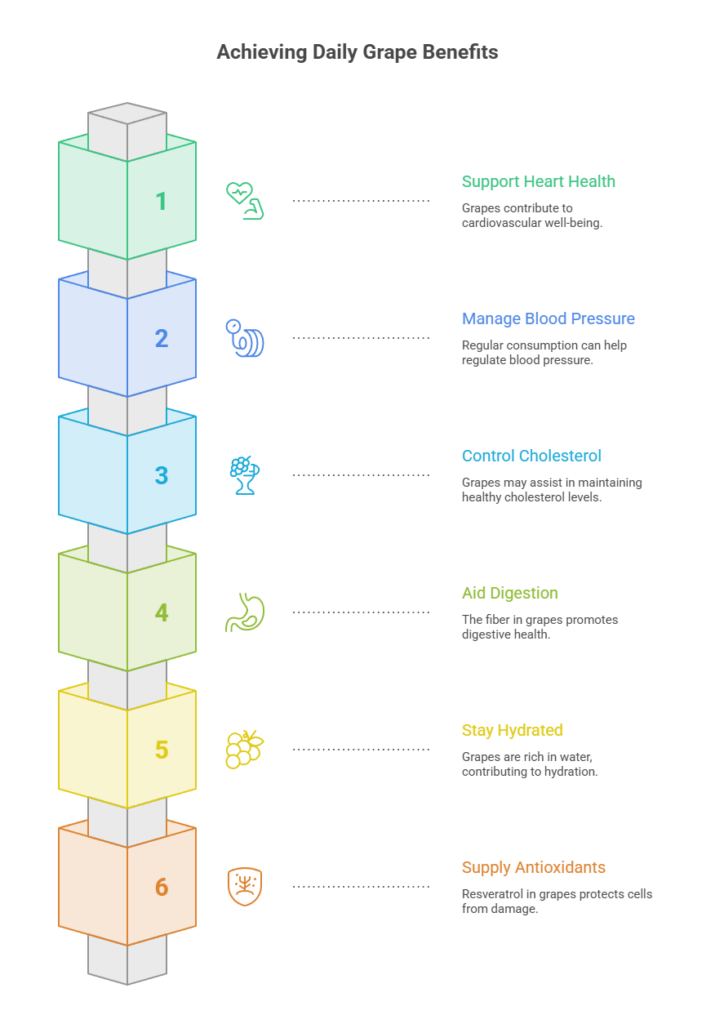
Quick Answer: Eating grapes every day may support heart health, help manage blood pressure and cholesterol, aid digestion, keep you hydrated, and supply antioxidants like resveratrol that protect your cells. A daily serving of about 1 to 1.5 cups fits most diets. Grapes are higher in natural sugar, so people with diabetes and those on blood thinners should portion carefully and check with their doctor.
At a Glance
- One cup of grapes has about 104 calories and roughly 28% of the daily value for vitamin K.
- Red and purple grapes carry resveratrol, an antioxidant linked to heart and brain benefits.
- Grapes are 80 to 89% water, which makes them a quietly hydrating snack.
- A sensible daily amount is about 1 to 1.5 cups, around 30 to 50 grapes.
- Grapes are high in vitamin K, so anyone on warfarin should keep intake steady and talk to a doctor.
- Whole grapes are a choking hazard for young children and should be cut lengthwise.
What’s Actually Inside a Grape
Before the benefits make sense, it helps to see what you are eating. Grapes are mostly water and carbohydrates, with a small but useful set of vitamins and minerals.
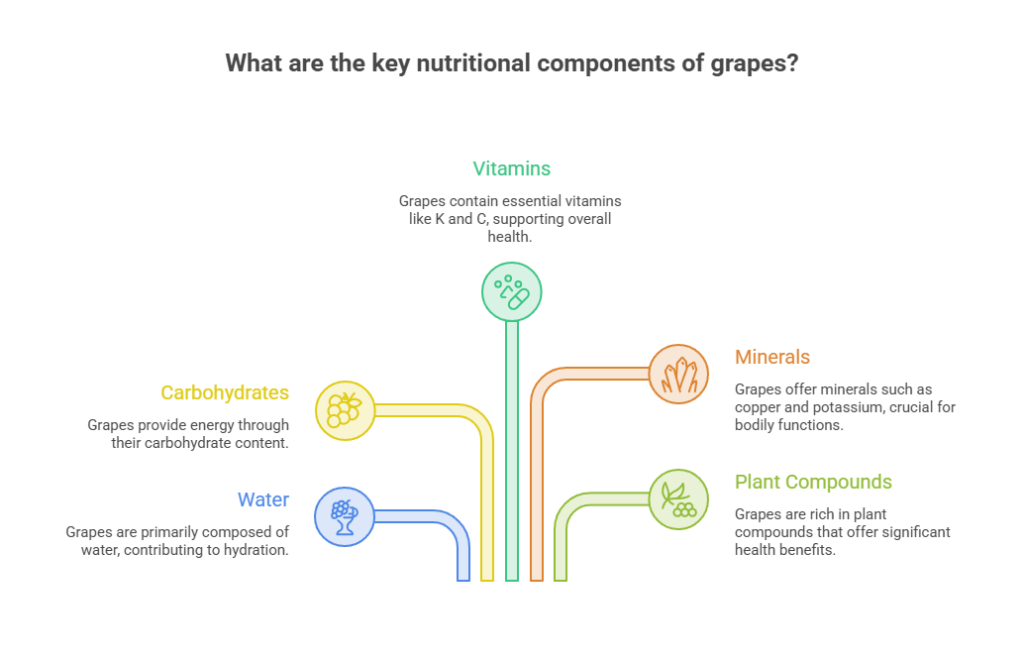
The headline nutrients are vitamin K and copper, plus a modest amount of potassium and vitamin C. Where grapes get genuinely interesting, though, is in their plant compounds rather than their vitamin content.
The Nutrition Snapshot (Per 1 Cup)
A 1 cup serving, about 151 grams of red or green seedless grapes, lands around 104 calories. That cup brings roughly 27 grams of carbohydrate, about 1.4 grams of fiber, and close to 23 grams of natural sugar.
It also delivers about 28% of the daily value for vitamin K and around 21% for copper, both of which support bone health, blood clotting, and energy production. Our medical reviewers note that this nutrient mix makes grapes a light, easy addition rather than a dense superfood.
The Plant Compounds That Do the Heavy Lifting
The real story is polyphenols, the antioxidants concentrated in grape skins. Red and purple grapes contain resveratrol and anthocyanins, while all grapes carry a mix of these protective compounds.
According to the Linus Pauling Institute at Oregon State University, a cup of red grapes contains roughly 0.24 to 1.25 milligrams of resveratrol. The amount varies by grape variety, growing conditions, and color, which is why darker grapes tend to pack more antioxidant punch.
Here is the nutrition and key research at a glance.
| Nutrient or Fact | Amount (per 1 cup, ~151 g) | Source |
| Calories | About 104 | Healthline / USDA |
| Carbohydrates | About 27 grams | USDA FoodData Central |
| Fiber | About 1.4 grams | USDA FoodData Central |
| Natural sugar | About 23 grams | USDA FoodData Central |
| Vitamin K | About 28% of the daily value | Healthline / USDA |
| Copper | About 21% of the daily value | Healthline / USDA |
| Water content | 80 to 89% | EatingWell |
| Resveratrol (red grapes) | 0.24 to 1.25 milligrams | Linus Pauling Institute |
9 Health Benefits of Eating Grapes Every Day
Most of the upside traces back to those polyphenols, fiber, water, and potassium working together. Across the readers we serve, grapes are popular precisely because the benefits stack up without much effort.
Here are the nine that hold up best in the research, with the honest caveats included.
1. Supports Heart Health
Grapes show up again and again in heart research. The American Heart Association points to components in grapes that contribute to a healthier heart and brain, partly through their antioxidant and anti-inflammatory effects.
Antioxidants help protect blood vessels from the damage that builds up over time. One body of research links regular grape intake to a lower risk of heart disease and high blood pressure.
This is why some experts now describe grapes as a “functional food,” meaning a food that may do real preventive work. Patients commonly ask us whether fruit can matter for heart health, and grapes are a good example of why it can.
May Lower Cholesterol
The cholesterol angle has some of the strongest evidence. In an 8-week study of 69 people with high cholesterol, eating 3 cups (about 500 grams) of red grapes per day helped lower total and LDL, the so-called bad cholesterol.
Interestingly, white grapes did not produce the same effect in that study, which points back to the antioxidants concentrated in darker skins. Compounds in grapes appear to reduce how much cholesterol your body absorbs.
2. Helps Manage Blood Pressure
Grapes provide potassium, the mineral that helps balance out sodium and relax blood vessel walls. That combination supports healthier blood pressure over time.
The AHA notes that half a cup of raisins, which are simply dried grapes, has more potassium than a medium banana. The US guideline for potassium sits around 4.7 grams a day, and whole fruits like grapes help you get there.
3. Delivers Antioxidants That Fight Cell Damage
Every cup of grapes is a dose of antioxidants. These compounds neutralize free radicals, the unstable molecules that cause oxidative stress and contribute to aging and disease.
Darker grapes, with their higher anthocyanin content, carry more antioxidant power than pale green ones. The dietitians we work with often suggest reaching for red, purple, or black grapes when antioxidants are the goal.
4. Aids Digestion and Gut Health
Grapes contain both soluble and insoluble fiber. Soluble fiber forms a gel that slows digestion and feeds beneficial gut bacteria, while insoluble fiber adds bulk that keeps things moving.
The water content helps too, since hydration is part of healthy digestion. People who add grapes to their day often notice more regular, comfortable bathroom habits within a week or so.
5. Keeps You Hydrated
Because grapes are 80 to 89% water, they double as a hydration helper. That matters more than people think, especially for anyone who struggles to drink enough plain water.
Eating water-rich foods is a simple way to top off your fluids. A cold bunch of grapes on a hot afternoon does more for hydration than it gets credit for.
6. May Support Brain Health and Memory
The same antioxidants that protect your heart may benefit your brain. Resveratrol in particular has drawn research attention for its potential role in protecting brain cells and supporting memory.
The evidence here is still developing, so grapes are not a substitute for sleep, exercise, or medical care. Still, the brain-protective signal is one reason grapes keep landing on “good for you” lists.
7. May Improve Sleep
Grapes naturally contain a small amount of melatonin, the hormone that helps regulate your sleep cycle. A modest evening serving may gently support better rest for some people.
This is a milder benefit, not a sleep aid, and individual results vary. Our medical reviewers would still rather see someone reach for grapes than a sugary dessert before bed.
8. Supports Eye Health
Grapes contain antioxidants, including lutein and zeaxanthin, that are linked to eye health. These compounds help protect the retina from damaging light and oxidative stress.
Some research suggests grapes may help guard against age-related eye decline. As with the brain benefits, this is promising rather than proven, so think of it as a bonus.
9. Friendly to Blood Sugar in Moderation
Despite their sweetness, grapes have a relatively moderate glycemic index, and their fiber and water blunt the sugar hit somewhat. For most people, a normal serving will not spike blood sugar dramatically.
That said, grapes are easy to overeat by the handful, which adds up fast. Portion awareness is the key, a point we return to in the risks section below.
How Many Grapes Should You Eat a Day?
This is the question the top search results almost never answer directly. So here is a clear number.
For most healthy adults, about 1 to 1.5 cups of grapes a day is a sensible serving. That works out to roughly 30 to 50 grapes, depending on size.
A Sensible Daily Serving
One cup counts as a single fruit serving under US dietary guidance, and it fits easily into the recommended 1.5 to 2 cups of fruit per day. Pairing grapes with a protein or fat, like cheese or nuts, slows sugar absorption further.
In tests booked through HealthCareOnTime, patients often find that a measured cup feels more satisfying than mindlessly grazing from a giant bunch. Portioning into a small bowl helps.
When More Is Fine (and When It Isn’t)
Active people, kids over choking age, and anyone without blood sugar concerns can comfortably enjoy a bit more. The cholesterol study used 3 cups a day, so larger amounts are not inherently harmful for healthy adults.
The exceptions are people managing diabetes, weight, or certain medications. For them, sticking closer to a single cup, and counting it as part of total daily carbs, is the safer move.
How Grapes Compare to Other Popular Fruits
Grapes are easy to grab, but it helps to know where they sit among other fruits. They are not the lowest in sugar, and they are not the highest in fiber, which shapes how you use them.
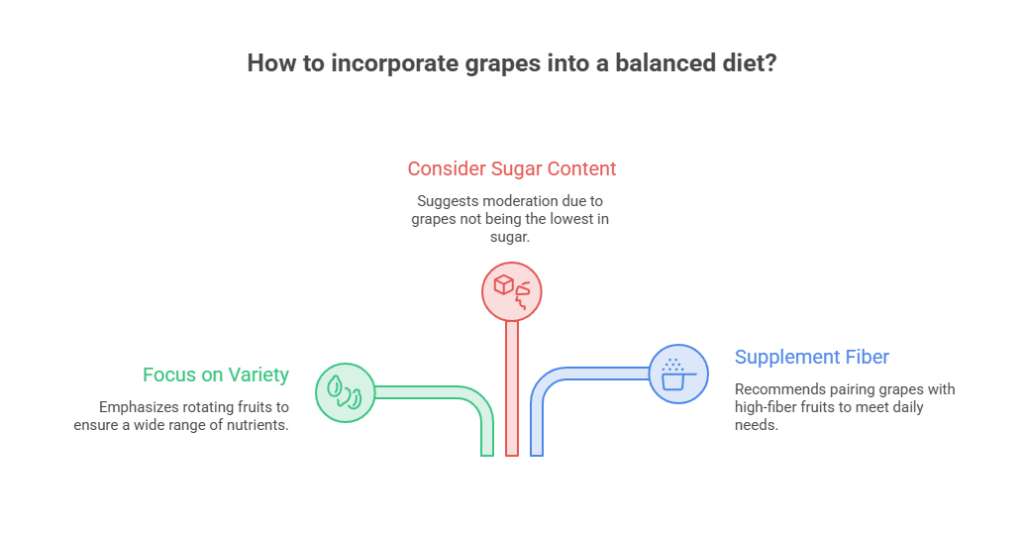
Knowing the trade-offs lets you build a smarter fruit rotation rather than leaning on one option. The dietitians we work with stress variety over chasing a single “best” fruit.
Sugar and Fiber Trade-Offs
Per cup, grapes carry more sugar relative to their fiber than berries do. Strawberries and blueberries deliver more fiber and antioxidants for fewer grams of sugar, which makes them strong choices for anyone watching blood sugar.
Bananas bring more potassium and fiber but more calories. Grapes win on convenience and hydration, so the practical move is to mix grapes with higher-fiber fruits across the week rather than relying on grapes alone.
Where Grapes Genuinely Shine
Grapes have a clear edge in two areas: hydration and resveratrol. Few common fruits combine such high water content with that particular antioxidant profile.
They are also one of the easiest fruits to portion and carry, with no peeling or cutting for adults. For a grab-and-go snack that still brings real plant compounds, grapes are hard to beat.
Red vs Green vs Black, and Other Grape Forms
Shoppers often wonder whether grape color or form changes the health math. The short answer is that all grapes are good, but the details matter.
The dietitians we work with say the nutritional differences between colors are small, with one meaningful exception around antioxidants.
Does Grape Color Matter?
Red, green, and black grapes have nearly identical calories, fiber, and core nutrients. The difference is antioxidant content, which tracks with skin color.
Darker grapes contain more anthocyanins and resveratrol, the compounds tied to heart and brain benefits. Green grapes still offer plenty of polyphenols, just at lower concentrations, so the “best” grape is mostly the one you will actually eat.
Fresh Grapes vs Raisins, Juice, and Wine
Form changes the picture more than color does. Whole grapes keep their fiber and water, which is why they are the gold standard.
Raisins concentrate the sugar and calories into a smaller package, so portions shrink. Grape juice loses the fiber and is easy to overdrink, and wine adds alcohol, which carries its own risks. Here is how they compare.
| Form and Serving | Calories | Fiber | Standout Compound | Best Use or Caution |
| Fresh grapes (1 cup) | About 104 | About 1.4 g | Resveratrol, anthocyanins | Everyday snack; keeps fiber and water |
| Raisins (1/4 cup) | About 120 | About 1.5 g | Potassium, iron | Great for potassium; watch portion size |
| 100% grape juice (1/2 cup) | About 75 | 0 g | Polyphenols | No fiber; easy to overdrink |
| Red wine (5 oz) | About 125 | 0 g | Resveratrol | Limit per guidelines; not for everyone |
| Frozen grapes (1 cup) | About 104 | About 1.4 g | Same as fresh | Refreshing dessert swap; same nutrition |
For alcohol, the Dietary Guidelines for Americans advise limiting intake to 1 drink a day for women and 2 for men, and note that less is better. Whole grapes give you the antioxidants without that trade-off, which is why our team points there first.
Common Myths About Grapes
Grapes attract a fair amount of misinformation, much of it from social media. Sorting fact from fear helps you enjoy them without second-guessing every handful.
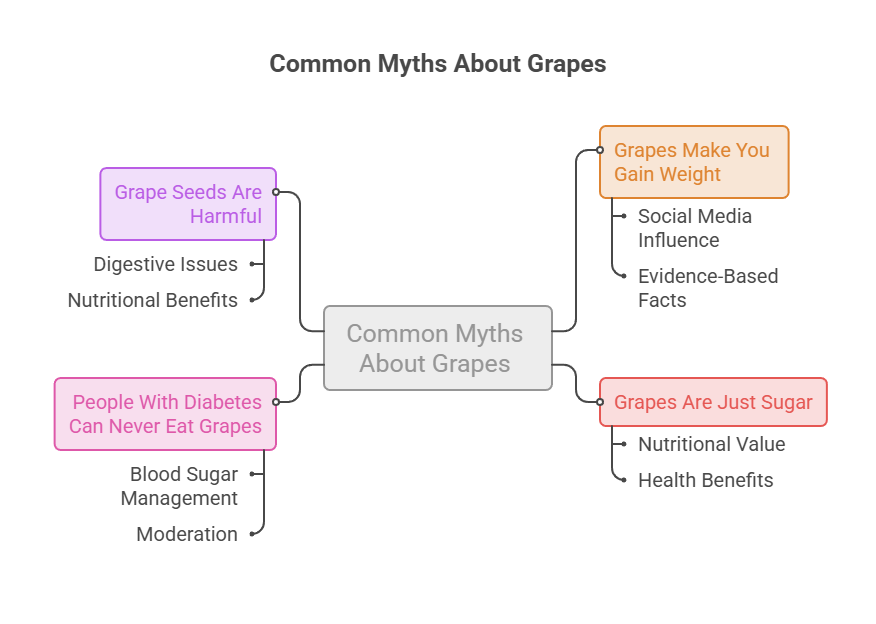
These are the four claims our team hears most, along with what the evidence actually says.
Myth: Grapes Make You Gain Weight
Grapes are low in calories, with about 104 in a full cup, and the water and fiber help you feel satisfied. They do not cause weight gain on their own.
The real issue is portion size, since a giant bunch is easy to finish without noticing. Stick to a measured serving and grapes fit a weight-management plan comfortably.
Myth: Grapes Are Just Sugar With No Benefits
Yes, grapes contain natural sugar, but writing them off as empty calories misses the point. They deliver vitamin K, copper, potassium, and the polyphenols tied to heart and brain health.
That sugar also arrives packaged with water and fiber, which is very different from the added sugar in candy or soda. The full nutrient profile is what matters.
Myth: People With Diabetes Can Never Eat Grapes
This one causes needless worry. Grapes have a moderate glycemic index, and a controlled portion paired with protein or fat fits most diabetes-friendly eating plans.
The American Diabetes Association includes whole fruit as part of a balanced diet. The key is portion size and counting the carbs, not banning grapes outright.
Myth: Grape Seeds Are Harmful
Grape seeds are not dangerous to eat. They are actually a source of antioxidants, which is why grape seed extract is sold as a supplement.
The only real downside is a bitter taste, which is why many people prefer seedless varieties. Swallowing a few seeds from regular grapes is perfectly safe.
Risks and Who Should Be Careful
Grapes are safe and healthy for most people, but a balanced view means naming the exceptions. A few groups should pay closer attention.
This is exactly the kind of honest detail the shorter articles tend to skip, and it matters for real safety.
Blood Sugar and Diabetes
Grapes are higher in natural sugar than many other fruits, so people with diabetes or prediabetes should be mindful of portions. The good news is that whole grapes still fit a balanced diet for most.
The trick is pairing them with protein or fat and counting them in your daily carb total. Anyone managing blood sugar closely should personalize the amount with their care team rather than following a one-size number.
The Blood Thinner (Vitamin K) Interaction
This one surprises people. Grapes are high in vitamin K, and vitamin K affects how blood-thinning medications like warfarin work.
You do not have to avoid grapes, but you do need to keep your intake steady from day to day, since big swings can interfere with the medication. Patients on warfarin should review their fruit habits with a doctor or pharmacist.
Choking Hazard for Young Kids
Whole grapes are a leading choking hazard for young children because of their size and slippery shape. This is a genuine safety issue, not a minor note.
Always cut grapes lengthwise into halves or quarters for toddlers and young children. Our medical reviewers consider this one of the simplest, most important grape-safety steps for families.
Allergy and Digestive Sensitivity
Grape allergies are uncommon but real, and can range from mild itching to more serious reactions. Anyone with a known grape or fruit allergy should avoid them.
Eating very large amounts can also cause bloating or loose stools, thanks to the fiber and natural sugars. If grapes upset your stomach, a smaller portion usually solves it. Use this quick guide to match your situation to the right move.
| Scenario | What It Means | Recommended Action |
| You want the heart and antioxidant benefits | Darker grapes offer more polyphenols | Choose red, purple, or black grapes, about 1 cup daily |
| You have diabetes or prediabetes | Grapes are higher in natural sugar | Limit to about 1 cup, pair with protein, count the carbs |
| You are trying to lose weight | Easy to overeat by the handful | Pre-portion 1 cup; avoid grazing from the bunch |
| You have young children | Whole grapes can cause choking | Cut grapes lengthwise into halves or quarters |
| You take warfarin or a blood thinner | Grapes are high in vitamin K | Keep intake steady daily; check with your doctor |
| Grapes upset your stomach | Fiber and sugar can cause bloating | Reduce the portion or spread it across the day |
How to Pick and Store Grapes
A daily grape habit is only as good as the grapes you bring home. A few simple habits keep them fresh, flavorful, and safe to eat all week.
Patients commonly ask us how to keep grapes from going soft, and the answer comes down to selection and storage.
Choosing the Best Bunch
Look for plump, firm grapes that are firmly attached to green, flexible stems. The color should be deep and even for the variety, since fully ripe grapes have the most antioxidants and flavor.
A pale, dusty coating called bloom is natural and a sign of freshness, not dirt. Skip bunches with wrinkled, mushy, or browning grapes, or stems that have dried and turned brittle.
Storing and Washing Safely
Keep grapes unwashed in the fridge in a breathable container or their original bag, and they usually last one to two weeks. Wash them only right before eating, since moisture speeds spoilage.
Rinse under cool running water to remove dirt and residue just before serving. For freezing, wash, dry well, and spread them on a tray, which gives you a ready snack that keeps for months.
Easy Ways to Eat More Grapes
Getting your daily cup in is simple, and variety keeps it interesting. The goal is to make grapes a default rather than an afterthought.
The dietitians we work with like grapes because they need zero prep, which removes the usual excuse for skipping fruit.
Simple Swaps and Snack Ideas
Freeze a bunch for a refreshing dessert that feels like a treat. Toss halved grapes into a salad, a grain bowl, or plain yogurt for sweetness and crunch.
Pair a cup with a handful of nuts or a slice of cheese for a balanced snack that holds you over. Grapes also work well on a savory cheese board or skewered alongside vegetables.
A Sample Day With Grapes
Breakfast might be Greek yogurt topped with grapes and a sprinkle of nuts. A midday snack could be a measured cup of grapes with a small piece of cheese.
For dinner, a handful of halved grapes brightens a leafy salad with grilled chicken. None of this requires special shopping, which is exactly why the habit sticks.
Grapes for Kids and Lunchboxes
Grapes are a lunchbox favorite because they are sweet, mess-free, and need no peeling. They make a simple way to add fruit to a child’s day without a fight.
Remember to cut them lengthwise for younger kids, and pair them with cheese or whole-grain crackers for a more filling snack. Frozen grapes also double as a cooling treat on warm afternoons, and they can soothe sore gums for teething toddlers when served safely in a mesh feeder.
Frequently Asked Questions
How many grapes should you eat a day?
For most healthy adults, about 1 to 1.5 cups of grapes a day, roughly 30 to 50 grapes, is a sensible amount. That fits the daily fruit recommendation. People managing blood sugar or weight may want to stay closer to a single cup and count the carbs.
Is it OK to eat grapes every day?
Yes, for most people eating grapes every day is healthy and supports heart, gut, and overall wellness. Keep portions reasonable, around 1 to 1.5 cups, since grapes carry natural sugar. Those with diabetes or on blood thinners should personalize the amount with their doctor.
Are red or green grapes healthier?
Both are nutritionally similar in calories, fiber, and core nutrients. The difference is antioxidants. Red, purple, and black grapes contain more resveratrol and anthocyanins than green grapes, so darker varieties carry a bit more heart and brain benefit. The healthiest grape is the one you will actually eat.
Do grapes help you lose weight?
Grapes can fit a weight-loss plan because they are low in calories, hydrating, and satisfying. The catch is portion size, since it is easy to overeat them. Pre-portioning about a cup and pairing it with protein helps you enjoy grapes without overdoing the sugar.
Are grapes bad for diabetics?
Not necessarily. Grapes have a moderate glycemic index, and their fiber and water soften the sugar impact. People with diabetes can usually enjoy a measured portion, about a cup, paired with protein or fat, and counted in daily carbs. Personalize the amount with your care team.
Are grapes good for your heart?
Yes. Grapes provide potassium, antioxidants, and resveratrol, all linked to heart health. Research connects regular grape intake to lower risks of heart disease and high blood pressure, and one study found red grapes helped lower cholesterol. The American Heart Association lists grapes among heart-supportive foods.
Do grapes help digestion?
They can. Grapes supply both soluble and insoluble fiber plus a high water content, all of which support regular, comfortable digestion. The soluble fiber also feeds beneficial gut bacteria. Most people notice smoother digestion when they add a daily serving of grapes.
Can grapes help you sleep?
Grapes contain a small amount of natural melatonin, the hormone that helps regulate sleep. A modest evening serving may gently support rest for some people. Grapes are not a sleep aid, but they make a better bedtime nibble than sugary desserts.
Are grapes high in sugar?
Grapes are higher in natural sugar than many fruits, with about 23 grams per cup. The fiber and water help blunt the effect, and the sugar is natural rather than added. Most people can enjoy a cup, while those watching blood sugar should keep portions in check.
Are raisins as healthy as fresh grapes?
Raisins keep many nutrients and are rich in potassium, but they concentrate sugar and calories into a small volume and lose water. A quarter cup of raisins roughly equals a cup of grapes in sugar. Both are healthy; just watch raisin portions more closely.
Can you eat grape seeds and skins?
Yes. Grape skins hold most of the antioxidants, including resveratrol, so eating them is a plus. Grape seeds are also edible and contain beneficial compounds, though they taste bitter. Seedless grapes are simply more convenient, not necessarily healthier.
Who should avoid or limit grapes?
People with a grape allergy should avoid them entirely. Those on warfarin should keep intake steady because grapes are high in vitamin K, and people with diabetes should watch portions. Whole grapes should be cut for young children to prevent choking.
Medical Disclaimer: This article is for general educational purposes and reflects current US nutrition guidance. It is not a substitute for professional medical or dietary advice, diagnosis, or treatment. If you have diabetes, take blood-thinning medication, or have other health conditions, talk with a qualified healthcare provider before making changes to your diet.
References
- U.S. Department of Agriculture (USDA), FoodData Central
- American Heart Association, Grapes Can Bring Good Health
- Linus Pauling Institute, Oregon State University, Resveratrol
- Healthline, Top Health Benefits of Grapes
- Dietary Guidelines for Americans
- EatingWell, What Happens to Your Body When You Eat Grapes Every Day