
The largest and longest weight loss trial ever run in the United States produced an average one-year result of 8.6% of body weight. For a 250-pound adult, that is about 21 pounds.
Table of Contents
Not a transformation photo. Not a headline number. Yet it was enough to reverse sleep apnea, cut diabetes medication, and protect mobility across thousands of participants.
The gap between what people expect from a weight loss program and what the evidence actually delivers is where most attempts quietly fall apart.
Quick Answer: Structured weight loss programs that pair calorie restriction with supervised physical activity produce 5% to 10% body weight loss in the first year for most adults with obesity, and roughly 8.6% in the most intensive clinical trials. Adding 200 to 300 minutes of weekly exercise increases fat loss by about 20% over dieting alone and is the strongest single predictor of keeping the weight off past year two.
At a Glance
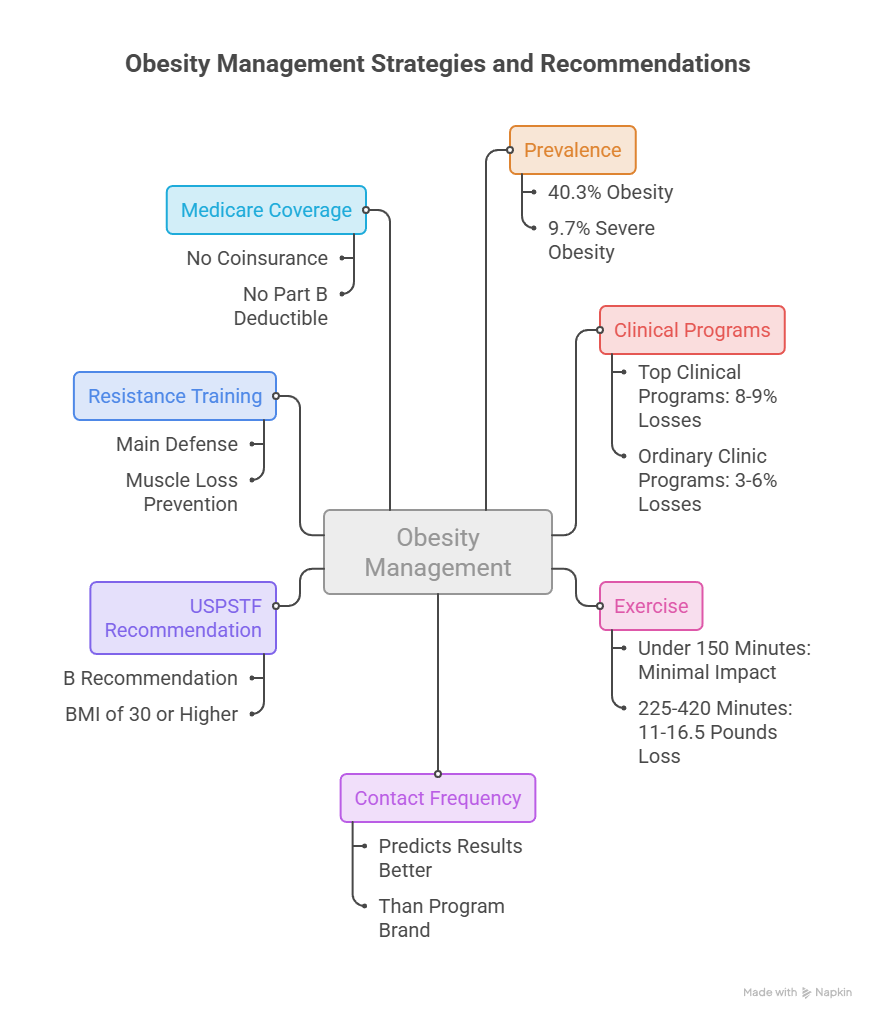
- About 40.3% of US adults now have obesity, with 9.7% classified as severe obesity
- Year-one losses in top clinical programs run 8% to 9%; ordinary clinic programs run 3% to 6%
- Weekly exercise under 150 minutes barely moves the scale; 225 to 420 minutes produces 11 to 16.5 pounds
- Contact frequency predicts results far better than which program brand you choose
- The USPSTF gives intensive, multicomponent behavioral interventions a B recommendation for adults with a BMI of 30 or higher
- Resistance training is now the main defense against muscle loss on GLP-1 medications
- Medicare covers obesity behavioral therapy with no coinsurance and no Part B deductible
What Actually Makes A Weight Loss Program “Structured”
The word gets thrown around loosely. A meal-kit subscription is not a structured program. Neither is a printed diet sheet handed over at the end of a physical.
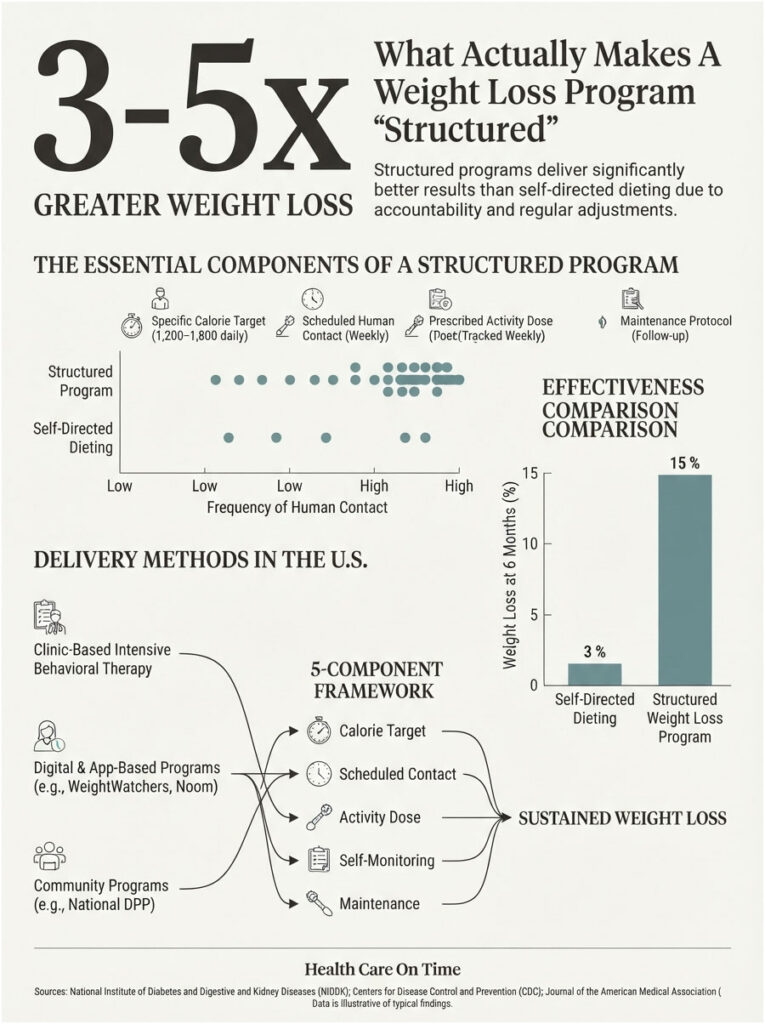
In clinical research the term means something narrow: a defined curriculum, scheduled contacts with a trained provider, measurable targets, a fixed duration, and a maintenance phase bolted onto the end.
Miss any one of those and the results drop sharply. Miss three and you are back to self-directed dieting with a monthly charge attached.
The Five Components Every Real Program Has
A calorie target you can actually name. Clinical programs set 1,200 to 1,800 calories daily depending on starting weight and sex. Guidance to “eat cleaner” produces exactly the results you would expect from guidance that vague.
Scheduled human contact. Weekly for the first three to four months, then tapering. This is the variable that separates a program averaging 8% from one averaging 3%.
A prescribed activity dose in minutes. Not “move more.” A weekly number, tracked, reviewed at each contact.
Self-monitoring. Food logs, regular weigh-ins, activity tracking. Consistent loggers routinely lose about twice as much as people who track sporadically.
A maintenance protocol. Any program that ends at week 12 with congratulations and no follow-up is a program engineered to fail somewhere around month nine.
Patients who describe past attempts to our team almost never had more than two of these five running at the same time. That is usually the whole explanation for why the last three attempts stalled.
Structured Program vs Going It Alone
Self-directed dieting works for plenty of people in the short run. Durability is the problem, not possibility.
Physician-led structured programs consistently outperform self-directed dieting because they combine nutrition guidance, an activity plan, and regular check-ins that let a provider adjust course when progress stalls.
Accountability here is not motivational theater. It is a feedback loop that catches drift at week six instead of month six, when a 400-calorie daily creep has already erased a quarter of the year’s progress.
Who Delivers These Programs In The United States
Clinic-based intensive behavioral therapy
Delivered in primary care by a physician, nurse practitioner, physician assistant, or clinical nurse specialist. Highest intensity, real medical oversight, and the only tier that reliably includes lab monitoring alongside the scale.
Access is the catch. Fewer than 8,300 physicians nationwide hold board certification in obesity medicine, which means availability swings wildly between a metro area and a rural county.
Digital and app-based programs
WeightWatchers, Noom, and similar platforms push curriculum plus coaching through a phone. Lower cost, lower intensity, far wider reach. The evidence behind them is real but more modest than clinic programs, and coaching credentials vary.
Community programs built on the National DPP
Year-long group programs run through YMCAs, hospitals, and community health organizations using the Diabetes Prevention Program curriculum. Often free or heavily subsidized for people who qualify, and structurally closer to clinical programs than most apps.
| Program Type | Contacts Per Year | Typical 12-Month Weight Loss | Typical US Cost | Medical Oversight |
| Clinical intensive lifestyle intervention | 40 to 60 | 8% to 9% of body weight | Covered, or $500 to $2,000 | Full, including lab work |
| Medicare intensive behavioral therapy | Up to 22 visits | 3% to 6% | $0 out of pocket if eligible | Primary care provider |
| National DPP or MDPP group program | 22 sessions | 4% to 7% | $0 to $450 | Trained lifestyle coach |
| Digital app with coaching | Weekly check-ins, open messaging | 3% to 5% | $209 to $276 per year | None to minimal |
| App plus telehealth GLP-1 tier | Monthly clinical visits | 12% to 20% | $900 to $3,600 per year | Prescribing clinician |
| Self-directed dieting | None | 1% to 3% | $0 | None |
Readers booking baseline metabolic panels through HealthCareOnTime frequently ask which row applies to them. Starting BMI, existing conditions, and budget settle it, and the decision table further down works through the common situations.
How Much Weight People Actually Lose
Most articles on this topic go vague right at this point. The numbers are public, they are specific, and they are simultaneously less dramatic and more encouraging than the marketing suggests.
Year One Results From Landmark US Trials
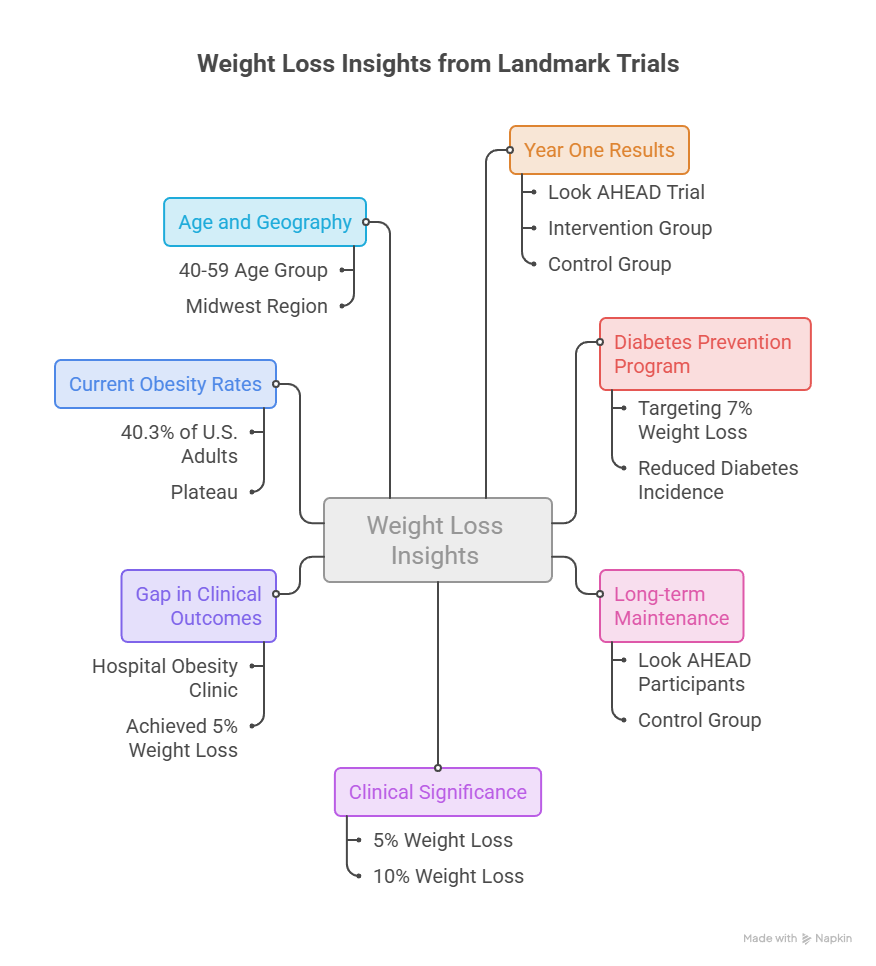
Look AHEAD is still the benchmark. It enrolled 5,145 adults who had type 2 diabetes and a BMI of 25 or above, randomizing them to either an intensive lifestyle intervention or a diabetes support and education control arm.
The one-year separation was stark. The intervention group lost 8.5% of starting weight while the usual-care group lost 0.6%, and 37.7% of intervention participants dropped at least 10% of their starting weight inside that first year.
The Diabetes Prevention Program aimed lower and bought more health per pound. A lifestyle intervention targeting 7% weight loss plus 150 minutes of weekly activity cut diabetes incidence by 58% over 2.8 years, with lasting improvements in HbA1c, blood pressure, and lipids.
That is the finding people overlook. The clinical payoff shows up well before the mirror does.
What Survives At Year Four And Year Eight
Some regain is normal, partial, and not the same thing as failure.
Look AHEAD participants held close to 5% at four years and 6.0% at the end of the intervention period. At the eight-year mark the intervention group remained 4.7% below baseline against 2.1% for usual care, and half of them had kept off at least 5%.
Half the people in a behavioral program were still measurably lighter eight years later, with no medication involved. Against the folk wisdom that “diets never work,” that is a meaningful correction.
Why 5% To 10% Is The Number That Matters
Clinicians call a 5% loss clinically significant for concrete reasons. It produces measurable improvement in type 2 diabetes, sleep apnea, depression, and physical functioning.
At 10% the returns compound across blood pressure, triglycerides, liver fat, and joint pain. Look AHEAD’s intervention arm showed better glucose and lipid control, less sleep apnea, lower liver fat, reduced diabetes medication needs, preserved mobility, improved quality of life, and lower overall costs.
Our medical reviewers see the same pattern in repeat lab work. A 12-pound loss often shifts HbA1c and triglycerides further than the scale reading would suggest, which is worth knowing before you judge month three a disappointment.
The Gap Between Trials And Ordinary Clinics
Trials run under close-to-ideal conditions with funded staff and motivated volunteers. Ordinary clinics do not.
A hospital obesity clinic followed 1,122 adults with severe obesity, mean BMI 46.7, through a ten-week structured lifestyle program. Of those who started, 78.2% completed and returned for follow-up, but only 12.8% of completers lost 5% or more of body weight.
Ten weeks is the problem, not structured programs. The same cohort showed that the amount of weight lost strongly predicted improvement in metabolic, cardiovascular, and mental health outcomes, which means duration and contact frequency are the levers worth pulling.
| Program or Trial | Population | Result | Source |
| Look AHEAD, year 1 | 5,145 US adults, type 2 diabetes | 8.5% loss vs 0.6% control | NIDDK / JAMA |
| Look AHEAD, year 8 | Same cohort | 4.7% maintained vs 2.1% control | NIDDK / JAMA |
| Diabetes Prevention Program | US adults with prediabetes | 58% lower diabetes incidence over 2.8 years | NIH / NIDDK |
| DPP, 15-year follow-up | Same cohort | 27% sustained risk reduction | NIH / NIDDK |
| Hospital clinic program, 10 weeks | 1,122 adults, mean BMI 46.7 | 12.8% of completers reached 5% loss | Frontiers in Endocrinology |
| WRAP trial, 12 months | 1,267 adults referred to a commercial program | 10.5 pounds mean loss | The Lancet |
| US adult obesity prevalence | Adults 20 and older | 40.3% obesity, 9.7% severe obesity | CDC NCHS, Aug 2021 to Aug 2023 |
That last row deserves context. Prevalence sat at 41.9% between 2017 and 2020 and 37.7% between 2013 and 2014, so today’s 40.3% is a plateau rather than a genuine decline, while severe obesity climbed from 7.7% to 9.2% to 9.7% across the same stretch. In population terms that is more than 100 million American adults with obesity and over 20 million with severe obesity.
Age and geography matter if you are comparing yourself to a national figure. Prevalence among adults 40 to 59 hits 46.4%, against 35.5% for ages 20 to 39 and 38.9% for those 60 and older. By region the Midwest leads at 35.9%, the South follows at 34.5%, the West sits at 30.2%, and every state and territory now reports at least 25%.
What Exercise Actually Adds To The Equation
This is the section competing pages skip entirely, and it happens to have the cleanest numbers in the whole field.
The Dose Response Curve, In Minutes And Pounds
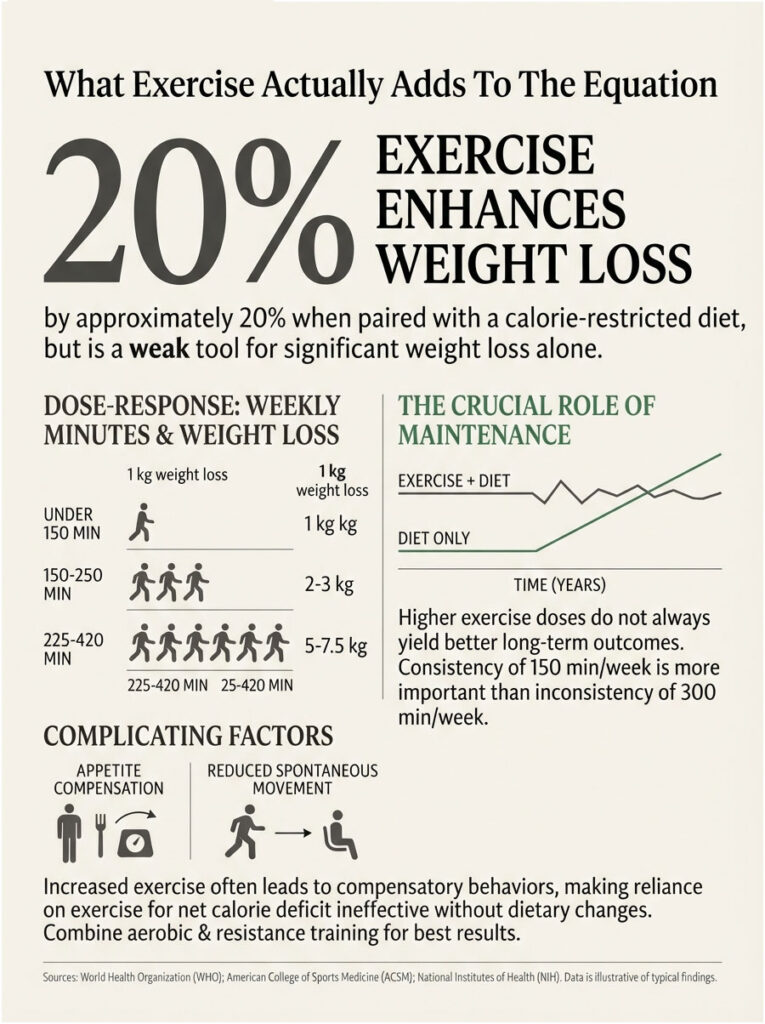
The American College of Sports Medicine has published a dose-response relationship that reads almost like a prescribing chart.
Under 150 minutes per week of moderate activity, expect minimal weight loss. Above 150 minutes, expect 2 to 3 kilograms, roughly 4.4 to 6.6 pounds. Between 225 and 420 minutes, expect 5 to 7.5 kilograms, roughly 11 to 16.5 pounds.
Those figures come from exercise alone, without major dietary change. Layer them onto a calorie deficit and the arithmetic improves.
Paired with an energy-restricted diet, physical activity adds about 20% to total weight lost compared with dieting alone, and better long-term results track with 200 to 300 minutes weekly or at least 2,000 calories of weekly leisure-time activity.
Turn that into a calendar. Five 45-minute sessions is 225 minutes. Six 50-minute sessions is 300. Both are reachable. Neither is what most people are actually logging.
| Weekly Exercise Dose | Expected Effect Without Diet Change | Practical Schedule |
| Under 150 minutes | Minimal weight change | Two short walks |
| 150 to 250 minutes | 4 to 7 pounds, prevents further gain | Five sessions of 35 minutes |
| 250 to 300 minutes | Meaningful loss plus maintenance support | Five sessions of 55 minutes |
| 300 to 420 minutes | 11 to 16.5 pounds | Six sessions of 60 minutes |
Aerobic Work vs Resistance Training
They do different jobs and both belong on the schedule.
ACSM recommends combining aerobic and progressive resistance exercise as the core of a program, with flexibility and balance work added for adults carrying excess weight. Aerobic activity drives the calorie burn. Resistance training protects the tissue you do not want to lose.
Resistance training improves muscular strength, muscular endurance, and maintenance of lean body mass, though its direct contribution to total energy expenditure is moderate compared with the same minutes spent on aerobic work.
Two to three sessions weekly covering all major muscle groups is the standard prescription. Machines, dumbbells, and resistance bands all qualify. Chair stands and wall pushes count for someone starting above a BMI of 40, and our medical reviewers would rather see those done consistently than a gym plan abandoned in week two.
Exercise Is A Weak Weight-Loss Tool And A Strong Maintenance Tool
This distinction separates honest health writing from motivational content.
Physical activity is widely regarded as indispensable for long-term weight maintenance and shows up repeatedly as a stable predictor of keeping weight off, while delivering benefits independent of the scale including better insulin action, improved blood lipids, better endothelial function, and lower blood pressure.
Nobody should train five days a week purely for pounds. The metabolic dividend is the durable return, and it is the one that shows up in follow-up panels.
The Honest Limits
Why exercise alone rarely moves the scale far
Burning 400 calories takes most adults roughly an hour of brisk walking. Consuming 400 calories takes about four minutes. That asymmetry is arithmetic, not a character flaw, and it explains why exercise-only plans disappoint so reliably.
Appetite compensation is real
Increased training often raises hunger and sometimes reduces spontaneous movement across the rest of the day. Two people can complete identical workouts and end the week with completely different energy balances.
Even the dose guidance carries a caveat
ACSM has published a caution worth knowing. Randomized trials comparing prescribed exercise doses have not consistently supported the higher-is-better position, and in one study 225 and 300 minutes per week were no better than 150 minutes for maintaining weight loss over 12 months.
The practical reading: lock in 150 minutes reliably before chasing 300 inconsistently. Adherence outperforms prescription almost every time. In cases reviewed by our medical team, people who commit to a sustainable 150 minutes consistently outlast people who plan 300 and disappear by week five.
Structured Programs In The GLP-1 Era
Any 2026 discussion of weight loss programs that leaves out semaglutide and tirzepatide is incomplete. The relationship between medication and structured programs is not a rivalry. It is a stack.
Medication Raises The Ceiling, The Program Holds The Floor
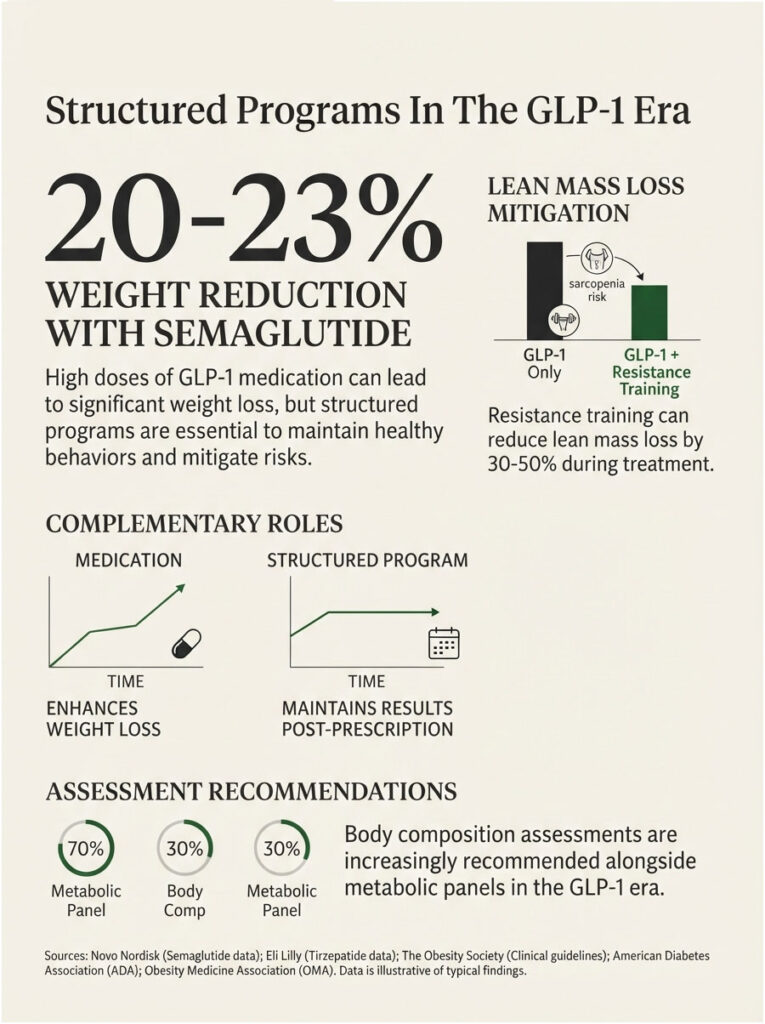
Drug trials now report losses that lifestyle intervention has never approached. Higher-dose semaglutide at 7.2 mg and the cagrilintide-semaglutide combination are producing roughly 20% to 23% weight reduction alongside cardiometabolic improvement.
Structured programs still matter because medication works on appetite while the program works on food environment, activity, sleep, and every behavior that has to survive after the prescription ends. Skipping the program is how people end up regaining on a schedule.
Muscle Loss Is The Problem Exercise Was Built For
This is the most consequential development for anyone currently on these medications.
In the STEP 1 body composition substudy, participants on semaglutide 2.4 mg lost about 15% of body weight over 68 weeks, with fat mass down roughly 19% and lean mass down about 10%, meaning lean tissue made up roughly 40% of everything lost. The tirzepatide picture looked better, with the SURMOUNT-1 substudy reporting closer to a 75% fat and 25% lean split at week 72.
At higher incretin doses, lean-mass loss can rise from about 25% to 40% or more of total weight reduction, which lowers resting energy expenditure and raises sarcopenia risk enough that proactive assessment is now recommended.
Exercise is the countermeasure, and the evidence is specific rather than hopeful. A 2024 systematic review found that resistance training two to three times weekly during GLP-1 therapy cut fat-free mass loss by 30% to 50% versus no-exercise controls, without reducing fat loss.
Protein intake works alongside it. Supervised resistance and aerobic training combined with roughly 1.2 to 1.6 grams of protein per kilogram of body weight daily can preserve or even increase lean mass, as the S-LITE trial demonstrated in participants on liraglutide plus supervised training.
Our lab partners report growing demand for body composition assessment alongside routine metabolic panels, which lines up neatly with where clinical thinking has moved.
What Happens When The Prescription Stops
Regain after discontinuation is well documented, and the exercise component is what blunts it.
A 2024 randomized trial found that pairing a GLP-1 receptor agonist with structured exercise produced roughly 6 kilograms of additional weight loss, and that advantage held after the medication stopped. Long-term maintenance is consistently more successful when exercise is part of the plan, since stopping the drug on its own commonly leads to regain while exercise preserves muscle and sustains the loss.
Anyone starting a GLP-1 without also starting resistance training is buying half the treatment.
How To Choose The Right Program For Your Situation
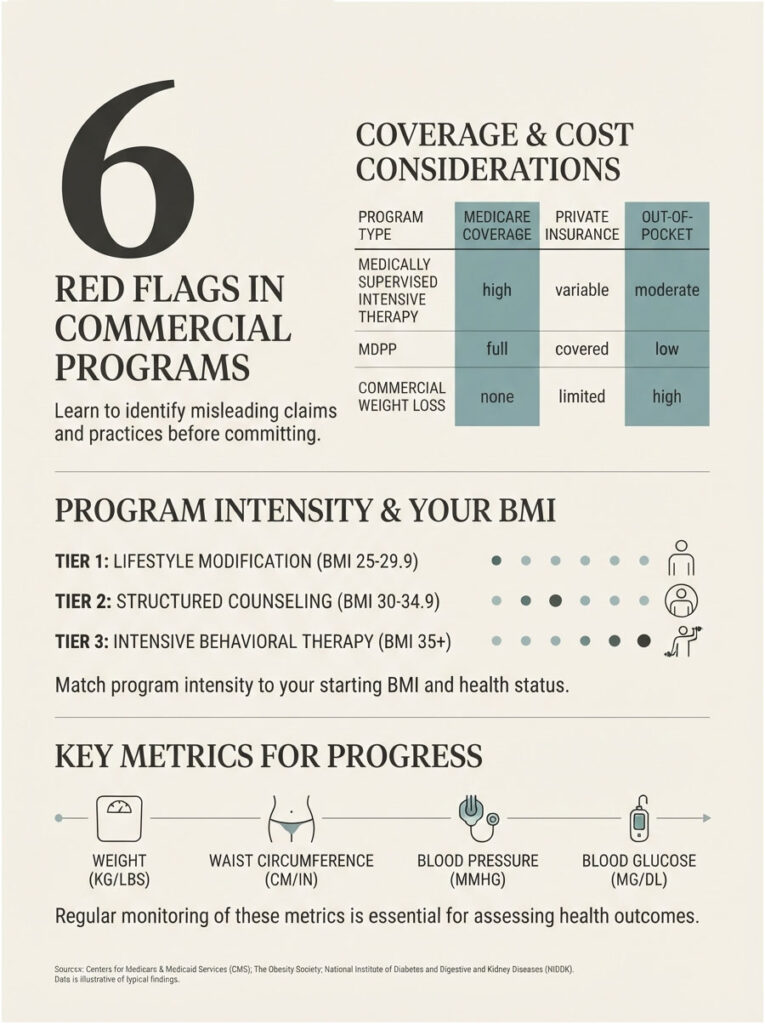
Match Intensity To Starting BMI And Health Status
A BMI of 31 with clean labs and a BMI of 44 with prediabetes and sleep apnea are different clinical problems. They should not receive the same app subscription.
Generic program roundups ignore this completely. Starting weight, existing conditions, mobility limits, medication list, and the shape of past attempts all change the correct answer.
What Insurance And Medicare Actually Cover
Far more is covered than most people realize, and almost nobody claims it.
The Medicare intensive behavioral therapy benefit
Medicare covers intensive behavioral therapy for beneficiaries with a BMI of 30 or higher, structured around the USPSTF five-A framework of assess, advise, agree, assist, and arrange.
The schedule is fixed and worth memorizing before you call. The benefit allows 15-minute visits weekly for four weeks, biweekly through months two to six, then monthly for another six months provided the patient has lost at least 3 kilograms, about 6.6 pounds. CMS waived both the coinsurance and the Part B deductible for this service.
Billing runs under HCPCS code G0447, and eligible providers include general practice, family practice, internal medicine, obstetrics and gynecology, pediatric medicine, geriatric medicine, nurse practitioners, clinical nurse specialists, and physician assistants. Bring that code to the appointment if the front desk is unsure.
Medicare Diabetes Prevention Program payment structure
MDPP is a separate year-long benefit with its own payment schedule. For calendar year 2026, CMS pays $27 for an in-person 60-minute group session, $18 for an online session, $153 when a participant reaches 5% weight loss from baseline, and $27 at the 9% mark.
Coverage runs to 22 sessions across 12 months: weekly through months one to six, then monthly through months seven to twelve. Those numbers matter to you as a patient because they reveal what a supplier is paid to deliver and how long the program is designed to run.
Private insurance
Coverage remains patchy. The USPSTF issued a B rating for intensive multicomponent behavioral interventions in 2018, signaling moderate net benefit, yet Medicare still covers behavioral therapy only in primary care settings and nutritional counseling only for limited patient groups.
Call your plan. Ask specifically about obesity counseling codes, medical nutrition therapy, session limits, and whether a referral is required. Get the answer in writing before you enroll anywhere.
Six Red Flags In Commercial Programs
- No named calorie target and no weekly activity minutes
- The program ends at 8 or 12 weeks with no maintenance phase
- Coaching staff are not registered dietitians, clinicians, or certified lifestyle coaches
- Auto-renewal terms buried below the fold
- Promises of more than 2 pounds of loss per week
- Supplements bundled into the subscription price
On price, the market has settled into recognizable tiers. Noom Weight runs $17.42 monthly on a 12-month plan billed at $209 upfront, or $42.25 monthly on a four-month plan, while WW Core digital lists at $23 monthly with promotional rates dropping to $10. Clinical tiers cost considerably more, with WW Med+ Clinic opening near $25 for the first month then $74 monthly, medication billed separately.
| Your Situation | Recommended Program Type | First Step This Week | What To Measure |
| BMI 30 to 34, no comorbidities, first serious attempt | Digital program with coaching plus 150 min/week activity | Book a baseline metabolic panel and lipid profile | Weight weekly, waist monthly, activity minutes daily |
| BMI 30 or higher, on Medicare | Intensive behavioral therapy through primary care | Ask your provider to schedule IBT visits under G0447 | Weight at each visit; the 6.6-pound six-month threshold |
| Prediabetes or elevated HbA1c | National DPP or MDPP group program | Search the CDC registry for a recognized local supplier | HbA1c at baseline, 6 months, 12 months |
| BMI 40 or higher, or 35 plus comorbidities | Clinic-based program with obesity medicine referral | Request a referral and a full metabolic workup | Weight, blood pressure, HbA1c, liver enzymes, lipids |
| Already taking a GLP-1 medication | Add supervised resistance training two to three times weekly | Book a body composition assessment and set protein targets | Lean mass, grip strength, daily protein grams |
| Lost weight before and regained it | Program with a defined 12-month maintenance phase | Audit which of the five components was missing last time | Activity minutes above 250 weekly, weekly weigh-ins |
The Five Places People Fall Off
Quitting Inside The First 90 Days
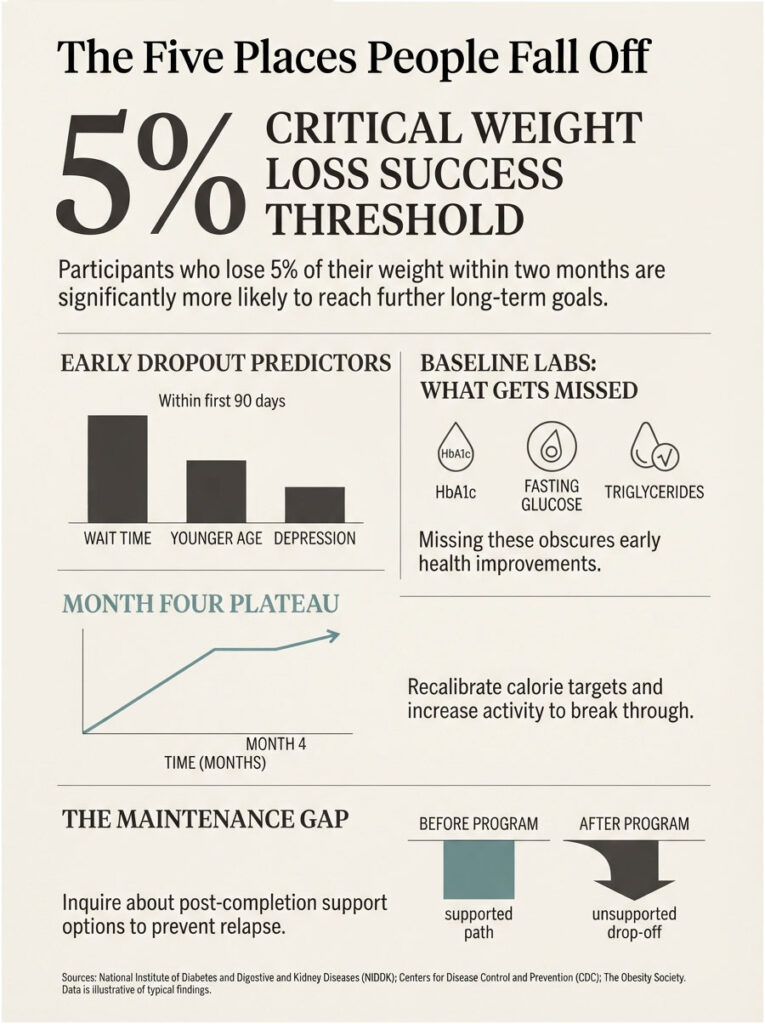
Early dropout is the most common failure mode, and the predictors are documented. In the severe obesity cohort discussed earlier, younger age, depression, and a longer wait between referral and program start all predicted dropping out.
If the wait for a program slot runs eight weeks, use those eight weeks. Start logging food and begin the activity minutes now, so the program starts on a foundation instead of from zero.
Under-Dosing The Exercise
Almost everyone reports more activity than they perform. A tracked 130 minutes feels like 200 by Sunday evening. Log it rather than estimating it, and count only the minutes that were genuinely moderate or harder.
Skipping Baseline Lab Work
Beginning without baseline numbers means missing the wins that land before the scale cooperates.
In panels processed across our diagnostic network, HbA1c, fasting glucose, triglycerides, HDL, ALT, and TSH make up the standard pre-program set. Thyroid function in particular deserves a look before anyone concludes a plan is not working.
Treating Month Four As Failure
The plateau is physiological, not moral. Energy expenditure falls as body mass falls, so the deficit narrows without anyone changing behavior.
The response is recalculating the calorie target and adding activity minutes, not quitting. Look AHEAD also supplies a useful early signal: participants who lost 5% of starting weight by two months were 7.9 times more likely to reach 10% at twelve months, with 63.8% of fast responders hitting 10% against 18.5% of slower responders.
Slower response is not a verdict. It is a prompt to intensify support earlier rather than abandon the plan.
No Maintenance Plan
Programs that stop cold at week 12 return people to the exact environment that produced the problem, minus the accountability. Ask about the maintenance phase before enrolling, not during the exit call.
Your First 12 Weeks, Step By Step
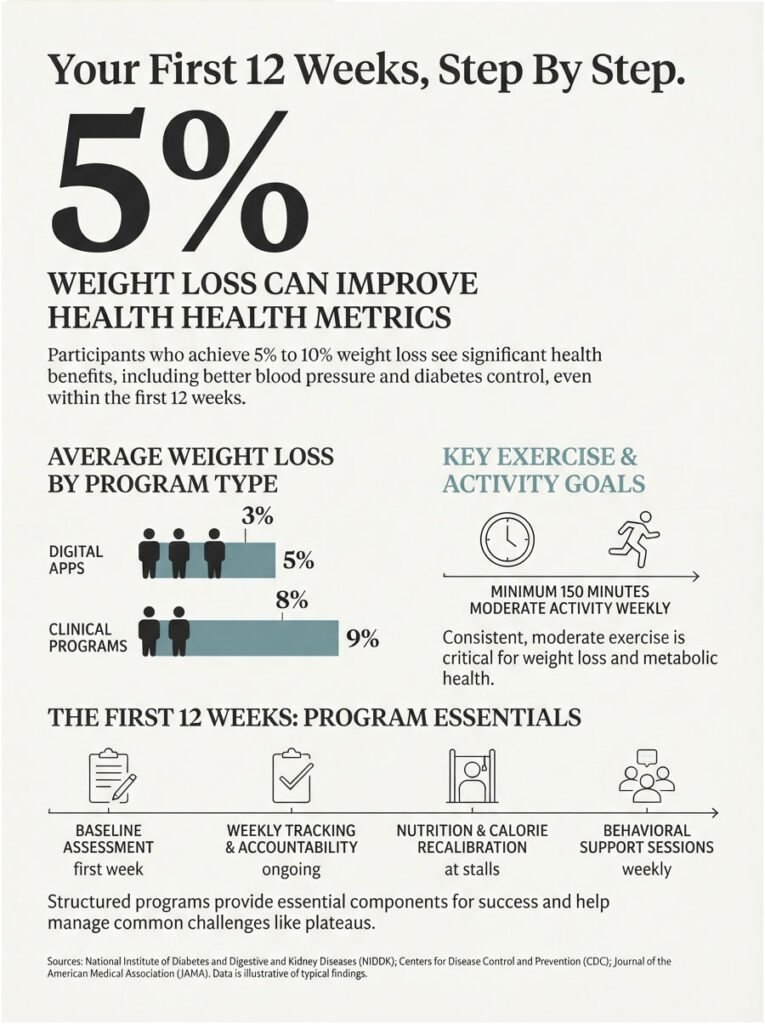
- Weeks 1 to 2. Get baseline labs and body measurements. Record weight, waist circumference, and one honest week of food and activity logging with no changes made yet.
- Weeks 1 to 2. Pick your program tier using the decision table above, and confirm insurance coverage in writing before paying anything.
- Weeks 3 to 4. Set the calorie target with a dietitian or through your program’s curriculum. Begin activity at 150 minutes weekly across five sessions.
- Weeks 3 to 4. Add two resistance sessions covering legs, back, chest, and core. Bodyweight movements are an acceptable starting point.
- Weeks 5 to 8. Build toward 225 to 250 activity minutes weekly. Hold the calorie target steady. Weigh once weekly at the same time of day.
- Week 8. Check progress against the two-month marker. A 5% loss is a strong signal. Less than that calls for more frequent contact, not deeper restriction.
- Weeks 9 to 12. Recalculate the calorie target against current weight. Add a third resistance session if recovery allows.
- Week 12. Repeat baseline labs. Compare HbA1c, triglycerides, and blood pressure against week one, then write the maintenance plan before the structured phase closes.
Readers commonly ask us whether that week 12 repeat panel is worth it if the scale already moved. It is. The lab changes are frequently the strongest argument for continuing into month four.
Frequently Asked Questions
How much weight can you lose on a structured weight loss program in a year?
Expect 5% to 10% of starting body weight. The most intensive clinical programs average around 8.5% at twelve months, while app-based programs average 3% to 5%. For a 250-pound adult, that range works out to roughly 8 to 25 pounds depending on program intensity and adherence.
How many minutes of exercise per week do I need to lose weight?
Start at 150 minutes of moderate activity weekly. Below that, weight change is minimal. Between 225 and 420 minutes produces 11 to 16.5 pounds without major diet changes. Add two to three resistance sessions weekly to protect muscle. Consistency at 150 minutes beats inconsistency at 300.
Is 5% weight loss really enough to improve my health?
Yes. A 5% reduction produces measurable improvement in type 2 diabetes control, sleep apnea, depression symptoms, and physical function. Blood pressure, triglycerides, and liver fat also respond. Clinicians treat 5% as the threshold for meaningful benefit, and many patients see lab improvements before reaching it.
Does Medicare cover weight loss programs?
Medicare covers intensive behavioral therapy for beneficiaries with a BMI of 30 or higher, with coinsurance and the Part B deductible waived. It also covers the Medicare Diabetes Prevention Program for eligible beneficiaries. It generally does not cover commercial programs, most weight loss medications, or surgery outside specific criteria.
Is a digital app as good as a clinic-based program?
Not equivalent, but not useless either. Apps average 3% to 5% loss against 8% to 9% for high-intensity clinical programs. The gap comes down to contact frequency and medical oversight. For a BMI in the low 30s without comorbidities, an app is reasonable. Above BMI 35, clinical supervision is the better call.
Can I lose weight with exercise alone?
Some, though less than most people expect. Exercise above 150 minutes weekly yields roughly 4 to 7 pounds; 225 to 420 minutes yields 11 to 16.5 pounds. Combining exercise with calorie restriction adds about 20% to the total. Exercise performs far better as a maintenance tool than as a primary driver.
Should I lift weights or do cardio for weight loss?
Both. Aerobic work drives calorie expenditure and cardiovascular benefit. Resistance training preserves lean mass, which protects resting metabolic rate and physical function. The standard prescription pairs 150 to 300 minutes of aerobic activity with two to three resistance sessions weekly covering all major muscle groups.
How much muscle do people lose on GLP-1 medications?
Roughly 25% to 40% of total weight lost can come from lean tissue. Semaglutide substudies reported near 40%; tirzepatide substudies reported closer to 25%. Resistance training two to three times weekly cuts fat-free mass loss by 30% to 50%, and adequate daily protein supports the same outcome.
Why did my weight loss stall around month four?
Energy expenditure drops as body mass drops, so the original deficit shrinks on its own. Portion drift usually adds to it. The fix is recalculating your calorie target against current weight and adding activity minutes. A plateau is a mathematical event, not proof the program stopped working.
What blood tests should I get before starting a program?
A standard pre-program panel covers HbA1c, fasting glucose, a full lipid profile, liver enzymes including ALT, TSH for thyroid function, and a basic metabolic panel. Blood pressure and waist circumference belong in the same baseline. Repeat at three and twelve months to track progress independent of the scale.
How long should a structured weight loss program last?
Twelve months minimum, with a maintenance phase attached. Ten-week programs underperform badly; in one clinic cohort of adults with severe obesity, only 12.8% of completers reached a 5% loss. Medicare’s benefits run twelve months for this reason. Treat anything under six months as an introduction rather than treatment.
Will I regain the weight after the program ends?
Partial regain is common; total regain is not inevitable. In Look AHEAD, half the intervention participants held at least a 5% loss eight years later. Sustained activity above 250 minutes weekly and continued self-monitoring are the strongest predictors of keeping it off.
Medical Disclaimer: This article is for general education and does not replace medical advice. Weight loss recommendations vary based on your health status, medications, and medical history. Talk with a licensed physician or registered dietitian before starting any weight loss program, changing your diet, or beginning a new exercise routine, particularly if you have diabetes, cardiovascular disease, a history of disordered eating, or are pregnant. Individual results differ from the averages reported in clinical trials.
References
- CDC NCHS, Prevalence of Overweight, Obesity, and Severe Obesity Among Adults
- CDC NCHS Data Brief, Obesity and Severe Obesity Prevalence in Adults
- CDC Adult Obesity Prevalence Maps
- NIDDK, Overweight and Obesity Statistics
- NIDDK Central Repository, Look AHEAD: Action for Health in Diabetes
- Eight-Year Weight Losses with an Intensive Lifestyle Intervention: The Look AHEAD Study
- The Look AHEAD Trial: A Review and Discussion of Its Outcomes
- CMS National Coverage Determination 210.12, Intensive Behavioral Therapy for Obesity
- CMS, Medicare Diabetes Prevention Program CY2026 Payment Rates
- USPSTF, Behavioral Weight Loss Interventions to Prevent Obesity-Related Morbidity and Mortality in Adults
- ACSM Consensus Statement, Physical Activity and Excess Body Weight and Adiposity for Adults
- Obesity Medicine Association, Obesity and Exercise
- NCBI Bookshelf, Physical Activity and Weight Loss Maintenance
- Cleveland Clinic Journal of Medicine, Prescribing Exercise to Help Your Patients Lose Weight
- Frontiers in Endocrinology, Factors Associated with Weight Loss in a Structured Lifestyle Modification Programme for Adults with Severe Obesity
- NEJM, Healthy Weight Loss Maintenance with Exercise, Liraglutide, or Both Combined
- PLOS One, Primary Care Provider Uptake of Intensive Behavioral Therapy for Obesity in Medicare Patients
- CDC Preventing Chronic Disease, Weight Loss in Short-Term Physical Activity and Nutrition Interventions