The fasting sheet handed out before a planned knee replacement and the instructions given in an emergency room for a suspected appendix look almost identical on paper. They are not the same rules, and mixing them up is the most common mistake people make when they search this question at 2 a.m. with a heating pad pressed to their side.
Quick Answer
Once appendicitis is suspected, stop eating and drinking and let the emergency team decide when that changes. After an uncomplicated laparoscopic appendectomy, most people move from ice chips to soft food within a few hours and back to a normal diet within a day or two. Fiber, fluids, and protein matter far more than any restriction list. No permanent diet change is needed after the appendix is removed.
Here is the sequence most American patients actually follow:
- Once appendicitis is suspected: nothing by mouth, including water, until the surgical team clears you.
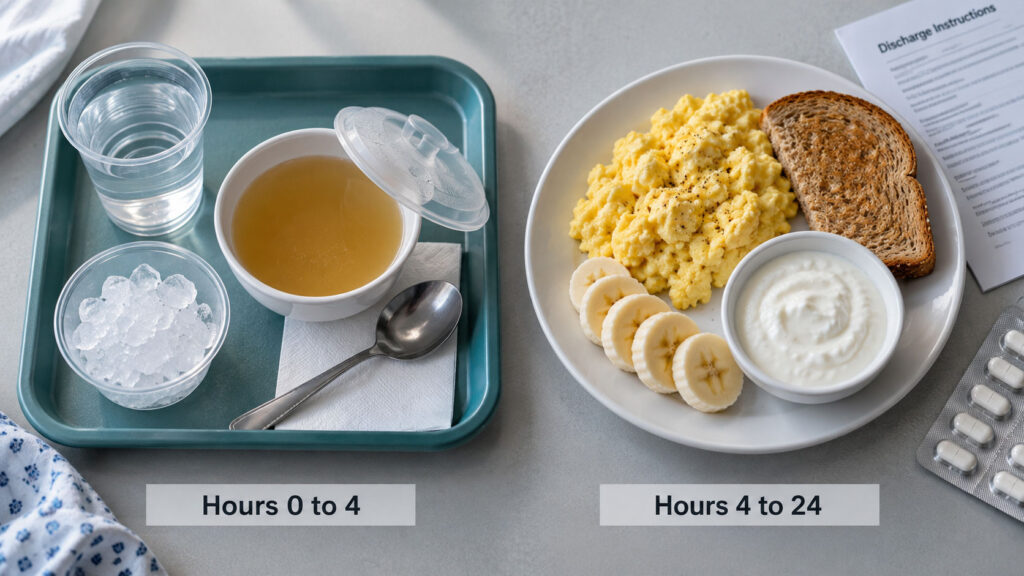
- Hours 0 to 4 after waking: ice chips and small sips, paced by nausea rather than a clock.
- Hours 4 to 24: soft, low-effort food as soon as it appeals, not when a rule says so.
- Days 2 to 3: normal food in normal portions, with deliberate attention to fluid.
- Days 4 to 14: fiber and protein pushed on purpose, to handle constipation and support healing.
- Week 3 onward: your usual diet, permanently, with no restrictions.
At a Glance
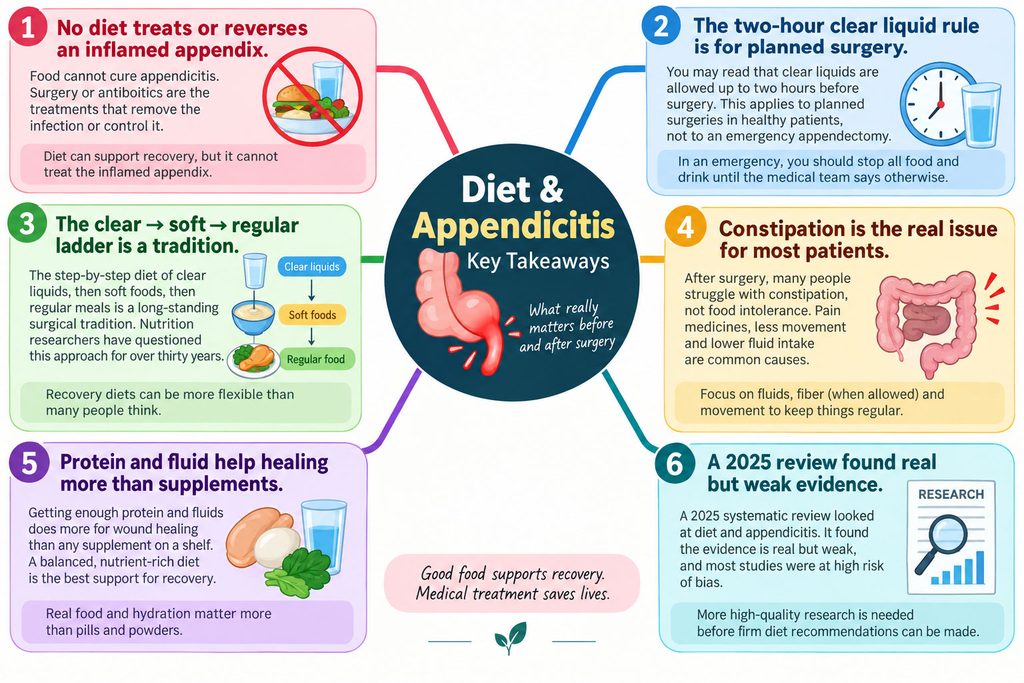
No diet treats or reverses an inflamed appendix. Surgery or antibiotics do that.
The two-hour clear liquid rule applies to planned surgery, not to an emergency appendectomy.
The clear liquid, then soft, then regular ladder is surgical tradition that nutrition researchers have questioned for thirty years.
Constipation, not food intolerance, is the problem most patients run into.
Protein and fluid do more for wound healing than any supplement on a shelf.
A 2025 systematic review found the diet-and-appendicitis evidence real but weak, and mostly at high risk of bias.
Before Surgery, the Answer Is Usually Nothing
Why appendicitis is not a food problem
An inflamed appendix is a blocked, infected pouch. No food softens it, drains it, or cools it down, and no food makes it worse once the process has started.
The practical consequence matters more than the biology. Right lower abdominal pain that migrates, worsens with movement, and arrives with nausea or fever belongs in an emergency room, not in a kitchen.
Patients ask our team about home remedies for abdominal pain constantly. For suspected appendicitis the answer never changes: stop eating, stop drinking, get evaluated. Eating during the diagnostic window can push your operating room slot back by hours.
The elective rule that does not apply here
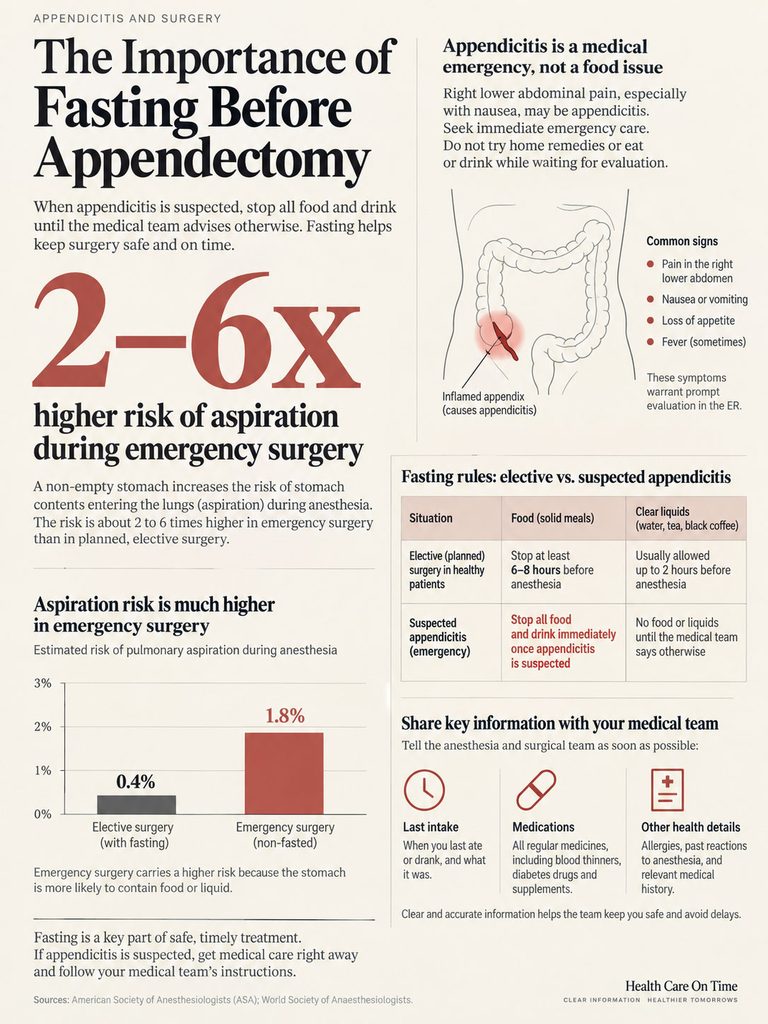
Anyone who has had planned surgery in the past decade has likely been told they can drink clear liquids up to two hours beforehand. That guidance is real. The American Society of Anesthesiologists reaffirmed it in 2023, recommending that healthy adults be encouraged to drink up to 400 mL of carbohydrate-containing clear liquids until two hours before an elective procedure, to limit the harms of prolonged fasting.
Read the scope carefully. That recommendation covers elective procedures in healthy patients. An appendectomy is emergency abdominal surgery in someone already nauseated, often vomiting, whose stomach may not be emptying on schedule.
Under those conditions anesthesia teams assume a full stomach regardless of the clock and adjust how they induce anesthesia to protect the airway. The reason is not caution for its own sake. Aspiration is uncommon at roughly 1.1 per 10,000 adults, but a closed-claims analysis found that 57 percent of aspiration events ended in death and another 15 percent in permanent severe injury.
This is why every page offering a “what to eat before appendix surgery” food list is answering a question that does not exist. The correct pre-operative answer is a fasting answer, not a menu.
What to tell the emergency team
Two details change the anesthesiologist’s plan: the exact time of your last food or drink, and everything you swallowed in the past 24 hours, including gum, mints, hard candy, and supplements.
Bring a current medication list. GLP-1 medicines such as semaglutide and tirzepatide slow gastric emptying and are now a standard pre-anesthesia question, so say so if you take one.
If you are still waiting on a CT scan or ultrasound and nobody has mentioned food, ask directly. Silence is not permission.
Table 4: Fasting Rules, Planned Surgery vs Emergency Appendectomy
| Situation | Clear liquids allowed until | Solid food allowed until | Why the rule differs |
| Planned elective surgery, healthy adult | 2 hours before, up to about 400 mL | 6 to 8 hours before, per surgeon instruction | Normal gastric emptying, scheduled start, low aspiration risk |
| Planned elective surgery, child | As close to 2 hours before as scheduling allows | 6 hours before for solids, per team | Same physiology, with added effort to avoid long fasts in children |
| Suspected appendicitis, still in ER workup | Nothing, unless the team says otherwise | Nothing | Diagnosis may convert to surgery within the hour |
| Confirmed appendicitis awaiting the OR | Nothing by mouth, IV fluids instead | Nothing | Pain, nausea, and inflammation slow gastric emptying unpredictably |
| Antibiotics-first, non-operative treatment | Per surgical team, often liquids first | Advanced as symptoms settle | No anesthesia planned, but surgery remains possible |
The Eating Timeline, Phase by Phase
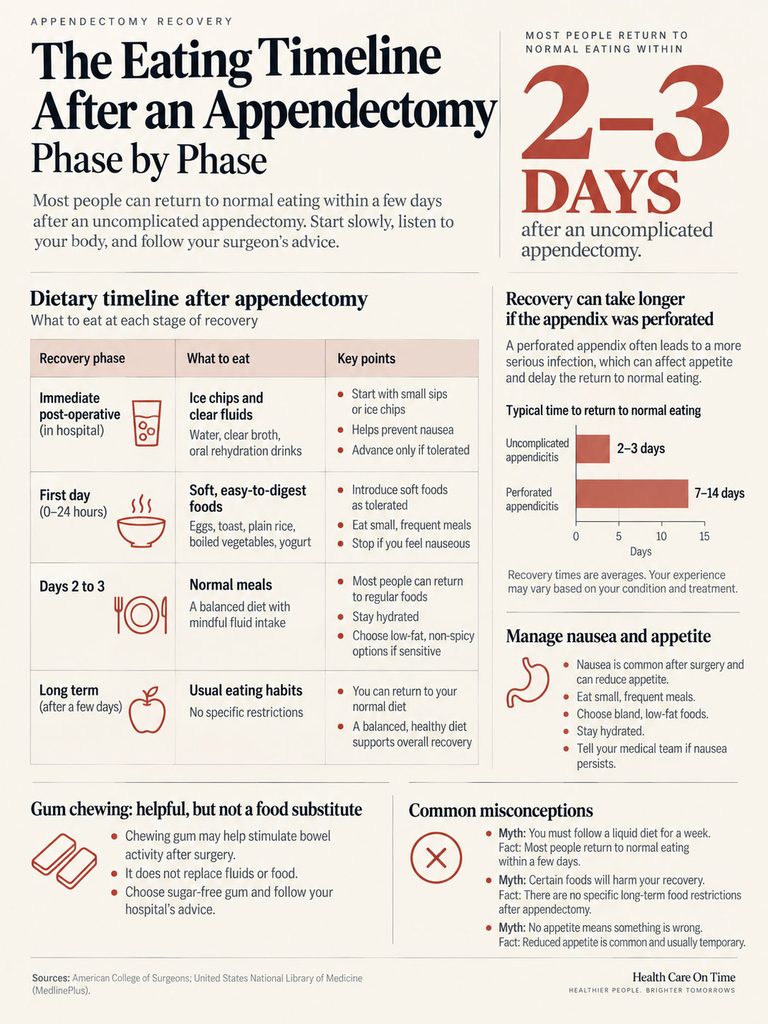
Table 1: What You Can Eat at Each Stage After an Appendectomy
| Phase | Typical timing | What most people can have | What to hold off on | What is driving the limit |
| Pre-operative | From suspicion to the OR | Nothing by mouth, IV fluids only | Everything, including water | Anesthesia and aspiration safety |
| Immediate recovery | 0 to 4 hours after waking | Ice chips, sips of water, clear fluids | Full meals, greasy food, carbonation | Anesthesia nausea, not bowel damage |
| First day | 4 to 24 hours | Soup, yogurt, eggs, toast, oatmeal, bananas, rice, chicken | Very large or very fatty meals | Appetite and nausea, not a fixed rule |
| Early recovery | Days 2 to 3 | Normal meals in normal portions, plus deliberate fluid | Alcohol, heavy fried food | Opioid side effects and low appetite |
| Healing window | Days 4 to 14 | Full diet with added fiber and protein | Nothing specific for most people | Constipation risk and tissue repair |
| Long term | Week 3 onward | Your usual diet, permanently | No permanent restrictions | The appendix has no daily digestive role |
Hours 0 to 4: nausea sets the pace
Grogginess and queasiness after general anesthesia are anesthesia effects, not evidence that your gut is broken. Nurses start with ice chips because they are easy to tolerate, not because water carries a risk.
If the first sips stay down, the next step follows quickly. If they do not, waiting an hour and trying again is routine and is not a setback.
Chewing sugar-free gum in this window is worth asking about. A September 2025 meta-analysis of 35 trials covering 4,898 patients found gum chewing cut time to first flatus by 12.19 hours, time to first bowel movement by 19.54 hours, and hospital stay by 0.93 days.
The caveat deserves equal billing. An earlier pooled analysis found that in the laparoscopic subgroup specifically, no statistically significant differences appeared between gum chewers and controls. Since most appendectomies in the United States are laparoscopic, treat gum as cheap and harmless rather than powerful.
Hours 4 to 24: the first real meal
This is where standard advice and published evidence separate. Many patients receive a clear liquid tray and are told to climb through stages across a day or more.
For an uncomplicated laparoscopic appendectomy, that pace is usually slower than necessary. Once nausea settles, ordinary soft food is reasonable: scrambled eggs, oatmeal, plain yogurt, soup with soft vegetables, toast, bananas, white rice, shredded chicken.
Our medical reviewers note that patients who eat a small normal meal on the evening of surgery generally do no worse than those held on broth, provided they are not vomiting and were not operated on for a rupture.
Days 2 to 7: normal, sooner than expected
By day two, most people with a simple appendectomy are eating regular food. Portions may run small because appetite lags behind, which is expected rather than concerning.
Losing a few pounds in the first week is common and is mostly fluid plus reduced intake. It corrects on its own without intervention.
The one thing to manage actively from day two is fluid. Low intake plus pain medication is the recipe for the constipation covered further down.
The perforated appendix exception
A ruptured or abscessed appendix is a different operation with a different recovery. These patients often face a slower diet advance, intravenous antibiotics for several days, sometimes a drain, and a genuine risk of postoperative ileus.
Here the cautious ladder earns its place. If your surgeon says liquids only until bowel function returns after a perforation, that instruction reflects your findings in the operating room, not a generic protocol.
Across cases our medical team reviews, this is the split most online advice ignores. Guidance written for a same-day-discharge laparoscopic case is simply wrong for a complicated one.
The Clear-Liquid Ladder Is Tradition, Not Evidence
Where the rule came from
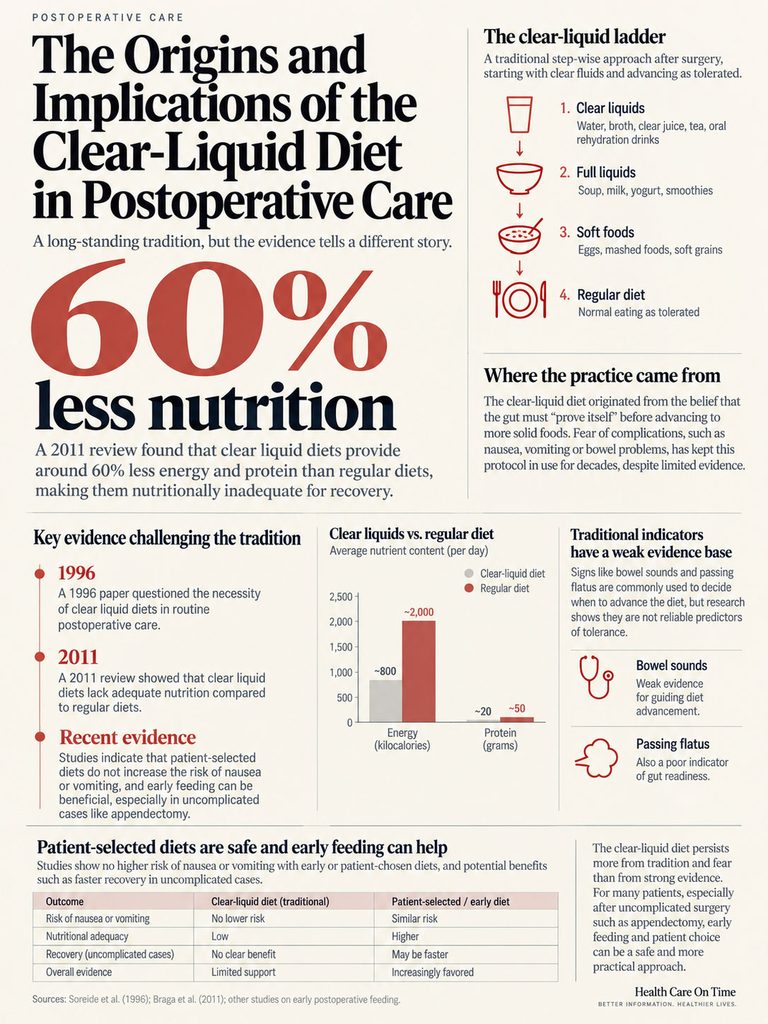
Clear liquids, then full liquids, then soft food, then a regular diet is one of the oldest habits in surgery. It rests on the belief that the gut must prove itself before it is fed.
Surgical nutrition researchers have been pulling at that belief for a long time. A 2011 review in Nutrition in Clinical Practice set out the traditional approach and then made the counterpoint: a clear liquid diet is the most frequently ordered first postoperative meal and, while generally tolerated, fails to supply adequate nutrients, whereas advancing to a regular diet as the first meal is well tolerated and delivers significantly more nutrition.
The title that says it out loud
The argument is older than most readers expect. A 1996 paper in The American Surgeon was titled to the effect that the clear liquid diet is no longer a necessity in routine postoperative management. Three decades later, the tray still arrives.
The same 2011 review pointed out that fear of gastrointestinal complications and anastomotic disruption has driven the delay, and that those fears have not held up in clinical or experimental trials. An appendectomy involves no anastomosis at all, which removes the main theoretical worry outright.
Why “have you passed gas yet?” is a weaker gate than it sounds
Bowel sounds and first flatus are the traditional green lights, and their evidence base is thinner than their authority suggests.
A review of postoperative feeding practice noted that clinical evidence linking bowel sounds and confirmed flatus to actual bowel function and integrity does not exist, and that the most reliable indicator of tolerance is the patient’s own subjective assessment. The same review found no evidence that patient-selected diets produce more nausea or vomiting than the traditional clear-to-full-to-soft-to-regular progression.
Early feeding has also been tested in emergency abdominal surgery specifically. A randomized controlled trial of 295 patients compared a soft diet started within 24 hours against waiting for passage of flatus or stool, with complication rate as the primary endpoint.
When the slow ladder is right
None of this argues for a cheeseburger in the recovery room. The slow advance is the correct call with perforation, a known abscess, persistent vomiting, a distended abdomen, or a surgeon who has told you so for a reason specific to your case.
The point is narrower. For a straightforward appendectomy, the ladder is a default setting rather than a prescription. If you feel like eating and nothing hurts more when you do, that is real information about your recovery.
What to Actually Put on the Plate
Protein, with a real number
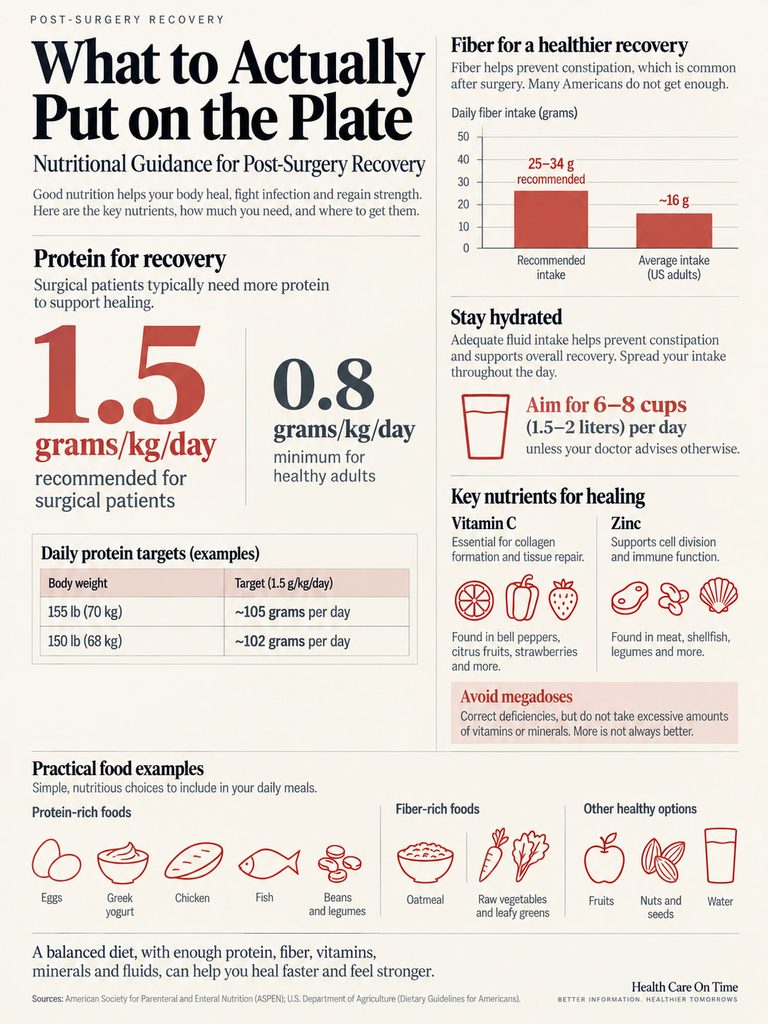
Tissue repair runs on protein, and almost no post-operative advice attaches a figure to that. The standard adult reference intake is about 0.8 grams per kilogram of body weight per day.
European surgical nutrition guidance sets a higher target for surgical patients, near 1.5 grams per kilogram per day, working out to roughly 105 grams daily for a 155-pound adult. Wound-care guidance in the United States cites a similar range, around 1.5 grams per kilogram, or roughly 102 grams for a 150-pound person.
The caveat is important and usually omitted. Those targets were written for major surgery and patients at nutritional risk, not for a healthy 24-year-old home the same evening after a laparoscopic appendectomy. Treat 0.8 grams per kilogram as your floor and something nearer 1.0 to 1.2 as a sensible recovery-week goal unless a dietitian advises otherwise.
For a 160-pound adult that means roughly 80 to 90 grams a day. Three eggs at breakfast, Greek yogurt mid-morning, a chicken breast at lunch, and beans or fish at dinner covers it without much effort.
Fiber and fluid only work as a pair
Fiber is the one nutrient every page on this topic names, and almost none attach a number or a warning. Federal targets for adults sit around 25 to 34 grams a day depending on age and sex, and most Americans fall well short of that even before surgery.
Fiber without fluid makes constipation worse rather than better. Adding oatmeal, beans, and raw vegetables while drinking less than usual is a reliable way to turn mild sluggishness into real misery.
Spread fluid across the day instead of front-loading a few large glasses. Water, broth, milk, and diluted juice all count toward the total.
Vitamin C and zinc: what the evidence supports
Vitamin C is a required cofactor for the enzymes that build and cross-link collagen. Zinc supports cell division, protein synthesis, and immune function. Both play a genuine part in wound healing.
That does not make megadoses useful. Correcting a real deficiency helps healing, while loading up when already well nourished has not been shown to speed recovery, and very high vitamin C doses are not automatically benign.
Food first is the defensible position. Bell peppers, citrus, strawberries, kiwi, broccoli, and tomatoes handle vitamin C. Meat, shellfish, seeds, nuts, and legumes handle zinc.
The Constipation Nobody Warns You About
Why it happens
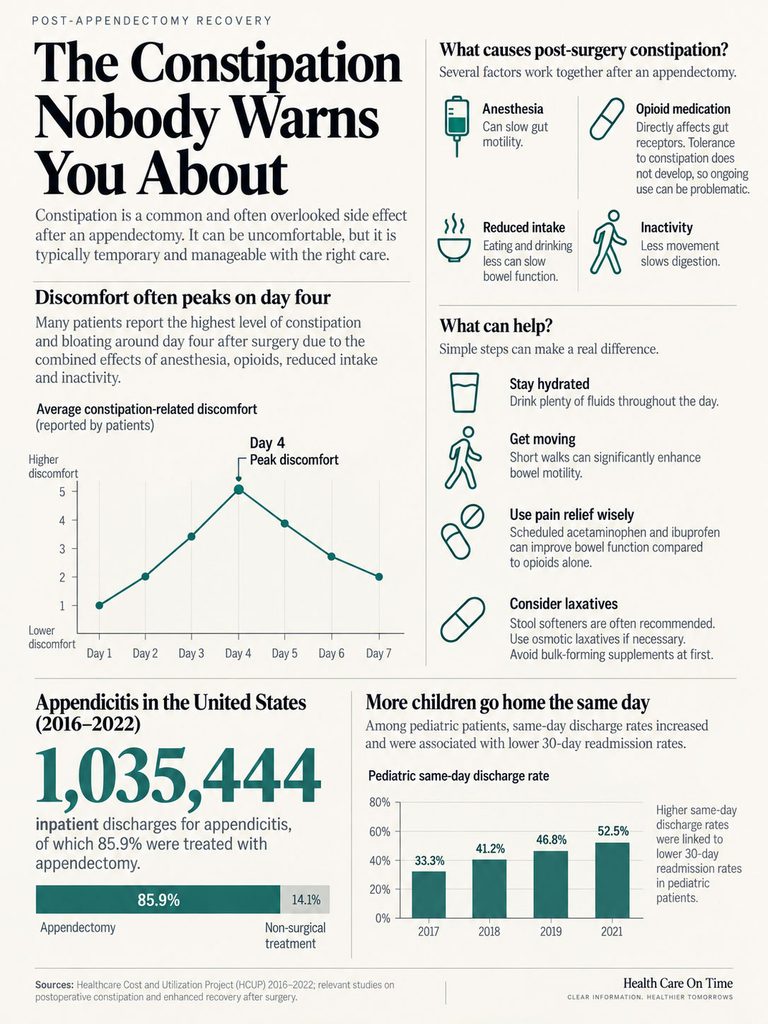
Four things stack at once. Anesthesia slows the gut, opioid pain medication slows it further, food and fluid intake drops, and physical activity falls close to zero.
None of these is a complication. Together they produce the symptom that sends more post-appendectomy patients back to a search engine than anything else on this list.
Patients booking follow-up labs with us often describe day four as the worst of it, which lines up with how long reduced intake and opioid effects take to compound.
The opioid piece
Opioids act directly on receptors in the gut wall, and that effect does not fade the way pain relief does. Tolerance to constipation develops poorly, so a fifth day of oxycodone constipates about as reliably as the first.
Many surgical teams in the United States now run scheduled acetaminophen and ibuprofen as the base and reserve opioids for breakthrough pain. If you are managing on acetaminophen with an occasional opioid tablet, your bowels benefit measurably.
Ask before changing anything yourself. Ibuprofen is not appropriate for every patient, particularly with kidney disease, ulcer history, or certain blood thinners.
What actually works, in order
Start with fluid and walking. Short, frequent walks around the house do more for bowel motility than any single food on any list.
Add a stool softener such as docusate while pain medicine is in play, then an osmotic laxative such as polyethylene glycol if nothing has moved by day three. Bulk-forming fiber supplements are the wrong first choice when intake is already low, because they add bulk without the fluid to move it.
Table 2: Appendicitis and Appendectomy in the United States, by the Numbers
| Metric | Figure | Population and years | Source |
| Appendicitis inpatient discharges | 1,035,444 weighted | US inpatients, 2016 to 2022 | HCUP National Inpatient Sample analysis |
| Share treated with appendectomy | 889,289, or 85.9 percent | Same cohort | HCUP National Inpatient Sample analysis |
| Mean inpatient length of stay | 2.86 days | Same cohort | HCUP National Inpatient Sample analysis |
| Pediatric same-day discharge rate | 33.3 percent in 2017, rising to 52.5 percent in 2021 | 67,214 children | ACS NSQIP-Pediatric registry analysis |
| Adult same-day discharge rate | 23.6 percent of 16,931 laparoscopic cases | US adults, 2016 to 2017 | ACS-NSQIP procedure-targeted database |
| Appendectomy mortality | 0.09 to 0.24 percent | General surgical population | StatPearls, updated May 2025 |
Two figures in that table reframe the entire diet question. Pediatric same-day discharge climbed from 33.3 percent in 2017 to 52.5 percent in 2021, with 30-day readmissions actually lower in the same-day group at 1.3 percent against 2.1 percent.
Among adults, 3,988 of 16,931 laparoscopic appendectomy patients went home the same day, with comparable 30-day readmission risk and a lower rate of superficial surgical site infection. A patient discharged five hours after surgery will not be following a four-stage hospital diet ladder and does not need to.
Foods to Limit, and the Ones That Should Not Be on Any List
The four that earn a genuine pause
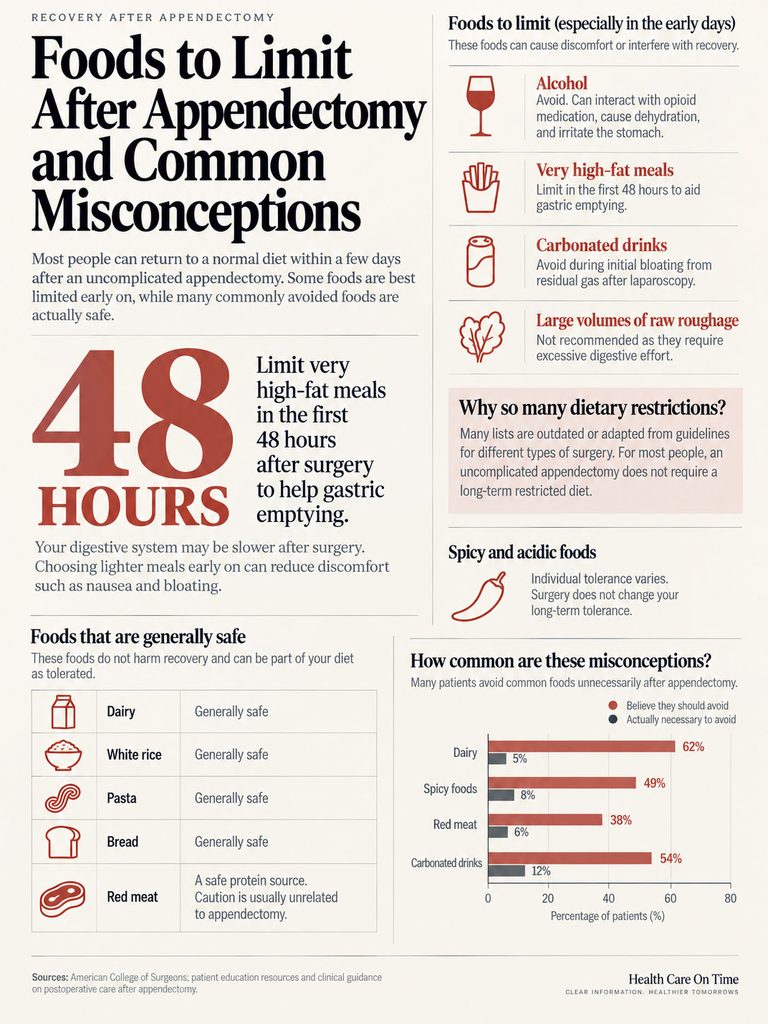
Alcohol. It interacts with opioid pain medication to deepen sedation and slow breathing, dehydrates at a point when fluid already matters, and irritates the stomach lining. Skip it entirely until you are off opioids and eating normally.
Very high-fat meals in the first 48 hours. Fat slows gastric emptying, which is unhelpful when anesthesia has already done exactly that. A fried platter on night one is a comfort problem rather than a safety problem, but it is still a problem.
Carbonated drinks while bloated. Laparoscopy leaves residual carbon dioxide inside the abdomen, and shoulder-tip pain from that trapped gas is one of the most common complaints in the first three days. Adding more gas is an avoidable mistake.
Large volumes of raw roughage before things restart. A giant raw salad on day one asks a great deal of a gut that has not moved yet. Cooked vegetables deliver similar fiber with far less mechanical work.
The myths on almost every avoid-list
Dairy sits on nearly every post-appendectomy restriction list in circulation. Unless you are lactose intolerant, there is no mechanism by which yogurt or milk harms a healing appendix stump, and yogurt is one of the better early protein sources because it needs no chewing.
White rice, pasta, and bread get labeled constipating. They are low in fiber, which is a reason to pair them with fruit and vegetables later in the week, not a reason to ban them during a stretch when you need easy calories that stay down.
Spicy and acidic foods bother some people and not others, and surgery does not change which camp you are in. If hot sauce troubled you before, it will now. If it did not, it probably still will not.
Red meat is perfectly good protein for a healing patient. The caution attached to it comes from colon surgery guidance and from general dietary advice, not from any appendectomy evidence.
Across the patient questions our medical team reviews, the most useful correction is usually subtraction. Most people arrive convinced they must avoid a long list, when the honest list is short and the real work is eating enough.
Where the bad lists came from
Many of these restrictions are inherited from handouts written for bowel resections and photocopied forward for decades. One widely circulated appendectomy sheet tells patients to avoid dairy products, red meat, pizza, frozen dinners, pasta, cakes, pies, pastries, doughnuts, and caffeinated drinks, with no evidence attached to any item.
A second problem shapes this particular search result. Much of what ranks for appendectomy diet queries in the United States was written for readers in other countries, which is why some avoid-lists name fried snacks most American readers have never eaten.
Does Losing Your Appendix Change Digestion?
The short answer
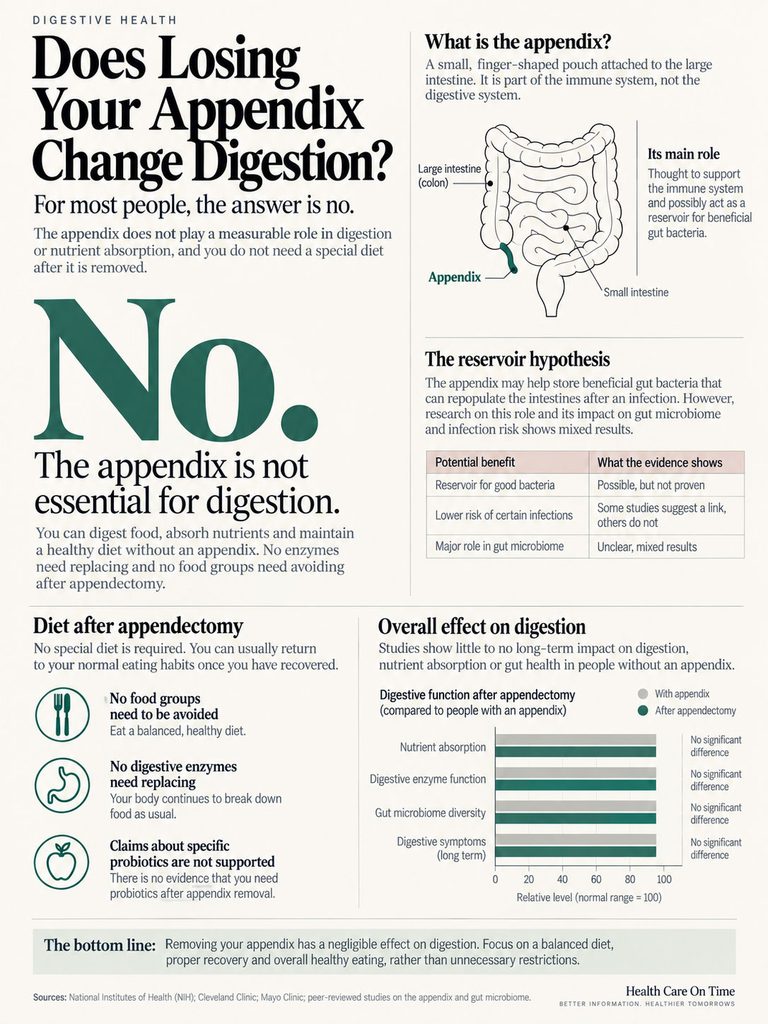
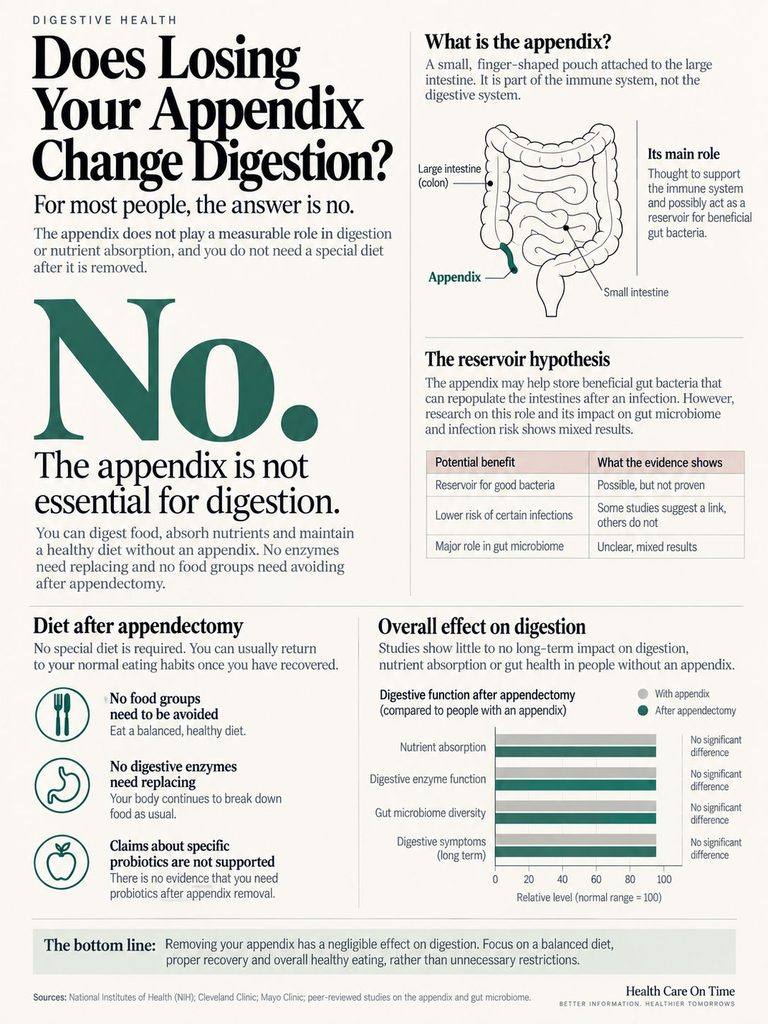
For everyday eating, no. The appendix plays no measurable role in breaking down food or absorbing nutrients, and people digest meals the same way after it is removed.
There is no post-appendectomy diet. No enzyme needs replacing, no food group needs avoiding, and no restriction carries into the following year.
The reservoir hypothesis, labeled as a hypothesis
One line of research proposes that the appendix acts as a safe house for beneficial gut bacteria, letting them repopulate the colon after a severe bout of diarrhea. It is a plausible idea supported mainly by anatomy, comparative biology, and observational data.
Some studies have examined whether appendectomy shifts the gut microbiome or changes the risk of Clostridioides difficile infection. Results are mixed and effect sizes small.
None of it changes what you should eat. Anyone selling you a specific probiotic on the grounds that your appendix is gone is running well ahead of the evidence.
Can Food Prevent Appendicitis? What the 2025 Review Found
Burkitt’s hypothesis and why it stuck
In the 1970s, Denis Burkitt proposed that a cluster of Western diseases shared one cause, a lack of dietary fiber. Appendicitis sat on that list beside colorectal cancer and diverticulosis.
The idea was influential and intuitive, and it was built on population-level comparisons rather than individual data. It has been repeated ever since without much scrutiny.
The 2025 verdict
A systematic review and meta-analysis in the World Journal of Surgery finally quantified it. Twenty-one studies met the inclusion criteria, and most were judged to carry a high risk of bias.
The authors state the finding carefully. The available evidence, though largely observational, points to an inverse association between dietary fiber and acute appendicitis, while meat-heavy and sugar-heavy Western dietary patterns appear to raise risk, and the review flags a large degree of uncertainty, heterogeneity, and low-quality data.
A UK Biobank analysis presented to the Nutrition Society adds a supporting signal, reporting that absence of dried and fresh fruit intake raised appendicitis risk by 12 percent and 16 percent respectively. That is prospective cohort data, which is stronger than population comparisons but still observational.
The finding that points at water instead
One study complicates the fiber story in a useful way. A case-control study of 53 Southampton children with appendicitis, matched against two separate control groups using seven-day weighed food records, identified low water intake as an independent risk factor, while fiber intake from cereals and vegetables relative to energy and body weight was similar between cases and controls.
The study is old and small. It is also the only one in this space that measured intake by weighed record rather than recall, which makes it hard to wave away.
The honest verdict
More fiber and less ultra-processed food is sound advice for reasons that have nothing to do with your appendix. It is not appendicitis prevention in any sense anyone should rely on.
Nobody should feel they caused their own appendicitis through diet. In cases reviewed by our medical team the question comes up often, and the evidence does not support that guilt.
Special Situations and When to Call
Children and teens
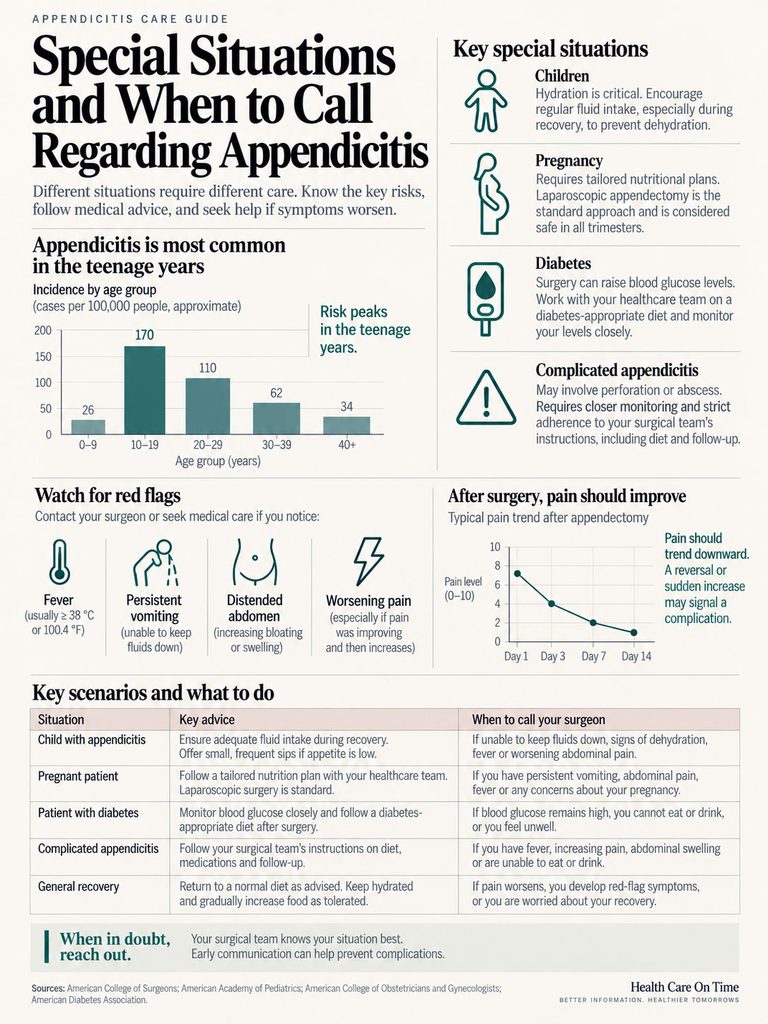
Appendicitis peaks in the teenage years, and children recover quickly. The practical issue is fluid, since kids dehydrate faster and drink less willingly when their abdomen hurts.
Popsicles, diluted juice, and oral rehydration solutions are legitimate tools here rather than treats. Return to school is usually governed by pain control and activity restrictions, not by diet.
Pregnancy
Appendicitis is the most common non-obstetric surgical emergency in pregnancy, and laparoscopic appendectomy is the standard approach. Nutritional needs do not pause for surgery.
Protein, iron, and fluid intake carry extra weight here, and any dietary plan should route through the obstetric team rather than a general post-operative sheet.
Diabetes and blood sugar
Surgery raises blood glucose through the stress response, and a clear liquid tray of juice and gelatin is a poor match for anyone on insulin. Elevated glucose also impairs wound healing directly.
Ask for a diabetes-appropriate diet order instead of accepting the default tray. Check more frequently than usual during the first week, particularly while appetite is erratic.
Complicated appendicitis
Perforation, abscess, or a surgical drain changes everything on this page. Follow your surgical team’s timing exactly, and expect a slower advance plus a longer antibiotic course.
Table 3: If This Happens, Do This
| Scenario | What it usually means | What to do now | When to call the surgeon |
| Nauseated on waking | Anesthesia effect, not gut injury | Ice chips, small sips, anti-nausea medication if offered | If vomiting continues past 24 hours |
| No appetite on day 1 | Normal after general anesthesia | Fluids first, food when it appeals | If nothing at all stays down for a full day |
| No bowel movement by day 3 | Opioids plus low intake plus low activity | Fluids, walking, stool softener, then an osmotic laxative | If day 4 passes with no gas and a swelling abdomen |
| Bloated and gassy after laparoscopy | Residual carbon dioxide from the procedure | Walk, skip carbonated drinks, apply a heating pad | If the abdomen is firm, tender, and enlarging |
| Vomiting after every meal | Possible ileus or obstruction | Stop solids, sip fluids, contact the team | Same day, without exception |
| Fever plus worsening abdominal pain | Possible abscess or infection | Do not manage this at home | Immediately, or go to the emergency room |
| Perforated appendix with a drain | Complicated recovery course | Follow the surgical diet order exactly | Any change in drain output or new fever |
Red flags
Call your surgeon or seek emergency care for vomiting past 24 hours, no passage of gas by day three or four with a distended abdomen, a temperature above 101 degrees Fahrenheit, redness or drainage at an incision, or pain that is worse today than yesterday.
Pain after an appendectomy should trend downward. A reversal in that trend is the signal that matters most.
What This Costs in the United States
An emergency department visit for suspected appendicitis, including a CT scan and laboratory work, commonly runs 2,000 to 5,000 dollars before insurance, and the appendectomy itself is frequently billed in the 15,000 to 40,000 dollar range depending on the facility and whether the appendix perforated.
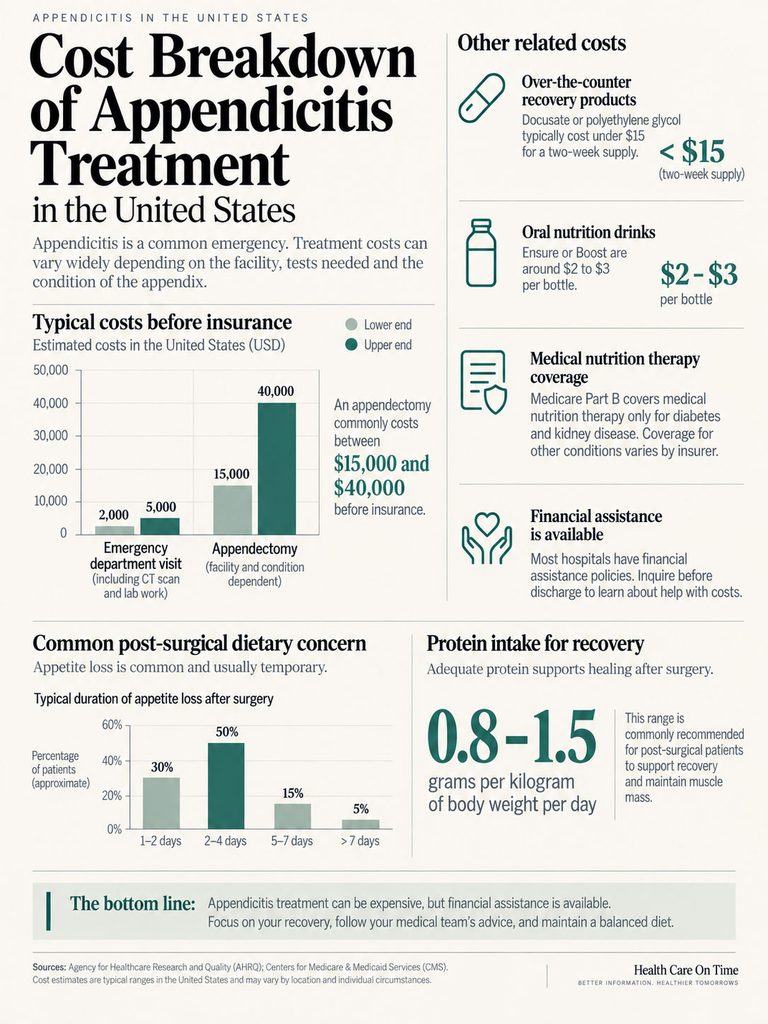
The recovery-diet side is far cheaper. Docusate and polyethylene glycol are both inexpensive over-the-counter products, typically under 15 dollars for a two-week supply, and oral nutrition drinks such as Ensure or Boost run roughly 2 to 3 dollars per bottle when appetite is genuinely poor.
Medical nutrition therapy from a registered dietitian is covered by Medicare Part B only for diabetes and kidney disease, so most post-surgical nutrition counseling is out of pocket or bundled into hospital care. Many commercial plans cover several visits per year. If appetite has not returned by the second week, ask your surgeon’s office whether a dietitian referral is available under your plan.
For readers without insurance, most hospitals maintain financial assistance policies and are required to publish them. Ask for the financial counseling office before discharge rather than after the bill arrives. Patients who contact us about lab and imaging costs are often surprised how much of that conversation is available to them up front.
Frequently Asked Questions
Can you eat before appendix surgery?
No. Once appendicitis is suspected, stop all food and drink, including water, until the emergency team says otherwise. The two-hour clear liquid allowance you may have read about applies to planned surgery in healthy patients, not to an emergency operation where the stomach is assumed to be full.
How long after an appendectomy can you eat normal food?
After an uncomplicated laparoscopic appendectomy, most people return to normal meals within one to two days, and many eat soft food the same evening. Perforated or abscessed appendicitis takes longer, often several days, because the bowel restarts more slowly after significant infection.
What foods should be avoided after appendix removal?
Very little. Skip alcohol while taking pain medication, ease off very high-fat meals for the first two days, and avoid carbonated drinks while bloated. Dairy, rice, pasta, and red meat are fine for most people despite appearing on nearly every restriction list online.
Can you eat rice after appendix surgery?
Yes. White rice digests easily and provides useful calories when appetite is low. It is low in fiber, so pair it with vegetables, beans, or fruit later in the week once constipation becomes the main concern rather than nausea.
Is dairy bad after an appendectomy?
Not unless you are lactose intolerant. Yogurt is one of the better early foods after surgery because it supplies protein without chewing or effort. The blanket dairy warning on many patient handouts has no evidence behind it for appendectomy.
Why is constipation so common after appendix surgery?
Four factors stack up: anesthesia slows the gut, opioid pain medicine slows it further, food and fluid intake drops, and activity falls. The combination usually peaks around day three or four. Fluids, walking, and a stool softener resolve most cases.
How much protein is needed after abdominal surgery?
The everyday adult reference is about 0.8 grams per kilogram of body weight. Surgical nutrition guidance suggests up to roughly 1.5 grams per kilogram for patients at nutritional risk. After an uncomplicated appendectomy in a healthy adult, a figure between those two during recovery week is reasonable.
Can you drink coffee after an appendectomy?
Usually yes, once you are tolerating fluids. Coffee does not harm healing tissue. Two cautions apply: caffeine can worsen dehydration if it displaces water, and it may unsettle a stomach still recovering from anesthesia on the first day.
Does removing the appendix affect digestion long term?
No. The appendix plays no measurable role in digesting food or absorbing nutrients, and no permanent dietary change is needed. Research into its possible role as a bacterial reservoir is interesting but has produced nothing that should change what anyone eats.
Can a poor diet cause appendicitis?
The evidence is weak. A 2025 systematic review found an inverse association between fiber intake and appendicitis but rated most underlying studies at high risk of bias. Nobody should conclude that their diet caused their appendicitis.
Is it normal to have no appetite for days after surgery?
Yes. Reduced appetite for two to four days after general anesthesia is common and is not itself a warning sign. Prioritize fluids and small amounts of protein. Appetite that has not returned at all by day five deserves a call to your surgical team.
When can you drink alcohol after an appendectomy?
Wait until you are completely off opioid pain medication and eating normally, typically one to two weeks. Alcohol combined with opioids increases sedation and breathing risks, and it dehydrates precisely when fluid intake matters most.
Medical Disclaimer
This article provides general information and does not replace advice from your surgeon or physician. Post-operative instructions vary by patient, by operation, and by what was found during surgery. Follow the specific discharge instructions you were given. If you have severe abdominal pain, persistent vomiting, fever, or a worsening incision, contact your surgical team or seek emergency care. Call 911 for severe or rapidly worsening symptoms.
References
- 2023 American Society of Anesthesiologists Practice Guidelines for Preoperative Fasting, Anesthesiology 138(2):132-151
- Warren J, Bhalla V, Cresci G. Postoperative Diet Advancement: Surgical Dogma vs Evidence-Based Medicine. Nutrition in Clinical Practice 2011;26(2):115-125
- Pitesa R, Spiekermann M, Paterson C, Hill AG. Revisiting Diet and Appendicitis: A Systematic Review and Meta-Analysis. World Journal of Surgery 2025;49(12):3380
- Contemporary National Inpatient Trends in Appendectomy Utilization and Operative Approach in the United States, 2016-2022
- Trends and outcomes in pediatric laparoscopic appendectomy: an NSQIP-P analysis of same-day discharge and readmission rates
- Same-Day Discharge after Non-Perforated Laparoscopic Appendectomy Is Safe, ACS-NSQIP analysis
- The Effect of Chewing Gum on Postoperative Gastrointestinal Function Recovery: A Systematic Review and Meta-analysis, Annals of Surgical Oncology 2025
- Chewing gum reduces postoperative ileus following abdominal surgery: a meta-analysis of 17 randomized controlled trials
- Nelson M, Morris J, Barker DJ, Simmonds S. A case-control study of acute appendicitis and diet in children
- Consumption of diets rich in animal protein, saturated fat, or sodium, and low in fibre are associated with increased risk of acute appendicitis, Proceedings of the Nutrition Society
- Patient-Controlled Nutrition After Abdominal Surgery: Novel Concept Contrary to Surgical Dogma, Annals of Coloproctology
- Early Oral Feeding Versus Traditional Postoperative Care After Abdominal Emergency Surgery: A Randomized Controlled Trial, World Journal of Surgery
- Appendectomy, StatPearls, updated May 14, 2025
- From clinical guidelines to practice: nutrition elements for enhancing recovery after colorectal surgery, Nutrition in Clinical Practice 2022