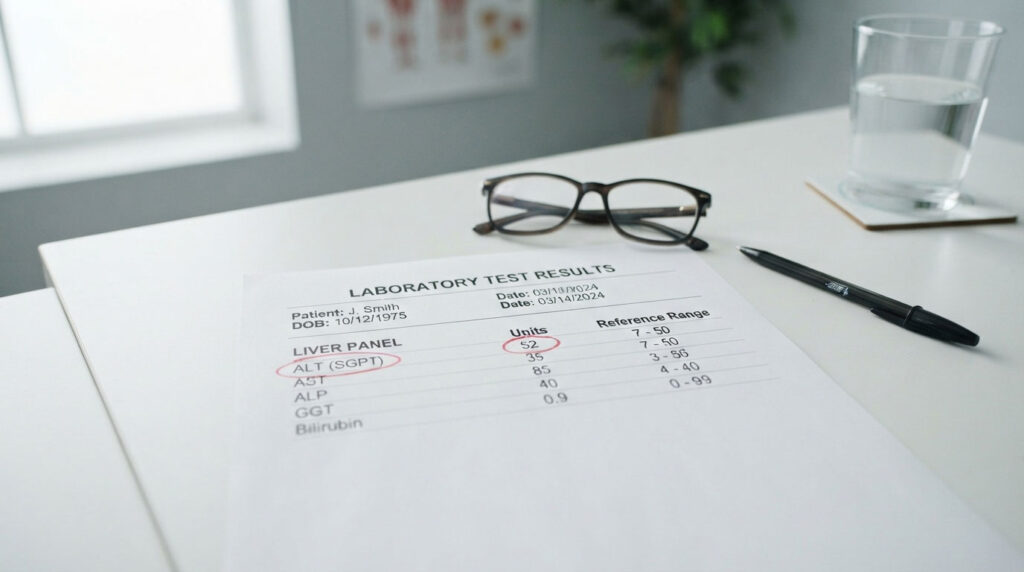
Your lab report says your ALT is 52. The reference range printed beside it stops at 50. Two units over, flagged in red, and nobody called you about it.
Table of Contents
Here is the part almost nobody explains: the number your lab calls the ceiling and the number liver specialists call healthy are not the same number. The American College of Gastroenterology puts a true healthy ALT at under 29 to 33 IU/L for men and 19 to 25 IU/L for women. Most US labs still print 40 to 56.
That gap is why a result can look fine and still deserve a second look, or look alarming and turn out to be a hard workout from three days ago.
Quick Answer
A high ALT blood test means alanine aminotransferase, an enzyme concentrated inside liver cells, is leaking into your bloodstream because those cells are inflamed or injured. In US adults, the two most common causes are fatty liver disease and alcohol. Most mild elevations are not serious liver disease, but they should never be ignored, and a single result is not a diagnosis.
At a Glance
Lab reference ranges run higher than the ACG healthy-normal cutoffs, so “within range” is not always reassuring.
Roughly 10% to 20% of the general population has elevated liver chemistry levels.
Fewer than 5% of people with elevated ALT turn out to have severe liver conditions.
MASLD (fatty liver) and alcohol account for the majority of mild elevations in US adults.
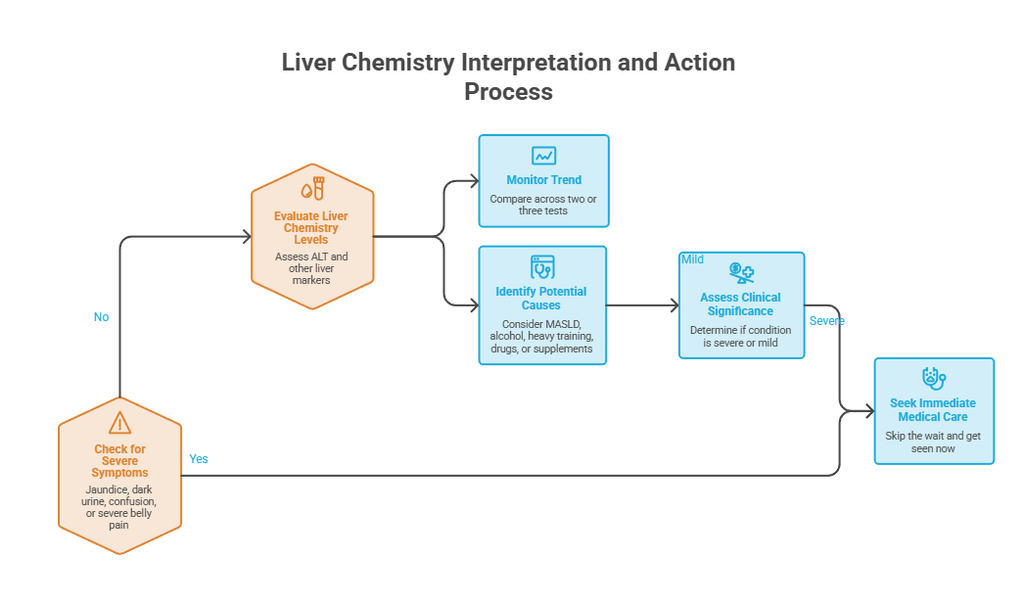
Muscle from heavy training, prescription drugs, and herbal supplements are the classic false alarms.
The trend across two or three tests tells you far more than any single value.
Jaundice, dark urine, confusion, or severe belly pain mean skip the wait and get seen now.
What an ALT Blood Test Actually Measures
ALT stands for alanine aminotransferase. It is an enzyme that helps your liver convert protein into usable energy.
The important detail is where it lives. ALT sits packed inside liver cells at concentrations far higher than anywhere else in your body. When those cells are damaged, ALT leaks into the blood, which is exactly what the test picks up.
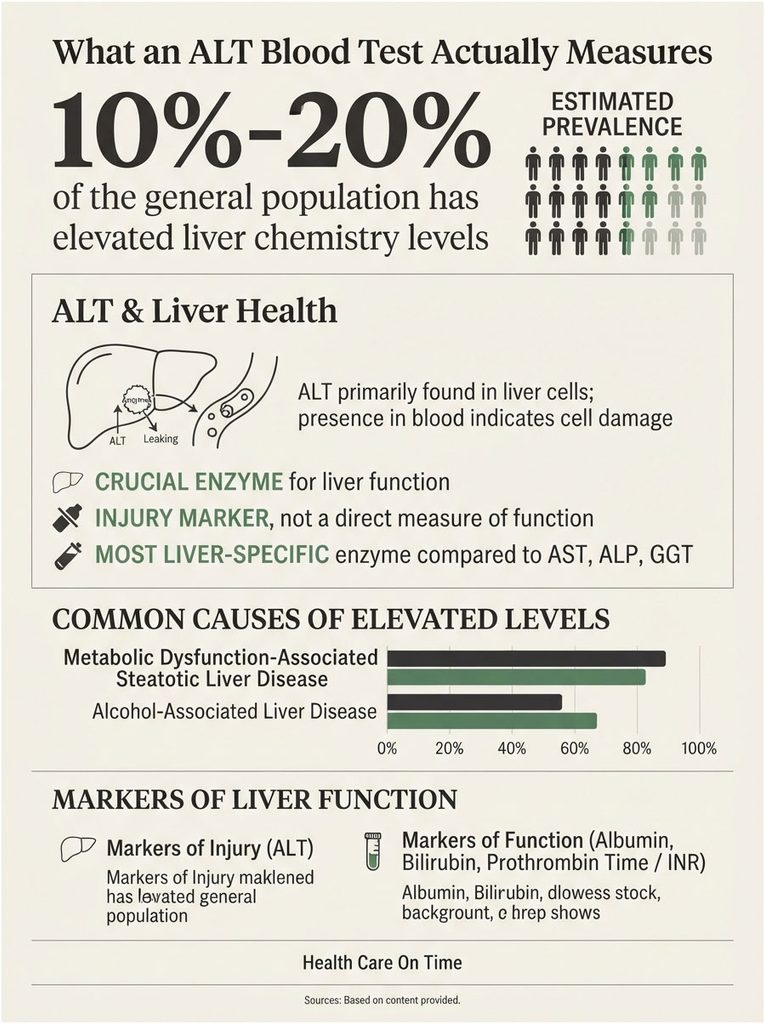
So the test is not measuring how well your liver works. It measures whether liver cells are breaking open.
What ALT Does Not Tell You
This distinction matters more than any single number on the page. ALT is an injury marker, not a function marker.
The markers that measure actual liver function are albumin, bilirubin, and prothrombin time or INR. Those reflect whether the liver is still making proteins and clearing waste.
In exercise-related enzyme elevation, those synthetic markers stay normal, because the liver is neither failing nor damaged and the enzymes are coming from muscle. A high ALT with a normal albumin and a normal INR is a very different picture than a high ALT with either one drifting.
Why ALT Beats Other Enzymes for Liver Specificity
A standard liver panel reports four or five markers, and each one points somewhere slightly different.
ALT is the most liver-specific of the group. AST appears in liver, heart, skeletal muscle, kidney, and red blood cells, which is why a high AST alone rarely tells a clean story.
ALP (alkaline phosphatase) and bilirubin point toward bile flow rather than cell injury. GGT helps separate a liver source from a bone source when ALP is up, and it tends to climb with regular alcohol use.
Our medical reviewers note that the single most useful thing a patient can bring to a follow-up appointment is the full panel, not just the flagged line. The pattern across ALT, AST, ALP, and bilirubin is what narrows the list.
Why Some US Lab Reports Still Say SGPT
If your report reads SGPT instead of ALT, nothing is different. SGPT (serum glutamic pyruvic transaminase) is the older name for the same enzyme, and some US labs and older record systems still carry it.
Patients booking liver panels through HealthCareOnTime ask about this constantly. ALT and SGPT are one test with two labels.
How Common Is This, Really
Approximately 10% to 20% of the general population has elevated liver chemistry levels, including ALT and AST. That is tens of millions of Americans in any given year.
The most common causes of mildly elevated transaminase levels, defined as two to five times the upper limit of normal, are metabolic dysfunction-associated steatotic liver disease and alcohol-associated liver disease. Everything else on the list is less likely, though not less important.
What Counts as “High”? ALT Ranges on a US Lab Report
Your lab prints a reference range. It probably tops out somewhere between 40 and 56 U/L, and it may or may not split by sex.
Those ranges were built statistically, from the middle 95% of whoever the lab sampled. If that population included plenty of people with undiagnosed fatty liver, the ceiling drifted upward.
The ACG Healthy-Normal Range
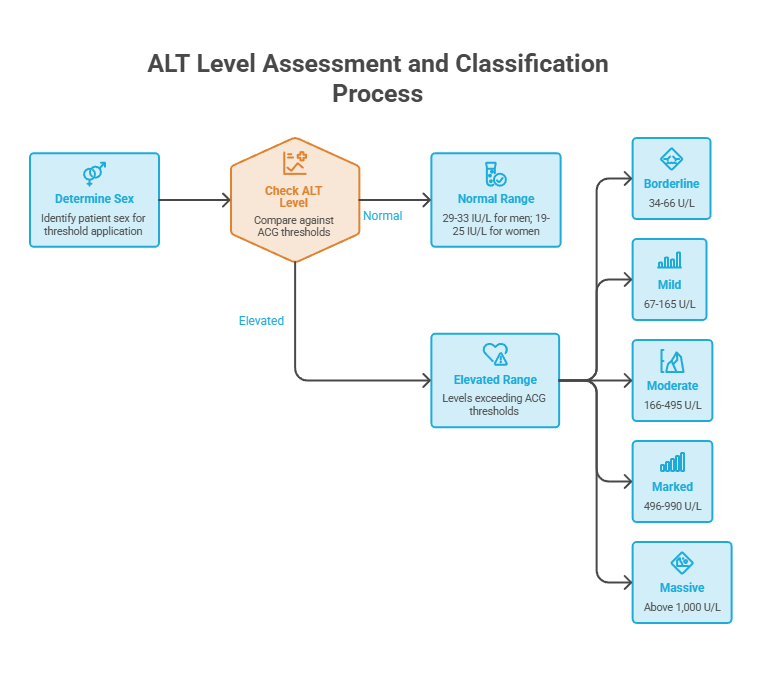
The ACG guideline defines a true healthy normal ALT in prospectively studied populations without identifiable liver disease risk factors as 29 to 33 IU/L for men and 19 to 25 IU/L for women, and states that levels above this should be assessed by physicians.
Guideline author Paul Kwo of Stanford has pointed out that because lab ceilings vary so widely, a clinician may not think to evaluate an ALT of 70, since that can fall inside the reporting lab’s normal band, even though that degree of elevation carries increased liver-related mortality risk.
There is a real trade-off here, and honest coverage has to name it. Applying the lower cutoffs would newly classify up to 36% of men and 28% of women as having elevated liver enzymes, which means more referrals, more testing, and more cost.
That is the live disagreement in US hepatology. One camp argues the lower thresholds catch early disease that the old ranges miss. The other argues they medicalize millions of healthy people.
Why the Cutoff Differs by Sex
Men carry more muscle mass and, on average, higher baseline transaminase levels. The sex-split thresholds reflect measured population data, not a judgment about risk tolerance.
The practical consequence: an ALT of 30 is unremarkable in a 40-year-old man and worth a conversation in a 40-year-old woman.
Units, Lab-to-Lab Variation, and Why Comparing Is Tricky
US labs report ALT in U/L or IU/L, and the two are used interchangeably. That part is simple.
What is not simple is comparing results across labs. Different analyzers and reagent formulations produce genuinely different values on the same sample, which is why a result of 48 at one lab and 41 at another may represent no biological change at all.
Our lab partners report that the most reliable comparisons come from repeat testing at the same facility. If you are tracking a trend, keep the draws in one place.
Weight Moves the Number
The ACG guideline describes a linear relationship between ALT level and body mass index that physicians should assess. Higher BMI pushes ALT up, largely through fat accumulation in the liver.
This is why the same person can watch ALT drift from 28 to 48 across five years with no new diagnosis, no new medication, and no change in drinking.
ALT Elevation Bands: What Each Range Usually Means
| Elevation Band | ALT Range (U/L) | Multiple of ULN | Most Common Causes in US Adults | Typical Next Step |
| Borderline | 34 to 66 | 1x to 2x | MASLD, excess weight, alcohol, recent heavy exercise, statins, NSAIDs | Repeat ALT in 4 to 12 weeks with a full liver panel |
| Mild | 67 to 165 | 2x to 5x | MASLD/MASH, alcohol-associated liver disease, drug-induced injury, chronic hepatitis B or C | Hepatitis B and C serology, iron studies, CBC with platelets, FIB-4 calculation |
| Moderate | 166 to 495 | 5x to 15x | Acute viral hepatitis, drug-induced liver injury, autoimmune hepatitis, bile duct obstruction | Evaluation within days, abdominal ultrasound, expanded serology |
| Marked | 496 to 990 | 15x to 30x | Acute hepatitis A or B, idiosyncratic drug injury, autoimmune flare, acute biliary obstruction | Urgent same-week evaluation, hepatology input |
| Massive | Above 1,000 | Above 30x | Acetaminophen toxicity, ischemic hepatitis (shock liver), acute viral hepatitis, Budd-Chiari syndrome | Emergency department evaluation the same day |
Bands are calculated against a 33 U/L upper limit of normal per ACG guidance. Your lab’s ceiling may differ, so check the range printed on your own report.
The Common Causes of a High ALT
Ranking causes by how often they actually show up is more useful than an alphabetical list. Here is the real-world order in US primary care.
Metabolic Dysfunction-Associated Steatotic Liver Disease
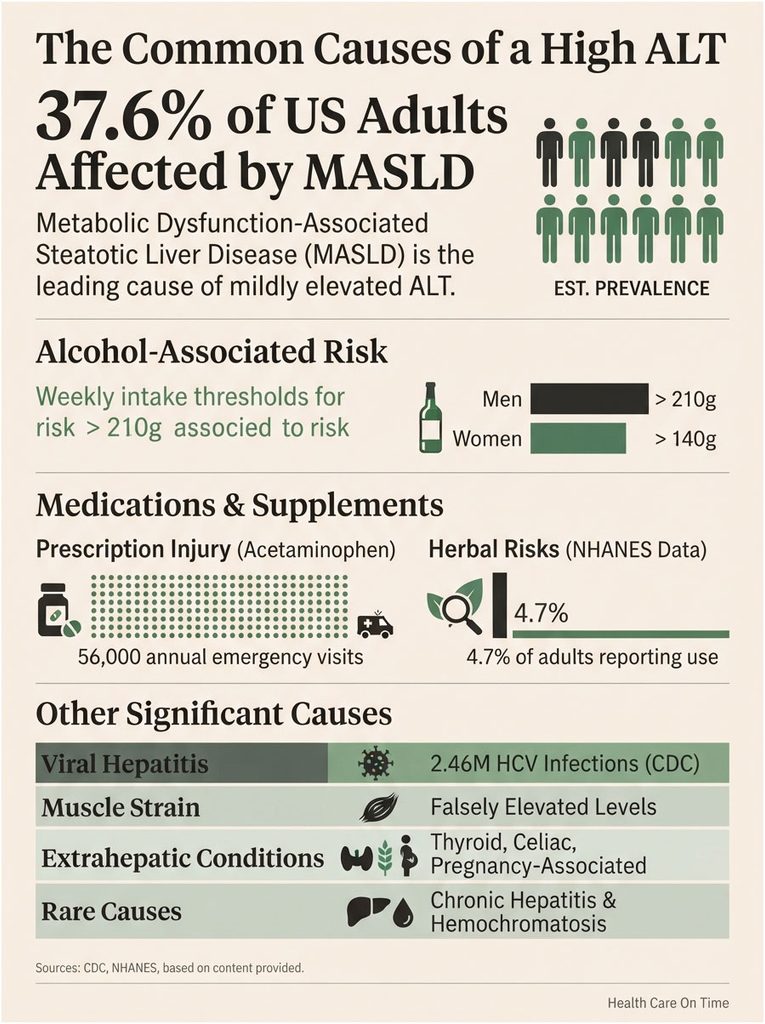
MASLD is the leading cause of a mildly elevated ALT in American adults. The condition was formerly called nonalcoholic fatty liver disease (NAFLD), and the inflamed form, NASH, is now called MASH.
The numbers are enormous. In NHANES data, US adult MASLD prevalence measured 37.6% in 2017 to 2020 and 32.5% in 2021 to 2023, with a decline among people with prediabetes and diabetes.
Projected nationally, that corresponds to roughly 73 million US civilian adults with MASLD, of whom 12.2 million had liver stiffness at or above 8 kPa. Liver stiffness is the marker that separates fat from scarring.
MASLD typically produces ALT somewhere between the mid-30s and about 100 U/L. It usually causes no symptoms at all, which is why the blood test is often the first clue.
Alcohol
Alcohol-associated liver disease runs a close second, and it produces a distinctive pattern rather than a distinctive number.
When the AST to ALT ratio exceeds two, alcohol-related liver disease becomes more likely. The ACG guideline flags men drinking more than 210 grams of alcohol per week and women more than 140 grams per week, paired with AST above ALT, as candidates for cessation counseling.
For reference, a standard US drink holds about 14 grams of alcohol. That puts the thresholds near 15 drinks per week for men and 10 for women.
Prescription Medications
Drugs are the third big bucket, and the list is long enough that a medication review belongs in every workup.
Acetaminophen
Acetaminophen deserves its own paragraph because it is both extremely common and genuinely dangerous at the wrong dose. It is the most common cause of acute liver failure in the United States, responsible for 56,000 emergency department visits, 2,600 hospitalizations, and 500 deaths annually.
The 4,000 mg daily ceiling assumes you know your total intake. Acetaminophen hides in hundreds of combination cold, flu, sleep, and prescription pain products, and stacking them is how accidental overdoses happen.
Doses as low as 4 to 8 grams per day can produce liver injury in people with alcohol use disorder or underlying liver disease. The safety margin shrinks when the liver is already stressed.
Everything Else on the List
Statins, amoxicillin-clavulanate, isoniazid and other antituberculosis drugs, methotrexate, antiseizure medications, and NSAIDs all appear regularly in drug-induced liver injury reporting.
Our medical team sees a recurring scenario: a patient starts a new statin, gets routine labs eight weeks later, and finds ALT at 62. Most of the time the elevation is mild, stable, and does not require stopping the drug, but that call belongs to the prescribing physician, not to the patient.
Herbal and Dietary Supplements
This category has grown fast and gets almost no attention on consumer health pages.
Herbal and dietary supplement liver injury now accounts for 20% of drug-induced liver injury cases in the US DILIN registry, up from 7% in 2004 to 2005.
In NHANES 2017 to 2020, 4.7% of US adults reported taking a supplement containing at least one of six botanicals of concern: turmeric, green tea, ashwagandha, black cohosh, garcinia cambogia, or red yeast rice. That translates to roughly 15.6 million US adults, a figure the researchers compared to the number prescribed an NSAID or simvastatin.
Most people reported taking these on their own rather than on a physician’s advice. Because supplements are not reviewed by the FDA before sale, dose and purity vary widely between bottles.
Genetics may explain why some people react and most do not. The HLA-B*35:01 allele, carried by 5% to 15% of US populations, was found in 72% of patients with green tea extract liver injury, and carriers showed shorter latency and higher median ALT values.
Across the panels our diagnostic network processes, supplement use is the single most under-reported item on intake forms. If you take anything, bring the actual bottles to your appointment.
Viral Hepatitis
Hepatitis B and C remain meaningful causes, and both can run silently for years.
CDC modeling estimates 2.46 million current HCV infections among US adults using the NHANES+ model, rising to 4.04 million when adjusting for underrepresentation of people who inject drugs.
For hepatitis B, approximately 660,000 people were estimated to be living with chronic infection in the United States during January 2017 to March 2020. CDC now recommends hepatitis B screening for all adults over 18 at least once in a lifetime.
Hepatitis A causes a sharp, short-lived spike rather than a chronic elevation, often into the hundreds or thousands. In chronic viral hepatitis, enzyme elevation may not correlate well with the actual degree of liver damage, which is a reason hepatitis is tested for even when ALT is only slightly up.
The Non-Liver Causes People Miss
Muscle and Hard Training
This is the most common false alarm in the whole category, and it fools clinicians too.
In a study of 15 healthy men unaccustomed to weightlifting who completed a one-hour session, AST, ALT, LDH, creatine kinase, and myoglobin all rose significantly and stayed elevated for at least seven days, while bilirubin, GGT, and ALP stayed normal.
A published case makes the point vividly. A healthy male student tested one day after three hours of intense lifting and endurance work showed CK 3,600, ALT 90, and AST 54. After two days of complete rest, his repeat values were CK 100, ALT 39, and AST 19.
The tell is the company the number keeps. If CK is substantially elevated alongside AST and ALT and all three move together, a muscle source is supported. A highly elevated CK with only mildly raised transaminases, or the reverse, is less reassuring. Normal GGT and ALP also point away from the liver.
Trained athletes show smaller elevations than untrained people, but the effect is universal and even experienced lifters cannot avoid it entirely.
Thyroid, Celiac Disease, and Hemolysis
Extrahepatic causes of elevated transaminases include celiac disease, hyperthyroidism, rhabdomyolysis, and pregnancy-associated liver disease.
Celiac disease in particular is worth naming, because a simple tTG antibody test can settle it and the liver enzymes often normalize on a gluten-free diet.
Less Common but Important
Uncommon causes include drug-induced liver injury, chronic hepatitis B and C, and hereditary hemochromatosis. Rare causes are alpha-1 antitrypsin deficiency, autoimmune hepatitis, and Wilson disease.
These are why the standard workup includes iron studies and, if the first round comes back clean, autoimmune and metabolic markers. Wilson disease matters especially in patients under 40, because it is treatable and easy to miss.
Why the Trend Matters More Than Any Single Number
Patients commonly ask us which number counts as their “real” ALT. The honest answer is that no single draw is definitive.
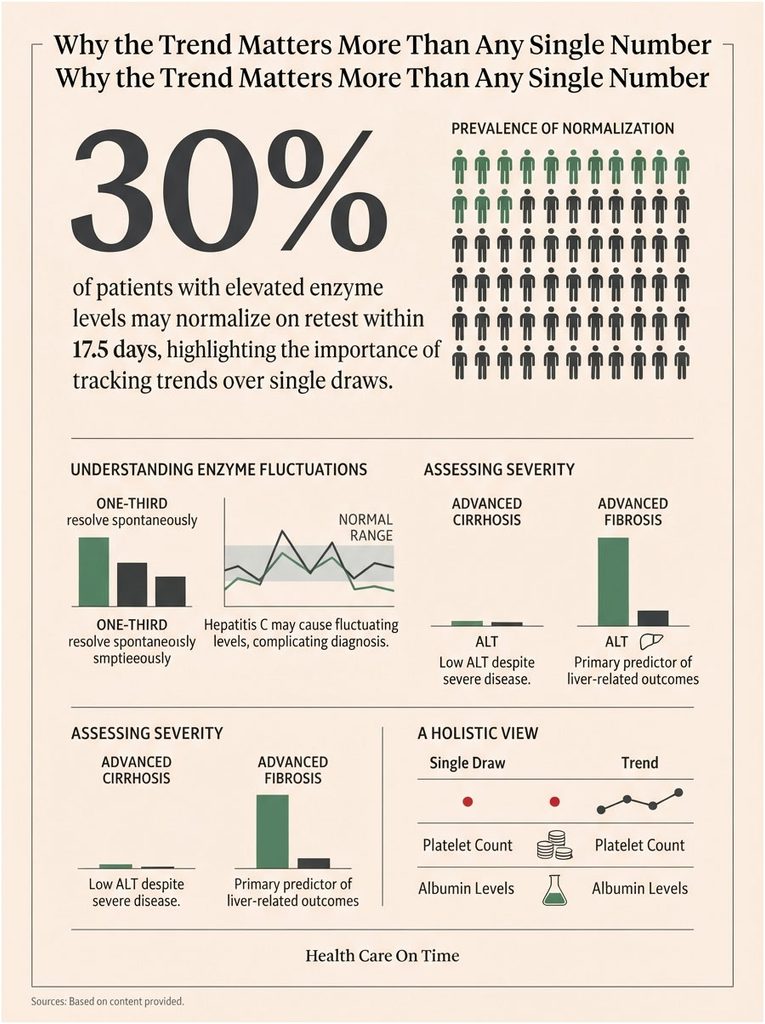
More than 30% of adults with an initially elevated AST or ALT have normal levels on retesting, with a mean time to retest of about 17.5 days. One-third of red flags resolve on their own.
The opposite problem exists too. Hepatitis C can produce enzyme levels that fluctuate in and out of the normal range, so a single clean retest does not fully rule it out in someone with risk factors.
The Counterintuitive Part: ALT Can Fall as Disease Advances
Advanced cirrhosis can produce a low or normal ALT, because so few functioning liver cells remain to leak enzyme. Fewer cells means less enzyme, not less disease.
That is why platelet count, albumin, and imaging carry weight alongside the enzyme. A normal ALT with a low platelet count is a more concerning combination than a mildly high ALT with everything else intact.
Fibrosis, Not the Enzyme, Predicts Outcomes
Advanced fibrosis is the major determinant of liver-related illness and death in MASLD. Two people with identical ALT values can have completely different long-term risk depending on how much scarring has formed.
This reframes the whole conversation. The point of investigating a high ALT is not to normalize a lab value. It is to find out whether scarring is developing, and to stop it while it is still reversible.
What Your Specific Number May Be Telling You
Two people with an ALT of 58 can be in completely different situations. Context does most of the work.
Just Over the Line
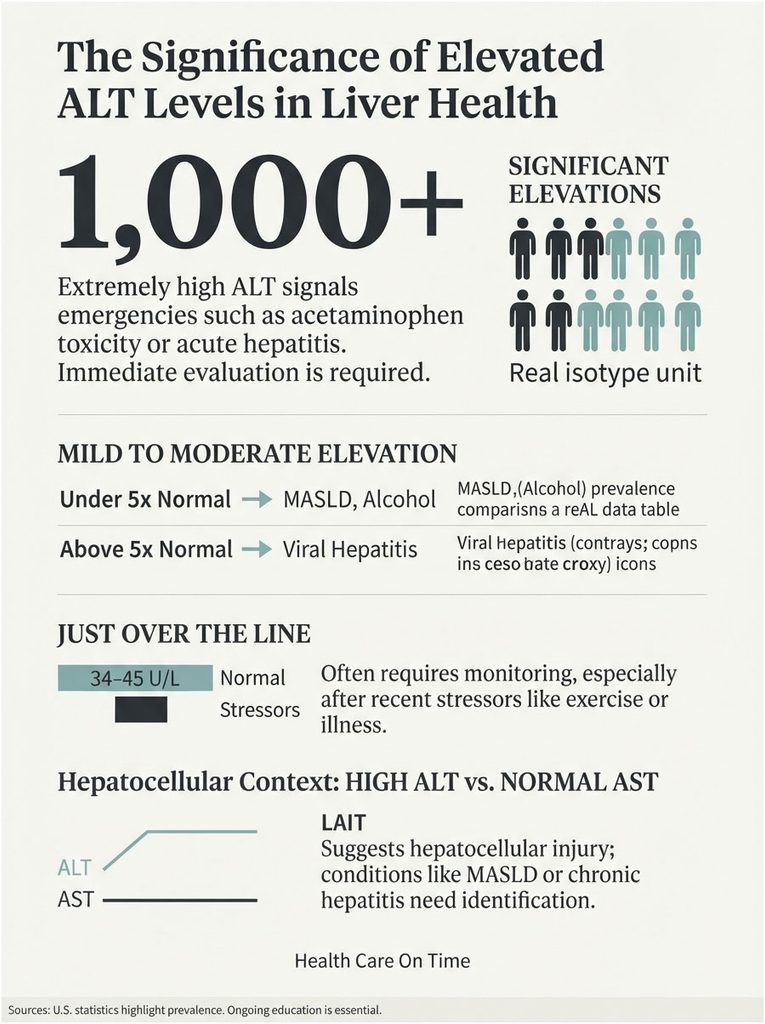
An ALT of 34 to 45 with normal AST, ALP, bilirubin, and platelets, in someone with no risk factors, is usually a repeat-and-watch situation.
Cross-check the timing first. A hard workout, a course of antibiotics, a heavy weekend, or a viral illness in the two weeks before the draw all explain results in this band.
Mild Elevation, Under 5x Normal
This is the zone where MASLD and alcohol dominate, and where fibrosis risk assessment matters most.
It is also the zone that gets neglected, because nothing feels wrong. In cases reviewed by our medical team, the mild-elevation group is the one most likely to skip the follow-up panel entirely and reappear years later with a very different picture.
Moderate to Marked Elevation
Above roughly five times normal, the differential narrows toward acute processes: viral hepatitis, an idiosyncratic drug reaction, an autoimmune flare, or a blocked bile duct.
Elevations greater than five times the upper limit of normal should prompt immediate evaluation. This is not a wait-eight-weeks scenario.
Above 1,000
Very high transaminases point to a short list: acetaminophen toxicity, ischemic injury from a period of low blood pressure, or acute viral hepatitis. These are emergency department presentations.
When ALT Is High but AST Is Normal
A high ALT with a normal or lower AST generally favors a hepatocellular process centered in the liver, with MASLD and chronic viral hepatitis leading the list. Elevation of AST to a level below ALT is typically seen in viral hepatitis, while AST more than twice ALT suggests alcoholic hepatitis.
Disproportionate elevation of AST and ALT compared with alkaline phosphatase defines hepatocellular injury. The reverse pattern defines cholestatic injury. That single comparison steers the entire workup.
US Liver Health Numbers Behind an Elevated ALT
| Statistic | Figure | Source and Year |
| US population with elevated liver chemistries | 10% to 20% | American Family Physician, 2024 |
| Elevated ALT cases that prove to be severe liver disease | Under 5% | Cleveland Clinic, 2026 |
| Adults with initially abnormal ALT/AST who normalize on retest | Over 30%, mean 17.5 days later | American Family Physician |
| US adult MASLD prevalence, NHANES | 37.6% (2017-2020) to 32.5% (2021-2023) | NHANES analysis, 2025 |
| US adults projected to have MASLD | 73 million | AASLD, NHANES 2017-2020 |
| Projected MASLD prevalence by 2050 | 41.4%, about 122 million adults | JAMA Network Open, 2024 |
| US adults using a hepatotoxic botanical in 30 days | 4.7%, about 15.6 million | JAMA Network Open, NHANES 2017-2020 |
| Share of DILIN cases from herbal supplements | 20%, up from 7% in 2004-2005 | Liver International / DILIN, 2024 |
| Current HCV infections among US adults | 2.46 million to 4.04 million | CDC / Hepatology, 2017-2020 |
| Americans living with chronic hepatitis B | About 660,000 | CDC, Jan 2017 to Mar 2020 |
| Acetaminophen-related ED visits per year | 56,000, with 2,600 hospitalizations | StatPearls, 2026 |
How Doctors Work Up a High ALT in the US
The workup is more standardized than most patients expect, and knowing the sequence makes the appointment far more productive.
Step One Is Almost Always a Repeat Test
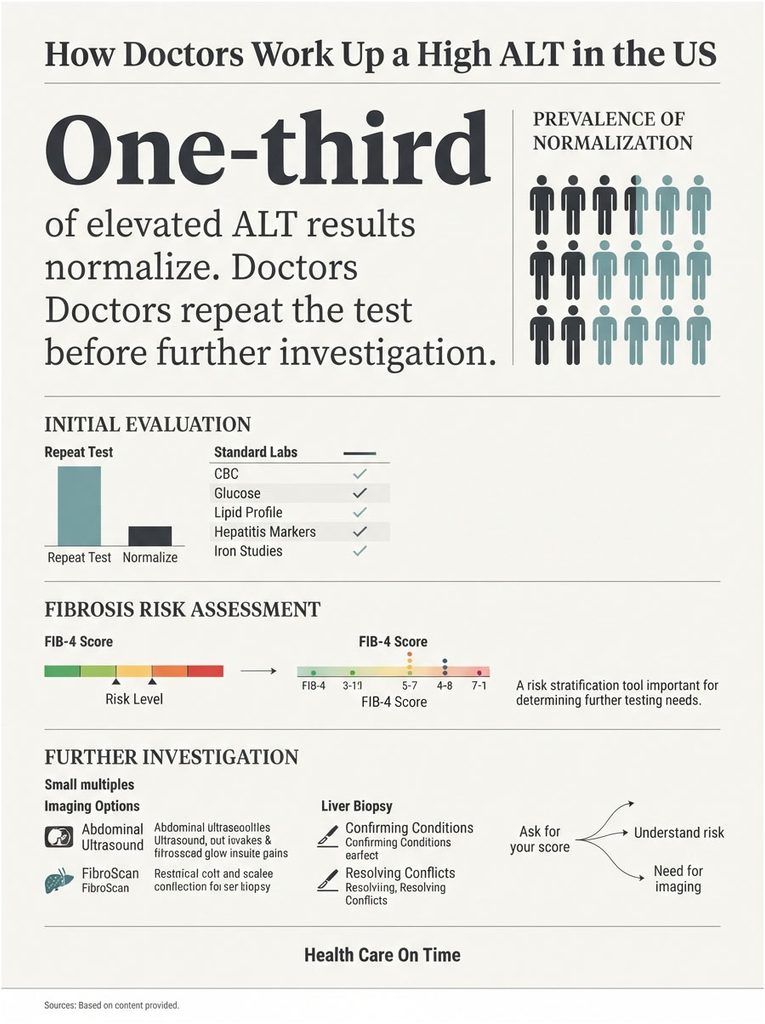
Given that a third of elevated results normalize on their own, repeating the test before ordering anything expensive is standard practice. Persistent mild elevations in asymptomatic people should be followed, and levels going above twice the normal range warrant further evaluation.
The usual interval is four to twelve weeks, shorter if the number is higher or symptoms are present.
The First Round of Labs
Initial testing typically covers CBC with platelets, blood glucose, lipid profile, hepatitis B surface antigen, hepatitis C antibody, serum albumin, iron, total iron-binding capacity, and ferritin.
Platelets matter more than people realize. A falling platelet count alongside elevated ALT is one of the earliest signals of advanced scarring.
FIB-4, the Score Calculated Before Anything Expensive
FIB-4 is a simple formula using age, AST, ALT, and platelet count. It costs nothing extra because those values are already on your panel.
The Fibrosis-4 index is the accessible first-line noninvasive tool for fibrosis risk stratification in MASLD. Patients with FIB-4 above 1.3 aged 36 to 65, and those above 2.0 if older than 65, should get secondary assessment with elastography or an ELF test.
Applied to NHANES data, FIB-4 sorted 55.5 million US adults into the low-risk band (under 1.3), 16.7 million into intermediate, and 1.2 million into high risk (above 2.67).
Ask your provider for your FIB-4 score. It is the number that determines whether you need imaging or reassurance.
Ultrasound, FibroScan, and Elastography
Imaging such as abdominal ultrasound, CT, or MRI is used to look for liver disease or bile duct problems. Ultrasound is the usual first choice: no radiation, widely available, and good at spotting fat and gallstones.
FibroScan (vibration-controlled transient elastography) measures liver stiffness in kilopascals. A reading of 8 kPa is commonly taken as the threshold for stage 2 fibrosis and 12 kPa for stage 3.
When a Liver Biopsy Still Gets Ordered
Liver biopsy is not routinely required to diagnose MASLD, but it remains necessary for confirming at-risk MASH, grading inflammation, resolving conflicts between noninvasive tests, and separating MASLD from other chronic liver disease.
Most people with an elevated ALT will never need one.
Timeline, Cost, and What to Expect Practically
An ALT result usually comes back within 24 to 48 hours of the draw. A full liver panel with hepatitis serology and iron studies typically takes two to four business days.
Liver enzyme testing is generally covered by US insurance when ordered for a documented reason, since it is part of the standard metabolic panel used in routine care. Direct-pay liver panels are also widely available for people who want testing outside a physician visit.
Elastography and specialist imaging carry higher out-of-pocket exposure and coverage varies by plan, which is exactly why FIB-4 gets calculated first.
Special Situations Worth Knowing About
Children and Teenagers
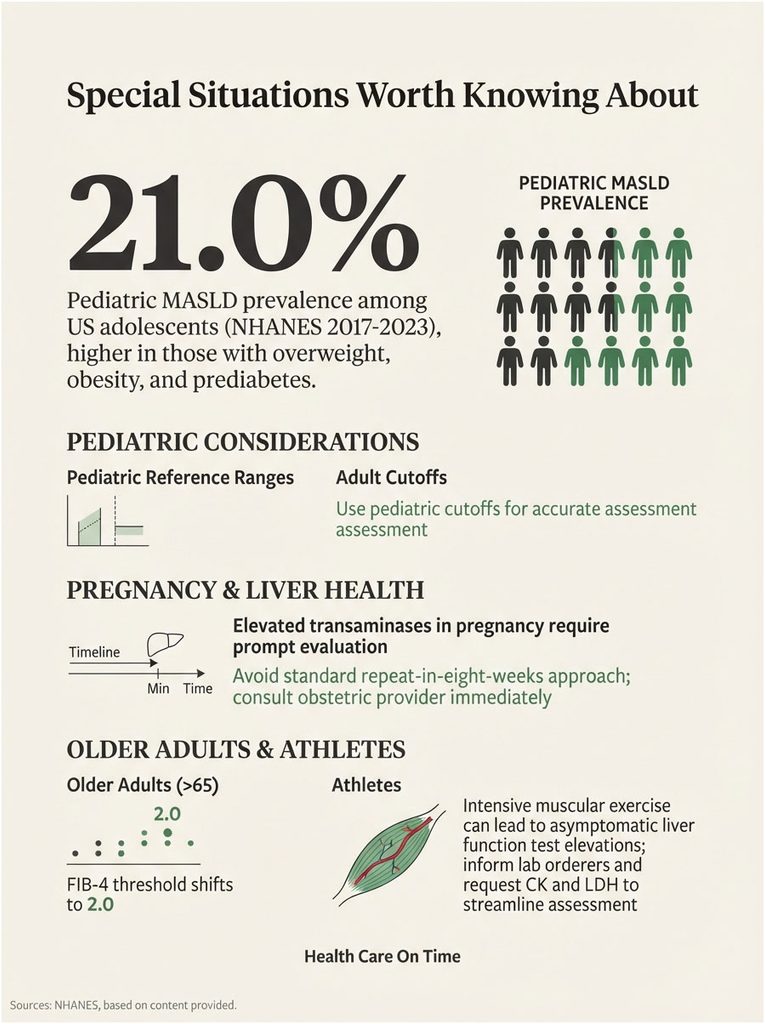
Pediatric elevations follow a different distribution. Among US adolescents in NHANES 2017 to 2023, age-adjusted MASLD prevalence was 21.0% at a CAP threshold of 248 dB/m, with higher rates among those with overweight, obesity, and prediabetes.
Reference ranges also differ for children, so a value that looks normal against an adult range may not be. Pediatric results need pediatric cutoffs.
Pregnancy
Elevated transaminases in pregnancy always warrant prompt evaluation. Several pregnancy-specific liver conditions can develop quickly and carry meaningful risk to both parent and baby.
Do not apply the standard repeat-in-eight-weeks approach here. Contact your obstetric provider the same week.
Adults Over 65
The FIB-4 threshold shifts upward with age, which trips up people who calculate their own score. In adults over 65, the cutoff for secondary risk assessment is 2.0 rather than 1.3.
Using the younger threshold in an older adult produces a lot of unnecessary alarm.
Athletes and Regular Lifters
If you train seriously, tell whoever orders your labs. Intensive muscular exercise should be considered as a cause of asymptomatic liver function test elevations in daily practice, and it is frequently overlooked in the differential.
Asking for CK and LDH alongside the repeat panel usually settles the question in one draw instead of three appointments.
Red Flags That Mean You Should Not Wait for a Retest
The retest-in-eight-weeks approach assumes you feel fine. If you do not, the calculus changes.
Get Care the Same Day
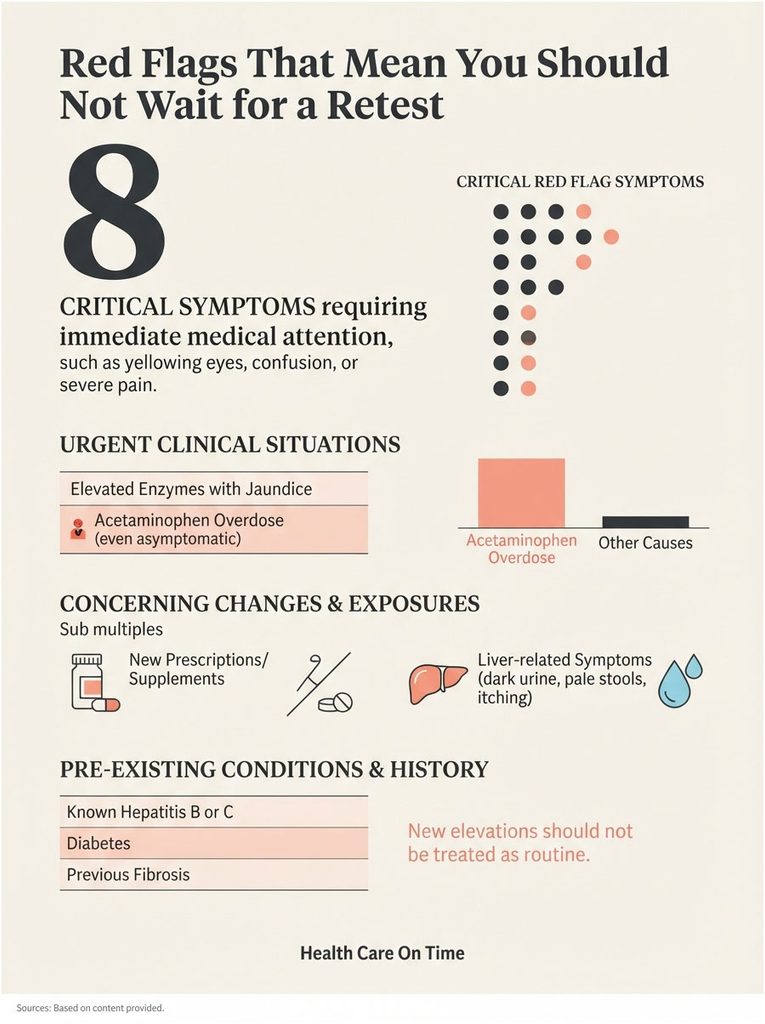
Yellowing of the eyes or skin, confusion or unusual drowsiness, vomiting blood, black tarry stools, severe upper right abdominal pain, or a swollen abdomen with sudden weight gain all warrant immediate evaluation.
Very high levels combined with jaundice, confusion, severe pain, or dark urine call for urgent assessment rather than watchful waiting.
Anyone who has taken more than the labeled dose of acetaminophen in the past 48 hours should be evaluated urgently even if they feel fine, because symptoms lag the injury by a day or more.
Call Your Doctor This Week
Persistent fatigue that is new and unexplained, loss of appetite with weight loss, dark urine or pale stools, itching without a rash, or nausea lasting more than a few days.
Extreme tiredness, appetite loss, jaundice, dark urine, pale stool, abdominal pain, and nausea are the classic symptom set for liver disease.
Situations That Change the Timeline
If your ALT rose after starting a new prescription or supplement in the last three months, that timing is diagnostic information and your prescriber needs to know this week.
If you have known hepatitis B or C, diabetes, or a prior fibrosis assessment, a new elevation should not be treated as routine.
How to Bring a High ALT Back Down
For the majority of readers, the elevation traces back to metabolic factors, alcohol, or something in the medicine cabinet, and all three are modifiable.
Weight Loss and the 5% to 10% Target
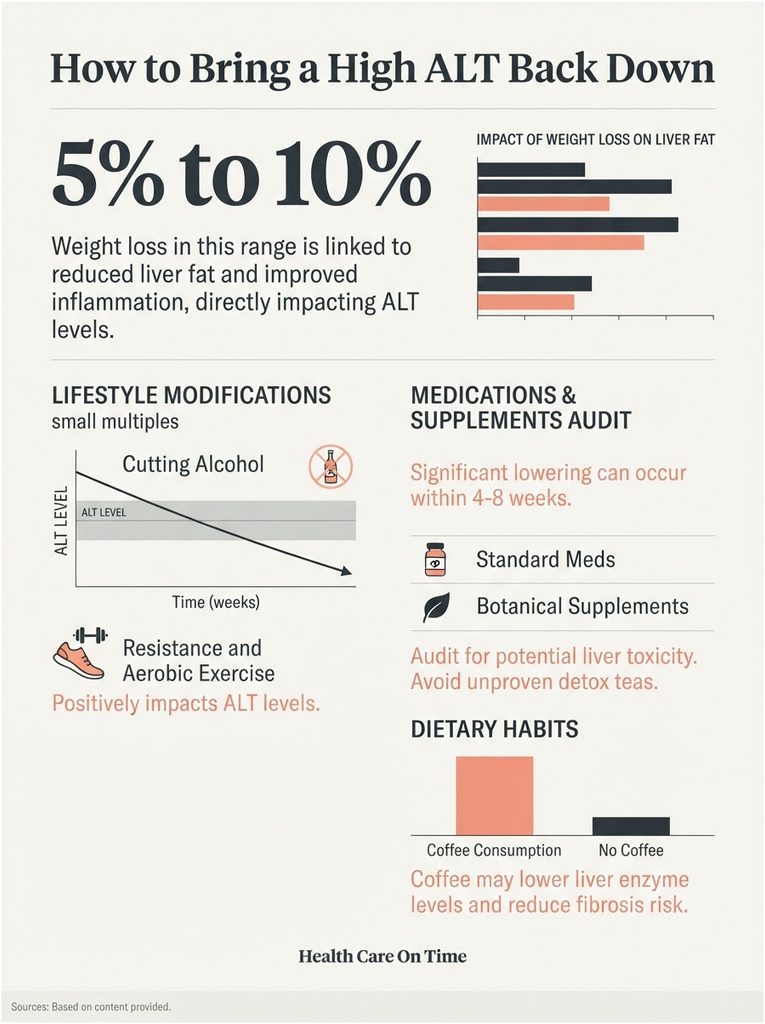
Modest weight loss is the best-supported intervention for MASLD-driven elevations. Losing 5% of body weight tends to reduce liver fat. Losing 7% to 10% is associated with improvement in inflammation.
For a 200-pound adult that is 10 to 20 pounds, not a transformation.
Alcohol
Cutting alcohol produces measurable movement faster than almost anything else, often within four to eight weeks. If AST runs higher than ALT, this is the first lever to pull.
Our medical reviewers note that patients frequently underestimate weekly intake by half when asked casually. Counting standard drinks for one honest week is more useful than a guess.
The Medication and Supplement Audit
Bring every bottle, including anything from a supplement store, a wellness subscription, or a social-media recommendation. Turmeric, green tea extract, and ashwagandha have all been linked to liver toxicity, and some cases have progressed to emergency transplant.
Never stop a prescribed medication on your own. Ask whether a switch or dose change is reasonable.
Exercise, With One Caveat
Resistance exercise improves ALT levels and hepatic steatosis in MASLD, with an effective minimum of whole-body training across 8 to 10 exercises at 60% to 80% of one-rep max, at least three times weekly for 12 weeks.
Walking more than three hours per week has been associated with fewer cirrhosis-related deaths, so moderate aerobic activity helps the liver even though a single brutal session temporarily raises the enzymes.
The caveat is timing. Training hard the week of your blood draw can raise the number you are trying to lower.
Coffee
Coffee consumption is consistently associated with lower liver enzyme levels and reduced fibrosis risk across large observational studies. It is not a treatment, but it is one of the few dietary habits with a favorable signal.
What Does Not Work
Liver “detox” teas, cleanses, and flushes have no evidence behind them and, given that supplements are a growing source of liver injury, they can make the problem worse.
Milk thistle is the most commonly asked-about option and the evidence remains inconclusive. It is not a substitute for addressing the underlying cause.
If This Is Your Situation, Do This
| Your Scenario | Recommended Action | Timeline |
| ALT 34 to 66, no symptoms, no risk factors | Repeat ALT with full liver panel, pause alcohol and non-essential supplements first | Retest in 8 to 12 weeks |
| ALT elevated within 7 days of heavy lifting or a race | Ask for CK and LDH on the repeat panel, rest completely before the draw | Retest after 7 rest days |
| ALT rose after starting a new drug or supplement | Contact the prescriber with the exact start date, stop non-prescribed supplements | Call within 72 hours |
| ALT 67 to 165 with obesity, type 2 diabetes, or high triglycerides | Request FIB-4 calculation plus hepatitis B and C serology and iron studies | Complete in 2 to 4 weeks |
| FIB-4 above 1.3 (age 36 to 65) or above 2.0 (over 65) | Request FibroScan or ELF testing and ask about hepatology referral | Schedule within 4 weeks |
| ALT above 165 at any age | Prompt clinical evaluation with abdominal ultrasound, do not wait for a routine retest | Within days |
| Elevated ALT during pregnancy | Contact obstetric provider, do not use the standard retest interval | Same week |
| Any ALT with jaundice, dark urine, confusion, or severe abdominal pain | Emergency department evaluation | Same day |
How to Prepare for Your Repeat ALT Test
Small preparation choices change the result enough to matter.
Skip heavy resistance training and endurance events for seven full days before the draw, since transaminases stay elevated that long after unaccustomed exercise.
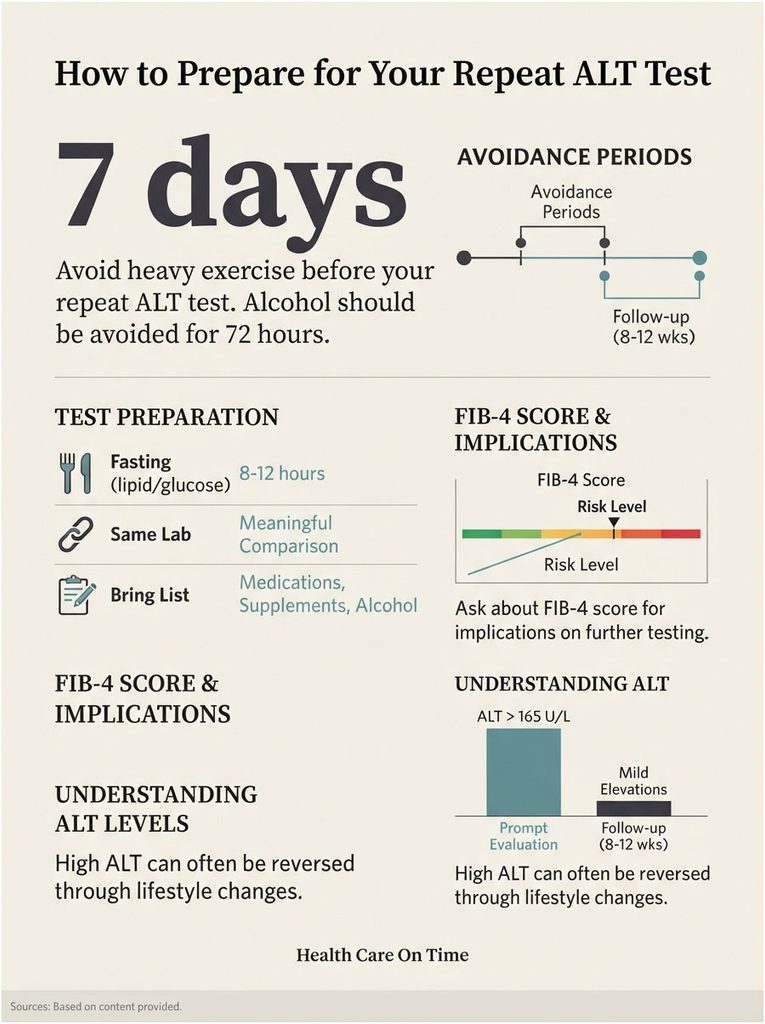
Avoid alcohol for at least 72 hours, ideally a full week. Hold non-essential supplements for two weeks if your provider agrees, and keep prescriptions unchanged unless told otherwise.
Fast for 8 to 12 hours if the order includes a lipid panel or glucose. ALT itself is not strongly affected by eating, but the rest of the panel is. Drink water normally, since hydration helps the draw and does not skew the enzyme.
Use the same lab as your previous test where possible, so the comparison is meaningful.
Bring a written list. Every prescription, every over-the-counter drug, every supplement with its dose, your typical weekly alcohol intake, and any workouts in the past week. Patients who arrive with that list get a faster answer than patients who do not.
The one question worth asking: “What is my FIB-4, and does it put me above the threshold for further testing?”
Frequently Asked Questions
What ALT level is considered dangerous?
Levels above five times the upper limit, roughly 165 U/L and up, warrant prompt evaluation rather than routine retesting. Readings above 1,000 U/L suggest acute injury such as acetaminophen toxicity or ischemic hepatitis and need emergency care. Mild elevations under 100 are rarely dangerous by themselves but should still be investigated.
Is an ALT of 60 something to worry about?
An ALT of 60 sits in the borderline-to-mild range, above the ACG healthy cutoff of 33 for men and 25 for women. It usually reflects fatty liver, alcohol, medication, or recent intense exercise. It is not an emergency, but it does merit a repeat test with a full liver panel in 8 to 12 weeks.
Can exercise raise ALT levels?
Yes, substantially. In one study, healthy men doing a single hour of unaccustomed weightlifting showed AST and ALT elevated for at least seven days. Adding creatine kinase to the panel usually settles the question, since CK rises sharply with muscle damage while GGT and alkaline phosphatase stay normal.
How long does it take for ALT to return to normal?
It depends on the cause. Exercise-related elevations resolve within one to two weeks of rest. Medication-related elevations often normalize four to eight weeks after stopping the drug. MASLD-related elevations typically take three to six months of sustained weight loss and dietary change to improve meaningfully.
What does high ALT with normal AST mean?
A high ALT with a normal or lower AST points toward a liver-centered process rather than a muscle or alcohol source. Fatty liver disease and chronic viral hepatitis are the most common explanations in US adults. When AST runs more than twice ALT, alcohol-associated liver disease moves higher on the list.
Can supplements like turmeric or ashwagandha raise ALT?
Yes. Herbal supplements now account for 20% of cases in the US Drug-Induced Liver Injury Network, and turmeric, green tea extract, ashwagandha, garcinia cambogia, red yeast rice, and black cohosh are the six most commonly implicated. About 15.6 million US adults take at least one of them.
Do statins cause high ALT?
Statins can produce mild ALT elevations, typically under three times normal, usually in the first few months. Most are stable and do not require stopping the medication. Serious statin-related liver injury is rare. Never discontinue a statin on your own, since the cardiovascular risk of stopping often outweighs the enzyme change.
Can dehydration or stress raise liver enzymes?
Dehydration alone does not meaningfully raise ALT, though severe dehydration with low blood pressure can cause ischemic liver injury and a sharp spike. Psychological stress does not directly elevate ALT, but stress-linked behaviors such as increased drinking, poor sleep, and heavier pain-reliever use certainly can.
Does high ALT always mean fatty liver?
No. Fatty liver is the most common explanation in US adults, but alcohol, medications, supplements, viral hepatitis, muscle injury, celiac disease, thyroid disorders, and hemochromatosis all produce elevated ALT. Imaging plus targeted blood work is what separates them. Fewer than 5% of elevated results reflect severe liver disease.
Should I fast before an ALT blood test?
ALT itself does not require fasting. If the order includes a lipid panel or fasting glucose, which is common when liver enzymes are being checked, then an 8 to 12 hour fast applies. Water is fine and encouraged. Follow whatever instruction the ordering provider gives.
Is a high ALT reversible?
Frequently, yes. Elevations driven by weight, alcohol, medication, or supplements often normalize once the cause is addressed. Losing 5% to 10% of body weight, stopping alcohol, or discontinuing an offending drug can bring ALT back into range within weeks to months. Established cirrhosis is a different situation and is not reversible.
When should I see a hepatologist instead of my primary care doctor?
Primary care handles most cases. Referral becomes appropriate when ALT stays elevated beyond six months, when FIB-4 exceeds 1.3 in adults 36 to 65 or 2.0 over 65, when elastography suggests significant fibrosis, or when the first round of testing does not identify a cause.
Medical Disclaimer
This article is for general education and does not replace medical advice, diagnosis, or treatment from a licensed clinician. An ALT result cannot be interpreted in isolation and must be read alongside your full liver panel, medical history, medications, and physical examination. HealthCareOnTime provides diagnostic testing and health information, not medical care. If you have symptoms of liver injury such as jaundice, dark urine, confusion, or severe abdominal pain, seek medical attention immediately. Never start, stop, or change a prescribed medication based on information found online.
References
- ACG Clinical Guideline: Evaluation of Abnormal Liver Chemistries, American Journal of Gastroenterology
- Mildly Elevated Liver Transaminase Levels: Causes and Evaluation, American Family Physician
- Alanine Transaminase (ALT) Blood Test, Cleveland Clinic
- Elevated Liver Enzymes, Cleveland Clinic
- Hepatitis B Surveillance Guidance, Centers for Disease Control and Prevention
- Estimating Hepatitis C Prevalence in the United States, 2017-2020, CDC and Hepatology
- Acetaminophen Toxicity, StatPearls, National Library of Medicine
- 15 Million Americans Take Supplements That May Be Toxic to the Liver, Michigan Medicine
- Challenges in Herbal-Induced Liver Injury Identification and Prevention, Liver International
- Muscular Exercise Can Cause Highly Pathological Liver Function Tests in Healthy Men, British Journal of Clinical Pharmacology
- The Impact of Acute Exercise on Blood Work Parameters, National Library of Medicine
- Noninvasive Assessment of Patients with MASLD, American Association for the Study of Liver Diseases
- Evidence-Based Clinical Practice Guidelines for MASLD, National Library of Medicine
- Estimated Burden of MASLD in US Adults, 2020 to 2050, JAMA Network Open
- Prevalence of MASLD and Fibrosis in US Adolescents, NHANES 2017-2023
- Elevated ALT and AST in an Asymptomatic Person, National Library of Medicine
- Resistance Training for MASLD: Systematic Review and Meta-Analysis, National Library of Medicine