
Most people who take amoxicillin feel fine, finish the bottle, and never think twice. But a small set of symptoms are your signal to stop and call for help right away. Knowing which is which is the difference between a minor nuisance and a real emergency.
Table of Contents
Quick Answer: The most common amoxicillin side effects are diarrhea, nausea, vomiting, stomach upset, and a mild skin rash. These are usually harmless and fade as your body adjusts or after you finish the course. Less common but serious effects include a true allergic reaction (hives, swelling, trouble breathing), severe skin reactions, and antibiotic-associated diarrhea from C. diff. Trouble breathing or facial swelling is a medical emergency. Call 911.
At a Glance
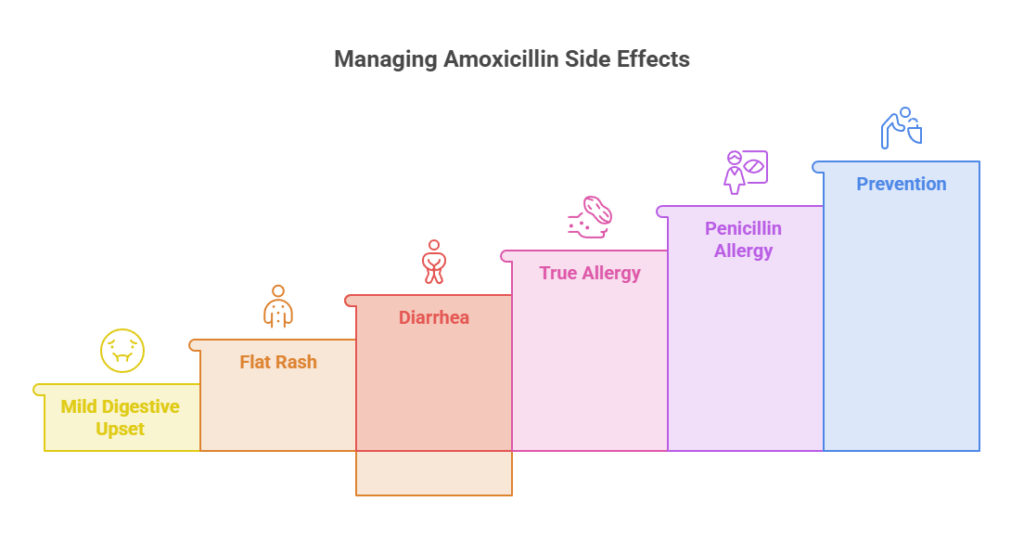
- Most amoxicillin side effects are mild digestive upset and fade on their own.
- A flat, non-itchy rash is common and often not an allergy, especially in kids.
- Hives, swelling, or trouble breathing signal a true allergy and need urgent care.
- About 1 in 5 people on antibiotics get some diarrhea; severe or bloody diarrhea needs a call.
- The CDC says 10 percent report a penicillin allergy, but fewer than 1 percent truly are.
- Taking amoxicillin with food and staying hydrated cuts down on stomach trouble.
What Is Amoxicillin and Why Side Effects Happen
Amoxicillin is one of the most widely prescribed antibiotics in the United States. It belongs to the penicillin family and treats bacterial infections of the ears, sinuses, throat, chest, and urinary tract, among others.
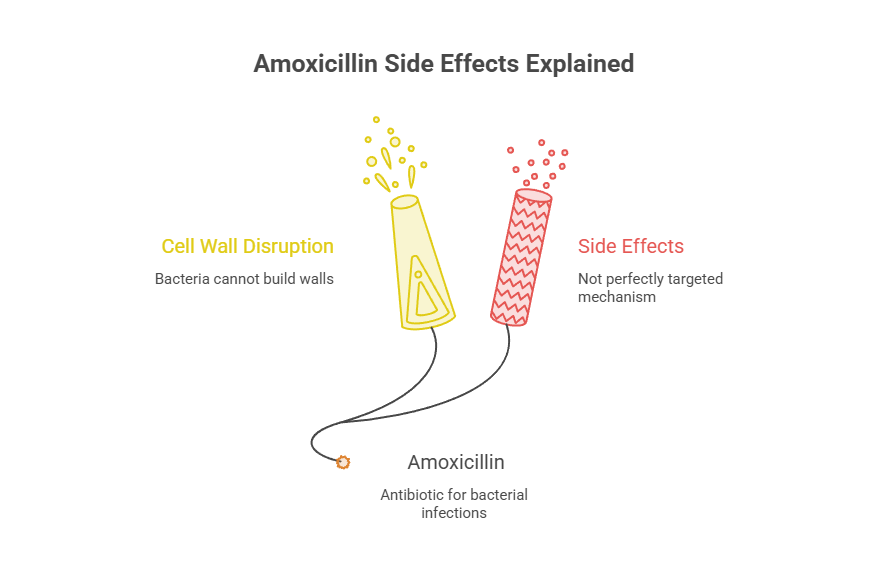
It works by stopping bacteria from building their cell walls, which kills them off. That mechanism is effective, but it isn’t perfectly targeted, and that’s where side effects come from.
According to MedlinePlus, amoxicillin is generally well tolerated. Still, no antibiotic is side-effect free, and understanding the cause helps you respond calmly when something feels off.
How Amoxicillin Works (and Why It Upsets Your Gut)
Your gut is home to trillions of helpful bacteria that aid digestion and keep things balanced. Amoxicillin can’t tell the difference between the bacteria making you sick and the good ones in your intestines.
When it wipes out some of those friendly gut bacteria, the balance tips. The result is the nausea, gas, and loose stools that so many people notice within the first few days.
Patients picking up antibiotics often ask us why a drug for a sinus infection upsets their stomach. The answer is collateral damage in the gut, and it’s the single most common reason for amoxicillin side effects.
Why a Rash Is So Common With This Drug
Amoxicillin is famous for causing rashes, more so than many other antibiotics. The important part is that most of these rashes are not allergic reactions.
A non-allergic amoxicillin rash tends to be flat, pinkish-red, and not especially itchy, often showing up several days into treatment. It’s thought to be a reaction to the drug that doesn’t involve the immune system’s allergy pathway.
There’s also a well-known quirk: people with mononucleosis (mono) who take amoxicillin develop a rash at very high rates. That rash isn’t a lifelong penicillin allergy, though it should always be reviewed by a clinician.
Common Amoxicillin Side Effects
The good news first. The large majority of amoxicillin side effects are mild, predictable, and temporary. Here’s what to expect and how often it shows up.
Digestive: Diarrhea, Nausea, Vomiting, Stomach Pain
Digestive complaints top the list. Loose stools, nausea, an unsettled stomach, and occasional vomiting are the most frequently reported reactions, and they usually appear within the first few days.
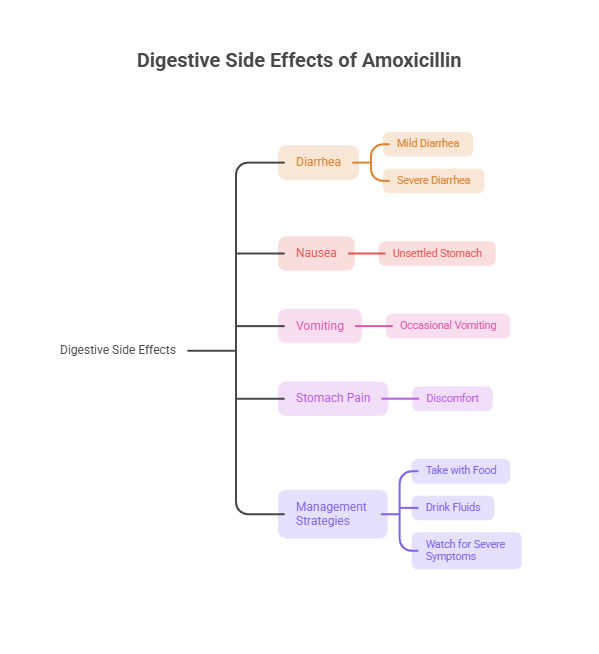
These tend to ease as your body adjusts or once the course ends. Taking each dose with a little food and drinking plenty of fluids usually keeps them manageable.
Our medical reviewers note that mild diarrhea on an antibiotic is expected and rarely cause for alarm. What matters is watching for the severe, watery, or bloody diarrhea described later, which is a different situation.
Skin: The Typical Amoxicillin Rash
A skin rash is another common amoxicillin side effect. The typical version is a spread of small, flat, reddish spots, often on the trunk, that may appear three to ten days after starting the drug.
This kind of rash is usually not dangerous and tends to clear up on its own. Even so, any new rash on an antibiotic deserves a call to your provider, because telling a harmless rash from an allergic one isn’t always obvious.
Research from Texas Children’s Hospital notes that roughly 5 to 10 percent of children taking amoxicillin develop a rash, and most of these are not true allergies.
Headache, Taste Changes, and Yeast Infections
Beyond the gut and skin, a few other mild effects show up. Some people get headaches, which are usually minor and pass once treatment ends.
Others notice an odd metallic or sour taste in the mouth while on the drug. It can feel strange, but it isn’t permanent and resolves after the course.
Because amoxicillin disrupts the body’s natural balance of bacteria and yeast, some people, especially women, develop a vaginal yeast infection. It’s uncomfortable but treatable, and a clinician can recommend an antifungal if needed.
| Side Effect | How Common | Typical Symptoms | What to Do |
| Diarrhea, nausea, upset stomach | Common | Loose stools, queasiness, cramping | Take with food, hydrate; usually self-limited |
| Non-allergic skin rash | Common | Flat pink-red spots, mild or no itch | Call your provider; often safe to finish course |
| Headache | Less common | Mild, dull headache | OTC pain reliever if approved; passes after course |
| Taste changes | Less common | Metallic or sour taste | Temporary; resolves after treatment |
| Vaginal yeast infection | Less common | Itching, discharge | See provider; antifungal if needed |
| Allergic reaction (hives, swelling) | Uncommon | Hives, itching, swelling, trouble breathing | Stop, seek care; call 911 if breathing is affected |
| Severe skin reaction (SJS/TEN) | Rare | Blistering, peeling, painful rash | Stop and get emergency care immediately |
Serious Side Effects and Allergic Reactions
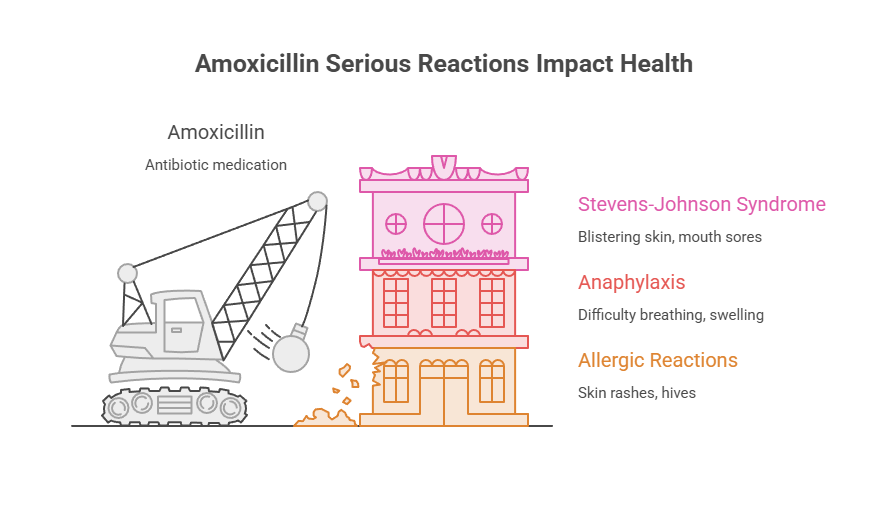
Serious reactions to amoxicillin are uncommon, but they’re the ones worth memorizing. These need prompt or emergency medical attention.
Anaphylaxis: The Minutes-to-Hours Emergency
The most dangerous reaction is anaphylaxis, a severe, whole-body allergic response. It usually strikes fast, within minutes to a couple of hours of a dose.
Warning signs include trouble breathing, swelling of the face, lips, tongue, or throat, a fast or pounding heartbeat, dizziness, and widespread hives. This is a medical emergency.
If you or someone else shows these signs, call 911 immediately. Do not wait to see whether symptoms improve, and do not try to drive yourself if breathing is involved.
Severe Skin Reactions (SJS, TEN, DRESS)
Rarely, amoxicillin triggers severe skin reactions. Stevens-Johnson Syndrome (SJS) and Toxic Epidermal Necrolysis (TEN) cause painful, blistering, peeling skin that can look burned, and they can be life-threatening.
Another rare reaction is DRESS, short for Drug Reaction with Eosinophilia and Systemic Symptoms, which can affect the liver, kidneys, and heart along with a rash and fever. It can appear weeks after starting the drug.
Any rash that blisters, peels, spreads rapidly, or comes with fever and facial swelling is an emergency. Stop the medicine and get care right away.
Antibiotic-Associated Diarrhea and C. diff
Because amoxicillin disturbs gut bacteria, it can open the door to an overgrowth of a bacterium called Clostridioides difficile, or C. diff. This causes a more serious form of diarrhea.
Mayo Clinic reports that about 1 in 5 people who take antibiotics develop some antibiotic-associated diarrhea, and a smaller share of those cases are caused by C. diff. Symptoms can even appear up to two months after finishing the antibiotic.
Watch for diarrhea that is severe, watery, bloody, or paired with fever and stomach cramps. Across patients we serve, this is the symptom most often brushed off when it actually needs a prompt call to a clinician.
Rare Blood, Liver, and Kidney Effects
In rare cases, amoxicillin can affect the blood, causing conditions like hemolytic anemia (rapid breakdown of red blood cells), low platelets, or low white blood cell counts. These are uncommon but serious.
The drug can also rarely affect the liver or cause kidney inflammation (nephritis), which may show up as fever, blood in the urine, or general swelling. Signs of liver trouble include yellowing skin or eyes and dark urine.
These rare effects are part of why clinicians sometimes monitor blood work during longer antibiotic courses. If you notice these symptoms, contact your provider promptly.
Amoxicillin Rash vs Allergic Reaction: How to Tell
This is the question that drives most worried searches, so it deserves a clear answer. Not every amoxicillin rash means you’re allergic, but some rashes are genuine warning signs.
The Non-Allergic Rash
The common, non-allergic rash is typically flat or slightly raised, pink to red, and not very itchy. It often appears several days into the course and spreads over the trunk.
This type usually isn’t dangerous and may not mean you can’t take penicillins again. Still, you shouldn’t make that call yourself. Always have a clinician look at any new rash.
The reason matters: being wrongly labeled “penicillin allergic” can limit your antibiotic options for life, as the next section explains.
The True Allergic Rash and Its Warning Signs
An allergic rash behaves differently. It often comes on fast, within hours of a dose, shows up as raised, very itchy hives, and may travel with other symptoms.
The red flags are hives, intense itching, swelling of the face or lips, wheezing, throat tightness, or any trouble breathing. These point to a true allergy, and the more severe signs point to anaphylaxis.
If a rash arrives with swelling or breathing trouble, treat it as an emergency. The decision table below lays out exactly what to do for each scenario.
| Symptom or Scenario | What It Likely Means | Recommended Action |
| Mild nausea or loose stools | Expected gut effect | Continue, take with food, stay hydrated |
| Flat, non-itchy rash a few days in | Often non-allergic | Call your provider; likely safe to continue |
| Hives, intense itching, or swelling | Possible true allergy | Stop the drug, call your provider promptly |
| Trouble breathing, throat or face swelling | Anaphylaxis | Call 911 immediately |
| Severe, watery, or bloody diarrhea | Possible C. diff | Stop and call your provider right away |
| Blistering, peeling, or painful skin rash | Severe skin reaction | Seek emergency care immediately |
The Truth About Penicillin Allergy
A fact that surprises most people: the vast majority of those who think they’re allergic to penicillin and amoxicillin simply aren’t.
Why Most “Penicillin Allergic” People Aren’t
According to the CDC, about 10 percent of US patients report a penicillin allergy, but when they’re formally evaluated, fewer than 1 percent turn out to be truly allergic.
Many of those labels trace back to a childhood rash that was actually a non-allergic reaction or a symptom of the infection itself. Others assumed an allergy because a family member had one, even though penicillin allergy isn’t inherited.
On top of that, the CDC notes that about 80 percent of people with a true penicillin allergy lose that sensitivity after 10 years. So an old label is often outdated.
Getting Delabeled and Why It Matters
Carrying an incorrect penicillin-allergy label isn’t harmless. It pushes doctors toward broader-spectrum antibiotics that can be less effective, fuel antibiotic resistance, and raise the risk of other side effects.
Allergists can now safely evaluate these labels through history review, skin testing, and a supervised oral challenge dose. Many people walk away cleared to use penicillins again.
In cases reviewed by our medical team, sorting out an old allergy label is one of the more valuable conversations a patient can have, because it reopens safe, first-line treatment options. Ask your doctor whether testing makes sense for you.
| Statistic | Figure | Source |
| US patients who report a penicillin allergy | About 10% | CDC |
| Of those, truly allergic when tested | Fewer than 1% | CDC |
| True penicillin allergy lost after 10 years | About 80% | CDC |
| People on antibiotics who get diarrhea | About 1 in 5 | Mayo Clinic |
| Children on amoxicillin who develop a rash | About 5 to 10% | Texas Children’s |
| Hospitalized US patients with allergy label | Up to 20% | NIH / PMC |
Amoxicillin Side Effects in Children
Amoxicillin is a workhorse in pediatrics, especially for ear infections, strep throat, and sinus infections. Most kids tolerate it well, and the side effects mirror those in adults.
What’s Normal for Kids
Children most often get an upset stomach, diarrhea, or that flat, non-itchy rash. The rash worries parents the most, yet as noted, the large majority of these are not true allergies.
The liquid form can also stain or taste odd, and some kids resist it. Giving it with a little food, and following the dosing syringe exactly, keeps things on track.
When to Call the Pediatrician
Call your child’s doctor for any rash, since a clinician should decide whether it’s allergic. Call urgently for hives, facial or lip swelling, breathing trouble, or a blistering rash.
Also call for severe or bloody diarrhea, signs of dehydration like very little urine, or a high fever. Parents tell us they appreciate a quick check rather than guessing, and pediatric teams expect those calls.
How Long Do Amoxicillin Side Effects Last?
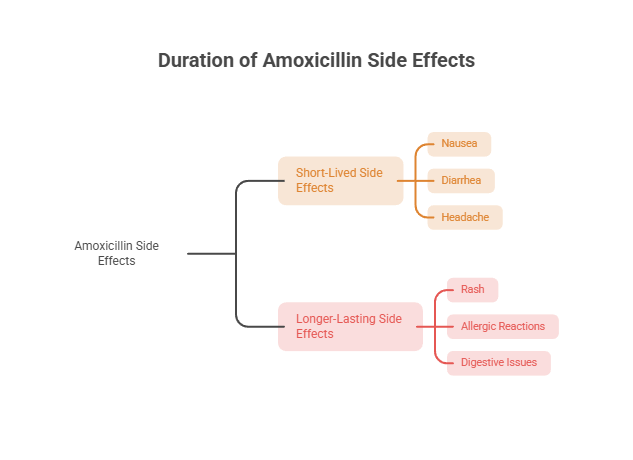
Timing is one of the most common questions, and the honest answer is that it depends on the type of side effect. Most are short-lived.
Onset and Duration by Type
Digestive side effects usually begin within the first few days and ease as you adjust or shortly after the last dose. A non-allergic rash often appears three to ten days in and fades over several days once the drug stops.
Allergic reactions are different in timing. Immediate ones strike within minutes to a couple of hours, while certain delayed reactions can appear days or even up to a week or two after starting, or after finishing, the course.
Antibiotic-associated diarrhea can also be a latecomer, occasionally surfacing weeks after treatment ends. Our lab partners report that this delayed timing is exactly why people sometimes don’t connect the diarrhea to a finished antibiotic.
When Lingering Symptoms Need a Call
If mild side effects drag on well past finishing the medication, that’s worth a call to your provider. Symptoms shouldn’t keep worsening after you stop.
Persistent diarrhea, a rash that won’t quit, yellowing skin, or ongoing nausea all warrant medical review. Don’t assume that finishing the bottle automatically resolves everything.
When in doubt, a quick message to your pharmacist or doctor beats guessing. They can tell you whether what you’re feeling is expected or needs attention.
Tips to Reduce Amoxicillin Side Effects
You can’t eliminate every risk, but a few simple habits meaningfully cut down on the most common amoxicillin side effects. These are practical and easy to follow.
Take It With Food
Amoxicillin can be taken with or without food, but taking each dose with a small meal or snack often reduces nausea and stomach upset. It doesn’t lower how well the drug works.
If your stomach is sensitive, pairing doses with food is one of the simplest fixes. A few crackers or a piece of toast can be enough.
Protect Your Gut (Probiotics, Hydration)
Because gut disruption drives so many side effects, supporting your gut helps. Staying well hydrated matters, especially if you have any diarrhea.
Some people find that probiotic foods like yogurt or kefir, or a probiotic supplement, ease digestive symptoms, and research suggests probiotics may help prevent antibiotic-associated diarrhea. If you use a probiotic, take it a couple of hours apart from your antibiotic dose.
Check with your pharmacist before adding supplements, particularly if you have a weakened immune system, since recommendations can vary by person.
Finish the Course and Time Your Doses
Take amoxicillin exactly as prescribed, and finish the full course even if you feel better partway through. Stopping early can let the infection rebound and contributes to antibiotic resistance.
Spacing doses evenly, as your label directs, keeps the drug level steady and can reduce stomach swings. Set a phone reminder if you tend to forget.
If you miss a dose, take it when you remember unless it’s almost time for the next one. Never double up to catch up.
Share Your History Before You Start
A little prep prevents most problems. Before filling the prescription, tell your provider and pharmacist about any past reaction to penicillins, all your other medications and supplements, and conditions like kidney disease or pregnancy.
This is how clinicians catch interactions and decide whether amoxicillin is the right pick or needs a dose adjustment. The conversation takes a minute and can save you a side effect later.
Avoid Alcohol and Watch Interactions
There’s no dangerous direct interaction between amoxicillin and alcohol, but both can upset your stomach and leave you feeling worse. It’s best to limit or skip alcohol until you finish.
Alcohol can also disrupt sleep and slow recovery, neither of which helps when you’re fighting an infection. Water and rest serve you better.
Amoxicillin Interactions and Special Situations
A few specific situations come up again and again. Here’s what the evidence actually says, separated from the myths.
Alcohol
Alcohol doesn’t make amoxicillin ineffective or cause a toxic reaction the way it does with some other medications. The concern is overlapping side effects, mainly nausea and stomach upset.
Moderation is the sensible approach. If you’re already queasy from the antibiotic, adding alcohol will likely make it worse.
Birth Control (What the Evidence Actually Says)
This is a persistent source of confusion. For most antibiotics, including amoxicillin, current evidence does not show a meaningful drop in birth control pill effectiveness.
The clear exception is a small group of enzyme-inducing drugs such as the antibiotic rifampin, which is not amoxicillin. Some product labels and clinicians still suggest a backup method out of caution, especially if the antibiotic causes vomiting or diarrhea that could reduce pill absorption.
If you rely on the pill and you’re concerned, ask your pharmacist. Using a backup method during illness is reasonable, but amoxicillin itself isn’t considered a significant contraceptive risk.
Pregnancy, Kids, and Older Adults
Amoxicillin is commonly used in children and is often prescribed during pregnancy when an antibiotic is needed, under a clinician’s guidance. As always, a doctor weighs the specific situation.
Older adults may be more sensitive to certain effects, including a higher background risk of C. diff diarrhea. Anyone with kidney problems may need a dose adjustment, since the drug is cleared by the kidneys.
These groups don’t need to avoid amoxicillin, but they’re reasons to follow your prescriber’s instructions closely and report side effects early.
Other Medications
Amoxicillin can interact with a few drugs, including the gout medication allopurinol (which can increase rash risk) and certain blood thinners. It may also interact with methotrexate and with some other antibiotics.
This is why the full-medication-list conversation matters. Your pharmacist is well placed to catch interactions before they become a problem.
Never start or stop other prescriptions on your own while on an antibiotic without checking first.
When to Call a Doctor or Go to the ER
Knowing the threshold for action takes the guesswork out of a stressful moment. Use these two simple lists.
Call Your Provider
Reach out to your doctor or pharmacist if you develop any new rash, diarrhea that is worsening or lasts more than a day or two, a suspected yeast infection, or mild symptoms that won’t go away after finishing the course.
Also call if you’re simply unsure whether what you’re feeling is normal. A quick check is always reasonable, and clinicians would rather hear from you early.
These situations usually aren’t emergencies, but they do need professional input rather than guesswork.
Call 911
Seek emergency help immediately for trouble breathing, swelling of the face, lips, tongue, or throat, a rapid or pounding heartbeat with dizziness, or a rash that is blistering or peeling.
These are signs of anaphylaxis or a severe skin reaction, and minutes matter. Do not wait, and do not drive yourself if your breathing is affected.
When it comes to the serious amoxicillin side effects, fast action saves lives. Trust the warning signs and act on them.
Frequently Asked Questions
What are the most common side effects of amoxicillin?
The most common amoxicillin side effects are diarrhea, nausea, vomiting, stomach upset, and a mild skin rash. Headache, taste changes, and yeast infections can also occur. These are usually mild, appear in the first few days, and fade as your body adjusts or after you finish the course.
How long do amoxicillin side effects last?
Most mild amoxicillin side effects last only as long as you take the drug and ease shortly after the final dose. Digestive symptoms usually settle within days. A non-allergic rash may take several days to clear. Antibiotic-associated diarrhea can sometimes appear or linger weeks later.
Is an amoxicillin rash always an allergy?
No. Many amoxicillin rashes are not allergic. The common non-allergic rash is flat, pink-red, and not very itchy, often showing up several days into treatment. A true allergic rash tends to appear fast as raised, itchy hives, sometimes with swelling. Always have a clinician evaluate any new rash.
What are the signs of an allergic reaction to amoxicillin?
Signs of an allergic reaction include hives, intense itching, swelling of the face, lips, or throat, wheezing, and trouble breathing. Severe reactions, called anaphylaxis, come on within minutes to hours and are a medical emergency. Call 911 right away if breathing or swelling is involved.
Can amoxicillin cause diarrhea, and what helps?
Yes, diarrhea is one of the most common amoxicillin side effects, because the drug disrupts gut bacteria. Staying hydrated, taking doses with food, and sometimes using probiotics can help. Contact your provider if diarrhea becomes severe, watery, or bloody, which may signal a C. diff infection.
Should I take amoxicillin with food?
You can take amoxicillin with or without food, and food does not reduce how well it works. Taking it with a small meal or snack often eases nausea and stomach upset, so it’s a good idea if your stomach is sensitive. Follow the directions on your prescription label.
Can I drink alcohol while taking amoxicillin?
There’s no dangerous direct interaction between amoxicillin and alcohol, but both can cause nausea and stomach upset, so combining them may make you feel worse. Alcohol can also slow your recovery. It’s best to limit or avoid it until you finish your antibiotic course and feel better.
Does amoxicillin affect birth control?
For most people, amoxicillin does not meaningfully reduce birth control pill effectiveness. The main exception is enzyme-inducing drugs like rifampin, not amoxicillin. If the antibiotic causes vomiting or diarrhea, pill absorption could drop, so a backup method during illness is reasonable. Ask your pharmacist if unsure.
Can amoxicillin cause a yeast infection?
Yes. By disturbing the natural balance of bacteria and yeast in the body, amoxicillin can trigger a vaginal yeast infection in some women, with itching and discharge. It’s uncomfortable but treatable. A clinician can recommend an antifungal, and the issue usually resolves after the antibiotic course ends.
Who is at higher risk of amoxicillin side effects?
People with a true penicillin allergy, a history of antibiotic-associated diarrhea, kidney problems, or a weakened immune system may face higher risk. Older adults have a greater background risk of C. diff. Anyone taking interacting drugs like allopurinol should tell their provider before starting amoxicillin.
What should I do if I miss a dose?
If you miss a dose of amoxicillin, take it as soon as you remember. If it’s almost time for your next dose, skip the missed one and continue your normal schedule. Never take a double dose to make up for a missed one. Setting a reminder helps keep doses evenly spaced.
When should I go to the ER for amoxicillin side effects?
Go to the ER or call 911 for trouble breathing, swelling of the face, lips, tongue, or throat, a rapid heartbeat with dizziness, or a blistering, peeling rash. These signal anaphylaxis or a severe skin reaction. Severe, bloody diarrhea also needs urgent medical evaluation without delay.
Disclaimer: This article is for general educational purposes and isn’t a substitute for professional medical advice. It does not cover every possible side effect or interaction. Always follow your prescription label and talk with your doctor or pharmacist about your specific situation, especially if you are pregnant, have other health conditions, or take other medications. If you think you’re having a severe reaction, seek emergency care immediately.
References
- Centers for Disease Control and Prevention, Clinical Features of Penicillin Allergy
- Mayo Clinic, Antibiotic-Associated Diarrhea
- Mayo Clinic, Penicillin Allergy
- MedlinePlus (NIH), Amoxicillin
- Texas Children’s Hospital, Rashes From Amoxicillin
- National Library of Medicine (PMC), Penicillin Allergy: A Practical Approach