A reading of 132/84 looks like a single fact. It is really three different situations, depending on whether the woman holding the cuff is 29 and on the pill, 34 weeks pregnant, or three years past her last period.
Nearly 45% of American women have high blood pressure. Most of them feel completely fine, and about four in ten do not know.
Quick Answer
For women, normal blood pressure is below 120/80 mm Hg. Elevated is 120 to 129 systolic with diastolic under 80. Stage 1 hypertension is 130 to 139 or 80 to 89. Stage 2 is 140 or higher, or 90 or higher. A reading at or above 180/120 is a hypertensive crisis needing immediate care. The chart categories are identical for women and men, but the risks feeding into them are not.
At a Glance
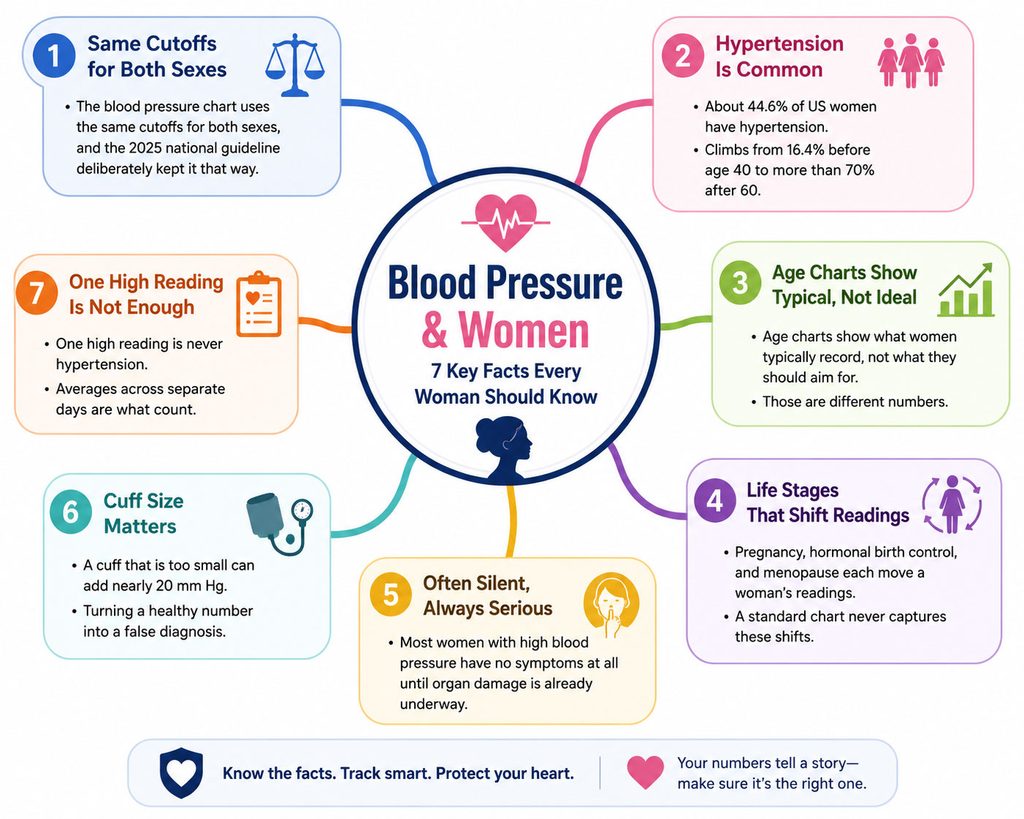
• The blood pressure chart uses the same cutoffs for both sexes, and the 2025 national guideline deliberately kept it that way.
• About 44.6% of US women have hypertension, climbing from 16.4% before age 40 to more than 70% after 60.
• Age charts show what women typically record, not what they should aim for. Those are different numbers.
• Pregnancy, hormonal birth control, and menopause each move a woman’s readings in ways a standard chart never captures.
• Most women with high blood pressure have no symptoms at all until organ damage is already underway.
• A cuff that is too small can add nearly 20 mm Hg, turning a healthy number into a false diagnosis.
• One high reading is never hypertension. Averages across separate days are what count.
The Blood Pressure Chart Every Woman Should Read
Blood pressure measures the force your blood applies to artery walls as it circulates. It is written as two numbers and measured in millimeters of mercury (mm Hg).
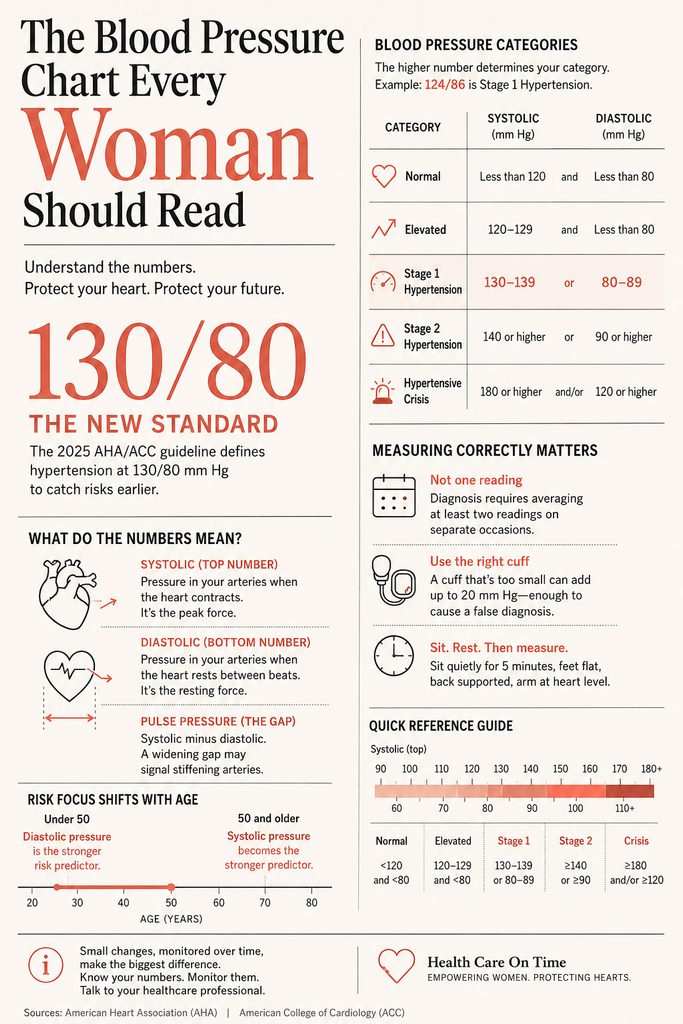
The top number, systolic pressure, is the peak force each time your heart contracts. The bottom number, diastolic pressure, is the resting force between beats.
Both Numbers Carry Weight
A woman with 118/92 does not have normal blood pressure just because the top number looks reassuring. Diastolic pressure is the more useful predictor of risk before roughly age 50, and systolic takes over after that.
The gap between the two numbers has a name: pulse pressure. A widening gap, say 150/70, signals stiffening large arteries rather than a bottom number that improved.
The Categories, Side by Side
| Category | Systolic (mm Hg) | Diastolic (mm Hg) | What It Means for a Woman | Typical Next Step |
| Normal | Below 120 | and below 80 | Target zone at every adult age | Recheck at least once a year |
| Elevated | 120 to 129 | and below 80 | Not hypertension yet, and the strongest single predictor of future hypertension | Lifestyle changes now; recheck in 3 to 6 months |
| Stage 1 hypertension | 130 to 139 | or 80 to 89 | Treatment depends on your overall cardiovascular risk | Confirm with home readings; clinician visit |
| Stage 2 hypertension | 140 or higher | or 90 or higher | Medication is usually recommended alongside lifestyle change | Clinician visit within one to two weeks |
| Hypertensive crisis | 180 or higher | and/or 120 or higher | Emergency range | Recheck after 5 minutes; call 911 if symptoms are present |
Low readings sit outside this chart because they are not a hypertension category. Anything below 90/60 is covered separately later on this page.
The Two Rules Most Charts Leave Out
First, the higher of your two numbers sets the category. A reading of 124/86 is not elevated. It is stage 1 hypertension, because 86 lands in the stage 1 diastolic band.
Second, no single reading diagnoses anything. National guidance classifies patients on the average of at least two careful readings taken on at least two separate occasions.
Patients booking cardiac and metabolic panels through HealthCareOnTime raise this constantly, usually after one alarming number at a pharmacy kiosk. That reading is a prompt to measure properly, not a verdict.
Why the Line Sits at 130 and Not 140
Many women were told for years that 140/90 was the cutoff. That changed in 2017 and has now been reaffirmed. The 2025 AHA/ACC guideline, released in August 2025, retired and replaced the 2017 document entirely while keeping hypertension defined at 130/80 for nonpregnant adults.
The reasoning is that cardiovascular risk starts rising well before 140, and catching people earlier gives lifestyle change a chance to work before medication becomes necessary. The guideline also sets a universal treatment target below 130/80.
Blood Pressure by Age: What Is Typical for Women at Each Stage
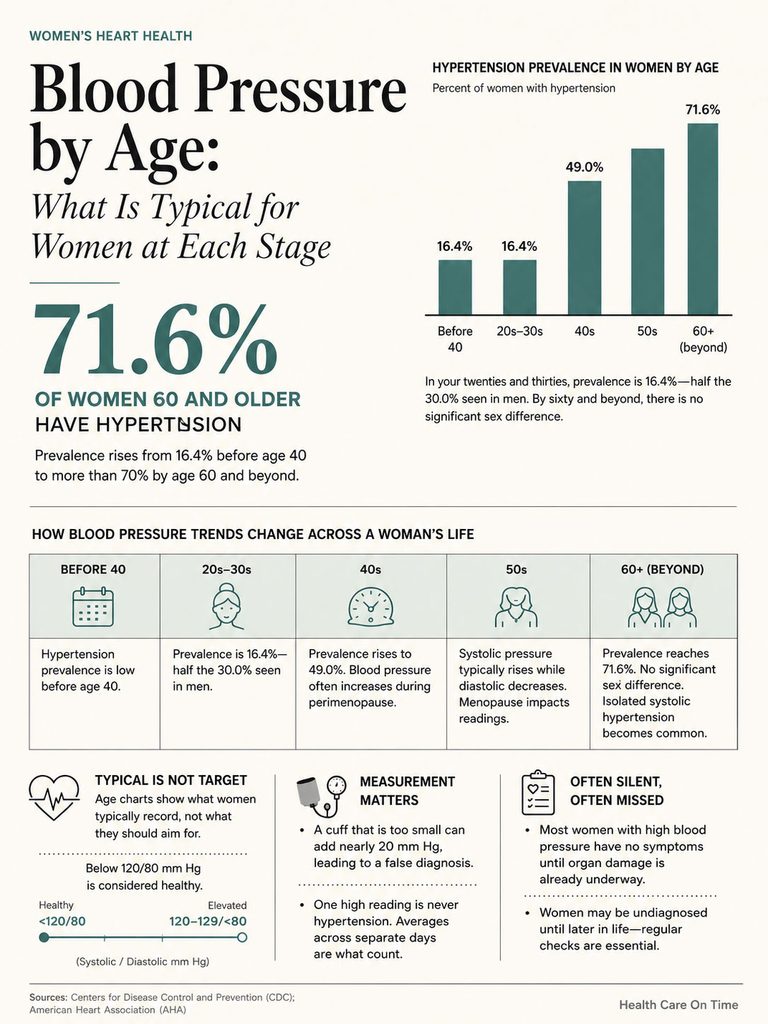
An age chart answers a different question than a category chart. It shows what women around you actually record, which is useful context and a poor target.
The Twenties and Thirties
This is the lowest-pressure stretch of adult life for most women. Hypertension prevalence here is 16.4%, roughly half the 30.0% seen in men of the same age.
That gap is real, and it is also why young women get missed. A 34-year-old with 134/86 often hears that she is young and healthy rather than that she has stage 1 hypertension.
Pregnancy, hormonal contraception, and conditions like polycystic ovary syndrome all show up in this window. A woman who has never had her pressure checked outside a prenatal visit has a real blind spot.
The Forties, Where the Curve Bends
Prevalence in women reaches 49.0% across the 40 to 59 band, against 55.9% in men. The twenty-point gap of early adulthood has shrunk to seven.
This is the perimenopausal window, and blood pressure often starts climbing before anyone connects it to the transition. Longitudinal research found systolic pressure rising roughly 4 mm Hg over five years in peri- and postmenopausal women, while women who remained premenopausal showed no meaningful change over the same stretch.
Across the women we serve, a first documented high reading in the mid-forties is very often the first time anyone actually looked.
The Fifties
Systolic pressure usually keeps climbing through this decade while diastolic peaks somewhere around 50 to 55 and then begins drifting down. Seeing your bottom number fall while your top number rises is not improvement.
The male-female gap narrows fast here. Women who reached menopause before 45, and those with frequent hot flashes and night sweats, tend to run higher than peers of the same age.
Sixty and Beyond
Past 60, the sex difference disappears. CDC data show no statistically significant difference between men and women in this group, with overall prevalence at 71.6%.
Isolated systolic hypertension, where the top number is high and the bottom number is normal, becomes the dominant pattern and is more common in women than men after the mid-forties. A reading of 152/74 is stage 2 hypertension, not a partial pass.
The 2025 guideline does allow individualized targets for women who are frail, living in a care facility, or have a limited life expectancy. If you are in that group, ask your clinician to check your pressure both sitting and standing, since drops on standing raise fall risk and change how aggressively treatment should be pushed.
| Group | US Women With Hypertension | US Men, Same Group | Source |
| Ages 18 to 39 | 16.4% | 30.0% | CDC/NCHS Data Brief 511, NHANES Aug 2021 to Aug 2023 |
| Ages 40 to 59 | 49.0% | 55.9% | CDC/NCHS Data Brief 511 |
| Ages 60 and older | 71.6% (no significant sex difference) | 71.6% (combined estimate) | CDC/NCHS Data Brief 511 |
| All adults 18 and older | 44.6% | 50.8% | CDC/NCHS Data Brief 511 |
| Reproductive age (18 to 44), suspected hypertension | 14.5% | Not measured | IQVIA ambulatory EMR analysis, Am J Prev Med 2024;66(3):492-502 |
| Blood pressure controlled below 130/80 among those with hypertension | 22.8% | 18.9% | CDC/NCHS Data Brief 511 |
Typical Is Not the Same as Target
Here is where age charts mislead people. Population averages include women already on blood pressure medication and women with untreated hypertension.
So a published “average” for 65-year-old women might read 136/78, which is stage 1 hypertension. That describes what is common, not what is healthy.
Our medical reviewers flag this confusion more often than any other point on blood pressure content. Whatever your age, below 120/80 remains the healthy range, and 130/80 or above still counts as high.
Does the Chart Mean the Same Thing for Women and Men?
This is the most interesting open question in the field, and no popular chart page touches it. The short version: same lines, possibly different consequences for crossing them.
What Researchers Found in 27,542 Adults
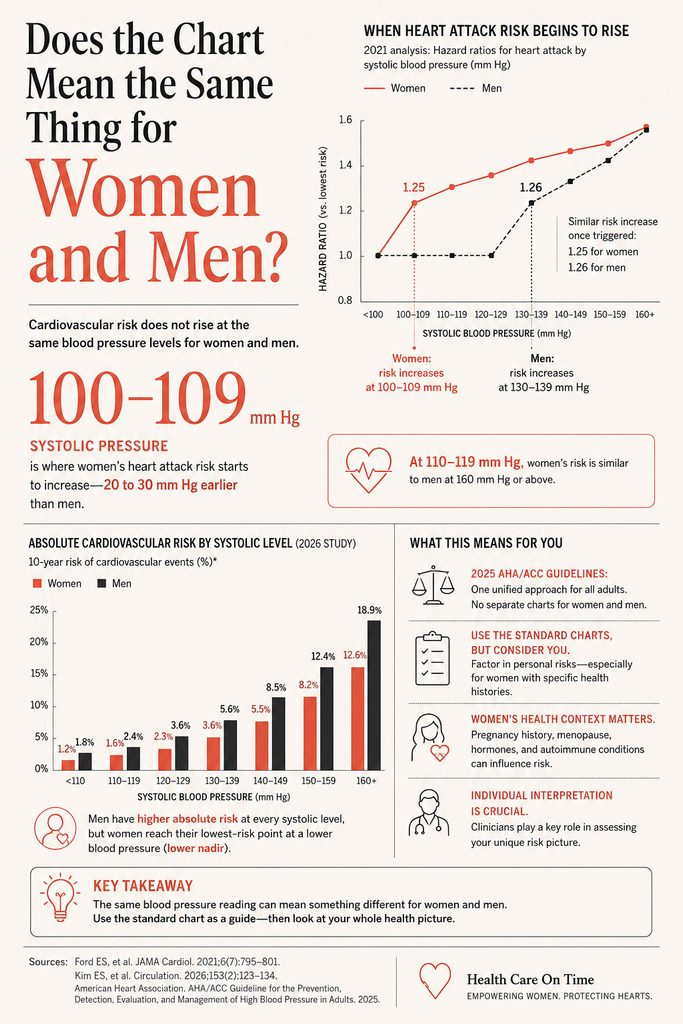
A 2021 analysis in Circulation pooled participants from four major US cohorts (Framingham, MESA, ARIC, and CARDIA) and examined cardiovascular risk by systolic pressure separately for each sex.
Risk began climbing in women at systolic 100 to 109 mm Hg. In men it did not appear until 130 to 139. The magnitude was similar, with a hazard ratio of 1.25 in women against 1.26 in men, just triggered at very different numbers.
The finding that drew attention: heart attack risk in women with systolic pressure of 110 to 119 was comparable to heart attack risk in men at 160 or above. Heart failure risk at 110 to 119 in women matched men at 120 to 129.
The 420,649-Person Study That Pushed Back
Science works by argument, and this one drew a serious rebuttal. A prospective cohort published in the American Journal of Hypertension in January 2026 followed 420,649 UK Biobank participants for 13.6 years, recording 28,628 cardiovascular events.
Risk bottomed out for women at systolic 100 to under 105 and for men at 110 to under 115, so the pattern of a lower nadir in women held. But absolute risk was higher in men at every blood pressure level, and compared with the lowest-risk men, women’s risk was lower at all systolic values below 170.
The authors were direct: the evidence does not support lower diagnostic thresholds for women. Relative risk rises more steeply in women, yet absolute risk never overtakes men.
Where the 2025 Guideline Landed
The 2025 AHA/ACC guideline kept one set of categories for all nonpregnant adults. It also replaced the old Pooled Cohort Equations with the PREVENT risk calculator, which folds in kidney function, statin use, and social factors.
Risk is now personalized through that calculator rather than through separate charts by sex. That is the practical resolution: one chart, individualized interpretation.
What This Means for Your Own Number
Use the standard chart, then treat a borderline reading with more urgency than the label alone suggests, especially with any female-specific risk factor from the next section.
A woman at 118/76 with a history of preeclampsia sits in a different position from a woman at 118/76 without one. The chart cannot see that difference. Your clinician can.
The Female-Specific Factors a Standard Chart Ignores
Pregnancy, Gestational Hypertension, and Preeclampsia
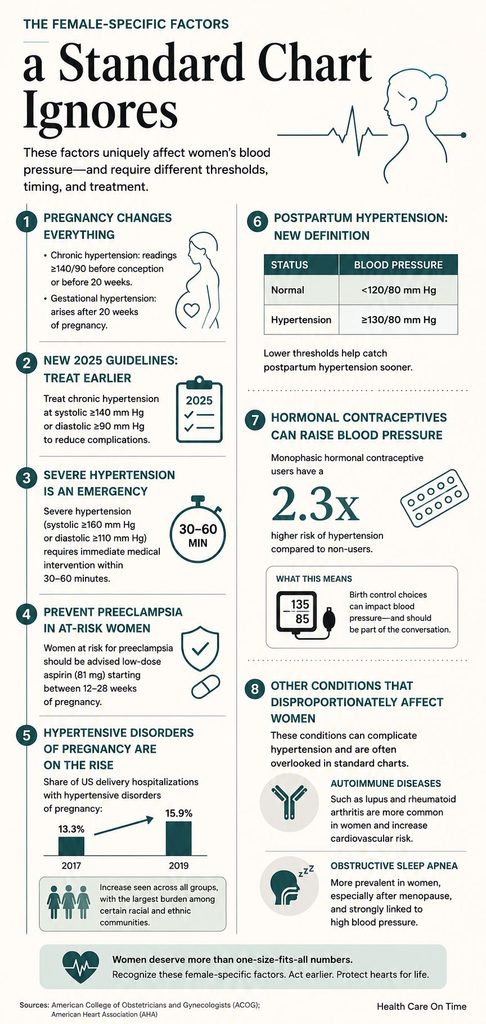
Pregnancy runs on a different rulebook. Chronic hypertension in pregnancy means readings at or above 140/90 before conception or before 20 weeks. Gestational hypertension is new high blood pressure after 20 weeks. Preeclampsia adds protein in the urine or other organ involvement.
The Numbers That Trigger Action in Pregnancy
The 2025 guideline now recommends treating pregnant women who have chronic hypertension once systolic reaches 140 or diastolic reaches 90. That is tighter than the threshold obstetric practice used for years, and it reflects evidence that firmer control lowers serious complications.
Severe-range readings are handled as an emergency. Systolic 160 or diastolic 110, confirmed on repeat measurement within 15 minutes, should receive medication within 30 to 60 minutes.
Women with high blood pressure who are pregnant or planning pregnancy should be counseled about low-dose aspirin at 81 mg daily to reduce preeclampsia risk, started between 12 and 28 weeks. Several drug classes are off the table in pregnancy, including ACE inhibitors, ARBs, direct renin inhibitors, atenolol, nitroprusside, and mineralocorticoid receptor antagonists.
This matters at scale. Hypertensive disorders of pregnancy rose from 13.3% to 15.9% of US delivery hospitalizations between 2017 and 2019, with the highest rates among Black and American Indian and Alaska Native women, women aged 35 and older, and women in the lowest-income zip codes.
After delivery the rulebook flips back. Postpartum, normal is below 120/80, and hypertension is diagnosed at 130/80 or above rather than 140/90. Pressure still elevated beyond roughly 12 weeks postpartum is reclassified as chronic hypertension.
Pregnancies affected by preeclampsia or gestational hypertension carry roughly double the later risk of chronic hypertension, kidney disease, cardiovascular disease, and stroke. The 2026 AHA statistics update names adverse pregnancy outcomes as early warning signs of cardiovascular risk.
Hormonal Birth Control
Combined hormonal contraceptives raise blood pressure through the estrogen component and its effect on the renin-angiotensin-aldosterone system, which promotes sodium retention and higher plasma volume. The size of the effect tracks the dose.
Older pills with 50 micrograms or more of ethinyl estradiol pushed readings up by as much as 15 mm Hg. Modern low-dose formulations produce something closer to 4 to 5 mm Hg on average.
A prospective study of 68,297 US nurses aged 25 to 42 found that monophasic combination pill users had 2.3 times the risk of developing hypertension compared with never-users. Biphasic and triphasic users came in at 1.7 times.
Progestin-only formulations have not shown the same association. If your numbers climbed after starting a combined pill, that is a conversation with your prescriber, not a reason to stop on your own.
Perimenopause and Menopause
Before menopause, estrogen supports vessel dilation, and women generally run lower than men of the same age. As estrogen falls, arteries stiffen and systolic pressure climbs faster than it does in men over the same years.
The symptom overlap is the trap. Headaches, broken sleep, fatigue, and flushing get filed under the menopause transition, and nobody puts a cuff on.
Women who reach menopause before 45 appear to face higher hypertension risk, and an AHA statement has linked hot flashes and night sweats to greater risk as well. Weight gain and rising salt sensitivity during this window compound the effect.
Conditions That Land Harder on Women
Autoimmune disease, polycystic ovary syndrome, chronic kidney disease, thyroid disorders, and migraine with aura all sit disproportionately with women and all interact with blood pressure.
Obstructive sleep apnea is a frequent driver of resistant hypertension and is routinely under-diagnosed in women, whose symptoms skew toward fatigue and insomnia rather than loud snoring. The 2025 guideline also expanded screening for primary aldosteronism to everyone with stage 2 or resistant hypertension, a secondary cause that goes unrecognized far too often.
Race and access matter too. Among more than two million US women of reproductive age, Black women had higher hypertension prevalence (22.3% against 14.4%) and lower control (60.6% against 74.0%).
Decoding the Signs: What High Blood Pressure Actually Feels Like
Usually, Nothing
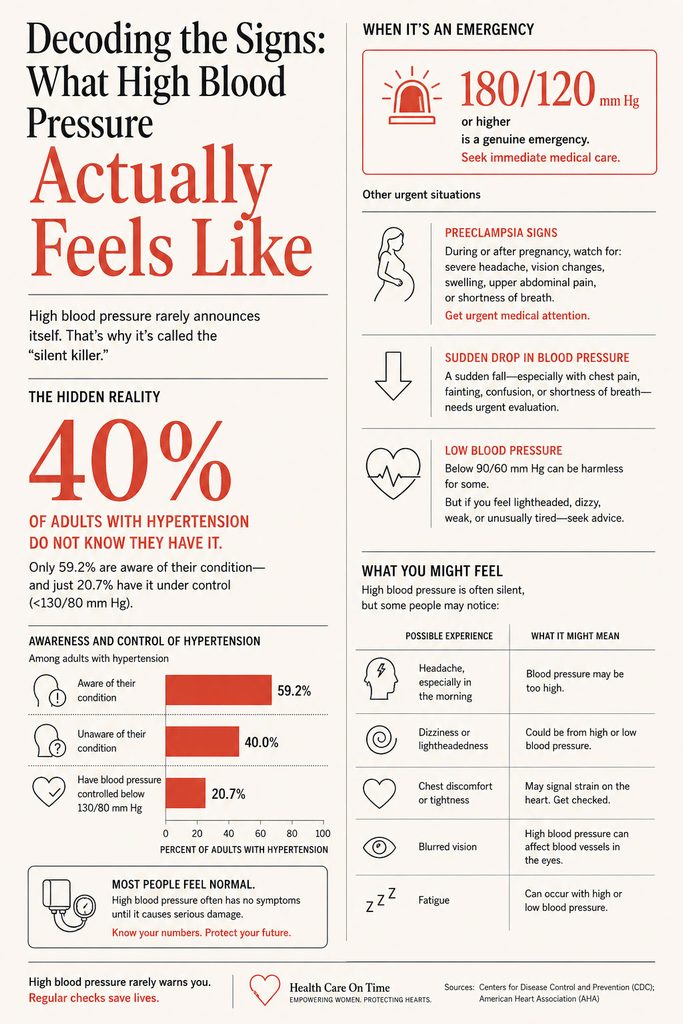
This is the honest answer, and softening it does readers real harm. High blood pressure earns the nickname “silent killer” because it typically produces no sensation while it quietly stiffens arteries and strains the heart, kidneys, brain, and eyes.
Nationally, 59.2% of adults with hypertension know they have it, leaving roughly four in ten unaware. Only 20.7% have it controlled below 130/80.
Nosebleeds, facial flushing, and ordinary headaches are not reliable signals. Waiting to feel high blood pressure is the most common way women lose a decade of prevention.
Symptoms That Are Genuine Emergencies
A reading at or above 180/120 combined with any of the following needs 911, not a next-day appointment:
- Chest pain or pressure
- Shortness of breath
- Sudden weakness or numbness on one side of the body
- Slurred speech or confusion
- Sudden vision loss or change
- Severe headache unlike your usual pattern
- Back pain with a tearing sensation
If the reading is that high but you feel entirely well, rest quietly for five minutes and measure again. If it holds, contact your clinician the same day.
Preeclampsia Signs to Never Wait Out
During pregnancy or in the weeks after delivery, call your obstetric provider immediately for sudden swelling of the face or hands, a severe or persistent headache, vision changes such as flashing lights or blurring, pain under the right ribs, or new shortness of breath.
Preeclampsia can develop up to six weeks after delivery, well past the point when most women assume the risk has passed.
The Bottom of the Chart Counts Too
Blood pressure below 90/60 is common and harmless in many lean or athletic women. It becomes a concern when it produces symptoms: lightheadedness on standing, blurred vision, fainting, or persistent fatigue.
Sudden drops paired with a rapid heartbeat, cold clammy skin, or confusion point toward something acute and need urgent evaluation.
Why Your Reading May Be Wrong Before You Even Check the Chart
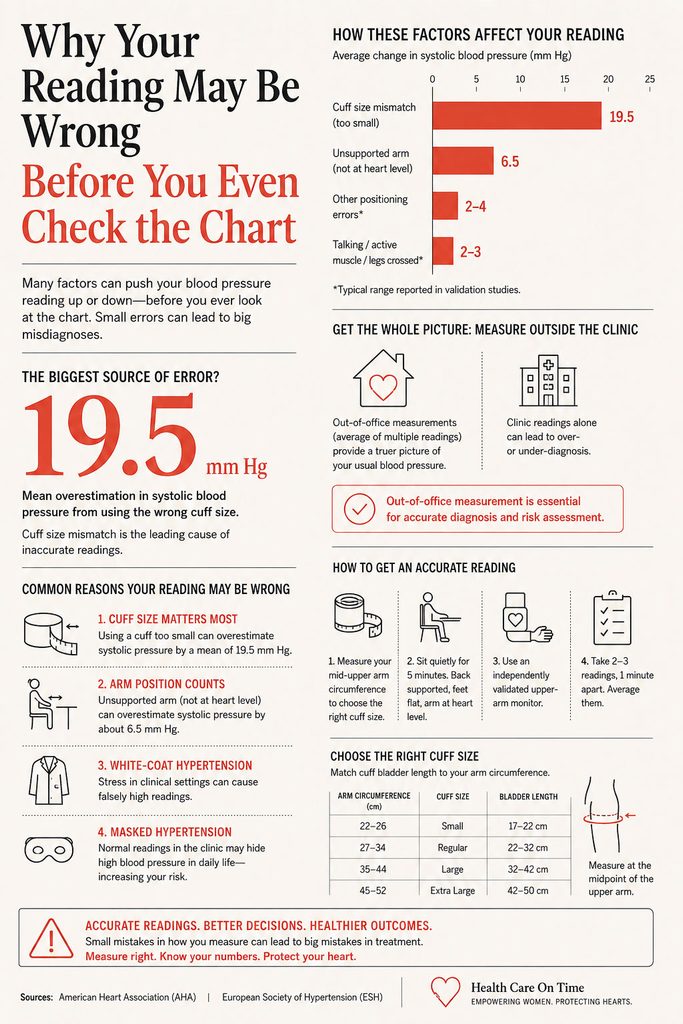
Cuff Size Is the Largest Single Error
A randomized crossover trial published in JAMA Internal Medicine in 2023 measured what happens when the cuff does not match the arm. Among participants whose mid-arm circumference called for an extra-large cuff, using a regular cuff produced a mean reading of 144/87 instead of 125/79 with the correct one.
That is a swing of about 19.5 mm Hg systolic, enough to move a woman from normal into stage 2 hypertension on paper alone. Going too large in the other direction lowers the reading by roughly 4 mm Hg, which can hide a real problem.
This cuts both ways for women, who cluster at both ends of the arm-size range. Measure your mid-upper arm circumference with a tape measure and buy the cuff that matches it, not the one that came in the box.
Arm Position and Posture
A 2024 randomized study found that resting the arm in your lap or letting it hang unsupported overestimated systolic pressure by about 6.5 mm Hg and diastolic by 4.4 mm Hg. Among higher-risk participants the systolic error reached roughly 9 mm Hg.
Crossed legs, a full bladder, an unsupported back, talking during the measurement, and a cuff pushed over a rolled sleeve all add points.
White-Coat and Masked Hypertension
Some women read high in a clinic and normal everywhere else, a pattern called white-coat hypertension. Others read fine in the clinic and high at home or overnight, called masked hypertension, which carries the greater risk precisely because it goes unnoticed.
This is why the 2025 guideline leans hard on out-of-office measurement, either home monitoring or 24-hour ambulatory monitoring, to confirm a diagnosis before treatment starts.
A Reading Protocol That Actually Counts
- Skip caffeine, nicotine, and exercise for 30 minutes beforehand.
- Empty your bladder.
- Sit quietly for 5 minutes with your back supported and both feet flat on the floor.
- Rest your bare arm on a table so the cuff sits at heart level.
- Take two readings one minute apart and record both.
- Measure at roughly the same times daily, ideally morning and evening.
- Bring at least seven days of logged readings to your appointment.
Use an upper-arm device that has been independently validated rather than a wrist or finger monitor. Our lab partners report that readings taken under this protocol come in meaningfully lower than walk-in readings more often than patients expect.
Next Steps: Turning Your Number Into a Plan
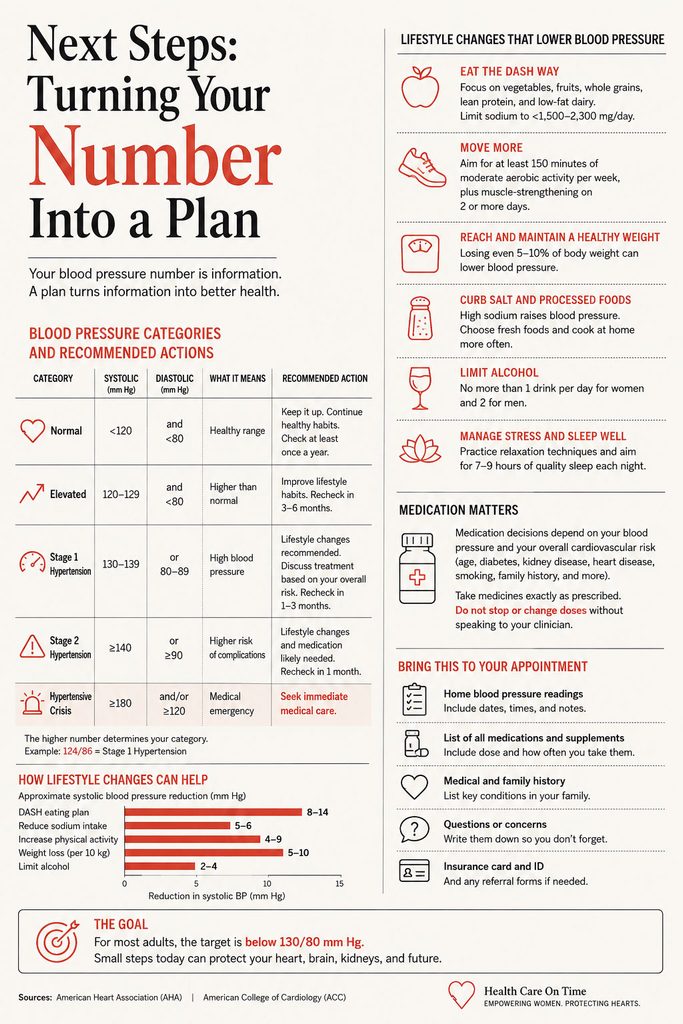
| Your Situation | Reading | What to Do | Timeline |
| Routine check, no risk factors | Below 120/80 | Keep current habits; confirm at your annual visit | Recheck within 12 months |
| Elevated, otherwise healthy | 120 to 129 / under 80 | Start lifestyle changes; begin a home log | Recheck in 3 to 6 months |
| Stage 1, no diabetes or kidney disease | 130 to 139 / 80 to 89 | Confirm with 7 days of home readings, then a risk assessment | Appointment within 1 month |
| Stage 1 with diabetes, CKD, or prior preeclampsia | 130 to 139 / 80 to 89 | Clinician visit; medication often started alongside lifestyle change | Appointment within 2 weeks |
| Stage 2 | 140 or higher / 90 or higher | Clinician visit; medication usually recommended | Appointment within 1 to 2 weeks |
| Crisis range, feeling well | 180 or higher / 120 or higher | Rest 5 minutes and remeasure; if still high, contact your clinician | Same day |
| Pregnant or within 12 weeks postpartum | 140/90 or higher at any point | Call your obstetric provider; 160/110 is an emergency | Immediately |
Lifestyle Moves, With the Numbers Attached
The DASH eating pattern, built on vegetables, fruit, whole grains, lean protein, beans, nuts, and low-fat dairy, remains the most tested dietary approach for lowering blood pressure. Sodium reduction toward 1,500 to 2,300 mg daily is central to it, and most of that sodium arrives in packaged and restaurant food rather than the salt shaker.
Aim for 150 minutes a week of moderate aerobic activity plus strength work twice weekly. Brisk walking counts, and splitting it into ten-minute blocks works if a single session does not fit your day.
Losing 5% to 10% of body weight produces measurable drops in most women carrying extra weight. Potassium-rich foods such as leafy greens, beans, potatoes with the skin, and citrus help offset dietary sodium, though anyone with kidney disease should confirm potassium targets with a clinician first.
Alcohol guidance for women is no more than one standard drink per day, and less is better. Sleep quality, stress management, and stopping tobacco all move the numbers, and untreated sleep apnea will blunt everything else you try.
Check what else you are taking. Regular use of NSAIDs such as ibuprofen and naproxen, oral decongestants containing pseudoephedrine or phenylephrine, some antidepressants, corticosteroids, and licorice root supplements all push blood pressure up. Women often take several of these for cycle pain, sinus congestion, or joint aches without connecting them to a rising reading, so bring the full list, prescription and over-the-counter, to every appointment.
When Medication Enters the Conversation
Medication decisions now run through overall cardiovascular risk rather than the reading alone, which is why the PREVENT calculator matters. Stage 2 generally means medication from the start. Stage 1 depends on your risk profile.
The guideline also asks for a urine albumin-to-creatinine ratio for every patient with high blood pressure, a test that was optional under the previous version. Most women start on one of a small number of first-line drug classes, and needing a second medication is common rather than a sign of failure.
If you are pregnant, planning pregnancy, or breastfeeding, say so before any prescription is written. Several first-line agents are unsafe in pregnancy, and the list of contraindicated drugs was expanded in the 2025 update.
What to Bring to the Appointment
In cases reviewed by our medical team, the visits producing the clearest plan are the ones where the patient arrives with data rather than an impression.
Bring two weeks of home readings with dates and times, your own cuff so it can be checked against a clinic device, and a full list of medications and supplements including hormonal contraception and regular NSAID use.
Also bring your complete pregnancy history, including any preeclampsia or gestational hypertension, and your family history of heart disease, stroke, and kidney disease.
Frequently Asked Questions
What is a normal blood pressure for a woman?
Normal is below 120/80 mm Hg for adult women at every age. Elevated is 120 to 129 systolic with diastolic under 80. Anything at 130/80 or above, confirmed across separate days, counts as high blood pressure under current national guidance.
Is 120/80 still considered normal for women?
Exactly 120/80 sits on the boundary. A systolic of 120 falls in the elevated band and a diastolic of 80 falls in the stage 1 band, so under the higher-number rule 120/80 is classified as stage 1 hypertension. Treat it as a prompt to start monitoring.
What is normal blood pressure for a woman over 60?
The target does not shift with age: below 120/80, with treatment aimed at under 130/80. Average readings in this group run higher because more than 70% of adults over 60 have hypertension, but a common reading is not a healthy one.
Does blood pressure differ between women and men?
The chart categories are identical. Before roughly age 45 women average lower systolic readings than men, then the gap closes and prevalence evens out after 60. Research disagrees on whether women face risk at lower thresholds, and current guidelines apply one standard to both.
What blood pressure level is dangerous for a woman?
A reading at or above 180/120 mm Hg is a hypertensive crisis. With chest pain, breathlessness, vision change, weakness, or confusion, call 911. Without symptoms, rest five minutes, remeasure, and contact your clinician the same day if it stays there.
Can birth control pills raise blood pressure?
Yes. Combined pills containing estrogen typically add about 4 to 5 mm Hg, and a large US cohort found monophasic combination users had 2.3 times the hypertension risk of never-users. Progestin-only methods have not shown the same effect. Get a baseline reading before starting.
Does menopause cause high blood pressure?
Menopause appears to accelerate an age-related rise rather than cause it outright. Systolic pressure climbed roughly 4 mm Hg over five years in peri- and postmenopausal women in one cohort, with no change among women who stayed premenopausal. Early menopause and frequent hot flashes both associate with higher risk.
What blood pressure is too high during pregnancy?
Readings at or above 140/90 mm Hg mark hypertension in pregnancy and now trigger treatment for chronic hypertension. Systolic 160 or diastolic 110, confirmed on repeat within 15 minutes, is a severe-range emergency requiring medication within 30 to 60 minutes. Call your obstetric provider immediately.
Why is my blood pressure higher at the doctor’s office?
That pattern is white-coat hypertension. The reverse also exists: masked hypertension reads normal in clinic and high at home, and it carries more risk because it goes undetected. Home or 24-hour ambulatory monitoring is how clinicians separate the two before starting treatment.
What counts as low blood pressure in women?
Below 90/60 mm Hg is generally considered low. Plenty of lean or athletic women live there without any trouble. It becomes a concern when paired with dizziness on standing, blurred vision, fainting, confusion, or a fast and weak pulse.
How often should a woman check her blood pressure?
With normal readings and no risk factors, at least once a year. Elevated or stage 1 readings usually warrant a recheck every three to six months. On medication, during pregnancy, or after a hypertensive pregnancy, home monitoring is often advised daily or several times weekly.
Can a woman lower blood pressure without medication?
Often, at elevated and early stage 1 levels. A DASH-style diet, sodium reduction, 150 minutes of weekly activity, modest weight loss, limited alcohol, better sleep, and stopping tobacco all produce measurable drops. Whether that is enough depends on your starting number and overall cardiovascular risk.
Medical Disclaimer
This article is for general education and does not replace personalized medical advice, diagnosis, or treatment. Blood pressure targets and medication decisions depend on your full health picture and should be made with a licensed clinician. If a reading is at or above 180/120 mm Hg alongside chest pain, breathing difficulty, vision change, weakness, or confusion, call 911. Pregnant and postpartum women with any reading at or above 140/90 should contact their obstetric provider without delay.
References
- Hypertension Prevalence, Awareness, Treatment, and Control Among Adults Age 18 and Older: United States, August 2021 to August 2023. CDC/NCHS Data Brief No. 511
- 2025 AHA/ACC Guideline for the Prevention, Detection, Evaluation and Management of High Blood Pressure in Adults. Circulation
- New high blood pressure guideline emphasizes prevention, early treatment to reduce CVD risk. American Heart Association Newsroom
- New High Blood Pressure Guideline Emphasizes Prevention, Early Treatment. American College of Cardiology
- Ji H, Niiranen TJ, Rader F, et al. Sex Differences in Blood Pressure Associations With Cardiovascular Outcomes. Circulation. 2021;143:761-763
- Study suggests blood pressure ranges that help predict risk for cardiovascular events may be lower for women. NHLBI, NIH
- Kelly RK, Harris K, Carcel C, Muntner P, Woodward M. Sex Differences in Blood Pressure and Cardiovascular Disease in the UK Biobank. Am J Hypertens. 2026;39(1):98-107
- Ishigami J, Charleston J, Miller ER, et al. Effects of Cuff Size on the Accuracy of Blood Pressure Readings: The Cuff(SZ) Randomized Crossover Trial. JAMA Intern Med. 2023;183(10):1061-1068
- Hypertensive Disorders in Pregnancy and Mortality at Delivery Hospitalization, United States, 2017 to 2019. CDC MMWR 2022;71(17)
- Chasan-Taber L, Willett WC, Manson JE, et al. Prospective Study of Oral Contraceptives and Hypertension Among Women in the United States. Circulation. 1996;94:483-489
- Optimization of Postpartum Care for Patients With and at Risk for Premature and Long-Term Cardiovascular Disease: 2026 ACC Expert Consensus Decision Pathway. JACC
- 2026 Heart Disease and Stroke Statistics: A Report of US and Global Data From the American Heart Association. Circulation
- Blood pressure chart: What your reading means. Mayo Clinic