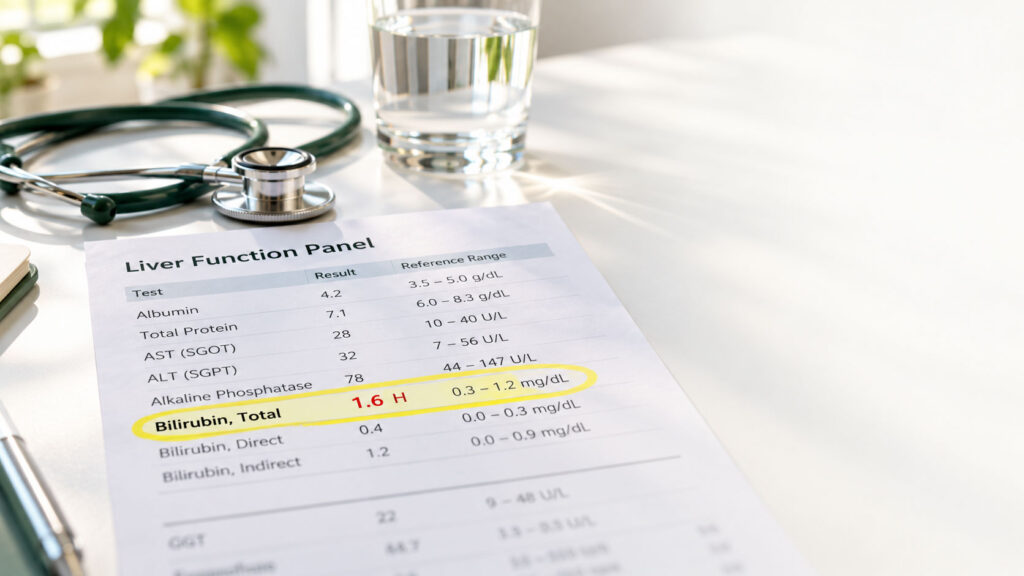
Your patient portal pings. One line on your liver panel is flagged in red: “Bilirubin, Total 1.6 H.” A quick search says your liver is “overwhelmed.” For a large share of Americans, the real reason is a harmless gene variant they’ve had since birth.
Table of Contents
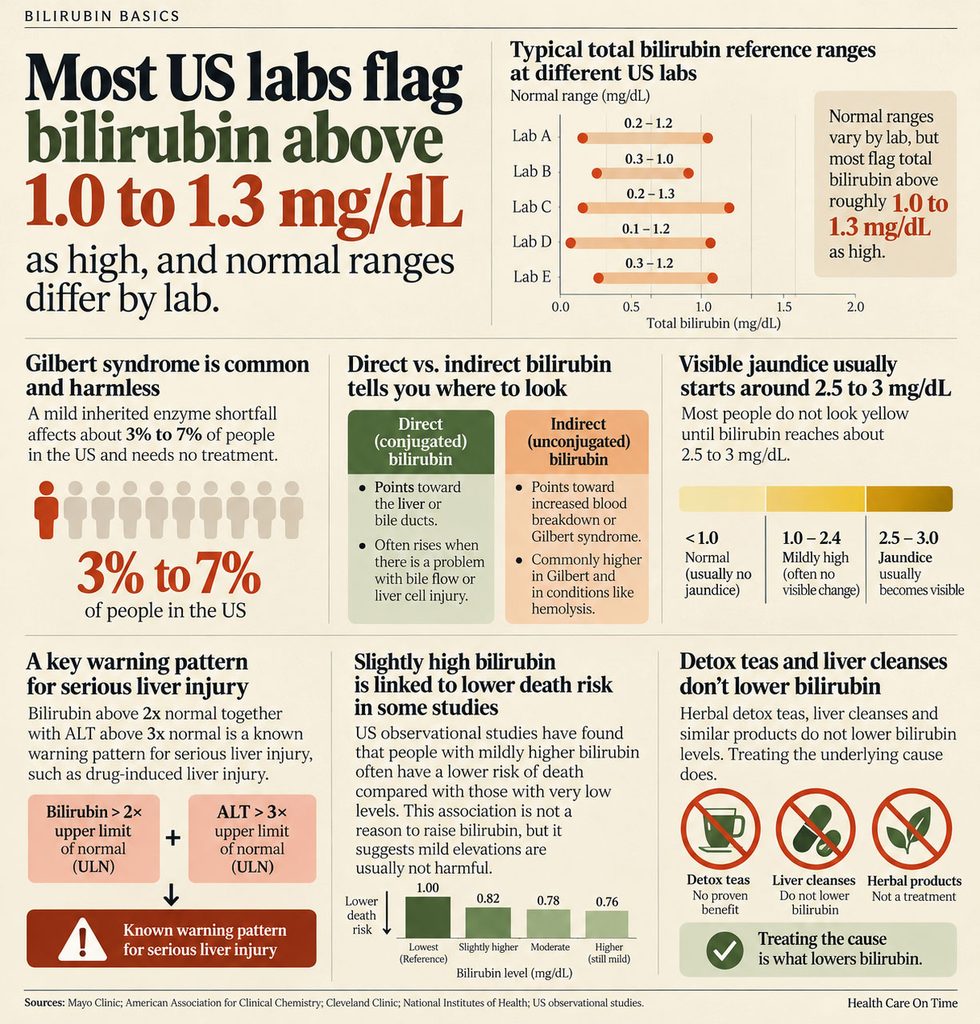
High bilirubin is a signal, not a diagnosis. Sometimes it points to a blocked bile duct or a liver under real strain. Often it points to nothing that needs treatment. The trick is knowing which numbers on your report tell the two apart.
Quick Answer: High bilirubin means this yellow pigment is building up in your blood faster than your body clears it. There are three causes: your body makes too much (red blood cell breakdown), your liver can’t process it (Gilbert syndrome, hepatitis, medications), or bile can’t drain (gallstones, strictures, tumors). A high indirect level with normal liver enzymes is often harmless. A high direct level, yellow eyes with dark urine, or bilirubin rising alongside ALT needs prompt medical review.
At a Glance
- Most US labs flag total bilirubin above roughly 1.0 to 1.3 mg/dL, and ranges differ by lab.
- Gilbert syndrome, a mild inherited enzyme shortfall, affects about 3% to 7% of people in the US and needs no treatment.
- Direct (conjugated) bilirubin points toward the liver or bile ducts. Indirect points toward blood breakdown or Gilbert.
- Visible jaundice usually starts around 2.5 to 3 mg/dL.
- Bilirubin above 2x normal together with ALT above 3x normal is a known warning pattern for serious liver injury.
- Slightly high bilirubin is linked to lower death risk in some US studies.
- Detox teas and liver cleanses don’t lower bilirubin. Treating the cause does.
Go to the ER Now If You Have Jaundice Plus Any of These
- Fever, chills, and pain under the right ribs
- Confusion, unusual sleepiness, or slurred speech
- Vomiting blood, black stools, or easy bruising
- A known or possible acetaminophen overdose (also call Poison Help at 1-800-222-1222)
- Severe belly pain that won’t let up
Everything else in this guide can usually wait for a scheduled visit.
A Note for Parents of Newborns
This guide is about adults. Jaundice in the first days of life is common and follows different rules, with treatment thresholds based on the baby’s age in hours. The American Academy of Pediatrics updated its newborn jaundice guideline in 2022. If your baby looks yellow, call your pediatrician the same day.
What Bilirubin Is and How Your Body Clears It
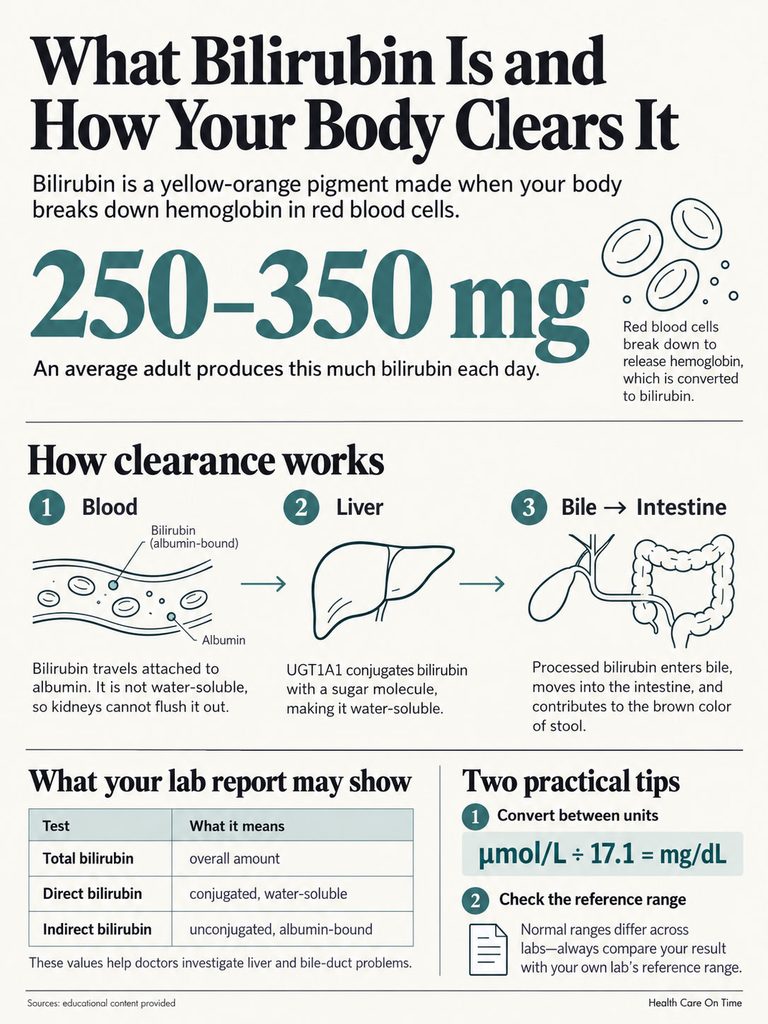
Every day, your body retires millions of old red blood cells. The hemoglobin inside them breaks down into bilirubin, a yellow-orange pigment. An average adult makes roughly 250 to 350 mg of it each day.
That bilirubin has to leave your body, and it follows a set path to get out.
The Three-Step Path: Blood, Liver, Bile
First, bilirubin travels through your blood stuck to a protein called albumin. In this form it doesn’t dissolve in water, so your kidneys can’t flush it.
Second, your liver grabs it and attaches a sugar molecule using an enzyme called UGT1A1. This step, called conjugation, makes bilirubin water-soluble.
Third, the liver pushes processed bilirubin into bile. Bile drains through the bile ducts into your intestine, where bacteria turn it brown. That’s why healthy stool is brown, and why blocked bile can turn stool pale.
Total, Direct, and Indirect Bilirubin on Your Report
Your lab report may show up to three numbers.
- Total bilirubin: everything in your blood.
- Direct (conjugated) bilirubin: the processed form.
- Indirect (unconjugated) bilirubin: the unprocessed form, calculated as total minus direct.
The American College of Gastroenterology guideline tells clinicians to split any high total bilirubin into these two parts. A high direct fraction usually points to liver disease or a bile duct problem. A high indirect fraction points somewhere else.
Why “Normal” Ranges Differ Between Labs
Search for the normal range and you’ll find a mess. One site says under 1.0 mg/dL. Another says 0.1 to 1.2. A third says 0.2 to 1.3.
None of them is wrong. Each lab sets its own reference range based on its testing method and population. Always compare your result to the range printed on your own report.
Our medical team sees this confusion often. A result of 1.2 mg/dL can be flagged “high” at one lab and pass without comment at another.
If your report uses micromoles per liter (µmol/L), divide by 17.1 to get mg/dL. So 26 µmol/L is about 1.5 mg/dL.
Why Your Liver Isn’t Always the Problem
The “overwhelmed liver” story is popular online. It’s also misleading for many people who see a mildly high number.
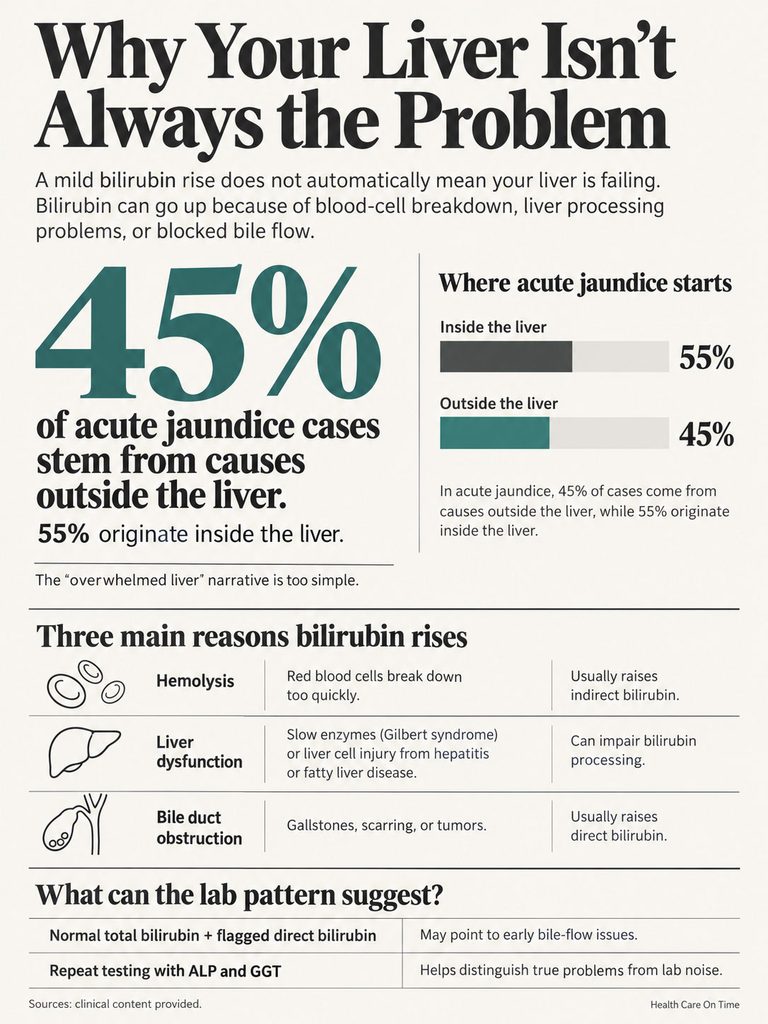
Bilirubin can rise for three very different reasons. Only some of them involve liver damage.
Too Much Bilirubin Made (Hemolysis)
When red blood cells break down faster than normal, the liver gets more bilirubin than it can process at once. The liver itself is fine.
This is called hemolysis. Causes include sickle cell disease, G6PD deficiency, autoimmune reactions, some medications, and mechanical heart valves. A large bruise being reabsorbed can do it too.
The indirect fraction rises. With a healthy liver, hemolysis alone usually keeps total bilirubin under about 4 to 5 mg/dL.
The Liver Can’t Process It
Here the problem sits inside the liver. Sometimes it’s a slow enzyme, as in Gilbert syndrome. Sometimes it’s liver cell injury from viral hepatitis, alcohol, fatty liver disease, or a medication.
Gilbert raises indirect bilirubin only. Liver cell injury usually raises both fractions, along with ALT and AST.
The Bile Can’t Drain
The liver processes bilirubin normally, but the exit is blocked. Gallstones in the common bile duct, scarring, inflammation, or a tumor can all cause this.
Direct bilirubin backs up into the blood. Because it dissolves in water, it spills into urine and turns it dark, like tea or cola. Stool may turn pale or clay-colored. Alkaline phosphatase (ALP) usually rises too.
According to an AAFP clinical review, about 55% of acute jaundice cases in adults start inside the liver. The other 45% come from outside it, including gallstones, hemolysis, and cancer.
| Type of rise | Fraction that rises | Typical enzyme pattern | Common causes | Urgency |
| Gilbert syndrome | Indirect only | ALT, AST, ALP normal | UGT1A1 gene variant | Low; no treatment |
| Hemolysis | Indirect | Liver enzymes normal; LDH high, haptoglobin low | Sickle cell, G6PD, autoimmune, drugs | Moderate; find the cause |
| Liver cell injury | Both, direct often higher | ALT and AST high, often 3x or more | Hepatitis A/B/C, alcohol, drugs, MASLD | Moderate to high |
| Bile duct blockage | Direct | ALP and GGT high; ALT may rise | Gallstones, strictures, pancreatic or bile duct cancer | High, especially with fever |
| Temporary rise | Indirect | Normal | Fasting, illness, intense exercise | Low; retest |
| Advanced liver disease | Both | Mixed; low albumin, high INR | Cirrhosis, acute liver failure | High to emergency |
High Direct Bilirubin With a Normal Total
Sometimes total bilirubin is normal but the direct number is flagged. Because direct bilirubin is a small slice of the total, even a modest rise can stand out.
This pattern can be an early hint of bile flow trouble, especially if ALP or GGT is also high. It can also be lab noise. A repeat test plus ALP and GGT usually tells the difference.
9 Causes of High Bilirubin, Ranked From Harmless to Urgent
Patients booking liver panels with us often ask one question first: “Is this serious?” Here’s how the common causes stack up, from least to most concerning.
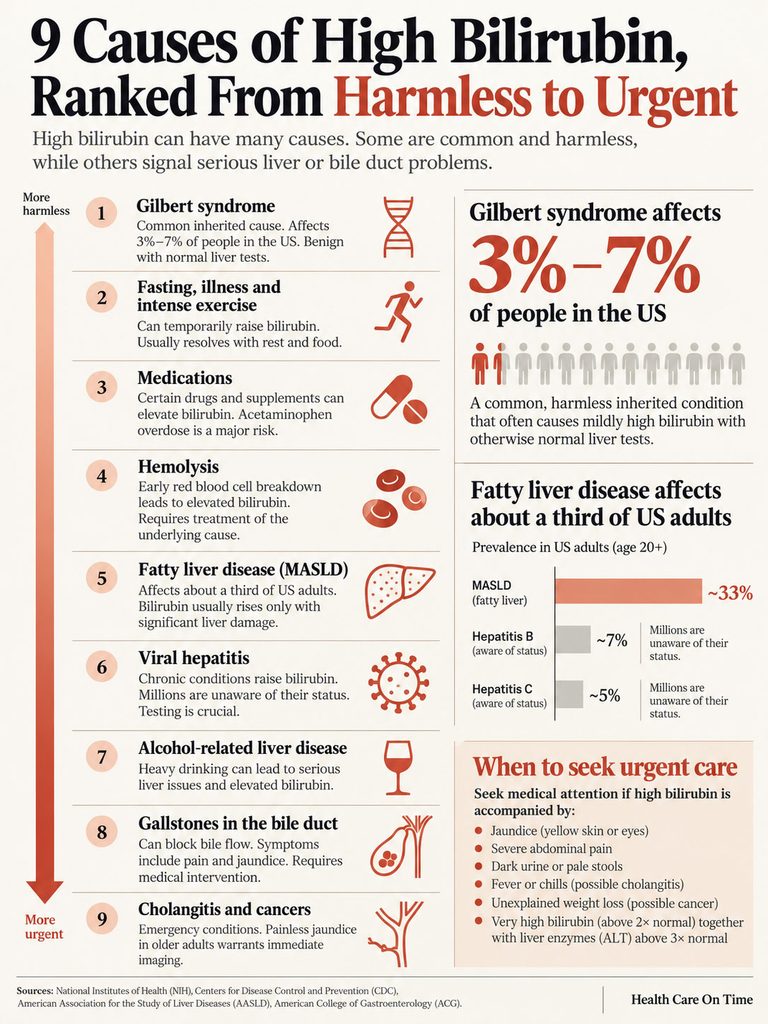
- Gilbert syndrome
- Fasting, illness, and intense exercise
- Medications
- Hemolysis
- Fatty liver disease (MASLD)
- Viral hepatitis
- Alcohol-related liver disease
- Gallstones in the bile duct
- Cholangitis and cancers of the pancreas or bile ducts
1. Gilbert Syndrome
Gilbert syndrome is the most common inherited cause of high bilirubin. The American Liver Foundation estimates it affects 3% to 7% of people in the US. It’s diagnosed more often in men.
It comes from a variant in the UGT1A1 gene, most often one called UGT1A1*28. The enzyme still works, just more slowly. Indirect bilirubin creeps up while every other liver test stays normal.
Who Gets It and When It Shows Up
Gilbert usually surfaces in the teen years, often on a routine blood test. Many adults learn they have it in their 30s or 40s, when a checkup flags a number that has been mildly high all along.
The American College of Gastroenterology describes the outlook as excellent. It doesn’t harm the liver or shorten life. Levels usually stay under about 3 mg/dL.
The One Real Risk: Certain Medications
Because UGT1A1 also clears some drugs, Gilbert matters for a few prescriptions.
- Irinotecan, a chemotherapy drug, can cause dangerously low white blood cell counts in people with two copies of UGT1A128. The FDA added UGT1A128 testing language to its label in 2005.
- Atazanavir, an HIV medication, blocks the same enzyme. In a Swiss HIV cohort, it raised bilirubin by about 0.87 mg/dL on average. Among people with two copies of the variant on atazanavir or indinavir, 67% had repeated jaundice-range readings, compared with 7% of others.
If you have Gilbert, tell every new prescriber. It takes one sentence.
Rarer Inherited Causes
A few other inherited conditions raise bilirubin. Crigler-Najjar syndrome is a severe, very rare enzyme defect that shows up in infancy. Dubin-Johnson and Rotor syndromes raise direct bilirubin but are generally harmless. A specialist usually confirms these.
2. Fasting, Illness, and Intense Exercise
Skipping meals for a day or two can roughly double indirect bilirubin in people with Gilbert. A fever, the flu, dehydration, or a hard endurance workout can push it up as well.
Harvard Health notes that in these cases, eating and resting brings the level back down, with no damage to the liver.
That’s why a flagged result after a fasting draw or a rough week deserves a repeat test before anyone panics.
3. Medications
Some drugs raise bilirubin by blocking its processing or bile flow. Others cause true liver injury.
Common culprits include rifampin, atazanavir, amoxicillin-clavulanate, anabolic steroids, and high doses of acetaminophen. Acetaminophen overdose is the leading cause of acute liver failure in the US.
Supplements are a growing cause. The NIH’s LiverTox database lists green tea extract, concentrated turmeric products, and anabolic steroids among products linked to liver injury.
4. Hemolysis
When red blood cells burst early, bilirubin production outruns the liver. You may also feel tired or short of breath from anemia.
Clues include low hemoglobin, a high reticulocyte count, high LDH, and low haptoglobin. The cause, not the bilirubin, is what needs treatment.
5. Fatty Liver Disease (MASLD)
Metabolic dysfunction-associated steatotic liver disease, once called nonalcoholic fatty liver disease, affects about a third of US adults. Most people with it have normal bilirubin.
Bilirubin usually rises only once fatty liver progresses to significant scarring. A climbing level in someone with known MASLD is worth a closer look.
6. Viral Hepatitis
Hepatitis A causes sudden, short-lived jaundice and usually clears on its own. Hepatitis B and C often cause no symptoms for years, then raise bilirubin once the liver is badly scarred.
The CDC estimates millions of Americans live with chronic hepatitis B or C, and many don’t know it. One-time hepatitis C testing is recommended for every US adult.
7. Alcohol-Related Liver Disease
Heavy drinking injures liver cells and can cause alcohol-associated hepatitis, a serious illness with jaundice, fever, and an enlarged liver. AST running more than twice ALT often points to alcohol.
Even one heavy weekend can nudge bilirubin and liver enzymes upward for a few days.
8. Gallstones in the Bile Duct
Most gallstones stay in the gallbladder. When one slips into the common bile duct, it blocks bile flow.
Expect sudden pain under the right ribs, nausea, dark urine, and pale stool. Direct bilirubin and ALP climb fast. This needs imaging and often an endoscopic procedure called ERCP to remove the stone.
9. Cholangitis and Cancers of the Pancreas or Bile Ducts
Cholangitis is an infection of a blocked bile duct. The classic trio is fever, right upper belly pain, and jaundice. It’s an emergency.
Painless jaundice deserves special attention after age 50. Yellowing without pain, plus weight loss or new itching, can be an early sign of pancreatic or bile duct cancer. It calls for prompt imaging, not waiting.
How High Is Too High? Reading Your Number
A single number tells only part of the story. Our medical reviewers always read bilirubin alongside the direct fraction, the liver enzymes, and how the person feels.
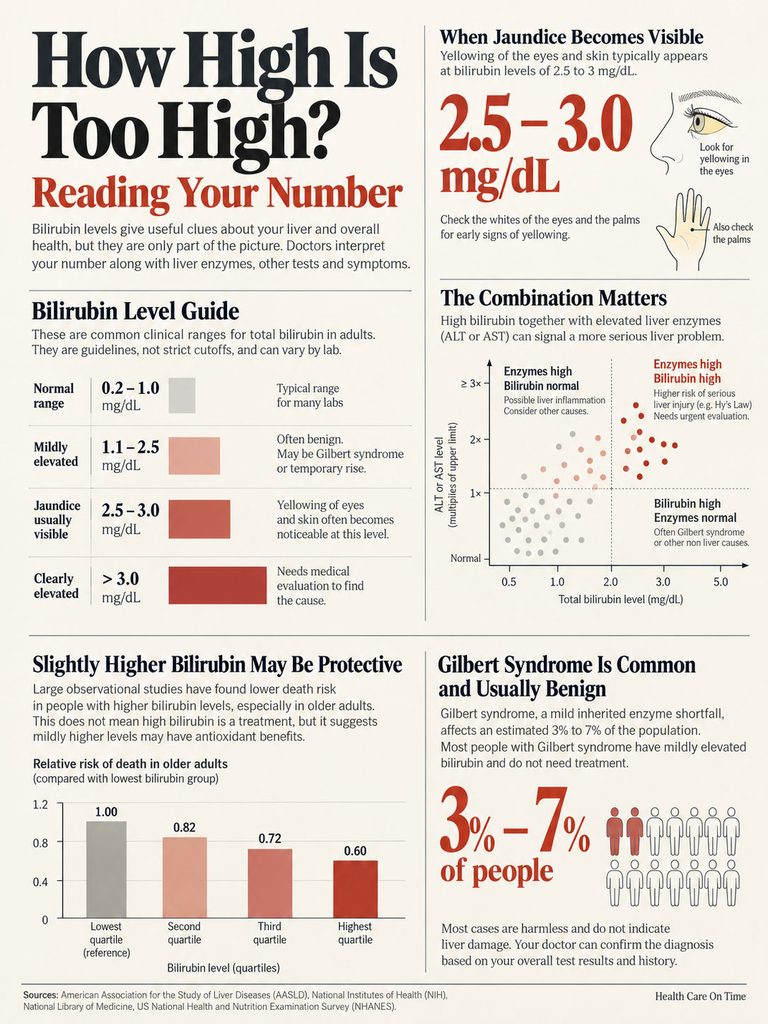
Value Bands for Adults
These bands are clinical rules of thumb, not official guideline cutoffs. Your doctor will weigh them against your symptoms and other labs.
- Up to about 1.2 to 1.3 mg/dL: normal at most US labs.
- 1.3 to 2.0 mg/dL: mild. Very often Gilbert or a temporary rise, especially with normal direct bilirubin.
- 2.0 to 3.0 mg/dL: moderate. Needs a fractionated repeat and enzyme check within days to weeks.
- 3.0 to 5.0 mg/dL: clearly abnormal, usually with visible jaundice. Medical review within a few days.
- 5.0 to 10 mg/dL: significant. Points to real liver disease, blockage, or major hemolysis. Same-day or next-day care.
- Above 10 mg/dL: severe. Often needs hospital-level evaluation.
- Above 20 mg/dL: linked to severe liver failure in adults. Emergency.
When Jaundice Becomes Visible
Yellowing usually shows first in the whites of the eyes, once bilirubin passes roughly 2.5 to 3 mg/dL. Skin yellowing follows at higher levels.
It’s harder to spot on darker skin. Check the whites of the eyes, the inside of the lower eyelid, and the palms in natural daylight.
The Combination That Matters More Than the Number
A bilirubin of 2.4 with normal enzymes can be harmless. A bilirubin of 2.4 with an ALT ten times normal is a different situation.
The FDA uses a pattern called Hy’s Law to flag dangerous drug-related liver injury: ALT or AST above 3 times the upper limit of normal plus total bilirubin above 2 times normal, with no sign of a bile duct blockage. Drug-injury registries report death rates around 9% to 12% in this group.
If you started a new medication or supplement and see both numbers rising, call your prescriber that day.
The Surprising Upside of Slightly High Bilirubin
Bilirubin isn’t just waste. It’s also a strong antioxidant.
In a study of 4,303 US adults aged 60 and older from NHANES, people with the lowest bilirubin (0.1 to 0.4 mg/dL) had higher death risk than those at 0.5 to 0.7 mg/dL (hazard ratio 1.36). Higher levels didn’t reach significance either way.
In NHANES III data on 11,078 adults followed for about 27 years, the highest bilirubin quartile had a 17% lower risk of death. Among people with fatty liver, the drop was 32%.
These are observational studies, so they can’t prove cause and effect. They do explain why many doctors stay calm about a mild Gilbert-type rise.
| Statistic | Value | Source |
| Gilbert syndrome prevalence, US | 3% to 7% of people | American Liver Foundation; ACG |
| Acute adult jaundice starting inside the liver | About 55% (45% outside it) | AAFP, Am Fam Physician 2017 |
| Level where eye yellowing becomes visible | About 2.5 to 3 mg/dL | Clinical consensus; AAFP |
| Death rate, drug liver injury meeting Hy’s Law | About 9% to 12% | FDA DILI guidance; DILI registries |
| Death risk, adults 60+, 0.1 to 0.4 vs 0.5 to 0.7 mg/dL | HR 1.36 (95% CI 1.07 to 1.72) | NHANES 1999-2004, PLOS ONE 2014 |
| Death risk, highest vs lowest bilirubin quartile | HR 0.83 overall; 0.68 with fatty liver | NHANES III, J Gastrointest Liver Dis |
| Atazanavir stopped for bilirubin, UGT1A1 poor metabolizers | 20% to 60% | CPIC guideline; ARUP Laboratories |
What Your Doctor Will Check Next
In lab results reviewed across our diagnostic network, the most useful next step is often the simplest: a clean repeat test.
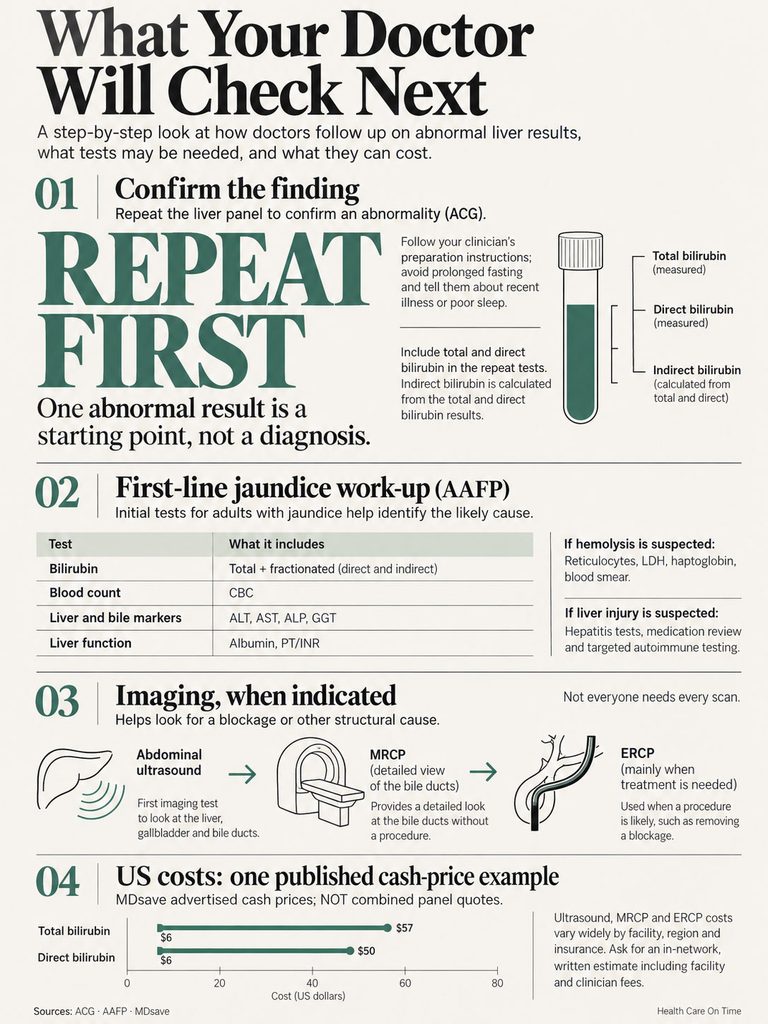
Step 1: Repeat and Fractionate
The ACG guideline recommends confirming any abnormal liver result before a full workup. A repeat after a normal meal and a good night’s sleep clears up many mild results.
The repeat should include direct and indirect bilirubin. If direct is less than about 15% to 20% of the total and enzymes are normal, Gilbert or hemolysis moves to the top of the list.
Step 2: The Standard Workup
The AAFP lists these first-line tests for adults with jaundice:
- Fractionated bilirubin
- Complete blood count (CBC)
- ALT and AST
- Alkaline phosphatase and GGT
- Prothrombin time or INR
- Albumin and total protein
For suspected hemolysis, add a reticulocyte count, LDH, haptoglobin, and a blood smear. For suspected liver injury, add hepatitis A, B, and C tests, iron studies, and sometimes autoimmune markers.
Step 3: Imaging
When direct bilirubin or ALP is high, an abdominal ultrasound comes first. It’s affordable, safe, and good at spotting gallstones and widened bile ducts.
If more detail is needed, MRCP (an MRI of the bile ducts) or CT follows. ERCP is used when a blockage needs treatment, not just a picture.
Genetic testing for UGT1A1 is rarely needed to diagnose Gilbert. A pattern of mild indirect rises with otherwise normal labs over time is usually enough.
What to Expect on Cost in the US
Bilirubin is part of the standard CMP and hepatic function panel, which most insurance plans cover when a clinician orders them. Standalone total and direct bilirubin tests (CPT 82247 and 82248) are among the cheaper lab tests, and many cash-pay labs list them for well under $50.
Imaging costs vary widely. Ultrasound is the least expensive option, while MRCP and ERCP cost much more and often need prior authorization. Ask your plan before scheduling.
Medically Approved Steps to Take Now
Treatment always targets the cause, not the number. Still, there’s plenty you can do while you wait for answers.
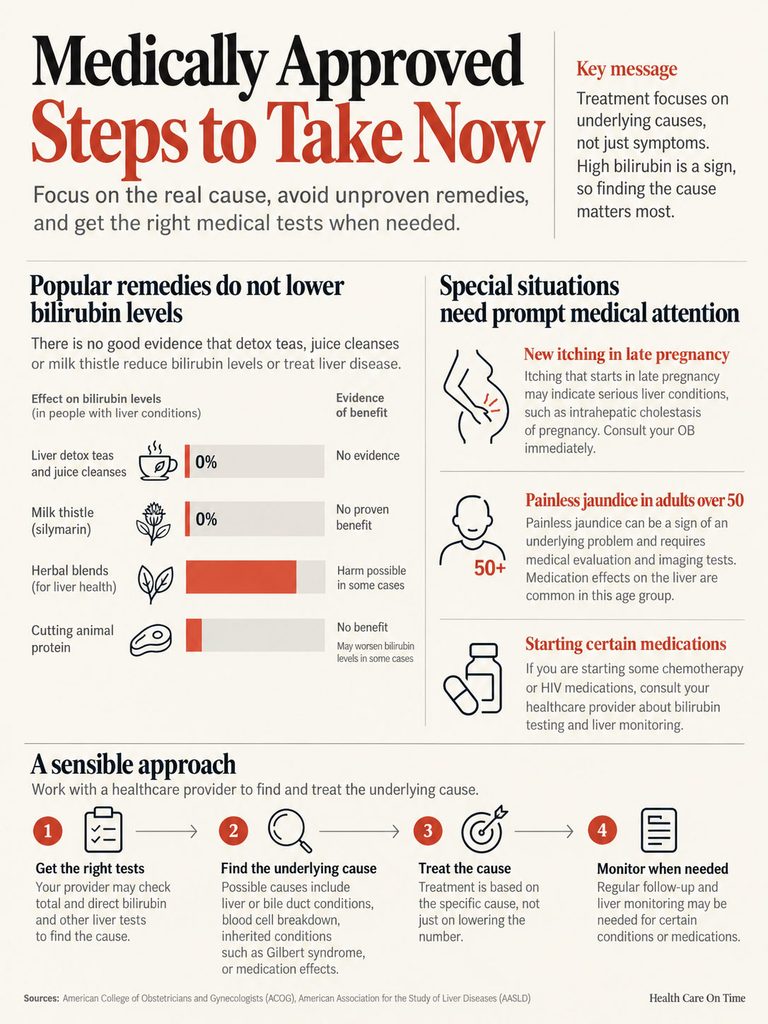
What Actually Helps
- Stop alcohol until your doctor clears you.
- Review every medication and supplement. Bring the bottles to your visit, including herbal teas, protein powders, and fat burners.
- Respect the acetaminophen limit. Stay within label directions and watch for it in cold and flu combination products.
- Eat regular meals if you have Gilbert. Avoid long fasts and crash diets, which can push levels up.
- Stay hydrated when sick. Dehydration during illness can make a Gilbert rise more noticeable.
- Get vaccinated against hepatitis A and B if you aren’t already.
- Manage the long-term drivers of fatty liver: weight, blood sugar, and cholesterol.
What Doesn’t Work
Liver detox teas, juice cleanses, and flush kits don’t lower bilirubin. Some herbal blends can actually injure the liver.
Milk thistle is widely sold for liver health. According to the NIH’s NCCIH, studies haven’t shown clear benefit for liver disease.
One popular online answer suggests cutting animal protein for two weeks. There’s no good evidence for that. Severely limiting food can actually raise indirect bilirubin in people with Gilbert.
Special Situations
Pregnancy: New itching in late pregnancy, especially on the palms and soles, can signal intrahepatic cholestasis of pregnancy. Jaundice with high blood pressure or upper belly pain can signal a serious condition like HELLP syndrome. Call your OB the same day.
Older adults: Painless jaundice after 50 always needs imaging. Older adults are also more likely to take several medications that affect the liver.
People on chemotherapy or HIV medicines: If you’re starting irinotecan or atazanavir, ask whether UGT1A1 testing makes sense. A bilirubin rise on atazanavir is often cosmetic, but it should still be discussed.
When High Bilirubin Is an Emergency
Most mildly high results can wait for a routine visit. Use this table to sort yours.
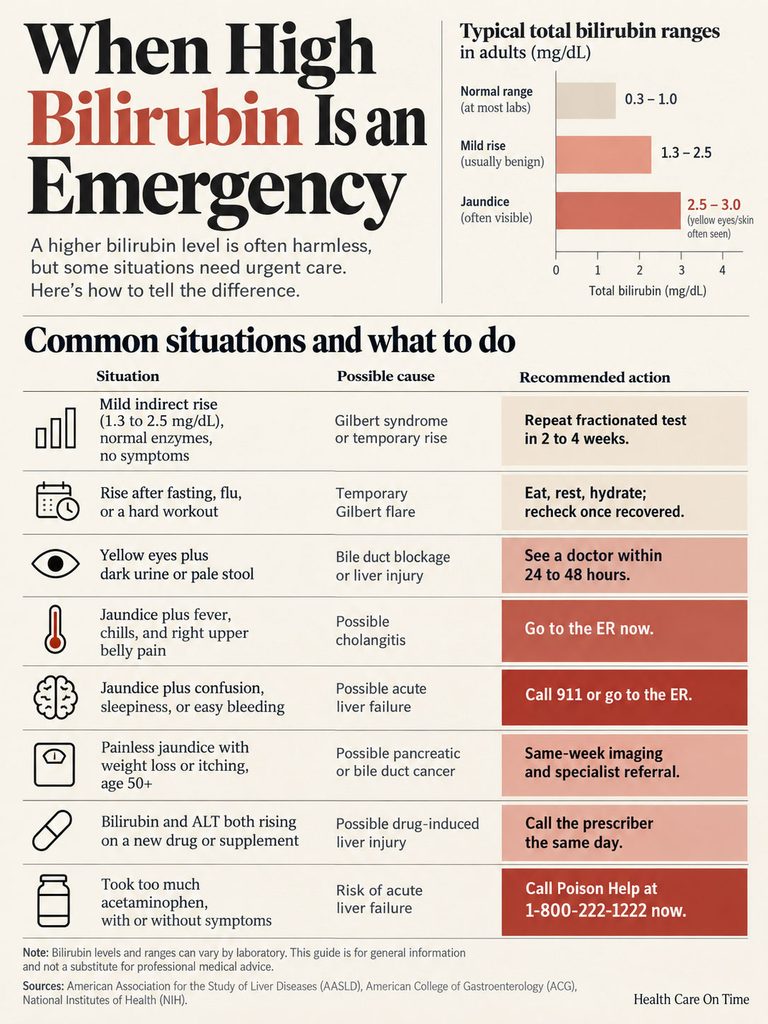
| Scenario | What it may mean | Recommended action |
| Mild indirect rise (1.3 to 2.5 mg/dL), normal enzymes, no symptoms | Gilbert syndrome or temporary rise | Repeat fractionated test in 2 to 4 weeks after normal eating |
| Rise after fasting, flu, or a hard workout | Temporary Gilbert flare | Eat, rest, hydrate; recheck once recovered |
| Yellow eyes plus dark urine or pale stool | Bile duct blockage or liver injury | See a doctor within 24 to 48 hours |
| Jaundice plus fever, chills, and right upper belly pain | Possible cholangitis | Go to the ER now |
| Jaundice plus confusion, sleepiness, or easy bleeding | Possible acute liver failure | Call 911 or go to the ER |
| Painless jaundice with weight loss or itching, age 50+ | Possible pancreatic or bile duct cancer | Same-week imaging and specialist referral |
| Bilirubin and ALT both rising on a new drug or supplement | Possible drug-induced liver injury | Call the prescriber the same day |
| Took too much acetaminophen, with or without symptoms | Risk of acute liver failure | Call Poison Help at 1-800-222-1222 now |
Patients commonly ask us whether they can wait it out with yellow eyes. With dark urine, fever, or confusion, the answer is no.
“`Frequently Asked Questions
Is a bilirubin of 1.5 mg/dL high?
At most US labs, 1.5 mg/dL is mildly above normal. On its own, it’s rarely dangerous. If direct bilirubin and liver enzymes are normal, Gilbert syndrome or a temporary rise from fasting or illness is the most likely reason. A repeat fractionated test usually settles the question.
Can high bilirubin be normal?
Yes, for some people. Those with Gilbert syndrome often run slightly high indirect bilirubin their whole lives with no harm to the liver. Some US observational studies even link mildly higher bilirubin to lower death risk. What’s normal for you depends on your pattern over time.
Why is bilirubin high when liver enzymes are normal?
This pattern usually means the problem isn’t liver damage. The two most common explanations are Gilbert syndrome and hemolysis, the early breakdown of red blood cells. A CBC, reticulocyte count, LDH, and haptoglobin can tell them apart. Both raise indirect bilirubin, not direct.
What bilirubin level is dangerous for adults?
There’s no single cutoff. Levels above 3 mg/dL usually cause visible jaundice and need prompt evaluation. Levels above 10 mg/dL often need hospital-level care, and above 20 mg/dL suggests severe liver failure. A smaller rise paired with high ALT, fever, or confusion can also be dangerous.
Can stress or lack of sleep raise bilirubin?
In people with Gilbert syndrome, physical stress such as illness, fever, poor sleep, or intense exercise can raise indirect bilirubin for a few days. Emotional stress may play a role through skipped meals and poor sleep. The rise is temporary and doesn’t damage the liver.
Does fasting raise bilirubin?
Yes, especially if you have Gilbert syndrome. Going a day or two with very little food can roughly double indirect bilirubin in some people. Levels return to baseline once normal eating resumes. That’s why a test drawn during a fast or a stomach bug may look worse than usual.
What foods lower bilirubin?
No specific food lowers bilirubin directly. Regular, balanced meals help people with Gilbert avoid fasting-related spikes. Limiting alcohol and keeping a healthy weight protect the liver over time. Be cautious with liver detox products, since some herbal supplements can injure the liver instead.
Can alcohol raise bilirubin?
Yes. Heavy drinking can injure liver cells and raise bilirubin along with liver enzymes, sometimes after a single binge. Long-term heavy use can lead to alcohol-associated hepatitis or cirrhosis, both of which cause jaundice. If your bilirubin is high, pausing alcohol until you have answers is a sensible step.
Does Gilbert syndrome damage the liver?
No. Gilbert syndrome doesn’t cause liver damage, cirrhosis, or a shorter life. It only slows one step of bilirubin processing. The main practical issue is medication safety, since drugs like irinotecan and atazanavir rely on the same enzyme. Tell your doctors you have it.
How long does it take bilirubin to go down?
It depends on the cause. A Gilbert flare from fasting or illness often settles within days. After a gallstone is removed, bilirubin usually falls over one to two weeks. With hepatitis A, recovery may take several weeks. Chronic liver disease may keep levels high until the condition improves.
Can medications cause high bilirubin?
Yes. Some drugs block bilirubin processing without harming the liver, such as atazanavir and rifampin. Others cause true liver injury, including high-dose acetaminophen, some antibiotics, and anabolic steroids. Herbal supplements are a growing cause. Bilirubin rising together with ALT on a new medication needs a same-day call to your prescriber.
Does high bilirubin cause itching or tiredness?
Mild bilirubin rises usually cause no symptoms. Itching is more often linked to bile duct blockage, where bile acids build up in the skin. Fatigue usually comes from the underlying cause, such as hepatitis or anemia, rather than bilirubin itself. New itching with jaundice deserves prompt evaluation.
Disclaimer: This article is for general education and isn’t a substitute for professional medical advice, diagnosis, or treatment. Lab reference ranges vary, and your results should be interpreted by a licensed clinician who knows your history. If you have yellow skin or eyes with fever, confusion, severe abdominal pain, or bleeding, call 911 or go to the nearest emergency room. For a possible acetaminophen overdose, call Poison Help at 1-800-222-1222.
References
- Kwo PY, Cohen SM, Lim JK. ACG Clinical Guideline: Evaluation of Abnormal Liver Chemistries. Am J Gastroenterol. 2017;112(1):18-35
- Fargo MV, Grogan SP, Saguil A. Evaluation of Jaundice in Adults. Am Fam Physician. 2017;95(3):164-168
- American Liver Foundation: Gilbert Syndrome
- American College of Gastroenterology: Gilbert Syndrome
- Harvard Health Publishing: What does a high bilirubin level in my blood test actually mean?
- Cleveland Clinic: Bilirubin Test
- Ong KL et al. Total Bilirubin Levels and Total Mortality in Older Adults: NHANES 1999-2004. PLOS ONE. 2014;9(4):e94479
- Total Bilirubin Levels in Nonalcoholic Fatty Liver Disease and Mortality in US Adults. J Gastrointestin Liver Dis
- US FDA: Drug-Induced Liver Injury: Premarketing Clinical Evaluation
- CPIC Guideline for Atazanavir and UGT1A1
- ARUP Consult: UGT1A1 Gene Analysis
- Rotger M et al. Gilbert Syndrome and Antiretroviral Therapy-Associated Hyperbilirubinemia. J Infect Dis. 2005
- NIH LiverTox: Clinical and Research Information on Drug-Induced Liver Injury
- NIH NCCIH: Milk Thistle
- CDC: Viral Hepatitis