During World War II, British intelligence spread a story that its pilots spotted German bombers in the dark because they ate so many carrots. The real reason was radar. The myth outlived the war by eighty years and still shapes what Americans believe about this vegetable.
Table of Contents
The truth is less dramatic and far more useful. Carrots do specific, measurable things to your body, and the research finally has numbers attached to most of them.
Quick Answer
One to two medium carrots a day is safe and beneficial for most adults. That amount covers more than half your daily vitamin A, adds fiber and potassium, and fits inside federal vegetable targets. The health benefits of eating carrots every day are strongest for vitamin A status, bowel regularity, and cholesterol. The only common limit is cosmetic: very high intakes can tint skin orange, a harmless condition called carotenemia.
At a Glance
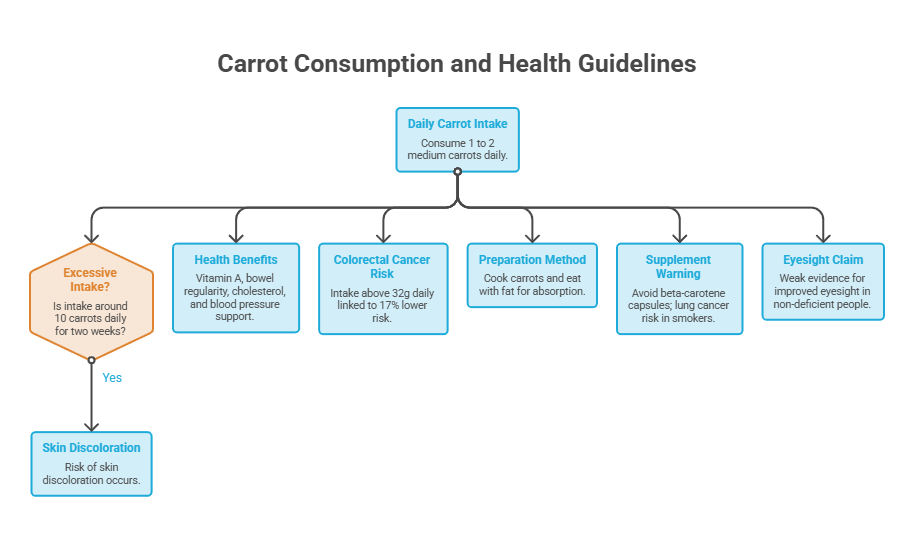
- One to two medium carrots daily is the practical sweet spot; about 10 a day for two weeks is where skin discoloration starts.
- Strongest evidence: vitamin A sufficiency, bowel regularity, cholesterol, and blood pressure support.
- Weakest claim: sharper eyesight in people who are not deficient.
- A Danish cohort of 57,053 adults linked raw carrot intake above roughly 32 grams a day to a 17% lower colorectal cancer risk over 18-plus years.
- Cook your carrots and eat them with fat. It multiplies beta-carotene absorption several times over.
- Whole carrots and beta-carotene capsules are not interchangeable. Supplements raised lung cancer risk in smokers.
What Eating Carrots Every Day Actually Does to Your Body
Carrots are mostly water and carbohydrate carrying a small, dense payload of pigments and fiber. That payload is where every effect comes from.
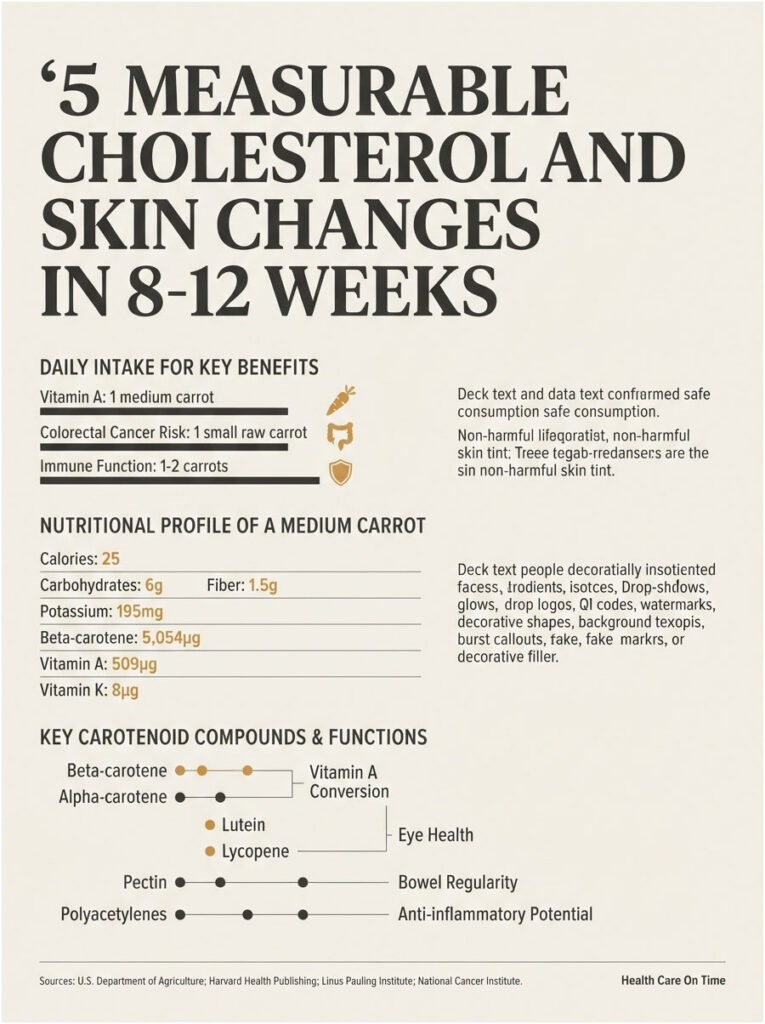
One medium raw carrot supplies about 25 calories, 6 grams of carbohydrate, 1.5 grams of fiber, 195 milligrams of potassium, 5,054 micrograms of beta-carotene, 509 micrograms of vitamin A, and 8 micrograms of vitamin K. Two carrots cover most adults’ full daily vitamin A requirement.
For the complete per-serving calorie and macronutrient math across raw, boiled, and baby carrots, see our separate carrot calories and USDA nutrition breakdown.
One quick safety note before the benefits
Two questions come up constantly, so here are the short answers up front. Yes, daily carrots are safe at normal amounts. And no, the orange-skin thing is not dangerous, it just takes a lot more carrots than you are probably eating.
The full detail on carotenemia, allergies, and medication questions sits further down, in the risks section.
The compounds doing the work
Beta-carotene gets the headlines, but it is one of at least five active groups in a carrot.
Alpha-carotene converts to vitamin A at roughly half the rate of beta-carotene and appears in its own right across cancer research. Lutein sits mainly in yellow and orange carrots and matters for eye health, while lycopene appears in red and purple varieties and is released more readily by cooking.
Pectin is the soluble fiber handling cholesterol and stool consistency. Polyacetylenes, mainly falcarinol and falcarindiol, are the group researchers are most interested in now, and carrots are the main dietary source of them.
How fast anything actually changes
Our medical reviewers note that patients almost always overestimate how fast food moves lab numbers. Here is what the evidence supports.
Within hours, blood carotenoid levels rise. Serum falcarinol peaks about one hour after eating a carrot product and clears with a half-life near 1.5 hours.
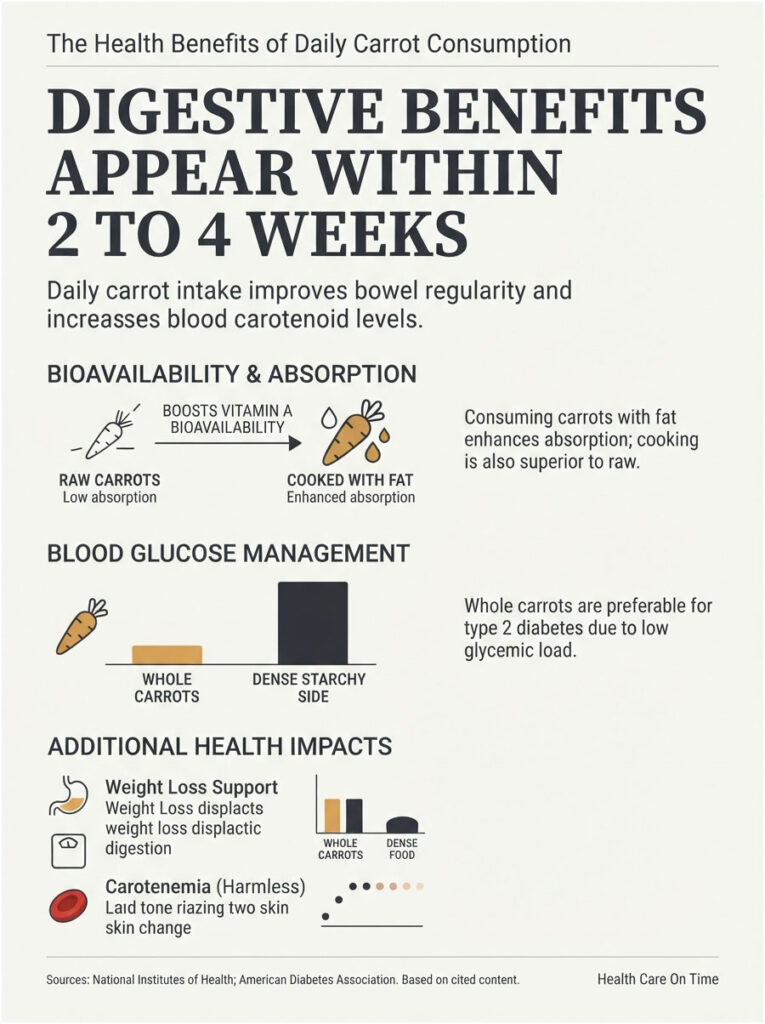
Within two to four weeks, bowel regularity and satiety shift if fiber intake genuinely increased. Within eight to twelve weeks, skin carotenoid readings and cholesterol changes become measurable on a panel. The cancer-risk associations rest on 12 to 18 years of follow-up, not seasons.
Benefit by benefit, what the evidence actually supports
| Benefit claim | What the research actually shows | Strength of evidence | Daily amount linked to the effect |
| Prevents night blindness and vitamin A deficiency | Beta-carotene converts to retinol and reverses deficiency-related night blindness | Strong | 1 medium carrot covers over 50% of the adult Daily Value |
| Sharpens normal, healthy eyesight | No evidence that extra vitamin A improves vision in people who are not deficient | Very weak | No amount shown to work |
| Lowers colorectal cancer risk | 17% lower risk above roughly 32 g/day of raw carrot in 57,053 Danish adults; no significant effect below that threshold | Moderate, observational | About 1 small raw carrot daily, or 2 to 4 per week |
| Lowers LDL cholesterol | Soluble pectin binds bile acids; consistent across fiber trials, modest effect size | Moderate | About 1 cup daily in most published feeding work |
| Supports healthy blood pressure | 195 mg potassium per medium carrot feeds the sodium-potassium balance | Moderate, indirect | 2 to 3 carrots inside a wider potassium-rich pattern |
| Improves bowel regularity | Red and orange vegetable intake was associated with reduced constipation risk in 13,860 US adults; starchy vegetables and potatoes were not | Moderate | Half to one cup daily |
| Slows age-related macular degeneration | Lutein and zeaxanthin concentrate in the macula; carrot-specific trial data is thin | Mixed | Not established from carrots alone |
| Supports immune function | Vitamin A maintains mucosal barriers; benefit is clearest when correcting low intake | Moderate | 1 to 2 carrots daily |
Eye Health, Separating the Myth From the Real Effect
This is the claim everyone repeats and almost nobody states correctly.
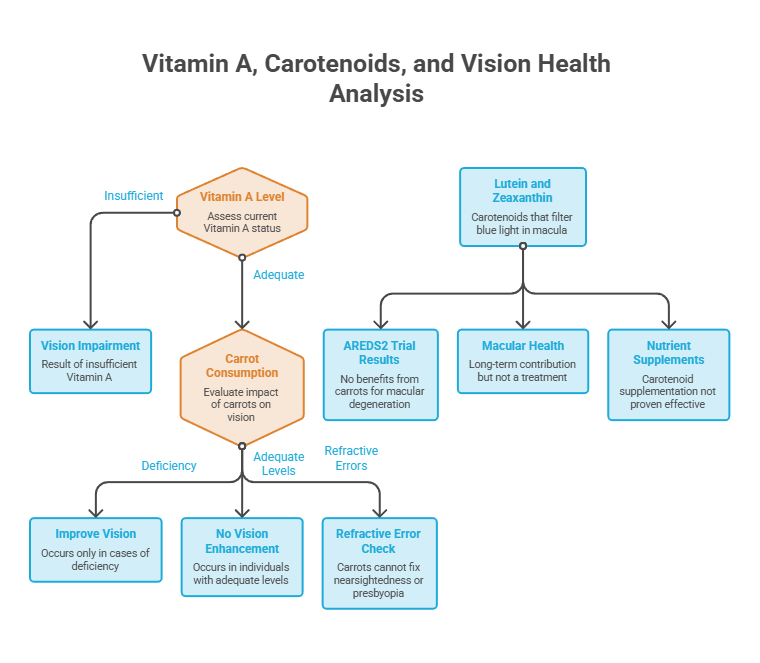
What carrots fix, and what they do not
Vitamin A is required to build rhodopsin, the pigment that lets your retina work in dim light. Without enough of it, night vision fails first, then the eye surface dries and scars.
Carrots reverse that. What they cannot do is improve vision in someone whose vitamin A status is already adequate. If you are nearsighted, carrots will not change your prescription, because refractive error is about the physical shape of your eye.
Patients booking vision-related panels through HealthCareOnTime often ask whether more carrots can delay reading glasses. The honest answer is no. Presbyopia is a lens-stiffening problem, not a nutrient problem.
Lutein, zeaxanthin, and the macula
Two carotenoids, lutein and zeaxanthin, concentrate in the macula and filter blue light. Lutein is one of the most common antioxidants in carrots and sits mainly in the yellow and orange types.
The large NIH-funded AREDS2 trial tested lutein and zeaxanthin in people who already had intermediate macular degeneration, at supplement doses far above what a carrot delivers. Carrots contribute to macular pigment over years. They are not a treatment for existing disease.
Why the supplement question keeps resurfacing
Every time a nutrient looks protective in food, someone puts it in a capsule. With carotenoids, that experiment has already been run at scale, and the results were not reassuring. That story appears in the cancer section below.
Heart, Cholesterol, and Blood Pressure
Cardiovascular benefit is where carrots quietly outperform their reputation.
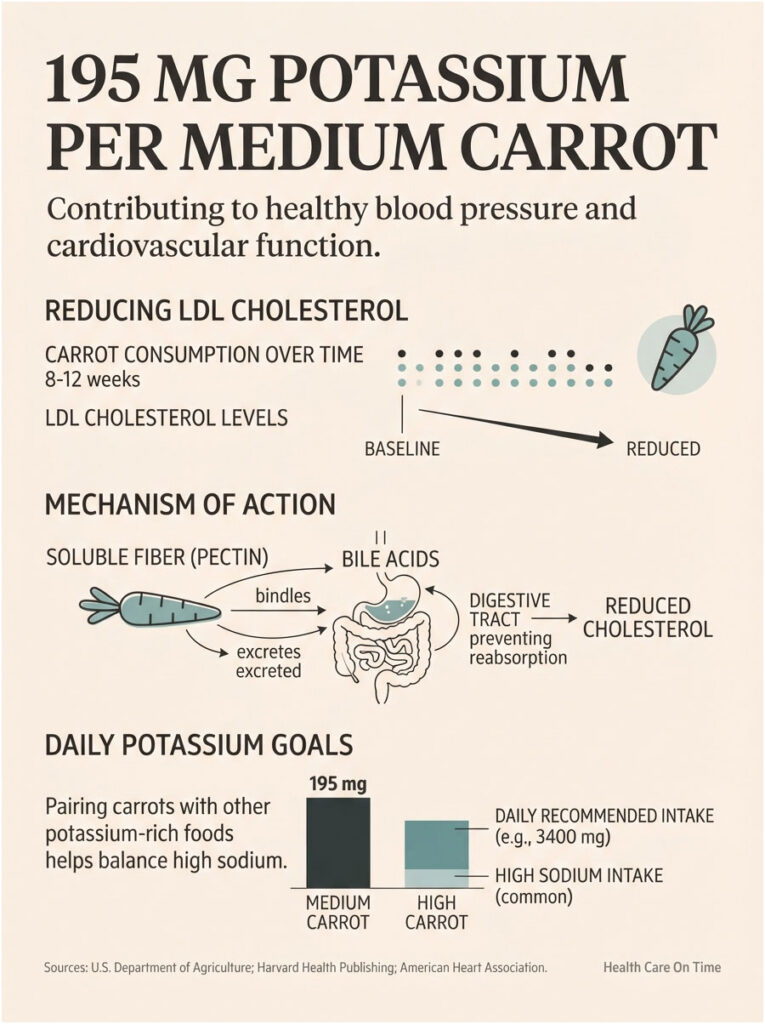
Soluble fiber and the LDL mechanism
Pectin, the dominant soluble fiber in carrots, forms a gel in the small intestine and binds bile acids. Your liver then pulls circulating LDL cholesterol out of the blood to build replacement bile acids.
The effect per carrot is small. The effect of a daily habit across months is measurable, which is why lipid panels are worth rechecking after a sustained dietary change rather than after one good week.
Potassium against a high-sodium diet
Most Americans eat too much sodium and too little potassium. A medium carrot contributes 195 milligrams toward the 2,600 to 3,400 milligrams adults need daily.
Carrots alone will not move your blood pressure. Inside a pattern that also includes beans, potatoes, leafy greens, and less packaged food, they push in the right direction.
Where carrots rank among vegetables
Not all vegetables perform equally in cardiovascular research. A systematic review and meta-analysis of 81 unique cohorts found no fruit or vegetable source associated with cardiovascular harm, and identified carrots, alongside citrus, allium vegetables, cruciferous vegetables, and green leafy vegetables, among the sources with greater cardiovascular benefit.
If you track lipids, our team suggests pairing dietary change with a scheduled lipid profile test instead of guessing at progress. For a leafy-green comparison, see our guide to the health benefits of spinach.
Gut Health, Blood Sugar, and Weight
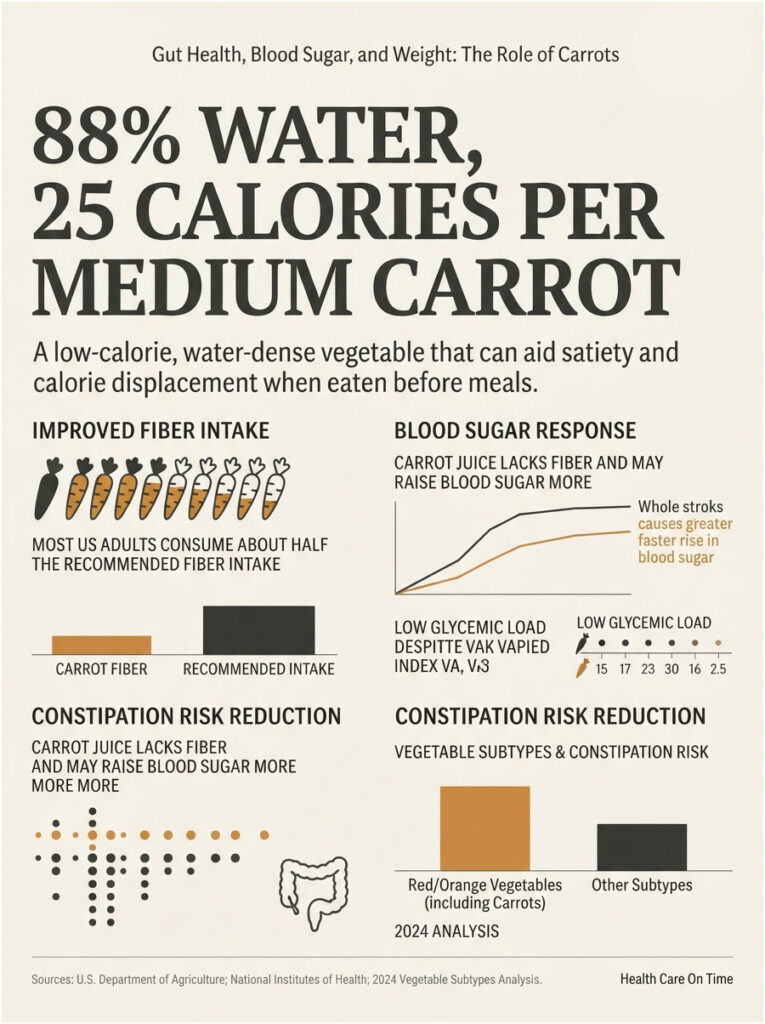
Fiber and the American gap
Most US adults eat roughly half the fiber they need. Carrots are not a fiber powerhouse on their own, but they are one of the easiest vegetables to eat daily with zero preparation.
A 2024 analysis in Frontiers in Nutrition used NHANES data from 2005 to 2010 to test which vegetable subtypes actually track with constipation risk in the US population. Among 13,860 adults, of whom 1,405 were classified as constipated, intake of red and orange, dark green, and other non-starchy vegetables was associated with reduced constipation risk, while total starchy vegetable and potato intake showed no relationship at all.
Carrots sit in that red and orange group. Swapping a starchy side for carrots is a small change with a real direction behind it.
Glycemic index versus glycemic load
Carrots carry a reputation as a high-sugar vegetable. That reputation comes from a misread of glycemic index.
Reported glycemic index values for carrots range widely, from 30 to 85, but the glycemic load lands between 2.0 and 4.25. Glycemic load accounts for the fact that a serving of carrots contains very little carbohydrate to begin with.
Anything under 10 counts as a low glycemic load. Whole carrots qualify by any standard definition.
Satiety and calorie displacement
A medium carrot is about 88% water and 25 calories. Eating one before a meal adds volume and chewing time for almost no energy cost.
Carrots are not a weight-loss food in isolation. They work by displacing something denser, which is a slower and far more reliable mechanism than any single-ingredient claim.
Where carrot juice earns real caution
Juicing strips the fiber that keeps the glycemic load low. Standard guidance on daily carrot intake advises against relying on carrot juice for people with uncontrolled diabetes, since it can raise blood sugar more sharply than whole carrots.
Across the diagnostic network we serve, people managing type 2 diabetes generally do fine with whole carrots and run into trouble with juice, smoothies, and glazed preparations. If you are unsure, an HbA1c test after eight to twelve weeks tells you more than any food chart will.
Cancer Risk, Where the Carrot Evidence Is Strongest and Weakest
This section carries the most nuance in the article, and most consumer pages skip it entirely. Three findings matter: one positive, one null, one genuinely cautionary.
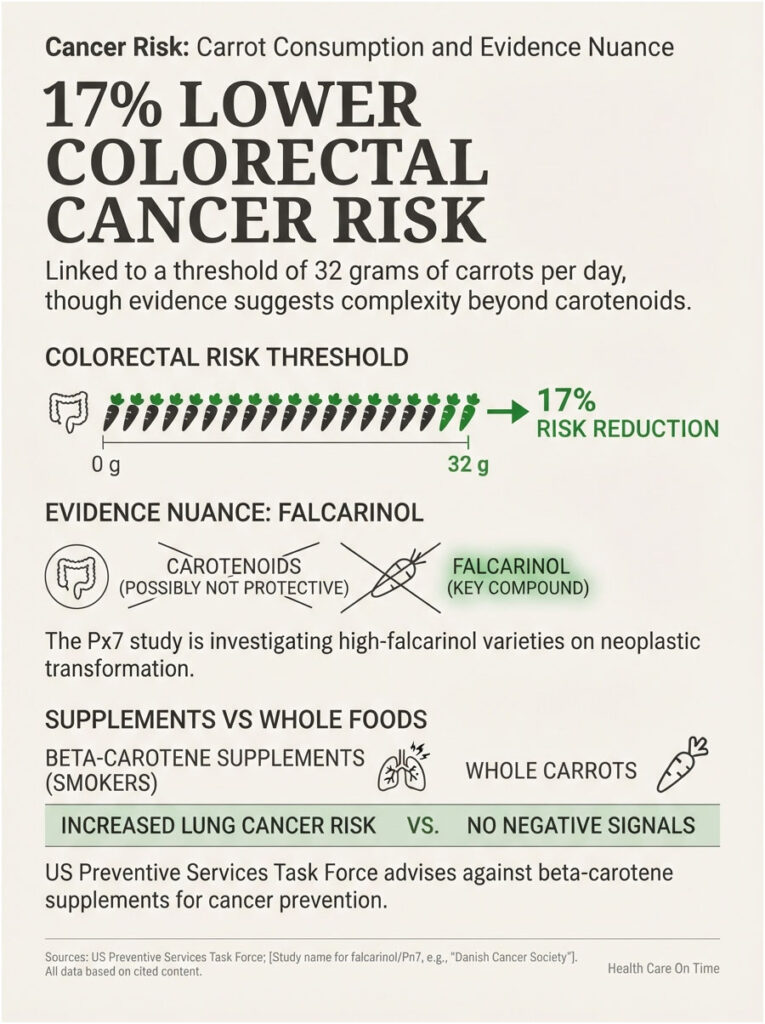
The colorectal signal and the 32-gram threshold
In a prospective cohort of 57,053 Danes followed for more than 18 years, raw carrot intake of 2 to 4 carrots or more per week, meaning above about 32 grams a day, was associated with a 17% lower colorectal cancer risk after extensive adjustment. Intake below that threshold showed no significant association.
Two things stand out. There appears to be a floor below which nothing happens, and the amount above that floor is small: roughly one small raw carrot a day.
Falcarinol, the compound behind the signal
The interesting part is that carotenoids may not be doing this work at all. Intervention studies show carotenoid supplementation does not protect against cancer development, which suggests alpha-carotene and beta-carotene may simply be markers for the intake of other bioactive carrot constituents.
Carrots are the main dietary source of polyacetylenic oxylipins including falcarinol, falcarindiol, and falcarindiol 3-acetate. Reviews describe these compounds as influencing signaling pathways involved in inflammation, apoptosis, and cell cycle regulation, with reduced tumor counts reported in rat and mouse models.
A randomized trial is now underway
The evidence is moving from observation toward trial. The Px7 study, a multicentre binational randomized controlled trial protocol published in BMJ Open in November 2025, is testing whether carrot varieties high in falcarinol and falcarindiol prevent neoplastic transformation in patients who have already had a polypectomy.
That result will matter far more than another survey. Until it reports, treat the colorectal finding as promising rather than proven.
Where the evidence is genuinely null
Balance matters. Carrots are not protective against everything.
An analysis of the PLCO cohort followed 99,650 Americans for a median of 12.5 years and recorded 762 incident bladder cancers. Dietary carrot intake showed no statistically significant association with bladder cancer risk, with a multivariate-adjusted hazard ratio of 0.96, and a meta-analysis pooling this with two prior cohorts returned a summary hazard ratio of 1.02.
Any page telling you carrots prevent cancer in general is skipping results like this one.
The supplement trap
This is the most important safety point in the article, and it is missing from nearly every competing page.
The ATBC trial reported an 18% excess in cumulative lung cancer incidence and an 8% excess in overall mortality in the beta-carotene arm. CARET showed 28% more lung cancer cases and a 17% increase in overall mortality in the active intervention group.
Both trials used synthetic beta-carotene at daily doses of 20 to 30 milligrams in heavy smokers and asbestos-exposed workers. The conclusion the investigators drew was blunt: people who smoke should avoid high-dose beta-carotene supplementation.
The US Preventive Services Task Force now recommends against beta-carotene supplements for preventing cardiovascular disease or cancer. In cases reviewed by our medical team, people rarely realize their multivitamin contains beta-carotene at all. Whole carrots have never shown this signal. Capsules have.
Immunity, Skin, and Everything Else People Claim
Vitamin A and your barriers
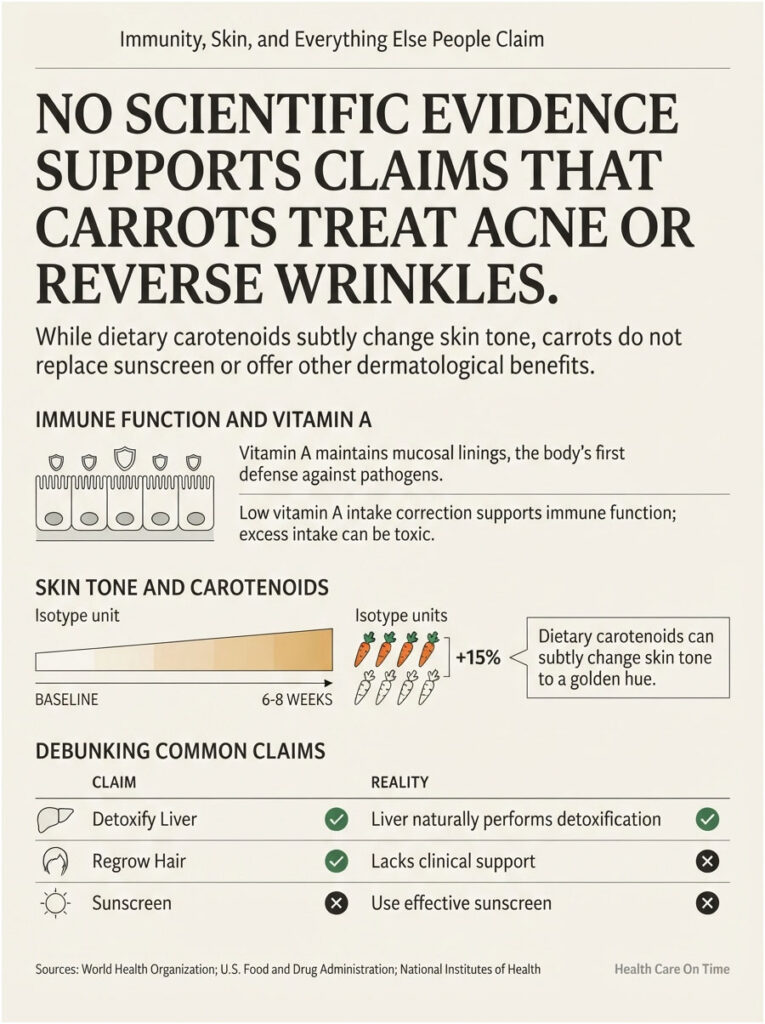
Vitamin A maintains the mucosal linings of your respiratory, digestive, and urinary tracts. Those linings are your first physical defense against pathogens.
Correcting low vitamin A intake supports immune function. Pushing intake far above requirement adds nothing further, and with preformed vitamin A from supplements it becomes toxic.
Skin tone and carotenoid coloration
Dietary carotenoids do deposit in skin and shift its tone slightly toward gold. Studies measuring perceived attractiveness of carotenoid-tinted skin exist, though sample sizes are small and the effect is subtle.
There is no credible evidence that carrots treat acne, reverse wrinkles, or protect meaningfully against sunburn. Sunscreen does that job.
Claims that do not hold up
Carrots do not detox or cleanse your liver. Your liver is the detox organ, and it does not need vegetable assistance to do its job.
Carrots do not regrow hair. They do not cure anything. Our medical reviewers see these claims recycled constantly, and none of them has clinical support.
For a wider look at vegetable variety, our broccoli versus cauliflower comparison covers the cruciferous side of the plate.
How Many Carrots a Day Is Right for the Health Benefits of Eating Carrots Every Day
The MyPlate math
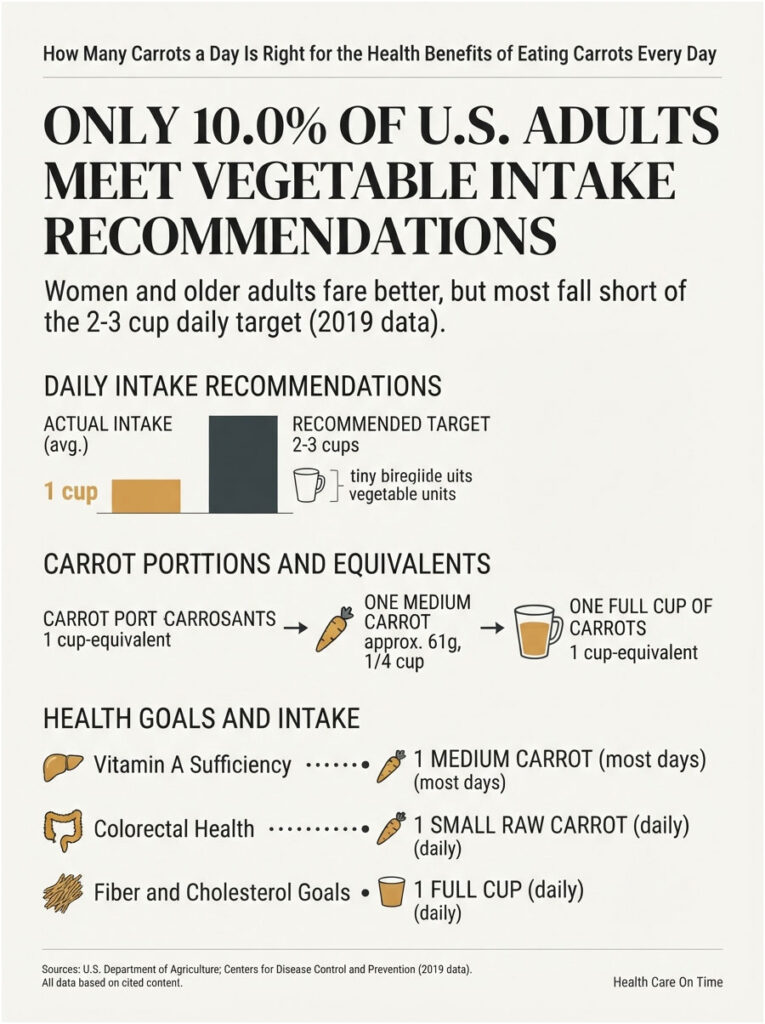
Federal guidance measures vegetables in cup-equivalents. One cup of raw or cooked carrots, or 12 baby carrots, counts as one cup-equivalent.
Most adults need 2 to 3 cups of vegetables daily spread across five subgroups. The Dietary Guidelines for Americans, 2025-2030 keeps red and orange vegetables as a distinct subgroup with its own weekly target.
Here is the conversion in plain terms. One medium carrot is about 61 grams, or roughly a quarter cup-equivalent. Two medium carrots make half a cup. Twelve baby carrots make a full cup. A cup of shredded carrot in a slaw counts the same as a cup of sticks.
Matching amount to your goal
If your goal is vitamin A sufficiency, one medium carrot most days is enough.
If your goal is the colorectal association from the Danish cohort, you need at least a small raw carrot daily, since the effect only appeared above about 32 grams.
If your goal is fiber or cholesterol, you need closer to a full cup, plus other fiber sources. No single vegetable carries a fiber target alone.
Why almost nobody in America is close
CDC analysis of 2019 BRFSS data found only 10.0% of US adults met federal vegetable recommendations, ranging from 5.6% in Kentucky to 16.0% in Vermont. Women met vegetable recommendations at 12.4% versus 7.6% of men, and adults aged 51 and older did better than adults aged 18 to 30, at 12.5% versus 7.1%.
So the realistic question is not whether daily carrots are too much. For nine out of ten American adults, the vegetable problem runs firmly in the other direction.
US data behind the recommendations
| Statistic | Figure | Source |
| US adults meeting federal vegetable recommendations | 10.0% (2019) | CDC, Behavioral Risk Factor Surveillance System, MMWR |
| State range for meeting vegetable recommendations | 5.6% (Kentucky) to 16.0% (Vermont) | CDC BRFSS, 2019 |
| US adults aged 18 to 30 meeting vegetable targets | 7.1%, versus 12.5% of adults 51 and older | CDC BRFSS, 2019 |
| Colorectal cancer risk above 32 g/day raw carrot | Hazard ratio 0.83, a 17% reduction, 57,053 adults, 18+ years | Danish Diet, Cancer and Health cohort, Nutrients |
| Bladder cancer risk by carrot intake | Hazard ratio 0.96, not significant, 99,650 Americans, 762 cases | PLCO Cancer Screening Trial cohort |
| Excess lung cancer with beta-carotene supplements in smokers | 18% (ATBC), 28% (CARET) | NIH-supported randomized trials |
| Beta-carotene absorption, fresh juice versus raw carrot | 2.33x higher peak plasma, 2.09x greater area under the curve | Nutrition Research and Practice, 2025 crossover trial |
| US adults classified as constipated in NHANES sample | 1,405 of 13,860 | Frontiers in Nutrition, 2024 |
Raw, Cooked, or Juiced, Getting More Out of Every Carrot
Most people eat carrots in the exact form that extracts the least from them.
Why cooking beats raw for carotenoids
Beta-carotene sits locked inside rigid plant cell walls. Raw crunching breaks some of them. Heat and mechanical processing break far more.
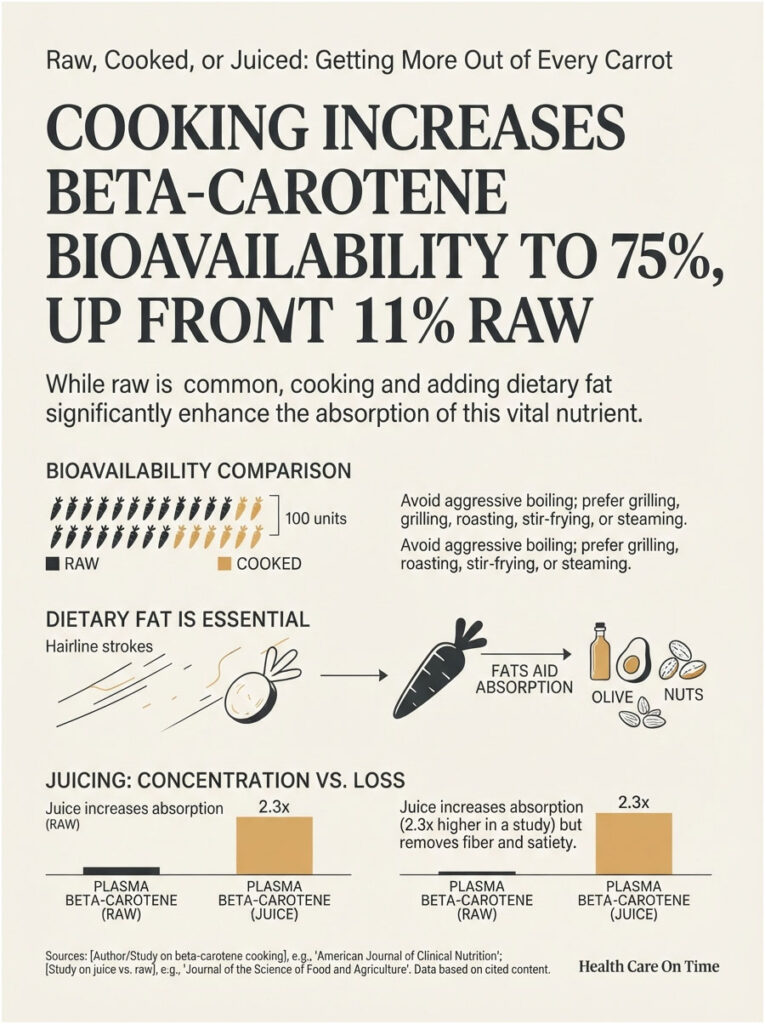
Reported bioavailability of beta-carotene from stir-fried carrots runs roughly 75%, compared with about 11% from raw carrots. That gap is larger than almost any other cooking effect in vegetable nutrition.
Aggressive boiling is the exception worth avoiding, since it can cut usable beta-carotene. Grilling, roasting, stir-frying, and steaming are the better choices.
Fat is not optional
Beta-carotene is fat-soluble. Without dietary fat in the same meal, much of what you release simply passes through you.
Olive oil, avocado, nuts, cheese, or full-fat yogurt all work. A plain raw carrot eaten alone as a snack is the least efficient way to get vitamin A from carrots, and it is also the most common.
Juicing and the fiber trade-off
A randomized controlled crossover trial in 16 healthy adults compared 25 milligrams of beta-carotene delivered as raw carrots versus fresh carrot juice. Peak plasma concentrations at 1.5 hours were 2.33 times higher in the juice group, and the area under the curve for absorption was 2.09 times greater.
The mechanism is simple: juicing ruptures the cell walls and makes beta-carotene far more accessible.
The trade-off is real. Juice removes fiber, concentrates sugar, and drops the satiety benefit entirely. Our medical reviewers generally suggest whole cooked carrots with fat as the default, with juice as an occasional option for people who are not managing blood glucose.
Storage, peeling, and what you lose
Carotenoids hold up well in cold storage. Refrigerate carrots in a sealed bag and they stay good for weeks.
Peeling strips a thin outer layer carrying a modest share of phenolic compounds. Scrubbing instead of peeling is marginally better, and it saves you time.
Risks, Side Effects, and Who Should Be Careful
Carotenemia, the orange-palm effect
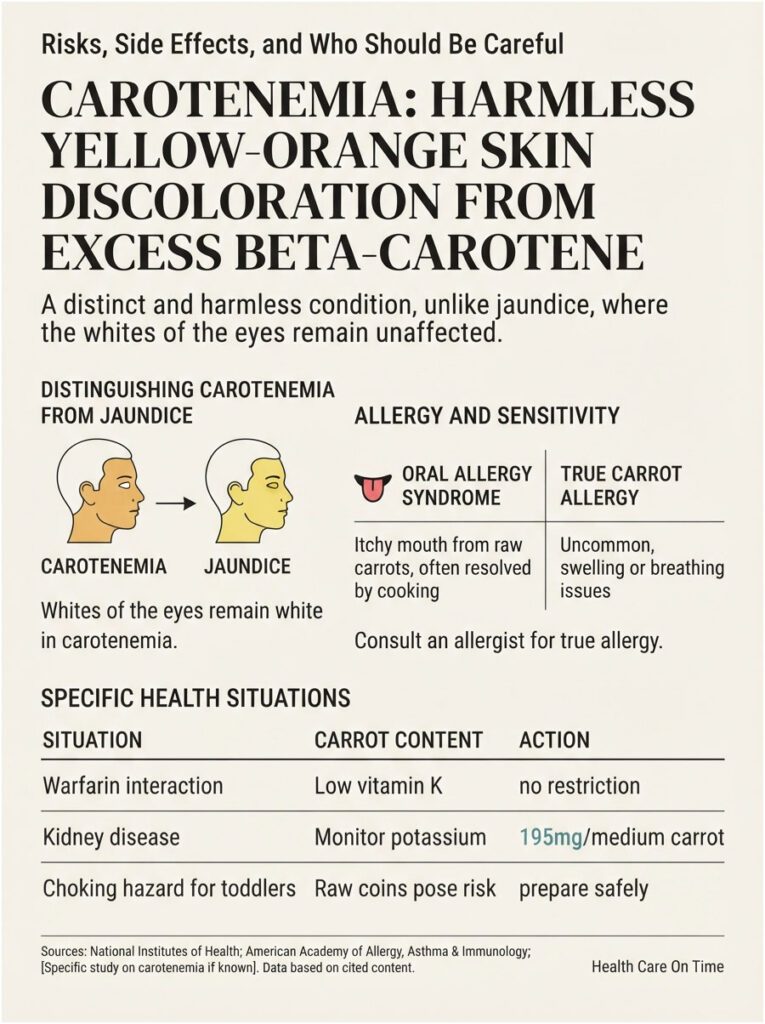
This is the side effect people actually run into. Excess beta-carotene deposits in skin and produces a yellow-orange discoloration, most visible on the palms, soles, elbows, knees, and the folds beside the nose, and it shows more clearly in people with lighter skin tones.
One carrot averages about four milligrams of beta-carotene, and eating roughly 10 carrots a day for a couple of weeks can be enough to trigger it.
The condition is harmless. The fix is simply cutting back on beta-carotene-rich foods, which includes carrots, sweet potatoes, squash, apricots, and cantaloupe.
Telling it apart from jaundice
This distinction matters more than anything else in this section. In carotenemia, the whites of the eyes stay white. In jaundice, the sclera turn yellow.
If yellow skin persists after you cut back, see a clinician, because yellowing can also signal liver, kidney, or thyroid problems. Patients who come to us worried about skin color are usually reassured within a minute by a sclera check, but a liver function test settles the question properly.
Oral allergy syndrome and true carrot allergy
Some people with birch pollen allergy get an itchy mouth or throat from raw carrots. The proteins responsible are heat-sensitive, so cooked carrots are often tolerated without any problem.
True carrot allergy with systemic symptoms is uncommon but real. Swelling, hives, or breathing difficulty after eating carrots calls for an allergist, not a home experiment.
Blood thinners, kidneys, and toddlers
Carrots get lumped in with leafy greens as a warfarin concern. They should not be. A medium carrot contains only about 8 micrograms of vitamin K, against well over 100 in a cup of raw spinach.
Potassium is a different story for people with advanced kidney disease on a restricted intake. At 195 milligrams per medium carrot, they count against a daily budget.
For children under four, raw carrot coins are a recognized choking hazard. Shred them, steam them soft, or cut them lengthwise into strips.
What to do in your situation
| Your situation | What to do | Why |
| You smoke or quit within the last few years | Eat whole carrots freely, avoid beta-carotene supplements, check your multivitamin label | ATBC and CARET showed 18% and 28% excess lung cancer with supplemental beta-carotene in smokers |
| You have type 2 diabetes or prediabetes | Keep whole carrots, limit carrot juice and glazed preparations | Whole carrots have a glycemic load of 2.0 to 4.25; juicing removes the fiber that keeps it low |
| Your palms or soles look orange | Cut to 1 to 2 carrots daily for 2 to 4 weeks and check whether the whites of your eyes are yellow | Carotenemia is harmless and reversible; yellow sclera points to jaundice instead |
| You take warfarin | No carrot restriction needed; keep leafy green intake consistent instead | A medium carrot has only about 8 mcg of vitamin K |
| You have advanced kidney disease with potassium limits | Count carrots into your daily potassium allowance | 195 mg potassium per medium carrot adds up across servings |
| Your mouth itches after raw carrots | Try cooked carrots and speak with an allergist | Oral allergy syndrome proteins are usually destroyed by heat |
| You want maximum vitamin A absorption | Cook the carrots and eat them with a fat source | Stir-fried beta-carotene bioavailability is near 75% versus roughly 11% raw |
| You are feeding a child under four | Steam soft, shred, or slice lengthwise, never raw coins | Round raw carrot slices are a documented choking hazard |
A Simple Way to Get the Health Benefits of Eating Carrots Every Day
The habit fails on boredom, not on nutrition. Rotate the format and keep the fat in the picture.
Roast a tray with olive oil on Sunday and eat them cold through the week. Shred them raw into a slaw with a vinaigrette. Blend them into soup with a swirl of cream or coconut milk.
Grate them into pasta sauce, chili, or meatloaf where nobody notices them. Serve sticks with hummus, guacamole, or nut butter instead of plain.
Every one of those pairs carrots with fat, which is the step most people skip.
When to stop and check in with someone
Cut back and talk to a clinician if your skin yellows and does not clear after two weeks of lower intake, if the whites of your eyes look yellow at any point, or if you get mouth swelling or breathing symptoms after eating.
If you have chronic kidney disease, diabetes, or you take medications with dietary interactions, run any large dietary shift past your care team first.
Frequently Asked Questions
What happens if you eat carrots every day for a month?
Expect better bowel regularity if your fiber intake genuinely rose, plus rising blood carotenoid levels. Cholesterol changes take longer and depend on your whole diet. At normal amounts nothing dramatic happens, which is exactly what a safe daily vegetable should do.
Do carrots actually improve your eyesight?
They prevent and reverse vision loss caused by vitamin A deficiency, including night blindness. They do not sharpen already-healthy vision, correct nearsightedness, or delay reading glasses. The wartime radar story created a myth that has now outlived the evidence by eight decades.
Can eating too many carrots turn your skin orange?
Yes. Around 10 carrots a day for a couple of weeks can deposit enough beta-carotene in skin to cause carotenemia, showing most on palms, soles, knees, and nose folds. It is harmless and reverses when intake drops. The whites of the eyes stay white, unlike in jaundice.
Are carrots good for people with type 2 diabetes?
Whole carrots are a solid choice. Their glycemic load sits between 2.0 and 4.25, which is low by any standard. Carrot juice is the real problem, since juicing strips fiber and concentrates sugar. Keep the carrot, skip the glass.
Is carrot juice better than eating whole carrots?
For beta-carotene absorption, yes. A 2025 crossover trial found fresh carrot juice produced 2.33 times higher peak plasma beta-carotene than raw carrots at the same dose. For fiber, satiety, and blood sugar, whole carrots win. Cooked whole carrots with fat give you most of both.
Are cooked carrots healthier than raw carrots?
For vitamin A, cooked wins clearly. Bioavailability from stir-fried carrots runs near 75% against roughly 11% raw. Raw carrots keep slightly more vitamin C and offer more chewing satisfaction. Aggressive boiling is the one method worth avoiding. Roast, steam, or stir-fry instead.
Are baby carrots as nutritious as full-size carrots?
Close enough that it does not matter. Baby-cut carrots are whittled from full-size carrots and lose a small amount of nutrients to peeling and washing. Twelve of them equal one cup-equivalent. Convenience that actually gets eaten beats perfection sitting in the crisper drawer.
Do carrots interact with warfarin or other blood thinners?
Carrots are not a meaningful warfarin concern. A medium carrot supplies only about 8 micrograms of vitamin K, far below leafy greens. Consistency matters more than avoidance with any vitamin K food, so keep intake steady rather than swinging between extremes week to week.
Can carrots help with weight loss?
Indirectly. They are about 88% water and 25 calories per medium carrot, so they displace denser foods and add chewing time. No single vegetable causes weight loss. Carrots make a lower-calorie eating pattern easier to sustain, and sustainability is the part that actually works.
Is it safe to eat carrots on an empty stomach?
Safe, but inefficient. Beta-carotene is fat-soluble and needs dietary fat in the same meal for decent absorption. A plain carrot eaten alone releases far less usable vitamin A than the same carrot alongside hummus, olive oil, cheese, or nuts.
How long does it take to see benefits from eating carrots daily?
Digestive changes appear within two to four weeks. Blood carotenoid levels rise within days. Cholesterol and skin carotenoid changes need eight to twelve weeks. The cancer-risk associations in research reflect 12 to 18 years of intake, not a season of good habits.
Medical Disclaimer
This article is for general information and does not replace advice from a licensed healthcare professional. Nutrient needs, medication interactions, and dietary restrictions vary by individual. Talk with your physician or a registered dietitian before making significant dietary changes, particularly if you have diabetes, kidney disease, a food allergy, or take prescription medication.
References
- Adults Meeting Fruit and Vegetable Intake Recommendations, United States, 2019, CDC MMWR
- Carrot Intake and Risk of Colorectal Cancer: A Prospective Cohort Study of 57,053 Danes, Nutrients
- Association of Dietary Carrot Intake With Bladder Cancer Risk, PLCO Cohort of 99,650 Individuals
- Relation of Different Fruit and Vegetable Sources With Incident Cardiovascular Outcomes, Journal of the American Heart Association
- Beta-Carotene Supplementation and Lung Cancer Incidence in the ATBC Study, NIH
- Comparative Bioavailability of Beta-Carotene From Raw Carrots and Fresh Carrot Juice, Nutrition Research and Practice, 2025
- The Effects of Specific Vegetable Subtypes on Constipation Incidence in the General United States Population, Frontiers in Nutrition, 2024
- Pathways Affected by Falcarinol-Type Polyacetylenes and Implications for Cancer Chemoprevention, Foods
- Carrots 101: Nutrition Facts and Health Benefits, Healthline
- Carrots: Health Benefits, Nutrition Facts, and Risks, WebMD
- Is It OK to Eat Carrots Every Day? MedicineNet
- Dietary Guidelines for Americans, 2025-2030, US Department of Health and Human Services
- Dietary Guidelines for Americans 2025-2030 Analysis, Harvard T.H. Chan School of Public Health Nutrition Source