A small green fruit outperforming your bedtime routine sounds like a stretch. Then you look at what happened when people with sleep problems ate two of them before bed for a month.
Table of Contents
They fell asleep faster. They stayed asleep longer. And they did it without a pill, a prescription, or a single side effect worth noting.
That one study kicked off more than a decade of curiosity about kiwi and sleep. So the real question isn’t whether kiwi is trendy. It’s whether the evidence holds up, and what you’d actually have to do to see any benefit.
Quick answer: Research suggests kiwi may modestly improve sleep. In the most-cited study, adults who ate two green kiwis about an hour before bed for four weeks fell asleep faster and slept longer. The likely reasons are kiwi’s serotonin, antioxidants, and small amounts of melatonin. The studies are small and mostly uncontrolled, so treat kiwi as a gentle helper, not a cure.
At a Glance
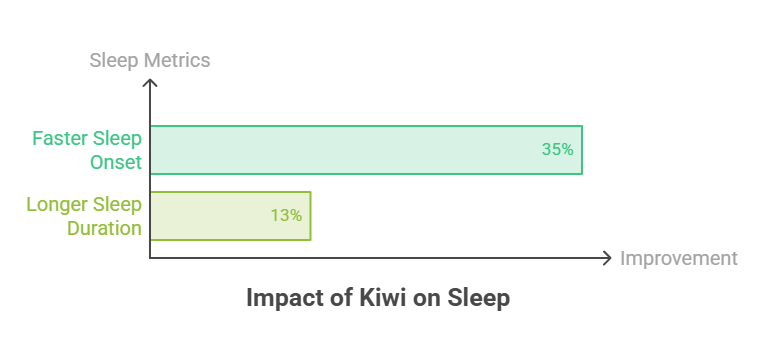
- The landmark 2011 study found people fell asleep about 35% faster and slept roughly 13% longer after four weeks of nightly kiwi.
- The studied dose is two green kiwis, eaten about one hour before bed.
- Kiwi’s possible sleep benefits are tied to serotonin, antioxidants, folate, and modest melatonin.
- Newer trials in athletes, adults, and children point the same direction, though sample sizes stay small.
- Fresh kiwi beats dried, since heat and drying cut vitamin C and folate.
- Kiwi is a supportive habit, not a replacement for treating a real sleep disorder.
Does Kiwi Actually Help You Sleep? What the Research Says
Kiwi shows up on nearly every “foods for sleep” list, usually with a vague line about serotonin. The actual research is more specific, and more interesting, than those bullet points suggest.
Most of the buzz traces back to one trial. Understanding what it found, and what it didn’t, tells you almost everything you need to know.
The study that started it all
In 2011, researchers at Taipei Medical University ran a now-famous experiment on kiwi and sleep. The findings appeared in the Asia Pacific Journal of Clinical Nutrition.
They recruited 24 adults, ages 20 to 55, who reported ongoing sleep problems. Each person ate two green kiwis one hour before bedtime, every night, for four weeks.
The team tracked sleep two ways: with questionnaires and sleep diaries, and with an actigraphy watch that objectively measured movement and rest. That mix of subjective and objective data is part of why the study drew so much attention.
Our medical reviewers note that this design has a real weakness worth naming upfront. There was no placebo group, so participants simply compared themselves before and after. That matters, and we’ll come back to it.
The exact numbers
The results were striking for a piece of fruit. After four weeks, participants fell asleep faster and stayed asleep more soundly.
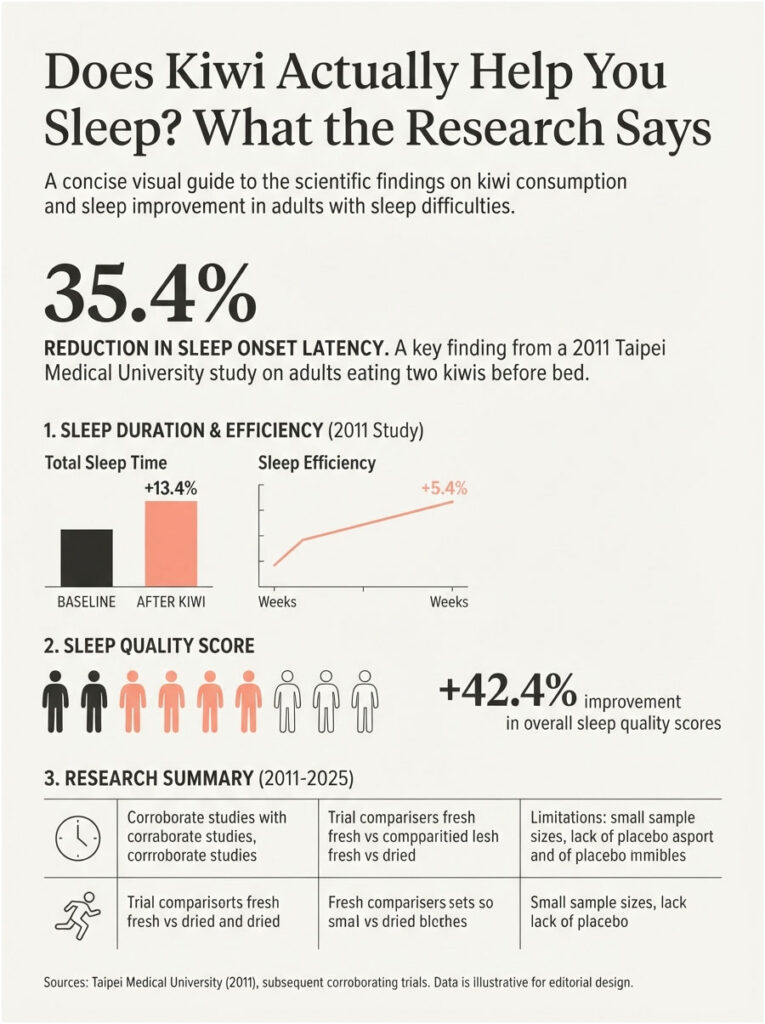
By self-report, sleep onset latency, the time it takes to drift off, dropped by 35.4%. Waking time after falling asleep fell by 28.9%, meaning fewer and shorter mid-night wake-ups.
Total sleep time rose by 13.4%, and sleep efficiency, the share of time in bed actually spent asleep, improved by 5.4%. Their overall sleep-quality score improved by 42.4%.
Across the readers we serve, those numbers land hard because they’re concrete. Falling asleep a third faster is the kind of change people actually feel the next morning.
What newer trials found
One study, however famous, isn’t proof. So the useful question is whether later research pointed the same way. Broadly, it has.
A trial in elite athletes, published in a peer-reviewed sports nutrition journal, tested kiwi in a group notorious for poor, fragmented sleep. After the intervention, athletes showed better sleep-quality scores on the Pittsburgh Sleep Quality Index, longer total sleep time, higher sleep efficiency, and fewer awakenings and less time awake after first falling asleep.
A separate controlled study in adults with poor sleep had participants eat two kiwis an hour before bed for six weeks. Reported in a clinical trial registry, it found improved sleep quality and less fatigue, with a small drop in BMI.
Researchers have also tested formats and ages. A 2023 trial compared fresh versus dried green kiwi in young men and found fresh kiwi improved sleep quality. A 2025 study in children with weight and sleep issues paired kiwi with light exercise and saw sleep gains.
Our nutrition team points out the pattern here. Different populations, different countries, different research groups, and the arrow keeps pointing toward “modest benefit.”
Who is most likely to benefit
The research offers a clue about who kiwi helps most. Every positive trial focused on people who already had trouble sleeping, not sound sleepers looking for an edge.
That makes sense biologically. If poor sleep is partly driven by low antioxidant status, low folate, or a strained serotonin pathway, a nutrient-dense fruit has more room to help.
If you sleep well already, kiwi is unlikely to transform anything. Patients booking tests with us often ask whether kiwi will “supercharge” good sleep, and the honest answer is that the benefit shows up mainly in people starting from a deficit.
The honest limitations
Enthusiasm is fine, but honesty sells trust. These studies share real weaknesses, and a good resource says so plainly.
Sample sizes are small, often just a couple dozen people. The original trial had no placebo, so some of the improvement could reflect expectation, routine, or simply paying attention to sleep.
Kiwi is also rarely tested against a fair “dummy” food, and effects vary by person. In cases reviewed by our medical team, the takeaway is consistent: the evidence is promising and directionally positive, but it is not the gold-standard, large, placebo-controlled proof you’d want before calling kiwi a treatment.
| Study (Population) | Kiwi Dose and Timing | Duration | Measured Sleep Effect |
| Lin 2011, Taiwan (24 adults with sleep problems) | 2 green kiwis, ~1 hour before bed | 4 weeks | Fell asleep 35.4% faster, total sleep time up 13.4%, efficiency up 5.4% |
| Elite athletes (athletes with poor sleep) | 2 green kiwis, ~1 hour before bed | 4 weeks | Better PSQI scores, more total sleep, fewer awakenings |
| Adults with poor sleep (controlled trial) | 2 kiwis, ~1 hour before bed | 6 weeks | Improved sleep quality and fatigue, small BMI drop |
| Fresh vs dried, young men (good and poor sleepers) | Fresh or dried green kiwi in the evening | Single night (acute) | Fresh kiwi improved sleep quality versus control |
| Children with overweight (kids with sleep problems) | 2 kiwis before bed plus light soccer | 4 weeks | Kiwi plus exercise improved sleep efficiency and latency |
Why Kiwi May Work: The Sleep Science Inside the Fruit
If kiwi helps, something in it has to explain why. The leading theories center on a handful of compounds that touch the body’s sleep machinery.
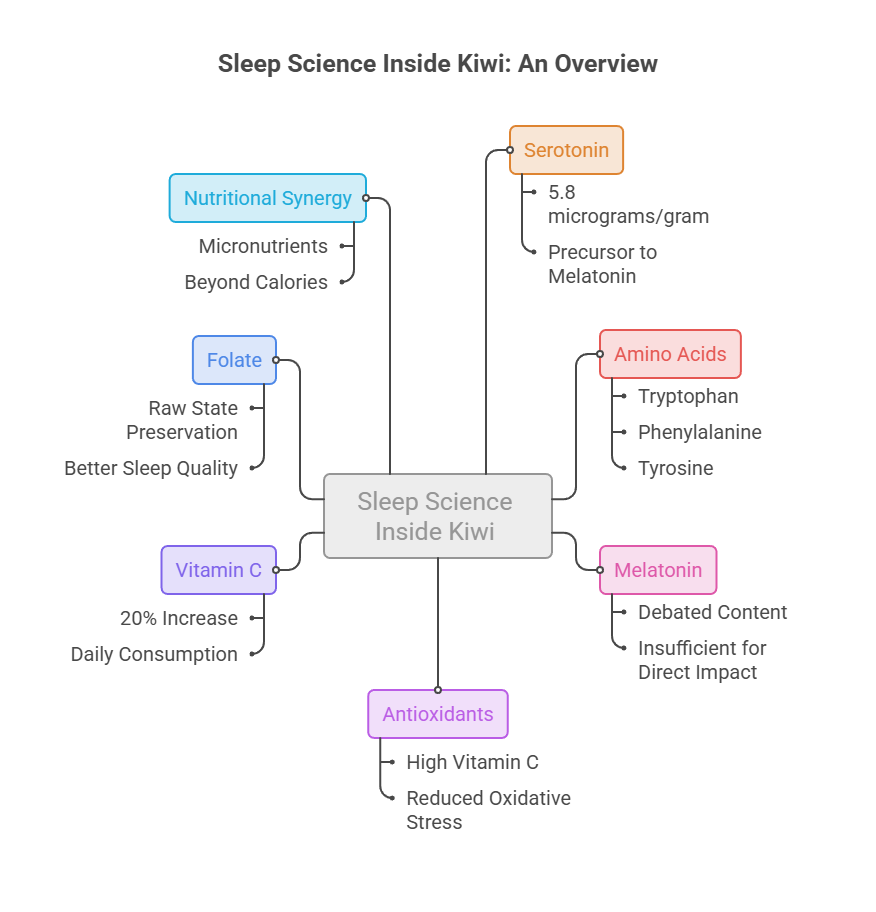
None of these is a magic switch. The more likely story is a gentle, combined effect, which is exactly how food tends to work.
Serotonin and the sleep-wake pathway
Kiwi contains serotonin, a chemical messenger that helps regulate mood and the sleep-wake cycle. One analysis put kiwi’s serotonin content at about 5.8 micrograms per gram, and that mechanism is the one most quoted in “foods for sleep” articles.
Serotonin also serves as a building block for melatonin, the hormone that signals nighttime to your brain. So a serotonin-rich food can, in theory, support the whole downstream pathway.
Kiwi’s amino acids add to this. It supplies tryptophan, phenylalanine, and tyrosine, which the body converts into the serotonin and GABA-related signals involved in calming the brain and easing into sleep.
Melatonin, the debated ingredient
You’ll often read that kiwi is packed with melatonin. The truth is more nuanced, and worth getting right.
Kiwi does contain some melatonin, and melatonin genuinely matters for circadian rhythm and sleep timing. But the amount in kiwi, and how much survives digestion to reach your brain, is still debated among researchers.
Why kiwi is not a melatonin pill
Here’s the honest framing. Some researchers describe kiwi as working through a nutritional synergy of serotonin and antioxidants rather than as a melatonin delivery system.
Our medical reviewers note that if you specifically want a measured melatonin dose, a supplement gives you that, not a kiwi. Kiwi’s appeal is the whole-fruit package, not one isolated hormone.
That distinction protects you from overpromising. Expecting kiwi to hit like a sleeping pill sets you up for disappointment.
Antioxidants, vitamin C, and folate
Kiwi is genuinely rich in antioxidants, including a high dose of vitamin C plus polyphenols, flavonoids, and carotenoids. Poor sleep is linked to oxidative stress, so reducing that burden is one plausible route to better rest.
The vitamin C is not trivial. Research found that eating two kiwis daily raised participants’ blood vitamin C levels by around 20%.
Kiwi also delivers folate, and low folate has been tied to insomnia and restless, broken sleep. Because folate is destroyed by heat, kiwi’s raw, no-cook nature helps keep it intact.
Our nutrition team points out that this is where kiwi quietly separates from many bedtime snacks. You’re getting real micronutrients, not just calories and a placebo effect.
How Many Kiwis, and When? A Practical Guide
Knowing kiwi might help is only useful if you know how to use it. The research gives a fairly clear protocol to copy.
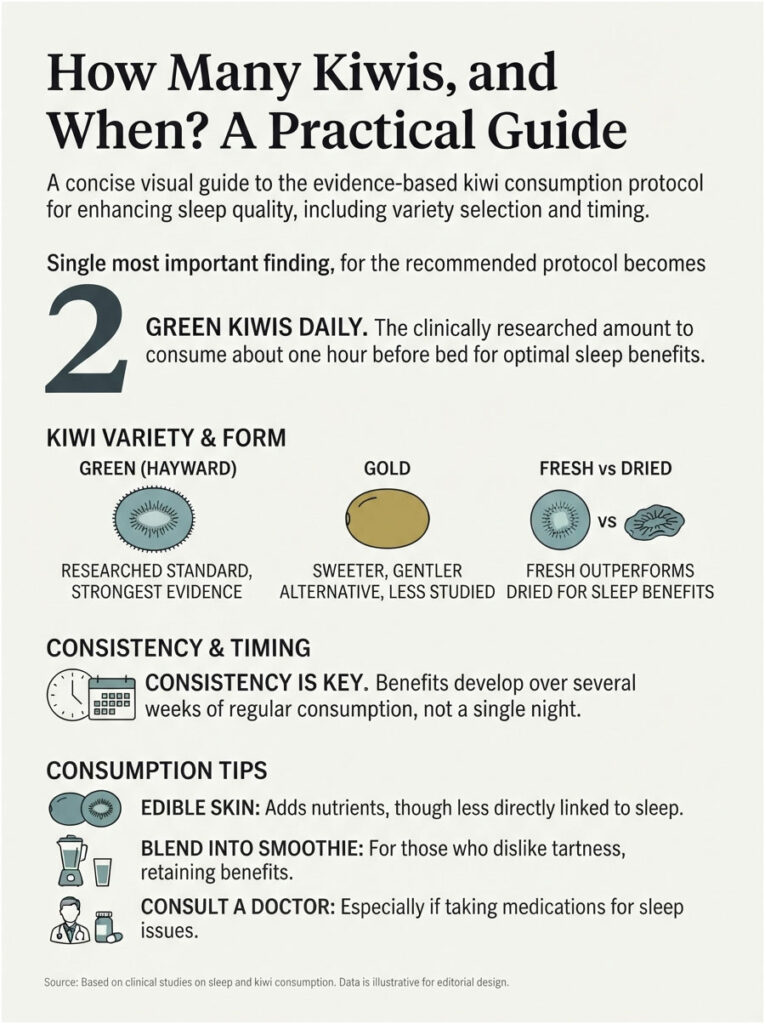
The good news is that it’s simple, cheap, and hard to get wrong. The details below match what the studies actually did.
The dose that was studied
Almost every positive trial used the same recipe: two kiwis, eaten about one hour before bed. That one-hour window gives your body time to start digesting and absorbing the fruit’s compounds.
Green kiwi is the variety used in the original and most follow-up studies. If you’re trying to mirror the research, green is the safe default.
Consistency seems to matter more than any single night. Benefits in the studies showed up after several weeks of nightly kiwi, not after one bedtime snack.
Green vs gold kiwi
Green (Hayward) kiwi is the researched standard, so it has the strongest evidence behind it. It’s tart, fibrous, and widely available in US grocery stores.
Gold kiwi is sweeter, smoother, and often higher in vitamin C, though it has been studied less for sleep specifically. Patients booking tests with us often ask which to pick, and the honest answer is that green has the data while gold is a reasonable, gentler-tasting alternative.
If tartness or fiber bothers your stomach at night, gold kiwi is a sensible swap. You lose a little research alignment but keep most of the nutritional upside.
Fresh vs dried
Fresh clearly beats dried for sleep purposes. The 2023 comparison found fresh green kiwi improved sleep quality, while the dried version did not perform the same way.
Drying and heat degrade some of kiwi’s most relevant nutrients, especially vitamin C and folate. Dried kiwi also concentrates sugar, which is not what you want right before bed.
Our lab partners note that whole, fresh fruit almost always outperforms processed versions for this kind of benefit. Kiwi is no exception.
Can you eat the skin
Yes, kiwi skin is edible and adds fiber and antioxidants. Green kiwi skin is fuzzy, so many people prefer gold kiwi or a quick scrub if they want to eat it whole.
There’s no strong evidence that the skin specifically boosts sleep. But if you tolerate it, keeping the skin on adds nutrients at no extra effort.
| If you… | Then… | Why |
| Have trouble falling asleep | Eat 2 kiwis about 1 hour before bed | Matches the studied protocol most tied to results |
| Have a sensitive stomach or IBS | Start with 1 kiwi, or try gold kiwi | Lower fiber and gentler acidity at night |
| Want the most nutrients | Eat fresh, not dried or cooked | Heat and drying reduce vitamin C and folate |
| See no change after about 4 weeks | Talk to a doctor about your sleep | Rules out an underlying sleep disorder |
| Take prescription sleep medication | Ask your doctor before adding kiwi | Avoids unexpected interactions or overlap |
| Dislike the tart taste | Blend into a small evening smoothie | Keeps the fruit fresh and easy to eat |
How Big Is the US Sleep Problem, and Where Does Kiwi Fit?
Kiwi’s appeal makes more sense against the backdrop of how poorly Americans sleep. The numbers are sobering, and they’re getting attention.
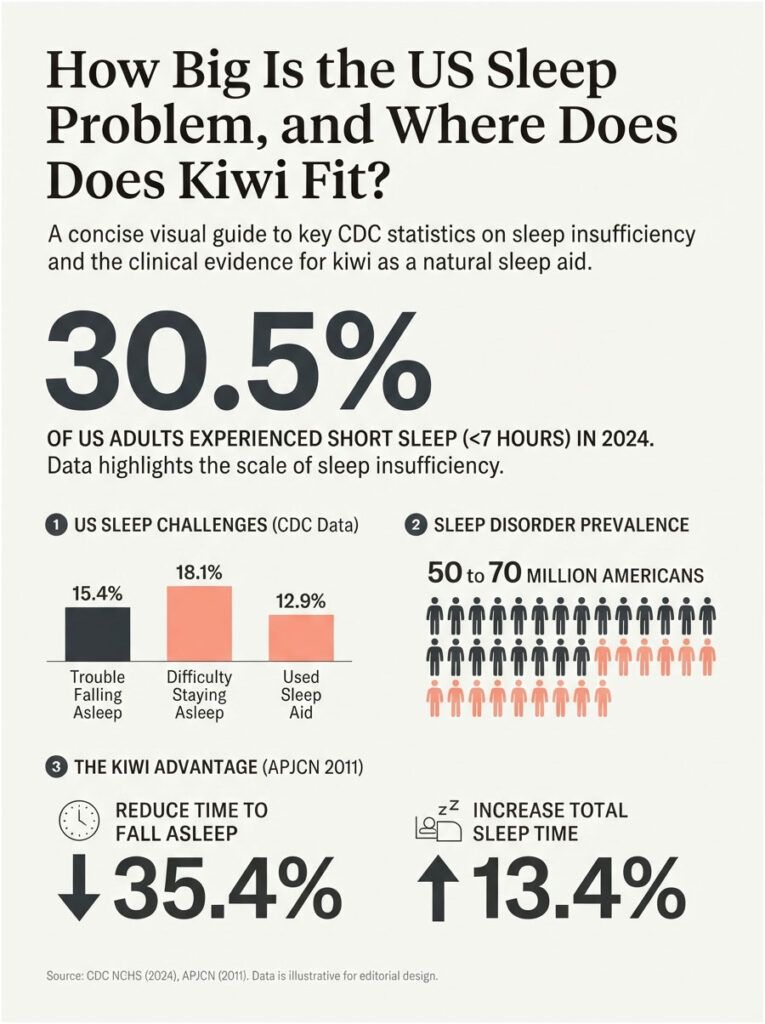
Food-based fixes are popular precisely because so many people want an alternative to nightly medication. Kiwi rides that wave.
The 2024 CDC snapshot
Federal data shows how widespread the struggle is. According to the CDC’s National Center for Health Statistics, 30.5% of US adults got short sleep, under seven hours, in 2024.
The same report found 15.4% of adults had trouble falling asleep most days or every day, and 18.1% had trouble staying asleep. Women were more affected than men on both measures.
Sleep aids are common too. CDC data shows 12.9% of adults used some sleep aid most days or every day, split across prescriptions, over-the-counter products and supplements, and cannabis or CBD.
Zoom out and the scale is large. An often-cited estimate puts 50 to 70 million American adults living with some form of sleep disorder, which is why federal agencies treat insufficient sleep as a public health issue.
Why people are reaching for food over pills
Many people are wary of leaning on sleep medication night after night. That caution is understandable, and it’s driving interest in gentler options.
A fruit you can buy at any grocery store, with no prescription and no grogginess, is an easy experiment to try. Across the readers we serve, that low-risk, low-cost appeal is a big part of kiwi’s draw.
Kiwi won’t fix a serious sleep disorder. But as a nightly habit layered onto good sleep basics, it’s a reasonable, evidence-informed place to start.
| Metric | Figure | Source |
| US adults with short sleep (under 7 hours) | 30.5% (2024) | CDC NCHS |
| US adults with trouble falling asleep most days | 15.4% (2024) | CDC NCHS |
| US adults with trouble staying asleep most days | 18.1% (2024) | CDC NCHS |
| US adults using a sleep aid most days | 12.9% (2024) | CDC NCHS |
| Reduction in time to fall asleep (kiwi study) | 35.4% faster | APJCN 2011 |
| Increase in total sleep time (kiwi study) | Up 13.4% | APJCN 2011 |
Kiwi vs Other Bedtime Foods
Kiwi isn’t the only food people eat to sleep better. Knowing how it stacks up helps you decide where to spend your effort.
Each option has a different mechanism and a different level of evidence. None is a guaranteed fix.
Kiwi vs tart cherry juice
Tart cherry juice is kiwi’s main rival in the sleep-food world. Cherries contain natural melatonin and have some research suggesting modest improvements in sleep time.
Kiwi’s edge is that it’s a whole fruit with fiber, folate, and vitamin C, without the concentrated sugar of juice. Cherry juice may deliver more direct melatonin, while kiwi offers a broader nutrient mix.
Patients booking tests with us often ask which to choose. Both are reasonable; kiwi is the lower-sugar, whole-food option, and cherry juice is the more melatonin-forward one.
Kiwi vs warm milk, almonds, and bananas
Warm milk is the classic bedtime remedy, built around tryptophan and comforting routine. The evidence is thin, and much of the benefit may be the ritual itself.
Almonds and bananas supply magnesium, which supports muscle relaxation and sleep. Bananas add potassium and a little natural melatonin precursor material.
Kiwi holds up well in this company because it pairs a plausible mechanism with actual sleep trials. Our nutrition team points out that few bedtime foods have even a small dedicated study, and kiwi has several.
Where kiwi wins and where it doesn’t
Kiwi wins on the combination of real research, whole-food nutrition, and low sugar. It’s easy to add, portable, and gentle on most people.
Where it falls short is potency and certainty. If you need reliable, measurable help tonight, a clinician-guided plan beats any fruit, and kiwi’s effects are modest and slow to build.
Realistic Expectations and Who Should Be Careful
Setting the right expectations is the difference between a helpful habit and a frustrating one. Kiwi deserves a fair, honest frame.
Most people can eat kiwi safely, but a few should take extra care. A little caution keeps a healthy habit healthy.
What kiwi can and can’t do for sleep
Kiwi can, based on current research, gently support falling asleep faster and sleeping a bit longer over several weeks. It can add useful nutrients while you’re at it.
Kiwi cannot cure insomnia, override poor sleep habits, or fix an untreated medical condition. It also won’t work instantly; the studies ran for weeks, not a single night.
Our medical reviewers note that framing kiwi as a supportive nudge, not a solution, is the healthiest way to use it. That mindset prevents disappointment and keeps your expectations grounded.
When poor sleep needs a doctor, not a fruit
Some sleep problems signal something a kiwi can’t touch. Loud snoring with gasping, long-term insomnia, or daytime exhaustion despite enough hours all deserve medical attention.
If sleep trouble lasts more than a few weeks or disrupts your daily life, see a clinician. Conditions like sleep apnea and chronic insomnia need proper diagnosis and treatment, since HealthCareOnTime does not provide medical care.
Across the readers we serve, the pattern is clear. Food tweaks help around the edges; persistent, serious sleep problems need a professional.
Allergy, latex-fruit syndrome, and blood-sugar notes
Kiwi is a known allergen for some people. Those with latex allergy can react to kiwi through a cross-reaction called latex-fruit syndrome, so caution is warranted if that applies to you.
Kiwi is generally low on the glycemic scale, but it still contains natural sugars. If you manage diabetes, fit kiwi into your overall carbohydrate plan and monitor as usual.
The fruit’s fiber and mild acidity can also bother sensitive stomachs at night. Starting with one kiwi, or choosing gold kiwi, softens that risk.
How to Add Kiwi to Your Nighttime Routine
Turning research into a habit is the whole point. The setup is simple and takes almost no planning.
The trick is pairing kiwi with the basics of good sleep, since no single food works in a vacuum. Together they add up.
Simple ways to eat it before bed
The easiest approach is to eat two fresh green kiwis about an hour before bed, scooped with a spoon or sliced. Keep a few ripe kiwis on the counter so they’re ready.
If you dislike the tartness, blend kiwi into a small smoothie with a little yogurt, or slice it over plain Greek yogurt. Keep the portion light so a heavy snack doesn’t work against you.
Gold kiwi is the friendlier option for sensitive stomachs or picky palates. Whichever you choose, fresh and whole is the goal.
A simple starter plan looks like this: buy ripe green kiwis, set a nightly reminder for about an hour before bed, eat two, and keep a short sleep log for four weeks. That mirrors the research and gives you a fair test.
Pairing kiwi with good sleep hygiene
Kiwi works best as one piece of a larger routine. Dim the lights and put screens away in the hour before bed, and keep your bedroom cool and dark.
Go to sleep and wake up at consistent times, even on weekends, to steady your internal clock. Limit caffeine in the afternoon and heavy meals late at night.
Our medical reviewers note that people who see the most benefit tend to treat kiwi as an add-on to these habits, not a substitute. The fruit supports good sleep hygiene; it doesn’t replace it.
Common mistakes to avoid
The biggest mistake is expecting overnight results and quitting after two nights. Give it several weeks, the way the studies did.
Others reach for dried kiwi or kiwi juice for convenience, then wonder why nothing changes. Fresh, whole kiwi is what the research supports.
Finally, some people use kiwi to justify skipping the basics. A kiwi at midnight won’t undo an afternoon of espresso and a bright phone screen in bed.
Frequently Asked Questions
How many kiwis should you eat before bed for sleep?
The researched dose is two green kiwis, eaten about one hour before bedtime. That’s the amount used in the original 2011 study and most follow-up trials. Starting with one kiwi is reasonable if you have a sensitive stomach, then working up to two as tolerated.
When should you eat kiwi before bed?
Aim for roughly one hour before you plan to sleep. That timing lets your body begin digesting and absorbing kiwi’s compounds before bedtime. It also keeps the snack light and early enough that digestion itself doesn’t keep you awake, which can happen with larger late meals.
Does kiwi actually contain melatonin?
Kiwi contains some melatonin, but the amount and how much reaches your brain are debated. Many researchers believe kiwi’s sleep effects come more from its serotonin and antioxidants than from melatonin alone. If you want a precise melatonin dose, a supplement provides that; kiwi offers a broader whole-fruit mix instead.
Green vs gold kiwi: which is better for sleep?
Green (Hayward) kiwi has the strongest research behind it, since it was used in the key studies. Gold kiwi is sweeter, gentler on the stomach, and often higher in vitamin C, but less studied for sleep. Green is the evidence-backed default; gold is a reasonable, easier-tasting alternative.
Can you eat kiwi skin, and does it help sleep?
Yes, kiwi skin is edible and adds fiber and antioxidants. There’s no strong evidence the skin specifically improves sleep, but eating it wastes fewer nutrients. Green kiwi skin is fuzzy, so many people prefer gold kiwi or give the fruit a quick scrub before eating it whole.
How long does kiwi take to work for sleep?
Do not expect one-night miracles. In the studies, benefits appeared after several weeks of nightly kiwi, typically around four weeks. Consistency is the key factor, so treat kiwi as a steady habit rather than a same-night sleep aid, and give it at least a few weeks before judging results.
Is dried kiwi as good as fresh for sleep?
No. Fresh kiwi outperforms dried in the research, and a 2023 trial found fresh green kiwi improved sleep quality while dried did not match it. Drying and heat reduce vitamin C and folate and concentrate sugar. For sleep purposes, fresh, whole kiwi is the better choice.
Does kiwi help with insomnia?
Kiwi may gently support people with mild, self-reported sleep problems, and the original study focused on that group. However, kiwi is not a treatment for diagnosed chronic insomnia. If insomnia persists for more than a few weeks or disrupts daily life, see a clinician for proper evaluation rather than relying on food alone.
Are there side effects of eating kiwi before bed?
For most people, kiwi is safe. Some experience mouth tingling, stomach upset from the fiber and acidity, or a true allergy. People with latex allergy may react through latex-fruit syndrome. Starting with one kiwi, choosing gold kiwi, or skipping it if you react are sensible precautions.
Can kids eat kiwi for better sleep?
Kiwi is generally a healthy fruit for children, and a 2025 study paired kiwi with light exercise to support sleep in kids with sleep problems. Watch for allergies, cut it into safe pieces for young children, and treat it as one part of a consistent bedtime routine rather than a fix on its own.
Is kiwi better than tart cherry juice for sleep?
Neither is clearly superior. Tart cherry juice may deliver more direct melatonin, while kiwi is a whole fruit with fiber, folate, and less sugar. Both have modest supporting research. Choose kiwi if you prefer a lower-sugar whole food, or cherry juice if you want a more melatonin-forward option.
Does kiwi interact with sleep medications?
Kiwi is a food, so major interactions are unlikely for most people. Still, if you take prescription sleep medication or other regular medicines, it’s smart to check with your doctor or pharmacist before adding a nightly bedtime routine. This is especially wise if you have allergies or a chronic health condition.
Disclaimer: This article is for general education only and does not replace professional medical advice, diagnosis, or treatment. Kiwi is a food, not a proven sleep therapy, and current research is limited. If you have ongoing sleep problems, a suspected sleep disorder, allergies, diabetes, or take regular medication, talk with a qualified clinician before making changes. Seek medical care for persistent insomnia, loud snoring with gasping, or daytime exhaustion.
References
- Effect of kiwifruit consumption on sleep quality in adults with sleep problems, Asia Pacific Journal of Clinical Nutrition (Lin et al., 2011)
- The Impact of Kiwifruit Consumption on the Sleep and Recovery of Elite Athletes, National Library of Medicine
- Acute effects of fresh versus dried green kiwifruit on sleep quality, National Library of Medicine
- Effects of kiwifruit consumption on sleep quality, fatigue and BMI of adults, ClinicalTrials.gov
- Kiwifruit consumption and small-sided soccer games improve sleep in children, Nutrition and Health (2025)
- Short Sleep Duration and Sleep Difficulties Among Adults: United States, 2024, CDC NCHS
- Use of Sleep Aids Among Adults: United States, 2024, CDC NCHS
- Sleep and Sleep Disorders, facts and stats, CDC
- What Are Sleep Deprivation and Deficiency, National Heart, Lung, and Blood Institute
- 9 Foods That Could Help You Sleep, Healthline