Seeing bright red in the toilet bowl can stop you cold. Your first thought jumps to the worst. But the color itself is a clue, and in most cases it points to something close to the exit, not deep inside.
Table of Contents
Quick Answer: Bright red blood in stool, called hematochezia, usually means bleeding low in the digestive tract, in the rectum, anus, or lower colon. The most common causes are hemorrhoids and anal fissures, both benign. Less often it signals diverticular bleeding, polyps, inflammatory bowel disease, or colorectal cancer. Blood in stool is never normal, so any new bleeding should be checked by a doctor. Heavy bleeding with dizziness or fainting is an emergency.
At a Glance
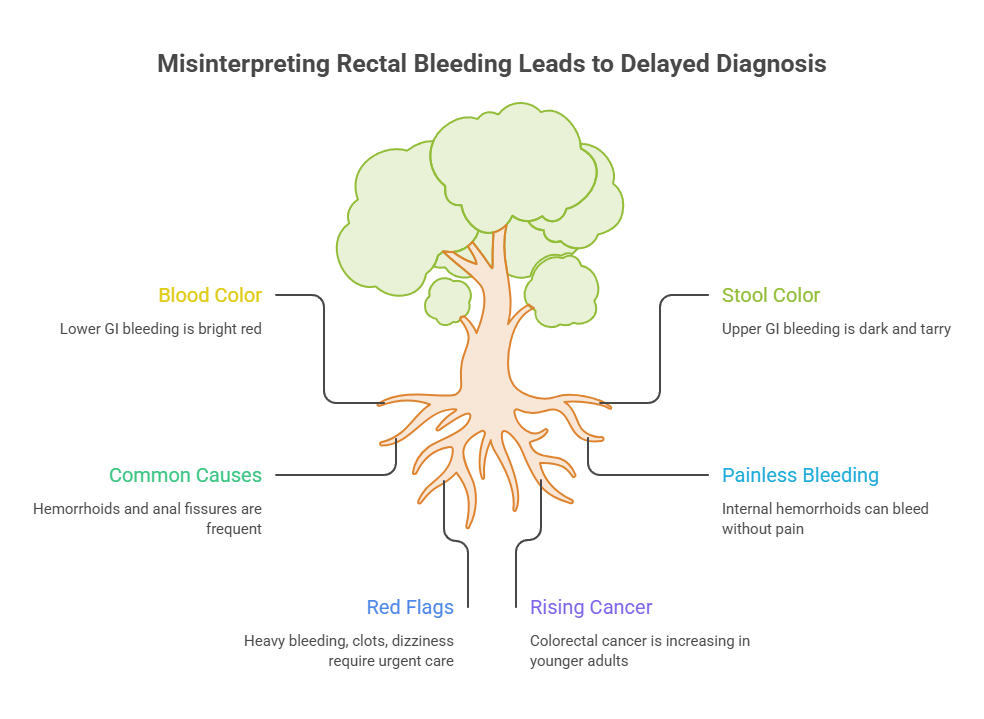
- Bright red blood points to a lower GI source; dark, tarry stool points to an upper GI source.
- Hemorrhoids are by far the most common cause, followed by anal fissures.
- Color and amount alone cannot confirm a cause, so self-diagnosis is risky.
- Painless bleeding is common with internal hemorrhoids but still needs evaluation.
- Red flags include heavy bleeding, clots, dizziness, fainting, severe pain, or black stools.
- Colorectal cancer is rising in adults under 50, and screening now starts at age 45.
Bleeding from the bottom is common, so common that it ranks among the top reasons people see a doctor for a digestive complaint. That doesn’t make it something to shrug off. It means your body is signaling, and the smart move is to listen and get it checked.
Below, you’ll find what the color tells you, the full range of causes from harmless to serious, how doctors track down the source, and a clear guide to when you should call your doctor versus head to the emergency room.
What Bright Red Blood in Stool Actually Means
The digestive tract is a long tube. Where blood enters that tube changes how it looks by the time it leaves. Bright red blood hasn’t traveled far or been exposed to digestion, so it usually comes from near the end.
Our medical reviewers note that this color rule is a helpful starting point, not a diagnosis. It narrows the search, but only an exam can confirm the actual source.
The Color-to-Location Rule
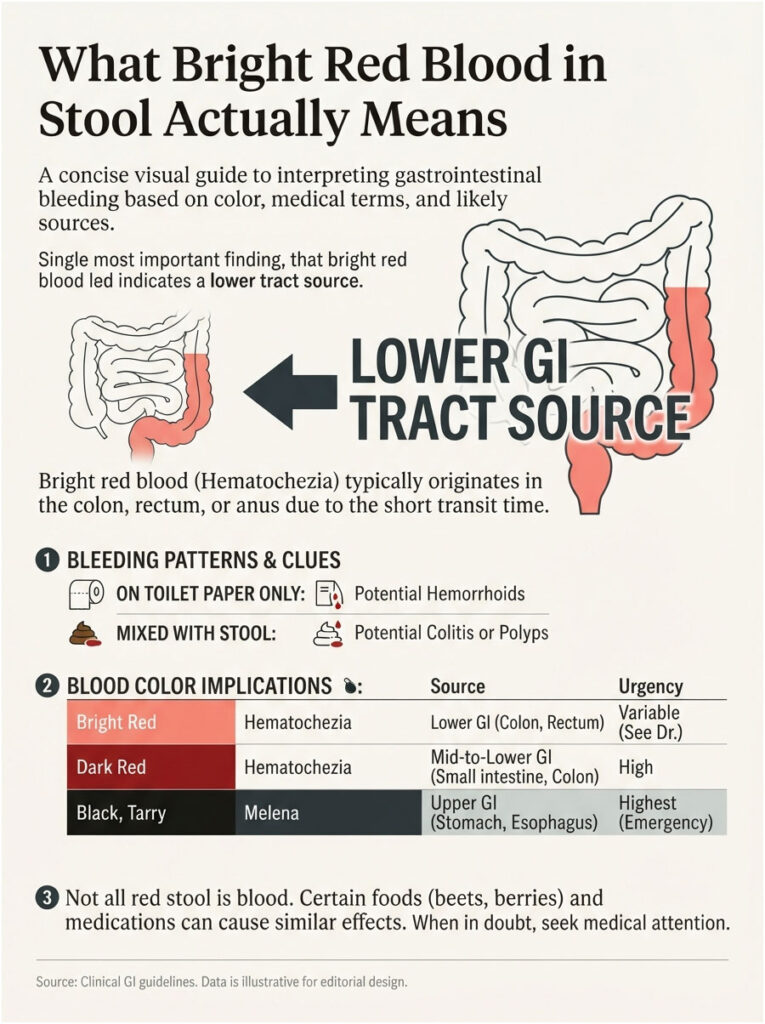
Bright red blood typically signals bleeding in the lower gastrointestinal tract, the colon, rectum, or anus. The fresher and brighter the blood, the closer to the anus it usually originates.
Darker or maroon blood suggests a source higher up, such as the right side of the colon or the small intestine. Black, sticky, tar-like stool points even higher, to the stomach or esophagus.
There’s an important exception. A very fast, heavy bleed from the stomach or small intestine can move through so quickly that the blood stays red. That’s why doctors never rely on color alone to decide where bleeding starts.
Hematochezia vs Melena, in Plain English
Doctors use two terms for GI bleeding. Hematochezia means bright red or maroon blood passed from the rectum, usually a lower-tract source. It’s what most people mean by bloody stool.
Melena means black, tarry, foul-smelling stool caused by blood that has been partially digested, usually from the upper tract. The dark color comes from the blood breaking down as it travels the length of the gut.
Knowing which one you’re seeing helps your care team focus. Patients booking colonoscopies through HealthCareOnTime often ask why the color matters so much, and this location clue is the reason.
How the Bleeding Looks Can Add Clues
The pattern of bleeding is another hint. Blood only on the paper when you wipe leans toward hemorrhoids or a fissure near the anus. Blood dripping into the bowl also suggests a low, anal source.
Blood streaked on the surface of the stool points lower in the tract, while blood mixed evenly throughout the stool suggests it joined higher up in the colon. Blood mixed with mucus can point toward inflammation or IBD.
None of these patterns is definitive on its own. Our medical reviewers note that they help guide the conversation, but the exam and any tests are what settle the question.
Table 1. What the Color of Blood Tells You
| What you see | Medical term | Likely source | Common causes | Typical urgency |
| Bright red on toilet paper or coating stool | Hematochezia | Anus, rectum | Hemorrhoids, anal fissures | Usually low, still check |
| Bright red mixed into stool or in larger amounts | Hematochezia | Colon, rectum | Diverticular bleeding, polyps, colitis, cancer | Moderate to high |
| Dark red or maroon, sometimes with clots | Hematochezia | Right colon, small intestine | Diverticulosis, angiodysplasia, brisk bleed | High |
| Black, tarry, sticky, strong odor | Melena | Stomach, esophagus, small intestine | Ulcers, gastritis, varices | High, prompt care |
| Red water but stool looks normal | Not blood | Diet or dye | Beets, red gelatin, tomato, food coloring | None, but confirm |
When It Isn’t Blood at All
Not every red toilet is bleeding. Beets are the classic culprit, turning stool or toilet water red or purple in some people, a harmless effect sometimes called beeturia. Red gelatin, tomato-heavy meals, cranberries, and red or purple food dyes can do the same.
Certain medications and supplements matter too. Iron pills and bismuth products like Pepto-Bismol can darken stool to near-black, mimicking melena without any bleeding at all.
If you’re unsure whether it’s food or blood, that uncertainty is itself a reason to check. Our medical reviewers note that assuming “it was probably the beets” is a common way real bleeding gets ignored. When in doubt, treat it as possible bleeding.
The Most Common Causes of Bright Red Rectal Bleeding
Most bright red bleeding traces back to a short list of conditions. The majority are benign and treatable, but the same symptom can come from something serious, which is why the cause always needs to be confirmed by a professional.
Hemorrhoids
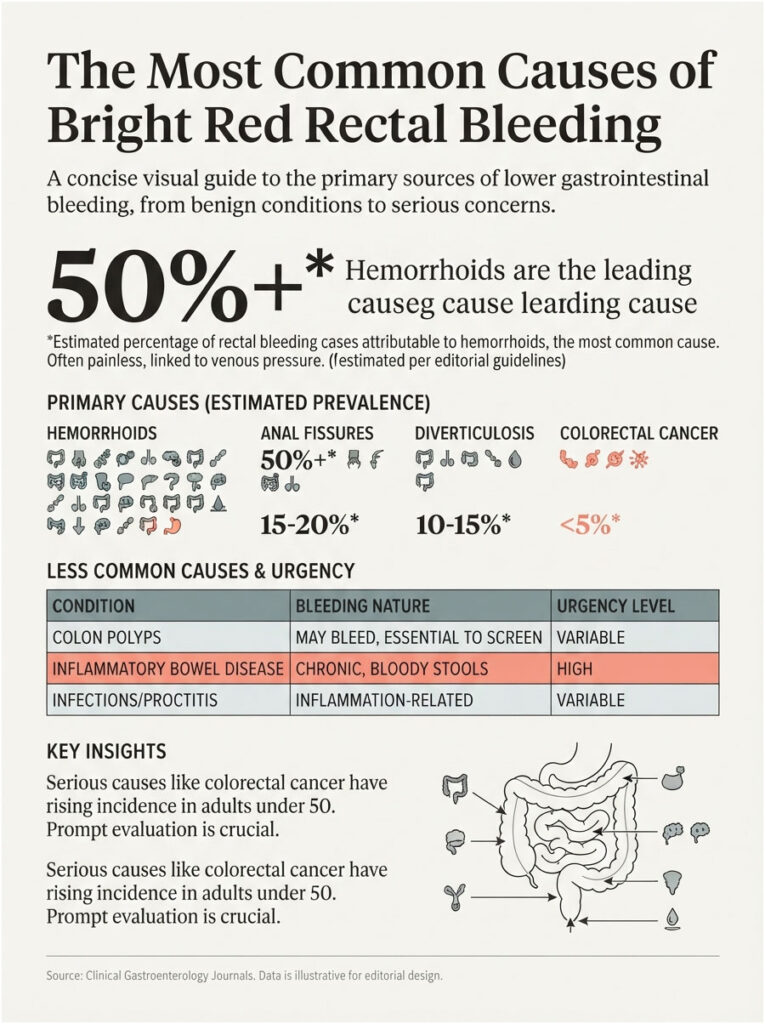
Hemorrhoids are swollen veins in the anus and lower rectum, and they are the single most common cause of bright red rectal bleeding. Internal hemorrhoids often bleed painlessly, dripping bright red blood into the bowl or streaking the paper.
They’re usually linked to straining, constipation, prolonged sitting, pregnancy, obesity, or heavy lifting. All of these raise pressure in the rectal veins. Across the cases our diagnostic network reviews, hemorrhoids account for a large share of anorectal bleeding complaints.
External hemorrhoids, which form under the skin around the anus, can be painful and may itch, while internal ones are usually painless. Both can bleed bright red.
They’re rarely dangerous and often settle on their own or with simple measures. Still, because bleeding from a polyp or cancer can look identical, hemorrhoids should be confirmed by a provider rather than assumed, especially the first time.
Anal Fissures
An anal fissure is a small tear in the lining of the anus, often caused by passing a hard or large stool. Unlike internal hemorrhoids, fissures usually hurt, producing a sharp or burning pain during and after a bowel movement that can last for hours.
The blood is typically bright red and small in amount, seen on the paper or the surface of the stool rather than mixed in. Most fissures heal on their own within a few weeks with softer stools and time.
Constipation and straining are the usual triggers, though chronic diarrhea can cause them too. Our medical reviewers note that treating the underlying constipation is often the key to letting a fissure heal and stopping the bleeding for good.
Diverticulosis and Diverticular Bleeding
Diverticula are small pouches that bulge outward from the wall of the colon. They’re extremely common with age, present in roughly half of adults over 60, and most people who have them never know it.
When a small blood vessel in one of these pouches breaks, it can cause sudden, painless, and sometimes heavy bright red or maroon bleeding. Diverticulosis is the most common cause of significant lower GI bleeding in the United States.
The bleeding can be dramatic in volume, which is understandably frightening. The good news is that diverticular bleeding often stops on its own.
Even so, the amount can be enough to require urgent care, and repeat episodes are possible. Any large or recurring bleed like this needs prompt medical attention to confirm the source and rule out other causes.
Colon Polyps
Polyps are small growths on the lining of the colon or rectum. Most are harmless, but certain types are precancerous and can slowly turn into cancer over a span of years if left in place.
Polyps can bleed intermittently, sometimes producing bright red blood if they sit low in the colon or rectum. Often they cause no symptoms at all, which is exactly why screening matters so much.
The reassuring part is that colonoscopy can find and remove polyps before they ever become cancer. In tests booked through HealthCareOnTime, polyp removal during a screening colonoscopy is a routine, preventive step that takes only moments.
Colorectal Cancer
This is the possibility that frightens people most, and it deserves a straight answer. Colorectal cancer can cause bright red blood, especially when a tumor sits low in the rectum, though it can also cause dark stools, a change in stool caliber, or no visible blood.
The American Cancer Society estimates about 158,850 new cases of colorectal cancer and 55,230 deaths in the United States in 2026. It’s the second leading cause of cancer death when men and women are combined.
There’s a shift worth knowing about. Rates are falling in older adults but rising in people under 50 by about 3% per year, often in the sigmoid colon and rectum, the very areas that produce bright red blood.
That trend is why bright red bleeding in a younger adult should never be brushed aside as “just hemorrhoids.” Other warning signs to watch alongside bleeding include a persistent change in bowel habits, narrow stools, unexplained weight loss, and iron-deficiency anemia.
Inflammatory Bowel Disease
Inflammatory bowel disease, or IBD, covers ulcerative colitis and Crohn’s disease. Both cause inflammation of the digestive lining and can produce bright red blood, often mixed with mucus.
Ulcerative colitis affects the colon and rectum and commonly causes bloody diarrhea with urgency. Crohn’s disease can affect any part of the tract from mouth to anus and may cause bleeding along with abdominal pain, diarrhea, and weight loss.
These are chronic, lifelong conditions that need ongoing management by a specialist. Recurrent bloody stools with diarrhea, cramping, fatigue, or weight loss should prompt evaluation for IBD, particularly in younger adults.
Left untreated, IBD can lead to anemia and other complications. Getting an accurate diagnosis early makes the condition far easier to control.
Infections and Proctitis
Bacterial or viral infections of the intestines can inflame the lining and cause bloody stools, usually alongside diarrhea, cramping, and sometimes fever. Common culprits include Salmonella, Shigella, E. coli, and Campylobacter, often from contaminated food or water.
Proctitis, inflammation of the rectum, can also cause bright red bleeding and a feeling of needing to pass stool even when the rectum is empty. It may follow an infection, radiation therapy, or IBD.
These causes usually come with clear accompanying symptoms like fever and diarrhea, which help distinguish them. Our lab partners report that stool testing helps pin down an infectious cause quickly when the pattern fits.
Less Common Causes
A few other conditions round out the list. Angiodysplasia refers to fragile, abnormal blood vessels in the colon that can bleed, more often in older adults and sometimes heavily. Rectal prolapse, where part of the rectum protrudes through the anus, can also cause bleeding and discomfort.
Rectal ulcers, sometimes linked to chronic straining or infection, can bleed as well. And as noted earlier, a rapid upper GI bleed from a stomach ulcer or esophageal varices can occasionally appear as bright red blood rather than black.
These are less frequent but real. They reinforce the same point: the only reliable way to know the source is an exam, not a guess based on appearance.
How Doctors Figure Out the Source
Finding the cause of rectal bleeding is usually straightforward once you see a provider. The process combines your history, a physical exam, and, when needed, a look inside the colon.
Before the numbers, it helps to see how common this symptom is and where the bleeding tends to come from across the population.
Table 2. Rectal Bleeding and Its Causes, by the Numbers
| Measure | Figure | Source |
| Rectal bleeding as an outpatient symptom | 6th most common reason for a clinic visit | NIH / StatPearls |
| Community prevalence of rectal bleeding | 13% to 20% of adults | NIH / PMC |
| Adult hemorrhoid prevalence | About 11% | PMC survey |
| Diverticulosis prevalence by age | ~10% under 40, ~50% over 60 | NIH / StatPearls |
| Annual lower GI bleeding incidence | 20.5 to 27 per 100,000 adults | NIH / PMC |
| Estimated US colorectal cancer cases, 2026 | 158,850 new cases | Am Cancer Society |
| Recommended screening start age, average risk | 45 years | USPSTF / ACS |
The Role of History and a Physical Exam
Your doctor will start by asking questions. Color, amount, how often it happens, whether there’s pain, and any other symptoms all narrow the field quickly.
A physical exam usually includes a digital rectal exam, where the doctor checks for hemorrhoids, fissures, or masses with a gloved finger. An anoscope, a short lighted tube, may be used to view the anal canal directly.
This part is quick and tells the doctor a lot. Patients commonly ask us whether the exam is uncomfortable, and while it’s not anyone’s favorite, it’s brief and often provides an answer on the spot.
Colonoscopy and Other Tests
When the source isn’t obvious or when risk factors are present, a colonoscopy is the gold standard. A thin, flexible camera examines the entire colon and rectum while you’re sedated, and any polyps found can be removed during the same procedure.
Other tools include blood tests to check for anemia, stool tests to detect hidden blood or infection, and flexible sigmoidoscopy to view the lower colon. For active, heavy bleeding, CT angiography can pinpoint the exact source.
The workup is chosen to fit your symptoms and risk profile. In tests booked through HealthCareOnTime, the goal is always to match the least invasive effective test to the situation.
Why “It Stopped on Its Own” Doesn’t Mean It’s Resolved
GI bleeding often starts and stops. You might see blood one day and nothing the next, which tempts many people to assume the problem fixed itself and move on.
It didn’t necessarily. Bleeding from a polyp or early cancer is frequently intermittent, so a pause is not proof of safety. The underlying source can still be there, quietly.
Our medical reviewers note that “it went away” is one of the most common reasons serious causes get caught late. New bleeding still deserves a look, even if it stopped by the time you finished reading this.
When to Worry: Red Flags and When to Seek Care
Most bright red bleeding is not an emergency, but some situations absolutely are. Knowing the difference tells you whether to book an appointment or act right now.
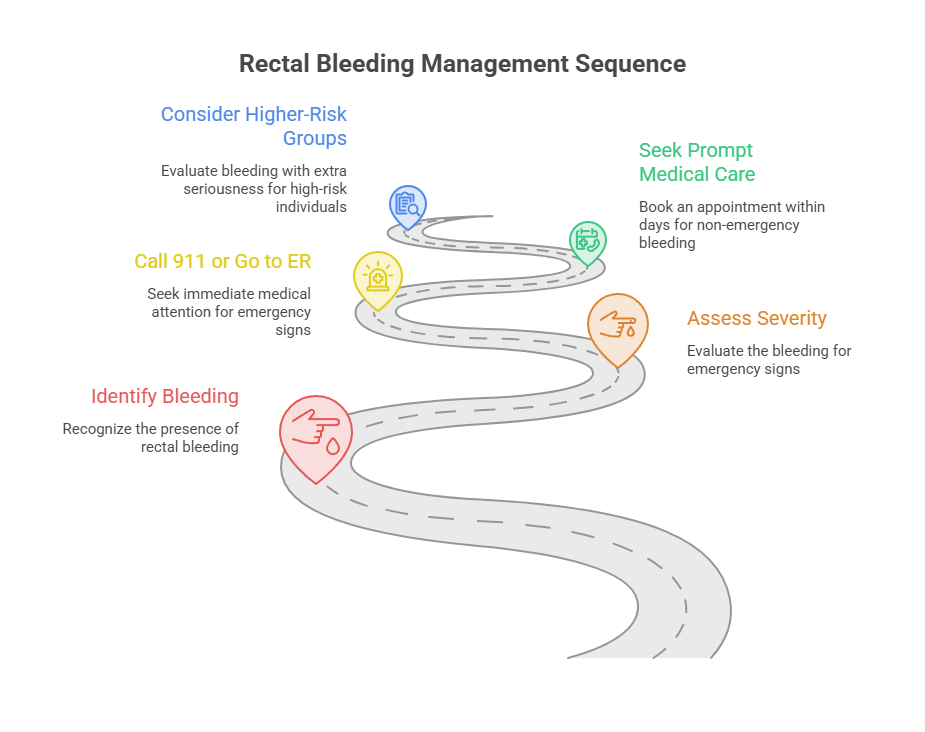
Emergency Signs: Call 911 or Go to the ER
Certain symptoms mean the bleeding may be significant and need immediate care. Go to the emergency room or call for help if you have heavy or continuous bleeding, large blood clots, or blood that won’t stop.
Also treat it as an emergency if bleeding comes with dizziness, lightheadedness, fainting, a racing heart, confusion, severe abdominal pain, or black tarry stools. These can signal serious blood loss or an upper GI bleed.
Weakness, cold or clammy skin, or shortness of breath alongside bleeding are warning signs of shock. Don’t try to wait these out or drive yourself if you feel faint.
See a Doctor Promptly: Within Days
Short of an emergency, most rectal bleeding still warrants a prompt visit. Book an appointment for any new bleeding, bleeding that recurs or persists beyond a day or two, or bleeding paired with a change in bowel habits.
Other reasons to be seen soon include unexplained weight loss, ongoing diarrhea, abdominal pain, or signs of anemia such as fatigue, pallor, and shortness of breath on exertion. These raise the level of concern.
Don’t let embarrassment delay you. Our medical reviewers note that clinicians deal with this every single day, and the symptom is far too important to sit on out of awkwardness.
Higher-Risk Groups Who Should Be Evaluated Sooner
Some people should treat rectal bleeding with extra seriousness. That includes anyone 45 or older, the age at which colorectal cancer screening is now recommended for average-risk adults.
It also includes people taking blood thinners or antiplatelet drugs, those with a personal or family history of colorectal cancer or polyps, and anyone with IBD or liver disease. Blood thinners can worsen any bleed, and liver disease raises the risk of dangerous variceal bleeding.
For these groups, even mild bleeding is worth a prompt conversation with a doctor. The table below turns all of this into quick, at-a-glance decisions.
Table 3. What to Do Based on What You’re Seeing
| What you’re experiencing | Urgency level | Recommended action |
| Streak of bright red on paper, no pain, one time | Low | Book a routine visit; monitor and note recurrences |
| Bright red bleeding that recurs over days or weeks | Moderate | See a doctor within days for evaluation |
| Bleeding with change in bowel habits or weight loss | High | Prompt medical appointment; likely colonoscopy |
| Heavy bleeding, clots, or bleeding that won’t stop | Emergency | Go to the ER or call 911 now |
| Bleeding with dizziness, fainting, or severe pain | Emergency | Go to the ER or call 911 now |
| Any bleeding if 45+, on blood thinners, or family history | Elevated | Contact your doctor promptly, don’t wait |
Special Situations Worth Knowing About
A few groups face particular considerations with rectal bleeding. Knowing them helps you judge your own situation more accurately.
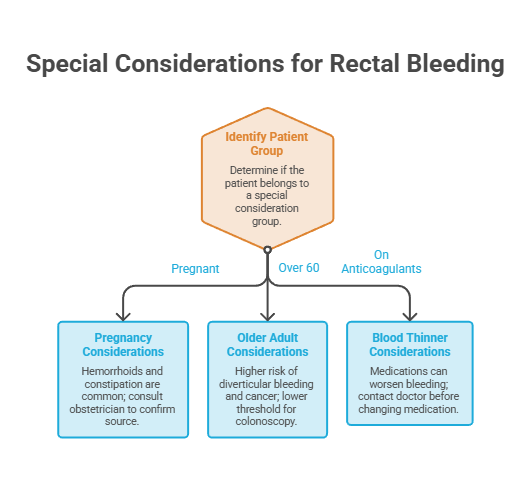
During Pregnancy
Hemorrhoids and constipation are both common in pregnancy, thanks to hormonal changes and pressure from the growing uterus. Bright red bleeding from hemorrhoids is frequent and usually harmless.
Even so, bleeding during pregnancy should be mentioned to your obstetrician rather than assumed. Our medical reviewers note that pregnancy is a time to err toward asking, since it’s easy to confuse the source of bleeding.
Older Adults
In people over 60, the mix of likely causes shifts. Diverticular bleeding, angiodysplasia, and colorectal cancer become more common relative to younger adults, while hemorrhoids remain frequent.
Because the stakes are higher, new bleeding in an older adult generally deserves a lower threshold for colonoscopy. Age is one of the strongest reasons to get bleeding evaluated rather than watched.
People on Blood Thinners
Anticoagulants and antiplatelet medications, including warfarin, direct oral anticoagulants, aspirin, and clopidogrel, can turn a minor bleed into a heavier one. They can also unmask bleeding from a polyp or other lesion that might otherwise have gone unnoticed.
Never stop a prescribed blood thinner on your own because of bleeding. Contact the prescribing doctor, who can weigh the bleeding against the reason you’re on the medication.
How to Lower Your Risk and Prepare for Your Visit
You can’t diagnose the cause yourself, but you can reduce the odds of the most common benign causes and arrive at your appointment ready to help your doctor.
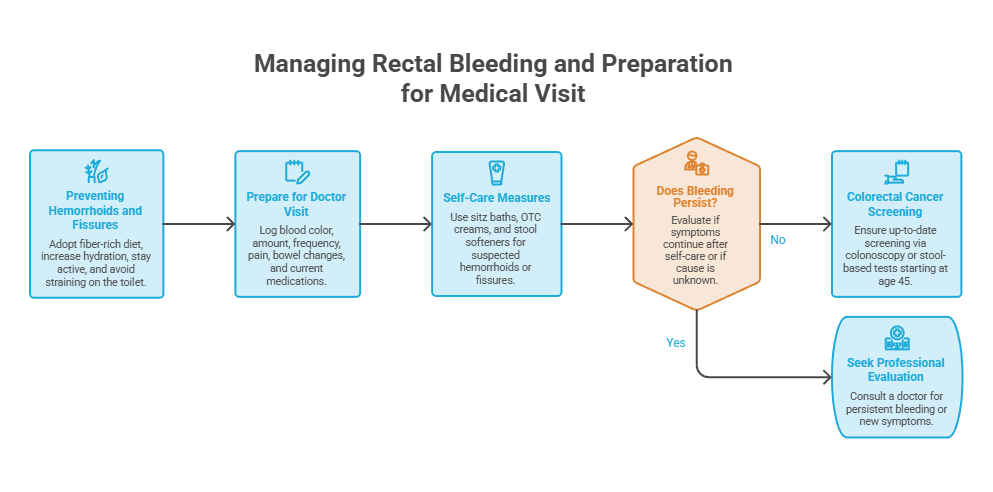
Preventing Hemorrhoids and Fissures
Since straining and constipation drive most benign rectal bleeding, softer, easier stools are the best prevention. Aim for a fiber-rich diet with plenty of vegetables, fruits, whole grains, and legumes.
Drink enough water, stay physically active, and don’t linger or strain on the toilet. Responding promptly to the urge to go, rather than holding it, also helps keep stools soft and passage easy.
These habits won’t prevent every cause, but they target the two most frequent ones. Our medical reviewers note that fiber and hydration are the simplest, most effective steps for most people.
Details Your Doctor Will Want
Before your appointment, jot down a few specifics. Note the color of the blood, roughly how much, whether it’s on the paper or in the stool, and how often it’s happening.
Also track any pain, changes in your bowel movements, diarrhea, weight changes, and the medications and supplements you take. Blood thinners, aspirin, NSAIDs, and iron are especially relevant to mention.
These details speed up the diagnosis. Patients commonly ask us what to bring, and this short symptom log is the single most useful thing you can prepare.
Self-Care for Suspected Hemorrhoids or Fissures
If hemorrhoids or a fissure are the likely cause, some measures can ease symptoms, though they don’t replace an exam. Increasing fiber and fluids softens stool and reduces straining, which is the root of both problems.
Warm sitz baths, over-the-counter hemorrhoid creams, and gentle stool softeners can provide relief. Avoiding prolonged sitting on the toilet and not straining also help the area heal.
If bleeding continues despite these steps, or if you’re unsure of the cause, get evaluated. Our medical reviewers note that self-care is reasonable for mild, previously diagnosed hemorrhoids, but new bleeding still needs a professional eye.
The Colorectal Cancer Screening Connection
Rectal bleeding and cancer screening are linked, because screening can catch the very cancers that sometimes cause bleeding, often before any symptoms appear. For average-risk adults, screening now begins at age 45.
Colonoscopy is highly effective, reducing colorectal cancer incidence by about 40% and deaths by about 60% by finding and removing precancerous polyps. Stool-based tests are another option for those at average risk who prefer an at-home first step.
Being up to date on screening is one of the best protections you have, and it’s separate from getting current bleeding checked. In tests booked through HealthCareOnTime, screening frequently uncovers and removes polyps long before they could ever cause harm.
Frequently Asked Questions
Is a little bright red blood on toilet paper serious?
Often it’s not, and hemorrhoids or a small anal fissure are the usual causes. But blood in stool is never normal, and the same streak can occasionally come from a polyp or cancer. A single episode still warrants mentioning to your doctor, and recurring bleeding should be evaluated.
Does bright red blood in stool mean cancer?
Usually not. Most bright red bleeding comes from hemorrhoids or fissures, not cancer. However, colorectal cancer can cause it, and it can look identical to benign bleeding. Because color and amount can’t rule cancer out, any new or persistent bleeding should be checked by a healthcare provider.
Why am I bleeding from my rectum with no pain?
Painless bright red bleeding is classic for internal hemorrhoids, which sit above the pain-sensitive area. Diverticular bleeding and some polyps or tumors can also bleed without pain. Lack of pain is reassuring but not proof it’s harmless, so painless bleeding still needs evaluation, especially if it recurs.
Can hemorrhoids cause a lot of bright red blood?
Yes, hemorrhoids can sometimes produce noticeable bright red blood that drips into the bowl or streaks the stool. Even so, heavy bleeding should never simply be blamed on hemorrhoids without an exam, since diverticular bleeding and other causes can look similar and may be more serious.
How much rectal bleeding is too much?
Small streaks on paper are usually low urgency, though still worth reporting. Larger amounts, blood filling the bowl, passing clots, or bleeding that won’t stop are emergencies. Any bleeding accompanied by dizziness, fainting, weakness, or a racing heart means you should seek emergency care right away.
Should I go to the ER for rectal bleeding?
Go to the ER for heavy or continuous bleeding, large clots, or bleeding with dizziness, fainting, severe abdominal pain, confusion, or black tarry stools. For a minor streak with no other symptoms, a prompt appointment with your doctor is usually the right step instead.
How do I tell hemorrhoids from something more serious?
You often can’t tell by looking, and that’s the key point. Hemorrhoids, fissures, polyps, and cancer can all cause bright red blood. Pain, itching, weight loss, changes in bowel habits, and your age and family history all matter, but only an exam can confirm the true cause.
Can food turn my stool red?
Yes. Beets are the most common, and they can tint stool or toilet water red or purple. Red gelatin, tomato-based foods, cranberries, and red or purple food dyes can do the same. If you’re unsure whether it’s food or blood, treat it as possible bleeding and confirm with your doctor.
Can bright red blood ever come from the stomach?
Rarely, yes. A very fast, heavy bleed from the stomach or small intestine can move through the tract too quickly to darken, appearing bright red. This is uncommon but potentially serious, which is another reason color alone can’t determine the source and an exam is needed.
How long is too long to have rectal bleeding?
There’s no safe waiting period for unexplained bleeding. Any new rectal bleeding should be reported, and bleeding that lasts more than a day or two, recurs, or comes with other symptoms should be evaluated promptly. Don’t wait for it to stop on its own to decide it’s harmless.
Does bright red blood in stool go away on its own?
Sometimes the bleeding pauses, but that doesn’t mean the cause is gone. GI bleeding, including from polyps or early cancer, often starts and stops. A break in bleeding is not proof of safety, so new bleeding still deserves evaluation even after it appears to stop.
What tests will I need for rectal bleeding?
It depends on your symptoms and risk. Expect a history, a rectal exam, and possibly an anoscopy. Your doctor may order blood tests for anemia, stool tests, or a colonoscopy, which is the most thorough option. Heavy active bleeding may require CT angiography to locate the source.
Medical Disclaimer: This article is for general informational purposes and is not a substitute for professional medical advice, diagnosis, or treatment. Blood in the stool always warrants evaluation by a qualified healthcare provider, who can determine the cause and appropriate care. If you have heavy bleeding, dizziness, fainting, or severe pain, seek emergency care immediately. Never delay seeking medical advice because of something you have read here.
References
- Blood in Stool (Rectal Bleeding): Causes & What It Looks Like, Cleveland Clinic
- When to Worry About Blood in Your Stool, UT MD Anderson Cancer Center
- Does Blood in Stool Mean Cancer?, American Cancer Society
- Rectal Bleeding, StatPearls, NIH National Library of Medicine
- Lower GI Bleeding: An Update on Incidences and Causes, NIH (PMC)
- Colorectal Cancer Key Statistics, American Cancer Society
- Colorectal Cancer Rising in Younger Adults, American Cancer Society
- Colorectal Cancer Screening in Adults 45-49, American Cancer Society