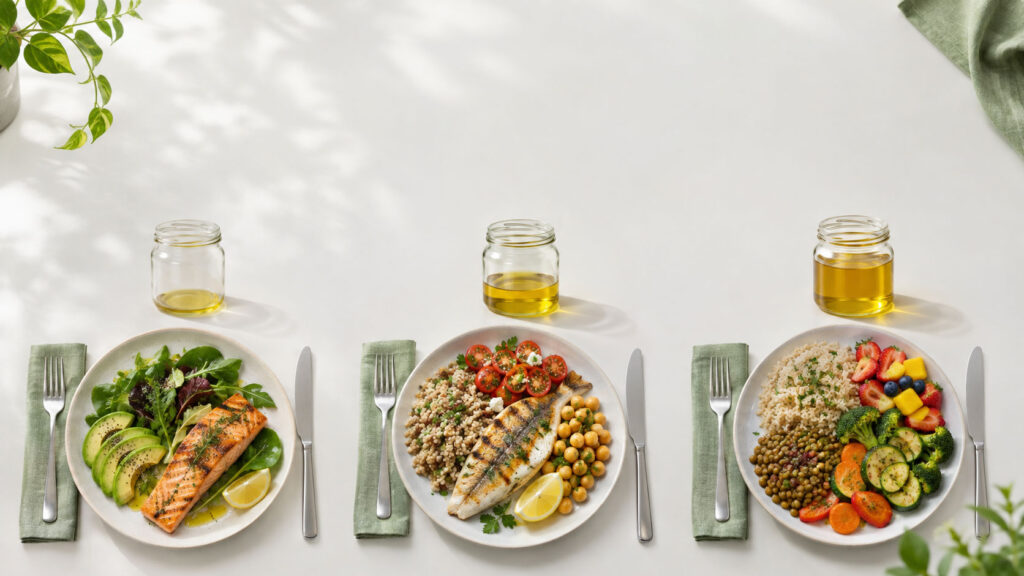
A keto diet for fatty liver can lower liver fat, and in a 2026 controlled trial it lowered it more than a Mediterranean or low-fat diet with the same weight loss. Whether it’s a good idea for you depends on things the headline numbers leave out: how scarred your liver is, whether alcohol is involved, your cholesterol and the medicines you take.
Table of Contents
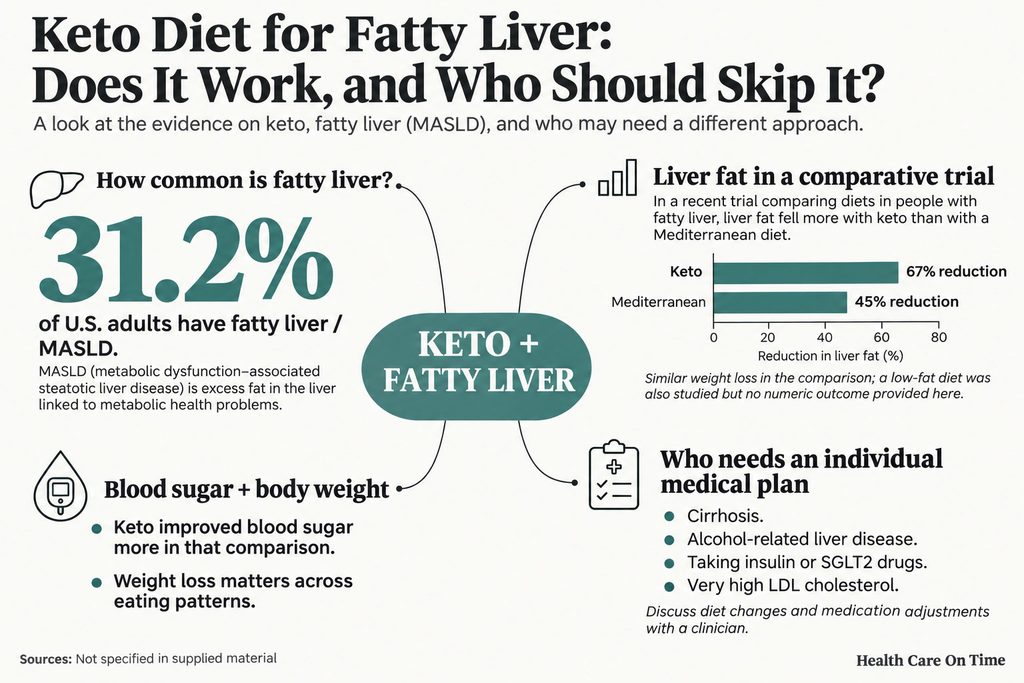
Quick Answer: Yes, keto can work for fatty liver. In a 2026 Washington University trial, adults with obesity, prediabetes and fatty liver lost about 10% of body weight on each of three diets, but liver fat fell 67% on keto versus 45% on Mediterranean and low-fat plans. People with cirrhosis, alcohol-related liver disease, very high LDL cholesterol or SGLT2 diabetes pills should talk to a doctor before starting.
Fatty liver, MASLD and why diet comes first
Fatty liver means extra fat stored inside liver cells. When it’s tied to excess weight, prediabetes, type 2 diabetes, high blood pressure or abnormal blood fats rather than heavy drinking, doctors now call it metabolic dysfunction-associated steatotic liver disease, or MASLD. The older name, nonalcoholic fatty liver disease (NAFLD), still appears on plenty of scan reports, and the two labels cover largely the same patients, an estimated 31.2% of US adults, or about 61.9 million people, in national survey data from 2017 to 2020.
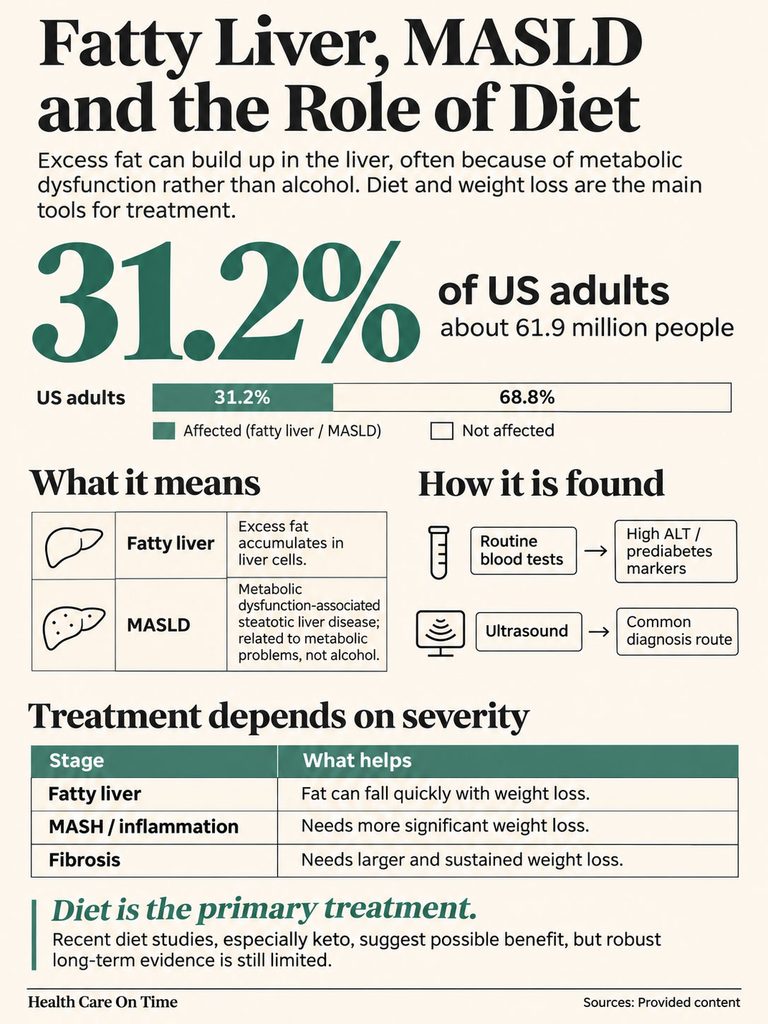
A typical way people find out: an ultrasound ordered for gallbladder pain comes back with “hepatic steatosis” in the report, the ALT on routine blood work is a little high, and the A1c sits in the prediabetes range. Nothing hurts. The first thing your doctor wants to know is whether the liver holds only fat or also inflammation and scarring, since how a fatty liver is staged shapes most of what follows, and fat can shrink quickly with weight loss, while inflammation (steatohepatitis, now called MASH) and scarring (fibrosis) need more weight loss and more time, and advanced scarring can progress to cirrhosis. The diet question usually comes up at the follow-up visit, often with a printout that says “lose weight” and not much else.
Weight loss improves fat, inflammation and scarring in a dose-dependent way, so diet has been the first treatment for years.
Which diet does the most for the liver itself has been much harder to pin down. Keto kept coming up because it removes the sugar and starch the liver turns into fat, yet until recently the human evidence for a keto diet for fatty liver came from short, small studies with no fair comparison group.
What the new trial tested, and what it found
Diet comparisons usually fall apart for two reasons: the groups lose different amounts of weight, and nobody knows exactly what people ate at home. The trial that Max Petersen, Samuel Klein and colleagues at Washington University School of Medicine in St. Louis published in Cell Metabolism in August 2026 removed both problems. The team supplied every meal, a dietitian met with each person weekly, and calories were adjusted until every participant had lost roughly 10% of starting weight, with adherence above 95% in all three groups. Few diet trials get that close.
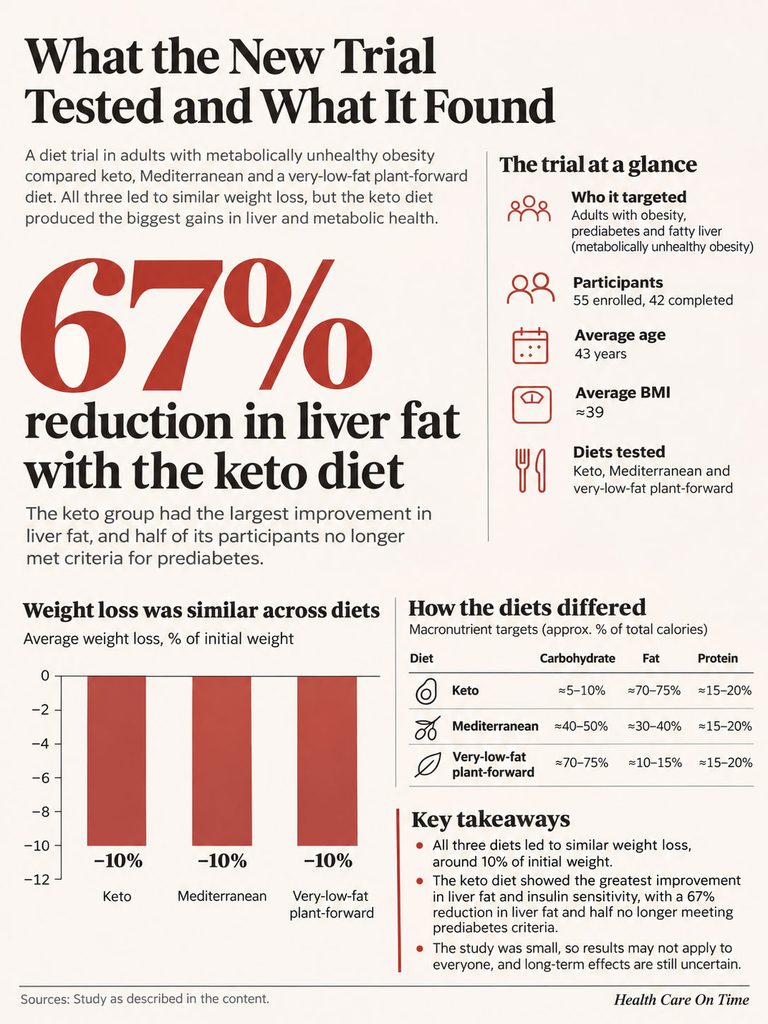
Everyone enrolled had obesity, prediabetes and a fatty liver, a combination the researchers call metabolically unhealthy obesity. Fifty-five adults were randomly assigned (17 to keto, 18 to Mediterranean, 20 to a very-low-fat, plant-forward diet), and 42 finished, 14 per group. Their average age was 43, and average BMI was close to 39. Each group had nine women and five men among its finishers, so the results apply most directly to middle-aged adults with fairly severe obesity, not to lean people with fatty liver.
How the three diets differed
The diets were far apart. Keto drew 4% of calories from carbohydrate, about 20 grams a day on a 2,000-calorie menu, while the low-fat diet drew 70% from carbs and the Mediterranean plan sat in the middle. Saturated fat differed by a wide margin as well, which matters for cholesterol.
| Measure | Keto (very low carb) | Mediterranean | Low-fat, plant-forward |
| Carbs (share of calories, grams per 2,000 calories) | 4%, 20 g | 50%, 254 g | 70%, 352 g |
| Total fat | 73%, 164 g | 35%, 80 g | 15%, 35 g |
| Saturated fat | 23%, 52 g | 8%, 19 g | 3%, 7 g |
| Protein | 23%, 112 g | 15%, 83 g | 15%, 90 g |
| Weight lost | 10.4% | 10.2% | 10.1% |
| Average months to reach the weight goal | 4.6 | 5.4 | 5.1 |
| Liver fat on MRI, start to finish | 19.4% to 6.2% | 18.1% to 10.3% | 17.7% to 9.6% |
| Relative drop in liver fat | 67% | 45% | 45% |
| No longer met prediabetes criteria | 50% | 29% | 7% |
| Drop in 24-hour blood insulin | 74% | 44% | 27% |
| LDL cholesterol, start to finish (mg/dL) | 111 to 101 | 125 to 103 | 100 to 92 |
Source: Petersen MC, et al. Cell Metabolism, 2026. Liver fat measured by MRI proton density fat fraction.
The Mediterranean and low-fat groups each saw a 45% drop. Muscle insulin sensitivity rose by roughly 50% on all three plans, which suggests weight loss alone drove that change. Liver insulin sensitivity, by contrast, improved two to three times more on keto, 24-hour blood sugar fell about 20% compared with about 8% on the other two diets, and fasting glucose, fasting insulin and A1c came down the most in the keto group.
What a 67% drop in liver fat means
The figure describes how much fat left the liver, on average, and doesn’t tell you how many people were cured. In the keto group, the share of the liver made up of fat went from 19.4% to 6.2%, so the average liver was far less fatty at the end but still not fat-free. Half of the keto group no longer met prediabetes criteria after four to five months, although remission was checked once, right after the weight-loss phase, with no follow-up to show whether it lasted.
Forty-two finishers make a small trial, and its two primary outcomes were muscle and liver insulin sensitivity, with liver fat as a secondary measure. The study also can’t say whether a milder carb cut, one that doesn’t produce ketosis, would do the same job, or what happens after five months, when most people go back to shopping and cooking for themselves. The work was funded by NIH grants and the Foundation for Barnes-Jewish Hospital, and the paper discloses that the senior author has received advisory fees from AbbVie, 89Bio and Boehringer Ingelheim.
Why cutting carbs pulls fat out of the liver
The liver builds new fat from sugar and starch through a process called de novo lipogenesis, and in a fatty liver that pathway runs harder than it should, kept switched on by high insulin. Fructose is especially potent, and US liver guidance ties excess fructose to fatty liver, steatohepatitis and advanced scarring regardless of total calories. That’s why dropping soda, sweet tea and fruit juice shows up in every fatty liver plan, keto or not. Someone who cuts those drinks and changes nothing else has already removed a major driver of liver fat, which makes it a sensible first step before choosing any diet at all.
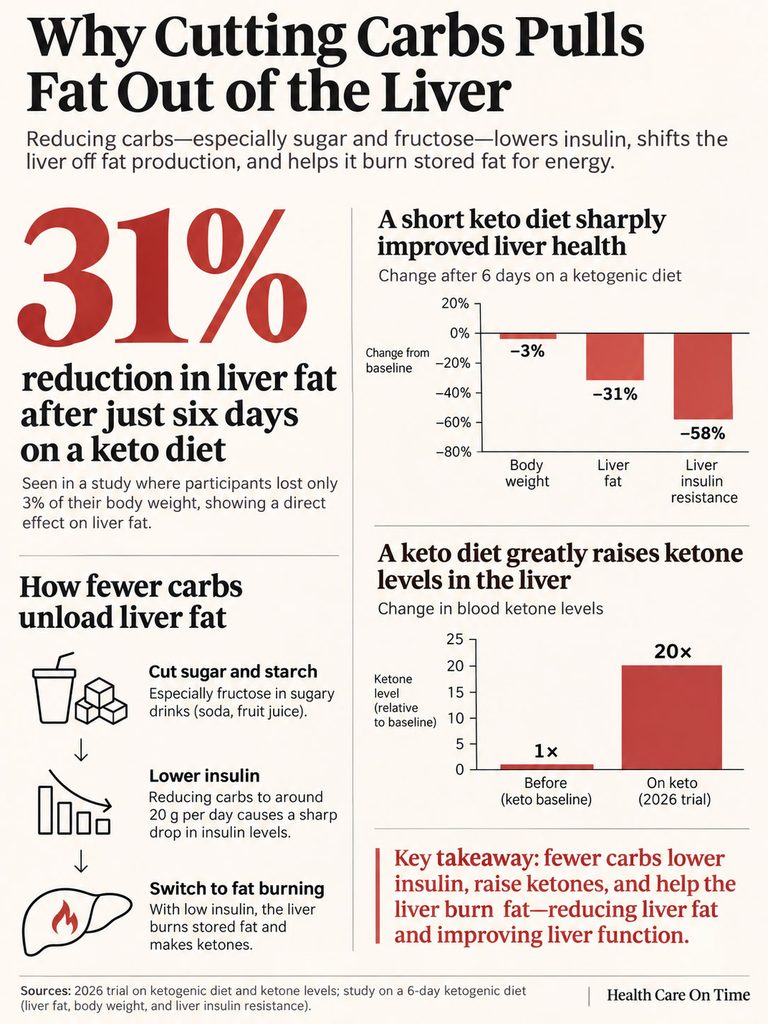
When carbs fall to around 20 grams a day, insulin drops sharply, and the liver shifts from storing fat to burning it and turning it into ketones. In the 2026 trial, 24-hour levels of the main ketone rose more than 20-fold on keto, though they stayed well below the levels seen in starvation.
The switch can happen within a week. In a small study from Yale and the University of Helsinki, ten adults with overweight or obesity ate a ketogenic diet for six days. Liver fat fell 31% while body weight dropped only 3%, and the liver’s insulin resistance fell 58%, even though free fatty acids in the blood rose 35%. More fat was arriving at the liver, and the liver still held less of it, because it was burning that fat for ketones instead of packing it away.
How long does keto take to lower liver fat?
Liver fat responds well before the scale shows much, and three studies give a rough time course:
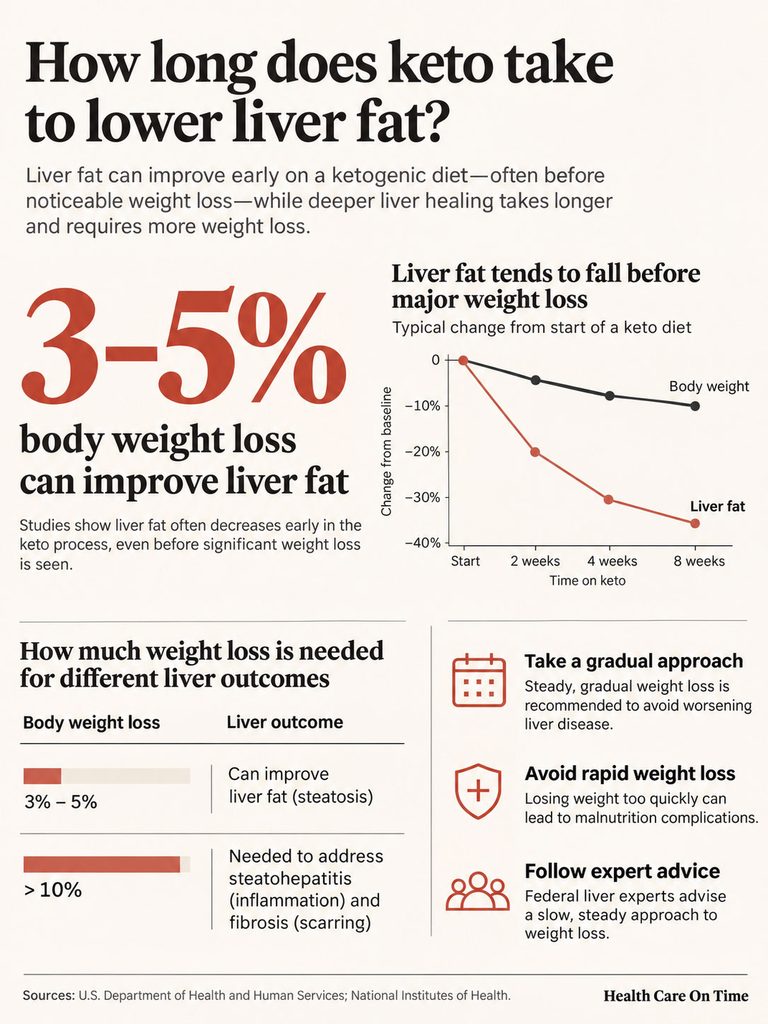
- About 6 days: liver fat down 31% on keto, with only a 3% weight loss, in 10 adults.
- About 6 weeks: in a crossover trial of 12 adults with biopsy-proven fatty liver, a Mediterranean diet cut liver fat 39% compared with 7% on a low-fat, high-carb diet, with similar weight change.
- 4.6 to 5.4 months: the time each group in the 2026 trial needed to lose 10%, by which point liver fat had dropped by two-thirds on keto and by close to half on the other two diets.
Because the three studies used different people and methods, their numbers aren’t directly comparable, but each shows fat leaving the liver early, while inflammation and scarring take longer: losing 3% to 5% of body weight improves liver fat, but more than 10% is generally needed to improve steatohepatitis and fibrosis.
Slow and steady is safer here, because rapid weight loss and malnutrition can make liver disease worse, and federal liver experts advise losing weight gradually for that reason.
Keto, Mediterranean or low-fat: choosing a diet you can keep
No US liver society names a single winning diet. Current guidance asks for a calorie deficit in anyone with overweight or obesity, plus an eating pattern with limited carbohydrates and saturated fat, more fiber and more unsaturated fat; it calls the Mediterranean diet the one most often recommended, for its effect on liver fat and on the heart, and treats low-carb and low-fat approaches as roughly comparable. The Mediterranean pattern may even help the liver without weight loss.
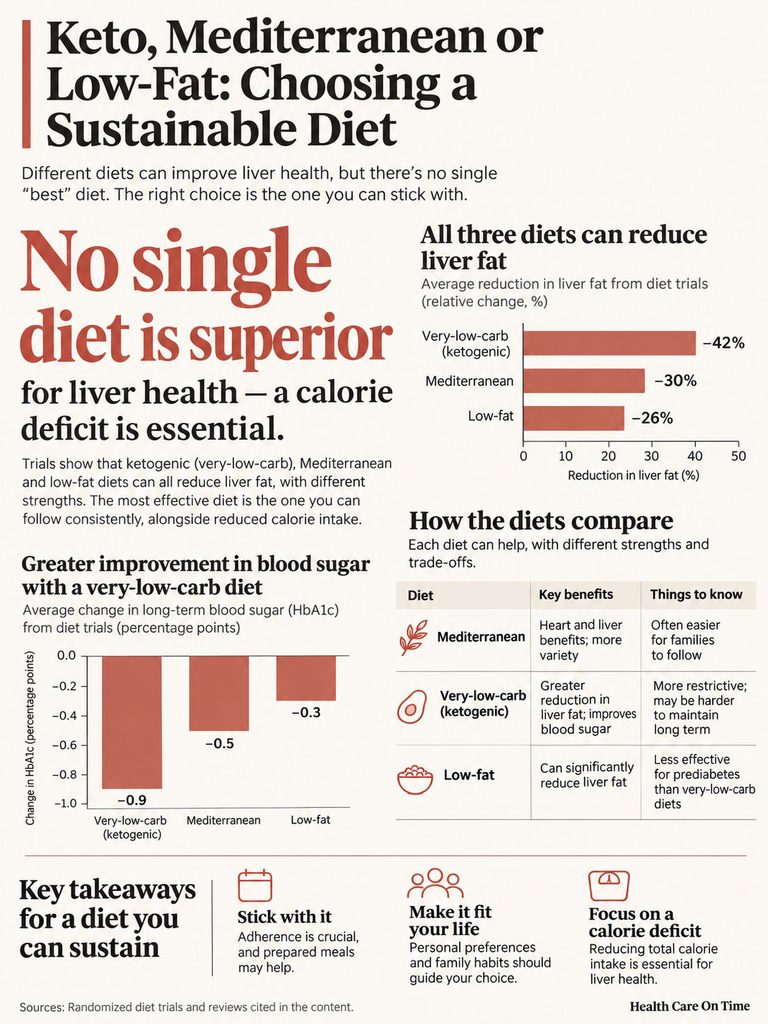
The 2026 trial adds evidence that at the same weight loss a very-low-carb diet removed more liver fat and improved blood sugar more. For most people with simple fatty liver and prediabetes, a few months of well-built keto is a reasonable, evidence-based choice. With a strong family history of heart disease, saturated fat and LDL deserve more weight, and the Mediterranean diet has decades of heart data behind it. Either choice can be right.
Sticking with a diet matters as much as which one you pick, and nobody in the trial had to plan a meal, because every meal arrived prepared, and keto at 20 grams of carbs means no bread, rice, pasta, potatoes, most fruit, beans or sugar, which many people find hard after a few months. A Mediterranean plan, with its whole grains, beans and fruit, is easier for many families to live with, and a trial week of Mediterranean-style meals for fatty liver costs little and shows quickly whether your household will eat that way.
The plant-forward, low-fat diet also did well for the liver. With 70% of calories from carbs, it cut liver fat by the same 45% as the Mediterranean plan, because weight loss did most of the work, so vegetarians and anyone unwilling to give up grains and beans still have a workable route to a leaner liver. It did much less for prediabetes, though, with only 7% of that group reaching remission.
Here is how the trial compares with smaller studies and national data.
| Finding | Number | Source |
| US adults with MASLD (fatty liver tied to metabolic risk), 2017 to 2020 | 31.2%, about 61.9 million | NHANES analysis, Biomedicines, 2025 |
| Liver fat change after 6 days of keto | Down 31%, with 3% weight loss | Luukkonen et al., PNAS, 2020 |
| Liver fat change after 6 weeks, Mediterranean vs low-fat, high-carb | Down 39% vs down 7% | Ryan et al., Journal of Hepatology, 2013 |
| Weight loss that improves fat vs scarring | 3% to 5% for liver fat; more than 10% for steatohepatitis and fibrosis | AASLD Practice Guidance, 2023 |
| Average LDL change on keto across 27 trials (1,278 people) | Up 0.35 mmol/L (about 14 mg/dL) | Meta-analysis, American Journal of Clinical Nutrition, 2024 |
| Malnutrition in cirrhosis | About 20% when compensated, 50% when decompensated | AASLD clinical pearls on 2021 cirrhosis nutrition guidance |
Can keto cause fatty liver?
People ask because of a 2025 study in Science Advances, in which University of Utah researchers fed mice a classic ketogenic diet, roughly 90% of calories from fat, for many months. Male mice developed fatty livers with abnormal liver tests, the animals had high blood fats, and their insulin-producing cells struggled to release insulin, leaving them glucose intolerant. Female mice didn’t build up liver fat the same way, and the blood sugar problem cleared after the mice came off the diet. No people were studied.
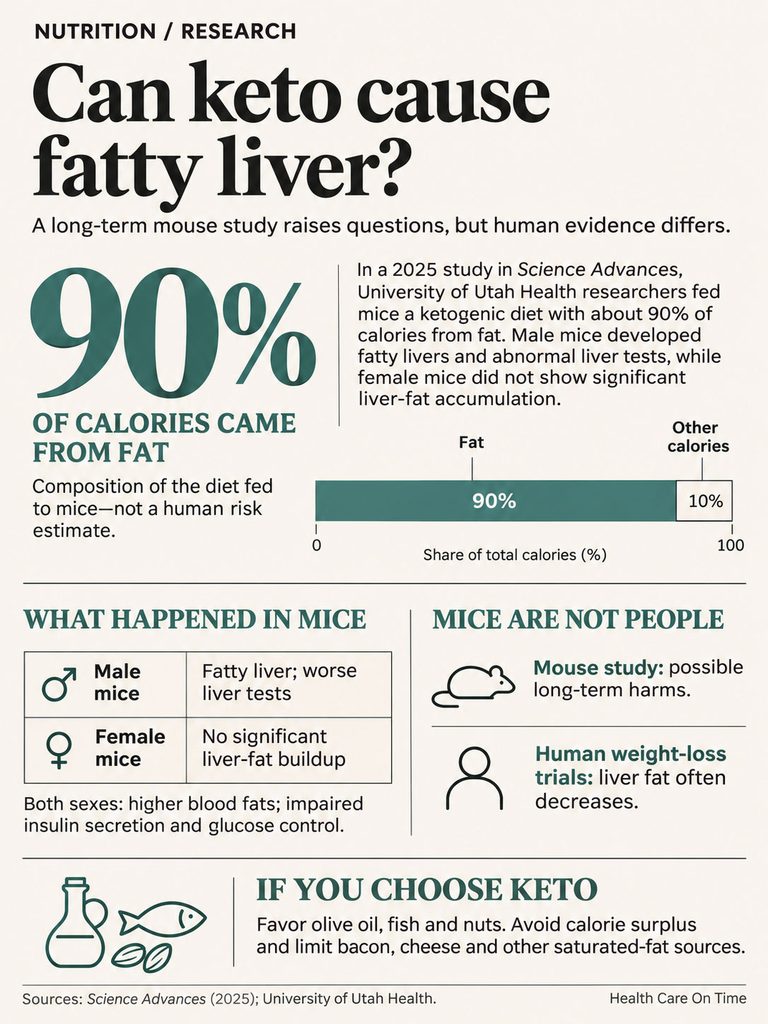
The senior author called the results a cautionary tale that needs more study. Those mice ate as much as they wanted and weren’t losing weight, the reverse of how keto is used for a fatty liver, and in human trials where people lose weight on keto, liver fat has gone down.
Still, keto with no calorie deficit and huge amounts of fat may be hard on the liver over the long run, and no multi-year human trial has settled it. A common pitfall is weight creeping up on bacon, cheese, cream and keto snack bars because the carb count looks fine while total calories climb. A keto plan for fatty liver should produce steady weight loss, with its fat coming mostly from olive oil, nuts, avocado and fish instead of butter and processed meat; in people, saturated fat is tied to a higher risk of steatohepatitis than unsaturated fat.
Check with your doctor first
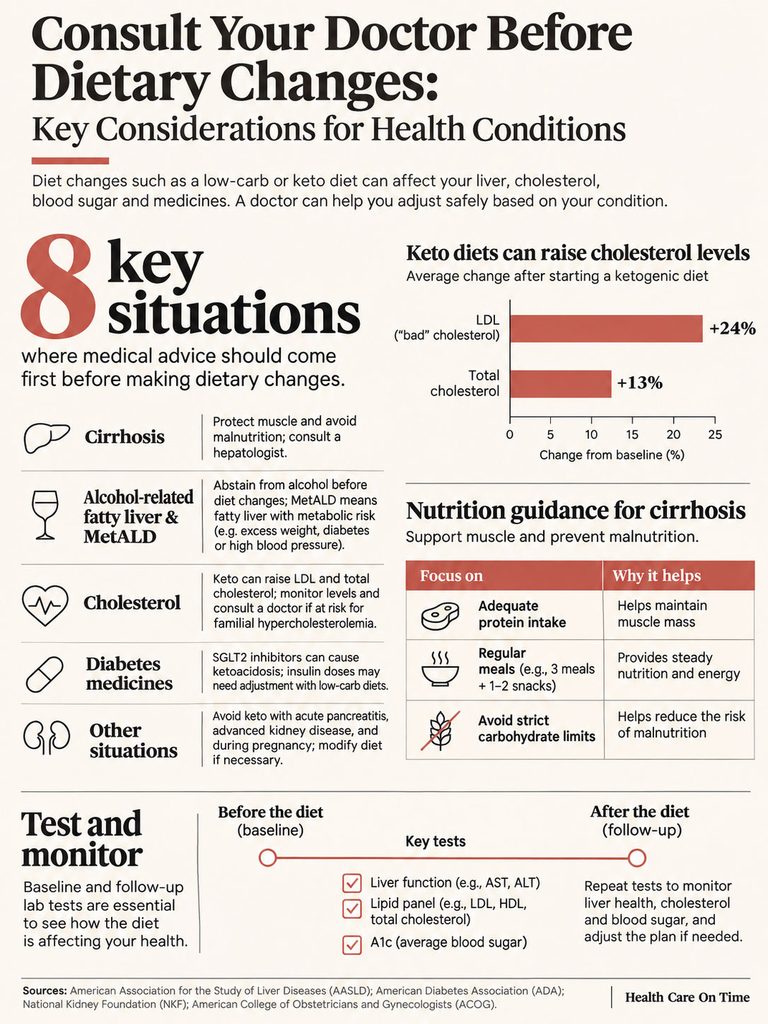
The 2026 trial excluded people with diabetes that needed medication, heavy drinkers and anyone with liver disease other than MASLD, the very groups for whom keto raises the most questions. If one of the situations below fits you, talk it through with your doctor before changing how you eat.
Cirrhosis
With cirrhosis, the goal shifts from losing liver fat to protecting muscle and avoiding malnutrition, which affects about 20% of people with compensated cirrhosis and about half of those with decompensated cirrhosis. Cirrhosis nutrition guidance from the AASLD raises protein targets to 1.2 to 1.5 grams per kilogram of ideal body weight per day (1.5 with muscle loss), food is spread across 3 to 5 meals, gaps between meals during waking hours stay at 3 to 4 hours at most, and an early breakfast or late-evening snack helps cover the overnight stretch.
Strict carb limits, long fasting windows and aggressive weight loss all pull the other way. A 2026 review of keto contraindications lists advanced liver disease as a relative contraindication, and anyone with cirrhosis should get diet changes from a hepatologist or a dietitian who works with liver patients.
Alcohol-related fatty liver and MetALD
No diet can treat alcohol-related fatty liver while the drinking continues. The 2023 definitions separate fatty liver tied to metabolic risk (MASLD) from a mixed form called MetALD: MASLD assumes alcohol below 140 grams a week for women and 210 grams for men, and MetALD covers people with metabolic risk who drink between 140 and 350 grams a week (women) or 210 and 420 grams (men). Above those ranges, the diagnosis is alcohol-related liver disease.
For anyone with fatty liver, cutting out alcohol comes before any diet change. Mayo Clinic advises people with MASLD not to drink wine, beer or other alcohol at all, and once scarring reaches stage F2 or higher, complete abstinence is the standard advice. Keto meal plans sometimes list straight spirits and dry wine as carb-free and therefore allowed, but the liver still has to process the alcohol, carbs or not. For people on SGLT2 drugs, drinking on keto also raises the ketoacidosis risk described below.
Cholesterol
Across 27 randomized trials with 1,278 participants, keto raised LDL by an average of 0.35 mmol/L (about 14 mg/dL) and total cholesterol by 0.36 mmol/L, while lowering triglycerides by 0.20 mmol/L, in a 2024 meta-analysis. Its authors urged caution.
In the 2026 liver trial, LDL fell in every group and didn’t differ between diets, probably because everyone lost 10% of their weight, and weight loss tends to pull LDL down even when saturated fat goes up. That protection may fade once weight loss stops and the high-fat eating continues. Some individuals do see LDL climb steeply on keto, though, and the only way to know which group you’re in is to measure it. Familial hypercholesterolemia, a genetic cause of very high LDL, is a relative contraindication, and with known heart disease you’ll want a lipid panel before starting and again after a few months.
Diabetes medicines
Two classes of drugs need a plan before carbs drop. SGLT2 inhibitors such as canagliflozin, dapagliflozin and empagliflozin can cause ketoacidosis even when blood sugar isn’t very high, including cases below 250 mg/dL, and the FDA’s safety communication lists caloric restriction and alcohol abuse among the risk factors clinicians should check for. Nausea, vomiting, belly pain, tiredness and trouble breathing on one of these drugs need urgent care. Don’t wait them out.
Insulin and sulfonylureas (glipizide, glyburide, glimepiride) carry the opposite risk: cutting carbs sharply while taking full doses can push blood sugar too low, so doses often need lowering in the first days. Diuretics, steroids and some other drugs interact with keto too, so it’s worth bringing a full medicine list, including over-the-counter products, to the visit where you raise the idea.
Other situations
Acute pancreatitis, advanced kidney disease and a handful of rare inherited disorders of fat metabolism are reasons to avoid or modify keto. Extra care is wise during pregnancy or breastfeeding, with gallbladder disease, heart rhythm problems or low body weight, and after surgery.
Tests worth having before and after
Baseline labs are how you’ll know whether the diet is helping or causing trouble: liver function tests (ALT and AST), a lipid panel with LDL, A1c or fasting glucose, kidney function and electrolytes, and possibly a scarring test if one hasn’t been done. Keep copies of the results. Repeating them after a few months shows whether liver enzymes are falling and whether LDL has moved. Falling ALT alongside steady weight loss is the pattern you’re hoping for. A sharp LDL rise is a reason to adjust the fats in the plan, or to switch approaches, before deciding the diet has failed.
How to do keto in a liver-friendly way
If you and your doctor decide a keto diet for fatty liver makes sense, aim for the version that matches the trial results and the advice on fat quality, which looks quite different from a bacon-and-butter plan.
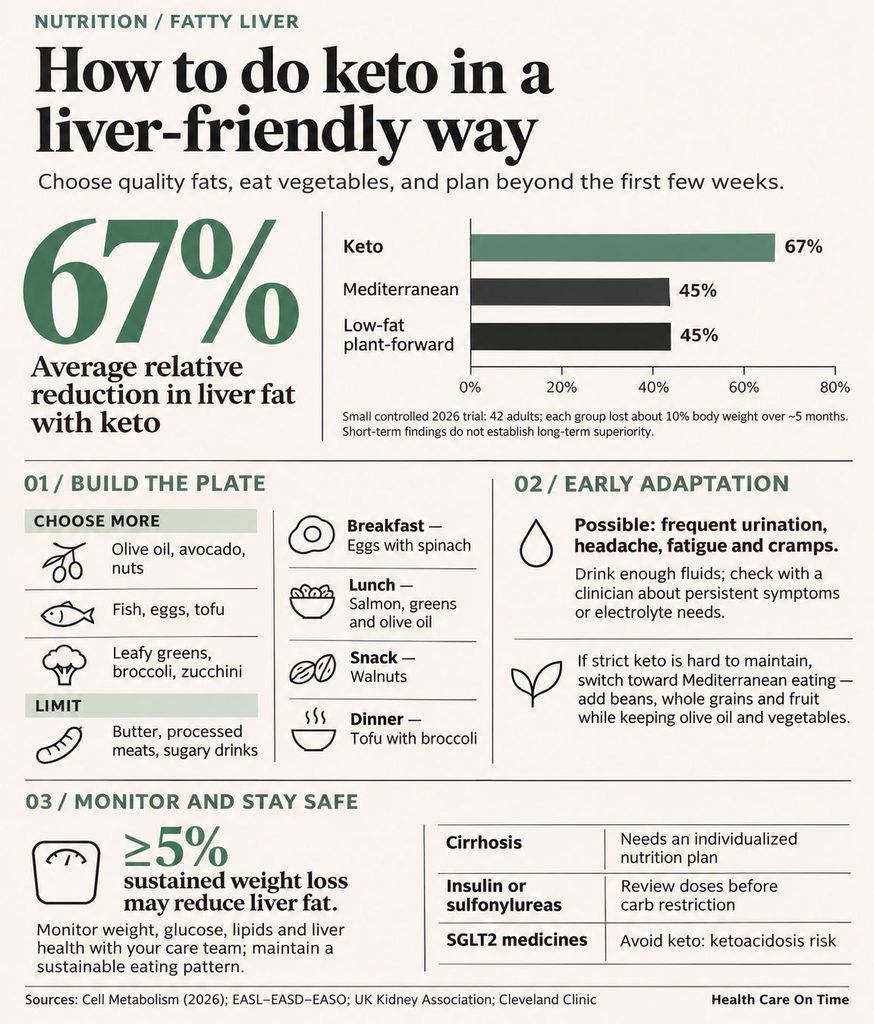
- A calorie deficit matters as much as low carbs. Every group in the 2026 trial lost weight on purpose, and the extra liver benefit of keto came on top of that.
- Choose olive oil, avocado, nuts, seeds and fatty fish such as salmon and sardines as your main fats, and treat butter, cream, fatty red meat and processed meat as occasional. The trial’s keto diet still got 23% of its calories from saturated fat, so there’s room to do better.
- Keep vegetables in. Leafy greens, broccoli, cauliflower, zucchini, peppers and mushrooms add fiber for few carbs, and they keep meals filling.
- Protein from fish, poultry, eggs, tofu and Greek yogurt helps protect muscle while you lose weight.
- Skip sugary drinks entirely, fruit juice included, and be wary of keto desserts and bars that trade sugar for large amounts of fat.
- Coffee can stay if you like it; three or more cups a day, caffeinated or not, is associated with less advanced liver disease.
- Lose weight steadily, at a pace you can hold for months.
- Add movement, working toward at least 150 minutes of moderate exercise a week.
Expect some “keto flu” in the first week (fatigue, headache, nausea), along with more frequent urination as the body sheds water. If strict keto starts to feel impossible, a lower-carb Mediterranean pattern is a reasonable fallback, and the foods that help or hurt a fatty liver are largely the same under either plan.
What a liver-friendly keto day can look like
Breakfast might be eggs scrambled in olive oil with spinach and mushrooms, plus coffee without sugar. Lunch could be a large salad of leafy greens, cucumber and peppers topped with salmon or chicken, avocado, pumpkin seeds and an olive oil and lemon dressing. A handful of almonds or walnuts works as a snack, or plain Greek yogurt if your carb budget allows it. Dinner might be roasted chicken thighs or tofu with broccoli and cauliflower cooked in olive oil, with sauteed greens and garlic on the side.
Compared with a typical keto menu, this one leaves out bacon, sausage, butter-heavy sauces and large amounts of cheese, which supply much of the saturated fat in many keto plans, and it keeps several servings of nonstarchy vegetables so fiber doesn’t collapse when grains and fruit disappear. Portions still count. Olive oil and nuts are healthy but dense, and a plan that removes carbs and then adds unlimited fat won’t produce the weight loss the liver needs.
After the weight comes off
The trial ended with weight loss, so it can’t say which diet keeps liver fat down for years, and the researchers couldn’t tell whether starting keto during weight maintenance would give the same liver benefit. Many people who reach their goal on strict keto drift toward a looser low-carb or Mediterranean pattern they can live with, keep alcohol and sugary drinks out, and watch the scale, since the liver’s gains last only as long as the weight stays off. A fresh set of liver tests and a lipid panel at that point gives you and your doctor a new baseline.
If carbs come back, whole grains, beans and fruit are the ones to bring back first, while refined starches and sweets stay limited.
| Your situation | Recommended action | Why it matters |
| Fatty liver, no cirrhosis, prediabetes, no diabetes drugs | Keto or a Mediterranean diet are both reasonable; get baseline liver tests and lipids first | In the 2026 trial, keto cut liver fat 67% vs 45% at the same 10% weight loss |
| Cirrhosis (any stage) | Don’t start keto without a hepatologist; eat 3 to 5 times a day and include a late-evening snack | Protein needs are 1.2 to 1.5 g/kg per day and malnutrition affects up to half of people with decompensated cirrhosis |
| Regular drinking or alcohol-related fatty liver | Stop or sharply cut alcohol first; keto won’t offset it | AASLD advises complete abstinence once scarring reaches F2 |
| Taking an SGLT2 inhibitor (Jardiance, Farxiga, Invokana) | Talk with the prescriber before cutting carbs; learn ketoacidosis symptoms | FDA warns ketoacidosis can occur with blood sugar under 250 mg/dL |
| Taking insulin or a sulfonylurea | Agree on a dose-reduction plan and check glucose often in the first weeks | Sharp carb cuts raise the risk of low blood sugar |
| LDL already high, familial hypercholesterolemia or heart disease | Favor a Mediterranean pattern, or recheck lipids a few months into keto | Keto raised LDL by an average of 0.35 mmol/L across 27 trials |
| Pregnant, breastfeeding, past pancreatitis or advanced kidney disease | Avoid keto unless a specialist supervises it | Listed as contraindications or caution situations in a 2026 review |
Where medicines fit
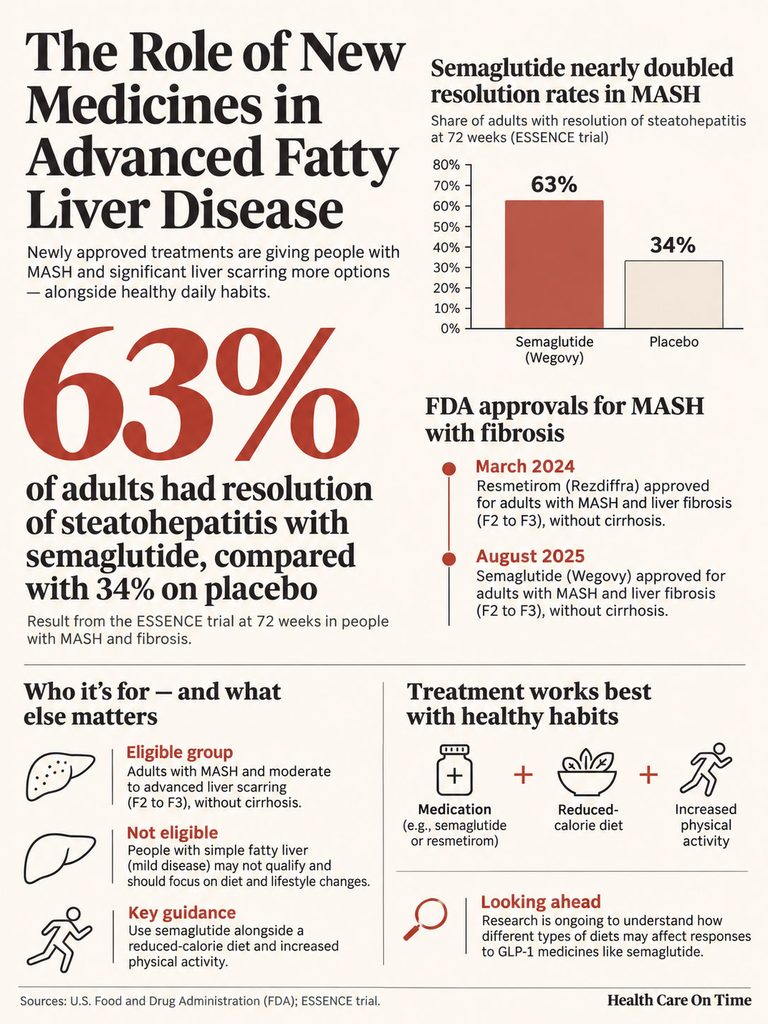
Two medicines are now approved for advanced fatty liver disease. The FDA approved resmetirom (Rezdiffra) in March 2024, and in August 2025 it granted accelerated approval to semaglutide 2.4 mg (Wegovy) for adults with MASH and moderate to advanced fibrosis, stages F2 to F3, though not cirrhosis. In the ESSENCE trial behind that approval, 63% of people on semaglutide saw their steatohepatitis resolve without worse scarring at 72 weeks, compared with 34% on placebo, and the drug is meant to be used alongside a reduced-calorie diet and more activity, so the eating plan still matters. Its approval covers people whose liver already shows moderate or advanced scarring, which means most people with simple fatty liver won’t be candidates and will rely on diet, activity and alcohol limits alone. How diet type changes the response to GLP-1 drugs is one of the next questions the Washington University group plans to study.
Questions to ask your doctor
Bring these to your next visit, especially if a scan or blood test recently showed a fatty liver, and write down the answers, because the plan for a liver with only fat looks very different from the plan for one with scarring.
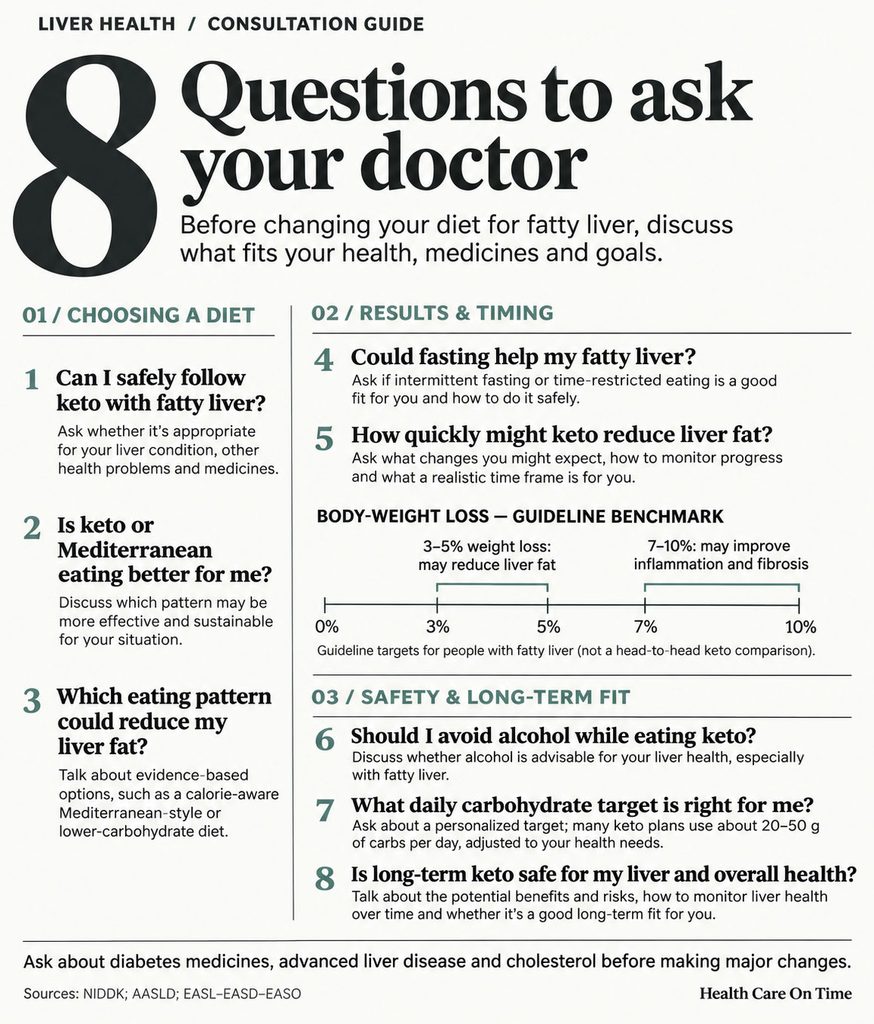
- Does the scan show only fat, or is there scarring too?
- Is keto safe with the current prescriptions, or do any doses need to change first?
- How much weight do you suggest losing, and over how many months?
- Which blood tests should be checked before starting, and when should they be repeated?
- If LDL goes up on keto, at what point would switching to a Mediterranean diet make more sense?
- Is there a dietitian nearby who works with liver patients?
Frequently Asked Questions
Can you do keto if you have fatty liver?
Most adults with fatty liver and no cirrhosis can try keto with their doctor’s approval, since it lowered liver fat in controlled trials. With cirrhosis, alcohol-related liver disease, SGLT2 drugs, insulin or very high LDL, get a medical plan first. Baseline liver tests and a lipid panel make a sensible starting point for everyone.
Is a keto or Mediterranean diet better for fatty liver?
At equal weight loss in the 2026 trial, keto removed more liver fat (67% vs 45%) and improved blood sugar more, so it came out ahead on those measures. The Mediterranean diet has far longer heart-health evidence, is easier for many people to sustain and is the pattern US liver guidance most often recommends. With prediabetes and a stubborn fatty liver, keto may have an edge; with high LDL or heart disease, the Mediterranean diet is usually the safer default.
What diet reverses fatty liver?
Any diet that produces steady weight loss can reverse simple fatty liver. Losing 3% to 5% of body weight improves liver fat, and losing more than 10% is generally needed to improve inflammation and scarring. Keto, Mediterranean and low-fat plans all worked in trials when people lost weight, and cutting out alcohol and sugary drinks helps whichever plan you choose.
Does fasting fix fatty liver?
In a 3-month trial of 80 adults with fatty liver, alternate-day fasting (600 calories on fasting days) combined with exercise lowered liver fat more than exercise alone or no change, though it didn’t beat fasting alone by a significant margin, so fasting can help. Long fasts aren’t safe with cirrhosis, where gaps between meals should stay at 3 to 4 hours while awake, and fasting carries a ketoacidosis risk with SGLT2 drugs.
How long does keto take to reduce liver fat?
Liver fat dropped 31% within six days in one small study. In the 2026 trial, the larger reduction came after about 4.6 months on keto, the time it took to lose 10% of body weight. Scarring takes longer to improve.
Can you drink alcohol on keto with fatty liver?
Alcohol adds to liver injury on any diet, complete abstinence is advised once scarring reaches stage F2, and alcohol raises the ketoacidosis risk on SGLT2 inhibitors.
How many carbs a day is keto for fatty liver?
The keto diet in the 2026 trial used about 20 grams of carbohydrate a day on a 2,000-calorie menu, 4% of calories. The researchers couldn’t say whether a milder low-carb diet without ketosis would work as well.
Is keto safe for your liver long term?
Nobody knows yet. Controlled human data on keto for fatty liver cover only several months, and the 2025 mouse study raised questions about very-high-fat eating without weight loss. If you stay on keto after the weight-loss phase, regular liver tests and lipid checks are the practical safeguard.
Do you need supplements on keto for fatty liver?
Only if your doctor prescribes them. Mayo Clinic’s advice is to take vitamins or supplements for MASLD only on a health care professional’s prescription, and to check before starting any other dietary supplement as well.
Medical disclaimer: This article is for general information and isn’t a substitute for advice from your own doctor. Fatty liver, cirrhosis and diabetes need individual care. Don’t change diabetes, blood pressure or cholesterol medicines, or start a very-low-carb diet, without talking to the clinician who manages them. Seek urgent care for vomiting, belly pain, trouble breathing, confusion, yellowing skin or eyes, or vomiting blood.
References
- Petersen MC, Smith GI, Farabi SS, et al. Effect of diet macronutrient content on the cardiometabolic response to weight loss: A randomized clinical trial. Cell Metabolism. 2026;38:2006-2017.
- Luukkonen PK, et al. Effect of a ketogenic diet on hepatic steatosis and hepatic mitochondrial metabolism in nonalcoholic fatty liver disease. PNAS. 2020;117(13):7347-7354.
- Ryan MC, et al. The Mediterranean diet improves hepatic steatosis and insulin sensitivity in individuals with non-alcoholic fatty liver disease. Journal of Hepatology. 2013;59(1):138-143.
- Rinella ME, et al. AASLD Practice Guidance on the clinical assessment and management of nonalcoholic fatty liver disease. Hepatology. 2023;77(5):1797-1835.
- NIDDK. Treatment for NAFLD and NASH.
- Mayo Clinic. Fatty liver disease (MASLD) diet.
- Díaz LA, et al. Updated recommendations for the management of MASLD by the Latin American working group. Annals of Hepatology. 2025;30(2).
- Zhang Y, et al. Trends and disparities in cardiovascular disease in US adults with MASLD. Biomedicines. 2025;13(4):956.
- Wang Z, et al. Impact of the ketogenic diet as a dietary approach on cardiovascular disease risk factors: a meta-analysis of randomized clinical trials. American Journal of Clinical Nutrition. 2024;120(2):294-309.
- Dyńka D, et al. The ketogenic diet is not for everyone: contraindications, side effects, and drug interactions. Annals of Medicine. 2026;58(1):2603016. Summary.
- Gallop MR, et al. A long-term ketogenic diet causes hyperlipidemia, liver dysfunction, and glucose intolerance from impaired insulin secretion in mice. Science Advances. 2025. Coverage.
- FDA. Drug Safety Communication: SGLT2 inhibitors and ketoacidosis.
- AASLD Liver Fellow Network. Malnutrition in the adult with cirrhosis.
- AJMC. FDA approves semaglutide for MASH with fibrosis. August 2025.
- MDedge. Intermittent fasting plus exercise a good option for fatty liver.
- News-Medical. The scale told a similar story across three diets. The liver told a different one. August 31, 2026.
- Healio. Among popular diets, keto is best for liver health, study suggests. November 2, 2026.