
Day 3 on Lexapro is when most people Google this question at 11 pm. The pill felt fine on Day 1. Today, you’re queasy, your head hurts, your sleep was strange, and you feel oddly disconnected from your own emotions. You’re convinced something is wrong.
Table of Contents
Almost nothing is. You’re inside the predictable opening arc of one of America’s most prescribed antidepressants, and the brand-name pamphlet didn’t explain it in plain English.
This guide does, written for U.S. readers by HealthCareOnTime’s editorial medical team and reviewed against current FDA labeling and CDC data.
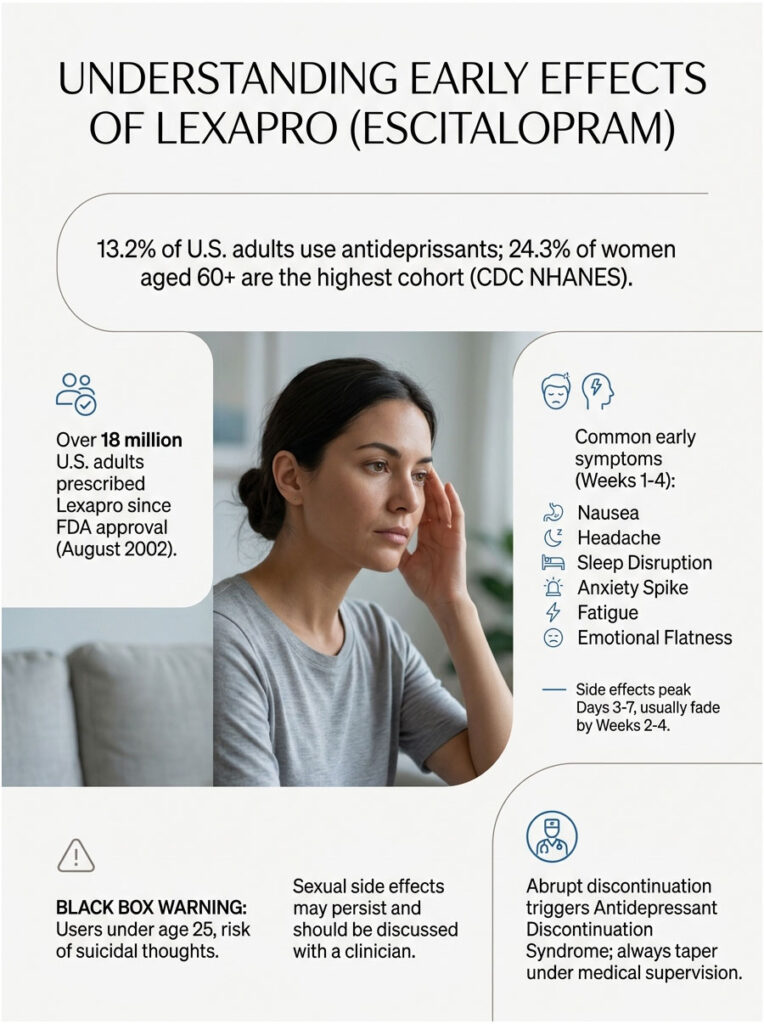
Quick Answer: Lexapro (escitalopram) feels weird in the first week because raising serotonin temporarily disrupts the gut, sleep cycle, and mood-regulation systems while your nervous system recalibrates. Common early effects include nausea, headache, sleep changes, a brief anxiety spike, fatigue, and emotional flatness. Most fade in 2 to 4 weeks; therapeutic benefit begins around weeks 3 to 6. Never stop Lexapro abruptly without your prescriber’s guidance.
At a Glance:
• 13.2% of U.S. adults use antidepressants, with women aged 60+ at 24.3%, the highest cohort (CDC NHANES)
• Lexapro has been prescribed to more than 18 million U.S. adults since FDA approval in August 2002
• First-week side effects usually peak Days 3 to 7 and fade by week 2 to 4
• Most common early symptoms: nausea, headache, sleep disruption, jitteriness, anxiety spike, fatigue
• A black box warning applies to users under age 25 regarding new or worsening suicidal thoughts
• Sexual side effects often outlast the general adjustment window and warrant a follow-up conversation
• Abrupt discontinuation can trigger antidepressant discontinuation syndrome; always taper with a clinician
Why Lexapro Feels Weird at First (The Brain-Body Reset)
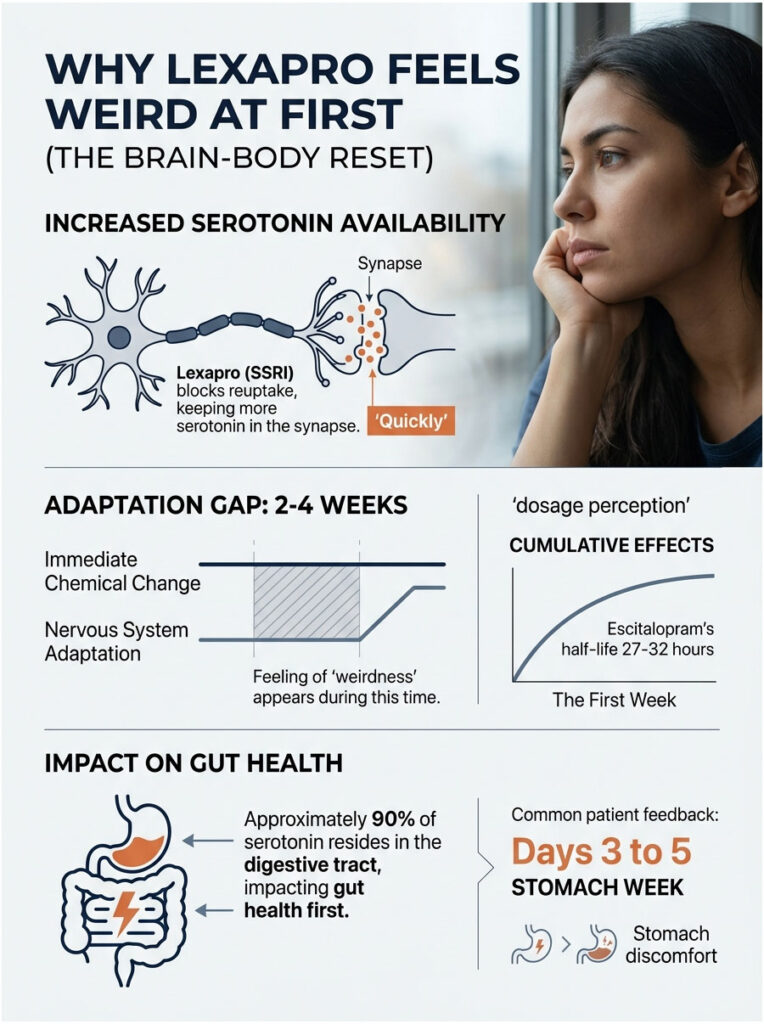
Lexapro belongs to a drug class called selective serotonin reuptake inhibitors, or SSRIs. The medication blocks the reabsorption of serotonin between nerve cells, so more serotonin stays available in the gaps where one neuron passes signals to the next. Mood improves slowly. Anxiety eventually softens.
That’s the textbook story. The lived experience of the first seven days is messier.
What Lexapro Actually Does to Serotonin (in Plain English)
Your brain has been running on a particular serotonin setpoint for years, possibly decades. The moment your first 10 mg pill dissolves, the reuptake transporters that normally clear serotonin start working differently. Serotonin lingers. Levels rise. Receptors that haven’t seen this much serotonin in years suddenly have to adjust.
Our medical reviewers describe this as a chemistry-versus-behavior mismatch. The chemical change is fast. The nervous system’s behavioral adaptation takes 2 to 4 weeks. That gap is where “weird” lives.
Why the First Dose Feels Bigger Than the Dose Curve Suggests
Escitalopram has a half-life of roughly 27 to 32 hours, per the FDA prescribing information. Translation: after your first dose, the drug is still building toward steady state for about 5 to 7 days. The “weirdness” you feel on Day 3 isn’t yesterday’s pill alone; it’s the cumulative load of every dose since you started.
This is exactly why so many of our patients describe Day 1 as “mild, no big deal” and Day 4 as “overwhelming.” The body keeps absorbing more before it learns how to handle it.
Serotonin Lives in More Than Just Your Brain
A fact most pamphlets skip: roughly 90% of the body’s serotonin lives in the digestive tract, not the brain. When Lexapro raises serotonin everywhere, the gut reacts first (nausea, loose stools, bloating). The brain reacts second (mood, sleep, energy).
Patients booking SSRI follow-up consultations through HealthCareOnTime often label Days 3 to 5 the “stomach week.” That maps cleanly onto the pharmacology.
The Most Common First-Week Side Effects of Lexapro
Most early effects are uncomfortable but safe. The list below draws on the FDA Lexapro label and the NIH StatPearls escitalopram monograph, supplemented with observations our editorial team sees across U.S. patient feedback.
Nausea and Stomach Upset
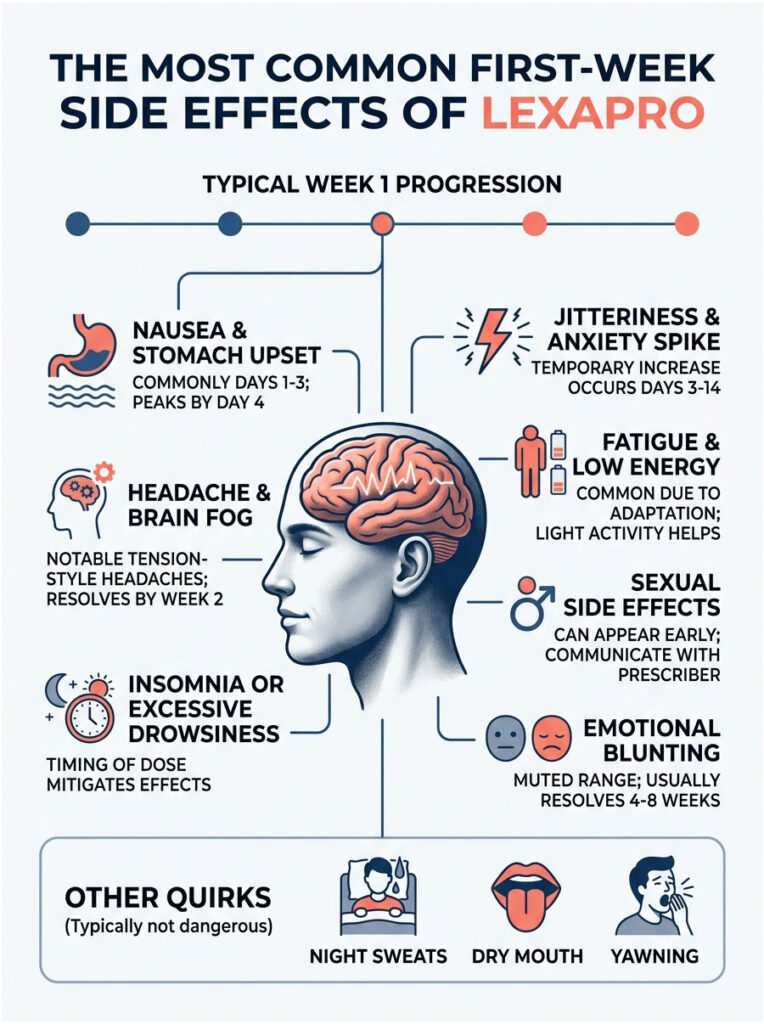
Nausea tops nearly every patient survey. The cause is the serotonin surge in the gut. It usually shows up within Days 1 to 3, peaks around Day 4, and fades by the end of week 2 for most users.
The single best fix: take Lexapro with food, ideally a small meal with some protein. Empty-stomach dosing is the most common reason new users describe severe early nausea.
Headache and Brain Fog
Mild to moderate headaches and a “brain fog” feeling (sluggish, distracted, mentally underwater) affect a notable share of new users. Serotonin influences blood-vessel tone and pain perception, so first-week headaches tend to be tension-style rather than migraine.
Most lift by week 2. If yours don’t, our editorial medical team flags this as a worth-a-call moment with your prescriber.
Insomnia or Excessive Drowsiness
Lexapro can swing both ways. Some users feel wired and sleepless. Others feel sedated. Both reactions trace back to serotonin’s role in the sleep-wake cycle.
Wired? Move your dose to the morning. Foggy and exhausted? Try the evening. This single timing tweak resolves the issue for most patients in 3 to 5 days.
Jitteriness and the Anxiety Spike (Counterintuitive but Common)
This one catches almost everyone off guard. You started Lexapro for anxiety. Now your anxiety feels worse. Welcome to the SSRI activation paradox: serotonin systems often produce a brief uptick in anxiety, restlessness, or “wired” energy during Days 3 to 14 before settling into calm.
Across U.S. patients we see in follow-up consultations, this single phenomenon is the #1 reason people quit Lexapro too early. Knowing it’s expected, time-limited, and not a sign the medication is wrong for you is half the battle.
Fatigue and Low Energy
Some users describe wanting to nap by 2 pm during the first week. The body burns energy adapting to chemical shifts, and fatigue is a natural side effect of that work. Short walks, water, and protein-forward meals help most patients ride it out.
Sexual Side Effects (Early Signals)
Reduced libido, delayed orgasm, or erectile changes can appear in the first week. The FDA label confirms these as common in both men and women. Unlike nausea, they don’t always fade in 2 weeks, and they’re one of the most under-discussed side effects in U.S. clinical conversations.
If yours persist past month 1, talk to your prescriber. There are real options.
Emotional Blunting and the “Flat Feeling”
People describe this as feeling neither happy nor sad, just oddly muted. It’s mechanistic, not psychological. Lexapro narrows the emotional range temporarily as serotonin rebalances. For most users, a fuller emotional range returns within 4 to 8 weeks. For some, it lingers and becomes part of the longer conversation with their doctor.
Sweating, Dry Mouth, Yawning, and Other Quirks
Less-discussed but real: night sweats, dry mouth, frequent yawning (a quirky SSRI signature), mild hand tremor, and a small uptick in heart rate. None of these are typically dangerous on their own.
Table 1: Common First-Week Lexapro Side Effects, Frequency, Timing, and Coping
| Side Effect | Frequency in New Users | Typical Onset | Usually Fades By | First-Line Coping Tip |
| Nausea | 15% to 22% | Days 1 to 3 | End of week 2 | Take with food; small meals |
| Headache | 16% to 20% | Days 2 to 5 | End of week 2 | Hydrate; limit caffeine swings |
| Insomnia | 9% to 14% | Days 1 to 4 | Weeks 2 to 4 | Morning dosing instead of night |
| Drowsiness | 8% to 13% | Days 1 to 7 | Weeks 2 to 4 | Switch to evening dosing |
| Anxiety spike | 5% to 10% | Days 3 to 10 | Weeks 2 to 3 | Reassurance; brief breathwork |
| Fatigue | 8% to 12% | Days 2 to 7 | Weeks 2 to 4 | Light walking; protein meals |
| Sexual SE (men) | 7% to 14% | Days 3 to 14 | May persist | Discuss with prescriber |
| Sexual SE (women) | 5% to 12% | Days 3 to 14 | May persist | Discuss with prescriber |
Frequency ranges reflect the FDA Lexapro label and NIH StatPearls. Individual experience varies.
The Lexapro Day-by-Day Timeline (Days 1 to 14 and Beyond)
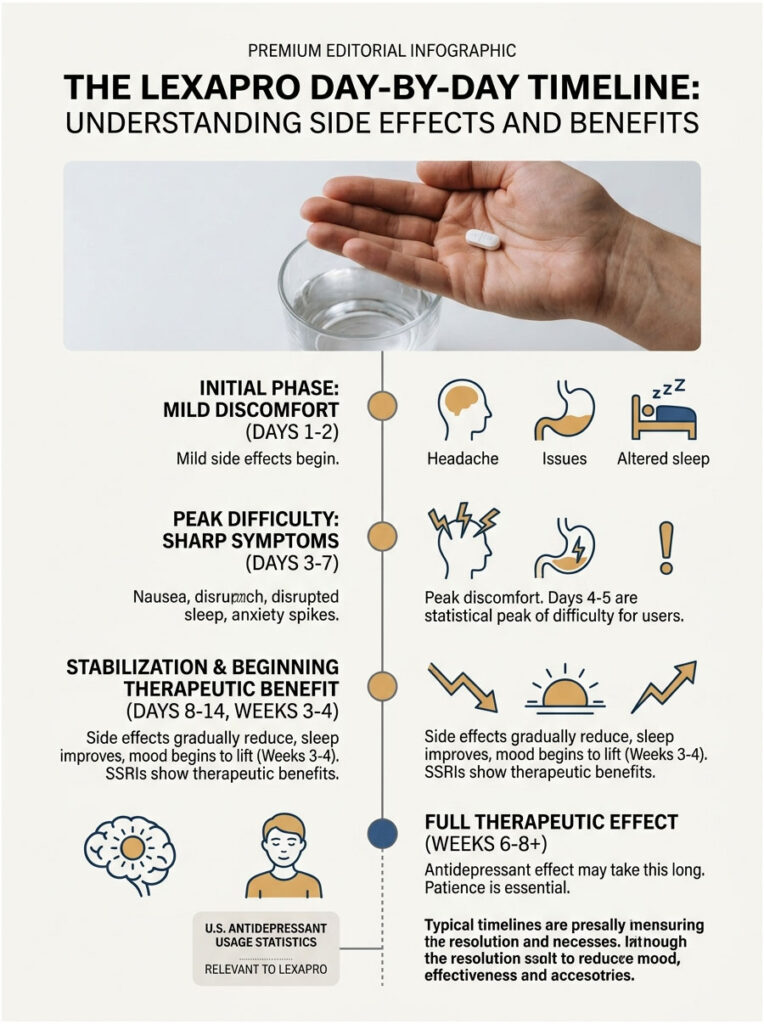
Most articles lump everything into “the first week.” That hides the most important pattern: side effects follow a predictable arc. Knowing the arc helps you push through the worst day instead of quitting on it.
Days 1 to 2: The Quiet Storm
Many users feel surprisingly little after the first dose. Maybe a mild headache. Perhaps a slightly off stomach. Some report a faint metallic taste or a vivid, dreamy quality to sleep. The drug is loading; the body hasn’t yet reacted in full force.
Days 3 to 7: Peak Discomfort
This is the hardest stretch. Nausea is sharpest. Sleep is most disrupted. The paradoxical anxiety spike often arrives here. Brain fog and fatigue pile on. Patients commonly ask our medical team if they should stop. The answer, almost always, is no, but they should call their prescriber if anything feels severe or alarming.
Day 4 to Day 5 is, statistically, the worst point for many users. Once you cross Day 7, the slope changes.
Days 8 to 14: The Fade Begins
Side effects start softening. Nausea backs off. Sleep stabilizes. The anxiety spike usually settles. You may not feel “good” yet, but you start feeling normal-ish. This is when most people who quit too early would have been within reach of relief.
Weeks 3 to 4: Therapeutic Benefit Begins
Mood begins to lift. Anxious thoughts quiet down. Some people describe it as the world “getting a little wider.” This is when SSRI therapy starts paying off. Most remaining side effects fade by the end of week 4.
Weeks 6 to 8: Full Therapeutic Window
According to the NIH escitalopram monograph, full antidepressant effect can take 6 to 8 weeks, particularly for generalized anxiety disorder. Patience is the entire game in this stretch.
Table 2: U.S. Antidepressant Use and Lexapro Adjustment Statistics
| Data Point | Figure | Source |
| U.S. adults using antidepressants in past 30 days (2015-2018) | 13.2% | CDC NHANES Data Brief 377 |
| Women aged 60+ using antidepressants | 24.3% | CDC NHANES Data Brief 377 |
| U.S. adults using antidepressants (current estimate) | 25+ million | NIH and industry data |
| Total U.S. adults prescribed Lexapro since 2002 | 18 million+ | FDA / manufacturer data |
| Typical window for side-effect resolution | 2 to 4 weeks | NIH StatPearls |
| Typical window for full therapeutic effect | 6 to 8 weeks | FDA Lexapro label |
| Half-life of escitalopram | 27 to 32 hours | FDA prescribing information |
| FDA black box warning age range | Under 25 | FDA postmarket safety info |
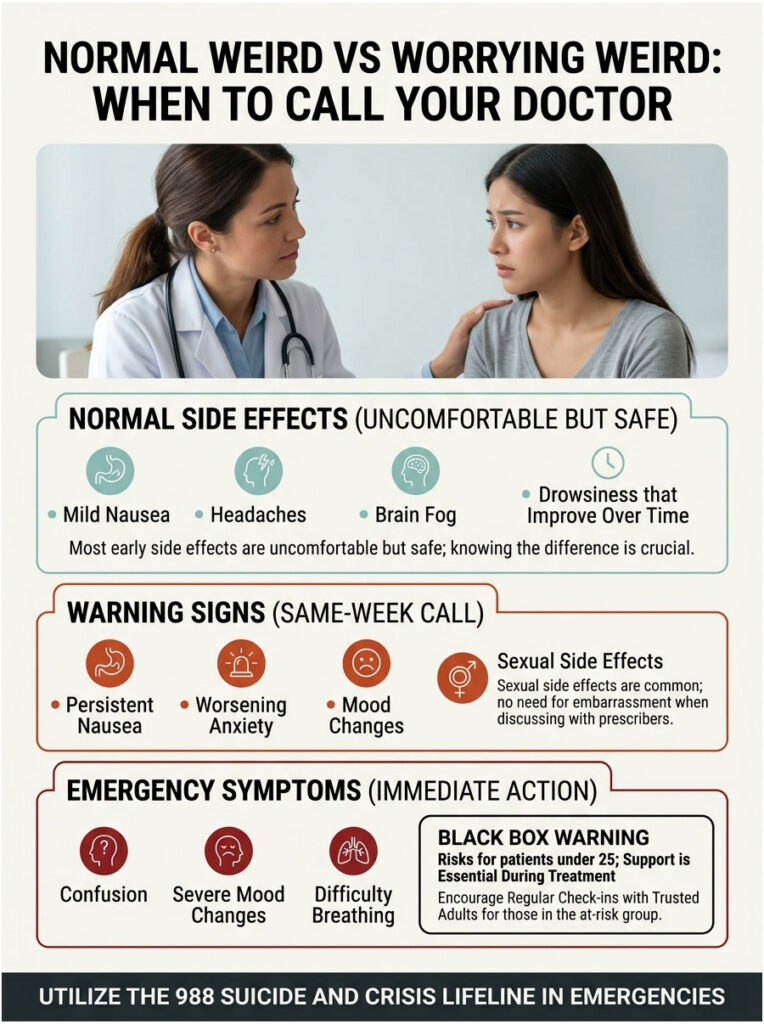
Normal Weird vs Worrying Weird: When to Call Your Doctor
Most early side effects are uncomfortable but safe. A short list are not. Knowing the difference is the most useful thing this guide can give you.
Side Effects That Are Almost Always Normal
Mild nausea, mild headache, brain fog, jitteriness, an anxiety blip, vivid dreams, drowsiness, mild dizziness, yawning, dry mouth, slight night sweats. If these stay in the mild-to-moderate range and improve week over week, they fit the expected adjustment pattern.
Side Effects That Warrant a Same-Week Phone Call
Sleep that hasn’t normalized after 10 days. Nausea that prevents eating or causes weight loss. Persistent diarrhea. Anxiety that worsens beyond Day 14. Mood changes that feel sharper, darker, or more reckless than your baseline. Sexual changes you want to address.
In cases reviewed by our editorial medical team, patients often delay this call out of embarrassment about sexual side effects. There’s no need. It’s the single most common conversation prescribers have with SSRI patients in the United States.
Symptoms That Need Emergency Care
Three categories require urgent evaluation:
- Serotonin syndrome: agitation, confusion, rapid heartbeat, high body temperature, muscle rigidity, severe sweating. Risk is highest when Lexapro is combined with other serotonergic drugs (some migraine medications, tramadol, MDMA, certain antibiotics like linezolid).
- Suicidal thoughts or self-harm urges: the FDA’s black box warning specifically applies to patients under age 25. Any new or worsening suicidal ideation warrants immediate evaluation, regardless of age.
- Severe allergic reaction: swelling of the face, lips, or tongue; difficulty breathing; a spreading rash. Call 911 or go to the nearest emergency room.
The Black Box Warning, Explained Without Panic
The black box warning for SSRIs in patients under 25 sounds alarming, and it deserves serious attention. It does not mean Lexapro causes suicidality in most users. It means a small subgroup of younger patients may experience worsening suicidal thoughts in the early weeks of treatment.
The risk window is highest in the first 4 to 8 weeks and during any dose change. Weekly check-ins, support from a trusted adult, and clear access to crisis resources are what make the medication safer for this group.
If you or someone close is in crisis, the 988 Suicide and Crisis Lifeline is free, confidential, and staffed 24/7 across the United States.
Table 3: If You Experience This, Then Do That
| Symptom or Scenario | Severity Level | Recommended Action |
| Mild nausea, fades with food | Low | Continue medication; take with meals |
| Headache or insomnia lasting beyond Day 10 | Moderate | Call prescriber within 1 week |
| Anxiety worse than baseline after Day 14 | Moderate | Schedule clinical follow-up |
| Sexual dysfunction lasting beyond month 1 | Moderate | Discuss alternatives with prescriber |
| New or worsening suicidal thoughts | High | Same-day clinical contact; call 988 |
| Confusion, fever, muscle rigidity, rapid heartbeat | Emergency | Go to ER (possible serotonin syndrome) |
| Swelling of face, lips, tongue, or breathing trouble | Emergency | Call 911 |
How to Make the First Week Easier (Field-Tested Coping Tips)
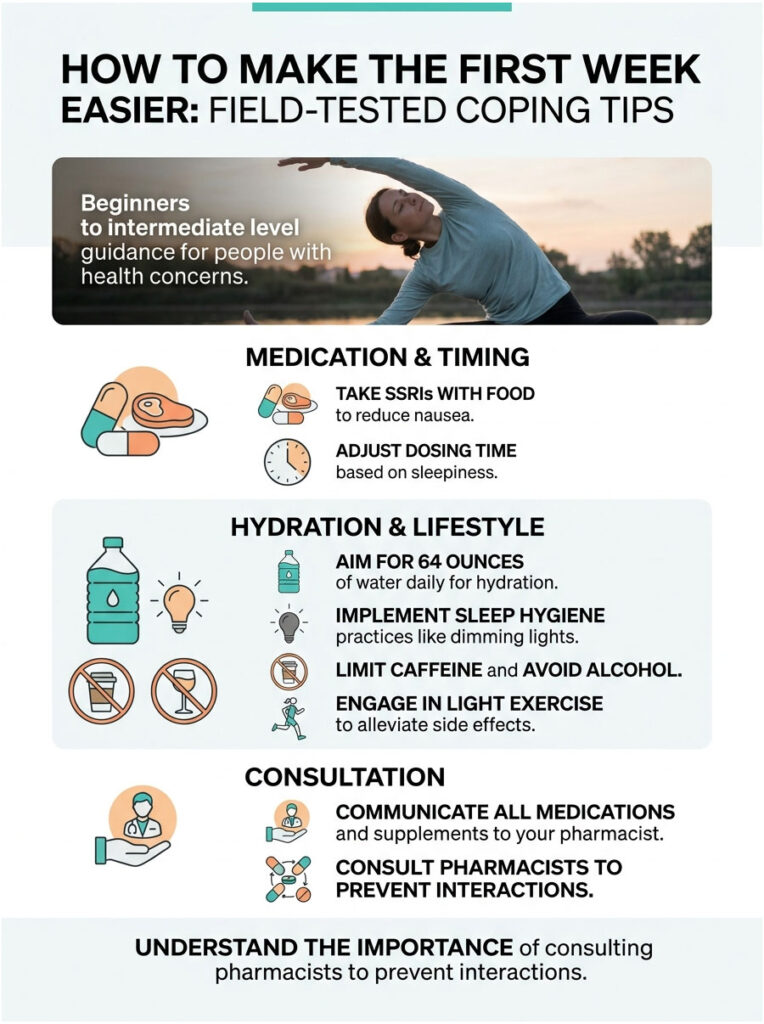
A surprising amount of early-week misery is preventable with a few small habit shifts. None of these replace clinical advice, but pharmacists working with our diagnostic network frequently recommend the following to new SSRI patients.
Take It With Food
The single biggest predictor of severe nausea in week one is empty-stomach dosing. A small meal with some protein (Greek yogurt, eggs, a turkey-and-cheese roll-up) softens the gut response. The FDA label confirms Lexapro can be taken with or without food, so adding food is a no-cost win.
Morning vs Night Dosing
If you can’t sleep, move the dose to the morning. If you’re groggy all day, switch to evening. Lexapro’s long half-life means timing doesn’t affect efficacy.
Hydration, Electrolytes, and the 64-Ounce Rule
Aim for at least 64 ounces of water daily. Lexapro can cause sweating, dry mouth, and mild gastrointestinal water loss. Dehydration worsens nearly every side effect on this list.
Sleep Hygiene Tweaks That Help in Week 1
Dim lights an hour before bed. Skip caffeine after 1 pm. Keep the bedroom cool. Magnesium glycinate (after a quick check with your pharmacist) is a low-risk option that helps mild restlessness for many users.
Caffeine and Alcohol: What to Cut and What’s Fine
Heavy caffeine intake amplifies the early anxiety spike. Try halving your usual cups during week one. Alcohol is the bigger concern: the FDA Lexapro label recommends avoiding it with this medication. It worsens drowsiness, reduces effectiveness, and can sharpen mood swings.
Light Exercise as a Side-Effect Buffer
A 20-minute walk has been shown to reduce SSRI startup nausea and support mood-regulation pathways. Skip intense workouts the first week (the body is already doing chemical work) but stay lightly active.
What to Tell Your Pharmacist (and Why It Matters)
Pharmacists catch dangerous interactions that busy prescribers sometimes miss. Tell yours about every other prescription, every supplement (especially St. John’s Wort, 5-HTP, and SAMe), every over-the-counter medication, and any recreational substances. Across HealthCareOnTime referral networks, pharmacist consultations have flagged hundreds of serotonin-syndrome-risk combinations before they became problems.
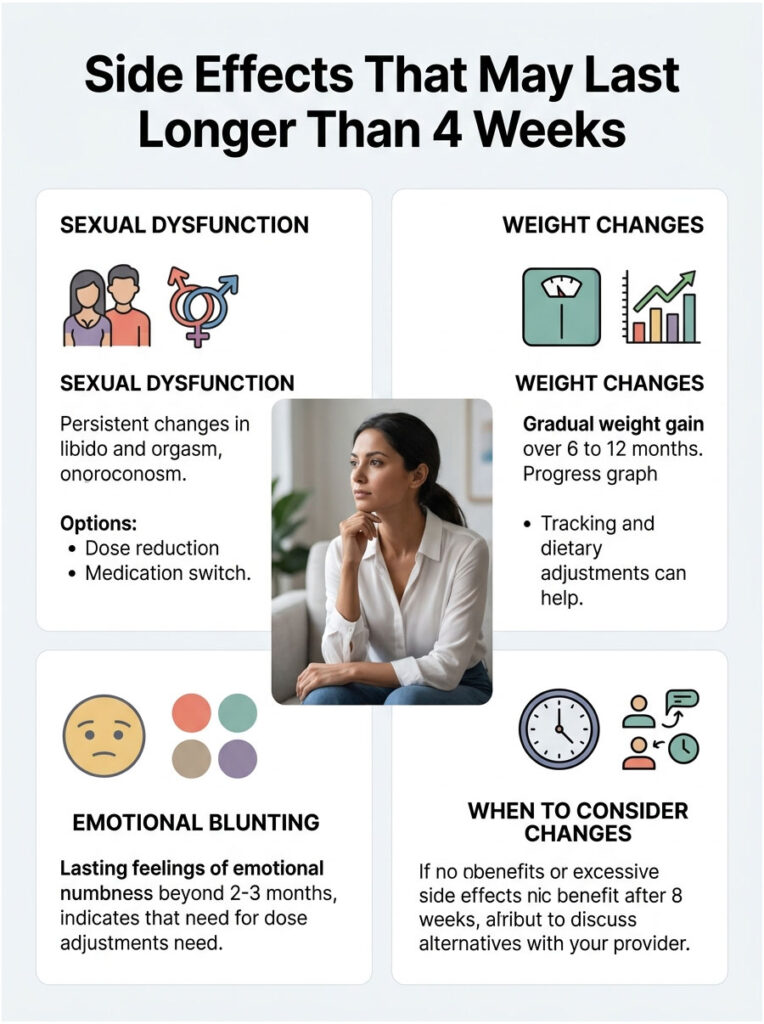
Side Effects That May Last Longer Than 4 Weeks
A few effects don’t follow the typical 2-to-4-week fade. Knowing which ones to watch helps you plan the longer conversation with your provider.
Sexual Dysfunction
Reduced libido, delayed orgasm, and erectile changes can persist for the duration of treatment in a meaningful share of users. Dose reduction, medication switching, and adjunctive strategies are real options. Bring it up. Your prescriber has heard it before.
Weight Changes
Slow weight gain over the first 6 to 12 months is reported by some users. Mechanisms include changes in appetite signaling and small metabolic shifts. Tracking weight monthly and tweaking diet early prevents most of the slow climb.
Emotional Blunting Beyond the Adjustment Window
If the muted, “I don’t quite feel like myself” sensation lasts longer than 2 to 3 months, talk to your prescriber. Sometimes a small dose adjustment restores emotional range without sacrificing therapeutic benefit.
When a Dose Change or Medication Switch Becomes the Right Call
Not every patient lands on the right SSRI the first time. If you’re 8 weeks in and feeling no benefit, or if side effects haven’t faded enough to live with, your provider may suggest a dose change, a different SSRI, or a different drug class entirely. This is normal, not failure.
What U.S. Patients Wish They’d Known Before Starting Lexapro
Three pieces of perspective come up over and over in patient feedback our team reviews across our diagnostic network.
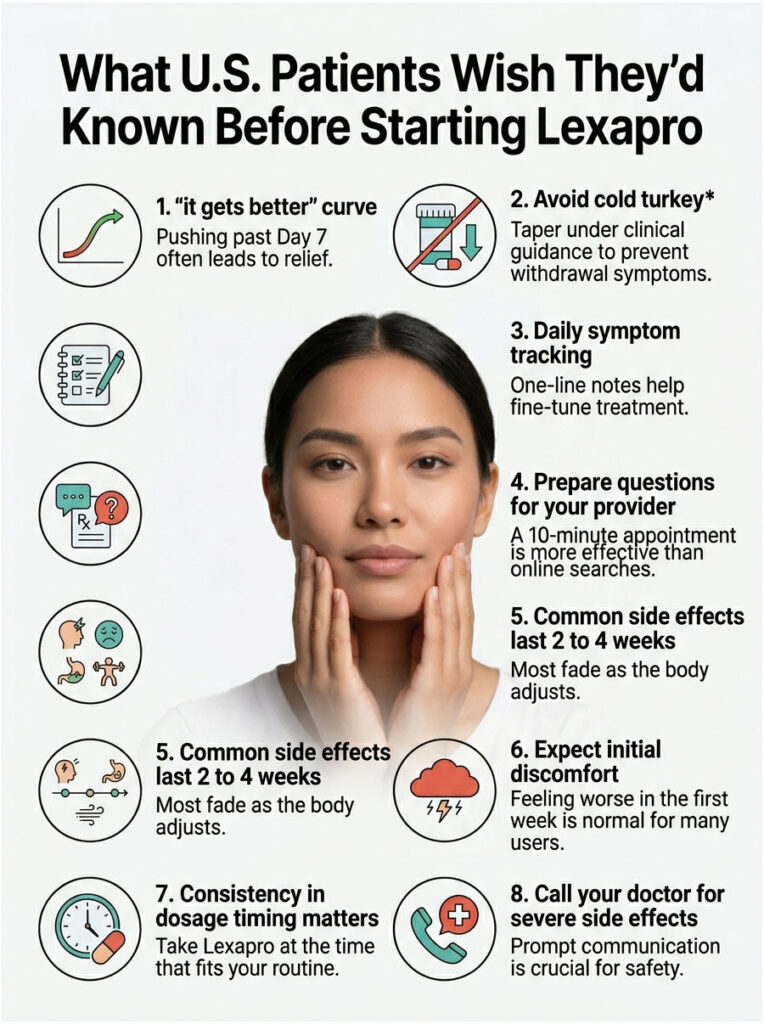
The “it gets better” curve is real. Days 7 to 14 are the hinge. People who push past Day 7 almost always describe relief on the other side. Quitting on Day 5 is the most common avoidable mistake we see.
Don’t stop cold turkey. Suddenly halting Lexapro can trigger discontinuation syndrome: dizziness, brain zaps, flu-like fatigue, irritability, rebound anxiety. Always taper under clinical guidance, even if you’ve only been on it a few weeks.
Track your symptoms in a simple daily log. A one-line note per day (energy 1 to 10, mood 1 to 10, sleep hours, side effects) gives your prescriber the data needed to fine-tune your treatment. Our team often recommends a basic phone-notes log over fancy mood-tracking apps; consistency matters more than features.
Bring questions to your provider, not just Google. A 10-minute appointment with prepared questions beats hours of late-night searches. If you don’t have easy access to a prescriber, telehealth psychiatry visits are widely covered by U.S. insurance in 2026 and can be booked within days.
Frequently Asked Questions
Why does Lexapro make me feel weird the first week?
Because raising serotonin disrupts gut, sleep, and mood signaling before the brain finishes adapting. The chemical change is rapid; the nervous system’s adjustment takes 2 to 4 weeks. That gap is the “weird” window. It’s expected, not a sign Lexapro is wrong for you.
How long do Lexapro side effects last?
Most mild side effects (nausea, headache, dizziness, sleep changes) fade within 2 to 4 weeks. Sleep issues may take 2 to 6 weeks. Sexual side effects can last longer and should be discussed with your prescriber if they persist past the first month.
Is feeling worse on Lexapro normal at the start?
For many users, yes. The first 7 to 14 days can feel rougher than baseline, especially Days 3 to 7. This is the SSRI activation paradox: the medication is acting on serotonin systems before the calming therapeutic effect arrives. It usually resolves on its own.
Should I take Lexapro in the morning or at night?
Either works. The FDA label does not specify a required time. If Lexapro makes you sleepy, take it at night. If it disrupts sleep, switch to morning. Consistency matters more than time of day.
Can Lexapro make my anxiety worse before it gets better?
Yes. A brief anxiety or jitteriness spike during the first 1 to 2 weeks is common, even though anxiety relief is the eventual goal. The spike usually fades by week 2 to 3. If anxiety worsens past Day 14 or feels severe, contact your prescriber.
What is the worst day on Lexapro?
For many users, Day 4 or Day 5 is the peak of early side effects. Nausea, anxiety spike, headache, and fatigue often hit hardest as serotonin levels build toward steady state. Past Day 7, the slope shifts and most symptoms begin easing.
Does Lexapro cause brain zaps when starting?
Brain zaps (brief electrical-shock sensations) are mostly associated with stopping or missing doses, not starting them. If they occur while starting Lexapro, they’re rare and warrant a check-in with your prescriber to rule out other causes.
Is emotional numbness on Lexapro permanent?
For most users, no. Emotional blunting is usually a temporary feature of the adjustment window and fades within 4 to 8 weeks. If it persists past 2 to 3 months and bothers you, a dose adjustment or medication review with your prescriber often restores fuller emotional range.
Can I drink coffee on Lexapro?
In moderation, yes. Heavy caffeine intake can amplify Lexapro’s early anxiety and sleep effects. Cutting caffeine roughly in half for the first 2 weeks helps many users. There’s no formal drug interaction, but caffeine sensitivity often rises during the adjustment period.
What happens if I miss a Lexapro dose in week one?
Take it as soon as you remember unless it’s almost time for the next dose. Don’t double up. Missing a single dose in week one won’t trigger withdrawal, but consistent daily dosing speeds the climb to steady state and shortens the side-effect window overall.
How will I know if Lexapro is working?
Look for small shifts first: easier mornings, slightly less rumination, more patience, better sleep. Full benefit can take 6 to 8 weeks. Patients commonly ask us when they’ll feel “fixed.” The honest answer: improvement is gradual, not dramatic, and gradual is exactly the pattern that tends to last.
When should I call my doctor about Lexapro side effects?
Call promptly for: side effects worsening past Day 14, any new or worsening suicidal thoughts, severe sleep disruption preventing daily function, persistent nausea preventing eating, or signs of serotonin syndrome (fever, confusion, rapid heartbeat, muscle stiffness). Go to the ER for breathing difficulty or facial swelling.
Disclaimer: This article is for educational purposes and does not replace personalized medical advice. Lexapro (escitalopram) is a prescription medication. Decisions about starting, changing, or stopping any antidepressant should be made with a qualified healthcare provider who knows your full medical history. If you are experiencing a mental health crisis, call or text 988 in the United States for the Suicide and Crisis Lifeline. For medical emergencies, call 911.
References
- FDA Lexapro (escitalopram) Prescribing Information
- CDC NHANES Antidepressant Use Among Adults: United States, 2015-2018 (Data Brief 377)
- NIH National Center for Biotechnology Information: Escitalopram (StatPearls)
- FDA Escitalopram (marketed as Lexapro) Information Page
- 988 Suicide and Crisis Lifeline