For forty years, the potato sat on the “bad carb” list next to white bread and soda. Then Harvard researchers followed more than 205,000 American adults for almost four decades and found something that scrambled the whole story: French fries raised type 2 diabetes rates by 20% at three servings a week, while baked, boiled, and mashed potatoes showed no substantial increase at all.
Table of Contents
The potato was never the problem. The fryer was.
Quick Answer
Potatoes deliver more potassium per serving than a banana, one of the highest-quality plant proteins ever measured, and 30% of your daily vitamin C in a single medium spud. They also scored the highest satiety rating of 38 foods tested, keeping you fuller than bread, rice, or pasta. The health benefits of potatoes hold up well in research. Cooking method, not the potato itself, decides the outcome.
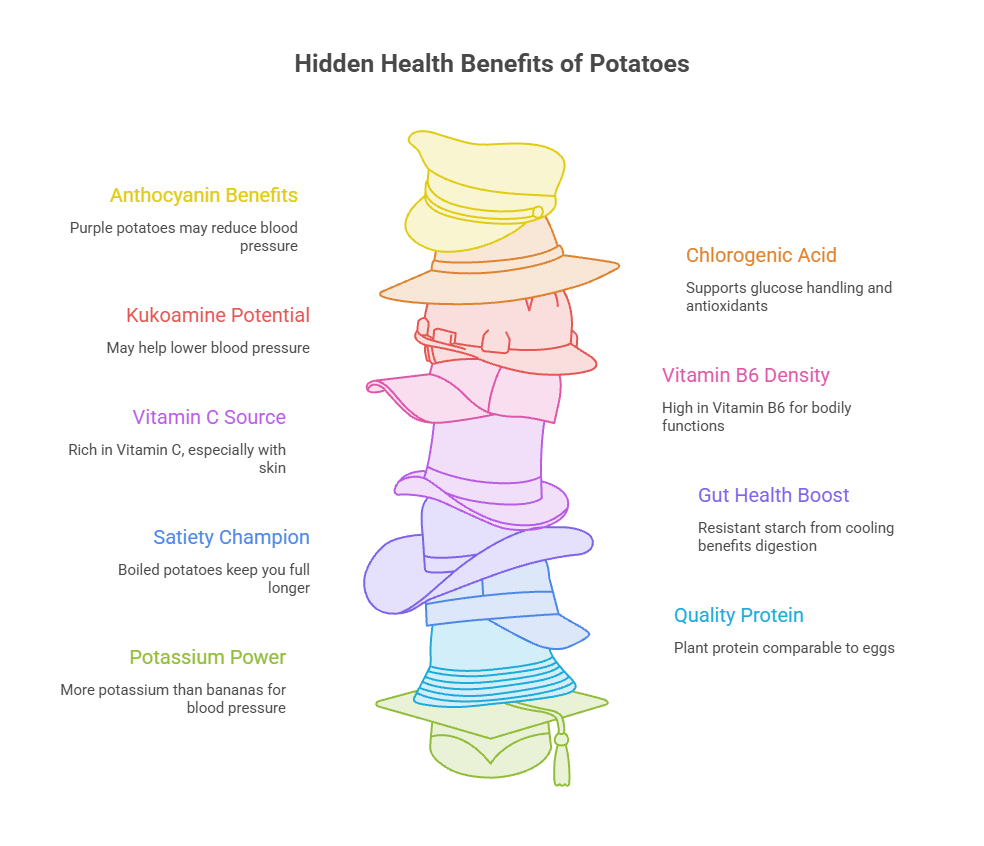
The 9 potato health benefits covered in this guide:
- More potassium than a banana, backed by controlled trial data
- Plant protein with a biological value close to egg
- The highest satiety score of 38 foods ever tested
- Resistant starch that forms only after chilling
- A starchy vegetable that is a real vitamin C source
- Vitamin B6 density most vegetables cannot match
- Kukoamines, a blood-pressure-linked compound found in 2005
- Chlorogenic acid, the polyphenol class coffee is famous for
- Anthocyanins in purple varieties that moved blood pressure in a trial
Most Americans eat potatoes several times a week and know almost nothing about what is inside them. The nutrition label people carry in their heads was written in the 1990s and never revised.
Our medical reviewers pulled the current human trial data, the USDA composition tables, and the 2025 Harvard cohort analysis to build this guide. What follows is what the evidence supports, including the parts that argue against the potato.
At a Glance
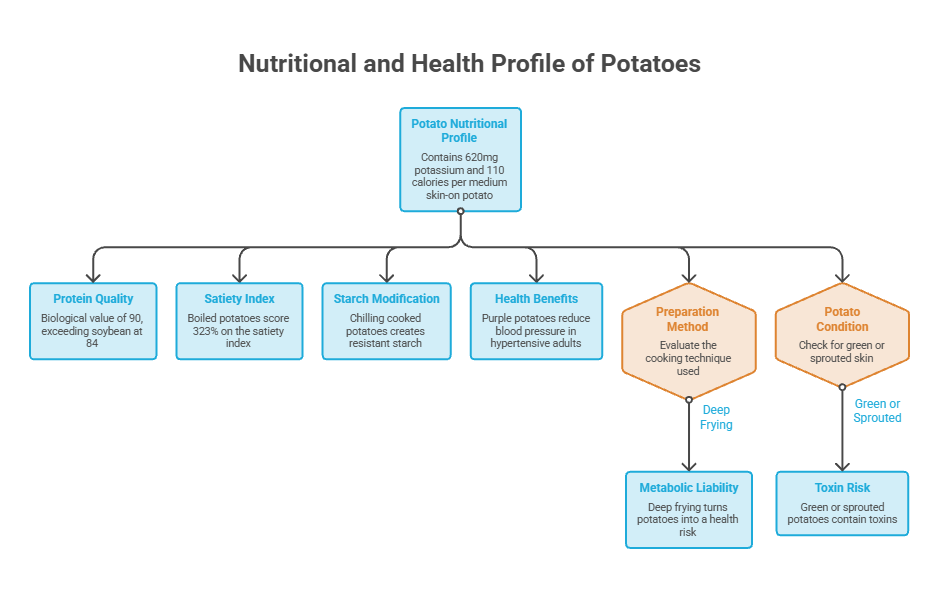
• A medium skin-on potato has 620 mg potassium, more than a medium banana’s 422 mg, for 110 calories.
• Potato protein has a biological value near 90, close to egg at 100 and higher than soybean at 84.
• Boiled potatoes topped the original satiety index at 323%, more than three times white bread.
• Chilling cooked potatoes converts some starch into resistant starch, which behaves like fiber.
• Purple potatoes lowered blood pressure in hypertensive adults during a four-week crossover trial.
• Deep frying is the single variable that turns a neutral food into a metabolic liability.
• Green or sprouted potatoes carry a real toxin risk that cooking does not remove.
What Is Actually Inside a Potato
Potato nutrition gets misjudged because people picture the finished dish rather than the tuber. A plain potato contains no fat, no cholesterol, and almost no sodium.
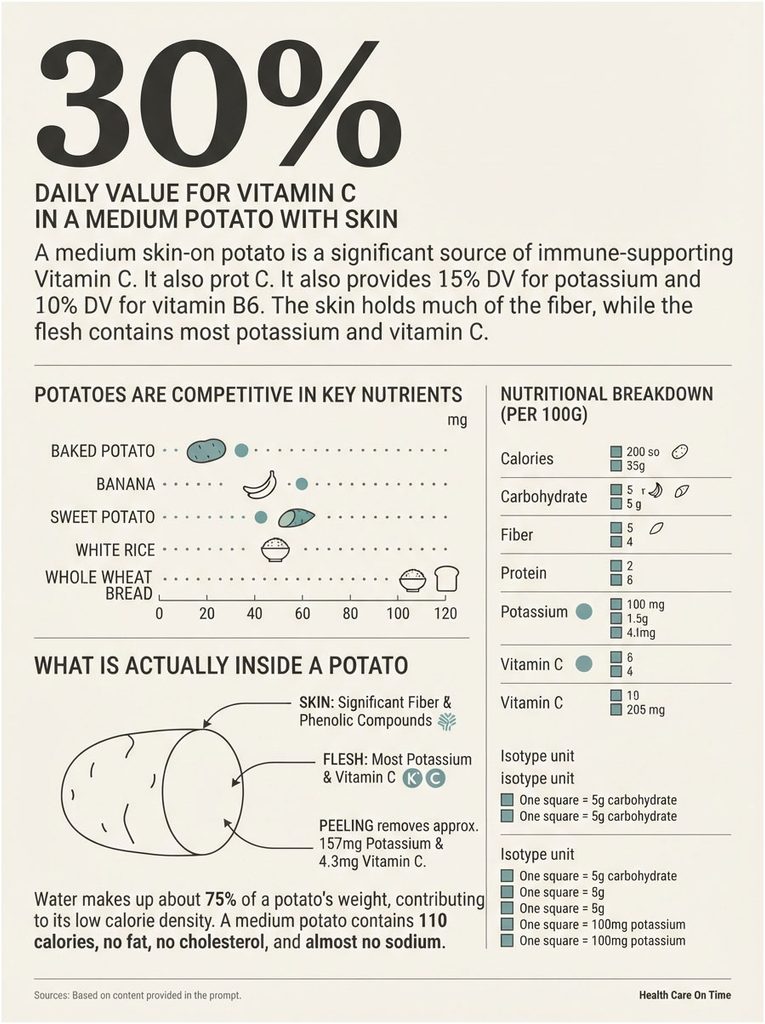
It also carries a nutrient spread that few starchy foods can match. That is the part the reputation never caught up with.
A Medium Skin-On Potato by the Numbers
A medium 5.3-ounce potato with skin provides 110 calories, 2 grams of fiber, 30% of the Daily Value for vitamin C, 15% for potassium, and 10% for vitamin B6, along with 3 grams of plant protein.
Per 100 grams raw with skin, USDA figures work out to 77 calories, 17.5 g carbohydrate, 2.2 g fiber, 2 g protein, 421 mg potassium, 19.7 mg vitamin C, 0.295 mg vitamin B6, 23 mg magnesium, and 57 mg phosphorus.
The vitamin C number surprises people. A starchy vegetable is not supposed to be a meaningful source of an antioxidant vitamin, and yet here it is at roughly 22% of the Daily Value before cooking.
Water accounts for about 75 grams of every 100. That high water content is why the calorie density stays low despite the starch.
Skin vs Flesh: Where the Nutrients Really Live
The internet insists all the nutrition sits in the skin. That is only partly true, and getting it wrong leads people to eat leathery peels while discarding the good part.
A medium potato with skin contains 620 mg of potassium and 27 mg of vitamin C, and peeling removes roughly 157 mg of potassium and 4.3 mg of vitamin C.
So the flesh carries the majority of both. The skin carries a disproportionate share of the fiber and the phenolic compounds, which is a different kind of value.
Eating both is the sensible move. Scrub the potato, leave the skin on, and stop treating the peel as a superfood or as garbage.
How the Potato Stacks Up Against Its Rivals
Comparison is where potato nutrition finally makes sense. Nobody eats a potato in isolation; they eat it instead of rice, bread, or pasta.
Table 1. How a Potato Compares to Foods It Usually Loses To
| Food (typical serving) | Calories | Potassium (mg) | Vitamin C (mg) | Fiber (g) | Protein (g) |
| Baked potato with skin (5.3 oz / 148 g) | 110 | 620 | 27 | 2.0 | 3.0 |
| Banana, medium (118 g) | 105 | 422 | 10.3 | 3.1 | 1.3 |
| Baked sweet potato with skin (114 g) | 103 | 542 | 22.3 | 3.8 | 2.3 |
| White rice, cooked (1 cup / 158 g) | 205 | 55 | 0 | 0.6 | 4.3 |
| Whole wheat bread (2 slices / 56 g) | 161 | 138 | 0 | 3.8 | 8.0 |
Source: USDA FoodData Central and Potatoes USA nutrition data.
Patients booking metabolic panels with us often assume rice is the safer starch. On potassium and vitamin C, it is not close.
Whole wheat bread still wins on fiber and protein. That is a fair point for bread, and it is why the Harvard substitution analysis favored whole grains over every form of potato.
The 9 Benefits Most Americans Have Never Heard About
1. More Potassium Than a Banana, With Trial Data Behind It
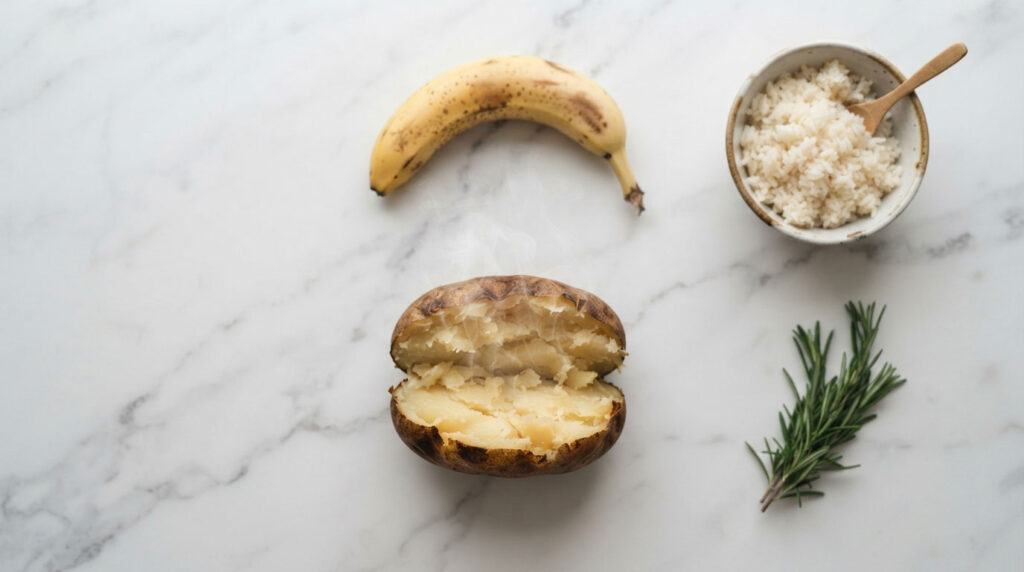
The banana comparison is not marketing copy. A medium skin-on potato carries roughly 620 mg of potassium against a banana’s 422 mg, for almost identical calories.
Potassium matters because it helps the kidneys clear sodium and relaxes the smooth muscle in blood vessel walls. The result is lower pressure against the arterial wall.
Most American adults fall well short of the daily target, which sits at 3,400 mg for men and 2,600 mg for women. Sodium intake, meanwhile, runs high. The ratio between the two is what drives blood pressure trouble, not sodium alone.
In a Purdue controlled feeding trial of 30 pre-hypertensive to hypertensive adults, systolic blood pressure fell 6.0 mmHg over time on baked or boiled potatoes compared with 2.6 mmHg on the control diet.
Every participant ate identical calories and identical everything else. That level of control is rare in nutrition research and makes the finding worth more than a dozen questionnaire studies.
2. Plant Protein With a Biological Value Close to Egg
Three grams of protein sounds trivial. The quality of that protein is what makes this a genuine potato health benefit rather than a footnote.
Using egg protein as the reference at 100, potato protein scores a biological value around 90, ahead of soybean at 84 and beans at 73.
Potatoes contain all nine essential amino acids and carry more lysine than cereal grains do. Lysine is precisely the amino acid that wheat, rice, and corn run short on, which is why potato-and-grain combinations work well nutritionally.
The main storage protein is called patatin, a glycoprotein that also shows antioxidant activity in laboratory work. Food scientists now extract it commercially from potato processing water.
Across the diagnostic network we serve, plant-forward patients increasingly track protein quality rather than raw grams. The potato performs quietly well on that metric, though you still need volume to reach a meaningful daily total.
3. The Highest Satiety Score of 38 Foods Ever Tested
In 1995, Australian researchers fed volunteers 240-calorie portions of 38 different foods and measured fullness over the next two hours. White bread was set at 100% as the reference.
Boiled potatoes scored 323%, the highest result in the entire study. Croissants finished near the bottom at 47%.
That gap is enormous and it is practical. Calorie for calorie, few foods shut down hunger as efficiently, which explains why plain potatoes keep appearing in weight-management research instead of being excluded from it.
The mechanism appears to be a combination of water content, physical bulk, and the way potato protein interacts with appetite signaling. Whatever the pathway, the effect shows up consistently in appetite studies.
4. Resistant Starch That Forms Only After You Chill Them
This is the trick almost nobody uses, and it is the single most actionable item on this list.
When you cook a potato, the starch granules gelatinize and become rapidly digestible. Glucose hits the bloodstream fast. When you cool that same potato, some of the starch molecules recrystallize into a structure your digestive enzymes cannot break down.
That structure is resistant starch. It skips digestion in the small intestine, travels to the colon, and ferments there, feeding gut bacteria and producing short-chain fatty acids like butyrate. Functionally it behaves like fiber, not like sugar.
What Cook-and-Chill Does to the Numbers
Cold storage research has measured resistant starch rising from roughly 3.3% to 5.2% of total starch after cooking and refrigeration.
A 2019 crossover study published in Nutrients found that chilled russet potatoes cut the insulin response by about 26% and reduced the GIP hormone response substantially compared with the same potatoes eaten hot.
Reheating does not undo all of it. The recrystallized starch is thermally stable enough that a gentle reheat keeps most of the gain.
Potato salad made the day before is not a nutritional compromise. It is a metabolically different food from the potato that came out of the pot.
5. A Starchy Vegetable That Is a Real Vitamin C Source
Vitamin C degrades in heat, so a cooked vegetable delivering 30% of the Daily Value is genuinely unusual. Baking with the skin on preserves most of it, with losses running around a quarter.
Boiling costs more, because vitamin C is water-soluble and leaches into the cooking water. Boiling in the skin, or steaming, limits that loss considerably.
Because Americans eat potatoes in such volume, the tuber ends up as one of the larger contributors of vitamin C in the national diet. That is a benefit of scale rather than concentration, but it still counts in a population where fruit intake runs low.
6. Vitamin B6 Density Most Vegetables Cannot Match
A medium potato covers about 10% of daily vitamin B6, and per 100 grams the raw tuber carries 0.295 mg, roughly 17% of the Daily Value.
B6 acts as a cofactor in more than 100 enzyme reactions. It is required for the synthesis of serotonin, dopamine, and norepinephrine, and it participates in homocysteine metabolism, hemoglobin production, and immune function.
Frank B6 deficiency is uncommon in the United States. Marginal intake is not, particularly among older adults and people on certain medications.
Patients commonly ask us which everyday foods carry B6 without a supplement. Potatoes, chickpeas, salmon, and poultry make up most of the practical answer.
7. Kukoamines, Found in Chinese Medicine and Then in Your Pantry
Here is the fact almost no article mentions, and it is the strongest “you didn’t know” item on this list.
Institute of Food Research scientists reported in 2005 that potatoes contain compounds called kukoamines, which had previously been identified only in the Chinese medicinal plant Lycium chinense, and which may help lower blood pressure.
USDA Agricultural Research Service scientists followed up, screening 100 wild and commercially grown potatoes and cataloguing 60 phytochemicals and vitamins in the process.
Kukoamines are caffeic acid derivatives of polyamines. Levels differ by variety, with russet and chipping potatoes generally carrying more than red, yellow, or specialty types.
The honest caveat matters here. Follow-up work on synthetic kukoamine A has been conducted in spontaneously hypertensive rats, not in humans. This is a promising lead, not an established human benefit, and anyone telling you otherwise is overselling.
8. Chlorogenic Acid, the Polyphenol Class Coffee Is Famous For
Chlorogenic acid is the dominant phenolic compound in potatoes, concentrated in and immediately beneath the skin.
It is the same compound family that earned coffee its reputation for supporting glucose handling and vascular function. In potatoes it also contributes to the antioxidant capacity measured in laboratory assays.
Potatoes rank among the more significant dietary sources of chlorogenic acid in the American diet, again largely because of how much people eat. Peeling strips away a large share of it before the potato ever reaches the plate.
Pigmented varieties carry more. A red or purple potato eaten skin-on delivers noticeably more phenolic content than a peeled white one.
9. Anthocyanins in Purple Varieties That Moved Blood Pressure in a Trial
Pigmented potatoes carry anthocyanins, the same antioxidant family found in blueberries, red cabbage, and black rice. The deeper the color, the higher the concentration.
In a crossover study, 18 hypertensive adults with an average BMI of 29 ate six to eight small microwaved purple potatoes twice daily for four weeks. Diastolic blood pressure fell 4.3% and systolic fell 3.5%, despite 14 of the 18 participants already taking antihypertensive drugs, and none of them gained weight.
That last detail is the interesting one. The reduction happened on top of existing medication, in people whose pressure was already being treated.
The researchers noted that potatoes contain phytochemicals with effects resembling ACE inhibitors, and expected red-skinned and white potatoes to produce similar benefits.
The trial was small and short. It is suggestive rather than definitive, which is the correct way to read almost every four-week nutrition study.
Why the Potato Conversation Changed This Year
The Harvard Study That Separated Fries From Everything Else
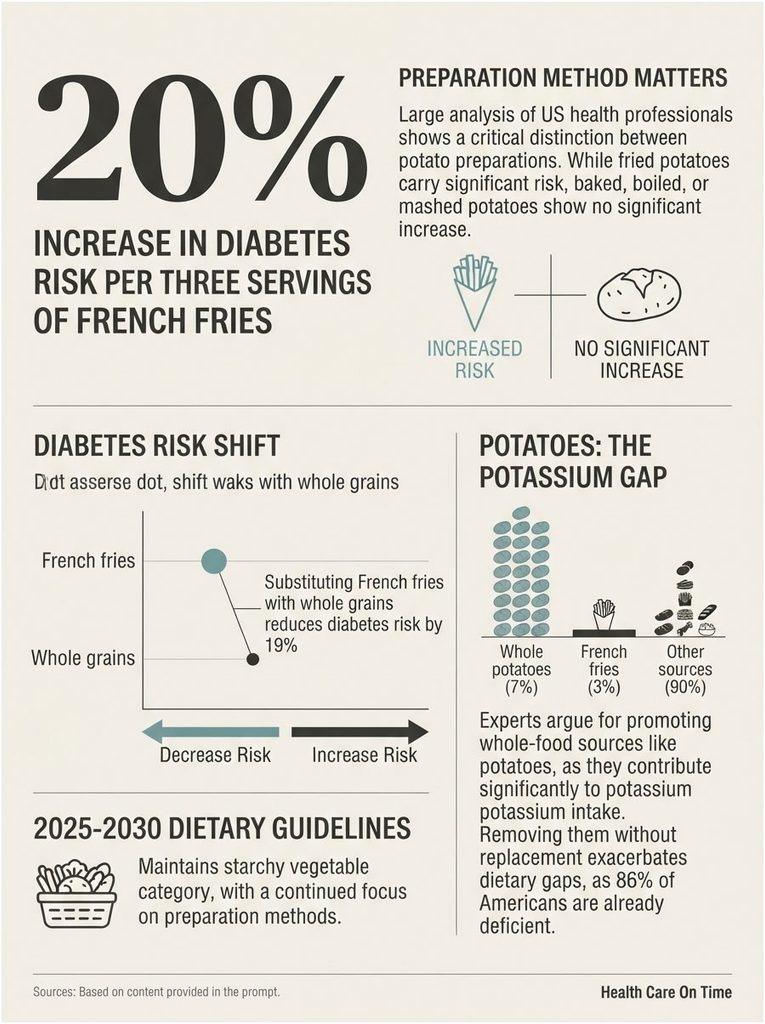
The BMJ analysis drew on more than 205,000 US health professionals studied between 1984 and 2021, with 22,299 type 2 diabetes diagnoses over nearly 40 years of follow-up. Every three weekly servings of total potato raised diabetes rates 5%; three weekly servings of French fries raised them 20%; baked, boiled, and mashed potatoes showed no meaningful increase.
Participants completed detailed food questionnaires every four years, and all were free of diabetes, heart disease, and cancer at baseline. The fries association held up after adjusting for trans fat intake, body mass index, and even polygenic risk scores.
The substitution analysis is the genuinely useful part. Swapping three weekly servings of French fries for whole grains lowered the rate by 19%, while swapping baked, boiled, or mashed potatoes for whole grains lowered it by 4%.
Replacing potatoes with white rice pushed risk in the opposite direction. The comparison food always matters.
Lead author Seyed Mohammad Mousavi framed the shift as moving away from asking whether potatoes are good or bad, toward asking how they are prepared and what else might go on the plate instead.
Deep-fried potatoes carry oils containing trans or saturated fats, and the way the body handles those fats can contribute to insulin resistance. That is the mechanism, and it has nothing to do with the tuber.
Where Potatoes Sit in the Dietary Guidelines
Potatoes count within the starchy vegetables subgroup of federal dietary guidance, and Americans are not hitting it.
Population intake data show 86% of Americans aged 2 and older eat less than the recommended amount of starchy vegetables.
The 2025 to 2030 guidance keeps the subgroup intact and continues to steer people away from deep-fried preparation rather than away from potatoes.
The Potassium Gap in the American Diet
Potatoes and French fries together supply roughly 7% and 3% of total potassium intake in the United States.
Purdue’s Connie Weaver argued that because Americans fall so far short on potassium, whole-food sources like potatoes should be promoted rather than restricted.
Potassium has been flagged as a nutrient of public health concern in successive editions of federal dietary guidance. Removing one of the top contributors from the diet without replacing it makes the gap worse.
How to Cook Potatoes So the Benefits Actually Survive
The Cooking Method Hierarchy
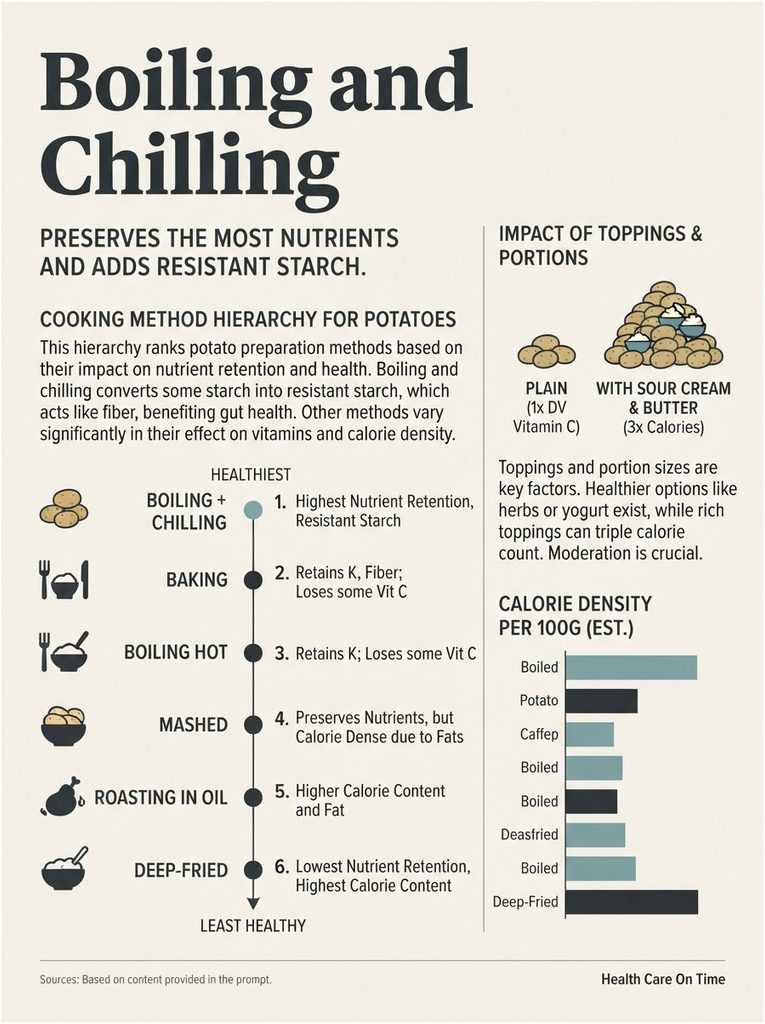
Preparation is the whole ballgame. The tuber leaving the field is nearly identical regardless of destination; what happens in your kitchen decides whether it helps or hurts.
The hierarchy is straightforward: boiled and chilled, then baked, then boiled hot, then mashed, then roasted in oil, then fried. Each step down adds fat, calories, or glycemic speed.
Table 2. What Each Cooking Method Costs and Keeps
| Method | Calories (typical serving) | What it preserves | What it costs you | Signal in the BMJ cohort data |
| Baked with skin (173 g) | 161 | Potassium, fiber, most B6 | Roughly 25% of vitamin C | No increased diabetes risk |
| Boiled in skin (167 g) | 144 | Potassium if skin stays on | Some vitamin C leaches out | No increased diabetes risk |
| Boiled then chilled overnight | 144 | All of the above, plus resistant starch | Must be eaten cold or gently reheated | No increased diabetes risk |
| Mashed with butter and cream (1 cup) | 237 | Potassium and B6 | Adds saturated fat and sodium | No increased risk for mashed itself |
| Deep-fried fries (medium restaurant order) | 340 | Very little | Added fat, sodium, acrylamide | 20% higher rate at 3 servings weekly |
| Potato chips (1 oz, about 15 chips) | 152 | Very little | Highest fat and sodium per gram | Grouped with fried potato |
The Cook-and-Chill Protocol, Step by Step
- Boil or bake potatoes whole with the skin on until just tender, no further.
- Cool them on the counter for about 20 minutes so they stop steaming.
- Refrigerate at 40°F or below for at least 12 hours, ideally overnight.
- Eat them cold in salads and grain bowls, or reheat gently in a pan or microwave.
- Repeat weekly. A Sunday batch of four to six potatoes covers most of the week.
Patients commonly ask us whether this is a real effect or a food-blog myth. The starch chemistry is well documented; the size of the metabolic benefit is modest but measurable, and it costs nothing to capture.
Toppings That Undo the Whole Point
A plain baked potato runs about 161 calories. Add butter, sour cream, shredded cheese, and bacon and the same potato clears 500 calories, most of the addition coming from saturated fat.
UC Davis Health notes that potatoes drift into the less healthy category mainly when loaded with cheese, sour cream, and bacon. Portion size and toppings are the two levers within your control.
Better options: extra-virgin olive oil, garlic, chopped herbs, salsa, plain Greek yogurt, black pepper, smoked paprika, chives, or a squeeze of lemon. Each adds flavor without turning a 160-calorie side into a 500-calorie one.
The Evidence, Laid Out Plainly
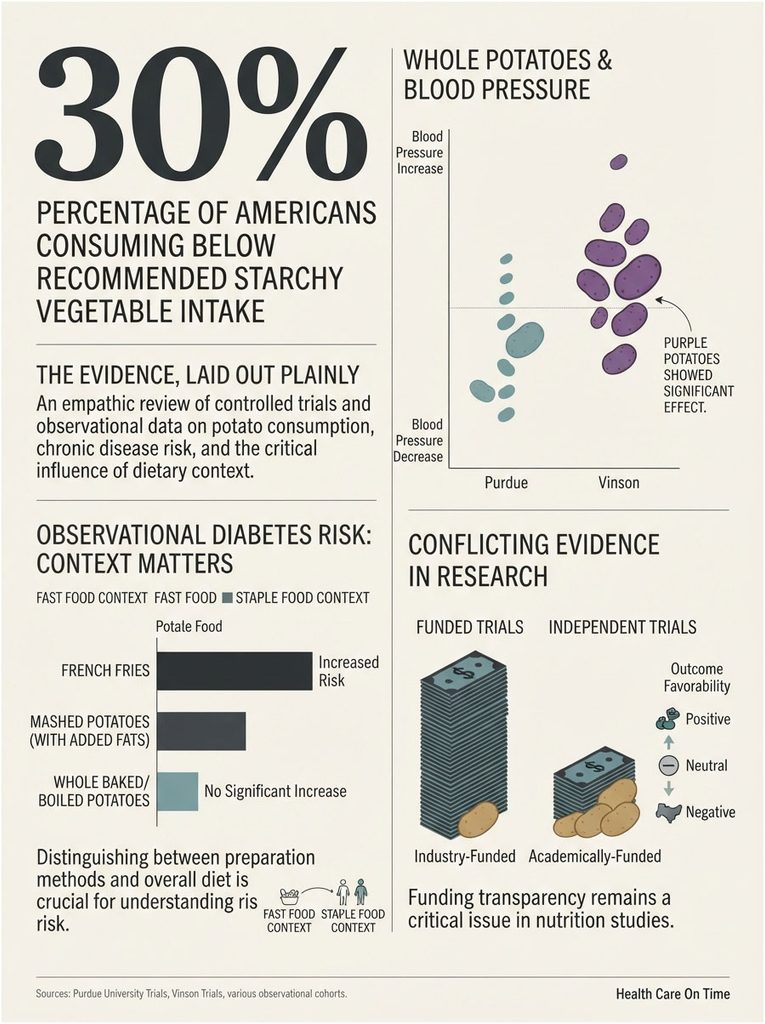
What Human Trials Show
Controlled feeding trials are the strongest tool available here, and there are only a handful. The Purdue trial found a systolic advantage for whole potatoes. The Vinson trial found blood pressure reductions with purple potatoes in medicated hypertensive adults.
A separate bioavailability trial in 35 healthy, normotensive adults found no blood pressure differences by potassium dose or source, which the authors attributed to the short duration and the healthy study population.
That is what honest nutrition science looks like. Blood pressure effects show up in people who have blood pressure to lower, and disappear in people who do not.
Table 3. Potato Data Worth Knowing, With Sources
| Finding | Figure | Source | Year |
| US adults followed in the largest potato-diabetes analysis | 205,000+ adults, 22,299 cases | Mousavi et al., The BMJ (Harvard T.H. Chan) | 2025 |
| Diabetes rate increase per 3 weekly servings of fries | 20% | Mousavi et al., The BMJ | 2025 |
| Diabetes rate increase per 3 weekly servings of total potato | 5% | Mousavi et al., The BMJ | 2025 |
| Risk reduction swapping fries for whole grains | 19% | Mousavi et al., The BMJ | 2025 |
| Systolic BP change on baked or boiled potatoes vs control | 6.0 mmHg vs 2.6 mmHg | Weaver et al., Nutrients 13:1610 (Purdue, NCT02697708) | 2021 |
| BP change on purple potatoes, 18 hypertensive adults | Diastolic down 4.3%, systolic down 3.5% | Vinson et al., J Agric Food Chem (Univ. of Scranton) | 2012 |
| Satiety index score of boiled potato vs white bread at 100% | 323% | Holt et al., Eur J Clin Nutr | 1995 |
| Americans eating below the starchy vegetable recommendation | 86% of those aged 2+ | US population dietary intake analysis | 2025 |
| Potato share of total US potassium intake | About 7% (plus 3% from fries) | Alliance for Potato Research and Education | 2021 |
What Observational Data Shows, and Where It Wobbles
Cohort studies point in conflicting directions depending on the population studied and the comparison food used.
Finnish and Dutch cohorts with 20-year follow-up have reported lower type 2 diabetes risk with higher potato intake, and an Iranian cohort of nearly 2,000 adults found 54% lower incident diabetes risk in the highest total-potato intake group.
A Nordic Nutrition Recommendations scoping review concluded that moderate potato consumption is not associated with substantial chronic disease risk and can form part of a healthy diet, while flagging that fried potato intake should be limited and that the overall evidence base remains limited.
Populations that eat potatoes as a plain staple alongside vegetables and fish get different results from populations that eat them as a fast-food side. Food questionnaires struggle to separate those two worlds.
Where the Research Is Still Thin
A 2026 paper in Nutrition & Diabetes used potato and colorectal cancer studies as a test case for reproducibility, requesting raw data from authors and attempting to verify published results using the stated statistical methods.
The field has a transparency problem, not only a potato problem. Reading nutrition headlines with that in mind is a reasonable default.
Two long-term feeding trials are now underway, one at Penn State examining glycemic effects in pre-diabetic adults following a Mediterranean-style pattern, and one at Virginia Tech examining cardiometabolic effects of a potato-rich diet in older adults at elevated type 2 diabetes risk.
Much of the favorable trial work is industry-funded. That does not make it wrong, and the studies cited here were peer-reviewed and registered, but reading the funding statement is part of reading the study.
Five Potato Myths That Refuse to Die
Myth 1: Potatoes Make You Gain Weight
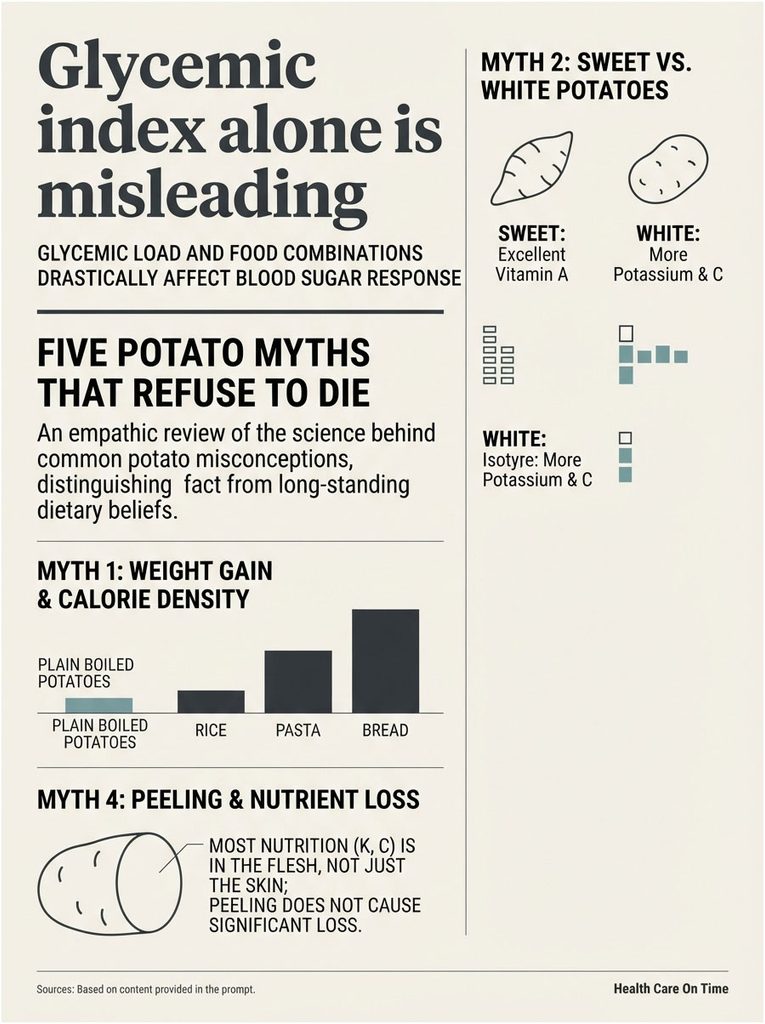
Plain boiled potato has a calorie density around 0.87 calories per gram, lower than pasta, rice, or bread at typical serving sizes. The satiety data cuts the same direction.
Weight-gain findings in the literature attach to fries, chips, and butter-heavy preparations. When researchers isolate plain potatoes, the association weakens or disappears.
The confusion comes from how potatoes are usually eaten in the United States. Frozen products, mostly fries, account for the largest share of national potato consumption.
Myth 2: Sweet Potatoes Are Always Healthier
Sweet potatoes win decisively on vitamin A, delivering beta-carotene that white potatoes lack entirely. They also carry somewhat more fiber.
White potatoes win on potassium and vitamin C. Potatoes USA lists the sweet-potatoes-are-more-nutritious claim directly as a myth, noting both are nutrient-dense vegetables.
The glycemic difference is smaller than most people assume once cooking method is held constant. Eat both, and choose based on the meal rather than a hierarchy.
Myth 3: Nightshades Cause Arthritis Flares
Potatoes belong to the nightshade family alongside tomatoes, peppers, and eggplant. The nightshade-arthritis link circulates widely online.
No controlled human trial has demonstrated that nightshade avoidance improves arthritis outcomes. The theory rests on glycoalkaloid content, which sits at trace levels in fresh, properly stored potatoes.
Some individuals report symptom changes when they cut nightshades. That is worth respecting as personal experience and not worth generalizing into a population-wide rule.
Myth 4: All the Nutrition Is in the Skin
Worth repeating because it drives real behavior. The flesh holds most of the potassium and vitamin C; the skin holds a disproportionate share of the fiber and phenolics.
Peeling is not a nutritional catastrophe. It costs roughly 157 mg of potassium and 4.3 mg of vitamin C per medium potato, plus most of the chlorogenic acid.
Myth 5: A High Glycemic Index Makes It Automatically Bad
Glycemic index measures the response to a 50-gram available-carbohydrate load in isolation, on an empty stomach. Nobody eats that way.
Glycemic load accounts for realistic portion sizes, and the potato’s glycemic load is far more moderate than its index suggests. Cooling drops it further. Adding protein, fat, and non-starchy vegetables drops it again.
A boiled potato eaten hot and alone is a different metabolic event from the same potato eaten cold in a salad with olive oil, chicken, and greens.
Who Should Be Careful With Potatoes
Chronic Kidney Disease and Potassium Limits
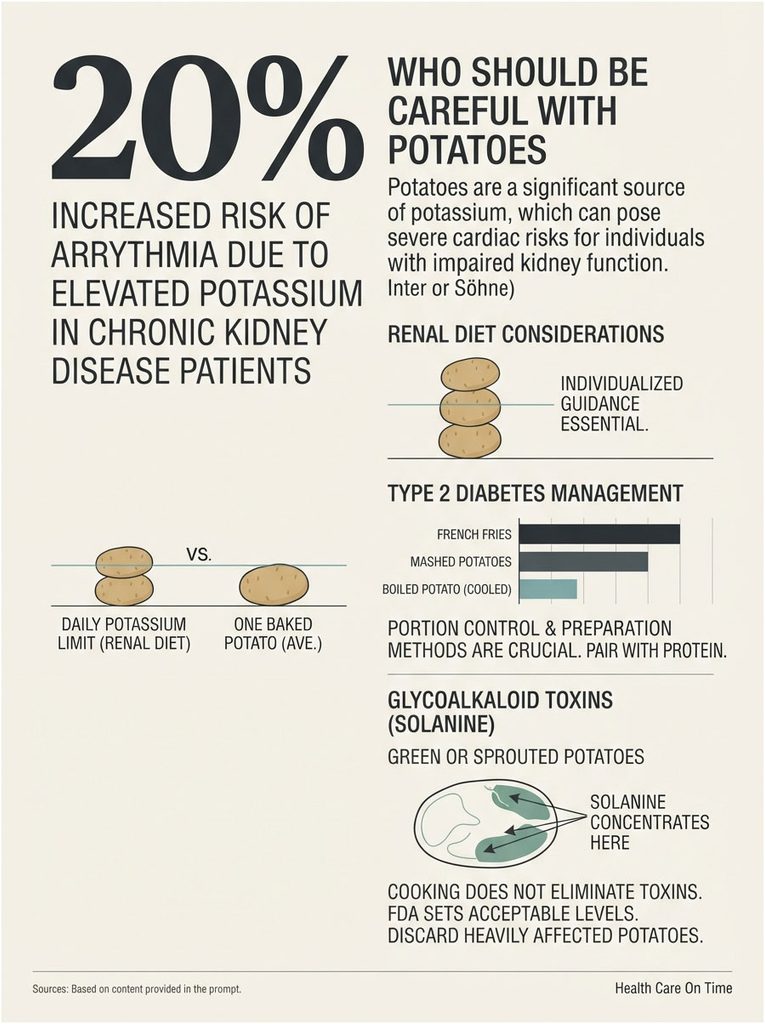
The potassium that helps most people becomes a hazard in advanced kidney disease, where the kidneys cannot excrete the excess efficiently. Elevated serum potassium is a cardiac risk, not a minor lab abnormality.
Anyone on a potassium-restricted renal diet needs individualized guidance from a nephrologist or renal dietitian, not general nutrition advice from an article.
Across the diagnostic network we serve, potassium results well outside the reference range are among the more common triggers for a nephrology referral. If you have reduced kidney function, ask before you increase potassium-rich foods.
Type 2 Diabetes and Portion Strategy
Potatoes are not off-limits, but portion, preparation, and pairing all matter more than they do for most foods.
A cooled, skin-on potato eaten with protein behaves very differently from a hot mashed serving eaten by itself. Half a medium potato alongside chicken and vegetables is a reasonable starting portion for many people.
Anyone using insulin or a sulfonylurea should coordinate carbohydrate portions with their prescribing clinician before changing intake.
Green, Sprouted, or Bitter Potatoes
This one is a genuine safety issue rather than a nutrition preference.
Green or sprouted potatoes accumulate solanine and chaconine, two natural toxins concentrated in the sprouts, eyes, green skin, leaves, and flowers. Light exposure drives their formation.
The FDA treats 20 to 25 mg of glycoalkaloids per 100 g of fresh potato as the maximum acceptable level, and the mean human toxicity response sits around 3 mg per kg of body weight.
Cooking does not destroy solanine. Baking, boiling, frying, and microwaving all leave it intact, so discard any potato that is heavily green, heavily sprouted, soft, or bitter-tasting.
Store potatoes in a cool, dark place, buy them shortly before you need them, and inspect for sprouts and green patches before cooking. Symptoms of overexposure include nausea, vomiting, diarrhea, and in more serious cases dizziness.
Your Practical Action Plan
A Simple Weekly Framework
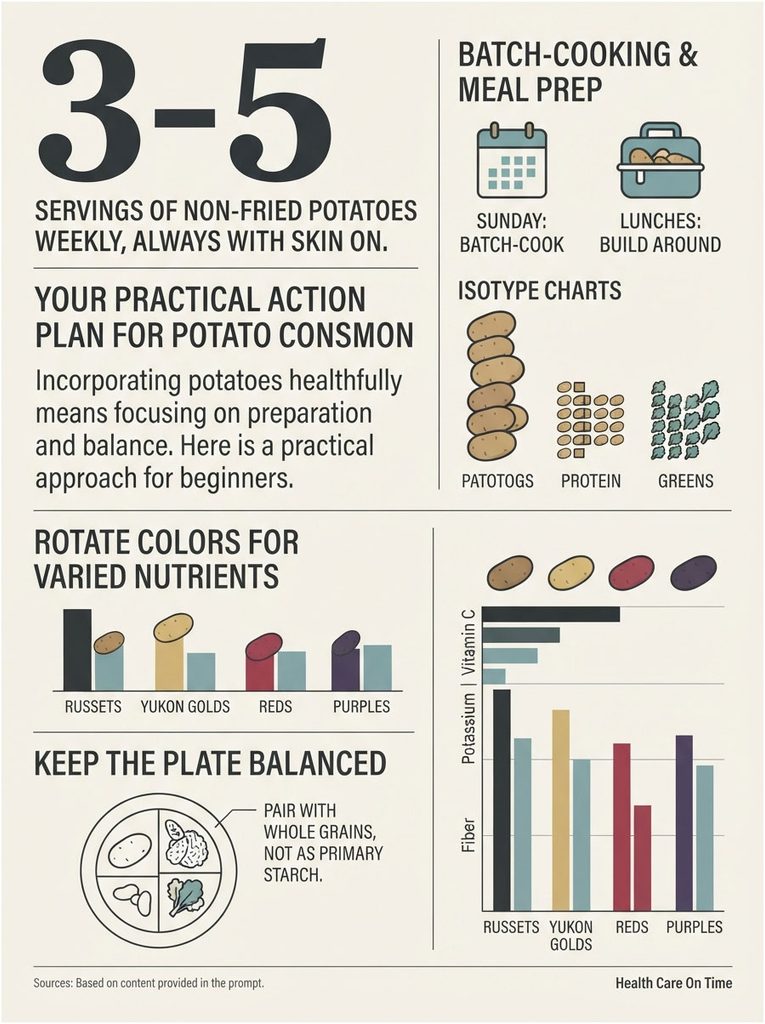
Aim for three to five servings of non-fried potato per week, always skin-on, and treat fries as an occasional restaurant item rather than a weekly habit.
Batch-cook on Sunday. Chill overnight. Build the week’s lunches around cold potato with a protein and something green.
Rotate colors across the week. Russets, Yukon Golds, reds, and purples each bring a different phytochemical profile, and variety costs nothing.
Keep the rest of the plate honest. The Harvard substitution data is clear that whole grains beat every form of potato, so potatoes should share the starch slot rather than own it.
Table 4. If This Is You, Do This
| Your situation | Best potato choice | How to prepare it | Portion guidance |
| Managing blood pressure | Purple or red, skin-on | Bake, microwave, or boil with no added salt | 1 medium daily, season with herbs not salt |
| Pre-diabetes or type 2 diabetes | Any variety, skin-on | Cook, chill 12+ hours, eat cold or gently reheated | Half to 1 medium, always with protein |
| Trying to lose weight | Russet or Yukon Gold, skin-on | Boil or bake plain, no added oil | 1 medium as the starch anchor of the meal |
| Advanced chronic kidney disease | Discuss with your renal dietitian first | Double-boil to leach potassium if approved | Individualized, do not self-manage |
| Athlete or high training load | Russet, skin-on | Bake or boil, eat warm after training | 2 medium, paired with 20 to 30 g protein |
| Feeding young children | Yukon Gold, peeled if skins are tough | Boil and mash with milk, minimal butter | Half a medium potato per serving |
| Buying potatoes that sat in the pantry | Inspect carefully before cooking | Discard if green, heavily sprouted, or bitter | Store cool, dark, and dry, buy small batches |
Frequently Asked Questions
Is it OK to eat potatoes every day?
For most healthy adults, yes. Daily plain baked, boiled, or steamed potatoes with the skin on show no increased diabetes or cardiovascular signal in the largest US cohort data. Daily fries are a different question entirely. Keep preparation simple and vary your vegetables across the week.
Do potatoes really have more potassium than bananas?
Yes. A medium skin-on potato carries roughly 620 mg of potassium compared with about 422 mg in a medium banana, at nearly identical calories. Peeling the potato removes roughly 157 mg of that total, so leave the skin on whenever the texture allows.
Are potatoes a complete protein?
Potatoes contain all nine essential amino acids, and potato protein scores a biological value near 90 against egg protein at 100. The catch is quantity: a medium potato supplies only about 3 grams. Excellent quality, modest amount. Pair it with beans, eggs, or dairy.
Can people with type 2 diabetes eat potatoes?
Generally yes, with attention to portion and preparation. Baked, boiled, and mashed potatoes showed no substantial diabetes risk increase in the Harvard cohort analysis, while fries did. Cooling cooked potatoes lowers the insulin response. Discuss carbohydrate targets with your care team.
Do cold potatoes have fewer calories?
Not fewer calories, but fewer usable ones. Chilling converts some digestible starch into resistant starch, which passes into the colon rather than being absorbed as glucose. Studies show resistant starch rising from roughly 3% to 5% of total starch after refrigeration.
Is a baked potato good for weight loss?
A plain baked potato with skin runs about 161 calories and scored highest of 38 foods on the original satiety index. That combination suits weight management well. The problem is never the potato itself; it is the butter, cheese, sour cream, and bacon on top.
Which potato variety is the healthiest?
Purple and red varieties carry the most anthocyanins and phenolic compounds. Russets carry more kukoamines. Sweet potatoes lead on vitamin A. The differences between varieties are real but modest, so rotating colors gives you the widest phytochemical range.
Are potato skins actually worth eating?
Yes, though not for the reason most people assume. The skin carries a disproportionate share of the fiber and phenolic compounds, while the flesh holds most of the potassium and vitamin C. Scrub well and leave the skin on unless it is green or damaged.
Do potatoes cause inflammation?
No controlled human trial evidence shows that plain potatoes drive inflammation in the general population. Potatoes are nightshades, and some individuals report symptoms, but nightshade avoidance has not improved arthritis outcomes in trials. Deep-fried potatoes are a separate matter entirely.
Are green or sprouted potatoes dangerous?
They can be. Green skin and sprouts signal elevated solanine and chaconine, which cause nausea, vomiting, and diarrhea, and cooking does not destroy them. Discard any potato that is heavily green, heavily sprouted, soft, or bitter. Store potatoes cool, dark, and dry.
Are potatoes healthier than white rice?
On micronutrients, clearly. A medium potato supplies 620 mg of potassium and 27 mg of vitamin C; a cup of white rice supplies about 55 mg of potassium and no vitamin C, at nearly double the calories. Whole grains still beat both on fiber.
How many potatoes are too many in one week?
No established upper limit exists for plain potatoes in healthy adults. Practical guidance: three to five non-fried servings weekly leaves room for whole grains and other vegetables. Limit fries specifically, since three weekly servings tracked with a 20% higher diabetes rate.
Medical Disclaimer
This article is for general information and does not replace personalized medical advice. Nutrition needs vary with kidney function, blood sugar control, medications, and existing conditions. Anyone with chronic kidney disease, diabetes, or hypertension should speak with a licensed physician or registered dietitian before making significant dietary changes. HealthCareOnTime provides diagnostic testing information and does not diagnose or treat medical conditions.
References
- Total and specific potato intake and risk of type 2 diabetes, The BMJ, 2025
- Harvard T.H. Chan School of Public Health, potato preparation and type 2 diabetes risk
- USDA FoodData Central, potatoes, white, flesh and skin, raw
- Potatoes USA, potato nutrition facts and myths
- Potatoes USA, nutrition in skin vs flesh fact sheet
- Short-Term RCT of Increased Dietary Potassium from Potato or Potassium Gluconate, Nutrients 2021 (NCT02697708)
- High-Antioxidant Potatoes as a Hypotensive Agent in Hypertensive Subjects, J Agric Food Chem
- Bioavailability of potassium from potatoes and potassium gluconate, Am J Clin Nutr
- Influence of oral administration of kukoamine A on blood pressure, PLOS ONE 2022
- USDA Agricultural Research Service, phytochemical profiling of potatoes
- Potato protein: an emerging source of high quality protein, Food Research International
- Genetic architecture of tuber-bound free amino acids in potato, Scientific Reports
- Potatoes, a scoping review for Nordic Nutrition Recommendations
- Nutrient contribution of white potatoes and starchy vegetable intake in the US diet
- National Capital Poison Center, are sprouted potatoes safe to eat
- Potatoes USA, glycoalkaloid and greening fact check
- EFSA risk assessment of glycoalkaloids in food and feed
- Reproducibility of nutrition research: potatoes and colorectal cancer, Nutrition & Diabetes 2026
- Alliance for Potato Research and Education, research pipeline
- Potato nutrients, sodium retention, and hypertension risk, APRE
- UC Davis Health, potato health benefits
- Holt SHA, Brand Miller JC, Petocz P, Farmakalidis E. A satiety index of common foods. European Journal of Clinical Nutrition, 1995.