
Your body already made about a quart of mucus today, and you swallowed nearly all of it without noticing. That’s normal, and it’s happening right now as you read this. So the real question isn’t why you have mucus in your throat. It’s why you suddenly can’t stop noticing it.
Table of Contents
Quick Answer
Constant phlegm in your throat usually comes from postnasal drip (now called upper airway cough syndrome), allergic or nonallergic rhinitis, silent reflux, chronic sinus disease, asthma, or airway irritants like smoke and dry indoor air. Medications and simple dehydration can thicken mucus too. Throat mucus lasting more than 8 weeks counts as chronic and deserves a medical workup.

At a Glance
• Four conditions cause most cases: postnasal drip, allergies, reflux, and asthma.
• Phlegm that’s worst in the morning, with no heartburn, points strongly toward silent reflux.
• Mucus color does not reliably tell you whether you have a bacterial infection.
• Three weeks is the “get it checked” mark. Eight weeks is the “this is chronic” mark.
• Repeated throat clearing irritates the tissue and produces more mucus, creating a self-feeding loop.
• Constant mucus in throat with no cough is common, and globus sensation explains many of those cases.
• Blood in phlegm, one-sided throat pain, or unexplained weight loss means call today, not next month.
What Phlegm Actually Is, and Why “Constant” Is Different
Most people use four different words for the same slippery substance, and they aren’t interchangeable. Getting the vocabulary right helps you describe the problem accurately when you finally sit down with a clinician, and it changes which questions they ask you.
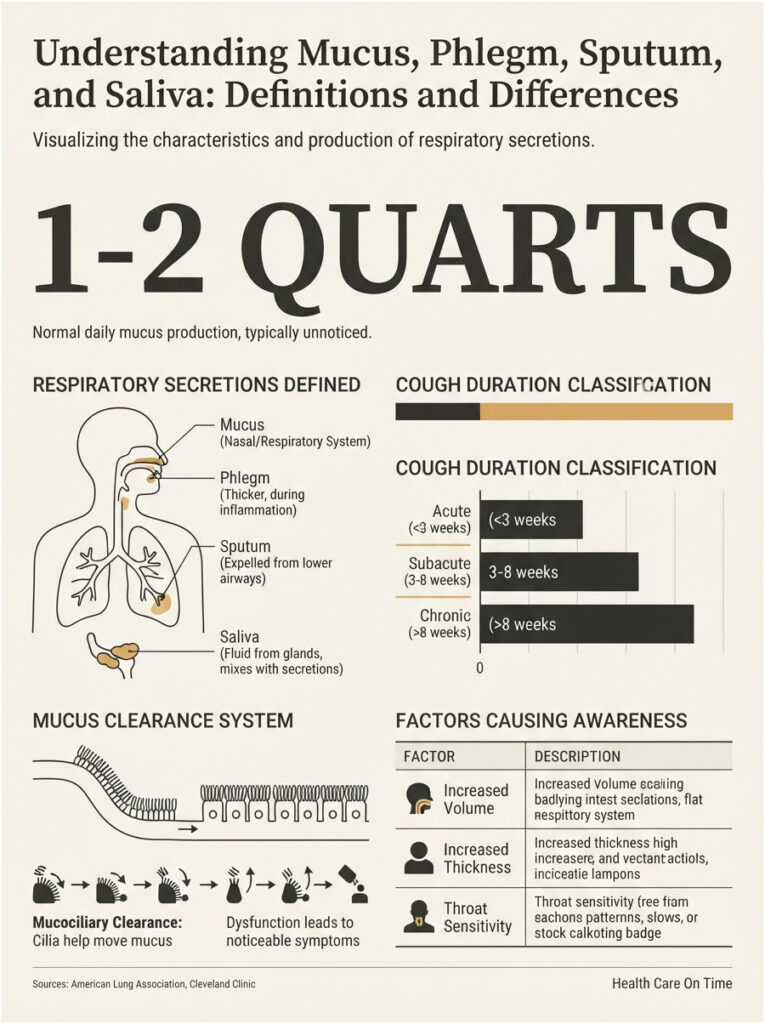
Mucus, Phlegm, Sputum, and Saliva Are Not the Same Thing
Mucus is the baseline protective gel lining your nose, sinuses, throat, and airways. Phlegm is the thicker, more noticeable version of that mucus, usually produced when something inflames the lining.
Sputum is what you actually cough up from the lower airways and spit out. Saliva comes from your salivary glands and mixes with all of it, which is why the goo in your throat is rarely one pure substance.
Patients booking respiratory panels through HealthCareOnTime often describe “phlegm” when what they mean is a sensation with almost nothing physical behind it. That distinction changes the entire diagnostic path.
How Much Mucus Is Normal
Far more than you’d guess. The glands in your nose and throat produce one to two quarts of mucus per day, and you normally swallow it unconsciously because it mixes with saliva and drips harmlessly down the back of your throat.
That constant, invisible drainage is the system working correctly. It moistens your nasal lining, humidifies the air you breathe, traps particles you inhale, and helps your immune system fight infection.
Nobody notices a quart of mucus a day. That’s the point of a well-functioning system.
Mucociliary Clearance, and What Breaks It
Tiny hair-like structures called cilia sweep that mucus blanket backward toward your throat at a steady, coordinated pace. When mucus gets too thick, or the cilia get damaged by smoke, infection, or dry air, the conveyor belt stalls.
Stalled mucus is mucus you feel. Our medical reviewers note that most people describing “phlegm that won’t move” are describing a clearance problem rather than an overproduction problem, and those two need different fixes.
Why You Notice Mucus Only When Something Changes
Three shifts turn invisible mucus into a daily annoyance. Volume goes up, thickness goes up, or the throat lining becomes more sensitive to perfectly normal amounts.
Any one of those is enough to trigger awareness. Two together is what usually drives someone to start searching for answers at 11 p.m.
The Clock That Matters: Acute, Subacute, and Chronic
Duration is the single most useful piece of information you can bring to an appointment, and most people arrive without a clear answer. Chronic cough in adults is broadly defined as cough persisting for more than 8 weeks, and the same clock gets applied to persistent throat mucus.
Under three weeks is usually acute and usually viral. Three to eight weeks is subacute, often post-viral airway sensitivity that resolves on its own.
Past eight weeks, you’ve entered territory that affects 4 to 10% of the adult population and warrants a structured diagnostic effort rather than another round of cough drops.
The 12 Most Common Reasons You Have Constant Mucus in Your Throat
Across the cases our clinical partners review, this symptom generates more questions than almost any other. The causes below are ordered roughly by how often they turn out to be the answer.
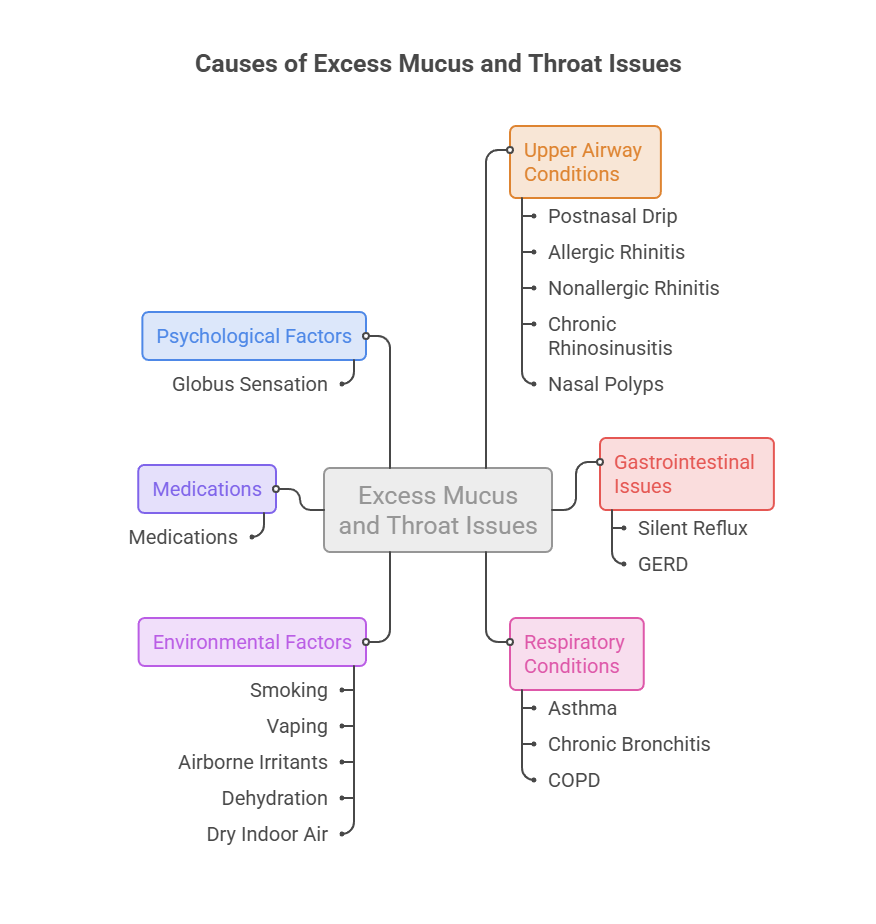
1. Postnasal Drip and Upper Airway Cough Syndrome
This is the leading cause, and it’s exactly what it sounds like. Excess mucus from the nose and sinuses drains down the back of the throat instead of out the front of the nose.
Cleveland Clinic describes the resulting symptom set as a feeling of mucus draining down the throat, cough, the urge to clear your throat, and hoarseness, with causes including allergies, infections, pregnancy, medications, and GERD.
Why Doctors Renamed It UACS
The old label was postnasal drip syndrome. The American College of Chest Physicians guideline committee unanimously recommended replacing it with “upper airway cough syndrome,” because it’s unclear whether the cough comes from the drip itself or from direct irritation of cough receptors in the upper airway.
That distinction matters for you as a patient. It explains why some people have a raw, tickly throat and a constant urge to clear it with no visible drainage at all.
2. Allergic Rhinitis
Pollen, dust mites, pet dander, cockroach allergen, and indoor mold trigger histamine release, which drives thin, clear, high-volume mucus. The giveaway is the company it keeps: itchy eyes, sneezing fits, and an itchy palate or ear canal.
This cause is enormous in the United States. CDC data released in January 2026 show about one quarter of US adults, 25.2%, have a diagnosed seasonal allergy.
Seasonal patterns point to pollen. Year-round symptoms with no seasonal break usually point to dust mites, pets, or mold instead.
3. Nonallergic and Vasomotor Rhinitis
Same runny, dripping symptoms, no allergy involved at all. Triggers include temperature swings, strong odors, perfume, cleaning products, alcohol, and spicy food.
Thin, clear secretions can come from viral infections, allergies, spicy foods, temperature changes, pregnancy, and some medications. Allergy testing comes back completely clean, which frustrates people who were certain pollen was the culprit.
4. Chronic Rhinosinusitis and Nasal Polyps
When sinus inflammation lasts 12 weeks or longer, drainage turns thick and persistent rather than seasonal. Chronic sinusitis presents with facial pain or pressure, thick yellow or green mucus or postnasal drip, stuffy nose, headache, reduced taste and smell, and bad breath.
Reduced sense of smell is the clue that separates sinus disease from simple allergies. Chronic rhinosinusitis affects roughly 12.5% of the US population, with documented links to air pollution, active smoking, secondhand smoke, perennial allergic rhinitis, and reflux.
Nasal polyps sit at the severe end of this spectrum and often bring near-total smell loss with them.
5. Silent Reflux (Laryngopharyngeal Reflux)
This is the most under-recognized cause on the list, and the one most often missed for years. Stomach contents travel up past the esophagus and irritate the voice box and throat, which respond by producing protective mucus.
It’s called silent reflux because most patients do not have heartburn, and phlegm that’s worse in the morning, throat clearing, and sore throat are the typical symptoms. In one clinical LPR series, excessive throat mucus was the single most commonly reported symptom at 81.3%, followed by throat clearing at 75%.
Why Silent Reflux Feels Worse in the Morning
Lying flat removes gravity’s help entirely. Acid and the digestive enzyme pepsin sit against the upper airway for six or seven hours, and you wake up with a coated throat and a voice that needs three minutes of use before it works properly.
By mid-morning the symptoms often fade, which convinces people nothing is really wrong. That daily fade-and-return pattern is itself the diagnostic clue, and it’s the detail almost nobody thinks to mention at an appointment.
6. GERD With Throat Involvement
Classic reflux disease with heartburn can also produce throat mucus, and the two conditions overlap heavily. Because upper respiratory symptoms are common in gastroesophageal reflux disease, reflux can mimic postnasal drip.
The difference is that GERD usually announces itself with burning behind the breastbone, regurgitation, and symptoms that worsen within an hour of eating. Silent reflux frequently does none of that.
7. Asthma and Cough-Variant Asthma
Asthma inflames and narrows the airways, and mucus overproduction is a major feature for a subset of people. Cough-variant asthma produces cough and mucus with no audible wheeze at all, which routinely delays diagnosis by months.
Upper airway cough syndrome, reflux disease, asthma, and nonasthmatic eosinophilic bronchitis account for most cases of chronic cough in adults. Symptoms that flare with exercise, cold air, laughter, or allergens point in this direction.
8. Chronic Bronchitis and COPD
Chronic bronchitis has a formal definition worth memorizing: a daily productive cough for at least three months per year across two consecutive years. That’s a diagnosis with criteria, not a casual description.
In 2022, 11.7 million people, or 4.6% of US adults, reported a diagnosis of COPD, chronic bronchitis, or emphysema. Morning sputum plus a smoking history plus breathlessness on exertion is the pattern that should prompt lung function testing.
9. Smoking, Vaping, and Airborne Irritants
Smoke paralyzes and destroys cilia while simultaneously increasing mucus output, which is the worst possible combination for clearance. Vaping aerosols, wildfire particulate, workplace dust, welding fumes, and chlorinated pool air all produce milder versions of the same injury.
Quitting is the highest-yield intervention available for irritant-driven phlegm. Cilia begin recovering within a few weeks, though full clearance function typically takes several months to return.
10. Dehydration and Dry Indoor Air
Mucus is mostly water. Take the water out and you get a sticky, adherent film that refuses to move, which your brain interprets as something stuck in your throat.
Thicker secretions commonly follow low winter humidity, reduced fluid intake, bacterial sinus infections, or antihistamine use. Forced-air heating in a Chicago or Minneapolis January is one of the most reliable triggers in the country.
11. Medications That Thicken or Increase Mucus
ACE inhibitors such as lisinopril and enalapril are the classic offenders, producing a dry, tickly cough and throat irritation in a meaningful share of users. Antihistamines cause the opposite problem, drying secretions until they turn to paste that won’t clear.
Birth control pills and blood pressure medications are also documented contributors to increased thin secretions. Our medical team consistently finds this is the fastest thing to check on a medication list and one of the most frequently overlooked.
If your phlegm started within a few weeks of a new prescription, bring that timing to your prescriber before trying anything else.
12. Globus Sensation and the Throat-Clearing Loop
Sometimes there’s no excess mucus at all. Globus is the persistent feeling of a lump, tightness, or foreign body in the throat with no physical obstruction present on examination.
It accounts for about 4% of new ENT referrals and 6.7 per 100,000 primary care visits, and nearly half of the general population, 46%, may experience it at some point. Stress, anxiety, and habitual throat clearing all contribute to it.
When There Is No Mucus at All
Every throat clear slams the vocal folds together at high velocity, which inflames the tissue, which produces a little mucus, which makes you clear your throat again. The loop is self-sustaining and routinely outlives whatever started it.
People who break this habit often discover the original trigger resolved weeks or months ago.
Table 1. Constant Phlegm Causes Side by Side
| Likely Cause | Telltale Clue | Mucus Character and Timing | Typical Duration | First Move |
| Postnasal drip / UACS | Tickle at back of throat, cough worse lying down | Thin to moderate, constant, worse at night | Weeks to months | Saline rinse plus intranasal steroid trial |
| Allergic rhinitis | Itchy eyes, sneezing, seasonal pattern | Thin, clear, high volume | Seasonal or year-round | Antihistamine plus nasal steroid, allergy testing |
| Nonallergic rhinitis | Triggered by odors, cold air, spicy food | Thin, watery, sudden onset | Episodic, recurring | Trigger diary, ipratropium nasal spray |
| Chronic rhinosinusitis | Facial pressure, reduced smell, 12+ weeks | Thick, discolored, constant | 12 weeks or longer | ENT evaluation, sinus imaging |
| Silent reflux (LPR) | Morning hoarseness, no heartburn | Thick, sticky, worst on waking | Months, fluctuating | Diet and position changes, reflux workup |
| GERD | Heartburn, regurgitation, worse after meals | Moderate, post-meal and nocturnal | Chronic, relapsing | GI evaluation, lifestyle modification |
| Asthma / cough-variant | Chest tightness, exercise or cold-air trigger | Sticky, hard to expel | Chronic with flares | Spirometry, inhaler trial |
| Chronic bronchitis / COPD | Daily cough 3 months a year for 2 years | Thick, colored, worst in morning | Years | Pulmonary function testing |
| Dry air / dehydration | Worse in winter or after poor fluid intake | Very thick, adherent, hard to clear | Days to weeks | Humidifier, increased fluids |
| Globus sensation | Lump feeling, worse on dry swallow, no mucus | Little or none despite the sensation | Intermittent, stress-linked | Stop throat clearing, reassurance, ENT if persistent |
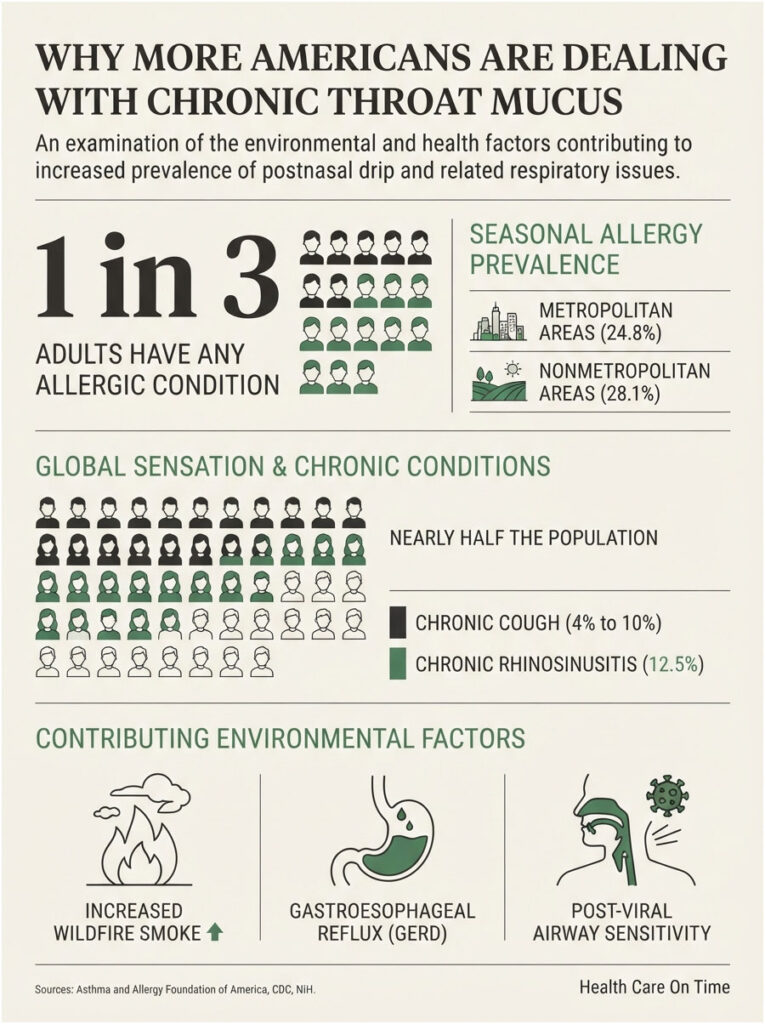
Why More Americans Are Dealing With Chronic Throat Mucus
The search volume for this symptom isn’t imaginary, and it isn’t purely an artifact of health anxiety. Several trends are pushing upper-airway irritation upward at the same time.
Longer, Heavier Allergy Seasons
Growing seasons across much of the country have lengthened over recent decades, and pollen counts have climbed alongside them. That extends the window during which allergic rhinitis drives postnasal drip from a few spring weeks to most of the calendar year.
CDC’s 2024 survey data also show seasonal allergy is more common among adults in nonmetropolitan areas, 28.1%, than metropolitan ones, 24.8%, which cuts against the assumption that this is purely a city-pollution story.
Rural and suburban readers shouldn’t rule out allergy just because they live away from traffic.
Wildfire Smoke and Particulate Exposure
Smoke events now reach states that historically never saw them, including much of the Midwest and Northeast. Fine particulate irritates the nasal and bronchial lining while impairing the cilia responsible for moving mucus along.
Checking the local air quality index before outdoor exercise is a practical habit, not a precaution reserved for people with diagnosed lung disease.
Reflux Rates and Body Weight
Reflux exposure rises with abdominal pressure, and the throat sits downstream of everything the stomach sends upward. Gastroesophageal reflux is one of the documented associations with chronic rhinosinusitis prevalence, which is one reason the reflux and sinus stories keep tangling together in the same patients.
Post-Viral Airway Sensitivity
Respiratory infections can leave cough receptors sensitized for weeks after the virus itself has cleared. The infection resolves, the hypersensitivity doesn’t, and mucus perception stays elevated well past recovery.
This pattern became far more visible after 2020, and it accounts for a large share of the three-to-eight-week subacute cases.
Table 2. Constant Phlegm by the Numbers: US Data
| Condition or Factor | US Figure | Population Affected | Source and Year |
| Diagnosed seasonal allergy | 25.2% of adults | Roughly 1 in 4 US adults | CDC NCHS Data Brief 545, January 2026 |
| Any diagnosed allergic condition | 31.7% of adults | Nearly 1 in 3 US adults | CDC NCHS Data Brief 545, January 2026 |
| Chronic rhinosinusitis | 12.5% of population | Tens of millions | Journal of Allergy and Clinical Immunology |
| CRS symptom criteria met at a point in time | 2.1% of adults | 2.37 million adults | NHANES 2013-2014 analysis, PubMed 29737908 |
| Sinusitis healthcare burden | Up to 22 million visits, up to $5 billion per year | US-wide | NIH figures cited by University of Cincinnati, 2024 |
| COPD, chronic bronchitis, or emphysema | 4.6% of adults | 11.7 million people | American Lung Association, NHIS 2022 |
| Chronic cough | 4% to 10% of adults | Roughly 10 to 26 million adults | Peer-reviewed cough literature, PMC7496056 |
| Globus sensation, lifetime | 46% of general population | Nearly half of adults | Mayo Clinic Proceedings, 2026 |
Mucus Color Decoder: What Clear, White, Yellow, Green, Brown, and Pink Mean
Color is a clue, not a verdict. Our medical reviewers see mucus color misread more often than any other aspect of this symptom, usually in the direction of unnecessary antibiotic requests.
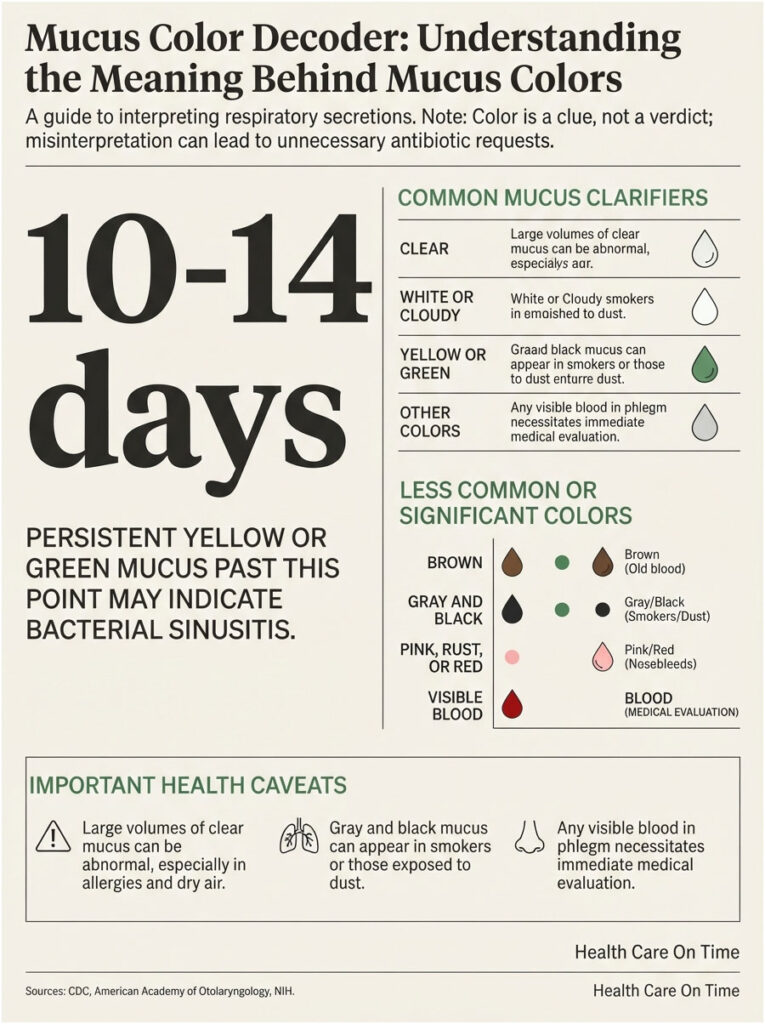
Why Color Alone Does Not Prove Bacterial Infection
Green and yellow tones come from an enzyme released by neutrophils, the white blood cells your body dispatches to any site of inflammation. Viruses recruit neutrophils just as readily as bacteria do.
That means colored mucus tells you your immune system is active. It does not tell you an antibiotic will help, and prescribing on color alone is a well-documented source of unnecessary antibiotic use.
Clear and White
Clear is the baseline and the most common finding in allergic rhinitis, nonallergic rhinitis, and dry-air irritation. Large volumes of clear mucus are still abnormal even though the color itself is reassuring.
White or cloudy mucus usually reflects thickening and slower flow rather than infection. It shows up with congestion, dehydration, and the early days of a viral illness.
Yellow and Green
These signal an active immune response, most often a viral upper respiratory infection somewhere in its middle days. The color often deepens as an ordinary cold progresses, then fades as it resolves.
Persistent green or yellow drainage past 10 to 14 days, paired with facial pressure and reduced smell, shifts suspicion toward bacterial sinusitis and justifies an appointment.
Brown, Gray, and Black
Brown often means old blood or inhaled particulate matter working its way out. Gray and black tones appear in smokers, in people with heavy occupational dust exposure, and in the days following wildfire smoke events.
Pink, Rust, and Red
Rust colors can follow a nosebleed or a stretch of vigorous coughing that irritated small vessels. Frothy pink phlegm is an entirely different matter and can point toward fluid accumulation in the lungs.
Blood in Phlegm: The One Color That Always Gets a Call
Any visible blood in phlegm, even a single streak, deserves a same-week medical evaluation. This is the one entry on the color chart with no wait-and-see option attached to it.
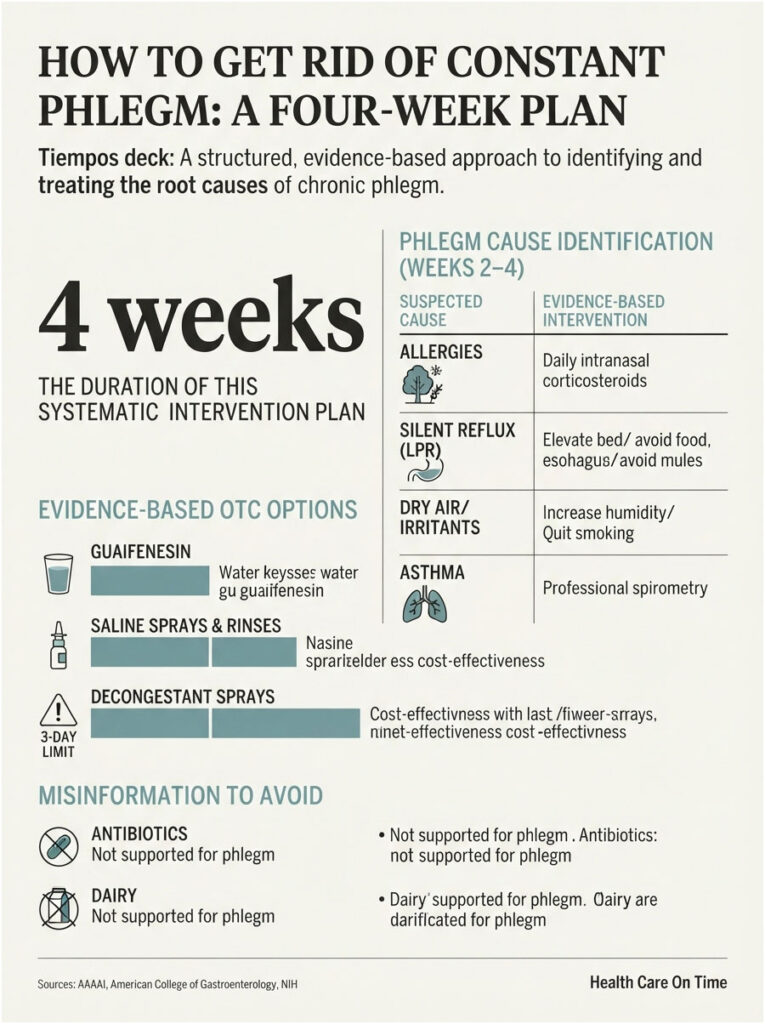
How to Get Rid of Constant Phlegm: A Four-Week Plan
Treating the mucus without treating the cause buys you a few hours of relief. Treating the cause is what actually ends the cycle, and it takes longer than most people expect.
Weeks 1 to 2, The Foundation Everyone Should Try
Start with the interventions that help regardless of which cause turns out to be yours. These are low-risk, cost very little, and often reduce symptoms enough to make the underlying pattern easier to identify.
Hydration, Humidity, and Nasal Saline
Water is the cheapest mucus-thinning agent available anywhere. Thin mucus moves along the cilia normally; thick mucus sits, adheres, and irritates.
Run a cool-mist humidifier in the bedroom at 40 to 50% relative humidity during heating season, and clean the reservoir every two to three days to prevent mold growth. Use nasal saline irrigation with 8 ounces of distilled, sterile, or previously boiled and cooled water once or twice daily to physically flush thick secretions and inflammatory mediators out of the nasal passages.
Steam gets recommended constantly, but be realistic about what it does. Steam is widely believed to clear phlegm and congestion, though there isn’t much scientific support for the idea, and a cool-mist humidifier is both safer and more consistent.
Stop the Throat-Clearing Loop
Replace every throat clear with a hard dry swallow, a sip of water, or a gentle silent huff of air. The urge fades faster than people expect once the mechanical irritation stops feeding it.
Patients frequently tell us this single change produces noticeable improvement inside seven to ten days. It’s also the intervention most people skip, because it feels too simple to be worth the effort.
Weeks 2 to 4, Treat the Suspected Cause
Use the pattern you identified in the comparison table to pick a lane. Give each trial a full two to four weeks before deciding it failed, since almost every option here has a delayed onset.
If the Pattern Points to Allergies
A daily intranasal corticosteroid spray is first-line and outperforms oral antihistamines for congestion and drip specifically. It needs consistent daily use for 10 to 14 days before peak effect, which is exactly why so many people abandon it after four days and conclude it doesn’t work.
Add a second-generation oral antihistamine if itching and sneezing dominate. Reduce indoor exposure with allergen-proof mattress and pillow covers, weekly hot-water bedding washes, and HEPA filtration in the bedroom.
If the Pattern Points to Silent Reflux
Elevate the head of the bed by 6 to 8 inches using bed risers or a wedge, not stacked pillows, which bend the neck and make things worse. Stop eating and drinking anything except water three hours before lying down.
Cut back on the usual aggravators: alcohol, coffee, chocolate, mint, tomato, citrus, carbonation, and high-fat late meals. Set expectations correctly here, because reflux-related throat symptoms commonly take 8 to 12 weeks to improve, far longer than the two weeks heartburn typically needs.
If the Pattern Points to Dry Air or Irritants
Add humidification, raise fluid intake, and remove the exposure at its source. For people who smoke or vape, cessation outperforms every other option listed on this page by a wide margin.
If the Pattern Points to Asthma
Don’t self-treat this one. Spirometry is inexpensive, takes about 15 minutes, and settles the question definitively, and untreated asthma tends not to stay stable over time.
OTC Options With Real Evidence Behind Them
Guaifenesin is the FDA-recognized expectorant, and it works by drawing water into airway secretions to thin them. It only works if you drink water alongside it, so pair each dose with a full 8-ounce glass.
Saline sprays and rinses carry the best evidence-to-cost ratio of anything in the pharmacy aisle. Intranasal steroids are available without a prescription in the US and hold the strongest evidence for drip driven by nasal inflammation.
Decongestants like pseudoephedrine can help for a few days but raise blood pressure and cause rebound congestion when overused. Limit decongestant nasal sprays to three consecutive days maximum.
What the Evidence Does Not Support
Antibiotics prescribed for discolored mucus alone. Decongestant nasal sprays used past day three. Aggressive throat clearing as a clearance strategy. Elimination diets built around removing one food group.
The Dairy and Mucus Question, Settled
Blinded studies have repeatedly failed to show that milk increases actual mucus volume. What milk does is coat the mouth and throat with an emulsion that feels thicker, and that sensory change gets misinterpreted as more phlegm.
If cutting dairy genuinely makes you feel better, there’s no harm in continuing. Just recognize you’re treating a perception rather than a production problem, and the real cause is still sitting there unaddressed.
Red Flags: When Constant Phlegm Needs a Doctor Now
Most constant phlegm is benign and treatable with the steps above. A short list of features changes that calculation immediately and should override any wait-and-see plan.
Symptoms That Change the Urgency
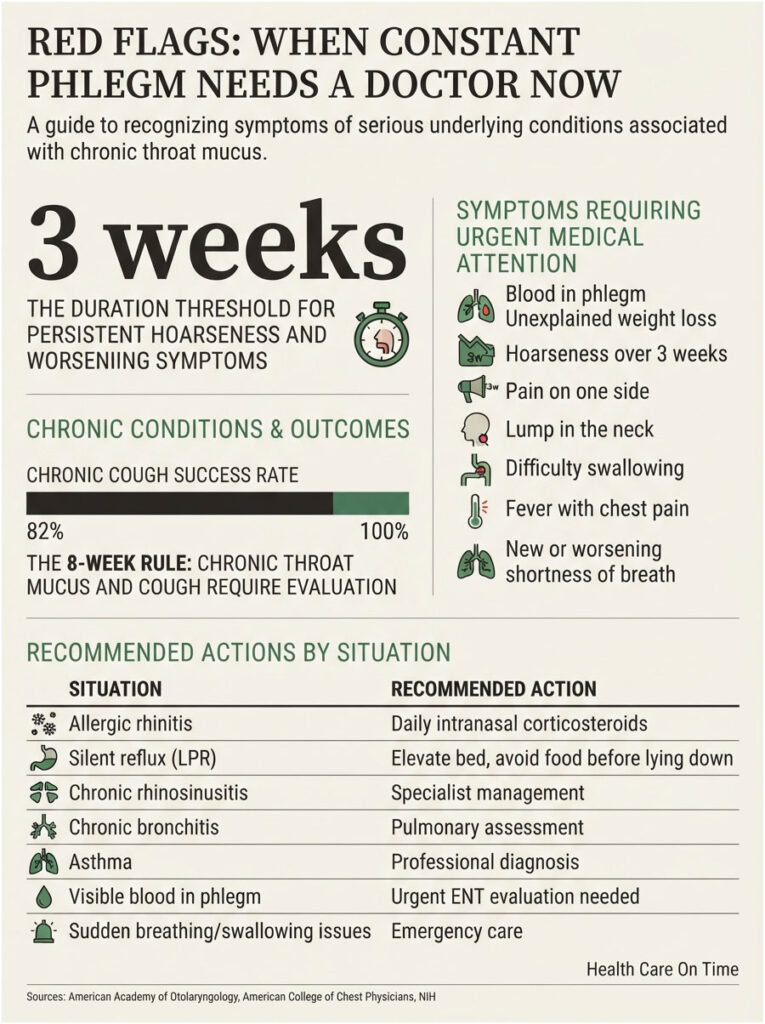
Blood in phlegm. Unexplained weight loss. Hoarseness lasting more than three weeks. Pain on one side of the throat or ear. A lump in the neck. Difficulty swallowing that keeps getting worse. Fever with chest pain. New or worsening shortness of breath.
Any of these belongs in front of a clinician promptly, regardless of how long the mucus has been present or how mild it seems on a given day.
The 3-Week and 8-Week Rules
Three weeks is the checkpoint for hoarseness and for any symptom that’s worsening rather than plateauing. Eight weeks is the threshold at which throat mucus and cough become formally chronic and merit a structured workup.
The encouraging part is how well that workup performs once it starts. CHEST guideline analysis found that an algorithmic approach to management resolved chronic cough in 82% to 100% of instances.
Table 3. If This Is Your Situation, Do This
| Your Situation | What It May Point To | Recommended Action | Timeline |
| Mucus with itchy eyes, sneezing, seasonal timing | Allergic rhinitis | Start nasal steroid plus antihistamine; book allergy testing if no change | Reassess at 3 weeks |
| Morning phlegm and hoarseness, no heartburn | Silent reflux (LPR) | Bed elevation, meal timing, trigger removal; ENT or GI if persistent | Reassess at 8 weeks |
| Facial pressure and discolored drainage past 12 weeks | Chronic rhinosinusitis | ENT evaluation with sinus imaging | Book within 2 weeks |
| Daily productive cough 3 months a year for 2 years | Chronic bronchitis | Primary care visit plus pulmonary function testing | Book within 2 weeks |
| Wheeze or chest tightness with mucus | Asthma or cough-variant asthma | Spirometry before any self-treatment | Book within 2 weeks |
| Any visible blood in phlegm | Multiple causes, some serious | Contact a clinician; don’t wait to see if it recurs | Same week |
| Weight loss, one-sided throat or ear pain, hoarseness over 3 weeks | Needs head and neck evaluation | Urgent ENT referral | Within days |
| Sudden trouble breathing or swallowing | Airway compromise | Emergency care | Immediately |
What Testing Actually Looks Like
Knowing the sequence removes most of the anxiety about booking the appointment. Very few people with this symptom end up needing anything invasive, and the first visit is almost entirely conversation.
What Your Primary Care Visit Covers
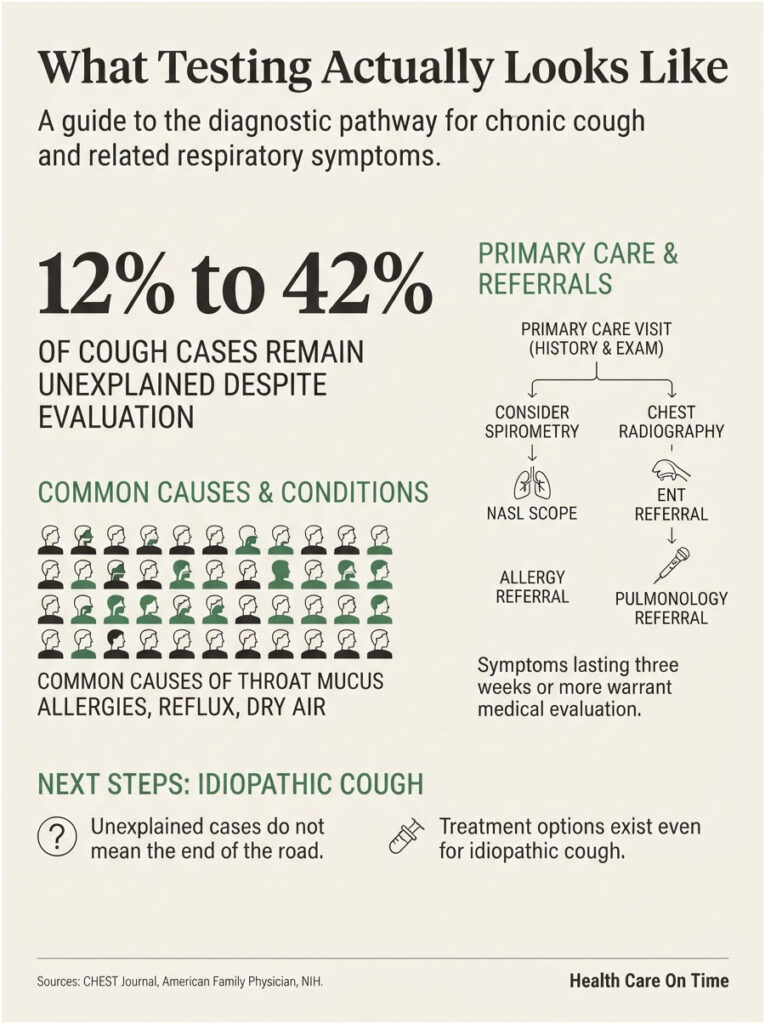
History does most of the diagnostic work: duration, daily timing, triggers, full medication list, smoking and vaping history, occupational exposures, and associated symptoms. A physical exam checks the nose, throat, neck lymph nodes, and chest.
Patients should be evaluated clinically, with spirometry if indicated, and empiric treatment started, since chest radiography can rule out concerning infectious, inflammatory, and malignant thoracic conditions. Bloodwork may include a CBC if infection is suspected or a specific IgE allergy panel when the history points that way.
Bring a two-week symptom log if you can. Timing patterns that seem trivial to you are often the detail that closes the case.
When Imaging or Scope Is Warranted
When the physical exam is normal and no red flags are present, routine CT of the chest and sinuses isn’t necessary, nor is initial bronchoscopy. Sinus CT enters the picture for suspected chronic rhinosinusitis that hasn’t responded to medical treatment.
Flexible laryngoscopy, a thin scope passed through the nose in the office, enters the picture for hoarseness, persistent globus, or suspected reflux injury to the larynx. It takes a few minutes and doesn’t require sedation.
When You Get Referred to ENT, Allergy, or Pulmonology
ENT handles sinus disease, laryngeal findings, persistent globus, and any red-flag head and neck concern. Allergy and immunology handles confirmed or suspected allergic drivers and immunotherapy decisions.
Pulmonology handles asthma, bronchiectasis, and COPD. Gastroenterology enters when reflux is strongly suspected and hasn’t responded to lifestyle measures.
Why Some Chronic Cough Cases Stay Unexplained
Not every case gets a clean diagnostic label, and that’s worth knowing in advance. Between 12% and 42% of patients don’t fit into any diagnostic category despite thorough investigation, and their cough is classified as idiopathic or refractory.
That group still has treatment options, including speech and language therapy targeting cough suppression and trials of neuromodulator medications. An unclear diagnosis is not the same thing as an untreatable symptom.
Frequently Asked Questions
Why is there always mucus in the throat without being sick?
Because infection is only one of a dozen possible causes. Allergies, nonallergic rhinitis, silent reflux, dry indoor air, medication side effects, and airway irritants all produce constant throat mucus with no fever and no illness at all. Reflux and allergy are the two most common explanations among people who otherwise feel completely well.
Why is phlegm in the throat worse in the morning?
Lying flat all night removes gravity’s drainage assist and lets stomach contents reach the throat far more easily over six or seven hours. Overnight dry air thickens secretions further. Morning-dominant phlegm paired with hoarseness and no heartburn is the classic silent reflux presentation, and it usually eases by mid-morning.
Can acid reflux cause mucus in the throat without heartburn?
Yes, and it does so frequently. Laryngopharyngeal reflux is nicknamed silent reflux precisely because the majority of patients never experience heartburn at all. Excessive throat mucus was the most commonly reported symptom in clinical LPR series, ranking ahead of throat clearing, hoarseness, and cough on standard symptom questionnaires.
How long is too long to have constant phlegm?
Three weeks is the point to get evaluated if symptoms are worsening or hoarseness is present alongside the mucus. Eight weeks makes it formally chronic and warrants a structured workup rather than more home remedies. Anything accompanied by blood, weight loss, or swallowing difficulty needs attention right away.
Is it better to swallow phlegm or spit it out?
Swallowing is harmless. Stomach acid neutralizes whatever is in it, and most of the one to two quarts your body makes daily gets swallowed unnoticed anyway. Spitting is a preference, not a health measure. What does cause genuine harm is forceful, repeated throat clearing throughout the day.
Does clearing the throat make the mucus worse?
Yes, measurably so. Each throat clear forces the vocal folds together at high velocity, which inflames the tissue and triggers additional mucus production. That new mucus prompts another throat clear, and the loop sustains itself. Swapping the throat clear for a hard swallow or a sip of water breaks it within days.
Can anxiety or stress cause a mucus feeling in the throat?
Stress and anxiety are established contributors to globus sensation, the feeling of a lump or trapped mucus with no physical obstruction present. Muscular tension in the throat and habitual throat clearing both worsen it substantially. Nearly half the general population experiences globus at some point in their lives.
Does dairy actually increase mucus?
Blinded studies have not demonstrated that milk raises mucus production. Milk emulsion coats the mouth and throat, which feels thicker and gets misread as additional phlegm. Cutting dairy is harmless if it makes you more comfortable, but it doesn’t address whatever is actually driving the mucus.
What does constant clear phlegm in the throat mean?
Clear generally points toward a noninfectious cause: allergic rhinitis, nonallergic rhinitis, dry air, or straightforward postnasal drip. High-volume clear mucus is still abnormal even when the color itself is reassuring. Look at the associated symptoms and the daily timing pattern to narrow down which trigger is responsible.
Can dehydration cause thick mucus in the throat?
Yes, directly. Mucus is largely water, so reduced fluid intake makes secretions thick and adherent instead of thin and mobile along the cilia. Low winter humidity and antihistamine use compound the effect considerably. Increasing fluids and adding a bedroom humidifier often improves thickness within three to five days.
Can constant phlegm be a sign of cancer?
Rarely, but it does belong on the list of possibilities. The concerning pattern is throat mucus alongside hoarseness lasting over three weeks, one-sided throat or ear pain, a neck lump, unexplained weight loss, or blood in the phlegm. That combination warrants prompt ENT evaluation rather than continued watchful waiting.
Which over-the-counter medicine works best for throat mucus?
It depends entirely on the cause. Guaifenesin thins secretions, saline rinses physically flush them out, intranasal steroids reduce the inflammation driving postnasal drip, and second-generation antihistamines help allergy-driven mucus. Matching the product to the underlying cause matters far more than which brand you choose.
Medical Disclaimer
This article is provided by HealthCareOnTime for general health information only and is not a substitute for professional medical advice, diagnosis, or treatment. Always seek the guidance of a qualified physician or other licensed healthcare provider with any questions about a medical condition or symptom. Never disregard professional medical advice or delay seeking it because of something you have read here. If you are experiencing difficulty breathing, difficulty swallowing, or coughing up blood, seek emergency medical care immediately.
References
- Postnasal Drip: Symptoms and Causes, Cleveland Clinic
- Chronic Sinusitis: Symptoms, Causes and Treatment, Cleveland Clinic
- Diagnosed Allergic Conditions in Adults: United States, 2024, CDC NCHS Data Brief 545
- Almost a Third of U.S. Adults and Children Have at Least One Allergy, CDC NCHS
- Chronic Upper Airway Cough Syndrome Secondary to Rhinosinus Diseases, ACCP Guidelines, CHEST
- Chronic Cough Due to Gastroesophageal Reflux in Adults: CHEST Guideline and Expert Panel Report
- Chronic Cough: Evaluation and Management, American Family Physician
- COPD Trends Brief: Prevalence, American Lung Association
- An Approach to Globus Sensation: Clinical Pearls for Clinicians, Mayo Clinic Proceedings
- Prevalence of Potential Adult Chronic Rhinosinusitis Symptoms in the United States, PubMed
- Chronic Rhinosinusitis: Epidemiology and Medical Management, Journal of Allergy and Clinical Immunology
- Upper Airway Cough Syndrome in Pathogenesis of Chronic Cough, PMC
- Post-Nasal Drip, MUSC Health Sinus Center
- Laryngopharyngeal Reflux (LPR), University of Miami Health System
- Prevalence of Laryngopharyngeal Reflux and Efficacy of Anti-reflux Therapy, PMC