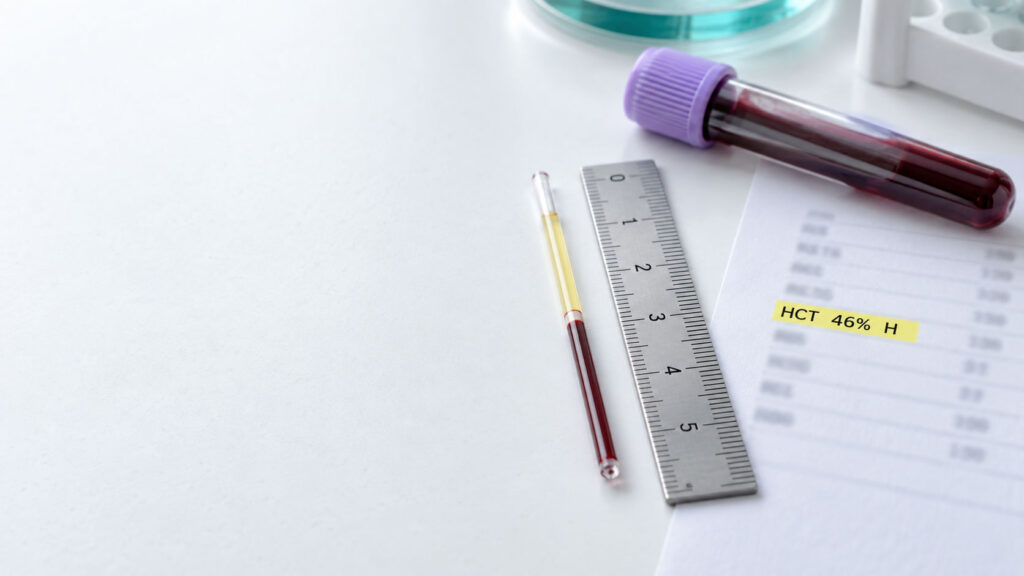
A woman with a 45% hematocrit gets a red “H” flag under Cleveland Clinic’s range. Check that same number against Mayo Clinic’s range, and it’s normal. Same blood, same person, two different verdicts.
Table of Contents
That gap tells you a lot about an abnormal HCT blood test. The flag is a signal to look closer, not a diagnosis. Below, you’ll learn how to read your number, what usually causes it, and what doctors check next.
Quick Answer: Hematocrit (HCT) is the percentage of your blood made up of red blood cells. Typical adult ranges run about 41% to 50% for men and 36% to 44% (up to 47% at some labs) for women. Low HCT most often points to iron deficiency or blood loss. High HCT most often comes from dehydration, smoking, testosterone, or certain diabetes drugs. One mildly abnormal result usually means repeating the test and reviewing your full CBC.
The most common causes of an abnormal HCT blood test:
- Iron deficiency from heavy periods or slow GI bleeding (low)
- Vitamin B12 or folate deficiency (low)
- Chronic kidney disease or long-term inflammation (low)
- Dehydration (high)
- Smoking, sleep apnea, or lung disease (high)
- Testosterone therapy or SGLT2 inhibitors (high)
- Polycythemia vera, an uncommon bone marrow disorder (high)
At a Glance
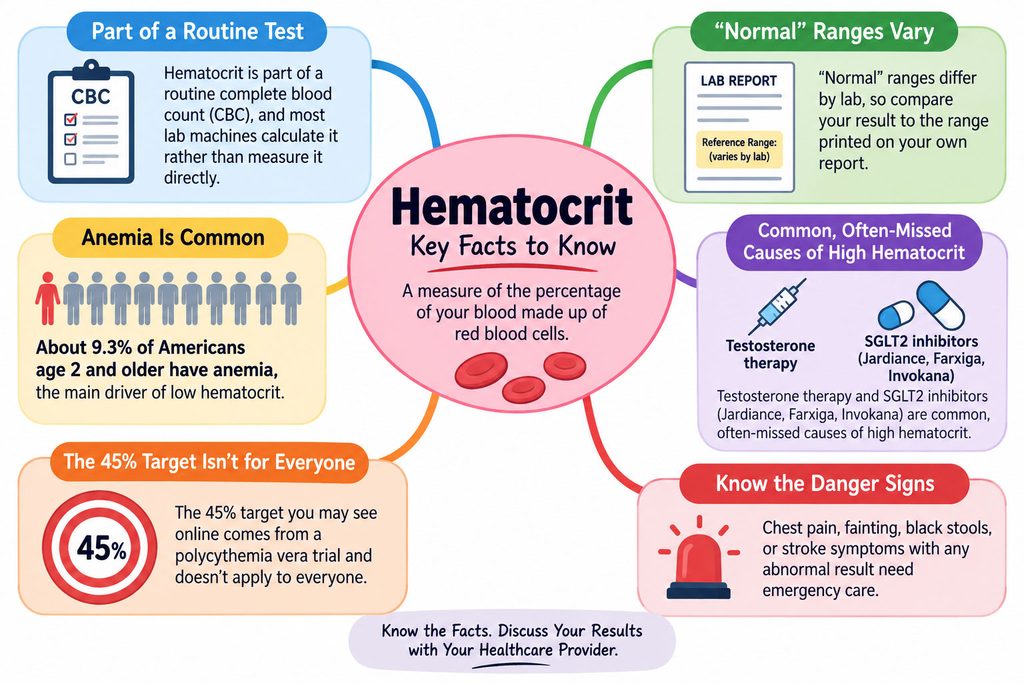
- Hematocrit is part of a routine complete blood count (CBC), and most lab machines calculate it rather than measure it directly.
- “Normal” ranges differ by lab, so compare your result to the range printed on your own report.
- About 9.3% of Americans age 2 and older have anemia, the main driver of low hematocrit.
- Testosterone therapy and SGLT2 inhibitors (Jardiance, Farxiga, Invokana) are common, often-missed causes of high hematocrit.
- The 45% target you may see online comes from a polycythemia vera trial and doesn’t apply to everyone.
- Chest pain, fainting, black stools, or stroke symptoms with any abnormal result need emergency care.
What an HCT Blood Test Actually Measures
Your Blood, by Volume
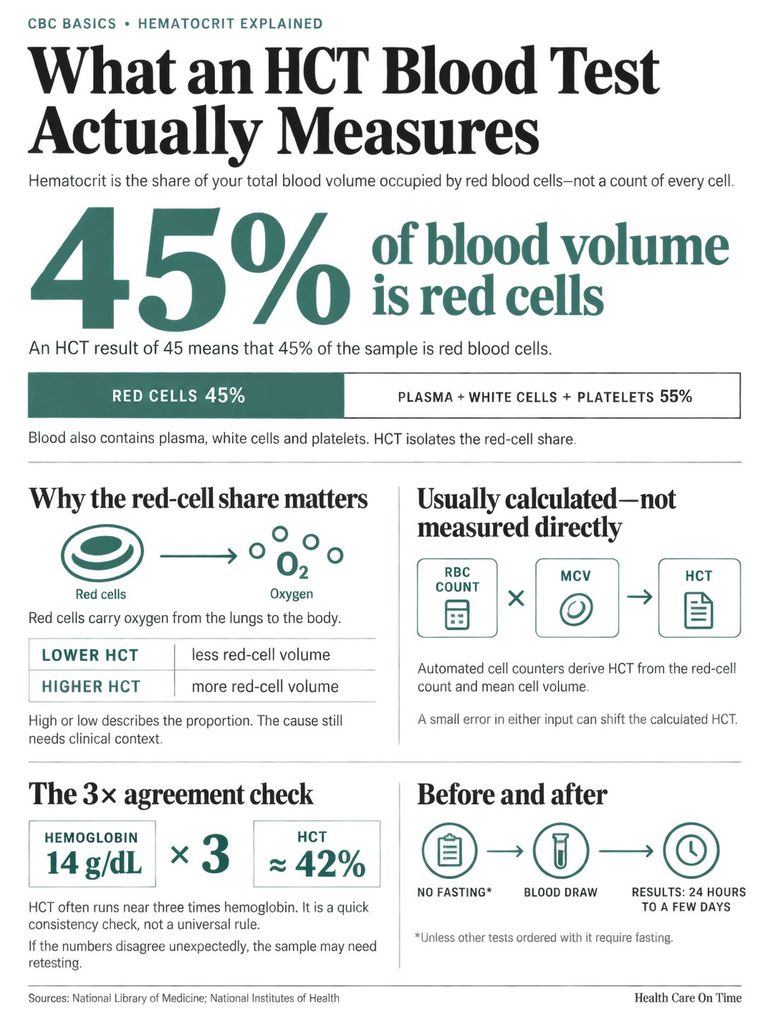
Blood is made of red cells, white cells, platelets, and plasma (the fluid part). Hematocrit is the share taken up by red cells. A result of 45 means 45% of your blood is red blood cells.
Red cells carry oxygen from your lungs to every tissue. Too few, and your organs get less oxygen. Too many, and your blood thickens and flows more slowly.
The test is also called packed cell volume. You won’t need to fast or make other preparations, and results usually take anywhere from 24 hours to a few days.
Why the Number Is Usually Calculated, Not Measured
Most results pages skip this detail. Hematocrit can be measured directly by spinning blood in a centrifuge, but automated cell counters usually calculate it by multiplying the red cell count by the mean cell volume (MCV).
So a small error in red cell count or MCV carries straight into your HCT. Our medical reviewers note that an isolated HCT flag, with hemoglobin and red cell count inside range, rarely signals disease on its own.
The 3x Rule: Checking HCT Against Hemoglobin
Hematocrit usually runs about three times your hemoglobin value. A hemoglobin of 14 g/dL pairs with a hematocrit near 42%.
If your two numbers roughly follow that rule, they agree with each other. If they don’t, ask whether the sample should be repeated.
Normal Hematocrit Range (and Why Labs Disagree)
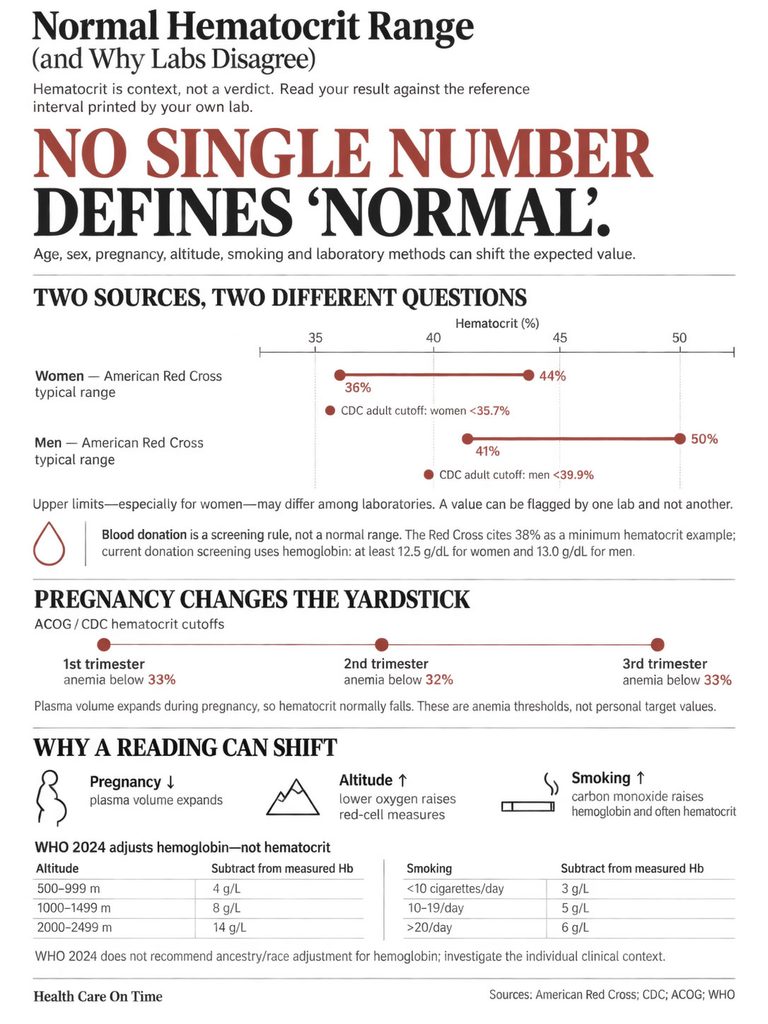
Every lab sets its own normal band. Mayo Clinic explains that typical ranges vary with race, age, and sex, and that each lab defines a healthy range from the population in its area. That’s why published US ranges don’t match.
| Source | Adult Men | Adult Women | Notes |
| Cleveland Clinic | 41% to 50% | 36% to 44% | Newborns 45% to 61%; infants 32% to 42% |
| Mayo Clinic | 41% to 50% | 36% to 47% | Children 15 and younger vary by age and sex |
| NIH Clinical Methods (textbook) | 40% to 54% | 36% to 48% | Older reference range some labs still use |
| ACOG (pregnancy) | Not applicable | Anemia below 33% (1st and 3rd trimester), below 32% (2nd) | Plasma expansion lowers HCT |
One more number you may run into: the American Red Cross treats 38% as the minimum hematocrit for donating blood. That’s an eligibility floor, not a diagnostic range.
Why a 3-Point Gap Matters
Look at the female upper limit: 44% at Cleveland Clinic, 47% at Mayo Clinic, 48% in the NIH textbook. A woman at 46% is “high” by one standard and normal by another.
Patients booking a CBC through HealthCareOnTime often ask why a result that was fine last year is flagged now. Frequently, the answer is a different lab with a different band, not a change in their blood.
Pregnancy, Altitude, and Smoking Shift Your Baseline
Pregnancy expands plasma more than red cells, so hematocrit drops naturally. ACOG and the CDC define anemia in pregnancy as hematocrit below 33% in the first and third trimesters and below 32% in the second.
Altitude pushes hematocrit up because thinner air triggers more red cell production. Under WHO’s 2024 guidance, altitude adjustments now start at 500 meters instead of 1,000. That’s about 1,640 feet; Denver sits at 5,280.
Smoking raises it too, because carbon monoxide binds hemoglobin and your body compensates. WHO’s evidence review found smokers’ hemoglobin averaged 3.3 g/L higher than nonsmokers’, with a stronger effect in women. That’s roughly one hematocrit point.
High vs Low Hematocrit: Side-by-Side
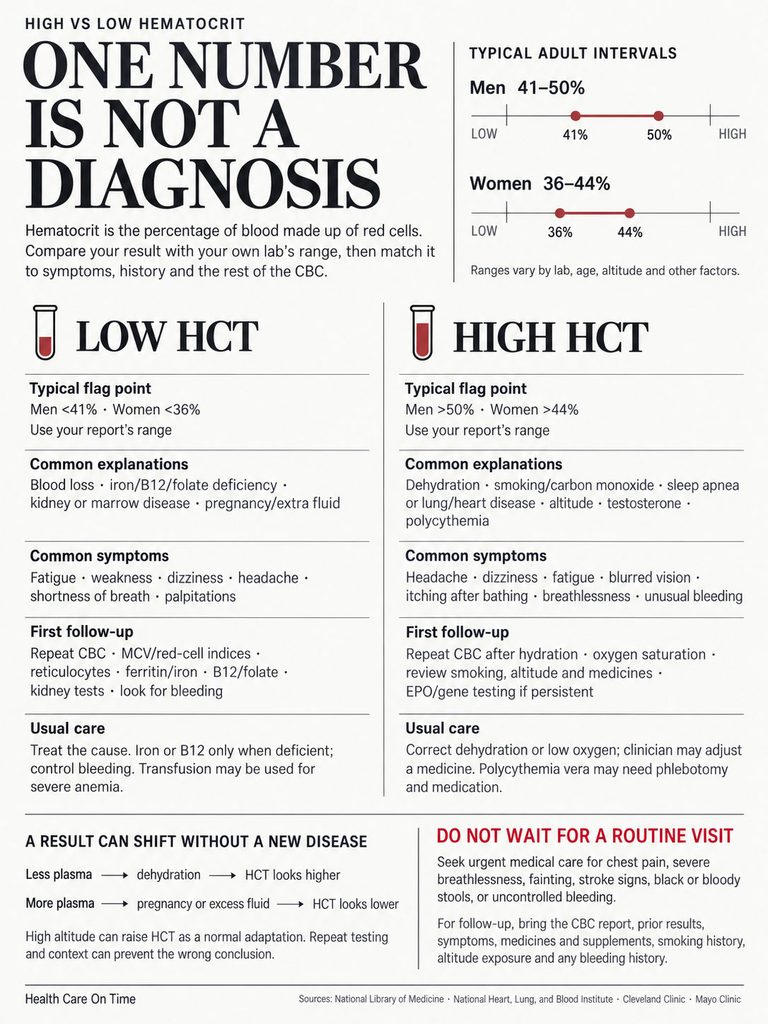
Match your result with its most likely explanation before your follow-up visit.
| Feature | Low HCT | High HCT | Falsely Abnormal Result |
| Typical flag point (adults) | Below about 41% (men) or 36% (women) | Above about 50% (men) or 44% to 48% (women), by lab | Within 1 to 2 points of the cutoff |
| Most common US cause | Iron deficiency from heavy periods or GI blood loss | Dehydration, smoking, testosterone therapy | Dehydration on draw day, IV fluids, lab-to-lab range differences |
| Other causes | B12 or folate deficiency, kidney disease, inflammation, hemolysis, marrow disease | Sleep apnea, lung disease, altitude, SGLT2 inhibitors, polycythemia vera | Recent transfusion or recent heavy bleeding (early readings are unreliable) |
| Common symptoms | Fatigue, breathlessness on stairs, pale skin, cold hands, ice cravings | Often none; headache, dizziness, flushed face, itching after hot showers | None |
| First tests ordered | Repeat CBC, ferritin, iron panel, B12, folate, reticulocyte count | Repeat CBC after hydration, oxygen level, EPO level, JAK2 if persistent | Repeat CBC in 1 to 4 weeks |
| Urgent signs | Chest pain, fainting, black or bloody stools | Stroke symptoms, chest pain, swollen painful leg, sudden vision change | Only if symptoms appear |
| Usual fix | Treat the cause; oral iron raises hemoglobin about 1 g/dL in a month | Fluids, quitting smoking, CPAP, testosterone adjustment, phlebotomy for PV | A clean repeat test |
Why Your Hematocrit Is Low: 7 Common Causes
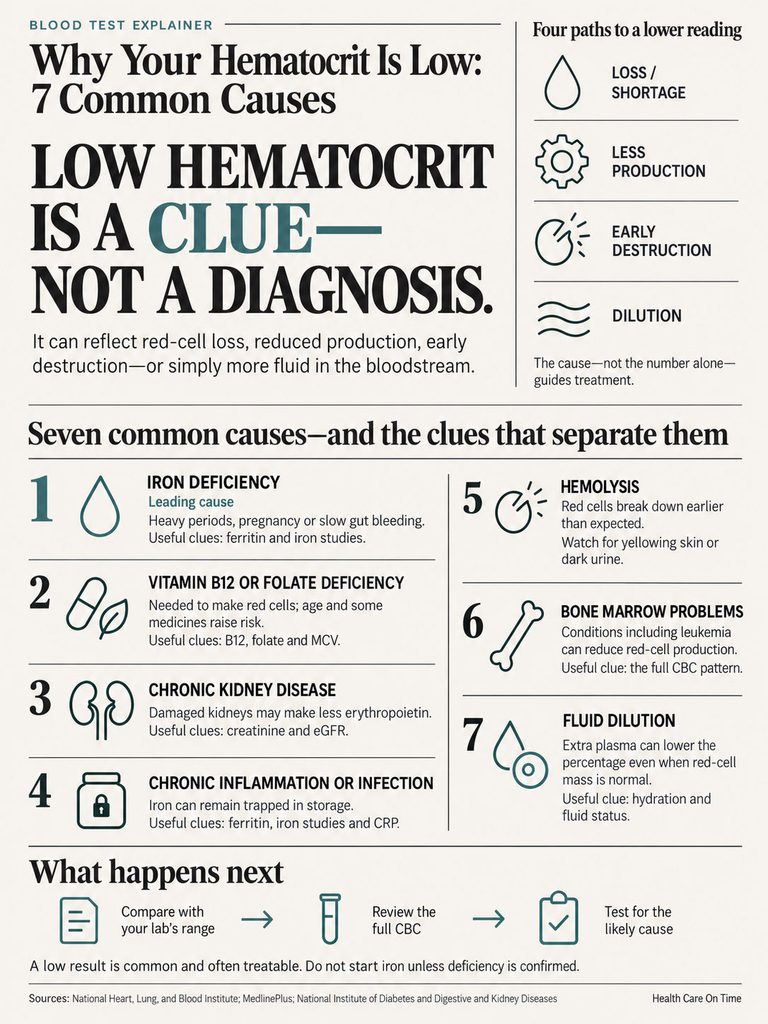
Low hematocrit usually means anemia, or too few healthy red cells. Cleveland Clinic sorts the reasons into three buckets: blood loss, a bone marrow that isn’t making enough red cells, or red cells dying earlier than usual.
1. Iron Deficiency
This is the leading cause in the US. Heavy periods, pregnancy, frequent blood donation, and slow bleeding from the gut drain iron stores over months.
Your MCV often drops (smaller red cells), and ferritin comes back low. Low-iron diets can add to the problem but rarely explain it alone in adults.
2. Vitamin B12 or Folate Deficiency
Your marrow needs both vitamins to build red cells. Without them, cells come out larger (high MCV) and fewer in number.
Risk rises with age, long-term metformin or acid-reducer use, weight-loss surgery, and strict vegan diets without supplements.
3. Chronic Kidney Disease
Your kidneys make erythropoietin (EPO), the hormone that tells your marrow to produce red cells. Damaged kidneys make less, so hematocrit drifts down. A metabolic panel with creatinine and eGFR checks for this.
4. Chronic Inflammation or Infection
Autoimmune disease, long-term infections, and some cancers lock iron in storage so your marrow can’t use it. This “anemia of inflammation” can mimic iron deficiency, so doctors read ferritin and CRP together.
5. Hemolysis
Here, red cells break down early. Inherited conditions (sickle cell disease, G6PD deficiency), autoimmune reactions, and some medications can cause it. Clues include yellowing skin, dark urine, and a high reticulocyte count.
6. Bone Marrow Problems
Leukemia, myelodysplastic syndromes, chemotherapy, and marrow failure all cut production. These usually disturb white cells or platelets too, which is why your full CBC matters more than HCT alone.
7. Fluid Dilution
Pregnancy, hospital IV fluids, and conditions that expand plasma dilute your red cells. Your red cell mass may be normal; the fluid around it has simply grown.
Why Your Hematocrit Is High: 8 Common Causes
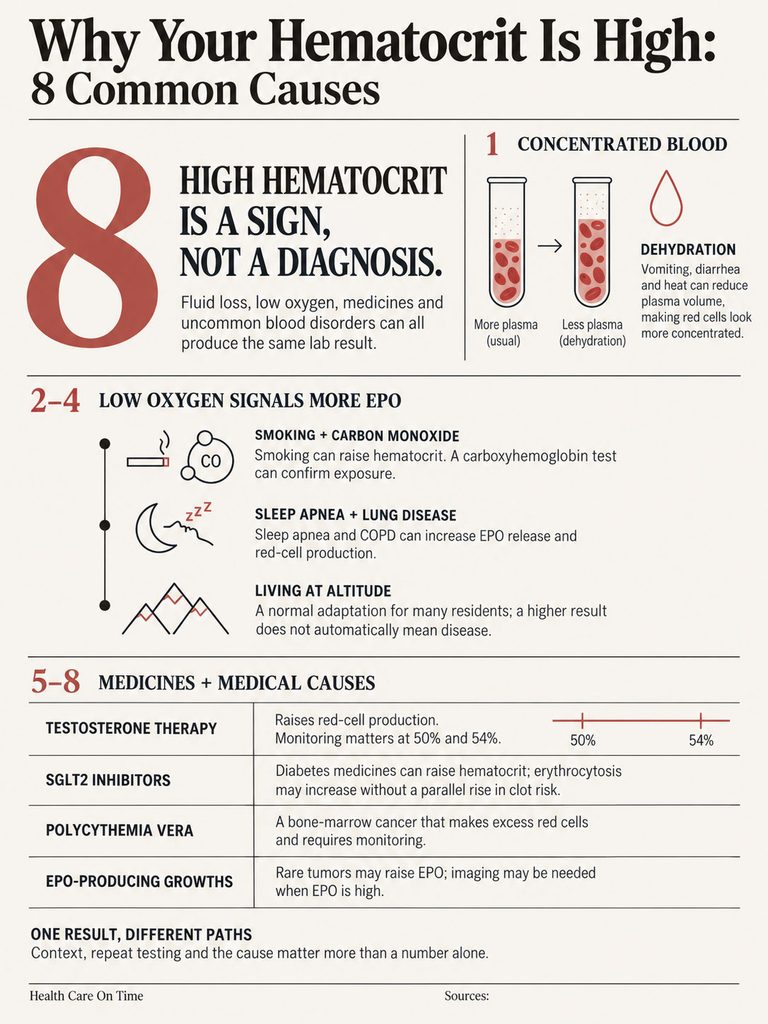
High hematocrit follows one of two routes. Either plasma shrinks (the fluid drops) or your marrow makes extra red cells. The first is common and often harmless; the second needs an explanation.
1. Dehydration
When plasma volume falls, red cells become more concentrated. Vomiting, diarrhea, heat, long workouts, heavy drinking, and diuretics can all do it. Mayo Clinic lists severe dehydration among situations where hematocrit rises even though the person isn’t sick.
A repeat CBC after a few days of normal fluid intake usually settles the question.
2. Smoking and Carbon Monoxide
Smokers often run persistently higher, as covered above. A carboxyhemoglobin blood test can confirm carbon monoxide exposure, whether from cigarettes or a faulty home heater.
3. Sleep Apnea and Lung Disease
Low oxygen from obstructive sleep apnea, COPD, or pulmonary fibrosis pushes your kidneys to release more EPO. Cleveland Clinic lists sleep apnea, pulmonary fibrosis, and heart disease among causes of high hematocrit. Loud snoring and morning headaches are clues worth mentioning.
4. Living at Altitude
Residents of Colorado, Utah, and New Mexico often run higher, and that’s normal adaptation. Cleveland Clinic notes that high altitude can raise hematocrit without signaling a problem.
5. Testosterone Therapy
Testosterone directly stimulates red cell production, so rising hematocrit is an expected effect that needs monitoring.
In a study of 282 people on weekly injectable testosterone, 12.6% passed 50.4% within 20 months. Only 0.6% passed 54%.
A 2025 Blood Advances review found erythrocytosis rates from 0% to 22% depending on formulation. Injections, higher doses, and older age all raised the risk.
AUA 50% vs Endocrine Society 54%
The two major US guidelines draw the line differently. The AUA advises holding testosterone above 50% to look for a cause, then lowering or pausing it at 54% or higher.
The Endocrine Society advises holding it above 54% until hematocrit normalizes, then restarting at a lower dose. Phlebotomy is another accepted option.
In cases reviewed by our medical team, the usual fix is a dose or formulation change rather than stopping therapy. Bottom line: above 50%, call your prescriber; above 54%, don’t wait for your next visit.
6. SGLT2 Inhibitors (Jardiance, Farxiga, Invokana)
These diabetes, heart, and kidney drugs raise hematocrit in many users. Almost no consumer health page mentions it.
What the Latest Data Show
A 2025 cohort of 137,552 adults with type 2 diabetes compared SGLT2 inhibitors with DPP-4 inhibitors. Hematocrit rose 1.4 points, and erythrocytosis became 5.5 points more common.
The reassuring part: new erythrocytosis wasn’t linked to more heart attacks, strokes, or venous clots. A 2026 meta-analysis of three randomized trials put the average rise at 2.29 points versus placebo.
This effect now shows up in more than 12% of patients referred for JAK2 testing. One caution: a post hoc analysis of the CANVAS and CREDENCE trials suggested men with erythrocytosis on canagliflozin may face higher clot risk, a signal not seen in women.
Patients commonly ask us whether to stop the drug. Bottom line: don’t stop it on your own, since its heart and kidney benefits are well established; tell your prescriber so other causes get ruled out.
7. Polycythemia Vera
Polycythemia vera (PV) is a slow-growing bone marrow cancer that makes too many red cells, often with high white cells and platelets. A 2026 model estimated 88,943 Americans living with PV in 2025.
In the US REVEAL registry of 2,510 patients, the median age was 67. Nearly 9 in 10 (89.7%) were diagnosed after an abnormal blood test, and 95.8% of those tested carried the JAK2 V617F mutation.
Where the 45% Target Comes From
The CYTO-PV trial compared two targets in PV patients. Cardiovascular death or major clots hit 2.7% of those kept below 45%, versus 9.8% of those kept at 45% to 50%.
That’s why PV patients are held under 45%. It isn’t a target for healthy people, testosterone users, or anyone without a PV diagnosis.
8. EPO-Producing Growths (Rare)
Some kidney, liver, and uterine growths release EPO on their own. A high EPO level with no low-oxygen explanation usually prompts imaging.
Symptoms: What Abnormal HCT Can Feel Like
Low HCT Symptoms
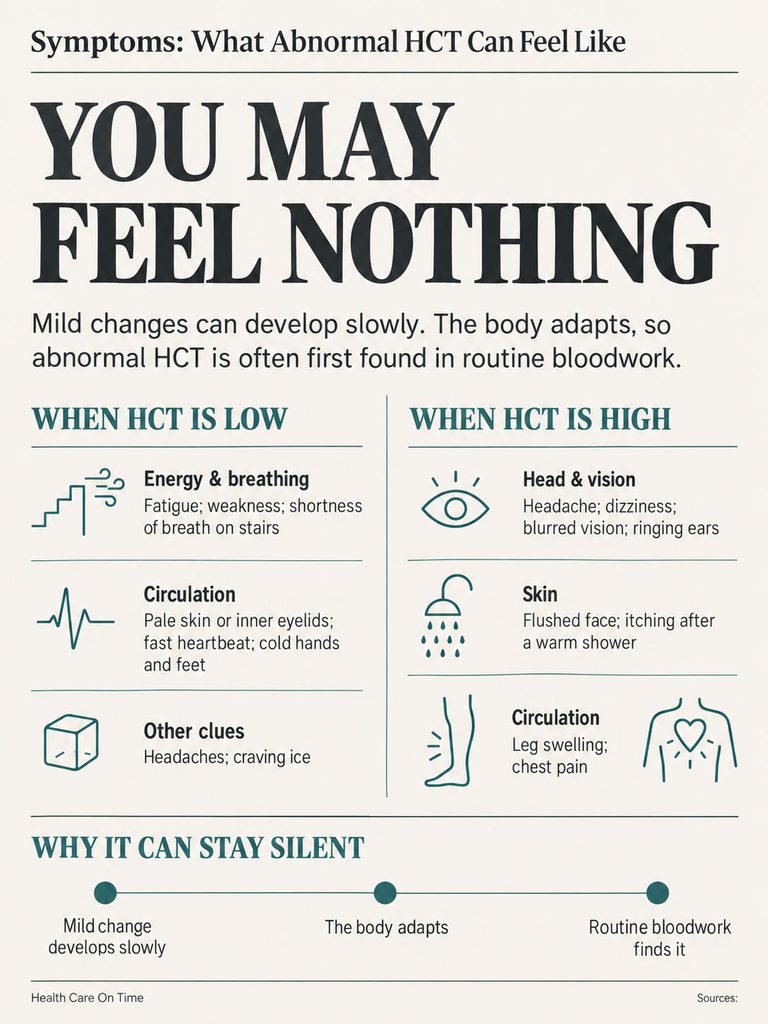
Fatigue, weakness, shortness of breath on stairs, pale skin or inner eyelids, a fast heartbeat, cold hands and feet, and headaches are common. Craving ice often points to low iron.
High HCT Symptoms
Headache, dizziness, a flushed face, blurred vision, and ringing ears can occur. Itching after a warm shower is a classic PV clue. Because thicker blood raises clot risk, leg swelling or chest pain always matters.
Why Many People Feel Nothing
Mild changes develop slowly, and your body adapts. Most abnormal HCT results turn up on routine bloodwork, which is exactly how most PV cases are caught.
Who Gets Abnormal Hematocrit in the US
Low hematocrit is common. From August 2021 to August 2023, anemia affected 9.3% of Americans age 2 and older, with a higher rate in females (13.0%) than males (5.5%).
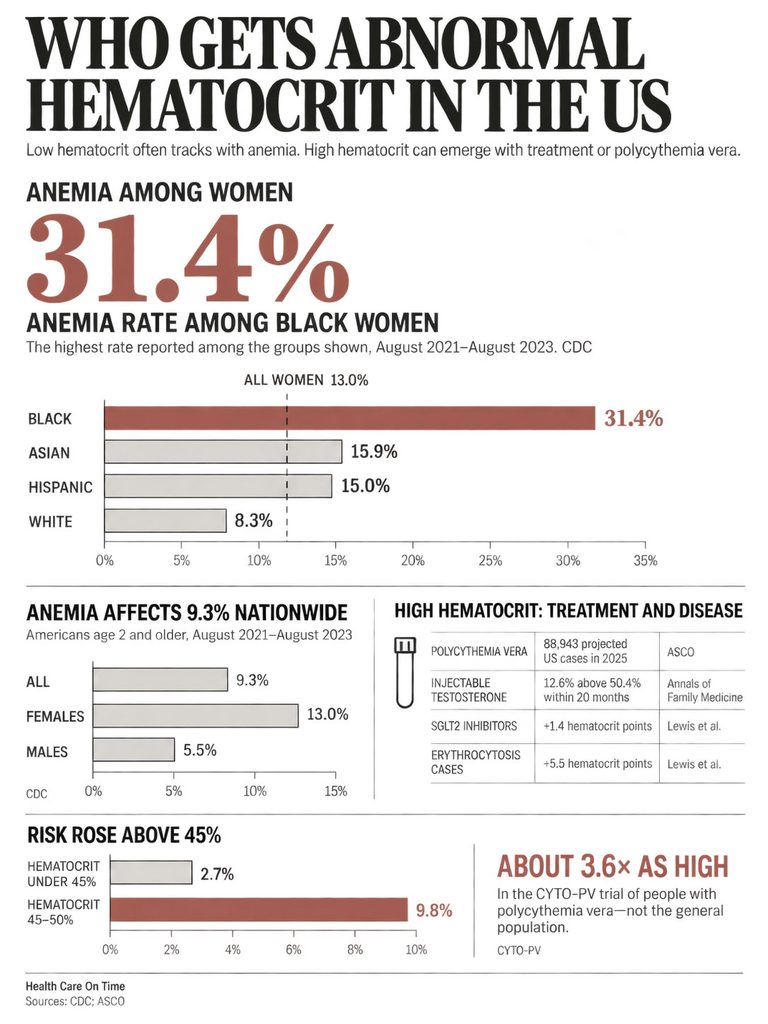
The burden isn’t even. Among women, Black women had the highest rate at 31.4%, compared with 15.9% for Asian, 15.0% for Hispanic, and 8.3% for White women.
High hematocrit, meanwhile, is increasingly drug-related as testosterone and SGLT2 inhibitor use expands.
| Statistic | Figure | Source |
| US anemia prevalence, age 2 and older | 9.3% | CDC NCHS Data Brief 519 (2021 to 2023) |
| Anemia in females vs males | 13.0% vs 5.5% | CDC NCHS Data Brief 519 |
| Anemia in Black non-Hispanic women vs White women | 31.4% vs 8.3% | CDC NCHS Data Brief 519 |
| Americans living with polycythemia vera | 88,943 (2025 model) | ASCO 2026 abstract, via AJMC |
| PV cases found after an abnormal blood test | 89.7% | REVEAL registry, n=2,510 |
| Hematocrit rise on SGLT2 inhibitors vs DPP-4 inhibitors | +1.4 points; erythrocytosis +5.5 points | Lewis et al., JAMA Netw Open 2025, n=137,552 |
| Hematocrit above 50.4% within 20 months of injectable testosterone | 12.6% (0.6% above 54%) | Annals of Family Medicine 2023, n=282 |
| PV clots or cardiovascular death, HCT under 45% vs 45% to 50% | 2.7% vs 9.8% | CYTO-PV, NEJM 2013 |
| Smokers’ average hemoglobin vs nonsmokers | +3.3 g/L (about 1 HCT point) | WHO 2024 guideline evidence summary |
Medically Approved Next Steps After an Abnormal HCT Blood Test
Step 1: Repeat the CBC
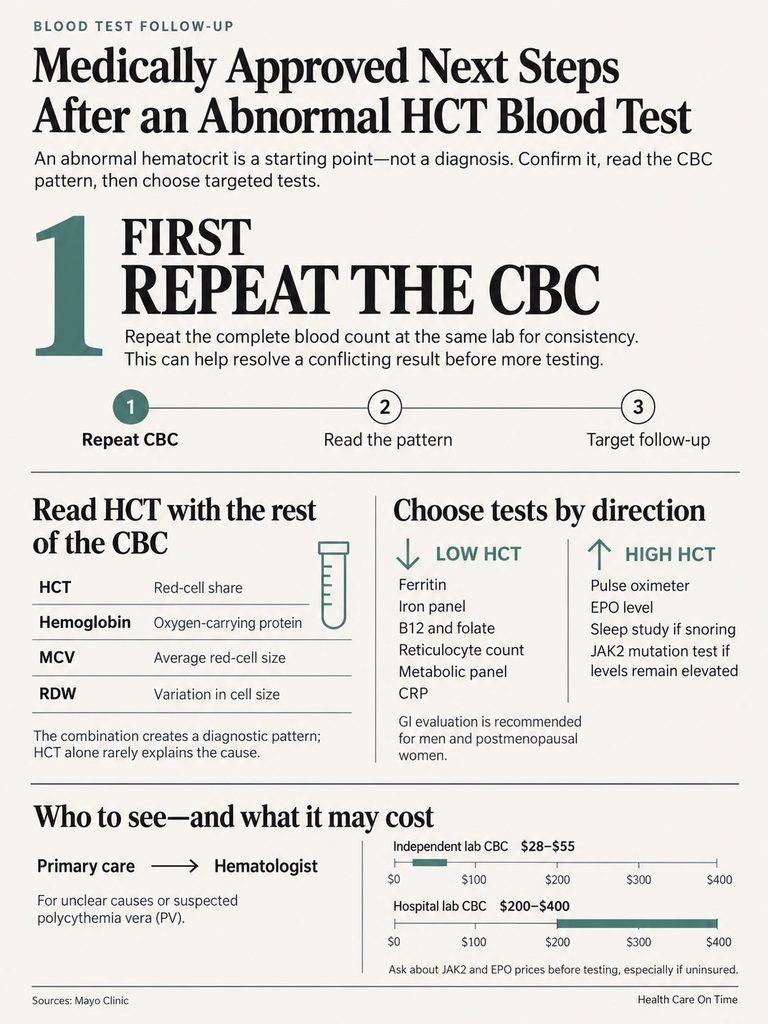
Get it at the same lab if you can, after normal fluid intake and no hard workout the day before. Mayo Clinic notes that conflicting or unexpected results often lead to a repeat test plus other blood work.
Our medical reviewers recommend a clean repeat before any further workup for borderline flags.
Step 2: Read HCT With Hemoglobin, MCV, and RDW
Patterns point toward causes:
- Low HCT plus low MCV: iron deficiency or thalassemia trait
- Low HCT plus high MCV: B12 or folate deficiency, alcohol, thyroid or liver disease
- Low HCT plus normal MCV: kidney disease, inflammation, early iron loss, or recent bleeding
- High HCT plus high white cells or platelets: possible polycythemia vera
- High HCT with everything else normal: dehydration, smoking, medications, or sleep apnea
Step 3: Targeted Follow-Up Tests
For Low HCT
Expect ferritin, an iron panel, B12, folate, a reticulocyte count, a metabolic panel for kidney function, and CRP. For men and postmenopausal women with iron deficiency, doctors usually recommend a GI evaluation, since slow gut bleeding is a leading cause.
For High HCT
Expect a pulse oximeter reading, an EPO level, and a sleep study if you snore. A JAK2 mutation test follows if HCT stays high or other counts are also up.
Who to See
Start with your primary care doctor, who can also order most follow-up tests through telehealth. A hematologist steps in when the cause stays unclear, PV is suspected, or low counts involve more than one cell line.
What These Tests Cost in the US
A CBC costs roughly $28 to $55 at an independent lab like Quest or Labcorp, versus $200 to $400 through a hospital lab. Insurance usually covers a CBC ordered for a medical reason. JAK2 and EPO tests cost more, so ask for a Good Faith Estimate if you’re uninsured.
When an Abnormal Hematocrit Is Urgent
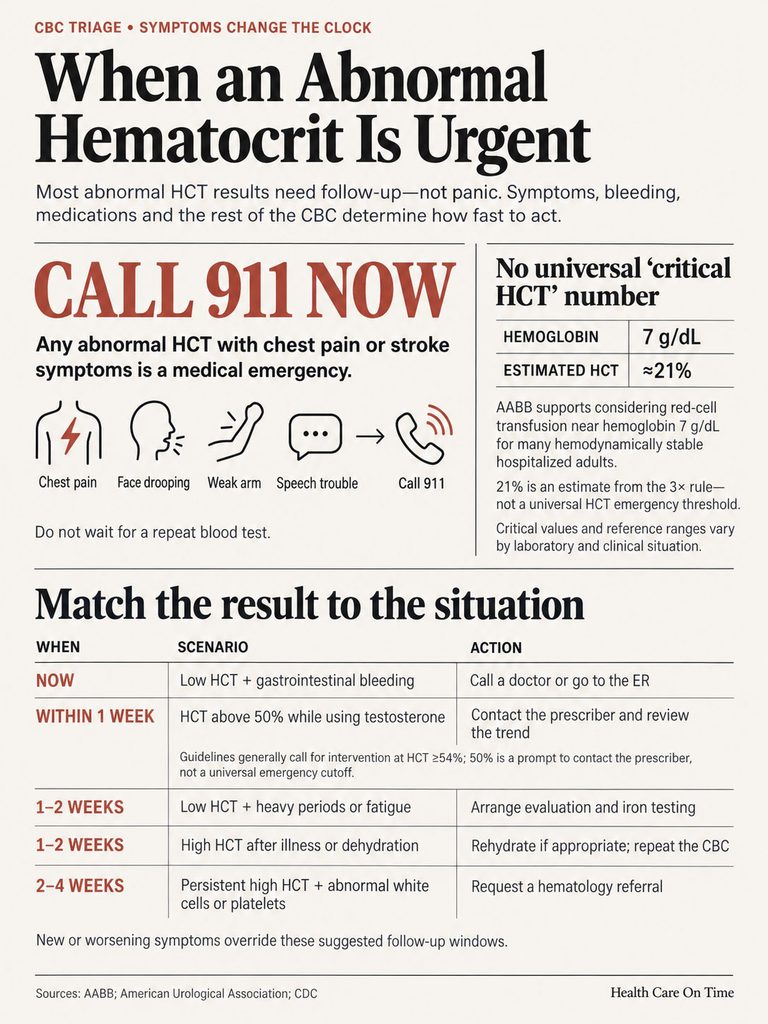
Call 911 or go to the ER if an abnormal result comes with any of these:
- Chest pain or pressure
- Fainting or near-fainting
- Black, tarry, or bloody stools, or vomiting blood
- Bleeding that soaks a pad or tampon every hour for several hours
- Stroke signs: face drooping, arm weakness, or slurred speech
- Severe shortness of breath at rest
- A painful, swollen leg, especially with sudden breathlessness
There’s no single national “critical” hematocrit; each lab sets its own limits. For context, the 2023 AABB guidelines generally support transfusion at a hemoglobin of 7 g/dL, roughly a 21% hematocrit. At the other end, hematocrit near 60% can impair flow through the smallest blood vessels.
Our medical team built this table from the scenarios patients bring to us most often.
| Scenario | What It May Mean | Recommended Action | Timeframe |
| HCT 1 to 2 points out of range, you feel fine, rest of CBC normal | Normal variation, hydration, or lab range differences | Repeat CBC at the same lab after normal hydration | 2 to 4 weeks or next visit |
| Low HCT plus heavy periods or fatigue | Iron deficiency anemia | Ferritin and iron panel; don’t self-start iron | Within 1 to 2 weeks |
| Low HCT plus black, tarry, or bloody stools | GI bleeding | Call your doctor; ER if dizzy or faint | Same day |
| Low HCT, man or postmenopausal woman, no clear cause | Hidden GI blood loss, kidney, or marrow issue | Ask about GI evaluation and a metabolic panel | Within 2 weeks |
| High HCT after illness, heat, or low fluid intake | Hemoconcentration | Rehydrate for several days, then repeat CBC | 1 to 2 weeks |
| High HCT above 50% on testosterone therapy | Testosterone-induced erythrocytosis | Contact prescriber about dose or formulation | Within 1 week; sooner above 54% |
| High HCT on Jardiance, Farxiga, or Invokana | Often an expected drug effect | Keep taking it; tell prescriber; rule out other causes | Next visit, sooner if symptoms |
| High HCT that persists, or high white cells or platelets too | Possible polycythemia vera | Hematology referral, EPO level, JAK2 test | Within 2 to 4 weeks |
| Any abnormal HCT plus chest pain, stroke signs, or fainting | Medical emergency | Call 911 | Immediately |
How Hematocrit Gets Back Into Range
Treating Low HCT
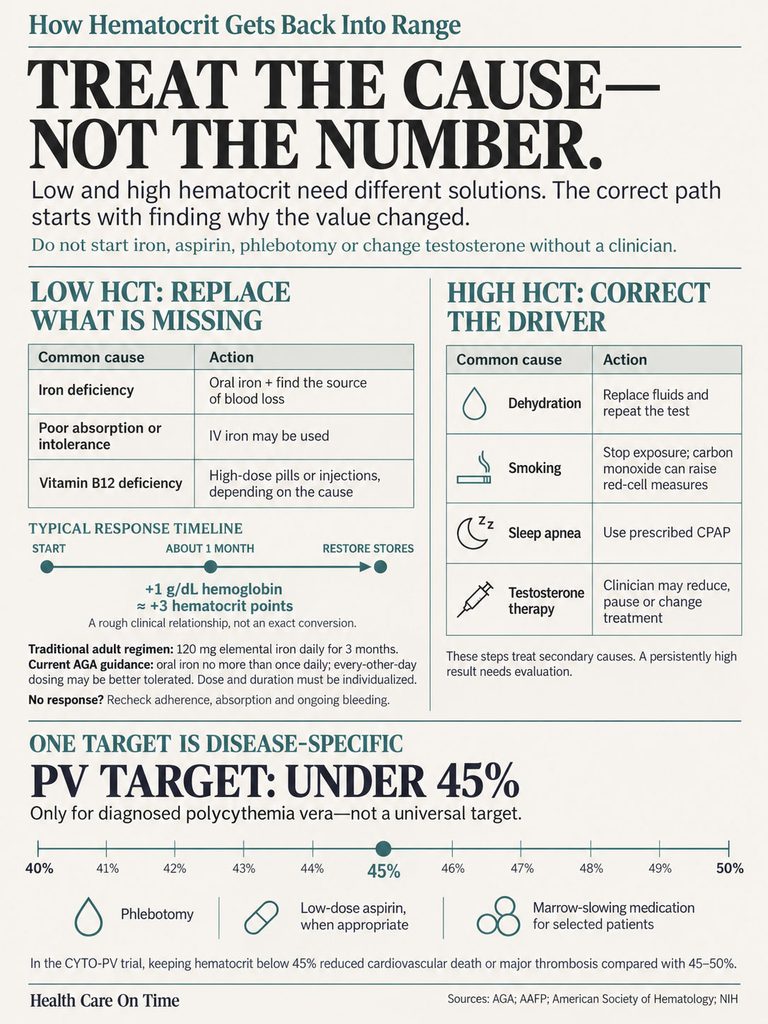
Iron deficiency responds well to treatment. Per the AAFP, adults typically take 120 mg of elemental iron daily for three months. A 1 g/dL hemoglobin rise after one month confirms the response, and therapy continues three months past correction to refill iron stores.
Since hematocrit tracks hemoglobin, that first-month rise equals roughly 3 hematocrit points. B12 deficiency is treated with pills or injections, and any bleeding source gets fixed directly. IV iron helps people who can’t absorb or tolerate pills.
Treating High HCT
Dehydration corrects with fluids. Quitting smoking, using CPAP for sleep apnea, and adjusting testosterone address the most common secondary causes.
For PV, treatment centers on phlebotomy (removing about a pint of blood at a time), low-dose aspirin, and sometimes medication to slow the marrow. CYTO-PV shows why the under-45% target matters for this group.
6 Mistakes That Make Abnormal Hematocrit Worse
Our medical reviewers see these repeatedly:
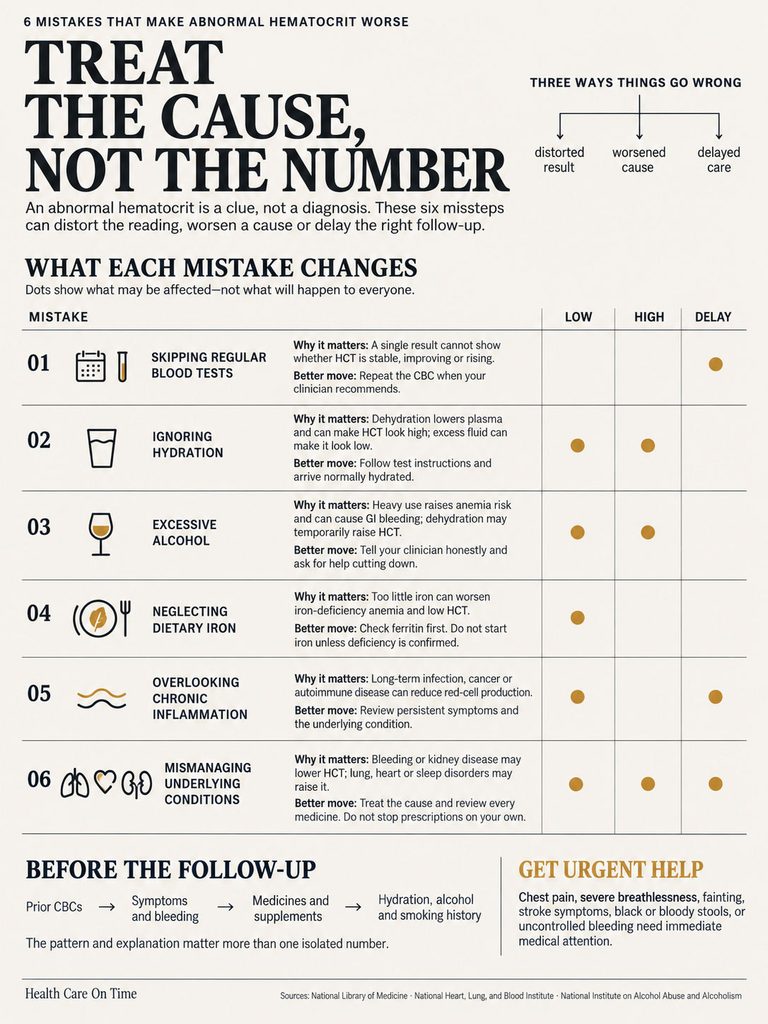
- Starting iron without testing. Iron can build up to harmful levels, and taking it blindly can hide a slow GI bleed.
- Chugging water right before the draw. Normal hydration gives an accurate reading; overloading won’t fix a true red cell excess.
- Applying the PV 45% target to yourself. That goal comes from one disease and one trial.
- Leaving medications out of the conversation. Testosterone, SGLT2 inhibitors, and diuretics all move HCT.
- Self-scheduling blood donations on testosterone. Hiding a high HCT from your prescriber skips the dose review and can drain your iron.
- Comparing results across labs. A 3-point range difference can create a flag out of nothing.
Your 7-Step Action Plan
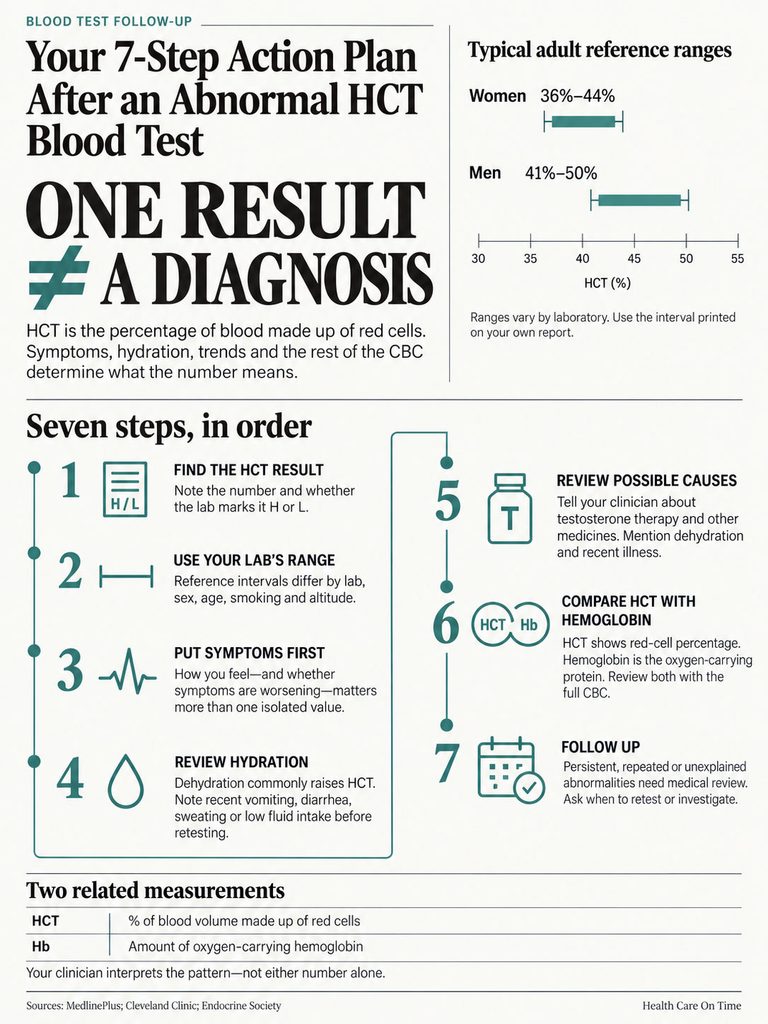
After an abnormal HCT blood test, work through these in order:
- Find the reference range printed on your own lab report.
- Check your hemoglobin, red cell count, MCV, white cells, and platelets.
- List every medication and supplement, especially testosterone, SGLT2 inhibitors, diuretics, and iron.
- Note symptoms, smoking, altitude, and recent illness or dehydration.
- Repeat the CBC at the same lab after normal hydration.
- Complete the targeted tests your doctor orders.
- Track the trend over time rather than reacting to one number.
Frequently Asked Questions
What is a normal hematocrit level for a woman?
Most US labs use about 36% to 44% for adult women, though Mayo Clinic extends the upper limit to 47% and some textbooks to 48%. Pregnancy lowers the range, and ACOG flags anemia below 33% in the first and third trimesters. Always compare against the range printed on your own lab report.
What is a normal hematocrit level for a man?
Cleveland Clinic and Mayo Clinic both list about 41% to 50% for adult men, while older textbook ranges stretch to 54%. Smoking, living at altitude, and testosterone can push a healthy man toward the top of the range, so your doctor reads the number alongside your history.
Is a hematocrit of 50 too high?
For women, yes, on nearly every US range. For men, 50% sits right at the upper edge. On testosterone therapy, AUA guidance treats anything above 50% as a reason to review treatment, while the Endocrine Society acts at 54%. A hydrated repeat CBC is the usual first step.
What hematocrit level is dangerous?
There’s no single national cutoff, since each lab sets its own critical values. As a rough guide, transfusion is generally considered when hemoglobin falls below 7 g/dL, about a 21% hematocrit. On the high side, levels near 60% can slow blood flow. Symptoms matter more than any one number.
Can dehydration cause high hematocrit?
Yes. When you lose fluid, plasma shrinks while your red cells stay the same, so the percentage rises. Vomiting, diarrhea, heat, and long workouts are common triggers. If dehydration was the cause, a repeat CBC after a few days of normal fluid intake usually comes back in range.
Can drinking water before a blood test lower hematocrit?
Normal hydration gives an accurate result, and that’s all you need. Drinking large amounts right before a draw may dilute the sample slightly, but it won’t change a true red cell excess. If your HCT stays high after normal hydration, fluid isn’t the explanation.
Does testosterone therapy raise hematocrit?
Yes. Testosterone directly stimulates red cell production, and injections raise it more than gels. In one 2023 study, 12.6% of people on weekly injections passed 50.4% within 20 months. Prescribers typically check hematocrit before starting, at 3, 6, and 12 months, then yearly.
Can Jardiance or Farxiga raise hematocrit?
Yes. SGLT2 inhibitors, including Jardiance, Farxiga, and Invokana, raise hematocrit by about 1.4 to 2.3 points on average. A 2025 study of more than 137,000 adults found no increase in heart attacks, strokes, or clots from this effect. Keep taking the drug and tell your prescriber.
What’s the difference between hematocrit and hemoglobin?
Hemoglobin is the oxygen-carrying protein inside red cells, measured in grams per deciliter. Hematocrit is the percentage of blood volume made of red cells. They usually move together, with hematocrit about three times the hemoglobin value. Doctors read both, plus MCV, to classify anemia.
Is low hematocrit normal during pregnancy?
A mild drop is expected because plasma volume grows faster than red cell mass. ACOG considers anemia present below 33% in the first and third trimesters and below 32% in the second. Iron deficiency is the most common cause below those lines, and screening happens early and again at 24 to 28 weeks.
Is abnormal hematocrit a sign of cancer?
Usually not. Iron deficiency, dehydration, smoking, and medications explain most abnormal results. Blood cancers like leukemia or polycythemia vera can cause it, but they typically disturb other CBC values too, such as white cells or platelets. Persistent, unexplained changes deserve follow-up and sometimes a hematology referral.
How long does it take for hematocrit to return to normal?
It depends on the cause. Dehydration corrects within days. With oral iron, hemoglobin should rise about 1 g/dL in the first month, roughly 3 hematocrit points, with full correction over one to three months. Because red cells live about 120 days, drug-related shifts settle gradually.
Disclaimer: This article is for general education and doesn’t replace advice from your doctor. Lab reference ranges vary, and only a clinician who knows your history can interpret your results. Don’t start, stop, or change any medication or supplement based on this information. If you have chest pain, fainting, heavy bleeding, or stroke symptoms, call 911.
References
- Cleveland Clinic: Hematocrit Test
- Mayo Clinic: Hematocrit Test
- MedlinePlus: Hematocrit Test
- CDC NCHS Data Brief 519: Anemia Prevalence, United States, August 2021 to August 2023
- Marchioli R, et al. Cardiovascular Events and Intensity of Treatment in Polycythemia Vera (CYTO-PV). NEJM 2013
- American Society of Hematology, The Hematologist: In Polycythemia Vera, 45 Is the Number
- Diagnosis, Management, and Outcomes of Drug-Induced Erythrocytosis: A Systematic Review. Blood Advances 2025
- Erythrocytosis in Gender-Affirming Care With Testosterone. Annals of Family Medicine 2023
- SGLT2 Inhibitor Use Linked to Increased Risk for Erythrocytosis, Not Thrombosis (Lewis et al., JAMA Netw Open 2025). Renal and Urology News
- SGLT2 Inhibitors and Secondary Polycythemia: Systematic Review and Meta-Analysis (2026)
- SGLT2i-Associated Erythrocytosis: Closing the Evidence Gap. Blood Advances 2025
- REVEAL: Clinical and Disease Characteristics of US Patients With Polycythemia Vera
- AJMC: Polycythemia Vera Prevalence to Near 100K by 2030
- WHO Guideline on Haemoglobin Cutoffs to Define Anaemia (2024): Summary of the Evidence
- The DHS Program: Impact of Updated WHO Hemoglobin Guidelines
- AAFP: Iron Deficiency Anemia, Evaluation and Management
- Red Blood Cell Transfusion: 2023 AABB International Guidelines. JAMA
- ACOG Practice Bulletin No. 233: Anemia in Pregnancy
- NIH Bookshelf, Clinical Methods: Hemoglobin and Hematocrit
- American Red Cross: Hematocrit and Hemoglobin