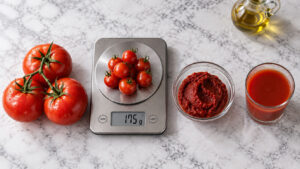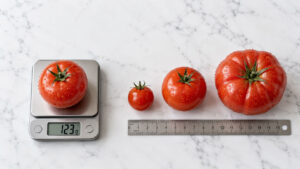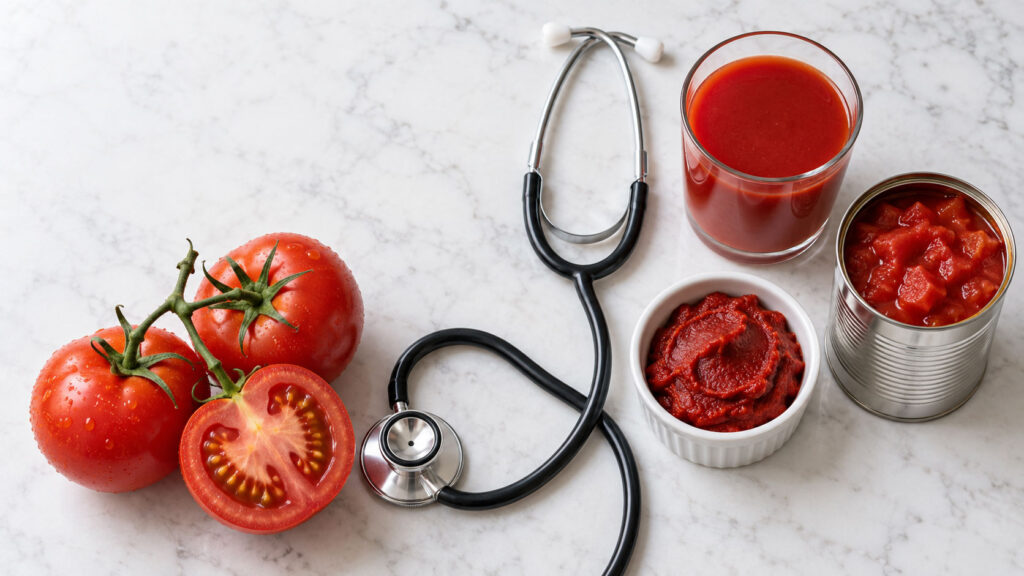
The same fruit that headlines every heart-healthy recipe roundup in America also appears by name on the potassium-restriction lists written into heart failure drug trial protocols. Both facts are accurate. Sorting out why is the whole story of tomatoes and your heart.
Quick Answer: Yes, tomatoes support heart health, but the evidence is uneven. Blood pressure has the strongest backing, graded high certainty in a 2026 review of pooled trials. LDL cholesterol and blood vessel function show moderate benefit. No trial has proven tomatoes prevent heart attacks. Research points to 5 to 30 mg of lycopene daily, about one to two tomatoes or half a cup of sauce.
What the evidence actually supports, ranked strongest to weakest:
- Lower blood pressure. High certainty from pooled randomized trials
- Lower LDL cholesterol. About 8.5 mg/dL from tomato foods
- Better blood vessel function. Flow-mediated dilation up 2.53 percentage points
- Lower inflammation. Interleukin-6 reduced in pooled trial data
- Fewer heart attacks and strokes. Population data only, never tested in a trial
At a Glance
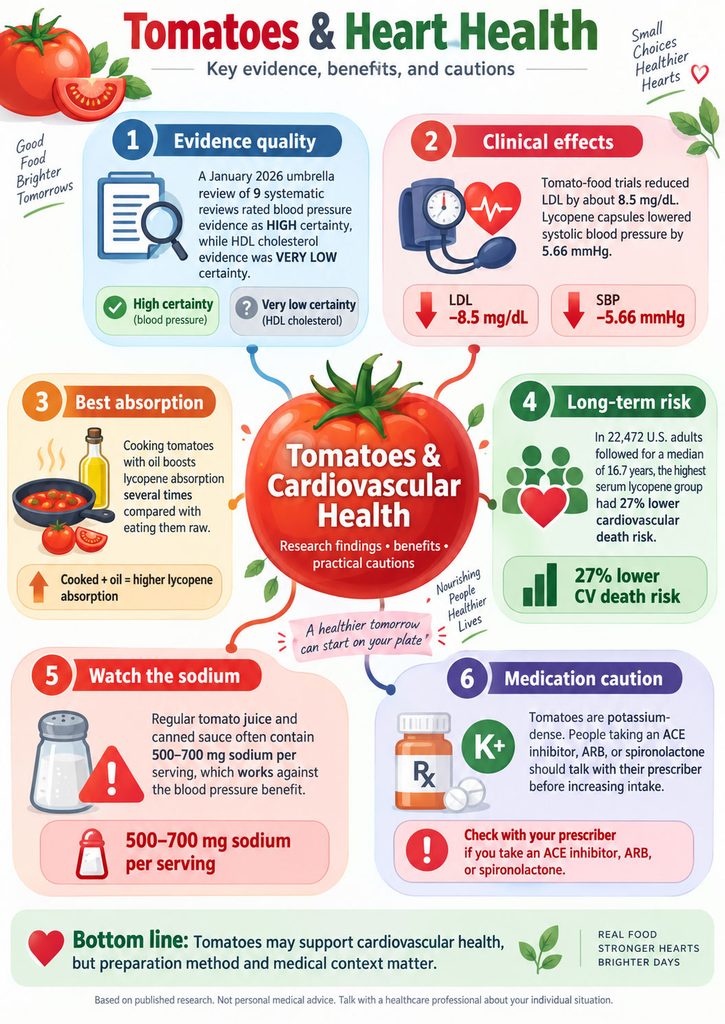
- A January 2026 umbrella review of nine systematic reviews graded blood pressure evidence high certainty and HDL cholesterol evidence very low certainty
- Tomato-food trials cut LDL by roughly 8.5 mg/dL, while lycopene capsules lowered systolic pressure by 5.66 mmHg
- Cooking tomatoes with oil multiplies lycopene absorption several times over compared with raw
- Among 22,472 US adults followed a median 16.7 years, the highest serum lycopene group had 27% lower cardiovascular death risk
- Regular tomato juice and canned sauce carry 500 to 700 mg of sodium per serving, working directly against the blood pressure benefit
- Tomatoes are potassium dense, so anyone on an ACE inhibitor, ARB, or spironolactone needs a prescriber conversation, not a blanket green light
The Short Answer, and Exactly How Strong It Is
Heart disease still kills more Americans than anything else. The American Heart Association’s 2026 Heart Disease and Stroke Statistics Update recorded 915,973 cardiovascular deaths in 2023, down from 941,652 the previous year but ahead of every other cause.
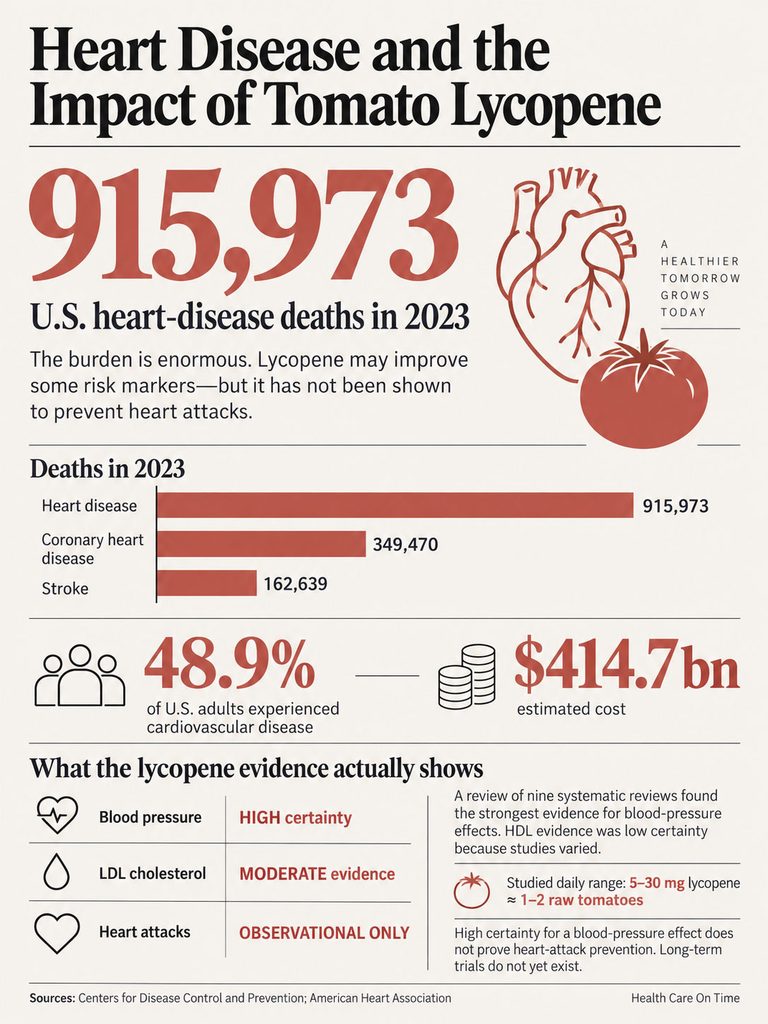
Coronary heart disease accounted for 349,470 of those deaths. Stroke accounted for 162,639. Between 2021 and 2023, roughly 130.6 million American adults, or 48.9%, had some form of cardiovascular disease, at a national cost of $414.7 billion.
Against numbers like that, a food that trims a few points off blood pressure is worth a serious look. The size of the effect matters, though, and so does the strength of the proof behind it.
What the newest evidence review concluded
The most current synthesis came out in Food & Function in January 2026, from researchers at Korea’s National Institute of Crop and Food Science. They pooled nine systematic reviews of intervention studies, seven carrying meta-analyses, and graded every one using AMSTAR 2 and GRADE.
Five moderate-to-high-quality meta-analyses survived the quality screen. Those five agreed on blood pressure. On lipids, they scattered.
The GRADE verdict is the part worth remembering. Blood pressure earned high certainty. HDL cholesterol earned very low certainty, because the underlying studies disagreed too sharply with each other.
Their practical takeaway was a dose: 5 to 30 mg of tomato-derived lycopene a day, which the authors translate as one or two raw tomatoes. Not one page currently ranking on this question prints that figure.
Why “high certainty” does not mean “prevents heart attacks”
High certainty in GRADE language means researchers are confident about an effect on a measured value. Here that value is blood pressure in millimeters of mercury.
It does not mean anyone ran a decade-long trial where the tomato group had fewer heart attacks. That study does not exist.
Our medical reviewers watch this distinction collapse constantly in nutrition coverage. A shift in a risk marker is a reasonable signal. It is not a promise about what happens to you in twenty years.
Three tiers of evidence, sorted honestly
Tier one, strongest. Blood pressure. Multiple randomized trials, pooled, graded high certainty.
Tier two, moderate. LDL cholesterol, endothelial function, and inflammatory markers. Real pooled effects, but wide variation between individual studies.
Tier three, observational only. Heart attacks, strokes, and death. Large population studies consistently tie higher tomato intake to lower risk, but observational data cannot rule out that tomato eaters simply live healthier lives across the board.
What Lycopene Is, and What It Does Inside an Artery
Lycopene is the pigment that makes a tomato red. Chemically it sits in the carotenoid family alongside beta carotene and lutein.
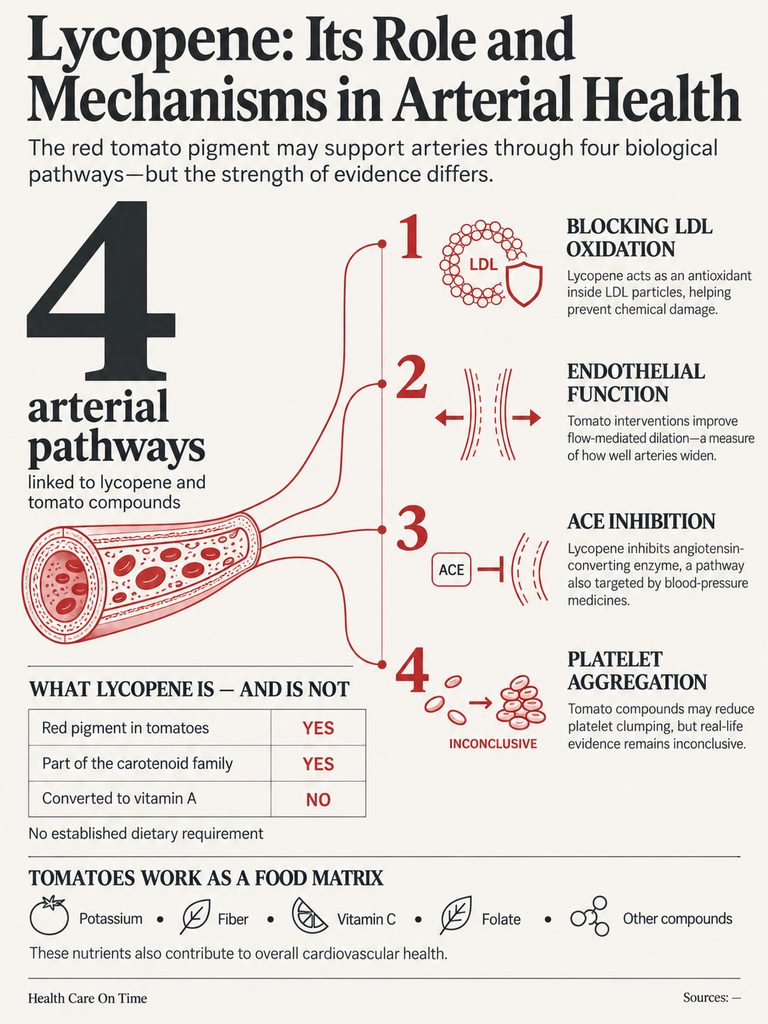
Unlike beta carotene, lycopene never converts into vitamin A. Science has identified no other essential job for it in human physiology.
That leads somewhere most articles skip past. Lycopene is not a vitamin. There is no Recommended Dietary Allowance, no deficiency disease, and no routine blood test your doctor orders to check your level.
Patients booking lipid panels with us occasionally ask whether they can get lycopene measured alongside their cholesterol. Research labs do measure it. Clinical labs generally do not, because no established reference range exists to interpret a result against.
Four mechanisms with human data behind them
Blocking LDL oxidation
Plaque does not begin forming the moment LDL cholesterol enters an artery wall. It begins when that LDL is chemically damaged by oxidation, turning it into something immune cells swarm, swallow, and get stuck on.
Lycopene is fat soluble, so it rides inside LDL particles themselves. Sitting there, it acts as an antioxidant on precisely the molecule that needs protection.
This is the oldest and most-cited mechanism. It is also, in fairness, the one where laboratory evidence runs well ahead of human outcome evidence.
Endothelial function and nitric oxide
The endothelium is the single-cell lining inside every blood vessel you own. Healthy endothelium releases nitric oxide, the signal that tells a vessel to relax and widen.
Researchers test this with flow-mediated dilation. A cuff briefly stops blood flow in the arm, then the artery is measured as flow returns. Poor expansion predicts future cardiac events.
A 2017 meta-analysis in Atherosclerosis covering 21 trials found tomato interventions improved flow-mediated dilation by 2.53 percentage points. On a test where healthy readings sit around 7 to 10%, that is a substantial move.
ACE inhibition, the same target as lisinopril
The 2026 umbrella review authors note that lycopene appears to inhibit angiotensin-converting enzyme activity, alongside scavenging free radicals and boosting nitric oxide production.
ACE is exactly what lisinopril, enalapril, and ramipril block. A tomato is nowhere close to a prescription in strength, but it pulls the same lever.
This may explain why blood pressure holds up as the strongest branch. There is a specific pharmacological pathway behind it, not a general antioxidant hand-wave.
Platelet aggregation
Tomatoes carry water-soluble compounds concentrated in the jelly around the seeds that reduce platelet clumping in laboratory testing. European regulators have reviewed health claims built on a water-soluble tomato concentrate on that basis.
Whether ordinary tomato eating changes clotting meaningfully in real people is unsettled. File this one under interesting rather than established.
What else is in the fruit
Lycopene takes the headlines, but a tomato is not a lycopene capsule wearing skin.
The same 2026 review points out that tomatoes also deliver phytoene and phytofluene, two colorless carotenoid precursors absorbed well in humans and now studied for vascular effects of their own.
Add potassium, fiber, vitamin C, folate, naringenin from the skin, and chlorogenic acid. A medium tomato supplies about 292 mg of potassium, which affects blood pressure on its own terms, independent of lycopene.
Across the metabolic panels our diagnostic network processes, potassium is a number most people never think about until a medication makes it one. Keep that in mind for the cautions section.
Fresh, Cooked, Canned, Juiced, or Capsule
This is where standard advice goes sideways. The form you pick changes both the lycopene dose and the sodium load, and those two usually move in opposite directions.
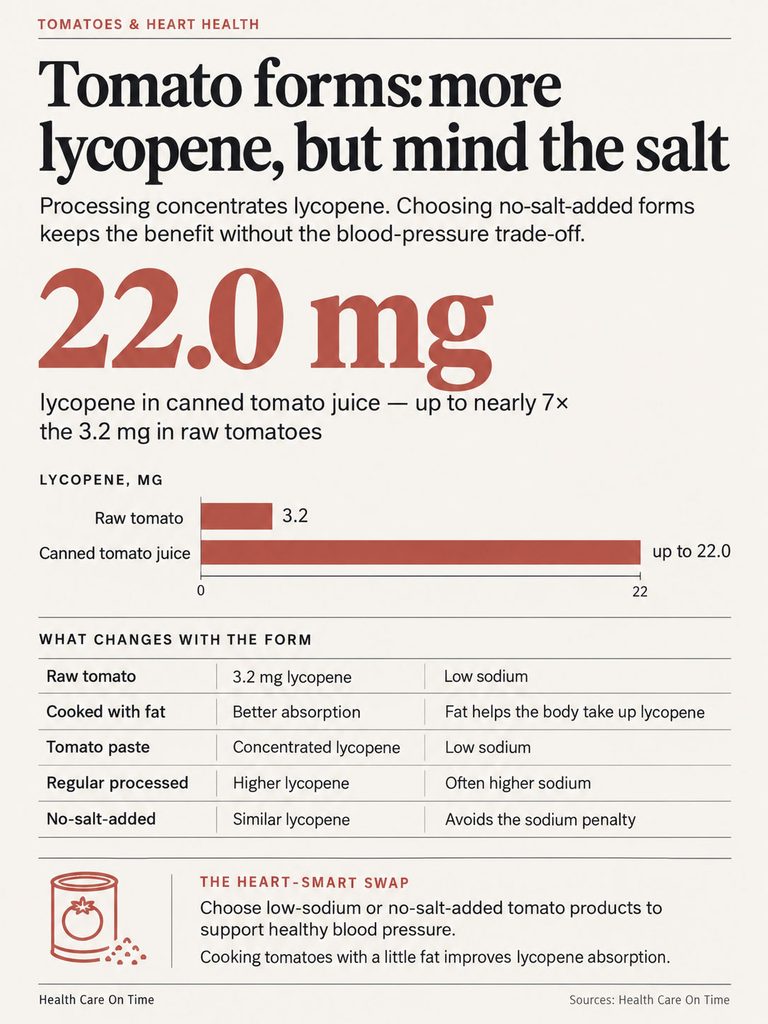
Table 1: Tomato forms compared for heart health value
| Form | Typical US serving | Lycopene (mg) | Absorption vs raw | Sodium (mg) | Potassium (mg) |
| Raw medium tomato | 1 tomato (123 g) | 3.2 | Baseline | 6 | 292 |
| Cherry tomatoes | 1 cup (149 g) | 3.8 | Baseline | 7 | 353 |
| Canned diced, regular | 1/2 cup (121 g) | 3.2 | Higher than raw | 220 to 280 | 220 |
| Canned diced, no salt added | 1/2 cup (121 g) | 3.2 | Higher than raw | 10 to 20 | 220 |
| Tomato sauce, canned | 1/2 cup (122 g) | 18.5 | Much higher | 500 to 700 | 450 |
| Tomato paste, canned | 2 tbsp (33 g) | 9.5 | Much higher | 20 | 335 |
| Tomato juice, regular | 1 cup (243 g) | 22.0 | Much higher | 615 to 650 | 527 |
| Tomato juice, low sodium | 1 cup (243 g) | 22.0 | Much higher | 24 | 527 |
| Ketchup | 1 tbsp (17 g) | 2.1 | Much higher | 150 | 57 |
| Lycopene capsule | 1 capsule | 10 to 30 | Variable | 0 | 0 |
Values are approximate, drawn from USDA FoodData Central entries and standard US label ranges. Brands vary a lot, so read the panel on the can you actually put in your cart.
Two patterns stand out immediately. Processed forms carry several times the lycopene of a fresh tomato. And apart from paste and the no-salt-added products, they carry a real sodium penalty.
Why heat and fat multiply absorption
Raw tomato lycopene sits locked inside plant cell walls in a straight-chain shape your gut absorbs poorly. Heat ruptures those walls and bends part of the molecule population into curved forms that slot into absorption structures more easily.
Fat matters just as much, because lycopene will not dissolve in water. Without oil somewhere in the meal, a large share simply passes through you.
The classic demonstration came from Gärtner and colleagues in the American Journal of Clinical Nutrition in 1997. Matching the lycopene dose from tomato paste against fresh tomatoes, both served with corn oil, the paste produced roughly 2.5 times the peak blood concentration and nearly four times the total amount absorbed.
Translation for your kitchen: a raw tomato in a dry salad delivers less usable lycopene than the same tomato simmered into sauce with olive oil. Nutrition rarely rewards processing. This is one of the exceptions.
The sodium trade-off nobody prints
Here is the flaw in the “cooked beats raw” advice as it usually gets delivered. The cooked products Americans actually buy arrive pre-salted.
A cup of standard tomato juice can clear 600 mg of sodium. Federal guidance and the AHA both point toward keeping total daily sodium well under 2,300 mg, with 1,500 mg the ideal target for many adults managing high blood pressure.
One glass of regular juice can consume 40% of that ideal budget. The lycopene pushes blood pressure down while the salt pushes it back up.
The fix is simple and cheap. No-salt-added canned tomatoes, low-sodium juice, and plain tomato paste all deliver identical lycopene without the penalty. Paste is the quiet winner here, concentrating high lycopene into a form that is naturally low in sodium.
For readers tracking home blood pressure against the current under-130/80 mmHg target, this single swap is worth more than any brand choice.
What Tomatoes Do to Each Number on Your Chart
Blood pressure, the strongest branch
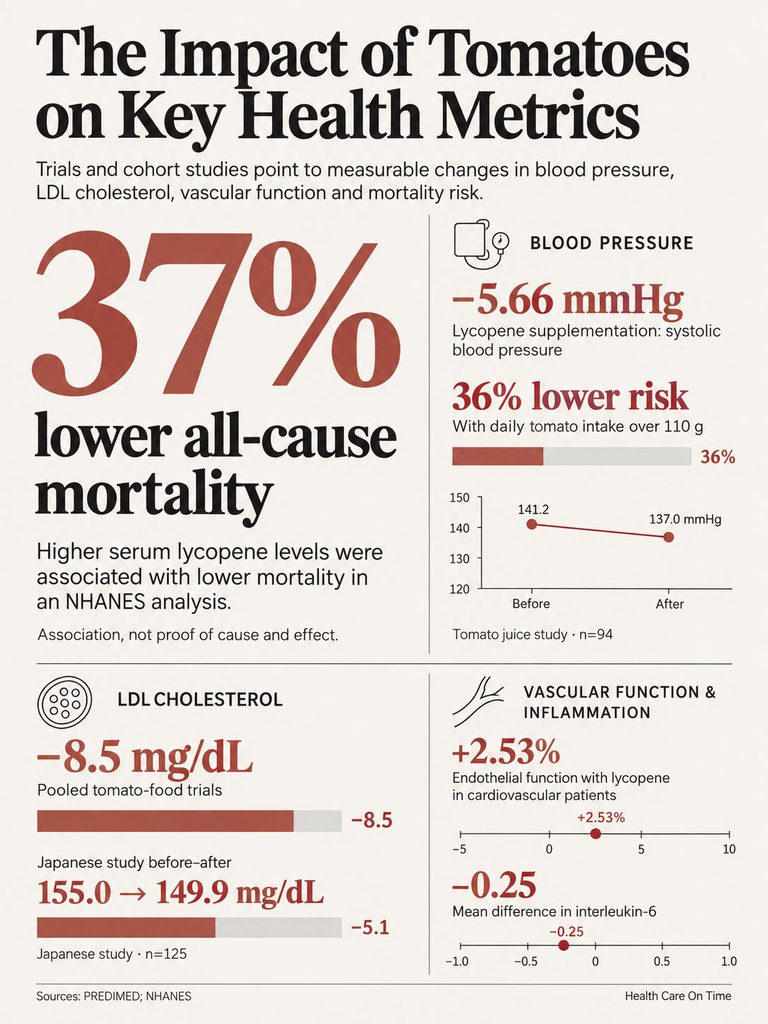
The 2017 Atherosclerosis meta-analysis of 21 trials found lycopene supplementation lowered systolic blood pressure by 5.66 mmHg. That is clinically real, roughly what many people achieve through meaningful weight loss.
Notably, the tomato-food arm of that same analysis did not reach significance for blood pressure while the supplement arm did. That reversal comes up again shortly.
Observational data agrees. An analysis of the Spanish PREDIMED cohort, following 7,056 older adults at high cardiovascular risk over three years, found that eating more than 110 grams of tomato daily carried a hazard ratio of 0.64 for developing hypertension, or 36% lower risk. In US kitchen terms, 110 grams is just under one medium tomato, or about four ounces.
A year-long Japanese community study offers the clearest before-and-after picture available. Residents received unlimited unsalted tomato juice for twelve months.
Among 94 participants with untreated elevated or high readings, systolic pressure fell from 141.2 to 137.0 mmHg and diastolic from 83.3 to 80.9 mmHg. Note the word unsalted. That detail is the entire reason the study worked, and it is why the American supermarket version of the same beverage would likely fail.
LDL and total cholesterol
In pooled trial data, tomato foods lowered LDL cholesterol by 0.22 mmol/L. American labs report in mg/dL, which makes that roughly 8.5 mg/dL.
For context, someone at 138 mg/dL would land near 130. That crosses no treatment threshold by itself, but it stacks with everything else a person is doing.
The Japanese juice study found LDL dropping from 155.0 to 149.9 mg/dL among 125 participants with untreated high cholesterol. Small, consistent, achieved with a beverage.
Patients comparing lipid panel results with us before and after a diet change often expect food alone to move LDL by 30 or 40 points. Tomatoes will not do that. Statins exist for exactly that reason.
Endothelial function
The 2.53 percentage point improvement in flow-mediated dilation may be the most impressive finding in this entire literature, because endothelial dysfunction sits upstream of nearly everything else that goes wrong in an artery.
A UK trial worth knowing tested 7 mg of lycopene daily for two months in 72 participants, half cardiovascular patients already taking statins and half healthy volunteers. Endothelial function improved in the patients with existing disease and did not budge in the healthy group.
That pattern repeats throughout this field. Lycopene helps vessels that are already struggling far more than it helps vessels that are fine.
Inflammation
Pooled trials showed tomato interventions reduced interleukin-6, an inflammatory signaling protein, with a standardized mean difference of -0.25.
Interleukin-6 sits directly upstream of C-reactive protein, the inflammation marker Americans actually get tested. Anyone watching an hs-CRP result alongside their lipid panel has a concrete reason to care about this branch.
Table 2: What the research shows, by study
| Finding | Population and size | Result | Source |
| US cardiovascular deaths, 2023 | Entire US population | 915,973 deaths; CHD 349,470; stroke 162,639 | AHA 2026 Statistics Update |
| Serum lycopene and CVD death | 22,472 US adults, NHANES III and 2003-2006, median 16.7 years, 7,901 deaths | High-lycopene group HR 0.73 (95% CI 0.61 to 0.86) for CVD death | Frontiers NHANES analysis |
| Serum lycopene in metabolic syndrome | 6,601 US adults aged 40+, median 16.8 years, 1,237 CVD deaths | Top quartile HR 0.77 (95% CI 0.61 to 0.97); no other carotenoid significant | NHANES carotenoid study |
| Tomato foods and lipids | 21 randomized trials pooled | LDL -0.22 mmol/L (-8.5 mg/dL); IL-6 SMD -0.25; FMD +2.53% | Cheng, Atherosclerosis 2017 |
| Lycopene supplements and BP | Same pooled trial set | Systolic BP -5.66 mmHg (p = 0.002) | Cheng, Atherosclerosis 2017 |
| Population lycopene and CVD risk | 25 studies, roughly 211,704 participants | Stroke -26%, all-cause mortality -37%, CVD -14% | Cheng, Crit Rev Food Sci Nutr 2019 |
| Tomato foods in US women | 39,876 women, Women’s Health Study | Dietary lycopene largely null; 7+ servings/week of tomato foods tied to roughly 30% lower CVD risk | Sesso, J Nutr 2003 |
| Evidence certainty grading | 9 systematic reviews pooled | High certainty for blood pressure; very low for HDL cholesterol | Food Funct 2026;17(2):622 |
The two NHANES rows carry extra weight for American readers because they measured lycopene in the blood of US adults rather than asking people to remember what they ate last year.
How Much, and What That Looks Like on an American Plate
The dose the research converges on
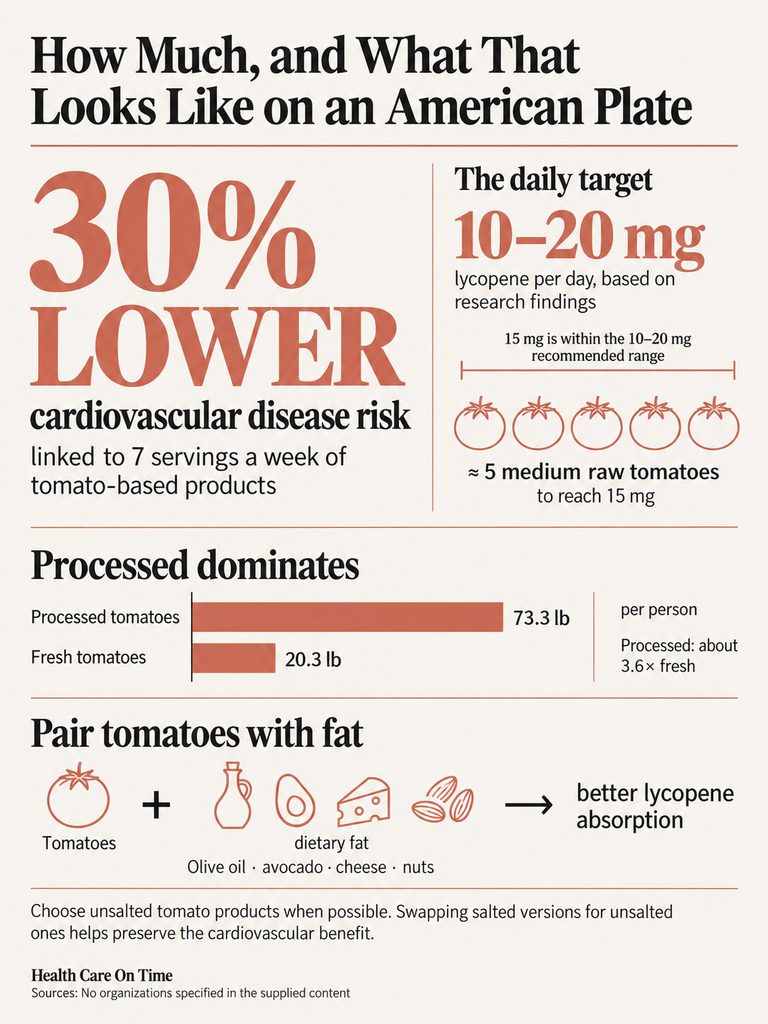
The 2026 umbrella review settled on 5 to 30 mg of lycopene daily. The 2019 population meta-analysis found benefit clustering around intakes near 9.8 mg a day, or a serum concentration around 0.41 micromoles per liter.
Call the working target 10 to 20 mg a day. Below 5 mg, effects get hard to detect. Above 30 mg, nobody has demonstrated additional benefit.
What that looks like in real food
Any one of these puts you in range:
- Half a cup of tomato sauce over pasta, about 18.5 mg
- Two tablespoons of tomato paste stirred into chili or soup, about 9.5 mg, doubled at four tablespoons
- One cup of low-sodium tomato juice, about 22 mg
- Three or four raw tomatoes across a day, about 10 to 13 mg
- A cup of marinara plus a side salad, comfortably past 20 mg
Notice how much easier the cooked options make it. Reaching 15 mg from raw tomatoes alone means eating roughly five medium ones.
The seven-servings-a-week benchmark
The Women’s Health Study gives American readers the most quotable target on this page. Among 39,876 women, seven or more servings a week of tomato-based products was associated with roughly 30% lower cardiovascular disease risk.
Seven servings a week is one a day. That is achievable in an ordinary American kitchen, not a nutrition-blog fantasy.
Always pair it with fat
Whatever form you choose, eat it with some fat. Olive oil, avocado, cheese, nuts, or the oil already sitting in a sauce all do the job.
A tomato salad with fat-free dressing wastes most of the lycopene on the plate. This one habit may matter more than which brand you buy.
Americans already get most of their tomatoes in processed form. USDA Economic Research Service figures show per-capita availability around 20.3 pounds fresh against 73.3 pounds processed. Most people are nearer the target than they assume, and the real work is swapping salted versions for unsalted ones.
Where the Claims Outrun the Evidence
Nobody has tested the thing that matters most
Every heart attack and stroke figure on this page comes from observational research. People who eat more tomatoes develop less heart disease, but people who eat more tomatoes also tend to exercise more, smoke less, and eat more vegetables in general.
Statisticians adjust for those differences. Adjustment is imperfect, and residual confounding remains the standing objection to the entire body of work.
Our medical reviewers hold this line without exception. Marker improvements from randomized trials are solid ground. Outcome claims are inference, and should be labeled that way.
The null studies nobody quotes
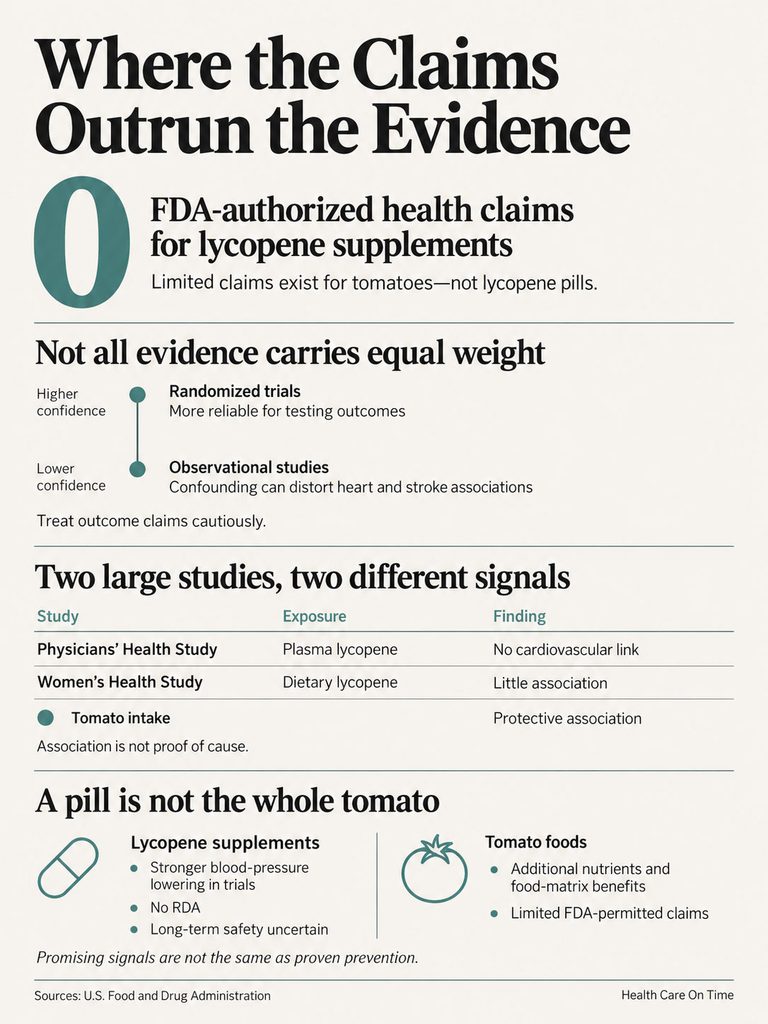
The Physicians’ Health Study examined plasma lycopene against cardiovascular disease in a large group of American men and found no association at all.
The Women’s Health Study result is more revealing. Dietary lycopene intake showed little overall association with cardiovascular disease across nearly 40,000 women, even while tomato-based food intake in the same women did show benefit.
Read that twice, because it reframes the topic. The nutrient looked null. The food looked protective.
A follow-up by the same team using measured plasma lycopene instead of questionnaires did find lower risk at higher concentrations, suggesting food-frequency recall was part of the problem. Either way, the honest summary is that the tomato has better evidence behind it than the molecule does.
Why capsules underperform food, with one exception
A review in Advances in Nutrition compared lycopene supplements head to head with tomato products00867-5/pdf) across cardiovascular endpoints. Tomato foods won on most measures.
The single exception was blood pressure, where supplements did better. That matches the split found in the 2017 meta-analysis.
The likely reason is that a tomato brings fiber, potassium, phytoene, phytofluene, and polyphenols that a purified capsule cannot. For blood pressure specifically, a concentrated lycopene dose may hit the ACE pathway harder than food realistically can.
For most people, the food is the better purchase. Lycopene supplements have no RDA to anchor a dose, no long-term safety trials at high intake, and no FDA review of effectiveness.
What the FDA actually permits
In November 2005, the FDA answered petitions seeking health claims for tomatoes and lycopene. The agency allowed only a heavily qualified claim about tomatoes and tomato sauce in relation to prostate cancer, describing the evidence as very limited and preliminary, and denied claims for lycopene as an isolated ingredient or dietary supplement.
No approved FDA health claim links lycopene to heart disease. Any bottle suggesting otherwise has run ahead of the regulator.
The Cautions That Belong on the Same Page
Sodium
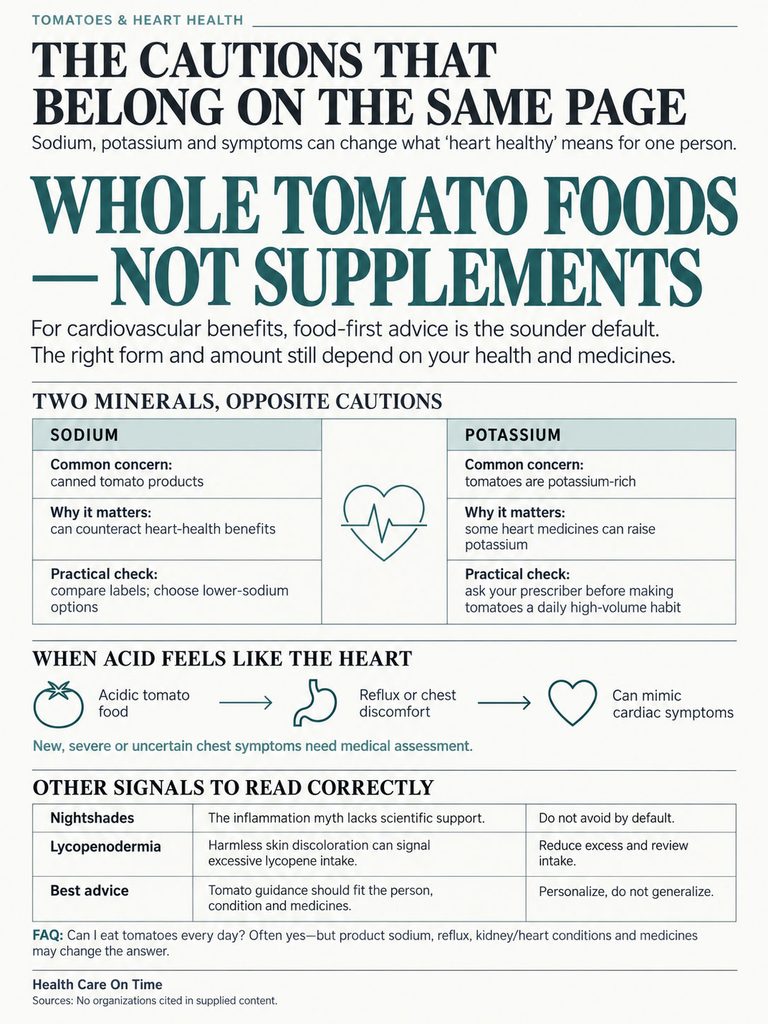
This is the most common way people cancel out the benefit they were chasing. Standard canned sauce, regular tomato juice, jarred marinara, canned tomato soup, and ketchup all carry substantial added salt.
Buying the salted version of a food you chose specifically for blood pressure defeats the purpose. Look for “no salt added” on cans and “low sodium” on juice.
Rinsing canned diced tomatoes in a colander removes a meaningful portion of surface sodium. It will not touch salt cooked into a finished sauce.
Potassium, and why heart medications change the math
Tomatoes are potassium dense. Usually that is a benefit, since potassium counters sodium’s effect on blood pressure and underpins the DASH eating pattern.
It stops being simple if you take a medication that holds potassium in your body. ACE inhibitors like lisinopril, ARBs like losartan, mineralocorticoid receptor antagonists like spironolactone, and sacubitril/valsartan all raise serum potassium by design.
This is not a hypothetical worry. Protocols for major heart failure drug trials instruct investigators that when a participant’s potassium rises above 5.3 mmol/L, they should reinforce a low-potassium diet and restrict high-potassium foods, listing tomatoes by name alongside orange juice, bananas, potatoes, and salt substitutes.
Chronic kidney disease compounds the problem, since damaged kidneys clear potassium poorly. Anyone stacking two potassium-raising drugs, or living with reduced kidney function, should be discussing this with a prescriber rather than a food blog.
For most patients the answer is not avoidance. It is knowing your potassium number from a recent metabolic panel and asking specifically about tomato juice and paste, which concentrate potassium far more than a fresh tomato does. Patients often bring us the sodium question and never think to ask about the potassium sitting next to it on the same panel.
Reflux
Tomatoes are acidic and rank among the better-established triggers for gastroesophageal reflux. Sauce, paste, and juice concentrate that acid along with everything else.
This matters more for cardiac patients than most people realize, because reflux discomfort and cardiac discomfort can feel alike in the chest. New or unfamiliar chest pain deserves medical evaluation, not a self-diagnosis of heartburn.
The nightshade inflammation myth
Tomatoes belong to the nightshade family, and a durable internet claim holds that nightshades drive inflammation and joint pain.
No human trial supports it. Arthritis Foundation guidance notes that the older animal findings behind the claim have not held up, and no evidence connects nightshade vegetables to arthritis flares in people.
If you personally notice a consistent pattern, act on your own experience. As a population-level rule, it does not stand.
Orange palms
Very high, sustained lycopene intake can tint the skin, most visibly on the palms and soles. The condition is called lycopenodermia, it is harmless, and it fades once intake drops.
It takes a great deal of tomato juice to get there. Treat it as a signal you have overshot the useful dose rather than a health problem.
Table 3: What to do, based on your situation
| Your situation | Best tomato choice | Limit or avoid | Ask your doctor about |
| Healthy adult, no medications | Any form; cooked with olive oil most days | Ketchup as a primary source | Nothing specific; aim for one serving daily |
| High blood pressure, not on medication | No-salt-added canned, low-sodium juice, plain paste | Regular juice, jarred sauce, canned soup | Whether home readings shift after 8 to 12 weeks |
| Taking an ACE inhibitor or ARB | Fresh and no-salt-added canned, normal portions | Daily large glasses of tomato juice; paste in quantity | Your latest serum potassium and a safe daily amount |
| Taking spironolactone or another MRA | Fresh tomatoes in measured portions | Juice, paste, and salt substitutes stacked together | Potassium monitoring before you increase intake |
| Chronic kidney disease, stage 3 or higher | Portion-controlled fresh tomato only, if cleared | All concentrated tomato forms | A renal dietitian referral, not general diet advice |
| Heart failure with sodium or fluid limits | No-salt-added products, measured portions | Regular juice and canned soup entirely | How tomato products fit your daily sodium allowance |
| High LDL cholesterol | Cooked tomato with olive oil, daily | Cream-based tomato sauces | Whether an 8 to 10 mg/dL diet effect changes your plan |
| Frequent acid reflux | Small portions of fresh, lower-acid varieties | Paste, marinara, or juice on an empty stomach | Whether reflux could be masking cardiac symptoms |
| Considering a lycopene supplement | Food first, in nearly every case | Unregulated high-dose capsules | Whether a blood-pressure-specific trial makes sense for you |
Frequently Asked Questions
How many tomatoes should I eat a day for heart health?
Research points to 5 to 30 mg of lycopene daily, with 10 to 20 mg a practical target. That means one to two medium tomatoes if you also eat cooked tomato products, or three to four raw tomatoes if raw is your only source. Half a cup of sauce covers it outright.
Is tomato juice good for your heart?
Unsalted tomato juice performed well in a year-long study, lowering systolic pressure by about 4 mmHg in people with untreated high readings. Regular commercial juice carries 600 mg or more of sodium per cup, which cancels much of that gain. Buy low-sodium versions only.
Does cooking tomatoes destroy the lycopene?
The opposite. Heat breaks down cell walls and reshapes lycopene into forms your body absorbs more readily. Tomato paste delivered roughly 2.5 times the peak blood lycopene of an equivalent dose from fresh tomatoes when both were eaten with oil.
Are canned tomatoes as good as fresh for your heart?
For lycopene, canned is usually better, since canning involves heat. The catch is sodium: regular canned diced tomatoes run 220 to 280 mg per half cup against 6 mg in a fresh tomato. No-salt-added cans give you the advantage without the penalty.
Should I take a lycopene supplement instead?
For most people, no. Whole tomato foods outperformed supplements on most cardiovascular endpoints in a direct comparison review, with blood pressure the lone exception. Supplements also lack FDA effectiveness review and long-term safety data at higher doses.
Do tomatoes lower cholesterol?
Modestly. Pooled trial data shows tomato foods lower LDL cholesterol by roughly 8.5 mg/dL. A year-long juice study found LDL falling from 155 to about 150 mg/dL. Useful within a broader plan, never a replacement for prescribed therapy.
How long before tomatoes affect my blood pressure?
Most trials showing an effect ran 8 to 12 weeks, and the Japanese juice study tracked changes across a full year. Give any dietary change at least two months, logging home readings, before you decide whether it worked.
Does ketchup count as a serving of tomatoes?
Barely. One tablespoon carries about 2.1 mg of lycopene alongside roughly 150 mg of sodium and added sugar. Reaching a useful lycopene dose would take seven or eight tablespoons, and the sodium and sugar would swamp any benefit.
Are tomatoes safe if I have heart failure?
Usually yes in normal portions, but it depends on your medications and potassium level. Heart failure trial protocols list tomatoes among high-potassium foods to restrict when serum potassium climbs. Check your recent metabolic panel with your cardiologist before making juice a daily habit.
Do tomatoes thin your blood or interact with warfarin?
Tomatoes contain little vitamin K, so they do not disrupt warfarin the way leafy greens can. Laboratory work suggests tomato compounds reduce platelet clumping, but the real-world dietary effect is unproven. Tell your anticoagulation clinic about any large diet change regardless.
Are cherry tomatoes as good as regular tomatoes?
Roughly equivalent per gram. A cup of cherry tomatoes gives about 3.8 mg of lycopene against 3.2 mg in a medium tomato, mostly a difference in serving weight. Their higher skin-to-flesh ratio slightly favors polyphenol content.
Can tomatoes replace my blood pressure medication?
No. The best measured effect is around 5.66 mmHg from concentrated lycopene, while a typical first-line medication delivers two to three times that. Tomatoes belong alongside prescribed treatment. Never stop a blood pressure medication without your doctor’s direction.
Medical Disclaimer: This article provides general information and does not replace medical advice from a licensed clinician. The medication and potassium guidance here is general and cannot account for your kidney function, lab values, or complete medication list. Do not start, stop, or adjust any prescription based on this article, and do not begin a lycopene supplement without speaking to your doctor or pharmacist, particularly if you take an ACE inhibitor, ARB, mineralocorticoid receptor antagonist, potassium supplement, or anticoagulant.
References
- 2026 Heart Disease and Stroke Statistics: A Report of US and Global Data From the American Heart Association, Circulation
- What the latest heart disease and stroke numbers mean for your health, American Heart Association
- Nam Y, Hwang I, Jang H. Role of lycopene from tomato on cardiovascular risk: an umbrella review. Food Funct. 2026;17(2):622-630
- Cheng HM et al. Tomato and lycopene supplementation and cardiovascular risk factors: a systematic review and meta-analysis. Atherosclerosis. 2017;257:100-108
- Cheng HM et al. Lycopene and tomato and risk of cardiovascular diseases. Crit Rev Food Sci Nutr. 2019;59(1):141-158
- Sesso HD et al. Dietary lycopene, tomato-based food products and cardiovascular disease in women. J Nutr. 2003;133:2336-2341
- Sesso HD et al. Plasma lycopene, other carotenoids, and retinol and the risk of cardiovascular disease in women. Am J Clin Nutr. 2004
- Murcia-Lesmes D et al. Association between tomato consumption and blood pressure in an older population at high cardiovascular risk, PREDIMED
- Odai T et al. Unsalted tomato juice intake improves blood pressure and serum LDL cholesterol. Food Sci Nutr. 2019
- Associations of multiple carotenoid co-exposure with all-cause and cause-specific mortality in US adults, NHANES
- Impact of serum carotenoids on cardiovascular mortality risk in adults with metabolic syndrome, NHANES
- Lycopene and Vascular Health, Frontiers in Pharmacology
- Scientific Evidence of the Beneficial Effects of Tomato Products on Cardiovascular Disease and Platelet Aggregation, Frontiers in Nutrition
- Whole Food versus Supplement: Comparing the Clinical Evidence of Tomato Intake and Lycopene Supplementation, Advances in Nutrition00867-5/pdf)