
A toddler takes first steps a little late, wobbles, and never quite steadies. Most parents hear “give it time.” For a small number of families, that wobble is the first sign of a rare genetic disease that affects the brain, the immune system, and cancer risk all at once.
Table of Contents
That disease is ataxia telangiectasia (A-T). And in September 2026, after decades with no approved drug, A-T finally got one.
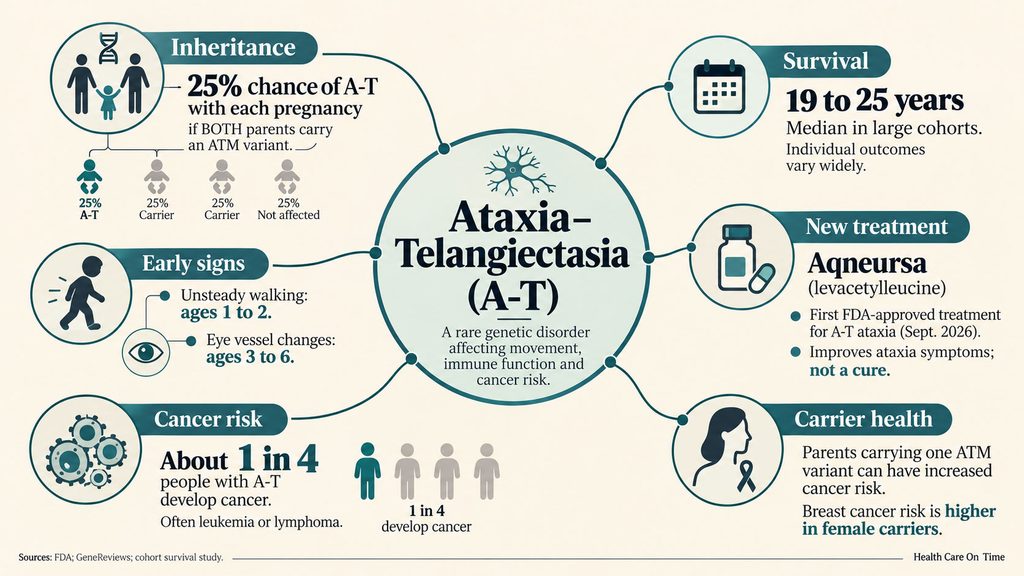
Quick Answer: Ataxia telangiectasia (A-T) is a rare inherited disease caused by changes in both copies of the ATM gene. It causes worsening balance and coordination from early childhood, red “spider” blood vessels in the eyes, a weak immune system, and a high risk of leukemia and lymphoma. There is no cure. In September 2026, the FDA approved Aqneursa (levacetylleucine), the first drug for ataxia in A-T.
At a Glance
- A-T happens when a child inherits one changed ATM gene from each parent. Carrier parents face a 1 in 4 chance with each pregnancy.
- Wobbly walking usually shows up between ages 1 and 2. Eye vessel changes often appear around ages 3 to 6.
- About 1 in 4 people with A-T develop cancer, mostly leukemia or lymphoma.
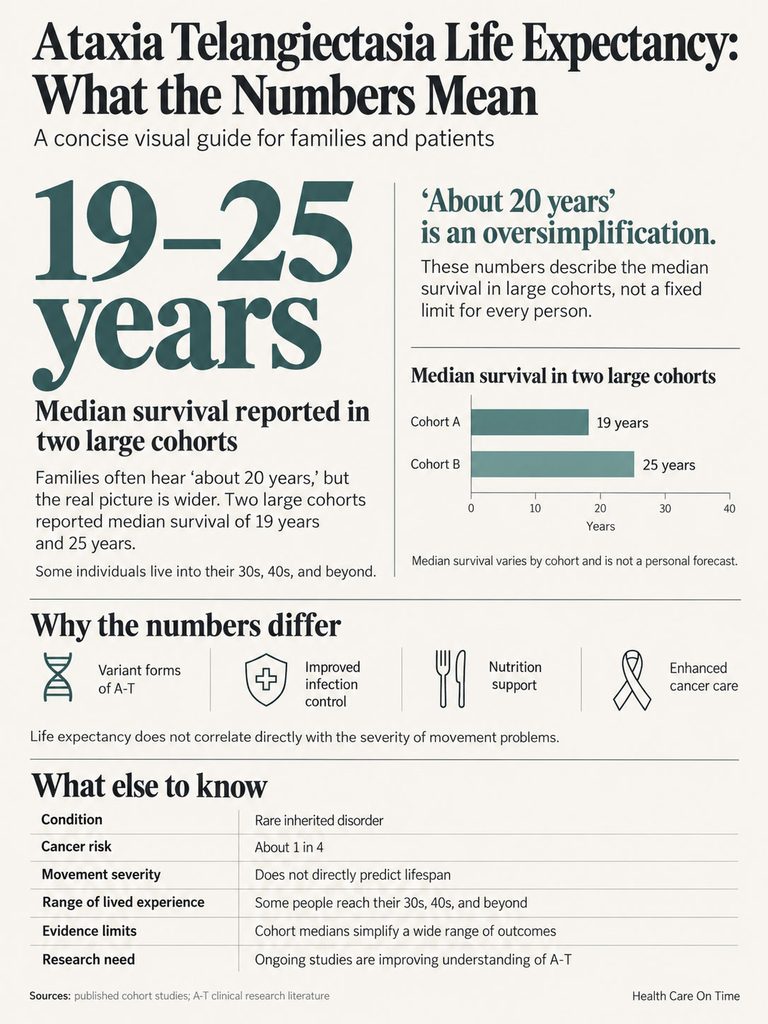
- Median survival in large cohorts sits around 19 to 25 years, with a very wide range.
- Aqneursa is the first FDA-approved A-T drug. It helps ataxia modestly; it does not cure the disease.
- Carrier parents have their own health risks, including higher breast cancer risk in mothers.
The 7 key signs of ataxia telangiectasia:
- Unsteady walking from ages 1 to 2 that gets worse, not better
- Slurred or slow speech
- Trouble moving the eyes quickly, so the child turns the whole head
- Red, thread-like blood vessels in the whites of the eyes
- Frequent sinus, ear, and lung infections
- Slow growth and trouble chewing or swallowing
- High alpha-fetoprotein (AFP) on a blood test
What Is Ataxia Telangiectasia?
The name describes the two most visible signs. “Ataxia” means poor control of movement. “Telangiectasia” means small, widened blood vessels you can see on the surface of the eye or skin.
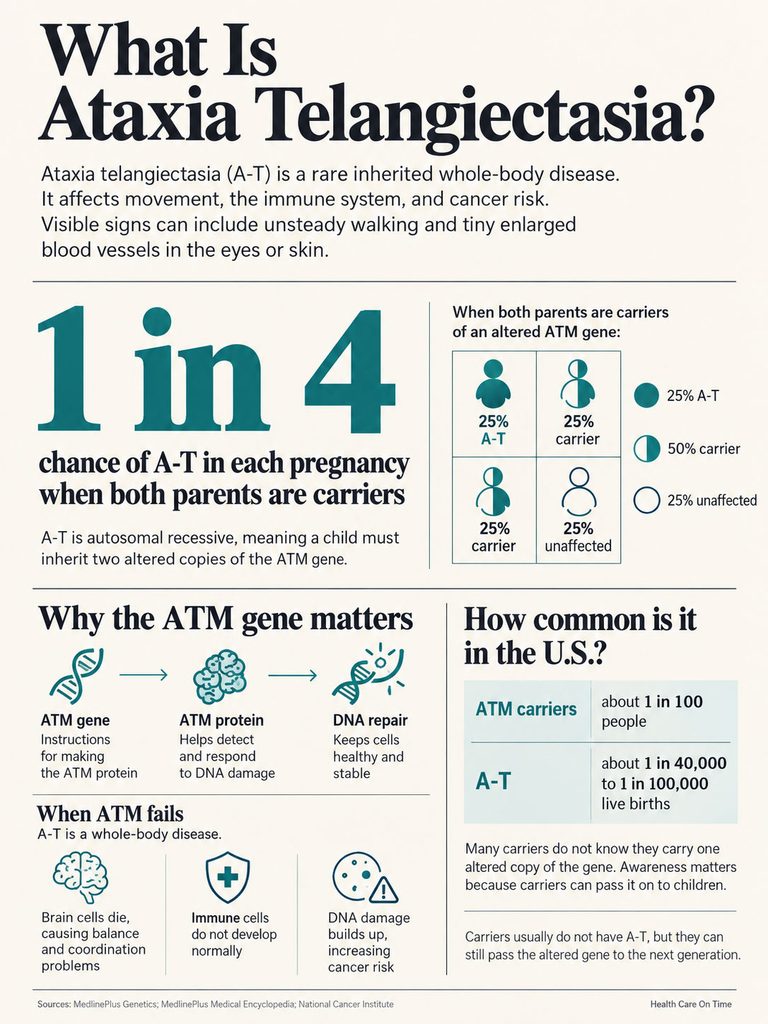
But A-T is really a whole-body disease. It’s also called Louis-Bar syndrome, and doctors classify it as both a neurodegenerative disorder and a primary immunodeficiency.
The ATM Gene and Why DNA Repair Matters
A-T comes from harmful changes in the ATM gene on chromosome 11. The ATM protein acts like a cell’s emergency dispatcher. It spots broken DNA, pauses cell division, and calls in repair crews.
When ATM fails, DNA damage piles up. Brain cells in the cerebellum (the balance center) slowly die. Immune cells develop poorly. And cells with broken DNA keep dividing, which is why cancer risk climbs.
How A-T Is Inherited
A-T is autosomal recessive. A child needs two changed copies of ATM, one from each parent, to have the disease.
Parents with one changed copy are carriers. They usually feel fine. When two carriers have a child, the odds for each pregnancy are:
- 1 in 4 chance the child has A-T
- 1 in 2 chance the child is a carrier
- 1 in 4 chance the child has two working copies
How Rare Is A-T in the US?
A-T affects an estimated 1 in 40,000 to 1 in 100,000 live births. One drug developer put the number at about 4,600 US patients; treat that as a company estimate, not a government count.
Carriers are far more common. Nationwide Children’s Hospital places it at about 1 in 100 people in the US. Millions of Americans carry one changed ATM copy and don’t know it.
Ataxia Telangiectasia Symptoms by Age
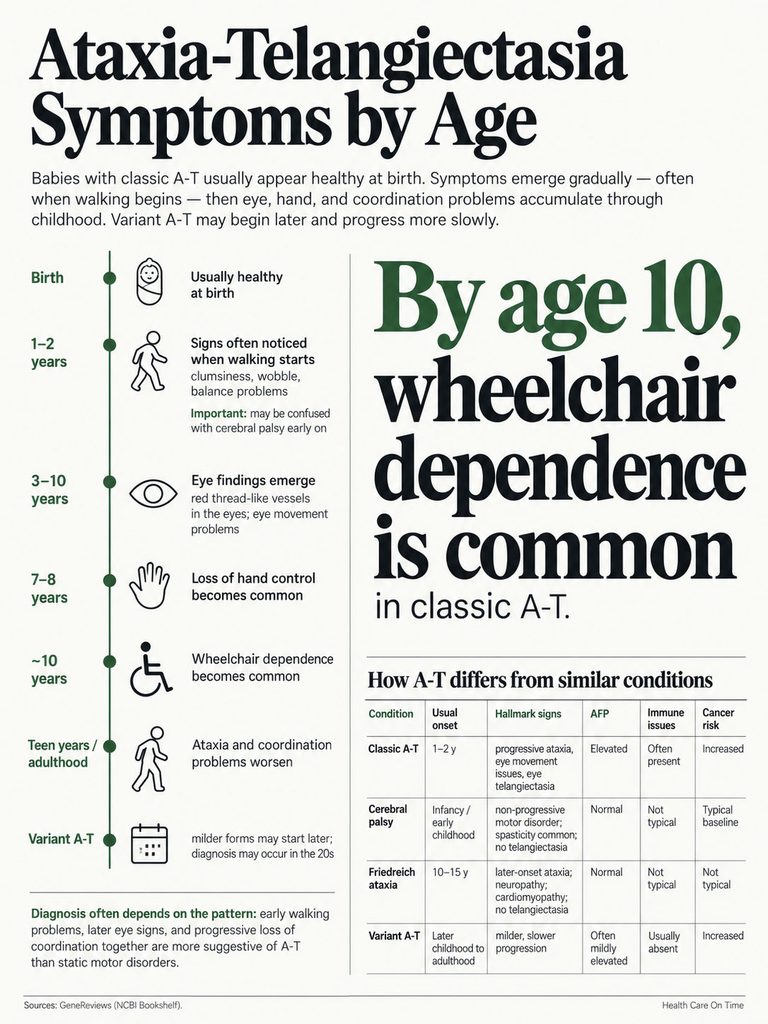
Babies with A-T look healthy at birth. Symptoms appear in stages, and they look different at 2 than at 12.
Toddler Years: The Wobble That Doesn’t Fade
Most children show signs when they start walking, around ages 1 to 2. Typical early clues:
- Swaying or staggering more than other toddlers
- Frequent falls that don’t improve with practice
- Head tilting or trunk swaying when standing still
- Slurred or slow speech as talking begins
Many families first hear “clumsy” or even “cerebral palsy.” The key difference: A-T slowly gets worse, while cerebral palsy does not.
Ages 3 to 10: Eyes, Speech, and Hands
Red, thread-like vessels often appear in the whites of the eyes during the preschool years. They can also show up on the ears, nose, and cheeks, especially after sun exposure. These vessels are harmless; they don’t bleed or hurt.
Eye movement problems matter more. Children struggle to shift their gaze quickly (oculomotor apraxia), so they turn their whole head instead. Reading gets hard.
According to Myriad’s A-T summary, many children lose the hand control needed to write by age 7 or 8, and most need a wheelchair by about age 10.
Teen Years and Adulthood
As the disease progresses, the list grows:
- Trouble chewing and swallowing, with risk of food entering the lungs
- Jerky or twisting movements (chorea, dystonia)
- Slow growth and delayed puberty
- Early graying of hair and thin skin
- Insulin resistance and diabetes in some teens and adults
- Chronic lung disease
Variant A-T: Milder Forms in Adults
Some people have ATM changes that leave a little working protein. This “variant” A-T can start later, move slower, and may look like dystonia or tremor in adults. Diagnosis often comes in the 20s or later.
Our medical team has reviewed adult cases where variant A-T was first labeled as another movement disorder. A blood AFP test is often the clue that reopens the question.
Table 1: A-T vs Conditions That Look Similar
| Condition | Typical onset | Hallmark sign | AFP blood level | Immune problems | Cancer risk |
| Ataxia telangiectasia | Ages 1 to 2 | Worsening ataxia plus eye vessels | High in most patients | Common (about 70%) | High (about 25%) |
| Friedreich ataxia | Ages 10 to 15 | Ataxia, scoliosis, heart disease | Normal | None | Not raised |
| Ataxia with oculomotor apraxia type 2 | Ages 3 to 30 | Ataxia, eye movement trouble, nerve damage | Often high | None | Not raised |
| Ataxic cerebral palsy | Birth to infancy | Poor balance that does not worsen | Normal | None | Not raised |
| Nijmegen breakage syndrome | Birth | Small head size, infections | Normal | Common | High (lymphoma) |
| SCID | First months of life | Severe, repeated infections | Normal | Severe | Raised |
The Hidden Risks: Infections, Cancer, Radiation, and Lungs
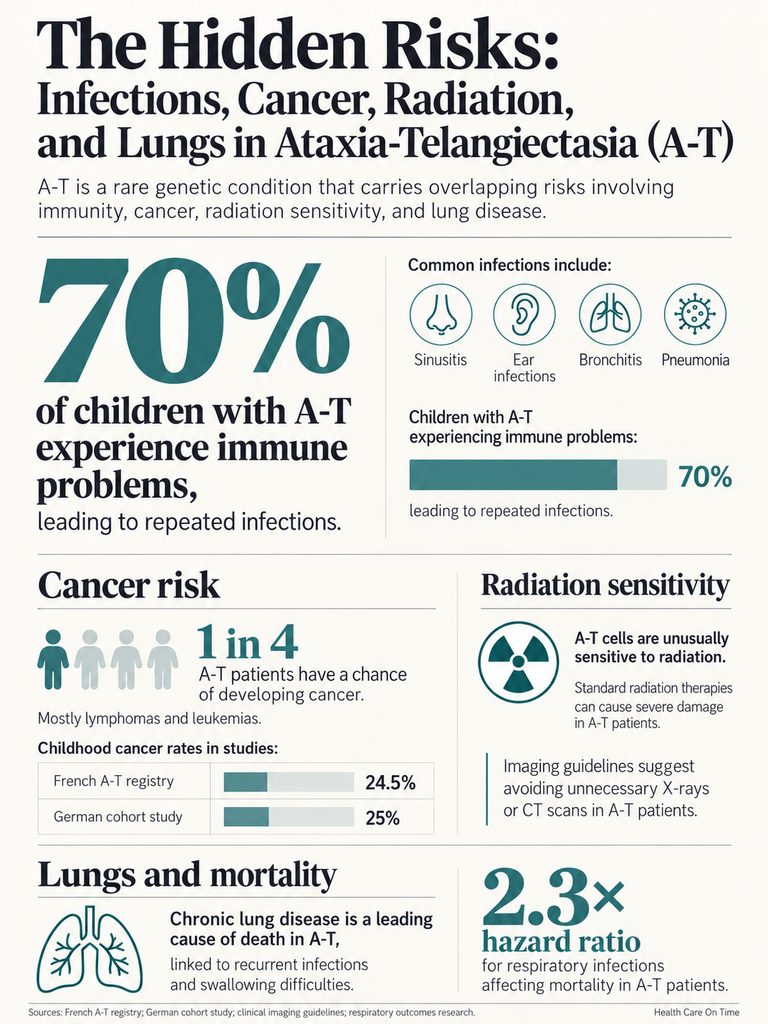
Coordination loss is what families see first. But infections and cancer drive most of the serious outcomes in A-T.
Immune Problems and Recurrent Infections
About 70% of children with A-T have immune problems. The most common are low antibody levels (IgA, IgG2, sometimes IgG) and low T-cell counts.
That shows up as repeated sinus infections, ear infections, bronchitis, and pneumonia. Patients commonly ask us whether these infections look different from ordinary colds. Usually they come more often, last longer, and need more antibiotic courses.
Cancer Risk: About 1 in 4
A-T carries one of the highest childhood cancer risks of any genetic condition. In a large French registry, 69 of 279 patients (24.5%) developed cancer, mostly lymphomas and leukemias.
A German cohort found nearly the same rate: 17 of 69 patients (25%). Blood cancers caused most early deaths, and boys with A-T had higher cancer risk than girls.
In adults with A-T, solid tumors such as breast, stomach, and liver cancers become more common. In cases reviewed by our medical reviewers, a routine CBC with differential is often the first test to show something has changed.
Radiation Sensitivity: Why X-Rays Need a Second Thought
Because A-T cells can’t fix broken DNA, ionizing radiation hits them hard. Standard radiation therapy for cancer can cause severe, even fatal, tissue damage in people with A-T.
Everyday imaging is a smaller concern, but it still counts. Most A-T specialists advise skipping X-rays and CT scans that aren’t truly needed, and choosing MRI or ultrasound when they answer the same question. This rule applies to people with A-T, not to carriers.
Chemotherapy Needs Adjusting Too
Cancer drugs that damage DNA can also be more toxic in A-T. Researchers at the Johns Hopkins A-T Clinical Center note that cancer outcomes stay poor partly because of organ toxicity from standard treatment. Oncologists often use reduced-dose plans with input from A-T experts.
Lung Disease and Swallowing
Repeated infections, weak coughing, and food or liquid slipping into the airway add up over years. Chronic lung disease is a leading cause of death in teens and adults with A-T.
A French study of 240 patients found respiratory infections independently linked to death (hazard ratio 2.3), alongside cancer (hazard ratio 2.7).
Ataxia Telangiectasia Life Expectancy: What the Numbers Mean
Families often find one number online: “about 20 years.” That number is real, but it hides a lot.
What Large Cohorts Show
A Johns Hopkins team analyzing two large groups found median survival of 25 years in one and 19 years in the other, with a wide range. “Median” means half of patients lived longer.
The same study found life expectancy did not track closely with how severe the movement problems were. A child using a wheelchair at 8 is not automatically facing a shorter life than a child still walking.
What Changes the Outlook
Three factors carry the most weight:
- Cancer. In the French registry, overall survival was 15 years in patients who developed cancer versus 24 years in those who did not.
- Classic vs variant A-T. In an international cohort of 61 patients, classic A-T carried a much higher death risk than variant A-T (hazard ratio 5.9).
- Type of gene change. Changes that wipe out ATM completely tend to bring earlier cancer. Changes that leave some function lean toward lung-related deaths later.
Some people with A-T, especially variant forms, live into their 30s, 40s, and beyond. Better infection control, nutrition support, and cancer care have pushed survival upward.
Table 2: Ataxia Telangiectasia by the Numbers
| Measure | Figure | Source |
| Births affected | 1 in 40,000 to 1 in 100,000 | PMC newborn screening cohort |
| US carriers | About 1 in 100 people | Nationwide Children’s Hospital |
| Estimated US patients | About 4,600 | Company estimate (Quince Therapeutics) |
| Immune problems | About 70% of children | Nemours/Children’s Dayton |
| Cancer in A-T | 24.5% (69 of 279) | French National Registry, JCO 2014 |
| Median survival | 25 and 19 years in two cohorts | Crawford, Johns Hopkins, Arch Dis Child |
| Survival with vs without cancer | 15 vs 24 years | French National Registry |
| Aqneursa trial size | 73 patients, ages 4 to 50 | FDA, Sept 2026 |
| Breast cancer risk in carrier women | About 3 times higher | Utrecht meta-analysis |
What the Evidence Can’t Tell You Yet
Honest numbers come with honest limits. Three are worth knowing:
- The best-known survival figures come from data published in 2006 and from French and German registries. Outcomes for US children diagnosed today may be better.
- The Aqneursa trial measured 12 weeks per treatment period. Whether the benefit holds, grows, or fades over years is still unknown.
- A-T is so rare that most studies include fewer than 300 people. Single-percentage figures carry wide margins.
How A-T Is Diagnosed
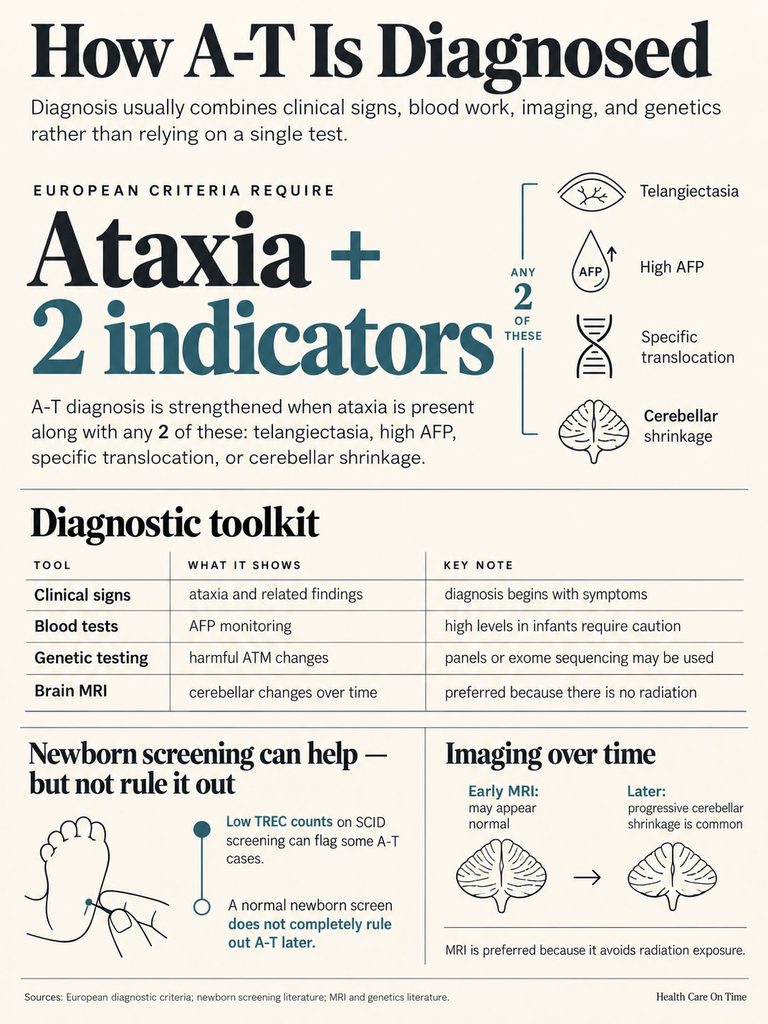
There’s no single test that diagnoses every case. Doctors combine signs, blood work, imaging, and genetics.
Blood Tests
Families booking lab work through HealthCareOnTime often ask which tests matter most. For suspected A-T, the usual panel includes:
- Alpha-fetoprotein (AFP): High in most people with A-T after age 1. It’s one of the most useful early clues.
- Immunoglobulins (IgA, IgG, IgM, IgG subclasses): Low IgA and IgG2 are common.
- CBC with lymphocyte subsets: Low T cells, especially naive T cells.
- Chromosome study: Some patients show a typical 7;14 translocation.
One caution: AFP runs high in all healthy infants. A raised AFP before age 1 to 2 is hard to read without age-matched ranges.
Genetic Testing
Finding two harmful ATM changes confirms the diagnosis. Testing usually runs through an ataxia or immunodeficiency gene panel, or exome sequencing.
European diagnostic criteria call for ataxia plus at least two of the following: eye or skin telangiectasia, high AFP, the 7;14 translocation, or a small cerebellum on MRI.
Newborn Screening Can Flag A-T Early
Every US state screens newborns for severe combined immunodeficiency (SCID) using a TREC test. SCID screening was adopted in all 50 states by the end of 2018.
Some babies with A-T have low TREC counts, so they get flagged before any symptoms. Not every A-T baby is caught this way, though. A normal newborn screen does not rule out A-T later.
Brain MRI
Early MRI may look normal. Over time, it often shows a shrinking cerebellum. MRI is preferred over CT because it uses no radiation.
Ataxia Telangiectasia Treatment, Including the First FDA-Approved Drug
For decades, every A-T treatment page said the same thing: no cure, supportive care only. Half of that changed in 2026.
Aqneursa (Levacetylleucine): What It Does and What It Doesn’t
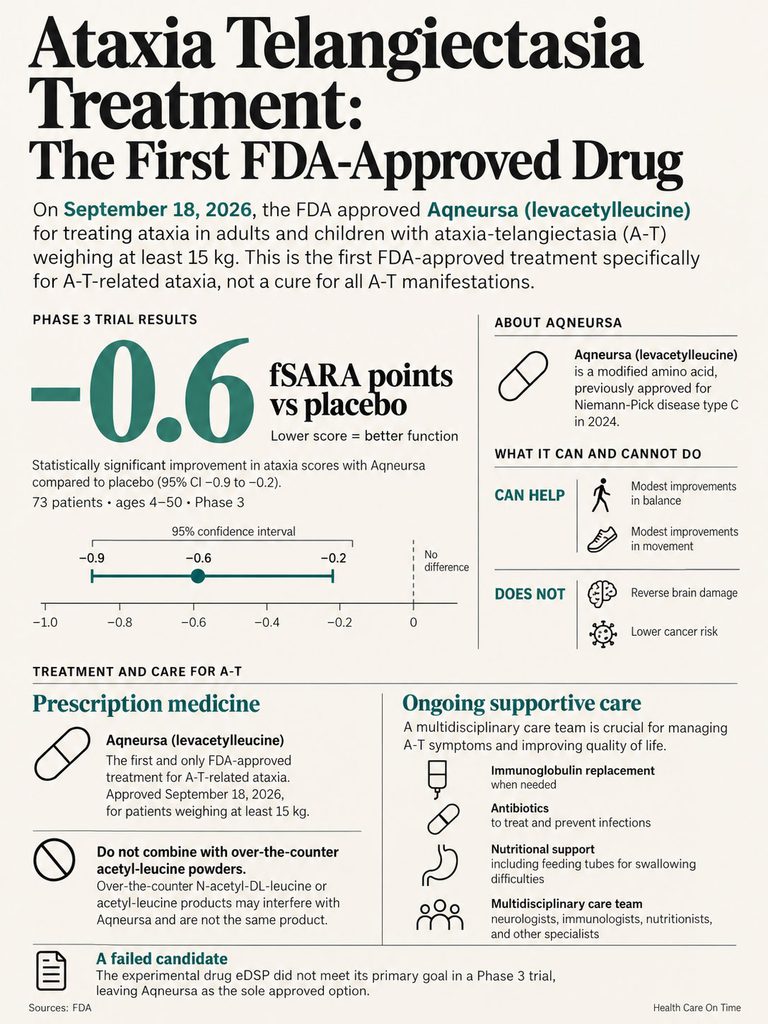
On September 18, 2026, the FDA approved Aqneursa (levacetylleucine, made by IntraBio) to treat ataxia in adults and children with A-T. It’s the first drug approved specifically for A-T.
Aqneursa is a modified amino acid. It was already approved in 2024 for Niemann-Pick disease type C. How it works in A-T is still not fully known.
The Trial Numbers in Plain English
The approval rested on a phase 3 trial of 73 patients, ages 4 to 50. Each patient took Aqneursa for 12 weeks and placebo for 12 weeks, in random order.
Ataxia was scored on a functional scale covering walking, standing, sitting, and speech. Average scores were 7.2 on Aqneursa and 7.8 on placebo. That 0.6-point gap was statistically significant.
What does that mean for a family? A real but modest improvement in balance and movement. It does not reverse brain damage, fix the immune system, or lower cancer risk.
Who Can Take It
- Adults and children weighing at least 15 kg (about 33 pounds)
- Taken by mouth as granules mixed into water, orange juice, almond milk, or yogurt, per WebMD’s patient summary
- Pregnancy must be ruled out first, because animal studies suggest possible harm to a fetus
- Supplements containing N-acetyl-DL-leucine or N-acetyl-D-leucine should be avoided because they can block it
Our medical reviewers note that some families have bought over-the-counter acetyl-leucine powders in the past. Those products are not the same as Aqneursa, and they can interfere with it.
Why the Other A-T Drug Failed
Families following A-T research may remember a second candidate: eDSP (formerly EryDex), a steroid packed inside a patient’s own red blood cells.
In January 2026, its phase 3 NEAT trial of 105 children missed its main goal. Treated children declined less than placebo (0.94 vs 2.24 points), but the result was not statistically significant (p = 0.0851). The company stopped development.
That leaves Aqneursa as the only approved drug option for now.
The Supportive Care Team
Most of A-T care still comes from a team:
- Neurology: tracks movement, tremor, and dystonia; some symptom drugs ease jerky movements
- Immunology: checks antibody levels and decides on treatment
- Pulmonology: monitors lung function and treats chronic lung disease
- Physical, occupational, and speech therapy: keeps strength, posture, and communication working as long as possible
- Oncology: watches for early cancer signs
- Endocrinology: checks growth, puberty, and blood sugar
Immunoglobulin Replacement and Antibiotics
Patients with low antibody levels or frequent infections often get immunoglobulin replacement, by IV every few weeks or under the skin weekly. Some also take preventive antibiotics during high-risk seasons.
Nutrition, Swallowing, and Feeding Tubes
Swallowing studies catch silent aspiration before it damages the lungs. When eating becomes unsafe or weight drops, a gastrostomy tube can protect the lungs and support growth. Many families find it eases mealtime stress rather than taking something away.
What Carrier Parents Need to Know About Their Own Health
This is the section most A-T pages skip. Yet every biological parent of a child with A-T is a carrier, and carriers have their own medical needs.
Breast Cancer Risk for Carrier Mothers
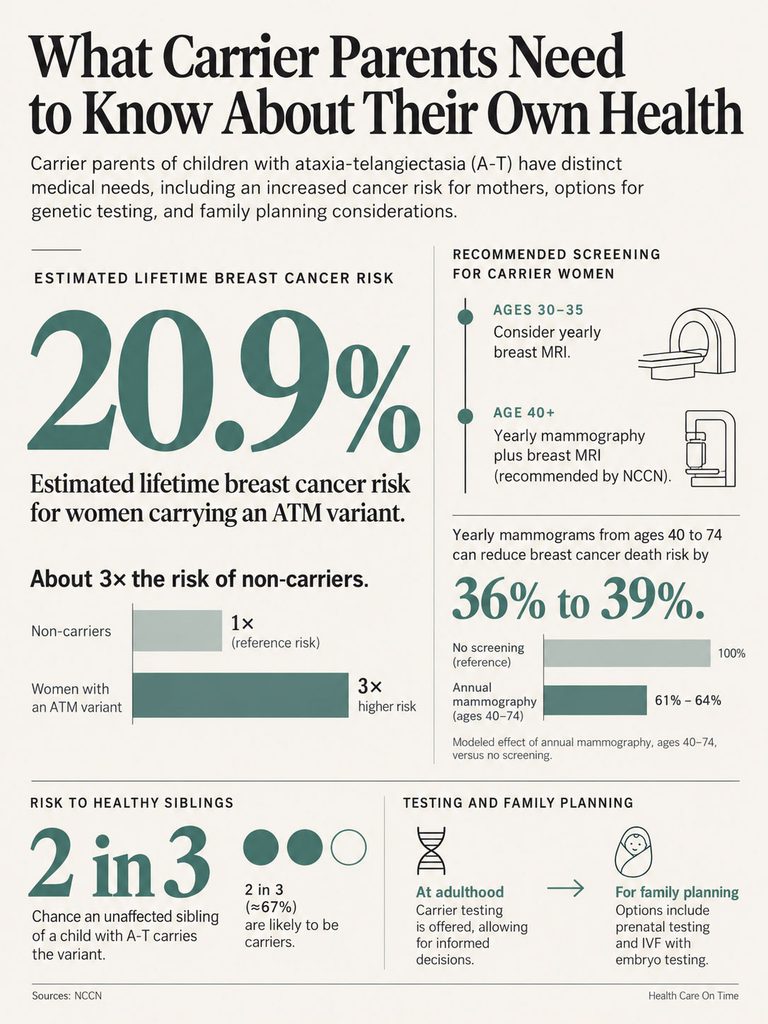
A systematic review and meta-analysis from Utrecht found women carrying one ATM change have about 3 times the breast cancer risk of other women. Carriers also had higher death rates from cancer and heart disease (relative risk 1.7).
A large US modeling study estimated the average lifetime breast cancer risk at 20.9% for women with ATM variants. One specific change, c.7271T>G, carries a much higher risk.
Screening Guidance for Carriers
The National Comprehensive Cancer Network (NCCN) recommends women with an ATM variant consider yearly breast MRI plus mammography starting at age 40. Earlier screening may make sense with a family history.
Modeling suggests yearly mammograms from 40 to 74 cut breast cancer death risk by roughly 36% to 39% in these women. Adding MRI starting at 30 or 35 raised that to more than 50%.
The A-T Children’s Project adds two points that surprise many parents:
- Carriers do not need to avoid mammograms. The radiation concern applies to people with A-T, not carriers.
- Male carriers have higher prostate cancer risk, and PSA screening is suggested starting at age 40.
Patients commonly ask us whether a carrier result means routine checkups should change. For breast and prostate screening, yes. A primary care doctor or genetic counselor is the right first stop.
Siblings and Family Planning
Healthy siblings of a child with A-T have a 2 in 3 chance of being carriers. Carrier testing is usually offered at adulthood, when they can decide for themselves.
For future pregnancies, options include prenatal testing and IVF with embryo testing. A genetic counselor can lay these out without pressure.
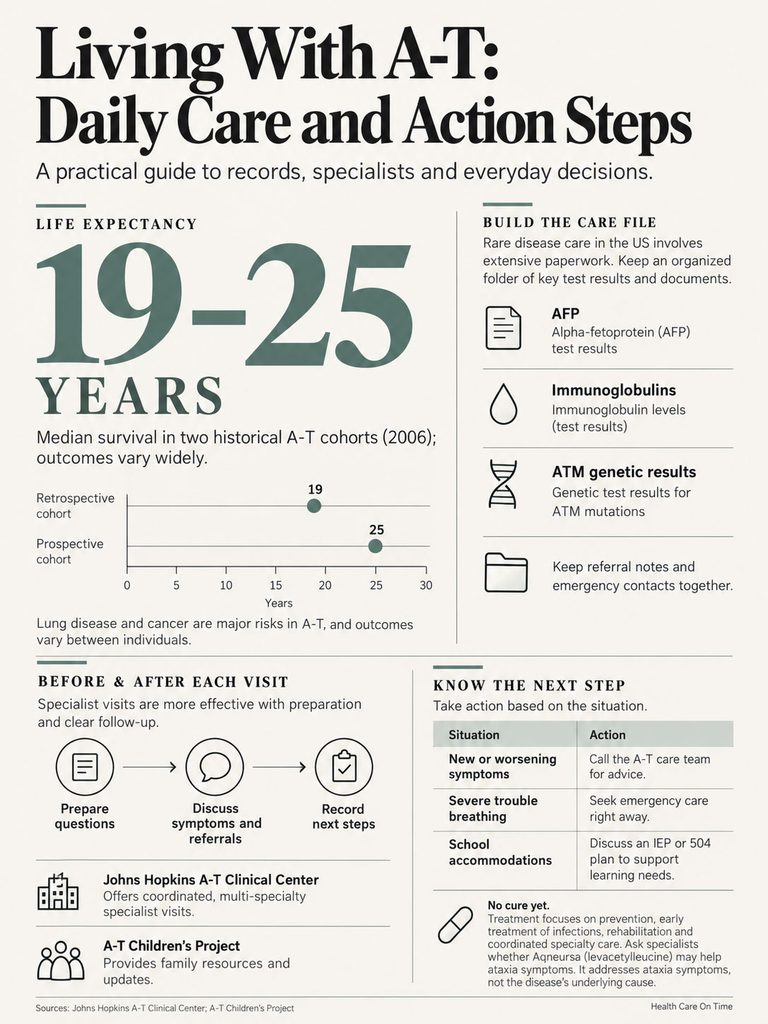
Living With A-T: Daily Care and Action Steps
A-T is a marathon, not a sprint. The families who cope best usually build routines early and lean on specialist centers.
Getting Care in the US
Rare-disease care in America runs on paperwork as much as medicine. A few programs make a real difference:
- Early Intervention (IDEA Part C): free or low-cost therapy at home for children under 3 with developmental delays, available in every state
- IEP or 504 plan: public schools must provide supports such as extra time, speech-to-text tools, an aide, and accessible classrooms
- Medicaid disability pathways: many states offer Katie Beckett or TEFRA-type options that cover children with serious disabilities regardless of parent income
- Prior authorization: insurers often require documented antibody deficiency before covering immunoglobulin, and new specialty drugs like Aqneursa usually need approval paperwork; ask the prescriber about manufacturer support programs
Families who order tests with us frequently mention that copies of AFP, immunoglobulin, and genetic results speed up these approvals. Keep a folder.
Finding an A-T Clinical Center
The Johns Hopkins A-T Clinical Center in Baltimore sees patients from across the country in multi-specialty visits. The A-T Children’s Project (atcp.org) offers family support, research updates, and help finding experienced doctors.
Questions to Bring to the First Specialist Visit
A new diagnosis brings a flood of information in a short appointment. Writing questions down beforehand helps families leave with answers instead of more worry. Useful ones include:
- Is this classic or variant A-T, and what does the genetic result suggest about the outlook?
- What are the current antibody and T-cell levels, and does that change which vaccines are safe?
- How often should blood counts be checked to watch for leukemia or lymphoma?
- Which scans can use MRI or ultrasound instead of X-rays or CT?
- Is Aqneursa a reasonable option now, or once the child reaches 33 pounds?
- Who coordinates care between neurology, immunology, and pulmonology?
- When should the swallowing study and lung function tests start?
Patients booking follow-up labs with us often bring a printed list like this. It keeps the visit focused, and the answers make a solid baseline to compare against at the next checkup.
Everyday Protection
- Sun protection: sunscreen and hats slow skin aging and visible vessels
- Vaccines: most inactivated vaccines are recommended; live vaccines depend on immune status, so ask the immunologist
- Infection plan: know which fevers need same-day care
- Imaging card: carry a note reading “A-T: avoid unnecessary radiation” for ER visits
Table 3: Scenario and Recommended Action
| Scenario | What to do | How soon |
| Toddler still wobbles or falls often past 18 months | Ask the pediatrician about neurology referral and AFP test | Within weeks |
| Newborn screen shows low TRECs | Follow up with pediatric immunology for full workup | Within days |
| Child with A-T has fever plus cough or fast breathing | Call the care team; go to urgent care or ER if breathing is hard | Same day |
| Doctor orders a CT or X-ray for a child with A-T | Ask whether MRI or ultrasound can answer the question | Before the scan |
| Parent learns they are an ATM carrier | Book a genetic counselor; women plan breast screening from 40 or earlier | Within 1 to 3 months |
| Child coughs or chokes during meals or loses weight | Request a swallow study and nutrition visit | Within 2 weeks |
| Family wants to try Aqneursa | Ask the neurologist; confirm weight of 33 lb or more and insurance coverage | Next scheduled visit |
| Unexplained bruising, night sweats, or swollen nodes | Get a CBC and see oncology quickly | Within days |
Frequently Asked Questions
What is the life expectancy of someone with ataxia telangiectasia?
Large studies show median survival of about 19 to 25 years, with a very wide range. Some people, especially those with variant A-T, live into their 40s or beyond. Cancer and chronic lung disease are the biggest factors. Severity of movement problems does not predict lifespan well.
What are the first signs of ataxia telangiectasia?
The first sign is usually unsteady walking between ages 1 and 2 that doesn’t improve with practice. Toddlers may sway, fall often, or tilt their heads. Slurred speech, trouble moving the eyes quickly, and red vessels in the eyes often follow during the preschool years.
Is there a cure for ataxia telangiectasia?
No. There is no cure for A-T yet. Treatment focuses on preventing infections, supporting nutrition and breathing, and catching cancer early. Aqneursa, approved in 2026, can modestly improve ataxia, but it does not stop the underlying disease or change cancer risk.
What is the new FDA-approved drug for A-T?
Aqneursa (levacetylleucine) was approved on September 18, 2026, for ataxia in adults and children with A-T weighing at least 33 pounds. In a 73-patient trial, it improved movement scores by 0.6 points over placebo. It’s an oral medicine mixed into food or drink.
Can ataxia telangiectasia be detected at birth?
Sometimes. US newborn screening for SCID can flag babies with A-T who have low T-cell markers (TRECs). Genetic testing can also confirm A-T at birth when a sibling is affected. But many babies with A-T pass newborn screening and are diagnosed later.
Can adults be diagnosed with A-T?
Yes. Variant A-T, caused by ATM changes that leave some working protein, can appear later and progress slowly. Adults may show dystonia, tremor, or mild ataxia. A high AFP level and ATM genetic testing usually confirm it. Classic A-T almost always starts in early childhood.
Is ataxia telangiectasia the same as Friedreich ataxia?
No. Friedreich ataxia comes from a different gene (FXN), usually starts between ages 10 and 15, and often affects the heart and spine. It does not cause immune problems, high AFP, or the high cancer risk seen in A-T. Genetic testing tells them apart.
What blood test is used to diagnose A-T?
Alpha-fetoprotein (AFP) is the most useful screening blood test, since it runs high in most people with A-T after age 1. Doctors also check immunoglobulin levels and lymphocyte counts. The diagnosis is confirmed by finding two harmful changes in the ATM gene.
Do A-T carriers have a higher cancer risk?
Yes. Women carrying one ATM change have about 3 times the usual breast cancer risk, and NCCN advises yearly mammograms with possible MRI starting at 40. Male carriers have higher prostate cancer risk. Carriers do not have A-T symptoms and can safely get mammograms.
Why should people with A-T avoid unnecessary X-rays?
A-T cells can’t repair DNA breaks caused by radiation. Radiation therapy for cancer can cause severe tissue damage, and specialists advise limiting routine X-rays and CT scans too. MRI and ultrasound are preferred when they answer the same question. This rule does not apply to carriers.
Are the red blood vessels in the eyes harmful?
No. The telangiectasias in A-T are harmless and don’t usually bleed, itch, or affect vision. They’re mainly a diagnostic clue. Sun exposure can make skin vessels more visible, so sunscreen and hats help. The eye movement problems in A-T come from the brain, not these vessels.
Can a child with A-T go to regular school?
Yes. Most children with A-T have normal intelligence and attend regular schools. Physical limits like slow handwriting, fatigue, and reading difficulty call for an IEP or 504 plan. Common supports include extra time, speech-to-text software, an aide, and wheelchair-accessible classrooms.
Disclaimer: This article is for general education and does not replace advice from a licensed healthcare professional. Ataxia telangiectasia needs care from specialists in neurology, immunology, and genetics. Families with questions about inheritance or carrier testing should speak with a genetic counselor. If a person with A-T has trouble breathing, is choking, or has a high fever with confusion, call 911 or go to the nearest emergency room.
References
- FDA: FDA Approves Therapy to Treat Ataxia in Patients with Ataxia-Telangiectasia (Sept 18, 2026)
- Epocrates: FDA approves Aqneursa, first treatment for ataxia in A-T
- WebMD: FDA Approves Aqneursa to Help Improve Muscle Control in A-T
- Quince Therapeutics: Topline Results from Phase 3 NEAT Trial (Jan 29, 2026)
- Crawford et al., Survival Probability in Ataxia Telangiectasia, Arch Dis Child
- French National Registry: Malignancies in Ataxia-Telangiectasia, JCO 2014
- Morbidity and Mortality from A-T Are Associated with ATM Genotype, JACI 2011
- van Os et al., Ataxia-Telangiectasia: Immunodeficiency and Survival, Clinical Immunology 2017
- Bakhtiar et al., Cancer in A-T, Frankfurt cohort
- Johns Hopkins A-T Clinical Center Cancer Cohort, PMC
- A-T Diagnosed on Newborn Screening: Case Cohort, PMC
- SCID Newborn Screening: What We’ve Learned, PMC
- Health Risks for ATM Heterozygotes: Systematic Review and Meta-Analysis, Utrecht
- American Cancer Society: Screening Strategies for Women with Genetic Risks
- JNCCN 360: Breast Cancer Screening for ATM, CHEK2, PALB2 Variants
- A-T Children’s Project: A-T Carriers and Cancer Risk
- Cleveland Clinic: Ataxia-Telangiectasia
- Nationwide Children’s Hospital: Ataxia Telangiectasia (A-T)
- Nemours KidsHealth: Ataxia-Telangiectasia
- Children’s Dayton: A to Z, Ataxia Telangiectasia
- Myriad Women’s Health: Ataxia-Telangiectasia