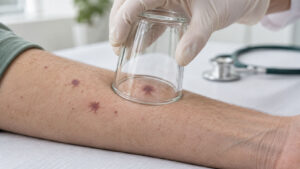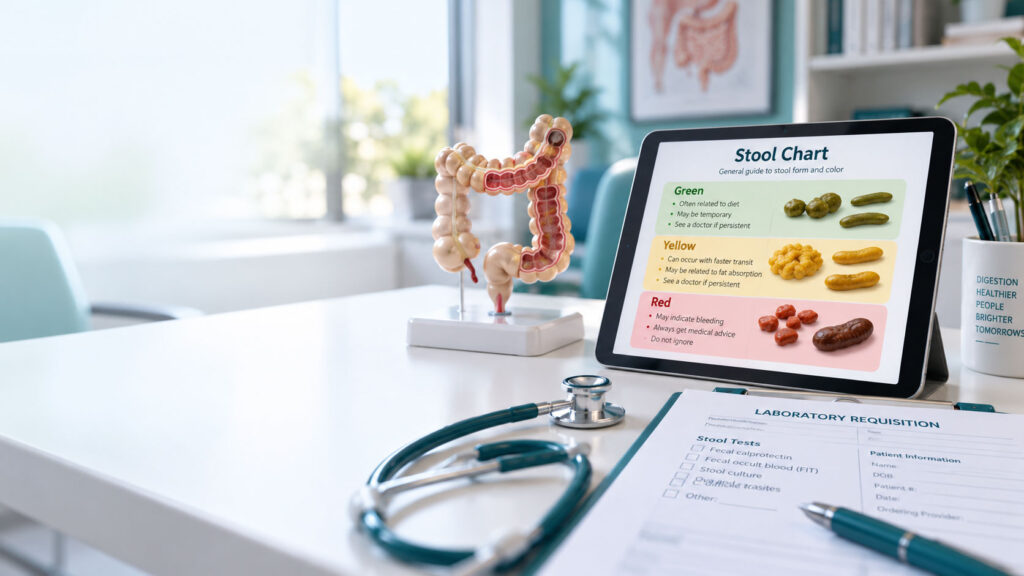
Seeing blood in the toilet is scary. Seeing blood and mucus together is a different signal, and that difference is worth understanding before you panic or brush it off.
Table of Contents
Blood alone, bright red on the toilet paper, usually comes from the anus. Blood mixed with mucus usually means the inner lining of the bowel is irritated or inflamed. The good news: rectal bleeding has a low predictive value for colorectal cancer, and most cases have a less serious cause. The catch: “less serious” still needs a name, and you can’t find it by looking.
Quick Answer: Mucus and blood in stool together usually mean the lining of your colon or rectum is irritated or inflamed. The most common causes are hemorrhoids, anal fissures, gut infections, and inflammatory bowel disease (IBD) such as ulcerative colitis. Less often, polyps or colorectal cancer are the cause. Go to the ER for heavy bleeding, dizziness, high fever, or severe belly pain. If it happens more than once, see a doctor within a few days.
The 9 most common causes, from most to least common in typical adults:
- Hemorrhoids
- Anal fissure
- Infectious colitis (food poisoning bacteria)
- Ulcerative colitis
- Crohn’s disease
- Proctitis
- Diverticular disease
- Ischemic colitis
- Polyps or colorectal cancer
At a Glance
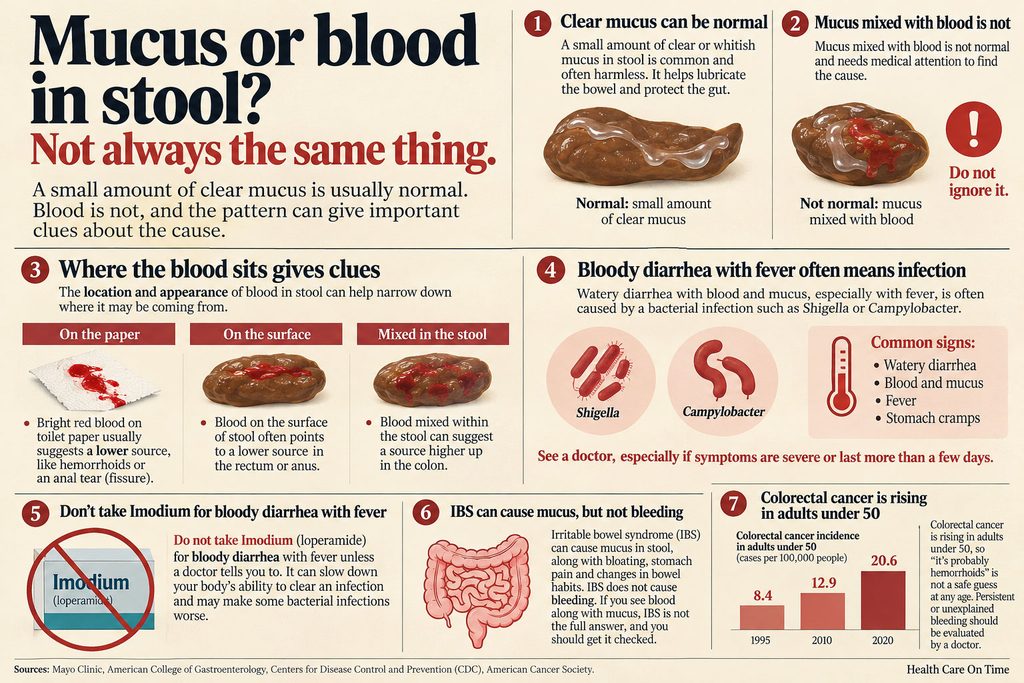
• A small amount of clear mucus in stool is normal. Mucus mixed with blood is not.
• Where the blood sits (on the paper, on the surface, or mixed in) gives strong clues about the source.
• Bloody, mucus-filled diarrhea with fever often means a bacterial infection like Shigella or Campylobacter.
• Don’t take Imodium (loperamide) for bloody diarrhea with fever unless a doctor tells you to.
• IBS can cause mucus, but it does not cause bleeding. If you see both, IBS is not the full answer.
• Colorectal cancer is rising in adults under 50, so “it’s probably hemorrhoids” is not a safe guess at any age.
What Mucus and Blood Together Actually Mean
Why Your Gut Makes Mucus
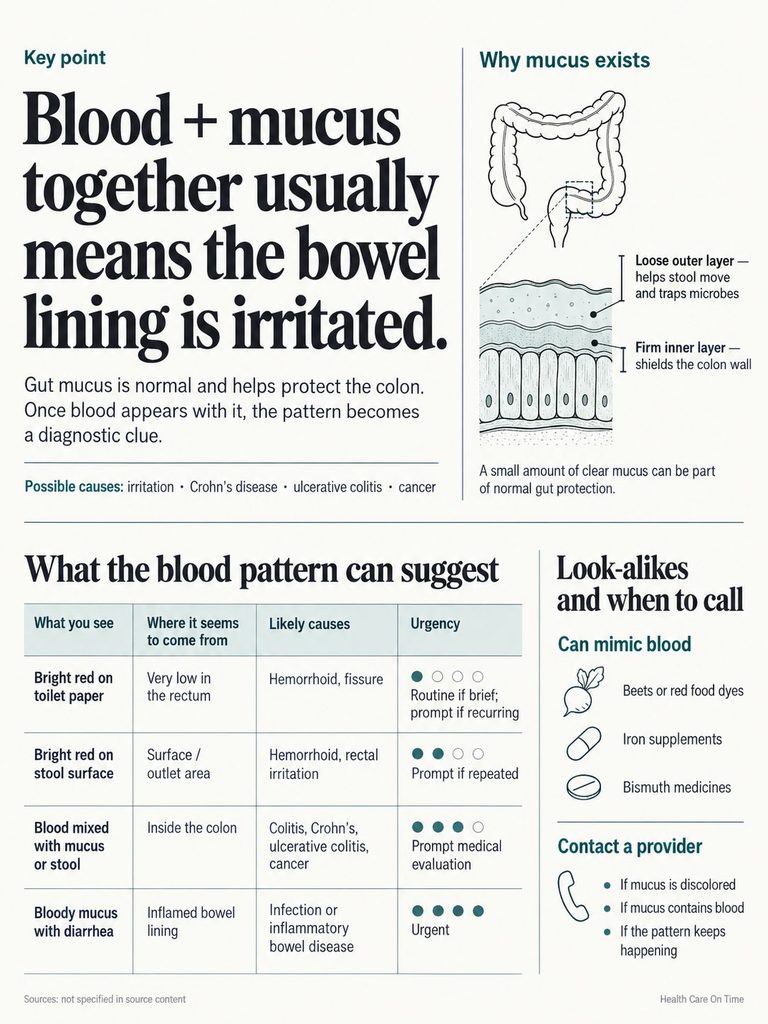
Your colon is coated in mucus all the time. It’s a slippery gel made by cells in the bowel lining, and it protects the wall from bacteria while helping stool slide through.
Research shows the colon has two layers of this mucus: a firm inner layer that keeps bacteria off the wall and a looser outer layer. A thin film of clear or white mucus on stool now and then is normal.
Why Blood Plus Mucus Points to the Lining
When the bowel lining gets irritated, it does two things at once. It pumps out extra mucus to protect itself, and its tiny blood vessels start to leak or bleed.
That’s why the pair matters. Mayo Clinic notes that bloody mucus, or mucus with belly pain, can signal Crohn’s disease, ulcerative colitis, or cancer. Our medical review team sees the same pattern across reader questions: the combination usually traces back to the colon or rectum, not just the anal opening.
Where the Blood Sits Tells You a Lot
Before you see a doctor, take a careful look (or a photo). The location, color, and texture help narrow things down fast.
| What You See | Likely Blood Source | Mucus Type | Most Likely Causes | Urgency |
| Bright red blood on toilet paper only, little or no mucus | Anus or lower rectum | None or small clear streaks | Hemorrhoids, anal fissure | Routine visit if it repeats |
| Red streaks on the outside of formed stool, with clear mucus | Rectum or anal canal | Clear, jelly-like | Hemorrhoids, fissure, proctitis, rectal polyp | Visit within 1 to 2 weeks |
| Blood mixed into stool with mucus, urgency, cramping | Colon or rectum lining | Clear, yellow, or pink-tinged | Ulcerative colitis, Crohn’s disease, infection | Visit within a few days |
| Loose, bloody, mucus-filled diarrhea with fever | Colon lining (inflamed) | Thick, mixed with blood or pus | Shigella, Campylobacter, Salmonella, STEC | Same day, especially with fever |
| Dark red or maroon blood with mucus, sudden belly pain, age 60+ | Left colon | Bloody | Ischemic colitis, diverticular bleeding | Same day or ER |
| Black, tarry, sticky stool | Stomach or upper gut | Usually none | Ulcer, upper GI bleeding | ER if with dizziness or weakness |
One caution: iron pills and Pepto-Bismol (bismuth) can turn stool black. Beets and red food dye can look like blood. If you’re unsure, tell your doctor exactly what you ate and took.
What the Mucus Color Adds
- Clear or white: Usually normal or IBS-related when there’s no blood.
- Yellow or green: Often infection or fast-moving stool.
- Pink or red-streaked: Blood is mixed in; the lining is likely irritated.
- Thick with pus: Points to inflammation, such as colitis, proctitis, or an abscess.
Cleveland Clinic advises contacting a provider if mucus contains blood or looks off-white or yellowish.
9 Causes of Mucus and Blood in Stool
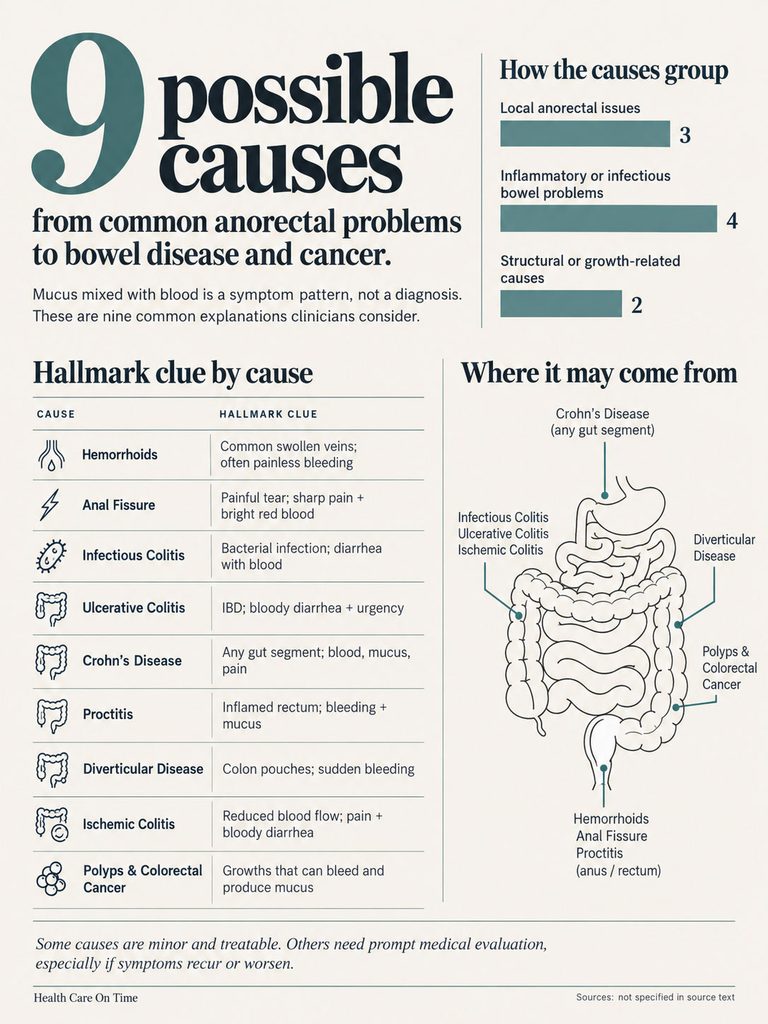
1. Hemorrhoids
Hemorrhoids are swollen veins in and around the anus. Internal hemorrhoids often bleed bright red blood without pain, and irritated tissue can leak mucus too.
They’re common. A worldwide meta-analysis found rectal bleeding was the most frequently reported hemorrhoid symptom, and pregnant women had one of the highest rates of hemorrhoid disease, at about 31%. Straining, constipation, and long sits on the toilet make them worse.
2. Anal Fissure
A fissure is a small tear in the skin of the anal canal, usually from passing hard stool. It causes sharp pain during and after a bowel movement, plus bright red blood on the paper.
Fissures can also leak a little mucus while they heal. The pain is the giveaway: hemorrhoid bleeding is often painless, while fissure bleeding usually hurts.
3. Infectious Colitis (Food Poisoning and Gut Infections)
Some bacteria don’t just upset your stomach. They invade or poison the colon lining, causing what doctors call dysentery: diarrhea with visible blood or mucus, often with fever and cramps.
The main US culprits are Shigella, Campylobacter, Salmonella, and Shiga toxin-producing E. coli (STEC). CDC estimates about 450,000 Shigella infections happen in the US each year, and roughly 242,000 of them resist some antibiotics. Children under 5 get it most, but anyone can.
STEC has a sneaky pattern. Bloody stools typically start 6 to 48 hours after watery diarrhea begins, often with severe cramps and little or no fever. A small share of people with E. coli O157 (CDC puts it at about 5% to 10%) develop hemolytic uremic syndrome (HUS), a kidney emergency that hits young children and older adults hardest.
The Imodium Warning
Most people grab an anti-diarrhea pill first. With bloody or mucus-filled diarrhea and fever, that can backfire.
Clinical guidance advises avoiding antimotility drugs like loperamide when there’s fever or bloody or mucoid stool, unless antibiotics are also given, because slowing the gut can keep the infection in longer. Patients who book stool tests with us often ask about this; it’s one of the most useful things to know before treating at home.
Why C. diff Usually Isn’t the Bloody One
C. diff infection often follows antibiotics, and many websites list it as a top cause of bloody mucus. The IDSA infectious diarrhea guideline states that bloody stools are not an expected sign of C. diff. It usually causes frequent, watery, foul-smelling diarrhea.
So if you’re on antibiotics and see real blood, don’t assume C. diff. Tell your doctor so they test for other causes too.
4. Ulcerative Colitis
Ulcerative colitis (UC) is a lifelong inflammatory bowel disease that inflames the rectum and colon. Bloody diarrhea with mucus, urgency, and cramps are its classic signs.
It’s more common than many people think. The latest CDC national survey for 2023 to 2024 found women were more likely than men to have UC, and UC affects about 1.2% of US adults, more than twice the rate of Crohn’s disease. When UC stays in the rectum, stool can even look normal, with bloody mucus passed separately.
5. Crohn’s Disease
Crohn’s disease can affect any part of the gut, from mouth to anus. When it involves the colon or rectum, it can cause blood and mucus, along with belly pain, weight loss, and fatigue.
Crohn’s also causes problems near the anus, like fistulas (tunnels) and abscesses, which can drain mucus or pus. Overall, IBD rises from 0.7% of adults ages 18 to 29 to 2.7% at 70 and older, so it’s not just a young person’s disease.
6. Proctitis
Proctitis means the rectum itself is inflamed. Symptoms include rectal bleeding, mucus or pus, a constant urge to go (tenesmus), and pain.
Causes include IBD, radiation for prostate or cervical cancer, and infections. NIDDK lists sexually transmitted infections plus Shigella, Campylobacter, and Salmonella among infectious causes. If you’ve had receptive anal sex, mention it; testing is quick and treatment works well.
7. Diverticular Disease
Diverticula are small pouches in the colon wall, common after age 50. When one bleeds, it can cause a sudden, large amount of painless red or maroon blood.
When the pouches get infected (diverticulitis), you may see more mucus, along with left-sided belly pain and fever. Large-volume bleeding needs emergency care.
8. Ischemic Colitis
This happens when blood flow to part of the colon drops, often in older adults with heart disease, low blood pressure, or hardened arteries. It causes sudden belly pain with bloody diarrhea.
The pain usually comes first, then blood and mucus within a day. If you’re over 60 and this pattern hits suddenly, go to the ER.
9. Polyps and Colorectal Cancer
Polyps are small growths on the colon lining. Most are harmless, but some turn into cancer over years. Both polyps and tumors can bleed and make extra mucus.
Cancer-related bleeding is often slow and steady, sometimes with a change in stool shape, a feeling of not emptying fully, weight loss, or tiredness from iron-deficiency anemia. Tumors in the rectum and lower colon are more likely to show visible blood.
A Note on IBS
IBS (irritable bowel syndrome) can cause plenty of mucus. Medical News Today notes that people with IBS may see stringy mucus covering their stool. But IBS does not cause bleeding or inflamed tissue.
In cases reviewed by our medical team, this mix-up comes up often: someone with a past IBS diagnosis sees blood and assumes it’s “just IBS.” Blood means something else needs to be checked.
Why This Matters More Now: The Numbers
Colorectal cancer is no longer just an older adult’s problem. That changes how seriously younger people should take bleeding with mucus.
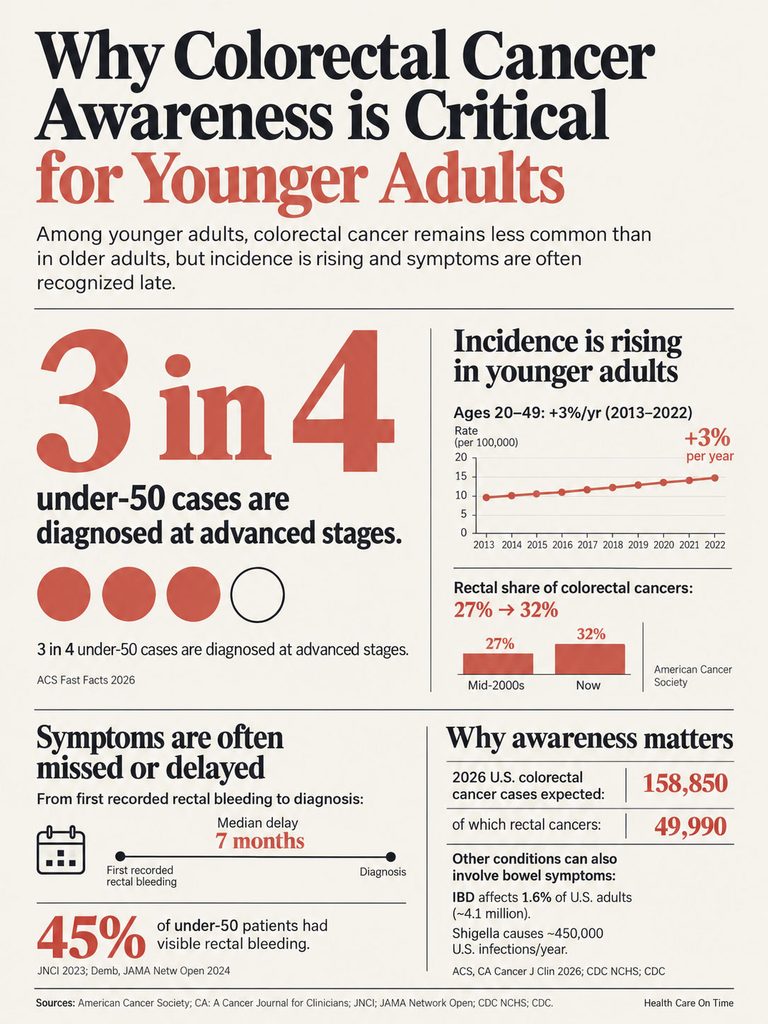
| Statistic | Figure | Source |
| New US colorectal cancer cases expected in 2026 | 158,850 (49,990 rectal) | ACS, CA Cancer J Clin 2026 |
| Annual rise in colorectal cancer, ages 20 to 49 (2013 to 2022) | 3% per year | ACS Fast Facts 2026 |
| Rectal cancer share of all colorectal cancers | 32% (up from 27% in the mid-2000s) | American Cancer Society |
| Under-50 colorectal cancers found at advanced stage | 3 in 4 | ACS Fast Facts 2026 |
| Median delay from first recorded rectal bleeding to diagnosis, under 50 | 7 months | JNCI 2023 |
| Under-50 colorectal cancer patients who had visible rectal bleeding | 45% | Demb, JAMA Netw Open 2024 |
| US adults ever diagnosed with IBD (2023 to 2024) | 1.6%, about 4.1 million | CDC NCHS |
| Estimated US Shigella infections per year | About 450,000 | CDC |
The “It’s Probably Hemorrhoids” Trap Under 50
Colorectal cancer is now the most common cancer death in people under 50. The rise is driven by tumors in the rectum and the lowest part of the colon, which are exactly the ones most likely to cause visible blood.
A study of more than 5,000 younger patients found four red flags in the two years before diagnosis: abdominal pain, rectal bleeding, diarrhea, and iron-deficiency anemia. Even with bleeding, people waited a median of 7 months for a diagnosis. Researchers also found doctors sometimes blame bleeding on hemorrhoids without further checks.
That doesn’t mean bleeding equals cancer. It means a young age shouldn’t end the conversation.
Why Bleeding Alone Is Usually Not Cancer
Here’s the balance. Per StatPearls, only about 7% of patients have rectal bleeding as their only colorectal cancer symptom, and most bleeding traces back to hemorrhoids or fissures.
Our medical reviewers put it simply: the odds are on your side, but the only way to know which side you’re on is an exam. A quick visit beats months of guessing.
When It’s Urgent: A Triage Guide
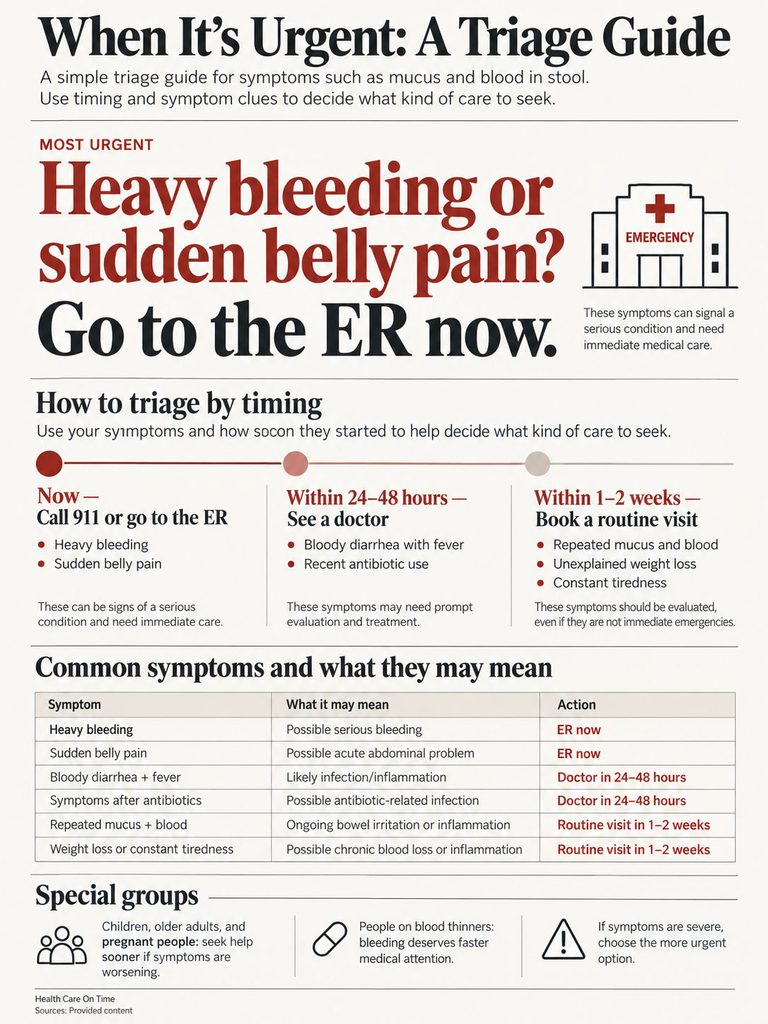
Call 911 or Go to the ER
Get emergency care if you have:
- Large amounts of blood, clots, or bleeding that won’t stop
- Dizziness, fainting, a racing heart, or pale, clammy skin
- Black, tarry stool with weakness
- Severe belly pain, a hard swollen belly, or pain that keeps getting worse
- High fever with bloody diarrhea, or signs of dehydration (very little urine, confusion)
- A child with bloody diarrhea who is peeing less, very pale, or unusually sleepy (possible HUS)
See a Doctor Within 24 to 48 Hours
Book a fast visit for bloody, mucus-filled diarrhea lasting more than a day, fever with any blood, recent travel, recent antibiotics, or a weak immune system. IDSA recommends stool testing for diarrhea with fever, bloody or mucoid stool, severe cramping, or signs of sepsis.
Book a Routine Visit (Within 1 to 2 Weeks)
Make an appointment if you’ve seen mucus and blood more than once, even without pain. The same goes for bleeding with a change in bowel habits, unexplained weight loss, or constant tiredness.
How Long Is Too Long?
- One streak after a hard stool: Watch and add fiber.
- Two or more episodes in a month: Book a visit.
- Bloody diarrhea past 24 hours, or any with fever: See a doctor within a day.
- Bowel changes with blood lasting 3 weeks or more: Ask about a colonoscopy.
Special Groups
- Children: Bloody mucus in an infant can come from a milk protein allergy. In toddlers, “currant jelly” stool with crying spells can mean intussusception, a bowel emergency.
- Pregnancy: Hemorrhoids and fissures are common, but report any bleeding to your OB.
- Over 65: Ischemic colitis and diverticular bleeding become more likely; don’t wait.
- After antibiotics or travel: Testing for infection comes first.
| Scenario | What It May Mean | What to Do |
| Bright red streak on paper once, after hard stool, no other symptoms | Fissure or hemorrhoid | Add fiber and fluids; see a doctor if it repeats |
| Clear mucus with red streaks for 2+ weeks | Hemorrhoids, proctitis, or rectal polyp | Book a visit within 1 to 2 weeks; ask about a rectal exam |
| Bloody, mucus-filled diarrhea with fever over 101°F | Bacterial colitis (Shigella, Campylobacter) | See a doctor within 24 hours; ask for stool testing; skip loperamide |
| Bloody diarrhea after an undercooked burger or raw produce, little fever | Possible STEC | See a doctor the same day; avoid antibiotics until tested |
| Repeated bloody mucus with urgency and cramps for weeks | Ulcerative colitis or Crohn’s disease | Ask about fecal calprotectin and a GI referral |
| Age under 50, ongoing bleeding plus anemia or bowel change | Cancer needs to be ruled out | Ask directly about colonoscopy |
| Sudden belly pain, then bloody stool, age 60+ | Ischemic colitis | Go to the ER |
| Heavy bleeding, clots, dizziness, or black stool | Significant GI bleeding | Call 911 |
What Your Doctor Will Check
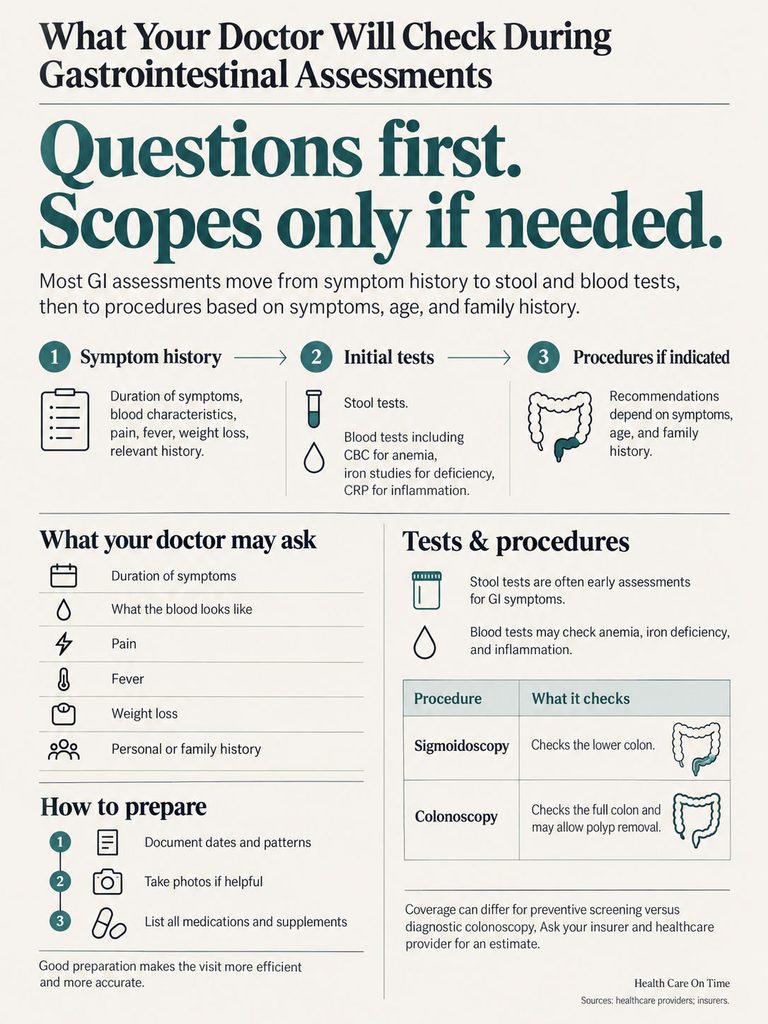
Questions to Expect
Your doctor will ask how long it’s been happening, how much blood you see, its color, whether it’s mixed in or on the surface, and whether you have pain, fever, or weight loss. Travel, food, new medicines, antibiotics, sexual history, and family history of colon cancer or IBD all matter.
Before the visit, jot down dates, take a photo if you can, and list everything you take, including supplements. Patients booking tests with us often say this short note made the appointment much faster.
Stool Tests
- Stool culture or PCR panel: Looks for Salmonella, Shigella, Campylobacter, and other germs.
- Shiga toxin test: Checks for STEC, which changes treatment.
- Fecal calprotectin: Measures gut inflammation. A 2023 review in Clinical and Translational Gastroenterology describes levels under 50 µg/g as making active IBD unlikely, 50 to 250 as a gray zone, and over 250 as a usual trigger for a scope.
- FIT (fecal immunochemical test): Detects hidden blood. It’s a screening tool, so with visible blood your doctor will usually go straight to a scope.
Blood Tests
A CBC checks for anemia from slow blood loss. Iron studies and ferritin show iron deficiency, and CRP points to inflammation. Across lab panels booked through HealthCareOnTime, a CBC with iron studies is one of the most common first steps for unexplained bleeding.
Colonoscopy or Sigmoidoscopy
A sigmoidoscopy looks at the rectum and lower colon. A colonoscopy looks at the whole colon and lets the doctor remove polyps or take small tissue samples at the same time.
Doctors usually recommend a colonoscopy for ongoing bleeding, bleeding with anemia or weight loss, a high calprotectin, a family history of colon cancer, or age 45 and up with new symptoms.
Insurance and Cost Notes
Screening colonoscopies starting at age 45 are generally covered without cost sharing under federal preventive care rules. A colonoscopy done because you have symptoms is usually billed as diagnostic, so your deductible and coinsurance can apply. Ask your insurer and the GI office for an estimate first.
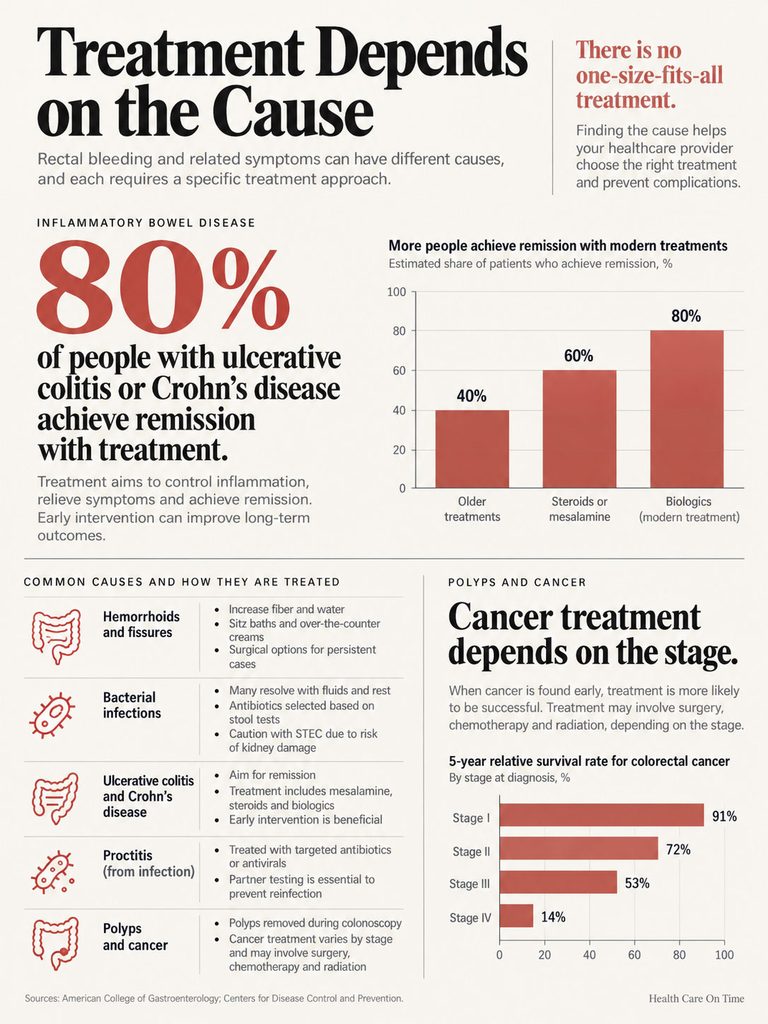
Treatment Depends on the Cause
Once the cause has a name, treatment is usually simple and specific. Here’s what each path tends to look like, so the next step feels less like a mystery.
Hemorrhoids and Fissures
Most improve within a few weeks with more fiber, more water, sitz baths, and short-term use of over-the-counter hemorrhoid creams. Fissures that don’t heal may get a prescription ointment that relaxes the anal muscle, such as nitroglycerin or diltiazem.
Hemorrhoids that keep bleeding can often be treated in the office with rubber band ligation, a quick procedure that cuts off blood flow to the swollen tissue. Surgery is reserved for the small number that don’t respond.
Bacterial Infections
Many gut infections clear on their own in about a week with fluids and rest. When antibiotics are needed, for some Shigella or Campylobacter cases, doctors pick the drug based on stool test results, because antibiotic resistance is common.
STEC is the big exception. Antibiotics are usually avoided because they may raise the risk of kidney damage, so care focuses on fluids and close monitoring, especially in children.
Ulcerative Colitis and Crohn’s Disease
Treatment aims for remission: no bleeding, no urgency, and a healed lining on colonoscopy. Mild to moderate UC often starts with mesalamine, a 5-ASA drug taken by mouth or as a rectal suppository or enema.
Short courses of steroids can calm a flare, while biologics and newer pills are used for moderate to severe disease. Our medical reviewers note that early, steady treatment tends to work better than waiting out flares.
Proctitis From Infection
STI-related proctitis is treated with targeted antibiotics or antivirals based on test results. Partners usually need testing and treatment too, so the infection doesn’t come back.
Polyps and Cancer
Polyps are typically removed during the same colonoscopy that finds them, which also prevents them from turning into cancer later. If cancer is found, treatment depends on its stage and may include surgery, chemotherapy, and radiation, especially for rectal tumors.
What You Can Do at Home (and What to Avoid)
Safe Steps While You Wait
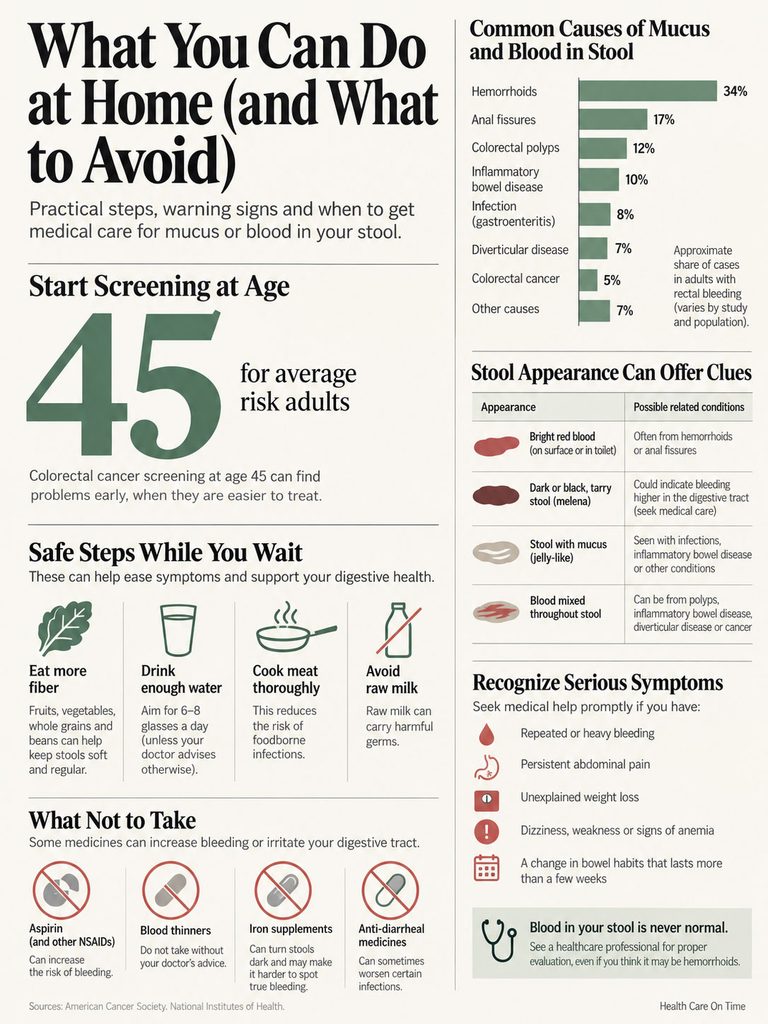
- Drink plenty of fluids. With diarrhea, an oral rehydration solution works better than plain water.
- If stool is hard, add fiber slowly (fruits, vegetables, oats, or a psyllium supplement).
- Don’t strain or sit on the toilet scrolling your phone.
- Warm sitz baths (10 to 15 minutes) can ease hemorrhoid and fissure pain.
- Wash hands well and don’t cook for others if you have diarrhea; Shigella spreads easily.
What Not to Take
- Loperamide (Imodium) with fever or bloody, mucus-filled diarrhea, unless a doctor says it’s okay.
- NSAIDs like ibuprofen, naproxen, and high-dose aspirin, which can irritate the gut and worsen bleeding. Acetaminophen is usually a safer pain choice.
- Bismuth (Pepto-Bismol) right before a visit, since it turns stool black and can hide or mimic bleeding.
- Leftover antibiotics. Some infections, like STEC, can get worse with the wrong antibiotic.
Prevention
You can’t prevent every cause, but you can lower risk. Eat more fiber, drink enough water, cook meat thoroughly, and avoid raw milk.
Most important, start colorectal cancer screening at 45 if you’re at average risk, or earlier with a family history. The 2026 American Cancer Society guidance keeps 45 as the starting age.
Frequently Asked Questions
Is mucus and blood in stool serious?
It can be, but often it isn’t. Hemorrhoids and fissures are the most common causes. Still, mucus and blood together suggest an irritated bowel lining, which can mean infection, IBD, or rarely cancer. If it happens more than once or comes with fever, pain, or weight loss, see a doctor.
Can hemorrhoids cause mucus and blood?
Yes. Internal hemorrhoids often bleed bright red blood, and irritated hemorrhoid tissue can leak clear mucus. The blood usually sits on the paper or on the stool surface, not mixed in. If blood is mixed into the stool or you have diarrhea, something beyond hemorrhoids may be involved.
Can IBS cause blood and mucus in stool?
IBS can cause mucus but not blood. It doesn’t damage or inflame the bowel lining, so it shouldn’t make you bleed. If you have IBS and notice blood, get checked for hemorrhoids, fissures, IBD, or other causes rather than assuming it’s a flare.
Should you go to the ER for bloody mucus?
Go to the ER for heavy bleeding, clots, dizziness, fainting, black tarry stool, severe belly pain, or high fever with dehydration. For small amounts of blood without those signs, a same-week visit with your primary care doctor or an urgent care clinic is usually the right step.
Can food poisoning cause blood and mucus?
Yes. Bacteria like Shigella, Campylobacter, Salmonella, and STEC can inflame the colon and cause bloody, mucus-filled diarrhea. Fever and cramps are common. See a doctor for stool testing, and avoid anti-diarrhea medicine until a doctor rules out an invasive infection.
What does ulcerative colitis stool look like?
UC stool is often loose and mixed with blood and mucus, sometimes pus. People feel an urgent need to go, often many times a day, including at night. When only the rectum is inflamed, stool may look normal, with bloody mucus passed on its own.
What does colon cancer stool look like?
There’s no single look. Colon cancer can cause dark or bright red blood, mucus, narrow stools, or a lasting change in bowel habits. Many early cancers cause no visible change at all, which is why screening matters even when stool looks normal.
Can stress cause bloody mucus in stool?
Stress can worsen IBS and trigger more mucus, and it can make IBD flares more likely. But stress alone doesn’t cause bleeding. If you see blood, look for a physical cause with a doctor rather than blaming stress.
Is it normal to see mucus and blood once?
A single streak after a hard bowel movement is often a small fissure or hemorrhoid. It’s not “normal,” but it’s usually not dangerous. Watch for repeats. If it happens again, lasts more than a few days, or comes with other symptoms, book a visit.
Can antibiotics cause bloody mucus?
Antibiotics can trigger C. diff, but C. diff usually causes watery diarrhea, not visible blood. Bloody stool after antibiotics may point to another infection or, rarely, a drug-related colitis. Call your doctor; don’t stop or switch antibiotics on your own.
Is mucus and blood in a child’s stool an emergency?
It depends on the signs. In babies, a milk protein allergy is common. Go to the ER right away for a child with currant-jelly stool and crying spells, bloody diarrhea with less peeing, unusual sleepiness, or pale skin. Otherwise, call the pediatrician the same day.
Can you take Imodium with bloody diarrhea?
Usually not without medical advice. With fever or bloody, mucus-filled stool, loperamide can keep harmful bacteria in the gut longer and may worsen some infections. Focus on fluids and see a doctor for testing. They’ll tell you whether it’s safe.
Disclaimer: This article is for general education only and is not a substitute for professional medical advice, diagnosis, or treatment. Blood in stool should always be evaluated by a licensed healthcare provider. If you have heavy bleeding, dizziness, severe pain, or a high fever, call 911 or go to the nearest emergency room. HealthCareOnTime content is reviewed for accuracy but cannot account for your personal medical history.
References
- American Cancer Society: Colorectal Cancer Drops in Older Adults and Rises in Younger Ones
- Siegel RL et al. Colorectal Cancer Statistics, 2026. CA Cancer J Clin
- American Cancer Society: Colorectal Cancer Statistics 2026 Fast Facts
- Red-flag signs and symptoms for earlier diagnosis of early-onset colorectal cancer. JNCI 2023
- Demb J et al. Red Flag Signs and Symptoms for Patients With Early-Onset Colorectal Cancer. JAMA Netw Open 2024
- CDC NCHS: Inflammatory Bowel Disease Among Adults, United States, 2023 to 2024
- Medical Daily: CDC NCHS IBD Prevalence Report
- CDC: Clinical Overview of Shigellosis
- 2017 IDSA Clinical Practice Guidelines for Infectious Diarrhea
- UpToDate: Approach to the Adult With Acute Diarrhea
- NIDDK: Symptoms and Causes of Proctitis
- StatPearls: Rectal Bleeding
- Mayo Clinic: Mucus in Stool, A Concern?
- Cleveland Clinic: Mucus in Stool
- Medical News Today: Mucus in Stool
- Worldwide Prevalence of Haemorrhoids: Systematic Review and Meta-Analysis
- Johansson MEV et al. The inner of the two Muc2 mucin-dependent mucus layers in colon is devoid of bacteria. PNAS
- Washington State DOH: STEC Guideline
- CU Anschutz: Updated 2026 ACS Colorectal Cancer Screening Guidelines