
If you searched this after a diagnosis, you probably saw 2 years, 4 years, and 15 years on the same page. That’s confusing, and frightening.
Table of Contents
Here’s the twist: all three numbers can be true at once. They just measure different clocks, different types of the disease, and different eras of treatment.
Quick Answer: Untreated transthyretin cardiac amyloidosis (ATTR-CM) has a median survival of about 3.5 to 5 years from diagnosis. Nerve-first hereditary forms often run 10 years or more. Two blood tests, NT-proBNP and kidney function, place you in a stage that predicts survival from about 2 to nearly 6 years untreated. Newer drugs cut death risk by roughly 30 to 40% in trials, and starting early matters most.
At a Glance
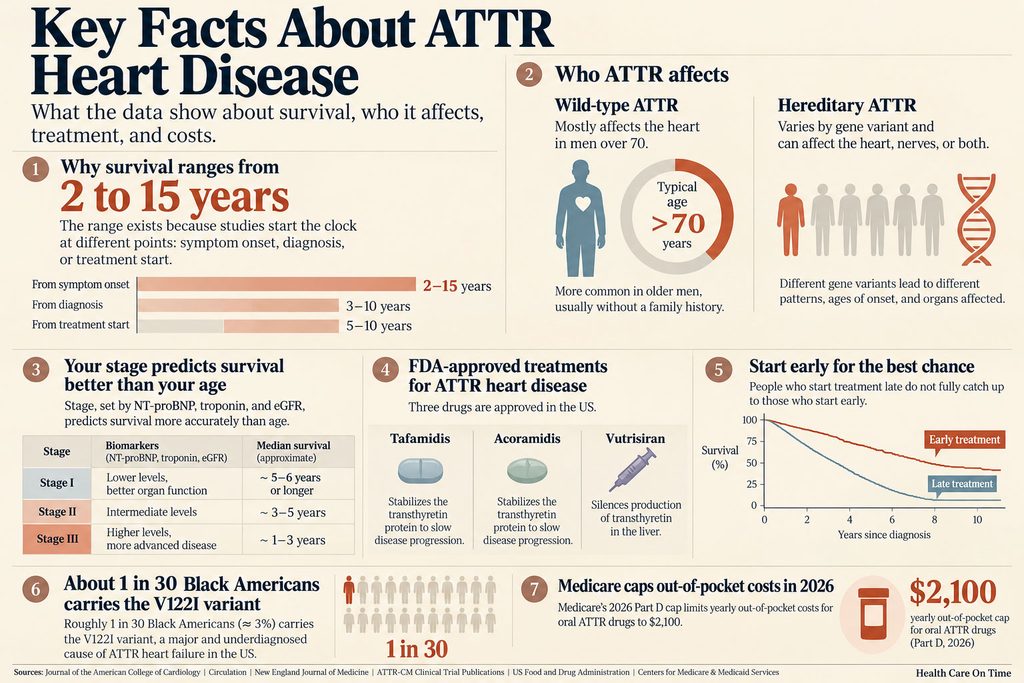
- The “2 to 15 years” range exists because studies start the clock at different points: symptom onset, diagnosis, or treatment start.
- Wild-type ATTR mostly affects the heart in men over 70; hereditary ATTR varies by gene variant.
- Your stage, set by NT-proBNP, troponin, and eGFR, predicts survival better than your age does.
- Three drugs are FDA-approved for ATTR heart disease: tafamidis, acoramidis, and vutrisiran.
- People who start treatment late do not fully catch up to those who start early.
- About 1 in 30 Black Americans carries the V122I variant, a major and underdiagnosed cause of ATTR heart failure in the US.
- Medicare’s 2026 Part D cap limits yearly out-of-pocket costs for oral ATTR drugs to $2,100.
What “Life Expectancy” Really Means in ATTR Amyloidosis
ATTR amyloidosis happens when transthyretin (TTR), a protein made mostly by your liver, falls apart and refolds into stiff fibers called amyloid. Those fibers collect in the heart, the nerves, or both.
The disease is progressive. But “how long” depends on far more than the diagnosis itself.
Why You See Numbers From 2 to 15 Years
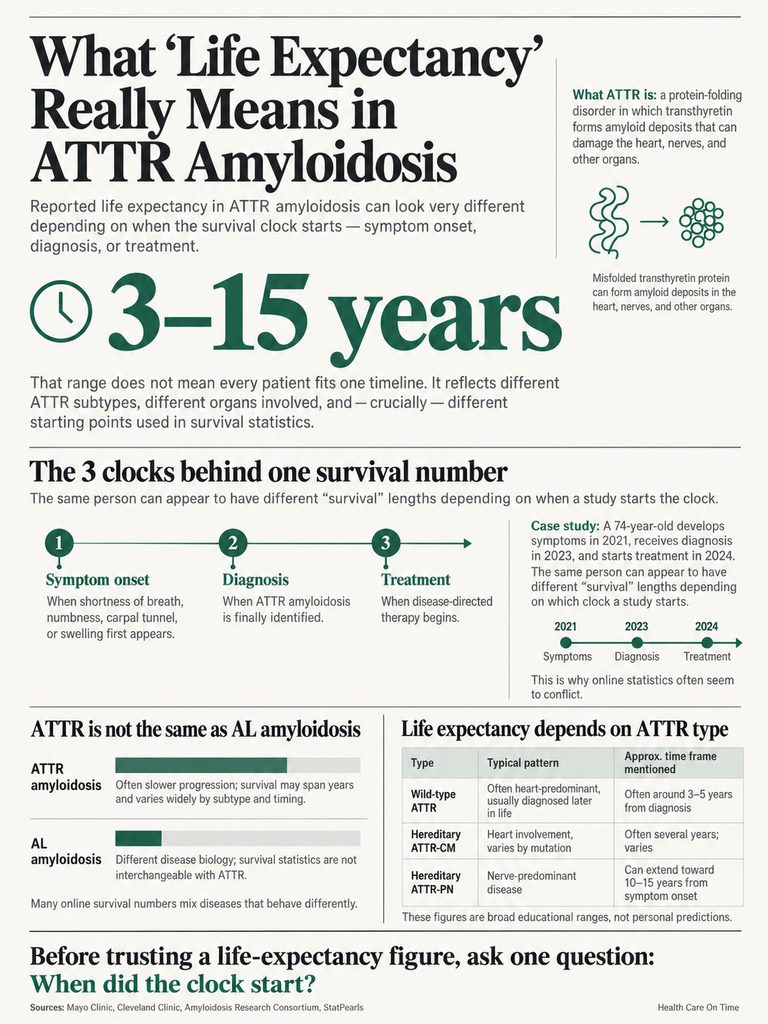
A 2025 epidemiology review put ATTR amyloidosis life expectancy at roughly 3 to 15 years after symptoms begin (Delgado et al., 2025). That range is honest, but it hides three separate questions.
The short end usually describes advanced heart disease found late. The long end usually describes nerve-first hereditary disease found young.
Patients who order cardiac blood panels through HealthCareOnTime often ask why their doctor’s estimate doesn’t match what they read online. Most of the time, the online number simply started its clock somewhere else.
The Three Clocks: Symptoms, Diagnosis, and Treatment
Clock 1, from symptom onset. This produces the longest numbers. Many people live with breathlessness, carpal tunnel syndrome in both wrists, or numb feet for years before anyone names the disease.
Clock 2, from diagnosis. This is what most heart studies report. In a Mayo Clinic cohort of 360 people with wild-type disease, median survival from diagnosis was 3.6 years (Grogan et al., JACC 2016).
Clock 3, on treatment. These are the newest and most hopeful numbers. They come from trials and registries that began after tafamidis reached the US market in 2019.
One Patient, Three Clocks
Picture a 74-year-old man who had carpal tunnel surgery on both wrists at 66. Breathlessness starts at 71. He’s diagnosed with wild-type ATTR-CM at 74 and starts a stabilizer right away.
From symptom onset, his survival “clock” already reads 3 years. From diagnosis, it reads zero. On treatment, he joins a group where about 77% were alive at 3.5 years.
Same man, three very different numbers. That’s why the first question to ask about any statistic is: when did the clock start?
ATTR Is Not AL Amyloidosis
Some pages list AL (light chain) amyloidosis survival right next to ATTR numbers. AL is a blood cell disorder treated much like a cancer, and untreated advanced AL can progress within months.
That figure does not apply to ATTR. If a general amyloidosis page mentions “six months,” check which type it describes before you absorb it.
Table 1. ATTR Amyloidosis Life Expectancy by Type
| Type | Main organ affected | Typical age at diagnosis | Untreated median survival | With disease-modifying treatment |
| Wild-type ATTR-CM (ATTRwt) | Heart | Median 75; about 91% men (Mayo cohort) | About 3.6 years from diagnosis | Real-world tafamidis: 77% alive at 3.5 years (THAOS) |
| Hereditary V122I (V142I) ATTR-CM | Heart, sometimes nerves | Usually 60 and older | About 25.6 months in a small US study (11 patients) | Acoramidis cut death risk 59% vs delayed start through month 42 in variant patients |
| Hereditary Val30Met, early onset | Nerves first | Often before 50 | About 13.3 years from symptom onset (Portuguese cohort) | Tafamidis trials up to 8.5 years showed very few deaths |
| Hereditary, all variants combined | Nerves, heart, or both | 30s to 80s | About 7 to 12 years from diagnosis (NIH GARD) | Silencers and stabilizers slow nerve and heart decline |
| Wild-type, Japanese registry | Heart | Late 70s | 3.8 years; 79% alive at 1 year, 34% at 5 years | Not reported in this cohort |
ATTR Amyloidosis Life Expectancy by Type
The biggest single driver of your outlook is which organ the amyloid targets first. Heart involvement shortens life far more than nerve involvement does.
Wild-Type ATTR (ATTRwt)
Wild-type ATTR involves no gene change. The normal TTR protein simply becomes less stable with age.
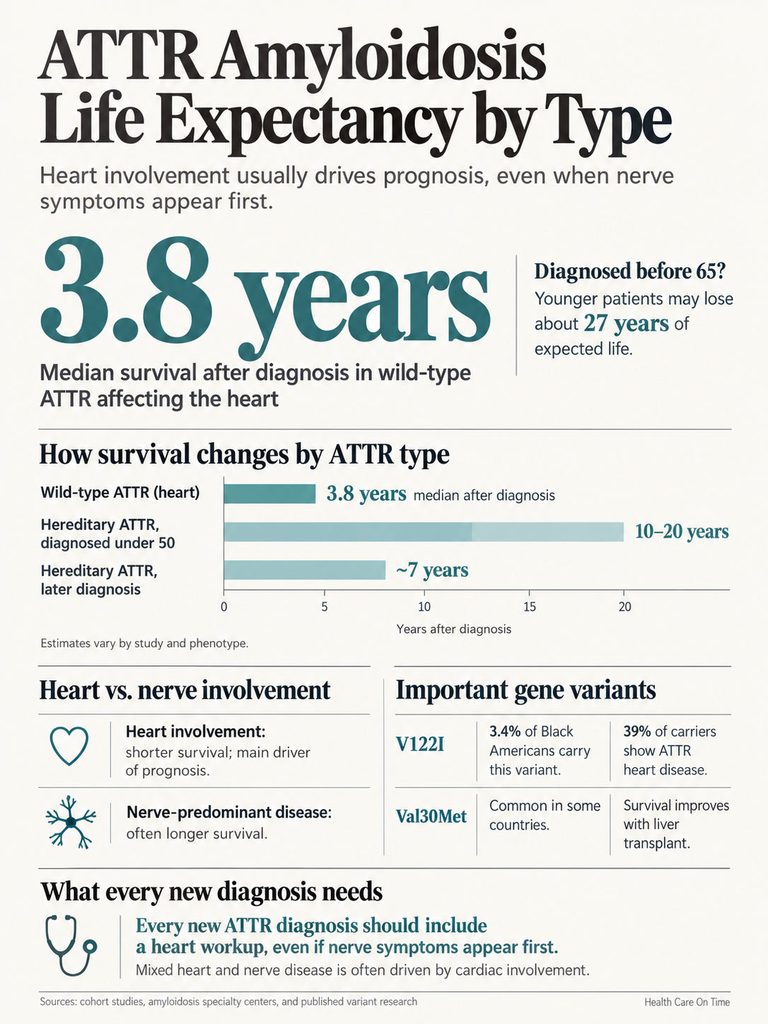
It mostly affects men in their 70s and 80s and lands almost entirely in the heart. In a Japanese cohort, median survival from diagnosis was 3.80 years, with 68% alive at 2 years and 34% at 5 years (Circulation Reports, 2020).
A Korean nationwide study of 175 patients found median survival of 3.53 years, with an average of 13 years of potential life lost compared with the general population (Orphanet J Rare Dis, 2022). It’s non-US data, but the pattern matches American cohorts.
What surprises families most: younger patients lose the most time. People diagnosed before 65 lost about 27 years of expected life, versus about 10.5 years for those diagnosed at 65 or older.
Hereditary ATTR (ATTRv)
Hereditary ATTR comes from a change in the TTR gene. More than 100 variants are known, and each behaves differently.
A US expert panel notes that people diagnosed before age 50 may live about 10 to 20 years after symptoms begin, compared with about 7 years for those diagnosed later in life (Karam et al., Muscle & Nerve 2024).
V122I and Black Americans
The V122I variant (now often written p.V142I) is the most common amyloid-causing gene change in the US. It’s carried by about 3.4% of self-identified Black Americans, roughly 1.5 million people (SCAN-MP, JAHA 2023).
Carrying it does not guarantee disease. Among 278 Black heart failure patients aged 60 and older in SCAN-MP, 39% of V122I carriers actually had ATTR heart disease.
In the NIH-funded ARIC study of 3,856 Black adults, carriers had a 47% higher risk of developing heart failure (Quarta et al., NEJM 2015). A later ARIC analysis also linked the variant to more atrial fibrillation and ischemic stroke (ARIC analysis, PMC).
V122I heart disease tends to move faster than wild-type. Our medical review team flags this group specifically, because it’s so often written off as ordinary high blood pressure heart failure.
Val30Met and Nerve-First Disease
Val30Met (p.V50M) is the classic nerve form, most common in Portugal, Sweden, Japan, and Brazil. In a Portuguese cohort of about 3,000 patients followed over a century, median survival from onset was 13.29 years, and liver transplant clearly improved survival (Coelho et al.).
Those numbers predate modern drugs. Today, tafamidis and gene silencers slow nerve damage far earlier in the course.
Mixed Heart and Nerve Disease
Many hereditary variants affect both systems. When the heart is involved, it usually sets the pace for survival, even if nerve symptoms came first.
That’s why every new ATTR diagnosis should include a heart workup, including for people who first showed up with numb feet.
Your Stage Predicts More Than Your Age
This is where lab testing carries the most weight. ATTR prognosis is staged mainly with routine blood tests, not costly scans.
In cases reviewed by our medical team, families are often surprised that a standard NT-proBNP and kidney panel says so much about outlook.
A Quick Note on Units
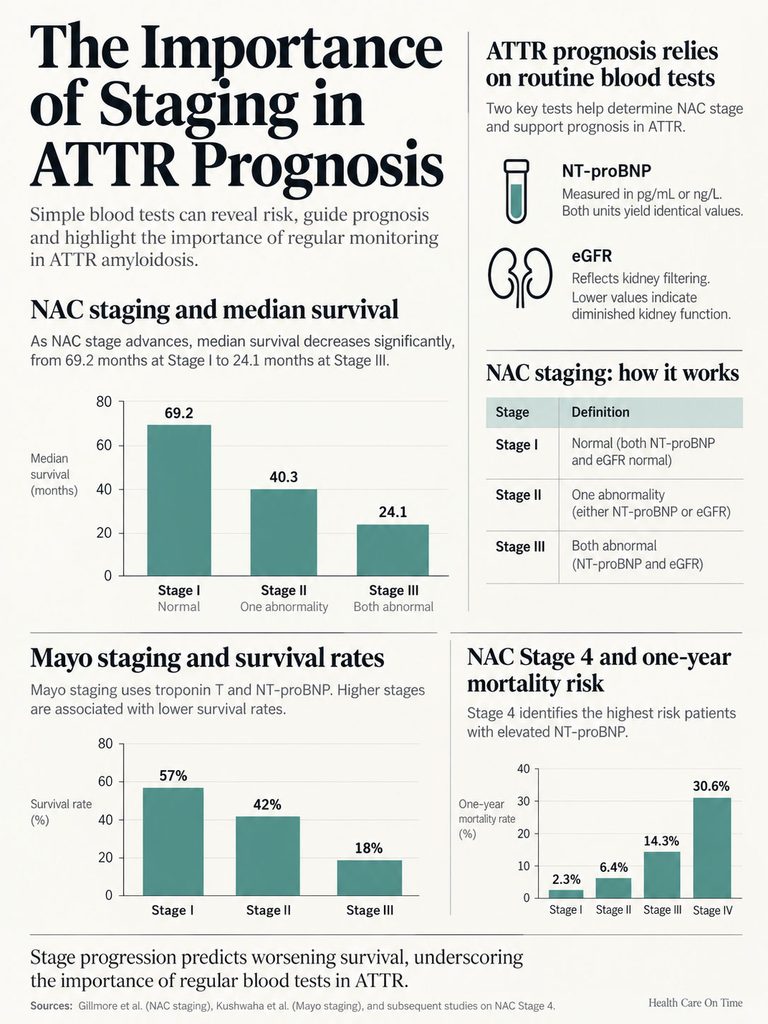
NT-proBNP is reported in either pg/mL or ng/L. These two units give the exact same number, so 3,000 pg/mL equals 3,000 ng/L.
eGFR is an estimate of kidney filtering, reported in mL/min. Lower numbers mean weaker kidney function.
NAC Staging: NT-proBNP and eGFR
The UK National Amyloidosis Centre (NAC) system uses two cut-offs:
- NT-proBNP above 3,000 pg/mL (a heart strain marker)
- eGFR below 45 mL/min (a kidney function estimate)
Stage I means neither is abnormal. Stage II means one is. Stage III means both are.
In 869 patients, median survival was 69.2 months at stage I, 46.7 months at stage II, and 24.1 months at stage III (staging review, PMC). That’s about 5.8, 3.9, and 2 years, all measured before modern treatment.
Mayo Staging: Troponin T and NT-proBNP
The Mayo Clinic system for wild-type disease uses troponin T above 0.05 ng/mL and NT-proBNP above 3,000 pg/mL. Four-year survival was 57%, 42%, and 18% for stages I, II, and III (Grogan et al., JACC 2016).
Stage III patients had 3.6 times the death risk of stage I patients after adjusting for age and sex.
NAC Stage 4: Spotting the Highest Risk
In 2024, researchers split off a fourth NAC stage for patients with very high NT-proBNP within stage III. One-year death rates were 2.3% at stage 1, 8.8% at stage 2, 10.4% at stage 3, and 30.6% at stage 4 (Nitsche et al., Eur J Heart Fail 2024).
That split matters in practice. It picks out the people who need the fastest treatment decisions and earlier conversations about palliative support.
Staging Gets Less Exact Once Treatment Starts
Both systems were built on untreated patients. A 2025 study of tafamidis-treated patients found NAC still flagged the highest-risk group but couldn’t separate stage I from stage II (JACC: Advances, 2025). An adapted Mayo score using high-sensitivity troponin T did separate all three.
The bigger point: your stage can change. Moving from stage I to a higher stage during follow-up predicts worse survival, which is why repeat blood tests every few months are worth the needle stick.
How to Read Your Own Numbers
Bring these questions to your next appointment and ask your doctor:
- What is the NT-proBNP result, and is it above or below 3,000 pg/mL?
- What is the eGFR result, and is it above or below 45 mL/min?
- What is the high-sensitivity troponin T trend over the last two tests?
- Which stage do these results point to, and has it changed since diagnosis?
- When should these tests be repeated?
Table 2. Key USA-Relevant ATTR Survival Statistics
| Measure | Number | Source |
| NAC stage I / II / III median survival (untreated) | 69.2 / 46.7 / 24.1 months | Gillmore NAC cohort, 869 patients |
| Mayo stage I / II / III 4-year survival (wild-type) | 57% / 42% / 18% | Grogan, JACC 2016, Mayo Clinic |
| NAC stage 1 / 2 / 3 / 4 one-year mortality | 2.3% / 8.8% / 10.4% / 30.6% | Nitsche, Eur J Heart Fail 2024 |
| Tafamidis real-world survival | 84% at 2.5 years; 77% at 3.5 years | THAOS registry, J Card Fail 2024 |
| Tafamidis mortality reduction vs placebo | HR 0.70 (30.2% lower) | ATTR-ACT, NEJM 2018 |
| Acoramidis all-cause mortality through month 42 | HR 0.70 wild-type; HR 0.41 variant | ATTRibute-CM OLE, ACC summary |
| Vutrisiran all-cause mortality through month 42 | HR 0.645 | HELIOS-B, JACC 2025 |
| V122I carriers among Black Americans | 3.4% (about 1.5 million people) | SCAN-MP, JAHA 2023 (NIH-funded) |
Do the New Drugs Really Extend Life?
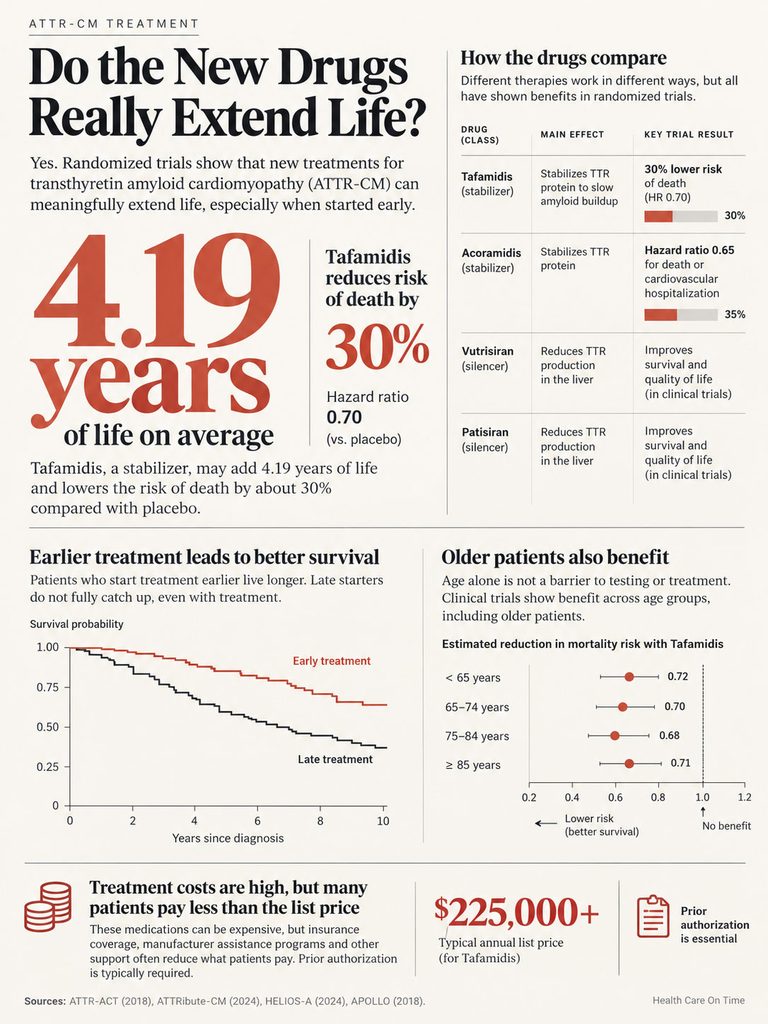
Yes, based on randomized trials. The gains are real, not miraculous, and they depend heavily on timing.
Stabilizers: Tafamidis and Acoramidis
Stabilizers lock the TTR protein into its normal four-part shape so it can’t break apart and form new amyloid.
Tafamidis (Vyndaqel, Vyndamax) lowered death risk by about 30% versus placebo in the ATTR-ACT trial. A disease-simulation model estimated it adds about 4.19 years of life on average for ATTR-CM patients (tafamidis survival model, PMC).
Acoramidis (Attruby) won FDA approval in November 2024. In ATTRibute-CM, the combined risk of death or cardiovascular hospitalization fell with a hazard ratio of 0.65, meaning about 7 patients needed treatment to prevent one event (ACC trial summary).
Data presented at ESC 2026 extended follow-up to month 54 for hereditary variants, including V122I. Among V122I patients who received placebo during the blinded phase, mortality reached 66.7% (ESC 2026 presentation).
Silencers: Vutrisiran, Patisiran, and Eplontersen
Silencers cut the liver’s production of TTR at the source, by about 80% in the case of vutrisiran.
Vutrisiran (Amvuttra), given as an injection every 3 months, was FDA-approved for ATTR-CM in March 2025. In HELIOS-B, with 655 patients, it reduced all-cause death with a hazard ratio of 0.645 through month 42 (ACC journal scan).
Patisiran (Onpattro) and eplontersen (Wainua) are approved in the US for hereditary ATTR nerve disease. For nerve-first patients, slowing walking decline protects independence as much as it protects lifespan.
Late Starters Never Fully Catch Up
This may be the single most important finding in the field. In the tafamidis long-term extension, people who took the drug from the start lived longer than those who switched from placebo later (Circulation: Heart Failure, 2021).
Death risk was about 39% lower in wild-type patients and 43% lower in variant patients who started early. Acoramidis showed the same pattern.
The reason is simple. Amyloid already in the heart doesn’t dissolve on these drugs; they mainly stop new damage. Every month of delay leaves damage that can’t be reversed.
Treatment After Age 80
Many older patients hear, “At your age, it’s not worth it.” The data push back on that.
A prespecified HELIOS-B analysis published in January 2026 found vutrisiran cut deaths and cardiovascular events across all age groups, including people 80 and older, while protecting walking ability and quality of life (AJMC, 2026).
Patients commonly ask us whether a parent is “too old” to be tested. Age alone isn’t a reason to skip testing or treatment.
Paying for Treatment in the US
List prices for ATTR drugs run into six figures a year, but most patients don’t pay list price. How you’re covered depends on how the drug is given:
- Oral drugs (tafamidis, acoramidis) fall under Medicare Part D. In 2026, Part D out-of-pocket costs are capped at $2,100 for the year, and the Medicare Prescription Payment Plan lets you spread that over monthly bills.
- Clinic-given injections (vutrisiran, patisiran) usually fall under Medicare Part B, where a Medigap or Medicare Advantage plan shapes your share.
- Commercial insurance usually requires prior authorization with a confirmed diagnosis and ATTR type, so a genetic test result speeds approval.
- Manufacturer copay programs help many commercially insured patients but generally can’t be used with Medicare.
Ask your cardiology office for its prior-authorization coordinator before the first prescription is written.
What the Trials Can’t Tell You Yet
Honesty matters here. Real-world data suggest about 2 in 5 people with ATTR-CM on tafamidis still die within 4 years (AJMC, April 2026). These drugs slow the disease; they don’t cure it.
Other limits worth knowing:
- All three pivotal trials were funded by the drug makers.
- Results beyond 30 to 36 months come from open-label extensions, where everyone knows they’re on the drug.
- No head-to-head trial compares stabilizers with silencers, and combining them is still being studied.
- Most trial patients were men with wild-type disease, so data for women and some variants are thinner.
What Shortens or Lengthens Survival
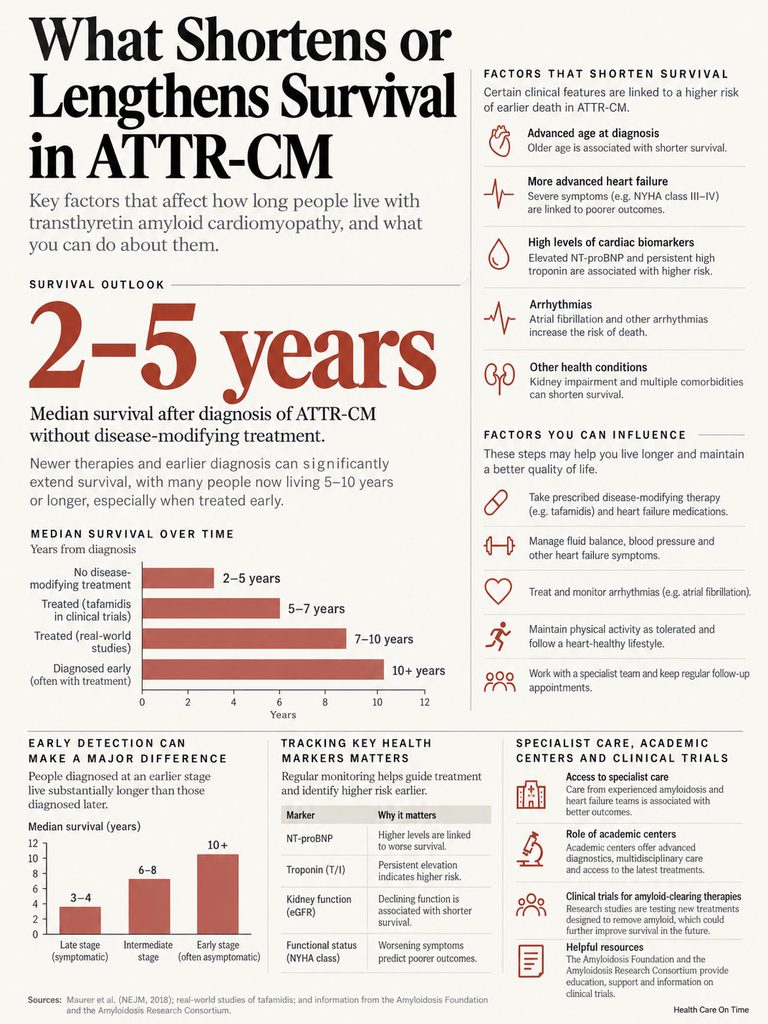
Beyond type and stage, several everyday factors move ATTR-CM life expectancy in either direction.
Factors That Shorten Survival
- Advanced heart failure symptoms. NYHA class III, meaning breathless with light activity, carries worse survival than class I or II.
- Rising diuretic doses. Needing more and more water pills is an independent warning sign in research cohorts.
- Kidney decline. A falling eGFR pushes you up a stage on its own.
- Atrial fibrillation and conduction problems. Common in ATTR and linked to stroke and fainting.
- Late diagnosis. Many patients spend years labeled with ordinary hypertensive heart disease first.
Factors You Can Influence
- Getting tested early. Carpal tunnel syndrome in both wrists, lumbar spinal stenosis, or unexplained thick heart walls deserve an amyloid workup.
- Starting and staying on treatment. Steady use was the common thread in every long-term survival study.
- Fluid and salt balance. Daily morning weights catch fluid buildup before it turns into a hospital stay.
- Medication review. Some standard heart failure drugs are poorly tolerated in amyloid hearts, so dosing needs an amyloid-aware cardiologist.
- Regular blood tests. Trending NT-proBNP, troponin, and eGFR every few months shows whether your stage is holding.
Our lab partners report that patients who track these markers on a fixed schedule tend to catch changes earlier and bring sharper questions to their cardiologist.
Where to Get Specialist Care
ATTR is rare enough that many general cardiologists see only a handful of cases. The Amyloidosis Foundation and the Amyloidosis Research Consortium keep lists of US amyloidosis centers, and many academic centers offer telehealth second opinions.
A center visit can confirm your type, set your stage, and open access to clinical trials of amyloid-clearing therapies.
Signs ATTR Amyloidosis Is Progressing
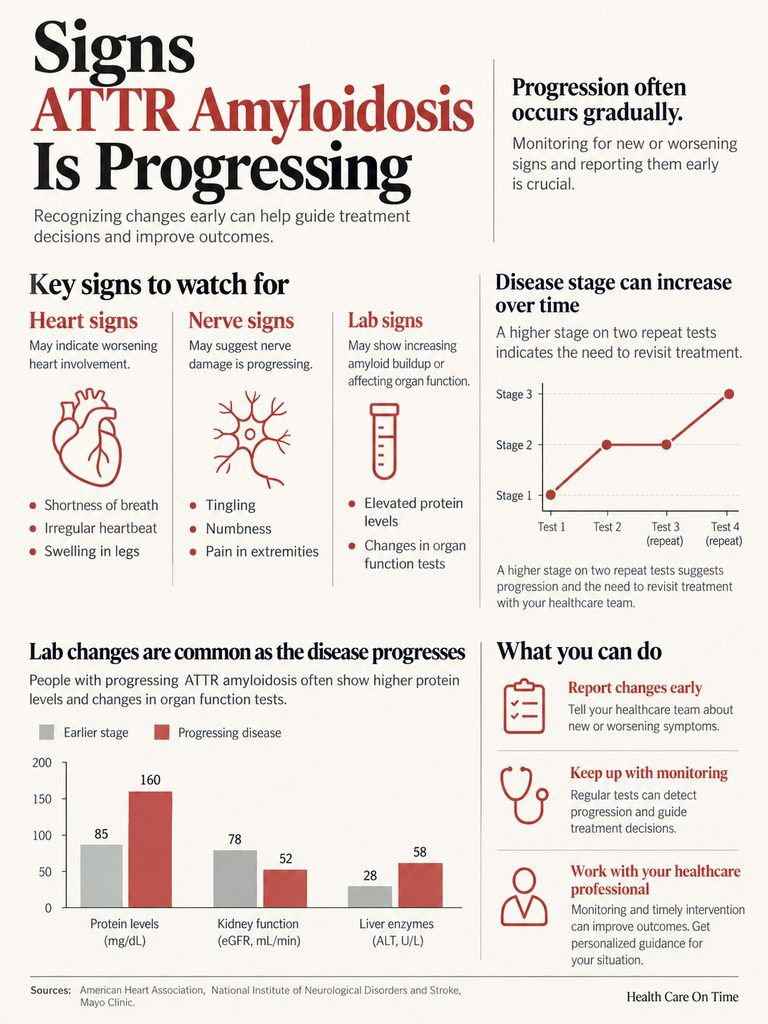
Progression usually creeps in rather than arriving all at once. Report these changes early.
Heart signs:
- Shortness of breath with less activity than before
- Swelling in the legs, ankles, or belly
- Weight gain of 2 to 3 pounds in a day or 5 pounds in a week
- Dizziness or fainting, especially when standing up
- Feeling full quickly or losing appetite
Nerve signs:
- Numbness moving from the feet up the legs, or into the hands
- Trouble walking or more frequent falls
- Diarrhea alternating with constipation
- Blood pressure dropping when you stand
Lab signs:
- NT-proBNP climbing past 3,000 pg/mL
- Troponin rising on repeat tests
- eGFR dropping below 45 mL/min
A higher stage on two repeat tests is a reason to revisit your treatment plan, not simply to wait and watch.
What to Do Next
The right next step depends on where you are right now. Use this table as a starting map for a conversation with your doctor.
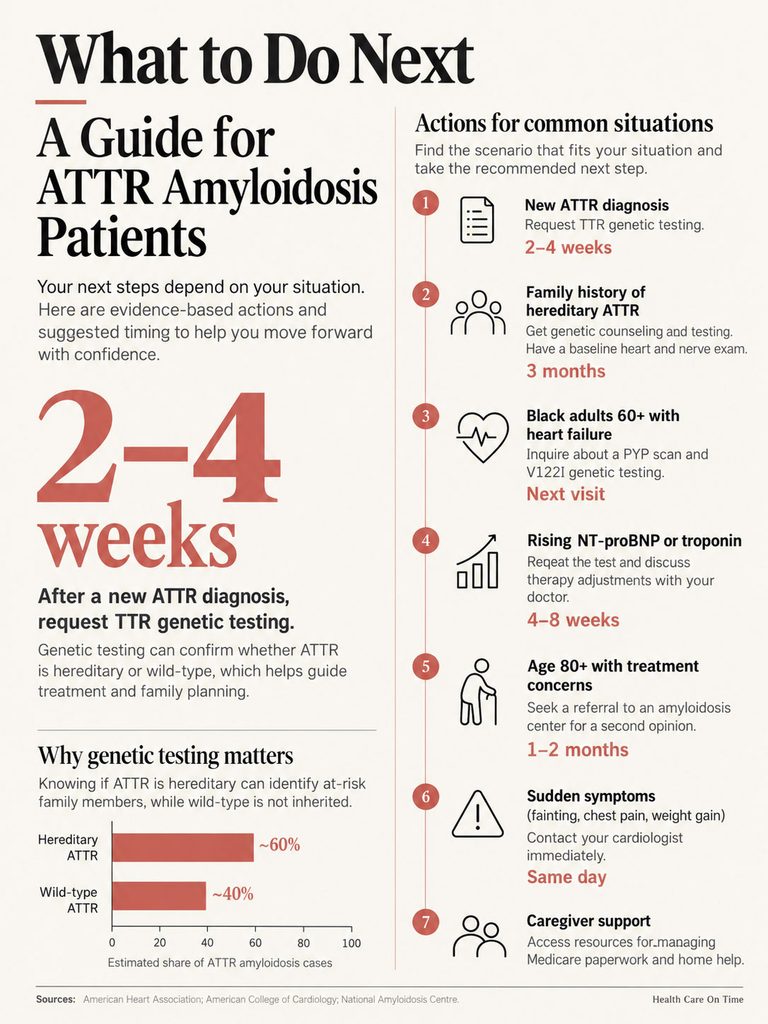
Table 3. ATTR Amyloidosis Scenarios and Recommended Actions
| Scenario | Recommended action | Timeframe |
| New ATTR diagnosis, type not yet known | Ask for TTR genetic testing to confirm wild-type vs hereditary | Within 2 to 4 weeks |
| Parent or sibling has hereditary ATTR | Genetic counseling, then testing; baseline heart and nerve exam if positive | Within 3 months |
| Black adult 60+ with heart failure and thick heart walls | Ask about a PYP (technetium) scan and V122I testing | Next cardiology visit |
| NT-proBNP or troponin rising on treatment | Repeat the test, then discuss adding or switching therapy | Within 4 to 8 weeks |
| Age 80+ and told treatment isn’t worth it | Request referral to an amyloidosis center for a second opinion | Within 1 to 2 months |
| Sudden fainting, chest pain, or weight up 5 lb in a week | Call your cardiologist the same day; call 911 for fainting with chest pain | Same day or immediately |
If you’re helping a parent or spouse through this, our guide to support and resources for ATTR amyloidosis caregivers covers Medicare paperwork, home help, and respite options.
“`Frequently Asked Questions
What is the average life expectancy with ATTR amyloidosis?
Untreated ATTR heart disease has a median survival of about 3.5 to 5 years from diagnosis. Nerve-first hereditary forms often last 10 years or more from symptom onset. Treatment improves these numbers; real-world tafamidis data show 77% of patients alive at 3.5 years.
Is ATTR amyloidosis a terminal illness?
ATTR amyloidosis is progressive and has no cure yet, so it’s considered life-limiting. That doesn’t mean death is near. Many people diagnosed early at stage I and treated live several years with good quality of life. Palliative care can start alongside active treatment, not only at the end.
How long can you live with wild-type ATTR?
Untreated wild-type ATTR-CM has a median survival of about 3.6 years from diagnosis in the Mayo Clinic cohort. People at Mayo stage I had 57% four-year survival. With tafamidis, acoramidis, or vutrisiran started early, many patients now live meaningfully longer than those older figures suggest.
Is hereditary ATTR worse than wild-type?
It depends on the variant. Early-onset Val30Met nerve disease often runs longer than wild-type heart disease. The V122I variant common in Black Americans tends to progress faster than wild-type, with one small US study showing about 25.6 months median survival. Your specific variant matters more than the label.
Does tafamidis extend life expectancy?
Yes. In the ATTR-ACT trial, tafamidis lowered death risk by about 30% compared with placebo. A modeling study estimated an average gain of about 4.19 years. The benefit was strongest in people who started early and in those with milder symptoms (NYHA class I or II).
Can ATTR amyloidosis go into remission?
Not in the classic sense. Current drugs stop or slow new amyloid buildup, and some patients stay stable for years. Antibodies designed to clear existing deposits are in clinical trials, but none is FDA-approved yet. Stable lab values over time are the realistic goal today.
What is end-stage ATTR amyloidosis?
End-stage usually means advanced heart failure: breathlessness at rest, swelling that resists diuretics, very high NT-proBNP, and falling kidney function. In nerve disease, it means loss of walking and severe weight loss. NAC stage 4 patients had a 30.6% one-year death rate in research.
How fast does cardiac amyloidosis progress?
Speed varies widely. In the 2024 NAC data, only 2.3% of stage 1 patients died within a year, versus 30.6% at stage 4. Repeat NT-proBNP and eGFR tests every few months show your personal pace far better than any average can.
What do people with ATTR amyloidosis usually die from?
Most deaths in ATTR-CM come from progressive heart failure or sudden rhythm problems. Stroke linked to atrial fibrillation is another risk. In nerve-first disease, severe weight loss, infections, and falls play a larger role. Treatment trials show fewer cardiovascular deaths and heart failure hospitalizations.
Is it worth starting treatment after age 80?
For many people, yes. A January 2026 HELIOS-B analysis found vutrisiran reduced deaths and cardiovascular events in patients 80 and older while preserving walking distance and quality of life. Overall health and personal goals still matter, so talk them through openly with your cardiologist.
Should your children get tested if you have hereditary ATTR?
Each child of a parent with a hereditary TTR variant has a 50% chance of carrying it. Genetic counseling before testing is recommended. A positive result allows early heart and nerve monitoring, so treatment can start at the first sign of disease rather than years later.
Can you live 10 years with ATTR amyloidosis?
Yes, some people do. It’s more likely with early-onset hereditary nerve disease, diagnosis at NAC stage I, or early treatment. A US expert panel notes that people diagnosed before 50 may live about 10 to 20 years after symptoms begin. Advanced heart involvement makes 10 years less likely.
Disclaimer: This article is for general education and does not replace advice from your doctor. Survival statistics describe groups, not individuals, and many come from research done before current treatments existed. Talk with a cardiologist or amyloidosis specialist about your own type, stage, and treatment options. If you have chest pain, fainting, or severe shortness of breath, call 911.
References
- Delgado D, et al. Epidemiology of transthyretin amyloidosis: a systematic literature review, 2025 (PMC)
- Grogan M, et al. Natural history of wild-type transthyretin cardiac amyloidosis, JACC 2016 (ACC summary)
- Prognostic staging systems in cardiac amyloidosis, review table (PMC)
- Nitsche C, et al. Expansion of the NAC staging system, Eur J Heart Fail 2024
- Accuracy of staging systems in the tafamidis era, JACC: Advances 2025
- Wild-type ATTR survival, Circulation Reports 2020 (PMC)
- Jang SC, et al. Mortality in transthyretin cardiac amyloidosis, Orphanet J Rare Dis 2022
- Karam C, et al. US expert recommendations for hATTR polyneuropathy, Muscle & Nerve 2024
- SCAN-MP: V122I penetrance in older Black patients with heart failure, JAHA 2023
- Quarta CC, et al. The amyloidogenic V122I variant in elderly Black Americans, NEJM 2015
- V122I, atrial fibrillation, and ischemic stroke in ARIC (PMC)
- Coelho T, et al. Long-term survival of 3,000 TTR-FAP patients over a century
- Tafamidis survival and QALY simulation model (PMC)
- Long-term survival with tafamidis in ATTR-CM, Circulation: Heart Failure 2021
- Tafamidis mortality in ATTR polyneuropathy up to 8.5 years, Neurology and Therapy 2020 (PMC)
- ATTRibute-CM trial summary, American College of Cardiology
- Acoramidis in hereditary variants through month 54, ESC 2026
- Vutrisiran and all-cause mortality, HELIOS-B, ACC 2025
- Vutrisiran outcomes across age groups, AJMC 2026
- Vutrisiran and advanced ATTR-CM, ACC 2026, AJMC
- American Heart Association: Transthyretin amyloid cardiomyopathy (ATTR-CM)