The most quoted study on Brussels sprouts and cancer had five men in the test group. When the same research team repeated it with women, the effect disappeared.
Table of Contents
That doesn’t make Brussels sprouts useless for cancer prevention. It means the real answer is more interesting, and more useful, than the headlines suggest.
Quick Answer: Yes, Brussels sprouts can be part of a cancer-protective diet, but they don’t prevent or cure cancer on their own. Large reviews link 3 to 7 weekly servings of cruciferous vegetables to lower risk of colorectal, lung, bladder, kidney, and prostate cancer. Human trials on Brussels sprouts themselves are tiny and measure DNA damage markers, not cancer. Eat them steamed or lightly cooked, several times a week, as part of a varied plate.
At a Glance
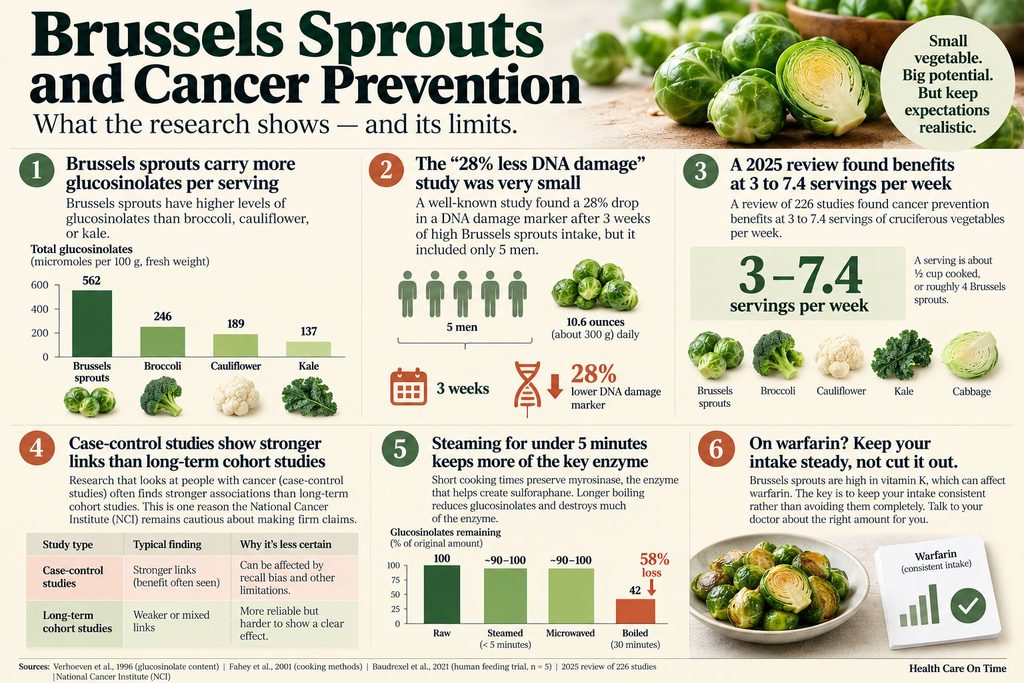
- Brussels sprouts carry more glucosinolates per serving than broccoli, cauliflower, or kale.
- The famous “28% less DNA damage” study used 5 men eating about 10.6 ounces daily for 3 weeks.
- A 2025 review of 226 studies found benefit thresholds of 3 to 7.4 servings of cruciferous vegetables per week.
- Case-control studies show stronger links than long-term cohort studies, which is why the NCI stays cautious.
- Steaming for under 5 minutes keeps more of the enzyme that creates sulforaphane.
- People on warfarin should keep their intake steady, not cut it out.
5 Rules That Matter Most
If you only read one section, make it this one. These rules come straight from the research covered below.
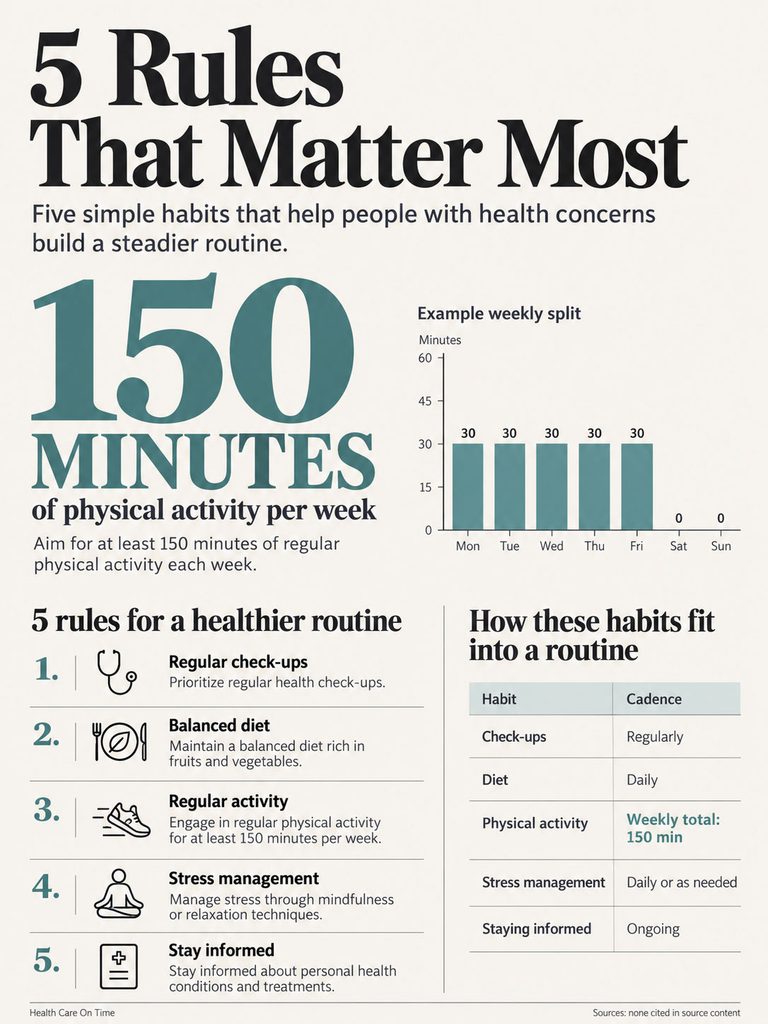
- Aim for 3 to 7 servings of cruciferous vegetables a week. One serving is a half cup cooked, about 4 Brussels sprouts.
- Steam for 3 to 5 minutes, or add mustard after roasting. Both protect sulforaphane formation.
- Rotate the family. Mix sprouts with broccoli, cabbage, kale, and cauliflower.
- Skip the capsules. Benefits in studies come from whole vegetables, not extracts.
- Keep screening on schedule. Colonoscopy and mammograms prevent far more deaths than any side dish.
The Short Answer: What Brussels Sprouts Can and Can’t Do
Brussels sprouts are among the most studied vegetables in cancer nutrition research. Yet no study has ever shown that eating them, by themselves, lowers your odds of getting cancer.
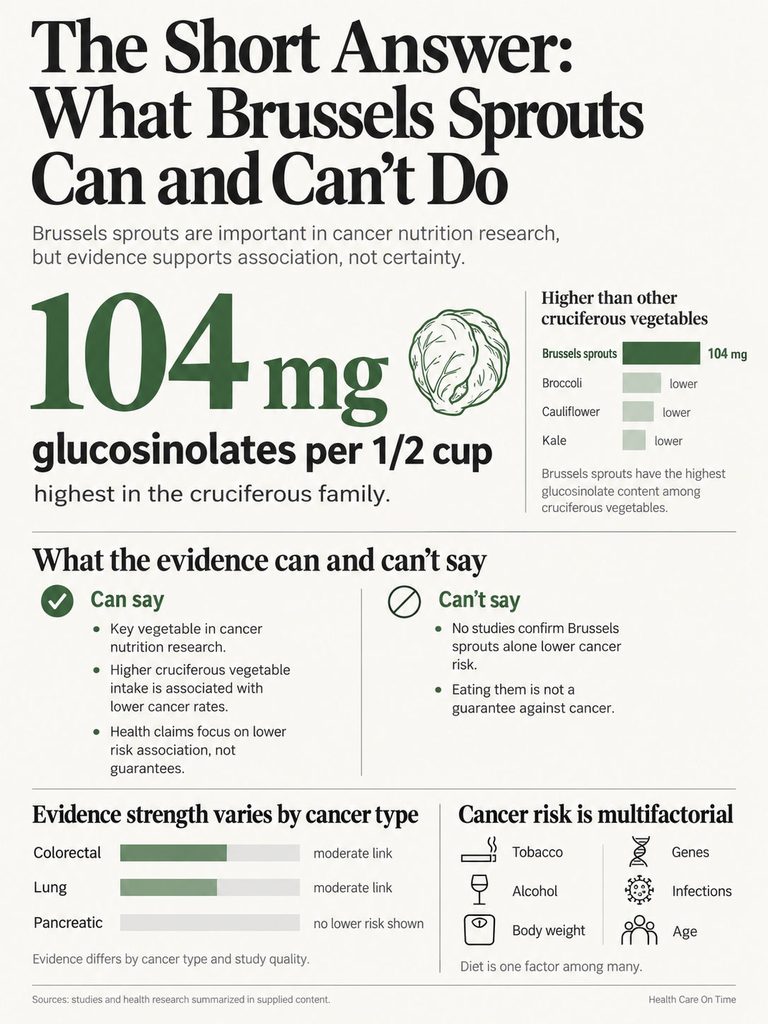
What the research shows is a steady pattern. People who eat more cruciferous vegetables tend to have lower rates of several cancers, and Brussels sprouts are the most concentrated member of that family.
Why “Prevents Cancer” Is the Wrong Promise
Cancer usually develops over 10 to 30 years. It’s driven by tobacco, alcohol, body weight, genes, infections, and age, and no single food can outweigh those forces.
Our medical team has reviewed the claims on the top-ranking health sites, and the honest wording is “associated with lower risk.” That still matters. It just isn’t a guarantee, and it never replaces screening.
Brussels Sprouts Lead the Cruciferous Family in Glucosinolates
Glucosinolates are the sulfur compounds behind the bitter bite of Brussels sprouts. They’re also the source of the most promising anti-cancer chemicals in this vegetable group.
A widely cited British Journal of Nutrition analysis by McNaughton and Marks put Brussels sprouts at about 104 mg of glucosinolates per half cup. Broccoli came in at 27 mg and cauliflower at 22 mg.
Table 1: Evidence Strength by Cancer Type
| Cancer Type | Main Evidence Type | Strength of Link | What the Data Shows | US Relevance |
| Colorectal | 17-study meta-analysis (2025), 97,595 people | Moderate | About 20% lower odds with higher intake (OR 0.80) | Link stronger in American populations |
| Lung | Case-control and cohort reviews | Moderate | Lower risk with higher intake; strongest in smokers | Leading US cause of cancer death |
| Bladder | Observational studies, AICR review | Limited to moderate | Higher intake tied to lower risk | Stronger with raw or lightly cooked intake |
| Prostate | Meta-analyses of 13+ studies | Limited | Modest inverse link, mostly case-control | More pronounced in US data per 2025 review |
| Breast | Large cohorts (4.5M person-years) | Weak | HR 0.91, shrinking to 0.93 after diet-quality adjustment | Likely reflects overall healthy eating |
| Ovarian | 14-study meta-analysis (2024) | Weak | Case-control RR 0.79; cohort 0.97 (not significant) | Shows the study-design gap clearly |
| Pancreatic | Small observational studies | None shown | No lower risk found | Don’t rely on sprouts here |
How Brussels Sprouts Might Fight Cancer (The Biology)
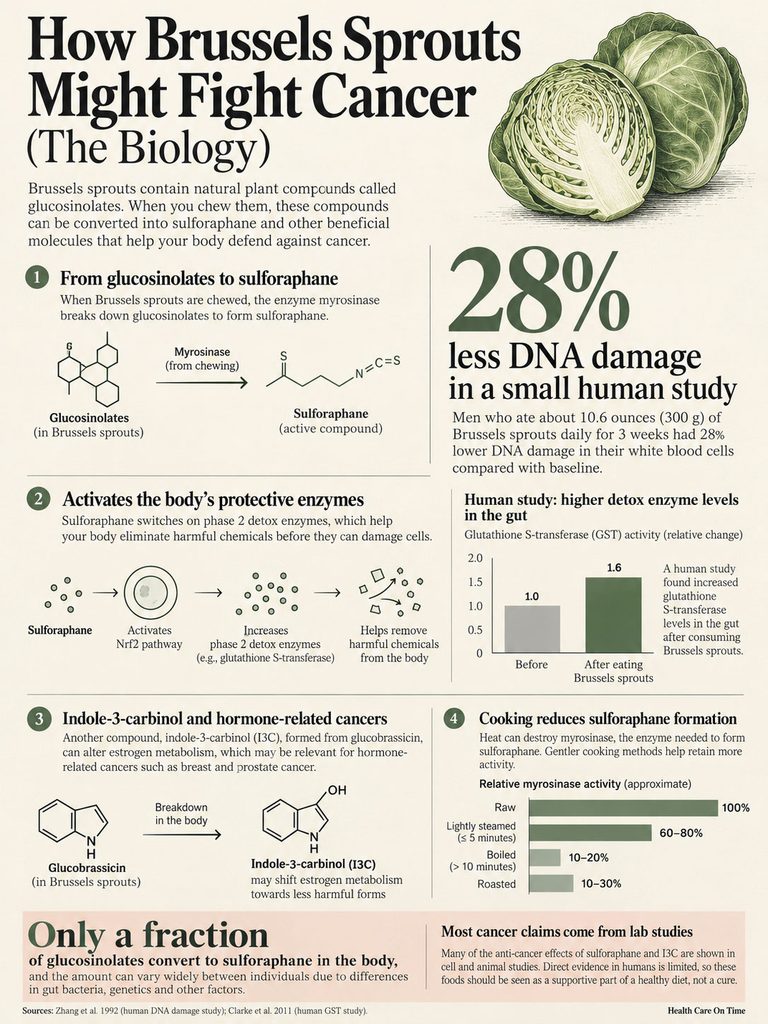
The cancer interest in Brussels sprouts comes from what happens when you chew them. Their key compounds sit idle until the vegetable is broken down.
Glucosinolates, Myrosinase, and Sulforaphane
Inside each sprout, glucosinolates are stored apart from an enzyme called myrosinase. Cutting, chewing, or crushing brings them together, forming isothiocyanates such as sulforaphane.
According to the Linus Pauling Institute at Oregon State University, these isothiocyanates switch on the body’s own protective enzymes. That’s the main reason scientists keep studying this vegetable family.
Indole-3-Carbinol and Estrogen Metabolism
Brussels sprouts also contain glucobrassicin, which breaks down into indole-3-carbinol. Stomach acid then turns part of it into related compounds, including DIM.
These compounds change how the body processes estrogen. Lab work suggests this could matter for hormone-related cancers, but human evidence remains limited.
Phase 2 Detox Enzymes
Your liver and gut use “phase 2” enzymes to tag harmful chemicals so they can be cleared. Sulforaphane is one of the strongest natural triggers of these enzymes.
Dutch researchers found that eating Brussels sprouts raised glutathione S-transferase in the gut lining of volunteers. That’s a measured change in human tissue, not just a lab dish.
Lab Results vs Human Results
Most dramatic claims come from cell cultures or rodents, often at doses no person could eat. A tumor cell in a dish sits directly in the compound; your colon does not.
Why “Kills Cancer Cells in a Dish” Doesn’t Transfer
Only part of the sulforaphane your food could make actually forms in your body. Once cooking destroys myrosinase, gut bacteria take over, converting roughly 12% of glucosinolates on average, with a range from about 1% to 40% between people.
So when a website says Brussels sprouts “make cancer cells self-destruct,” ask one question: was that in people? Usually, it wasn’t.
The Human Studies, Read Honestly
Only a handful of controlled trials have fed people Brussels sprouts and measured cancer-related markers. They’re quoted constantly, and often loosely, so the details matter.
The 1995 DNA Damage Study (5 Men, 3 Weeks)
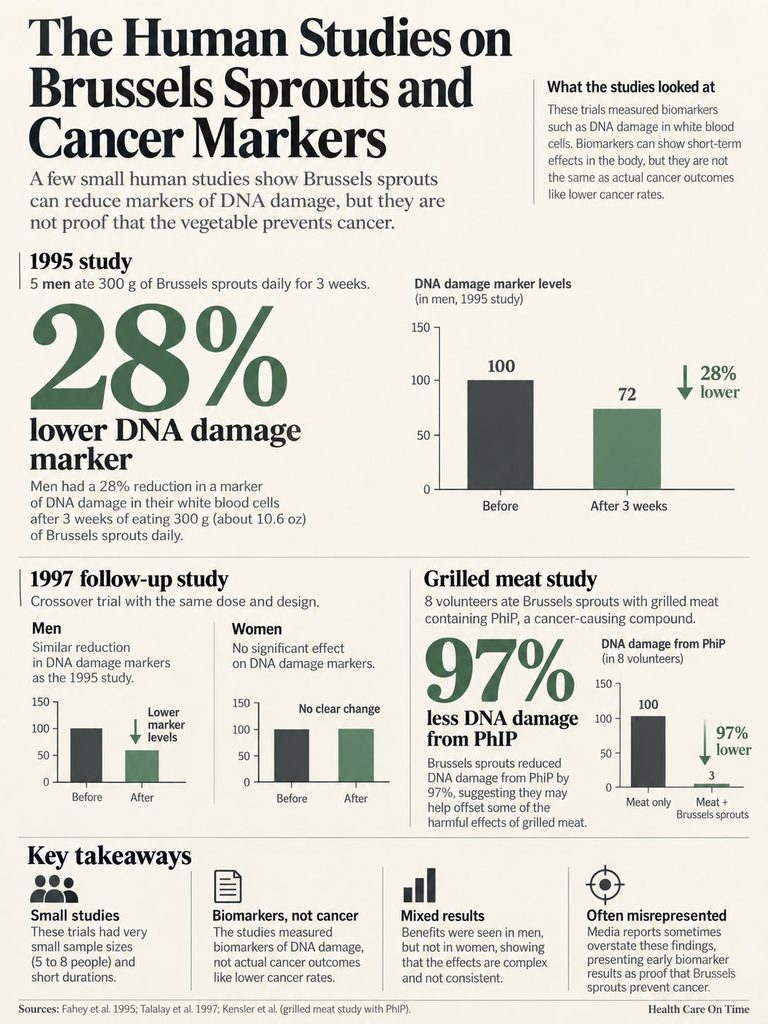
In this Carcinogenesis study, 10 healthy, non-smoking men followed a 3-week run-in diet. Five then ate 300 g of cooked Brussels sprouts daily, while the other five avoided cruciferous vegetables. A urine marker of oxidative DNA damage fell 28% in the sprouts group.
Three hundred grams is about 10.6 ounces, close to 2 cups cooked, or roughly 15 sprouts a day. News stories often shrink this to “1.5 cups for 5 weeks.” Neither number matches the paper.
The 1997 Follow-Up: No Effect in Women
The same team then ran a crossover trial with five men and five women, each eating 300 g daily for a week. Four of the five men showed lower DNA damage, one man’s level rose sharply, and the women showed no effect at all.
Patients commonly ask us why this follow-up never appears in “superfood” articles. The likely answer is that it complicates a tidy story, yet it’s the study women most need to know about.
The Grilled Meat Study (Hoelzl 2008)
Grilling or pan-searing meat at high heat forms heterocyclic amines, including one called PhIP. The National Toxicology Program lists PhIP and related compounds as reasonably anticipated to be human carcinogens.
In a controlled trial, 8 volunteers ate 300 g of Brussels sprouts daily. Afterward, their white blood cells showed 97% less DNA damage from PhIP in lab testing and 39% less from hydrogen peroxide.
This suggests a side of sprouts may help offset part of the risk from a grilled steak. It’s also a lab test on blood cells from 8 people, so treat it as promising, not proven.
Why Biomarkers Aren’t Cancer Outcomes
All three studies measured markers, not cancer cases. A lower DNA damage reading is encouraging, but it hasn’t been shown to mean fewer tumors years later.
In cases reviewed by our medical team, this is the biggest gap in online coverage. Readers hear that sprouts “fight cancer” when the evidence shows a shifted urine or blood marker in very small groups.
What Large Reviews Show (and Why NCI Disagrees)
The stronger evidence comes from population research on the whole cruciferous family. Here the numbers get bigger, and also messier.
The 226-Study Meta-Analysis and Weekly Thresholds
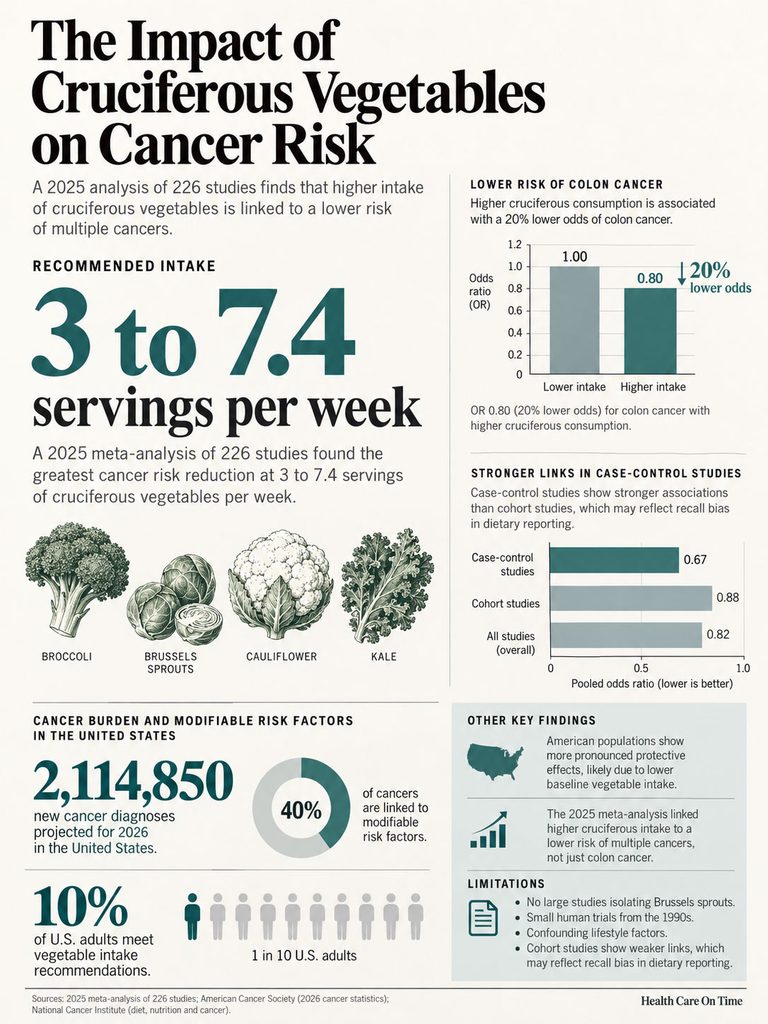
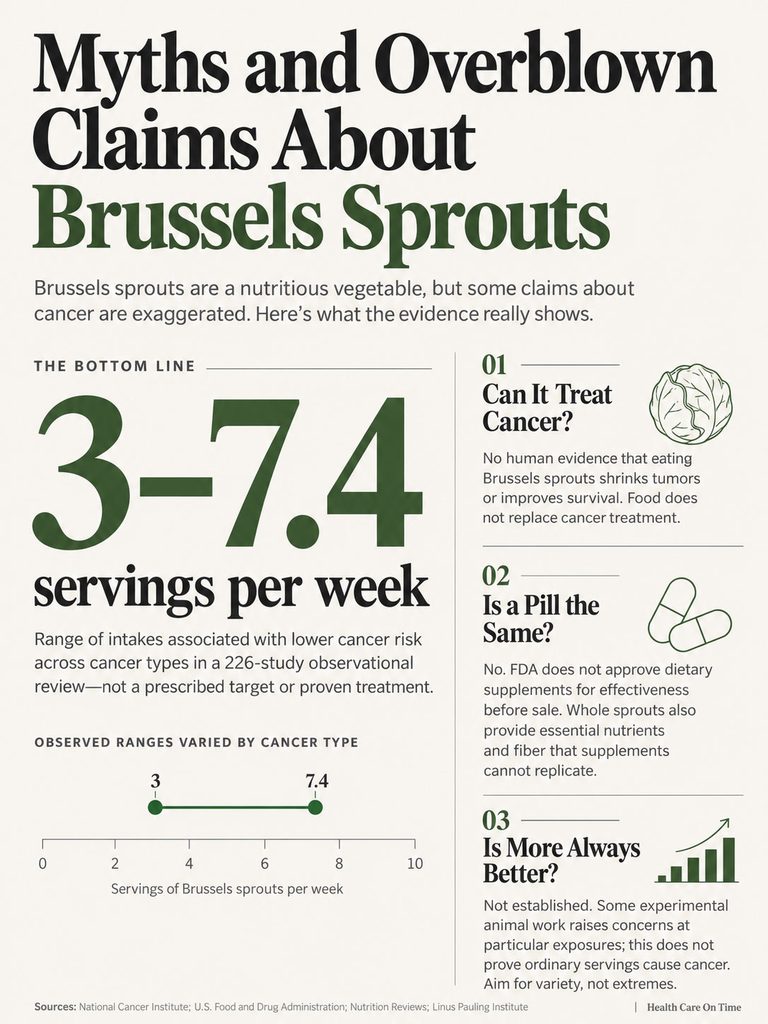
A 2025 review in Nutrition Reviews pooled 226 case-control and cohort studies. Higher cruciferous intake was tied to lower risk of colorectal, lung, upper GI, ovarian, endometrial, bladder, kidney, and prostate cancer, with thresholds from 3 to 7.4 servings per week.
That’s the most practical number on this topic, and almost no consumer page prints it. It gives you a real target: roughly one cruciferous serving most days.
Colon Cancer: The 2025 Data
An August 2025 dose-response meta-analysis in BMC Gastroenterology pooled 17 studies covering 97,595 people. Higher intake was linked to about 20% lower colon cancer odds (OR 0.80, 95% CI 0.72 to 0.90).
Risk fell gradually as intake rose, with benefit appearing near 20 g a day and the best range around 40 to 60 g. That’s only 2 to 3 cooked Brussels sprouts daily.
The Case-Control vs Cohort Gap
This explains why the National Cancer Institute sounds more cautious than food blogs. The NCI notes that most long-term cohort studies found no clear link, while some case-control studies did.
A 2024 ovarian cancer review shows the split clearly. Case-control studies found a 21% lower risk (RR 0.79), while cohort studies found essentially none (0.97, not significant).
Recall Bias in Plain English
In a case-control study, people who already have cancer are asked what they ate years ago. A serious diagnosis can shape how someone remembers their diet.
Cohort studies record diet first and then wait for cancers to appear. They’re slower and more reliable, and they show weaker effects.
Why the Link Looks Stronger in Americans
The 2025 review found colorectal, kidney, gynecologic, and prostate links were more pronounced in American populations. The protective pattern was clearest within 2 to 15 years of follow-up.
One likely reason is that Americans eat few vegetables to begin with. Moving from almost none to a few servings a week may make a bigger difference here than in diets already full of greens.
What This Evidence Can’t Tell You
Three limits are worth stating plainly. First, no study isolates Brussels sprouts from the rest of the cruciferous family in large populations.
Second, the human sprout trials are small, short, and mostly from the Netherlands and Austria in the 1990s and 2000s. Third, people who eat more vegetables also tend to smoke less, drink less, and exercise more, and statistics can’t fully separate those habits.
Table 2: US Cancer Burden and Vegetable Intake Data
| Statistic | Figure | Source |
| New US cancer diagnoses projected, 2026 | 2,114,850 (about 5,800 per day) | ACS Cancer Statistics 2026 |
| US cancer deaths projected, 2026 | 626,140 | ACS Cancer Statistics 2026 |
| New colorectal cancer cases projected, 2026 | About 158,850 | ACS Cancer Statistics 2026 |
| US cancers tied to modifiable risk factors | About 40% of cases, 44% of deaths (adults 30+) | ACS, Islami et al. 2024 |
| US adults meeting vegetable recommendations | 10.0% | CDC MMWR 2022 (BRFSS 2019) |
| Colon cancer odds with high cruciferous intake | OR 0.80 (17 studies, 97,595 people) | Lai et al., BMC Gastroenterology 2025 |
| Five-year relative survival, all cancers | 70% (diagnosed 2015 to 2021) | ACS Cancer Statistics 2026 |
How Many Brussels Sprouts, and How to Cook Them
Knowing sprouts may help is half the answer. The other half is how much to eat and how to cook them so the useful compounds survive.
Turning “3 to 7 Servings a Week” Into Sprouts
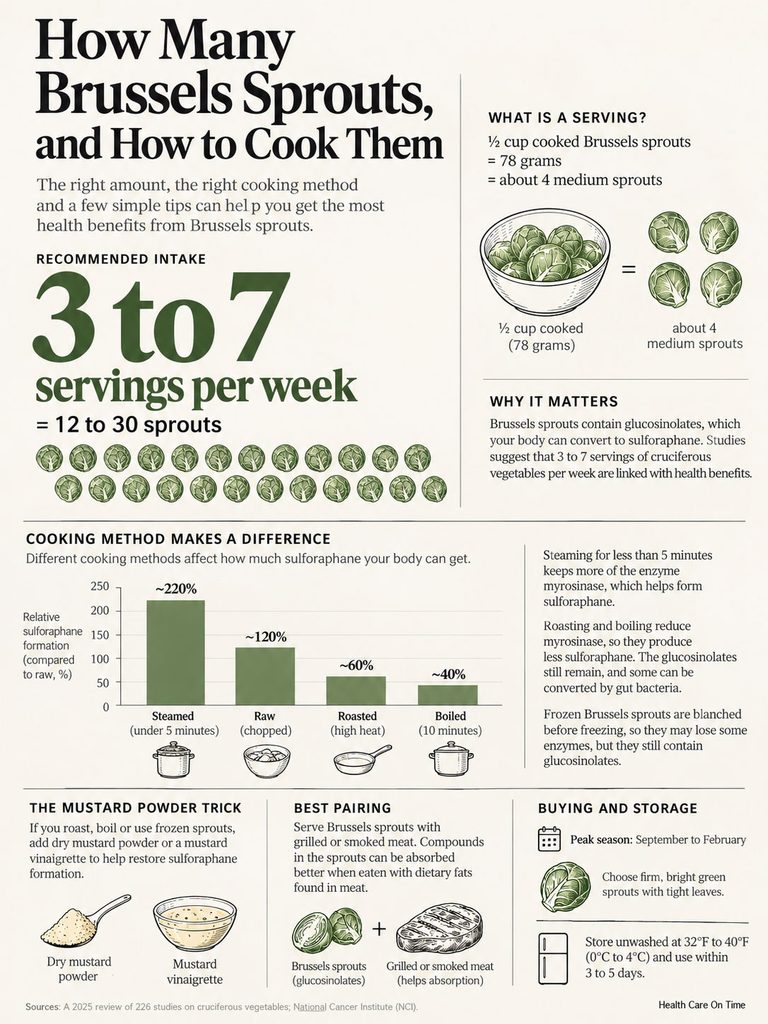
The USDA counts a half cup of cooked vegetables as one serving. For Brussels sprouts, that’s about 78 grams, or 2.75 ounces, roughly 4 medium sprouts.
So 3 to 7.4 weekly servings equals about 12 to 30 sprouts a week, shared across all your cruciferous vegetables. Broccoli, cabbage, kale, and cauliflower count toward the total.
Steamed vs Roasted vs Boiled vs Raw
Myrosinase is fragile, and heat destroys it. Your cooking method changes how much sulforaphane your body can form.
- Raw, shaved into salads: keeps all the enzyme, with a sharper bitter taste.
- Steamed 3 to 5 minutes: keeps much of the enzyme and softens the flavor. This is the best balance.
- Roasted at 400°F or higher: most enzyme is lost, but glucosinolates remain for gut bacteria.
- Boiled: the weakest option, since glucosinolates leach into water you pour away.
Frozen Brussels sprouts are blanched before freezing, which disables most of the enzyme. They’re still a good buy; just use the trick below.
The Mustard Powder Trick
Mustard seed holds its own heat-tolerant form of myrosinase. University of Reading researchers showed that adding mustard powder to cooked broccoli restored sulforaphane formation.
A pinch of dry mustard, a mustard vinaigrette, or a few raw arugula or radish slices on roasted sprouts puts the missing enzyme back. It costs almost nothing and tastes great.
Pairing Sprouts With Grilled or Smoked Meat
Based on the Hoelzl trial, the smartest time to serve Brussels sprouts may be next to grilled, charred, or pan-seared meat. That’s when heterocyclic amine exposure peaks.
Our nutrition reviewers call this a pairing strategy, not a permission slip. Cutting back on charred and processed meat still matters more than any side dish.
Buying and Storing Brussels Sprouts
US Brussels sprouts peak from September through February, and California’s Central Coast grows most of the domestic crop. Choose firm, bright green sprouts with tight leaves and no yellowing.
Store them unwashed in a produce drawer at 32°F to 40°F and use them within 3 to 5 days. Older sprouts turn stronger smelling and more bitter, which makes them harder to enjoy several times a week.
Brussels Sprouts vs Other Cancer-Fighting Vegetables
Brussels sprouts are a strong choice, but not the only one. The research supports the whole family working together.
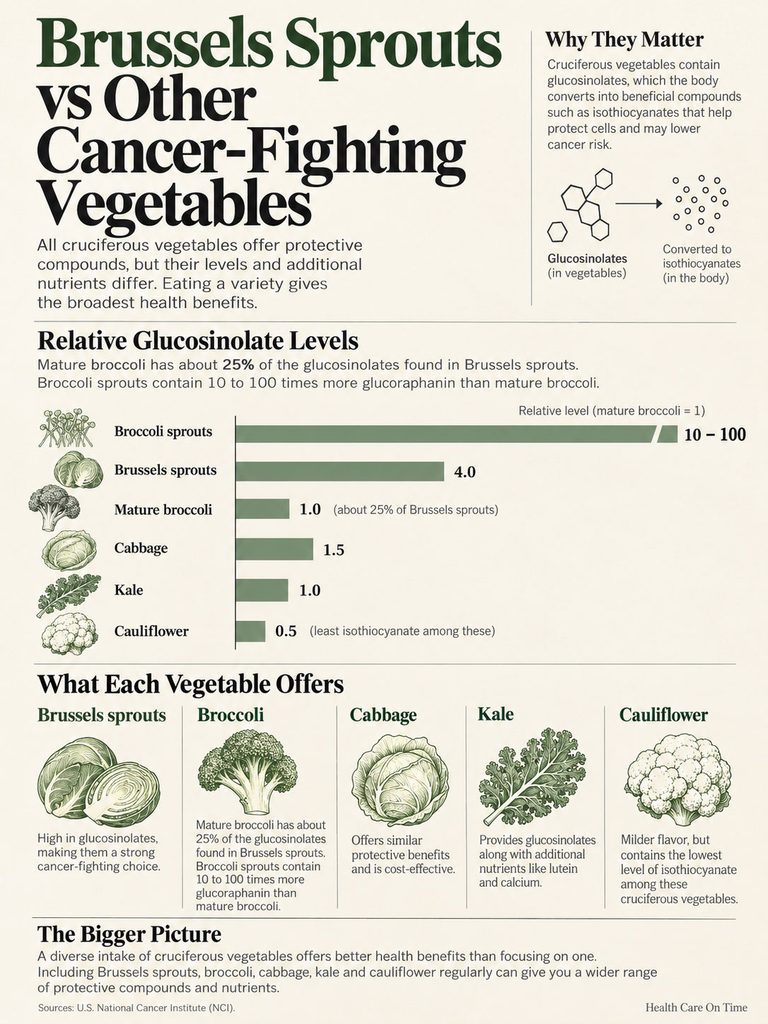
vs Broccoli and Broccoli Sprouts
Mature broccoli has about a quarter of the glucosinolates per half cup that Brussels sprouts carry. Its main glucosinolate, though, is glucoraphanin, the direct source of sulforaphane.
Broccoli sprouts, the 3-day-old seedlings, are the standout. A 1997 PNAS study by Johns Hopkins researchers found they contain 10 to 100 times more glucoraphanin than mature broccoli, which is why most sulforaphane trials use them.
vs Kale, Cabbage, Cauliflower
Cabbage shares much of the same chemistry and costs less per pound. Kale adds lutein and calcium, while cauliflower is milder but yields the least isothiocyanate of common US crucifers.
Rotating them gives a wider mix of glucosinolates than eating one vegetable on repeat.
Why Variety Beats a Single “Superfood”
Population studies measure total cruciferous intake, not Brussels sprouts alone. The benefit belongs to the eating pattern.
Patients booking wellness panels with us often ask for “the one food” to add. The better answer is a habit: a cruciferous vegetable on your plate most days.
Myths and Overblown Claims
Brussels sprouts attract plenty of exaggeration online. Three claims need correcting.
Myth: Brussels Sprouts Can Treat Cancer
No human trial shows Brussels sprouts shrink tumors or improve survival in people with cancer. Results from cell cultures don’t apply to a dinner plate.
Choosing food over proven treatment can be dangerous. Diet supports care; it doesn’t replace it.
Myth: Supplements Equal the Vegetable
Sulforaphane, indole-3-carbinol, and DIM capsules are marketed as “Brussels sprouts in a pill.” The FDA doesn’t review supplements for effectiveness before sale, and doses vary widely between brands.
Population benefits come from whole vegetables, which also supply fiber, vitamin C, folate, and hundreds of other compounds. A capsule is a different product with different risks.
Myth: More Is Always Better
The American Institute for Cancer Research notes that animal studies suggest very high amounts, or intake after cancer cells have formed, might encourage cancer growth. This hasn’t been shown in people eating normal portions.
The practical takeaway is simple. Stay near the 3 to 7 weekly servings in the research, and skip juicing pounds of sprouts or megadosing extracts.
Who Should Be Careful
For most adults, Brussels sprouts are safe several times a week. A few groups should adjust how they eat them.
Warfarin and Vitamin K
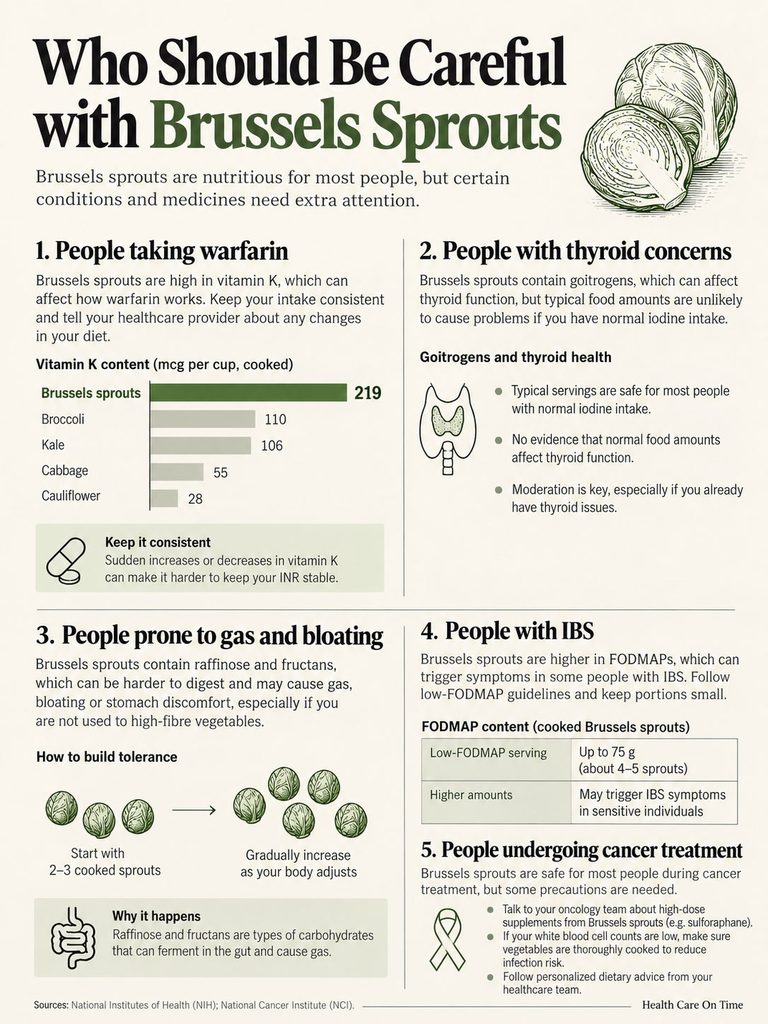
Based on USDA FoodData Central values for boiled sprouts, one cooked cup carries roughly 219 mcg of vitamin K. That’s about double the 90 to 120 mcg daily Adequate Intake, and vitamin K directly counters warfarin.
The guidance from the NIH Office of Dietary Supplements is consistency, not avoidance. Eat similar amounts each week and tell your care team before big changes, so your INR stays stable.
Thyroid Concerns
Brussels sprouts contain progoitrin, which can form goitrin, a compound that may interfere with iodine use at very high intakes. That’s why some sites warn people with thyroid disease away from them.
In a 1986 trial by McMillan and colleagues, volunteers ate 150 g of cooked Brussels sprouts daily for 4 weeks with no change in thyroid function. With normal iodine intake from iodized salt, dairy, or seafood, typical servings aren’t a concern.
Gas, Bloating, and IBS
Brussels sprouts contain raffinose and fructans, which ferment in the gut. That means gas for many people and real discomfort for those with IBS.
Start with 2 to 3 sprouts, cook them well, and build up over a few weeks. Monash University’s low-FODMAP serving is small, so people with IBS should test their own tolerance.
During Cancer Treatment
Some chemotherapy and targeted drugs may interact with high-dose sulforaphane or DIM supplements. Food amounts are generally fine, but check with your oncology team first.
If your white blood cell count is low, wash and cook vegetables thoroughly. Raw shaved sprouts may not suit that period of treatment.
Your Cancer Prevention Plan Beyond Sprouts
A plate of Brussels sprouts is a good habit. It still ranks well below a few other choices in how much it can change your risk.
The Bigger Levers
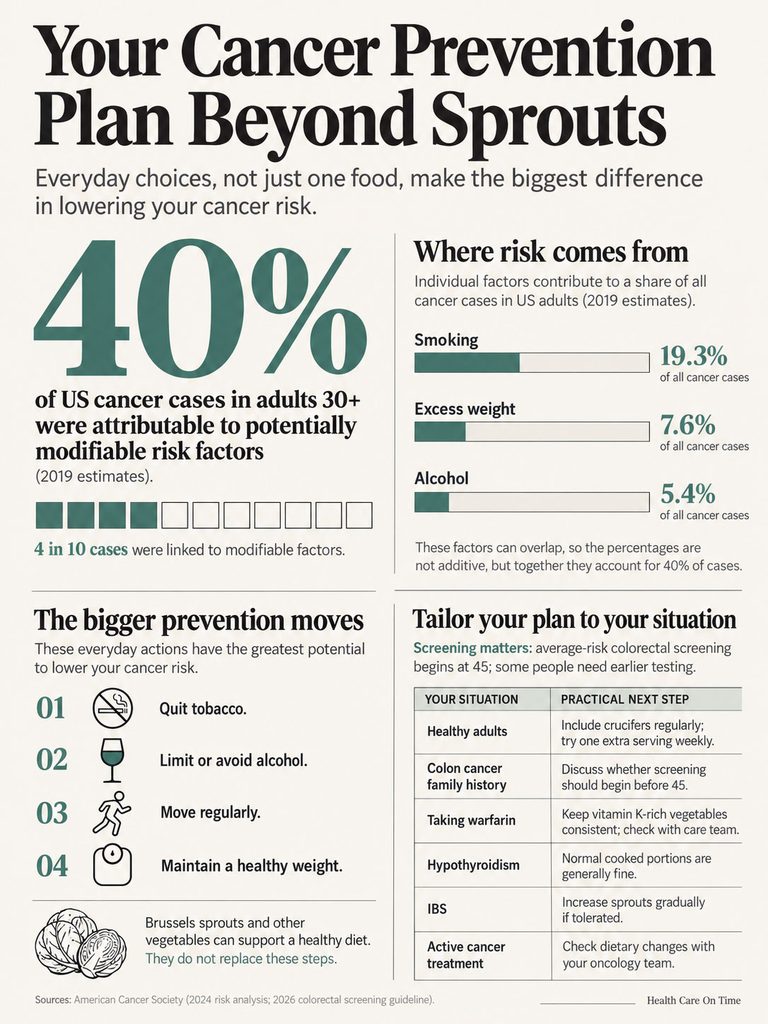
The American Cancer Society estimates that about 40% of US cancer cases in adults 30 and older are tied to factors people can change. Smoking leads by a wide margin, followed by excess body weight, alcohol, and low physical activity.
Quitting tobacco, limiting alcohol, staying active, and keeping a healthy weight each outweigh any single food. Vegetables fit inside that plan, not in place of it.
Screening Ages That Matter More Than Any Vegetable
In tests booked through HealthCareOnTime, screening reminders consistently matter more than diet questions. Current US Preventive Services Task Force guidance includes:
- Colorectal cancer: start at age 45 for average-risk adults.
- Breast cancer: mammograms every 2 years from 40 to 74.
- Cervical cancer: screening from 21, with HPV testing options from 30.
- Lung cancer: yearly low-dose CT from 50 to 80 for people with a 20 pack-year smoking history.
Table 3: Scenario and Recommended Action
| Your Situation | Recommended Action | Why It Matters |
| Healthy adult, few vegetables now | Add 1 cruciferous serving most days (about 4 sprouts) | Matches the 3 to 7 servings/week threshold |
| Family history of colon cancer | Eat crucifers several times a week and ask about screening before 45 | Screening timing matters far more than diet |
| Taking warfarin | Keep sprout portions steady week to week; tell your care team before changes | About 219 mcg vitamin K per cooked cup affects INR |
| Hypothyroid or low iodine intake | Eat cooked sprouts in normal portions; use iodized salt | Normal servings showed no thyroid effect in trials |
| IBS or frequent bloating | Start with 2 to 3 well-cooked sprouts; increase slowly | Fructans and raffinose trigger gas |
| In active cancer treatment | Eat food amounts only; avoid sulforaphane or DIM supplements unless approved | Supplements may interact with therapy |
| Eat grilled or charred meat often | Pair with a side of sprouts and cut back on charring | Sprouts lowered PhIP DNA damage in a small trial |
Disclaimer: This article is for general education and isn’t a substitute for professional medical advice, diagnosis, or treatment. Brussels sprouts and other foods can’t prevent or cure cancer on their own. Talk with your doctor about your personal cancer risk, screening schedule, and any diet changes, especially if you take warfarin, have thyroid disease, or are in cancer treatment.
References
- National Cancer Institute: Cruciferous Vegetables and Cancer Prevention
- American Institute for Cancer Research: Brussels Sprouts
- American Cancer Society: Cancer Statistics 2026
- Verhagen et al. 1995, Carcinogenesis: Reduction of oxidative DNA damage by Brussels sprouts
- Verhagen et al. 1997, Cancer Letters: Effect of Brussels sprouts on oxidative DNA damage in man
- Hoelzl et al. 2008, Molecular Nutrition & Food Research
- Zheng et al. 2025, Nutrition Reviews: Cruciferous vegetables and different cancers
- Lai et al. 2025, BMC Gastroenterology: Cruciferous vegetables and colon cancer
- Li et al. 2024: Cruciferous vegetables and ovarian cancer risk
- Linus Pauling Institute: Cruciferous Vegetables
- National Toxicology Program: Report on Carcinogens
- NIH Office of Dietary Supplements: Vitamin K
- CDC MMWR: Adults Meeting Fruit and Vegetable Intake Recommendations
- USPSTF: Colorectal Cancer Screening
- USDA FoodData Central