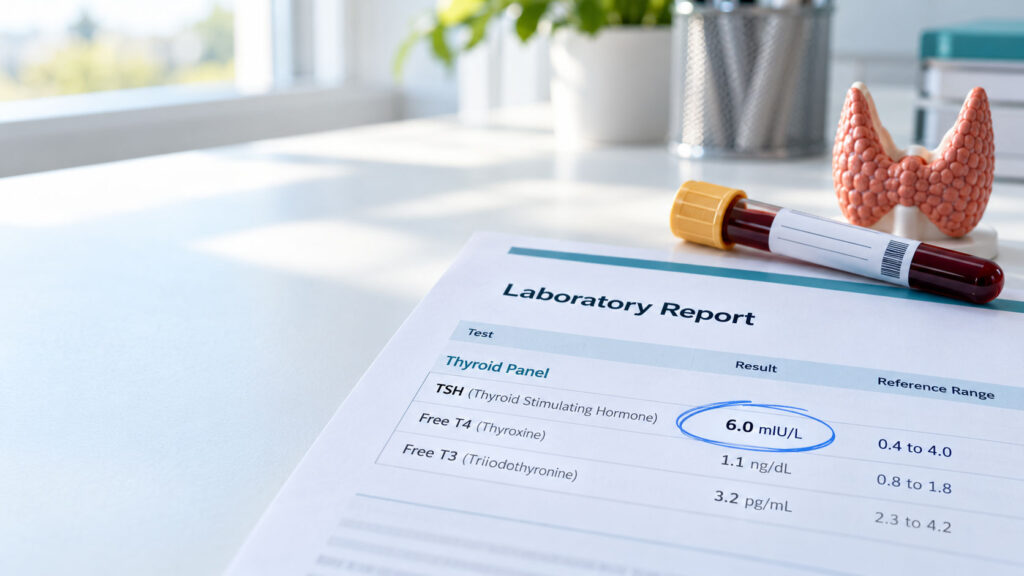
Two people get the same TSH result: 6.0. One is 29 and the other is 82. For one of them, that number may be perfectly normal, and most lab reports won’t tell you which one.
Table of Contents
Quick Answer: A TSH blood test measures thyroid-stimulating hormone, the signal your pituitary gland sends to your thyroid. Most US labs call roughly 0.4 to 4.0 mIU/L normal. A high TSH usually means your thyroid is underactive. A low TSH usually means it’s overactive. One abnormal number isn’t a diagnosis: doctors confirm with a repeat TSH plus a free T4 test, and read it against your age, pregnancy status, medicines, and supplements.
At a Glance
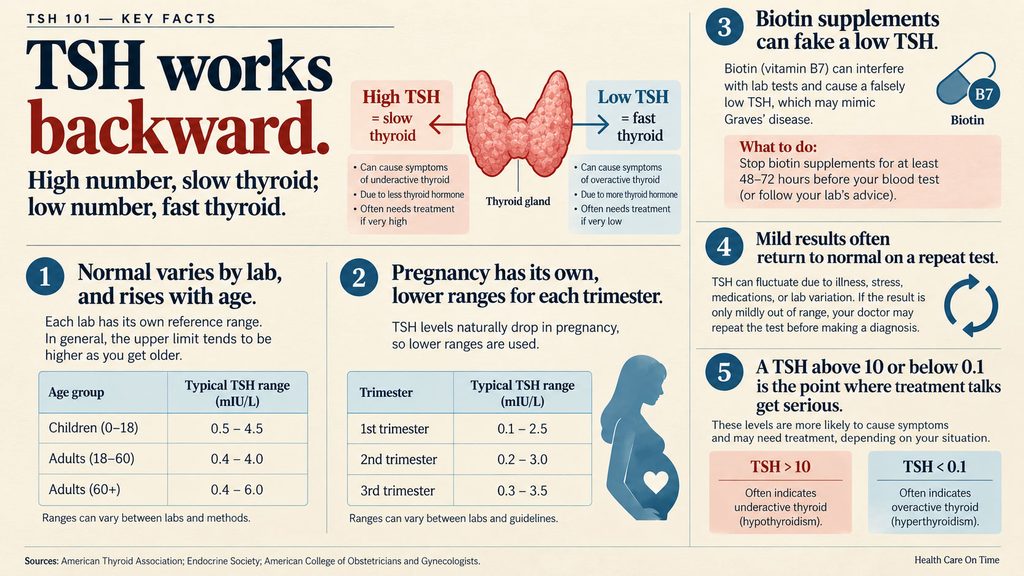
- TSH works backward: high number, slow thyroid; low number, fast thyroid.
- “Normal” varies by lab, and it rises with age.
- Pregnancy has its own, lower ranges for each trimester.
- Biotin supplements can fake a low TSH that looks like Graves’ disease.
- Mild results often return to normal on a repeat test.
- A TSH above 10 or below 0.1 is the point where treatment talk gets serious.
What Is a TSH Blood Test?
TSH stands for thyroid-stimulating hormone, also called thyrotropin. The pituitary, a pea-sized gland at the base of your brain, makes it. Its job is to tell your thyroid how much hormone to produce.
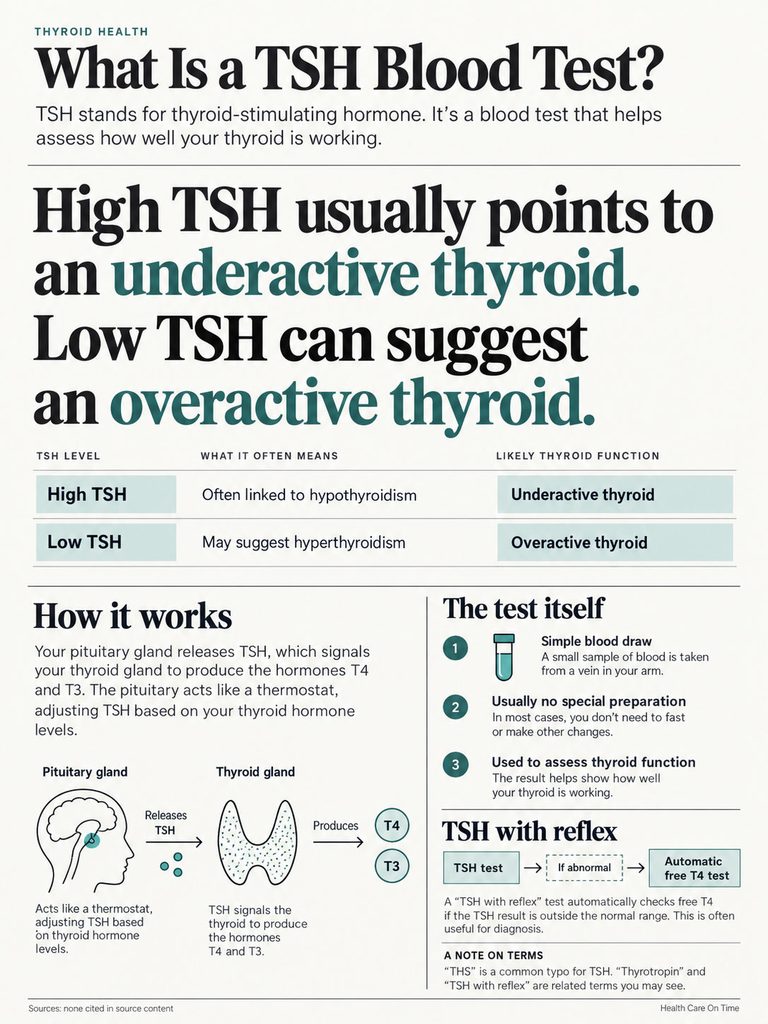
The test is an ordinary blood draw from a vein in your arm. It takes a few minutes, and most people need no special preparation.
The Thermostat Behind Your Thyroid
Think of the pituitary as a thermostat and your thyroid as the furnace. When thyroid hormone (T4 and T3) runs low, the pituitary turns the signal up. When thyroid hormone runs high, it turns the signal down.
That’s why TSH reads backward from what you’d expect. A high TSH means your pituitary is pushing hard on a thyroid that isn’t keeping up.
Why a High Number Means a Slow Thyroid
An underactive thyroid (hypothyroidism) makes too little hormone, so the pituitary pumps out more TSH and the number climbs.
An overactive thyroid (hyperthyroidism) floods the blood with hormone. The pituitary backs off, and TSH drops, sometimes close to zero.
TSH, THS, Thyrotropin: Same Test
If you searched for a “THS blood test,” you’re in the right place. THS is a common typo for TSH. You may also see “thyrotropin,” “TSH, 3rd generation,” or “TSH with reflex” on your lab order.
“TSH with reflex” means the lab automatically runs a free T4 test if your TSH falls outside the range for your age, usually at extra charge. That second number often matters as much as the first.
Why Doctors Order a TSH Test
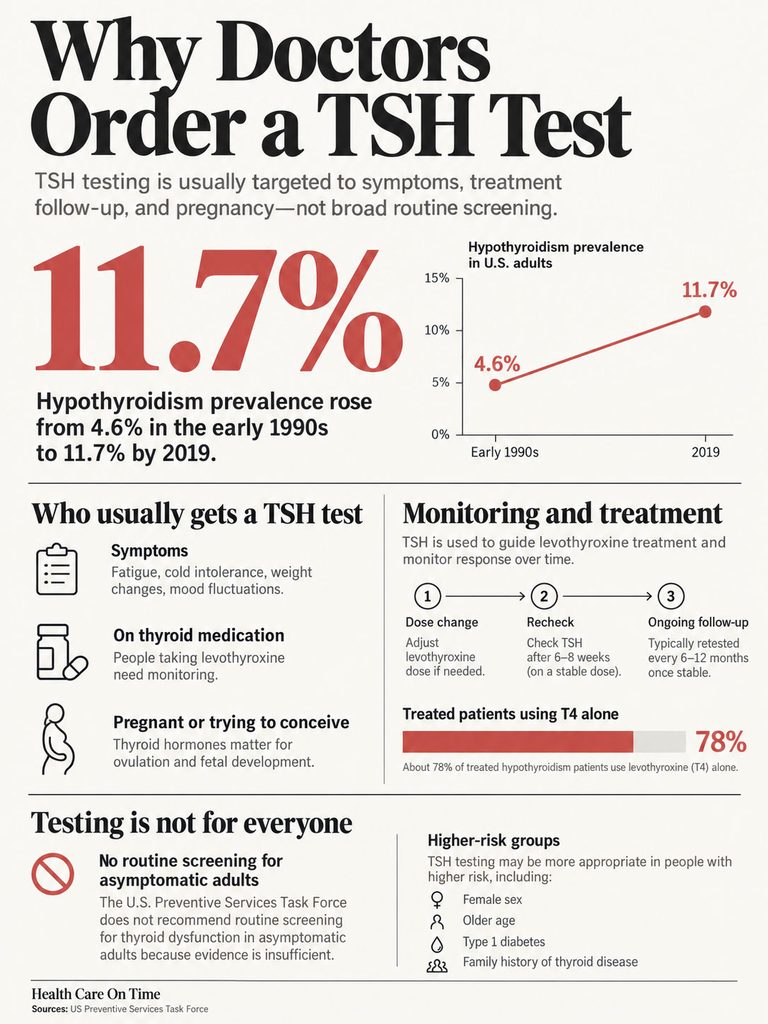
Patients booking thyroid tests through HealthCareOnTime usually fall into one of three groups: people with symptoms, people already on thyroid medicine, and women who are pregnant or trying to conceive.
Symptoms That Trigger the Test
Signs of a slow thyroid include tiredness, feeling cold, weight gain, constipation, dry skin, thinning hair, heavier periods, and slowed thinking. Signs of a fast thyroid include a racing heart, shakiness, heat intolerance, weight loss, anxiety, and frequent bowel movements.
Many of these overlap with stress, poor sleep, anemia, or menopause. That’s why a blood number is needed, and why one number rarely tells the whole story.
Monitoring Thyroid Medicine
If you take levothyroxine (Synthroid and generics), TSH is the main dose check. Once you’re stable, doctors usually recheck every 6 to 12 months, and after a dose change they wait 6 to 8 weeks before retesting (Cleveland Clinic Journal of Medicine).
That wait matters. T4 has a half-life of about 7 days, so a test taken too soon after a change gives a misleading picture.
Pregnancy and Fertility
Thyroid hormone affects ovulation and early fetal brain development. Fertility clinics and many OB-GYNs check TSH early, and pregnancy uses tighter target ranges, covered below.
Should Healthy Adults Get Screened?
This surprises many readers. The US Preventive Services Task Force gives routine screening of adults who are not pregnant and have no symptoms an “I” grade, which means the evidence is too thin to recommend for or against it. A May 2024 literature scan turned up nothing new enough to justify an update.
The concern isn’t test accuracy. The biggest worries are false positives, labeling, overdiagnosis, and overtreatment. If you have symptoms or risk factors, testing makes clear sense.
Risk factors for a high TSH include being female, older age, type 1 diabetes, Down syndrome, a family history of thyroid disease, goiter, past hyperthyroidism, and radiation to the head or neck.
How Common Thyroid Problems Are in the US
The numbers have climbed sharply. The most widely cited estimate, from NHANES data collected between 1988 and 1994, put hypothyroidism at 4.6% of Americans, nearly all of it subclinical.
A 2023 study combining NHANES and insurance claims found about 9.6% prevalence from 2009 to 2012, rising to 11.7% by 2019, with over 78% of treated patients on T4 alone. The American Thyroid Association reviewed that study and noted the share of Americans with hypothyroidism has more than doubled in two decades.
TSH Normal Range: Why There Isn’t Just One
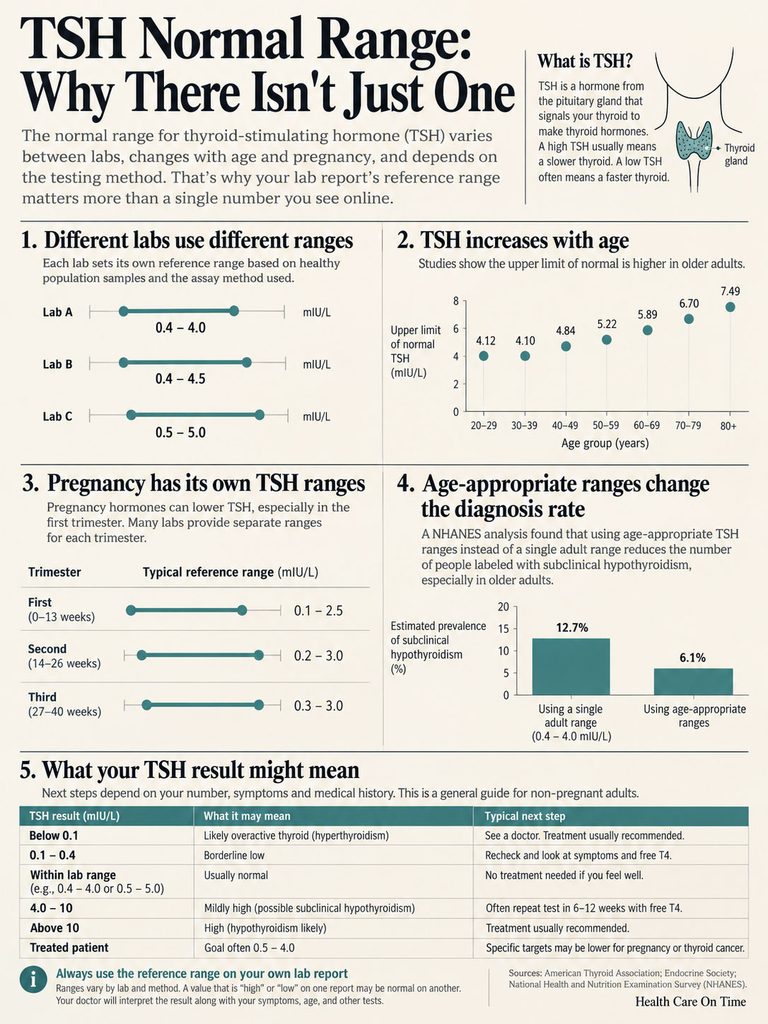
Search for “normal TSH” and you’ll find 0.4 to 4.0, 0.4 to 4.5, and 0.5 to 5.0. None of these are wrong. They come from different labs, different machines, and different reference groups.
Why Labs Disagree
Every lab sets its range from the healthy people it tests and the assay it runs. For example, Cleveland Clinic Laboratories lists 0.270 to 4.200 for adults aged 21 to 99 and 0.510 to 4.300 for ages 12 to 20. Other sources cite 0.4 to 4.0 mU/L as the American Thyroid Association’s typical range.
Our medical reviewers give the same advice every time: read your result against the range printed on your own report, not a number from the internet.
Normal TSH Levels by Age
This is the gap most result pages skip. TSH naturally drifts upward with age, even in people with healthy thyroids.
In a landmark NHANES analysis, the upper limit of TSH (97.5th percentile) was 3.56 mIU/L in people in their 20s but 7.49 mIU/L in people 80 and older. About 70% of older adults with TSH above 4.5 were still inside the normal range for their age.
That has real consequences. In one study summarized by the American Thyroid Association, subclinical hypothyroidism rates reached 9.0% using standard ranges but just 2% using age-appropriate ones. That’s a lot of older adults who could be labeled, and treated, for normal aging.
Normal TSH in Pregnancy
Pregnancy hormones, especially hCG, mildly stimulate the thyroid and push TSH down early on. Many labs print separate ranges for each trimester.
If your lab doesn’t list pregnancy ranges, the American Thyroid Association’s 2017 pregnancy guideline suggests treating about 4.0 mIU/L as the upper limit. Your OB-GYN may act at a lower number if you have TPO antibodies or a history of miscarriage.
| Group | Example Reference Range (mIU/L) | Source |
| Adults 21 to 99 | 0.27 to 4.20 | Cleveland Clinic Laboratories |
| Teens 12 to 20 | 0.51 to 4.30 | Cleveland Clinic Laboratories |
| Pregnancy, 1st trimester (weeks 9 to 12) | 0.18 to 2.99 | Cleveland Clinic Laboratories |
| Pregnancy, 2nd trimester | 0.11 to 3.98 | Cleveland Clinic Laboratories |
| Pregnancy, 3rd trimester | 0.48 to 4.71 | Cleveland Clinic Laboratories |
| Adults 80+ (upper limit) | up to about 7.5 | NHANES III, JCEM 2007 |
Your lab’s numbers may differ slightly from these examples.
TSH Targets If You Take Thyroid Medicine
MedlinePlus notes that treated patients are usually kept between about 0.5 and 4.0, with exceptions for pituitary disorders, certain thyroid cancers where a lower TSH may be the goal, and pregnancy.
If you take levothyroxine and feel well, a result anywhere in that window is usually a success, not a reason to chase a “perfect” number.
| TSH Result (mIU/L) | Common Lab Label | What It Usually Means | Typical Next Step | Age 80+ Note |
| Below 0.1 | Suppressed / undetectable | Overt or significant hyperthyroidism, or too much thyroid medicine | Free T4 and T3 soon; check for biotin; dose review | Higher risk of irregular heartbeat and bone loss |
| 0.1 to 0.4 | Low | Subclinical hyperthyroidism, early pregnancy, illness, medicines | Repeat with free T4 in 6 to 12 weeks | Watch more closely for heart rhythm effects |
| 0.4 to 4.0 | Normal | Thyroid regulation working | No action unless symptoms or pituitary concerns | Normal |
| 4.0 to 7.5 | Mildly high | Possible subclinical hypothyroidism, or normal for age | Repeat TSH plus free T4 in 6 to 12 weeks; consider TPO antibodies | Often within normal range for age |
| 7.5 to 10 | High | Subclinical hypothyroidism | Repeat; treatment depends on symptoms, antibodies, pregnancy plans | Borderline; treat cautiously |
| Above 10 | High | Hypothyroidism likely persistent | Confirm, then treatment discussion | Treatment often considered |
What a High TSH Means
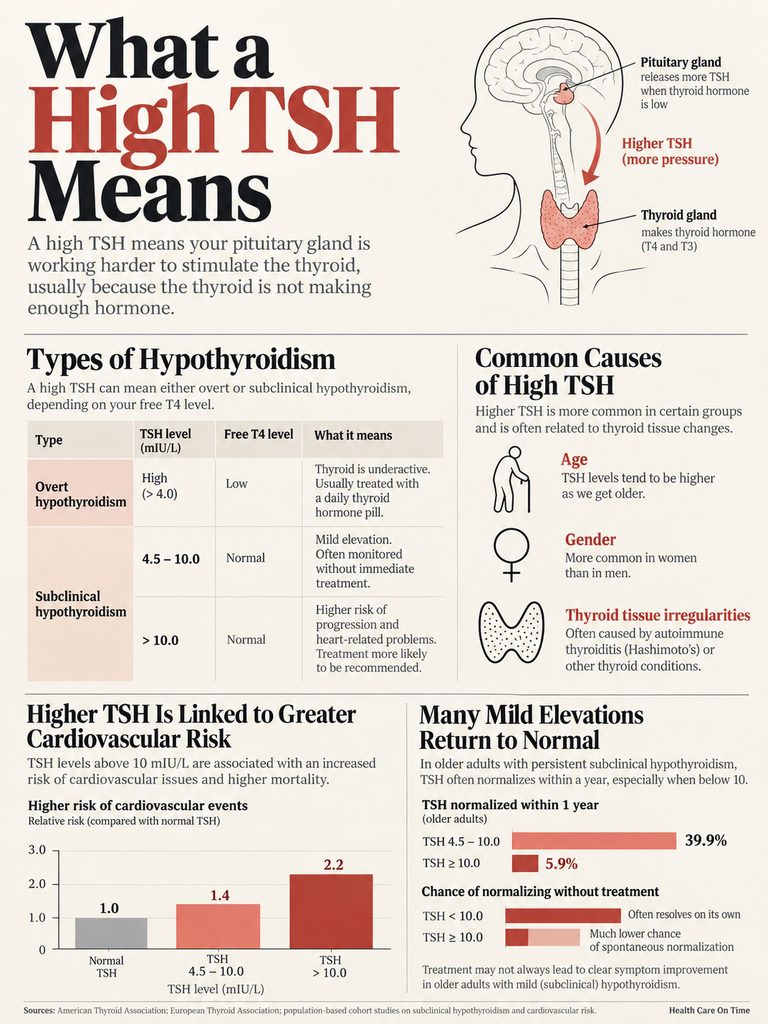
A high TSH means your pituitary is pushing hard on your thyroid. Your free T4 result decides how serious it is.
Overt vs Subclinical Hypothyroidism
If TSH is high and free T4 is low, that’s overt hypothyroidism. It is usually treated with a daily thyroid hormone pill.
If TSH is high but free T4 is still normal, that’s subclinical (mild) hypothyroidism. The USPSTF splits it further into TSH between 4.5 and 10.0 and TSH above 10.0.
Common Causes of High TSH
- Hashimoto’s thyroiditis, the autoimmune condition behind most primary hypothyroidism
- Under-dosed or missed thyroid medicine
- Recovery after an illness or hospital stay. TSH can rebound above range for a few weeks.
- Certain medicines, such as lithium and amiodarone
- A TSH-secreting pituitary tumor, which is uncommon
Why 10 mIU/L Is the Line Doctors Watch
Below 10, many mild elevations settle without treatment. Above 10, studies link TSH to a clearly higher risk of cardiovascular problems and death (Cleveland Clinic Journal of Medicine).
Being female, having TSH above 10, uneven thyroid tissue on ultrasound, or a free T4 near the bottom of normal all raise the odds that mild hypothyroidism will progress.
How Often a Mild High TSH Goes Back to Normal
More often than most people expect. In pooled data from the TRUST and IEMO trials, TSH had normalized within a year in 39.9% of older adults with persistent subclinical hypothyroidism. When the second reading was 10 or higher, that chance dropped to 5.9%.
Treatment isn’t automatically helpful at the mild end either. The TRUST trial found levothyroxine did not improve symptom scores in older adults with subclinical hypothyroidism. Younger adults, pregnant women, and those trying to conceive are a separate conversation.
What a Low TSH Means
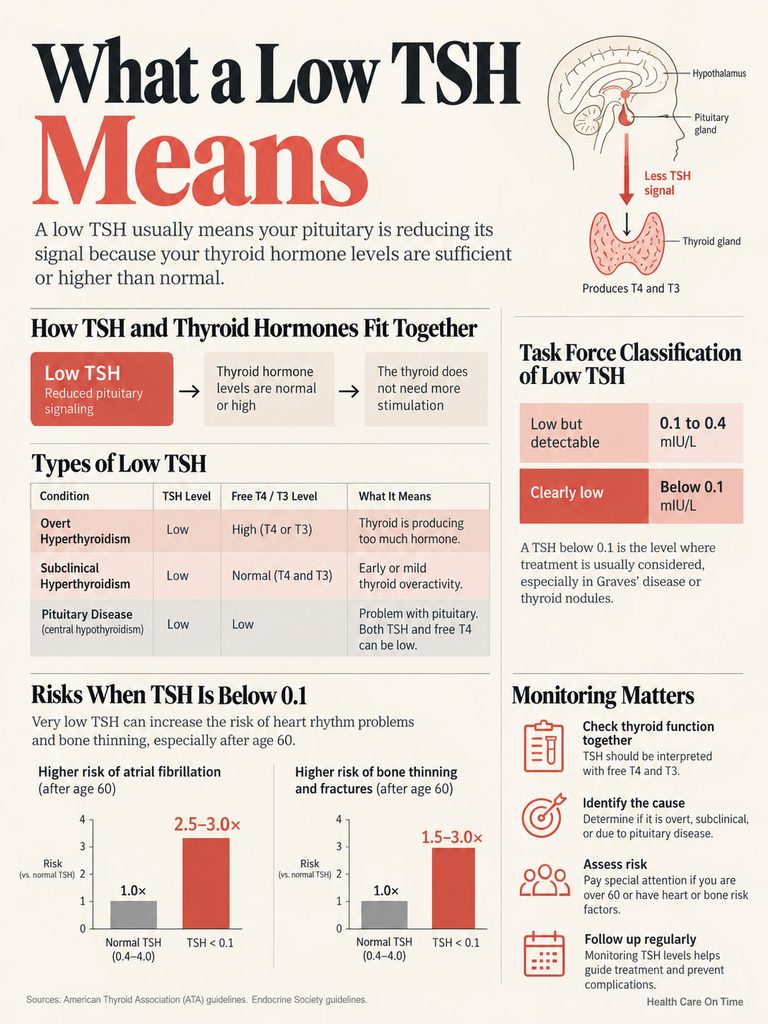
A low TSH means the pituitary has turned its signal down, usually because there’s plenty of thyroid hormone around.
Overt vs Subclinical Hyperthyroidism
Low TSH with high free T4 or T3 is overt hyperthyroidism. Low TSH with normal free T4 and T3 is subclinical. The Task Force separates “low but detectable” results (about 0.1 to 0.4) from “clearly low” or undetectable ones (below 0.1).
Common Causes of Low TSH
- Graves’ disease, an autoimmune cause of an overactive thyroid
- Toxic nodules or multinodular goiter
- Thyroiditis, an inflamed thyroid that leaks stored hormone for a few weeks
- Too much thyroid medicine, including over-the-counter products that contain thyroid hormone
- First trimester of pregnancy
- Pituitary damage, which stops TSH production and causes secondary hypothyroidism
That last cause breaks the usual rule. In pituitary disease, TSH and free T4 can both be low. It’s one reason doctors read the two numbers together.
Why Below 0.1 Gets More Attention
Treatment is generally recommended when TSH is undetectable or below 0.1, especially with Graves’ disease or thyroid nodules. At that level, the main risks are atrial fibrillation (an irregular heartbeat) and bone thinning, particularly after age 60.
7 Things That Can Skew Your TSH Result
In cases reviewed by our medical team, a surprising number of “abnormal” results trace back to something other than the thyroid. Here are the most common culprits.
1. Biotin Supplements
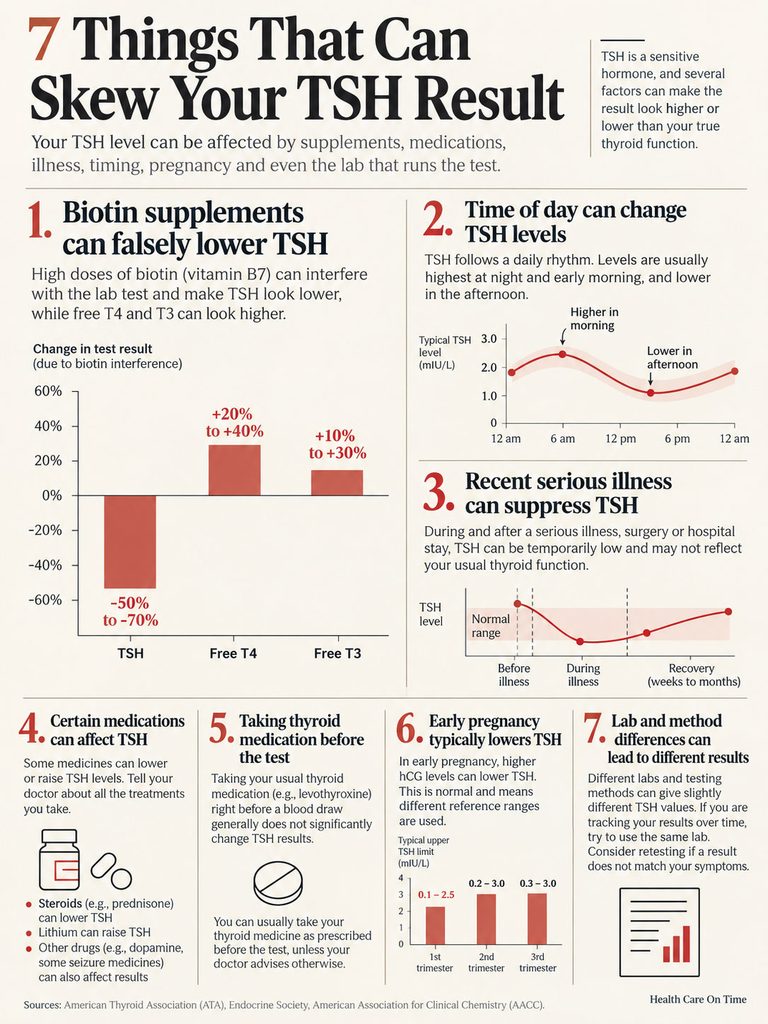
Biotin (vitamin B7) tops the list. The FDA issued a safety communication in November 2017 warning that biotin can interfere with lab tests, and updated it in 2019.
Many lab machines rely on a biotin-based chemistry step. Extra biotin in your blood can push TSH falsely low and free T4 and T3 falsely high, a pattern that can be mistaken for Graves’ disease. Biotin hides in multivitamins, prenatal vitamins, and hair, skin, and nail products.
How long should you stop it? Advice is all over the place: some sources say at least 8 hours, some hospital labs say 12 hours, and others say 72 hours. The difference comes down to dose. High-dose hair supplements, often 5,000 to 10,000 mcg, need the longer window, while doses around 30 mcg are unlikely to matter.
The safe move: stop biotin 2 to 3 days before a thyroid test unless your doctor says otherwise, and tell the lab you take it.
2. Time of Day
TSH follows a daily rhythm. Levels peak between midnight and 8 a.m. and dip from roughly 10 a.m. to 3 p.m. (PMC).
Whether this changes diagnoses is genuinely debated. One small study found median TSH of 3.27 in the morning versus 2.18 in the afternoon, and estimated an afternoon draw could miss about 3 in 10 cases of subclinical hypothyroidism. A later fertility-clinic analysis found almost no difference: 25% of morning draws and 26% of afternoon draws were above 2.5.
Our reviewers’ take: if you’re tracking results over time, test at the same time of day every time. Morning is the common standard.
3. Recent Illness or Hospital Stay
Serious illness can temporarily suppress TSH and then cause a rebound above range during recovery. Testing within a few weeks of a major illness often produces a misleading number.
4. Medicines
Steroids and dopamine can lower TSH. Lithium can raise it, and amiodarone can push it either way. Tell your doctor about every prescription and supplement you take.
5. Taking Your Thyroid Pill Right Before the Draw
Patients often ask us whether to skip their morning levothyroxine. For TSH alone, one dose barely moves the result because TSH responds over weeks. If free T4 is checked too, many doctors prefer you take the pill after the draw. Ask which they want.
6. Pregnancy
Early pregnancy lowers TSH naturally. A result that looks “low” for a non-pregnant adult can be completely normal at 10 weeks.
7. Lab and Method Differences
Labs use different machines, and results don’t always line up between them. Some people also carry heterophile antibodies, which can interfere with the test. If a number doesn’t fit how you feel, a repeat test at the same lab is a sensible first step.
How to Prepare for a TSH Test (and What It Costs)
Before Your Test
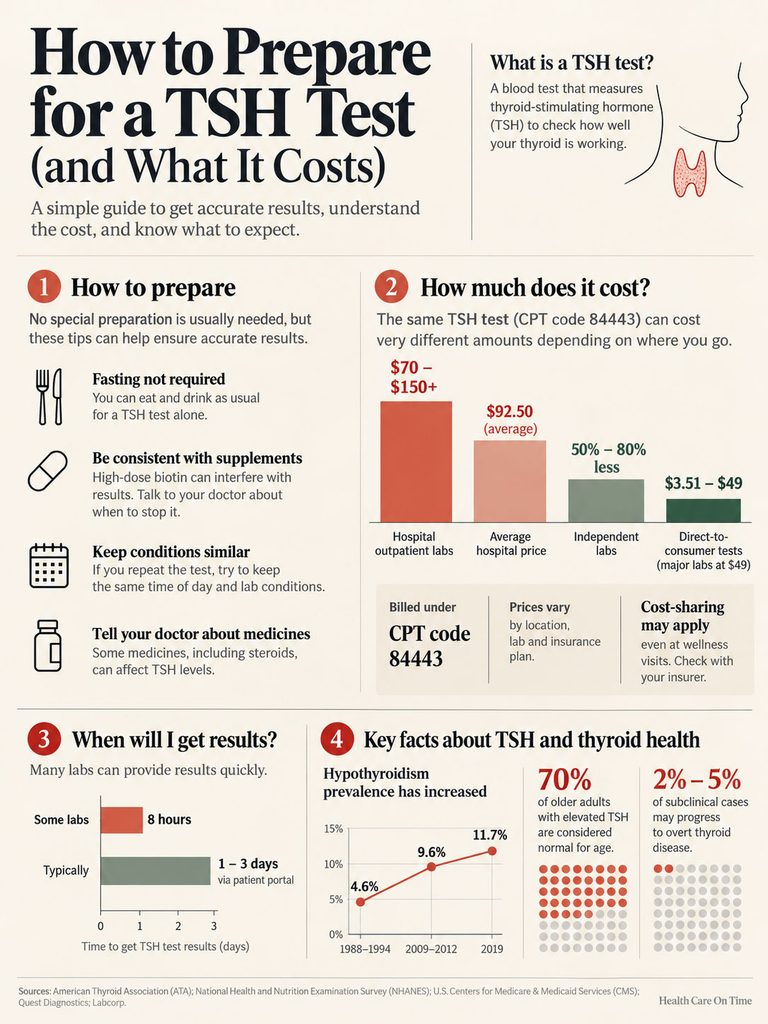
- Fasting: usually not needed for TSH alone. Fast only if other tests are drawn at the same visit.
- Biotin: stop 2 to 3 days ahead unless told otherwise.
- Timing: morning if possible, and the same time for follow-ups.
- Medicines: keep taking prescriptions unless your doctor says otherwise.
- Tell the lab: about pregnancy, recent illness, and every supplement.
Some hospital labs turn TSH results around in 8 hours. Across tests booked through HealthCareOnTime, most people see results in their patient portal within one to three days.
What a TSH Test Costs in the US
The test is billed under CPT code 84443, and prices vary more than most people realize.
One 2026 price survey found hospital outpatient labs charge $70 to $150 or more, with a national average charge of about $92.50, while independent labs typically charge 50% to 80% less. Another survey listed direct-to-consumer TSH tests from about $3.51 to $49 before a draw fee, with Quest and Labcorp direct prices both around $49.
Even when ordered at a wellness visit, a TSH test may be subject to cost-sharing, so check with your insurer before you go.
| Statistic | Figure | Source |
| US hypothyroidism prevalence, 1988 to 1994 | 4.6% (0.3% overt, 4.3% subclinical) | NHANES III, JCEM 2002 |
| US hypothyroidism prevalence, 2009 to 2012 | About 9.6% | Wyne et al., J Endocr Soc 2023 |
| US hypothyroidism prevalence, 2019 (claims) | 11.7% | Wyne et al., J Endocr Soc 2023 |
| Hypothyroidism with TSH above 4.5, 1999 to 2002 | 3.7% (hyperthyroidism 0.5%) | Aoki et al., Thyroid 2007 |
| TSH upper limit, age 20 to 29 vs 80+ | 3.56 vs 7.49 mIU/L | Surks & Hollowell, JCEM 2007 |
| Older adults with TSH over 4.5 still normal for age | About 70% | Surks & Hollowell, JCEM 2007 |
| Mild subclinical cases that progress to overt disease | 2% to 5% | USPSTF 2015 |
| TSH test cost, hospital vs direct-to-consumer | $70 to $150+ vs about $4 to $49 | CareRoute and Mito Health price surveys |
For the 1999 to 2002 data, hypothyroidism meant TSH above 4.5 and hyperthyroidism meant TSH below 0.1. USPSTF estimates about 2% to 5% of people with subclinical hypothyroidism go on to overt disease.
Your TSH Is Abnormal: What to Do Next
Don’t panic, and don’t ignore it. The usual path is simple.
Step 1: Repeat the TSH With a Free T4
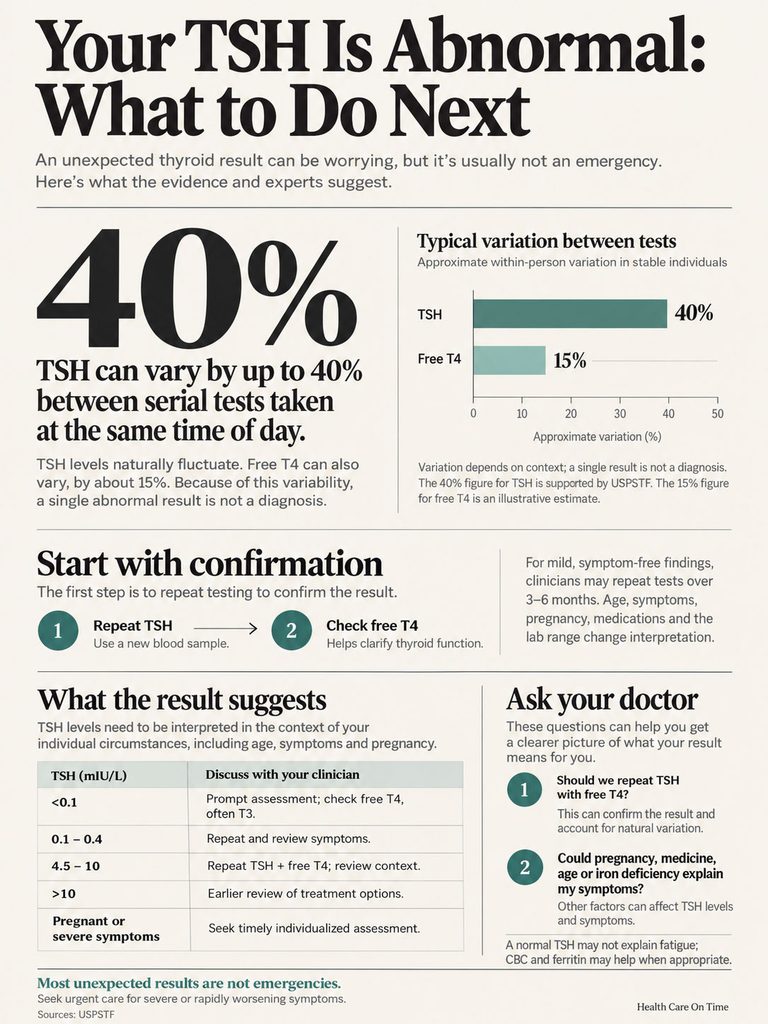
Mild TSH elevations can swing by as much as 40% on their own, while free T4 varies by about 15%. That’s why USPSTF advises several tests over 3 to 6 months to confirm or rule out an abnormal result.
Your doctor may add TPO antibodies to check for Hashimoto’s. A positive result makes progression more likely and can tip the decision toward treatment.
Step 2: Match the Number to Your Situation
A TSH of 6 means something different for a pregnant 32-year-old, a 45-year-old with fatigue, and an 85-year-old who feels fine. Age, pregnancy plans, symptoms, and heart health all shape the decision.
Step 3: Know When Not to Wait
Most abnormal TSH results are follow-up matters, not emergencies. Call your doctor the same week if you have a low TSH with a racing or irregular heartbeat, chest discomfort, or unexplained weight loss.
Seek urgent care for confusion, high fever with a fast heart rate, or extreme sleepiness with a very slow pulse and low body temperature. These can signal thyroid storm or myxedema, both rare but serious.
Normal TSH but You Still Feel Off
This is one of the most common frustrations our medical team hears. A normal TSH rules out most primary thyroid disease, but it doesn’t explain every symptom.
Fatigue, brain fog, hair loss, and weight change have many causes. Ask about a CBC and ferritin (iron), vitamin B12, blood sugar, and a sleep evaluation.
There’s also a rare exception. With pituitary problems, TSH stops being a reliable marker of thyroid status. If you’ve had pituitary surgery, head trauma, or other hormone problems, your doctor may rely on free T4 instead.
| Scenario | Recommended Action | Timeframe |
| TSH 4.5 to 7, no symptoms, not pregnant | Repeat TSH plus free T4; avoid biotin beforehand | 6 to 12 weeks |
| TSH above 10 on two tests | Discuss starting thyroid hormone | At follow-up visit |
| TSH below 0.1 with palpitations | Free T4, T3, and heart rhythm check | Within days |
| Pregnant or trying to conceive with TSH above trimester range | Contact OB-GYN; treatment threshold is lower | Within 1 week |
| Abnormal result while taking biotin | Stop biotin 2 to 3 days, then retest | Within 1 to 2 weeks |
| On levothyroxine and TSH out of range | Review dose and pill timing; retest after change | 6 to 8 weeks after change |
| Normal TSH but strong symptoms | Ask about free T4, CBC, ferritin, B12 | Next visit |
| Age 80+ with TSH 4.5 to 7.5 | Usually monitor rather than treat | Recheck in 6 to 12 months |
Questions to Ask Your Doctor
- Is this result outside the range for my age?
- Should we repeat it before deciding anything?
- Do you want a free T4 or TPO antibodies too?
- Could my supplements or medicines be affecting it?
- What number would change your plan?
What the Evidence Can’t Tell You Yet
Our medical reviewers flag three honest limits in the research.
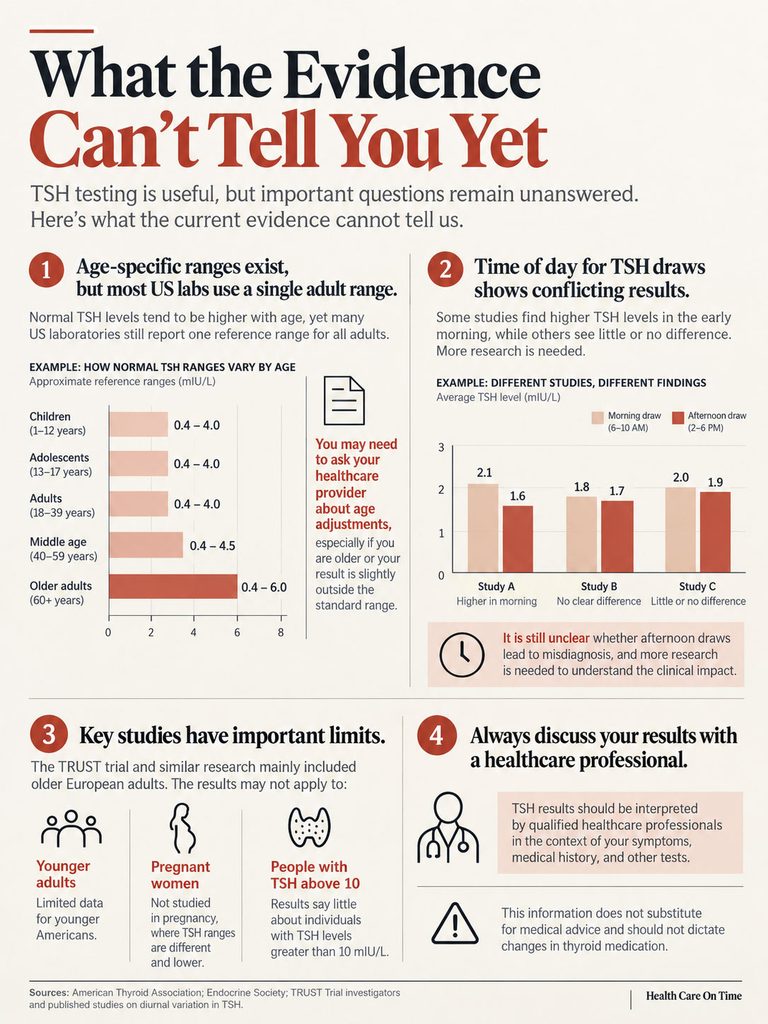
First, age-specific TSH ranges are well documented, but most US labs still print a single adult range. You may need to ask your doctor to apply the age adjustment.
Second, the time-of-day studies are small and disagree. Neither side has settled whether afternoon draws cause real misdiagnosis.
Third, the TRUST findings come mainly from older adults in Europe. They say little about younger Americans, pregnant women, or people with TSH above 10.
Frequently Asked Questions
Is a TSH of 4.5 bad?
Usually not. A TSH of 4.5 sits at or just above the upper limit for many labs, and it is often normal for adults over 60. Most doctors repeat the test with a free T4 in 6 to 12 weeks before calling it subclinical hypothyroidism, especially if you feel well.
Do you need to fast for a TSH test?
No fasting is needed for a TSH test alone. Some research shows food can slightly lower TSH, so if you’re tracking results over time, keep conditions the same each time. If cholesterol or glucose is drawn at the same visit, follow the fasting instructions for those tests.
Can stress affect TSH levels?
Everyday stress has little direct effect on TSH. Severe physical stress, such as a major illness, surgery, or hospital stay, can lower TSH temporarily and cause a rebound later. High cortisol and steroid medicines can also suppress TSH. If you were recently sick, ask about retesting in a few weeks.
Why is my TSH high but T4 normal?
That pattern is called subclinical hypothyroidism. Your thyroid is keeping up, but only because your pituitary is pushing harder. Many cases stay stable or return to normal. Doctors usually repeat both tests and may check TPO antibodies to see whether Hashimoto’s is driving it.
Can I take levothyroxine before a TSH test?
For TSH alone, one morning dose barely changes the result because TSH responds slowly over weeks. If free T4 is checked too, many doctors prefer you take the pill after the blood draw, since a fresh dose can briefly raise free T4. Ask your doctor which approach they want.
How long should I stop biotin before a thyroid test?
Most guidance falls between 8 hours and 3 days, depending on the dose. High-dose hair, skin, and nail supplements carry the most risk. A safe default is stopping biotin 2 to 3 days before the draw, unless your doctor advises otherwise, and telling the lab you take it.
What is a normal TSH level for a woman?
Non-pregnant women generally use the same range as men, roughly 0.4 to 4.0 mIU/L depending on the lab. Pregnancy changes this: first-trimester ranges can run as low as about 0.2 to 3.0. Women are also several times more likely than men to develop thyroid disease, so testing is common.
What TSH level is dangerous?
No single number is an emergency on its own. TSH above 10 or below 0.1 is where risks to the heart and bones rise and treatment is usually discussed. The real danger signs are symptoms: a racing or irregular heartbeat, confusion, fever, or extreme sluggishness with a slow pulse.
Can a TSH test detect thyroid cancer?
No. A TSH test checks how well your thyroid is working, not whether a lump is cancer. Most people with thyroid cancer have a normal TSH. A neck lump, hoarseness, or trouble swallowing calls for an exam and ultrasound, regardless of your TSH result.
How often should TSH be checked?
If you take thyroid medicine and are stable, every 6 to 12 months is typical. After any dose change, wait about 6 to 8 weeks before retesting. For a mild abnormal result without treatment, doctors often recheck in 6 to 12 weeks, then every 6 to 12 months.
Can I order a TSH test without a doctor?
In most US states, yes. Quest, Labcorp, and many online lab services sell TSH tests directly, often for about $25 to $49 plus a draw fee. The catch is interpretation: share abnormal results with a clinician who knows your history, medicines, and pregnancy plans before acting on them.
Does TSH change during the day?
Yes. TSH peaks overnight and in the early morning, then dips from late morning into the afternoon. Studies disagree on whether this changes diagnoses, but the safest habit is testing at a consistent time, ideally in the morning, so each result compares fairly with the last.
Disclaimer: This article is for general education and is not medical advice. TSH results must be interpreted by a qualified healthcare professional alongside your symptoms, free T4, medicines, supplements, age, and pregnancy status. Do not start, stop, or change any thyroid medicine based on this article. If you have chest pain, a very fast or irregular heartbeat, confusion, or high fever, seek emergency care.
References
- MedlinePlus: TSH (Thyroid-Stimulating Hormone) Test
- MedlinePlus Medical Encyclopedia: TSH Test
- USPSTF: Thyroid Dysfunction Screening Recommendation
- Surks & Hollowell: Age-Specific Distribution of Serum TSH, JCEM 2007
- Wyne et al.: Hypothyroidism Prevalence in the United States, J Endocr Soc 2023
- Hollowell et al.: Serum TSH, T4, and Thyroid Antibodies, NHANES III
- Aoki et al.: Serum TSH and Total T4, NHANES 1999 to 2002
- FDA: Biotin May Interfere With Lab Tests, Safety Communication
- American Thyroid Association: Age and Subclinical Hypothyroidism
- American Thyroid Association: Hypothyroidism Prevalence Update
- Cleveland Clinic Laboratories: TSH With Reflex Reference Ranges
- Cleveland Clinic Journal of Medicine: Is TSH Sufficient to Monitor Hypothyroidism Treatment?
- Cleveland Clinic Journal of Medicine: TSH and Thyroid Replacement
- Effect of Time of Day and Food on TSH, PMC
- Hypothyroidism in Older Adults, PMC Review