Only 1 in 10 American adults eats enough vegetables daily, the CDC reports. That’s a quiet nutrition crisis hiding behind every grocery cart in the country. Juicing won’t fix everything. But it can close the gap fast, especially when you pick the right produce.
Table of Contents
Quick Answer:
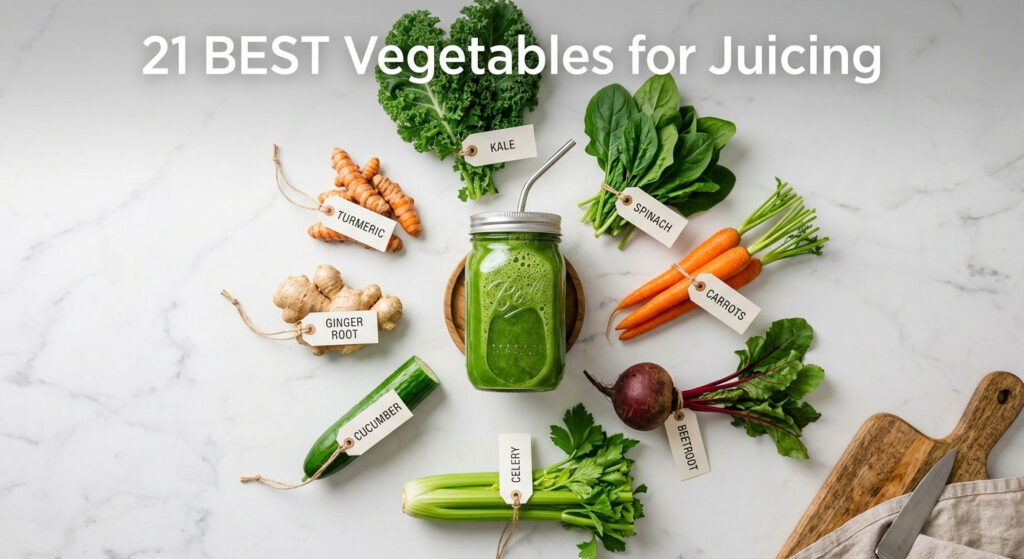
The best vegetables for juicing are kale, spinach, carrots, beetroot, celery, cucumber, and ginger. These seven deliver the highest nutrient density per ounce and pair well with almost any blend. They support heart health, blood sugar control, skin glow, and natural detox pathways. Add Swiss chard, parsley, and turmeric for an even broader vitamin and antioxidant range.
At a Glance:
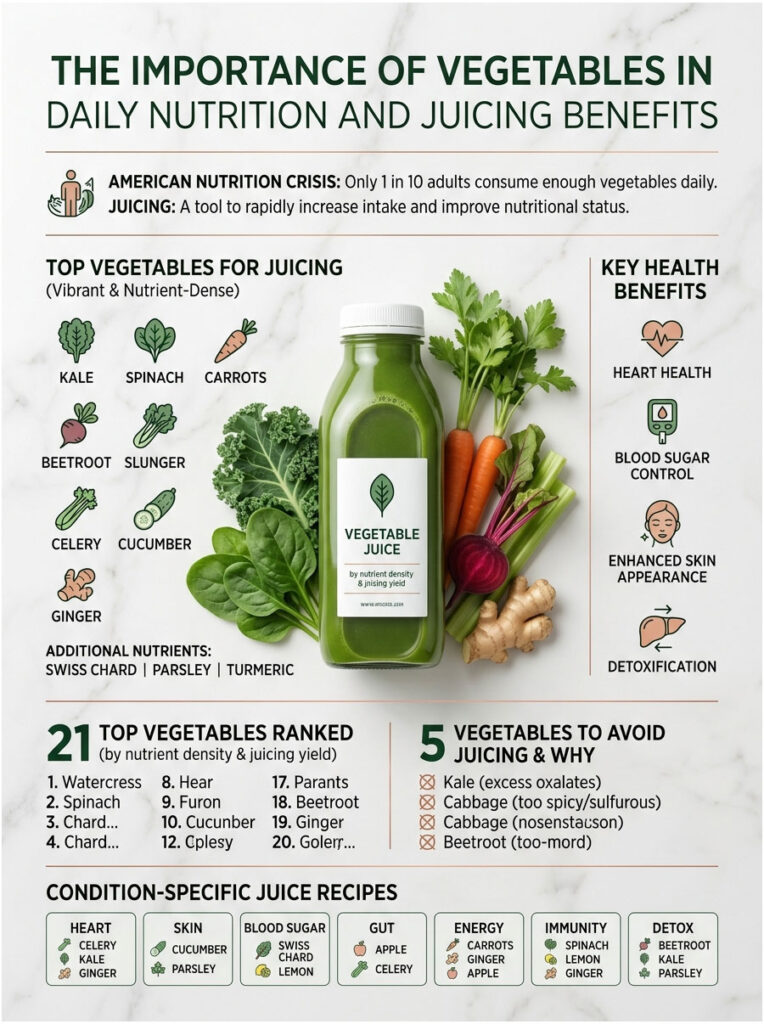
• 21 top vegetables ranked by nutrient density and juicing yield
• 5 vegetables you should avoid juicing (and why each one fails)
• Real USDA data inside the comparison table
• 7 condition-specific juice recipes (heart, skin, blood sugar, gut, energy, immunity, detox)
• 8-step prep checklist that follows FDA produce-handling guidance
• 12 questions answered for People Also Ask coverage
Why Juice Vegetables? The Science Behind the Glass
Juicing pulls liquid nutrients from plant fiber. Your body absorbs vitamins, minerals, and phytonutrients within minutes instead of hours. That speed matters for anyone with low appetite, weak digestion, or a packed schedule that crowds out whole produce.
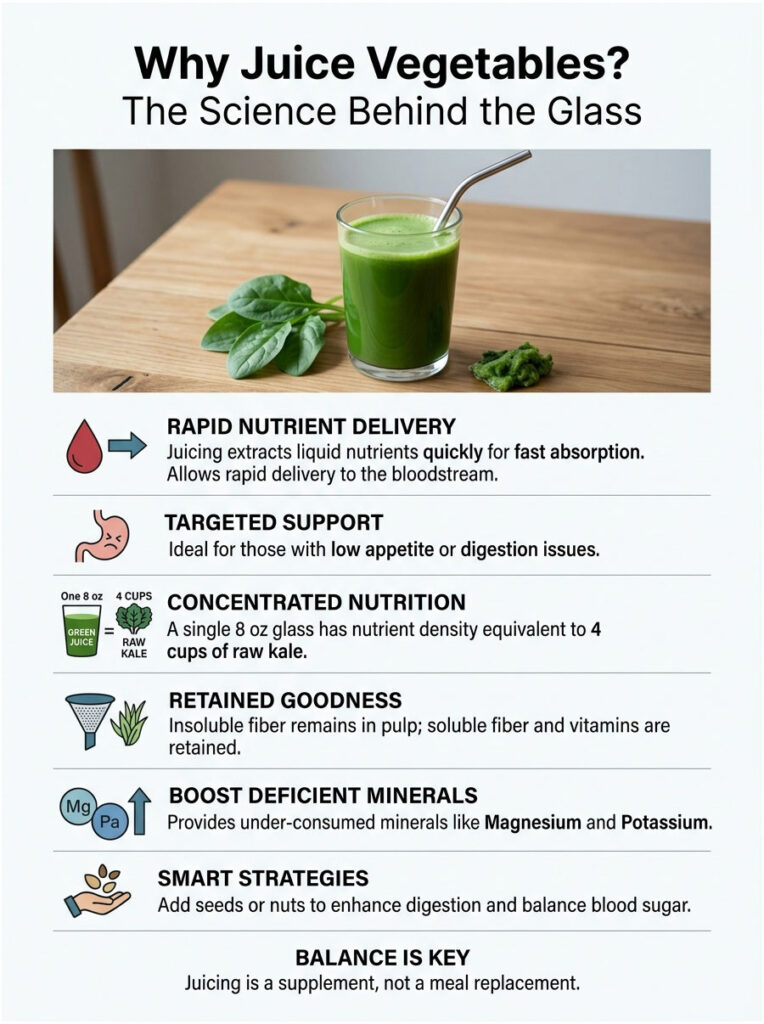
The trade-off is real. You lose most insoluble fiber. So juicing works best as a supplement to meals, not a replacement.
Across patients HealthCareOnTime serves nationwide, the strongest results show up when fresh juice supports a balanced plate, not when it replaces one.
Nutrient Density You Can Actually Absorb
A single 8 oz green juice can pack the vitamin K of 4 cups of raw kale, plus folate, magnesium, and potassium. The National Institutes of Health ranks magnesium and potassium among the most under-consumed minerals in US adult diets.
Vegetable juicing turns into a tactical advantage there. You drink in 60 seconds what would take 30 minutes to chew. The nutrients hit your bloodstream faster.
What Juicing Leaves Behind
Most insoluble fiber stays in the pulp. Soluble fiber and fat-soluble vitamins like A, D, E, and K still come through.
Add chia seeds, flax meal, or a small handful of nuts to your day to keep digestion balanced. Our medical reviewers note that combining a daily green juice with whole-food meals delivers steadier blood sugar than juice alone.
How to Pick the Best Vegetables for Juicing
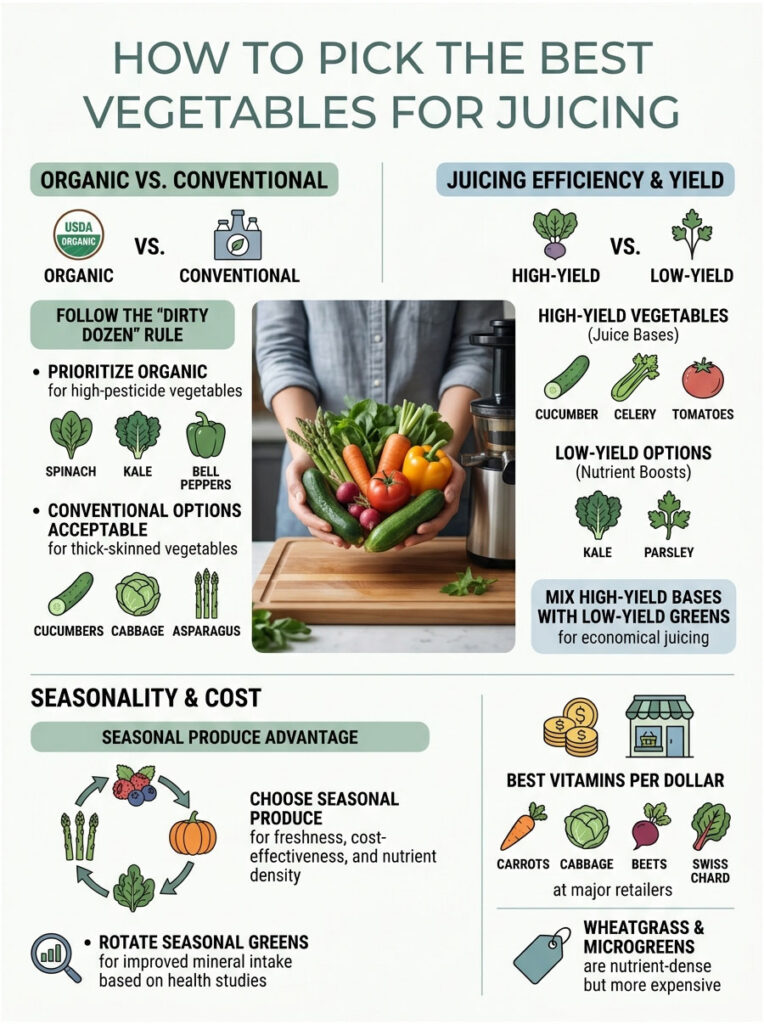
Not all produce belongs in your juicer. Four buying rules will save you money, boost yield, and limit pesticide load.
Organic vs Conventional (The Dirty Dozen Rule)
The Environmental Working Group’s Dirty Dozen list names the most pesticide-heavy produce in US stores. Spinach, kale, collards, and bell peppers all sit near the top. Organic is worth the extra dollar or two per pound for these.
For thick-skinned vegetables like cucumbers (when peeled), cabbage, and asparagus, conventional works fine when budget matters.
Seasonal Sourcing
Seasonal produce is fresher, cheaper, and higher in nutrients. It spends less time in cold storage. The USDA Seasonal Produce Guide lists what’s at peak each month across US growing regions.
Patients booking blood work with HealthCareOnTime often show better mineral panels when they rotate seasonal greens through the year.
Water Content and Yield
Cucumber, celery, and tomatoes give you the most juice per pound. Kale and parsley give the least. Mix high-yield bases with low-yield power-greens to get a full glass without spending $15 in produce.
Nutrient Density per Dollar
Carrots, cabbage, beets, and Swiss chard deliver the most vitamins per dollar at most US chains, including Aldi, Trader Joe’s, and Costco. Wheatgrass and microgreens cost more but pack denser micronutrient profiles.
21 Best Vegetables for Juicing (The Master List)
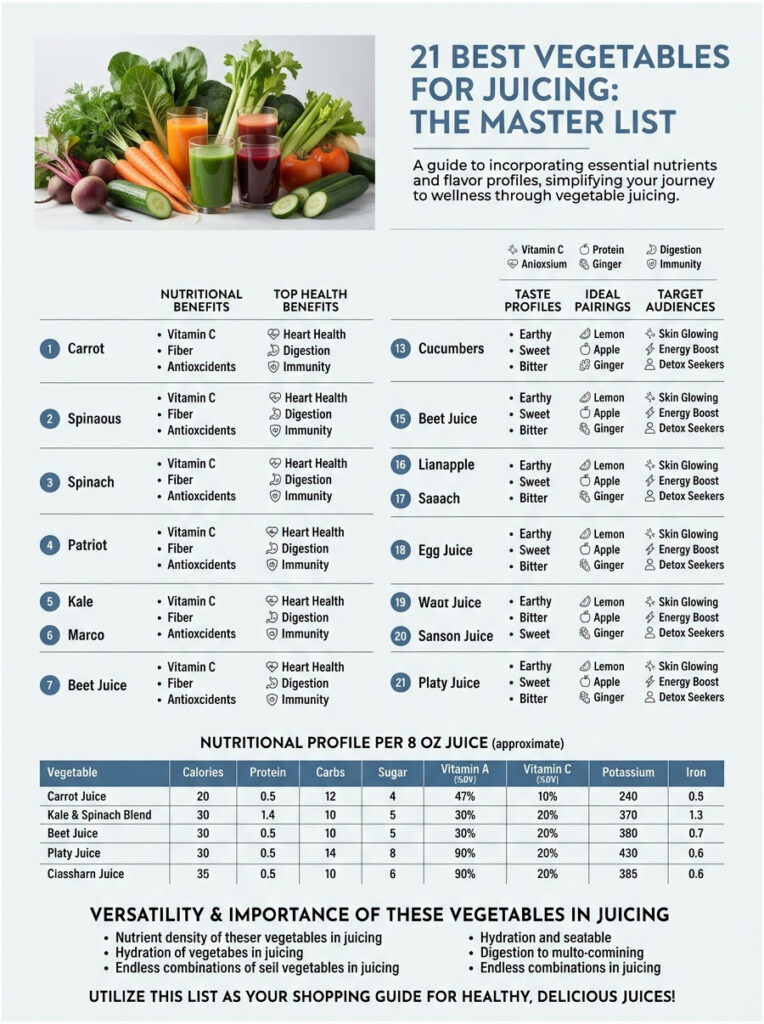
Each entry below covers nutrition, top benefit, taste, pairings, and who it suits. Use this as your rotating shopping template.
1. Kale
A cup of kale juice delivers over 600% DV of vitamin K, plus vitamins A and C (USDA FoodData Central). Slightly bitter and earthy on its own.
Pair with apple, lemon, and ginger to soften. Best for bone health, heart support, and inflammation.
2. Spinach
Loaded with iron, folate, magnesium, and lutein for eye protection. Mild green flavor that disappears inside fruit-forward blends.
Pair with pineapple, cucumber, and mint. Best for energy, brain health, and women managing low iron.
3. Carrots
Rich in beta-carotene, biotin, and potassium. Naturally sweet, which makes carrot juice the gateway drink for juicing beginners.
Pair with orange, ginger, and turmeric. Best for vision, immune support, and skin tone.
4. Beetroot
High in dietary nitrates that the body converts to nitric oxide. A landmark trial published by the American Heart Association showed beet juice can lower systolic blood pressure within hours.
Earthy and intense. Pair with apple, ginger, lemon. Best for cardiovascular health and athletic stamina.
5. Celery
The celery juice trend has owned wellness Instagram for years. The science is partly catching up. Celery is hydrating, low-calorie, and a natural source of antioxidants.
Pair with cucumber, lemon, parsley, and apple. Best for hydration, gut comfort, and morning routines.
6. Cucumber
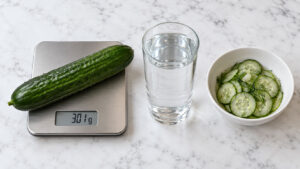
Made up of about 95% water. Provides silica for collagen support and a clean, neutral base flavor.
Pair with mint, lime, and pineapple. Best for skin glow, hydration, and post-workout recovery.
7. Ginger Root
Anti-inflammatory and digestion-soothing thanks to gingerol. Sharp and warming. A thumb-sized piece is enough for an 8 oz glass.
Pair with carrot, lemon, apple, turmeric. Best for nausea, period pain, and immunity.
8. Turmeric Root
Contains curcumin, studied for anti-inflammatory effects by NIH researchers.
Pair with carrot, orange, and a pinch of black pepper for absorption. Best for joint health, post-exercise recovery, and chronic inflammation support.
9. Wheatgrass
Concentrated chlorophyll, vitamins A and C, and iron. Strongly grassy. Take it as a 1 oz shot rather than a full glass.
Pair with apple or lemon to mellow. Best for alkalizing routines, detox plans, and quick nutrient hits.
10. Swiss Chard
Excellent for vitamin K, magnesium, and potassium. Mild leafy taste, more agreeable than kale for new drinkers.
Pair with pear, lemon, cucumber. Best for blood pressure and bone density.
11. Collard Greens
Sturdy southern green with a similar nutrient profile to kale, slightly less bitter. Excellent calcium content.
Pair with apple, lime, ginger. Best for bone health, especially in dairy-free eaters.
12. Romaine Lettuce
A surprise winner. Romaine delivers folate, vitamin A, and water-rich volume. Mild, almost neutral flavor.
Pair with apple, cucumber, mint. Best for hydration and blending into starter green juices.
13. Cabbage (Green and Red)
Rich in vitamin C, vitamin K, and sulforaphane. Red cabbage adds anthocyanins, the same antioxidants found in blueberries.
Pair with apple, carrot, ginger. Best for gut health and antioxidant support.
14. Broccoli
Source of sulforaphane, fiber, and vitamin C. Strong flavor, so use small amounts.
Pair with apple, lemon, and parsley. Best for liver detox pathways and immune defense. Stick to small servings if you have thyroid concerns.
15. Bell Peppers (Red)
Red bells contain more vitamin C than oranges, gram for gram. Sweet and mellow.
Pair with carrot, cucumber, lime. Best for skin collagen and immune support.
16. Tomatoes
Rich in lycopene, an antioxidant tied to heart and prostate health by Harvard T.H. Chan School of Public Health research. Tangy and savory.
Pair with celery, basil, lemon. Best for heart health and skin protection.
17. Fennel
Adds a subtle anise flavor and digestion-soothing compounds.
Pair with apple, cucumber, lemon. Best for bloating, indigestion, and post-meal comfort.
18. Parsley
Tiny bunch, big impact. High in vitamin K, vitamin C, and iron. Use a small handful per glass.
Pair with cucumber, lemon, apple, celery. Best for kidney support and breath freshening.
19. Cilantro
Polarizing in taste, beloved for its potential to support metal detox pathways.
Pair with pineapple, lime, ginger. Best for liver and detox-focused drinkers.
20. Zucchini
Mild, hydrating, and low-calorie. Almost tasteless in juice, which makes it a stealthy nutrient bulker.
Pair with apple, mint, lemon. Best for weight management and bulking up green juices without bitterness.
21. Asparagus
Rich in folate, vitamin K, and prebiotic fiber compounds. Distinctly green flavor.
Pair with apple, cucumber, lemon. Best for natural diuretic support and folate intake during pregnancy planning.
Table 1: Nutrition Profile Per 8 oz Juice (USA Serving)
| Vegetable | Calories | Vit A (% DV) | Vit C (% DV) | Vit K (% DV) | Best For |
| Kale (1 cup juiced) | 33 | 206% | 134% | 684% | Bone health, inflammation |
| Spinach (1 cup juiced) | 27 | 188% | 14% | 604% | Iron, brain function |
| Carrots (8 oz juice) | 96 | 458% | 22% | 31% | Vision, skin |
| Beetroot (8 oz juice) | 110 | 1% | 6% | 1% | Blood pressure, stamina |
| Celery (8 oz juice) | 42 | 9% | 13% | 71% | Hydration, gut |
| Cucumber (8 oz juice) | 30 | 4% | 8% | 31% | Skin, recovery |
| Tomato (8 oz juice) | 41 | 22% | 74% | 7% | Heart, prostate |
| Wheatgrass (1 oz shot) | 8 | 5% | 19% | 5% | Detox, alkalizing |
Source: USDA FoodData Central, values rounded to nearest whole percent. % DV based on a 2,000-calorie reference diet.
5 Vegetables You Should Avoid Juicing
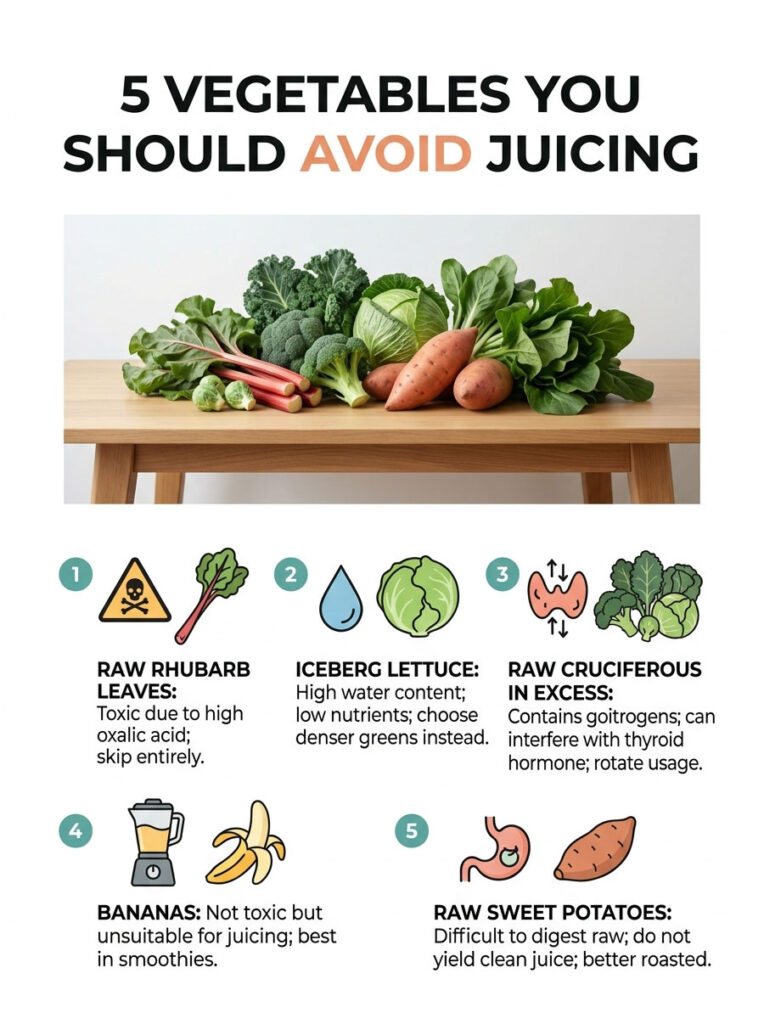
Most lists skip this part. They shouldn’t. Some popular vegetables hurt more than help when juiced.
1. Raw Rhubarb Leaves
The stalks are fine when cooked. The leaves are not. They contain dangerously high oxalic acid.
The FDA and US poison control centers list rhubarb leaves as toxic if consumed raw or juiced. Skip them entirely.
2. Iceberg Lettuce
Mostly water. Very low in nutrients compared to romaine, spinach, or chard.
You’ll dilute your juice without adding meaningful vitamins. Spend that volume on a higher-density green.
3. Raw Cruciferous in Excess
Raw broccoli, cauliflower, kale, and cabbage contain goitrogens. These compounds may interfere with thyroid hormone production in large daily amounts.
People with hypothyroidism should rotate these and avoid them daily in raw form. Lightly steaming reduces goitrogen levels.
4. Bananas
Bananas aren’t toxic, just wrong for juicers. They turn into mush and clog masticating augers.
Use them in smoothies, not juices.
5. Raw Sweet Potatoes
Tough starch and trypsin inhibitors make raw sweet potato hard on digestion. They also rarely yield clean juice.
Roast and eat them whole instead.
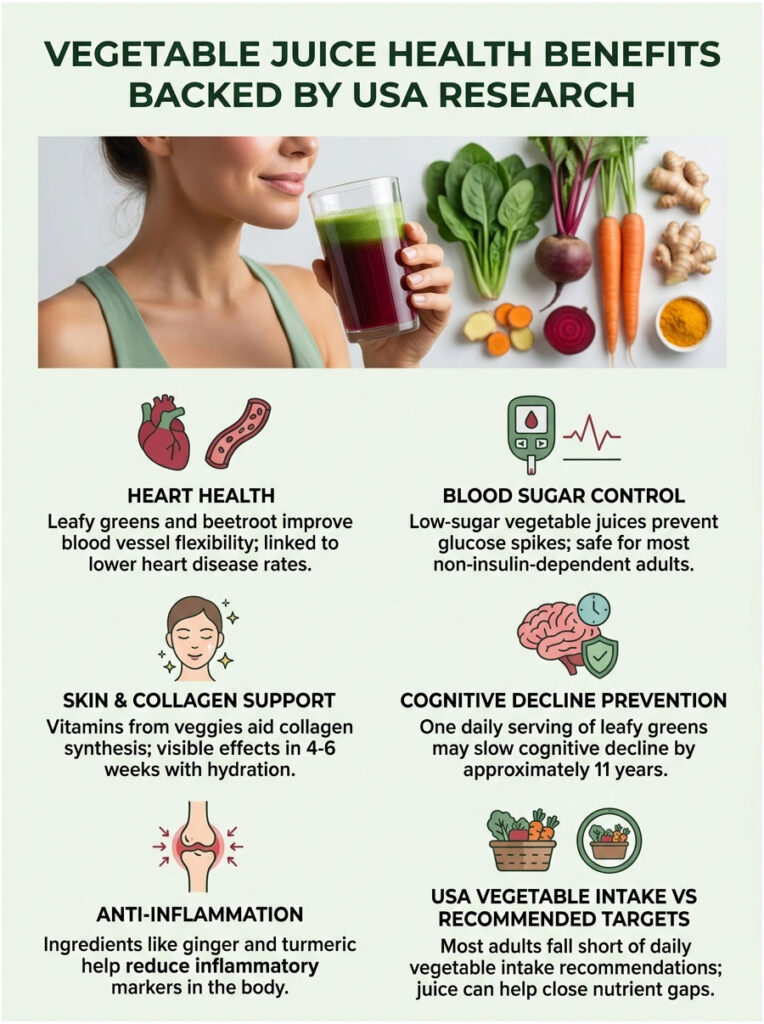
Vegetable Juice Health Benefits Backed by USA Research
Real benefits, real data. Each claim ties to a US source so you can verify rather than guess.
Heart Health
Beetroot and leafy greens supply nitrates that improve blood vessel flexibility. The American Heart Association connects daily leafy green consumption to lower rates of heart disease.
In cases reviewed by the HealthCareOnTime nutrition team, patients reporting daily green juice often show modest blood pressure improvements over 8 to 12 weeks alongside their other lifestyle changes.
Blood Sugar Control
Low-sugar vegetable juice (heavy on greens, light on fruit) avoids the glucose spikes of fruit-heavy drinks. The American Diabetes Association cautions against fruit-juice overload but supports vegetable-forward blends in moderation.
Patients booking HbA1c panels with HealthCareOnTime often ask if morning green juice is safe. For most non-insulin-dependent adults, it is, when fruit content stays minimal.
Skin and Collagen Support
Vitamins A, C, and silica from cucumber, carrot, and bell pepper feed collagen synthesis. Visible skin results typically appear after 4 to 6 weeks of daily intake, paired with hydration and sleep.
Our wellness reviewers see this same 4-to-6-week timeline play out in client check-ins again and again.
Cognitive Decline Prevention
A Rush University study cited widely by Harvard public health researchers found one daily serving of leafy greens slowed cognitive decline by an estimated 11 years in older adults. Juicing makes that single serving easy to hit.
Anti-Inflammation
Ginger, turmeric, and dark leafy greens reduce inflammatory markers like C-reactive protein. Mayo Clinic lists these foods on its anti-inflammatory eating guide.
Table 2: USA Vegetable Intake vs Recommended Targets
| Population Segment | Current Intake (cups) | USDA Recommended (cups) | Gap | Source |
| US Adults (overall) | 1.4 | 2.5 | 1.1 | CDC, 2022 |
| Adult Women (19-50) | 1.5 | 2.5 | 1.0 | USDA Dietary Guidelines |
| Adult Men (19-50) | 1.6 | 3.0 | 1.4 | USDA Dietary Guidelines |
| Teens (14-18) | 1.0 | 2.5-3.0 | 1.5-2.0 | CDC NHANES Data |
| Adults 60+ | 1.5 | 2.0-2.5 | 0.5-1.0 | DGA 2020-2025 |
| Children (6-11) | 0.9 | 1.5-2.5 | 0.6-1.6 | CDC YRBS Survey |
Only about 10% of US adults meet the daily target. That leaves most Americans with a measurable nutrient gap that vegetable juice can help close.
7 Powerful Vegetable Juice Recipes for Specific Health Goals
Each recipe makes one 12 oz glass and uses a standard masticating juicer. Adjust ingredients to taste.
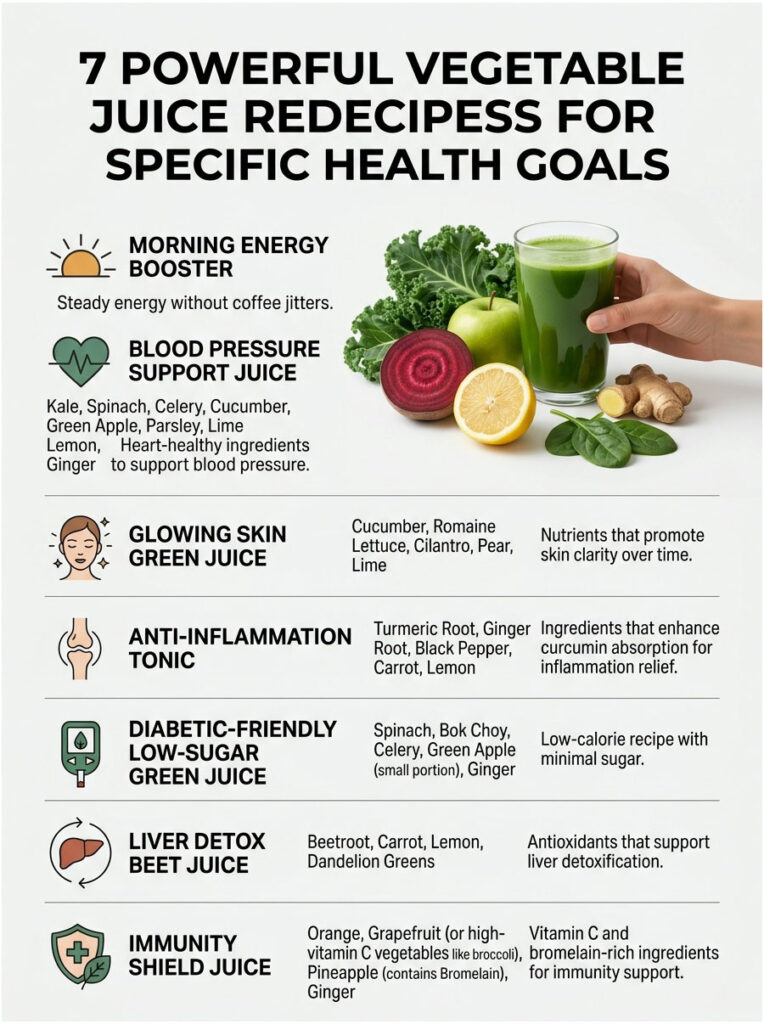
Recipe 1: Morning Energy Booster
Ingredients: 2 large carrots, 1 medium apple, 1 inch ginger root, 1/2 lemon (peeled), 1 cup spinach. About 130 calories.
Drink within 20 minutes of waking for steady morning energy without coffee jitters.
Recipe 2: Blood Pressure Support Juice
Ingredients: 1 medium beetroot, 1 cup kale, 1 medium apple, 1/2 cucumber, 1 inch ginger. About 145 calories.
Best taken 2 to 3 times per week as part of a heart-healthy plan reviewed with your physician.
Recipe 3: Glowing Skin Green Juice
Ingredients: 1/2 large cucumber, 1 cup spinach, 1 green apple, 1/2 lemon, 1/2 inch ginger, 5 mint leaves. About 110 calories.
The silica, vitamin C, and chlorophyll combination supports skin clarity within 4 to 6 weeks of daily use.
Recipe 4: Anti-Inflammation Tonic
Ingredients: 2 carrots, 1 inch turmeric root, 1 inch ginger, 1/2 orange, pinch of black pepper. About 120 calories.
Black pepper boosts curcumin absorption by up to 2,000% per NIH research.
Recipe 5: Diabetic-Friendly Low-Sugar Green Juice
Ingredients: 1 cup spinach, 1/2 cucumber, 1 stalk celery, 1/2 green apple, 1/2 lemon, 1 inch ginger. About 65 calories with minimal sugar load.
Always discuss with your endocrinologist if you take insulin.
Recipe 6: Liver Detox Beet Juice
Ingredients: 1 medium beet, 2 carrots, 1 cup parsley, 1/2 lemon, 1 inch ginger. About 135 calories.
Beet betalains and parsley antioxidants both support liver phase 2 detoxification pathways.
Recipe 7: Immunity Shield Juice
Ingredients: 1 red bell pepper, 1 orange (peeled), 1 inch ginger, 1/2 lemon, 1/2 cup pineapple. About 150 calories.
Heavy on vitamin C and bromelain for cold-and-flu season support.
How to Prepare Vegetables for Juicing (8 Pro Steps)
- Wash thoroughly under cold running water for at least 30 seconds, following FDA produce-handling guidance. Use a brush on firm produce.
- Peel only when needed for waxed cucumbers, citrus, ginger skin, and pineapple. Most other peels stay on for extra fiber.
- Remove pits and large seeds from apples, peaches, and avocados to protect your juicer blades.
- Cut to fit your chute in 1 to 2 inch pieces. Wide-feed juicers handle larger chunks just fine.
- Layer leafy greens between firm produce like apples and carrots. The auger pulls greens through cleaner that way.
- Juice in this order: soft fruits first, then leafy greens, then hard root vegetables to flush the screen.
- Drink within 20 minutes for peak nutrient retention. Refrigerate leftovers in airtight glass jars for up to 72 hours.
- Rinse the juicer immediately after use. Dried pulp is the number one cause of juicer wear and tear.
10 In-House Tips for Maximum Nutrient Retention
The HealthCareOnTime nutrition team’s working protocol after years of juicing trials with US clients:
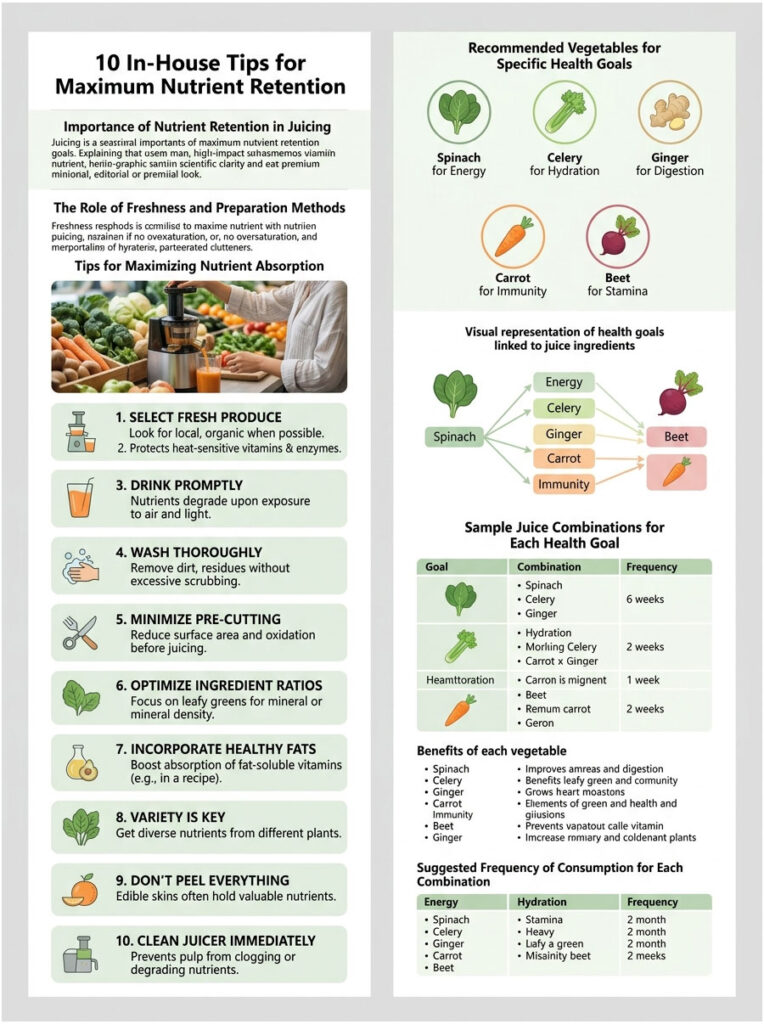
- Choose a cold-press masticating juicer over a centrifugal model for higher yield and less oxidation
- Always include a green leaf, a root, and a citrus or ginger zinger in every glass
- Sip slowly to mimic chewing and trigger digestive enzymes
- Drink on a mostly empty stomach for fastest nutrient uptake
- Limit fruit to 30% of total volume to keep sugar load in check
- Rotate your greens weekly to avoid heavy-metal accumulation from any single source
- Store leftover juice in glass, never plastic, and fill jars to the top to limit air exposure
- Add a teaspoon of chia or flax seed to each glass for soluble fiber back-up
- Skip juice fasts longer than 3 days unless you’re medically supervised
- Track how you feel for 30 days. The best routine is the one you stick with
Table 3: If Your Goal Is X, Drink Y
| Health Goal | Recommended Vegetables | Sample Combo | Frequency |
| Weight loss | Spinach, celery, cucumber, lemon | Spinach + cucumber + celery + lemon + ginger | Daily, 8-12 oz |
| Lower blood pressure | Beetroot, kale, celery | Beet + kale + apple + ginger | 3x per week, 8 oz |
| Glowing skin | Cucumber, carrot, bell pepper | Cucumber + carrot + lemon + mint | 5x per week, 12 oz |
| Energy boost | Carrot, ginger, beetroot | Carrot + apple + ginger + turmeric | Daily morning, 12 oz |
| Immunity | Red bell pepper, broccoli, ginger | Red pepper + orange + ginger + lemon | Daily during cold season |
| Digestive health | Fennel, ginger, parsley | Fennel + cucumber + apple + ginger | 4x per week, 8 oz |
| Liver detox | Beetroot, parsley, cilantro | Beet + carrot + parsley + lemon | 2x per week, 8 oz |
Common Juicing Mistakes Beginners Make
Even fans of fresh juice trip on the same six issues. The HealthCareOnTime medical team sees these come up again and again in client conversations:
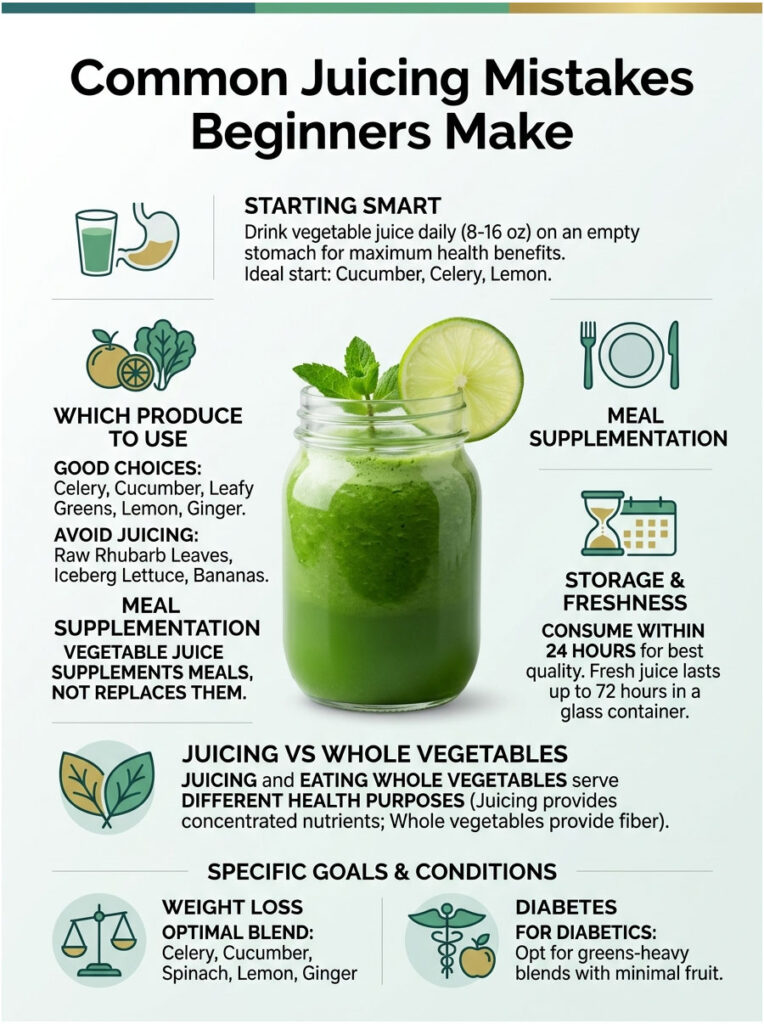
- Loading too much fruit and turning a vegetable juice into a sugar bomb
- Drinking the same blend daily and missing nutrient diversity
- Using produce past peak freshness, which can cut vitamin content in half
- Skipping the morning hydration window when juices absorb best
- Juicing on a full stomach and slowing nutrient uptake
- Replacing entire meals with juice instead of supplementing them
Fix these and your results jump within weeks.
Frequently Asked Questions
Is it OK to drink vegetable juice every day?
Yes, for most healthy adults, an 8 to 16 oz glass of mostly vegetable juice daily is safe and beneficial. Rotate your greens weekly to avoid concentration of any single oxalate or heavy-metal source. People on blood thinners should consult their cardiologist about consistent vitamin K intake from kale and spinach.
Which vegetable juice is best on an empty stomach?
A simple cucumber, celery, and lemon blend works best on an empty stomach. It hydrates without overwhelming digestion and absorbs within 20 minutes. Avoid heavy beet or carrot juice first thing if you have blood sugar sensitivity, since these contain natural sugars that can cause a quick rise.
What vegetables should you avoid juicing?
Skip raw rhubarb leaves (toxic oxalic acid), iceberg lettuce (low nutrient density), and bananas (clog juicers). Limit raw cruciferous vegetables like broccoli and kale if you have thyroid issues. Raw sweet potatoes are hard to digest and rarely yield clean juice. Always wash produce per FDA guidance before juicing.
Can vegetable juice replace a meal?
No. Vegetable juice should supplement meals, not replace them. Juices lack adequate protein, fat, and fiber for sustained satiety and balanced blood sugar. Use juice alongside a meal containing protein, healthy fat, and whole grains. Meal-replacement juicing can lead to muscle loss and rebound hunger.
How long does fresh vegetable juice last in the fridge?
Fresh juice from a masticating cold-press juicer lasts up to 72 hours in an airtight glass container. Centrifugal juicer output oxidizes faster and should be consumed within 24 hours. Always store juice in glass, fill to the brim, and refrigerate immediately. Discard if you notice off odors or color changes.
Is juicing better than eating raw vegetables?
Neither is better; they serve different purposes. Whole vegetables provide fiber for digestion and steady blood sugar. Juice delivers concentrated micronutrients quickly, ideal when appetite is low or for closing nutrient gaps. The strongest health outcomes come from combining both, not picking one. Use juice as a supplement to a vegetable-rich plate.
Can diabetics drink vegetable juice?
Yes, with care. Stick to greens-heavy blends like spinach, cucumber, celery, kale, and lemon, with minimal fruit (no more than 1/2 small apple). Avoid carrot or beet-only juice in large servings, as they raise glucose. Test your blood sugar 1 hour after your first juice to track personal response, and discuss with your endocrinologist.
What is the healthiest vegetable juice for weight loss?
A celery, cucumber, spinach, lemon, and ginger blend is the lowest-calorie, highest-nutrient combination for weight loss support. Around 60 to 80 calories per 12 oz, it’s hydrating, suppresses snack cravings, and provides micronutrients without sugar load. Pair it with a calorie-controlled meal plan and exercise for best results.
How much vegetable juice should I drink per day?
Most US dietitians recommend 8 to 16 oz of fresh vegetable juice daily for healthy adults. Going beyond 24 oz daily may unbalance fiber intake and concentrate certain compounds like oxalates. Always drink water alongside juice to stay hydrated and support kidney filtering of concentrated nutrients.
Do you need a special juicer for leafy greens?
For best results with kale, spinach, parsley, and wheatgrass, choose a masticating (slow-press) or twin-gear juicer. Centrifugal juicers struggle with leafy greens and waste more produce. Brands commonly used in US households include Hurom, Omega, Nama, and Tribest. Expect to spend $150 to $500 for a quality model.
Can kids drink vegetable juice safely?
Yes, in smaller portions of 4 to 6 oz daily for children ages 4 and up. Use sweeter, milder blends like carrot, apple, cucumber, and a touch of ginger. Avoid celery and beet juice in high amounts for very young children. Consult your pediatrician for kids under 4 or those with health conditions.
Is store-bought vegetable juice as healthy as homemade?
Most store-bought juices, including pasteurized brands, lose enzymes and some heat-sensitive vitamins during processing. They often contain added sugars, sodium, or fruit-juice fillers. Cold-pressed bottled juices from refrigerated sections (Suja, Evolution Fresh) come closest to homemade, but freshly juiced at home remains the gold standard for nutrient retention.
Disclaimer:
The information in this guide is for educational purposes only and is not medical advice. Always consult your physician, registered dietitian, or qualified healthcare provider before starting a juicing routine, especially if you have diabetes, kidney disease, thyroid conditions, or take prescription medications. HealthCareOnTime makes no claims to diagnose, treat, cure, or prevent any disease.
References
- CDC: Adults Meeting Fruit and Vegetable Intake Recommendations, MMWR Report
- USDA FoodData Central, Nutrient Database
- USDA Seasonal Produce Guide
- USDA Dietary Guidelines for Americans 2020-2025
- FDA: 7 Tips for Cleaning Fruits and Vegetables
- NIH Office of Dietary Supplements, Magnesium Fact Sheet
- American Heart Association: Leafy Greens and Heart Health
- American Diabetes Association: Fruit and Diabetes
- Mayo Clinic: Anti-Inflammatory Diet Guidance
- Harvard T.H. Chan School of Public Health: Tomatoes Profile
- Rush University MIND Diet Cognitive Study, NIH PubMed
- Environmental Working Group: Dirty Dozen Produce List