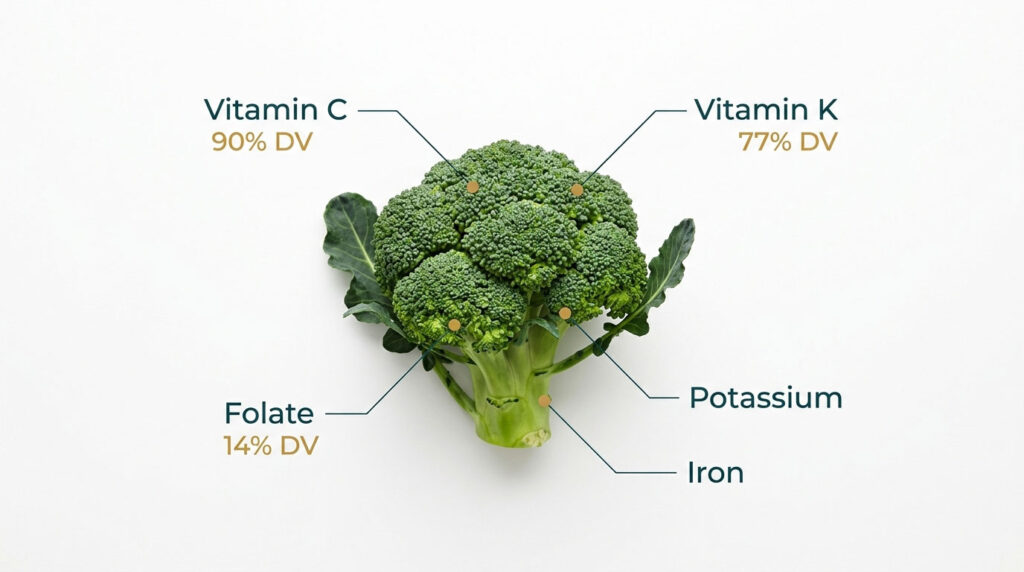
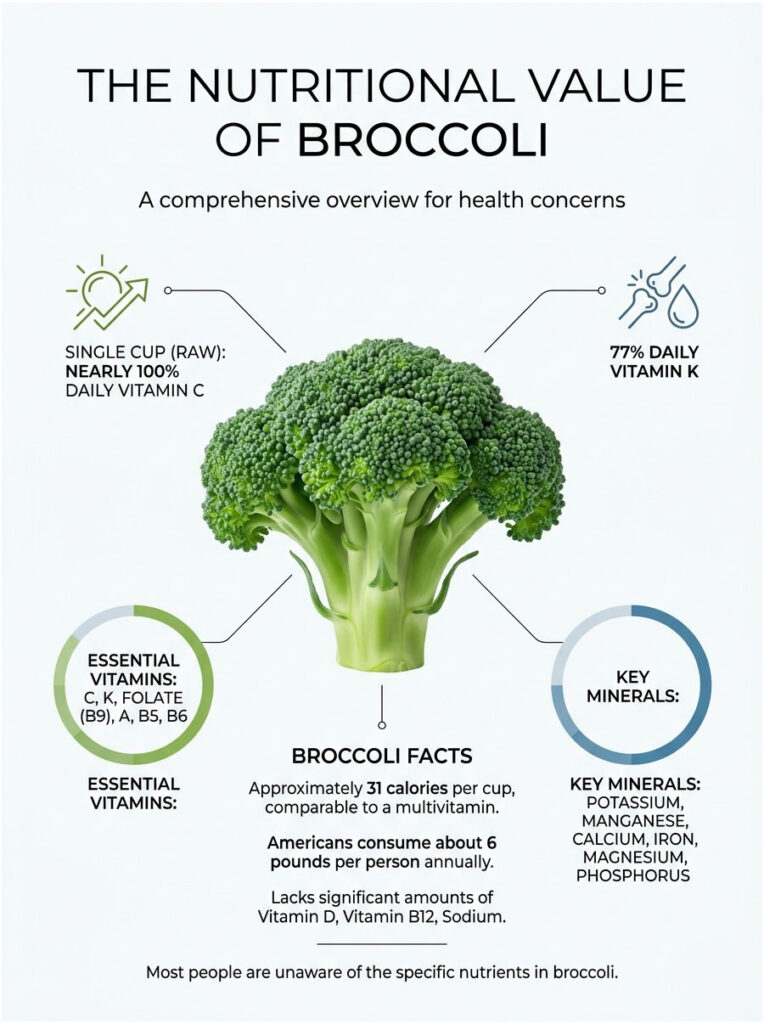
Pin this number to the fridge: a single cup of raw broccoli covers nearly the entire day’s recommended vitamin C and about 77 percent of your vitamin K, according to USDA FoodData Central. That’s roughly 31 calories doing the work of a multivitamin slice. Americans eat about 6 pounds of broccoli per person each year, making it the 5th best-selling vegetable in the US. Most people still have no idea exactly what they’re getting in each cup. So here’s the full chart: every vitamin, every mineral, and what each one actually does.
Table of Contents
Quick Answer: Broccoli is rich in vitamin C, vitamin K, folate (B9), vitamin A, and B vitamins B5 and B6. It also delivers minerals including potassium, manganese, calcium, iron, magnesium, and phosphorus. According to USDA FoodData Central, 1 cup of raw broccoli covers about 90 percent of the daily value for vitamin C and 77 percent for vitamin K. Broccoli does not contain vitamin D, vitamin B12, or sodium in meaningful amounts.
At a Glance
- 1 cup of raw broccoli has 81 mg vitamin C (90% DV) and 92 mcg vitamin K (77% DV)
- Broccoli supplies 13 vitamins and 11 minerals according to USDA data
- Calorie cost: 31 calories per cup raw, 55 per cup cooked
- Steamed broccoli retains the most vitamins; boiled retains the least
- Frozen broccoli is roughly equal to fresh on most nutrients
- Broccoli has no vitamin D or vitamin B12; pair with eggs, salmon, or fortified foods
- Warfarin users should keep weekly vitamin K intake steady, not zero
Broccoli Nutrition at a Glance
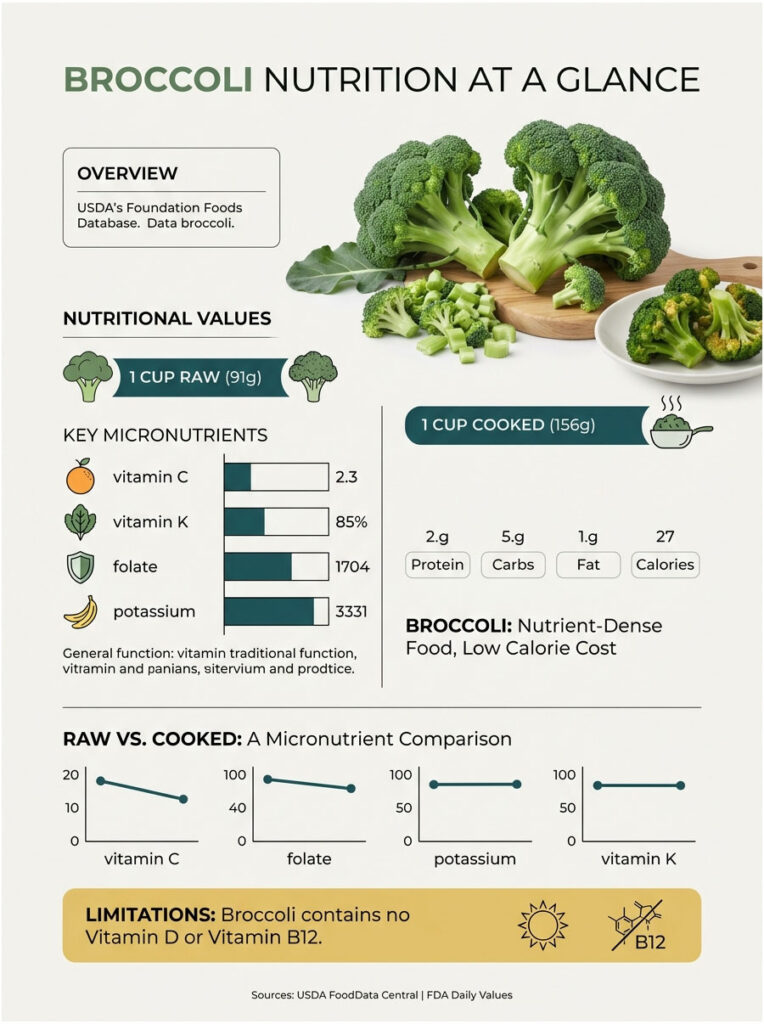
The USDA’s Foundation Foods database lists raw broccoli (item ID 170379) with values verified through laboratory analysis. Those numbers are the gold standard in US nutrition, used by FDA label-makers and major US health organizations. Everything below traces back to that USDA dataset, scaled to the serving sizes Americans actually use.
What’s in 1 Cup of Raw Broccoli (USDA-Verified)
One cup of chopped raw broccoli weighs about 91 grams. It delivers 31 calories, 2.6 grams of protein, 6 grams of carbs (2.4 grams from fiber), and almost no fat. The standout micronutrients: 81 mg vitamin C, 92 mcg vitamin K, 57 mcg folate, 288 mg potassium, and small but useful amounts of iron, magnesium, and manganese.
What’s in 1 Cup of Cooked Broccoli (USDA-Verified)
Cooked changes the math slightly. One cup of boiled chopped broccoli weighs about 156 grams (heavier because it absorbs water) and delivers 55 calories, 3.7 grams of protein, 65 mg vitamin C, 110 mcg vitamin K, and about 168 mcg folate. The vitamin C drops compared with raw (heat-sensitive), the vitamin K rises (more concentrated per cup), and the folate roughly triples because you’re eating more grams of food.
Table 1: Complete Vitamin and Mineral Chart for Broccoli
| Nutrient | Per 100g Raw | Per 1 Cup Raw (91g) | % Daily Value (DV) | Primary Function |
| Calories | 34 kcal | 31 kcal | 2% | Energy |
| Protein | 2.82 g | 2.6 g | 5% | Tissue building, enzymes |
| Total Fiber | 2.6 g | 2.4 g | 9% | Gut health, blood sugar control |
| Vitamin C | 89.2 mg | 81 mg | 90% | Immunity, collagen, antioxidant |
| Vitamin K | 101.6 mcg | 92 mcg | 77% | Blood clotting, bone strength |
| Folate (B9) | 63 mcg | 57 mcg | 14% | DNA synthesis, fetal development |
| Vitamin A (RAE) | 31 mcg | 28 mcg | 3% | Vision, immune function |
| Vitamin B6 | 0.175 mg | 0.16 mg | 9% | Brain, mood, metabolism |
| Pantothenic Acid (B5) | 0.573 mg | 0.52 mg | 10% | Energy production, hormone synthesis |
| Riboflavin (B2) | 0.117 mg | 0.11 mg | 8% | Energy metabolism, eye health |
| Niacin (B3) | 0.639 mg | 0.58 mg | 4% | Energy metabolism, nerve function |
| Thiamin (B1) | 0.071 mg | 0.065 mg | 5% | Carb metabolism, nerve function |
| Vitamin E | 0.78 mg | 0.71 mg | 5% | Antioxidant, skin and immune health |
| Choline | 18.7 mg | 17 mg | 3% | Brain, liver, nervous system |
| Potassium | 316 mg | 288 mg | 6% | Blood pressure, muscle and nerve function |
| Calcium | 47 mg | 43 mg | 3% | Bone strength, muscle, nerve signaling |
| Phosphorus | 66 mg | 60 mg | 5% | Bone health, energy storage |
| Magnesium | 21 mg | 19 mg | 5% | Muscle, nerve, blood sugar |
| Iron | 0.73 mg | 0.66 mg | 4% | Oxygen transport, energy |
| Zinc | 0.41 mg | 0.37 mg | 3% | Immunity, wound healing |
| Manganese | 0.210 mg | 0.19 mg | 8% | Bone formation, antioxidant enzymes |
| Selenium | 2.5 mcg | 2.3 mcg | 4% | Thyroid, antioxidant |
| Vitamin D | 0 IU | 0 IU | 0% | Not present in broccoli |
| Vitamin B12 | 0 mcg | 0 mcg | 0% | Not present in broccoli |
Sources: USDA FoodData Central; FDA Daily Values per the updated Nutrition Facts label.
Patients booking nutrition consultations through HealthCareOnTime often ask which single vegetable comes closest to a multivitamin. The honest answer: broccoli isn’t quite a multivitamin (no D, no B12), but for a 31-calorie cost it’s about as close as one food gets.
The Standout Vitamins in Broccoli
Most of the chart’s “high” numbers come from a small group of vitamins doing serious work. These are the ones that put broccoli in every US dietary guideline.
Vitamin C, the Antioxidant Powerhouse
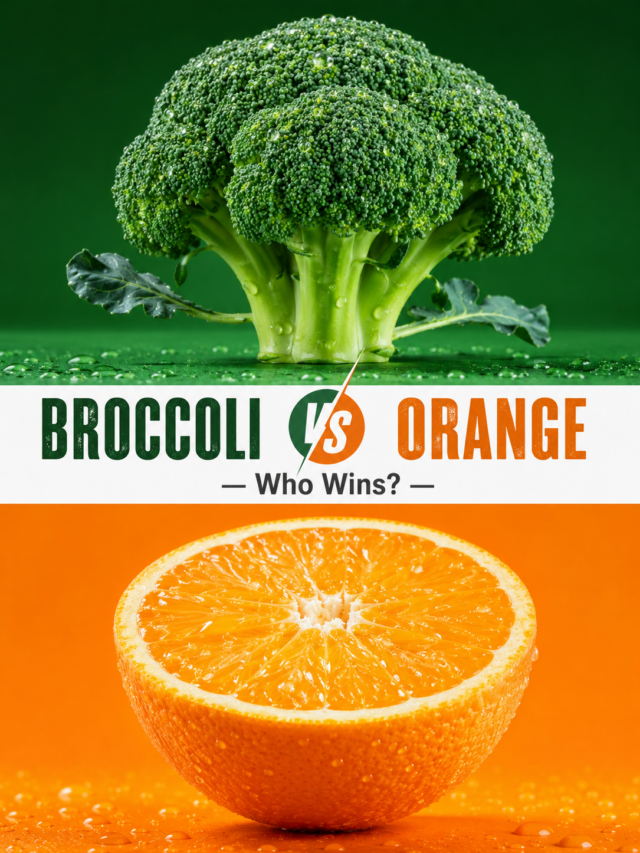
Vitamin C is broccoli’s headline act. One cup of raw broccoli delivers 81 mg, covering 90 percent of the daily value. Per gram, broccoli actually packs more vitamin C than an orange. The NIH Office of Dietary Supplements sets the RDA at 90 mg daily for adult men and 75 mg for adult women.
Vitamin C is water-soluble, so your body doesn’t store it. You need a steady daily supply. It supports immune function, helps form collagen for skin and connective tissue, and acts as a powerful antioxidant. Smokers, pregnant women, and people recovering from surgery need extra.
Vitamin K, the Bone and Blood-Clotting Star
Broccoli is one of the top US food sources of vitamin K1 (phylloquinone). One cup delivers 92 mcg, about 77 percent of the daily value of 120 mcg. The NIH flags vitamin K as essential for blood clotting and bone mineralization through its role in activating osteocalcin.
Patients on warfarin (brand name Coumadin or Jantoven) should not avoid broccoli; they should keep their weekly intake steady. Sudden swings in vitamin K throw off blood-thinning medication. Our medical reviewers consistently advise warfarin users to aim for the same approximate broccoli serving each week rather than going on and off it.
Folate (Vitamin B9), Critical for Pregnancy
Folate prevents neural tube defects when consumed before and during early pregnancy. One cup of raw broccoli has 57 mcg, about 14 percent of the daily value. Pregnant women in the US need at least 600 mcg daily according to the CDC, so broccoli is a useful contributor but not a sole source.
In tests booked through HealthCareOnTime, women planning pregnancy commonly pair daily broccoli servings with a 400 to 800 mcg folic acid supplement, the combo the CDC and ACOG recommend.
Vitamin A and Beta-Carotene
Raw broccoli provides 31 mcg of vitamin A (retinol activity equivalents) per 100 grams, mostly as beta-carotene. That covers about 3 percent of the daily value for adults. Beta-carotene supports eye health and immune function. The compound is fat-soluble, so eating broccoli with a small drizzle of olive oil or a slice of avocado boosts absorption significantly.
B Vitamins (B1, B2, B3, B5, B6)
Broccoli brings the whole B-complex bench: thiamin (B1), riboflavin (B2), niacin (B3), pantothenic acid (B5), and pyridoxine (B6). Each helps convert food into usable energy and supports nerve function. One cup won’t fully cover any single B vitamin’s daily value, but the cumulative contribution stacks up, especially for vegetarians and vegans who lean on plant sources.
Think of it like building a paycheck out of small deposits. A cup of broccoli alongside a serving of beans, a slice of whole-grain toast, and an egg covers most B-vitamin needs without supplements.
Vitamin E and Choline
Vitamin E shows up at 0.78 mg per 100 grams, about 5 percent of the daily value. It’s a fat-soluble antioxidant that protects cells from oxidative damage. Choline is a lesser-known but essential nutrient, with 18.7 mg per 100 grams, supporting brain function, liver health, and prenatal neural development. The choline content alone makes broccoli a smart addition to a pregnancy diet.
The Mineral Profile of Broccoli
Broccoli’s mineral side is quieter than its vitamin side, but it still pulls real weight. Across patients we serve, broccoli is often treated as just a vegetable side dish without recognition of the mineral spread it brings to a meal.
Potassium, Manganese, and Phosphorus
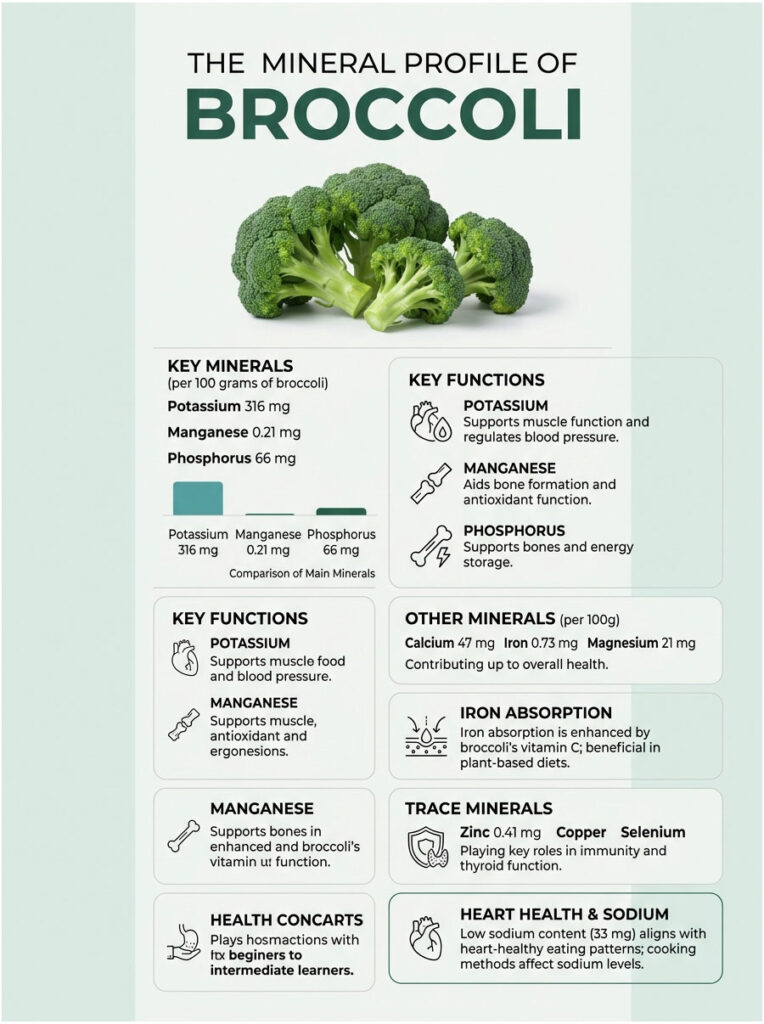
Potassium leads the lineup at 316 mg per 100 grams (about 6 percent DV per cup). It balances sodium, supports muscle and nerve function, and helps regulate blood pressure. The American Heart Association flags low potassium intake as a major contributor to US hypertension rates.
Manganese (0.21 mg per 100 g) supports bone formation and antioxidant enzyme function. Phosphorus (66 mg per 100 g) works alongside calcium in bone structure and energy storage molecules. Most US adults already get enough phosphorus from dairy and meat, so broccoli’s contribution here is a quiet bonus rather than a critical source.
Calcium, Iron, and Magnesium
Broccoli delivers 47 mg of calcium per 100 grams. Modest, but useful for people who skip dairy. The iron content sits at 0.73 mg per 100 grams, plant-based (non-heme) iron, which pairs neatly with broccoli’s own vitamin C to boost absorption. A bowl of beef-and-broccoli stir-fry stacks heme iron from the beef on top of broccoli’s plant iron and amplifies absorption for both.
Magnesium comes in at 21 mg per 100 grams, supporting more than 300 enzymatic reactions in the body, including blood sugar control and muscle relaxation.
Zinc, Copper, and Selenium
These trace minerals appear in small but biologically active amounts. Zinc (0.41 mg per 100 g) supports immunity and wound healing. Copper aids iron absorption. Selenium (2.5 mcg per 100 g) is an antioxidant cofactor tied to thyroid function. Broccoli alone won’t max any of these, but combined across a daily plate of varied foods, every little bit counts.
Sodium and the Heart-Healthy Profile
Raw broccoli has just 33 mg of sodium per 100 grams. That low-sodium profile fits the DASH and Mediterranean eating patterns recommended by US cardiologists. Here’s the catch: boiling broccoli in salted water jumps the sodium to roughly 262 mg per 100 grams. Steam or microwave without added salt to keep the heart-friendly numbers intact, then season at the table with a squeeze of lemon or a sprinkle of black pepper instead.
Vitamins Broccoli Does Not Provide
Calling broccoli a “complete” food isn’t quite right. A few notable nutrients are missing from the chart entirely.
No Vitamin D (and What to Pair With Broccoli to Fix That)
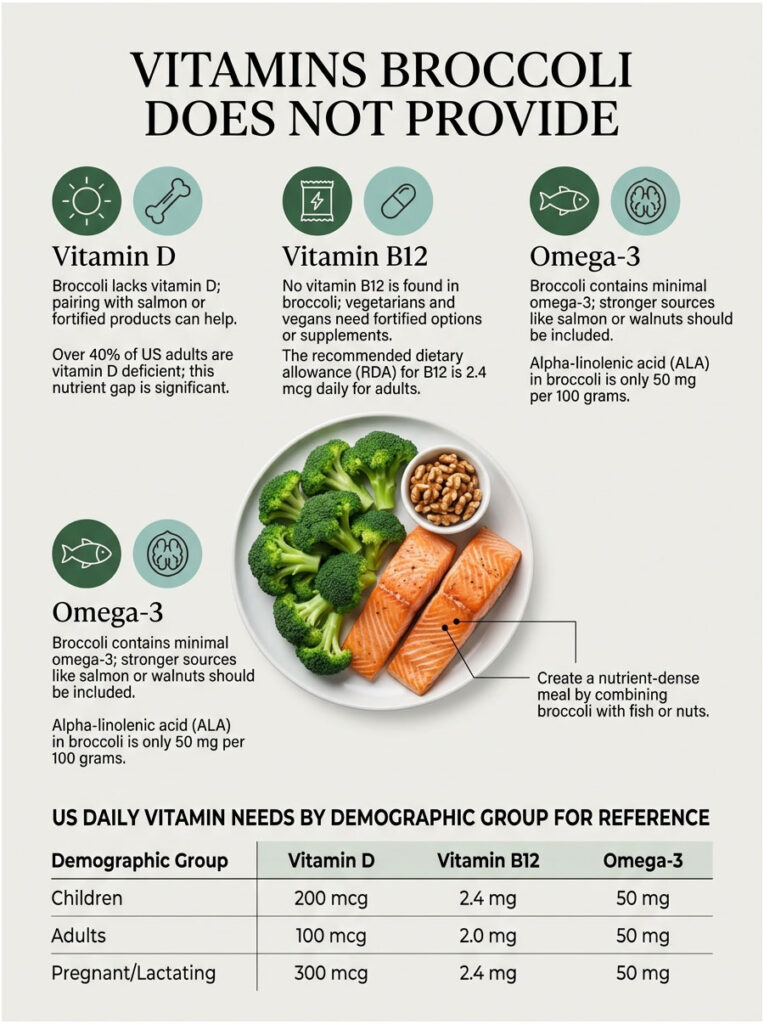
Broccoli has zero vitamin D. The NIH reports more than 40 percent of US adults are vitamin D insufficient, so this gap matters. Pair broccoli with salmon, sardines, fortified milk, fortified orange juice, or 10 to 30 minutes of midday sun exposure for the D side of the equation. A salmon-and-broccoli sheet-pan dinner is one of the most efficient nutrient-stacking meals on the US dinner-rotation list.
No Vitamin B12
B12 lives almost exclusively in animal foods and fortified products. Broccoli has none. Vegetarians and vegans need fortified cereals, nutritional yeast, fortified plant milks, or a B12 supplement to cover this gap. The NIH RDA for adults is 2.4 mcg daily.
Minimal Omega-3 (and How to Stack It With Salmon or Walnuts)
Broccoli contains a small amount of alpha-linolenic acid (ALA), the plant form of omega-3, roughly 50 mg per 100 grams. That’s nutritionally meaningful only when stacked with stronger sources like wild salmon, sardines, flaxseed, chia seeds, or walnuts. A broccoli-salmon plate is one of the most nutrient-dense combinations a US dinner can serve.
Table 2: US Daily Vitamin Needs by Demographic Group
| Vitamin | Adult Men (19-50) | Adult Women (19-50) | Pregnant Women | Children (4-8) |
| Vitamin C | 90 mg | 75 mg | 85 mg | 25 mg |
| Vitamin K | 120 mcg | 90 mcg | 90 mcg | 55 mcg |
| Folate (B9) | 400 mcg DFE | 400 mcg DFE | 600 mcg DFE | 200 mcg DFE |
| Vitamin A | 900 mcg RAE | 700 mcg RAE | 770 mcg RAE | 400 mcg RAE |
| Vitamin D | 600 IU (15 mcg) | 600 IU (15 mcg) | 600 IU (15 mcg) | 600 IU (15 mcg) |
| Calcium | 1,000 mg | 1,000 mg | 1,000 mg | 1,000 mg |
| Iron | 8 mg | 18 mg | 27 mg | 10 mg |
Source: NIH Office of Dietary Supplements reference intakes.
How Cooking Changes Broccoli’s Vitamins
The way you cook broccoli can either preserve or destroy a meaningful share of its nutrients. The biggest losses come from water-soluble vitamins like C and the B complex, plus heat-sensitive compounds like sulforaphane.
Raw Broccoli, Maximum Vitamin C
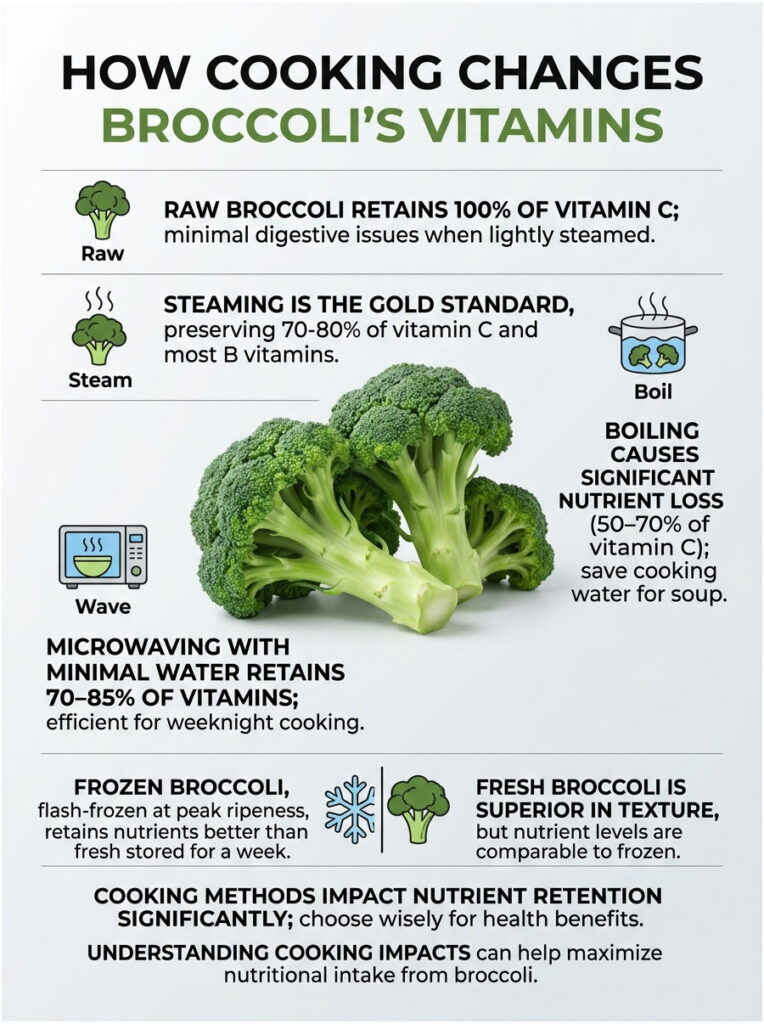
Raw broccoli retains 100 percent of its vitamin C. That cup-and-a-quarter tossed onto a salad is the most efficient delivery vehicle for vitamin C broccoli offers. Patients commonly ask us if raw broccoli is “harder on the stomach.” It can be for some people, since cruciferous vegetables ferment in the gut and produce gas. Lightly steaming for 2 to 3 minutes cuts the digestive load while keeping nearly all the vitamin C intact.
Steamed Broccoli, Best Overall Retention
Steaming is the gold-standard cooking method for nutrient preservation. Research summarized by Healthline and Cleveland Clinic shows steamed broccoli holds onto roughly 70 to 80 percent of its vitamin C, most of its B vitamins, and nearly all its vitamin K. Three to four minutes of steam, just until the florets turn bright green, hits the sweet spot.
Boiled Broccoli, Significant Loss
Boiling is the worst option from a vitamin-retention standpoint. Water-soluble vitamins (C, folate, the B complex) leach into the cooking water and get poured down the drain. Studies cited by Foodstruct show vitamin C losses of 50 to 70 percent during a typical 5 to 7 minute boil. If you have to boil broccoli, save the water for soup base.
Microwaved Broccoli, Surprisingly Good
Microwaving with a small splash of water in a covered dish performs surprisingly close to steaming. Cooking time is short, water exposure minimal, and nutrient retention sits in the 70 to 85 percent range across most vitamins. For weeknight US cooking, microwave broccoli is one of the most efficient nutrient-dense options on the menu.
Frozen vs. Fresh Broccoli
Frozen broccoli is harvested at peak ripeness and flash-frozen within hours. That locks in nutrients better than fresh broccoli that’s been sitting in a Costco bin for a week. USDA data shows frozen and fresh broccoli end up within roughly 5 to 10 percent of each other on most vitamin and mineral measures. Frozen wins on convenience and consistency; fresh wins on texture.
Broccoli vs. Other Leafy Greens and Cruciferous Vegetables
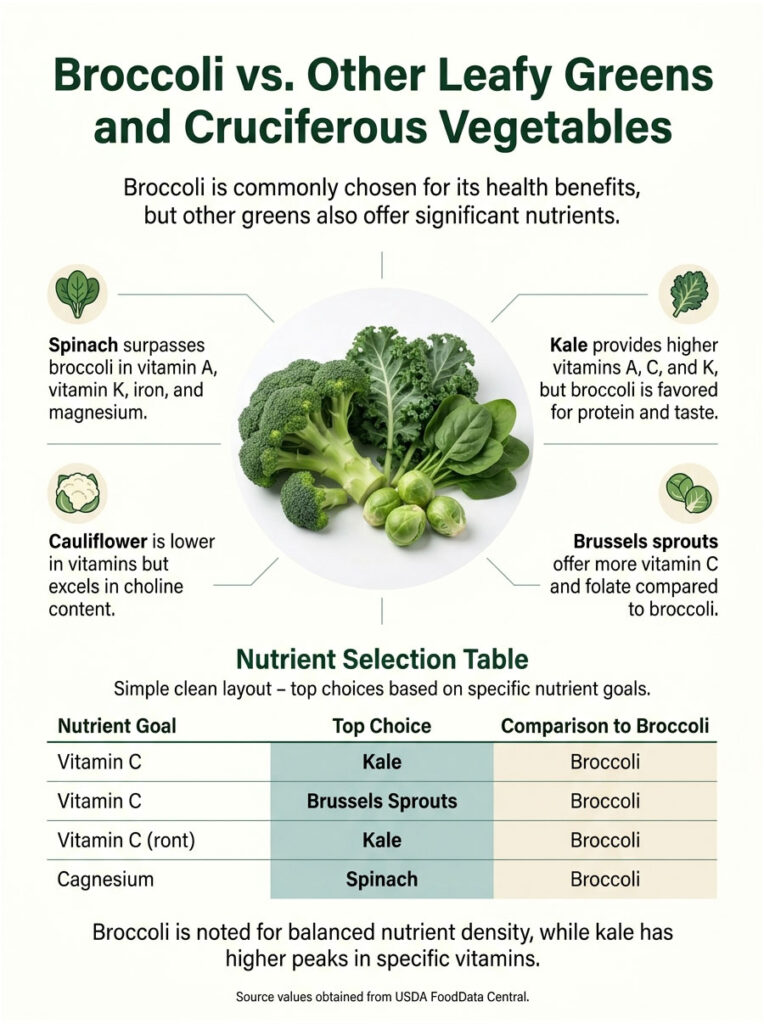
People often default to broccoli because they know it’s “healthy.” Some of its rivals are nutritionally similar, and some leave broccoli in the dust on specific nutrients.
Broccoli vs. Spinach
Spinach beats broccoli on vitamin A, vitamin K (yes, even higher), iron, and magnesium. Broccoli wins on vitamin C, fiber, and protein. Spinach also brings more oxalates, which matters if you’re prone to kidney stones.
Broccoli vs. Kale
Kale is broccoli’s tougher cousin. It edges out broccoli on vitamins A, C, and K per gram. Broccoli wins on protein, folate, and palatability for most US eaters. Kale’s sulforaphane content is roughly comparable. For a “best of both” approach, alternate between them through the week.
Broccoli vs. Cauliflower
Cauliflower is broccoli’s pale-skinned sibling. Lower vitamin K, lower vitamin C, and lower vitamin A, but similar fiber and similar mineral profile. Cauliflower wins on choline, useful for liver and brain health.
Broccoli vs. Brussels Sprouts
Brussels sprouts hit harder than broccoli on vitamin C (about 12 percent more per cup), and they offer slightly more folate. Broccoli wins on calcium and is generally easier to incorporate into a wider range of dishes.
Table 3: Which Vegetable to Choose Based on Your Nutrient Goal
| Nutrient You Want Most | Top Choice | Runner-Up |
| Vitamin C | Bell pepper (1 cup = 152 mg) | Broccoli (1 cup = 81 mg) |
| Vitamin K | Kale (1 cup = 472 mcg) | Spinach (1 cup raw = 145 mcg) |
| Folate | Spinach (1 cup raw = 58 mcg) | Broccoli (1 cup = 57 mcg) |
| Fiber | Brussels sprouts (1 cup = 3.3 g) | Broccoli (1 cup = 2.4 g) |
| Calcium | Kale (1 cup = 90 mg) | Broccoli (1 cup = 43 mg) |
| Sulforaphane (antioxidant) | Broccoli sprouts (10-100x florets) | Broccoli florets |
| All-around nutrient density | Broccoli (balanced profile) | Kale (higher peaks, more bitter) |
Source values: USDA FoodData Central.
How to Maximize Broccoli’s Vitamin Benefits
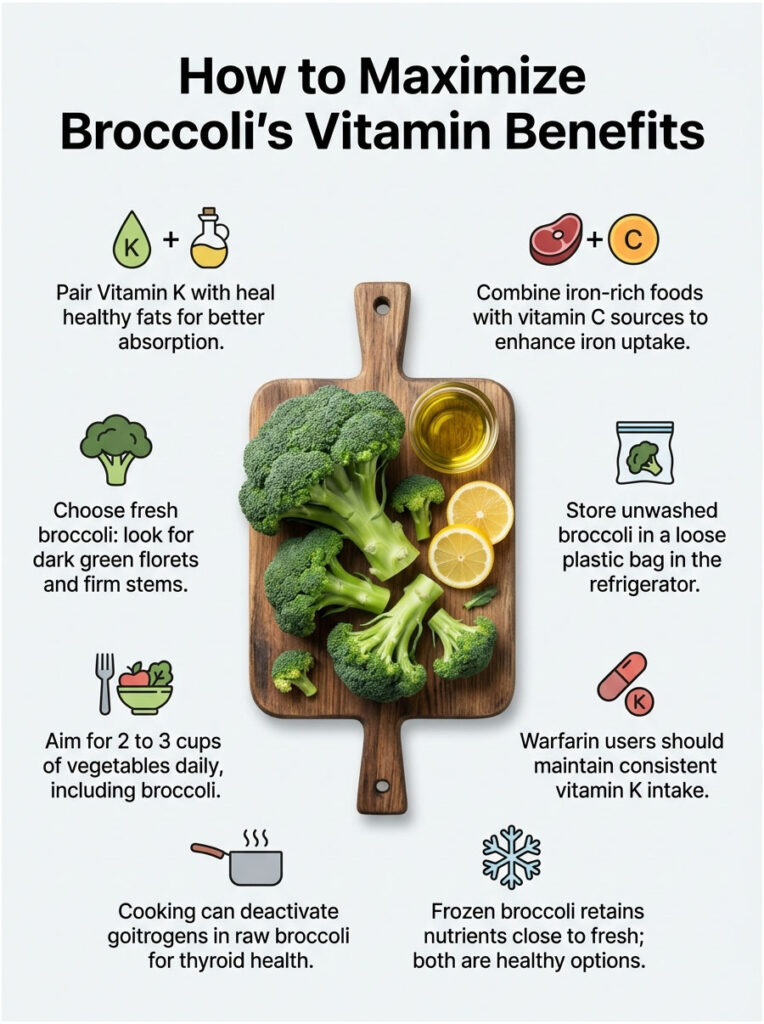
Eating broccoli is good. Eating broccoli the right way is better. A handful of small habits significantly increases what your body actually absorbs from each cup.
Pair Vitamin K With Healthy Fat
Vitamin K is fat-soluble, meaning it needs dietary fat for absorption. Drizzle 1 to 2 teaspoons of olive oil, add a slice of avocado, sprinkle with grated parmesan, or toss with a tablespoon of butter. Patients commonly ask us if oil “ruins” the health benefit. It does the opposite, doubling K and beta-carotene uptake.
Combine Iron With Vitamin C Sources
Broccoli has both, which is why iron from broccoli is more bioavailable than iron from spinach or other plant sources. The vitamin C in the same cup converts the iron into a more absorbable form. Eating broccoli with lentils, beans, or quinoa stacks the iron benefit further.
Buy, Store, and Prep for Best Retention
Pick broccoli with tight, dark green florets and a firm stem. Yellowing is a sign of lost vitamin C and chlorophyll. Store unwashed in a loose plastic bag in the refrigerator’s crisper drawer, where it stays fresh for 4 to 5 days. Wash just before cooking to avoid premature spoilage.
Serving Size and Daily Intake Recommendations
The USDA’s MyPlate recommends 2 to 3 cups of vegetables daily for most US adults, with a regular share coming from dark green vegetables like broccoli. One to two cups of cooked broccoli several times a week fits perfectly into this target.
Who Should Be Careful (Warfarin Users, Thyroid Conditions, Kidney Issues)
Warfarin users need consistent (not zero) vitamin K intake. People with poorly controlled thyroid disorders may want to limit raw broccoli, since raw cruciferous vegetables contain goitrogens that can affect iodine uptake (cooking deactivates this). Chronic kidney disease patients should monitor potassium intake and discuss broccoli portions with their nephrologist.
Frequently Asked Questions
What vitamin is broccoli highest in?
Vitamin C is broccoli’s standout nutrient. One cup of raw broccoli delivers 81 mg, about 90 percent of the daily value. Vitamin K runs a close second at 92 mcg per cup (77 percent DV). Both are significantly higher per calorie than most other US vegetables. Broccoli is one of the only foods that simultaneously delivers high amounts of both vitamins.
How much vitamin C does 1 cup of broccoli have?
One cup of raw chopped broccoli (about 91 grams) contains 81 mg of vitamin C, covering 90 percent of the FDA’s Daily Value of 90 mg. Cooked broccoli has slightly less (about 65 mg per cup) because heat and water destroy some vitamin C. For maximum vitamin C, eat broccoli raw or lightly steamed for 2 to 3 minutes.
Does broccoli have vitamin D?
No, broccoli contains zero vitamin D. Vitamin D is found in fatty fish (salmon, sardines, mackerel), egg yolks, fortified milk, fortified orange juice, fortified cereals, and is synthesized in your skin from sun exposure. Most plant foods, including all vegetables and grains, do not contain vitamin D. Pair broccoli with salmon for both vitamin K and vitamin D coverage.
Does broccoli have vitamin B12?
No, broccoli has no vitamin B12. B12 is found almost exclusively in animal products: meat, fish, poultry, eggs, dairy, and fortified foods like nutritional yeast and some plant milks. Vegetarians and vegans need a B12 supplement or fortified foods to meet the 2.4 mcg daily requirement. Broccoli does provide other B vitamins including B1, B2, B3, B5, B6, and folate.
Is raw broccoli more nutritious than cooked?
It depends on the nutrient. Raw broccoli has more vitamin C (heat-sensitive), more sulforaphane precursor (myrosinase enzyme), and more vitamin B complex. Cooked broccoli has more bioavailable carotenoids and is easier to digest. Lightly steamed broccoli (2 to 3 minutes) is often the best compromise, retaining about 80 percent of vitamin C while improving digestibility and absorption of fat-soluble vitamins.
How much broccoli should you eat per day?
The USDA’s MyPlate guidelines recommend 2 to 3 cups of vegetables daily for most US adults, with several weekly servings coming from dark green vegetables like broccoli. A practical target: 1 to 2 cups of cooked broccoli three to five times per week. People on warfarin should keep their weekly intake consistent rather than swinging high and low.
Is frozen broccoli as healthy as fresh?
Yes, often very close. Frozen broccoli is harvested at peak ripeness and flash-frozen within hours, locking in vitamins. USDA data shows frozen and fresh broccoli land within about 5 to 10 percent of each other on most vitamin and mineral measures. Fresh broccoli that has sat in a store for a week may actually have lower vitamin C than frozen. Convenience-wise, frozen wins.
Can broccoli replace a multivitamin?
No, broccoli alone can’t replace a multivitamin. It lacks vitamin D, vitamin B12, and provides limited amounts of vitamin A, iron, and calcium. Broccoli is an excellent contributor to overall nutrient intake, but a balanced diet of multiple vegetables, fruits, whole grains, lean proteins, and dairy or fortified alternatives, sometimes with targeted supplementation, is necessary to cover all essential nutrients.
Does broccoli have iron?
Yes, broccoli contains 0.73 mg of iron per 100 grams (about 4 percent of the DV per cup). It’s non-heme (plant-based) iron, which is less easily absorbed than animal iron. The good news: broccoli’s high vitamin C content significantly boosts iron absorption when eaten together. People with iron-deficiency anemia should pair broccoli with vitamin-C-rich foods or lean meat for best results.
Is broccoli better than kale for vitamins?
Each has strengths. Kale has more vitamin A, vitamin C, vitamin K, and calcium per cup than broccoli. Broccoli has more protein, more folate, and is generally more palatable for most US eaters. Both contain sulforaphane and other beneficial plant compounds. Rather than picking a winner, rotating between broccoli, kale, spinach, and other dark greens delivers the widest nutrient spread.
Can eating too much broccoli be harmful?
For most healthy adults, no. Excessive raw broccoli (multiple cups daily) can affect thyroid function in people with iodine deficiency due to goitrogens, which cooking deactivates. People on warfarin need consistent (not excessive) vitamin K intake. Some experience bloating or gas from the fiber and FODMAPs. Variety is key: rotate broccoli with other vegetables rather than eating only broccoli.
Do broccoli sprouts have more vitamins than regular broccoli?
Broccoli sprouts contain 10 to 100 times more sulforaphane (a powerful anti-inflammatory compound) than mature broccoli, but they’re not significantly higher in vitamins C, K, or folate. Sprouts are a concentrated source of phytonutrients, useful as a complement to regular broccoli. They’re commonly added to salads, sandwiches, and smoothies. Pregnant women should consult a doctor before eating raw sprouts.
Medical Disclaimer: This article is for educational purposes only and is not a substitute for professional medical or nutritional advice. Always consult a qualified healthcare provider regarding dietary changes, especially if you take blood-thinning medications, have thyroid conditions, kidney disease, or are pregnant. HealthCareOnTime does not provide diagnostic services through this content. Daily Value percentages are based on a 2,000-calorie reference diet; individual needs vary.
References
- USDA FoodData Central: Broccoli, Raw
- NIH Office of Dietary Supplements: Vitamin C Fact Sheet
- NIH Office of Dietary Supplements: Vitamin K Fact Sheet
- NIH Office of Dietary Supplements: Vitamin D Fact Sheet
- Centers for Disease Control and Prevention: Folic Acid Recommendations
- US Department of Agriculture / MyPlate: Vegetable Group Guidelines
- American Heart Association: Potassium and High Blood Pressure
- Healthline: Broccoli 101: Nutrition Facts and Health Benefits
- WebMD: Broccoli: Nutrition, Health Benefits, and How to Prepare
- Cleveland Clinic: Broccoli Nutrition and Benefits
- Foodstruct: Broccoli Nutrition Data
- Harvard T.H. Chan School of Public Health: Vegetables and Fruits