Walk through any American produce aisle and broccoli sits there, tree-shaped and green, looking like it’s been around forever. It hasn’t. The vegetable on your plate didn’t exist 2,500 years ago. Italian farmers built it, generation by generation, from a scraggly wild mustard plant. The story of how that happened, and what it means for your health, is more interesting than the broccoli itself.
Table of Contents
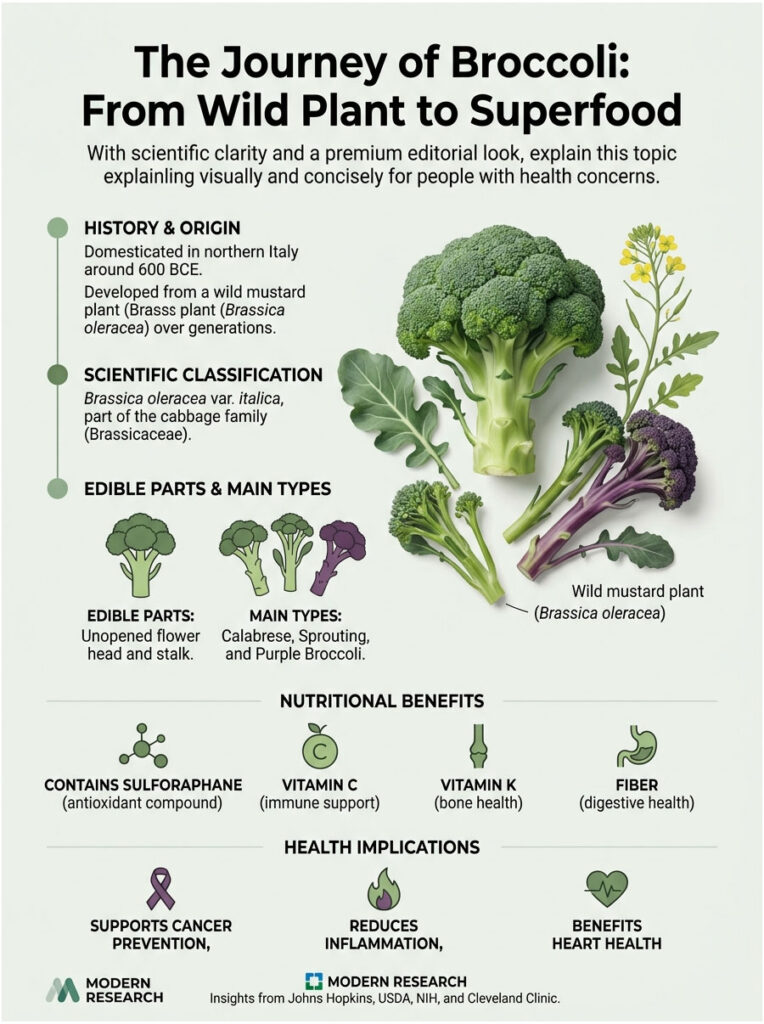
Quick Answer: Broccoli (Brassica oleracea var. italica) is a green flowering vegetable in the cabbage family (Brassicaceae), domesticated in northern Italy around 600 BCE. The edible part is the unopened flower head and stalk. It comes in three main types (Calabrese, sprouting, and purple) and earns superfood status from sulforaphane, vitamin C, vitamin K, and fiber that fight cancer, inflammation, and heart disease.
At a Glance
- Broccoli’s scientific name is Brassica oleracea var. italica, in the cabbage family.
- California grows 92% of the fresh broccoli sold in the United States, per USDA data.
- One cup of raw broccoli delivers 99% of the Daily Value of vitamin C and 85% DV of vitamin K.
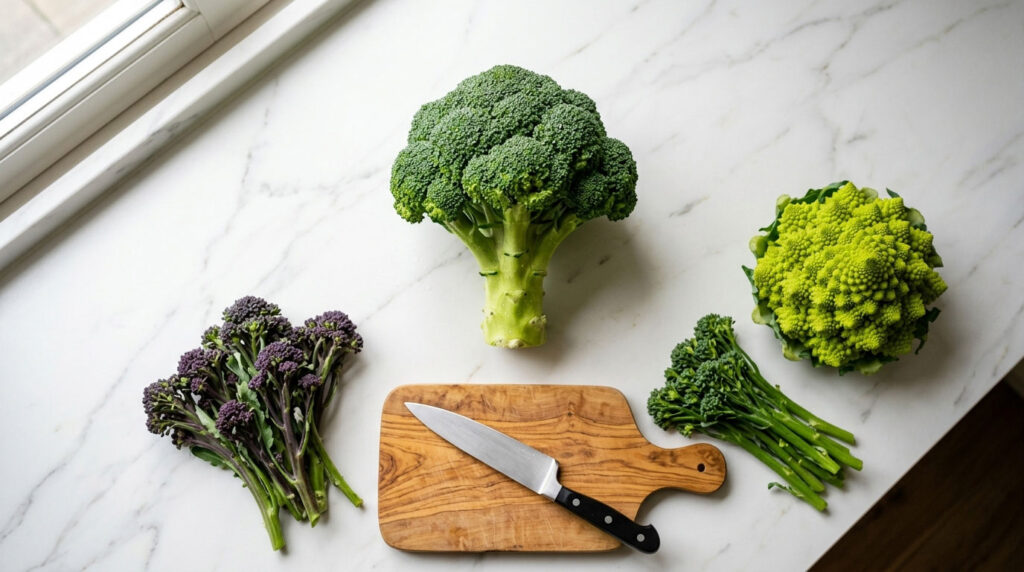
- Three main varieties exist: Calabrese (most common), sprouting (purple/white), and Romanesco.
- Broccoli sprouts contain 10 to 100 times more sulforaphane than mature heads.
- The average American eats about 6 pounds of broccoli per year.
- Steaming and microwaving preserve far more nutrients than boiling.
You probably grew up being told to finish your broccoli. What your parents likely didn’t know is that the science behind why it’s good for you has multiplied since the 1990s, when researchers at Johns Hopkins isolated sulforaphane and changed the conversation. Our nutrition reviewers have walked through the latest USDA, NIH, and Cleveland Clinic data so you get the full picture, from ancient Mediterranean fields to your dinner plate.
What Is Broccoli? The Plain-English Definition
Broccoli is a flowering vegetable belonging to the cabbage family. The part you eat is actually a tightly packed cluster of immature flower buds (called florets) attached to a thick edible stalk. If you let it grow past harvest, those green buds open into small yellow flowers that go to seed.
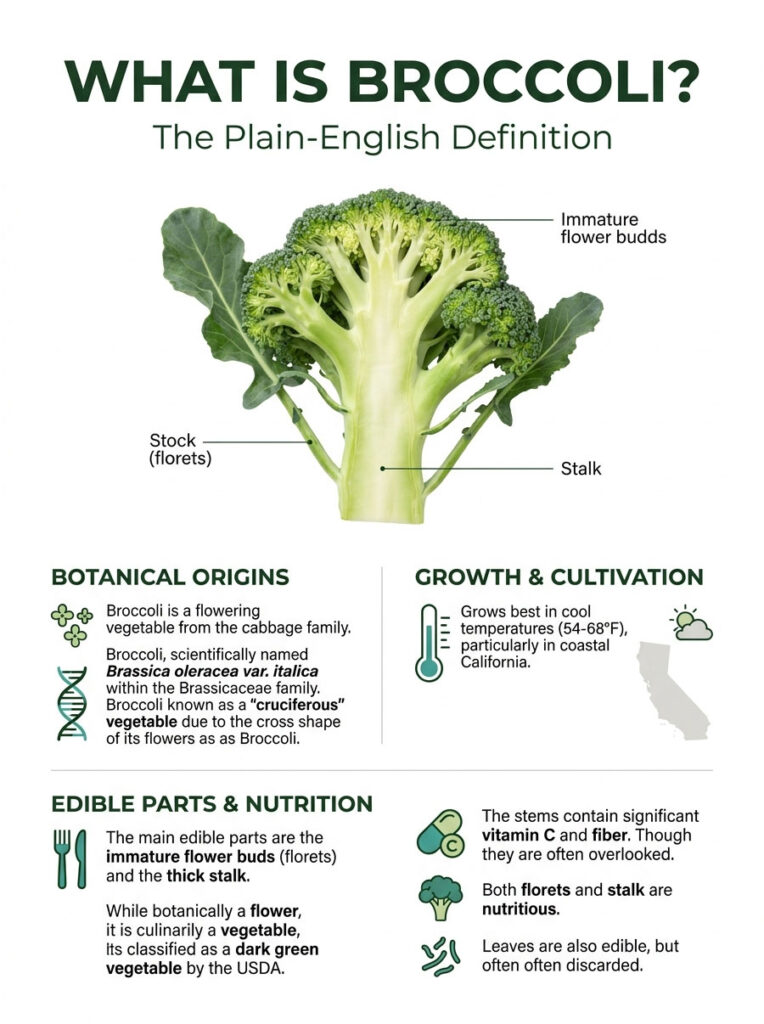
It’s a cool-season annual crop, meaning it grows best between 54 and 68 degrees Fahrenheit. That’s why California’s coastal valleys, where temperatures stay mild year-round, dominate American production.
Scientific Name and Botanical Identity
Botanists classify broccoli as Brassica oleracea var. italica, placing it in the genus Brassica within the family Brassicaceae. The species name (oleracea) is shared with cabbage, kale, cauliflower, Brussels sprouts, and kohlrabi. The variety name (italica) reflects the vegetable’s Italian heritage.
You’ll often hear broccoli called a cruciferous vegetable. That term comes from the Latin “crux,” meaning cross, because the four-petaled flowers form a cross shape. The older botanical family name (Cruciferae) is still used interchangeably with Brassicaceae.
What Part of Broccoli Do You Actually Eat?
The florets and stalk are the two main edible parts, and both are packed with nutrients. The leaves are also edible and used in some traditional cuisines, though Americans usually trim them off.
Stems contain similar amounts of vitamin C and fiber as florets, sometimes more. Tossing the stalk is the most common nutritional mistake our nutrition team sees in client food diaries. Peel the tough outer layer, slice it thin, and it cooks just like the florets.
Is Broccoli a Vegetable, Flower, or Both?
Botanically, broccoli is a flower (specifically, a cluster of unopened flower buds). Culinarily and legally, it’s a vegetable. The USDA classifies it as a dark green vegetable in MyPlate guidelines.
This dual identity matters more than it sounds. The flower-bud structure is exactly what concentrates so many bioactive compounds in such a small package, which is why a single cup punches well above its calorie weight.
Where Does Broccoli Come From? Origin and History
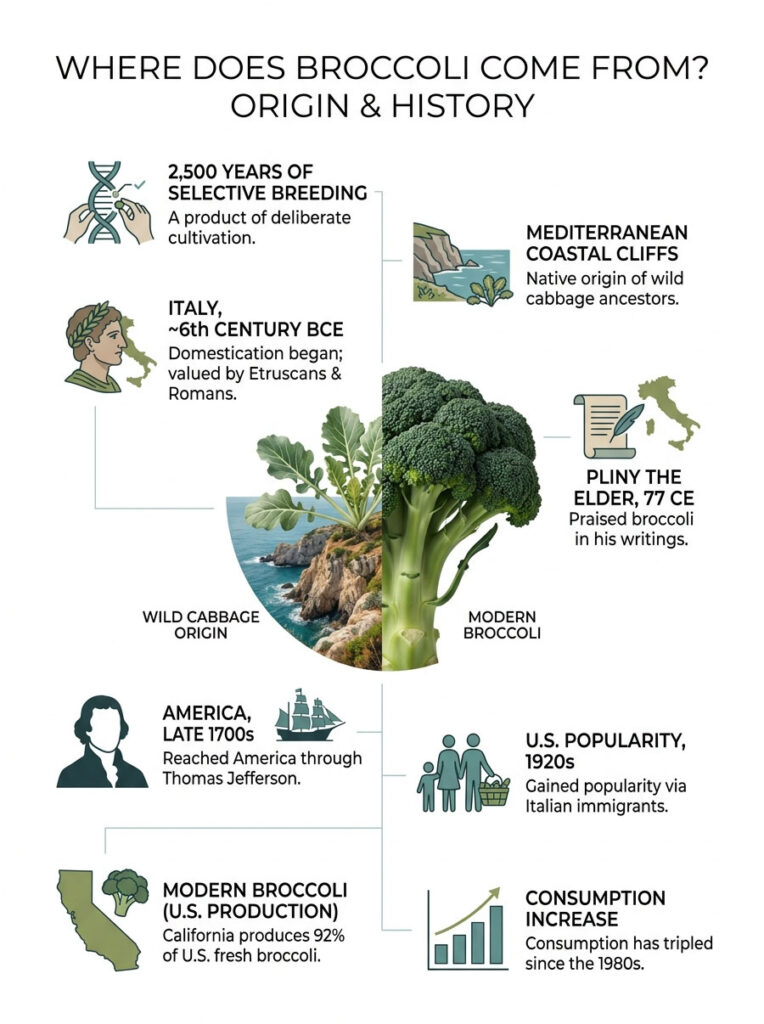
The broccoli we eat today is the product of roughly 2,500 years of selective breeding. Ancient farmers picked the wild plants with the largest, most flavorful flower clusters, saved their seeds, and repeated the process for thousands of seasons. The result is a vegetable so different from its ancestor that you’d never recognize the connection.
Ancient Mediterranean Roots
Broccoli traces back to wild cabbage (Brassica oleracea var. oleracea), a leafy plant native to the coastal cliffs of the northern Mediterranean. The wild form looks nothing like modern broccoli; it’s closer to a loose, leafy weed.
Domestication began around the 6th century BCE in what is now Italy. Farmers there selected plants with larger flower clusters, stronger stalks, and milder flavor. Over centuries, those traits intensified into the recognizable vegetable.
How the Romans and Etruscans Shaped It
The Etruscans, an ancient civilization in modern-day Tuscany, are often credited with the early cultivation work. Roman agricultural texts from the 1st century CE describe broccoli-like plants prized at banquets and used in early medicinal preparations.
Pliny the Elder mentioned broccoli in his “Natural History” (around 77 CE), praising its flavor and digestive benefits. By the time of the Roman Empire, the southern Italian peninsula and Sicily had become the heartland of broccoli development.
When Did Broccoli Reach America?
Broccoli arrived in the United States surprisingly late. Thomas Jefferson, an obsessive gardener at Monticello, ordered broccoli seeds from Italy in the late 1700s and grew them experimentally. They were a curiosity, not a staple.
For most of the 19th century, broccoli remained nearly unknown to American consumers. It only entered grocery stores after Italian immigrants started growing it commercially in the 1920s.
From Thomas Jefferson to D’Arrigo Brothers
The real turning point came in 1922, when brothers Stephano and Andrea D’Arrigo shipped the first commercial crate of broccoli from California to Boston. Italian-American communities embraced it immediately, and within a decade it spread to mainstream American kitchens.
Today, USDA data shows California produces 92% of the country’s fresh broccoli, with the Salinas Valley, Santa Maria Valley, and Monterey County leading. The average American now eats about 6 pounds per year, a figure that has roughly tripled since the 1980s.
The Broccoli Family: Brassicaceae and Cruciferous Vegetables
Broccoli isn’t a lone wolf. It belongs to one of the most nutritionally important plant families on Earth, sharing genes (and many health compounds) with a long list of vegetables you already eat.
What Is the Brassica Family?
Brassicaceae (also called Cruciferae) is a flowering plant family with roughly 4,000 known species. Members include vegetables, herbs, oilseed crops, and even ornamental flowers. What unites them is the four-petaled cross-shaped flower and the production of sulfur-containing compounds called glucosinolates.
Those glucosinolates are responsible for both the slight bitterness and most of the cancer-fighting reputation that cruciferous vegetables enjoy. They convert into active compounds (like sulforaphane) when the plant tissue is chewed or chopped.
The “Same Plant” Story: Brassica oleracea Explained
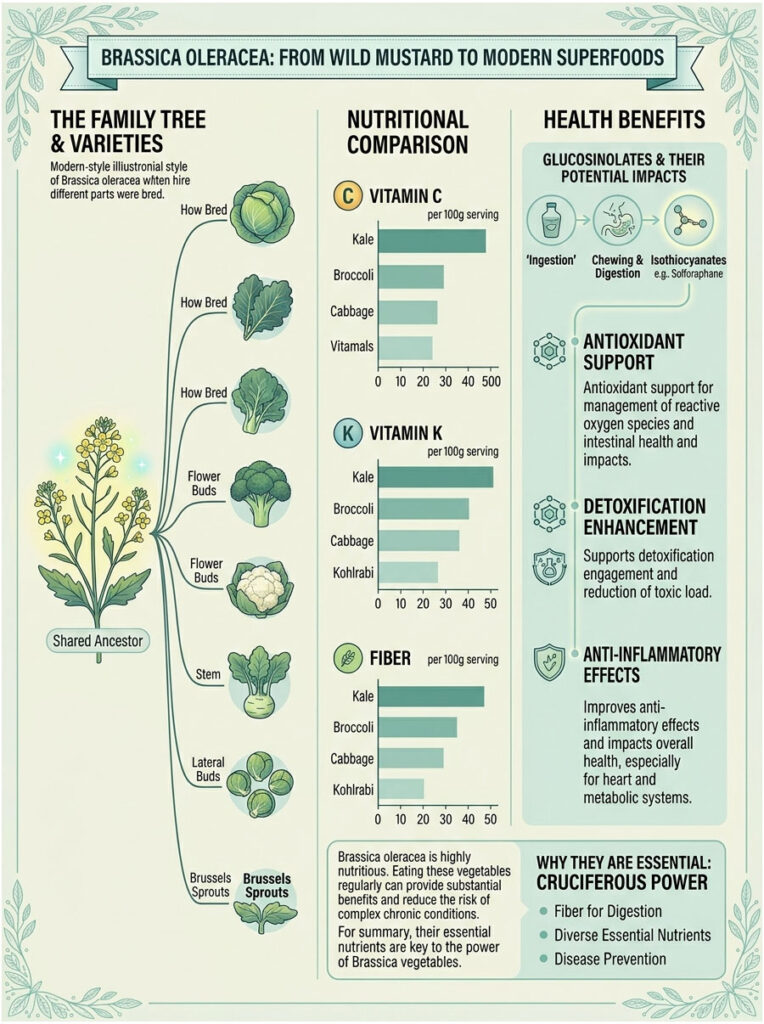
This part surprises most people. Broccoli, cabbage, kale, cauliflower, Brussels sprouts, kohlrabi, and collard greens are all the same species. They’re varieties of Brassica oleracea, the wild cabbage plant.
Live Science explains it well using a dog analogy: every breed from a Chihuahua to a Great Dane is the same species (Canis lupus familiaris). Similarly, broccoli and kale are like different “breeds” of one wild ancestor, each developed by selecting for a different plant part.
Broccoli’s Closest Cousins: Cabbage, Kale, Cauliflower, Brussels Sprouts
Each Brassica oleracea variety was bred for a specific feature. Cabbage came from selecting for tight terminal buds. Kale came from selecting for leaves. Cauliflower came from selecting for compact flower heads. Brussels sprouts came from selecting for lateral buds along the stem. Kohlrabi came from thickened stems.
Broccoli is the variety bred for a slightly looser flower cluster than cauliflower, harvested before the buds open. That single difference, captured by Italian farmers more than two thousand years ago, created the vegetable Americans now spend nearly $2 billion on annually.
Why Cruciferous Vegetables Matter for Health
Cruciferous vegetables collectively contain glucosinolates, isothiocyanates, indole-3-carbinol, and a long list of polyphenols. Multiple reviews indexed in PMC show these compounds support detoxification, reduce inflammation, and may lower the risk of several cancers.
Patients booking diabetic and metabolic panels through HealthCareOnTime are routinely advised to include cruciferous vegetables several times per week. Broccoli, kale, and cabbage rotate well together for variety without losing the family’s combined benefits.
Table 1: Broccoli vs Other Cruciferous Vegetables (per 1 cup, raw chopped)
| Nutrient / Trait | Broccoli | Cabbage | Cauliflower | Kale | Brussels Sprouts |
| Calories | 31 | 22 | 27 | 33 | 38 |
| Protein (g) | 2.5 | 1.1 | 2.1 | 2.9 | 3.0 |
| Fiber (g) | 2.4 | 2.2 | 2.1 | 1.3 | 3.3 |
| Vitamin C (% DV) | 99% | 54% | 77% | 134% | 124% |
| Vitamin K (% DV) | 85% | 68% | 14% | 684% | 195% |
| Sulforaphane source | High | Moderate | High | Moderate | Very High |
| Origin Region | N. Italy | Europe | Cyprus | Mediterranean | Belgium |
| Best Cooking Method | Steam, microwave | Raw, ferment | Roast, steam | Sauté, raw | Roast, sauté |
Source: USDA FoodData Central and peer-reviewed cruciferous vegetable analyses.
Types of Broccoli: A Complete Variety Guide
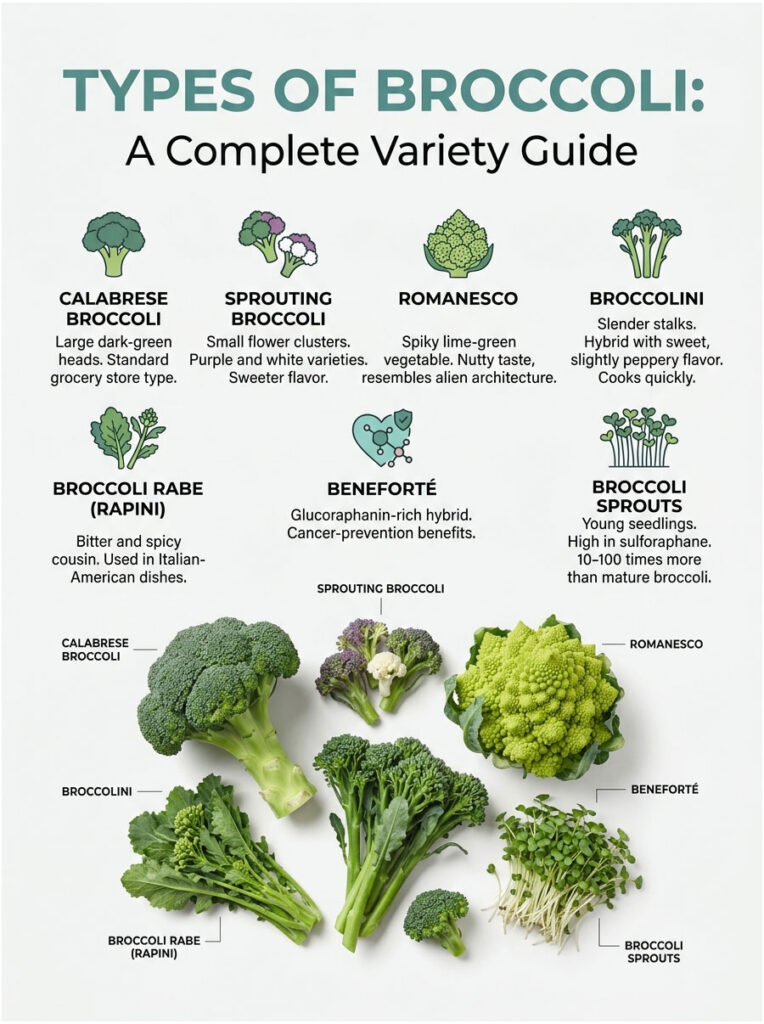
Most Americans assume there’s only one kind of broccoli. There are actually several, each with different appearance, flavor, and nutrient profile. Knowing the differences helps you shop smarter and rotate variety into your meals.
1. Calabrese Broccoli (The Standard American Type)
Calabrese is what 99% of US grocery stores sell when they label something simply “broccoli.” Named after Calabria, a region in southern Italy, it features large dark-green heads (4 to 8 inches across) sitting on a thick central stalk.
Most American Calabrese is grown in California, with smaller harvests from Arizona, Texas, and the Pacific Northwest. It peaks from October through April, though year-round California production keeps shelves stocked.
2. Sprouting Broccoli (Purple and White)
Sprouting broccoli looks dramatically different from Calabrese. Instead of one big head, it produces many small loose flower clusters on thin tender stalks. Both purple and white versions exist, with purple being more common in US markets.
The flavor is slightly sweeter and more delicate than Calabrese. You’ll find it more often at farmers markets, Whole Foods, and specialty grocers than at standard supermarkets.
3. Romanesco Broccoli (The Fractal Beauty)
Romanesco is the spiky lime-green vegetable that looks like alien architecture, with each floret repeating the spiral pattern of the whole head. Botanically it sits between broccoli and cauliflower (in the Botrytis cultivar group), but most chefs treat it as a broccoli variety.
The taste is nutty and milder than standard broccoli. Italian-American restaurants and high-end grocers stock it most reliably, and it’s increasingly common at Trader Joe’s and Sprouts Farmers Market.
4. Broccolini (The Hybrid Superstar)
Broccolini, sometimes marketed as “tenderstem broccoli,” is a deliberate cross between broccoli and Chinese broccoli (gai lan). It was developed in 1993 by the Sakata Seed Corporation and trademarked.
The long slender stalks topped with small loose florets cook quickly and have a sweet, slightly peppery taste. It costs more than Calabrese but cooks faster and pairs beautifully with garlic and lemon. Mann Packing is the dominant US producer.
5. Broccoli Rabe / Rapini (The Spicy Cousin)
Despite the name, broccoli rabe (rapini) is not actually broccoli. It belongs to the turnip family (Brassica rapa), but its leafy stalks topped with small floret clusters fooled enough cooks that the name stuck.
It tastes much more bitter and spicy than true broccoli, often used in Italian-American sausage dishes, pasta, and Philadelphia’s iconic roast pork sandwich.
6. Beneforté (The Glucoraphanin-Boosted Variety)
Beneforté is a hybrid broccoli created by crossing standard broccoli with a wild Sicilian Brassica relative (Brassica oleracea var. villosa). The result contains 2 to 3 times more glucoraphanin, the compound that converts to sulforaphane during digestion.
It’s available in select US grocery stores under brand labels, often at a small premium. For anyone specifically targeting cancer-prevention benefits, it’s worth seeking out.
7. Broccoli Sprouts (The Sulforaphane Powerhouse)
Broccoli sprouts are 3 to 4 day old broccoli seedlings, harvested before they grow into mature plants. Research from Johns Hopkins University found they contain 10 to 100 times more sulforaphane than mature broccoli, gram for gram.
You can buy them at most natural-foods grocers or grow them at home with a simple sprouting kit. Patients exploring functional-medicine approaches through HealthCareOnTime often add a small handful to salads or smoothies as a concentrated cruciferous boost.
Broccoli Nutrition Facts: What’s in One Cup
Broccoli is one of the most nutrient-dense vegetables per calorie that you can eat. The numbers below come straight from USDA FoodData Central and tell the story better than marketing claims ever could.
Calories, Carbs, Protein, and Fiber
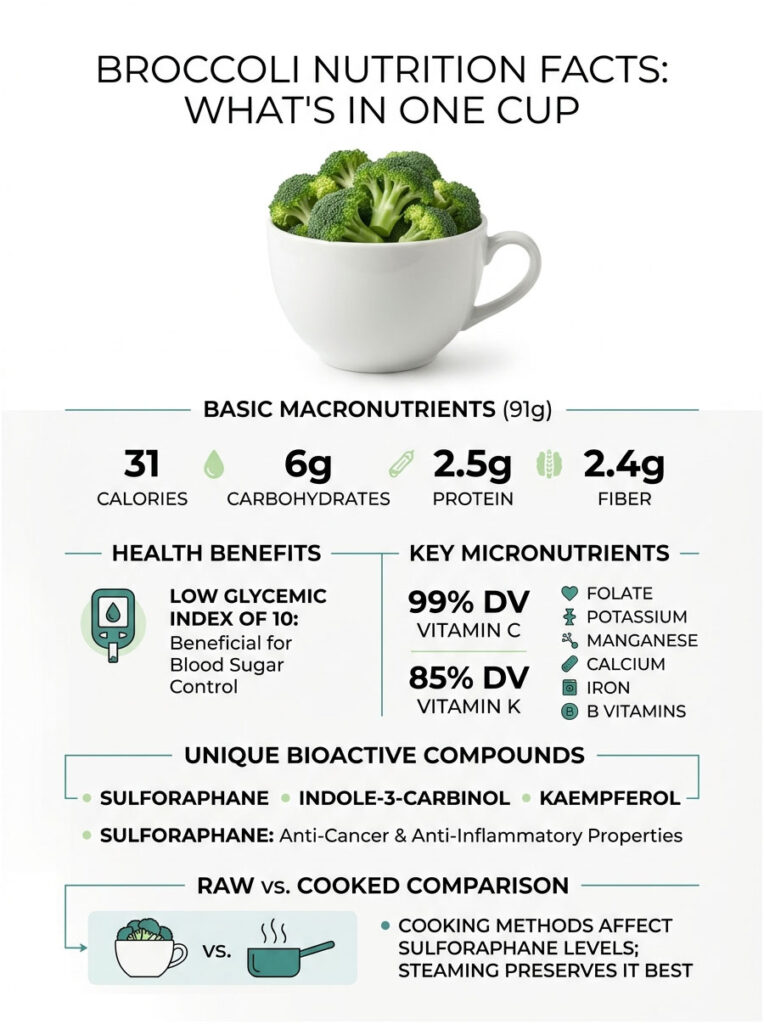
A 1-cup raw chopped serving (91 grams) provides 31 calories, 6 grams of carbohydrates, 2.5 grams of protein, and 2.4 grams of fiber. The carbs are mostly fiber and trace sugar, which is why broccoli has a glycemic index of just 10, exceptionally low for any food.
That low GI plus high fiber makes broccoli one of the most blood-sugar-friendly vegetables for diabetic and prediabetic Americans, a point our medical team emphasizes regularly.
Vitamins and Minerals That Make It a Powerhouse
The micronutrient profile is where broccoli truly earns its superfood status. One cup raw delivers 99% of the Daily Value of vitamin C (more than an orange) and 85% DV of vitamin K, plus meaningful folate, potassium, manganese, and small amounts of calcium, iron, and B vitamins.
The NIH Office of Dietary Supplements lists broccoli among the top food sources for vitamin C, which supports collagen production, immune function, and iron absorption.
Bioactive Compounds: Sulforaphane, Indole-3-Carbinol, Kaempferol
Beyond standard vitamins, broccoli contains a unique mix of bioactive plant compounds. Sulforaphane (formed from glucoraphanin during chewing or chopping) shows anti-cancer, anti-diabetic, and anti-inflammatory effects in dozens of clinical studies.
Indole-3-carbinol supports estrogen metabolism and may protect against hormone-related cancers. Kaempferol, a flavonoid, fights oxidative stress and inflammation. Together they explain why no synthetic supplement has matched broccoli’s full health profile.
Table 2: Broccoli Nutrition per 1 Cup (Raw vs Cooked) with USDA Source Data
| Nutrient | Raw (91 g) | Cooked (156 g) | % DV (Cooked) | Source Authority |
| Calories | 31 | 55 | 3% | USDA FoodData Central |
| Protein (g) | 2.5 | 3.7 | 7% | USDA FoodData Central |
| Fiber (g) | 2.4 | 5.1 | 18% | USDA FoodData Central |
| Vitamin C (mg) | 81 | 101 | 112% | NIH ODS |
| Vitamin K (mcg) | 92 | 220 | 183% | NIH ODS |
| Folate (mcg) | 57 | 168 | 42% | USDA FoodData Central |
| Potassium (mg) | 288 | 457 | 10% | USDA FoodData Central |
| Calcium (mg) | 43 | 62 | 5% | USDA FoodData Central |
| Iron (mg) | 0.66 | 1.05 | 6% | USDA FoodData Central |
| Sulforaphane (mg) | 60 to 80 | 25 to 60* | N/A | PMC reviews |
*Sulforaphane drops with prolonged boiling but is mostly preserved by steaming or microwaving.
Why Broccoli Is Called a Superfood: Science-Backed Benefits
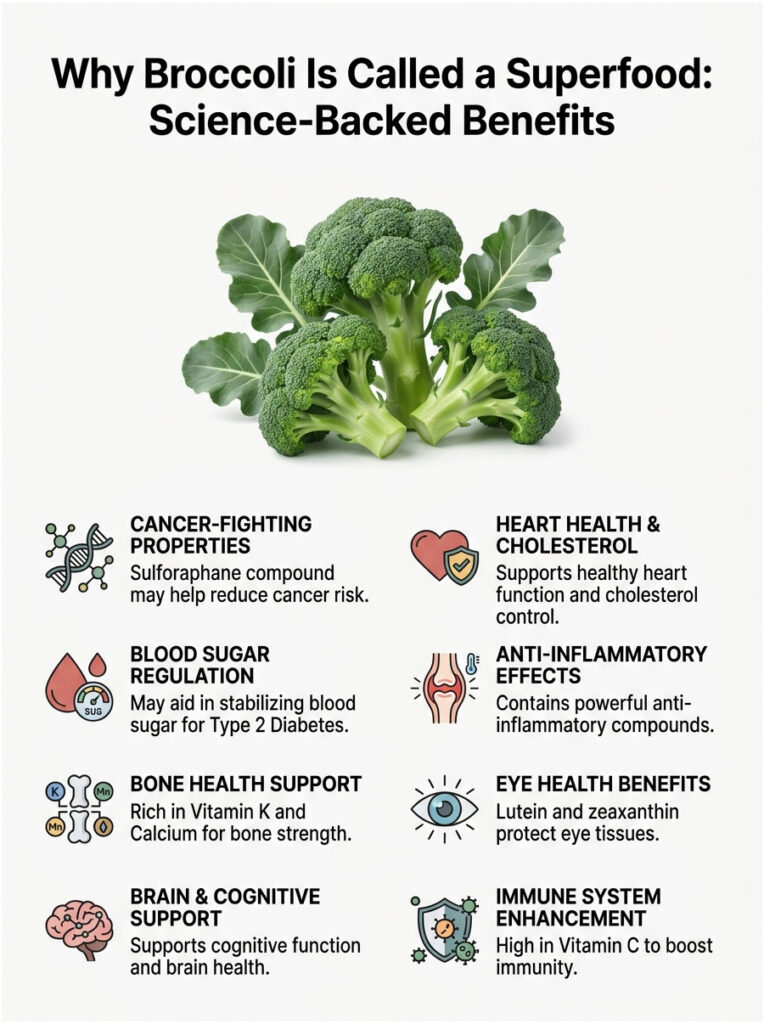
The word “superfood” is mostly marketing, but broccoli is one of the rare cases where the term actually fits. The benefits below are documented in peer-reviewed clinical research, not just nutrition blogs.
1. Cancer-Fighting Sulforaphane
Sulforaphane activates the body’s Nrf2 pathway, which switches on cellular detoxification and antioxidant defenses. Multiple studies indexed in PMC show it slows growth of cancer cells in lab models, particularly breast, prostate, colon, and skin cancers.
Human evidence is strongest for protective rather than therapeutic effects. Regular cruciferous intake correlates with lower cancer rates rather than treating existing cancer.
2. Heart Health and Cholesterol Control
Broccoli’s soluble fiber binds to bile acids, forcing the liver to pull cholesterol from the blood to make more. The result is lower LDL (“bad”) cholesterol and improved cardiovascular markers.
A 2016 study in the Journal of Nutrition also found that broccoli sprouts reduced triglyceride levels and improved liver fat in adults with non-alcoholic fatty liver disease.
3. Blood Sugar Regulation for Type 2 Diabetes
Broccoli sprouts (because of their concentrated sulforaphane) significantly reduce insulin resistance in adults with type 2 diabetes. A controlled trial in Science Translational Medicine documented an 11% drop in fasting blood glucose after 12 weeks of broccoli sprout extract.
For broader population context, the Cleveland Clinic notes regular broccoli consumption helps stabilize post-meal glucose curves thanks to its fiber and chromium content.
4. Anti-Inflammatory Power
Chronic low-grade inflammation underlies most modern diseases. Broccoli’s kaempferol, sulforaphane, and vitamin C work together to lower C-reactive protein and other inflammation markers in clinical trials.
In wellness consultations conducted through HealthCareOnTime, patients with elevated hs-CRP readings often see improvement after several weeks of consistently adding cruciferous vegetables to their plates.
5. Bone Health from Vitamin K and Calcium
Vitamin K activates osteocalcin, the protein that locks calcium into bone matrix. One cup of cooked broccoli provides 183% of the Daily Value of vitamin K plus modest calcium, magnesium, and phosphorus.
For postmenopausal women and seniors at risk of osteoporosis, broccoli is one of the most strategically valuable vegetables available, far ahead of leafy options like iceberg lettuce that contain virtually no vitamin K.
6. Eye Health (Lutein and Zeaxanthin)
Broccoli contains the carotenoids lutein and zeaxanthin, both concentrated in the retina and macula. They filter blue light and protect against oxidative damage that contributes to age-related macular degeneration and cataracts.
The American Academy of Ophthalmology lists cruciferous vegetables among the top foods for long-term vision protection.
7. Brain and Cognitive Support
Vitamin K, choline, and sulforaphane each play roles in brain health. Research at Johns Hopkins has explored sulforaphane as a potential complementary therapy in autism spectrum disorder and schizophrenia, with promising preliminary results.
While more human research is needed, the antioxidant and anti-inflammatory mechanisms make broccoli a smart daily choice for anyone with a family history of cognitive decline.
8. Immune System Boost
Vitamin C supports white blood cell function, while sulforaphane modulates immune cell activity through the Nrf2 pathway. The combination explains why diets rich in cruciferous vegetables correlate with fewer respiratory infections and faster recovery times.
9. Digestive Health and Gut Microbiome
Broccoli’s fiber feeds beneficial gut bacteria, while glucosinolates support a healthy intestinal lining. A 2017 University of Pennsylvania study showed broccoli consumption boosted gut barrier function and reduced markers of intestinal inflammation in animal models.
10. Skin Glow and Anti-Aging
Vitamin C drives collagen synthesis (the protein responsible for firm, elastic skin). Sulforaphane and other antioxidants protect skin cells from UV-induced damage. Add vitamin A precursors and you get a vegetable that delivers internal benefits no topical cream can replicate.
Broccoli vs Other Superfoods: How It Compares
You don’t have to pick one green vegetable over another, but knowing how broccoli stacks up against its competition helps you make informed swaps.
Broccoli vs Kale: Which Is Healthier?
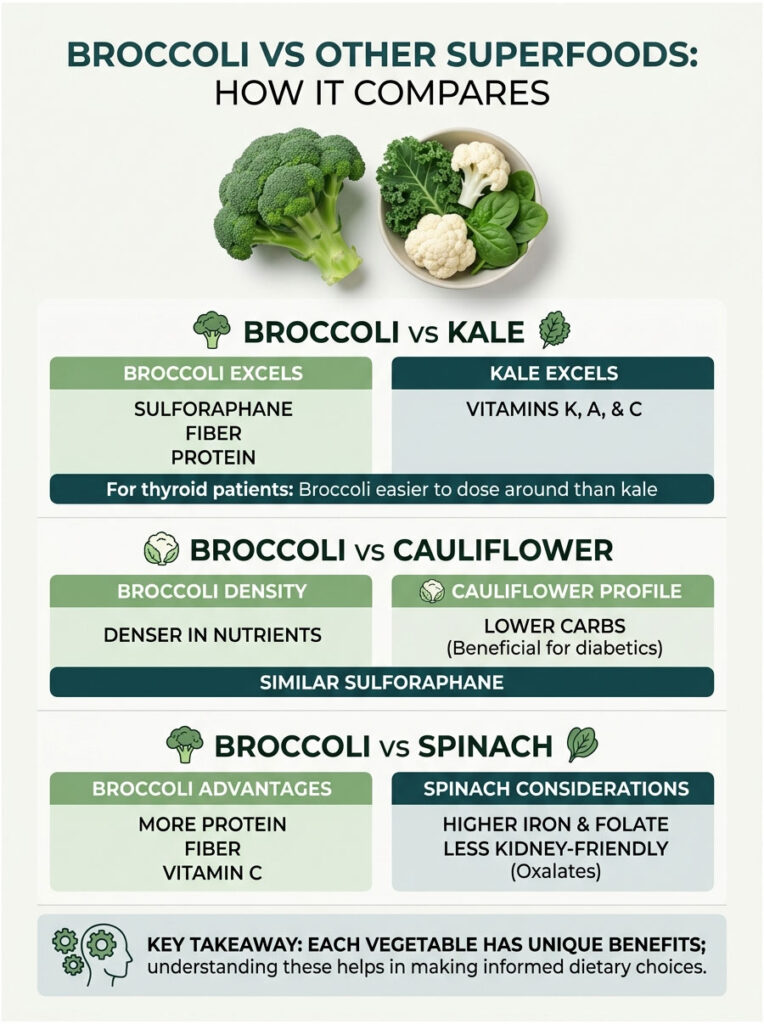
Kale wins on raw vitamin K, vitamin A, and vitamin C density, while broccoli wins on sulforaphane, fiber per calorie, and protein. For thyroid patients on levothyroxine, broccoli is often easier to dose around than high-vitamin-K kale.
Broccoli vs Cauliflower: Nutritional Twins or Different?
Cauliflower has roughly half the vitamin K and a quarter the carotenoids, but it carries similar sulforaphane. For diabetics or low-carb eaters, cauliflower’s slightly lower carb count gives it a small edge, while broccoli keeps the lead on overall nutrient density.
Broccoli vs Spinach: The Green Showdown
Spinach delivers more iron and folate, but broccoli supplies more protein, fiber, and vitamin C. Patients with kidney stones often do better with broccoli because spinach is much higher in oxalates.
How to Choose, Store, and Cook Broccoli for Maximum Nutrition
Even the healthiest vegetable loses its edge when chosen poorly, stored wrong, or boiled to mush. A few simple practices preserve almost all the nutrition you came for.
What to Look For at the US Grocery Store
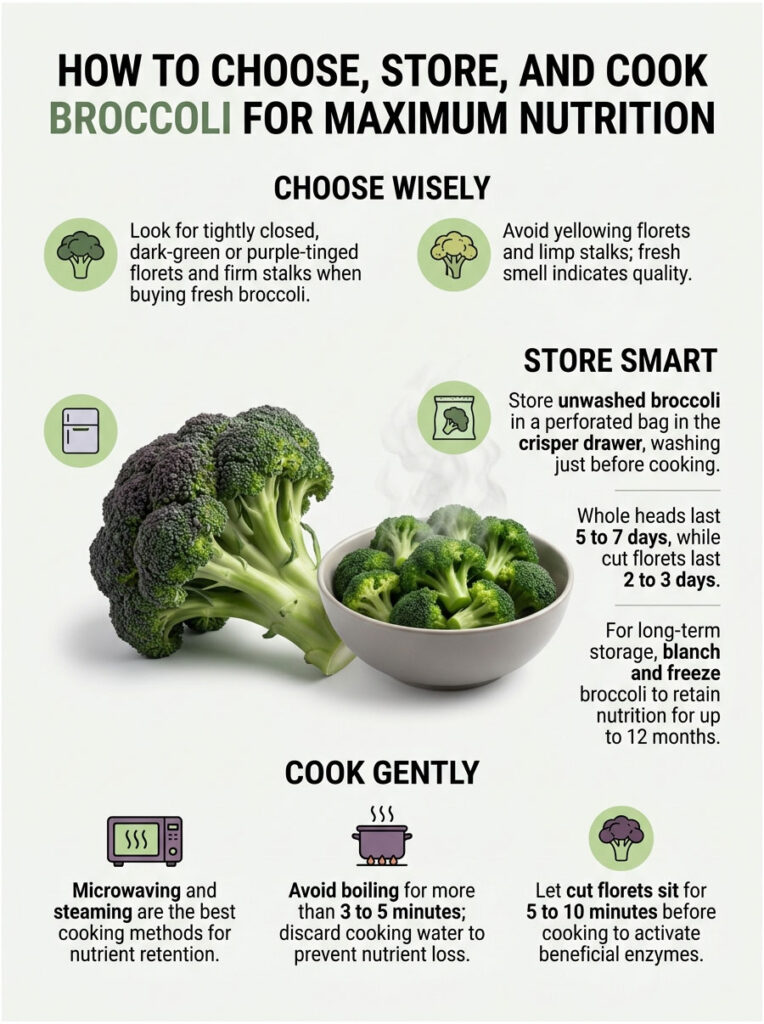
Pick heads with tightly closed, dark-green or purple-tinged florets and a firm, light-green stalk. Avoid yellowing florets (a sign of aging) or limp stalks (a sign of dehydration). The smell should be fresh and slightly grassy, never sulfurous.
Frozen broccoli is also nutritionally solid because it’s blanched and frozen at peak ripeness. Birds Eye, Cascadian Farm, and Trader Joe’s organic offer reliable quality.
Refrigerator and Freezer Storage Tips
Store broccoli unwashed in a perforated produce bag in the crisper drawer. Wash only right before cooking, since moisture accelerates spoilage. Whole heads keep 5 to 7 days; cut florets keep 2 to 3 days.
For longer storage, blanch florets for 1 minute, plunge into ice water, drain, and freeze in airtight bags. Frozen this way, broccoli holds its nutrition for up to 12 months.
Best Cooking Methods Ranked by Nutrient Retention
Microwaving and steaming top the rankings. A 2019 study found microwaving best preserves flavonoids like kaempferol and quercetin, while steaming best preserves sulforaphane. Boiling is the worst method, leaching up to 50% of water-soluble vitamins into the cooking water.
Stir-frying briefly in olive oil also retains most nutrients and improves absorption of the fat-soluble vitamins A, K, and E.
Common Cooking Mistakes That Destroy Nutrients
The biggest mistakes are boiling for too long (more than 3 to 5 minutes), discarding the cooking water, and overcrowding the pan when roasting (which steams the broccoli rather than roasting it). Cut florets and let them sit for 5 to 10 minutes before cooking; this allows the sulforaphane-forming enzyme (myrosinase) to fully activate.
Who Should Be Careful with Broccoli? Side Effects and Cautions
For most healthy people, broccoli is one of the safest foods on the planet. Specific groups, however, need to pay attention.
Blood Thinner Interactions (Warfarin / Coumadin)
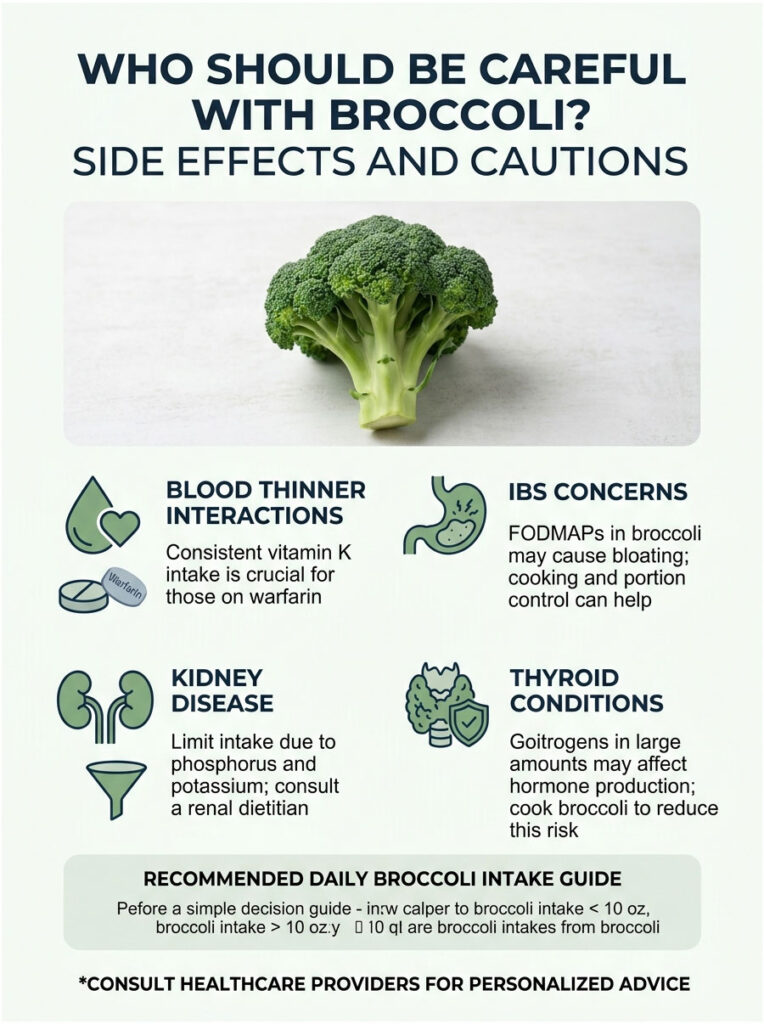
Broccoli’s vitamin K can interfere with warfarin’s blood-thinning effect. The issue isn’t avoiding broccoli; it’s keeping vitamin K intake consistent day to day. Sudden large changes in cruciferous intake can throw off INR levels and require dose adjustments.
If you take warfarin, our medical team recommends discussing weekly broccoli intake with your prescribing physician.
IBS, Bloating, and Gas
Broccoli contains FODMAPs (fermentable carbohydrates) that can cause gas and bloating in people with irritable bowel syndrome. Cooking broccoli thoroughly, eating smaller portions, and pairing with digestive enzymes often helps.
Some IBS patients tolerate cooked broccoli stems better than the florets, since the stems have a different fiber composition.
Kidney Disease and Phosphorus Concerns
Patients with stage 4 or 5 chronic kidney disease may need to limit broccoli because of its phosphorus and potassium content. The amounts are modest, but they add up across daily meals.
Anyone on dialysis or with significantly reduced kidney function should follow a renal dietitian’s specific guidance rather than general healthy-eating advice.
Thyroid Conditions (Goitrogens)
Cruciferous vegetables contain goitrogens, compounds that can interfere with thyroid hormone production in very large amounts. Cooking inactivates most goitrogens, so steamed or sautéed broccoli is rarely a problem at normal serving sizes.
Patients with hypothyroidism booking thyroid panels through HealthCareOnTime are usually advised to enjoy broccoli cooked, not raw juiced in large daily quantities.
Table 3: Decision Guide – “If You Are X, Approach Broccoli This Way”
| Your Situation | Recommended Approach | Daily Amount |
| Healthy adult | Calabrese or Beneforté, steamed or microwaved | 1 to 2 cups cooked |
| Diabetic / prediabetic | Calabrese with olive oil and protein | 1 to 1.5 cups cooked |
| On warfarin (Coumadin) | Keep weekly amount consistent, work with doctor | Steady, not variable |
| IBS / sensitive stomach | Well-cooked broccoli, small portions | 0.5 cup cooked |
| Hypothyroidism | Cooked only, no raw juicing | 1 cup cooked |
| Stage 4 to 5 kidney disease | Ask renal dietitian first | As advised |
| Cancer prevention focus | Beneforté or broccoli sprouts | 1 cup + sprouts |
How Much Broccoli Should You Eat? USDA Guidelines and Practical Tips
The USDA doesn’t set a specific broccoli target, but it does set a general vegetable target that broccoli helps you hit faster than almost any other food.
USDA MyPlate Vegetable Recommendations
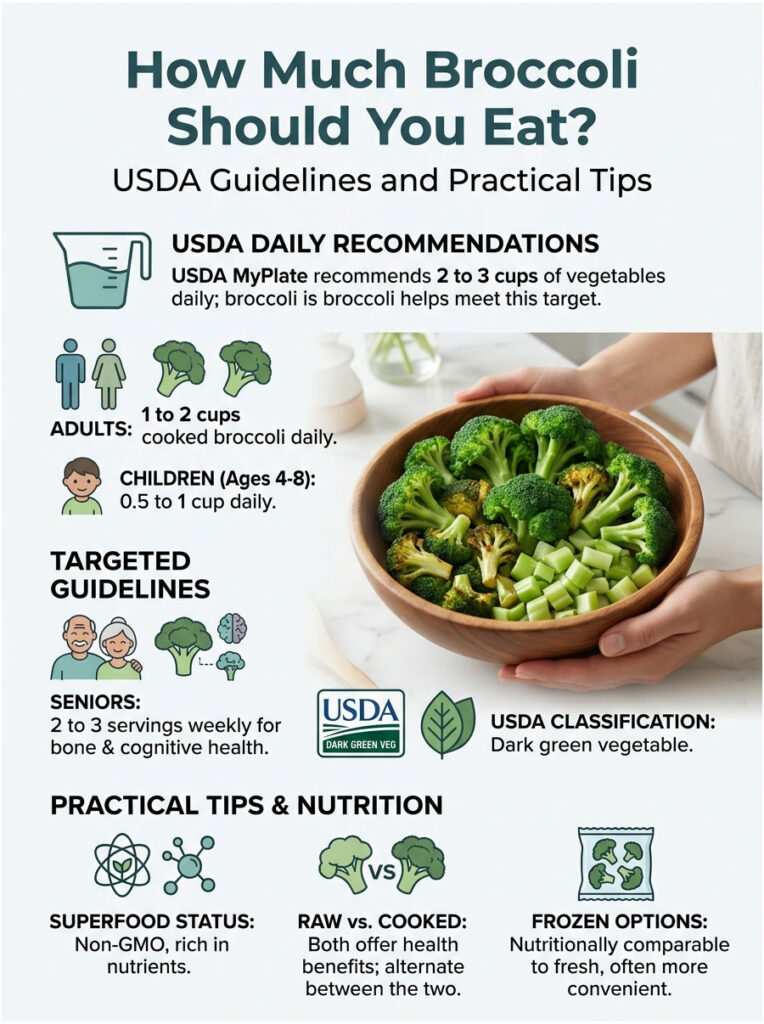
USDA MyPlate recommends 2 to 3 cups of vegetables per day for most adults, with at least half coming from dark green or red/orange vegetables. Two cups of broccoli alone covers a strong portion of that target.
The 2020 to 2025 Dietary Guidelines for Americans specifically encourage cruciferous vegetables several times per week for cancer prevention and cardiovascular health.
Daily Serving Suggestions for Adults, Kids, and Seniors
A reasonable everyday goal for adults is 1 to 2 cups of cooked broccoli daily, or roughly 5 to 7 servings per week. Kids ages 4 to 8 need about 1.5 cups of vegetables total per day; broccoli fits easily as 0.5 to 1 cup of that.
Seniors benefit from cooked broccoli’s combination of vitamin K (bones), fiber (digestion), and antioxidants (cognitive support). Two or three servings per week provides meaningful protection without overdoing it.
Easy Ways to Add More Broccoli to Your Plate
Roast florets at 425°F with olive oil and garlic for 18 to 22 minutes. Stir-fry with chicken, ginger, and soy sauce. Steam and toss with lemon, parmesan, and red pepper flakes. Add to omelets, frittatas, and grain bowls. Blend cooked broccoli into pasta sauce for a hidden vegetable boost in family meals.
In wellness consultations conducted through HealthCareOnTime, the easiest wins our team sees are batch-roasting on Sunday and microwaving frozen florets as a 90-second weeknight side dish.
Frequently Asked Questions
Is broccoli a fruit or a vegetable?
Botanically, broccoli is a flower, specifically a cluster of unopened flower buds. Culinarily and nutritionally, it’s classified as a vegetable. The USDA categorizes it as a dark green vegetable in MyPlate guidelines, which is the framework most American consumers and dietitians use day to day.
Is broccoli genetically modified?
No standard broccoli sold in US grocery stores is genetically modified (GMO). Modern broccoli was developed entirely through traditional selective breeding over thousands of years. Beneforté is a hybrid created by crossbreeding (not genetic engineering), so even that variety is non-GMO by the USDA definition.
Why does broccoli smell so strong when cooked?
The strong smell comes from sulfur-containing compounds called glucosinolates, which break down into pungent volatile chemicals when broccoli is heated. Overcooking intensifies the smell because more glucosinolates degrade. Steaming or microwaving for shorter times keeps both the aroma and the nutrition more pleasant.
Can you eat broccoli stems and leaves?
Yes, both are edible and nutritious. Stems contain similar amounts of vitamin C and fiber as florets, often slightly more fiber. Peel the tough outer layer if needed, then slice and cook like the florets. Leaves taste similar to collard greens and work well sautéed with garlic and olive oil.
Is broccoli good for weight loss?
Yes, broccoli is one of the best vegetables for weight management. At only 31 calories per raw cup with 2.4 grams of fiber, it provides exceptional satiety per calorie. The fiber slows digestion, stabilizes blood sugar, and reduces hunger signals. Most weight-loss meal plans recommend 1 to 2 cups of cooked broccoli daily as a low-calorie filler.
What is the difference between broccoli and broccolini?
Broccolini is a deliberate hybrid of standard broccoli and Chinese broccoli (gai lan), trademarked in 1993 by the Sakata Seed Corporation. It has long, slender stalks with small loose florets, sweeter flavor, and faster cook time than Calabrese broccoli. Nutritionally, the two are similar, with broccolini slightly higher in vitamin A.
Are broccoli sprouts really healthier than full broccoli?
Yes, gram for gram. Johns Hopkins research found broccoli sprouts contain 10 to 100 times more sulforaphane than mature broccoli heads. A small handful of sprouts (about 1 ounce) can deliver the same sulforaphane as a full cup of cooked broccoli. They’re best added raw to salads, sandwiches, or smoothies to preserve the active enzymes.
Can dogs eat broccoli?
Yes, in small amounts. The American Kennel Club lists broccoli as safe for dogs when served plain, in moderation. Limit it to 5 to 10% of total daily food intake because the isothiocyanates can cause gastric irritation in larger doses. Avoid seasoning, garlic, or onion, all of which are toxic to dogs.
Is raw or cooked broccoli healthier?
Both have advantages. Raw broccoli preserves the most vitamin C, folate, and active myrosinase enzyme (which produces sulforaphane). Cooked broccoli increases the bioavailability of carotenoids and makes vitamin K easier to absorb. The healthiest approach is to alternate, eating raw broccoli in salads and lightly steamed or microwaved broccoli as a cooked side.
How long does broccoli last in the fridge?
Whole broccoli heads stored unwashed in a perforated produce bag last 5 to 7 days in the crisper drawer. Cut florets last 2 to 3 days. Yellowing florets, limp stalks, or a strong sulfur smell indicate spoilage. For longer storage, blanch and freeze for up to 12 months without significant nutrient loss.
Is frozen broccoli as nutritious as fresh?
Frozen broccoli is nutritionally close to fresh and sometimes better. It’s typically blanched and flash-frozen at peak ripeness, which locks in vitamin C and other nutrients. Fresh broccoli that has traveled cross-country and sat in storage can lose more nutrients than its frozen counterpart. Both are excellent choices.
Why is broccoli considered a superfood?
Broccoli earns the superfood title because it delivers exceptional amounts of vitamin C, vitamin K, fiber, folate, and unique bioactive compounds (sulforaphane, indole-3-carbinol, kaempferol) at very low calorie cost. These compounds support cancer prevention, heart health, blood sugar control, anti-inflammation, and detoxification, all backed by peer-reviewed clinical research.
Disclaimer: This article is for educational purposes only and does not replace professional medical advice. Patients on blood thinners, with chronic kidney disease, hypothyroidism, or other medical conditions should consult a licensed physician or registered dietitian before making significant changes to dietary patterns. Diagnostic testing through HealthCareOnTime can clarify individual nutritional needs.
References
- USDA FoodData Central, Broccoli Nutrition Profile
- USDA National Agricultural Statistics Service
- USDA MyPlate Dietary Guidelines
- NIH Office of Dietary Supplements, Vitamin C and Vitamin K Fact Sheets
- PMC, Broccoli: A Multi-Faceted Vegetable for Health
- Cleveland Clinic, 5 Health Benefits of Broccoli
- Healthline, Broccoli 101: Nutrition Facts and Health Benefits
- Johns Hopkins Medicine, Broccoli Sprouts and Sulforaphane Research
- Live Science, Brassica oleracea Plant Family Origins
- UF/IFAS Extension, Broccoli: The Superfood