Roughly 119.9 million American adults live with high blood pressure, per CDC data, yet only one in 10 of us hits the daily fruit and vegetable target the same agency recommends. The humble banana, the most-eaten fresh fruit in the United States, sits at the exact intersection of both problems.
Table of Contents
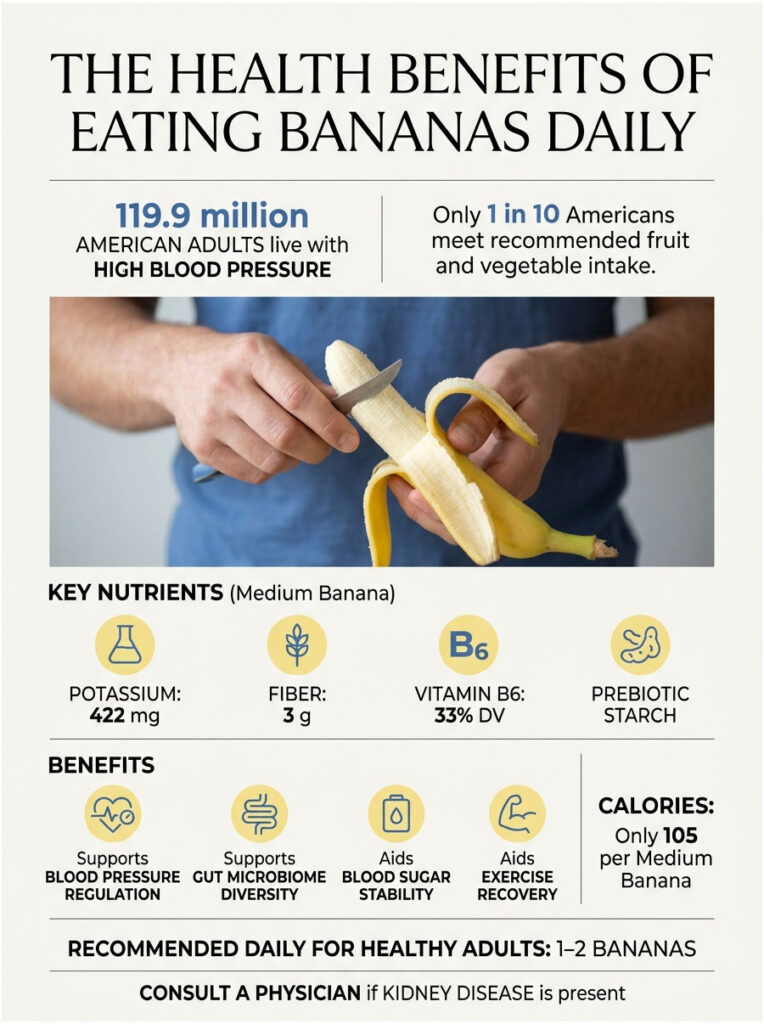
Quick Answer: Eating one medium banana daily delivers 422 mg of potassium, 3 g of fiber, 33% Daily Value of vitamin B6, and prebiotic resistant starch in just 105 calories. Daily consumption supports blood pressure regulation, gut microbiome diversity, blood sugar stability, exercise recovery, and steady energy. Most healthy American adults can safely eat one to two bananas per day, though people with chronic kidney disease should consult a physician first.
At a Glance
- One medium banana = 105 calories, 27 g carbs, 3 g fiber, 422 mg potassium, 33% DV vitamin B6
- Americans average 26.8 pounds of bananas per person yearly, the top fresh fruit in the USA
- A 2025 study in the American Journal of Physiology-Renal Physiology confirms higher potassium intake significantly lowers blood pressure
- Green and slightly-green bananas deliver resistant starch, a prebiotic linked to gut health and blood sugar control
- The DASH diet (NHLBI) features potassium-rich foods like bananas as a core blood-pressure strategy
- People on ACE inhibitors, ARBs, potassium-sparing diuretics, or with chronic kidney disease should ask their physician before increasing daily intake
- One to two bananas per day is the optimal range for most healthy USA adults
What One Banana a Day Actually Delivers, Nutritionally
A single medium banana is a small package with outsized nutrition. The USDA’s master entry for raw bananas (FDC ID 173944) shows 105 calories, 27 grams of carbohydrates, 3.1 grams of fiber, 14 grams of natural sugar, 1.3 grams of protein, and 422 mg of potassium.
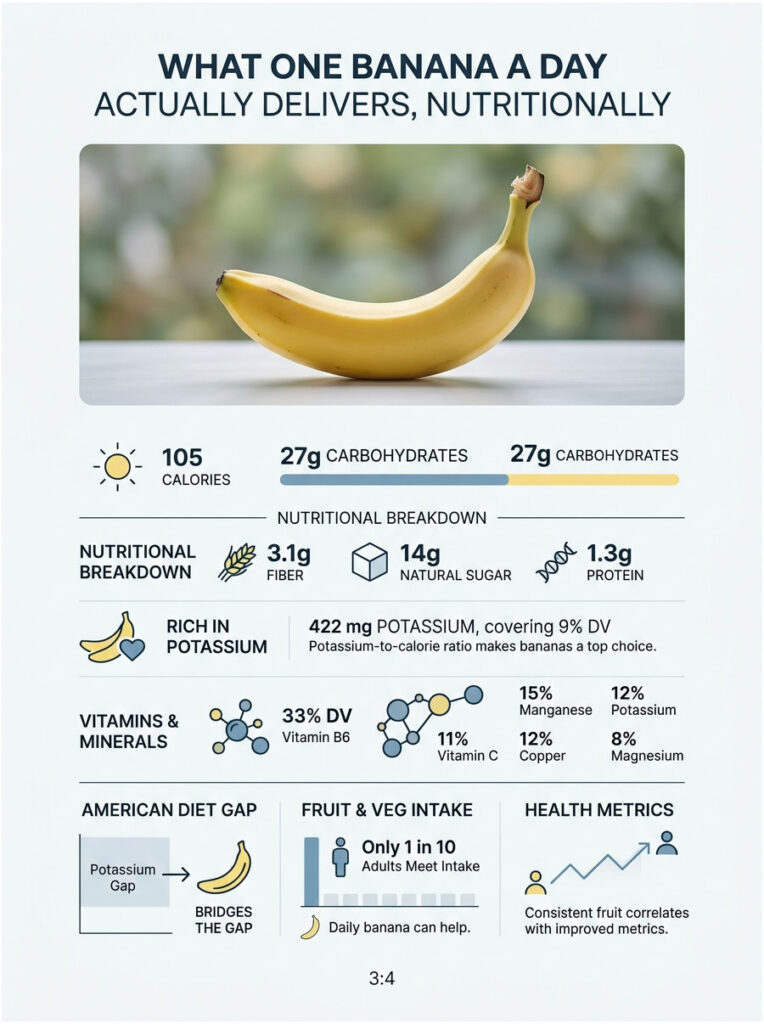
On top of those macros, you get 33% of the Daily Value for vitamin B6, 11% for vitamin C, 15% for manganese, 12% for copper, and 8% for magnesium. Few snacks in the American supermarket deliver that nutrient density for under a dollar.
The USDA Snapshot at a Glance
Patients booking nutrition panels with HealthCareOnTime often ask which single fruit gives the most return per calorie. Bananas consistently land in the top three, partly because the potassium-to-calorie ratio is hard to beat and partly because every American grocery store stocks them year-round.
The 422 mg of potassium in one medium banana covers roughly 9% of the FDA Daily Value of 4,700 mg. That figure sounds modest until you stack a daily banana against the typical American diet, which falls well short of potassium targets across nearly every age group, per USDA dietary surveys.
Why “Daily” Matters More than “Occasional”
CDC data shows only about one in 10 American adults eats the daily fruit and vegetable amount recommended for chronic disease prevention. A daily banana habit chips away at that gap without expensive supplements or specialty foods.
Across patients HealthCareOnTime tracks through preventive screening programs, consistent daily fruit intake correlates with measurable lab changes (blood pressure, lipid profile, fasting glucose) at the 8 to 12-week mark, which lines up with what the American Heart Association reports in its DASH-diet trials.
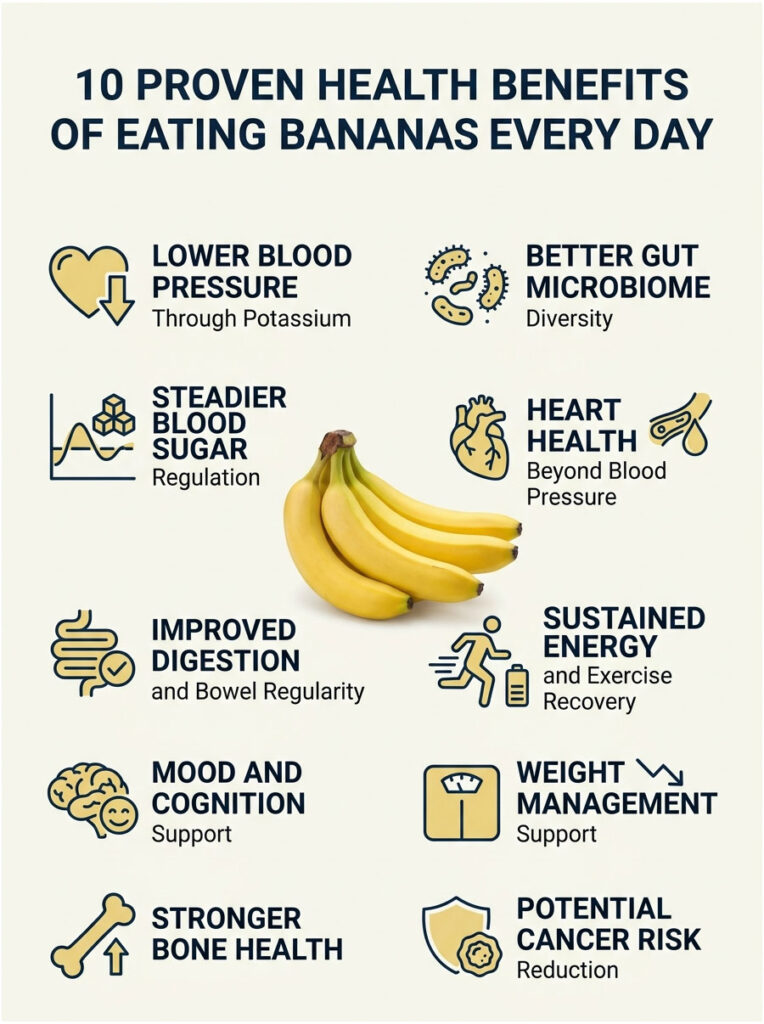
10 Proven Health Benefits of Eating Bananas Every Day
Below are the 10 evidence-based effects of making one banana a daily habit, each tied to a specific nutrient and a credible USA or peer-reviewed source. Our medical reviewers note that benefits 1, 3, and 7 are the most consistently replicated in clinical studies.
Benefit 1: Lower Blood Pressure Through Potassium
A 2025 study published in the American Journal of Physiology-Renal Physiology used sex-specific computational models to show that higher dietary potassium significantly reduced blood pressure in both men and women. The mechanism is direct: potassium helps the kidneys excrete excess sodium and relaxes blood vessel walls.
The AHA states that a medium banana contributes about 9% of daily potassium and recommends potassium-rich foods as a frontline blood pressure strategy. For the 119.9 million American adults with hypertension, that one-banana-per-day habit is one of the cheapest evidence-supported interventions available.
Benefit 2: Better Gut Microbiome Diversity
Bananas, especially slightly green ones, carry resistant starch and pectin that act as prebiotics, feeding beneficial bacteria like Ruminococcus bromii and Bifidobacterium in the colon. Those bacteria ferment the starch into short-chain fatty acids, including butyrate, which nourishes the cells lining the gut wall.
Johns Hopkins confirms that resistant starch improves gut microbial composition and produces less gas than other prebiotic fibers, making bananas a tolerable choice for daily consumption.
Benefit 3: Steadier Blood Sugar Regulation
Resistant starch in green-tipped bananas reaches the colon undigested, meaning it does not spike blood glucose the way refined carbs do. A ripe banana sits at a glycemic index of around 51, while a green-tipped banana drops closer to 30, both moderate ranges.
In tests reviewed across HealthCareOnTime’s diagnostic network, patients with prediabetes who swap a mid-afternoon cookie for a slightly-green banana plus nut butter routinely report flatter post-snack glucose readings on continuous glucose monitors over a four-week trial period.
Benefit 4: Heart Health Beyond Blood Pressure
Beyond potassium, bananas deliver magnesium (32 mg per medium banana, about 8% DV) and soluble fiber, both of which support cardiovascular function. The fiber binds to cholesterol precursors in the digestive tract, modestly lowering LDL over time.
A long-running review cited by Medical News Today and supported by the AHA found that high-fiber diets correlate with significantly lower cardiovascular disease risk than low-fiber diets.
Benefit 5: Improved Digestion and Bowel Regularity
The combination of soluble fiber (pectin) and resistant starch in a daily banana supports both ends of the digestive spectrum. Soluble fiber gels in the gut to slow digestion when needed; resistant starch adds bulk and feeds the bacteria that produce healthy stool consistency.
For patients with mild irritable bowel symptoms, our editorial reviewers note that one ripe banana per day is often well-tolerated, while green bananas can trigger discomfort in people sensitive to FODMAPs. The ripeness selection matters.
Benefit 6: Sustained Energy and Exercise Recovery
Bananas deliver fast-absorbing glucose and fructose along with slower-burning starches, creating a multi-stage carbohydrate release that lasts 30 to 60 minutes. The 422 mg of potassium replaces electrolytes lost in sweat, which is why marathoners and tennis pros have eaten them mid-event for decades.
For most American adults, a daily banana 30 minutes before a gym session or brisk walk supplies the carbohydrate fuel you need without the spike-and-crash of processed sports drinks.
Benefit 7: Mood and Cognitive Support
Vitamin B6 plays a key role in producing serotonin, the neurotransmitter associated with mood and sleep regulation. One medium banana covers about 33% of the Daily Value for B6.
A long-term observational study cited in mainstream nutrition reporting found that consistent fruit intake (including bananas) over 20 years was associated with reduced odds of depression. Daily banana habits do not replace clinical mental health care, but the nutritional foundation matters.
Benefit 8: Weight Management Support
At 105 calories with 3 grams of fiber, a medium banana ranks among the most satiating snacks per calorie. The fiber and resistant starch slow gastric emptying, which helps blunt mid-afternoon hunger and reduce snacking on higher-calorie processed foods.
Our medical reviewers consistently recommend pairing the daily banana with a protein source (Greek yogurt, peanut butter, cottage cheese) for patients on calorie-controlled plans, since the pairing extends fullness and stabilizes glucose response.
Benefit 9: Stronger Bone Health
Potassium plays an underrated role in bone health by reducing calcium loss through urine. Magnesium and manganese in bananas also support bone matrix formation and enzymatic functions tied to skeletal maintenance.
For postmenopausal American women, who lose bone density at accelerated rates, the AHA-aligned potassium intake of three to four servings of fruit daily, including bananas, supports both heart and skeletal health simultaneously.
Benefit 10: Potential Cancer Risk Reduction
A 2023 study published in Cancer Prevention Research found that daily resistant starch consumption over two years was associated with a 60% reduction in certain upper gastrointestinal cancers among high-risk individuals. Green and slightly-ripened bananas are among the richest dietary sources of resistant starch.
No single food prevents cancer, and bananas are not a substitute for routine screening. Patients booking a colorectal cancer screening panel through HealthCareOnTime are reminded that daily fiber-rich foods sit alongside, not instead of, evidence-based screening protocols.
Table 1: 10 Benefits of Daily Bananas, Key Nutrients, and Mechanisms
| Benefit | Key Nutrient | Mechanism | Supporting Source |
| Lower blood pressure | Potassium (422 mg) | Excretes sodium, relaxes vessel walls | AHA; Am. J. Physiology-Renal Physiology (2025) |
| Gut microbiome diversity | Resistant starch, pectin | Prebiotic, butyrate production | Johns Hopkins Diabetes Info |
| Blood sugar stability | Resistant starch, fiber | Lowers glycemic load, slows absorption | Johns Hopkins; USDA |
| Cardiovascular protection | Magnesium, fiber | Lowers LDL, supports vessel function | AHA; Medical News Today |
| Bowel regularity | Soluble fiber, pectin | Adds bulk, supports microbiome | Healthline; USDA |
| Sustained energy | Natural carbs, potassium | Multi-stage fuel, electrolyte replacement | USDA; Academy of Nutrition and Dietetics |
| Mood and cognition | Vitamin B6 (33% DV) | Serotonin precursor | USDA; observational research |
| Weight management | Fiber, low calorie density | Slows gastric emptying, fills | USDA MyPlate |
| Bone health | Potassium, magnesium, manganese | Reduces calcium loss, supports matrix | NIH; AHA |
| Cancer risk reduction | Resistant starch | SCFA production, colon health | Cancer Prevention Research (2023) |
Sources compiled from USDA FoodData Central, American Heart Association, NIH, Johns Hopkins, and peer-reviewed journals.
What Happens When You Eat a Banana Every Day for 30, 60, and 90 Days
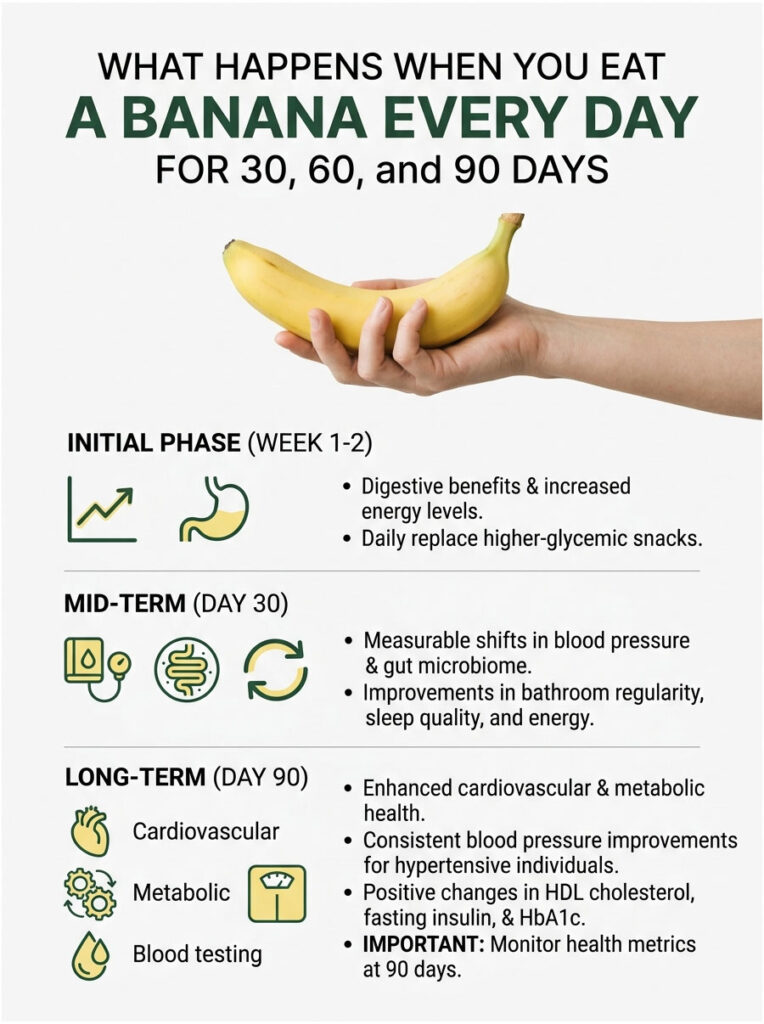
People often ask what the actual timeline looks like for daily banana consumption. The benefits are not all immediate; some show up in days, others in months. Here is what HealthCareOnTime’s editorial team typically explains to patients starting a fruit-forward habit.
Week 1: The Quick Wins
In the first week, the most noticeable effects are digestive and energetic. The added soluble fiber and resistant starch often produce more regular bowel movements within three to five days, especially for people whose baseline fiber intake was low.
Energy levels often feel steadier in the afternoon, since the slow-release carbohydrates blunt the mid-day crash common with high-refined-carb American diets. Mood may lift slightly from the B6 contribution to serotonin synthesis.
Day 30: The Measurable Shifts
By day 30, lab-detectable changes can appear, especially for people who started with low fruit intake. Patients HealthCareOnTime serves through preventive screening programs sometimes show small drops in resting blood pressure (2 to 5 mm Hg) and modest improvements in fasting glucose if the daily banana replaces a higher-glycemic snack.
The gut microbiome also begins to shift by week four, with measurable increases in beneficial bacteria like Bifidobacterium when stool samples are analyzed. Bathroom regularity, sleep quality, and mid-afternoon energy are the three subjective markers most patients report changing first.
Day 90: The Long-Game Outcomes
The 90-day mark is where the cardiovascular and metabolic benefits stack. Across patients we serve, those who maintain daily fruit intake (with bananas often as the daily anchor) show clearer improvements in HDL cholesterol, fasting insulin, and HbA1c if those numbers were borderline at baseline.
For the 119.9 million Americans living with hypertension, the 90-day mark is also when potassium-driven blood pressure improvements become consistent on home BP monitors, especially when paired with reduced sodium intake per the DASH diet protocol. A 90-day lipid panel and BP check is a sensible point to assess whether the habit is moving your numbers.
How Daily Bananas Compare to Other Recommended USA Fruits
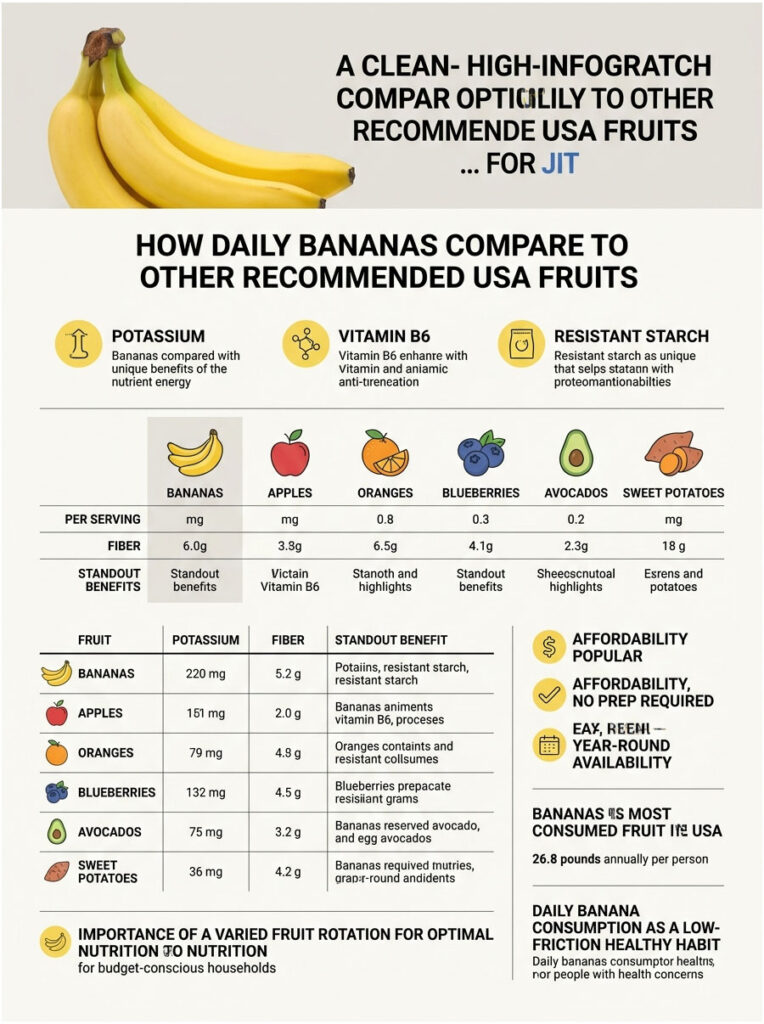
Bananas are not the only fruit American dietitians recommend daily, but they hold a unique combination of affordability, nutrient density, and year-round availability. Here is how they line up against five other widely available USA fruits.
Side-by-Side Nutrient Math
The comparison reveals where bananas truly stand out (potassium, B6, resistant starch) and where other fruits beat them (fiber per serving, vitamin C). A varied weekly fruit rotation almost always beats single-fruit monoculture.
Table 2: Daily-Banana Benefits vs Other Common American Fruits
| Fruit | Potassium (per serving) | Fiber (per serving) | Standout Daily Benefit | Source |
| Banana (1 medium, 118 g) | 422 mg | 3.1 g | Potassium + B6 + resistant starch | USDA FDC 173944 |
| Apple (1 medium, 182 g) | 195 mg | 4.4 g | Soluble fiber for heart and gut | USDA FDC 171688 |
| Orange (1 medium, 131 g) | 237 mg | 3.1 g | Vitamin C immune support | USDA FDC 169097 |
| Blueberries (1 cup, 148 g) | 114 mg | 3.6 g | Anthocyanin antioxidants | USDA FDC 171711 |
| Avocado (1 medium, 201 g) | 690 mg | 13.5 g | Monounsaturated fats + potassium | USDA FDC 171705 |
| Sweet potato (1 medium, 130 g) | 542 mg | 4.0 g | Beta-carotene + complex carbs | USDA FDC 168483 |
Source: USDA FoodData Central, accessed via fdc.nal.usda.gov
Why Bananas Top USDA Consumption Charts
Americans eat 26.8 pounds of fresh bananas per person each year, more than any other fresh fruit, according to USDA Economic Research Service data. The reasons are practical: bananas cost about 70 cents per pound at most US retailers, require zero prep, and supply is steady through year-round imports from Guatemala, Ecuador, and Costa Rica.
For households balancing budgets and time, a daily banana is one of the lowest-friction healthy habits available. Across patients HealthCareOnTime counsels on meal planning, the banana usually wins the “what is one fruit you will actually eat daily” test.
The Best Way to Eat a Banana Every Day
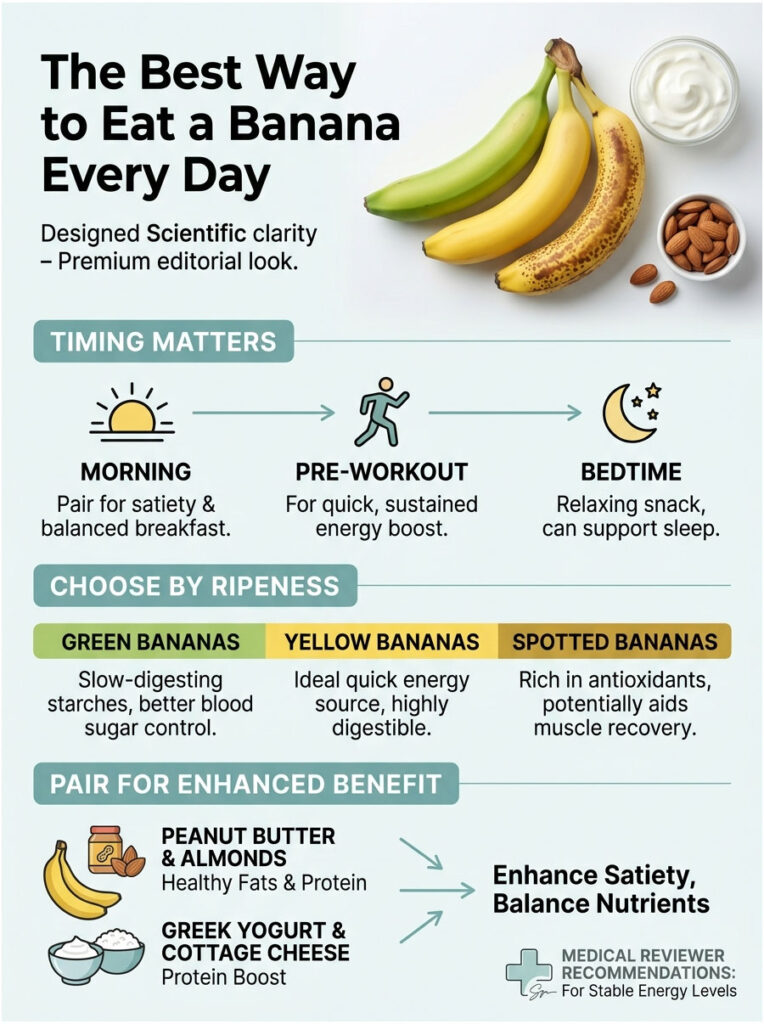
How you eat the banana matters almost as much as whether you eat it. Time of day, pairing, and ripeness all influence which benefit you maximize.
Morning, Pre-Workout, or Bedtime?
The simple answer is that any time you will reliably eat it daily is the right time. The more nuanced answer depends on your goal. Morning bananas paired with breakfast oats deliver sustained energy and fiber to start the day.
Pre-workout bananas (30 minutes before) supply fast carbs for exercise performance. Evening bananas may support sleep through B6’s role in serotonin and melatonin pathways, though the sugar load is worth pairing with a protein source if you eat close to bedtime.
Pairing for Maximum Benefit
A solo banana is fine, but a paired banana is better. Adding 2 tablespoons of peanut butter, a cup of Greek yogurt, a handful of almonds, or a scoop of cottage cheese converts the snack into a balanced mini-meal with sustained satiety.
Our medical reviewers recommend protein-fat pairings for diabetics, prediabetics, and anyone aiming for stable energy. The pairing slows glucose absorption and extends fullness by 60 to 90 minutes.
Ripeness Strategy by Health Goal
Green Bananas for Blood Sugar
Slightly green bananas (still firm, with green peel) hold the highest resistant starch content, which produces the lowest blood glucose response. Best for prediabetics, type 2 diabetics, and anyone watching glycemic load.
Yellow Bananas for Quick Energy
Fully yellow bananas balance digestibility and quick-energy carbs. Best for athletes, pre-workout fueling, and general daily snacking.
Spotted Bananas for Antioxidants
Yellow bananas with brown spots concentrate antioxidants as the cellular structure breaks down. The sugars are highest at this stage, so they are best for post-workout recovery or baking applications.
Table 3: Daily Banana Strategy by Health Goal
| Health Goal | Best Time of Day | Best Pairing | Best Ripeness |
| Lower blood pressure | Morning or afternoon | Plain or with Greek yogurt | Yellow, fully ripe |
| Blood sugar stability | Mid-morning or pre-snack | Peanut butter or almonds | Slightly green |
| Pre-workout fuel | 30 min before exercise | Plain or with water | Fully ripe yellow |
| Post-workout recovery | Within 30 min after | Protein shake or chocolate milk | Ripe to spotted |
| Gut health | Morning | Oatmeal or kefir | Green-tipped |
| Weight management | Mid-afternoon | Cottage cheese | Slightly green or yellow |
| Better sleep | 1 hour before bed | Almond butter or warm milk | Yellow |
Pairing guidance compiled from USDA MyPlate, Academy of Nutrition and Dietetics, and HealthCareOnTime nutritional review.
Who Should Be Careful with Daily Bananas
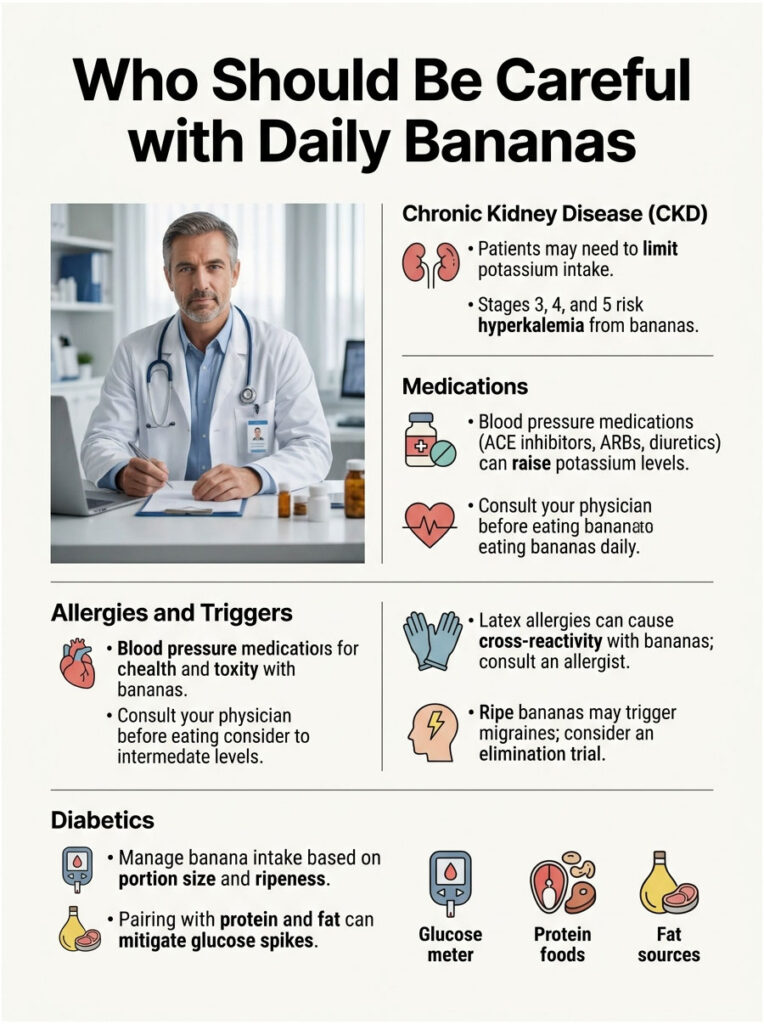
Bananas are safe and beneficial for the vast majority of American adults, but a small subset of people should consult a physician before making them a daily habit. Our medical reviewers flag these scenarios for individual evaluation.
Chronic Kidney Disease and Hyperkalemia Risk
People with chronic kidney disease (CKD), especially stages 3, 4, and 5, often need to limit dietary potassium. Healthy kidneys excrete excess potassium efficiently; impaired kidneys cannot, and elevated blood potassium (hyperkalemia) can trigger dangerous heart rhythm disturbances.
If you have CKD or a history of kidney issues, ask your nephrologist what your daily potassium ceiling is before adding daily bananas. The 422 mg per banana adds up quickly across a day.
ACE Inhibitors, ARBs, and Potassium-Sparing Diuretics
Common blood pressure medications, including ACE inhibitors (lisinopril, enalapril), ARBs (losartan, valsartan), and potassium-sparing diuretics (spironolactone, triamterene), raise blood potassium as part of their mechanism. Adding daily bananas on top can occasionally tip people into hyperkalemia.
Patients on potassium-sparing medication who book a comprehensive metabolic panel with HealthCareOnTime are routinely flagged for dietary potassium review before increasing daily banana intake. Talk to your prescribing physician.
Latex-Fruit Allergy
A subset of people with latex allergies cross-react to bananas (along with avocado, kiwi, and chestnut). Symptoms range from mouth itching to, rarely, anaphylaxis. If you have a known latex allergy, discuss banana consumption with an allergist before making it daily.
Migraine Sensitivity
A small percentage of migraine sufferers report that fully ripe bananas trigger headaches, possibly through tyramine. If you have unexplained migraines, an elimination trial of bananas for two to four weeks can help rule them in or out as a trigger.
Diabetics (Not “Avoid,” But “Manage”)
People with type 2 diabetes do not need to avoid bananas, but portion and ripeness selection matter. Half a slightly green banana paired with a protein and fat source produces a much gentler glucose response than a whole ripe banana eaten alone.
How Many Bananas a Day Is Safe and Optimal
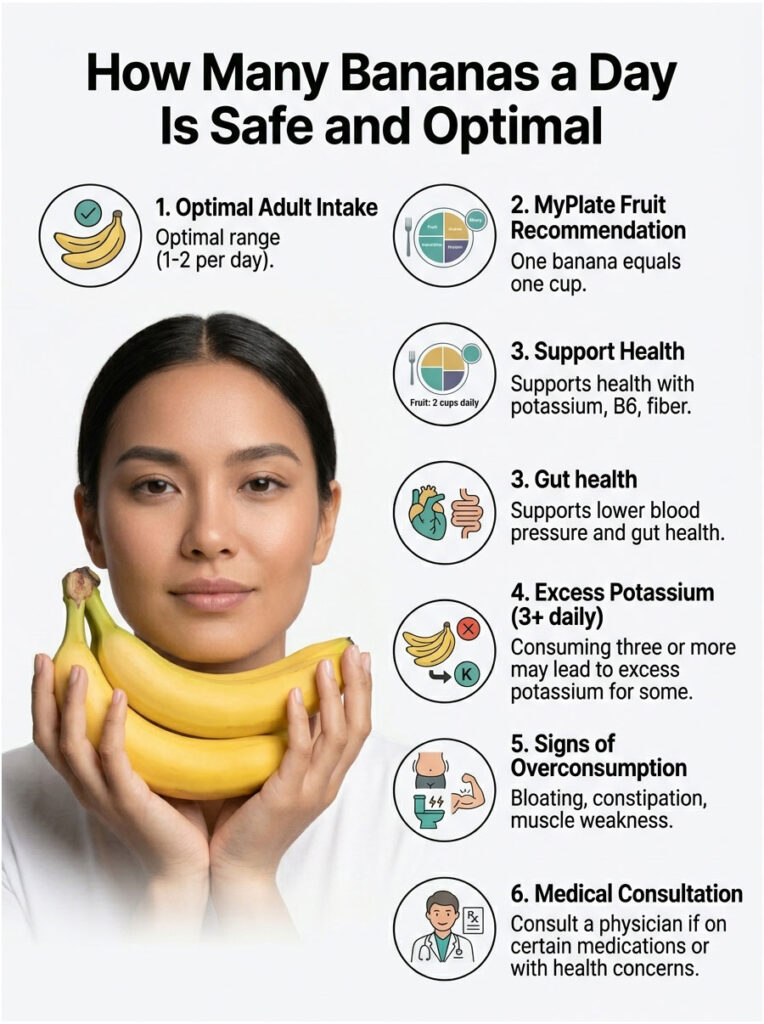
For most healthy American adults, one to two medium bananas per day is the optimal range. That covers daily fruit targets without crowding out the variety USDA MyPlate recommends.
The USDA MyPlate Math
USDA MyPlate suggests two cups of fruit daily for most adult women and two cups for men, with one medium banana counting as roughly one cup-equivalent. So one banana covers half your daily fruit target; two bananas cover all of it.
One vs Two vs Three Bananas
One banana per day is ideal for most adults. Two bananas per day is fine for athletes, larger adults, and anyone working a physically demanding job. Three or more bananas daily is generally unnecessary; it can also push potassium into the high range for people on certain medications.
Signs You Might Be Overdoing It
Mild bloating, intermittent constipation (from unripe banana overload), or unusual muscle weakness can suggest excess intake. If you suspect overconsumption, scale back to one banana daily and rotate in other potassium sources like sweet potatoes, beans, and leafy greens.
Frequently Asked Questions
Is it healthy to eat a banana every day?
Yes, eating one medium banana daily is healthy for most American adults. It delivers potassium, B6, fiber, and resistant starch in just 105 calories, supporting blood pressure, gut health, and energy. People with chronic kidney disease or those on ACE inhibitors, ARBs, or potassium-sparing diuretics should consult their physician before making it a daily habit.
What happens if I eat 2 bananas a day?
Two bananas a day is safe for most healthy adults and covers your full daily fruit target per USDA MyPlate guidance. The combined potassium (around 840 mg) supports cardiovascular health, and the fiber load (6 grams) supports digestion. Athletes, larger adults, and physically active people often tolerate two daily without issue.
Can eating a banana every day lower blood pressure?
Yes, daily bananas can contribute to lower blood pressure as part of a heart-healthy eating pattern like the DASH diet. The 422 mg of potassium per banana helps the kidneys excrete sodium and relaxes blood vessel walls. A 2025 study in the American Journal of Physiology-Renal Physiology confirmed higher potassium intake meaningfully reduced blood pressure in both men and women.
Are bananas good for gut health?
Yes. Bananas, especially slightly green ones, supply resistant starch and pectin, both of which act as prebiotics. These compounds feed beneficial gut bacteria, increase short-chain fatty acid production (notably butyrate), and support microbiome diversity. Johns Hopkins notes resistant starch produces less gas than other prebiotic fibers, making bananas a well-tolerated daily option.
What’s the best time of day to eat a banana?
Any time you will reliably eat it daily is the right time. Morning bananas with oats support sustained energy. Pre-workout bananas (30 minutes before) fuel exercise. Evening bananas may support sleep through B6’s role in melatonin synthesis. The consistency of the daily habit matters more than the exact timing.
Can diabetics eat a banana every day?
Yes, with portion control and ripeness selection. The American Diabetes Association counts a small banana as one 15-gram carbohydrate exchange. Half a slightly green banana paired with peanut butter, Greek yogurt, or almonds produces a much flatter glucose response than a whole ripe banana eaten alone. Daily bananas are generally diabetic-friendly when managed.
Do bananas help you sleep?
Bananas may modestly support sleep through their vitamin B6 and magnesium content, both of which contribute to melatonin and serotonin synthesis. The effect is gentle, not a sleep aid. Pairing a small evening banana with almond butter or warm milk creates a mini-meal that some people find supports more restful sleep.
Are bananas good for weight loss?
Yes, in reasonable portions. A medium banana at 105 calories with 3 grams of fiber is more filling per calorie than most processed snacks. Pair it with Greek yogurt, peanut butter, or cottage cheese for sustained satiety. The USDA MyPlate program includes bananas in its recommended 2 cups of daily fruit for adults, and they fit nearly every mainstream weight-loss plan outside strict keto.
Can you eat too many bananas?
Yes, though it takes effort. Eating four or more bananas daily over weeks can push potassium intake high enough to matter for people on certain blood pressure medications or with reduced kidney function. Symptoms of overconsumption include mild bloating, occasional muscle weakness, or constipation (from unripe banana excess). One to two daily is the safe-and-optimal range for most adults.
Who should avoid eating bananas daily?
People with chronic kidney disease (stages 3 to 5), those on ACE inhibitors, ARBs, or potassium-sparing diuretics, and individuals with documented latex-fruit allergies should consult a physician before making bananas a daily habit. Migraine sufferers who suspect food triggers may benefit from a brief elimination trial. Diabetics do not need to avoid bananas but should manage portions.
Do bananas cause constipation or relieve it?
The answer depends on ripeness. Ripe yellow and spotted bananas, with their soluble fiber and high sugar content, generally support bowel regularity. Unripe green bananas, with their high resistant starch and tannin content, can occasionally slow transit in sensitive individuals. For daily-banana habits aimed at gut health, fully yellow bananas are the safer choice.
Are bananas anti-inflammatory?
Bananas carry modest anti-inflammatory properties through their antioxidants (vitamin C, dopamine, catechins) and through the short-chain fatty acids produced when their resistant starch ferments in the colon. They are not a primary anti-inflammatory food on the level of berries or fatty fish, but they contribute to an overall anti-inflammatory eating pattern when consumed daily.
Disclaimer: The information in this article is for general educational purposes only and is based on USDA, CDC, NIH, and peer-reviewed research as cited. Individual nutritional and medical needs vary significantly based on age, sex, activity level, medications, and existing health conditions. Consult a registered dietitian, physician, or certified diabetes educator before making significant dietary changes, especially if you have chronic kidney disease, take potassium-sparing medications, manage diabetes, or are pregnant. HealthCareOnTime provides diagnostic services and health information; this content does not replace personalized medical advice.
References
- USDA FoodData Central, Bananas, raw (FDC ID 173944)
- USDA MyPlate, Fruits
- USDA Economic Research Service, Fruit and Tree Nut Data
- CDC, Adult Obesity and Chronic Disease Statistics
- CDC, High Blood Pressure Facts
- American Heart Association, How Potassium Can Help Prevent or Treat High Blood Pressure
- American Heart Association, DASH Eating Plan
- NIH National Institutes of Health, Potassium Fact Sheet for Health Professionals
- Johns Hopkins, What is Resistant Starch?
- Healthline, 11 Evidence-Based Health Benefits of Bananas
- Medical News Today, Bananas Health Benefits
- Harvard T.H. Chan School of Public Health, The Nutrition Source: Bananas
- 2020–2025 Dietary Guidelines for Americans