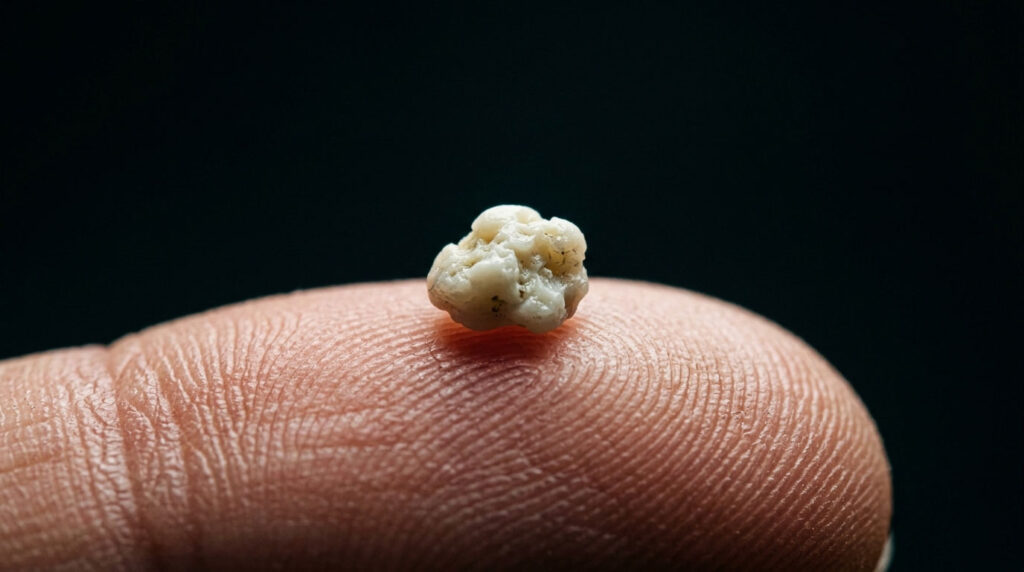
You’re brushing your teeth, you tilt your head back, and there they are: little white dots staring back at you from the sides of your throat. Your stomach drops. Is it strep? An infection? Something worse?
Table of Contents
Take a breath. In most cases, white spots in your throat are not the emergency they feel like at first glance. They’re usually a sign of a harmless tonsil stone or a treatable infection. But “usually” isn’t “always,” and knowing the difference is what keeps a minor annoyance from becoming a missed diagnosis.
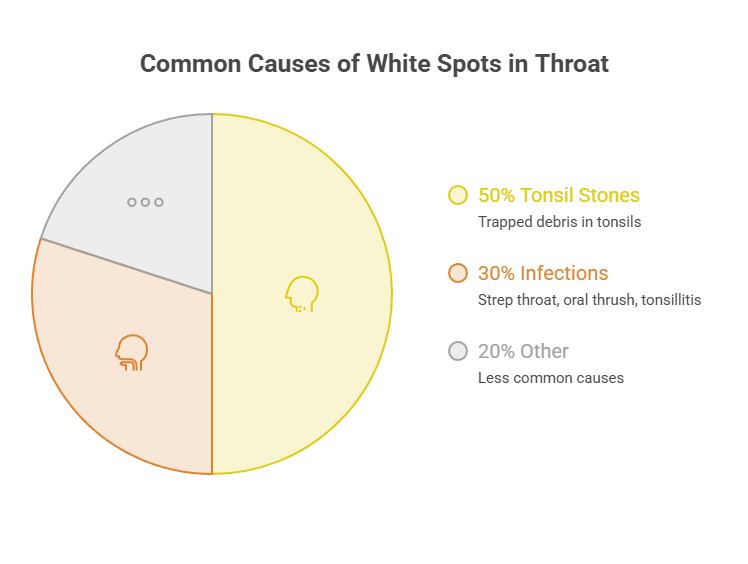
This guide walks you through every common cause, how to tell them apart at home, and the exact point where white spots stop being a nuisance and start being a reason to call a doctor.
Quick Answer: White spots in your throat are most often caused by tonsil stones (trapped debris in the tonsils) or infections like strep throat, oral thrush, or tonsillitis. Most are harmless and clear up on their own or with simple treatment. See a doctor if a white patch lasts more than two weeks, comes with high fever, or makes it hard to swallow or breathe.
At a Glance
- Tonsil stones form when food, dead cells, and bacteria get trapped in tiny tonsil pockets called crypts.
- Strep throat shows up as white or yellow streaks on red tonsils, usually with fever and no cough.
- White spots on tonsils that you can wipe off often point to oral thrush, a yeast infection.
- A flat white patch that won’t rub off and won’t go away needs a doctor’s look, especially for people who smoke.
- Strep throat alone drives an estimated 5.2 million US doctor visits a year.
- Digging at your tonsils with a sharp object can cause bleeding and infection, so skip it.
What White Spots in Your Throat Actually Are
White spots in throat tissue are not a diagnosis on their own. They’re a signal, the way a check-engine light is a signal. The spots tell you something is going on, and the surrounding clues tell you what.
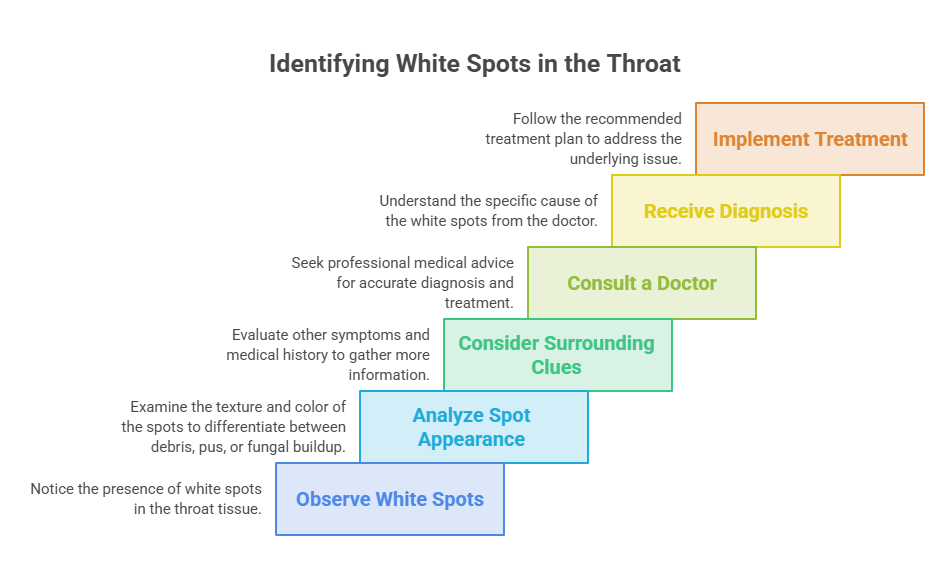
The “white” you see is usually one of three things: trapped debris, pus from an infection, or a fungal or skin-cell buildup. Each looks slightly different up close, and each points your doctor toward a different answer.
Across cases our medical team has reviewed, the single most common mix-up is patients assuming any white spot equals strep. That assumption sends a lot of people to urgent care for what turns out to be a simple tonsil stone they could have managed at home.
Spots, Streaks, Patches, or Film?
The shape matters more than people expect. Round white or yellow lumps tucked into the tonsil tend to be tonsil stones. Pus-like streaks across an angry red tonsil lean toward bacterial infection.
Creamy patches that smear when touched, leaving a raw red spot underneath, often signal oral thrush. A flat, fixed white patch that stays put no matter what suggests something your dentist or an ear, nose, and throat (ENT) doctor should examine.
Paying attention to texture saves you guesswork. Wipe-off versus stuck-fast is one of the fastest clues you can gather on your own before any appointment.
Why Location Tells a Story
Where the white spots sit narrows things down fast. Spots only on the tonsils point toward tonsil stones, strep throat, or tonsillitis. White patches spreading across the cheeks, tongue, and roof of the mouth lean toward thrush.
Your tonsils sit at the back of your throat as part of your immune system, acting like catchers’ mitts for germs that enter through your mouth and nose. That protective job is exactly why they sometimes collect debris, as the Cleveland Clinic and Mayo Clinic both explain in patient education.
When the tonsils trap material, white spots on tonsils are often the visible result, and the spot tends to stay put in one of those pockets rather than spreading across the mouth.
Why Your Tonsils Trap Debris (The Crypt Story)
Here’s the part almost no other article explains clearly. Your tonsils aren’t smooth. Their surface is folded into deep pits and tunnels called tonsil crypts. Think of a sponge, full of nooks and channels.
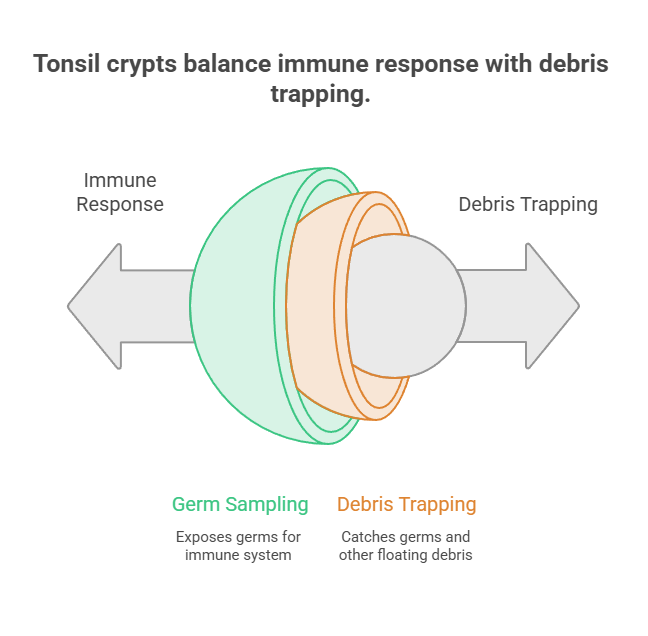
Those crypts have a purpose. They expose more surface area to passing germs so your immune system can sample and respond to them. The trade-off is that the same pockets that catch germs also catch everything else that floats by.
How a Tonsil Stone Forms, Step by Step
Food particles, dead cells, mucus, and bacteria drift into the crypts every day. Normally, you swallow them away without noticing. Sometimes, though, the material settles in and starts to pile up.
Over days and weeks, that trapped debris hardens as minerals like calcium build up around it. The result is a tonsillolith, the medical name for a tonsil stone. These show up as white or yellow spots and are a leading cause of white spots in throat tissue.
Tonsil stones often bring a calling card: bad breath, a metallic taste, or the odd sensation that something is stuck back there. Patients booking throat swabs through HealthCareOnTime frequently describe coughing up a small, smelly white chunk and panicking, when it was simply a stone working its way out.
Who Gets Tonsil Stones Most
Anyone with tonsils can get them, but they’re far from rare. A study of nearly 2,873 patients found tonsilloliths on roughly 40% of CT scans, with the chance rising as people get older.
People with deeper tonsil crypts, frequent throat infections, or chronic post-nasal drip tend to form them more often. Stones usually run small, from about 1 to 10 millimeters, though larger ones happen and cause more nuisance.
The takeaway our reviewers stress is reassuring: a tonsil stone is trapped debris, not an active infection, which is why so many of them cause little more than bad breath and a moment of alarm in the mirror.
Before we map every cause, this comparison table is the fastest way to tell white-spot culprits apart at a glance.
| Likely Cause | What the Spots Look Like | Telltale Signs | Pain Level | Usual Course |
| Tonsil stones | Small white or yellow lumps in tonsil pockets | Bad breath, metallic taste, often on one side | None to mild | Often dislodge on their own |
| Strep throat | White or yellow pus streaks on red, swollen tonsils | Sudden sore throat, fever, tender neck glands, no cough | Moderate to severe | Needs antibiotics; improves in 1 to 2 days on treatment |
| Oral thrush | Creamy white patches that wipe off, leaving red raw skin | Cottony mouth feeling, altered taste, common after inhaled steroids | Mild burning | Needs antifungal medication |
| Mononucleosis | Whitish-gray coating over very swollen tonsils | Extreme fatigue, widespread swollen glands, long fever | Moderate | Viral; resolves over several weeks |
| Leukoplakia | Flat white patch that does not wipe off | Painless, persistent, linked to tobacco or alcohol | Usually none | Needs evaluation; can be precancerous |
The 7 Most Common Causes (and How to Tell Them Apart)
Most white spots trace back to a short list. Our clinical reviewers point out that getting the cause right is what decides whether you need antibiotics, an antifungal, a dentist, or simply more water and patience.
1. Tonsil Stones (Tonsilloliths)
Tonsil stones top the list of harmless causes. They’re hardened clumps of trapped debris, not an active infection, which is why they often cause no pain at all.
The giveaway is persistent bad breath plus visible white spots on tonsils that sit in the pockets rather than coating the surface. Many people only discover them when they cough one up or spot them while flossing.
If you have no fever and feel otherwise fine, a tonsil stone is the most likely explanation for a stray white spot. That single fact eases a lot of worry.
2. Strep Throat (Group A Streptococcus)
Strep throat is the cause people fear most, and for good reason. It’s a bacterial infection from Group A Streptococcus, and it spreads easily, especially among school-age kids.
Classic signs are a sudden, severe sore throat, fever, swollen and tender neck glands, and white or yellow streaks on the tonsils, usually without a cough or runny nose. Strep needs antibiotics because untreated cases can lead to complications like rheumatic fever.
The scale here is real. Strep throat causes an estimated 5.2 million outpatient visits and 2.8 million antibiotic prescriptions a year in the United States among people under 65. A quick swab confirms it.
3. Tonsillitis (Viral and Bacterial)
Tonsillitis simply means inflamed tonsils, and it can come from viruses or bacteria. When it’s viral, you’ll often have cold-like symptoms alongside the swelling.
White spots or a light coating can appear with either type. Viral tonsillitis usually clears on its own with rest and fluids, while bacterial tonsillitis (often strep) may need antibiotics.
A throat swab settles the question, and that test-first habit is what keeps people from taking antibiotics they don’t need for a virus.
4. Oral Thrush (Candida)
Oral thrush is a yeast infection caused by Candida, the same organism behind many other common fungal issues. It creates creamy white patches in the throat and mouth that can be scraped off, leaving a tender red surface.
It shows up more often in babies, older adults, people using inhaled steroid asthma inhalers, and anyone with a weakened immune system. The wipe-off quality is the clue that separates thrush from strep streaks.
Thrush responds well to antifungal medication, so a quick visit usually resolves it within a week or two of starting treatment.
5. Infectious Mononucleosis (EBV)
Mononucleosis, or “mono,” comes from the Epstein-Barr virus and spreads through saliva, which earned it the “kissing disease” nickname. It can coat swollen tonsils with a whitish-gray film.
What sets mono apart is the bone-deep fatigue, widely swollen lymph nodes, and a fever that drags on far longer than a typical cold. The diagnostic teams we work with often use a monospot blood test to confirm it.
Mono is viral, so it resolves with rest rather than antibiotics. The fatigue, though, can linger for weeks, so pacing yourself matters during recovery.
6. Oral Herpes and Other Viral Causes
Oral herpes (HSV-1) is extremely common and can cause sores and white spots in the mouth and throat, along with tingling and flu-like symptoms. There’s no cure, but antiviral medication can shorten an outbreak.
Other viruses behind colds and the flu can leave the throat irritated with patchy white areas too. These tend to come bundled with the usual respiratory symptoms and fade as the virus runs its course.
Because these viral causes travel with familiar cold and flu signs, they rarely cause the same alarm as an unexplained spot on an otherwise healthy throat.
7. Leukoplakia and Rarer Concerns
Leukoplakia is a flat white patch that doesn’t wipe off and doesn’t resolve quickly. It’s usually painless, which is exactly why it’s easy to ignore for too long.
Most leukoplakia is benign, but a small share can be precancerous, particularly in people who smoke or drink heavily. White patches on the tonsils linked to certain HPV strains also warrant attention.
This is the category where a persistent white spot earns a prompt ENT visit, not a wait-and-see. Our medical reviewers note that catching these early is exactly why they push for evaluation of any patch lasting beyond two weeks.
To put the broader picture in numbers, here’s a snapshot of how often these throat issues actually touch American patients.
| What the Data Shows | US Figure | Source |
| Strep throat outpatient visits per year (under 65) | About 5.2 million | CDC |
| Antibiotic prescriptions from those strep visits | About 2.8 million | CDC |
| Tonsil stone prevalence found on CT scans | About 40% of patients | NIH / PMC study |
| Pediatric ambulatory tonsillectomies per year (under 15) | About 289,000 | AAO-HNS guideline |
| Invasive group A strep rate, 2013 to 2022 | Rose from 3.6 to 8.2 per 100,000 | CDC / CIDRAP |
White Spots in Kids vs Adults
The cause behind white spots often shifts with age, and that changes what you should watch for. In children, strep throat, viral tonsillitis, and mono lead the pack because young immune systems meet these germs at school and daycare.
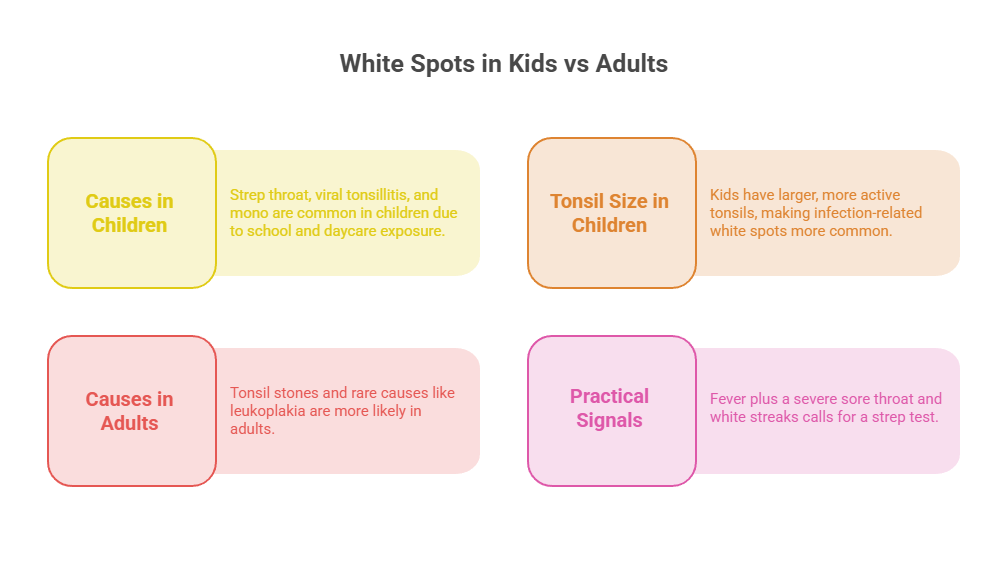
Kids also have larger, more active tonsils, since the palatine tonsils are most immunologically busy between ages 3 and 10. That makes infection-related white spots more common than tonsil stones in young children.
In adults, the picture broadens. Tonsil stones become more likely with age, and the rare-but-serious causes like leukoplakia enter the conversation, especially for people who smoke or drink.
For parents, the practical signal is the same one doctors use: fever plus a severe sore throat and white streaks calls for a strep test, while a tired child with swollen glands and a long fever may need a mono check. Patients commonly ask us when a child’s sore throat crosses the line, and trouble breathing or swallowing always does.
How Doctors Diagnose the Cause
You don’t have to play detective alone. A provider can usually pin down the cause of white spots in throat tissue in a single short visit, often within minutes.
The Exam and History
It starts with questions and a look. Your doctor will ask about fever, how fast symptoms came on, whether you have a cough, and how long the white spots on tonsils have been there.
Then comes the throat exam with a light and sometimes a tongue depressor. The pattern (streaks versus lumps versus wipe-off patches) plus your symptoms often points to the answer before any test runs.
Rapid Strep Test, Throat Culture, and Monospot
If strep is on the table, a rapid strep test gives results in minutes from a quick swab. If that’s negative but suspicion stays high, a throat culture can confirm it over a day or two.
For suspected mono, a monospot or related blood test checks for the Epstein-Barr response. For thrush, the appearance and a simple swab usually do the job.
In tests booked through HealthCareOnTime, this swab-first approach is what prevents unnecessary antibiotics and gets you the right treatment faster.
When Imaging or a Biopsy Steps In
Most white spots never need imaging. A doctor may order a CT scan if a large tonsil stone is suspected deep in the tissue, or if there’s concern about an abscess forming.
A biopsy enters the picture only when a white patch persists, looks suspicious, or won’t explain itself. Our medical reviewers note that this is reserved for the small minority of cases, not the everyday tonsil stone or strep swab.
Treatment and Safe Home Care
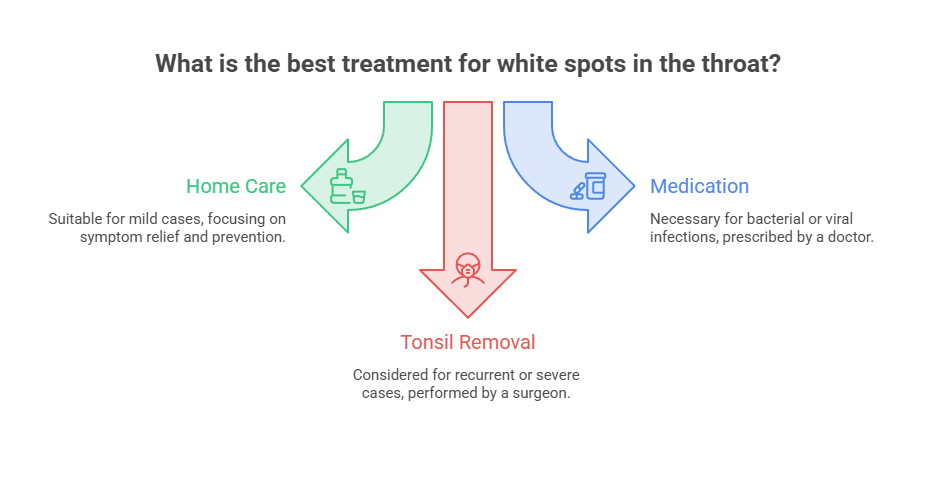
The right fix depends entirely on the cause, which is why guessing can waste time or money. Here’s how care breaks down once you know what you’re dealing with.
What You Can Safely Do at Home
For tonsil stones and mild irritation, simple steps go a long way. Warm salt-water gargles can loosen debris and soothe the tissue, and staying well hydrated helps flush the tonsil crypts naturally.
A low-pressure water flosser on its gentlest setting can sometimes dislodge a visible stone. Good oral hygiene, including brushing your tongue and gargling after meals, keeps new debris from settling in.
Over-the-counter pain relievers and throat lozenges can ease discomfort while a viral cause runs its course. None of these cure an infection, but they make the wait more bearable.
What NOT to Do
This part matters. Don’t dig at your tonsils with a toothpick, fingernail, bobby pin, or any sharp object to pry a stone loose.
The tonsils are delicate and bleed easily, and poking at them can cause cuts, infection, or a trip to the ER. If a stone won’t come out with gentle methods, leave it; most work their way out on their own.
When in doubt, let a professional remove a stubborn stone. A two-minute office procedure beats a self-inflicted injury every time.
When Medication Is Needed
Bacterial causes call for prescriptions. Strep throat and bacterial tonsillitis need a full course of antibiotics, and finishing every dose matters even after you feel better, to prevent complications.
Oral thrush needs antifungal medication, while oral herpes responds to antivirals. Viral tonsillitis and mono don’t improve with antibiotics at all, so rest, fluids, and pain relievers are the mainstay there.
This is why a quick diagnosis pays off: matching the treatment to the cause is the whole game, and the wrong medicine simply wastes time.
When Tonsil Removal Is Considered
Surgery is a last resort, not a first move. Tonsillectomy is one of the most common procedures in the country, with about 289,000 ambulatory operations a year in children under 15, usually for sleep-disordered breathing or repeated infections rather than stones.
Doctors weigh removal using the Paradise Criteria, which generally means seven or more throat infections in one year, five a year for two years, or three a year for three years.
Tonsil stones alone rarely meet that bar unless they’re large, recurrent, and seriously affecting quality of life. Most people never need their tonsils out for white spots.
How Long Do White Spots Last?
Recovery time depends on what’s behind the spots, and knowing the rough timeline helps you judge whether things are on track. Tonsil stones can clear in days once dislodged, though new ones may form later.
Strep throat usually turns the corner within one to two days of starting antibiotics, even though the full course runs about ten days. Oral thrush typically improves within a week or two of antifungal treatment.
Viral tonsillitis tends to fade over a week or so, while mono is the marathon of the group, with sore throat easing in a couple of weeks but fatigue sometimes lasting a month or more. Anything that drags well past these windows, or a patch that never clears, is your cue to get checked.
Red Flags: When White Spots Mean “See a Doctor Now”
Most white spots are minor. A specific handful are not, and knowing them protects you. This table turns the guesswork into a clear plan.
| If You Notice This | What It Likely Suggests | Recommended Next Step |
| White lumps with bad breath, no fever | Tonsil stones | Gentle home care; see a dentist or ENT if they keep returning |
| Sudden sore throat, fever, and no cough | Possible strep throat | Get a rapid strep test within 1 to 2 days |
| Creamy patches that wipe off, cottony mouth | Oral thrush | See a provider for antifungal treatment |
| Severe fatigue and swollen glands over a week | Possible mononucleosis | Schedule a visit and ask about a monospot test |
| A white patch that won’t go away in 2 to 3 weeks | Needs evaluation | See an ENT promptly for assessment |
| Trouble breathing, drooling, or unable to swallow | Possible airway emergency or abscess | Seek urgent or emergency care immediately |
Symptoms That Warrant Same-Day or Urgent Care
Some signs shouldn’t wait for a routine appointment. Difficulty breathing, severe trouble swallowing, drooling because you can’t manage saliva, or a muffled “hot potato” voice can signal a peritonsillar abscess or airway problem.
A very high fever, a stiff neck, or severe one-sided throat pain with swelling also belongs in the same-day category. Patients commonly ask us where the line is, and the honest answer is simple: if breathing or swallowing is genuinely hard, treat it as an emergency.
Trust that instinct. It’s far better to be reassured after a quick visit than to wait out something that needed attention.
How to Prevent White Spots and Tonsil Debris
You can’t make your tonsil crypts disappear, but you can cut down how much they collect. Prevention here is mostly about consistent habits, not fancy products.
An Oral Hygiene Routine That Actually Helps
Brush twice a day and clean your tongue, where bacteria love to gather. Floss daily, and finish with a gargle after meals to rinse away particles before they settle into the crypts.
A nightly salt-water or alcohol-free mouthwash gargle can reduce the bacterial load that feeds both tonsil stones and bad breath. People prone to white spots on tonsils often see fewer flare-ups once this becomes routine.
Replacing your toothbrush regularly and not sharing utensils or drinks also limits the spread of the infections that cause white spots in the first place.
Hydration, Diet, and Habits
Drinking enough water keeps your mouth from going dry, and a moist mouth clears debris better than a parched one. Sipping through the day beats chugging once.
Cutting back on smoking and heavy alcohol lowers your risk of leukoplakia and supports healthier throat tissue overall. Treating chronic post-nasal drip or allergies also helps, since that constant mucus gives the crypts more to trap.
Small, steady changes add up. The same routine that freshens your breath quietly lowers how often those white spots return.
Frequently Asked Questions
Are white spots on my tonsils dangerous?
Usually not. Most white spots on tonsils come from harmless tonsil stones or treatable infections like strep throat or thrush. The exception is a flat white patch that won’t wipe off and lasts more than two weeks, which deserves a prompt medical evaluation.
Is it strep throat or just tonsil stones?
Strep throat brings a sudden sore throat, fever, and tender neck glands, with pus-like streaks on red tonsils and no cough. Tonsil stones show up as small white lumps with bad breath but little or no pain. A rapid strep test settles it quickly.
Can white spots in my throat go away on their own?
Often, yes. Tonsil stones frequently dislodge by themselves, and viral causes like mild tonsillitis clear with rest and fluids over a week or so. Bacterial strep and fungal thrush, though, need medication and won’t reliably resolve without treatment.
Why do I have white spots but no sore throat?
Painless white spots in throat tissue usually point to tonsil stones or, less often, leukoplakia. Tonsil stones are trapped debris, not an active infection, so they often cause no pain at all, just bad breath or a stuck feeling. Persistent painless patches still warrant a check.
How do I safely remove tonsil stones at home?
Try warm salt-water gargles, plenty of water, and a water flosser on its lowest setting to gently dislodge a visible stone. Never use sharp objects like toothpicks or fingernails, which can cause bleeding and infection. If a stone won’t budge gently, leave it for a professional.
What if there’s a white spot on only one tonsil?
A single-sided white spot is common with tonsil stones, which often form on one side. It can also occur with localized infections. If that one-sided spot is large, painful, growing, or paired with a muffled voice and trouble swallowing, see a doctor the same day.
Are white spots a sign of throat cancer?
Rarely. White spots are far more likely to be infections or tonsil stones than anything serious. The concern rises with leukoplakia, a fixed white patch that won’t wipe off and won’t clear, especially in people who smoke or drink heavily. Persistent patches should always be examined.
Can white spots come back after they clear up?
Yes, especially tonsil stones, which tend to recur because the tonsil crypts that trap debris are still there. Strep and thrush can also return with new exposures. Consistent oral hygiene, hydration, and treating post-nasal drip reduce how often white spots on tonsils reappear.
Do white spots mean I need my tonsils removed?
Almost never on their own. Tonsillectomy is reserved for repeated infections meeting the Paradise Criteria or for sleep and breathing problems, not occasional tonsil stones. Doctors only consider removal when stones are large, frequent, and genuinely affecting your quality of life despite other measures.
Is oral thrush contagious?
Oral thrush usually develops from an overgrowth of Candida already present in your mouth, so it isn’t typically passed person to person like a cold. It tends to appear when something shifts your balance, such as inhaled steroids, antibiotics, or a weakened immune system. Antifungal treatment clears it.
Can dehydration cause white spots in the throat?
Dehydration doesn’t directly create white spots, but a dry mouth lets debris and bacteria linger in the tonsil crypts, which encourages tonsil stones to form. A dry, irritated throat can also worsen the feeling of something stuck. Drinking enough water supports natural clearing of debris.
How long should I wait before seeing a doctor?
For mild spots with no fever, a few days of home care is reasonable. See a doctor within one to two days if you have fever and a severe sore throat, or right away for trouble breathing or swallowing. Any white patch lasting over two weeks needs evaluation.
Medical Disclaimer: This article is for general educational purposes and reflects current US health guidance. It is not a substitute for professional medical advice, diagnosis, or treatment. Always talk with a qualified healthcare provider about symptoms or conditions affecting you. If you have trouble breathing or swallowing, seek emergency care immediately.
References
- Centers for Disease Control and Prevention (CDC), Group A Strep Disease Surveillance and Trends
- National Institutes of Health (NIH) / PMC, Prevalence of Palatine Tonsilloliths Detected by CT
- American Academy of Otolaryngology-Head and Neck Surgery, Clinical Practice Guideline: Tonsillectomy in Children
- NIH / StatPearls, Tonsillectomy Overview and Paradise Criteria
- CIDRAP, University of Minnesota, CDC Study on Rising Invasive Group A Strep Infections
- Healthline, White Spots on Throat: Causes and Treatment
- WebMD, White Spots in Throat: What Are They?