
Two coworkers eat the identical turkey sandwich at noon. By 2 p.m., one has forgotten food exists. The other is calculating how long until a vending machine run stops looking suspicious.
Table of Contents
Same lunch, same desk, same calorie count. The difference did not start in the break room.
It started in a cluster of neurons roughly the size of an almond, and for a large number of Americans, the settings on that cluster were written into their DNA long before their first meal.
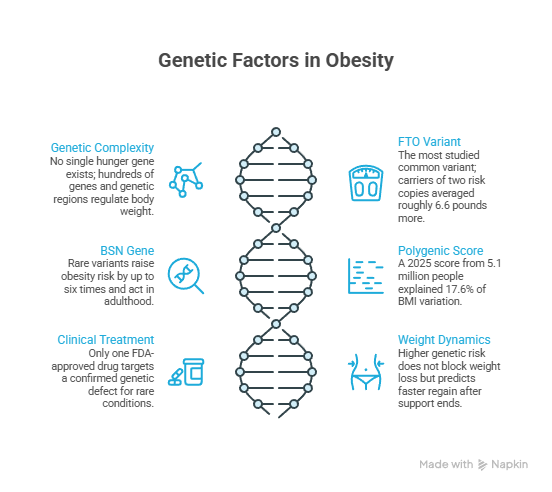
Quick Answer: The “hunger gene” is shorthand for a group of genes that control appetite signaling in the brain, including FTO, MC4R, BSN and the leptin pathway. Variants in these genes change how strongly you feel hunger and how quickly you feel full. Genetics account for a meaningful share of body weight differences between people, though environment still shapes the outcome. Genetic testing helps only in specific clinical situations.
At a Glance
• No single “hunger gene” exists. Researchers have linked hundreds of genes and genetic regions to body weight regulation.
• FTO is the most studied common variant. Carriers of two risk copies averaged roughly 6.6 pounds more than non-carriers.
• Rare variants in the BSN gene raise obesity risk by up to six times and act in adulthood rather than childhood.
• About 40.3% of US adults had obesity in the most recent national survey cycle, and nearly 1 in 10 had severe obesity.
• A 2025 polygenic score built from 5.1 million people explained 17.6% of BMI variation in one large study population.
• Only one FDA-approved obesity drug targets a confirmed genetic defect, and it treats rare conditions diagnosed by DNA testing.
• Higher genetic risk did not block weight loss in trials. It predicted faster regain once support ended.
What Scientists Actually Mean by the “Hunger Gene”
The phrase makes a great headline and a terrible diagnosis. Reporters use it as a catch-all for whichever gene a new study happens to spotlight, which is why one week it means FTO, the next week KSR2, and the week after that a leptin regulator nobody had heard of.
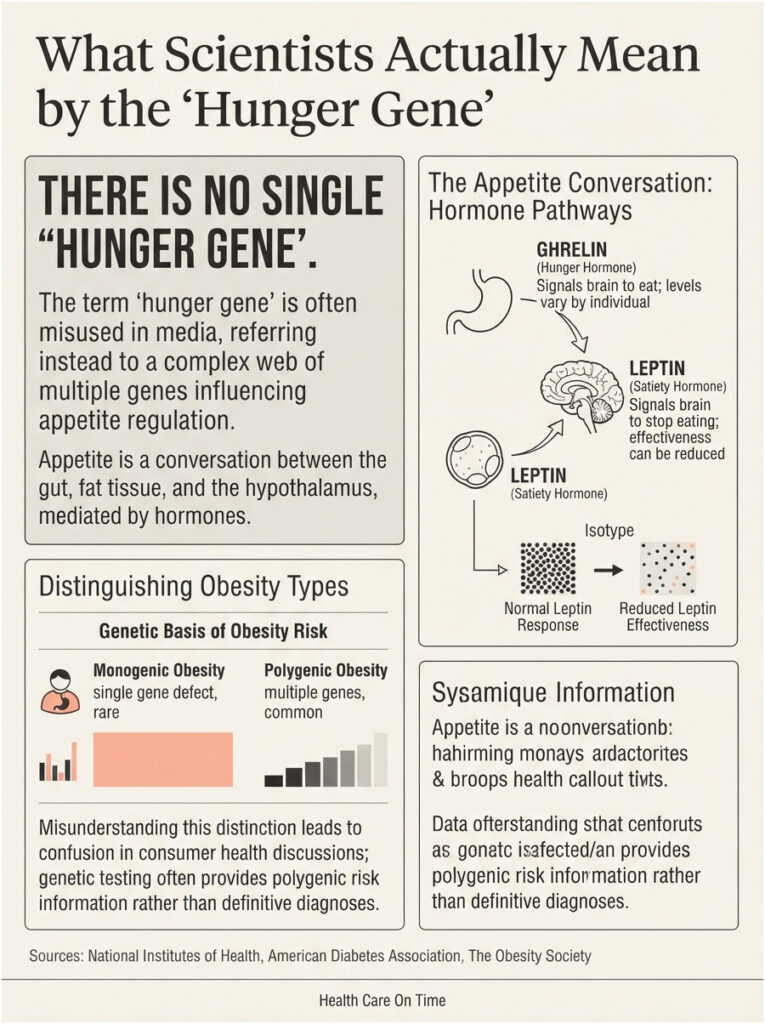
Underneath the shorthand sits real biology. Your brain runs a continuous accounting system for energy, and a long list of genes writes the code for that system.
Patients booking metabolic panels through HealthCareOnTime ask a version of the same question almost daily: is constant hunger a personality trait or a medical finding? The research increasingly says it can be both, and that separating them matters.
The Appetite Loop in Plain English
Think of appetite as an ongoing conversation between your gut, your fat tissue and a control center in your brain called the hypothalamus. Hormones carry the messages. Genes decide how loudly those messages get spoken and how well the brain hears them.
Ghrelin, the Go Signal
Ghrelin is produced mainly in the stomach lining and rises when you have not eaten for a while. It tells the hypothalamus to start hunting, and in most people it drops sharply within an hour of a real meal.
In some people it does not drop the way it should. Research on FTO variants found that in carriers of the obesity-associated AA version, ghrelin levels stayed relatively high even after eating, and those individuals reported a faster increase in hunger following a test meal.
That same work looked at brain scans. Differences showed up between the brain’s reward regions and the hypothalamus, leading the lead researcher to describe high-risk carriers as biologically programmed to eat more, with brains responding differently both to ghrelin and to pictures of food.
Leptin, the Stop Signal
Leptin is made by fat cells and works in the opposite direction. More fat mass means more leptin, which should tell the brain to ease off.
The system fails in two ways. Either the body makes too little leptin, or the brain stops responding to normal amounts, a state often called leptin resistance.
Work at Rockefeller University found that alterations in the transcriptional mechanisms regulating leptin gene expression lead to decreased leptin levels and obesity, a mechanism the researchers estimated could play a role in at least 10% of obesity cases.
The Hypothalamus as Switchboard
Both signals converge on the leptin-melanocortin pathway, a chain of neurons that converts hormone levels into the felt sensation of hunger or fullness. Most genes on the obesity suspect list act somewhere along this chain.
Monogenic Versus Polygenic: The Distinction That Changes Everything
Monogenic obesity means a single gene defect drives the condition. It is rare, usually severe, typically begins in the first years of life, and sometimes has a targeted treatment.
Polygenic obesity is the common kind. Hundreds of small genetic effects stack together, each nudging appetite or metabolism slightly, and the total tilts the odds without deciding the outcome.
Confusing the two is the single biggest error in consumer coverage of this topic. A drugstore DNA kit reporting an FTO variant is describing polygenic risk, not diagnosing a disease.
Why This Research Matters Right Now in the US
American obesity numbers stopped climbing but did not fall. The prevalence of obesity among US adults was 40.3% during August 2021 through August 2023, and from 2013-2014 through that period the age-adjusted prevalence did not change significantly.
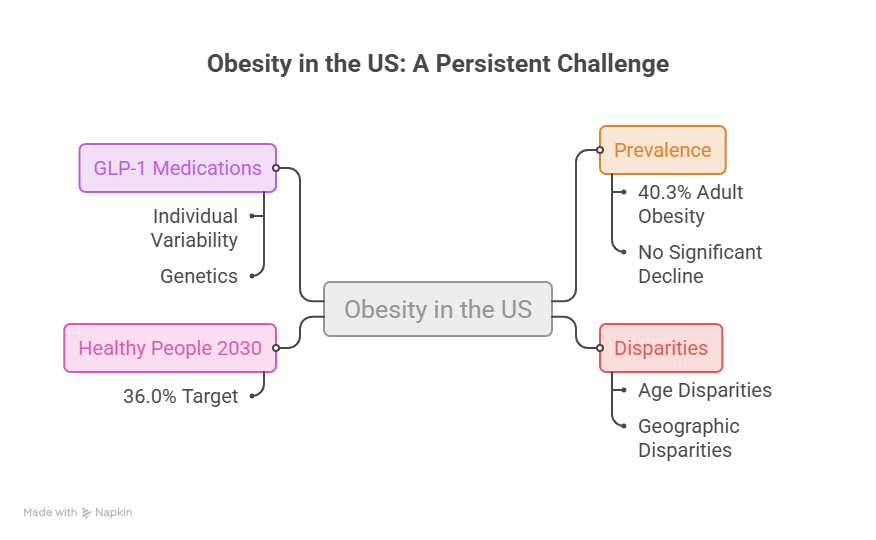
That plateau is the story. Decades of public messaging built almost entirely around personal choice produced a holding pattern rather than a reversal.
The Numbers Behind the Question
Prevalence is not spread evenly across age or geography. Obesity affected 46.4% of adults ages 40 to 59, higher than the 35.5% among adults ages 20 to 39 and 38.9% among those 60 and older.
Geography splits it further. In 2024, every US state and territory reported obesity prevalence of 25% or higher, with the Midwest at 35.9% and the South at 34.5%, and two states, Mississippi and West Virginia, at 40% or greater.
Across the panels our diagnostic network processes for US patients, that middle-age spike rarely shows up as one number going wrong. It shows up as fasting insulin, triglycerides and HbA1c drifting together over several years.
| Metric | Figure | Population | Source and period |
| Adult obesity prevalence | 40.3% | US adults age 20+ | CDC NCHS Data Brief 508, Aug 2021 to Aug 2023 |
| Severe obesity prevalence | Nearly 1 in 10 | US adults age 20+ | CDC NCHS, Aug 2021 to Aug 2023 |
| Highest-prevalence age band | 46.4% | US adults ages 40 to 59 | CDC NCHS Data Brief 508 |
| States at or above 40% | 2 states plus Guam | Mississippi, West Virginia | CDC BRFSS Adult Obesity Prevalence Maps, 2024 |
| Highest regional prevalence | 35.9% | US Midwest | CDC BRFSS, 2024 |
| Healthy People 2030 target | 36.0% | US adults | US Dept. of Health and Human Services |
Why “Eat Less, Move More” Stopped Being the Whole Answer
The advice is not wrong. It is incomplete in the same way that telling someone with poor vision to look harder is incomplete.
Two people following identical plans report different hunger levels, different degrees of food preoccupation and different rates of regain. Genetics explains a measurable slice of that gap.
The arrival of GLP-1 medications made the gap impossible to ignore. When a drug that adjusts appetite signaling produces results that years of willpower did not, the willpower model loses explanatory power.
The Genes on the Suspect List
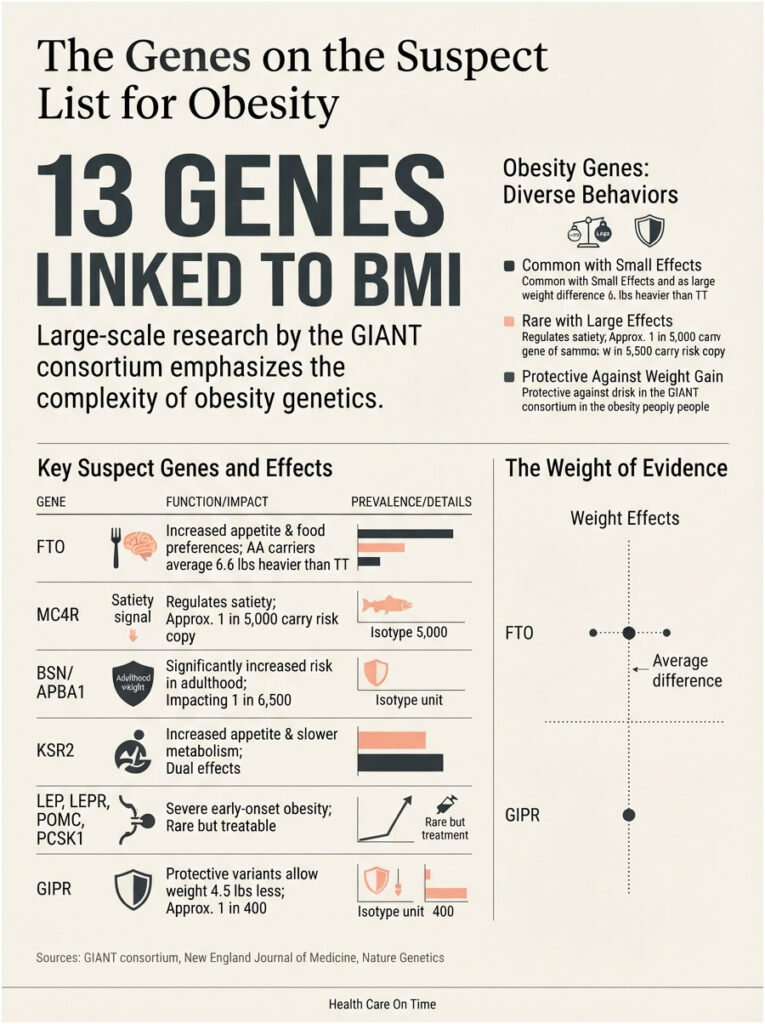
Obesity genes do not behave alike. Some are common with small effects, some are rare with large effects, and a few actively protect against weight gain.
FTO, the Original Headline Gene
FTO stands for “fat mass and obesity-associated,” and it earned the name by being the first common variant reliably linked to BMI across many populations. A 2007 team reported that people carrying the AA version weighed an average of 3 kilograms more than those with the TT version, and animal studies showed AA carriers tend to eat more and prefer high-fat food.
Three kilograms is about 6.6 pounds. Modest, until you multiply it across a population and across forty years of adult life.
What Carriers Actually Experience
The lived version is undramatic. A slightly shorter gap between meals, a slightly stronger pull toward calorie-dense food, a slightly weaker off switch.
Research on food preferences found the FTO A-allele associated with certain food choices, particularly energy-dense foods. FTO is heavily expressed in the hypothalamus, which is exactly where the appetite conversation happens.
MC4R, the Satiety Brake
MC4R sits at the end of the leptin-melanocortin chain and functions as the brain’s “stop eating” receiver. When it fails, the stop message never lands.
Approximately 1 in 5,000 individuals carries a risk copy of MC4R that prevents the gene from producing the protein needed to tell the brain to stop eating, and while the variant was first identified in people with extreme early-onset obesity, later work confirmed it also affects body weight in the general population.
MC4R matters clinically because it is druggable. It is the target of the only FDA-approved medication that corrects a genetic obesity defect directly.
BSN and APBA1, the Adult-Onset Surprise
This is the finding most consumer coverage has missed entirely. A Cambridge-led team analyzing exome data from up to 587,027 adults found that variants in the gene BSN, also known as Bassoon, can raise obesity risk as much as six times, along with increased risk of non-alcoholic fatty liver disease and type 2 diabetes, affecting roughly 1 in 6,500 adults.
Timing is what sets BSN apart. Unlike previously identified obesity genes acting through the leptin-melanocortin pathway from childhood onward, BSN and APBA1 variants show increased obesity risk that does not appear until adulthood.
Our medical reviewers flag one detail that news coverage keeps dropping: BSN protein-truncating variants magnified the influence of common BMI variants, with a polygenic score showing an effect twice as large in carriers as in non-carriers.
Rare risk and common risk do not simply add together. In this case they multiply, which is a genuinely new idea in obesity genetics.
KSR2, the Metabolism Gene
KSR2 is the gene behind much of the older “hunger gene” coverage still ranking on Google. University of Cambridge researchers reported that KSR2 mutations may cause continued hunger pangs in people with obesity while also slowing metabolism, and that children carrying a mutation showed increased appetite, slower metabolism, lower heart rate and severe insulin resistance compared with those carrying a normal copy.
Cell experiments showed KSR2 mutations impaired metabolic processes including glucose and fatty acid oxidation.
KSR2 illustrates something worth holding onto. Some obesity genes act on appetite, some act on energy burn, and a few, like this one, do both at once.
LEP, LEPR, POMC and PCSK1: Rare but Treatable
These four genes govern leptin production and processing. Defects cause hyperphagia, meaning pathological and insatiable hunger, usually with severe obesity beginning in the first years of life.
They are rare. They are also the only forms of obesity with a drug approved specifically to correct the underlying signaling failure.
GIPR and GPR75: The Protective Side
Genetics cuts both ways. Roughly 1 in 400 individuals carries a protective copy of a GIPR variant, and carriers tend to weigh an average of 4.5 pounds less than non-carriers.
Loss-of-function mutations in GPR75 are protective against obesity in both humans and mice, which is precisely the kind of finding pharmaceutical developers chase.
The Bigger Picture From Large-Scale Screens
Individual gene stories understate the scale of the work. Researchers in the GIANT consortium, working across hundreds of thousands of participants, identified 13 genes carrying variations associated with BMI, eight of them newly implicated in obesity, and described genes acting in brain pathways that affect food intake, hunger and satiety.
| Gene | What it controls | Effect on obesity risk | How common | Typical onset |
| FTO | Appetite drive, food preference, ghrelin response | AA carriers averaged about 6.6 lb heavier than TT carriers | Very common across most populations | Childhood through adulthood |
| MC4R | Satiety signal reception in the hypothalamus | Non-functioning copy strongly raises BMI | About 1 in 5,000 carries a risk copy | Childhood, continues into adult life |
| BSN (Bassoon) | Synaptic signaling in feeding circuits | Up to 6x higher obesity risk, plus raised T2D and fatty liver risk | About 1 in 6,500 adults | Adulthood only |
| APBA1 | Neuronal vesicle trafficking | Large effect, same class as BSN | Rare | Adulthood only |
| KSR2 | Appetite plus metabolic rate and fuel oxidation | Raises appetite while lowering calorie burn | Rare | Childhood |
| LEP / LEPR | Leptin production and reception | Severe obesity with hyperphagia | Very rare | Infancy and early childhood |
| POMC / PCSK1 | Melanocortin precursor processing | Severe early-onset obesity, treatable with MC4R agonist | Very rare | Infancy and early childhood |
| GIPR | Incretin signaling and energy expenditure | Protective variant, carriers averaged 4.5 lb lighter | About 1 in 400 | Lifelong |
How Much of Your Weight Is Genetics, Really
This is where honest science gets uncomfortable, because the answer is “a lot, but not all, and the number shifts depending on how you ask.”
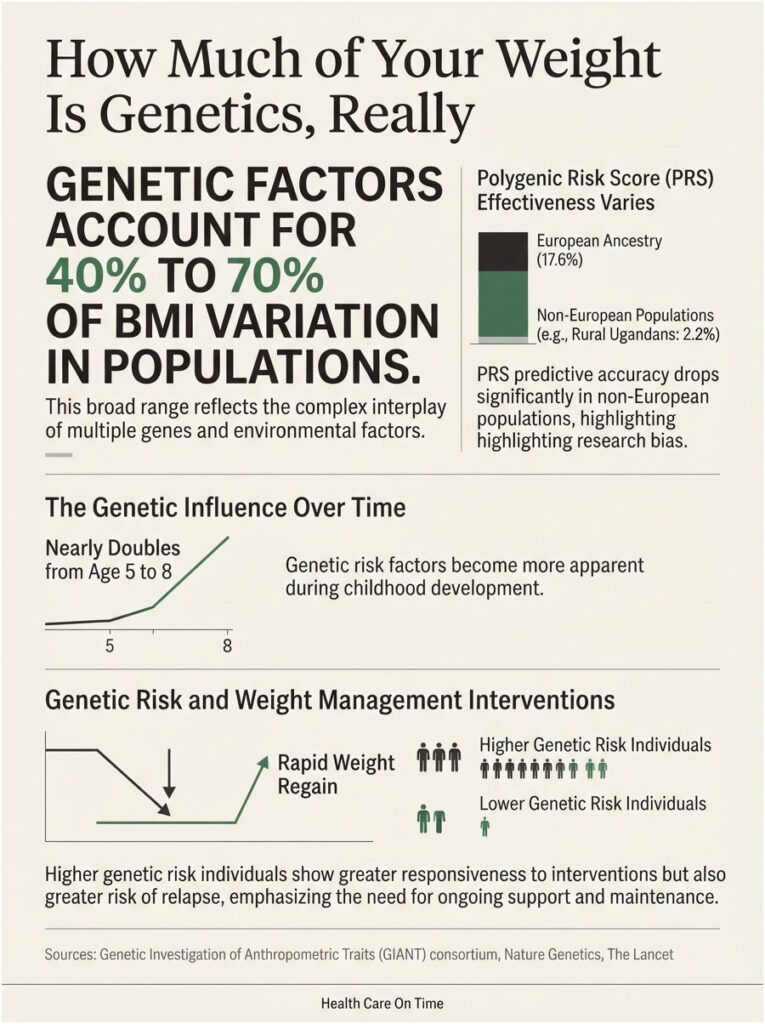
Twin and family studies have long placed BMI heritability high, often between 40% and 70%. Those figures describe variation across a population. They do not state what share of any one person’s weight is genetic.
The Polygenic Risk Score Leap
Until recently, genetic scores predicted obesity poorly enough to be clinically useless. That shifted in July 2025.
Researchers using genetic data from up to 5.1 million people across five ancestry groups built a multi-ancestry polygenic score that explained 17.6% of BMI variation among UK Biobank participants of European ancestry. The senior author called it roughly twice as effective as the previous best available test.
The score also worked early in life. Adding it to predictors available at birth nearly doubled explained variance for BMI from age 5 onward, moving from 11% to 21% at age 8, and children with higher scores showed accelerated BMI gain from age 2.5 through adolescence with earlier adiposity rebound.
Where the Science Still Falls Short
Predictive power dropped sharply outside European-ancestry populations. Performance ranged from 16% in East Asian Americans down to 2.2% in rural Ugandans.
For a country as genetically mixed as the United States, that gap is not academic. A test performing well for some patients and barely at all for others cannot serve as a standard clinical tool yet.
The Finding People Keep Misreading
Here is the result that deserved far more attention. People with higher genetic risk of obesity were more responsive to diet and exercise interventions, and also regained weight more quickly once those interventions ended.
In cases reviewed across our diagnostic network, that pattern matches what patients describe about their own history. The difficulty was rarely the losing. It was the holding.
That reframes the whole question. If genetic risk predicts relapse rather than resistance, the correct response is longer support, not more effort.
What Genes Do Not Decide
Obesity prevalence in the United States roughly tripled across decades during which the human genome did not change. Whatever genetics does, it does not explain the trend line.
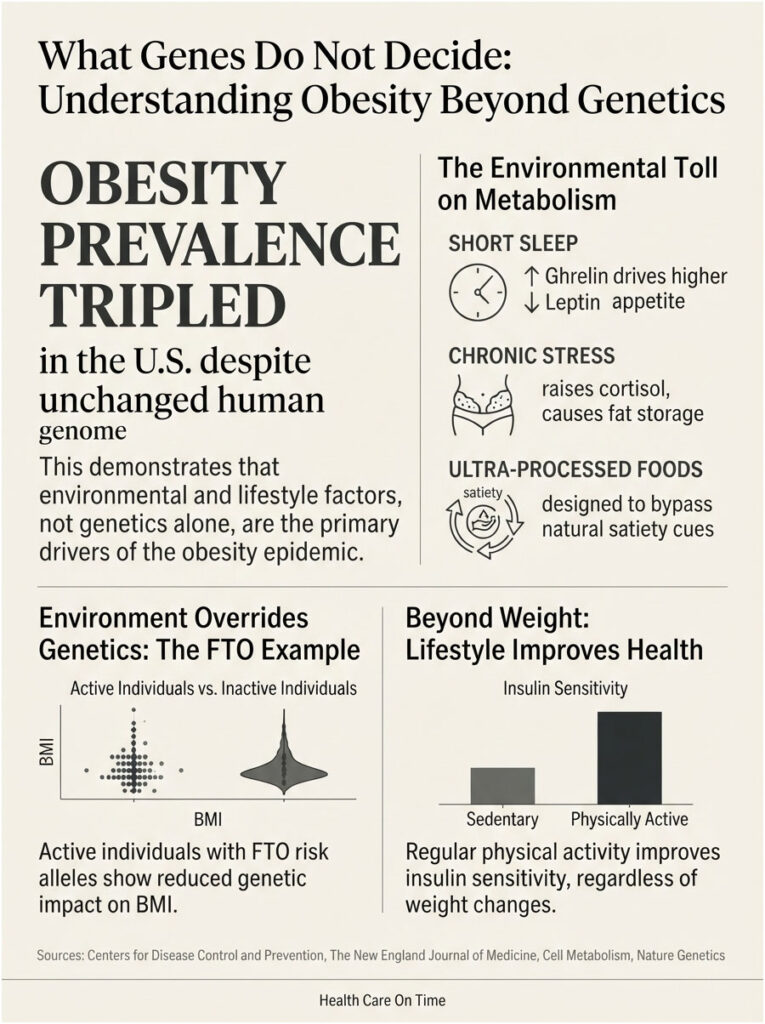
A better model is a collision. Genes set your sensitivity to an environment, and the American food environment turned the volume up on everyone.
Sleep, Stress and Ultra-Processed Food
Short sleep raises ghrelin and lowers leptin, pushing appetite in exactly the wrong direction. Chronic stress adds cortisol, which favors abdominal fat storage and disrupts glucose handling.
Ultra-processed food is engineered for hyperpalatability, meaning it bypasses normal satiety cues by design. For someone whose satiety cues were already quiet, the effect compounds instead of adding.
Physical Activity as a Partial Offset
Multiple studies have found that physically active carriers of FTO risk alleles show a smaller genetic effect on BMI than sedentary carriers. Activity does not delete the variant.
It narrows the gap, and it improves insulin sensitivity whether or not the scale moves. Patients commonly ask us whether the effort is pointless when genetics are stacked against them.
The data says the opposite. People with the strongest genetic push often show the largest short-term response, which makes sustained support the deciding variable rather than the starting one.
Epigenetics and the Regain Problem
A 2025 review from Pennington Biomedical researchers described how epigenetic and cellular memory within adipose tissue can predispose individuals to weight regain after initial fat loss, with persistent transcriptional and chromatin changes remaining even after fat mass reduction.
Fat tissue appears to retain a record of having been larger. That is a biological explanation for a pattern millions of Americans were told was a discipline failure.
Testing, Treatment and the GLP-1 Question
The practical question is whether any of this changes what you do on Monday morning. For most people the answer is no. For a small group the answer is yes, and dramatically so.
Who Genuinely Needs Genetic Testing for Obesity
Clinical genetic testing for obesity has a narrow, well-defined role. It is generally considered when obesity appears before age 5, when hunger is extreme and unrelenting, when developmental or hormonal abnormalities accompany the weight, or when a family pattern suggests a single-gene cause.
Outside those situations, a genetic result changes almost nothing about treatment. Your physician will recommend the same interventions regardless of your FTO status.
What Consumer DNA Kits Can and Cannot Tell You
Direct-to-consumer kits test a handful of common variants and report relative risk. They do not sequence the genes that cause treatable monogenic obesity, and they do not diagnose anything.
A kit reporting an FTO risk allele is telling you something true and nearly useless. It cannot predict whether you will develop obesity, and it cannot tell you what to eat.
Clinical Testing in the US
Real diagnostic testing means a targeted obesity gene panel or whole exome sequencing, ordered by a physician and interpreted by a genetics professional. It runs through medical genetics clinics, pediatric endocrinology and some adult endocrinology practices.
The One FDA-Approved Gene-Targeted Obesity Drug
Setmelanotide (Imcivree)
Setmelanotide is an MC4R agonist approved by the FDA on November 25, 2020, for chronic weight management in adults and children age 6 and older with obesity due to POMC, PCSK1 or LEPR deficiency. The approval required that deficiency be confirmed by genetic testing.
The indication has widened since. The FDA expanded approval to children as young as 2 years old with syndromic or monogenic obesity due to Bardet-Biedl syndrome or genetically confirmed POMC, PCSK1 or LEPR deficiency, and later to patients aged 4 and older with acquired hypothalamic obesity.
Phase 2 and phase 3 trials showed statistically significant weight loss of at least 10% of body weight after one year, along with reduced appetite. This is what precision medicine for obesity looks like when the target is known and confirmed.
Does Your Genotype Change How GLP-1 Drugs Work
Semaglutide and tirzepatide act on incretin pathways rather than correcting a genetic defect, and response varies widely between individuals. Research into genetic predictors of response is active but not yet clinically usable.
The GIPR findings are the interesting thread, since one of these drug classes engages the same receptor where a protective natural variant sits. Nobody should be selecting or avoiding a medication today based on a consumer DNA report.
The Lab Work That Actually Informs a Weight Conversation
Before genetics, standard metabolic markers do far more practical work. Tests booked through HealthCareOnTime for weight-related concerns most often start with fasting glucose and HbA1c, fasting insulin, a lipid profile, TSH with free T4, and vitamin D.
These identify insulin resistance, thyroid dysfunction and cardiovascular risk, all treatable and all capable of affecting weight. A completely normal panel is useful too, because it clears the conditions a physician can correct quickly.
Pitfalls, Myths and Bad Advice to Skip
“It’s All Genetic So Nothing Works”
This is the most damaging misreading available, and the evidence contradicts it directly. People at high genetic risk responded strongly to lifestyle interventions in controlled studies.
What genetics predicts is difficulty and relapse risk, not futility. Those findings argue for more support and longer follow-up, not for giving up.
“A DNA Diet Will Fix It”
Companies selling genotype-matched meal plans have run well ahead of the evidence. Controlled trials comparing diets assigned by genotype against diets assigned at random have generally failed to show a meaningful advantage.
Save the money. Spend it on a registered dietitian who will actually look at your week and your schedule.
Misreading a Consumer Test Result
A relative risk figure on a DNA report is a population statistic wearing a personal costume. It says that people with your variant have somewhat higher average BMI, and nothing more specific than that.
Assuming Adult-Onset Weight Gain Cannot Be Genetic
The BSN finding overturned a long-standing assumption that genetic obesity always announces itself in childhood. Sudden, unexplained weight gain in your thirties or forties still deserves a medical workup rather than a lecture.
The Stigma Trap in Both Directions
Framing obesity as pure willpower is inaccurate and harmful. Framing it as pure destiny is equally inaccurate and strips away agency people genuinely have.
The accurate framing sits between the two. Biology sets the difficulty level, behavior and environment determine how that level gets played, and medical care can change the settings.
Your Next Steps
A Five-Point Plan That Respects the Biology
- Get baseline metabolic labs before assuming the cause is genetic. Thyroid and insulin problems are common, testable and treatable.
- Track hunger, not only food. Record how long after eating hunger returns and how intrusive food thoughts become. That pattern is what a clinician can act on.
- Treat sleep as a metabolic intervention rather than a luxury. Short sleep moves ghrelin and leptin in the wrong direction night after night.
- Build maintenance support before you need it, since regain risk runs highest in exactly the people who lose the most.
- Ask about medication if lifestyle changes have not held across several honest attempts. The American Medical Association recognizes obesity as a chronic disease, and chronic diseases generally require ongoing treatment.
How to Raise This With Your Doctor
Try something close to this: “Weight has been an issue since childhood and it runs in my family. Hunger comes back within an hour or two of eating. Could we run metabolic labs, and is there any reason to consider genetic evaluation?”
Our medical team suggests bringing dates to that appointment. When the weight gain started, whether it arrived gradually or suddenly, and who else in the family shows the same pattern.
Ask directly whether anything on your current medication list drives weight gain. Several common prescriptions do, and swapping one is faster than any other intervention on this page.
| Your situation | What it probably means | Recommended next step | Where to start |
| Severe obesity beginning before age 5 with extreme hunger | Possible monogenic cause | Request referral to pediatric endocrinology and genetic evaluation | Pediatrician, then genetics clinic |
| Sudden weight gain starting after age 30 with no lifestyle change | Could reflect adult-onset genetic or endocrine factors | Rule out thyroid, cortisol and medication effects first | TSH, free T4, fasting insulin, HbA1c |
| Obesity across three generations, onset in the teen years | Likely polygenic with high familial risk | Prioritize early monitoring and long-term support over testing | Primary care with annual metabolic panel |
| Hunger returns within 1 to 2 hours of a full meal | Possible satiety signaling or insulin issue | Document the pattern for two weeks, then test | Fasting insulin plus HbA1c |
| Consumer DNA kit flagged an FTO variant | Common polygenic risk, not a diagnosis | No clinical action required; do not change treatment because of it | Mention at next routine visit |
| Plateau after early success on a GLP-1 medication | Expected biological adaptation, not personal failure | Ask about dose review and a written maintenance plan | Prescribing clinician |
| Normal weight but strong family history | Elevated lifetime risk, currently well managed | Annual weight and metabolic tracking, protect sleep and activity | Routine annual labs |
Frequently Asked Questions
What is the hunger gene?
It is media shorthand, not a scientific term. It refers to any of several genes regulating appetite in the brain, most often FTO, MC4R, BSN, KSR2 or genes in the leptin pathway. Each affects how strongly hunger registers and how quickly fullness arrives.
Is obesity genetic or is it about willpower?
Both operate, and the either-or framing is the actual problem. Genetics influences hunger intensity and how easily weight returns, while food environment, sleep, stress and activity shape the result. Neither the research nor our clinical experience supports treating body weight as a measure of self-control.
How much of my weight is inherited?
Twin studies place BMI heritability between roughly 40% and 70% across populations, though that describes group variation rather than any individual. The best current polygenic score explained 17.6% of BMI variation in one large European-ancestry study group, so genetic prediction remains partial.
Can I get tested for the hunger gene in the US?
Clinical genetic testing for obesity is available through medical genetics clinics, pediatric endocrinology and some adult endocrinology practices. It is reserved for cases suggesting a single-gene cause, typically severe early-onset obesity with extreme hunger. Consumer kits test different and far less useful markers.
Does the FTO gene mean I will definitely gain weight?
No. FTO carriers averaged roughly 6.6 pounds more than non-carriers in early research, which is an average across thousands of people rather than a forecast for one. Many carriers maintain a healthy weight across their entire lives.
What is the difference between monogenic and polygenic obesity?
Monogenic obesity stems from one defective gene, appears early, tends to be severe, and sometimes has targeted treatment. Polygenic obesity results from hundreds of small genetic effects adding up, is far more common, and responds to standard medical and lifestyle care.
Can exercise cancel out obesity genes?
It reduces the effect rather than erasing it. Studies comparing physically active and sedentary carriers of FTO risk alleles found a smaller genetic effect on BMI among the active group. Activity also improves insulin sensitivity independent of any weight change.
Does genetics affect how well Ozempic or Zepbound works?
Response to GLP-1 medications varies considerably between people, and research into genetic predictors is ongoing. No genetic test currently guides prescribing for these drugs in US clinical practice, and no consumer DNA report should influence that decision.
Is “food noise” a real medical phenomenon?
The term is informal, but the experience of persistent, intrusive thoughts about food maps onto measurable appetite signaling. Some variant carriers show sustained ghrelin after eating and different brain responses to food images, which matches what patients describe to us.
Will my children inherit my obesity risk?
Risk is heritable, though inheritance is not destiny. Children with higher genetic scores showed accelerated BMI gain from age 2.5 in one large study, which supports early monitoring and a supportive home food environment rather than restriction or weight-focused pressure.
Does US insurance cover genetic testing for obesity?
Coverage depends on the plan and on medical necessity documentation. Testing ordered to diagnose suspected monogenic obesity, particularly where results determine eligibility for targeted therapy, carries a far stronger case than testing ordered out of curiosity.
What blood tests should I ask for before blaming my genes?
Start with fasting glucose and HbA1c, fasting insulin, a full lipid profile, TSH with free T4, and vitamin D. These identify insulin resistance, thyroid dysfunction and metabolic risk, all treatable and all capable of influencing body weight.
Medical Disclaimer: This article is for general information only and does not replace advice from a licensed healthcare professional. Genetic findings described here reflect population-level associations and cannot diagnose any individual condition. Do not start, stop or change any medication, diet or exercise program based on this content. Discuss your personal medical history with your physician before making health decisions.
References
- Obesity and Severe Obesity Prevalence in Adults: United States, August 2021 to August 2023, CDC NCHS Data Brief 508
- Adult Obesity Prevalence Maps, CDC
- NHANES August 2021 to August 2023 Data Released with Obesity Report, CDC NCHS Blog
- Protein-truncating variants in BSN are associated with severe adult-onset obesity, type 2 diabetes and fatty liver disease, Nature Genetics
- Scientists identify rare gene variants that confer up to 6-fold increase in risk of obesity, University of Cambridge
- Polygenic prediction of body mass index and obesity through the life course and across ancestries, Nature Medicine
- Large-Scale Study to Pinpoint Genes Linked to Obesity, Icahn School of Medicine at Mount Sinai
- Obesity Gene Linked to Hunger Hormone, Science (AAAS)
- Overweight and Obesity Statistics, NIH NIDDK
- Obesity and the Genome: Emerging Insights from Studies in 2024 and 2025, Genes
- Setmelanotide, StatPearls, NIH National Library of Medicine
- Setmelanotide: A Novel Targeted Treatment for Monogenic Obesity, PMC
- Association of MC4R rs17782313 Genotype With Energy Intake and Appetite, PMC
- Genetic variation in the fat mass and obesity-associated gene (FTO) in association with food preferences, PMC
- The genetics of obesity: FTO leads the way, PMC
- Fat Mass and Obesity-Associated Gene (FTO), News-Medical