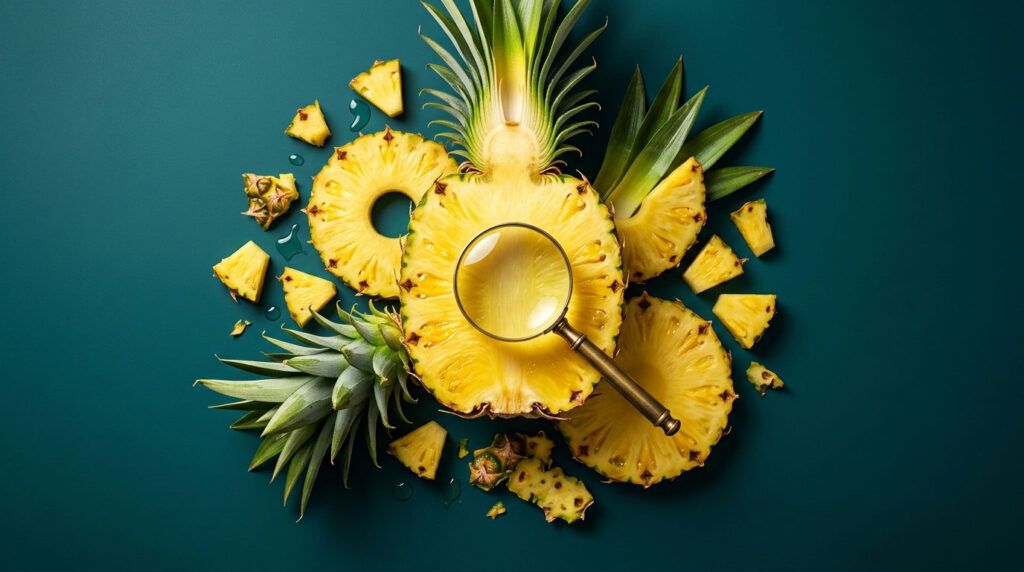
Bite into a fresh slice of pineapple and your tongue might tingle, almost like the fruit is biting you back. It sort of is. That sensation comes from bromelain, a set of enzymes powerful enough to tenderize meat, and it’s the reason pineapple has a reputation as a digestion booster. The real story is more interesting than the hype.
Table of Contents
Quick Answer: Yes, pineapple can support digestion, but mostly through its fiber and high water content, which help keep you regular. It also contains bromelain, a group of protein-digesting enzymes, though the evidence that the amount in fresh fruit meaningfully aids human digestion is limited, and the heat from canning destroys much of it. For most people, fresh pineapple is a healthy, gut-friendly snack in moderation.
At a Glance
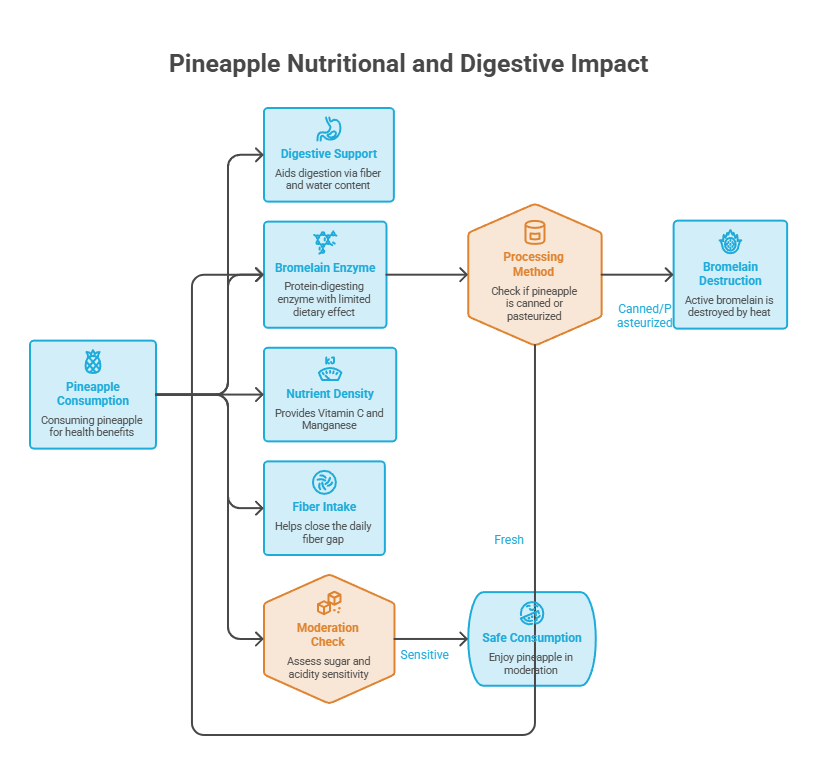
- Pineapple helps digestion mainly through fiber and water, not just bromelain.
- Bromelain is a real protein-digesting enzyme, but dietary amounts have limited proven effect.
- Canning and pasteurizing pineapple destroy most of its active bromelain.
- One cup delivers about 88% of your daily vitamin C and over 100% of your manganese.
- Most Americans fall far short on fiber, and pineapple is one tasty way to help close the gap.
- Eat it in moderation, since the natural sugar and acidity can bother some people.
The Short Answer: Yes, but Not Only Because of Bromelain
Here’s the honest version most articles skip. Pineapple does support healthy digestion, but the credit belongs largely to its fiber and water, not the enzyme everyone talks about.
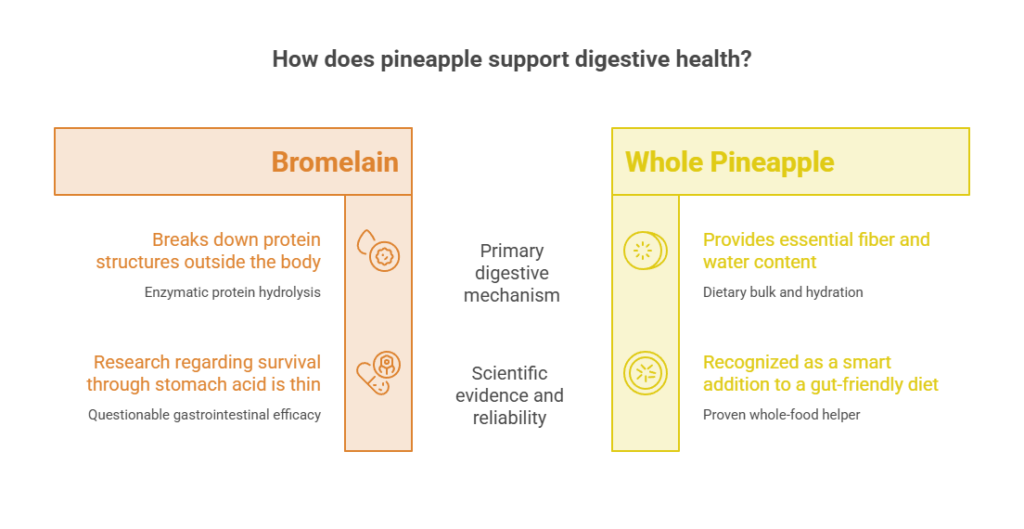
Bromelain is genuinely fascinating, and it absolutely breaks down protein outside the body. The catch is whether enough survives a trip through your stomach acid to matter, and the research there is thin.
The team at HealthCareOnTime finds this distinction matters for setting expectations. Pineapple is a smart addition to a gut-friendly diet, but it’s a whole-food helper, not a magic digestive pill.
How Digestion Actually Works (A Quick Primer)
Before judging any food’s digestive powers, it helps to know what digestion involves. It’s a relay, not a single event, and different organs handle different jobs along the way.
Your stomach uses acid and an enzyme called pepsin to start breaking down protein. Your small intestine, helped by the pancreas, does most of the heavy lifting on proteins, fats, and carbohydrates.
The large intestine, or colon, is where fiber and water earn their keep, shaping stool and keeping it moving. Understanding this relay explains why pineapple’s fiber matters more than its enzyme for everyday digestion.
What Is Bromelain? The Pineapple Enzyme
Bromelain is the headline act, so it deserves a proper introduction. It’s an enzyme mixture found in pineapples, with active ingredients called proteinases and proteases that break down proteins in the body.
People have leaned on it for a long time. The history of bromelain traces back to ancient civilizations of South America, where indigenous peoples used parts of the pineapple plant to treat digestive issues, reduce inflammation, and heal wounds.
Today it shows up in two very different places: in the fruit on your plate and in supplement bottles on the shelf. Those are not the same dose, a point we’ll come back to.
How Bromelain Breaks Down Protein
Protein is built from long chains of amino acids, and your body has to snip those chains apart before it can absorb them. Bromelain is a pair of scissors for exactly that job.
That’s why pineapple has long been used to tenderize tough cuts of meat. The same enzyme that softens a steak in a marinade is acting on the proteins in the fruit, and on the lining of your mouth, which is the source of that tingle.
A common question is whether that mouth sensation is harmful. It isn’t, for most people, though it’s a vivid reminder of how active these enzymes really are.
Where Bromelain Lives in the Pineapple
Bromelain isn’t spread evenly through the fruit. While commercially available bromelain is primarily extracted from pineapple stems, significant amounts are also found in the core, peel, and crown.
The tough central core, the part most people toss, is actually one of the richest sources. If you’re after bromelain specifically, the core is worth keeping for a smoothie.
The sweet yellow flesh you actually eat contains less. That’s one reason the pineapple-aids-digestion claim gets oversold, since the part you enjoy most isn’t the most enzyme-dense.
The table below sorts out how pineapple actually supports digestion, component by component, with an honest read on the evidence behind each.
| Component | How It Helps Digestion | Evidence Strength | Best Source |
| Dietary fiber | Adds bulk, supports regularity | Strong | Fresh fruit flesh |
| Water content | Softens stool, eases passage | Strong | Fresh fruit and juice |
| Bromelain | Breaks down proteins | Limited in dietary amounts | Core, stem, supplements |
| Vitamin C | Supports gut tissue health | Moderate, indirect | Fresh fruit (not canned) |
| Manganese | Aids nutrient metabolism | Moderate, indirect | Fresh fruit flesh |
Is Pineapple Actually Good for Digestion? What the Evidence Shows
Now for the part that separates marketing from medicine. The strongest case for pineapple and digestion has almost nothing to do with bromelain.
Most Americans have a fiber problem, and it’s a big one. National data show that about 95% of Americans don’t meet the recommended fiber intake, with mean intake only about 15 to 16 grams a day, well below the roughly 28 grams recommended.
That gap matters for far more than digestion. A 2019 meta-analysis commissioned by the World Health Organization and published in The Lancet analyzed 243 studies and found that each 8-gram increase in daily fiber intake reduced cardiovascular disease, diabetes, and colorectal cancer risk.
The Fiber and Water Connection
This is the real digestion win. Cleveland Clinic points out that pineapple contains a significant amount of fiber associated with better digestion, with nearly 10% of your daily fiber needs in a single cup.
Pineapple is also mostly water, around 86% by weight. Fiber and water work as a team, since fiber adds bulk while water keeps things moving smoothly through your system.
In cases reviewed by our medical team, people who add whole fruits like pineapple to a low-fiber diet often notice more regularity within days. That’s the fiber and hydration at work, plain and simple.
The Bromelain Question
So does the famous enzyme actually help your digestion? The honest answer is a cautious maybe, and mostly not from fruit alone.
The skepticism is well founded. Healthline notes that even though bromelain is extracted from pineapple, eating pineapple or drinking its juice doesn’t supply a large enough dose to be effective at the levels studied in research.
The clinical evidence is also thin and condition-specific, resting largely on one small trial in which roughly 500 milligrams of bromelain a day improved fat and protein digestion in 12 adults with pancreatic insufficiency. WebMD adds that while bromelain is used for indigestion, it’s unclear if this can actually ease symptoms. In short, the enzyme is real, but the everyday digestive payoff from fruit is modest.
Pineapple and Bloating
Bloating is where pineapple’s reputation gets the most enthusiastic, and the picture is mixed. In theory, better protein breakdown could mean less of the discomfort that follows a heavy, protein-rich meal.
In practice, the fiber and water are more likely the helpers, by keeping digestion regular and preventing the backup that causes bloat. Across the patients we serve, bloating usually traces back to overall fiber and fluid habits, not one fruit.
A word of caution cuts the other way too. For some people, pineapple’s natural sugars and acidity can actually trigger gas or discomfort, so it isn’t a universal bloat cure.
Pineapple and Your Gut Microbiome
There’s an emerging angle worth a mention: your gut bacteria. The trillions of microbes in your colon thrive on fiber, fermenting it into compounds that nourish the gut lining.
Bromelain may play a supporting role here too. Researchers suggest bromelain’s proteolytic activity and potential modulation of gut microbiota may contribute to digestive health, including nutrient absorption and microbiota balance, though further research is needed. The fiber effect remains the more established benefit.
Does Pineapple Detox or Cleanse Your Gut?
You’ll see pineapple marketed as a gut cleanse or detox, and that framing oversells it. Your liver and kidneys handle detoxification, not any single fruit, and no food flushes your system clean.
What pineapple genuinely offers is fiber, water, and nutrients that support normal digestive function. That’s valuable, but it’s everyday nourishment, not a reset button for your gut.
| Metric | Figure | Source |
| Americans missing fiber target | ~95% | NHANES / USDA |
| Average US fiber intake | ~15 to 16 g/day | NHANES / USDA |
| Recommended daily fiber | ~28 g (2,000 calories) | Medical News Today |
| Vitamin C in one cup | ~79 mg (~88% DV) | Cleveland Clinic |
| Manganese in one cup | ~2.6 mg (over 100% DV) | Cleveland Clinic |
Pineapple Nutrition: What’s in One Cup
Bromelain aside, pineapple earns its spot on your plate through straightforward nutrition. A one-cup serving of chunks runs roughly 74 to 83 calories, so it’s light for how satisfying it feels.
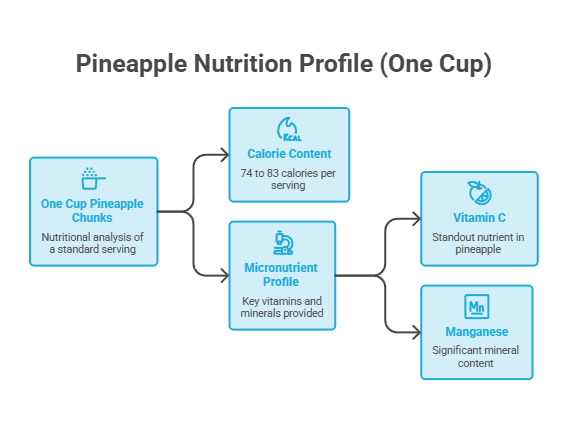
That cup is doing real work for your micronutrients. The standout is vitamin C, with manganese close behind, and both punch well above their weight relative to the calories.
Vitamin C, Manganese, and B Vitamins
Vitamin C is pineapple’s signature nutrient, and it does more than fight colds. Cleveland Clinic notes vitamin C aids tissue growth and repair and helps boost your immune system, which includes the tissues lining your digestive tract.
Manganese is the quiet overachiever. Pineapple delivers more than 100% of your recommended daily manganese, a trace element that helps with bone formation, immune response, and metabolism.
Pineapple also chips in several B vitamins. It provides a healthy dose of thiamin, niacin, B6, and folate, nutrients your body uses to turn food into usable energy.
Fiber, Sugar, and Water
The fiber in pineapple is mostly the insoluble kind, the type that adds bulk and helps move things along. That’s a plus for regularity, though it’s gentler than the fiber in beans or whole grains.
Be mindful of the sugar. A cup carries about 14 grams of natural sugar, which is fine for most people but worth tracking if you’re managing blood sugar. Whole pineapple beats juice here, since juice strips the fiber and concentrates the sugar.
The high water content rounds out the package. Together with adequate daily fluids and fiber, pineapple fits neatly into the habits that keep digestion running smoothly.
Soluble vs. Insoluble Fiber in Pineapple
Fiber comes in two types, and pineapple leans heavily toward one. Soluble fiber dissolves in water and forms a gel that slows digestion, which helps steady blood sugar and cholesterol.
Insoluble fiber, the kind that dominates pineapple, doesn’t dissolve. It adds bulk to stool and speeds passage through the colon, which is exactly why it supports regularity. Both types matter, so pineapple works best alongside soluble-fiber foods like oats and beans.
How Pineapple Compares to Other Digestive Fruits
Pineapple isn’t the only fruit with a digestive reputation, and a little perspective helps. Papaya contains papain, an enzyme similar to bromelain, and is often mentioned in the same breath.
Other fruits win on fiber. Raspberries, pears, and apples carry notably more fiber per serving than pineapple, which makes them strong choices for regularity. Prunes remain the classic for constipation, thanks to fiber plus natural sorbitol.
Where pineapple stands out is its enzyme content and its vitamin C, an unusual combination among common fruits. The smartest approach isn’t picking a single champion but eating a colorful range, since variety feeds both you and your gut bacteria.
Other Pineapple Benefits Beyond Digestion
Digestion is only part of pineapple’s appeal. The same nutrients that support your gut do double duty elsewhere in the body, which is why nutritionists like seeing it on your plate.
Anti-Inflammatory Effects
Bromelain’s most studied role isn’t digestion at all, it’s calming inflammation. Research has examined it for swelling and pain after surgery, sinus inflammation, and joint conditions like osteoarthritis.
The effect is real but not a cure-all. Cleveland Clinic notes the anti-inflammatory power in bromelain can help fight inflammation and may even suppress the growth of certain tumors, though eating pineapple is no cancer-free guarantee.
Immune and Skin Support
That generous dose of vitamin C does more than guard your gut lining. Vitamin C supports your immune system and helps your body make collagen, the protein that keeps skin and connective tissue strong.
Because vitamin C also improves the absorption of plant-based iron, pairing pineapple with iron-rich foods like spinach can give a small nutritional bonus at the same meal.
Hydration and Weight Management
With its high water content and modest calorie count, pineapple is a hydrating, satisfying way to curb a sweet craving. A cup of chunks has fewer calories than most packaged desserts.
The fiber also helps you feel full, which can support weight management when pineapple replaces higher-calorie treats. The natural sugar still counts, so portion size keeps it a smart swap rather than a free pass.
Fresh vs. Canned vs. Juice vs. Supplements
Not all pineapple is created equal, especially when bromelain is what you’re after. The form you choose changes what you actually get.
Fresh pineapple is the gold standard for active enzymes and full nutrition. Canned, juiced, and supplement forms each involve a trade-off worth understanding before you decide.
Why Heat Matters for Bromelain
Bromelain is fragile in the face of heat, and that detail reshapes the whole conversation. Heat can inactivate bromelain, and because many commercial juices are pasteurized, that processing may significantly decrease both bromelain and vitamin C content.
Canned pineapple is heat-processed too, so it offers little active bromelain. According to the USDA, canned pineapple is typically higher in calories and sugar and contains fewer vitamins and minerals than fresh.
The takeaway is simple. If you want the enzyme, fresh and raw is the way, and the core holds the most.
What About Dried and Frozen Pineapple?
Dried and frozen pineapple round out the options. Frozen pineapple keeps most of its nutrients and is great for smoothies, though freezing and later blending may reduce some enzyme activity.
Dried pineapple concentrates the sugar and calories into a small package, and added sugar is common, so check the label. Unsweetened dried pineapple in small amounts is the better pick.
Should You Take a Bromelain Supplement?
For a real bromelain dose, supplements are the only reliable route, since food can’t match the studied amounts. Supplement doses typically range from 80 to 400 milligrams, two to three times daily, and bromelain is often taken with meals for digestion or on an empty stomach for inflammation.
There’s an important caveat about oversight. Bromelain is considered a dietary supplement, not a medication, so it isn’t regulated by the FDA the way drugs are.
That means quality and potency vary between brands. For general wellness, eating fresh pineapple and other whole foods is usually plenty, and a supplement is worth discussing with your doctor if you have a specific goal.
How to Eat Pineapple for Better Digestion
Good news: you don’t need a strategy degree to benefit. Eating fresh pineapple as part of a varied, fiber-rich diet is most of the battle.
A few smart habits help you get the fiber, hydration, and enzymes without overdoing the sugar or acidity. Think of pineapple as one colorful piece of a bigger gut-health puzzle.
When and How Much
A reasonable serving is about one cup of fresh chunks, which keeps the sugar in check while delivering the fiber and vitamin C. Most people do well with this once a day or a few times a week.
Timing is flexible. Some enjoy pineapple after a meal as a light, refreshing finish, while others blend the core into a morning smoothie to capture more bromelain. Listen to your own gut, literally, and adjust.
Easy Ways to Add It
Variety keeps it interesting and spreads the benefit across your day. Toss chunks into a yogurt parfait, blend the core into a smoothie, or add it to a savory stir-fry near the end of cooking.
Keep the heat brief if enzymes matter to you, since prolonged cooking deactivates bromelain. Pairing pineapple with protein, the classic ham-and-pineapple combo, is exactly where its protein-digesting reputation comes from.
How to Pick and Store a Ripe Pineapple
Ripeness matters for both flavor and safety, since unripe pineapple can upset your stomach. Choose a fruit that smells sweet at the base, feels heavy for its size, and has fresh green leaves.
A ripe pineapple gives slightly when pressed but isn’t mushy. Store a whole one at room temperature for a day or two, then refrigerate, and keep cut pieces in an airtight container for three to four days.
The grid below maps common situations to a sensible move.
| Your Situation | What To Do | Why |
| Want better regularity | Eat fresh chunks with water | Fiber and fluid keep things moving |
| Bloated after a protein meal | Try fresh pineapple as dessert | Bromelain may aid protein breakdown |
| Have acid reflux | Limit or avoid, eat with food | Acidity can worsen symptoms |
| Want a studied bromelain dose | Consider a supplement, ask your doctor | Fruit can’t match research doses |
| Watching blood sugar | Stick to about one cup | Limits the natural sugar load |
| Taking blood thinners | Check with your provider first | Bromelain may affect bleeding |
Possible Downsides and Who Should Be Careful
Pineapple is safe and healthy for most people, but it isn’t risk-free. A few groups should approach it with a little extra care.
Knowing the downsides helps you enjoy pineapple without surprises. Most issues come down to its acidity, sugar, or the strength of bromelain itself.
Mouth Tingling and Acidity
That tingle or mild burn is bromelain acting on the soft tissues of your mouth. This sensation results from bromelain breaking down proteins in both the pineapple and the tissues of your mouth.
It’s harmless for most, but the acidity can irritate canker sores or sensitive mouths. People with acid reflux may also find pineapple aggravating, so moderation and eating it with other foods can help.
Too Much Pineapple
More is not better here. Eating large amounts can deliver excess natural sugar and a heavy load of acid that upsets some stomachs.
There are a couple of specific cautions. Eating unripe pineapple can be dangerous and lead to severe diarrhea and vomiting, and consuming too much of the tough core could let fiber balls form in the digestive tract. Stick to ripe fruit and reasonable portions.
Allergies, Blood Thinners, and Medication Interactions
Bromelain can interact with the body and with medicines in ways worth knowing. It should not be used by people allergic to pineapple, it can slow blood clotting time, and it can change how your body absorbs certain antibiotics like amoxicillin and tetracycline.
If you take blood thinners, antibiotics, or sedatives, talk with your doctor before adding large amounts of pineapple or a bromelain supplement. A quick check is wise whenever a natural remedy meets a prescription.
Pineapple for Kids and in Pregnancy
Pineapple is generally fine for children and during pregnancy as a normal food in normal amounts. The old worry that pineapple triggers labor isn’t supported by evidence, since you’d have to eat an impractical amount of core to get a meaningful bromelain dose.
Still, the acidity can cause mouth or skin irritation in some kids, and anyone pregnant with reflux may find it bothersome. As with any concern during pregnancy, checking with your provider is the safe move.
Frequently Asked Questions
Is pineapple good for digestion?
Yes, mostly because of its fiber and high water content, which support regularity. Pineapple also contains bromelain, a protein-digesting enzyme, though the evidence that dietary amounts meaningfully aid digestion is limited. As part of a balanced, fiber-rich diet, fresh pineapple is a gut-friendly choice in moderation.
Does pineapple help you poop?
It can. Pineapple’s fiber adds bulk to stool and its high water content helps soften it, which together support regular bowel movements. It’s not a strong laxative, but adding fresh fruit to a low-fiber diet often improves regularity. Pair it with plenty of water for the best effect.
What does bromelain do in your body?
Bromelain is a group of enzymes that break down proteins into smaller pieces. Outside the body it tenderizes meat, and it’s studied for anti-inflammatory effects and protein digestion. How much survives stomach acid to act in your gut is uncertain, which is why dietary effects are modest and not well proven.
Does canned pineapple have bromelain?
Very little active bromelain. Canning involves heat, and heat inactivates the enzyme, so canned pineapple offers minimal bromelain activity. Canned versions also tend to have more sugar and fewer vitamins than fresh. If bromelain is your goal, choose fresh, raw pineapple, ideally including some of the core.
Is it better to take a bromelain supplement or eat pineapple?
For general wellness, eating fresh pineapple and other whole foods is usually enough. For a research-level bromelain dose, only a supplement can deliver it, since fruit can’t match the studied amounts. Supplements aren’t FDA-regulated like drugs, so talk with your doctor before starting one.
Can pineapple cause an upset stomach or diarrhea?
It can, especially in large amounts. Pineapple’s acidity and natural sugar may upset sensitive stomachs, and eating a lot can loosen stools. Unripe pineapple is particularly likely to cause severe diarrhea and vomiting. Stick to ripe fruit in reasonable portions, about one cup, to avoid trouble.
When is the best time to eat pineapple for digestion?
Timing is flexible and personal. Many people enjoy pineapple after a meal as a light dessert, which is also when its protein-digesting reputation comes into play. Others blend it into a morning smoothie. There’s no single perfect time, so choose what feels best for your stomach.
Why does pineapple make my mouth tingle or burn?
That sensation is bromelain breaking down proteins in the soft tissues of your mouth, the same way it tenderizes meat. It’s harmless for most people but can irritate sensitive mouths or canker sores. The feeling fades quickly, and eating pineapple with other foods can lessen it.
Is pineapple good for acid reflux?
Not usually. Pineapple is acidic, and acidic foods can worsen heartburn and reflux symptoms for many people. If you’re prone to reflux, you may want to limit pineapple, eat it with a meal rather than alone, and notice how your body responds before making it a habit.
How much pineapple should you eat a day?
About one cup of fresh chunks is a sensible daily serving for most people. That provides plenty of vitamin C and fiber while keeping the natural sugar in check. If you’re watching blood sugar or have a sensitive stomach, smaller portions, around half a cup, may suit you better.
Is pineapple good for your gut bacteria?
It may help. Pineapple’s fiber feeds beneficial gut bacteria, and some research suggests bromelain could support a balanced gut microbiota. The fiber effect is the more established benefit. Eating a variety of colorful fruits and vegetables, pineapple included, is a reliable way to support a healthy gut.
Does pineapple juice help digestion?
Juice provides water and some nutrients, but it loses most of the fiber that makes whole pineapple good for digestion. Pasteurized juice also has little active bromelain and more concentrated sugar. For digestive benefit, whole fresh pineapple is the better choice over juice most of the time.
Medical Disclaimer: This article is for general information only and isn’t a substitute for professional medical advice, diagnosis, or treatment. If you have a digestive condition, a pineapple or latex allergy, or take medications such as blood thinners or antibiotics, talk with a qualified healthcare provider before making changes to your diet or starting a bromelain supplement.
References
- Cleveland Clinic: Benefits of Pineapple
- Healthline: Bromelain Dosage, Benefits, and Side Effects
- Medical News Today: Bromelain Benefits, Risks, Sources
- WebMD: Bromelain Uses and Side Effects
- NIH / PMC: Therapeutic Potential of Bromelain
- Nutrition Advance: Pineapple Nutrition and Health Benefits
- Frontiers in Nutrition: Dietary Fiber Intake in US Adults
- Medical News Today: How Much Fiber Is Too Much