Your cardiologist hands you a prescription for carvedilol, and the first thing you do in the parking lot is search the name on your phone. What is this drug, what’s it supposed to fix, and how will it change the way you feel? Those are fair questions, and you deserve clear answers before the first dose.
Table of Contents
Quick Answer: Carvedilol (brand name Coreg) is a beta-blocker that also relaxes blood vessels. Doctors prescribe it for three main reasons: chronic heart failure, high blood pressure, and improving survival after a heart attack when the heart’s pumping is weakened. It works by slowing your heart rate and easing your heart’s workload. Common side effects include dizziness, fatigue, and low blood pressure.
At a Glance
- Carvedilol treats heart failure, high blood pressure, and weakened heart pumping after a heart attack.
- It’s both a beta-blocker and a mild blood-vessel relaxer, which sets it apart from older beta-blockers.
- The immediate-release tablet (Coreg) is taken twice daily with food; the extended-release capsule (Coreg CR) is once daily.
- Doses start low and rise slowly, especially in heart failure.
- Common side effects are dizziness, tiredness, and low blood pressure, and most ease with time.
- Never stop carvedilol suddenly. Stopping abruptly can trigger chest pain or dangerous heart rhythms.
What Is Carvedilol?
Carvedilol is a prescription heart medication in a drug class called beta-blockers. MedlinePlus, the NIH consumer drug resource, describes it as a beta-blocker that relaxes blood vessels and slows the heart rate to improve blood flow and lower blood pressure.
You’ll see it sold as the brand Coreg, the once-daily version Coreg CR, and a lower-cost generic. It has been approved in the United States since 1995 and sits on the World Health Organization’s list of essential medicines, which is a good sign of how established it is.
The clinical team at HealthCareOnTime often points out that carvedilol is what doctors call a third-generation beta-blocker. That label means it does something the older drugs don’t, and that something is the key to why it’s chosen for certain patients.
How Carvedilol Works
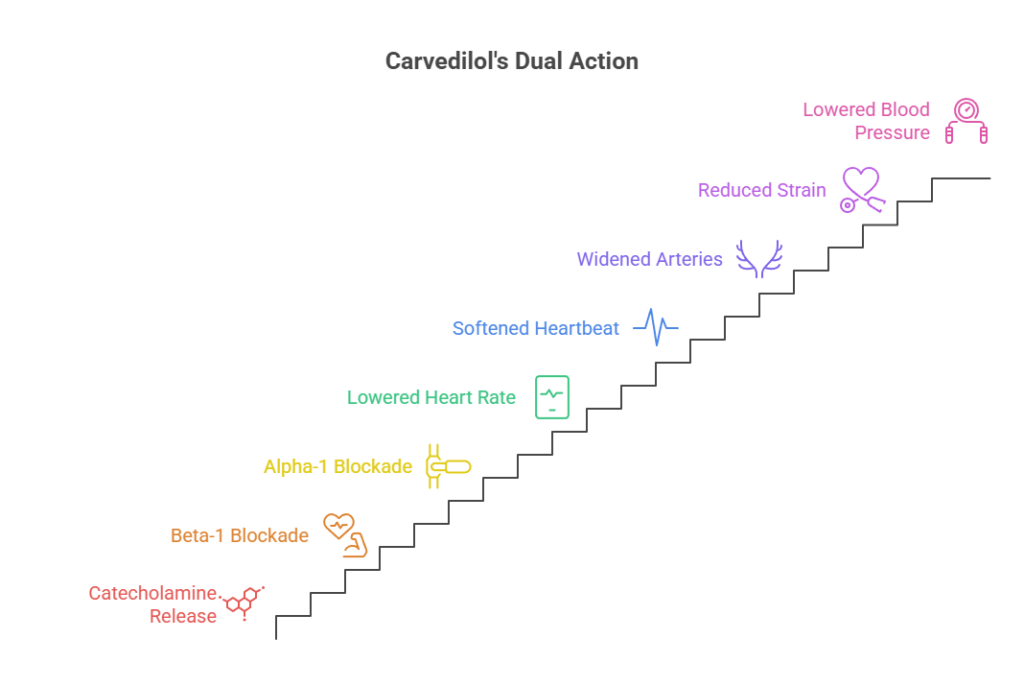
Your body releases stress hormones called catecholamines, including adrenaline, that latch onto receptors on your heart and blood vessels. As WebMD explains, carvedilol blocks beta-1 receptors in the heart and alpha-1 receptors in the blood vessels, so the heart beats more slowly and the vessels relax.
That dual action does three things at once. It lowers your heart rate, softens the force of each heartbeat, and widens your arteries, which together mean less strain on a struggling heart and lower pressure in your vessels.
Here’s the part that makes carvedilol distinctive. Most beta-blockers only block beta receptors and stop there. According to StatPearls, carvedilol lowers blood pressure largely through its alpha-1 blocking effect, which reduces arterial resistance and the heart’s afterload. That added blood-vessel relaxation is what separates it from a plain beta-blocker like atenolol.
Carvedilol Forms: Coreg, Coreg CR, and Generic
Carvedilol comes in two main oral forms, and the difference shapes your daily routine. MedlinePlus notes the tablet is taken twice a day with food, while the extended-release capsule is taken once daily in the morning with food.
The immediate-release tablet, sold as generic carvedilol or brand Coreg, is the most common and least expensive choice. The extended-release capsule, Coreg CR, swaps twice-daily dosing for a single morning dose, which many people find easier to remember.
A frequent question from patients is whether the generic works as well as the brand. For most people it does, since it contains the same active ingredient at the same strength, and your prescriber decides which form best fits your situation.
What Is Carvedilol Used For? (FDA-Approved Uses and Benefits)
This is the heart of the matter. Carvedilol has three uses approved by the U.S. Food and Drug Administration, and each one targets a serious cardiovascular problem.
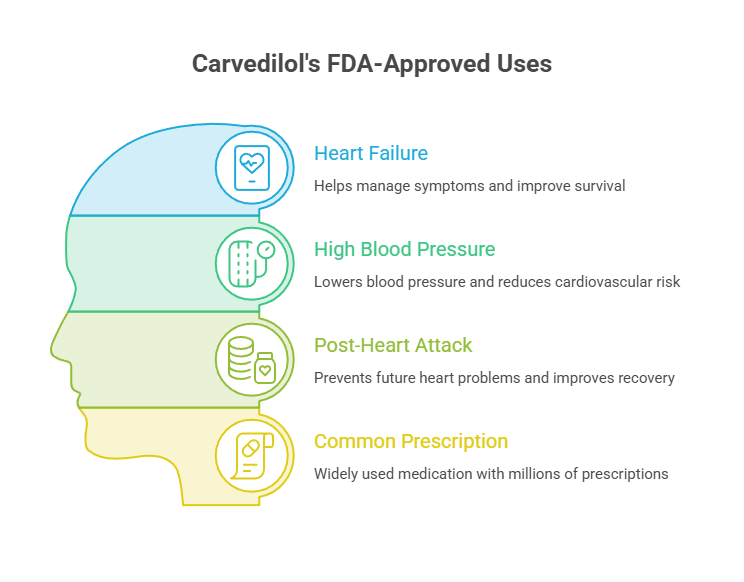
This is a mainstream medicine, not an obscure one. Carvedilol was the 35th most commonly prescribed medication in the United States in 2023, with more than 16 million prescriptions. If you’ve just been handed a script for it, you’re in very large company.
Heart Failure (HFrEF)
The standout use is chronic heart failure, specifically the kind where the heart’s main pumping chamber has grown weak. Carvedilol has been clinically shown to reduce death and hospitalizations in people with congestive heart failure, which is why it became a cornerstone of treatment.
That benefit matters because the condition is both common and dangerous. The Heart Failure Society of America reports that roughly 6.7 million American adults live with heart failure, and the lifetime risk has climbed to about 24 percent, meaning around 1 in 4 people will develop it.
In the cases our medical team reviews, carvedilol is rarely a solo act. It’s usually layered alongside other heart-failure medicines, and the dose is raised gently over weeks so the heart has time to adapt rather than being forced.
High Blood Pressure (Hypertension)
Carvedilol also lowers high blood pressure, though it isn’t the first drug most doctors reach for in a brand-new diagnosis. Mayo Clinic explains that lowering blood pressure may reduce the risk of strokes and heart attacks, because untreated high pressure can damage the blood vessels of the brain, heart, and kidneys over time.
The scope of the problem is staggering. CDC-based national estimates show that nearly 48 percent of U.S. adults have hypertension, and about 77 percent of them don’t have it well controlled.
Carvedilol tends to earn its place in people who have both high blood pressure and another heart condition, since a single drug can treat both at once. That overlap is exactly the group many readers booking cardiac panels through HealthCareOnTime fall into.
After a Heart Attack (Left Ventricular Dysfunction)
The third approved use is for people whose heart muscle was weakened by a heart attack. MedlinePlus notes carvedilol is used to improve survival after a heart attack, specifically when the left ventricle no longer pumps as forcefully as it should.
Starting carvedilol in these patients shields the injured heart from the relentless push of stress hormones. It’s begun only once someone is clinically stable, not during the acute crisis itself, so timing is deliberate.
The table below lays out all three approved uses side by side, plus two common off-label ones, with the reference dosing your doctor works from.
| Condition | How Carvedilol Helps | Typical Starting Dose | Target / Max Dose | Proven Benefit |
| Heart failure (HFrEF) | Slows heart, eases workload | 3.125 mg twice daily | Up to 25 to 50 mg twice daily | Fewer deaths and hospital stays |
| High blood pressure | Relaxes vessels, lowers pressure | 6.25 mg twice daily | Up to 50 mg per day | Lower stroke and heart-attack risk |
| After heart attack (LV dysfunction) | Protects weakened heart muscle | 3.125 to 6.25 mg twice daily | Up to 25 mg twice daily | Improved survival |
| Stable angina (off-label) | Reduces heart oxygen demand | Set by prescriber | Set by prescriber | Less chest pain |
| Variceal bleeding (off-label) | Lowers portal vein pressure | Set by prescriber | Set by prescriber | Fewer bleeds in cirrhosis |
Here’s how the U.S. burden behind those uses stacks up, with sources.
| Metric | US Figure | Source |
| Carvedilol prescription rank | 35th most prescribed, 16M+ scripts | ClinCalc / Wikipedia |
| Adults living with heart failure | ~6.7 million | HFSA HF Stats |
| Adults with high blood pressure | ~48% | CDC / NHANES |
| Lifetime risk of heart failure | ~24% (1 in 4) | HFSA HF Stats |
| HF as a contributing cause of death (2022) | 425,147 deaths | HFSA HF Stats |
Off-Label Uses
Beyond the three approved uses, doctors sometimes turn to carvedilol for other heart-related problems. Off-label uses include stable angina, heart rhythm problems such as atrial fibrillation, and prevention of bleeding from enlarged esophageal veins in people with liver cirrhosis.
The cirrhosis use rests on solid evidence. A systematic review found that carvedilol reduced portal vein pressure more than propranolol and lowered the risk of variceal bleeding in adults with cirrhosis.
Off-label simply means the use isn’t printed on the official FDA label, not that it’s experimental or unsafe. These calls belong to a specialist who knows your full medical history and weighs the trade-offs.
Carvedilol Dosage and How to Take It
Carvedilol dosing follows one clear principle: start low and go slow. The numbers below are FDA-labeled reference ranges, not personal instructions, and your prescriber sets the exact amount that fits you.
Dosage for Heart Failure
Heart-failure dosing is the most cautious, because a weakened heart needs room to adjust. The recommended starting dose is 3.125 mg twice daily for two weeks, then increased to 6.25 mg, 12.5 mg, and 25 mg twice daily at two-week intervals if tolerated.
The ceiling depends on your size. The maximum recommended dose is up to 25 mg twice daily for people under 85 kg and up to 50 mg twice daily for those over 85 kg, with severe heart failure capped at 25 mg twice daily. Your doctor checks how you tolerate each step before moving up.
Dosage for High Blood Pressure
Blood-pressure dosing climbs a little faster than the heart-failure schedule. The recommended starting dose is 6.25 mg twice daily, raised to 12.5 mg twice daily after 7 to 14 days and then to 25 mg twice daily, with a maximum of 50 mg total per day.
Patience pays off here. For high blood pressure, it may take one to two weeks to feel the full benefit, and you should keep taking it even if you feel fine, since most people with high blood pressure don’t feel sick. Skipping doses because you feel well is a common mistake worth avoiding.
Dosage After a Heart Attack
For weakened pumping after a heart attack, dosing mirrors the heart-failure approach. The immediate-release form typically starts at 3.125 to 6.25 mg twice daily, increased after 3 to 10 days as tolerated toward a target of 25 mg twice daily.
The extended-release Coreg CR has its own matching ranges, generally one daily dose nudged upward over time. Whatever the form, the same unhurried philosophy applies.
How and When to Take Carvedilol
A handful of habits make carvedilol safer and more comfortable. Take it with food, and use care when driving or operating machinery, since it can cause drowsiness and dizziness that alcohol may intensify. Eating with your dose slows absorption and cuts the odds of feeling lightheaded.
Missing a dose isn’t a crisis. Take it as soon as you remember, but skip it if the next dose is near, and never double up to catch up.
The single most important rule is about quitting. Don’t stop carvedilol without talking to your doctor, because stopping suddenly can cause changes in heart rhythm, worsened chest pain, or even a heart attack; instead your doctor will taper the dose over one to two weeks. Readers booking follow-up blood pressure and cardiac monitoring through HealthCareOnTime often do so to keep that taper on track.
What to Expect When You First Start
The first week or two on carvedilol is an adjustment period, and a little dizziness or tiredness early on is common as your body adapts to a slower heart rate and lower pressure. These effects usually settle as you keep taking it, especially if every dose goes down with food.
Your prescriber will likely schedule check-ins during the dose-raising phase to see how you respond before stepping up. Keeping a simple log of your blood pressure, pulse, and any symptoms gives that conversation real data to work from. Readers who track their readings through HealthCareOnTime often bring those numbers to each visit.
Storing Carvedilol
Storage is simple but worth getting right. WebMD advises keeping carvedilol tablets below 86 F (30 C) in a cool, dry place in a tightly closed container, protected from light and moisture, while the extended-release capsules are best stored around 77 F (25 C). Keep all medications out of reach of children and away from damp spots like the bathroom.
Carvedilol Side Effects
Like any heart medication, carvedilol can cause side effects, but the overall picture reassures most people. GoodRx notes carvedilol tends to be well tolerated, with fewer side effects than some other beta-blockers, and most effects are dose-related, so higher doses tend to cause more.
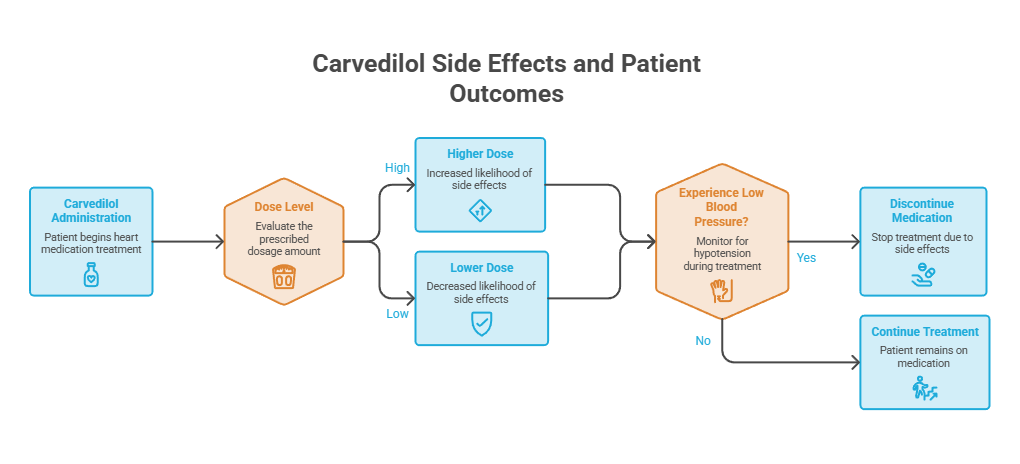
That dose relationship shows up clearly in the trials. In the heart-failure studies, low blood pressure was the only side effect that caused discontinuation in more than 1 percent of patients, at 1.5 percent on carvedilol versus 0.2 percent on placebo. The takeaway is that the vast majority of people stay on it.
Common Side Effects
The everyday effects are usually mild and often fade as your body settles in over the first days to weeks. Common carvedilol side effects include low blood pressure, slow heart rate, dizziness, fatigue, and nausea.
Other reported effects include weakness, headache, trouble sleeping, diarrhea, a stuffy or runny nose, vision changes, and dry eyes. A practical tip our reviewers share: take the dose with food and rise slowly from sitting, which tames the early dizziness that trips up so many people.
Tips for Managing Side Effects
A few practical habits ease the most common complaints. Rising slowly from sitting or lying down helps head off the lightheadedness that comes with lower blood pressure, and taking each dose with food keeps absorption steady instead of sudden.
If fatigue lingers, your doctor may adjust the timing or the dose rather than stop the drug, since most effects are dose-related and tend to ease over time. Report anything that feels severe or won’t fade, so your care team can fine-tune the plan instead of you toughing it out.
Serious Side Effects
Some effects call for prompt attention rather than patience. Rare but serious effects can include rapid weight gain, swelling, and trouble breathing, all of which should prompt a call to your healthcare provider right away.
There’s a paradox worth understanding too. Carvedilol can worsen existing heart failure or cause fluid buildup, especially during dose increases, so report shortness of breath, particularly while lying down, or sudden swelling. A pulse that falls too low or any fainting spell also deserves a same-day call.
Long-Term Use and Weight Gain
Weight gain comes up constantly, and it can mean two very different things. A small, slow gain may relate to the beta-blocker class itself, while a sudden jump usually points to fluid retention from the heart, not added fat.
That’s why timing tells the story. Several pounds appearing over a day or two, paired with swelling or breathlessness, is a fluid-overload warning, not a diet problem. Cardiology teams widely recommend a daily weigh-in for heart-failure patients precisely because it catches that fluid shift early, before it turns into a hospital visit.
Carvedilol, Heart Rate, and Exercise
Because carvedilol slows your heart rate, you may notice your pulse doesn’t climb as high during exercise as it once did. That’s expected and usually fine, but it means heart-rate targets on a treadmill or fitness tracker can read lower than you’re used to.
Stay active as your care team advises, and judge your effort by how you feel rather than by heart rate alone. Tell your doctor if you feel unusually breathless, dizzy, or worn out during activity, since that deserves a closer look.
Carvedilol Warnings and Who Should Avoid It
Carvedilol suits most heart patients, but it isn’t right for everyone. Certain conditions make it risky, and your doctor screens for them before writing the prescription.
Contraindications
A few conditions are firm reasons to steer clear. You should not take carvedilol if you have asthma, bronchitis, emphysema, severe liver disease, or a serious heart condition such as heart block, sick sinus syndrome, or a slow heart rate, unless you have a pacemaker.
The breathing concern ties directly to how the drug behaves. Carvedilol is not recommended for people with uncontrolled bronchospastic disease, such as active asthma symptoms, because it can block receptors that help keep the airways open.
Precautions
Other situations call for caution instead of outright avoidance. Carvedilol can mask the symptoms of low blood sugar, a problem called hypoglycemia unawareness, which matters a great deal for people with diabetes.
People with liver problems, anyone pregnant or planning a pregnancy, and patients heading into surgery should flag carvedilol to their care team. Mayo Clinic advises discussing the medication with your doctor or pharmacist if you are pregnant or considering becoming pregnant.
The grid below maps common real-world moments to sensible next steps.
| Your Situation | What It Might Mean | What To Do |
| You missed a dose | Routine slip | Take it unless the next dose is near; never double up |
| You feel dizzy or faint | Blood pressure dropped | Sit or lie down; tell your doctor if it repeats |
| Your pulse is under 55 | Heart rate too slow | Call your prescriber; your dose may need adjusting |
| You want to stop the drug | Risk of rebound effects | Never stop abruptly; ask your doctor to taper it |
| Sudden weight gain or breathlessness | Possible fluid overload | Contact your provider promptly |
| You’re planning pregnancy | Needs review | Talk to your doctor before changing anything |
Carvedilol Drug Interactions, Alcohol, and Food
Carvedilol can interact with other medicines, and a quick review with your pharmacist heads off most trouble. The main worry is stacked effects on your heart rate and blood pressure.
Medications to Watch
Several drug groups deserve a second look alongside carvedilol. Other blood-pressure medicines can add to its effect, and the heart drug digoxin combined with carvedilol can slow the heart further. Certain calcium channel blockers like diltiazem and verapamil push heart rate down too, and that combination needs monitoring.
Diabetes medicines are a special case, since carvedilol can hide the warning signs of low blood sugar. Some antidepressants and other drugs that change how your liver clears carvedilol can also raise its level in your blood. Keeping one updated medication list that every prescriber and pharmacist can see is the simplest safeguard against these overlaps, and it takes about a minute to maintain.
Alcohol, Especially With Coreg CR
Alcohol behaves differently depending on which form you take. You should avoid drinking alcohol within 2 hours before or after taking extended-release carvedilol (Coreg CR), because alcohol can cause it to release too quickly into the body.
The immediate-release tablet isn’t affected this way, though alcohol can still add to dizziness and drowsiness. When you’re unsure, ask your pharmacist how drinking fits with your specific version, since the answer hinges on the formulation.
Carvedilol vs. Other Beta-Blockers
Patients often want to know how carvedilol stacks up against the beta-blocker a friend or relative takes. The comparison that comes up most is with metoprolol, another extremely common heart drug.
Carvedilol vs. Metoprolol
The core difference is selectivity. Carvedilol blocks beta receptors throughout the body and adds alpha-1 blood-vessel relaxation, while metoprolol mainly targets the beta-1 receptors concentrated in the heart.
In practice, that makes carvedilol a stronger blood-pressure lowerer for many people and tends to make it metabolically gentler than the oldest beta-blockers, with less unfavorable effect on blood sugar and cholesterol. Metoprolol’s heart-focused action can suit some patients with breathing sensitivities better, though neither drug is a good fit during active asthma.
When Doctors Choose Carvedilol
Doctors often favor carvedilol when a patient has heart failure with reduced pumping, or when high blood pressure and heart disease appear together and one drug can cover both targets. Its documented survival benefit in heart failure keeps it near the top of the list.
Still, the right beta-blocker is always an individual decision. When people ask which one is best, the honest answer is that it depends on your heart, your other conditions, and how you tolerate the medicine, a judgment only your prescriber can make with your full chart in front of them.
Can You Switch Beta-Blockers?
Switching from one beta-blocker to another is common and usually straightforward, but it’s done deliberately, not overnight. Because stopping a beta-blocker abruptly can stress the heart, doctors typically move you across on a planned schedule rather than having you quit one and jump to the next.
The dose of the new drug is matched to your condition and how you respond, so one beta-blocker isn’t a simple one-to-one swap for another. If you’ve been asked to change, your prescriber and pharmacist will map out the timing and the new dose for you.
Frequently Asked Questions
What is carvedilol used for?
Carvedilol treats three main conditions: chronic heart failure, high blood pressure, and weakened heart pumping after a heart attack. It’s a beta-blocker that slows the heart and relaxes blood vessels. Doctors also use it off-label for angina, irregular rhythms, and bleeding prevention in liver disease.
Is carvedilol a blood pressure medicine or a heart medicine?
It’s both. Carvedilol lowers high blood pressure and treats heart conditions like heart failure and post-heart-attack weakness. Because it relaxes blood vessels and eases the heart’s workload at the same time, one prescription can address both problems, which is part of why doctors find it so useful.
What does carvedilol do to your heart?
Carvedilol slows your heart rate and reduces the force of each beat by blocking stress-hormone receptors. This lowers strain on your heart and helps it pump more efficiently over time. In heart failure, that protection has been shown to reduce hospital stays and improve survival.
What are the most common side effects of carvedilol?
The most common side effects are dizziness, fatigue, low blood pressure, a slower heart rate, and nausea. Most are mild, dose-related, and ease as your body adjusts over a few weeks. Taking it with food and standing up slowly helps reduce the dizziness many people notice early on.
Should I take carvedilol in the morning or at night?
It depends on the form. The immediate-release tablet is usually taken twice daily, often morning and evening, while the extended-release capsule is taken once daily in the morning. Always take it with food, and follow the exact schedule your doctor or pharmacist gives you.
Why do I have to take carvedilol with food?
Taking carvedilol with food slows how quickly it enters your bloodstream. That steadier absorption lowers your risk of a sudden blood-pressure drop and the dizziness or lightheadedness that can follow. It’s a simple step that makes the medication more comfortable to tolerate day to day.
Can I stop taking carvedilol if I feel fine?
No. Stopping carvedilol suddenly can cause rebound effects like worsened chest pain, a racing or irregular heartbeat, or even a heart attack. If you need to stop, your doctor will lower the dose gradually over one to two weeks. Always talk to your prescriber before making any change.
What should I avoid while taking carvedilol?
Avoid stopping the drug abruptly, and be careful with alcohol, which can worsen dizziness and interacts with the extended-release form. Tell your doctor about all other medicines, especially other blood-pressure drugs, diabetes medicines, and certain heart-rhythm or calcium channel blocker medications, since these can interact.
Is carvedilol better than metoprolol?
Neither is universally better; they suit different patients. Carvedilol also relaxes blood vessels and lowers blood pressure more in many people, while metoprolol is more heart-selective. Your doctor chooses based on your specific condition, other health issues, and how well you tolerate each one.
Does carvedilol cause weight gain?
It can, in two different ways. A small, gradual gain may relate to the beta-blocker class. But a sudden gain of several pounds over a day or two, especially with swelling or breathlessness, usually signals fluid retention from the heart and needs prompt medical attention, not a diet change.
Can carvedilol be taken with alcohol?
Use caution. With the extended-release Coreg CR, avoid alcohol within two hours before or after a dose, because it can make the drug release too fast. With the immediate-release tablet, alcohol doesn’t affect release but can still add to drowsiness and dizziness.
How long does carvedilol take to work?
It begins acting within hours, but the full benefit takes time. For high blood pressure, it may take one to two weeks to see the complete effect. In heart failure, the protective benefits build gradually over weeks to months as the dose is slowly raised to target.
Medical Disclaimer: This article is for general information only and isn’t a substitute for professional medical advice, diagnosis, or treatment. Carvedilol is a prescription medication, and dosing must be set and monitored by a qualified healthcare provider. Never start, stop, or change your dose on your own. Contact your doctor or seek emergency care for serious symptoms like fainting, severe shortness of breath, or chest pain.
References
- MedlinePlus (NIH): Carvedilol Drug Information
- Mayo Clinic: Carvedilol (Oral Route)
- Drugs.com: Carvedilol Uses, Dosage & Side Effects
- NCBI StatPearls: Carvedilol
- WebMD: Carvedilol (Coreg, Coreg CR)
- GoodRx: Carvedilol (Coreg) Side Effects
- Medscape: Coreg, Coreg CR (carvedilol) Dosing
- HFSA: Heart Failure Statistics