Above-ground nuclear tests in the 1950s and early 1960s pushed a wave of radioactive carbon into the atmosphere. It settled into plants, moved into the food supply, and got built into the DNA of every human cell forming during those years.
Table of Contents
Half a century later, researchers realized that fallout had quietly turned human fat tissue into a dated archive. By measuring carbon-14 locked inside fat cell DNA, they could finally test a question nobody had been able to answer directly.
How long does a fat cell live, and does the total ever change?
The answer reshaped how clinicians think about weight. It also got flattened into a slogan almost immediately, and that flattened version is what most Americans believe today.
Quick Answer
For most adults, total fat cell number stays roughly stable, but stable does not mean frozen. Around 10 percent of fat cells are replaced every year. The count is largely set during childhood and adolescence, can rise after significant adult weight gain, and newer research shows middle age restarts fat cell production. Losing weight shrinks existing fat cells rather than removing them.
At a Glance
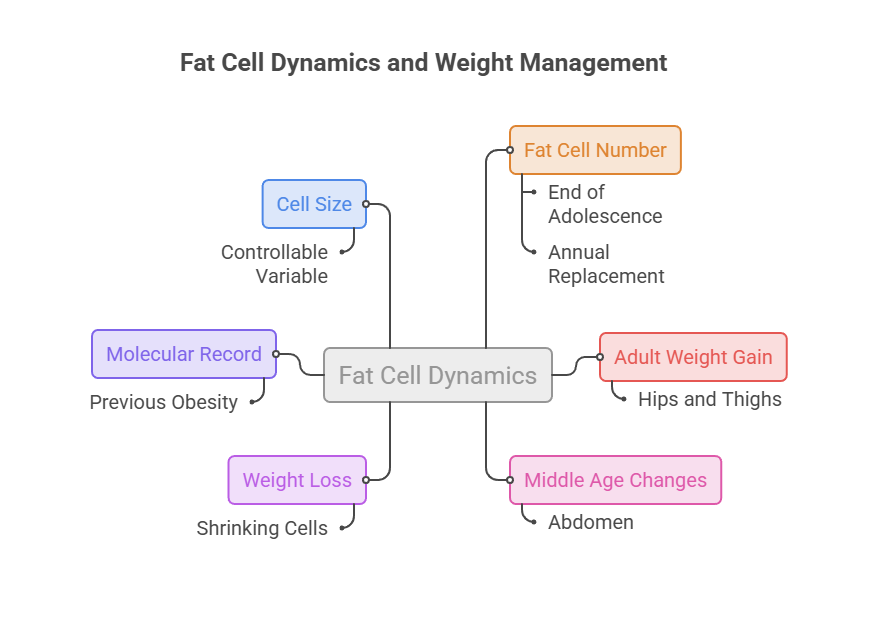
• Fat cell number is largely established by the end of adolescence
• About 10 percent of your fat cells are replaced annually, so the population turns over even when the total holds steady
• Significant adult weight gain can add new fat cells, especially in the hips and thighs
• Research in Science found middle age switches fat cell production back on in the abdomen
• Weight loss shrinks fat cells; it does not reduce how many you have
• Fat tissue appears to retain a molecular record of previous obesity
• Cell size, not cell count, is the variable adults can actually move
What Fat Cells Actually Are, And How Many You Carry
Fat cells are not passive storage bags. They release hormones, respond to insulin, drive inflammation signaling, and participate in appetite regulation.
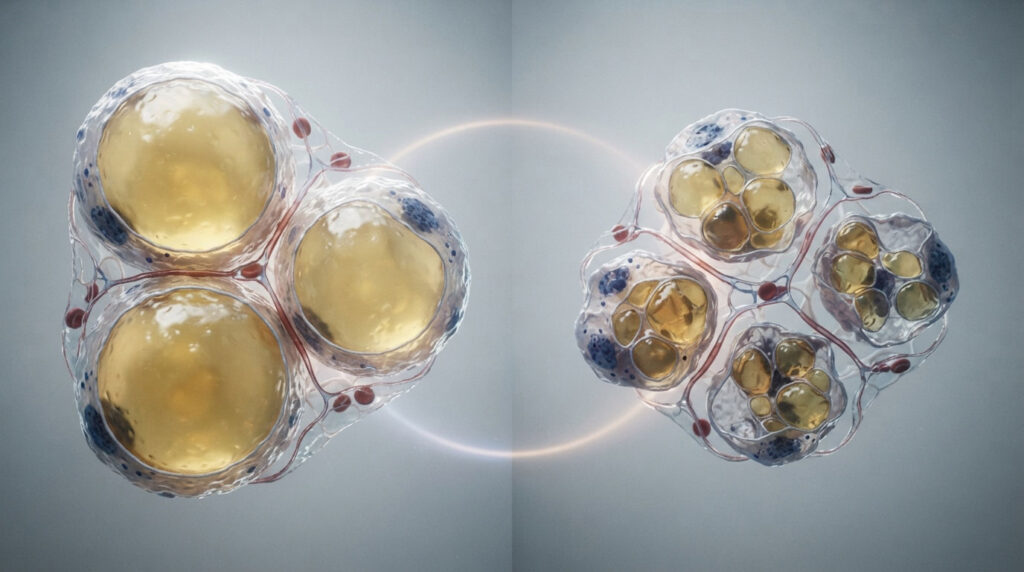
The technical name is adipocyte. A single white adipocyte holds most of its volume as one large lipid droplet packed with triglycerides drawn from surplus energy.
Understanding fat cell numbers starts with understanding that the tissue behaves like an organ, not like padding.
White, Brown, and Beige Fat
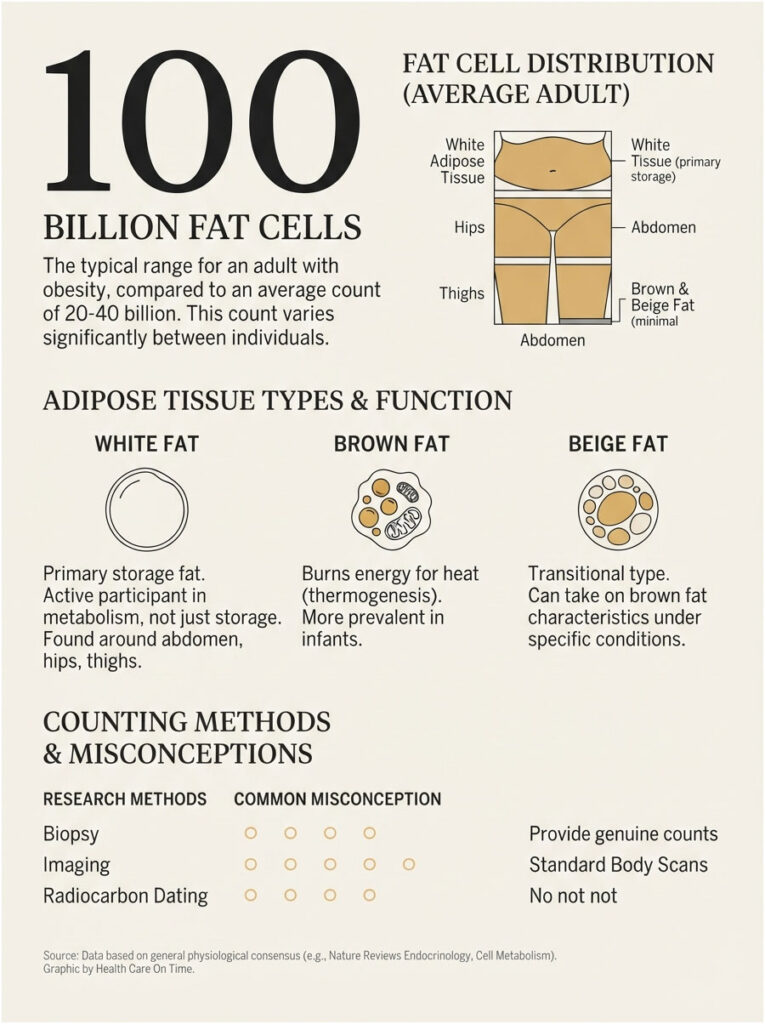
White adipose tissue is the storage type and accounts for the overwhelming majority of body fat in adults. It sits around the abdomen, hips, thighs, and internal organs.
Brown adipose tissue does the opposite job. It burns energy to produce heat, is abundant in infants, and survives in small deposits in adults near the neck and collarbones.
Beige fat sits between them. Under certain conditions, including sustained cold exposure, some white fat cells take on heat-producing characteristics.
Our medical reviewers note that when patients ask about products promising brown fat activation, the honest answer is that the brown tissue present in a typical American adult is far too small for any current intervention to shift body weight in a meaningful way.
How Many Fat Cells Does an Average Person Have?
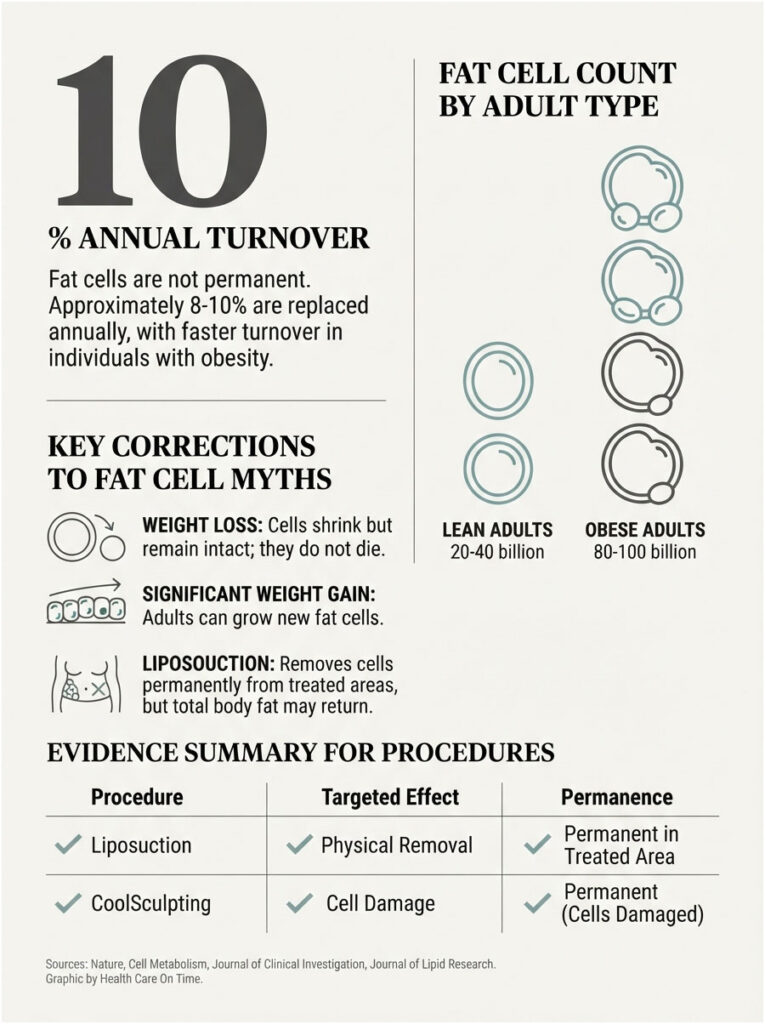
Published estimates put a lean adult somewhere between 20 and 40 billion adipocytes. Adults with severe obesity may carry 80 to 100 billion or more.
The range is wide because counting fat cells requires tissue biopsy paired with total fat mass calculations, and because fat distribution varies enormously between people of identical weight. The 2008 analysis in Nature concluded that adipocyte number is a major determinant of fat mass in adults.
That has a practical consequence. Two people at the same weight can hold that fat very differently, one in fewer and larger cells, the other spread across many smaller ones.
How Researchers Count Fat Cells
Three approaches dominate the literature. Tissue biopsy with osmium fixation measures adipocyte size directly, and total number is then calculated from known fat mass.
Imaging methods such as DEXA and CT quantify how much fat is present and where it sits, without counting cells.
Radiocarbon bomb-pulse dating, the technique behind the landmark findings, reads carbon-14 in cellular DNA to establish when a cell was born. Patients booking body composition scans with us often assume the report will show a cell count, and it does not. Scans measure mass and distribution, never cellular population.
The Short Answer, And Where It Breaks Down
The textbook answer is that adult fat cell number is fixed. The complete answer carries three real exceptions, and those exceptions are where the useful information lives.
The Study That Set the Rule
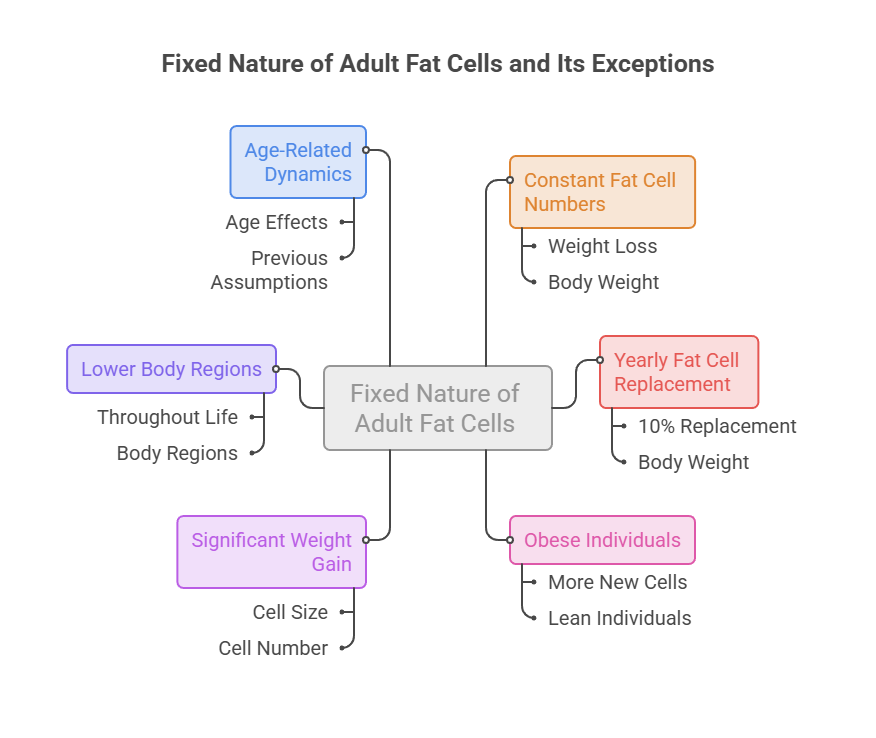
If you have ever been told your fat cell count was locked in as a teenager, this is the source. Investigators reported in Nature that the number of fat cells stays constant in adulthood in lean and obese individuals, even after marked weight loss, indicating the number is set during childhood and adolescence.
The method is what made it convincing. A Lawrence Livermore National Laboratory scientist worked with Karolinska Institute colleagues to apply carbon dating to DNA, a technique normally reserved for archaeology and paleontology.
Among participants who lost substantial weight, fat cell volume dropped while fat cell number did not change at all.
The 10 Percent Turnover Nobody Mentions
Here is the part that gets lost. A constant total does not mean the same cells stay with you.
Adults replace roughly 8 percent of their fat cells every year, with birth rates matched by death rates regardless of body weight. A later review put the figure at approximately 10 percent per year while body weight is stable.
People with obesity produce about twice as many new fat cells annually as lean people, and their cells also die at a correspondingly faster rate, which keeps the total steady.
The system behaves like a warehouse that holds its shelf count constant while continuously swapping individual shelves. Something in the body actively defends that number, and what that something is remains genuinely unresolved.
Three Places the Fixed for Life Claim Fails
Significant adult weight gain. An increase in body weight raises both fat cell size and fat cell number in adults, while a decrease changes size alone.
Body region. Fat cell numbers in the lower body appear able to increase throughout life, even though the abdominal pattern that most studies examine behaves differently.
Age itself. This is where evidence published since 2025 has forced a rewrite of the standard explanation.
Table 1: Fat Cell Number and Size Across the Human Lifespan
| Life Stage | What Happens to Fat Cell Number | What Happens to Fat Cell Size | Primary Evidence | What It Means for You |
| Infancy to age 10 | Rises steadily; children with obesity add cells at roughly twice the rate of lean peers | Increases modestly | Nature 2008, Spalding et al. | The earliest years shape the lifetime baseline |
| Puberty to age 20 | Rises sharply, then plateaus; count largely settled by early adulthood | Increases alongside number | Nature 2008; Arner review | Widest prevention window in the whole lifespan |
| Young adulthood, weight stable | Total holds constant; roughly 10 percent replaced yearly | Stable | Arner, Fat Tissue Growth and Development in Humans | Turnover continues invisibly under a flat total |
| Adulthood, significant weight gain | Can increase; 8 weeks of overfeeding added 2.6 billion lower-body cells | Increases in abdominal subcutaneous fat | PNAS 2010, Mayo Clinic | Cells added at this stage do not leave later |
| Adulthood, significant weight loss | No reduction, including after bariatric surgery | Falls substantially | Nature 2008; Diabetes Care 2017 | Smaller cells, same count, elevated regain risk |
| Middle age, roughly 40 to 60 | Production restarts in visceral depots via age-specific progenitors | Also increases | Science 2025, City of Hope and UCLA | Explains waist expansion at unchanged body weight |
What the Newest Research Is Changing
Three findings published since 2010 complicate that tidy conclusion. None of them appear on the pages currently ranking for this question, which is why the popular version of the story is roughly fifteen years out of date.
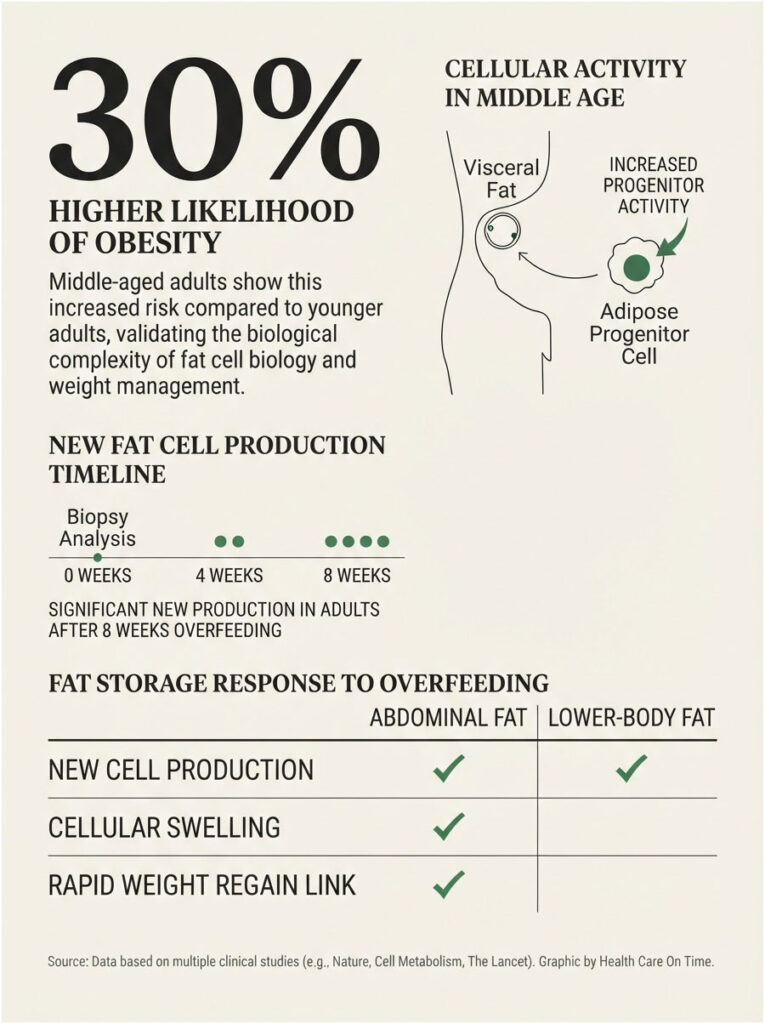
Middle Age Restarts the Fat Cell Factory
If your waist has grown in your forties while the scale barely moved, there is now a cellular explanation for it.
Lineage tracing in mice showed that adipose progenitor cells in visceral fat undergo extensive adipogenesis during middle age, meaning that despite the low turnover rate seen in young adults, new fat cell production restarts later in life.
The transplant experiments made the point hard to argue with. Progenitor cells taken from older animals and transplanted into young mice generated large numbers of new fat cells, while the reverse transfer produced relatively few, indicating the aggressive fat-making capacity was built into the older cells themselves.
Single-cell RNA sequencing identified a distinct population the authors named committed preadipocyte, age-enriched, or CP-A, showing elevated proliferation and adipogenesis activity, with leukemia inhibitory factor receptor signaling required for that activity.
The team then analyzed human tissue across age groups and found cells closely resembling CP-As, present in greater numbers in samples from middle-aged individuals.
This is animal-led evidence with human validation attached, not a settled human finding. It does offer the first mechanistic account of a pattern clinicians see every week.
Fat Tissue Appears to Remember Being Heavier
Rapid regain after a hard-won weight loss is usually described as a willpower problem. The molecular data suggest something else is happening in the tissue.
Single-nucleus RNA sequencing showed in Nature that both human and mouse adipose tissues retain cellular transcriptional changes after appreciable weight loss, and mice carrying this obesogenic memory show accelerated rebound weight gain.
Inflammation and extracellular matrix remodeling pathways stayed elevated in adipocytes after weight loss, while pathways tied to adipogenesis and fatty acid oxidation stayed suppressed, pointing to long-lasting adipose dysfunction.
Our medical team considers this one of the most clinically useful obesity findings of the decade, because it reframes fast regain as a tissue-level biological pattern rather than a character flaw.
Your Hips and Thighs Follow Different Rules
Depot matters. The abdomen and the lower body do not respond to a calorie surplus the same way.
Mayo Clinic investigators overfed 28 healthy, normal-weight adults averaging 29 years of age for eight weeks, producing 1.9 kg of upper-body fat gain and 1.6 kg of lower-body fat gain.
Abdominal subcutaneous fat expanded mainly through cells getting bigger, while lower-body fat responded with hyperplasia, adding roughly 2.6 billion adipocytes, and the authors concluded that fat cell number can increase in certain depots in adults after only eight weeks of increased food intake.
Eight weeks. Not eight years, and nowhere near childhood.
Table 2: Fat Cells and Body Weight by the Numbers, United States
| Metric | Figure | Population or Context | Source |
| Adult obesity prevalence | 40.3% | US adults 20 and older, Aug 2021 to Aug 2023 | CDC NCHS Health E-Stat 111, Feb 2026 |
| Severe obesity prevalence | 9.7% age-adjusted | US adults 20 and older | CDC NCHS Health E-Stat 111, Feb 2026 |
| Overweight prevalence | 31.7% age-adjusted | US adults 20 and older | CDC NCHS Health E-Stat 111, Feb 2026 |
| Obesity at ages 40 to 59 | 46.4% | Compared with 35.5% at ages 20 to 39 | CDC NCHS Data Brief 508 |
| Regional obesity prevalence | Midwest 35.9%, South 34.5% | 2024 BRFSS; every state at 25% or above | CDC Adult Obesity Prevalence Maps, Dec 2025 |
| Annual adipocyte turnover | About 10% per year | Adults at stable body weight | Arner, Fat Tissue Growth and Development in Humans |
| New fat cell production in obesity | Roughly 2x the lean rate | Offset by equally faster cell death | Nature, Dynamics of Fat Cell Turnover in Humans |
| Lower-body adipocytes added by overfeeding | 2.6 billion cells in 8 weeks | 28 normal-weight adults, average age 29 | PNAS 2010, Mayo Clinic |
Look at the age pattern in that table. CDC data show middle-aged adults are about 30 percent more likely to have obesity than adults aged 18 to 39.
The CP-A finding and that statistic line up in a way that is difficult to dismiss as coincidence.
What Happens to Fat Cells When You Lose Weight
This is where the misunderstanding causes actual harm, because people who believe they eliminated fat cells are blindsided when the weight returns.
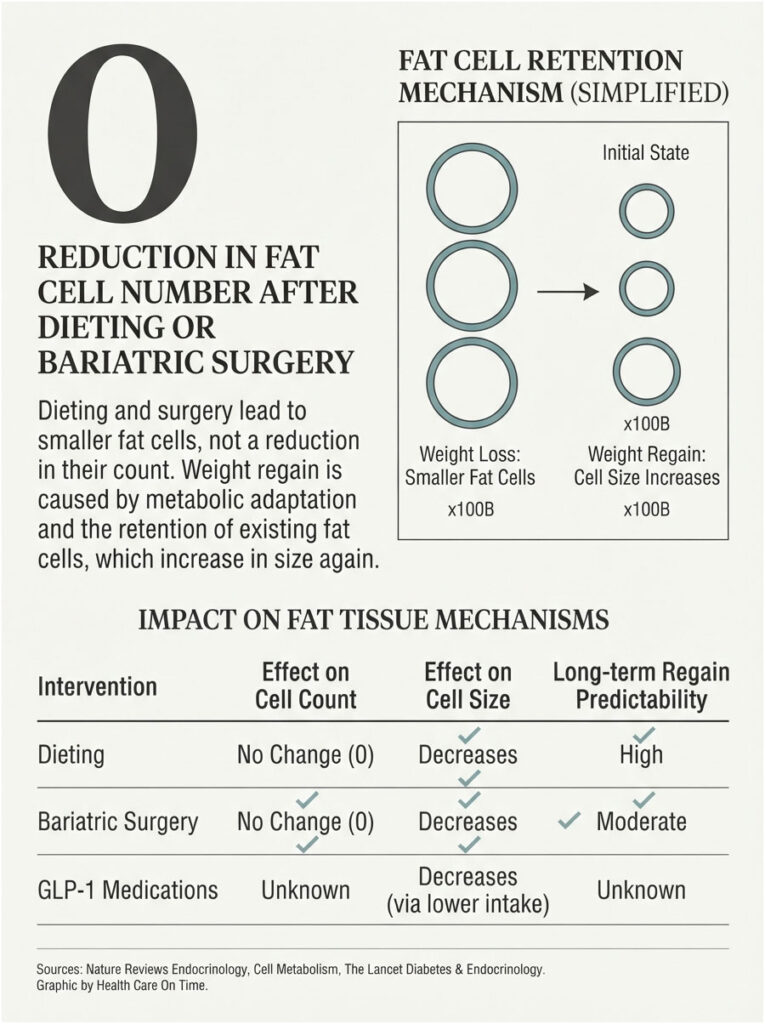
The Sequence, Step by Step
- A sustained energy deficit signals the body to mobilize stored fuel
- Lipolysis breaks stored triglycerides into fatty acids and glycerol
- Those fuels leave the cell and enter circulation for use by muscle and other tissues
- The emptied adipocyte physically shrinks, sometimes dramatically
- The cell survives intact, keeping its receptors, hormone output, and full storage capacity
- When surplus energy returns, that same cell refills
Nowhere in that sequence does a fat cell disappear because of dieting.
As one of the carbon-dating researchers summarized it, if you lose weight you still have the capacity to store lipids because you still have the same number of fat cells, which may be part of why keeping the weight off is so hard.
What Bariatric Surgery Data Shows
If any intervention could reduce fat cell number, gastric bypass should be the one. It does not.
In 49 women followed two years after Roux-en-Y gastric bypass, BMI fell, adiponectin secretion improved, lipolysis decreased, and fat cell size dropped, with no change in adipocyte number.
A 10-year follow-up of 22 women found fat cell size increased again between the 2-year and 10-year marks, though not back to presurgery levels, alongside regain of 29 percent of the initial weight loss.
That same study identified 7,729 differentially methylated sites at two years showing no sign of returning to baseline at either five or ten years.
Across the diagnostic network we serve, post-bariatric patients frequently show sustained metabolic improvement even when some weight comes back, which fits this cellular picture closely.
The GLP-1 Question
Patients ask us about semaglutide and tirzepatide constantly, and answering honestly means marking the edge of what is known.
These medications produce substantial fat mass loss primarily by reducing energy intake. Less fat mass means smaller adipocytes, following the same physiology as any other sustained deficit.
Whether GLP-1 based therapy changes adipocyte number in humans over the long run has not been established. No human carbon-dating equivalent has been published for this drug class, so any claim that these drugs eliminate fat cells is running well ahead of the evidence.
Why Regain Happens So Fast
Four factors stack on top of each other, and none of them involve motivation.
You keep every fat cell you had. Those cells are now smaller and metabolically primed to refill. The tissue retains transcriptional changes from the heavier state. Energy expenditure falls at lower body weight while appetite signaling rises.
Put together, rapid regain stops looking mysterious and starts looking predictable.
Can You Actually Lose Fat Cells?
Physical removal is the only route with any evidence behind it, and even that evidence is contested. This is the section where marketing claims and published data diverge most sharply.
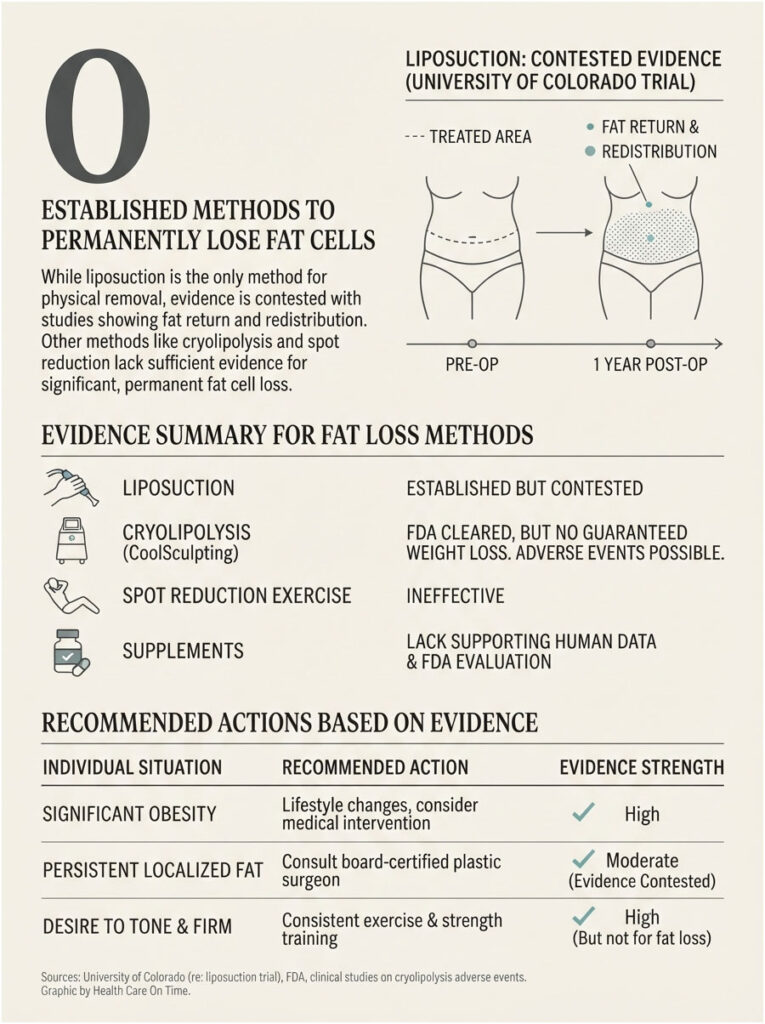
Liposuction: The Evidence Cuts Both Ways
A University of Colorado randomized controlled trial found that fat returned within one year after liposuction and was redistributed to other areas, particularly the upper abdomen, with further redistribution around the shoulders and triceps.
The trial followed 32 healthy, non-obese women averaging their mid-thirties; at six weeks the liposuction group had lost 2.1 percent of total fat versus 0.28 percent in controls, but by one year the difference was no longer statistically significant.
A later analysis reached the opposite conclusion. A study of 301 liposuction and abdominoplasty patients published in Plastic and Reconstructive Surgery found no evidence of fat regrowth in treated areas of the arms, abdomen, or lower body, and unchanged upper body dimensions indicating no redistribution.
Average hip reduction stayed significant even among a subgroup of 34 patients who gained five pounds or more after surgery.
The two studies used different designs. One applied precise imaging to a small randomized sample; the other used standardized photography across a large non-randomized series.
Neither closes the question. Any clinic presenting only one of them is presenting half the literature, and that is worth knowing before a consultation.
Cryolipolysis and What FDA Clearance Actually Means
Cryolipolysis devices cool subcutaneous fat to a temperature intended to damage adipocytes without injuring skin. FDA clearance for these devices covers appearance and body contouring, not weight loss and not metabolic improvement.
Paradoxical adipose hyperplasia is a recognized adverse event in which treated tissue enlarges instead of shrinking. It is uncommon, it is documented, and correction usually requires surgery.
Fat genuinely destroyed in a treated area does not regenerate there. Remaining adipocytes elsewhere keep full storage capacity, so the procedure alters contour rather than changing your total body fat trajectory.
What Does Not Work at All
Spot reduction through targeted exercise does not preferentially empty fat cells in the worked area. Abdominal work builds abdominal muscle; it does not selectively drain abdominal adipocytes.
Sweating removes water, not fat. Body wraps, vibration belts, and detox protocols have no plausible mechanism for altering adipocyte number or fat mass.
Supplements marketed as fat cell destroyers are not evaluated by the FDA for that claim. Our medical reviewers field questions about these products weekly, and none of them carry human data on adipocyte count.
Table 3: Your Situation, What the Evidence Supports, What to Do Next
| If This Is You | What the Science Actually Says | Recommended Action | Worth Discussing With a Clinician |
| Lost 30 pounds and regained it within a year | Cell count unchanged, cells refilled, tissue retains changes from the heavier state | Shift from rapid loss to slower loss with a defined 6 to 12 month maintenance phase | Whether medication-assisted maintenance suits your history |
| Parent of a child in a high weight percentile | Fat cell number is largely established before age 20 | Focus on family-wide habits, sleep, and daily activity rather than restriction | Growth chart trajectory and appropriate screening timing |
| Waist expanding in your 40s or 50s at stable weight | Age-specific progenitor cells may be generating new visceral adipocytes | Measure waist circumference monthly, not just body weight | Visceral fat risk and how often to repeat a metabolic panel |
| Considering liposuction for contouring | One randomized trial shows redistribution at 12 months; a 301-patient series shows none | Treat it as a contouring procedure, never a metabolic one | Candidacy and realistic outcomes with a board-certified surgeon |
| Considering cryolipolysis | Cleared for appearance only; paradoxical adipose hyperplasia is a known risk | Request written adverse event rates from that specific provider | Whether the target area is appropriate and what the correction plan is |
| Normal weight but fasting glucose creeping up | Fewer, larger adipocytes track with poorer insulin sensitivity | Add fasting insulin and HbA1c to your standard glucose test | Whether you fit a metabolically unhealthy normal weight pattern |
What This Means for Your Health Plan
The cellular biology is interesting on its own. What follows from it is what changes outcomes.
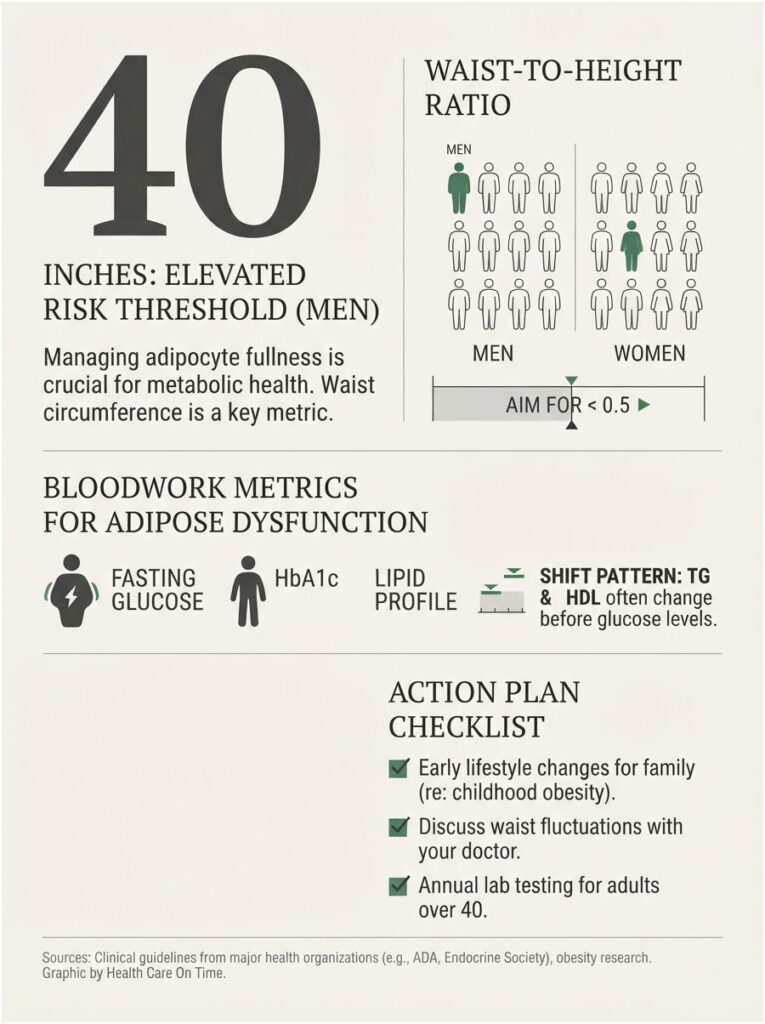
Childhood and Adolescence Carry Outsized Weight
If fat cell number is largely settled before age 20, the highest-leverage prevention happens before adulthood. Children with obesity add new fat cells at roughly twice the rate of lean peers, which is why they finish adolescence with a larger cell population.
That is an argument for early family-level habits around sleep, activity, and food environment. It is not an argument for putting children on restrictive diets, which carries its own well-documented harms.
For Adults, Cell Size Is the Lever
You cannot change how many adipocytes you have. You can change how full they are, and fullness tracks closely with metabolic risk.
At the same total fat mass, smaller and more numerous adipocytes tend to associate with better insulin sensitivity than fewer engorged ones. That is one reason two Americans at identical BMI can present with completely different metabolic profiles.
Numbers Worth Tracking Beyond the Scale
Waist circumference is the most useful home measurement you can take, because it approximates the visceral compartment the middle-age progenitor research points to.
Common US clinical thresholds place elevated risk above 40 inches for men and above 35 inches for most women. A waist-to-height ratio below 0.5 is a widely used simple target.
Body weight alone conceals exactly the pattern this article describes. Patients who track only pounds routinely miss a rising waist measurement at unchanged weight.
Lab Work That Reflects Fat Cell Health
Adipose tissue dysfunction shows up in bloodwork before it produces symptoms. A useful starting panel covers fasting glucose, HbA1c, a full lipid profile, liver enzymes, and where appropriate fasting insulin.
Our lab partners report that triglyceride and HDL patterns often shift before fasting glucose moves, which makes the lipid panel an early warning rather than a late confirmation.
Testing frequency belongs to you and your physician, set against your history. Annual testing is a common baseline for adults over 40 without an existing diagnosis.
When to Bring This Up With Your Doctor
Raise it if your waist has grown two inches or more without weight change, if you have regained more than half of a significant weight loss, or if you have a family history of type 2 diabetes and a rising fasting glucose.
Bring your measurements, not just your impressions. A three-point waist record over six months tells a physician more than a general sense that clothes fit differently.
Seven Fat Cell Myths, Corrected
- Myth: Fat turns into muscle. Adipocytes and muscle cells come from separate lineages. Fat cells shrink while muscle cells grow, and neither converts into the other.
- Myth: Fat cells split in two when they fill up. Mature adipocytes do not divide. New fat cells form when precursor cells differentiate, a separate process called adipogenesis.
- Myth: Nothing about a fat cell ever changes. Fat cells turn over at roughly 10 percent per year, and bone marrow acts as an important source of renewal across the entire lifespan.
- Myth: Losing weight kills fat cells. Weight loss reduces cell size. Cell number is preserved, bariatric surgery included.
- Myth: You can target fat loss in one body part. Fat mobilization is systemic and shaped by genetics and hormones, not by which muscle you exercised yesterday.
- Myth: Fat cells store toxins that need flushing. Some fat-soluble compounds do partition into adipose tissue, but no commercial cleanse has been shown to remove them.
- Myth: A high fat cell count makes weight loss pointless. A larger cell population makes maintenance harder, not impossible, and the metabolic benefits of fat loss occur regardless of how many cells you started with.
Frequently Asked Questions
Do fat cells stay in your body forever?
Individual fat cells do not. Roughly 10 percent are replaced each year through natural cell death and replacement. What stays constant is the total, because new cells form at close to the same rate old ones die off.
How many fat cells does the average person have?
Estimates generally place lean adults between 20 and 40 billion adipocytes, with adults who have severe obesity carrying 80 to 100 billion or more. Exact counts vary widely because measurement requires tissue biopsy combined with total fat mass calculations.
Do fat cells die when you lose weight?
Not because of the weight loss itself. Fat cells release stored triglycerides and shrink, sometimes dramatically, but the cell survives with full storage capacity intact. Studies after major weight loss, including bariatric surgery, consistently find unchanged adipocyte numbers.
Can adults grow new fat cells?
Yes, under specific conditions. Significant weight gain raises both cell size and cell number. Mayo Clinic overfeeding research found lower-body fat added roughly 2.6 billion new adipocytes in normal-weight adults after only eight weeks of increased intake.
Are fat cells really set during childhood?
Largely, but not completely. The 2008 Nature work concluded that cell number is established during childhood and adolescence. Later research shows adults can add cells with substantial weight gain, and that middle age restarts production in visceral depots.
How fast do fat cells turn over?
Roughly 8 to 10 percent per year in adults at stable weight, meaning the population cycles fully about every decade. People with obesity generate new cells at approximately twice the lean rate, offset by an equally faster rate of cell death.
Does liposuction permanently remove fat cells?
Cells removed during the procedure are gone from that site. Whether total body fat returns is disputed. A randomized trial found redistribution to the upper body within a year, while a larger photographic study of 301 patients found no regrowth or redistribution.
Do fat cells come back after CoolSculpting?
Cryolipolysis damages fat cells in the treated area, and those specific cells do not regenerate. Untreated adipocytes elsewhere keep full storage capacity, so the treatment changes contour rather than total fat trajectory. Paradoxical adipose hyperplasia is an uncommon but documented complication.
Do fat cells have memory?
Research in Nature found that human and mouse adipose tissue retains transcriptional changes after significant weight loss, with inflammation pathways staying elevated and fat-burning pathways suppressed. In mice, this pattern tracked with faster rebound weight gain.
Does bariatric surgery reduce fat cell number?
No. Gastric bypass patients followed two, five, and ten years after surgery show substantially reduced fat cell size with no change in adipocyte number, alongside improvements in adiponectin, lipolysis, and insulin action that persist even through partial weight regain.
Can fat cells turn into muscle?
No. Adipocytes and myocytes come from different cell lineages and cannot convert into one another. Resistance training grows muscle while a sustained deficit shrinks fat cells, and the two happening at once creates the appearance of conversion.
Why does belly fat increase in middle age?
Research in Science identified age-specific progenitor cells, named CP-A, that emerge in middle age and actively generate new fat cells in visceral tissue. Comparable cells were found in human samples, more abundantly in middle-aged individuals, providing a mechanism for waist expansion at stable weight.
Medical Disclaimer
This article is for general education and does not replace personalized medical advice, diagnosis, or treatment. Body weight and metabolic health are influenced by genetics, hormones, medications, sleep, socioeconomic factors, and medical conditions that vary between individuals. Speak with a licensed physician before starting any weight management program, medication, or cosmetic procedure. If you have concerns about disordered eating, please reach out to a qualified healthcare professional.
References
- Dynamics of fat cell turnover in humans, Nature 2008
- Distinct adipose progenitor cells emerging with age drive active adipogenesis, Science 2025
- Adipose tissue retains an epigenetic memory of obesity after weight loss, Nature 2024
- Regional differences in cellular mechanisms of adipose tissue gain with overfeeding, PNAS 2010
- Fat Tissue Growth and Development in Humans, review
- Prevalence of Overweight, Obesity, and Severe Obesity Among Adults, CDC NCHS Health E-Stat 111
- Obesity and Severe Obesity Prevalence in Adults, CDC NCHS Data Brief 508
- Adult Obesity Prevalence Maps, CDC
- Long-term Protective Changes in Adipose Tissue After Gastric Bypass, Diabetes Care 2017
- Long-term improvement of adipocyte insulin action during body weight relapse after bariatric surgery
- Photographic measurements in 301 cases of liposuction and abdominoplasty, Plastic and Reconstructive Surgery 2012
- University of Colorado randomized liposuction trial coverage
- City of Hope research on age-related belly fat
- Fat cell numbers stay constant through adult life, Nature news