Spot orange in the toilet and the mind jumps straight to the liver. The reality is almost always calmer than that. In the large majority of cases, the color traces back to the plate, not to disease, and it fixes itself within a day or two.
Stool color is one of the body’s simplest status updates. It shifts with food, medication, and how fast digestion is running, and learning to read it takes the panic out of a surprising toilet bowl. This guide walks through every common cause, the handful of warning signs that actually matter, and the clear line between “wait and watch” and “get it checked.”
Table of Contents
Quick Answer: Orange stool is usually harmless. The most common causes are beta-carotene foods (carrots, sweet potatoes, squash), food dyes, and supplements. Certain medications, including rifampin and aluminum-hydroxide antacids, can also turn stool orange. Less often, rapid digestion, IBS, fat malabsorption, or bile-flow problems are behind it. See a doctor if orange stool lasts beyond 48 to 72 hours or comes with pain, weight loss, or jaundice.
At a Glance
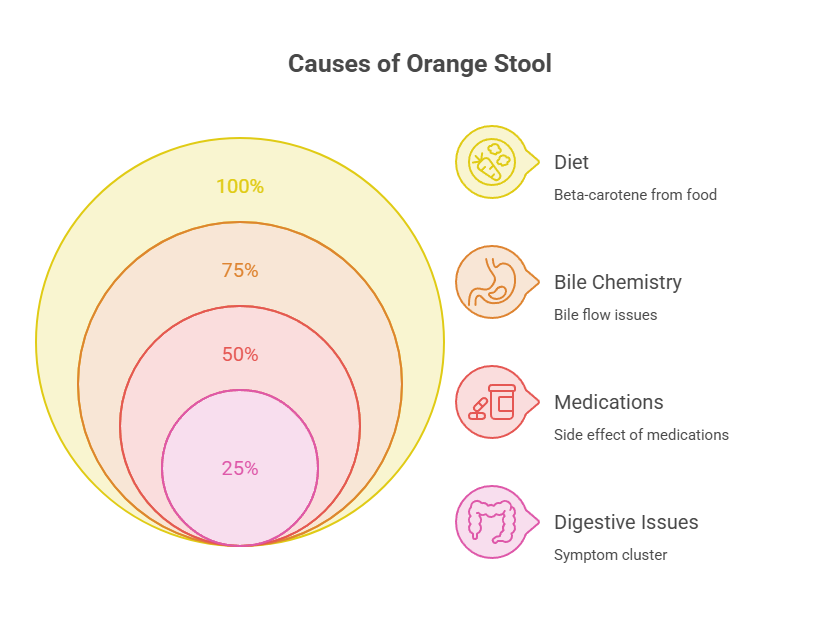
- Diet is the number one reason stool turns orange, and beta-carotene is the usual pigment.
- Bile chemistry decides stool color; when bile runs low or moves too fast, brown shifts toward orange.
- Several common medications and supplements list orange stool as a harmless side effect.
- Digestive causes usually arrive with a symptom cluster, not on their own.
- The 48 to 72 hour rule is the simplest way to sort routine from worth-checking.
- Red-flag symptoms (pain, weight loss, jaundice, blood) change the picture immediately.
- Persistent, unexplained orange stool can be a signal worth a simple lab test rather than a guess.
What Does Orange Stool Actually Mean?
Stool color is mostly a bile story. The liver makes bile, a yellow-green fluid that helps break down fats during digestion, and stores it in the gallbladder between meals.
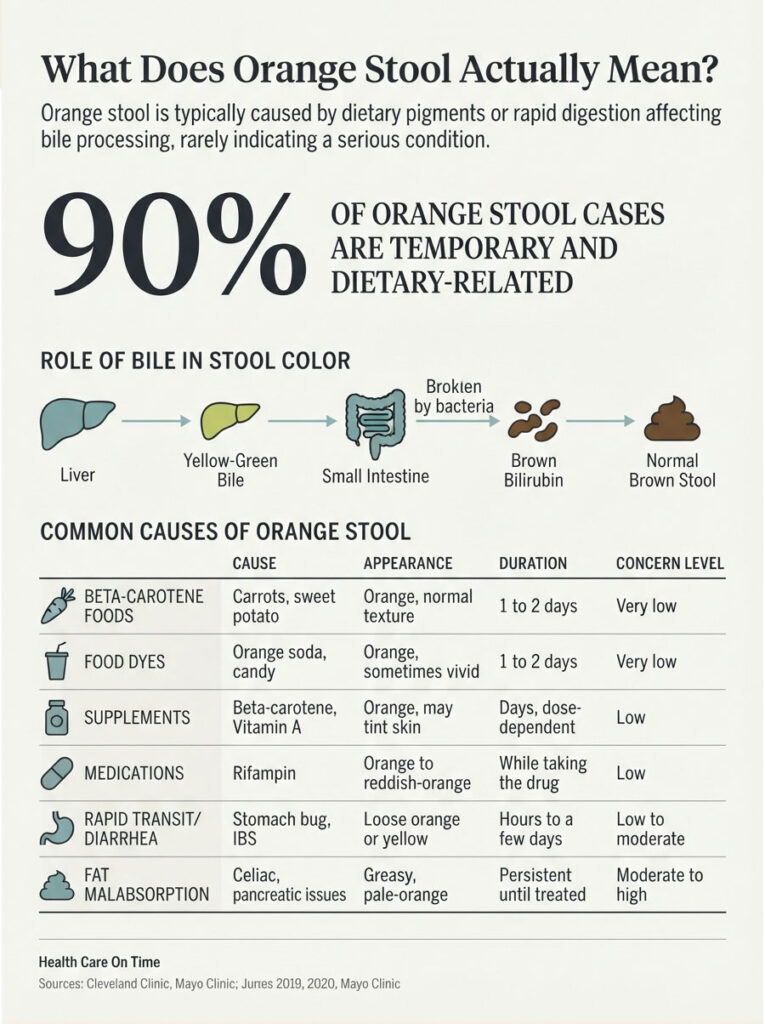
As bile moves through the intestines, enzymes and gut bacteria change its pigments in stages. That chemical journey is what turns waste the familiar shade of brown by the time it leaves the body. Interrupt the journey, speed it up, or flood it with outside color, and brown drifts toward other shades.
How Bile Gives Stool Its Brown Color
Bile starts out yellow-green thanks to bilirubin, a pigment left behind when the body recycles old red blood cells. As bilirubin travels the digestive tract, it gets chemically altered and darkens.
By the time everything reaches the end, the color has settled into brown. Cleveland Clinic explains that normal brown stool depends on bile mixing properly with digestive enzymes along the way. When that timing holds, brown is the reliable result.
The specific pigment behind brown stool is stercobilin, formed as gut bacteria break bilirubin down in the colon. When that breakdown runs short, whether from fast transit or reduced bile, less stercobilin forms and the stool reads lighter, yellow, or orange. It is a small chemistry detail with a large visual payoff.
Why the Color Shifts to Orange
Two forces push stool toward orange. The first is pigment overload, usually beta-carotene from food or supplements passing through faster than the body can fully process it.
The second is incomplete bile conversion. If stool moves through the gut too quickly, bile does not get the time it needs to darken, so lighter orange or yellow tones show up instead of brown.
In cases reviewed by our medical team, the same orange shade regularly comes from two opposite directions: harmless diet on one side, a bile-flow issue on the other. That overlap is exactly why the surrounding context matters far more than the color by itself.
The Beta-Carotene and Vitamin A Connection
Beta-carotene is not only a coloring agent. The body converts it into vitamin A, a nutrient tied to vision, immunity, and skin health.
The NIH Office of Dietary Supplements puts adult vitamin A needs at roughly 700 to 900 micrograms RAE per day. It takes carotene intake well above routine eating, think large or repeated servings, to tint stool, which is why an occasional carrot does nothing while a carrot-juice habit might.
| Cause Category | What Triggers It | Typical Appearance | How Long It Lasts | Concern Level |
| Beta-carotene foods | Carrots, sweet potato, squash, cantaloupe | Orange, normal texture | 1 to 2 days | Very low |
| Food dyes | Orange soda, candy, frosting, snacks | Orange, sometimes vivid | 1 to 2 days | Very low |
| Supplements | Beta-carotene, vitamin A, multivitamins | Orange, may tint skin | Days, dose-dependent | Low |
| Medications | Rifampin, aluminum-hydroxide antacids | Orange to reddish-orange | While taking the drug | Low (check with prescriber) |
| Rapid transit / diarrhea | Stomach bug, food reaction, IBS | Loose orange or yellow | Hours to a few days | Low to moderate |
| Fat malabsorption / bile issues | Celiac, pancreatic, gallbladder, bile duct | Greasy, pale-orange, floating, foul | Persistent until treated | Moderate to high |
Diet, the Most Common Reason for Orange Stool
If stool suddenly turns orange and everything else feels normal, the last two days of meals are the first place to look. Food explains the clear majority of cases, and it is almost always harmless.
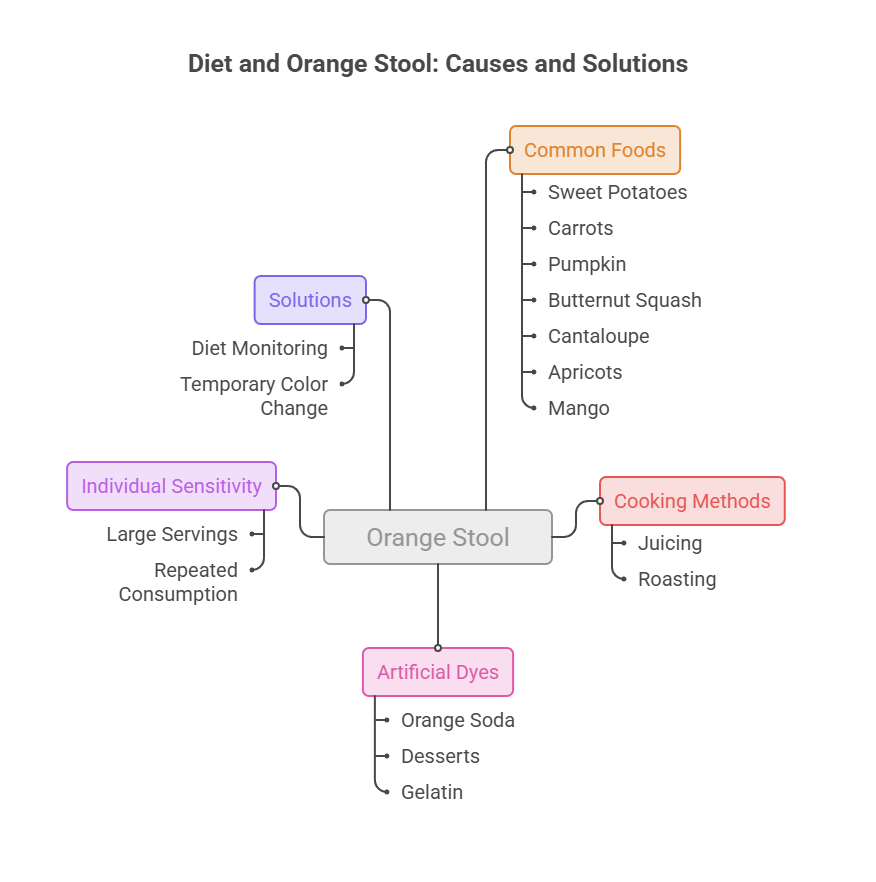
Patients booking tests with us often ask whether orange stool signals something serious, when the answer traces back to a big serving of sweet potato fries or a carrot-heavy smoothie the day before. The color is doing its job as a food tracker, nothing more.
Beta-Carotene Foods
Beta-carotene is the bright orange pigment behind a long list of fruits and vegetables. Eat enough of them and some of that pigment rides all the way through and colors the exit.
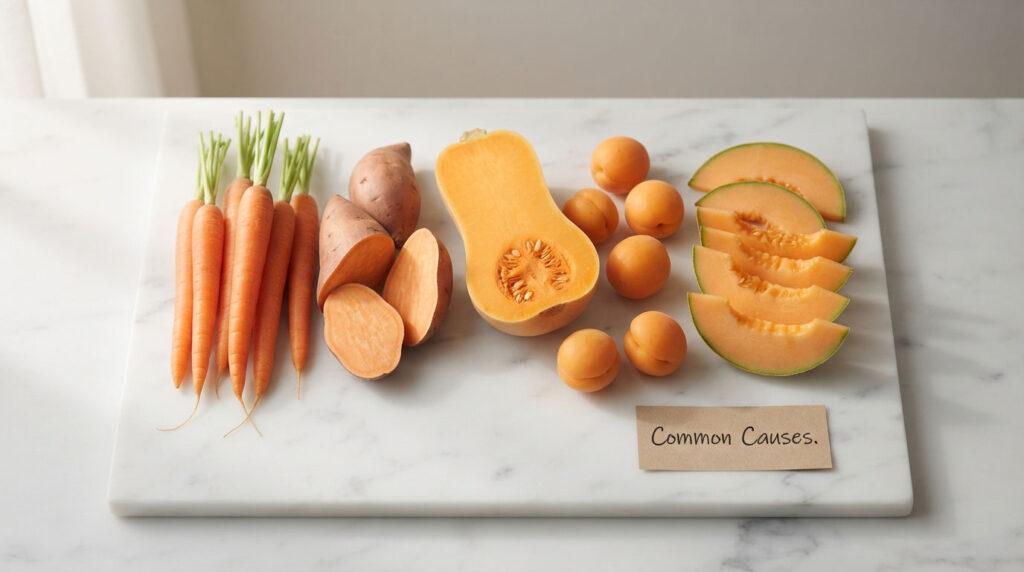
Common sources include carrots, sweet potatoes, pumpkin, butternut and winter squash, cantaloupe, apricots, and mango. Even leafy greens like spinach and kale carry carotenoids, though their green chlorophyll usually masks the orange tint.
Cooking and juicing concentrate carotenoids and make them easier to absorb, so a glass of carrot juice or a tray of roasted squash can deliver far more pigment than the same vegetables raw. That is why juice cleanses and heavy roasted-vegetable stretches are common triggers our team hears about.
This color change is temporary by nature. Once the food clears the system, generally within a day or two, brown returns without any intervention.
Food Dyes and Artificial Coloring
Beta-carotene is not the only paintbrush in the kitchen. Artificial orange and red food dyes keep tinting whatever they touch, even after digestion. Cleveland Clinic notes that bright food coloring can push stool into unnatural shades.
Frequent offenders include orange soda, orange-frosted desserts, gelatin, cheese-flavored snacks, and brightly colored candy. Sensitivity varies from person to person, so a dye that colors one person’s stool may do nothing to another’s.
How Much Is Too Much?
There is no exact gram count that flips the switch, because tolerance differs by individual. As a working guide, it usually takes a large or repeated serving, not a single baby carrot, to change the color.
A whole bag of carrots, a big bowl of squash soup, several glasses of an orange-dyed drink, or a daily carrot-juice routine can each be enough. Cutting back for two days and watching the color reset is the simplest home test there is.
Medications and Supplements That Turn Stool Orange
The medicine cabinet is the second suspect, and a common one. Several everyday products change stool color as a documented, harmless side effect that never makes it onto the worry list until it happens.
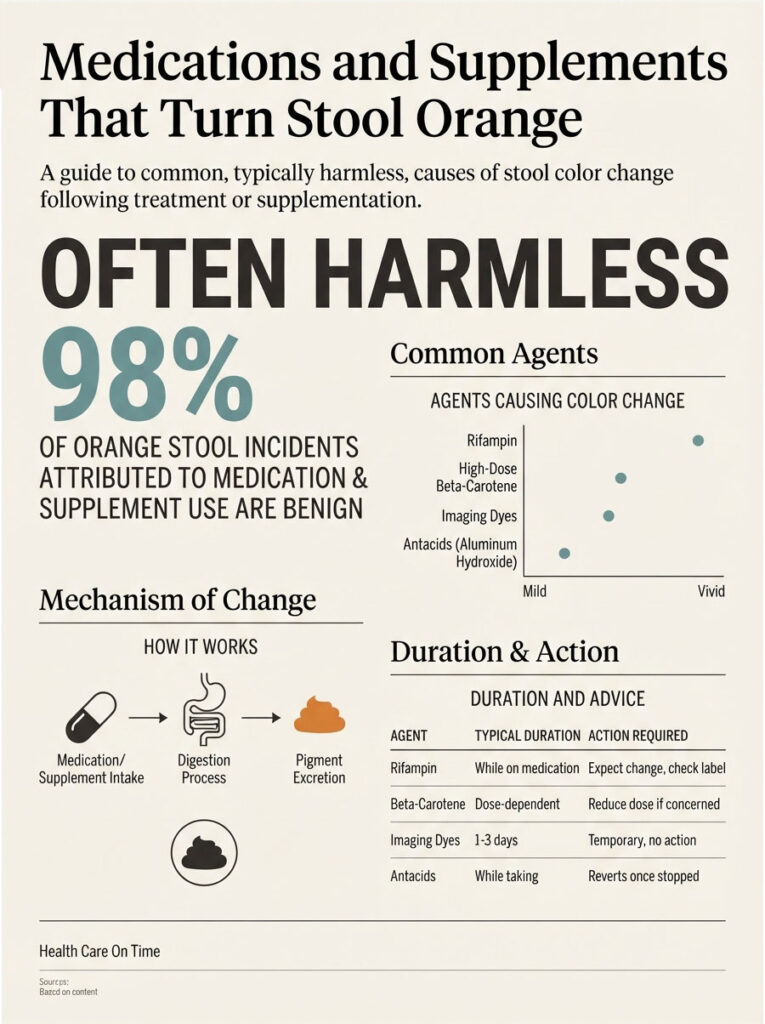
Patients commonly ask us to review their medication list when stool color shifts, and more often than not the explanation is printed right on the label. A quick check often ends the concern on the spot.
Aluminum-Hydroxide Antacids
Antacids containing aluminum hydroxide, taken for heartburn, indigestion, and GERD, can lighten stool toward orange or gray. They neutralize stomach acid and can slow how bile is processed downstream. Healthline lists these antacids among typical medication causes.
The effect is benign and reverses once the antacid is stopped or reduced. It is worth mentioning to a pharmacist only if other symptoms appear alongside it.
Rifampin and Certain Antibiotics
Rifampin, an antibiotic used for tuberculosis and some other bacterial infections, is famous for turning body fluids reddish-orange, including urine, tears, sweat, and stool. Medical News Today and other clinical sources describe this as expected and harmless.
If rifampin started recently and orange stool is the only new change, that is the medication doing exactly what it is known to do. Stomach pain, blood, or dizziness alongside it, though, is a separate conversation to have with the prescriber promptly.
Beta-Carotene and Vitamin A Supplements
Supplements are concentrated by design, delivering more pigment than food usually would in a single dose. Beta-carotene capsules, high-dose vitamin A, and even some multivitamins can tint stool orange.
At very high intake, the same pigment can tint skin too, a harmless condition called carotenemia that often shows first on the palms and soles. Our lab partners report that supplement-driven color changes rank among the most common benign findings people worry about needlessly.
Imaging Contrast Dyes
One more medical cause sits outside the pill bottle. A recent CT, MRI, or PET scan that used injected contrast dye can shift stool color briefly before the dye clears the system, then color returns to normal on its own.
Digestive Causes, When Bile and Fat Absorption Go Wrong
Diet and medication cover most cases. When both are ruled out, and especially when other symptoms show up, digestion itself moves to the center of the picture.
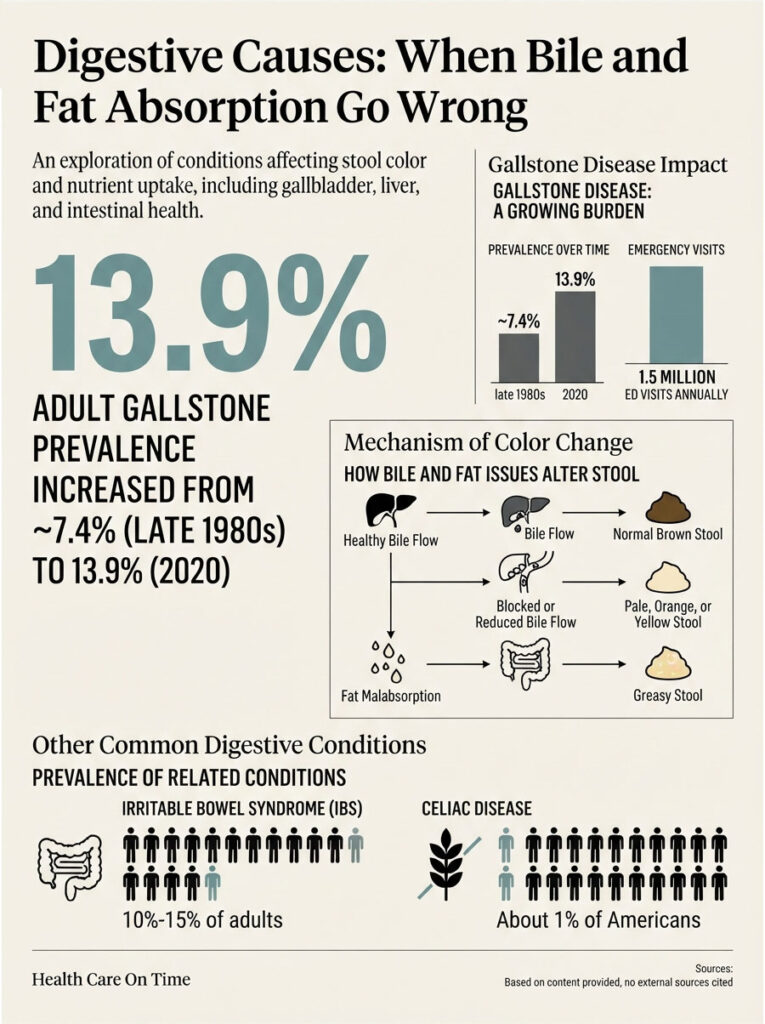
The common thread is bile. Either bile does not get enough time to finish its work, or not enough bile reaches the gut in the first place. Each pathway can leave stool orange, and each points somewhere different.
Rapid Transit and Diarrhea
When food races through the intestines, bile cannot finish converting from yellow-green to brown. The result is lighter, orange, or yellow stool, often loose or watery in texture.
A short bout of diarrhea from a stomach bug, a food sensitivity, or a viral infection is the usual trigger. Once transit slows back to normal, the color follows within a day or two.
Infections are a frequent culprit here. Viral gastroenteritis, bacteria such as Salmonella, and parasites like Giardia all speed things up and can shift color. When orange or yellow diarrhea shows up with fever, cramping, or recent travel, an infection climbs the list of likely causes.
IBS and Orange Stool
Irritable bowel syndrome does not paint stool orange directly, but its effects can. IBS often speeds up or slows down transit unpredictably, and faster transit means less time for bile to darken toward brown.
IBS is common across the US, with gastroenterology estimates placing it near 10% to 15% of adults. That prevalence is why orange stool paired with cramping is a pattern our reviewers see regularly rather than rarely.
When orange stool arrives alongside belly pain, bloating, and shifting bowel habits, IBS is worth raising with a clinician instead of self-diagnosing from color alone. A proper assessment separates IBS from other causes that look similar.
Fat Malabsorption and Steatorrhea
Here is where look and feel start to matter. When the body cannot absorb fat properly, stool can turn orange or pale, greasy, foul-smelling, and prone to floating. The clinical name is steatorrhea.
Conditions behind it include celiac disease, pancreatic enzyme insufficiency, and small intestinal bacterial overgrowth (SIBO). Celiac disease affects roughly 1% of Americans, about 1 in 133 people, according to Beyond Celiac.
Greasy orange stool that leaves an oily film is the version that earns attention, not the dry orange stool that follows a carrot binge. The texture, not just the color, is the real tell here.
Bile Duct, Gallbladder, and Liver Problems
Less often, orange or pale stool points upstream to where bile is made, stored, or delivered. Gallstones, inflammation, strictures, cysts, or tumors can each restrict bile flow into the gut.
Reduced bile reaching the intestine leaves stool lighter, sometimes orange, more often pale or clay-colored. Gallstones have grown steadily more common in the US, and the data makes the trend clear.
Drawing on NHANES-based research, US gallstone prevalence in adults climbed from about 7.4% in the late 1980s to roughly 13.9% by 2020. National survey data also ties gallstone disease to an estimated 1.5 million emergency department visits in a single recent year, per a US gallstone burden study.
| Condition / Factor | US Figure | Source |
| Gallstones (adult prevalence trend) | Rose from ~7.4% to ~13.9% (late 1980s to 2020) | NHANES-based research |
| Gallstone disease burden | ~1.5 million ED visits in one recent year | US gallstone burden study |
| Gallstones in adults (estimate) | Around 12% of US adults affected | Peer-reviewed GI literature |
| Celiac disease | ~1% of Americans (about 1 in 133) | Beyond Celiac |
| Irritable bowel syndrome | Estimated 10% to 15% of US adults | US gastroenterology estimates |
Orange Stool by Symptom, Reading the Full Picture
Color on its own rarely tells the whole story. What surrounds the color, pain, texture, smell, and other signs, is what separates harmless from worth-checking.
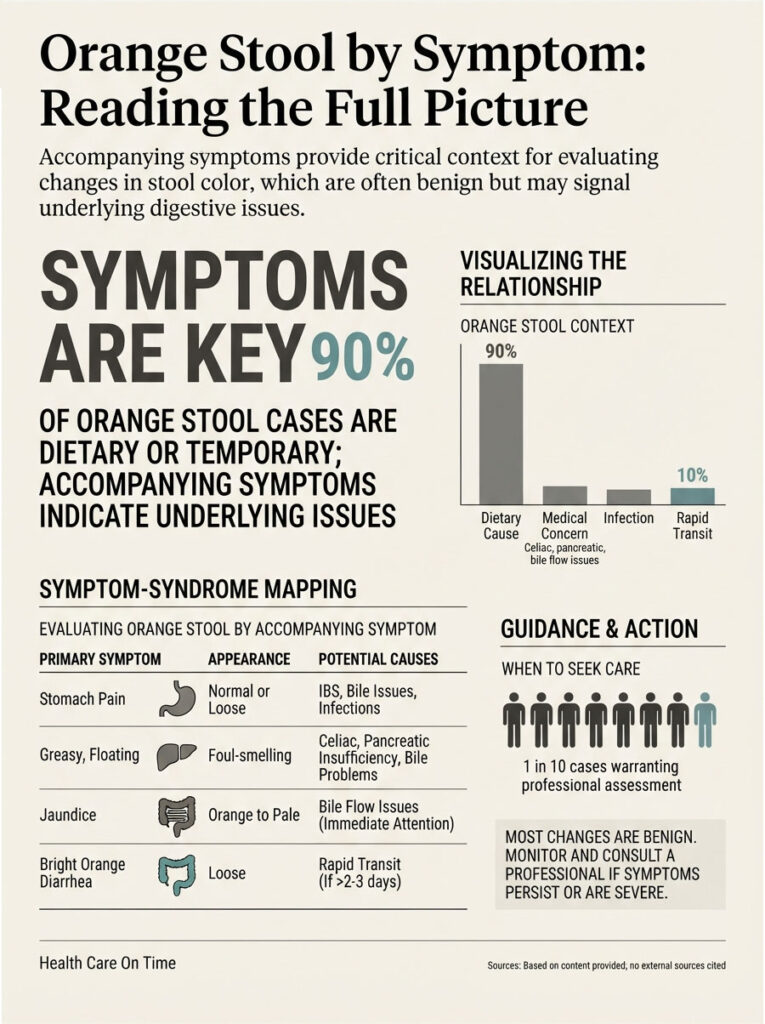
Across the diagnostic network we serve, the accompanying symptoms drive the next step far more than the shade itself. Reading the full cluster, rather than fixating on one detail, is how clinicians make sense of it.
Orange Stool with Stomach Pain
Orange stool paired with stomach pain widens the list of possibilities. It can still be diet or a passing bug, but pain plus color earns a closer look.
If cramping and orange stool keep returning together, IBS, a bile issue, or an infection could be at play. Persistent or severe pain is reason enough to call a clinician rather than wait it out.
Greasy, Floating, Foul-Smelling Orange Stool
This cluster is the standout warning pattern. Orange stool that turns oily, floats, and smells especially bad points to fat passing through unabsorbed.
Steatorrhea like this can signal celiac disease, pancreatic insufficiency, or a bile problem. It is the pattern most worth a professional evaluation, even when no pain is present at all.
Bright Orange Diarrhea
Bright orange diarrhea usually means rapid transit, bile that never finished converting on the way through. A stomach virus or food reaction is the common driver.
Short episodes tend to resolve on their own. Diarrhea stretching beyond two to three days raises dehydration risk and deserves prompt medical advice, especially in children and older adults.
Orange Stool with Jaundice or Recurring Pale Stool
The combination that matters most is orange or pale stool alongside yellowing of the skin or eyes (jaundice), dark urine, or itching. That pattern suggests bile is not flowing the way it should.
This is a see-a-doctor-soon situation, not a wait-and-watch one. Liver and biliary conditions respond best to early assessment, so this cluster should never sit for weeks.
When Is Orange Stool Serious? Warning Signs and When to See a Doctor
Most orange stool clears up on its own. The real skill is recognizing the short list of situations that flip it from routine to worth-checking, and acting on those without overreacting to the rest.
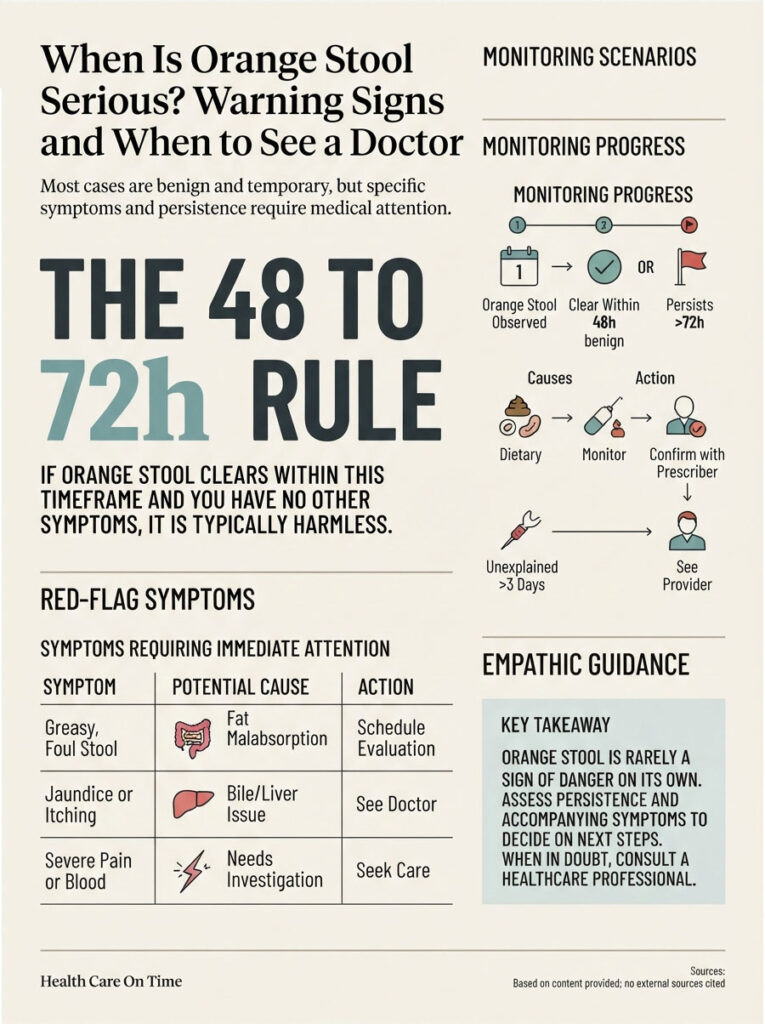
Red-Flag Symptoms
Certain symptoms alongside orange stool call for prompt medical attention regardless of diet. These include:
- Persistent or severe abdominal pain
- Unexplained weight loss
- Jaundice (yellow skin or eyes) or dark urine
- Blood in the stool, or black, tarry stool
- Fever, chills, or ongoing vomiting
- Diarrhea lasting more than two to three days with signs of dehydration
Any one of these shifts the situation from monitoring to medical evaluation. The color becomes secondary to the symptom.
The 48 to 72 Hour Rule
Here is the simplest filter to carry. If orange stool has an obvious food or medication explanation and clears within 48 to 72 hours, it is almost always harmless.
If it lingers past that window with no dietary explanation, or shows up with any red flag above, that is the cue to get it checked. Cleveland Clinic advises contacting a provider when stool does not return to brown within a few days.
Early evaluation matters most for bile and liver conditions, where timing can shape outcomes. That reasoning is why persistent color changes are worth a visit rather than months of watching and hoping.
| Scenario | What It May Indicate | Recommended Action |
| Orange stool, feel fine, ate orange foods | Beta-carotene from diet | Watch 1 to 2 days; no action needed |
| Orange stool after starting a new medication | Drug side effect (rifampin, antacids) | Continue; confirm with prescriber if unsure |
| Orange stool over 3 days, no diet cause | Digestive or bile-flow factor | Contact a healthcare provider |
| Greasy, floating, foul orange stool | Fat malabsorption (celiac, pancreatic, bile) | Schedule a medical evaluation |
| Orange stool with jaundice, dark urine, or itching | Possible bile-flow or liver issue | See a doctor promptly |
| Orange stool with severe pain, weight loss, or blood | Needs investigation | Seek prompt medical care |
Orange Stool in Specific Groups
Context shifts a little depending on who you are. The same color can carry different weight across age and life stage, so the response is not one-size-fits-all.
Adults
For most adults, diet and medication remain the top explanations by a wide margin. The 48 to 72 hour rule applies cleanly, and a quick diet review usually solves the mystery.
During Pregnancy
Pregnancy adds prenatal vitamins and dietary changes that can tint stool orange. Rarely, a liver condition called cholestasis of pregnancy slows bile flow and can change stool color.
Cholestasis often brings intense itching, especially on the hands and feet, sometimes without a rash. New itching or stool-color changes in pregnancy are worth reporting to an obstetric provider to stay on the safe side.
Babies and Breastfed Infants
Orange or yellow stool is common and usually normal in infants, particularly breastfed babies whose diet and fast digestion favor lighter shades. Blocked bile ducts are rare but important, and they typically show up as persistently pale stool.
Any baby with pale, clay-colored stool or yellowing skin should be seen promptly. Color variation in infants is wide, so pediatric guidance is the right compass when something looks off.
Older Adults
In older adults, a lower threshold to check makes sense. Bile, gallbladder, and pancreatic conditions become more common with age, which shifts the odds.
Persistent orange or pale stool in this group deserves a closer look sooner rather than later, even without pain to prompt it.
How to Prevent and Manage Orange Stool
When the cause is benign, managing orange stool is refreshingly simple. A few adjustments and a little tracking usually settle the matter without a clinic visit.
Simple Dietary Adjustments
If beta-carotene foods are the source, there is no need to give them up, just balance the portions. Rotating carrots and sweet potatoes with other vegetables for a few days usually resets the color.
For dye-driven color, easing off brightly colored processed foods and drinks tends to resolve it quickly. Since dye sensitivity varies, it helps to notice which specific items trigger it for you.
A simple swap-and-observe approach works well. Drop the suspected food for two to three days, keep everything else steady, and watch whether brown returns. If it does, the case is closed. If the orange persists despite the change, that points away from diet and toward a reason worth checking.
Tracking Color, Consistency, and Symptoms
A quick note on a phone beats trying to reconstruct events later. Track when the color appeared, what was eaten, any medications, and whether other symptoms tagged along.
That small record turns a vague worry into useful information for a clinician, and it often reveals the cause on its own. Patients who bring a short symptom log tend to reach clear answers faster, something our team sees again and again.
When It Resolves on Its Own
Color changes from diet and medication almost always fade once the source leaves the system, usually within a day or two, with no treatment required. Patience does most of the work.
The line to remember is straightforward: temporary and explainable is reassuring; persistent and unexplained, or paired with red flags, is worth a visit.
Frequently Asked Questions
Why is my poop orange after eating carrots?
Carrots are packed with beta-carotene, a bright orange pigment. Eat a large amount and some passes through your digestive tract, tinting stool orange. It is harmless and temporary, usually clearing within a day or two once the carrots leave your system.
Can IBS cause orange stool?
Indirectly, yes. IBS can speed up intestinal transit, giving bile less time to turn brown, which leaves stool orange or lighter. IBS does not color stool directly, but the rapid transit it causes can. Orange stool with cramping and bloating is worth discussing with a clinician.
Does orange poop mean liver problems?
Usually not. Liver and bile-flow problems more often produce pale or clay-colored stool than orange. Orange stool is far more likely from diet or medication. If orange or pale stool comes with jaundice, dark urine, or itching, see a doctor to check bile flow.
What medications cause orange stool?
The antibiotic rifampin is well known for turning stool and urine reddish-orange. Aluminum-hydroxide antacids can lighten stool toward orange or gray. Beta-carotene and high-dose vitamin A supplements can too. These are documented, harmless side effects, but check with your prescriber if other symptoms appear.
Is orange diarrhea serious?
Bright orange diarrhea usually means food moved through too fast for bile to darken, often from a stomach bug or food reaction. Short episodes typically resolve on their own. Diarrhea lasting more than two to three days raises dehydration risk and deserves medical advice.
How long does orange stool last?
When diet or medication is the cause, orange stool usually clears within 24 to 72 hours after the source leaves your system. If it persists beyond three days without a dietary explanation, or comes with other symptoms, that is your signal to contact a healthcare provider.
Can supplements turn poop orange?
Yes. Beta-carotene capsules, high-dose vitamin A, and some multivitamins deliver concentrated pigment that can tint stool orange. At very high intake, they can tint skin too, a harmless condition called carotenemia. Lowering the dose or spacing supplements usually resolves the color.
Is orange stool a sign of gallbladder problems?
Sometimes, but it is not the most common sign. Gallstones or blocked bile ducts reduce bile reaching the gut, leaving stool lighter, often pale or clay-colored, occasionally orange. Orange stool with upper-right abdominal pain, nausea, or jaundice warrants a medical evaluation.
What does greasy, floating orange stool mean?
Orange stool that is oily, floats, and smells particularly foul suggests unabsorbed fat, called steatorrhea. This can point to celiac disease, pancreatic enzyme problems, or a bile issue. Unlike dry orange stool after a carrot-heavy meal, this pattern is worth a professional evaluation even without pain.
Should I worry about orange stool during pregnancy?
Usually it is prenatal vitamins or diet. Rarely, a liver condition called cholestasis of pregnancy slows bile flow and can change stool color, often with intense itching on the hands and feet. Report new itching or stool-color changes to your obstetric provider to be safe.
Can stress or anxiety cause orange stool?
Not directly, but stress can speed up digestion and trigger loose stools, and rapid transit can leave stool orange because bile does not fully convert. Stress can also flare IBS. If stress-linked digestive changes are frequent, a clinician can help you manage the underlying pattern.
When exactly should I see a doctor for orange stool?
See a doctor if orange stool lasts beyond 48 to 72 hours without a clear food or medication cause, or if it comes with abdominal pain, unexplained weight loss, jaundice, blood in stool, fever, or diarrhea lasting more than two to three days. These signs warrant prompt evaluation.
Disclaimer: This article is for educational purposes and reflects general health information for a US audience. It is not a substitute for professional medical advice, diagnosis, or treatment. Always consult a qualified healthcare provider about your specific symptoms. HealthCareOnTime supports informed conversations with your clinician, not self-diagnosis.
References
- Cleveland Clinic, What Does My Stool (Poop) Color Mean?
- Cleveland Clinic, How Your Diet Can Affect Poop Color
- Healthline, Orange Poop: Causes, Treatment, and More
- Medical News Today, Orange Poop: Causes and Treatment
- WebMD, What Do Different Poop Colors Mean?
- SingleCare, What Does Orange Poop Mean?
- NIH Office of Dietary Supplements, Vitamin A Fact Sheet
- Beyond Celiac, Prevalence of Celiac Disease
- Dietary Fiber Intake and Gallstone Disease, NHANES (PMC)
- The Burden of Gallstone Disease in the United States