Introduction
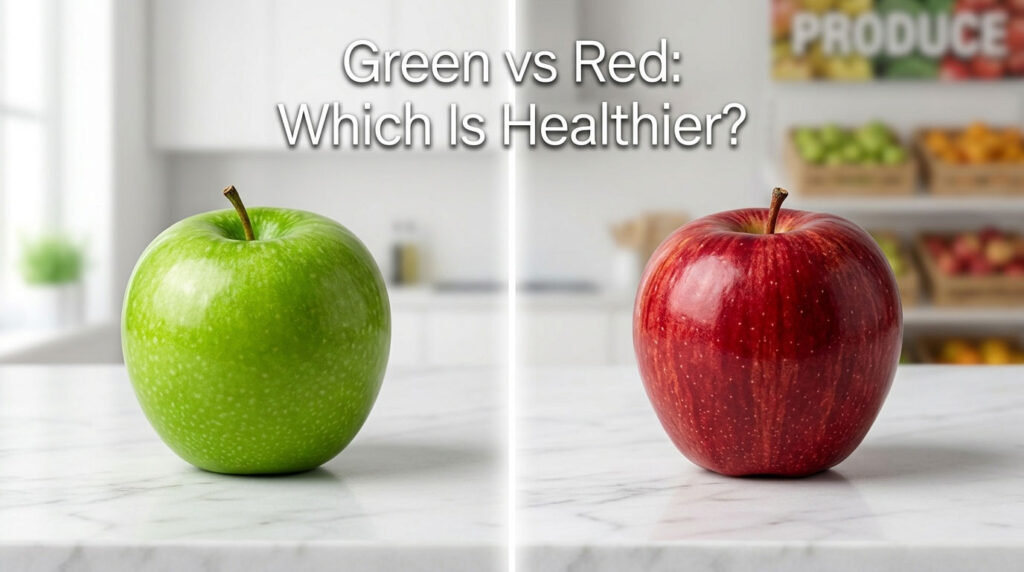
Americans bite into roughly 26.9 million fresh apples every single day, and half the country is loyal to one color. Walk into any Kroger, Whole Foods, Trader Joe’s, Costco, or Publix and you’ll see Granny Smiths stacked next to Galas, Fujis, and Honeycrisps, all priced within pennies of each other. The question that keeps surfacing in patient consults, dietitian inboxes, fitness forums, and Reddit threads is the same: green apple vs red apple, which one actually wins on health?
Table of Contents
The short answer is more interesting than the long-running internet myths suggest. The nutrient gap is real, smaller than most people assume, and the smarter pick depends on what you’re eating apples for in the first place.
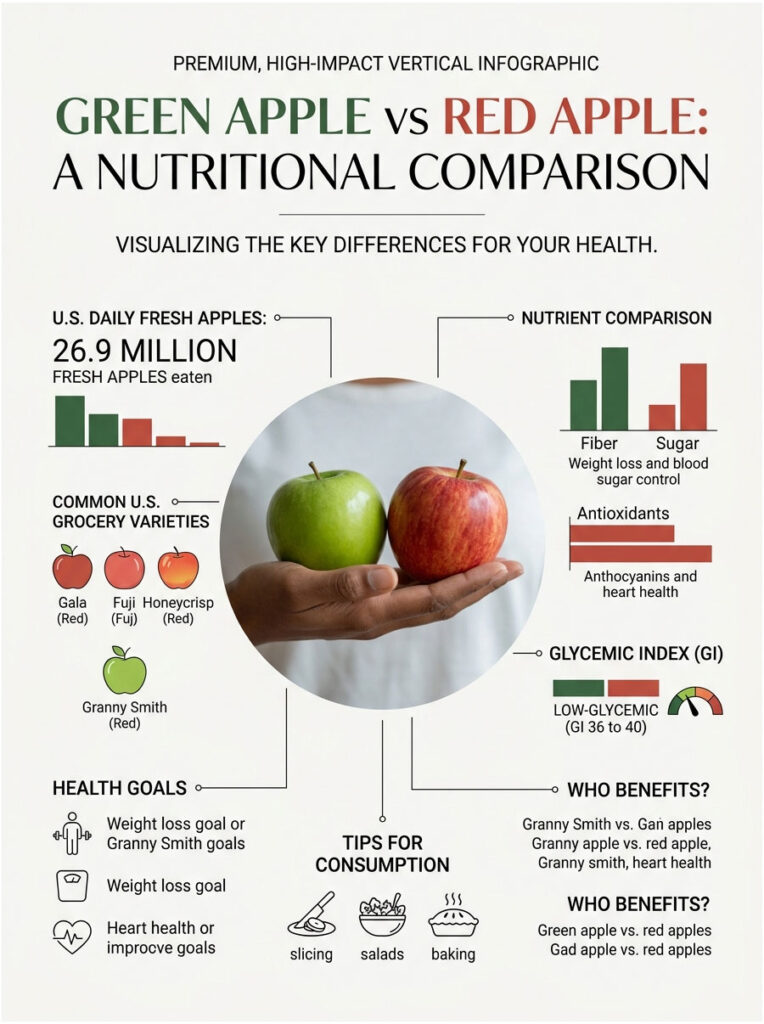
Quick Answer: Green apples (Granny Smith) narrowly edge out red apples on fiber, pectin, and lower sugar content, making them slightly better for weight loss, LDL-cholesterol, and blood sugar control. Red apples (Gala, Fuji, Honeycrisp) carry more anthocyanin antioxidants and a sweeter taste that helps daily consumption stick. Both colors are low-glycemic (GI 36 to 40), heart-friendly, and nutritionally close enough that the best apple is the one you’ll actually eat every day.
At a Glance
- Green apples have about 1.5g less sugar and 0.5g more fiber per medium apple than red apples
- Red apples carry up to 50% more beta-carotene and unique anthocyanin pigments
- Both colors sit in the low glycemic range (GI 36 to 40), safe for most people with diabetes
- Green apple pectin (2.3g per fruit) beats red apple pectin (1.6g) by roughly 44%
- USA per-capita fresh apple consumption is 15.77 pounds per person per year
- Studies link four-plus apple servings per week to an 18% lower type 2 diabetes risk
- Washington State grows 60%+ of US apples; Honeycrisp now outsells Red Delicious nationally
What’s Actually Inside Green and Red Apples?
Most of the green-vs-red debate runs on vibes rather than numbers. A look at the actual nutrient data from the USDA FoodData Central makes the picture much clearer, and considerably less dramatic than viral social posts suggest.
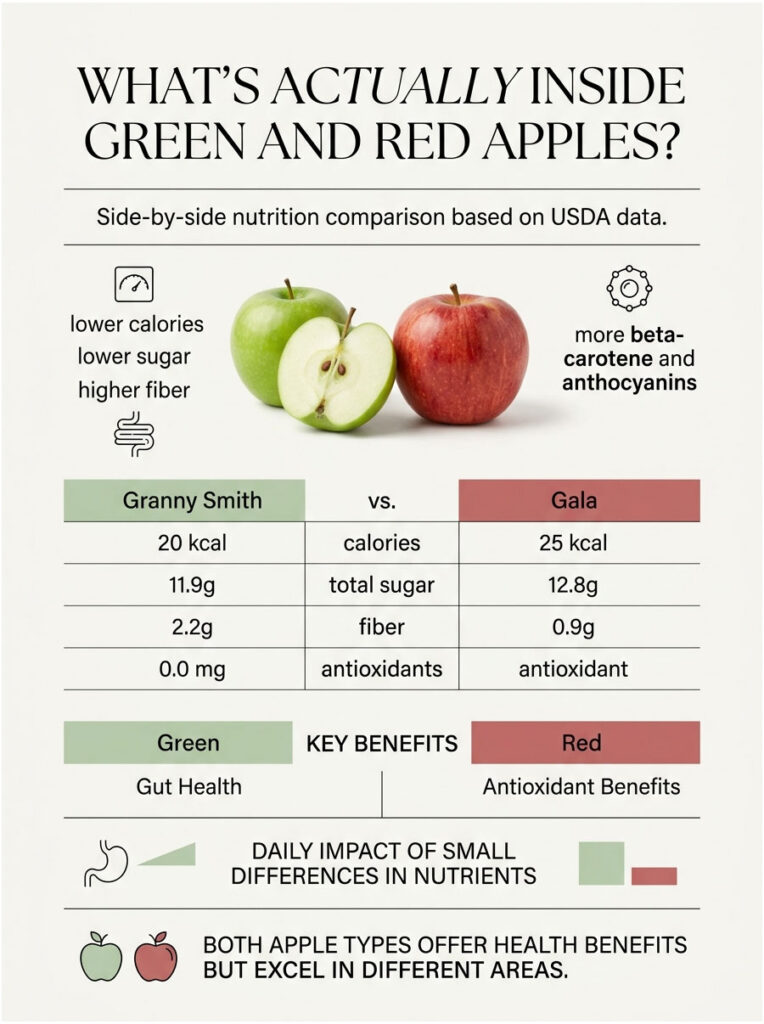
Our medical reviewers note that the per-100-gram nutrient gap between popular USA green and red varieties is real but narrow. The differences become meaningful only when stacked across daily, weekly, and monthly intake patterns.
Green Apples in Plain Numbers
Granny Smith is the headliner of the green camp in American produce sections, with Crispin, Pippin, Mutsu, and Shizuka taking smaller shelf shares. Per 100 grams (a little over half a medium apple), USDA data shows Granny Smith at 59 calories, 14 grams of carbs, 2.5 grams of fiber, and zero fat.
Green apples also run slightly higher in vitamin K, vitamin B6, and trace amounts of iron, protein, and potassium compared to most red varieties.
Red Apples in Plain Numbers
The red category is broader because more varieties wear the color: Red Delicious, Gala, Fuji, Honeycrisp, McIntosh, Empire, Braeburn, Pink Lady, and the newer Cosmic Crisp all qualify. The Gala apple is the single most-eaten apple in the USA per the US Apple Association, with 100 grams delivering 61 calories, 15 grams of carbs, and 2 grams of fiber.
Red varieties pull ahead on beta-carotene (roughly 50% more than green) and carry unique anthocyanins, the pigment compounds that give them their red skin and a measurable share of their cardiovascular benefits.
Where the Two Differ on Paper
A side-by-side comparison cuts through the noise, especially for shoppers comparing one medium apple against another. The table below uses USDA values combined with published research from Tufts University’s Antioxidant Nutrition Laboratory for the antioxidant numbers.
Table 1: Green Apple vs Red Apple Nutrition Comparison (per medium apple, ~182g)
| Nutrient | Green Apple (Granny Smith) | Red Apple (Gala) | Difference | Winner | What It Means |
| Calories | 71 kcal | 73 kcal | -2 kcal | Green | Negligible |
| Total Sugar | 12.7 g | 14.2 g | -1.5 g | Green | ~½ tsp less sugar |
| Dietary Fiber | 3.0 g | 2.5 g | +0.5 g | Green | Helps fullness, gut health |
| Pectin (soluble fiber) | 2.3 g | 1.6 g | +0.7 g | Green | LDL-cholesterol support |
| Vitamin C | 4.6 mg | 4.6 mg | 0 mg | Tie | Same immune support |
| Beta-Carotene | 27 mcg | 41 mcg | -14 mcg | Red | ~50% more in red |
| Quercetin | Higher | Lower | — | Green | Anti-inflammatory flavonoid |
| Anthocyanins | Trace | Present | — | Red | Only in red skin |
| Glycemic Index | 39 | 36 | +3 | Both low | Both safe for blood sugar |
The takeaway is simple: green apples win on sugar and fiber, red apples win on colored-pigment antioxidants, and the rest is a near-tie.
Sugar, Fiber, and the Glycemic Reality
Patients booking diabetes panels through HealthCareOnTime ask the same question in slightly different ways: is the sweeter apple actually worse? The honest answer is that the gap exists but rarely matters on a per-apple basis, though it can compound across a week of daily snacking.
Why Red Apples Taste Sweeter
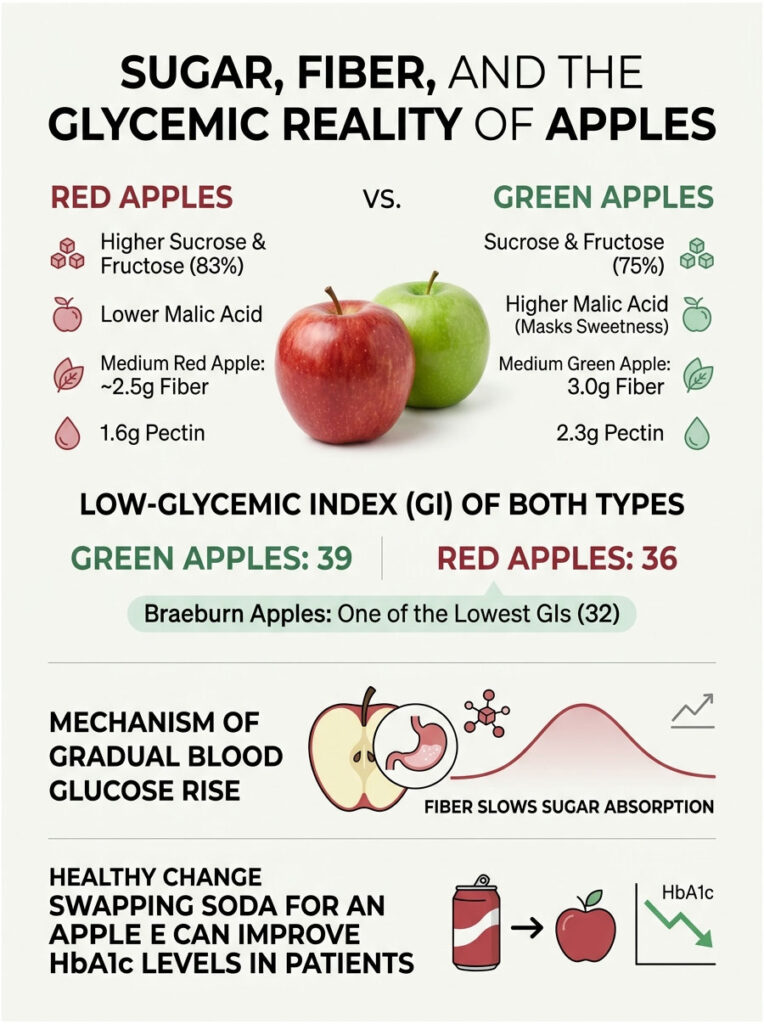
Red apples taste sweeter for two reasons, and only one of them is sugar. About 83% of the sugar in red apples is sucrose and fructose, the two sweetest-tasting forms, compared to 75% in green apples per nutrition research published on Nutrition Domus.
The second reason is acid. Green apples carry up to twice as much malic acid as red apples, which masks the sweetness your tongue can otherwise detect.
Fiber and Pectin: Where Green Apples Pull Ahead
A medium green apple offers about 3.0 grams of fiber against 2.5 grams in a comparable red apple. The more meaningful difference is in pectin, the viscous soluble fiber that helps lower LDL-cholesterol by binding bile acids in the gut.
Green apples contain roughly 2.3 grams of pectin per medium fruit, compared to 1.6 grams in red apples. That’s about 44% more pectin in the green camp, which is why cardiologists routinely flag Granny Smith for patients managing borderline cholesterol.
Glycemic Index Numbers for USA Apple Varieties
Both colors are classified as low-glycemic foods, well below the 55 threshold that separates low from moderate per the International Tables of Glycemic Index. Published values place green apples around a GI of 39 and red apples around 36, with Braeburn measuring 32, one of the lowest of any common US variety.
What This Means for Blood Sugar Spikes
For most healthy adults and people with controlled type 2 diabetes, a medium apple of either color produces a gentle, gradual rise in blood glucose. The pectin and skin fiber slow gastric emptying, blunting the spike.
Across HbA1c tests reviewed by our lab partners, patients who swap a daily can of soda for a whole apple often see meaningful HbA1c improvements within three to six months. The apple’s color matters far less than the swap itself.
Antioxidants and Phytochemicals: The Color Story
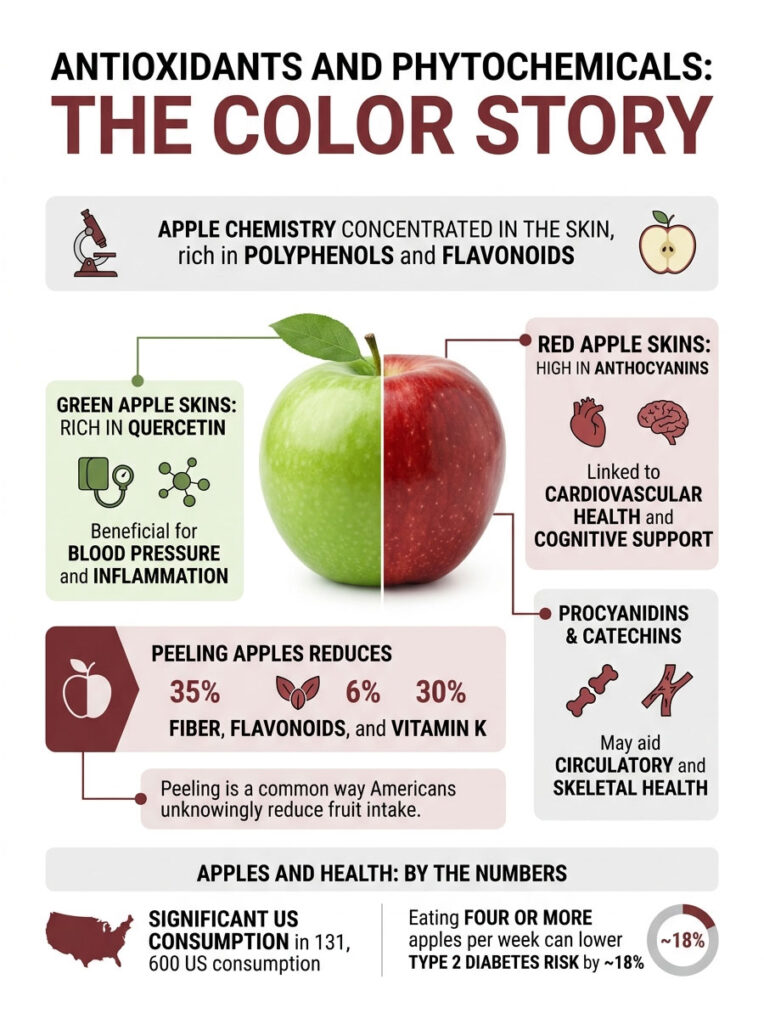
Apple skin is where most of the chemistry happens. Strip the peel and you lose the majority of the polyphenols, flavonoids, and pigments that give apples their reputation as a chronic-disease shield.
Quercetin in Green Apple Skins
Quercetin is a flavonoid studied for blood-pressure support, anti-inflammatory effects, and immune response against viral infections. Green apple skins carry higher concentrations of quercetin than most red varieties, according to research published in the journal Nutrients.
This is one reason dietitians often nudge clients with seasonal allergies or chronic low-grade inflammation toward green apples.
Anthocyanins and Procyanidins in Red Apple Skins
The red color is itself a clue: anthocyanins are the pigment family that makes red apples red, blueberries blue, and red cabbage red. They’ve been linked to cardiovascular benefits, improved blood vessel function, and cognitive support in aging adults.
Procyanidins and catechins, two more flavonoid families, also cluster heavily in red apple peels. Research suggests they may play a role in maintaining circulatory and skeletal health, and possibly reducing osteoarthritis risk.
Why You Should Never Peel Either
A peeled apple loses roughly half its fiber, a large share of its flavonoids, and most of its vitamin K. The peel is also where the highest concentration of polyphenols sits, regardless of color.
Our medical team has reviewed enough cholesterol and inflammation panels to flag this clearly: peeling apples is one of the most common, least-noticed ways Americans dilute their fruit intake.
USA context matters when comparing apple consumption to broader fruit habits, especially given how much fresh produce data federal agencies publish each year.
Table 2: USA Apple Consumption and Health Data (Recent Statistics)
| Data Point | Number | Source |
| Fresh apples eaten per day in the US | 26.9 million | Frontiers in Nutrition, 2022 |
| US per-capita fresh apple consumption | 15.77 lb / person / year | Statista, USDA ERS (2022/23) |
| US ranking for global apple consumption per capita | 3rd worldwide | Helgi Library, 2023 |
| Type 2 diabetes risk reduction (4+ apples/week vs <1/month) | ~18% lower risk | Frontiers in Nutrition meta-analysis |
| Share of total global fruit consumption apples represent | 12.5% | Frontiers in Nutrition, 2022 |
| Share of US apple production from Washington State | ~60% | USApple Association |
Green Apple vs Red Apple for Specific Health Goals
The honest verdict shifts depending on what you’re eating apples for. A single answer doesn’t fit a diabetic, a triathlete, a cholesterol patient, and a parent packing school lunches.
For Weight Loss
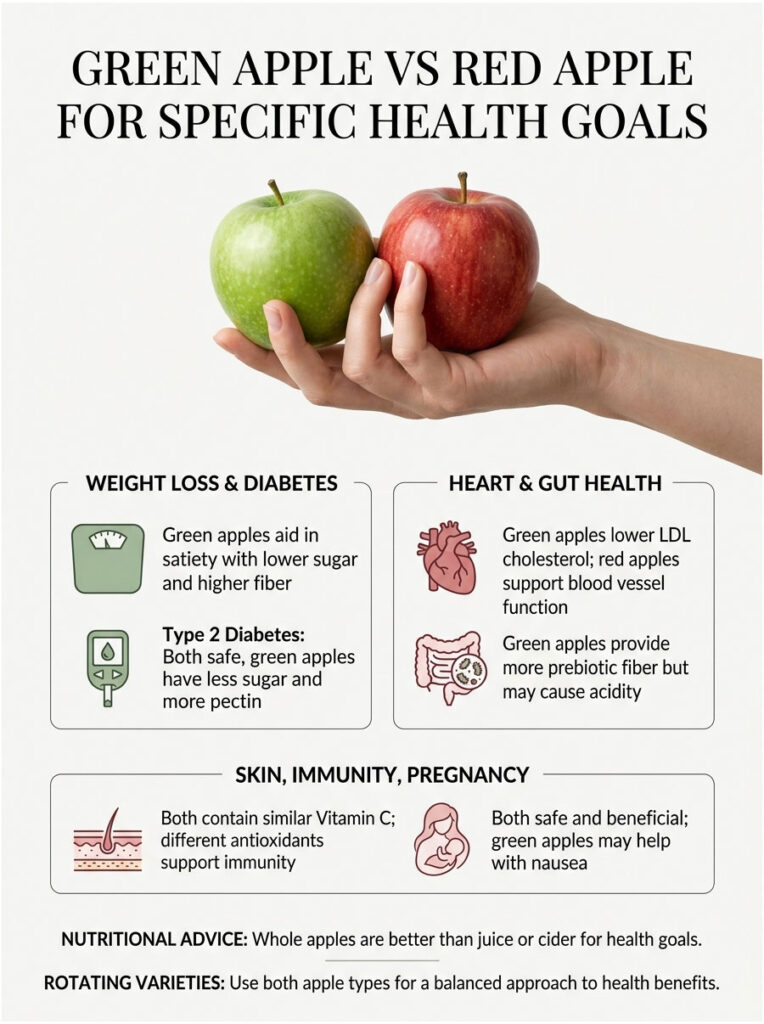
Green apples have a slight edge for weight loss because of the sugar and fiber math. The pectin in Granny Smith and Crispin slows gastric emptying, helping you feel full longer on fewer calories.
Across patients we serve who track macros, swapping one daily sweet snack for a green apple often trims 100 to 150 calories per day without conscious effort. Over a month, that compounds to roughly half a pound of fat loss before adding any other change.
For Type 2 Diabetes and Prediabetes
Both colors are safe for most people with well-controlled diabetes, though green apples have a marginal edge thanks to lower sugar and higher pectin. The American Diabetes Association encourages whole fruit consumption with portion awareness rather than color avoidance.
People with prediabetes booking HbA1c testing through us are often told the same thing: the apple isn’t the problem, the juice and the cider are. Apple juice and hard cider can spike glucose two to three times faster than the whole fruit.
For Heart Health and Cholesterol
Green apples win narrowly on LDL-cholesterol because of their higher pectin content. Pectin binds to bile acids in the gut, prompting the liver to pull more cholesterol from the bloodstream to manufacture replacement bile acids.
That said, red apples carry anthocyanins that have been studied for blood vessel function and oxidative-stress reduction. The most heart-supportive approach is to rotate both, not pick one.
For Gut Health and Digestion
Apples contain prebiotic fiber that feeds beneficial gut bacteria. Both colors deliver this, but green apples deliver more per bite.
Patients with sensitive stomachs sometimes find green apple acidity uncomfortable on an empty stomach. Pairing apple slices with a tablespoon of peanut butter, a hard-boiled egg, or a handful of almonds usually solves it.
For Skin and Immunity
Vitamin C content is essentially identical between green and red apples, around 4.6 mg per medium fruit. Quercetin in green apples and anthocyanins in red apples both support immune function through different antioxidant pathways.
Patients commonly ask us if apples can replace a vitamin C supplement during cold season. The answer is no, but a daily apple does meaningfully add to overall flavonoid intake, which matters more than any single nutrient on a daily basis.
For Pregnancy and Prenatal Nutrition
Both apple colors are safe and recommended during pregnancy by Mayo Clinic prenatal guidance. The folate and fiber support fetal development and help with the constipation many pregnant women experience.
Green apples may help curb morning-sickness nausea for some women thanks to their tartness, though tolerance is highly individual.
Common Varieties in USA Grocery Stores: A Buyer’s Cheat Sheet
There are over 2,500 apple varieties grown in the US, but only about a dozen dominate American grocery stores and farmers’ markets. Knowing which to grab for which job is more practical than memorizing flavonoid charts.
Best for Snacking
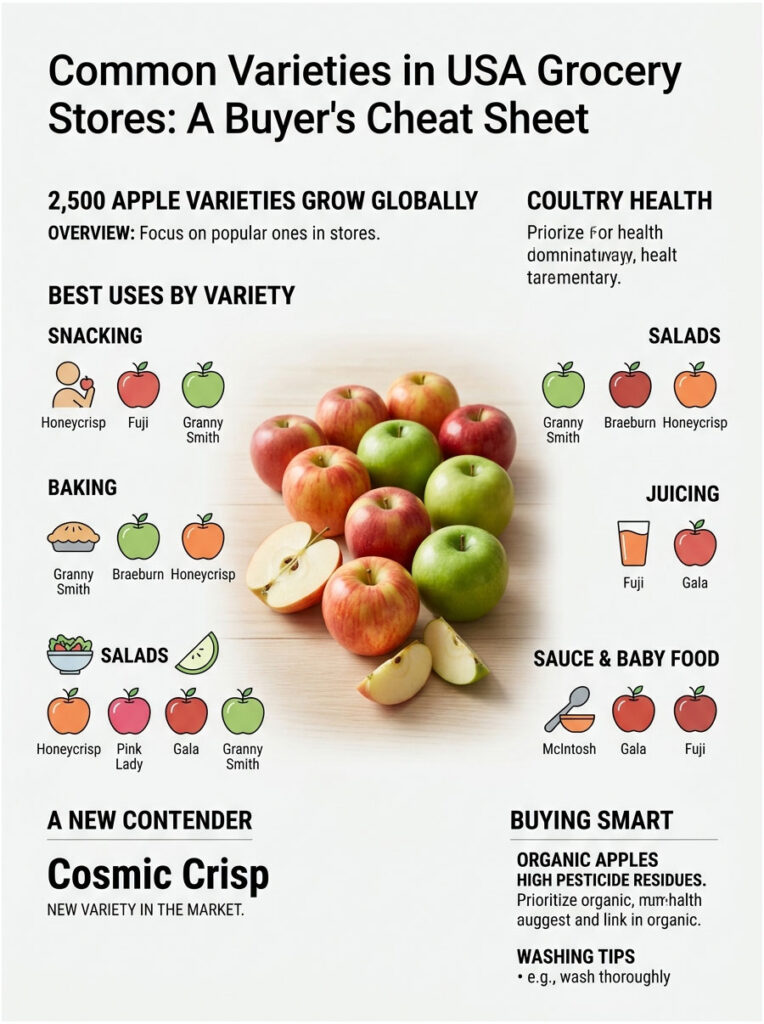
Honeycrisp and Fuji are the snacking champions for sweet eaters, with their distinctive crunch and high sugar-to-acid ratio. Honeycrisp has now overtaken Red Delicious as the second-most-popular apple in the US per US Apple Association data, trailing only Gala.
Granny Smith wins for tart eaters who want something to crunch on without it feeling like dessert.
Best for Baking
Granny Smith holds its shape in pies, crisps, and tarts better than any red variety. The tartness balances added sugar in baked recipes, which is why your grandmother’s apple pie recipe almost certainly calls for green.
Braeburn and Honeycrisp also bake well and add natural sweetness, reducing the sugar you need to add.
Best for Salads
Honeycrisp, Pink Lady, and Gala bring sweetness and crunch to fall salads. Granny Smith pairs especially well with sharp cheeses, walnuts, and bitter greens like arugula or radicchio.
Best for Juicing
Fuji and Gala produce sweeter juice with less added sweetener required. That said, whole apples are still healthier than juice in almost every case, because juicing strips the fiber that keeps the glycemic response gentle.
Best for Apple Sauce and Baby Food
McIntosh breaks down beautifully into apple sauce because it’s naturally soft and slightly sweet. Gala and Fuji also work well for baby food without added sugar.
Cosmic Crisp and the New American Apple
The Cosmic Crisp, developed at Washington State University and released in 2019, is now a serious competitor in American produce sections. It stays crisp for weeks in the refrigerator and has a balanced sweet-tart profile that splits the difference between Granny Smith and Honeycrisp.
What “Organic” Actually Buys You
Apples sit on the Environmental Working Group’s Dirty Dozen list almost every year. Conventional apples often carry detectable pesticide residues, so organic is worth the upgrade if your budget allows.
If organic isn’t affordable, washing apples thoroughly with a baking-soda rinse (1 teaspoon baking soda per cup of water, soaked 12 to 15 minutes) has been shown to remove a meaningful share of surface residues.
Apple Season and Price Realities
US apple season peaks August through November, when local varieties are freshest and cheapest. Storage apples appear in grocery stores year-round thanks to controlled-atmosphere warehouses, which is why a January Honeycrisp can still taste crisp.
Expect to pay $1.50 to $2.50 per pound for conventional apples and $2.50 to $4.50 per pound for organic in most US metro areas.
Who Should Lean Green, Who Should Lean Red
The most useful answer to “which apple is healthier” isn’t a single winner. It’s a matrix that matches your situation to the better pick.
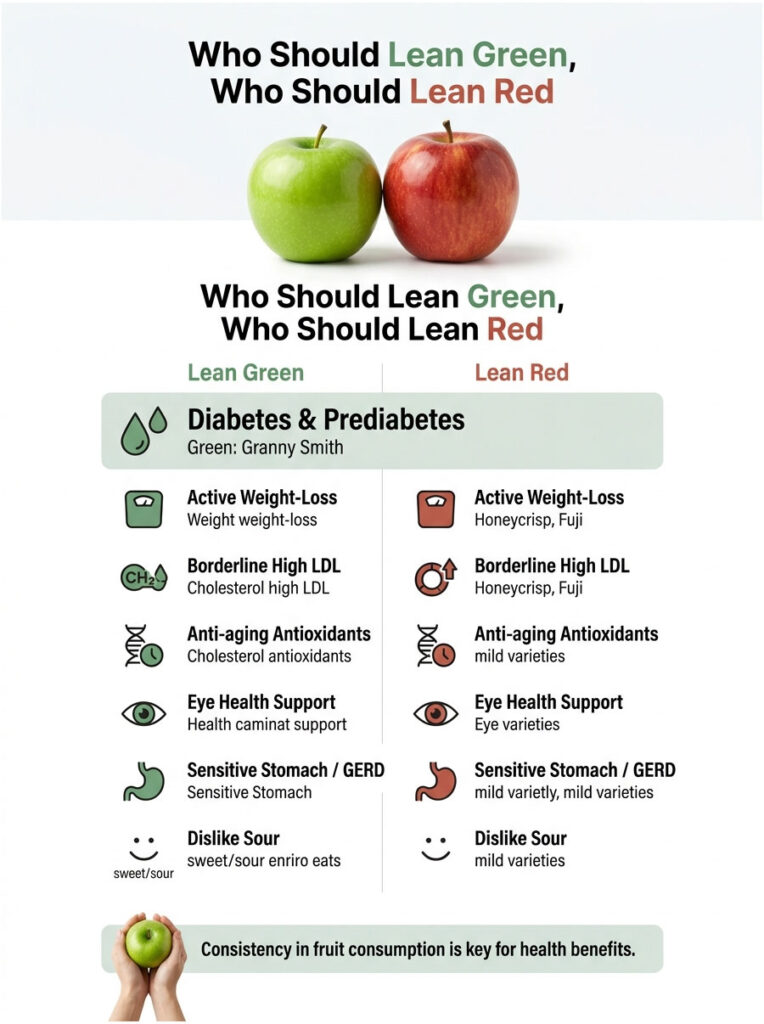
Table 3: Green vs Red Apple Decision Matrix
| Your Situation | Better Pick | Why |
| Managing type 2 diabetes or prediabetes | Green (Granny Smith) | Lower sugar, higher pectin, GI of 39 |
| Active weight-loss phase | Green | ~1.5g less sugar, ~0.5g more fiber per apple |
| Borderline high LDL-cholesterol | Green | 44% more pectin binds cholesterol-rich bile acids |
| Looking for anti-aging antioxidants | Red (Honeycrisp, Fuji) | Anthocyanins and procyanidins concentrated in red skin |
| Eye health and vision support | Red | ~50% more beta-carotene |
| Sensitive stomach, GERD, or acid reflux | Red (mild varieties) | Lower acidity than tart green apples |
| Kids who refuse “sour” food | Red (Gala, Fuji, Honeycrisp) | Sweeter taste means actual consumption |
When the Color Truly Doesn’t Matter
For the average healthy American with no specific health goal, the daily-habit factor outweighs the nutrient gap. A red apple eaten every day beats a green apple sitting forgotten in the crisper drawer.
In cases reviewed by our medical team, the patients who get the biggest measurable health gains from fruit are the ones who eat fruit consistently. They’re not the ones who pick the optimal variety once a week and forget the rest.
Pitfalls and Side Effects Most Articles Skip
Apples are not a free pass. There are real edge cases where the wrong apple, or too many apples, can backfire.
FODMAPs and IBS Triggers in Green Apples
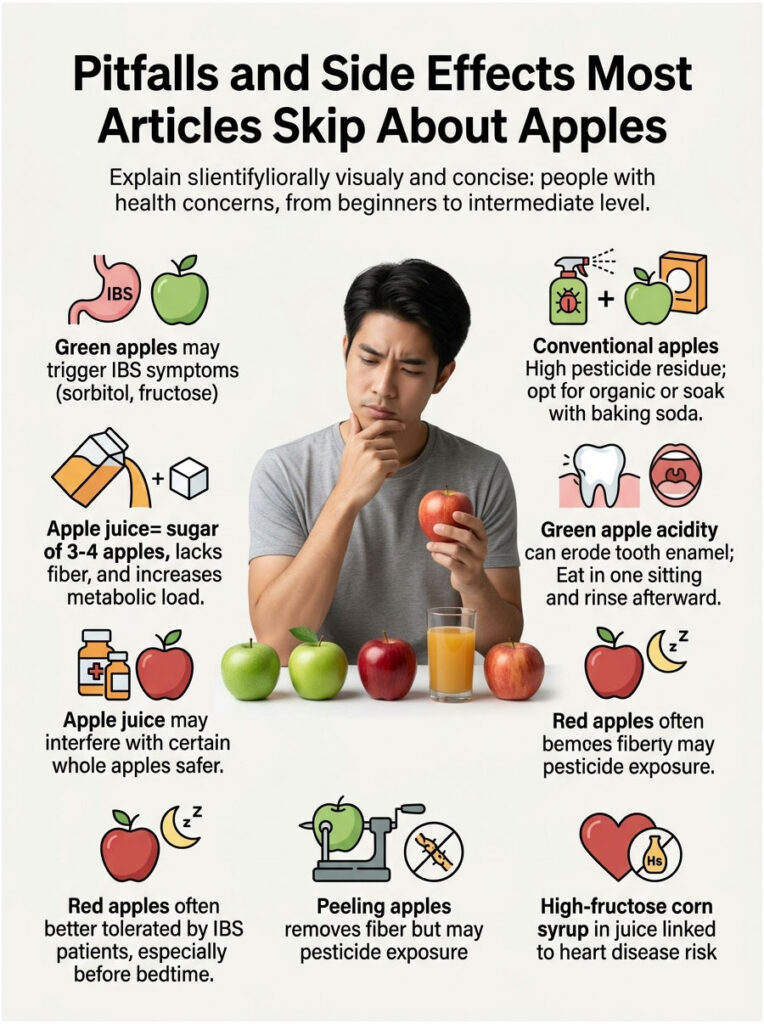
Green apples carry sorbitol and fructose, two FODMAP carbohydrates that can cause bloating, gas, and discomfort in people with irritable bowel syndrome. The tartness also raises stomach acid, which can worsen reflux symptoms.
Patients with diagnosed IBS often tolerate small portions of red apple better than green, especially before bedtime.
Pesticide Residue on Both Colors
Conventional apples consistently rank in the top three of the EWG Dirty Dozen list. The pesticides are concentrated in and on the skin, which is also where the fiber and flavonoids sit, so peeling defeats the point.
Organic apples or a thorough baking-soda soak are the two practical workarounds.
Apple Juice vs Whole Apple: The Hidden Trap
A glass of 100% apple juice carries the sugar of three to four apples with almost none of the fiber. That’s a serious metabolic load even before factoring in juice with added sugar or high-fructose corn syrup.
A 2017 NIH-published study linked frequent intake of HFCS-sweetened apple juice with higher coronary heart disease prevalence in middle-aged US adults. Whole apples did not show the same signal.
Tooth Enamel Erosion from Green Apple Acidity
Frequent green apple snacking, especially when stretched over an hour like a cup of coffee, can soften tooth enamel. Dentists recommend eating the apple in one sitting, rinsing your mouth with water afterward, and waiting 30 minutes before brushing to let enamel re-harden.
Medication Interactions Worth Knowing
Apple juice (less so whole apples) can interfere with the absorption of certain medications, including fexofenadine (Allegra), some beta-blockers, and a few antibiotics. Whole apples are generally safer than juice on this front, but patients on multiple prescriptions should ask their pharmacist about timing.
How to Actually Eat More Apples Without Getting Bored
Knowing which color is healthier matters far less if the apple sits forgotten on the counter for a week. Practical USA-friendly habits move the needle more than nutrient charts ever will.
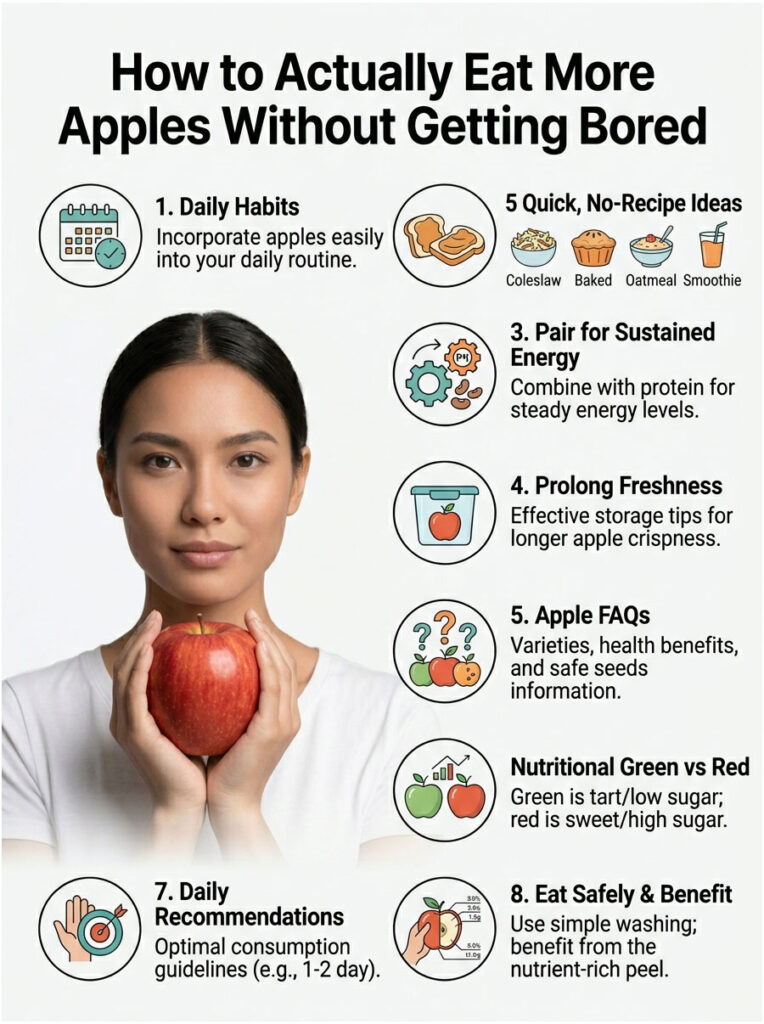
5 No-Recipe Ideas for Busy Americans
Slice a Granny Smith into matchsticks and add to a turkey or chicken sandwich. Toss diced Gala into oatmeal in the last 30 seconds of cooking. Pair Honeycrisp wedges with a square of dark chocolate as a 4 p.m. snack.
Grate green apple into Greek yogurt with cinnamon for a lower-sugar dessert. Roast Fuji halves at 400°F for 20 minutes and top with a small scoop of cottage cheese for a high-protein late-night snack.
Pairing Apples with Protein for Steady Energy
Eating an apple solo gives a fast-and-fade energy curve. Pairing it with 10 to 15 grams of protein (string cheese, a hard-boiled egg, almond butter, or a small handful of nuts) flattens the glucose response.
This pairing trick is one of the most underrated blood-sugar strategies for office workers prone to the 3 p.m. crash.
Storage That Actually Works
Apples last 4 to 6 weeks in the refrigerator at 30 to 35°F and lose roughly a week of shelf life for every day left at room temperature. Store them away from bananas and avocados, since the ethylene gas these fruits release accelerates apple ripening.
Frequently Asked Questions
Which apple has the lowest sugar content?
Among common US varieties, Granny Smith has the lowest sugar content at about 12.7 grams per medium apple, compared to 14.2 grams in a Gala and up to 19 grams in a large Honeycrisp. The difference per apple is small (about half a teaspoon of sugar), but it adds up if you eat apples daily or are tracking macros carefully.
Are green apples better for diabetics than red apples?
Green apples are marginally better for people with diabetes due to lower sugar (12.7g vs 14.2g), higher fiber (3.0g vs 2.5g), and more pectin (2.3g vs 1.6g). Both colors are low-glycemic (GI 36 to 40) and safe in controlled portions. The American Diabetes Association encourages whole apple consumption regardless of color, paired with protein when possible.
Do red apples have more antioxidants than green apples?
Red apples carry more anthocyanins (the red pigment compounds) and roughly 50% more beta-carotene than green apples. Green apples carry more quercetin and certain flavonols. Total antioxidant capacity varies by variety, ripeness, and storage time more than by color alone, and studies favor each side depending on which antioxidant class is measured.
Is Granny Smith healthier than Honeycrisp?
Granny Smith has less sugar, more fiber, and more pectin, making it slightly healthier for weight loss, cholesterol, and blood sugar goals. Honeycrisp carries more anthocyanin antioxidants and is much sweeter, making daily consumption easier for kids and sweet-tooth adults. Both are nutritious whole foods with documented cardiovascular benefits.
Can I eat a green apple every day?
Yes, a daily green apple is safe and beneficial for most people. Research links four or more apples per week to an 18% lower type 2 diabetes risk. Watch for tooth enamel erosion from acidity (rinse with water after eating) and possible FODMAP-related digestive discomfort if you have IBS or sensitive digestion.
Which apple is best for weight loss?
Granny Smith is the top weight-loss pick because it has the lowest sugar and highest fiber of common US varieties. The pectin slows gastric emptying, helping you feel full longer. Pair it with 10 to 15 grams of protein to flatten the glucose response and reduce afternoon cravings that derail most weight-loss plans.
Do green apples lower blood pressure?
Green apples contain quercetin, a flavonoid studied for mild blood pressure support, and potassium, which helps the body balance sodium. Apples in general are linked to better cardiovascular outcomes, but no single fruit should replace blood pressure medication. People with hypertension should check their numbers regularly and discuss medication-food interactions with their doctor.
Should I eat the apple peel?
Yes, always eat the peel if possible. Peeling removes roughly half the fiber, most of the quercetin and anthocyanins, and a significant share of the vitamin K. The peel is also where most polyphenols and pectin sit. Wash conventional apples thoroughly with a baking-soda rinse, or buy organic when affordable.
Are organic apples worth the price?
Apples consistently rank in the EWG Dirty Dozen list, so organic is a reasonable upgrade if your budget allows. If not, washing conventional apples in a baking-soda solution (1 teaspoon per cup of water) for 12 to 15 minutes removes a meaningful share of surface residues per published lab tests at university food-safety programs.
Can apples replace a multivitamin?
No, apples are not vitamin-dense enough to replace a multivitamin. A medium apple has about 4.6 mg of vitamin C (5% Daily Value) and small amounts of vitamin K, potassium, and B vitamins. Apples shine on fiber, polyphenols, and pectin, not single-nutrient density. Combine them with leafy greens, berries, citrus, and lean protein for full nutritional coverage.
How many apples per day is too many?
For most healthy adults, two to three medium apples per day is comfortable and well within USDA fruit recommendations. Beyond that, the sugar load can add up (around 40g of sugar from three large red apples) and the fiber can cause bloating. People with diabetes should stick to one medium apple per sitting, ideally paired with protein for steadier blood sugar.
Why do green apples taste so sour?
Green apples taste sour because they contain up to twice as much malic acid as red apples, and a higher ratio of acid-to-sugar overall. The malic acid is also responsible for green apples’ longer shelf life and firmer texture compared to softer red varieties like McIntosh.
Disclaimer: This article is for general health information only and is not a substitute for professional medical advice. Apple intake recommendations vary by individual health status, medications, and dietary needs. People with diabetes, IBS, GERD, kidney disease, or those on blood-thinning medications should consult their healthcare provider before making significant dietary changes. HealthCareOnTime offers diagnostic testing and health information; we do not provide individual treatment plans.
References
- US Department of Agriculture, FoodData Central, Apple Nutrient Data: https://fdc.nal.usda.gov/
- Frontiers in Nutrition, Metabolic and Cardiovascular Benefits of Apple and Apple-Derived Products (2022): https://www.frontiersin.org/journals/nutrition/articles/10.3389/fnut.2022.766155/full
- Tufts University Health & Nutrition Letter, Antioxidant Nutrition Laboratory: https://www.nutritionletter.tufts.edu/ask-experts/green-apples-vs-red-apples/
- Statista, US Per Capita Fresh Apple Consumption: https://www.statista.com/statistics/257167/per-capita-consumption-of-fresh-apples-in-the-us/
- US Apple Association, Variety and Production Data: https://usapple.org/
- American Diabetes Association, Fruit and Diabetes Guidance: https://diabetes.org/
- Environmental Working Group, Dirty Dozen Produce List: https://www.ewg.org/foodnews/dirty-dozen.php
- NIH/NCBI, High Fructose Corn Syrup and Coronary Heart Disease Study: https://pmc.ncbi.nlm.nih.gov/articles/PMC7050890/
- Mayo Clinic, Irritable Bowel Syndrome Overview: https://www.mayoclinic.org/diseases-conditions/irritable-bowel-syndrome/symptoms-causes/syc-20360016
- International Tables of Glycemic Index: https://glycemicindex.com/
- WebMD, Health Benefits of Green Apples: https://www.webmd.com/diet/health-benefits-green-apples