
Here’s something most people get backward about oranges: the vitamin C everyone praises is only part of the story. The real value is the package, fiber, flavonoids, potassium, and water, working together in a way that the juice you pour at breakfast simply can’t match.
Table of Contents
Quick Answer: Oranges are a low-calorie, nutrient-dense citrus fruit rich in vitamin C, fiber, potassium, folate, and protective plant compounds called flavonoids. Research links regular orange and citrus intake to stronger immune defense, better heart health, improved iron absorption, healthier skin, and a lower kidney stone risk. For most of these benefits, a whole orange beats orange juice, because the fruit keeps its fiber and gentler effect on blood sugar.
At a Glance
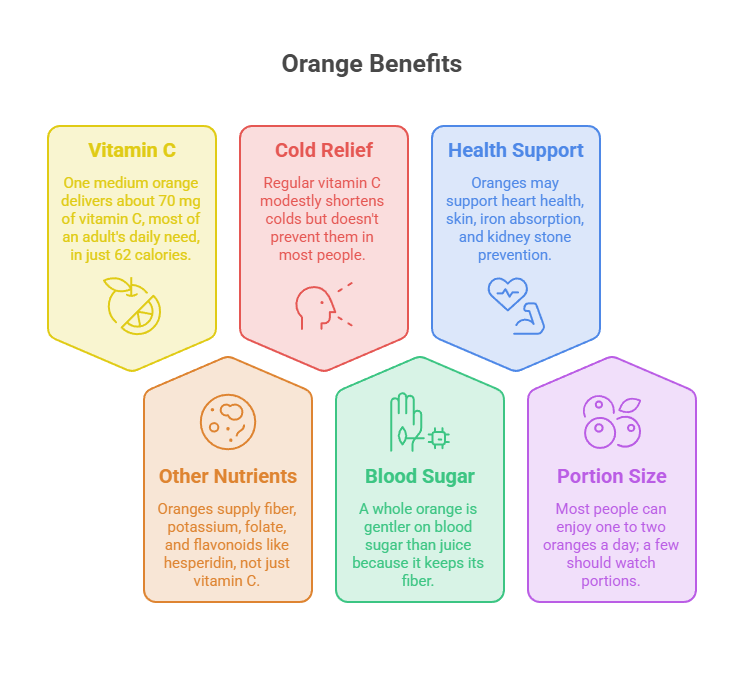
- One medium orange delivers about 70 mg of vitamin C, most of an adult’s daily need, in just 62 calories.
- Oranges supply fiber, potassium, folate, and flavonoids like hesperidin, not just vitamin C.
- Regular vitamin C modestly shortens colds but doesn’t prevent them in most people.
- A whole orange is gentler on blood sugar than juice because it keeps its fiber.
- Oranges may support heart health, skin, iron absorption, and kidney stone prevention.
- Most people can enjoy one to two oranges a day; a few should watch portions.
What’s Actually in an Orange? (Nutrition Profile)
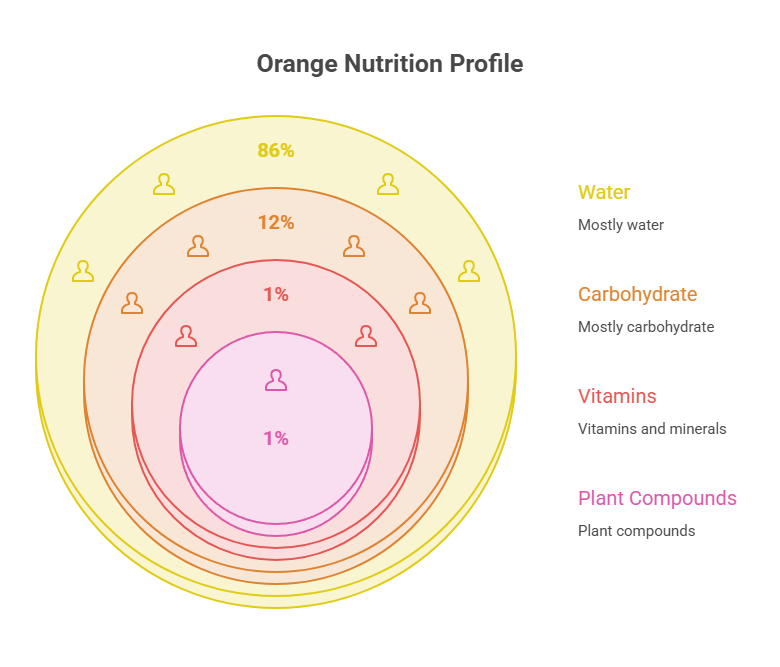
Before the benefits, it helps to see what you’re actually eating. An orange is mostly water and carbohydrate, with a surprising lineup of vitamins, minerals, and plant compounds tucked inside.
Oranges also come in several types, each slightly different. Navel oranges are the easy-peel snacking favorite, Valencias are prized for juicing, blood oranges carry extra antioxidant pigments, and mandarins and clementines are smaller and sweeter. The core nutrition, though, is broadly similar across them.
Calories, Carbs, Fiber, and Water
A medium orange is light on calories and heavy on nutrition. One medium orange weighs about 130 grams and provides around 62 calories, 3.1 grams of fiber, and 12 grams of natural sugars.
That fiber matters more than the sugar number suggests. It slows how quickly the natural sugars hit your bloodstream, which is the whole reason a fresh orange behaves so differently from a glass of juice.
Oranges are also mostly water. Raw oranges are about 87 percent water, which is part of why they feel so refreshing and filling for their modest calorie count. That high water content also makes them a hydrating snack in warm weather.
When you subtract the fiber, a medium orange leaves roughly 12 grams of net carbs, most of it natural sugar. That’s modest for a sweet-tasting fruit, and the fiber and water stretch those carbs out so they don’t hit all at once.
How Oranges Compare to Other Fruits
Ounce for ounce, oranges are among the better fruits for vitamin C, easily out-pacing apples, bananas, and pears. They carry less sugar than grapes or mangoes and more vitamin C than most berries, while still being affordable and available year-round in US stores.
That balance of high nutrition, low calories, and low cost is part of why dietitians so often point to oranges as a reliable everyday fruit rather than an occasional treat.
Vitamins and Minerals
Vitamin C is the headline, and for good reason. A medium orange supplies roughly 70 mg of vitamin C, plus about 237 mg of potassium and 30 mcg of folate, a strong nutrient return for so few calories.
To put the vitamin C in context, the recommended daily allowance for adults is 75 mg for women and 90 mg for men. A single orange covers most of that in one snack, which is part of why citrus has earned its reputation as an immune food.
Oranges round things out with smaller amounts of other nutrients. Beyond vitamin C and folate, oranges provide calcium, potassium, and thiamine (vitamin B1). Folate in particular matters for pregnant women, since it supports healthy fetal development. Patients asking us how to get more vitamin C from food are often surprised that one orange nearly covers a full day.
The Plant Compounds That Matter
The benefits don’t stop at vitamins. Oranges are an excellent source of bioactive plant compounds with anti-inflammatory and antioxidant effects, including flavonoids, carotenoids, and vitamin C.
One flavonoid stands out. Hesperidin, especially prominent in oranges, has been shown to reduce inflammation and protect cells from DNA damage. These compounds are a big reason researchers keep studying citrus for heart and metabolic health.
Here’s the nutrition at a glance, drawn from USDA data.
| Nutrient | Amount (Medium Orange, ~131 g) | % Daily Value / Source |
| Calories | About 62 | USDA FoodData Central |
| Vitamin C | About 70 mg | Around 78% DV; USDA |
| Fiber | About 3.1 g | Around 11% DV; USDA |
| Potassium | About 237 mg | Around 5% DV; USDA |
| Folate | About 30 mcg | Around 8% DV; USDA |
| Calcium | About 52 mg | Around 4% DV; USDA |
10 Science-Backed Health Benefits of Oranges
With the nutrition in view, here’s where the science actually lands. These ten benefits range from well-proven to promising, and the honest distinctions matter just as much as the claims themselves.
1. Supports Immune Function
Vitamin C is genuinely important for immunity, not just marketing. It supports the cells and processes your body uses to fight off infection, which is why a vitamin-C-rich fruit earns its place in a healthy diet.
Vitamin C supports immune defense by stimulating white blood cells, enhancing antibody production, and helping the body repair tissues. Getting it from whole foods like oranges also brings along fiber and flavonoids that supplements lack.
Our medical reviewers note that food-first is the smart approach here. An orange gives you vitamin C plus a supporting cast of nutrients, all for about 62 calories.
It also helps that vitamin C is water-soluble, meaning your body doesn’t store it and needs a steady supply. A daily orange is an easy way to keep topping up rather than relying on an occasional megadose.
2. May Shorten Colds (the Honest Version)
This is where most articles overpromise, so here’s the careful truth. Vitamin C does not reliably prevent colds in the general population, but it can take a small edge off how long they last.
A large Cochrane review settled much of this debate. Across dozens of trials, regular vitamin C reduced the duration of colds by about 8 percent in adults and 14 percent in children. The effect is modest but consistent.
There’s one striking exception. In people under heavy physical stress, such as marathon runners and soldiers, vitamin C roughly halved the risk of catching a cold. For everyday life, think of oranges as helpful support, not a cure.
3. Promotes Heart Health
Your heart may be one of the biggest winners. Oranges combine potassium, fiber, and flavonoids, three things research connects to better cardiovascular health.
The potassium in oranges may help manage blood pressure by helping the body expel sodium and easing tension in blood vessel walls. The fiber, meanwhile, helps with cholesterol management, and the flavonoids support healthy blood vessels.
The bigger picture is consistent. A large dose-response meta-analysis found that higher fruit and vegetable intake is associated with lower risk of cardiovascular disease, cancer, and all-cause mortality. Oranges fit neatly into that pattern as a regular, accessible fruit.
One honest caveat keeps things realistic. The recommended daily potassium intake is about 4,700 mg, and one orange contains only around 250 mg, so oranges contribute to heart health but can’t carry it alone.
Hesperidin, the main flavonoid in oranges, has drawn particular research interest. Small studies suggest it may support healthy blood vessel function and circulation, which is one mechanism behind citrus and heart health, though larger human trials are still needed.
4. Improves Iron Absorption and Helps Fight Anemia
This benefit is underrated and genuinely useful. Vitamin C helps your body absorb the iron found in plant foods, which is harder to absorb than the iron in meat.
That makes oranges a smart pairing food. Eating vitamin-C-rich citrus alongside iron sources like beans, spinach, or fortified cereal can meaningfully boost how much iron you take in.
In cases reviewed by our medical team, pairing vitamin C foods like oranges with plant iron sources is a simple, effective habit, especially for people who eat little or no meat and may be at higher risk of low iron.
5. Supports Skin and Collagen
Glowing-skin claims get thrown around loosely, but there’s real biology here. Vitamin C is essential for making collagen, the protein that keeps skin firm.
Vitamin C supports the production of collagen, which is needed to make cartilage, ligaments, tendons, blood vessels, and skin, and it helps heal wounds. Its antioxidant activity also helps protect skin cells from damage.
No single food is a skincare routine, of course. But a steady diet rich in vitamin C foods like oranges genuinely supports skin from the inside out.
There’s a protective angle too. Antioxidants like vitamin C help defend skin cells against everyday oxidative stress, including some of the damage tied to sun exposure, though they never replace sunscreen.
6. May Lower Kidney Stone Risk
If you’re prone to kidney stones, citrus is worth a closer look. Low urinary citrate is a known contributor to certain stones, and oranges can help raise it.
Oranges and their juice can help increase citrate levels in your urine, which reduces the risk of kidney stones. The citric acid in citrus is the active player here.
This is one area where even the juice has some support. Still, the whole fruit gives you the citrate benefit plus fiber and a lower sugar load, so it’s the better default.
The hydration helps as well. Oranges are mostly water, and staying well hydrated is one of the simplest, most effective ways to lower kidney stone risk in the first place.
7. Aids Digestion and Gut Health
That 3 grams of fiber per orange does quiet, important work. Fiber keeps your digestive system moving and feeds the beneficial bacteria in your gut.
Getting enough fiber daily helps keep your digestive system healthy by supporting regularity and fueling beneficial gut bacteria. Oranges contribute both soluble and insoluble fiber.
Whole fruit is key for this one. The fiber lives in the flesh and the white pith, which is exactly what gets strained out when oranges become juice.
8. Provides Antioxidants That Fight Inflammation
Oxidative stress and chronic inflammation sit behind many long-term diseases, and oranges bring antioxidants to the table. The combination of vitamin C, flavonoids, and carotenoids is the strength here.
Antioxidants combat oxidative stress, a process linked to aging and chronic diseases, and the flavonoid hesperidin helps reduce inflammation and protect cells. No single compound does it all; the mix is the point.
Our lab partners note that whole fruits tend to outperform isolated supplements precisely because of this natural variety of protective compounds working together.
The carotenoids in oranges deserve a mention too. These plant pigments act as antioxidants and contribute to eye health, adding one more reason the whole-fruit mix beats any single isolated nutrient.
9. Gentle on Blood Sugar as a Whole Fruit
Here’s good news for anyone watching their blood sugar. A whole orange has a relatively low glycemic load, thanks to its fiber and water content.
The fiber lowers the glycemic load, so a whole orange affects blood sugar far more gently than orange juice of the same calorie count. That distinction is the heart of the whole-fruit-versus-juice debate.
Whole oranges can fit into a balanced diet for many people, including those managing blood sugar, when eaten in sensible portions. The fruit’s natural fiber is doing the protective work that juice can’t.
For numbers people, whole oranges sit in the low-to-moderate range on the glycemic index, and their glycemic load per serving is low. Translation: a whole orange tends to cause a gentle, manageable rise rather than a sharp spike for most people.
10. Hydrates and Fills You Up
Last but practical, oranges are a hydrating, filling snack. Being mostly water with a dose of fiber, they satisfy without piling on calories.
That combination makes them useful for weight management. Oranges are linked to weight management and immunity in part because of their fiber and low calorie density.
Reaching for a whole orange instead of a processed sweet is a small swap that adds nutrients while keeping calories in check. Patients we serve often find fruit the easiest healthy habit to actually stick with.
That staying power is the quiet advantage. Because the fiber and water take up room in your stomach, a single orange can hold off a snack craving better than many higher-calorie options.
Whole Orange vs Orange Juice: Which Is Better?
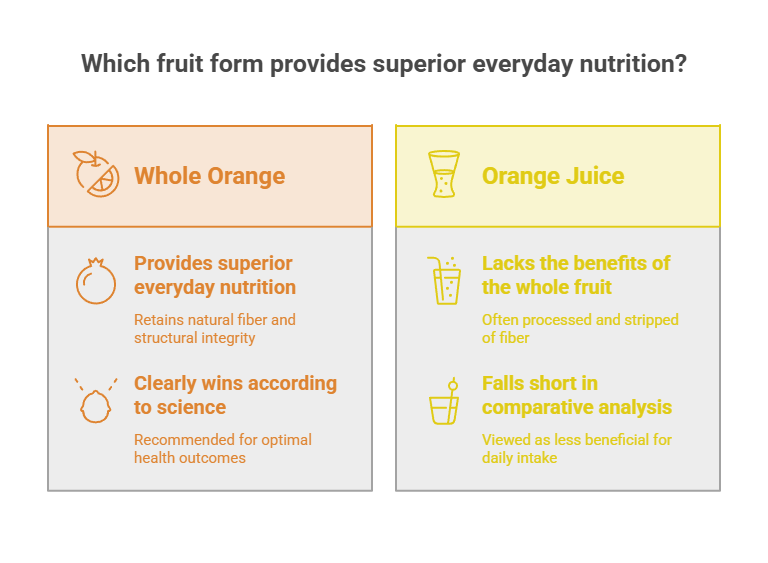
This is the question that trips up the most people, and the science is refreshingly clear. For everyday nutrition, the whole orange wins, and it isn’t close.
Why Juice Concentrates the Sugar
Juicing strips away the fiber and condenses several oranges into one quick-drinking glass. The result is more sugar and calories with less of what slows absorption.
An 8 oz glass of orange juice has about 110 calories and 21 grams of sugar, while a whole orange has only 62 calories and 12 grams of sugar plus fiber. That fiber gap is the whole difference.
Our lab partners point out that the fiber in a whole orange is exactly what makes it gentler on blood sugar than juice. Without it, the sugars hit faster and you feel less full afterward.
When Juice Still Has a Place
Juice isn’t villainous in moderation. A small glass of 100 percent orange juice can still deliver vitamin C and citrate, and it’s an easy option for some people, including those recovering from illness who struggle to eat.
The key is portion and context. Treating juice as an occasional drink rather than an all-day beverage keeps the sugar in check while still giving you some benefits.
Here’s the side-by-side that makes the choice obvious.
| Factor | Whole Orange | Orange Juice (8 oz) | Why It Matters |
| Calories | About 62 | About 110 | Juice packs more calories per serving |
| Sugar | About 12 g (with fiber) | About 21 g | Juice concentrates natural sugar |
| Fiber | About 3 g | Little to none | Fiber slows sugar absorption |
| Vitamin C | About 70 mg | High, but varies | Both deliver vitamin C |
| Blood-sugar impact | Gentler, lower glycemic load | Faster rise | Whole fruit is steadier |
| Fullness | Filling | Less filling | Whole fruit satisfies more |
How to Eat More Oranges (and How Many Is Too Many)
Oranges are one of the easiest healthy habits to build. They travel well, need no prep beyond peeling, and pair with all kinds of foods.
A Realistic Daily Amount
For most healthy adults, one to two oranges a day fits comfortably into a balanced diet. That gives you a strong vitamin C boost plus fiber without overdoing the natural sugar.
There’s no single magic number, and your needs depend on your overall diet. The point is variety; oranges are one excellent fruit among many, not the only one to eat.
Children can enjoy oranges too, in smaller, age-appropriate portions. As with adults, the whole fruit is the better choice than juice, since it slows the sugar and adds fiber their growing bodies can use.
Easy Ways to Add Them In
Beyond eating them plain, oranges brighten a lot of dishes. Toss segments into salads, blend them into smoothies, or pair them with iron-rich foods to boost absorption.
The zest adds flavor too. A little grated orange peel lifts dressings, marinades, and baked goods without adding sugar, and it carries its own dose of flavonoids.
Don’t Toss the Pith
The stringy white layer under the peel gets a bad rap, but it’s nutrient territory. Much of an orange’s fiber and flavonoid content sits in the pith and the membranes around each segment.
So peel, but don’t obsess over removing every bit of white. Eating the whole segment, pith and all, gives you more of the good stuff with no downside.
Picking and Storing Oranges
Choose oranges that feel heavy for their size, a sign they’re juicy, with firm, smooth skin. Color isn’t a reliable ripeness cue, since some ripe oranges still show patches of green. Store them at room temperature for about a week, or in the fridge for up to two weeks.
Who Should Be Careful With Oranges
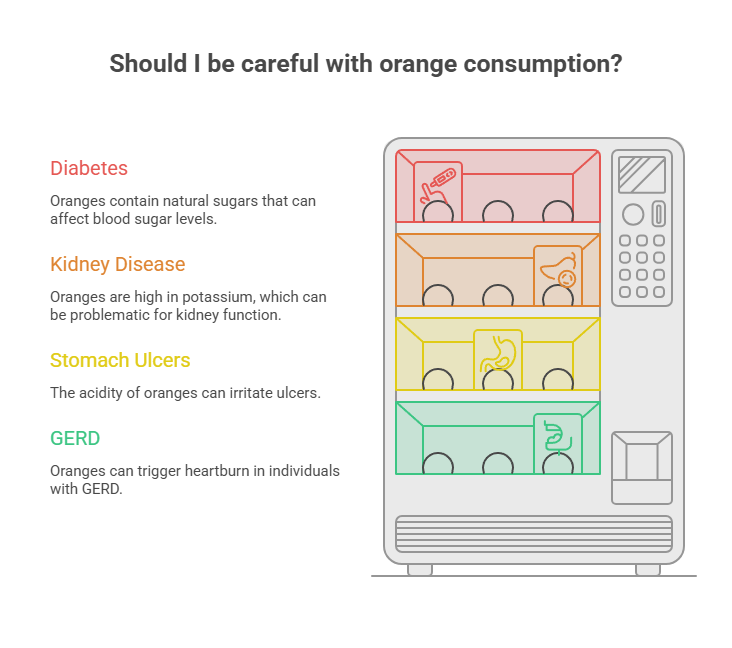
Oranges are healthy for most people, but a few situations call for a little caution. Oranges are generally considered safe for everyone, though people with diabetes, kidney disease, stomach ulcers, or GERD may need to limit their intake.
Diabetes and Blood Sugar
People with diabetes can usually enjoy whole oranges in moderation. The fiber keeps the glycemic impact gentle, but portion size and pairing still matter.
The bigger caution is juice, which raises blood sugar faster. For most people managing diabetes, a whole orange is the better choice than a glass of juice.
Acid Reflux and GERD
Citrus is acidic, so oranges can aggravate symptoms for some people with reflux or GERD. That doesn’t always mean a total ban.
Patients commonly ask us whether oranges are off-limits with reflux, and the answer is usually about portion and timing, not elimination. Eating smaller amounts, and not on a very empty stomach, often helps.
Citrus Allergy and Medication Notes
A true citrus allergy is uncommon but real, and those affected should avoid oranges. If you’ve reacted to citrus before, check with your doctor.
One clarification worth making: the famous grapefruit drug interaction does not generally apply to sweet oranges. If you take medications and have questions, your pharmacist can confirm what’s safe for you.
One more small tip: the acidity that bothers some stomachs can also be hard on tooth enamel over time. Rinsing with water after eating citrus, and not brushing your teeth immediately afterward, helps protect the enamel.
Here’s a quick decision guide.
| Your Goal or Situation | Recommended Action | Why |
| Want more vitamin C | Eat one whole orange daily | Covers most of your daily vitamin C need |
| Want heart benefits | Pair oranges with an overall produce-rich diet | One fruit helps but works best in context |
| Have diabetes | Choose whole oranges over juice, watch portions | Fiber keeps the glycemic load gentler |
| Have GERD or reflux | Eat smaller portions, not on an empty stomach | Reduces acid-related irritation |
| Prone to kidney stones | Include citrus for urinary citrate | Citrate helps lower stone risk |
| Boosting iron absorption | Eat oranges with plant iron sources | Vitamin C enhances non-heme iron uptake |
The Bottom Line on Oranges and Your Health
Strip away the hype and oranges still come out looking great. They’re affordable, low in calories, and genuinely nutrient-dense, with benefits that real research supports.
What the Evidence Really Supports
The strongest claims are the simplest ones. Oranges are an excellent source of vitamin C, fiber, and protective plant compounds, and regular fruit intake is tied to better long-term health.
The weaker claims deserve honesty too. Oranges won’t prevent colds, melt away pounds, or single-handedly lower blood pressure. They’re a healthy part of the picture, not a miracle, and that distinction is what separates trustworthy nutrition advice from hype.
Fitting Oranges Into a Balanced Diet
The best approach is variety. Oranges shine alongside other fruits, vegetables, whole grains, and lean proteins, not as a stand-in for them.
Across patients we serve, the people who benefit most are the ones who treat oranges as one reliable, everyday habit within a broader healthy diet. That’s where the science consistently points.
A practical target many health agencies suggest is filling about half your plate with fruits and vegetables. An orange a day is a painless way to chip away at that goal while adding variety to the produce you already eat.
Frequently Asked Questions
How many oranges should you eat a day?
For most healthy adults, one to two oranges a day fits well into a balanced diet, providing plenty of vitamin C and fiber without excess sugar. Your ideal amount depends on your overall diet and health. If you have diabetes or reflux, ask your doctor about the right portion for you.
Is it better to eat an orange or drink orange juice?
A whole orange is generally better. It keeps the fiber that juice strips away, so it’s more filling and gentler on blood sugar. An 8 oz glass of juice has about 110 calories and 21 grams of sugar versus a whole orange’s 62 calories, 12 grams of sugar, plus fiber.
Are oranges good for weight loss?
Oranges can support weight management. They’re low in calories, high in water, and contain fiber that helps you feel full, making them a satisfying swap for processed snacks. They won’t cause weight loss on their own, but they fit easily into a calorie-conscious, nutrient-rich eating pattern.
Do oranges really boost your immune system?
Oranges support immunity through vitamin C, which aids white blood cell function and antibody production. That said, vitamin C doesn’t reliably prevent colds in most people. Research shows regular intake modestly shortens cold duration, by about 8 percent in adults, so think of oranges as helpful support, not a shield.
Are oranges good for your heart?
Yes, as part of a healthy diet. Oranges provide potassium, fiber, and flavonoids linked to better blood pressure and cholesterol, and higher fruit intake is tied to lower cardiovascular risk. One orange alone won’t transform heart health, since it supplies only a fraction of your daily potassium, but it contributes meaningfully.
Can people with diabetes eat oranges?
Usually yes, in moderation. A whole orange has a relatively low glycemic load because its fiber slows sugar absorption. Whole fruit is a far better choice than juice for blood sugar. Watch portion sizes, pair oranges with protein or fat if helpful, and follow your healthcare team’s guidance.
Are oranges bad for acid reflux or GERD?
They can be for some people, since citrus is acidic and may trigger symptoms. This doesn’t always require avoiding oranges entirely. Smaller portions, and not eating them on a very empty stomach, often reduce irritation. If oranges consistently worsen your reflux, talk with your doctor about limiting them.
Do oranges help with iron absorption and anemia?
Yes. The vitamin C in oranges enhances absorption of non-heme iron, the type found in plant foods like beans, lentils, and spinach. Eating an orange alongside these iron sources can meaningfully increase how much iron your body absorbs, which is especially helpful for vegetarians and vegans.
Can oranges help prevent kidney stones?
They may, for certain stone types. Low urinary citrate contributes to some kidney stones, and oranges and their juice can raise citrate levels, lowering the risk. The whole fruit gives you this benefit plus fiber and less sugar. If you have a history of stones, ask your doctor for tailored advice.
Are oranges good for your skin?
Yes. Vitamin C is essential for collagen production, the protein that keeps skin firm, and it helps with wound healing and protects skin cells as an antioxidant. A diet rich in vitamin C foods like oranges supports skin from within, though no single food replaces a complete skincare and sun-protection routine.
Which type of orange is the healthiest?
All common types are nutritious, with minor differences. Navel oranges are popular for eating, Valencias for juicing, and blood oranges carry extra antioxidant pigments. Mandarins and clementines are smaller and easy to peel. Choose whichever variety you’ll eat consistently; the healthiest orange is the one you actually enjoy.
What happens if you eat too many oranges?
Eating a lot of oranges can cause digestive upset from the fiber, heartburn from the acidity, and adds up natural sugar. Very high vitamin C intake may cause stomach discomfort or diarrhea. For most people, one to two oranges a day is a comfortable, healthy amount that avoids these issues.
Medical Disclaimer: This article is for general information only and is not a substitute for professional medical or nutrition advice, diagnosis, or treatment. Individual nutritional needs vary, and certain conditions may require dietary adjustments. Talk with your doctor or a registered dietitian about your specific situation, especially if you have diabetes, kidney disease, reflux, or a citrus allergy.