Five hundred forty-four published papers. One human clinical study. That ratio, not the marketing, is the honest starting point for any conversation about BPC-157.
Table of Contents
In July 2026 an FDA advisory panel voted to recommend it for compounding anyway, over the written objection of the agency’s own scientists. Here is what that means, and what it does not.
Quick Answer: BPC-157 is a lab-made pentadecapeptide, a 15-amino-acid chain modeled on a protective sequence found in human gastric juice. It is not FDA approved for any medical use. Nearly all evidence comes from rodent studies. In July 2026 an FDA advisory committee voted 8-6 to recommend it for the 503A Bulks List, but that recommendation is advisory only and does not make BPC-157 legal to prescribe, compound, or buy today.
At a Glance
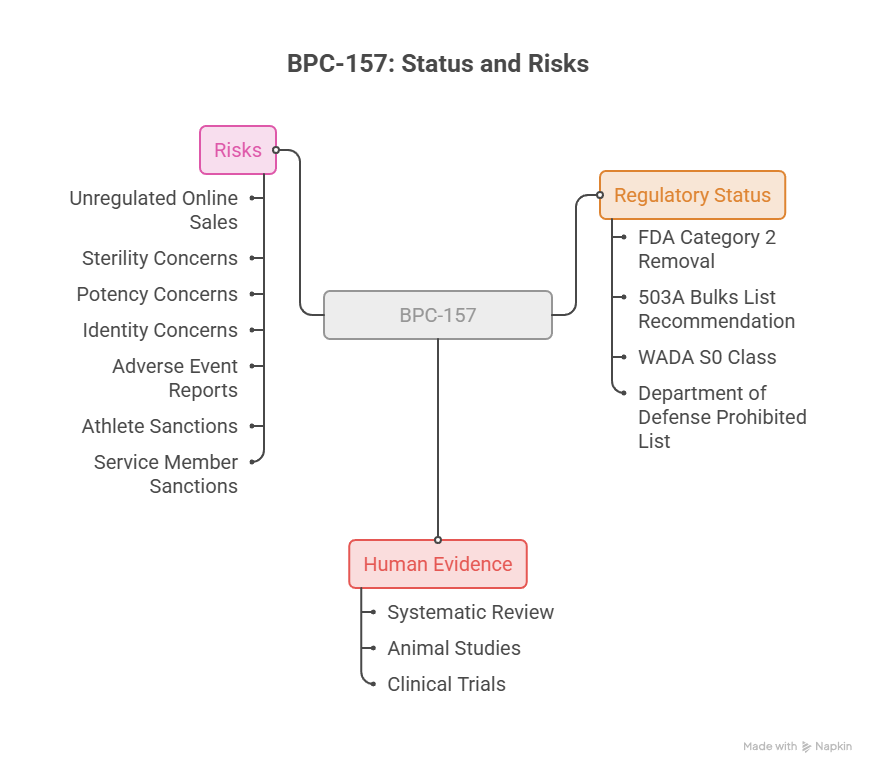
- BPC-157 is a synthetic peptide, not a vitamin, herb, or dietary supplement, and it cannot legally be sold as one.
- A 2025 systematic review in the HSS Journal screened 544 BPC-157 papers; 35 of the 36 that qualified were animal studies and exactly one was clinical.
- The entire published human evidence base is roughly 30 people across three small pilot studies, none randomized or placebo-controlled.
- The FDA removed BPC-157 from its restricted Category 2 list in April 2026, which loosened a restriction without granting permission.
- An FDA advisory committee voted 8-6 with one abstention in July 2026 to recommend BPC-157 for the 503A Bulks List. Rulemaking still stands between that vote and any pharmacy counter.
- Everything currently sold online is unregulated for sterility, potency, and identity, and the FDA has logged adverse event reports tied to suspected contamination.
- Athletes and service members remain at risk of sanction; BPC-157 sits in WADA’s S0 non-approved substances class and on the Department of Defense prohibited ingredient list.
What BPC-157 Actually Is
BPC-157 stands for Body Protection Compound 157. It is a chain of 15 amino acids, which is why researchers call it a pentadecapeptide.
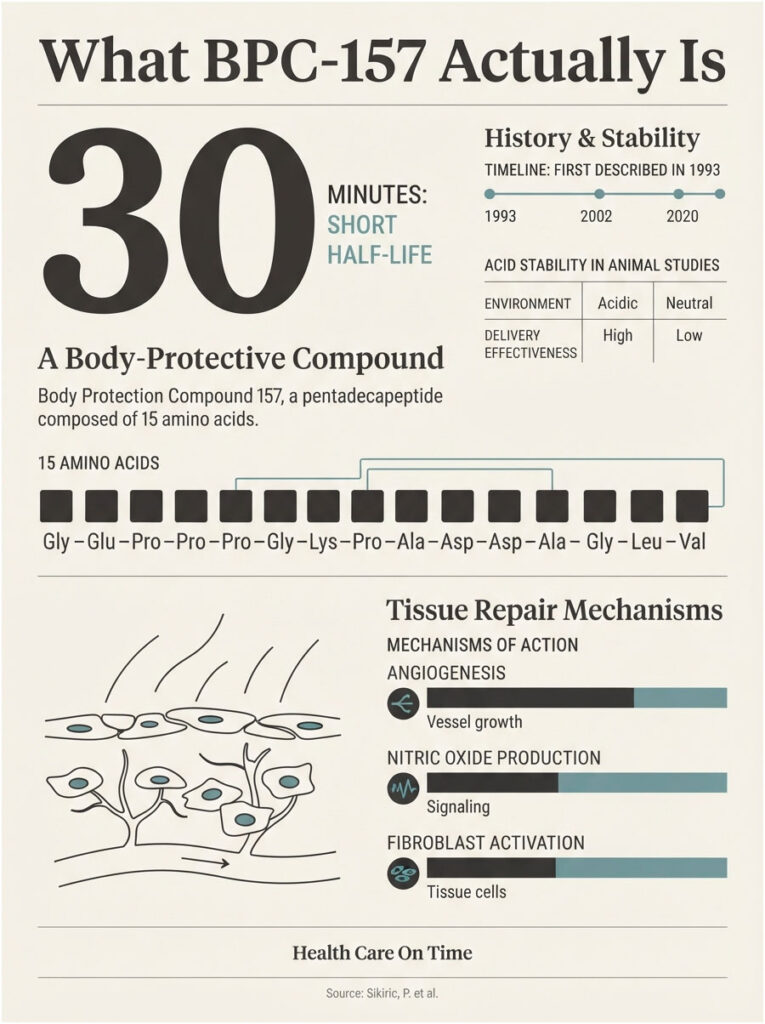
The sequence is Gly-Glu-Pro-Pro-Pro-Gly-Lys-Pro-Ala-Asp-Asp-Ala-Gly-Leu-Val, with a molecular weight of about 1,419.55 daltons. It was first described by Predrag Sikiric and colleagues in 1993, drawn from a larger protective protein found in human gastric juice.
That gastric origin matters for one practical reason. The proline-rich core makes the molecule unusually stable in acid, which is why rodent studies can deliver it in drinking water and still see effects.
The other names you will see on a label
Sellers rarely use one name. The same compound appears as BPC-15, PL-10, PL-14736, bepecin, gastric pentadecapeptide, and, in gym and social media circles, the “Wolverine peptide.”
Our medical reviewers flag this deliberately. Shopping across five different names makes it easy to believe five different products carry five different safety records. They do not.
How BPC-157 is supposed to work
The proposed mechanisms are not mysterious, and they are reasonably well characterized in tissue and animal models. BPC-157 appears to act on several repair pathways at once rather than hitting a single receptor.
The main ones described in the literature are angiogenesis through VEGFR2 signaling, nitric oxide production via the Akt-eNOS axis, and fibroblast activation through FAK-paxillin and ERK1/2 pathways. Together those would push new blood vessel growth and collagen laydown into an injured area.
Pharmacokinetic work in animals shows it is metabolized in the liver, cleared by the kidneys, and has a half-life of under 30 minutes. That short window is one reason enthusiasts inject frequently, and one reason skeptics question how much ever reaches a tendon.
Why BPC-157 Is Everywhere Right Now
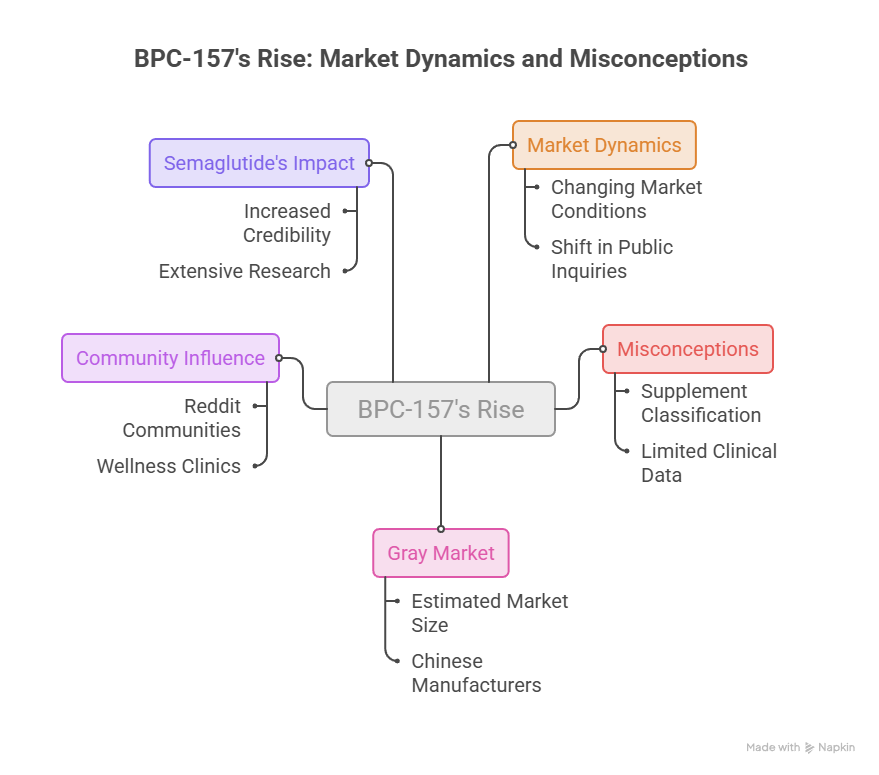
Demand for BPC-157 did not grow because new evidence arrived. It grew because the surrounding conditions changed.
A gray market built on a supplement-shaped misunderstanding
BPC-157 is sold the way a supplement is sold: online, without a prescriber, in a bottle, with a certificate of analysis attached. That packaging makes it feel like a supplement, and it is not one.
The peptide gray market in the United States is now estimated in the range of $100 million, supplied largely by Chinese manufacturers shipping bulk powder to online vendors and cash-pay wellness clinics. Reddit communities dedicated to peptides run into the tens of thousands of members.
The questions arriving through HealthCareOnTime have shifted along with that. Two years ago people asked what a peptide was. Now they ask which blood markers they should watch while already taking one.
The GLP-1 halo effect
The other driver is semaglutide. When a peptide drug produced dramatic, visible, FDA-approved results, the entire category inherited credibility it had not earned.
Eric Topol, director of the Scripps Research Translational Institute, described the trend as “unfounded and reckless,” warning that people were generalizing GLP-1 success to untested compounds.
That is the core error. Semaglutide passed through years of randomized trials in tens of thousands of participants. BPC-157 has passed through roughly 30 people in uncontrolled pilot studies.
What the Research on BPC-157 Actually Shows
There are two separate questions here, and conflating them is how most BPC-157 content goes wrong. Does the biology look interesting? Yes. Has it been tested in people? Barely.
The animal evidence is real and it is large
Rodent studies report accelerated healing in tendon ruptures, ligament tears, muscle injuries, and bone defects. Gastrointestinal models show protection against ulcers and against damage from NSAIDs like aspirin and diclofenac.
The Vasireddi systematic review in the HSS Journal, the musculoskeletal journal of the Hospital for Special Surgery, found that in preclinical models BPC-157 improved functional, structural, and biomechanical outcomes across muscle, tendon, ligament, and bone injury.
That is a genuinely interesting signal. It is also the same category of signal that fails roughly nine times out of ten once a compound reaches human trials.
The human evidence is three small pilot studies
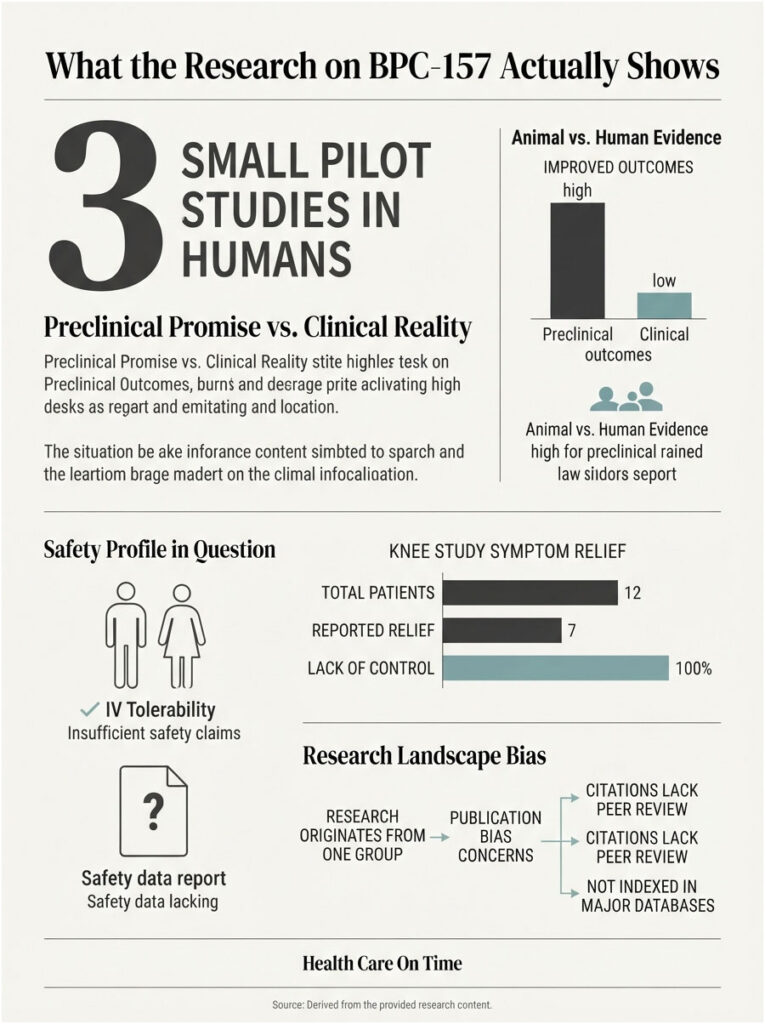
A 2025 narrative review published on PubMed Central searched six databases through March 2025 and identified only three pilot studies in humans: intra-articular injection for knee pain, injection for interstitial cystitis, and an intravenous safety and pharmacokinetics study.
None was randomized. None was placebo-controlled. None was blinded. In regulatory terms these are case series, not safety evidence.
What those three studies found
In the retrospective knee study, 7 of 12 patients reported symptom relief lasting more than six months after intra-articular injection. That is 12 people, self-reported, with no control arm.
The 2025 intravenous pilot enrolled two healthy adults. Infusion was tolerated without measurable cardiac, hepatic, or renal changes, and plasma levels returned to baseline within 24 hours.
Two people. That is the strongest formal human safety dataset that exists for a compound with tens of thousands of American users.
Why “no adverse effects reported” is not the same as safe
The Vasireddi review stated it plainly: no clinical safety data were found. Absence of reported harm in a dozen unblinded subjects is not evidence of safety; it is evidence that nobody looked hard.
Patients who ask us about peptide bloodwork are often surprised by this distinction. A compound can be well tolerated in 30 people and still carry a signal that only appears in 3,000.
The single-lab problem
An investigation published by STAT News in February 2026 found that nearly all BPC-157 work traces to one research group, and that PubMed-listed studies consistently report positive results.
Croatian trials run by the pharmaceutical company PLIVA in the 2000s are frequently cited as proof of human safety. Papers from those trials do not appear indexed in major databases, and it is unclear whether they were ever peer reviewed.
A literature where every published result is favorable and most of it comes from one group is a literature with a publication bias problem, not a settled science.
| Claimed Use | Strongest Study Type | Species and Sample Size | Published Human Trials | Evidence Verdict |
| Tendon and ligament repair | Controlled animal model | Rats, dozens per study | 0 | Preclinical only |
| Gastric ulcer and NSAID damage | Controlled animal model | Rats and mice | 0 published RCTs | Preclinical only |
| Ulcerative colitis | Early-phase company trial (PL-14736) | Human, unpublished | 0 peer-reviewed | Unverifiable |
| Chronic knee pain | Retrospective case series | 12 humans, 7 reported relief | 1 (uncontrolled) | Very weak |
| Interstitial cystitis | Pilot case series | Small human cohort | 1 (uncontrolled) | Very weak |
| Intravenous safety and PK | Pilot study, 2025 | 2 healthy adults | 1 (uncontrolled) | Insufficient |
| Nerve and organ protection | In vitro plus animal model | Rats, cell lines | 0 | Preclinical only |
Is BPC-157 Legal? The FDA Timeline Explained
This is where most articles ranking today are out of date, and where most readers are being misled by people who profit from the confusion.
2023: Category 2 and the access shutdown
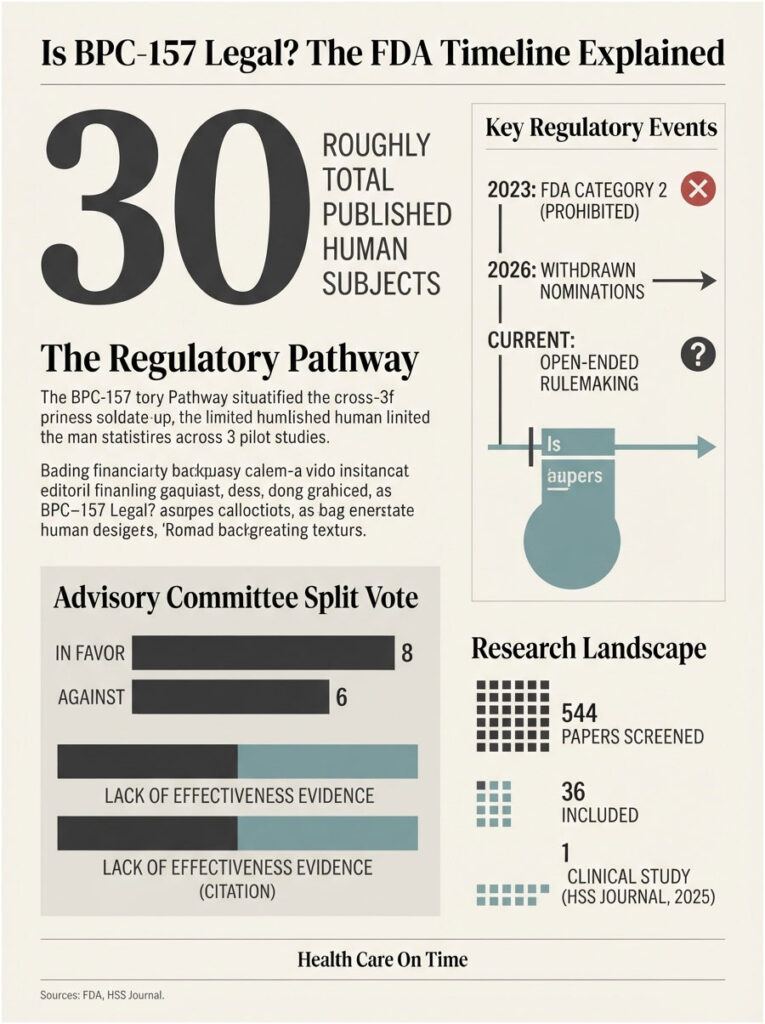
In 2023 the FDA placed BPC-157 into Category 2 of its interim 503A bulk drug substances list, the bucket for substances that may present significant safety risks. Enforcement discretion does not extend to Category 2 items.
In plain terms, a compounding pharmacy could not lawfully prepare it. The peptide disappeared from legitimate clinical supply almost overnight, and demand shifted to online sellers.
2026: removal from Category 2
The FDA removed both BPC-157 free base and BPC-157 acetate from Category 2 in April 2026. The trigger was procedural rather than scientific: the parties who originally nominated the substance withdrew their nominations.
Removal from Category 2 did not move BPC-157 to Category 1. It moved it into an unlisted middle state pending proper review.
The advisory committee vote
The FDA convened its Pharmacy Compounding Advisory Committee to evaluate seven peptides for the 503A Bulks List. BPC-157 was the first substance considered.
The committee voted 8 in favor, 6 against, with one abstention, recommending BPC-157 for inclusion. The indication under review was ulcerative colitis.
Across the two-day meeting the panel backed six of seven peptides, rejecting only emideltide, also called DSIP.
Why the panel split from the FDA’s own reviewers
Ahead of the meeting, FDA staff published briefing documents recommending against adding these substances. On BPC-157, agency reviewers cited a lack of evidence supporting effectiveness for ulcerative colitis.
Reporting by TIME noted that many voting members consult with or are employed by companies positioned to benefit from wider peptide adoption, and that the yes votes came largely from that group.
That does not automatically make the vote wrong. It does mean a reader should weigh it as an advisory opinion from an interested panel, not as a scientific verdict.
What still has to happen before legal compounding
The 503A Bulks List is built through notice-and-comment rulemaking. A proposed rule, a public comment window, review of those comments, and a final rule all sit between a favorable vote and legal compounding.
The FDA has announced no deadline. Until a rule is published, existing rules stand.
Claim check: removal from Category 2 does not mean legal
This is the most common error circulating right now, and it starts from a true fact before drawing a false conclusion.
A substance becomes compoundable under 503A only through a USP monograph, by being a component of an approved drug, or by appearing on the 503A Bulks List. BPC-157 meets none of those conditions today.
Three separate frameworks are being collapsed into one: drug approval, compounding eligibility, and research-use-only supply. BPC-157 sits outside all three as a legal medicine for humans.
| Data Point | Figure | Date | Source |
| Placed on FDA Category 2 list | Both free base and acetate forms | 2023 | FDA 503A interim list |
| Removed from Category 2 | Both forms, nominations withdrawn | April 2026 | FDA 503A update |
| Advisory committee vote on BPC-157 | 8 yes, 6 no, 1 abstention | July 2026 | FDA / RAPS |
| Peptides recommended at the meeting | 6 of 7 on the docket | July 2026 | FDA advisory committee record |
| Only rejection | Emideltide (DSIP), voted down | July 2026 | FDA advisory committee record |
| BPC-157 papers screened in systematic review | 544 identified, 36 included, 1 clinical | 2025 | HSS Journal (Vasireddi et al.) |
| Total published human subjects | Roughly 30 across 3 pilot studies | Through March 2025 | PMC narrative review |
BPC-157 Side Effects and Risks Most Articles Skip
Almost every ranking page lists “unknown long-term effects” and stops. The sharper risks are more specific than that.
The supply chain nobody inspects
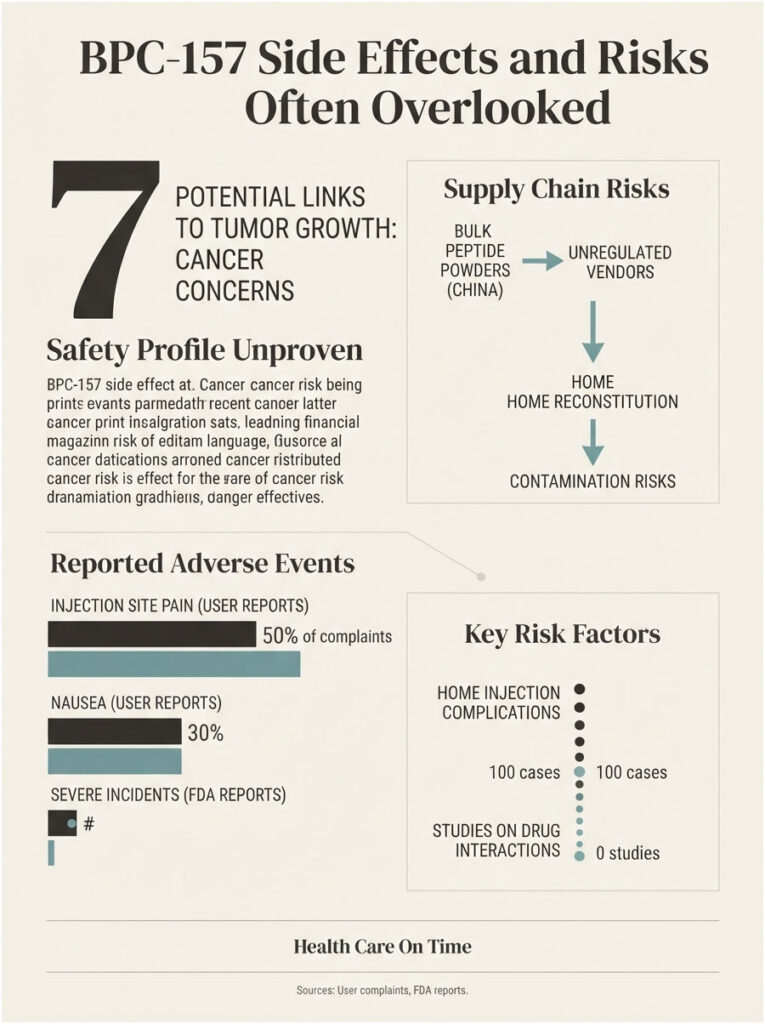
Bulk peptide powder for the American gray market originates largely with Chinese chemical manufacturers, then moves through online vendors and cash-pay wellness clinics.
In April 2026 the FDA issued a warning letter to Hangzhou Yiqi Biotechnology, a Chinese producer of unfinished bulk peptides including BPC-157, according to the Partnership for Safe Medicines. No recall infrastructure exists for products moving through this channel.
The Department of Justice has pursued domestic distributors of unapproved peptides, including compounding operations. Enforcement is real but slow, and it does not reach manufacturers outside US jurisdiction.
Purity is not sterility
This distinction is the one most buyers miss, and the one most likely to send someone to an emergency room.
A vial can test at 99% chemical purity and still carry bacterial endotoxin at levels sufficient to trigger a septic reaction. Purity certificates measure identity and impurity; they say nothing about sterility.
Home reconstitution adds a second contamination point on top of whatever arrived in the vial.
Documented side effects versus theoretical ones
Published human reports describe no adverse events, but with samples of 12 and 2 that finding carries almost no weight.
User-reported complaints center on injection site pain, redness, and tissue hardening, plus nausea and bloating among people taking oral forms.
The serious events on record are different in kind. The FDA Adverse Event Reporting System contains records of a hospitalization and a life-threatening incident linked to suspected contamination in BPC-157 products. A physician separately described a case of heavy metal poisoning from peptide injectables to the Wall Street Journal.
Across the pre-treatment panels booked through HealthCareOnTime, the pattern we see is people starting a peptide with no baseline liver, kidney, or inflammatory markers on file. That missing baseline makes any later problem far harder to interpret.
The cell-signaling and cancer question
The same pathways that make BPC-157 interesting for healing are pathways cancer biology cares about. FAK and paxillin signaling drives cell migration, and aggressive tumors use FAK signaling to invade tissue.
Angiogenesis works the same way. New blood vessels feed healing tissue, and they also feed tumors.
No human data exists either way. Nobody has shown BPC-157 causes cancer, and nobody has shown it does not, which is precisely the problem when the compound is self-administered by people who have never been screened.
Immunogenicity and unknown drug interactions
The FDA has raised the possibility that the immune system may recognize an injected peptide as foreign and mount an abnormal response.
No clinical pharmacology study has been conducted, so human drug-drug interactions are unmapped. Anyone on anticoagulants, immunosuppressants, or chemotherapy is stacking an unknown on top of a known.
Injection-related risk at home
Repeated subcutaneous injection without sterile technique produces the complications you would expect: injection site pain, hardening of tissue, abscess, and cellulitis.
None of that is exotic. It is what happens when a non-sterile procedure is repeated at a kitchen table over months.
BPC-157 Compared With Options That Already Have Evidence
The fair comparison is not BPC-157 versus nothing. It is BPC-157 versus what is already available with real data behind it.
For tendon, ligament, and joint pain
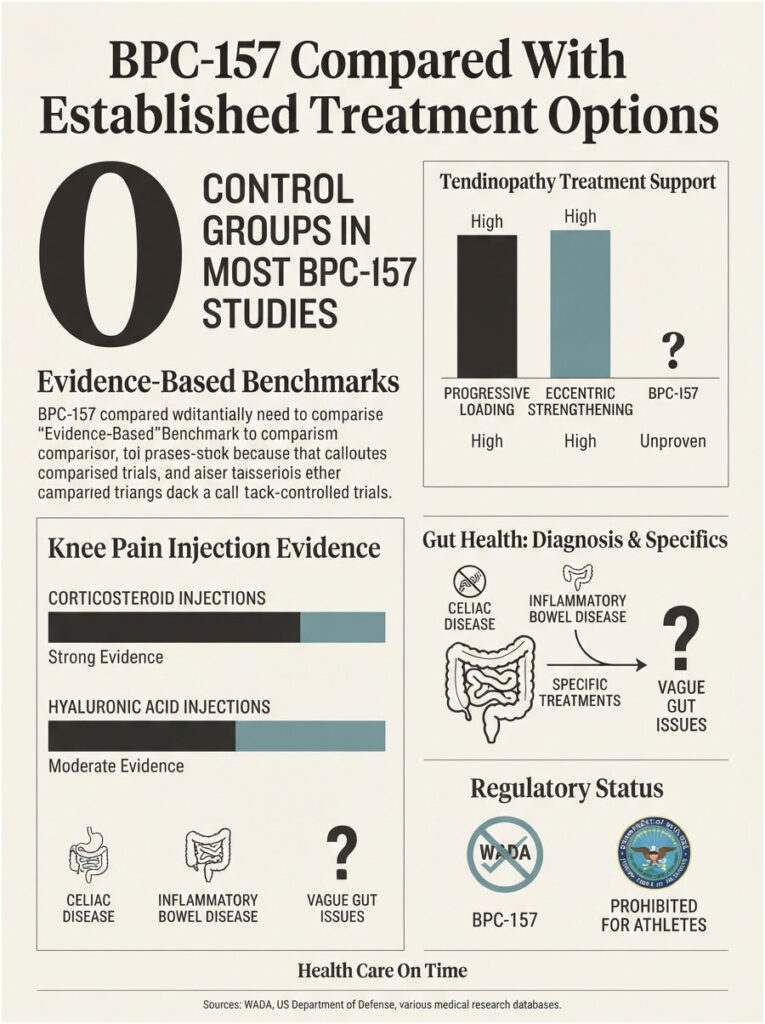
Progressive loading and eccentric strengthening remain the best-supported treatment for chronic tendinopathy, with decades of trial data. Platelet-rich plasma and prolotherapy have mixed but published human evidence and a known safety profile.
For osteoarthritic knee pain, corticosteroid and hyaluronic acid injections carry clear, if modest, evidence. BPC-157’s competing dataset is 12 people with no control group.
For gut symptoms
Recurring gut symptoms deserve a diagnosis before they deserve a compound. Celiac disease, inflammatory bowel disease, H. pylori infection, bile acid malabsorption, and small intestinal bacterial overgrowth all present as generalized gut inflammation and all have specific, testable answers.
Our lab partners see a steady stream of requests for celiac serology and inflammatory markers from people who had been told their symptoms were a vague gut-lining problem. A meaningful share turn out to have something nameable and treatable.
For athletes and service members
BPC-157 is prohibited under WADA’s S0 non-approved substances category, which covers any substance not approved by a governmental regulatory health authority for human therapeutic use.
It also appears on the Department of Defense prohibited dietary supplement ingredient list under DoDI 6130.06. For tested athletes and service members, the advisory vote changes nothing about sanction risk.
BPC-157 versus TB-500, KPV, and thymosin alpha-1
BPC-157, TB-500, and KPV cleared the same advisory panel on the same day, and all three sit in the same evidence category: strong animal signal, negligible human data.
Thymosin alpha-1 is the useful contrast. Published reviews describe dozens of clinical trials across thousands of human subjects in conditions including autoimmune disease and cancer supportive care. That is what an evidence base looks like when it exists.
A Smarter Sequence If You Are Considering BPC-157
Nobody reaches this page by accident. Most readers arrive with a specific unresolved problem, and the peptide is the fourth or fifth thing they have tried.
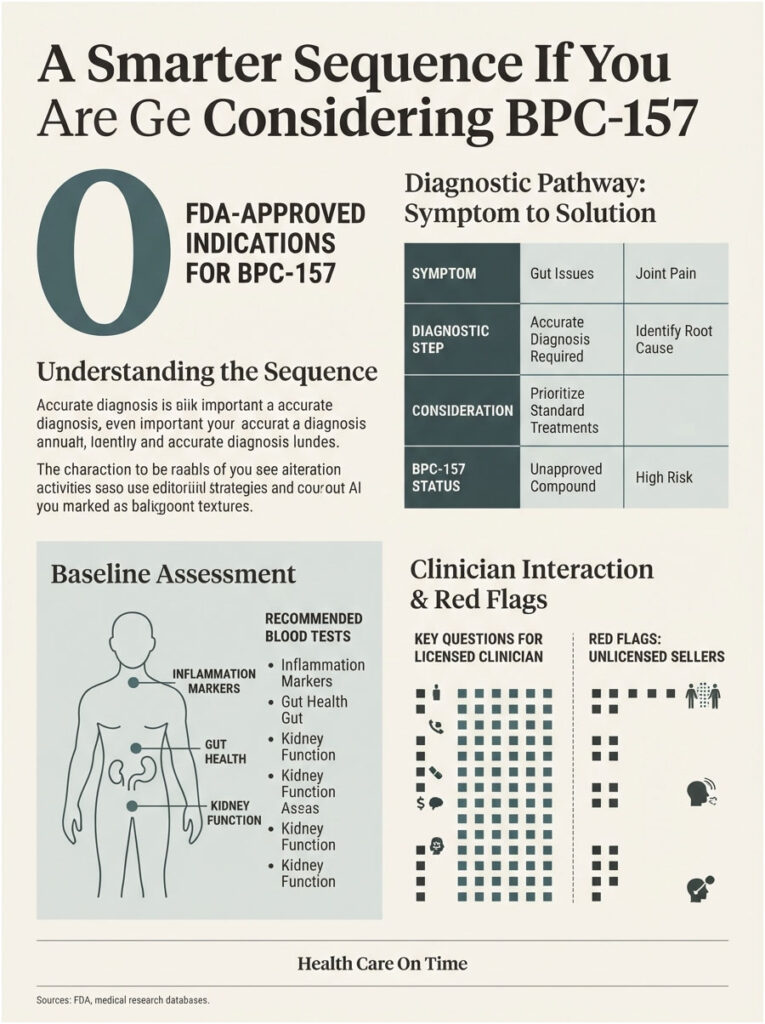
Get the diagnosis right before chasing a compound
Chronic pain and chronic gut symptoms are categories, not diagnoses. Before adding an unapproved injectable, it is worth knowing what the underlying numbers say.
A reasonable baseline panel for someone chasing inflammation includes CRP, ESR, a complete blood count, ferritin, HbA1c, vitamin D, and TSH. For gut symptoms, add celiac serology and fecal calprotectin.
Patients commonly ask us whether that bloodwork is worth doing when they already know they hurt. The point is not to confirm the pain; it is to find the driver a peptide would never have touched.
What to ask a licensed clinician
Ask directly whether the compound is FDA approved for your condition, and accept only a yes or a no. Ask where the product is sourced and whether the pharmacy is a licensed 503A or 503B facility.
Ask what the published human evidence is for your specific indication, and ask which markers will be monitored while you are on it. A clinician who cannot answer the first two questions is not the right clinician for this decision.
Red flags in a seller, clinic, or research website
The phrase “for research use only” on a consumer checkout page is a legal shield for the seller, not a quality claim about the product.
Other reliable warning signs:
- No licensed prescriber involved at any point
- Payment accepted only by cryptocurrency or wire transfer
- A certificate of analysis that cannot be traced to a named third-party lab
- Dosing advice delivered by a salesperson rather than a clinician
- Any claim that the 2026 advisory vote made the product legal
| Your Situation | What Is Likely Driving It | Recommended Next Step |
| Chronic tendon pain over 3 months | Tendinopathy, often load-related | Get imaging and a loading program from a sports medicine physician before considering injectables |
| Recurring gut symptoms, no diagnosis | Celiac, IBD, H. pylori, SIBO, or bile acid issues | Book celiac serology, fecal calprotectin, CRP, and ferritin, then see a gastroenterologist |
| Recovering from surgery | Normal healing timeline plus deconditioning | Follow the surgeon’s protocol; do not add unapproved compounds during recovery |
| Competitive or tested athlete | Any use risks an S0 anti-doping violation | Do not use; check the current WADA list and consult your compliance officer |
| Already bought a vial online | Unknown sterility, potency, and identity | Stop, keep the vial and label, and tell your physician what you took and when |
| Offered BPC-157 at a wellness clinic | Cash-pay service outside FDA approval | Ask for the pharmacy license and the FDA approval status in writing before agreeing |
| Fatigue attributed to inflammation | Anemia, thyroid disease, diabetes, vitamin D deficiency, or sleep apnea | Run a baseline panel first; treat what the numbers show |
What Happens Next With BPC-157
The advisory vote moved BPC-157 one procedural step forward, and only one. The FDA now decides whether to open rulemaking, and the agency is not bound by the panel.
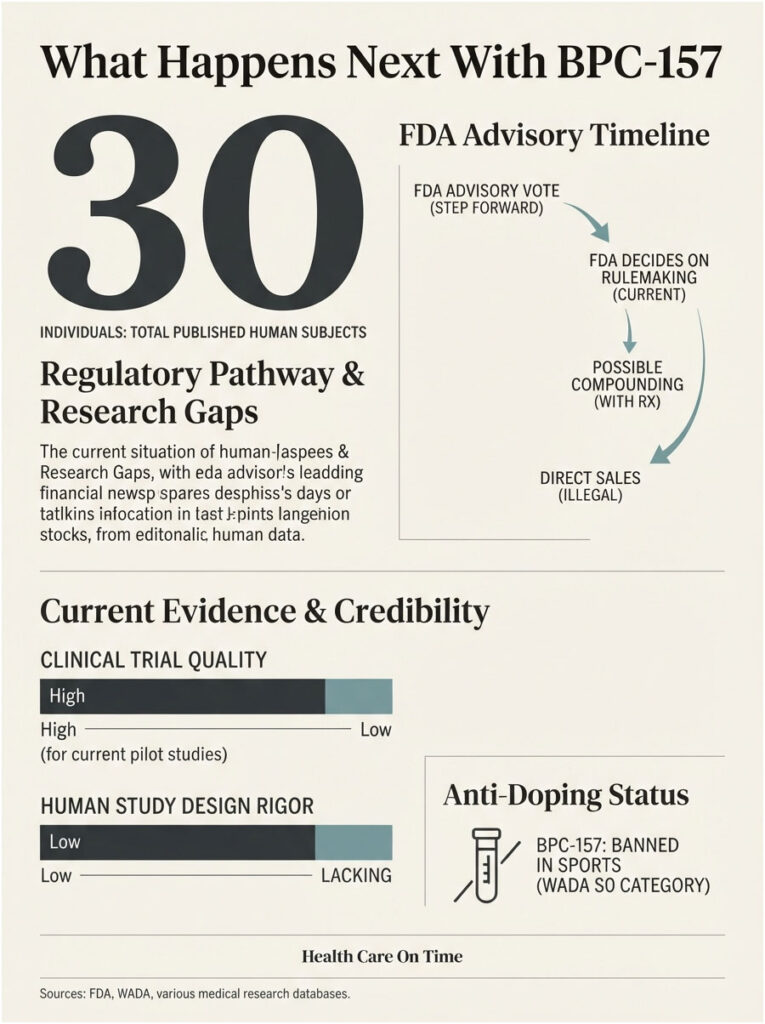
If a proposed rule appears, expect a public comment period followed by months of review. Even a favorable final rule would authorize licensed compounding pharmacies to prepare BPC-157 against a prescription. It would not legalize direct-to-consumer vials.
What would actually settle the question
A single adequately powered, randomized, placebo-controlled trial with a published protocol and an independent research group would do more for BPC-157’s credibility than another 500 rodent papers.
Our medical reviewers will update this page when the FDA publishes a proposed rule or when controlled human trial results appear. Until then, the honest summary is that the biology is interesting and the evidence is not there yet.
Frequently Asked Questions
Is BPC-157 FDA approved?
No. BPC-157 does not appear in the FDA’s approved drugs database under any of its names. It is not approved for any medical indication, cannot legally be prescribed as a finished medicine, and is not a lawful dietary supplement ingredient in the United States.
Did the FDA approve BPC-157 in 2026?
No. An FDA advisory committee voted 8-6 with one abstention to recommend BPC-157 for the 503A Bulks List. Advisory committee recommendations are not binding, and the FDA must complete public rulemaking before anything changes.
Is BPC-157 legal to buy in the United States?
Selling BPC-157 as a drug, food, or dietary supplement has no legal basis. Vendors market it “for research use only,” which is a labeling status rather than permission for human use. Buying it for personal injection sits outside any regulated pathway.
Can a doctor prescribe BPC-157 right now?
Not as an approved medicine. A prescription requires either an FDA-approved product or a lawful compounding pathway, and BPC-157 currently has neither. Some cash-pay clinics dispense it anyway, which is why state boards and the DOJ have pursued enforcement actions.
How many humans have been studied in published BPC-157 trials?
Roughly 30 people across three small pilot studies: a retrospective knee-injection series of 12, an interstitial cystitis series, and a 2025 intravenous study in two healthy adults. None was randomized, blinded, or placebo-controlled.
Is BPC-157 banned in sports?
Yes. BPC-157 falls under WADA’s S0 category for substances not approved by any governmental health authority for human therapeutic use. It also appears on the Department of Defense prohibited dietary supplement ingredient list, so service members face the same exposure.
Will BPC-157 show up on a drug test?
Anti-doping laboratories have developed detection methods for BPC-157 and related peptides. Athletes subject to testing should assume it is detectable and that a positive finding carries the same consequences as any other S0 violation.
Does BPC-157 cause cancer?
No human study has answered this. The concern is theoretical and comes from mechanism: BPC-157 promotes angiogenesis and FAK-paxillin signaling, pathways tumors also use. Absence of evidence for harm is not evidence of safety in a compound tested on 30 people.
What are the reported side effects of BPC-157?
Published human reports describe no adverse events, but the samples were tiny and screening was minimal. User complaints include injection site pain, redness, tissue hardening, nausea, and dizziness. Serious events in the FDA’s reporting system have been linked to suspected product contamination.
Is BPC-157 the same as TB-500?
No. They are different peptides with different sequences, though both are marketed for tissue repair and both cleared the same FDA advisory vote in July 2026. Neither is FDA approved, and both share comparable gaps in human evidence.
Does oral BPC-157 work the same as injected?
Unknown in humans. BPC-157 is acid-stable, and rodent studies show activity after oral delivery, which is unusual for a peptide. No human pharmacokinetic comparison between oral and injected forms has been published, so oral potency in people is unestablished.
What are safer alternatives for tendon or gut healing?
For tendons: progressive loading programs, physical therapy, and injections such as PRP or corticosteroid, all with published human data. For gut symptoms: get a diagnosis first through celiac serology, fecal calprotectin, H. pylori testing, and inflammatory markers, then treat the specific cause.
Medical Disclaimer: This article is for informational purposes and does not constitute medical advice, diagnosis, or treatment. HealthCareOnTime does not provide dosing instructions, preparation guidance, or sourcing information for BPC-157 or any unapproved drug, and does not recommend its use. BPC-157 is not approved by the FDA for any indication. Talk with a licensed physician before starting, stopping, or changing any treatment. If you have already used a peptide product and feel unwell, contact a healthcare provider promptly.
References
- July 23-24, 2026: Meeting of the Pharmacy Compounding Advisory Committee, U.S. Food and Drug Administration
- PCAC Voting Questions on 503A Bulk Drug Substances, U.S. Food and Drug Administration
- FDA advisory committee backs two controversial peptides, Regulatory Affairs Professionals Society
- An FDA Committee Just Voted in Favor of Peptides Despite the Agency’s Opposition, TIME
- Emerging Use of BPC-157 in Orthopaedic Sports Medicine: A Systematic Review, HSS Journal
- Regeneration or Risk? A Narrative Review of BPC-157 for Musculoskeletal Healing, PubMed Central
- Multifunctionality and Possible Medical Application of the BPC 157 Peptide, PubMed Central
- BPC-157: Experimental Peptide Creates Risk for Athletes, U.S. Anti-Doping Agency
- BPC-157: A Prohibited Peptide and an Unapproved Drug, Operation Supplement Safety, U.S. Department of Defense
- BPC-157: The peptide with big claims and scant evidence, STAT News
- The five risks of taking unapproved peptides, Partnership for Safe Medicines