The most impressive tomato study published this year did not test a tomato you can buy at Kroger.
Researchers at Ohio State bred tomatoes for unusually high lycopene, pressed them into juice, spiked that juice with soy isoflavone extract, and handed it to adults with obesity twice a day for four weeks. Only that juice produced significant reductions in three inflammatory proteins. A plain tomato juice control did not.
Table of Contents
That gap between what a study actually used and what the headline said runs through nearly every tomato claim online. So this article grades each benefit by what was tested, how many people were in the room, how much tomato it took, and whether the result transfers to an American grocery cart.
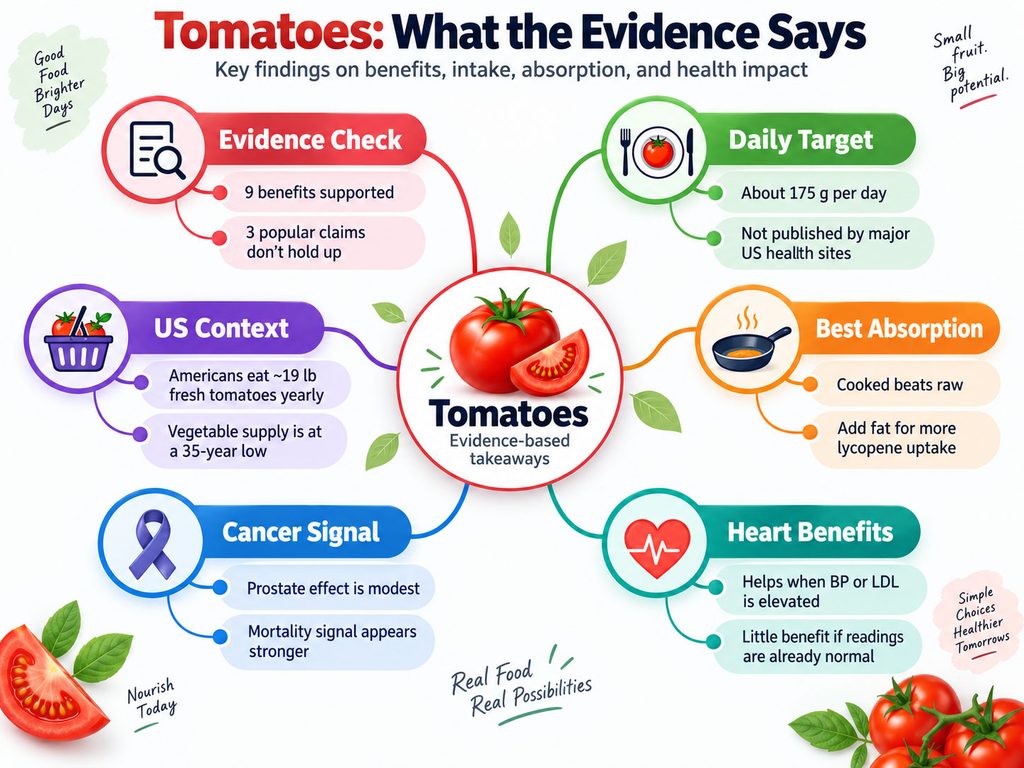
Quick Answer: Tomatoes deliver measurable benefits for blood vessel function, blood pressure, LDL cholesterol and systemic inflammation, driven mainly by lycopene, potassium and vitamin C. Benefits show up most clearly in people whose readings are already elevated. Research points to a practical daily target of about 4.9 mg of lycopene, roughly 175 grams of tomato, or one and a half medium tomatoes. Cooking with a little fat raises absorption sharply.
The nine benefits this article covers:
- Better blood vessel function
- Lower blood pressure when yours is elevated
- Lower LDL cholesterol when yours is elevated
- Reduced systemic inflammation
- Lower cancer mortality risk
- A conditional prostate cancer signal
- Slightly better skin resilience under UV
- A meaningful potassium contribution
- An early but real gut microbiome effect
At a Glance
• Nine benefits hold up under human trial or large cohort evidence; three popular claims collapse under inspection
• The useful daily target is about 175 g of tomato, a number no major US health site publishes
• Cooking plus a fat source raises lycopene absorption well above raw and plain
• Blood pressure and LDL benefits appear in people with elevated readings, not in people already normal
• The prostate cancer story is smaller than advertised; the cancer mortality signal is larger
• Americans average about 19 pounds of fresh tomatoes a year while overall vegetable supply hits a 35-year low
What Actually Does the Work Inside a Tomato
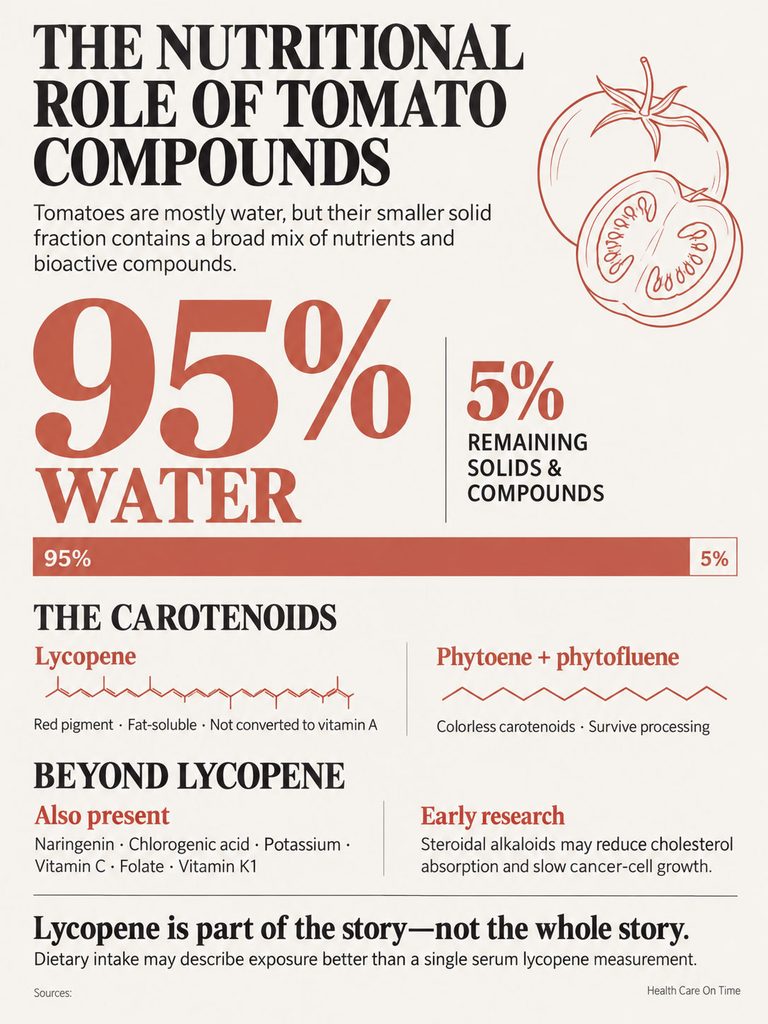
Tomatoes are roughly 95 percent water. Everything the research cares about sits in the remaining 5 percent.
Lycopene, and why it behaves differently
Lycopene is the red carotenoid pigment that gives ripe tomatoes their color. Unlike beta-carotene, your body does not convert it into vitamin A, so it circulates and deposits in tissue as lycopene itself.
It is fat-soluble, and it sits locked inside plant cell walls. Those two properties explain almost every piece of practical advice further down this page.
Our medical reviewers note that lycopene is not part of any routine clinical panel. Research studies measure serum lycopene, but no standard lab test reports it, which is why dietary intake matters more than chasing a number on paper.
The compounds nobody talks about
Tomatoes also carry phytoene and phytofluene, two colorless carotenoids that survive processing and accumulate in skin tissue. Add naringenin, chlorogenic acid, potassium, vitamin C, folate and vitamin K1.
Then there are steroidal alkaloids. Scientists at the USDA Agricultural Research Service and Ohio State have proposed that these compounds may reduce cholesterol absorption and slow cancer cell proliferation, and observed that tomato consumption increased activation of genes tied to xenobiotic metabolism regardless of which tomato variety was fed.
That work is early and mostly preclinical. It matters here for one reason: it suggests lycopene is not carrying the whole load, which changes the case for lycopene capsules.
Readers who want the per-portion calorie and micronutrient math will find it in our separate tomato nutrition breakdown. This article stays on health outcomes.
The 9 Research-Backed Benefits
Table 1 grades every claim before the explanations start. Read it first, then decide which sections matter to you.
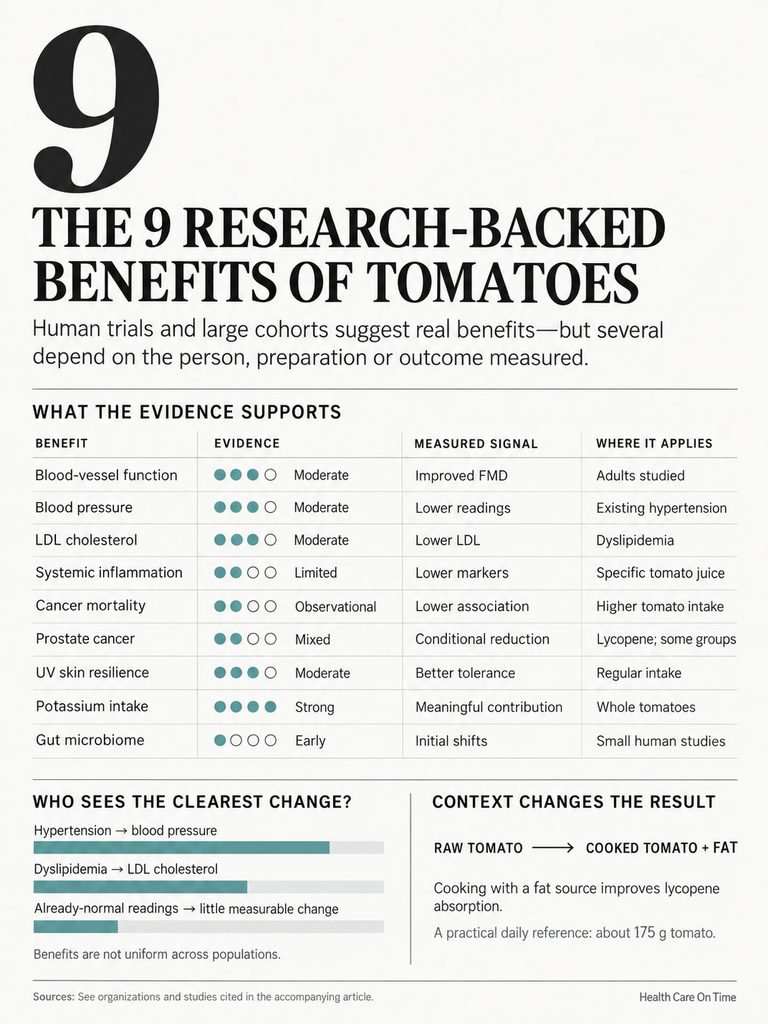
Table 1: What Each Tomato Benefit Is Actually Built On
| Benefit | Best available evidence | Study type and size | Measured effect | Daily amount used | Evidence grade |
| Blood vessel function | Yoshida, Food & Function 2025 | RCT, 75 adults, 12 weeks | FMD 7.0% vs 5.4% placebo | 26.7 mg lycopene as juice | Moderate |
| Lower blood pressure | Odai, Food Science & Nutrition | Cohort, 94 untreated hypertensive | SBP 141.2 to 137.0 mmHg | About 215 mL juice | Moderate |
| Lower LDL cholesterol | Odai, Food Science & Nutrition | Cohort, 125 with dyslipidemia | LDL 155.0 to 149.9 mg/dL | About 215 mL juice | Moderate |
| Less inflammation | Sholola, Mol Nutr Food Res 2026 | Crossover RCT, 12 adults | IL-5, IL-12p70, GM-CSF all down | Two 6-oz cans, bred cultivar | Early |
| Lower cancer mortality | Balali, Frontiers in Nutrition 2025 | Meta-analysis, 121 cohorts | Tomato intake RR 0.89 | Highest vs lowest intake | Strong |
| Prostate risk reduction | Lopez-Solis, BMC Medicine 2025 | Cohort, 2,970 men, 104 cases | HR 0.36 above threshold | 4.9 mg lycopene per day | Moderate |
| UV skin resilience | Rizwan, Br J Dermatol | RCT, 20 women, 12 weeks | Erythemal D30 up, MED unchanged | 55 g paste, 16 mg lycopene | Early |
| Potassium contribution | USDA FoodData Central | Composition data | 292 mg per medium tomato | One medium tomato | Strong |
| Gut microbiome shift | Ohio State animal and human work | Preclinical plus n=12 | Diversity and metabolite shifts | Not established | Early |
1. Better blood vessel function
Flow-mediated dilation measures how well an artery widens when blood flow increases. Poor FMD is one of the earliest detectable signs that cardiovascular disease is developing, often years before symptoms.
In a randomized, double-blind, placebo-controlled trial, 75 healthy adults with borderline FMD between 4 and 7 percent were assigned to placebo juice, standard tomato juice at 15.0 mg lycopene, or high-lycopene juice at 26.7 mg.
At week 12, FMD reached 6.1 percent in the tomato juice group and 7.0 percent in the high-lycopene group, against 5.4 percent for placebo. The high-lycopene group showed separation from placebo as early as week 4.
Two honest caveats. Both juice doses sit well above what a typical American eats in a day. And the research team was based at the Diet and Well-being Research Institute at Kagome Co., Ltd., a tomato juice manufacturer. Industry funding does not invalidate a result, but readers deserve to see it stated.
For an American reader, the useful takeaway is directional rather than prescriptive: vascular function is one of the few endpoints where tomato products have produced a controlled, blinded, positive result at all.
2. Lower blood pressure, if yours is already high
A year-long study in the Japanese town of Kuriyama gave 481 residents as much unsalted tomato juice as they wanted. Average consumption settled at about 215 mL a day, roughly one small bottle.
Among the 94 participants with untreated prehypertension or hypertension, systolic pressure fell from an average of 141.2 to 137.0 mmHg and diastolic from 83.3 to 80.9 mmHg.
Notice who benefited. Participants who started with normal readings showed no meaningful change across the full cohort.
Here is the American translation. The 2025 AHA/ACC guideline sets a treatment target under 130/80 mmHg for essentially all adults. A four-point systolic drop does not move someone from 141 to target on its own, but stacked with sodium reduction, weight change and activity, it is a real contribution rather than a rounding error.
Patients booking blood pressure panels with us often ask whether food can replace medication. This is the honest shape of the answer: a few millimeters of mercury, in people who have room to move, sustained only while the habit lasts.
3. Lower LDL cholesterol, if yours is already high
Same Kuriyama cohort, different subgroup. Among 125 participants with untreated dyslipidemia, LDL cholesterol fell from an average of 155.0 to 149.9 mg/dL over the year.
That is roughly a 3 percent reduction, achieved with a beverage rather than a prescription, and it held for twelve months.
Context matters. A 155 mg/dL LDL sits well above the ranges most American clinicians want to see in anyone with additional cardiovascular risk factors. A 5-point drop is helpful and nowhere near sufficient on its own.
The study limits are real: no separate control arm for the juice, one Japanese town, and no record of what else participants ate or whether tomato juice displaced something worse. Treat it as supportive evidence, not as a substitute for a lipid management plan.
4. Measurably less systemic inflammation
The Ohio State crossover trial published in 2026 is the newest human tomato data available anywhere.
Twelve healthy adults with obesity drank two 6-ounce cans of tomato-soy juice daily for four weeks. After a washout period they switched to a low-carotenoid tomato juice for four more weeks, so each person served as their own control.
Only the tomato-soy juice significantly lowered three cytokines: interleukin-5, IL-12p70, and granulocyte-macrophage colony-stimulating factor. Tumor necrosis factor alpha also fell, but the change did not reach statistical significance.
Twelve people is a pilot, not proof. And the beverage was made from tomatoes specifically bred for elevated lycopene, then fortified with soy isoflavone extract. You cannot buy it, and a can of supermarket tomato juice is not a substitute.
One finding deserves more attention than it got. Some urinary metabolite changes appeared after both juices, which suggests tomatoes produce biological effects even when lycopene is low. The lead author has since secured National Institute of Diabetes and Digestive and Kidney Diseases funding for a pilot trial in people with chronic pancreatitis.
5. Lower cancer mortality
This is where tomatoes post their strongest numbers, and where most articles quote the wrong statistic entirely.
A 2025 dose-response meta-analysis pooled 121 prospective studies covering 108,574 cancer cases and 10,375 deaths, with follow-up ranging from 2 to 32 years.
For cancer mortality, higher total tomato intake carried a pooled relative risk of 0.89. Higher lycopene intake came in at 0.84. Higher blood lycopene levels reached 0.76. Blood lycopene was also associated with lower lung cancer mortality specifically, at RR 0.65.
Getting cancer and dying from cancer are different endpoints with different biology. Tomatoes look considerably better on the second than the first, and almost nobody reports it that way.
One reasonable objection applies to all of it. People who eat more tomatoes tend to eat more vegetables generally, smoke less, and exercise more. Observational data cannot fully separate the tomato from the lifestyle around it.
6. A real but conditional prostate signal
A 2025 analysis followed 2,970 men aged 55 to 80 from the PREDIMED trial, documenting 104 prostate cancer cases over a mean 5.8 years. Diet was reassessed annually with a validated questionnaire rather than measured once at baseline, which is unusually rigorous for this literature.
Men in the highest quartile of lycopene intake had a 54 percent lower risk than those in the lowest, with a hazard ratio of 0.46.
The dose-response curve was non-linear. Protection appeared above 4.9 mg of lycopene per day, at HR 0.36. That threshold is the most practically useful number in the entire tomato literature.
The authors flag their own limits plainly. One hundred four cases is a small number. Six years may miss longer latency. And the cohort was older Spanish men already at high cardiovascular risk, eating fresh and sofrito-style tomatoes in a Mediterranean pattern.
In cases reviewed by our medical team, that population profile matters. It does not automatically describe a 45-year-old American man whose tomato intake arrives mostly as pizza sauce and ketchup.
7. Slightly better skin resilience under UV
Twenty healthy women with fair skin, median age 33, ate either 55 g of tomato paste in olive oil or olive oil alone, every day for 12 weeks. Skin was then exposed to controlled ultraviolet radiation and biopsied.
Erythemal D30, a quantified redness measurement, improved significantly in the tomato paste group. The minimal erythema dose, the classic sunburn threshold, did not differ significantly between groups.
Read that distinction twice, because it is the difference between a real finding and a marketing claim. How red the skin became improved. How much ultraviolet it took to burn did not.
The biopsy findings were more interesting than the redness data. Ultraviolet-induced matrix metalloproteinase-1, an enzyme that degrades collagen, was reduced in the tomato paste group. Procollagen deposition increased.
Twenty participants, one skin type range, twelve weeks. Our lab partners report that skin-health questions increasingly drive supplement purchases, and this is a case where the underlying study is far more modest than the claims built on top of it.
8. A meaningful potassium contribution
A medium tomato provides about 292 mg of potassium for roughly 22 calories. That is an unusually favorable ratio among common produce.
Most Americans fall well short of potassium recommendations while exceeding sodium guidance, and the sodium-to-potassium ratio predicts blood pressure outcomes better than sodium intake measured alone.
This benefit is less exciting than the trial data above and considerably more reliable. Composition data does not depend on a study design holding up. The potassium is simply there.
Swapping a salted snack for tomatoes moves both halves of that ratio at once, which is a rarer nutritional move than it sounds.
9. An early gut microbiome effect
Ohio State researchers fed young pigs a tomato-heavy diet for two weeks, choosing pigs because their gastrointestinal tract closely resembles the human one. Fiber, sugar, protein, fat and calories were matched between diets, so the tomato itself was the only variable.
The tomato diet shifted microbial composition and increased diversity. Whether that translates into any health outcome remains unknown.
Human evidence is thinner still. The urinary metabolome shifts seen in the 2026 trial are consistent with microbial activity, but consistent with is as far as the data currently goes.
This benefit is on the list because the mechanism is plausible and actively funded, not because it is established. Anyone presenting tomato gut benefits as settled is running ahead of the science.
How Much Tomato You Actually Need
Every major health site tells you tomatoes are good for you. Not one of the top-ranking pages tells you how many.
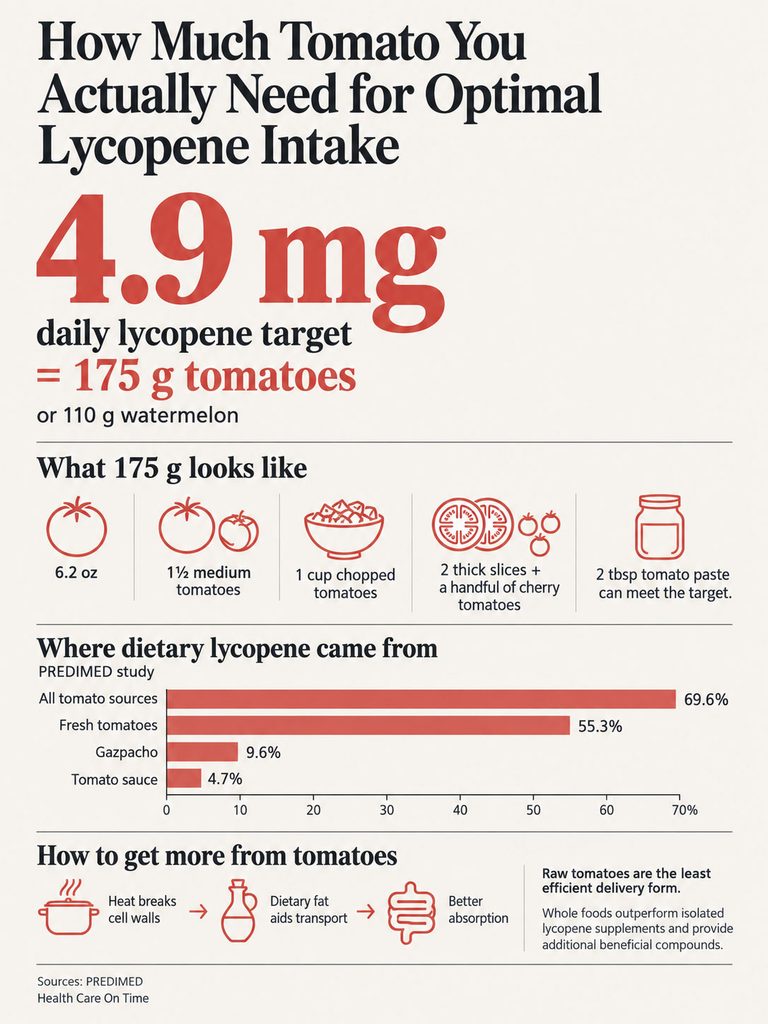
The threshold, translated into food
The PREDIMED researchers put 4.9 mg of lycopene per day at approximately 175 g of tomato, or 110 g of watermelon.
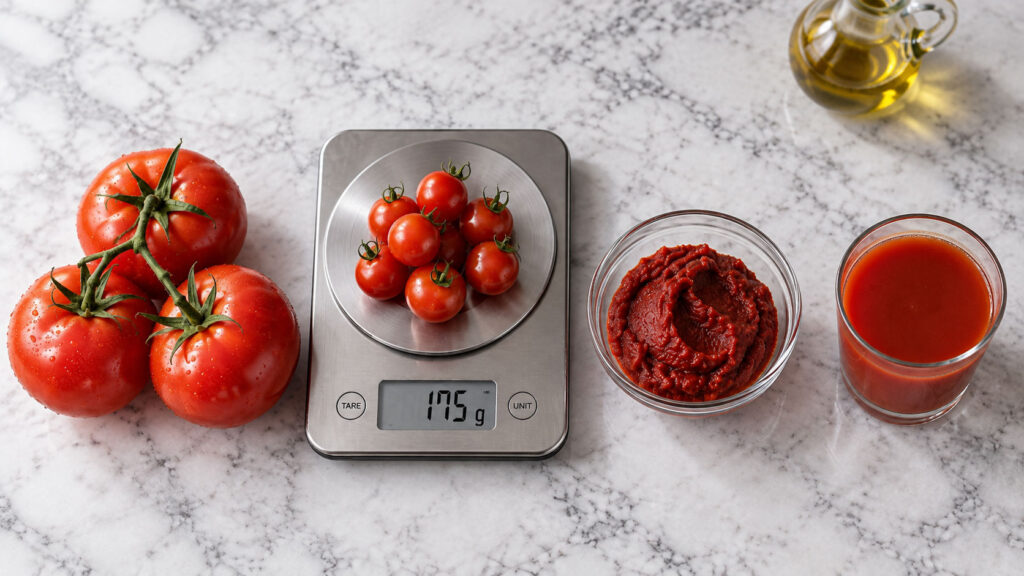
175 grams is about 6.2 ounces. In kitchen terms that is one and a half medium tomatoes, or roughly one cup of chopped tomato, or two thick slices plus a small handful of cherry tomatoes.
Concentrated forms hit the same mark with far less volume. Two tablespoons of tomato paste stirred into a cooked dish gets most people there without any recognizable tomato on the plate.
That is a realistic daily target for an ordinary American kitchen. It also sits well below the doses used in the juice trials, which ran from 15 mg upward.
Why cooking and fat change the math
Lycopene is bound inside cell walls. Heat breaks those walls down. Dietary fat then carries the freed lycopene across the intestinal wall and into circulation.
The PREDIMED cohort drew 69.6 percent of its lycopene from tomatoes and tomato products, split between fresh tomatoes at 55.3 percent, gazpacho at 9.6 percent and tomato sauce at 4.7 percent. Watermelon supplied most of the rest.
Those are oil-dressed or cooked preparations. A raw tomato eaten dry is the least efficient delivery vehicle in the whole category.
A tomato roasted in olive oil, or a sauce simmered with fat, is among the best. This is not a small difference at the margins.
Is a supplement a shortcut?
Our lab partners report rising interest in lycopene capsules among men over 50. The evidence does not support the trade.
The WebMD supplement monograph, separate from its benefits page, states that despite considerable research on lycopene for prostate health, its benefits remain poorly defined, with mixed results across studies, and that it is unclear whether eating large amounts of tomatoes or tomato products benefits prostate health at all.
The whole-food pattern recurs across nutrition research. Isolated compounds underperform the foods they came from, most likely because the food arrives carrying dozens of actives at once, including the colorless carotenoids and steroidal alkaloids no capsule contains.
Raw, Cooked, Juiced or Paste: Which Form Delivers
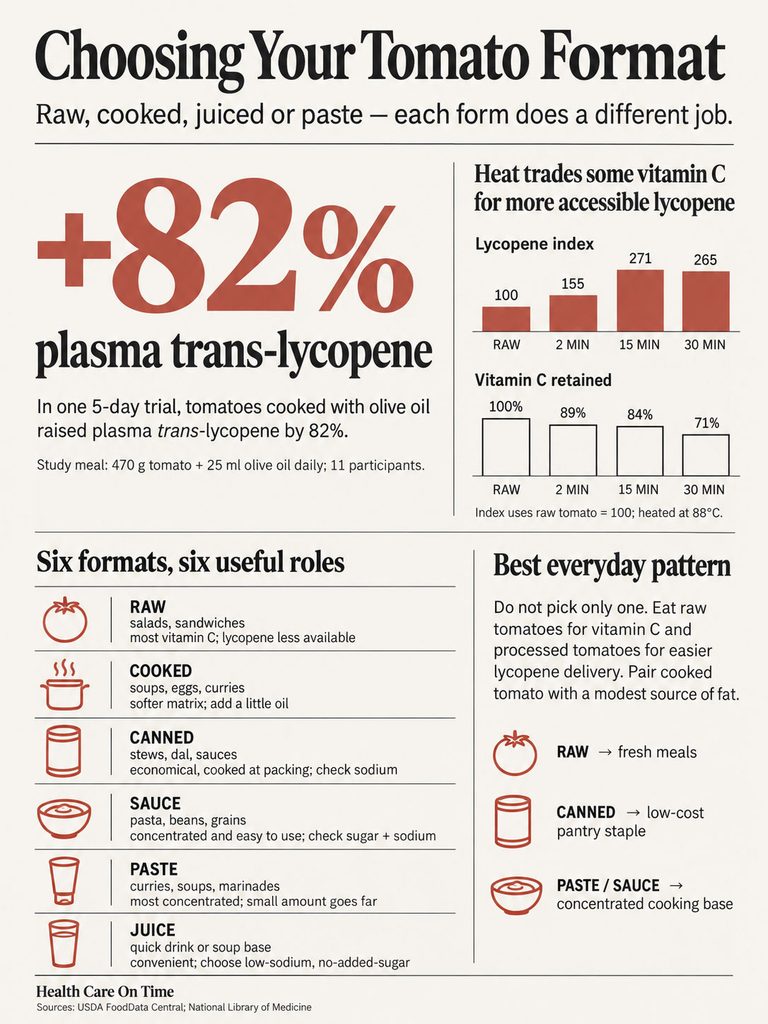
Table 4: Choosing Your Tomato Format
| Form | Typical serving | Relative lycopene delivery | Best for | Watch out for |
| Raw whole | 1 medium, 123 g | Baseline, lowest absorption | Vitamin C, hydration, salads | Pair with oil or most of it passes through |
| Roasted or cooked | 1 cup, 240 g | Substantially higher than raw | Hitting the daily target | Some vitamin C lost to heat |
| Canned diced | 1/2 cup, 121 g | High, already heat-processed | Weeknight cooking, cost, year-round | Sodium varies widely by brand |
| Tomato sauce | 1/2 cup, 122 g | High, concentrated | Pasta, braises, soups | Added sugar in jarred products |
| Tomato paste | 2 tbsp, 33 g | Highest per gram | Small-volume lycopene boost | Concentrated potassium load |
| Tomato juice | 1 cup, 240 mL | High, matches the trial doses | Replicating the blood pressure research | Buy the unsalted version |
The trials that produced blood pressure and cholesterol changes used unsalted juice. The trial that produced skin changes used paste in olive oil. The pattern across the literature is consistent: processed and fat-paired outperforms raw and plain.
That does not make raw tomatoes pointless. Vitamin C is heat-sensitive, so raw slices retain more of it, and a fresh summer tomato is a food people will actually keep eating.
Across patients we serve, the practical answer is both forms across a normal week rather than picking a side. The average is what matters, not any single meal.
Canned tomatoes deserve a specific defense. They are picked ripe and processed within hours, and the heat step that makes them shelf-stable also improves lycopene availability. For most American households they are the cheapest reliable route to the daily target.
Three Tomato Claims That Are Overhyped
Trust runs on what an article is willing to walk back.
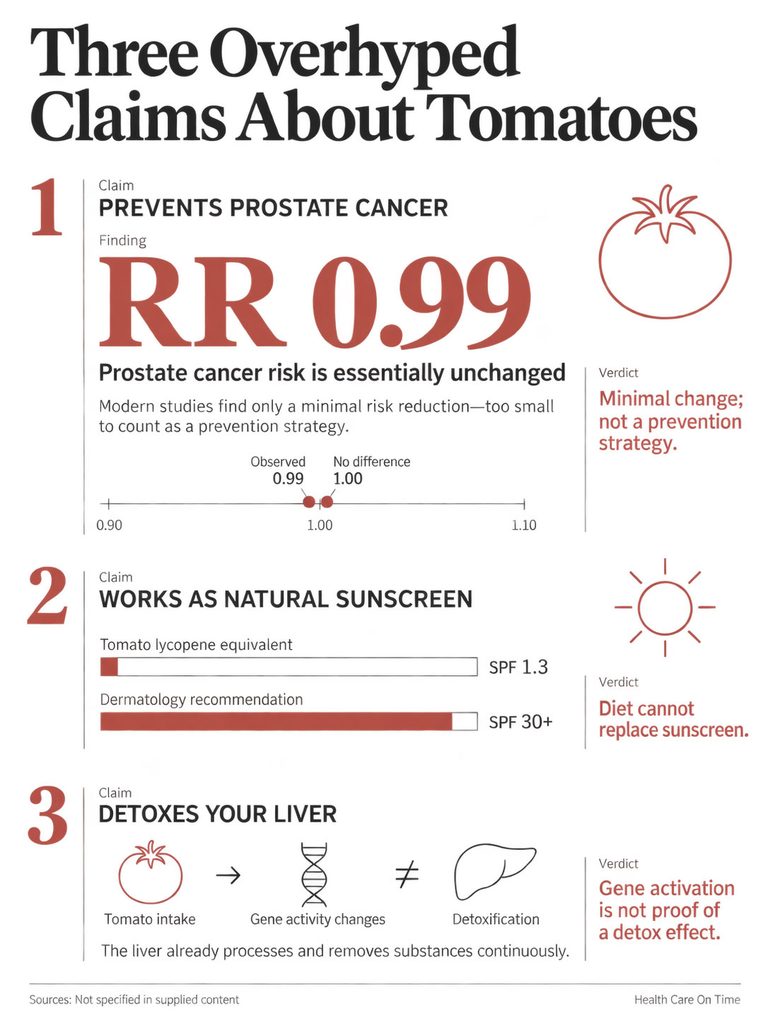
Tomatoes prevent prostate cancer
The claim traces to Harvard cohort work from the early 2000s and has been recycled by health sites ever since.
The pooled modern estimate is far smaller. In the 2025 meta-analysis of 121 prospective studies, dietary lycopene intake and prostate cancer risk showed a linear inverse association with a pooled RR of 0.99, 95 percent confidence interval 0.97 to 1.00.
A 1 percent risk reduction is a statistically detectable signal, not a prevention strategy. The PREDIMED threshold finding is more encouraging, but it rests on 104 cases in older men at high cardiovascular risk.
Both numbers are accurate. Publishing only the flattering one is the problem, and it is what nearly every page on this topic does.
Tomatoes are natural sunscreen
One widely repeated figure holds that lycopene provides skin protection roughly equivalent to a sunblock with SPF 1.3.
SPF 1.3 is not sun protection in any practical sense. Dermatology guidance in the United States centers on broad-spectrum SPF 30 or higher, and the trial behind the skin claim found the actual sunburn threshold did not shift significantly at all.
Eat tomatoes. Wear sunscreen. These were never alternatives, and framing them as such puts fair-skinned readers at genuine risk.
Tomatoes detox your liver
The USDA and Ohio State finding was that tomato consumption increased activation of genes related to xenobiotic metabolism, the biological processes the body uses to clear potentially toxic compounds.
Increased gene activation in a research model is not a detox. Your liver performs this function continuously whether or not you eat tomatoes, and no food switches the process on or off.
The finding is genuinely interesting biology and a reasonable hypothesis for why tomatoes might protect against some cancers. It is not a cleanse, and the researchers never described it as one.
Who Should Go Easy on Tomatoes
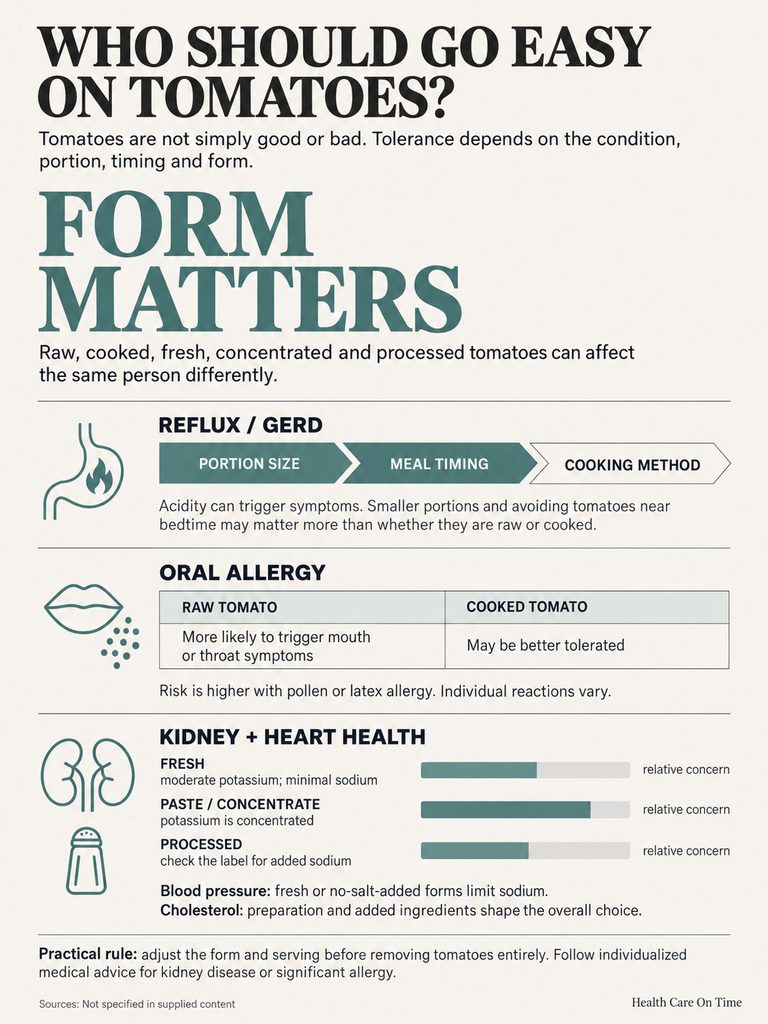
Reflux and GERD
Tomatoes are acidic, and in sensitive people they relax the lower esophageal sphincter, the valve that keeps stomach contents where they belong.
If tomato sauce reliably triggers heartburn for you, that is a real physiological response rather than imagination. Cooking does not fix it, because the acidity remains.
Portion size and timing help more than preparation method. Smaller servings earlier in the day are usually better tolerated than a large tomato-heavy dinner close to bedtime.
Oral allergy syndrome and latex cross-reactivity
An itchy mouth or throat within minutes of eating a raw tomato usually points to oral allergy syndrome, where people allergic to certain pollens react to structurally similar proteins in food. Tomatoes are a common trigger.
People with latex allergy can also react through latex-fruit syndrome, since tomatoes and potatoes carry proteins resembling those in natural latex.
Cooked tomatoes are frequently tolerated when raw ones are not, because heat denatures the responsible proteins. Any reaction involving breathing difficulty or throat swelling needs emergency care, not dietary experimentation.
Kidney disease and concentrated forms
Fresh tomatoes carry moderate potassium. Tomato paste concentrates it several times over on a per-gram basis, and sauce and juice sit in between.
Anyone on a potassium-restricted diet should treat these as different foods rather than as variations on one. This is the clearest case in the whole article where the concentrated form is not simply a convenient version of the whole one.
Sodium is in the can, not the tomato
The tomato itself contributes almost no sodium. Processing does. Jarred marinara, canned sauce and standard tomato juice can each carry several hundred milligrams per serving.
Unsalted and no-salt-added versions exist for all three and were what the research actually used. Patients commonly ask us why their sodium intake stays high on a vegetable-heavy diet, and tomato products are a frequent answer.
Table 3: If This Is You, Do This
| Your situation | What to do with tomatoes | Form to favor | Form to limit |
| Blood pressure at or above 130/80 | Work toward the 175 g daily target alongside standard care | Unsalted juice, cooked tomatoes | Salted juice, jarred sauces |
| LDL above 130 mg/dL | Add daily, treat as supportive not primary | Unsalted juice, roasted tomatoes | Cream-based tomato dishes |
| Frequent heartburn | Test your own threshold with small portions | Small servings earlier in the day | Large late-evening tomato meals |
| Chronic kidney disease | Get a potassium target from your care team first | Small fresh servings if cleared | Paste, sauce, juice |
| Taking warfarin | Keep intake steady week to week | Consistent portions of any form | Sudden large increases |
| Itchy mouth after raw tomato | Switch to cooked forms and get tested | Roasted, canned, sauce | Raw slices, fresh salsa |
How Americans Actually Eat Tomatoes
Tomatoes are one of the two most-available vegetables in the American food supply, and the country still falls short on vegetables overall.
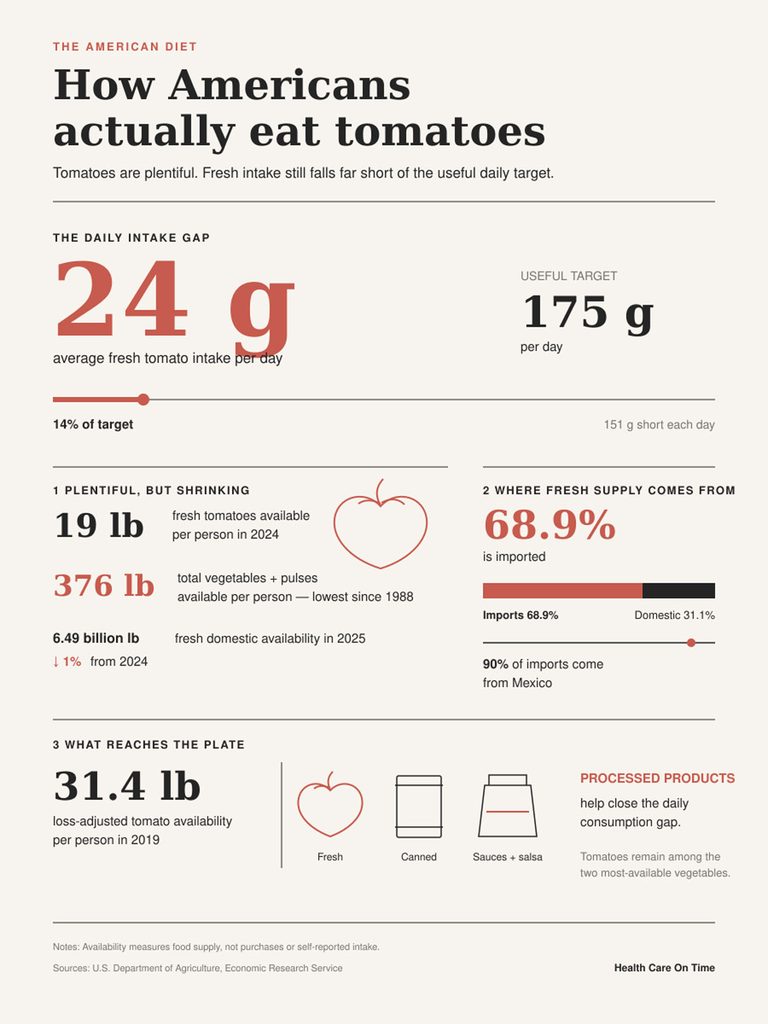
Table 2: US Tomato and Vegetable Supply by the Numbers
| Metric | Figure | Year | Source |
| Fresh tomatoes available per person | 19 pounds | 2024 | USDA Economic Research Service |
| Fresh domestic tomato availability | 6.49 billion pounds | 2025 | USDA ERS, VGS-378 |
| Imports as share of fresh availability | 68.9 percent | 2025 | USDA ERS, VGS-378 |
| Mexico share of US tomato imports | 90 percent | 2023 to 2025 | USDA ERS, VGS-378 |
| Total vegetable and pulse availability | 376 pounds, lowest since 1988 | 2024 | USDA ERS, VGS-375 |
| Loss-adjusted tomato availability | 31.4 pounds per person | 2019 | USDA ERS |
Fresh domestic availability of tomatoes reached 6.49 billion pounds in 2025, a 1 percent decline from the 2024 peak of 6.56 billion. Imports accounted for 68.9 percent of that availability, down from 71.7 percent the previous year, with Mexico supplying 90 percent of imported fresh tomatoes across 2023 to 2025.
The wider picture is less encouraging. Total US per capita vegetable and pulse availability fell to 376 pounds in 2024, the lowest level in more than 35 years, down from a 1996 peak of 426 pounds.
Within that decline, tomatoes held their ground with a 0.1 percent uptick to 19 pounds per person, while overall fresh vegetable availability dropped 3 percent. Carrots fell 14 percent over the same period.
Nineteen pounds a year works out to roughly 24 grams a day of fresh tomato. The 175 g target is therefore a real change for most people, not a rounding adjustment, though processed forms close much of the gap for anyone who eats sauce, salsa or canned tomatoes regularly.
A Simple Week of Getting There
175 grams a day sounds like a project. It is four small habits, and most households already have two of them.
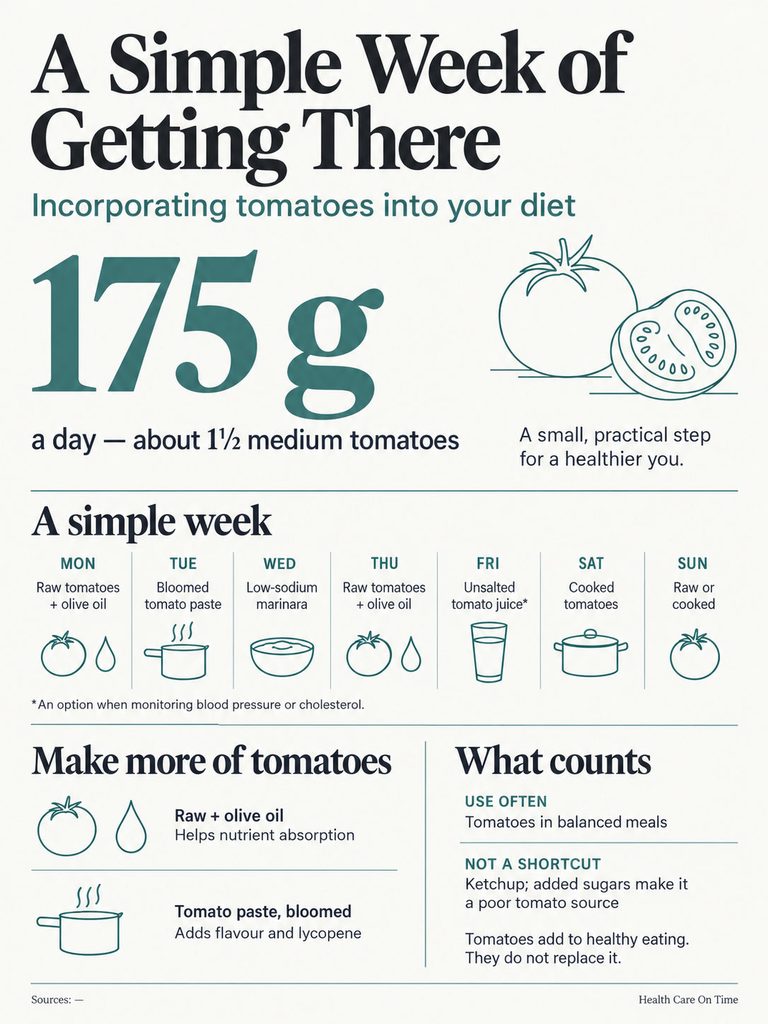
Add oil to what you already eat raw. Half a cup of cherry tomatoes tossed with olive oil alongside lunch runs about 75 g, and the oil does the absorption work that a dry salad does not.
Bloom paste in your cooking base. Two tablespoons of tomato paste stirred into hot oil at the start of soups, chilis, curries and pan sauces adds deep savory flavor and delivers concentrated lycopene in a form nobody notices.
Make sauce a default rather than an occasion. Half a cup of low-sodium marinara over pasta, chicken, eggs or roasted vegetables twice a week is an easy structural change.
Consider juice if you have a specific number to move. If elevated blood pressure or LDL is why you are reading this, one cup of unsalted tomato juice most days is the closest available match to what the year-long study actually tested.
Patients commonly ask us whether ketchup counts. A tablespoon contains a small amount of tomato and a meaningful amount of added sugar, so it does not move anyone toward the target in any useful way.
Rotate cooked and raw across the week and the weekly average takes care of itself. Nobody needs to hit 175 g every single day.
One last framing point. Every benefit in this article was measured against a comparison group that ate fewer tomatoes, not against a group that ate none. Tomatoes are a useful addition to an already reasonable diet. They do not compensate for the rest of it.
Frequently Asked Questions
How many tomatoes should I eat a day?
About 175 grams, or one and a half medium tomatoes, matches the 4.9 mg lycopene threshold where PREDIMED researchers saw a significant association with lower prostate cancer risk. A cup of chopped tomato reaches it. Two tablespoons of paste in a cooked dish is an easier substitute on busy days.
Are cooked tomatoes healthier than raw tomatoes?
For lycopene, yes. Heat breaks down cell walls and releases lycopene, and dietary fat carries it into your bloodstream. Raw tomatoes retain more vitamin C, which degrades with heat. Eating both forms across the week is more practical than choosing a winner.
Do tomatoes lower blood pressure?
In people with elevated readings, modestly. A year-long study of unsalted tomato juice found systolic pressure fell from 141.2 to 137.0 mmHg among 94 participants with untreated hypertension. Participants with normal pressure showed no meaningful change. This supports medication and lifestyle change rather than replacing either.
Do tomatoes really prevent prostate cancer?
The effect is far smaller than commonly claimed. A 2025 meta-analysis of 121 prospective studies found dietary lycopene linked to prostate cancer risk at a pooled RR of 0.99. A separate Spanish cohort found stronger protection above 4.9 mg daily, but counted only 104 cases in older high-risk men.
Is tomato juice as good as eating tomatoes?
For lycopene, juice performs well, since processing releases the compound from cell walls. Juice loses fiber and, in salted versions, adds substantial sodium. The blood pressure and cholesterol research used unsalted juice specifically, so the standard salted product undercuts the benefit you are chasing.
Are canned tomatoes as healthy as fresh ones?
Often better for lycopene. Canning involves heat processing that improves availability, and canned tomatoes are picked ripe and processed quickly rather than shipped underripe. The trade-offs are sodium in some brands and added sugar in flavored sauces, so compare labels rather than assuming.
Are tomatoes bad for arthritis?
Research has not established a link. The Arthritis Foundation notes that decades-old mouse studies suggested solanine damaged the gut lining, while the latest mouse research found the opposite. Solanine concentrates in leaves and stems, not the fruit. Individual sensitivity exists, so test rather than eliminate on principle.
Can tomatoes cause acid reflux?
Yes, in sensitive people. Tomatoes are acidic and can relax the lower esophageal sphincter, allowing stomach contents to move upward. Cooking does not reduce this. Smaller portions eaten earlier in the day generally help more than cutting tomatoes out of your diet entirely.
Is tomato paste healthier than fresh tomatoes?
Per gram, paste delivers considerably more lycopene because it is both concentrated and heat-processed. Per serving the comparison shifts, since portions differ enormously. Paste also concentrates potassium and any added salt, so treat it as a lycopene booster rather than a whole-tomato replacement.
Do tomatoes protect your skin from the sun?
Slightly, and not enough to change your behavior. A 12-week trial using 55 g of tomato paste daily improved a quantified redness measure but did not significantly shift the actual sunburn threshold. Estimates put the effect near SPF 1.3. Keep using broad-spectrum sunscreen regardless.
Should I take a lycopene supplement instead?
The trial evidence does not support the swap. Whole tomatoes carry dozens of active compounds together, including colorless carotenoids and steroidal alkaloids that isolated lycopene lacks. The WebMD supplement monograph concludes lycopene benefits for any use remain poorly defined despite considerable research.
Are tomatoes safe if you have kidney disease?
Fresh tomatoes carry moderate potassium, but paste, sauce and juice concentrate it substantially. Anyone following a potassium-restricted diet should get a specific target from their care team before adding tomato products. This is the clearest case where concentrated forms differ meaningfully from the whole fruit.
Medical Disclaimer: This article provides general health information and does not replace advice from a qualified healthcare professional. Do not start, stop or adjust any medication, supplement or restricted diet based on what you read here. If you have hypertension, high cholesterol, chronic kidney disease, a bleeding disorder, or you take anticoagulants, discuss dietary changes with your physician first. HealthCareOnTime provides diagnostic testing services and does not offer individual medical treatment recommendations.
References
- USDA Agricultural Research Service, How Might Tomatoes Provide Health Benefits?
- Lopez-Solis et al., Lycopene intake and prostate cancer risk, BMC Medicine 23:627
- Balali et al., Tomato and lycopene intake and cancer risk, Frontiers in Nutrition 12:1516048
- Sholola et al., Tomato-Soy Juice Reduces Inflammation, Molecular Nutrition & Food Research 70:5
- Yoshida et al., Lycopene-rich tomato juice and endothelial function, Food & Function 16:7812
- Odai et al., Unsalted tomato juice, blood pressure and LDL cholesterol, Food Science & Nutrition 7:2271
- Rizwan et al., Tomato paste and cutaneous photodamage, British Journal of Dermatology 164:154
- Ohio State University, Tracing Tomatoes Health Benefits to Gut Microbes
- Arthritis Foundation, How Nightshades Affect Arthritis
- USDA Economic Research Service, Vegetables and Pulses Outlook VGS-378
- USDA Economic Research Service, Food Availability and Consumption
- WebMD, Lycopene supplement monograph