
In one study of people who had carpal tunnel syndrome and no thoracic outlet problem at all, the Adson test came back positive in 42% to 45% of them. Those patients had a real nerve problem. It just was not the one the test was looking for.
Table of Contents
That finding explains most of the confusion around this maneuver. It is quick, free, needs no equipment, and gets things wrong a great deal of the time.
Quick Answer
The Adson test is a bedside maneuver that screens for thoracic outlet syndrome. A clinician holds your radial pulse while you extend your neck, turn your head toward the tested arm, and hold a deep breath. It is positive if your pulse weakens or your usual arm symptoms return. A positive result raises suspicion but does not confirm a diagnosis.
At a Glance
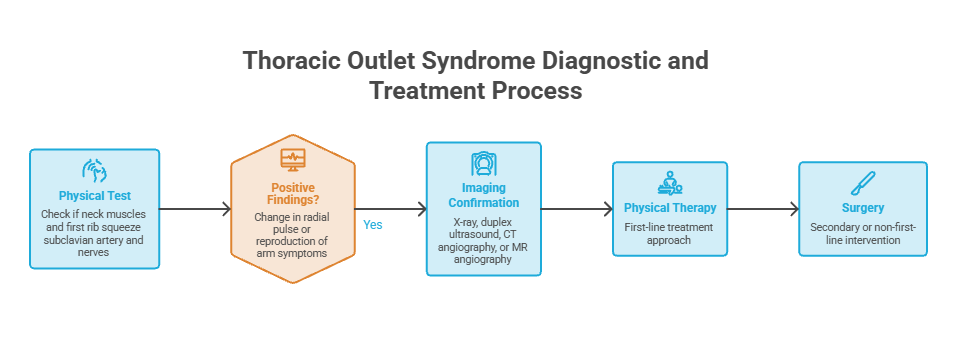
• The test checks whether the space between your neck muscles and first rib narrows enough to squeeze the subclavian artery and nearby nerves.
• Two findings count as positive: a change in the radial pulse, and reproduction of your familiar arm symptoms. The second one carries more weight.
• Reported sensitivity runs from 72% to 92%, so it rarely misses arterial compression when it is genuinely present.
• Reported specificity runs from 9% to 53%, so positive results happen often in people with no thoracic outlet problem at all.
• The test targets arterial compression, yet roughly 95% of thoracic outlet syndrome cases are neurogenic and involve the nerves instead.
• Imaging confirms or rules out the diagnosis: X-ray, duplex ultrasound, CT angiography, or MR angiography.
• First-line treatment is physical therapy, not surgery.
Patients who book imaging through HealthCareOnTime often arrive with the same two words on a referral slip: positive Adson. This guide covers what that phrase means, what the research says about trusting it, and what a sensible next step looks like.
What the Adson Test Is (and What It Actually Checks)
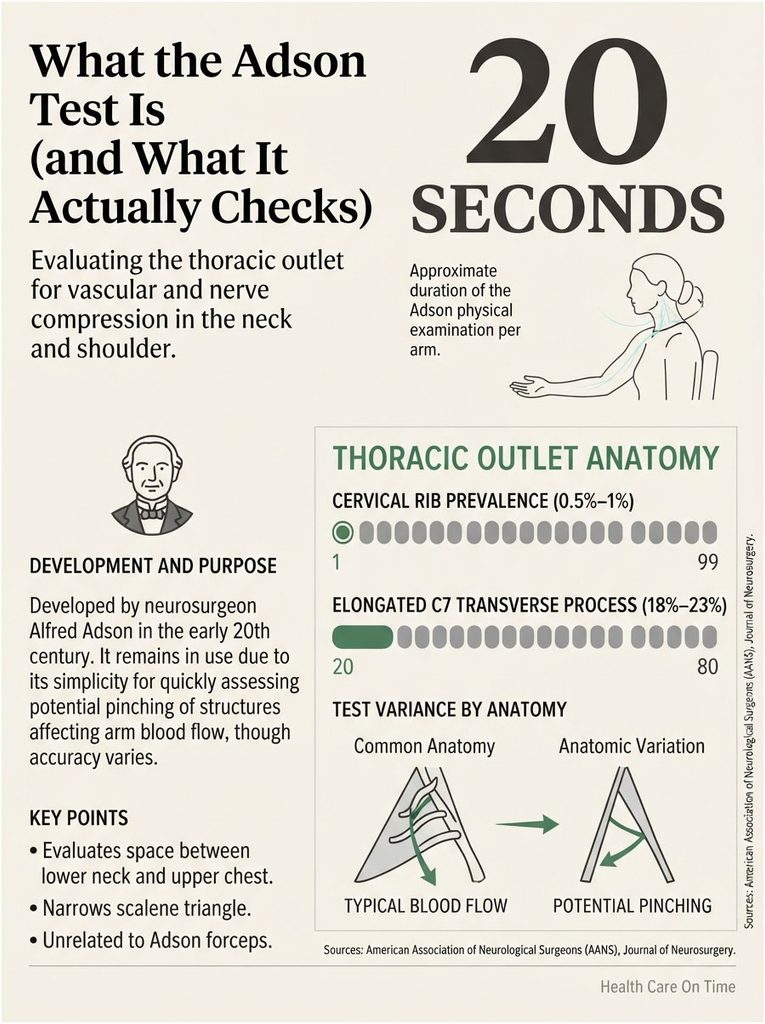
The Adson test is a physical examination maneuver. There is no blood draw, no machine, and no printout. A clinician puts your body into a specific position and watches what happens to your pulse and your symptoms.
Start to finish, it takes about 20 seconds per arm.
The Thoracic Outlet in Plain Terms
The thoracic outlet is the crowded passage between your lower neck and upper chest. Three important structures squeeze through it on the way to your arm: the subclavian artery, the subclavian vein, and the brachial plexus, the nerve bundle that supplies sensation and movement to your entire arm and hand.
Your collarbone sits above that passage. Your first rib sits below it. The scalene muscles bound it front and back.
It is a tight space even in perfectly healthy people. When something narrows it further, whether an extra rib, a tight muscle, a fibrous band, or a shoulder that sits forward, the structures passing through can get pinched. That is what thoracic outlet syndrome describes.
The Scalene Triangle and Why Head Position Matters
The anterior and middle scalene muscles form a triangle with the first rib at its base. The subclavian artery and the brachial plexus both run straight through it.
The Adson maneuver shrinks that triangle on purpose. Turning your head toward the tested side and extending your neck pulls those muscles taut, which reduces the space between them.
The breath hold adds a second squeeze. Scalenes are accessory muscles of breathing, so they contract during inspiration, tightening around whatever passes between them. Your first rib also lifts slightly toward the collarbone.
If the passage is already borderline, that combination can be enough to pinch the artery and cut blood flow to your wrist.
Alfred Adson and Why a Century-Old Maneuver Survives
The test carries the name of Alfred Washington Adson, a neurosurgeon at the Mayo Clinic in Rochester, Minnesota, who described the maneuver and published on cervical ribs and scalene surgery during the first half of the twentieth century. It has been taught in American medical, chiropractic, and physical therapy programs ever since.
Its survival has more to do with convenience than accuracy. Nothing equally cheap has replaced it.
Our medical reviewers see this pattern across many specialties. An old bedside test outlives the evidence questioning it, mostly because the alternative costs money and takes time.
Adson Test Versus Adson Forceps
Searching the name pulls up two unrelated things. Adson forceps are a surgical instrument, a fine-tipped tissue forceps used in skin closure and neurosurgery, named for the same physician.
If your paperwork mentions Adson and you were not in an operating room, the maneuver is what was meant.
The Anatomy That Raises Your Odds
Some people carry a structural head start toward this condition. A cervical rib is an extra rib growing off the seventh cervical vertebra. It shows up in roughly 0.5% to 1% of the general population and far more often among people who actually develop arterial thoracic outlet syndrome.
An elongated C7 transverse process is more common, appearing in an estimated 18% to 23% of people. The large majority never develop a single symptom from it.
This changes how a result should be read. A positive Adson test in someone with a documented cervical rib means something quite different from a positive test in someone with ordinary anatomy.
How Is the Adson Test Performed? Step by Step
You sit or stand upright with your arms relaxed at your sides. Unlike Wright’s test, no shoulder abduction is required, which is one of the details separating the two.
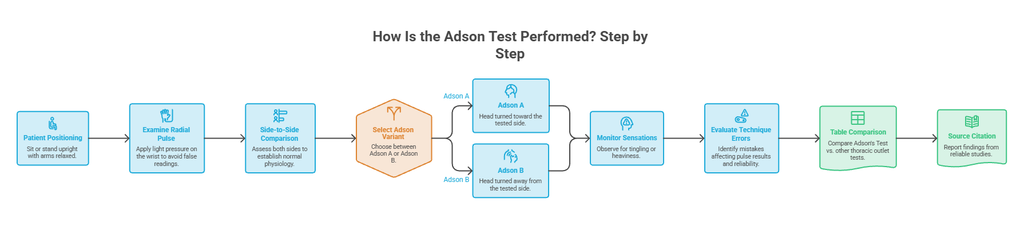
The examiner finds your radial pulse at the wrist, thumb side, and rests two fingers on it with light pressure. Pressing hard flattens the artery and creates a false reading before the test even starts.
Here is the sequence:
- The examiner locates your radial pulse on the side being tested and notes its baseline strength.
- You extend your neck, tilting your head back so your chin lifts.
- You rotate your head toward the arm being tested.
- You take a deep breath in and hold it.
- You hold that position for 10 to 15 seconds while the examiner monitors the pulse and asks whether any symptoms have appeared.
The examiner then repeats everything on the opposite arm. Side-to-side comparison matters, because many people show some pulse change on both arms, which points toward normal physiology rather than disease.
Adson A Versus Adson B
Two variants exist, and they are not interchangeable.
In the classic version, sometimes labeled Adson A, you turn your head toward the tested side. In the modified version, Adson B, you turn your head away from it.
Rotating toward the arm tightens the scalene triangle on that side. Rotating away stretches different structures. The two produce measurably different false-positive rates, which is one reason published accuracy figures scatter so widely.
Most reports that simply say “positive Adson” never specify which version was used.
Technique Errors That Change the Result
Pulse palpation is subjective, and the mistakes are easy to make.
Press too firmly on the radial artery and the pulse disappears no matter what is happening at the neck. Let the arm drift into abduction and you have performed a different test entirely.
A three-second breath hold may provoke nothing. Shoulder position, posture, and anxious breathing all shift the outcome. Two clinicians testing the same patient on the same afternoon can reach opposite conclusions, and reliability studies reflect exactly that.
What It Feels Like
Most people feel nothing. Some feel a stretch across the front of the neck.
When the test provokes something, it is usually tingling, numbness, heaviness, or aching running down the arm into the hand. Patients often tell us it felt like the sensation they get reaching into an overhead cabinet. Mention that comparison to your examiner if it fits, because it is more useful than a pain score.
Local pain in the neck itself does not count as a positive finding.
Table 1. Thoracic Outlet Provocative Tests Compared
| Test Name | What It Stresses | How It Is Done | Positive Finding | Reported Sensitivity | Reported Specificity or False-Positive Rate |
| Adson’s Test | Scalene triangle, subclavian artery | Arm at side, neck extended, head turned toward tested arm, breath held 10 to 15 seconds | Radial pulse weakens or disappears, or usual arm symptoms return | 72% to 92% (Gillard 2001; Sadeghi-Azandaryani 2009) | Specificity 9% to 53%; false positives 9% to 20% in healthy volunteers (Plewa 1998) |
| Wright’s Test (Hyperabduction) | Pectoralis minor space, costoclavicular area | Arm passively abducted and externally rotated above 90 degrees, head turned away | Pulse change plus symptom reproduction | Not consistently reported; moderate evidence per Hixson 2017 | Positive predictive value 92% in Gillard 2001; frequent positives in healthy people |
| Roos Test (Elevated Arm Stress Test) | Entire outlet under sustained load | Arms abducted 90 degrees, elbows bent, hands opening and closing for 3 minutes | Symptoms force the patient to stop early | 98% in Sadeghi-Azandaryani 2009 | Poor specificity; Hixson 2017 advised against standalone use |
| Eden’s Test (Costoclavicular, Military Brace) | Space between collarbone and first rib | Shoulders drawn down and back into exaggerated military posture, chest out, deep breath | Pulse change or symptom reproduction | Lower than Adson’s in most head-to-head comparisons | Higher false-positive rate than Adson’s in Plewa 1998 |
| Cyriax Release Test | Decompression rather than compression | Examiner supports the forearms and lifts the shoulder girdle upward for up to 3 minutes | Symptoms ease, or paresthesia appears within 30 seconds | Not well quantified | One of four tests Hixson 2017 rated as having moderate supporting evidence |
What a Positive Adson Test Means (and What It Does Not)
Positive Criterion One: The Pulse Changes
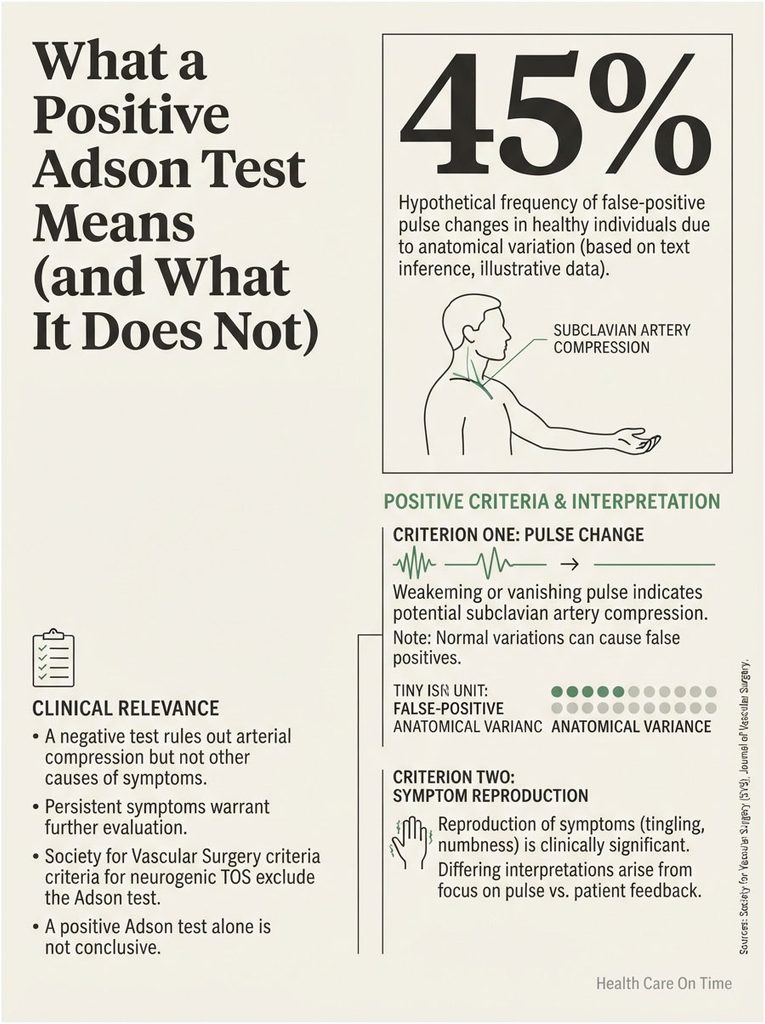
The original definition was purely vascular. If your radial pulse weakens noticeably or vanishes during the maneuver, the test is positive.
The logic is simple enough. Less blood reaching the wrist suggests the subclavian artery is being pinched upstream.
Here is the catch. Normal arteries do this too. Shifting pressure inside the chest during a breath hold, combined with ordinary blood vessel behavior, produces measurable pulse changes in people whose anatomy is completely fine.
Positive Criterion Two: Your Symptoms Come Back
The modern reading requires symptom reproduction. Tingling, numbness, aching, or heaviness in the arm and hand during the maneuver counts, as long as it matches the complaint that brought you in.
This is the finding with real clinical weight. A pulse that dips while you feel nothing is a physiological curiosity. A pulse that dips while your exact symptom reappears is a signal worth chasing.
Patients ask us constantly why two clinicians read the same test differently. Usually it comes down to this: one was watching the pulse, and the other was listening to the patient.
What a Negative Result Rules Out
A negative Adson test offers some reassurance against arterial compression, given the test’s decent sensitivity. If the artery were genuinely being squeezed in that position, the maneuver would usually catch it.
It rules out very little else. Symptoms that only surface during overhead work, at night, or after twenty minutes behind the wheel may simply not appear during fifteen seconds of static positioning.
A negative result alongside persistent symptoms deserves more evaluation, not a dismissal.
The Definition That Leaves Adson Out
Here is the detail almost no patient-facing page mentions.
The Society for Vascular Surgery’s Four Criteria
In 2016, the Society for Vascular Surgery published reporting standards defining neurogenic thoracic outlet syndrome. The definition requires three of four criteria: symptoms and signs arising at the thoracic outlet, signs of nerve compression that worsen with the arms overhead or hanging, absence of another condition that explains the picture, and a positive response to a properly performed scalene muscle test injection.
The Adson test appears nowhere on that list.
That does not make the maneuver worthless. It does mean the leading American standard for defining the most common form of this condition places no formal weight on it. If a positive Adson is the only evidence you have been handed, you know more now than you did a minute ago.
How Accurate Is the Adson Test? What the Research Shows
The 2025 Systematic Review
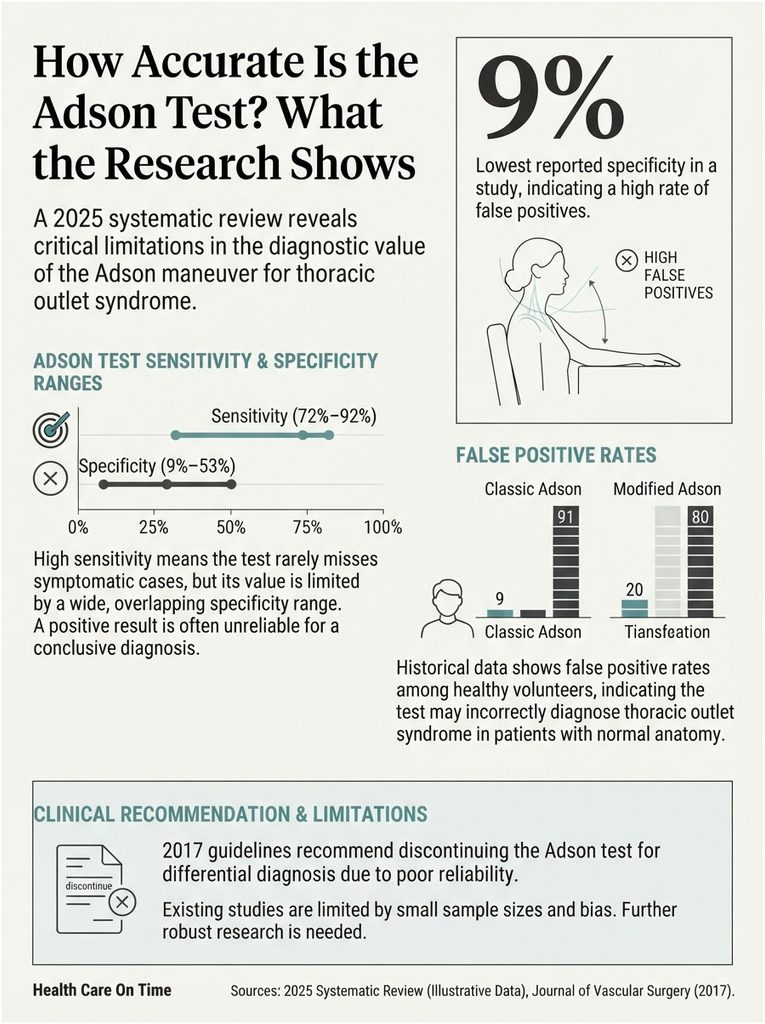
In October 2025, a systematic review in Cureus pulled together the evidence on Adson’s test for detecting subclavian artery compression. The authors screened 276 records and found six studies meeting their criteria, covering 305 participants total.
Their conclusion matched decades of smaller reports. Sensitivity ranged from 72% to 92%. Specificity ranged from 9% to 53%.
The review concluded the test works for screening and triage, not confirmation, and that imaging remains the standard for a definitive answer.
Sensitivity: Why 72% to 92% Sounds Better Than It Is
High sensitivity means a test rarely misses what it is built to detect. In a symptomatic patient with genuine arterial compression, Adson’s usually turns positive.
That makes a negative result somewhat informative. It does almost nothing for a positive one.
Specificity: The 9% Floor
Specificity measures how reliably a test stays negative in people who do not have the condition. At 9% at the low end, the maneuver is barely distinguishing between the two groups at all.
Put plainly, if you are an average patient and your Adson came back positive, that result by itself tells your clinician very little.
False Positives in People With Nothing Wrong
Plewa and Delinger tested 53 healthy volunteers in 1998 and reported false-positive rates of 9% for the classic version and 20% for the modified one. Rayan and Jensen tested 100 normal volunteers across 200 upper limbs in 1995 and documented substantial positive responses in people with no disease whatsoever.
Warrens found something even more striking: when three thoracic outlet maneuvers were run as a battery on healthy subjects, 58% produced at least one false positive somewhere in the set.
False Positives in People With a Different Nerve Problem
Nord and colleagues studied 48 patients with confirmed carpal tunnel syndrome alongside healthy controls. Among the carpal tunnel group, Adson’s test was positive in 42% using the classic version and 45% using the modified one.
Every one of those patients had genuine symptoms and a genuine diagnosis. Neither had anything to do with the thoracic outlet.
For anyone trying to interpret their own result, this is the most useful number in the entire literature. Nerve compression down at your wrist can make a neck maneuver look positive.
The 2017 Recommendation to Retire It
Hixson and colleagues published a diagnostic accuracy review in the Journal of Sport Rehabilitation in 2017. Their clinical bottom line advised discontinuing the Adson and Roos tests for the differential diagnosis of thoracic outlet syndrome.
The same review found better supporting evidence for the Halstead maneuver, Wright’s test, the Cyriax release test, and the supraclavicular pressure test, while noting that none of those isolate thoracic outlet syndrome cleanly either.
Nearly a decade later, the Adson test is still taught and still performed across the country. Our medical reviewers read that gap as a reason to treat a positive result as the opening of a conversation rather than the end of one.
Where the Evidence Itself Is Weak
The studies deserve scrutiny too. Sample sizes are small, several rely on healthy volunteer cohorts that look nothing like a real clinic population, and much of the data predates modern imaging.
The 2025 review rated two of its six included studies as high risk of bias for precisely that reason. Numbers this scattered reflect genuine uncertainty rather than a settled answer.
Table 2. What Studies Have Found About Adson Test Accuracy
| Study and Year | Population Studied | Sample Size | Key Finding | Source |
| Osman et al., 2025 | Systematic review pooling six studies | 305 participants | Sensitivity 72% to 92%; specificity 9% to 53%; recommended for screening only | Cureus 2025;17(10):e94341 |
| Gillard et al., 2001 | Patients evaluated for suspected TOS in a vascular clinic | 48 patients | Provocative tests averaged 72% sensitivity, 53% specificity; Adson’s had the highest positive predictive value at 85% | Joint Bone Spine 2001;68:416-424 |
| Sadeghi-Azandaryani et al., 2009 | Consecutive patients with clinical TOS | 56 patients | Adson sensitivity approximately 92%, among the highest tested; specificity variable | Eur J Med Res 2009;14:443-446 |
| Plewa and Delinger, 1998 | Healthy asymptomatic volunteers | 53 volunteers | False positives of 9% (classic) and 20% (modified) in people with no disease | Acad Emerg Med 1998;5:337-342 |
| Nord et al., 2008 | Carpal tunnel syndrome patients plus healthy controls | 48 patients | False positives of 42% and 45% among carpal tunnel patients | Electromyogr Clin Neurophysiol 2008;48:67-74 |
| Hixson et al., 2017 | Systematic review of clinical TOS tests | Multiple studies | Advised discontinuing Adson’s and Roos for TOS differential diagnosis | J Sport Rehabil 2017;26:459-465 |
The Subtype Problem: Adson Often Tests for the Wrong Thing
Three Types, Very Different Odds
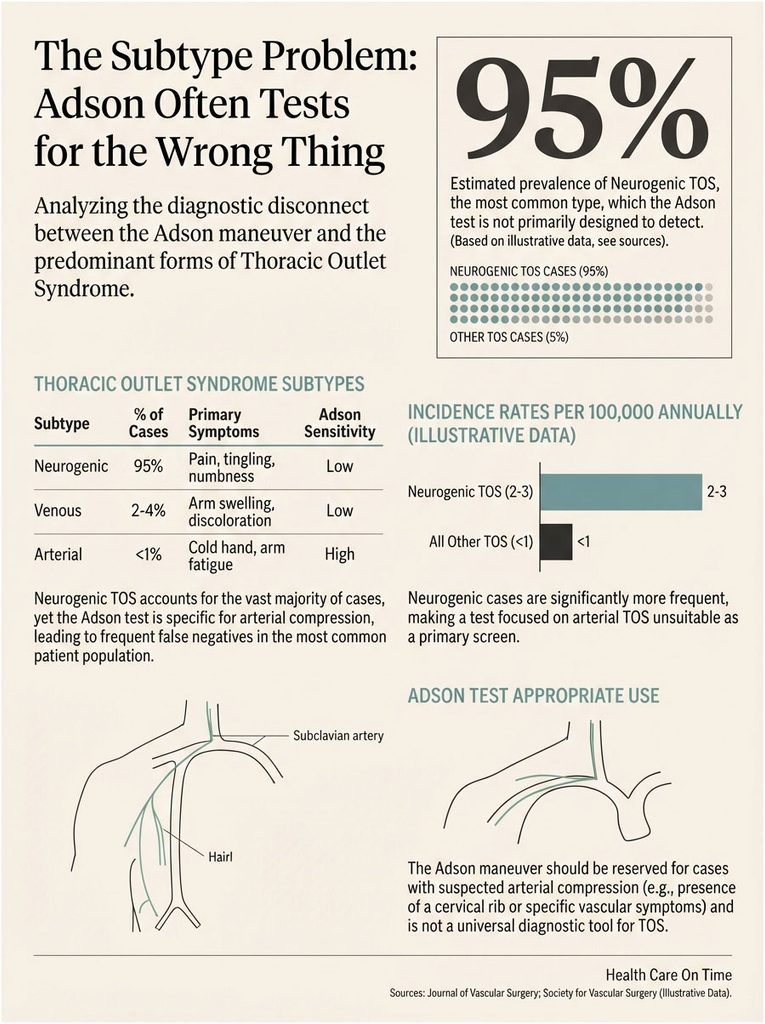
Thoracic outlet syndrome is not one condition. It is three, sorted by which structure gets compressed.
Neurogenic TOS
Compression of the brachial plexus, accounting for roughly 95% of all cases, and by some estimates 95% to 98%. Symptoms are pain, tingling, numbness, hand weakness, and occasionally muscle wasting at the base of the thumb.
Venous TOS
Compression of the subclavian vein, roughly 2% to 4% of cases. It announces itself dramatically: sudden arm swelling, a heavy aching feeling, bluish discoloration, often after intense overhead activity.
Arterial TOS
Compression or damage to the subclavian artery, under 1% of cases. Look for a cold or pale hand, arm fatigue with exertion, and sometimes small clots traveling to the fingers. This is the most dangerous subtype and the one most closely tied to cervical ribs.
The Mismatch
The Adson test was built around the radial pulse, which makes it an arterial test. Arterial thoracic outlet syndrome is the rarest of the three by a wide margin.
So for the overwhelming majority of people being screened, the maneuver is checking the wrong structure. Symptom reproduction partly compensates, since a tightened scalene triangle also presses on nerves, but that is a side effect rather than the test’s design.
When the Adson Test Genuinely Earns Its Place
The maneuver becomes considerably more useful in a narrow set of circumstances.
When a cervical rib has already turned up on X-ray, the anatomical predisposition is fixed and known, and predictive value climbs. When symptoms are vascular in character, meaning a cold or pale hand or arm fatigue with overhead work, the test is checking the right structure for once.
Combining it with other maneuvers rather than using it alone also improves specificity substantially. Studies pairing Adson’s with Eden’s, Wright’s, and Roos have reported sensitivity as high as 94% for the cluster.
How Common Is This Condition
Neurogenic thoracic outlet syndrome runs at roughly 2 to 3 new cases per 100,000 people per year, with estimated prevalence around 10 per 100,000. A prospective American database from a dedicated thoracic outlet center estimated about 25 neurogenic and 8 venous cases annually in a metropolitan area of one million.
Women are affected roughly four times as often as men. Most patients are between 20 and 40 years old.
Those numbers change how a positive result should be read. When a condition is genuinely uncommon and a test has poor specificity, most positive results in a general population turn out to be false alarms.
The Occupational Angle
In the United States, a large share of neurogenic cases trace back to work. Assembly line workers, hairstylists, electricians, dental hygienists, painters, warehouse pickers, and anyone spending hours with their arms above shoulder height carry elevated risk. So do baseball pitchers, swimmers, volleyball players, and orchestral musicians.
If your symptoms track with your job, document the timing early. Workers’ compensation claims for thoracic outlet syndrome are frequently contested precisely because the diagnosis is subjective, and a clear record of symptom onset relative to work duties matters more than any single physical exam finding.
Report the injury to your employer in writing, keep copies of everything, and ask your treating clinician to note the occupational connection in the chart.
What Happens After the Adson Test: The Real Diagnostic Pathway
Step One: A Careful History
The most informative part of any workup is still the conversation. Which fingers go numb. What position triggers it. How long it lasts. Whether it wakes you at night. What your job and your hobbies demand of your arms.
Ulnar-sided numbness in the ring and little fingers that worsens with arms overhead points in a different direction than thumb-side numbness that wakes you at three in the morning.
Cervical Spine and Chest X-Ray
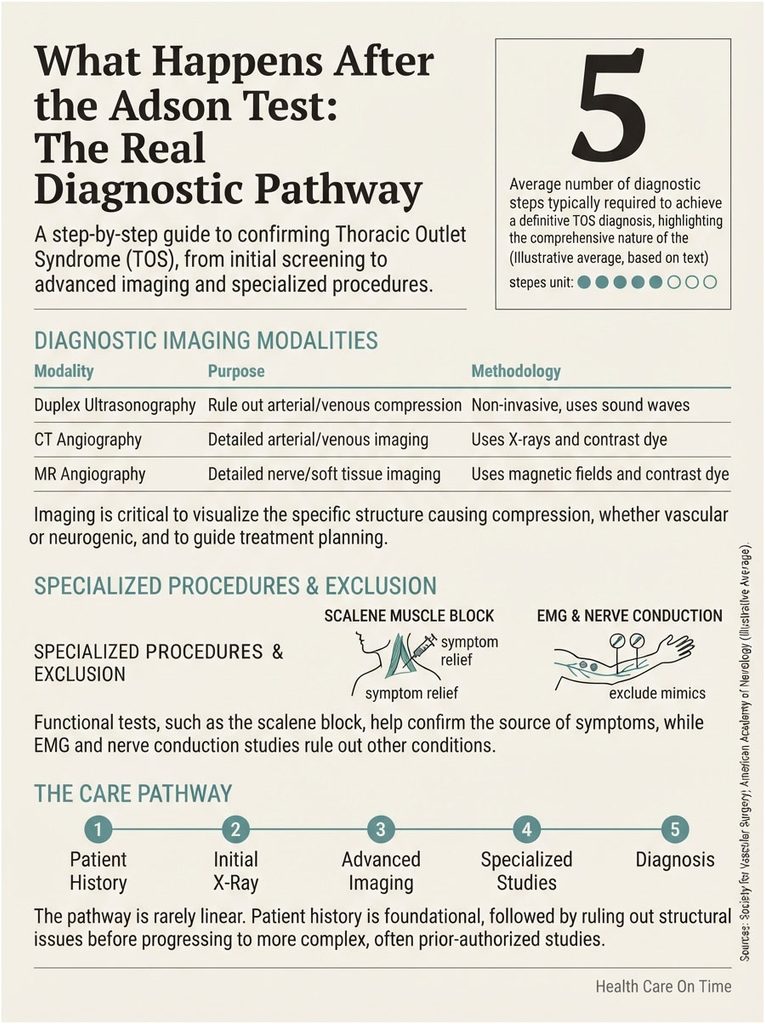
X-ray usually comes first. It looks for a cervical rib, an elongated C7 transverse process, an old collarbone or first-rib fracture, or degenerative neck changes that might explain the symptoms instead.
It is cheap, fast, and it changes how everything after it gets interpreted. Typical CPT codes are 72040 for a cervical spine series and 71046 for a two-view chest X-ray. Self-pay pricing at freestanding imaging centers commonly runs $60 to $250 per study.
Duplex Ultrasonography
Duplex ultrasound combines standard imaging with blood flow measurement and can be performed dynamically, with your arm moved into provoking positions during the scan. It is the usual first vascular study when venous or arterial involvement is suspected.
No radiation, no contrast dye. CPT 93930 covers a complete upper extremity arterial duplex, and 93970 covers venous. Self-pay ranges commonly fall between $250 and $900.
CT Angiography and MR Angiography
Both give detailed pictures of the artery and vein passing through the outlet, including positional narrowing, aneurysm, and clot. Both are typically performed with your arms down and then elevated, to capture the movement-dependent piece.
CT angiography uses iodinated contrast and radiation, and is faster. MR angiography avoids radiation, shows soft tissue and the brachial plexus better, takes longer, and is harder to tolerate if you are claustrophobic. CPT 71275 covers chest CTA. Self-pay pricing commonly ranges from $500 to $3,000 depending heavily on facility type.
EMG and Nerve Conduction Studies
Electrodiagnostic testing gets ordered often, and its main job is exclusion. It reliably detects carpal tunnel syndrome, ulnar neuropathy at the elbow, and cervical radiculopathy, all of which impersonate thoracic outlet syndrome.
In most neurogenic thoracic outlet cases, nerve conduction studies come back normal. That is genuinely useful information, not a wasted test.
The Scalene Muscle Block
An anesthetic injection into the anterior scalene, usually guided by ultrasound or fluoroscopy, temporarily relaxes the muscle. Meaningful symptom relief afterward supports the diagnosis and predicts a better response to treatment.
This is the fourth criterion in the Society for Vascular Surgery definition, which tells you how much weight American vascular specialists place on it compared with bedside maneuvers.
Cost and Coverage, Practically Speaking
Prices vary enormously by state, facility, and insurer, and a hospital outpatient department will typically charge several times what a freestanding imaging center charges for the identical scan.
Ask for the CPT code before you schedule anything, then request a good-faith estimate. Federal price transparency rules give uninsured and self-pay patients the right to receive one in advance.
People booking imaging through our diagnostic network most often ask whether a referral is required. For most vascular ultrasound and CT studies it is, and prior authorization is standard for CT and MR angiography under commercial plans.
Conditions That Mimic Thoracic Outlet Syndrome and Fool the Adson Test
Cervical Radiculopathy
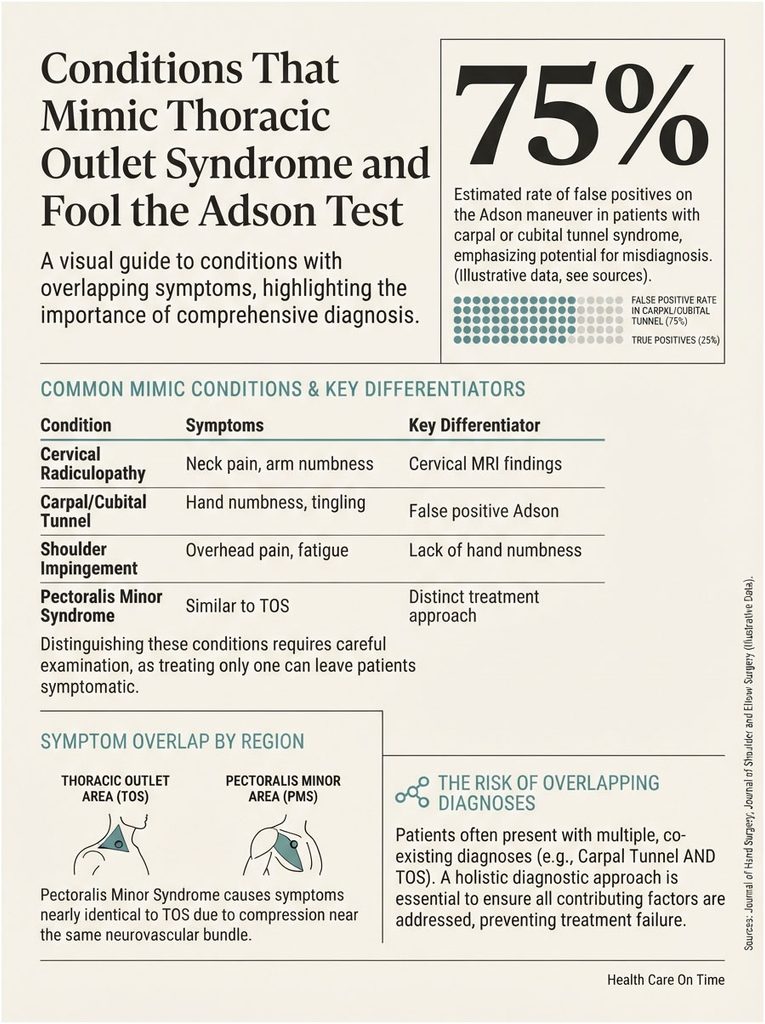
A pinched nerve root in the neck, usually from a disc herniation or bone spur, produces arm pain and numbness overlapping heavily with thoracic outlet syndrome. Neck movement provokes both.
Cervical MRI and nerve conduction studies usually separate them.
Carpal Tunnel and Cubital Tunnel Syndrome
The Nord study established that carpal tunnel patients test positive on Adson’s maneuver at rates approaching one in two. Cubital tunnel syndrome, involving the ulnar nerve at the elbow, causes ring and little finger numbness that closely resembles lower brachial plexus compression.
Both are far more common than thoracic outlet syndrome, and both should be excluded first.
Rotator Cuff Disease and Shoulder Impingement
Overhead pain and arm fatigue are shared features. Shoulder pathology does not usually cause hand numbness, which is the single most useful separating question to ask yourself.
Pectoralis Minor Syndrome
Compression under the pectoralis minor tendon rather than at the scalene triangle. Symptoms look nearly identical, treatment differs, and it gets missed regularly. Case series have found that a substantial share of patients carrying a neurogenic thoracic outlet diagnosis actually have pectoralis minor involvement, sometimes without any true outlet compression at all.
Two Things at Once
Across patients seen in our diagnostic network, overlapping presentations are the rule rather than the exception. Someone can have both carpal tunnel syndrome and genuine thoracic outlet compression, and treating only one of them leaves that person frustrated and still symptomatic.
One more reason a single positive maneuver is a starting point.
What to Do With Your Result: A Practical Action Plan
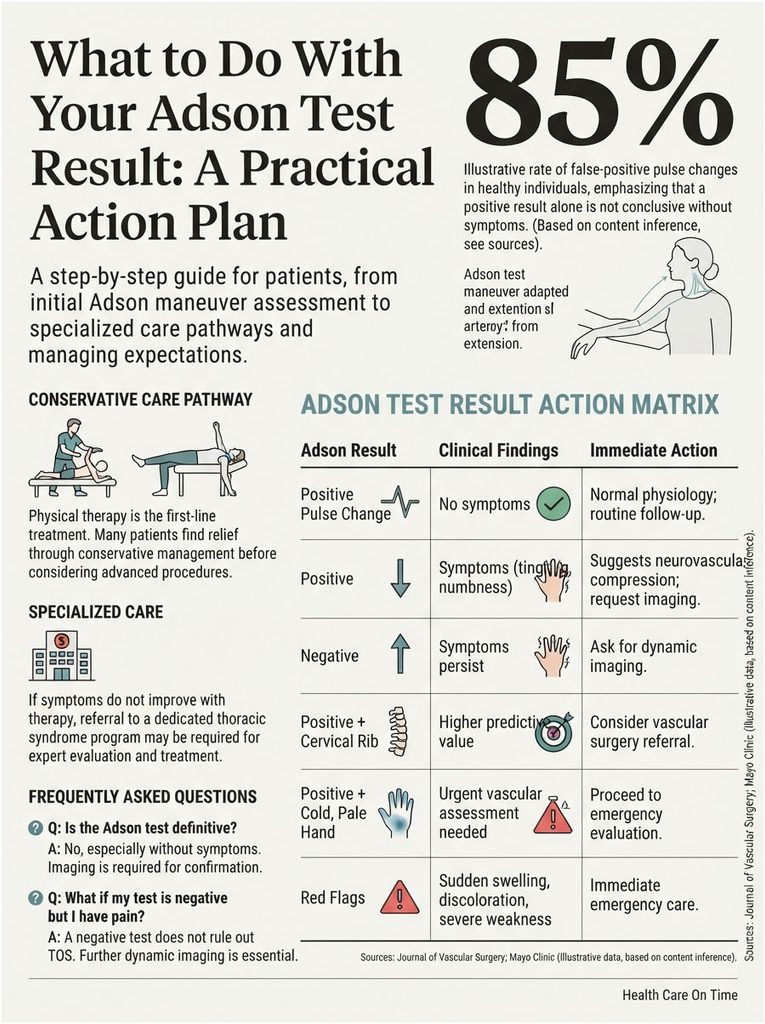
Table 3. Your Adson Test Result: What It Suggests and What to Do
| Your Situation | What It Likely Means | Recommended Next Step | Urgency |
| Positive pulse change, no symptoms reproduced | Most likely normal physiology; 9% to 20% of healthy people show this | Ask whether the finding changes anything; imaging usually not needed for this alone | Routine, discuss at next visit |
| Positive with your usual arm symptoms reproduced | Suggestive of neurovascular compression, not confirmatory | Request cervical and chest X-ray plus referral for fuller evaluation | Schedule within 2 to 4 weeks |
| Negative test but symptoms persist with overhead activity | Static testing may miss positional or activity-dependent compression | Ask about dynamic imaging and evaluation for pectoralis minor syndrome and cervical radiculopathy | Schedule within 4 weeks |
| Positive plus a cervical rib already seen on X-ray | Predictive value is meaningfully higher in this group | Vascular surgery or thoracic outlet center referral; duplex ultrasound or CT angiography | Schedule within 1 to 2 weeks |
| Positive plus a cold, pale, or painful hand | Possible arterial involvement, the rarest and most serious subtype | Contact your physician the same day for urgent vascular assessment | Same day |
| Positive plus sudden arm swelling and bluish skin | Possible venous clot at the thoracic outlet | Go to an emergency department | Emergency |
Five Questions Worth Asking
- Did my symptoms actually come back during the test, or did only my pulse change?
- Which version of the maneuver did you use, and did you test both arms?
- What else could explain these symptoms, and how are we ruling those out?
- Do I need an X-ray to check for a cervical rib?
- What would change your mind about this diagnosis?
Red Flags That Need Same-Day Care
Sudden swelling of the whole arm. Blue or purple discoloration. A hand that turns cold and pale. Sudden severe weakness. Visible muscle wasting at the base of the thumb.
These point toward vascular involvement or advanced nerve compression, and they should not wait for a scheduled follow-up.
Why Conservative Care Comes First
For neurogenic thoracic outlet syndrome, first-line treatment is physical therapy focused on posture, scalene and pectoralis minor flexibility, scapular positioning, and nerve gliding. Plenty of people improve substantially without any procedure at all.
Surgery, typically first rib resection with scalenectomy, is reserved for people who fail a genuine course of conservative care or who have confirmed vascular involvement. Reported success rates in carefully selected patients range from roughly 70% to 97%, though those figures depend heavily on how each study defines success.
A positive Adson test alone is not a reason to consider an operation.
Where to Seek Specialized Care
Thoracic outlet syndrome is uncommon enough that experience matters. Several American academic centers run dedicated thoracic outlet programs, including Washington University in St. Louis, Massachusetts General Hospital, Johns Hopkins, and the Cleveland Clinic.
If two rounds of physical therapy have not helped, asking for a referral to a center that sees this condition regularly is reasonable.
Frequently Asked Questions
What is the Adson test used for?
It screens for thoracic outlet syndrome by checking whether the subclavian artery and brachial plexus get compressed at the scalene triangle when your neck is extended and rotated during a breath hold. It is a bedside screening maneuver used to decide whether further testing is warranted.
What does a positive Adson test mean?
Your radial pulse weakened or disappeared during the maneuver, or your usual arm symptoms returned, or both. It suggests possible neurovascular compression at the thoracic outlet. Because specificity runs as low as 9%, a positive result alone does not establish a diagnosis and needs further evaluation.
Is a positive Adson test serious?
Usually not by itself. Between 9% and 20% of healthy people test positive, and 42% to 45% of carpal tunnel patients do. It becomes concerning when paired with vascular symptoms such as a cold or pale hand, sudden arm swelling, or a documented cervical rib.
Can you have thoracic outlet syndrome with a negative Adson test?
Yes. The test holds one static position for about fifteen seconds, which may not reproduce compression that only occurs during overhead work, sustained activity, or sleep. It also targets arterial compression while roughly 95% of cases are neurogenic. A negative result does not rule out the condition.
How long do you hold your breath during the Adson test?
Typically 10 to 15 seconds, held after a full deep inhalation. The breath hold contracts the scalene muscles and lifts the first rib, narrowing the passage further. Too short a hold may fail to provoke anything, which is one reason results differ between examiners.
What is the difference between the Adson test and the Roos test?
Adson’s is static and brief, with your arm at your side and your head turned and extended. The Roos test, also called the elevated arm stress test, has you hold both arms up at 90 degrees and open and close your hands repeatedly for three minutes. Roos stresses the entire outlet under sustained load.
Can healthy people test positive on the Adson test?
Regularly. Plewa and Delinger found false-positive rates of 9% and 20% across two versions in 53 healthy volunteers, and Rayan and Jensen documented similar responses in 100 normal volunteers. Normal changes in chest pressure and blood vessel behavior during a breath hold can mimic real compression.
Why do doctors still use the Adson test if it is not accurate?
It costs nothing, needs no equipment, and takes under a minute, which keeps it in routine practice despite a 2017 recommendation to discontinue it for thoracic outlet differential diagnosis. Used as one input among many alongside history and other maneuvers, it retains some triage value.
What imaging confirms thoracic outlet syndrome?
No single scan confirms the neurogenic form. X-ray identifies a cervical rib, duplex ultrasound and CT or MR angiography assess the artery and vein dynamically, and EMG excludes other nerve problems. A positive response to a scalene muscle block carries substantial diagnostic weight.
Does a positive Adson test mean I need surgery?
No. First-line treatment for neurogenic thoracic outlet syndrome is physical therapy addressing posture, scalene and pectoralis minor tightness, and scapular mechanics. Surgery is considered only after conservative care fails, or when confirmed arterial or venous involvement requires intervention.
Is the Adson test the same thing as Adson forceps?
No. Adson forceps are a surgical tissue instrument named for the same physician. The Adson test is a physical examination maneuver. They share a name and nothing else.
Can a chiropractor or physical therapist diagnose thoracic outlet syndrome with this test?
They can perform it and flag a concerning finding, which is genuinely useful. Diagnosis requires broader evaluation, imaging, and exclusion of mimics such as cervical radiculopathy and carpal tunnel syndrome. A positive finding from any provider is a reason to pursue a fuller workup with a physician.
Medical Disclaimer
This article is for general information and does not replace evaluation by a licensed healthcare professional. The Adson test is one screening maneuver among several, and results should be interpreted by a qualified clinician who knows your full history. Do not start, stop, or change any treatment based on this content. If you experience sudden arm swelling, discoloration, severe weakness, or a cold and pale hand, seek immediate medical care.
References
- Diagnostic Accuracy and Clinical Utility of Adson’s Test in Detecting Subclavian Artery Compression Associated With Cervical Ribs: A Systematic Review, Cureus 2025 https://pmc.ncbi.nlm.nih.gov/articles/PMC12598655/
- Reporting Standards of the Society for Vascular Surgery for Thoracic Outlet Syndrome, Journal of Vascular Surgery 2016 https://pubmed.ncbi.nlm.nih.gov/27565607/
- The Diagnostic Accuracy of Clinical Diagnostic Tests for Thoracic Outlet Syndrome, Journal of Sport Rehabilitation 2017 https://pubmed.ncbi.nlm.nih.gov/27632823/
- The False-Positive Rate of Thoracic Outlet Syndrome Shoulder Maneuvers in Healthy Subjects, Academic Emergency Medicine 1998 https://pubmed.ncbi.nlm.nih.gov/9562199/
- False Positive Rate of Thoracic Outlet Syndrome Diagnostic Maneuvers, Electromyography and Clinical Neurophysiology 2008 https://pubmed.ncbi.nlm.nih.gov/18435210/
- Diagnosing Thoracic Outlet Syndrome: Contribution of Provocative Tests, Ultrasonography, Electrophysiology, and Helical CT in 48 Patients, Joint Bone Spine 2001 https://pubmed.ncbi.nlm.nih.gov/11707008/
- Thoracic Outlet Syndrome: Do We Have Clinical Tests as Predictors for the Outcome After Surgery? European Journal of Medical Research 2009 https://pubmed.ncbi.nlm.nih.gov/19748851/
- Neurogenic Thoracic Outlet Syndrome: Presentation, Diagnosis, and Treatment, Deutsches Aerzteblatt International 2022 https://pmc.ncbi.nlm.nih.gov/articles/PMC9975980/
- Thoracic Outlet Syndrome: Provocative Examination Maneuvers in a Typical Population, Journal of Shoulder and Elbow Surgery 1995 https://pubmed.ncbi.nlm.nih.gov/7600161/
- The Prevalence of Cervical Ribs in a London Population, Clinical Anatomy 2009 https://pubmed.ncbi.nlm.nih.gov/19280652/
- The Incidence of Thoracic Outlet Syndrome, Annals of Vascular Surgery 2021 https://pubmed.ncbi.nlm.nih.gov/32771464/
- Thoracic Outlet Syndrome, National Institute of Neurological Disorders and Stroke https://www.ninds.nih.gov/health-information/disorders/thoracic-outlet-syndrome