
Uninsured American children record the lowest ADHD diagnosis rate in the country, at 6.3%.
Nobody seriously argues that uninsured kids have less ADHD. They have less access to the clinician who writes the diagnosis down.
Table of Contents
That one statistic explains what ADHD diagnosis disparities actually are. Not differences in who has the condition, but differences in who gets noticed, believed, evaluated, and treated.
Quick Answer: ADHD diagnosis disparities are systematic gaps between who has ADHD and who gets formally diagnosed. Seven gaps drive the pattern in the United States: gender, race and ethnicity, household language, income and insurance, geography, age at diagnosis, and co-occurring conditions that mask ADHD. These gaps come from referral bias, assessment tools, stigma, cost, and provider shortages, not from real differences in prevalence.
At a Glance
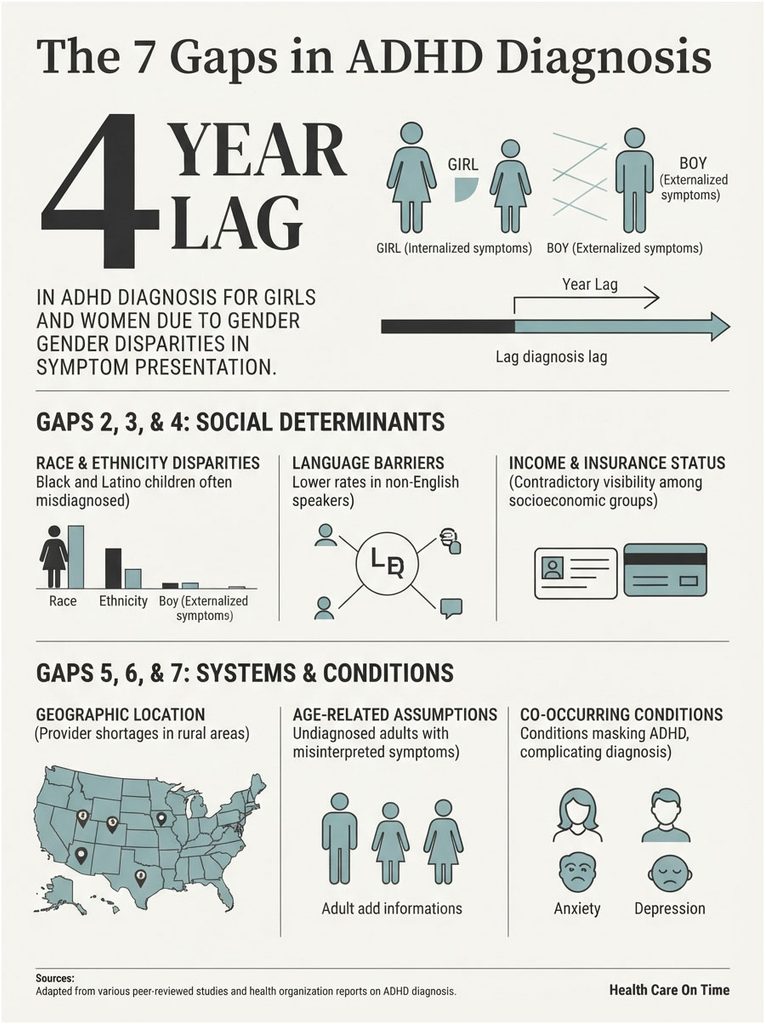
• Girls and women receive an ADHD diagnosis roughly four years later than boys and men
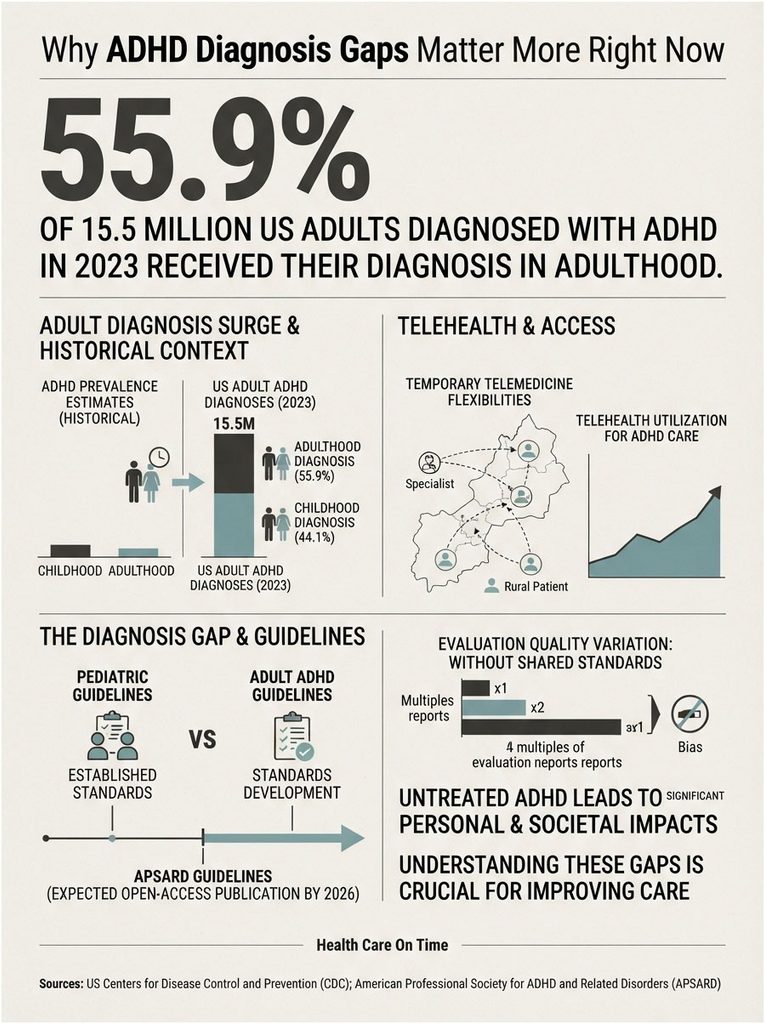
• 55.9% of US adults with ADHD were first diagnosed at age 18 or older
• Pooled research shows Black and White children have statistically similar ADHD prevalence, yet very different diagnosis rates
• Children from non-English-speaking homes show the largest diagnostic gap in the entire literature
• Around 70% of rural US counties have no practicing psychiatrist
• Evaluations range from about $199 by telehealth to more than $5,000 for extended testing
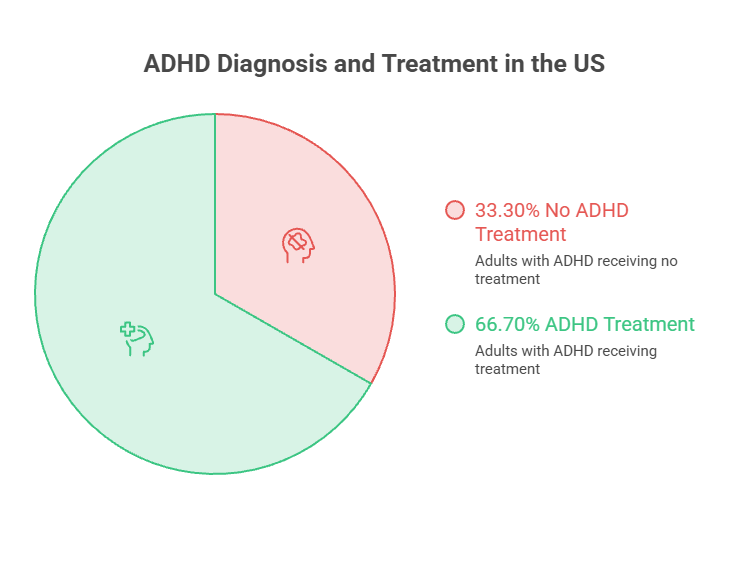
• Roughly one third of American adults with ADHD receive no ADHD treatment at all
Why ADHD Diagnosis Gaps Matter More Right Now
Three things changed at once, and they turned a long-standing academic finding into a live public health question.
The adult diagnosis surge
For most of the last thirty years, ADHD was treated as a childhood condition. Then the federal data caught up.
The CDC estimated that 15.5 million US adults, or 6.0%, had a current ADHD diagnosis in 2023, with approximately half receiving that diagnosis in adulthood. The December 2025 NCHS data brief refined the figure to 55.9% first diagnosed as adults.
Those adults did not develop ADHD at thirty-four. They were missed at eight.
Access rules are in flux
Telehealth opened a door that had been shut. It is currently propped open on a temporary basis.
HHS and the DEA issued a fourth temporary extension of pandemic-era telemedicine flexibilities for prescribing controlled medications, in effect through December 31, 2026 while a permanent framework is finalized. For someone in a rural county with no psychiatrist, that rule is the entire difference between care and no care.
The United States still has no adult ADHD guideline
Pediatric ADHD has published national guidance. Adult ADHD does not.
The American Professional Society of ADHD and Related Disorders has been building one since 2022. As of 2026, APSARD expects to publish the guidelines as an open-access document, with no firm release date announced.
Without a shared standard, adult evaluation quality varies wildly between clinics. That variation generates disparity on its own, before bias enters the room.
What “Diagnosis Disparity” Actually Means in ADHD Care
A difference is not automatically a disparity. If two groups genuinely have different rates of a condition, different diagnosis rates are correct.
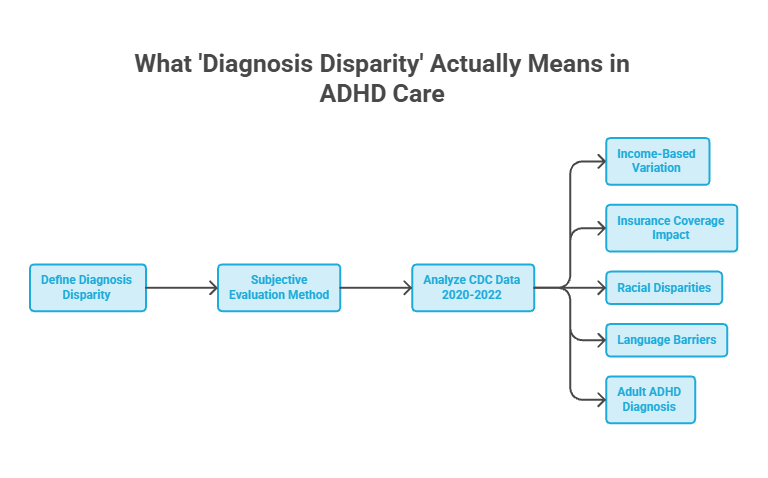
A disparity appears when diagnosis rates diverge after you account for how many people in each group actually have the condition.
Why prevalence data and diagnosis data disagree
ADHD has no blood test, no scan, and no biomarker. Diagnosis rests on interviews, developmental history, and rating scales completed by parents and teachers.
Every one of those steps runs through human judgment. Who notices the symptoms, who names them a problem, who gets referred, and who can afford the appointment all shape the final number.
CDC data from the 2020 to 2022 National Health Interview Survey found 11.3% of children ages 5 to 17 had ever been diagnosed with ADHD, with boys at 14.5% and girls at 8.0%. The same analysis found prevalence decreased as family income increased, and that children with public (14.4%) or private (9.7%) insurance were more likely to carry an ADHD diagnosis than uninsured children (6.3%).
Our medical reviewers note that this pattern shows up across most conditions requiring specialist assessment rather than a lab value. ADHD is simply the clearest case.
| Group | Recorded US diagnosis rate | What symptom-level research shows | Treatment or diagnosis gap | Timing of diagnosis |
| Boys ages 5-17 | 14.5% ever diagnosed | Hyperactive and impulsive behavior gets flagged earliest in classrooms | Reference group | 45% of men diagnosed before age 11 |
| Girls ages 5-17 | 8.0% ever diagnosed | Male-to-female ratio approaches parity by adulthood | Adjusted odds of diagnosis 0.55 vs similar boys | About 3.9 years later than males |
| Black children | 11% current diagnosis | Pooled prevalence near 15.9%, statistically similar to White children | Adjusted odds of diagnosis 0.60 vs similar White children | Far more likely to receive a conduct-disorder code instead |
| Hispanic children | 8% current diagnosis | Pooled Latino prevalence not significantly different from peers | Lower medication use across grades 5 through 10 | Delayed, heavily tied to household language |
| Children from non-English-speaking homes | Not separately reported | Teacher-rated ADHD behaviors no lower than English-speaking peers | Adjusted odds 0.29 diagnosis, 0.24 medication | Latest of any child group |
| Uninsured children | 6.3% ever diagnosed | No evidence of lower symptom burden | Lowest access of any insurance category | Frequently never diagnosed in childhood |
| US adults | 6.0% current diagnosis (15.5 million) | Symptom-level estimates run considerably higher | About one third receive no ADHD treatment | 55.9% first diagnosed at 18 or older |
Table 1. Recorded ADHD diagnosis rates compared with symptom-level research findings, by group.
The 7 Gaps in ADHD Diagnosis
Gap 1: Gender, and the four-year lag for girls and women
Boys get diagnosed roughly twice as often as girls in childhood. That ratio narrows sharply by adulthood, which is the tell.
A Swedish population register study in the Journal of Child Psychology and Psychiatry followed 85,330 people with ADHD across eleven years. Females reached their first ADHD diagnosis or medication record at 23.5 years on average, compared with 19.6 years for males.
The delay is not neutral waiting time. In that same cohort, girls and women with ADHD carried nearly double the rate of anxiety (50.4% vs 25.9%) and mood disorders (37.5% vs 19.5%) compared with boys and men who had ADHD.
Clinical data from 2025 points the same direction. Research presented at the European College of Neuropsychopharmacology congress found women diagnosed at an average age of 28.96 years versus 24.13 for men, despite symptoms appearing at roughly the same age in both groups.
Three mechanisms account for most of the gap. Girls more often show the inattentive presentation, which disrupts nobody but the girl. Social expectations push girls toward masking. And when a girl finally reaches a clinician, her anxiety or low mood usually claims the appointment.
The pattern carries straight into adulthood. CDC figures show 61% of women received their ADHD diagnosis in adulthood compared with 40% of men, while 25% of women were diagnosed before age 11 versus 45% of men.
Gap 2: Race and ethnicity, or same symptoms, different label
This gap gets reported wrong constantly, so precision matters. Older summaries claimed Black children simply had lower ADHD prevalence. The current evidence does not support that.
A meta-analysis in JAMA Psychiatry pooled 21 US studies covering more than 150,000 Black participants. It produced an ADHD prevalence estimate of 14.54%, which the authors framed as challenging the accepted claim that Black individuals have lower ADHD prevalence than others.
A follow-up meta-analysis compared groups head to head. Estimates came out at 15.9% for Black children and adolescents, 16.6% for White youth, and 12.4% for Asian youth, with no statistically significant difference between Black and White groups, or between Black and Latino groups.
Prevalence looks broadly similar. Diagnosis does not.
A 2023 population cohort study of 10,920 US elementary schoolchildren adjusted for independently assessed symptoms, impairment, academic performance, insurance, and family circumstances. Black children (adjusted odds ratio 0.60) and girls (0.55) were still less likely to hold an ADHD diagnosis than observationally similar peers.
The authors were direct about what that means. Measured confounders did not explain the gaps.
The diagnostic substitution problem
Here is the finding almost no consumer health page reports. When a child’s behavior gets noticed but the label attached is not ADHD, something else goes in the chart.
A 2024 analysis in Scientific Reports examined electronic health records from 50 US healthcare organizations covering 849,281 ADHD patients and 157,597 conduct disorder patients. Non-Hispanic White individuals were about 26% more likely to receive an ADHD diagnosis and about 61% less likely to be diagnosed with conduct disorder than non-Hispanic Black individuals. Mean age at ADHD diagnosis was more than eight years older for White patients, and Black females were the group least likely to receive an ADHD diagnosis at all.
The clinical consequence is enormous. An ADHD diagnosis routes a child toward treatment, accommodations, and support.
A conduct disorder or oppositional defiant label routes the same child toward discipline, and it follows them through the school system for years.
Gap 3: Language, the largest single gap in the data
Rank the effect sizes across the disparities literature and household language wins by a distance.
In that same 2023 cohort, children learning English as an additional language showed an adjusted odds ratio of 0.29 for having an ADHD diagnosis and 0.24 for using prescription medication once diagnosed. That is roughly a 70% reduction in diagnosis odds after symptoms are accounted for.
Penn State researchers examining kindergarten data found that neither Black nor Hispanic children displayed less frequent ADHD-related classroom behaviors than White children, ruling out lower symptom levels as an explanation, and that Hispanic children’s gap traced largely to non-English language use at home.
The mechanism is mundane rather than sinister. A parent who cannot easily complete an English rating scale, or follow a referral conversation, drops out of the pipeline before diagnosis becomes possible.
Gap 4: Income and insurance
Money pushes ADHD diagnosis in two opposite directions at once, which is why the data can look contradictory.
Among adults, CDC figures show those earning below the federal poverty level were more likely to carry an ADHD diagnosis (22.1% vs 12.3%). Among children, the uninsured show the lowest rate in the country at 6.3%.
Both are true. Poverty raises genuine risk and diagnostic visibility for some families, while lack of coverage removes the diagnostic pathway entirely for others.
Patients who book diagnostic tests through HealthCareOnTime describe the same bottleneck repeatedly. They suspect ADHD, they know roughly what to ask for, and they cannot find an in-network provider with availability this quarter.
Insurance status also shapes what happens after diagnosis. Once ADHD is identified, families with thinner coverage are more likely to receive medication alone rather than medication plus behavioral support, because therapy carries per-session costs that stack up fast.
Gap 5: Geography and provider deserts
Where you live determines whether an evaluation is a phone call or a two-hour drive.
CHADD reports that, based on National Health Interview Survey data, children in rural areas are more likely to have received an ADHD diagnosis than urban children (11.4% vs 9.2%), yet rural children are significantly less likely to have seen a mental health professional or a therapist.
That combination tells a specific story. Rural kids get diagnosed, usually in primary care, and then get very little follow-up.
The workforce numbers explain why. By 2019, 70.2% of rural counties had no psychiatrist at all compared with 27.1% of urban counties, and among the smallest rural counties roughly three-quarters had no psychiatrist while 95% had no child psychiatrist.
Distance compounds with connectivity. Households furthest from in-person care are also the ones least likely to have broadband good enough for a video appointment, which blunts telehealth exactly where it was supposed to help most.
School district resources vary just as sharply. A well-funded suburban district has psychologists on staff who can run assessments and coordinate accommodations. Many rural districts share one psychologist across several buildings.
Gap 6: Age, and the adults who were missed
For decades, the clinical assumption was that children outgrew ADHD. That assumption produced an entire generation of undiagnosed adults who are now presenting in their thirties, forties, and fifties.
Their symptoms did not appear late. Their diagnosis did.
Adults face barriers that children do not. Nobody is filling out a teacher rating scale for a forty-year-old. Childhood evidence has to be reconstructed from memory, old report cards, or a parent’s recollection.
Adult presentation also looks different. Overt hyperactivity fades; what remains is chronic disorganization, missed deadlines, impulsive financial decisions, and relationship strain, none of which read as a neurodevelopmental condition to a clinician who is not looking for one.
Health system contact patterns reflect the age skew. The health center visit rate for adults with ADHD was 52.6 visits per 10,000 adults in 2023, and it decreased steadily with age, from 92.6 among adults 18 to 24 down to 6.5 among those 65 and older.
Whether the oldest cohort genuinely has less ADHD or was simply never identified is an open question. The historical evidence favors the second explanation.
Gap 7: Co-occurring conditions that mask ADHD
Anxiety, depression, learning disorders, sleep problems, and eating disorders travel with ADHD. When they arrive at the clinic first, they get treated first.
That sequencing matters, because treating the downstream condition rarely resolves the executive-function difficulties underneath it. Plenty of people cycle through years of partially effective treatment before anyone asks about attention.
Among US health center visits by adults with ADHD in 2023, most included a co-diagnosis of another mental health disorder, and 40.1% included a co-diagnosis of a chronic physical condition not related to mental health, with overweight or obesity appearing in 24.2% of visits.
The masking effect falls unevenly. Girls and women carry higher rates of internalizing comorbidity, which means the diagnostic detour is longer for them. That is the same population already waiting four extra years.
In cases reviewed by our clinical team, the most common history is a decade of anxiety treatment with only partial response, followed by an ADHD assessment that reframes everything. The broader consequences of that delay show up in our coverage of untreated ADHD complications.
Why These Gaps Exist
Who reports the symptoms
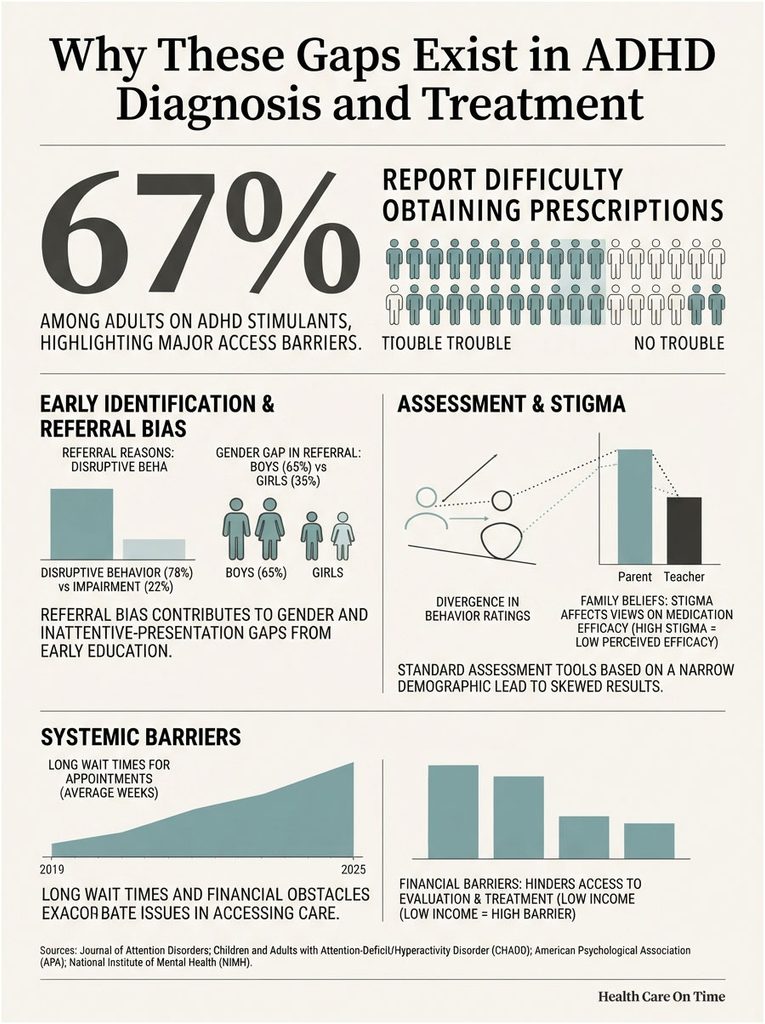
ADHD referral usually starts when an adult finds a child’s behavior disruptive. That makes disruption, rather than impairment, the practical trigger for the entire diagnostic process.
A quiet child who cannot finish anything is impaired. She is simply not inconvenient.
Referral bias explains a large share of both the gender gap and the inattentive-presentation gap. It also explains why the gaps appear as early as kindergarten and persist through eighth grade.
Assessment tools built on a narrow sample
The standard ADHD rating scales were developed and normed largely on White, male, English-speaking populations. Applying them across every group assumes the underlying behavior expresses identically everywhere, which is an assumption rather than a finding.
Teacher ratings add a second filter. Research comparing Black parents’ and White teachers’ assessments of the same children has found meaningful divergence in how identical behavior gets scored.
Neither observer is necessarily wrong. But a system that weights one observer heavily will inherit that observer’s frame of reference.
Stigma, mistrust, and family belief
Families differ in whether a psychiatric label reads as help or as risk. Some parents worry that a diagnosis will follow their child through school records and shape how teachers treat them.
Others hold specific concerns about stimulant medication that clinicians rarely address head-on. Research on Black caregivers has documented both lower confidence in medication efficacy and concerns about medication functioning as behavioral control.
Dismissing those concerns as misinformation is both inaccurate and counterproductive. Addressing them directly, including offering behavioral treatment first where appropriate, is what actually moves engagement.
The cost bottleneck
Even a motivated, insured, English-speaking family runs into money.
US evaluation pricing spans a wide range. A basic clinical evaluation with a licensed provider commonly runs $200 to $800. Telehealth options can start near $199. Extended neuropsychological testing can reach $2,000 to $5,000 without coverage.
Insurance usually reduces this to copays across two to four appointments, but deductibles reset the math every January. Marketplace deductibles routinely sit in the thousands, which means many insured families pay list price anyway.
The appointment bottleneck
Cost is only half the barrier. Availability is the other half.
Wait times for behavioral health appointments in the United States commonly run several weeks to several months, and the wait is longest exactly where provider density is lowest. Families who finally get an evaluation often face a second wait for follow-up.
Then there is supply. Among US adults taking stimulant medication for ADHD, 71.5% reported difficulty filling their prescription because the medication was unavailable.
| Metric | Figure | Population | Source |
| Adults with a current ADHD diagnosis | 15.5 million (6.0%) | US adults, 2023 | CDC MMWR 73(40), 2024 |
| Adults first diagnosed at age 18 or older | 55.9% | US adults with ADHD | NCHS Data Brief 543, Dec 2025 |
| Adults diagnosed in adulthood, by sex | 61% of women vs 40% of men | US adults with ADHD | CDC MMWR 73(40), 2024 |
| Children ever diagnosed, by sex | 14.5% boys vs 8.0% girls | Ages 5-17, 2020-2022 | NCHS Data Brief 499, Mar 2024 |
| Children ever diagnosed, by insurance | 14.4% public, 9.7% private, 6.3% uninsured | Ages 5-17, 2020-2022 | NCHS Data Brief 499, Mar 2024 |
| ADHD vs conduct disorder coding | White patients ~26% more likely ADHD, ~61% less likely conduct disorder | 849,281 ADHD and 157,597 CD patients, 50 US systems | Scientific Reports, 2024 |
| Diagnosis delay for females | 3.9 years later than males | 85,330 people with ADHD | J Child Psychol Psychiatry, 2024 |
| Adult ADHD health center visit rate | 52.6 per 10,000 adults; 92.6 at ages 18-24 | US health center visits, 2023 | NCHS Data Brief 543, Dec 2025 |
| Difficulty filling stimulant prescriptions | 71.5% | US adults on ADHD stimulants | CDC MMWR 73(40), 2024 |
| Rural counties with no psychiatrist | 70.2% | US counties, 2019 | WWAMI Rural Health Research Center |
Table 2. Key United States statistics on ADHD diagnosis, treatment access, and workforce supply.
What Actually Closes the Gap
What clinicians and health systems can do
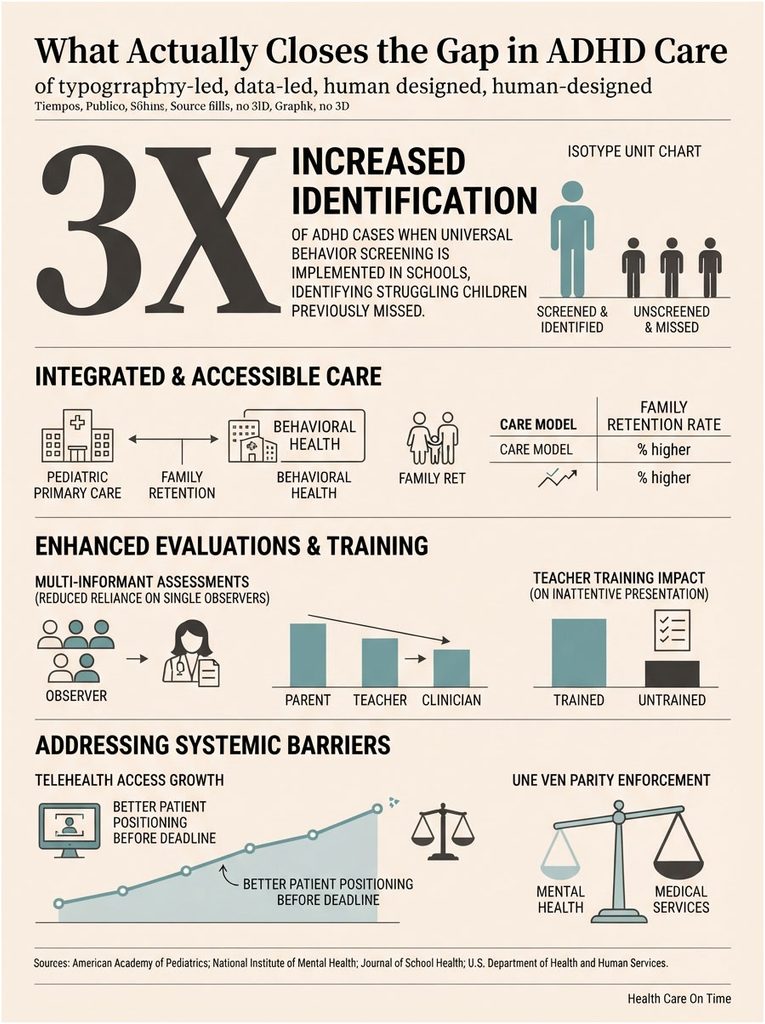
Integrating behavioral health directly into pediatric primary care removes the referral step where most families disappear. Children’s Hospital of Philadelphia is running a randomized trial of enhanced behavior therapy delivered inside primary care, designed specifically for low-income and racially diverse families whose usual ADHD care is medication alone.
Family navigators are the second lever with real evidence behind them. Navigators who share language and background with families handle scheduling, translation, and follow-through that otherwise fall entirely on a parent already stretched thin.
Multi-informant assessment is the third. Relying on a single teacher rating scale imports that teacher’s judgment wholesale. Adding parent report, direct developmental history, and functional evidence from more than one setting reduces how much weight any single observer carries.
Our clinical reviewers point out that none of this requires new technology. It requires a workflow built on the assumption that families will need help getting through the process.
What schools can do
Universal behavior screening inside a multi-tiered support framework catches children who are struggling quietly. It replaces the disruption trigger with a systematic one.
Teacher training on how inattentive ADHD presents matters just as much, because teachers remain the professional group parents consult first about attention concerns.
Culturally adapted parent training programs have improved attendance where standard programs saw families drop out. The adaptation is often logistical rather than cultural: evening sessions, childcare, transportation help, and delivery in the family’s own language.
What policy is doing right now
Telehealth access is open but temporary, running through December 31, 2026 under the current federal extension. Patients who establish care during this window are better positioned than those who wait.
Adult guidelines remain pending, which leaves adult evaluation quality dependent on the individual clinician.
Parity enforcement remains uneven. Federal law requires mental health evaluations to be covered on terms comparable with medical services, yet behavioral health visits remain far more likely than medical visits to land out of network.
How to Get a Fair ADHD Evaluation
If you are a parent who suspects your child is being overlooked
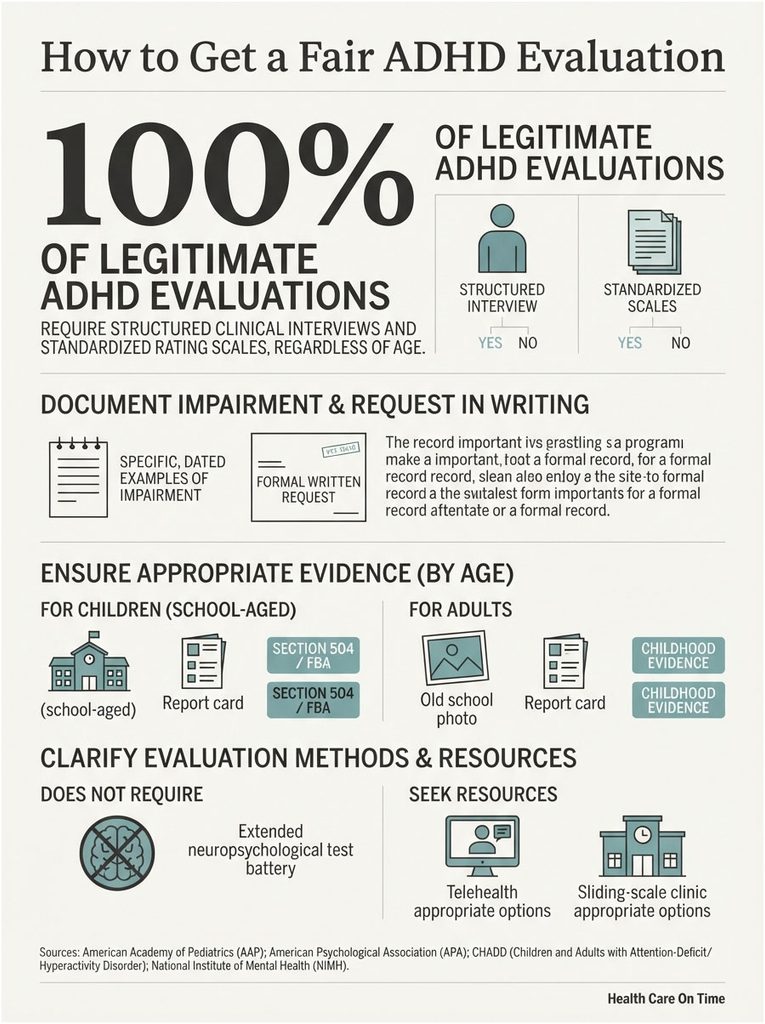
Start by writing down specific, dated examples of impairment across at least two settings. Homework taking three hours is evidence. So is losing the same item every week.
Request the evaluation in writing rather than raising it verbally at a well-child visit. A written request creates a record and usually produces a scheduled response.
If the school describes the issue as behavior or attitude, ask directly whether a functional behavioral assessment or a Section 504 evaluation has been considered. Schools carry obligations that a hallway conversation does not trigger.
If you are an adult who thinks you were missed
Bring childhood evidence. Old report cards, a parent’s or sibling’s recollection, and any record of early school difficulty carry real diagnostic weight, since criteria require symptoms present before age 12.
Say plainly that you want ADHD assessed, not just screened for anxiety. Readers who write to HealthCareOnTime often describe several years of anxiety or depression treatment before anyone raised attention as a possibility.
If your presentation is straightforward, primary care is a legitimate starting point. If you have significant comorbidity, substance use history, or an unclear picture, push for a psychiatrist or psychologist.
What a legitimate ADHD evaluation includes
A defensible evaluation involves a structured clinical interview, developmental and academic history, standardized rating scales completed by more than one person, and screening for conditions that mimic or accompany ADHD.
It should also examine functioning across settings. ADHD criteria require impairment in more than one environment, which is why a single classroom report is never sufficient on its own.
What it does not require
It does not require a brain scan. No imaging study currently diagnoses ADHD in clinical practice, and any provider selling one as diagnostic is overselling.
It does not require extended neuropsychological testing for most adults. That testing earns its cost when learning disorders are suspected, when the picture is genuinely ambiguous, or when formal disability accommodations demand documentation.
Six questions to ask before you book
- What does this evaluation include, and how many appointments is it?
- Who completes the rating scales besides me?
- Is this billed as a psychiatric diagnostic evaluation or as psychological testing?
- Will I receive a written report I can give to a school or employer?
- Do you screen for anxiety, depression, sleep problems, and learning disorders as part of this?
- What is my total out-of-pocket cost, including follow-up visits?
| If this is your situation | What it often signals | Recommended next step | Where to start |
| Daughter is quiet, polite, and failing to finish work | Inattentive presentation missed by disruption-based referral | Request evaluation in writing, emphasize impairment not behavior | Pediatrician plus written request to the school |
| Child labeled a behavior problem, no ADHD assessment offered | Possible diagnostic substitution toward conduct or oppositional labels | Ask explicitly whether ADHD has been ruled out and on what evidence | Second opinion from a developmental pediatrician or child psychologist |
| Household speaks a language other than English | Highest-risk group in the disparities literature | Request an interpreter and translated rating scales before assessment | Federally qualified health center |
| Treated for anxiety or depression for years with partial response | Comorbidity masking the underlying condition | Ask for an adult ADHD assessment specifically, bring childhood evidence | Current prescriber, or a psychiatrist accepting new patients |
| Rural area with no local specialist | Provider desert, not absence of clinical need | Use telehealth while federal flexibilities remain in effect | Telehealth psychiatry service licensed in your state |
| Uninsured or facing a high deductible | Cost bottleneck, not diagnostic uncertainty | Seek sliding-scale or training-clinic pricing before private practice | University psychology clinic or community mental health center |
Table 3. Scenario-to-action guide for securing a fair ADHD evaluation.
Is ADHD Overdiagnosed or Underdiagnosed?
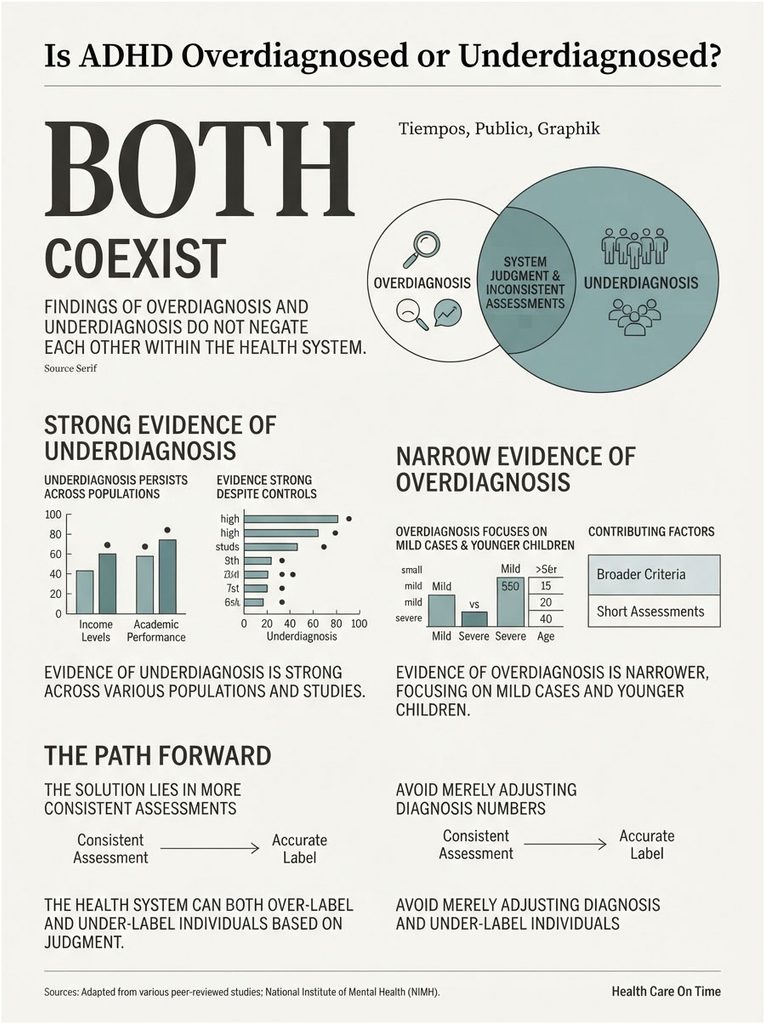
Both, in different populations, and refusing to say so is how health content loses credibility.
The evidence for underdiagnosis in the groups covered above is strong and consistent across study designs, adjusted analyses, and multiple decades. It holds after controlling for symptoms, insurance, income, and academic performance.
The evidence for overdiagnosis is narrower but real. It clusters around milder presentations, the youngest children within a school grade, and broadened diagnostic criteria applied in short appointments.
A 2021 review found some evidence of overdiagnosis in children and adolescents. That review also carried limitations, including reliance on adults reporting whether a diagnosis benefited a child rather than asking the child directly.
These two findings do not cancel each other out. A system can simultaneously over-label children who are inconvenient and under-label children who are struggling quietly.
That is precisely what a judgment-driven system looks like from the inside. The fix is not fewer diagnoses or more diagnoses. It is more consistent assessment.
The Bottom Line
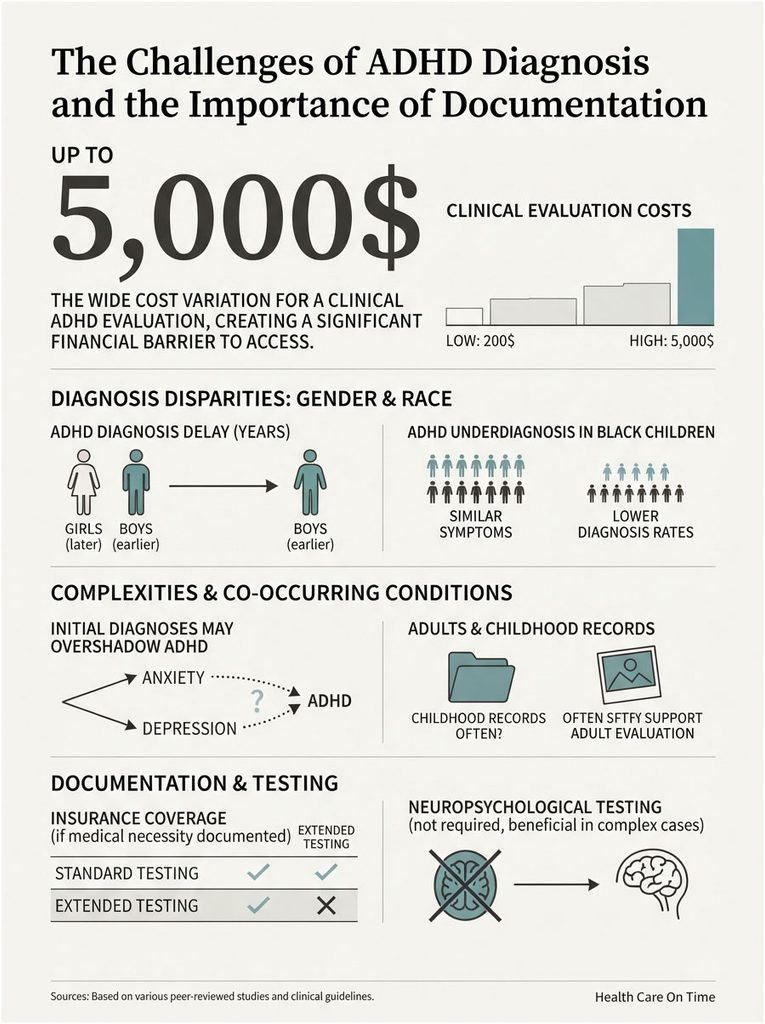
Every gap described here is a system problem. None of them are your fault as a patient or a parent.
They are also, individually, navigable with preparation. The single strongest move is documentation: dated, specific, cross-setting evidence of impairment is what converts a conversation into a clinical process.
Across the patients we serve, the people who get evaluated fastest are rarely the ones with the best insurance. They are the ones who walked in with written examples and a clear request.
Frequently Asked Questions
Why are girls with ADHD diagnosed later than boys?
Girls more often show inattentive symptoms that disrupt nobody else, and social expectations encourage masking. Referral typically begins when an adult finds behavior disruptive, so quiet impairment goes unflagged. Population data show females receive an ADHD diagnosis roughly four years later than males on average.
Is ADHD underdiagnosed in Black children?
Yes, relative to symptom levels. Pooled research finds ADHD prevalence in Black children statistically similar to White children, yet Black children show around 40% lower adjusted odds of receiving a diagnosis and are considerably more likely to receive a conduct disorder label instead.
Why do doctors diagnose anxiety before ADHD?
Anxiety and depression commonly accompany ADHD and usually bring the person to the clinic first. Treating them is reasonable. But partial response should prompt a look at underlying executive-function difficulties rather than another medication adjustment.
Can you be diagnosed with ADHD as an adult?
Yes. More than half of US adults with ADHD were first diagnosed at 18 or older. Criteria still require evidence that symptoms were present before age 12, so bringing childhood records or family recollection strengthens an adult evaluation considerably.
How much does an ADHD evaluation cost in the United States?
Costs vary widely. Basic clinical evaluations commonly run $200 to $800, telehealth options can start near $199, and extended neuropsychological testing can reach $2,000 to $5,000 without coverage. With in-network insurance, many people pay only copays across two to four appointments.
Does insurance cover ADHD testing?
Most plans cover diagnostic evaluation when a provider documents medical necessity, and federal parity law requires mental health evaluations to be covered comparably to medical services. Coverage for extended testing is less consistent, so confirm which specific billing codes your plan approves before scheduling.
Do you need neuropsychological testing to diagnose ADHD?
Usually not. A structured clinical interview, developmental history, and multi-informant rating scales are sufficient for most diagnoses. Extended testing earns its cost when learning disorders are suspected, when the picture is genuinely unclear, or when formal disability accommodations require documentation.
Why do children from non-English-speaking households get diagnosed less often?
Because the diagnostic process runs on English-language rating scales, referral conversations, and paperwork. Research adjusting for symptoms found these children had roughly 70% lower odds of diagnosis, even though teacher-rated behaviors showed no difference from English-speaking peers.
Can a pediatrician or primary care doctor diagnose ADHD?
Yes, and across much of the country they are the only realistic option. Primary care diagnosis is appropriate when the presentation is straightforward. Complex cases, significant comorbidity, or diagnostic uncertainty warrant referral to a psychiatrist, psychologist, or developmental pediatrician.
Is a telehealth ADHD diagnosis legitimate?
A video evaluation by a licensed clinician using proper assessment methods is legitimate. Federal telemedicine flexibilities for prescribing controlled medications remain in effect through the end of 2026, though state rules differ. Be cautious with platforms that diagnose in one brief session without taking a history.
What should I do if my child’s school says it is just behavior?
Ask in writing whether ADHD has been ruled out and on what evidence. Request a Section 504 evaluation or functional behavioral assessment. Written requests trigger procedural obligations that verbal conversations do not, and they build a record you can use later.
Is ADHD overdiagnosed in the United States?
Possibly in some groups, particularly milder presentations and the youngest children within a grade. That coexists with strong evidence of underdiagnosis in girls, minority children, bilingual households, uninsured families, and adults. Both patterns trace to the same root cause: subjective, inconsistent assessment.
Medical Disclaimer: This article is for informational purposes only and does not constitute medical advice, diagnosis, or treatment. ADHD can only be diagnosed by a qualified healthcare professional following a full clinical evaluation. Statistics reflect population-level research and may not apply to any individual case. If you have concerns about attention, focus, or mental health for yourself or your child, speak with a licensed clinician. Never start, stop, or change any medication without consulting your prescriber.
References
- Attention-Deficit/Hyperactivity Disorder Diagnosis, Treatment, and Telehealth Use in Adults, MMWR 73(40), CDC, 2024
- Visits to Health Centers by Adults With ADHD: United States, 2023, NCHS Data Brief 543, December 2025
- ADHD in Children Ages 5-17 Years: United States, 2020-2022, NCHS Data Brief 499, March 2024
- Data on ADHD in Children, Centers for Disease Control and Prevention
- Data on ADHD in Adults, Centers for Disease Control and Prevention
- Cenat JM, et al. Prevalence and Risk Factors Associated With ADHD Among US Black Individuals, JAMA Psychiatry, 2021
- Cenat JM, et al. Prevalence of ADHD Among Black Youth Compared to White, Latino and Asian Youth, J Clin Child Adolesc Psychol, 2024
- Shalaby N, Sengupta S, Williams JB. Large-scale analysis reveals racial disparities in the prevalence of ADHD and conduct disorders, Scientific Reports, 2024
- Sociodemographic disparities in ADHD diagnosis and treatment among U.S. elementary schoolchildren, Psychiatry Research, 2023
- Skoglund C, et al. Time after time: failure to identify and support females with ADHD, J Child Psychol Psychiatry, 2024
- Shi Y, et al. Racial Disparities in Diagnosis of ADHD in a US National Birth Cohort, JAMA Network Open, 2021
- Morgan PL, et al. Racial and Ethnic Disparities in ADHD Diagnosis From Kindergarten to Eighth Grade, Pediatrics, 2013
- Healthcare Disparities and ADHD, CHADD National Resource Center on ADHD
- HHS and DEA Extend Telemedicine Flexibilities for Prescribing Controlled Medications Through 2026
- US Guidelines for Adults with ADHD, American Professional Society of ADHD and Related Disorders
- Reducing Disparities in Behavioral Health Treatment for Children With ADHD in Primary Care, PolicyLab, Children’s Hospital of Philadelphia
- Barriers to ADHD Diagnosis in Adults, ASPE, US Department of Health and Human Services