
Your hives may be showing up years before the disease behind them. In a study of almost 13,000 people with chronic hives, women went on to receive more diagnoses of lupus, rheumatoid arthritis, celiac disease, and type 1 diabetes. Most of those diagnoses arrived in the decade after the hives started.
Table of Contents
That does not mean every itchy welt signals something serious. Most hives are short-lived reactions to a virus, a drug, or a food. But when hives keep returning for weeks, it is worth asking which autoimmune diseases cause hives, and whether one of them applies to you.
Quick Answer: Most hives are not caused by autoimmune disease. Chronic hives, meaning welts on most days for more than 6 weeks, are linked to several autoimmune conditions, most strongly autoimmune thyroid disease. The main ones are:
- Hashimoto’s thyroiditis
- Graves’ disease
- Celiac disease
- Lupus (SLE)
- Rheumatoid arthritis
- Sjögren’s disease
- Type 1 diabetes
- Vitiligo and pernicious anemia
Hives that last longer than 24 hours or leave bruises need prompt medical review.
At a Glance
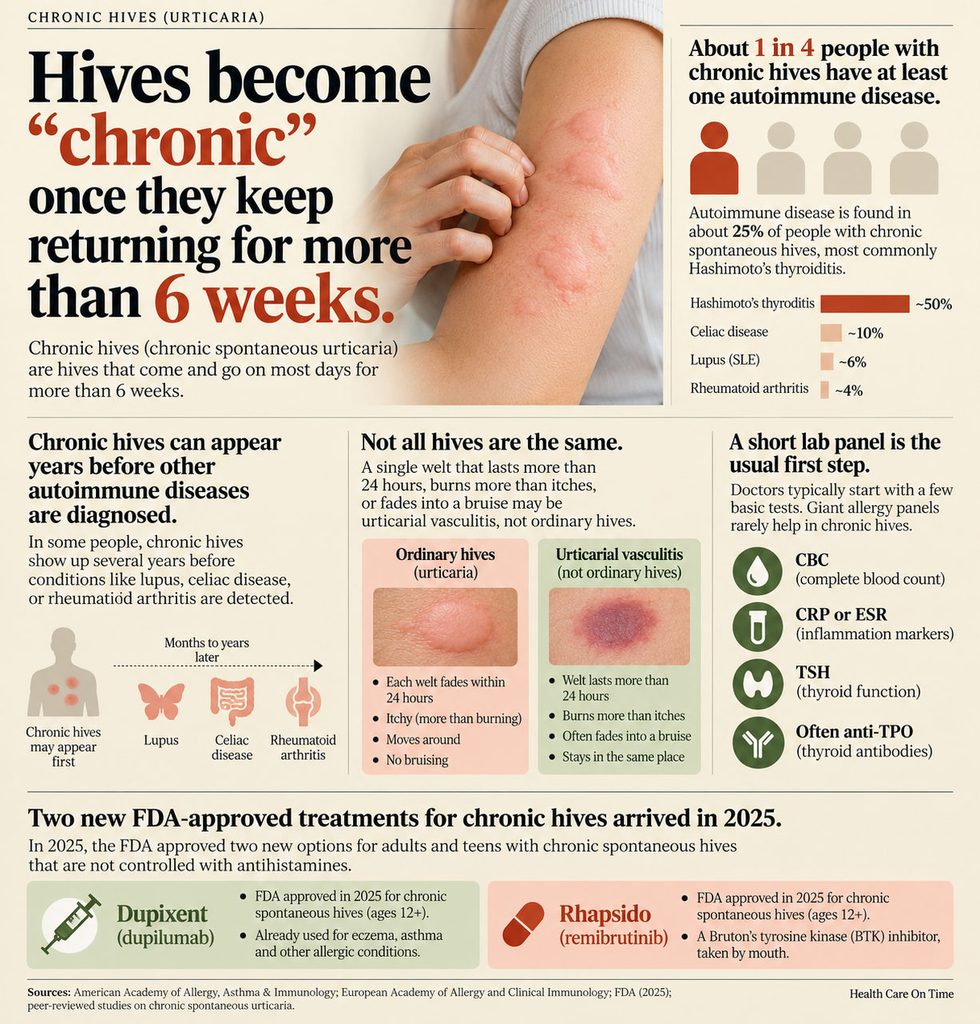
- Hives become “chronic” once they keep returning for more than 6 weeks.
- About 1 in 4 people with chronic spontaneous hives have at least one autoimmune disease, led by Hashimoto’s.
- Chronic hives can appear years before lupus, celiac disease, or rheumatoid arthritis is diagnosed.
- A single welt lasting more than 24 hours, burning more than itching, or fading into a bruise points to urticarial vasculitis, not ordinary hives.
- A short lab panel (CBC, CRP or ESR, TSH, and often anti-TPO) is the usual first step; giant allergy panels rarely help.
- Two new FDA-approved treatments arrived in 2025: Dupixent and Rhapsido (remibrutinib).
Hives, Chronic Hives, and Autoimmune Hives: Three Different Things
Search results tend to blur these terms together. Separating them is the fastest way to understand what your skin is telling you.
Acute vs Chronic: The 6-Week Line
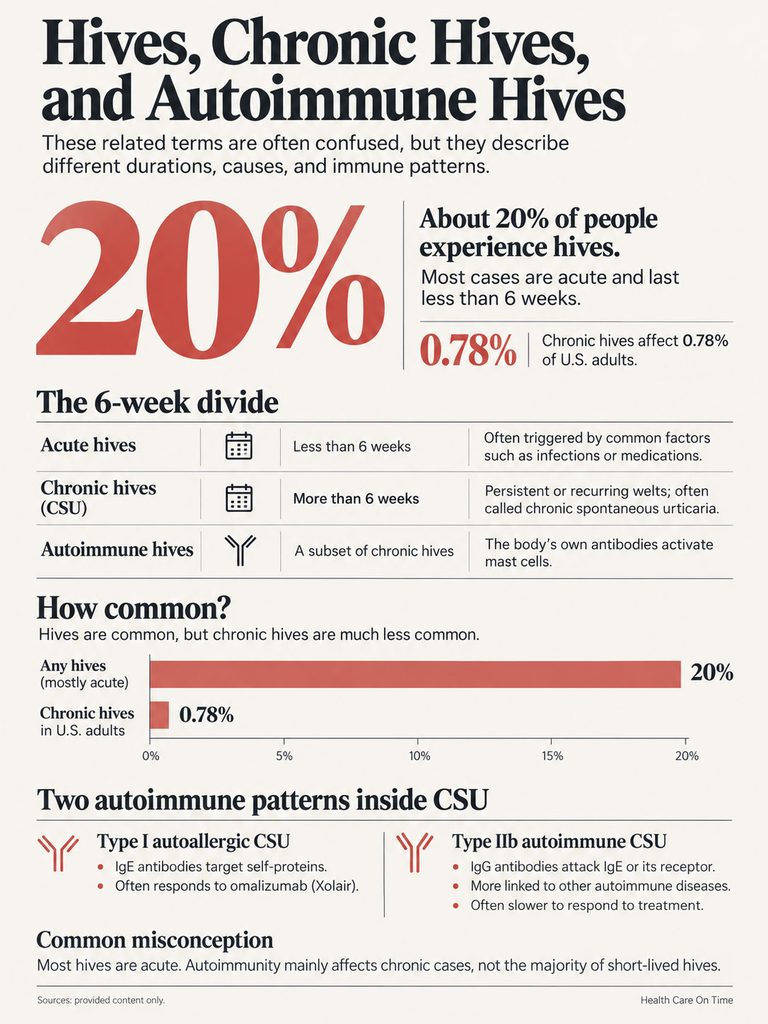
Acute hives come and go in less than 6 weeks. A recent cold, a new antibiotic, or a shellfish dinner is the usual trigger, and the welts fade once the trigger is gone.
Chronic hives keep returning on most days for more than 6 weeks. When no outside trigger is found, doctors call it chronic spontaneous urticaria (CSU), also known as chronic idiopathic urticaria.
CSU is more common than older estimates suggested. A 2025 US survey analysis of nearly 75,000 adults found a diagnosed CSU prevalence of 0.78%, with an average disease duration of 11 years.
What “Autoimmune Hives” Actually Means
Hives form when mast cells in the skin release histamine. In autoimmune CSU, your own antibodies switch those mast cells on, with no outside allergen involved.
Some sites say the immune system “attacks healthy skin.” That is not quite accurate. The target is the mast cell’s alarm system, not the skin tissue itself.
Researchers describe two main patterns. A Frontiers in Immunology review estimates autoimmune mechanisms may drive CSU in up to half of patients.
Type I Autoallergic CSU
Your body makes IgE antibodies against its own proteins, such as thyroid peroxidase or IL-24. These self-directed antibodies sit on mast cells and trigger them, much like being allergic to yourself.
This type tends to respond well to omalizumab (Xolair), which binds and removes IgE.
Type IIb Autoimmune CSU
Your body makes IgG antibodies that attack IgE or its receptor (FcεRI) on mast cells directly. This pattern is more often linked to other autoimmune diseases.
It also tends to respond more slowly to omalizumab, which matters when choosing treatment.
Why Most Hives Are Not Autoimmune
Some health sites claim most people with hives have an underlying autoimmune disease. The research does not support that.
About 20% of people in the US will get hives at some point, and most episodes are acute and clear within days. The autoimmune link applies mainly to the much smaller group whose hives become chronic.
Our medical team has reviewed the major studies on this topic, and the pattern holds: autoimmunity is a real factor in chronic hives, not in a one-time outbreak after a new detergent.
The 8 Autoimmune Diseases That Cause Hives (or Travel With Them)
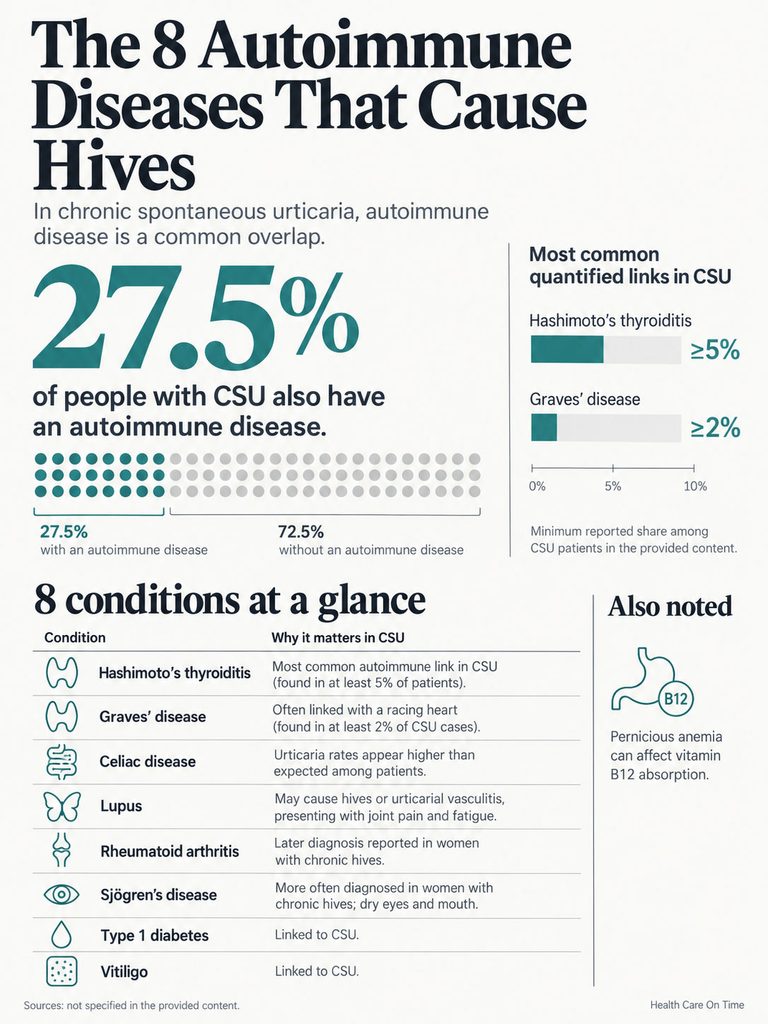
A review pooling 60 studies found that 27.5% of people with CSU also had an organ-specific autoimmune disease. A separate multicenter study put the figure at 28%, with Hashimoto’s alone at 21% or more.
“Linked” does not always mean one disease directly causes the other. Often both come from the same tendency toward autoimmunity. Here is how each condition connects.
1. Hashimoto’s Thyroiditis
This is the strongest and best-studied link. Hashimoto’s is the most common cause of an underactive thyroid in the US, and it appears far more often in people with chronic hives.
A systematic review led by Pavel Kolkhir and Marcus Maurer found Hashimoto’s in at least 5% of CSU patients in most studies. Even more people carry thyroid antibodies (anti-TPO) without thyroid symptoms.
Patients booking a thyroid panel with us often ask whether a normal TSH rules out a thyroid link. It does not. Antibodies can be present while thyroid hormone levels are still normal.
2. Graves’ Disease
Graves’ disease causes an overactive thyroid. It appears in at least 2% of people with CSU in most studies.
Watch for hives alongside a racing heart, heat intolerance, tremor, unplanned weight loss, or bulging eyes.
3. Celiac Disease
Celiac disease is an autoimmune reaction to gluten that damages the small intestine. A Swedish cohort of more than 28,000 people with celiac disease recorded 453 new urticaria cases where about 300 were expected. For chronic urticaria, it was 79 cases versus 41 expected.
One correction is worth making. The classic celiac rash, dermatitis herpetiformis, is not hives. It is a blistering, intensely itchy rash that usually clusters on the elbows, knees, and buttocks.
4. Lupus (Systemic Lupus Erythematosus)
Lupus can cause true hives. More importantly, it can cause urticarial vasculitis, an inflammation of small blood vessels that looks like hives but behaves differently.
Lupus usually brings other clues: joint pain, mouth sores, fatigue, a facial rash that worsens in sunlight, and sometimes kidney changes found on a urine test.
5. Rheumatoid Arthritis
In the large Israeli population study by Confino-Cohen and colleagues, women with chronic hives had a higher rate of rheumatoid arthritis diagnosed later.
Morning joint stiffness lasting longer than 30 minutes, swollen knuckles, and pain in the same joints on both sides of the body are worth raising with your doctor.
6. Sjögren’s Disease
Sjögren’s targets the glands that make tears and saliva. It was also diagnosed more often in women with chronic hives in the same Israeli study.
The giveaway symptoms are dry, gritty eyes and a dry mouth that makes swallowing crackers or bread difficult.
7. Type 1 Diabetes
Type 1 diabetes appears in at least 1% of people with CSU in most studies, higher than the background rate in the US population.
Increased thirst, frequent urination, and unexplained weight loss alongside chronic hives warrant a glucose or HbA1c check.
8. Vitiligo and Pernicious Anemia
Vitiligo causes patches of skin to lose color and appears in at least 3% of CSU patients in most studies.
Pernicious anemia, an autoimmune cause of vitamin B12 deficiency, shows up in at least 5%. Fatigue, numbness or tingling in the hands and feet, and a sore, smooth tongue are typical signs.
Table 1: Autoimmune Diseases Linked to Hives at a Glance
| Disease | Reported rate or link in CSU | Clues alongside hives | Key screening test | Evidence strength |
| Hashimoto’s thyroiditis | 5% or more in most studies; 21%+ in one multicenter cohort | Fatigue, weight gain, cold intolerance | TSH, anti-TPO | Strong |
| Graves’ disease | 2% or more | Fast heart rate, tremor, heat intolerance | TSH, free T4, TRAb | Moderate |
| Celiac disease | 1% or more; 453 vs 300 expected urticaria cases in celiac cohort | Bloating, diarrhea, iron deficiency | tTG-IgA with total IgA | Moderate |
| Lupus (SLE) | Higher incidence in women within 10 years of CU (n = 12,778) | Joint pain, mouth sores, sun rash | ANA, C3/C4, urinalysis | Moderate |
| Rheumatoid arthritis | 1% or more | Morning stiffness, swollen knuckles | RF, anti-CCP | Moderate |
| Sjögren’s disease | Higher incidence in women within 10 years of CU (n = 12,778) | Dry eyes, dry mouth | ANA, anti-SSA/SSB | Moderate |
| Type 1 diabetes | 1% or more | Thirst, frequent urination | Fasting glucose, HbA1c | Moderate |
| Vitiligo | 3% or more | White skin patches | Skin exam | Moderate |
| Pernicious anemia | 5% or more | Numbness, fatigue, sore tongue | B12, intrinsic factor antibodies | Moderate |
Rates come from the Kolkhir systematic review, the multicenter type IIb study, the Swedish celiac cohort, and the Confino-Cohen study. Figures vary between studies and countries.
Hives First, Diagnosis Later: Why Timing Matters
Most people assume the autoimmune disease comes first and the hives follow. Often it runs the other way.
The 10-Year Window
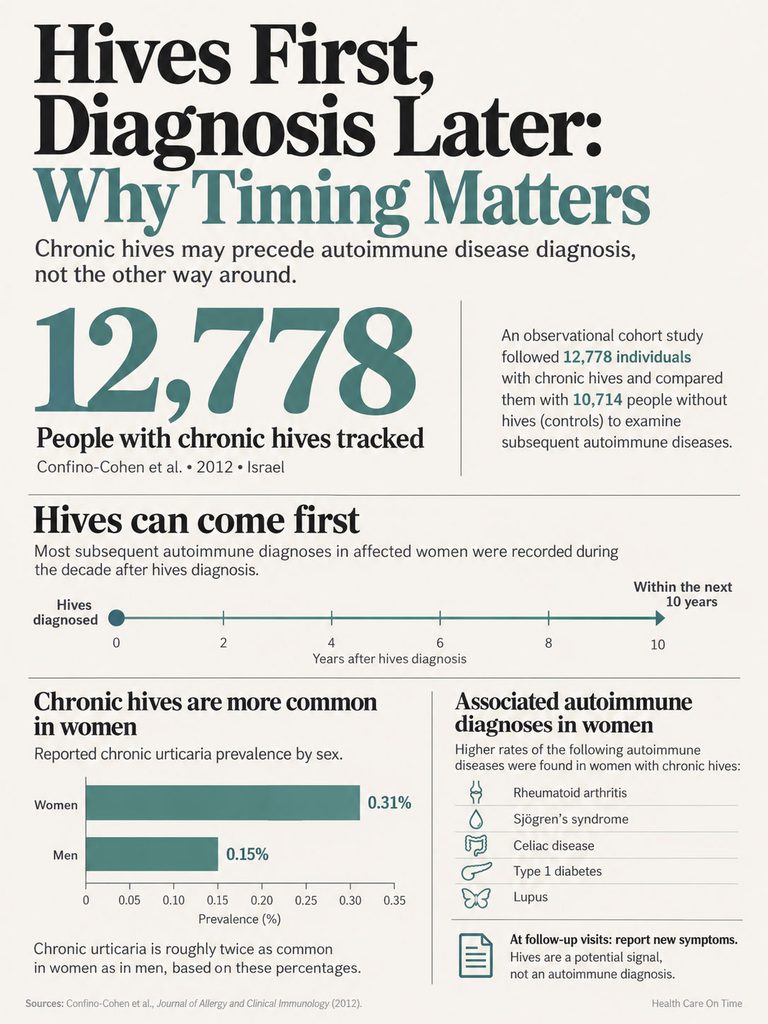
The Confino-Cohen study followed 12,778 people with chronic hives. Women in the group had higher rates of rheumatoid arthritis, Sjögren’s, celiac disease, type 1 diabetes, and lupus. Most were diagnosed during the decade after the hives began.
In practical terms, chronic hives can act like an early warning light. A clean set of labs today does not close the question forever.
In cases reviewed by our medical team, the most useful habit is simple: if new symptoms appear while your hives continue, mention them at your next visit instead of treating them as separate problems.
Who Is at Higher Risk
The multicenter study found comorbid autoimmune disease in CSU was more likely in people who were:
- Female
- Living with a family history of autoimmune disease
- Showing abnormal thyroid function, high or low
- Positive for type IIb autoimmune markers
Women carry a heavier load overall. In a JAAD analysis of more than 55 million US records, chronic urticaria affected 0.31% of women versus 0.15% of men, a ratio of 2.7 to 1.
When It Is Not Really Hives: Urticarial Vasculitis and Mimics
Some rashes look like hives but come from a different process. Telling them apart changes the whole workup.
The 24-Hour Rule
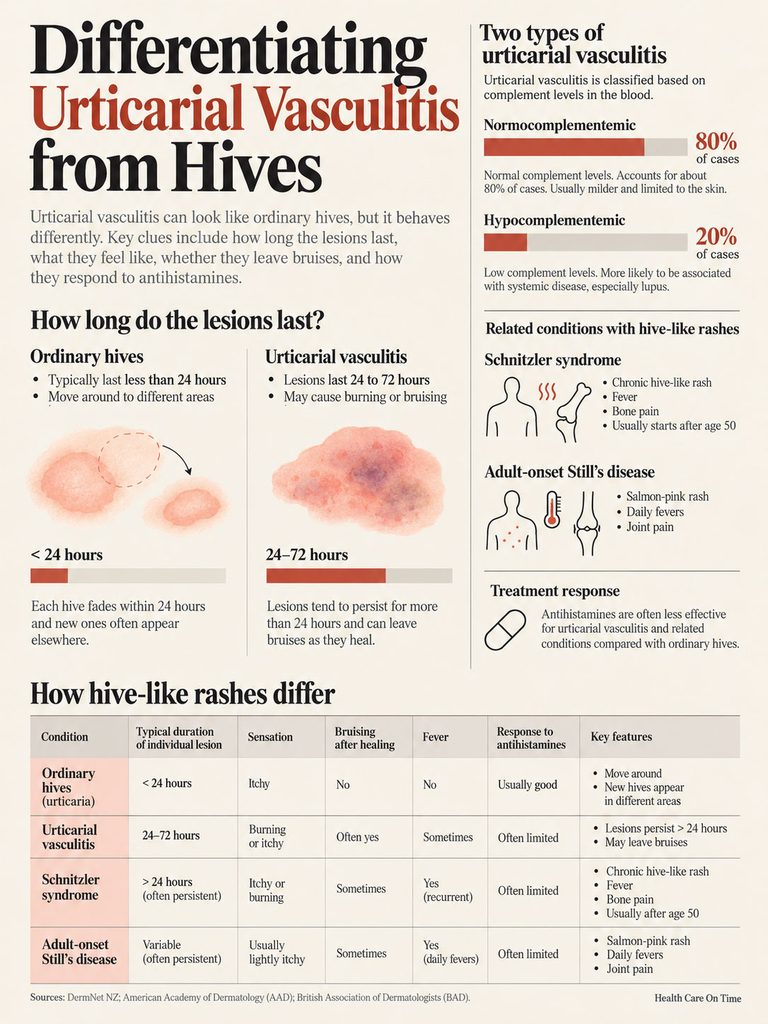
Ordinary hives move around. A single welt usually fades within 24 hours, even if new ones keep appearing elsewhere.
Try this at home: circle one welt with a pen and check it the next day. If that same welt is still there after 24 hours, tell your doctor.
Other warning signs: welts that burn or hurt more than they itch, and welts that leave a bruise-like or brown mark as they fade.
Urticarial Vasculitis and Lupus
Urticarial vasculitis is inflammation of the small blood vessels in the skin. Each lesion typically lasts 24 to 72 hours.
It comes in two forms. The normocomplementemic type, with normal complement levels, makes up as much as 80% of cases, according to a 2025 case review. It usually stays limited to the skin.
The hypocomplementemic type, with low C3 and C4, is more serious. It is closely tied to lupus and can involve the joints, lungs, kidneys, and gut.
A skin biopsy taken from a fresh lesion confirms the diagnosis. Antihistamines often help less than they do for regular hives.
Schnitzler Syndrome and Adult-Onset Still’s Disease
These are autoinflammatory conditions, not autoimmune ones. The problem lies in the innate immune system, with no self-attacking antibodies involved.
Schnitzler syndrome causes a chronic hive-like rash, recurring fever, bone pain, and an abnormal antibody protein (usually IgM) in the blood. It typically starts after age 50. The rash itches little or not at all, and antihistamines barely help.
Adult-onset Still’s disease causes a salmon-pink rash that comes and goes with daily fevers and joint pain. Both conditions often respond strongly to IL-1 blocking drugs such as anakinra.
Bonus Table: Telling Hive-Like Rashes Apart
| Feature | Ordinary chronic hives | Urticarial vasculitis | Schnitzler syndrome | Lupus skin rash |
| Single welt lasts | Under 24 hours | 24 to 72 hours | Hours to 1 day | Days to weeks |
| Main sensation | Itch | Burning, pain | Mild or no itch | Mild itch or none |
| Marks after fading | None | Bruise or brown stain | None | Possible scarring or color change |
| Fever | Rare | Sometimes | Common (over 80%) | Common in flares |
| Antihistamine response | Usually good | Often poor | Poor | Poor |
| Key test | Clinical diagnosis | Skin biopsy, C3/C4 | Serum protein electrophoresis | ANA, anti-dsDNA |
How Doctors Test for Autoimmune Causes of Hives
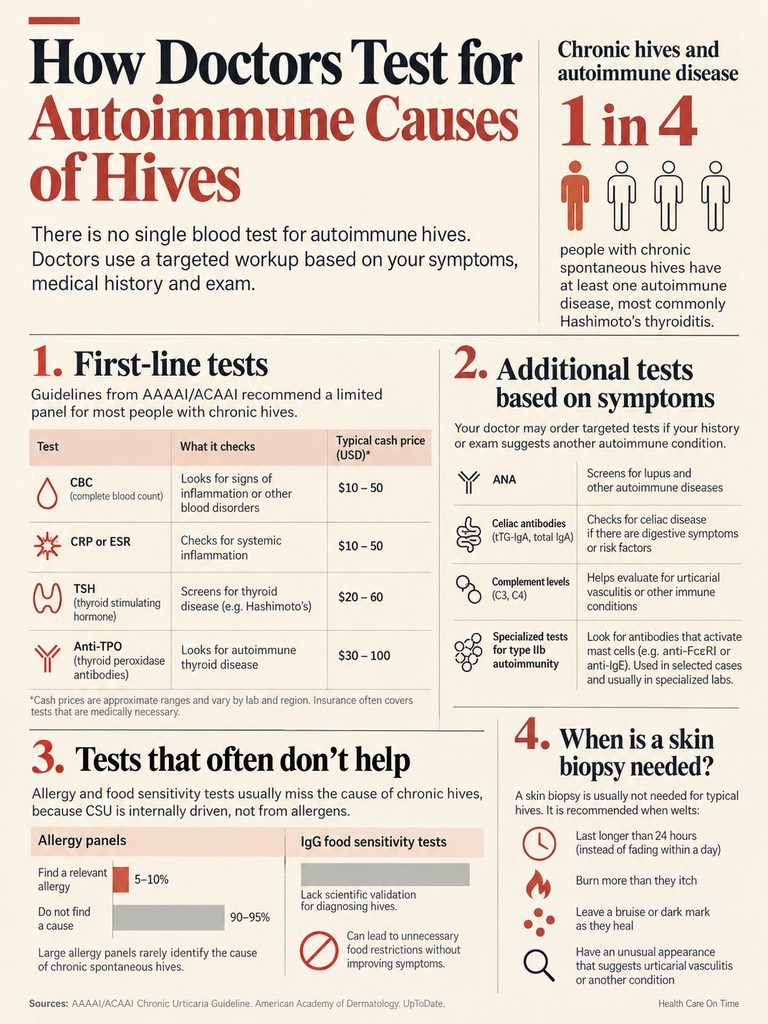
No single blood test diagnoses “autoimmune hives.” The workup is targeted, and more testing is not always better.
First-Line Labs
The AAAAI/ACAAI urticaria practice parameter recommends a limited lab panel for uncomplicated chronic hives. A typical starting set:
- CBC with differential: checks for anemia, high eosinophils, or other blood changes.
- CRP or ESR: inflammation markers; a high value pushes doctors toward vasculitis or autoinflammatory causes.
- TSH: screens thyroid function.
- Anti-TPO antibodies: often added because thyroid autoimmunity is so common in CSU.
Across the lab orders we process, a basic panel like this is usually the right first move. It is fast and inexpensive, and it covers the most common associations.
Targeted Tests
Further testing depends on your symptoms:
- ANA: joint pain, mouth sores, dry eyes, or sun-sensitive rashes.
- tTG-IgA with total IgA: digestive symptoms or iron deficiency.
- C3 and C4 complement: welts lasting longer than 24 hours.
- Vitamin B12 and intrinsic factor antibodies: numbness, tingling, or unexplained anemia.
- Fasting glucose or HbA1c: thirst or frequent urination.
- Serum protein electrophoresis: fever and bone pain with non-itchy hives.
Specialty centers may also run a basophil activation test or an autologous serum skin test to identify type IIb autoimmunity. These are not widely available.
Why Allergy Panels Often Miss
Large food allergy panels rarely explain chronic hives, because CSU is driven from the inside rather than by an outside allergen.
IgG food sensitivity tests sold directly to consumers are not validated for diagnosing hives or food allergy. They can lead to unnecessary diet restrictions.
When a Skin Biopsy Is Worth It
A punch biopsy makes sense when welts last longer than 24 hours, leave marks, burn, or come with fever. The sample should come from a lesion less than a day old.
US Cost Guide
These are typical cash-price ranges at US retail labs; prices vary by lab and region. With insurance, most tests are covered when your doctor orders them for a documented reason.
- CBC with differential (CPT 85025): about $10 to $35
- CRP (86140) or ESR (85652): about $10 to $40 each
- TSH (84443): about $20 to $50
- Anti-TPO (86376): about $30 to $80
- ANA (86038): about $25 to $70
- tTG-IgA (86364): about $40 to $100
- Punch skin biopsy with pathology: often $250 to $600 or more
Treatment: What Works When Hives Are Autoimmune
Treatment for chronic hives follows a step-by-step ladder. Options have expanded sharply since 2025.
Step 1: Antihistamine Updosing
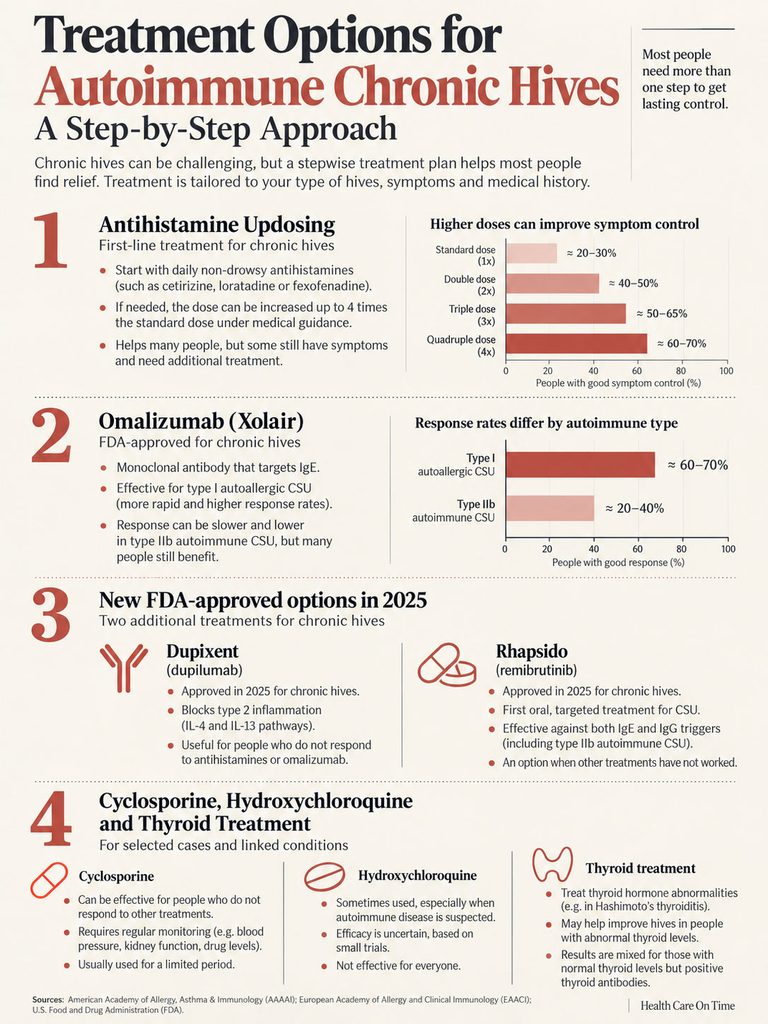
Daily non-drowsy antihistamines such as cetirizine, fexofenadine, or loratadine are the foundation. Guidelines allow doctors to raise the dose up to 4 times the standard amount when one tablet is not enough.
Only increase the dose under medical guidance. Older drowsy antihistamines like diphenhydramine are poor long-term choices because of sedation.
Step 2: Omalizumab (Xolair)
Omalizumab, an injection given every 4 weeks, has been FDA-approved for chronic hives since 2014 for people aged 12 and older, as noted by ACAAI. It works especially well in type I autoallergic CSU.
People with type IIb autoimmunity often respond more slowly or less completely. In the multicenter study, positive ANA or thyroid antibodies were linked to omalizumab non-response.
Step 3: The 2025 FDA Approvals
Dupixent (dupilumab) was approved on April 18, 2025 for CSU in adults and adolescents 12 and older who still have symptoms on antihistamines. It is an injection that blocks type 2 inflammation.
Two of its three phase 3 studies met their main goals; one did not reach its primary endpoint in the US analysis. Injection-site reactions were the most common side effect.
Rhapsido (remibrutinib) was approved on September 30, 2025 as the first oral targeted treatment for CSU in adults. It blocks an enzyme called BTK inside mast cells, so it works whether the trigger is IgE or IgG.
It is taken twice daily and needs no routine lab monitoring. Small skin bleeding spots (petechiae) were reported more often than with placebo in trials.
Our medical reviewers note that the BTK mechanism is the most interesting development for people with type IIb disease, though head-to-head data against omalizumab in that group are still limited.
Step 4: Cyclosporine and Hydroxychloroquine
Cyclosporine, an immune-suppressing drug used off-label, can work well in type IIb CSU. It requires blood pressure and kidney monitoring.
Hydroxychloroquine (Plaquenil) has been studied for hives tied to autoimmune disease, but the trials have been small. Some websites quote an “8 in 10” success rate without naming the study. Treat that figure with caution until larger trials are published.
Does Treating the Thyroid Stop the Hives?
If your thyroid levels are abnormal, treating them is necessary regardless of your skin.
For people with normal thyroid levels and positive antibodies, studies of thyroid hormone pills for hives have been small with mixed results. It is not a standard recommendation, so don’t expect a thyroid prescription to clear your skin on its own.
Getting Care in the US: Insurance, Pregnancy, and Kids
Insurance and Prior Authorization
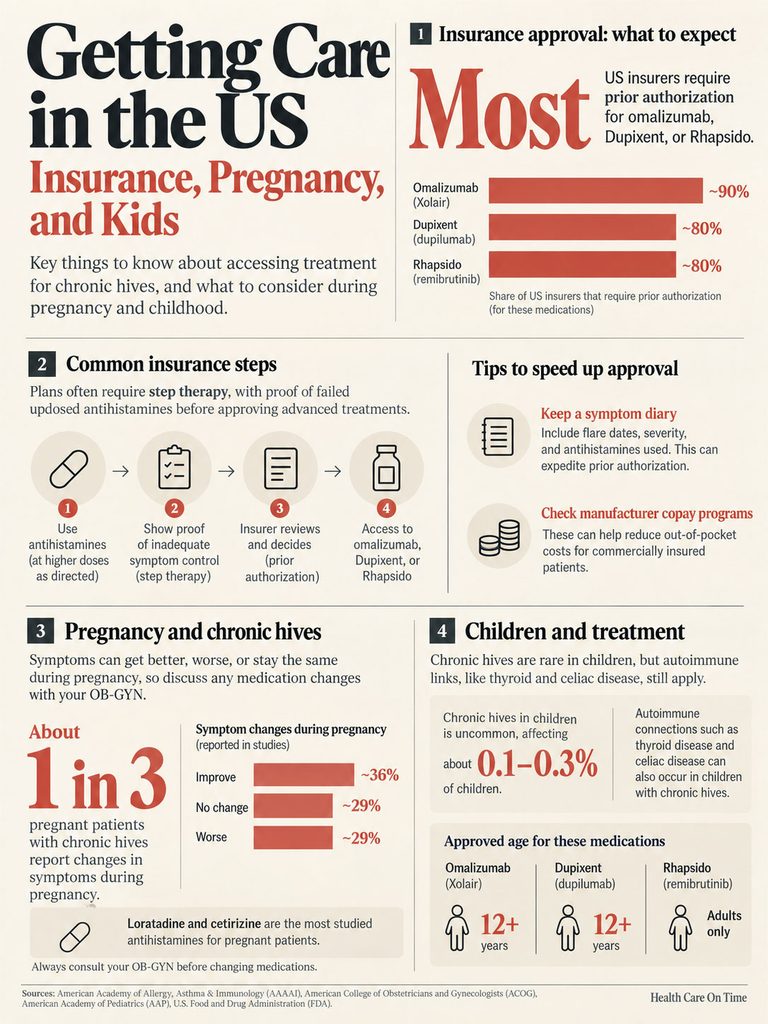
Most US insurers require prior authorization before covering omalizumab, Dupixent, or Rhapsido. Plans commonly ask for proof that updosed antihistamines failed first, a step known as step therapy.
Keeping your symptom diary and a record of each antihistamine you tried, with doses and dates, speeds this up. Manufacturer copay programs can lower out-of-pocket costs for commercially insured patients.
Hives During Pregnancy
Chronic hives can improve, worsen, or stay the same during pregnancy. Loratadine and cetirizine are the most studied antihistamines in pregnancy, but any medication change belongs in a conversation with your OB-GYN.
New thyroid symptoms during or after pregnancy deserve testing, since postpartum thyroiditis is common.
Hives in Children and Teens
Chronic hives are less common in children, but the same autoimmune links, especially thyroid and celiac disease, apply. Omalizumab and Dupixent are approved from age 12; Rhapsido is approved for adults only.
Red Flags and What to Do Next
Most chronic hives are uncomfortable, not dangerous. These scenarios need faster action.
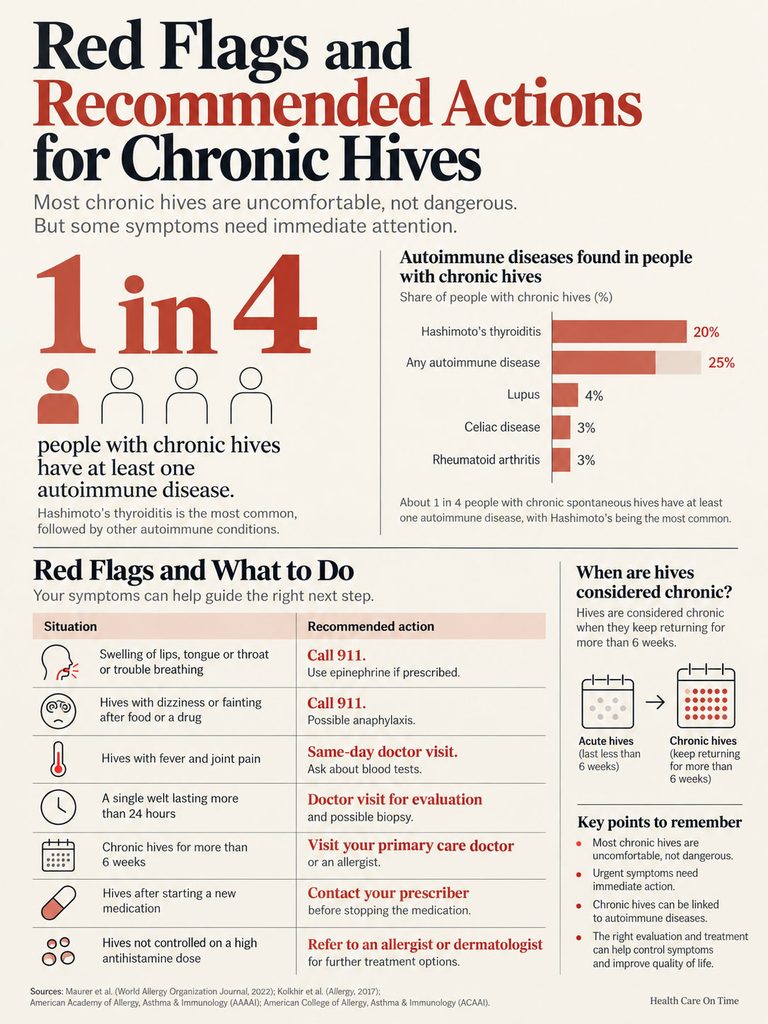
Table 3: Hives Scenarios and Recommended Actions
| Scenario | Recommended action | Urgency |
| Swelling of lips, tongue, or throat, trouble breathing or swallowing | Call 911; use epinephrine if prescribed | Emergency, now |
| Hives with dizziness, vomiting, or fainting after a food, sting, or drug | Call 911; possible anaphylaxis | Emergency, now |
| Hives with fever, joint pain, and feeling unwell | Same-day or next-day doctor visit; ask about CBC, CRP, ANA | Within 24 to 48 hours |
| Single welts lasting over 24 hours or leaving bruises | Doctor visit; request evaluation for urticarial vasculitis and biopsy | Within 1 week |
| Hives on most days for over 6 weeks | Primary care or allergist visit; basic labs including TSH | Within 2 to 4 weeks |
| Chronic hives plus fatigue, weight change, or dry eyes and mouth | Ask about thyroid antibodies, ANA, and targeted tests | Within 2 to 4 weeks |
| Hives started after a new medication | Call the prescriber before stopping; do not restart without advice | Within 24 hours |
| Hives not controlled on 4x antihistamine dose | Allergist or dermatologist referral for biologic or oral targeted therapy | Within 1 month |
Readers who reach out to HealthCareOnTime after weeks of daily hives often say they waited because “it is just a rash.” The 6-week mark is the point to stop waiting and book a visit.
Table 2: Key US Statistics on Hives and Autoimmunity
| Statistic | Figure | Source |
| Diagnosed CSU prevalence, US adults | 0.78% (n = 74,994 surveyed) | Soong et al., WAO Journal 2025 |
| Average CSU duration in that survey | 11 years | Soong et al., WAO Journal 2025 |
| Chronic urticaria prevalence by sex, US | 0.31% women vs 0.15% men (2.7:1) | Wertenteil et al., JAAD 2019 |
| CSU patients with any organ-specific autoimmune disease | 27.5% (60-study pooled analysis) | Review of autoimmune comorbidity in CSU, 2023 |
| CSU patients with at least 1 autoimmune disease | 28%; Hashimoto’s 21% or more | Kolkhir et al., multicenter study |
| Urticaria cases in celiac cohort | 453 observed vs 300 expected | Ludvigsson et al., Swedish cohort |
| People in the US who get hives at some point | About 20% | Allergy & Asthma Network |
Living With Autoimmune Hives
Medication does most of the heavy lifting, but daily habits can cut down on flares.
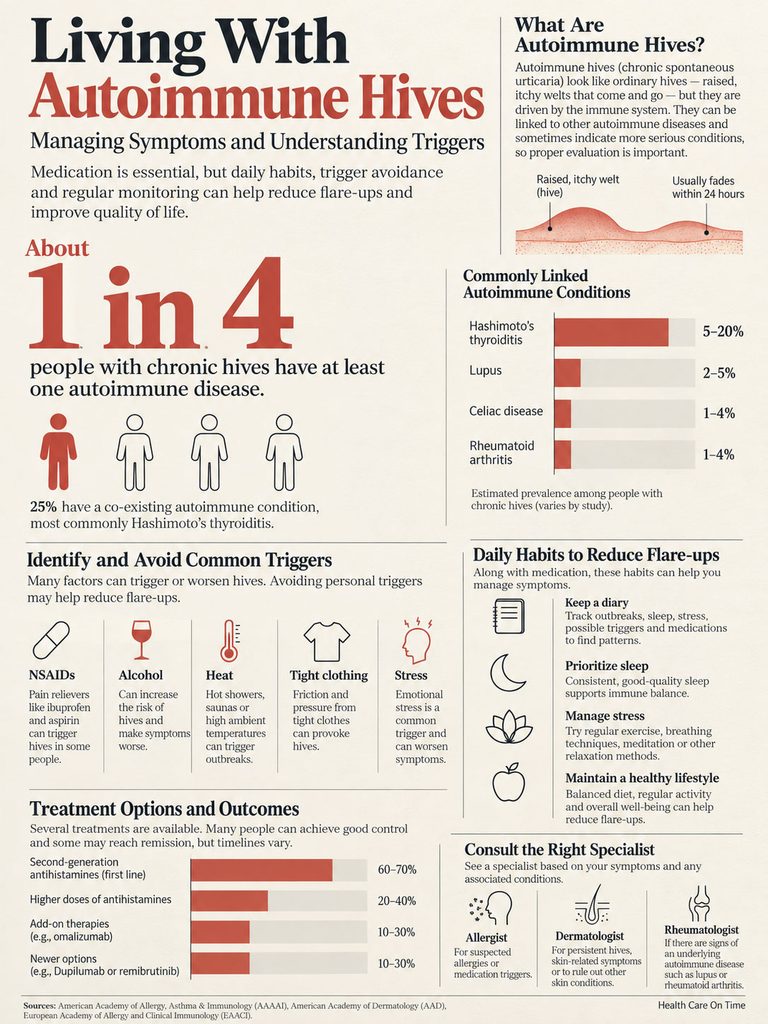
Keep a simple diary. Note the time, location, and size of outbreaks, along with sleep, stress, alcohol, and medications. Phone photos help your doctor see what you see.
Watch common aggravators. NSAIDs such as ibuprofen and aspirin, alcohol, heat, tight clothing, and stress can make CSU flares worse, even when they are not the root cause.
Pick the right specialist. An allergist or dermatologist usually manages chronic hives. A rheumatologist becomes the right call when joint pain, fever, a positive ANA, or urticarial vasculitis enters the picture.
Recheck over time. Autoimmune diagnoses can follow hives by years, so repeat labs make sense when new symptoms appear. Knowing which autoimmune diseases cause hives helps you spot those symptoms early.
“`Frequently Asked Questions
Can autoimmune disease cause hives?
Yes. Autoimmune disease can cause chronic hives in two ways. Your own antibodies can switch on mast cells directly, which is autoimmune chronic spontaneous urticaria. Separately, conditions like Hashimoto’s, lupus, and celiac disease appear more often in people with chronic hives. Most short-lived hives, though, come from infections, drugs, or foods.
What do autoimmune hives look like?
Autoimmune hives look like ordinary hives: raised, red or skin-colored welts that itch and move around, with each welt fading within 24 hours. They tend to recur on most days for weeks or months. Welts that stay put longer than a day, burn, or bruise suggest urticarial vasculitis instead.
Can Hashimoto’s cause hives?
Hashimoto’s thyroiditis is the autoimmune disease most strongly linked to chronic hives. Studies find it in at least 5% of people with chronic spontaneous urticaria, and one multicenter cohort reported over 20%. Thyroid antibodies can be present even when TSH is normal, so doctors may check anti-TPO.
Can hives be the first sign of lupus?
Sometimes. In a study of 12,778 people with chronic hives, women showed higher rates of lupus diagnosed in the following decade. Hives that last over 24 hours, leave bruises, or come with joint pain and fatigue deserve testing for ANA and complement levels.
Does celiac disease cause hives?
Celiac disease is linked to a higher risk of hives, especially chronic hives. A Swedish cohort of over 28,000 patients found about 50% more urticaria than expected. The classic celiac rash, dermatitis herpetiformis, is different: it blisters and clusters on the elbows, knees, and buttocks.
Are chronic hives a sign of autoimmune disease?
Chronic hives raise the odds of an autoimmune disease, but most people with chronic hives do not have one. Roughly 1 in 4 do. A short lab panel with a CBC, an inflammation marker, and TSH screens for the most common links without overtesting.
What blood test checks for autoimmune hives?
No single test confirms autoimmune hives. Doctors usually start with a CBC, CRP or ESR, TSH, and often anti-TPO. ANA, celiac antibodies, complement levels, and B12 are added based on symptoms. Specialty labs offer basophil activation tests to identify type IIb autoimmunity.
Will treating thyroid disease stop hives?
Treating an abnormal thyroid matters for your overall health, and some people notice fewer hives afterward. For people with normal thyroid levels and positive antibodies, small studies of thyroid hormone pills show mixed results. Hives usually still need their own treatment plan.
Do autoimmune hives ever go away?
Many people with chronic spontaneous urticaria eventually go into remission, but timelines vary widely, from months to many years. Autoimmune markers are sometimes linked to longer-lasting disease. Treatments including omalizumab, Dupixent, and Rhapsido can control symptoms in the meantime.
Should you see an allergist or a rheumatologist for chronic hives?
Start with your primary care doctor, an allergist, or a dermatologist, since they manage most chronic hives. See a rheumatologist if your hives come with joint pain, fever, dry eyes and mouth, a positive ANA, or welts lasting longer than 24 hours that leave bruises.
Why do hives lasting over 24 hours matter?
Ordinary hives fade within 24 hours, even if new ones keep appearing. A single welt that stays longer, burns, or leaves a mark may be urticarial vasculitis, which can involve the kidneys, joints, or lungs and is linked to lupus. A skin biopsy confirms it.
Can stress trigger autoimmune hives?
Stress does not cause autoimmune hives, but it can make flares worse. Stress hormones affect mast cells, and many people with chronic hives notice outbreaks during tense weeks. Steady sleep, regular exercise, and consistent medication use help more than trying to avoid stress completely.
Disclaimer: This article is for general educational purposes only and does not replace advice from a licensed healthcare provider. HealthCareOnTime does not diagnose or treat medical conditions. If you have swelling of the lips, tongue, or throat, trouble breathing, or feel faint with hives, call 911 right away. Always talk with your doctor before starting, stopping, or changing any medication.
References
- Soong W, et al. Clinical profile, prevalence, and burden of chronic spontaneous urticaria in the United States. World Allergy Organization Journal. 2025
- Wertenteil S, et al. Prevalence estimates for chronic urticaria in the United States. Journal of the American Academy of Dermatology. 2019
- Confino-Cohen R, et al. Chronic urticaria and autoimmunity: associations found in a large population study. Journal of Allergy and Clinical Immunology. 2012
- Kolkhir P, et al. Autoimmune comorbidity in chronic spontaneous urticaria: a systematic review
- Kolkhir P, et al. Autoimmune diseases are linked to type IIb autoimmune chronic spontaneous urticaria. Allergy, Asthma & Immunology Research
- Prevalence of autoimmune and autoinflammatory diseases in chronic urticaria: pathogenetic, diagnostic and therapeutic implications
- Ludvigsson JF, et al. Celiac disease and risk of urticaria: a nationwide cohort study
- Bracken SJ, et al. Autoimmune theories of chronic spontaneous urticaria. Frontiers in Immunology. 2019
- Bernstein JA, et al. The diagnosis and management of acute and chronic urticaria: 2014 update. Journal of Allergy and Clinical Immunology
- Hypocomplementemic urticarial vasculitis: a case report. Cureus. 2025
- de Koning HD. Schnitzler’s syndrome: lessons from 281 cases. Clinical and Translational Allergy. 2014
- Regeneron. Dupixent approved in the US for chronic spontaneous urticaria. April 18, 2025
- Novartis. FDA approval for Rhapsido (remibrutinib) for chronic spontaneous urticaria. September 30, 2025
- American College of Allergy, Asthma and Immunology. Chronic hives
- Allergy & Asthma Network. Chronic idiopathic urticaria’s impact on quality of life
- Cleveland Clinic. Chronic hives (chronic idiopathic urticaria)