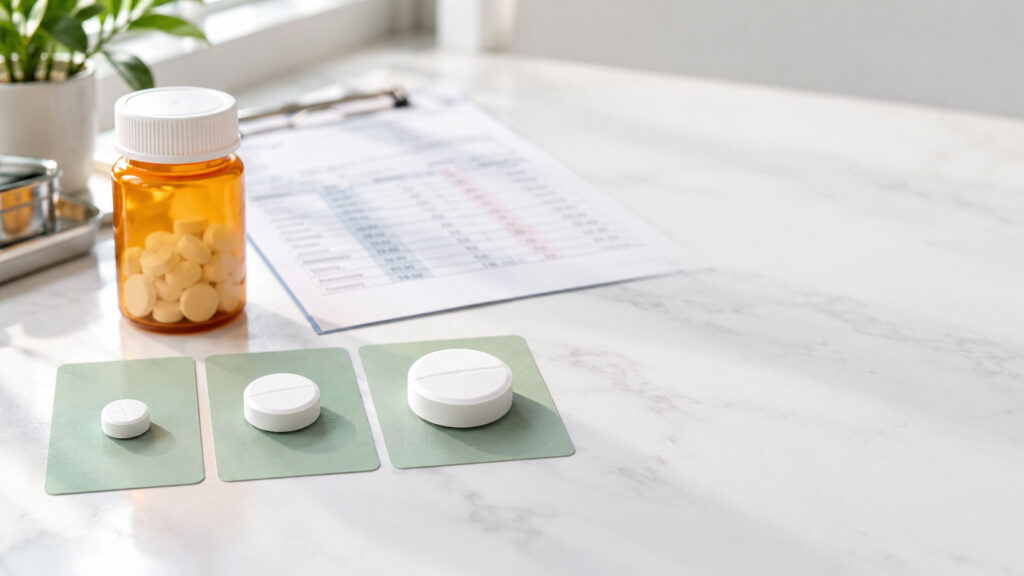
Seventy-two out of every 100 people taking Ayvakit for a rare stomach tumor had swelling in the main safety study. Among people taking it for indolent systemic mastocytosis, 13 out of 100 had swelling around the eyes. So did 7 out of 100 people taking a sugar pill.
Table of Contents
Same drug, same tablet maker, very different experience. The reason is the dose. Most side effect pages online never tell you which dose their numbers came from.
Quick Answer: Ayvakit (avapritinib) side effects depend on your dose. At 25 mg for indolent systemic mastocytosis (ISM), the most common are eye swelling, dizziness, leg swelling, and flushing. At 200 mg or 300 mg for advanced mastocytosis or GIST, the most common are swelling, nausea, fatigue, and brain fog. Serious risks include bleeding in the brain (not seen in ISM trials), thinking problems, sun sensitivity, and harm to an unborn baby.
At a Glance
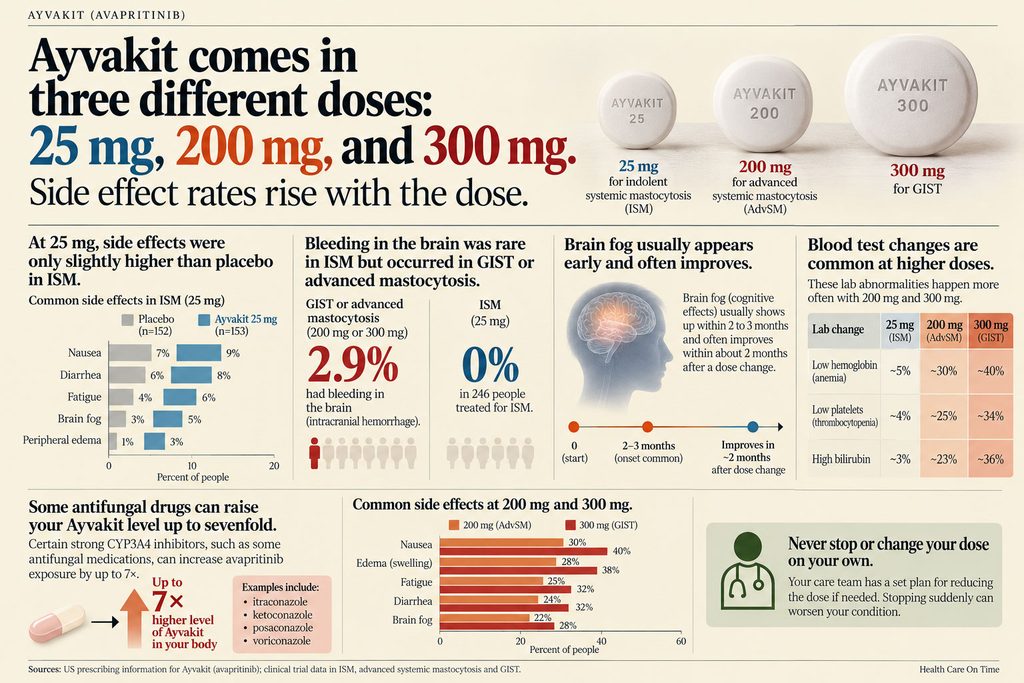
- Ayvakit comes in three very different doses: 25 mg, 200 mg, and 300 mg. Side effect rates rise with the dose.
- At the 25 mg ISM dose, most side effects were only a few points more common than on placebo.
- Bleeding in the brain happened in 2.9% of people with GIST or advanced mastocytosis, and in none of the 246 people treated for ISM.
- Brain fog usually shows up within 2 to 3 months and often improves within about 2 months of a dose change.
- Blood test changes (low hemoglobin, low platelets, high bilirubin) are common at the higher doses.
- Some antifungal drugs can raise your Ayvakit level up to sevenfold.
- Never stop or change your dose on your own. Your care team has a set plan for reducing it.
What Ayvakit Is and Why the Dose Matters
Ayvakit is a targeted pill called a kinase inhibitor. It blocks faulty “on switches” in cells, mainly a gene change called KIT D816V and changes in a gene called PDGFRA. These faulty switches drive certain tumors and the buildup of mast cells.
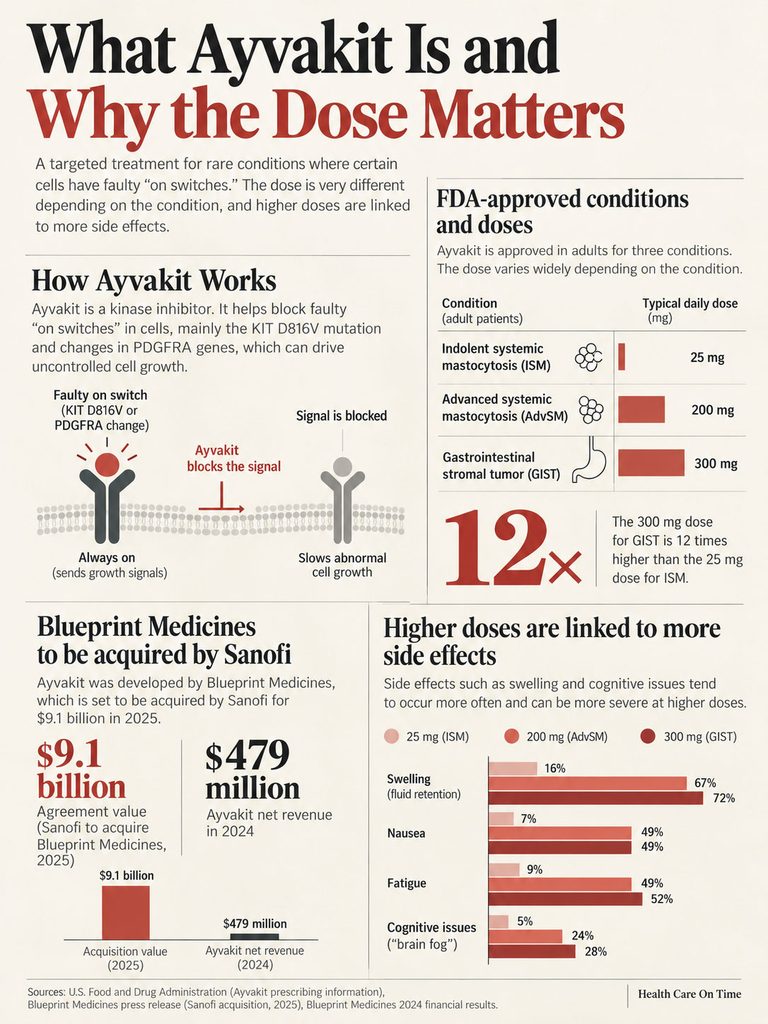
Blueprint Medicines developed it. Sanofi agreed to buy Blueprint in 2025 for about $9.1 billion, and Ayvakit brought in $479 million in net revenue in 2024. So you may see either company name on your paperwork.
Three Conditions, Three Very Different Doses
The FDA label approves Ayvakit for three adult conditions:
- GIST (gastrointestinal stromal tumor) with a PDGFRA exon 18 mutation that cannot be removed by surgery or has spread: 300 mg once daily.
- Advanced systemic mastocytosis (AdvSM), which includes aggressive SM, SM with another blood cancer, and mast cell leukemia: 200 mg once daily.
- Indolent systemic mastocytosis (ISM), the most common form of the disease: 25 mg once daily.
The 300 mg GIST dose is 12 times the 25 mg ISM dose. That gap explains almost everything about why one reader’s experience looks nothing like another’s.
Why a Higher Dose Means More Side Effects
The FDA label reports that higher drug levels in the blood were linked to more severe side effects. It names thinking and memory problems and moderate swelling in particular.
Our medical review team checked every figure in this guide against the current FDA label. Wherever a number applies to only one dose, we say so.
Ayvakit Side Effects by Condition: The Real Numbers
The table below pulls each group’s numbers from its own clinical trial. The ISM numbers come from PIONEER, a randomized trial against placebo. The AdvSM and GIST numbers come from open-label studies with no placebo group, so some symptoms there may come from the disease itself.
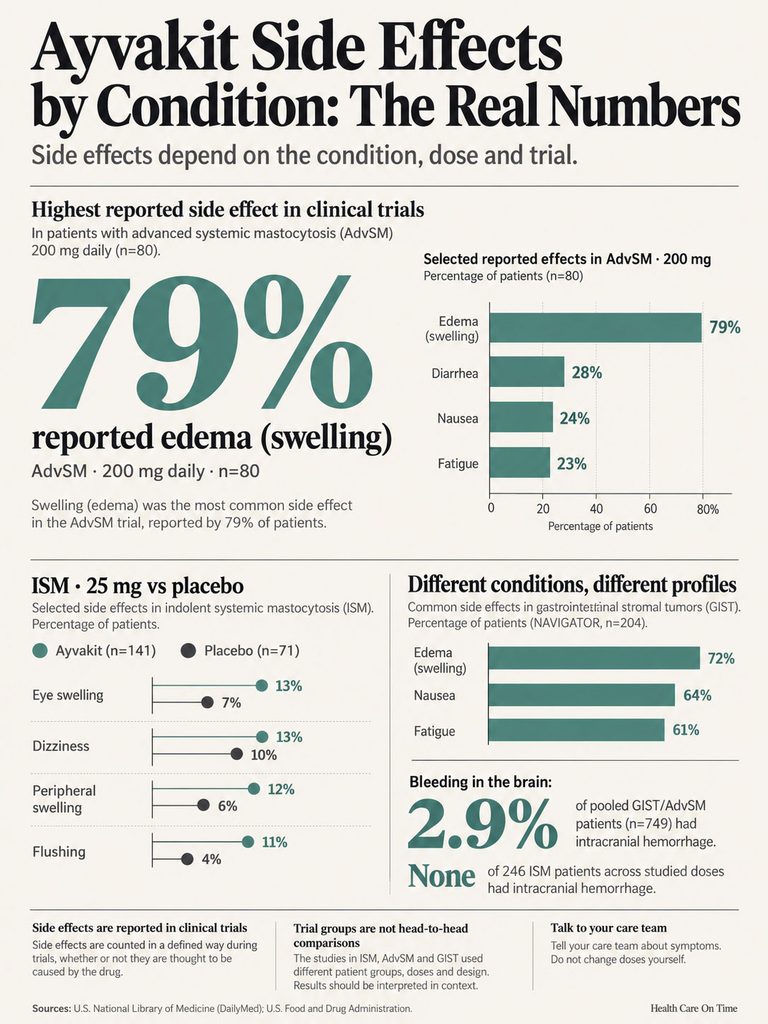
| Side effect | ISM 25 mg (PIONEER) | ISM placebo | AdvSM 200 mg (EXPLORER / PATHFINDER) | GIST 300 mg (NAVIGATOR) |
| Swelling (edema) | Eye 13%, legs 12%, face 7% | Eye 7%, legs 6%, face 1% | 79% (any site) | 72% (any site) |
| Cognitive effects (brain fog, memory) | 7.8% | 7.0% | 14% at 200 mg; 28% across all AdvSM doses | 48% in NAVIGATOR; 41% across all GIST studies |
| Dizziness | 13% | 10% | 13% | 22% |
| Flushing | 11% | 4% | 3.8% | Not reported at 10% or more |
| Nausea | Not above placebo | Not above placebo | 24% | 64% |
| Fatigue or weakness | Not above placebo | Not above placebo | 23% | 61% |
| Diarrhea | Not above placebo | Not above placebo | 28% | 37% |
| Hair color changes | Not above placebo | Not above placebo | 6% | 21% |
| Bleeding in the brain | 0 of 246 patients | Not applicable | 2.7% to 3.8% | 1.1% |
| Serious adverse reactions | 0.7% | Not reported | 34% | 52% |
| Stopped due to side effects | 0.7% | Not reported | 10% | 16% |
| Dose paused or reduced | 5% paused | Not reported | 68% reduced | 49% reduced |
“Not above placebo” means the side effect did not meet the label’s ISM reporting rule. That rule lists side effects seen in at least 5% of Ayvakit users and at least 2 points more often than with placebo.
If You Take Ayvakit for ISM
At 25 mg, the four most common side effects were swelling around the eyes, dizziness, swelling in the arms or legs, and flushing. In the PIONEER trial, 141 people took Ayvakit and 71 took placebo, alongside their usual antihistamines and other supportive care.
Most reactions were mild. Of all side effects reported, 55% were grade 1, 38% were grade 2, and 7% were grade 3. Among people with swelling, 95% had the mildest grade.
Serious side effects happened in 1 person out of 141 (a pelvic hematoma, which is a pocket of blood). One person stopped treatment because of shortness of breath and dizziness.
Other side effects showed small gaps over placebo:
- Respiratory infections: 8% vs 1%
- Bruising or hematoma: 6% vs 1%
- Raised liver enzymes: 6% vs 3%
- Insomnia: 6% vs 3%
- Minor bleeding such as nosebleeds or gum bleeding: 5% vs 3%
If You Take Ayvakit for Advanced Systemic Mastocytosis
At 200 mg, swelling is the main issue, reported in 79% of people. Diarrhea, nausea, and fatigue each affected roughly a quarter of patients.
Low platelets are the other big concern. Ayvakit is not recommended if your platelet count is below 50 x 10^9/L, because low platelets raise the risk of bleeding in the brain.
Dose changes are common at this level. In the trials, 68% of people at the 200 mg starting dose had a dose reduction, with a median time to reduction of 1.7 months. A dose cut is a normal part of the plan, not a sign of failure.
If You Take Ayvakit for GIST
The 300 mg dose carries the heaviest side effect load. In NAVIGATOR:
- Swelling: 72%
- Nausea: 64%
- Fatigue or weakness: 61%
- Cognitive impairment: 48%
- Vomiting and loss of appetite: 38% each
- Increased tear production: 33%
Other side effects included rash (23%), hair color changes (21%), hair thinning (13%), weight loss (13%), and fluid around the lungs (12%). About 8% had high blood pressure, and 3% had thyroid changes. Nearly half (49%) needed a dose reduction, usually around 9 weeks in.
Why Many Websites Overstate the Risk for ISM Patients
Several popular drug pages show one list of percentages for everyone. One major pharmacy site says plainly that its percentages come from GIST studies. That means a person on 25 mg is reading numbers from a dose 12 times stronger.
Patients booking blood work through HealthCareOnTime often ask whether they should “expect” the 48% brain fog rate. At the ISM dose, the honest answer is that the PIONEER rate was almost the same as with a sugar pill.
The Serious Warnings Explained
The FDA label lists four warnings. Each one matters more or less depending on your dose and your health history.
Bleeding in the Brain (Intracranial Hemorrhage)
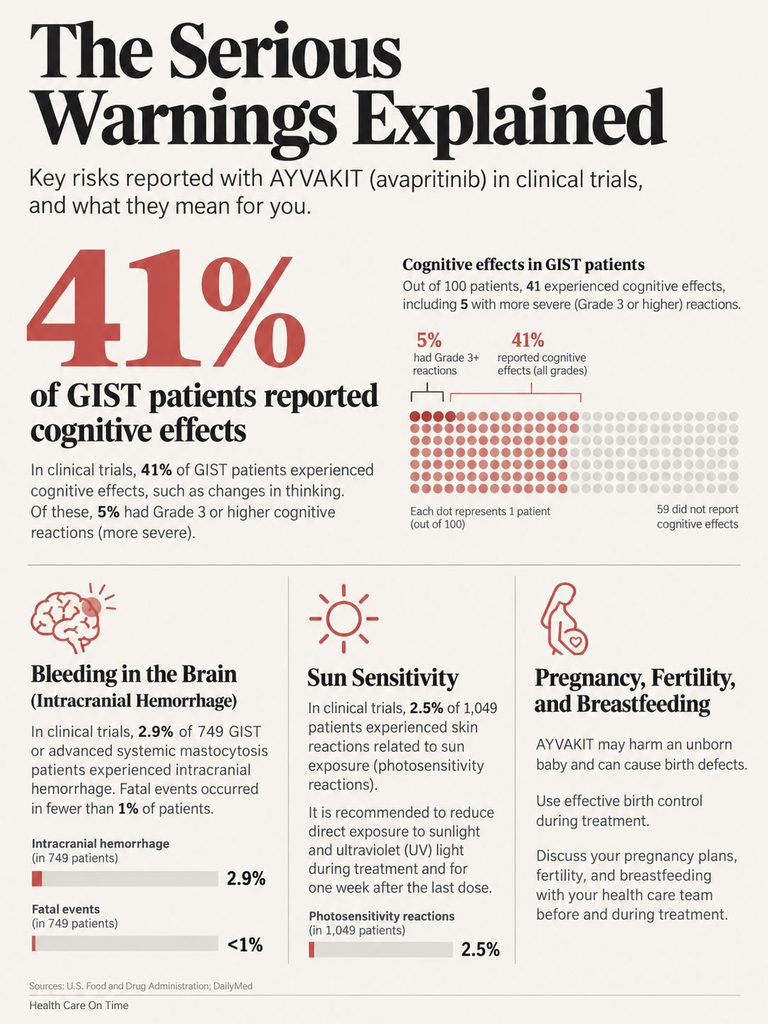
This is the most serious risk. Across clinical trials, it happened in 2.9% of the 749 patients with GIST or AdvSM, and deaths from it occurred in less than 1% of patients.
By condition:
- GIST: 3 of 267 patients (1.1%), between 1.7 and 19.3 months after starting
- AdvSM: 2.7% of patients whose platelets were at least 50 x 10^9/L, and 3.8% regardless of platelet count
- ISM: zero events in 246 patients
Your doctor will check for risk factors before you start:
- A history of aneurysm
- Bleeding in the brain or a stroke within the past year
- Taking blood thinners
- Low platelets
Warning signs that need emergency care:
- Sudden severe headache
- Nausea or vomiting
- Vision changes
- Drowsiness or confusion
- Slurred speech
- Weakness on one side of the body
If bleeding in the brain is confirmed, Ayvakit is stopped permanently, at any grade.
Cognitive Effects (Brain Fog, Memory, Confusion)
Ayvakit can affect thinking. The label groups many problems under this heading:
- Memory trouble
- Confusion
- Poor attention
- Word-finding problems
- Getting lost
- Drowsiness
- Mood or behavior changes
- In rare cases, hallucinations
You may see two rates for each condition. That’s because the label reports one main trial and also a larger pool of all studies.
| Condition | Rate | Grade 3 or higher | Notes |
| GIST | 41% of 601 patients across all studies (48% in NAVIGATOR alone) | 5% | Memory impairment alone was 21% |
| AdvSM | 28% of 148 patients across all doses (14% in the 200 mg group) | 3% | |
| ISM | 7.8% (7% on placebo) | Less than 1% |
Most cases are managed by pausing or lowering the dose. Across all three conditions, only 2.2% of patients stopped Ayvakit permanently because of cognitive effects.
Do not drive or use heavy machinery while you have these symptoms. Family members often notice changes first, so let a caregiver know what to watch for.
Sun Sensitivity (Photosensitivity)
About 2.5% of all patients in clinical trials had skin reactions to sunlight. The label advises limiting direct UV light during treatment and for 1 week after stopping.
That means sunscreen, covering clothing, and no tanning beds or sunlamps.
Pregnancy, Fertility, and Breastfeeding
Ayvakit can harm an unborn baby. In animal studies, it caused birth defects at drug levels close to human doses. Your doctor should confirm you are not pregnant before you start.
Women who can become pregnant, and men with partners who can, should use effective birth control during treatment and for 6 weeks after the last dose. Avoid breastfeeding during treatment and for 2 weeks after the last dose.
Animal data also suggest Ayvakit may lower fertility in both men and women at the 200 mg and 300 mg doses. Raise this before you start if you are planning a family.
How Long Ayvakit Side Effects Last: A Timeline
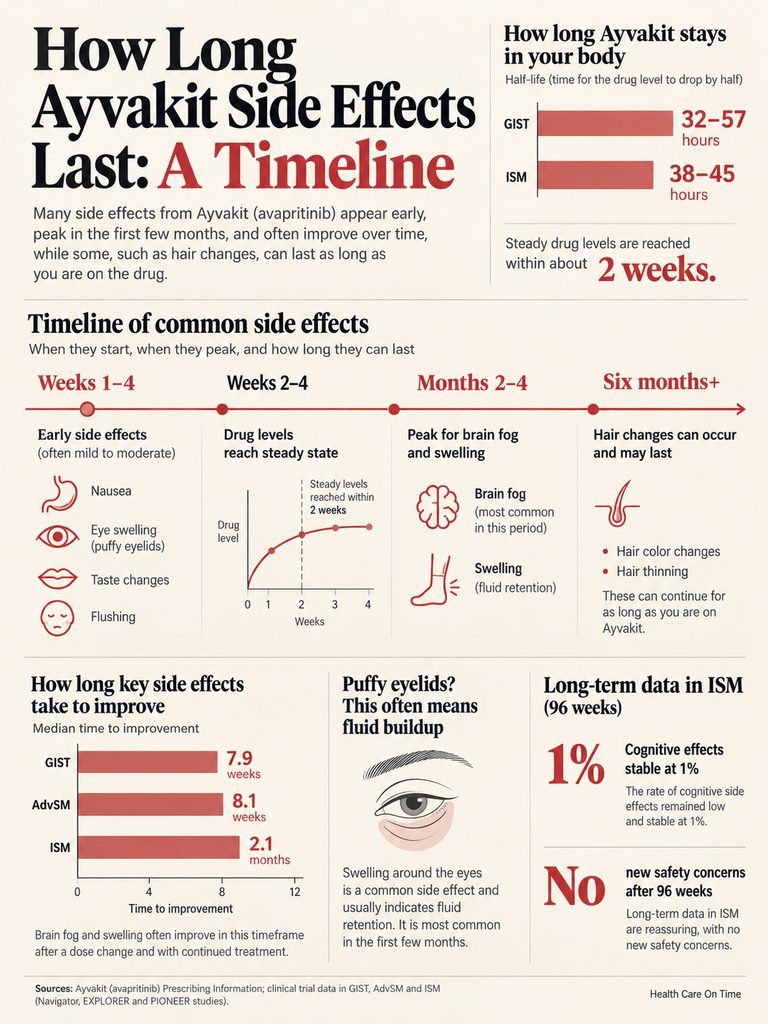
Ayvakit stays in the body a long time. Its half-life is 32 to 57 hours in GIST and 38 to 45 hours in ISM, and it reaches steady levels within about two weeks. Side effects often build slowly instead of appearing on day one.
Weeks 1 to 4
Nausea, mild swelling around the eyes, taste changes, and flushing tend to show up early. Taking each dose on an empty stomach, as directed, helps keep drug levels steady.
Questions our team hears most in this window are about puffy eyelids in the morning. That is usually the first sign of the fluid buildup Ayvakit is known for.
Months 2 to 4
This is the peak window for brain fog and swelling:
- Cognitive effects: in GIST, the median time to the first one was 8.4 weeks. In AdvSM it was 13.3 weeks, and in ISM 2.3 months.
- Swelling in ISM: a 96-week PIONEER follow-up found edema events were mainly grade 1 and most common in the first 3 to 4 months.
The good news is that these usually ease. For moderate or worse cognitive effects, the median time to improvement was 7.9 weeks in GIST and 8.1 weeks in AdvSM, often after a dose pause or cut. In ISM it was 2.1 months.
Six Months and Beyond
Hair color changes (lightening or graying) and hair thinning tend to appear later and can last while you stay on the drug.
For ISM, the long-term data are reassuring. In the 96-week extension, no new safety concerns appeared. Treatment-related cognitive effects stayed at about 1%.
Blood Test Changes to Watch on Ayvakit
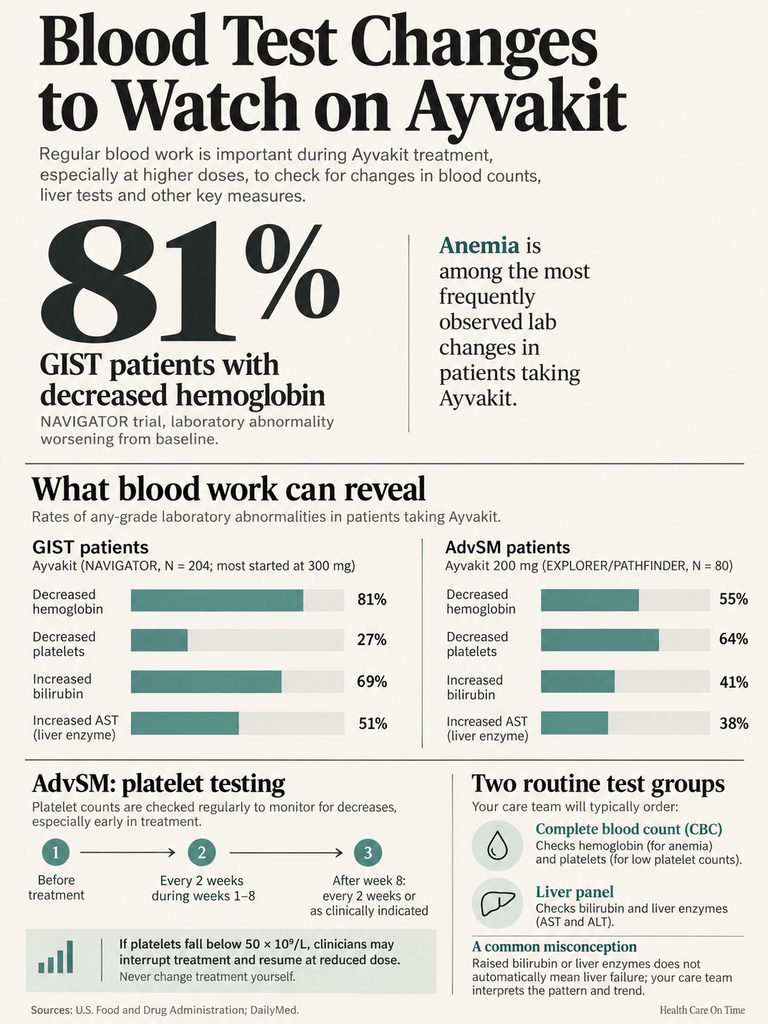
Many Ayvakit side effects only show up on lab results. That is why regular blood work is part of treatment, especially at the higher doses.
| Lab finding | GIST 300 mg, all grades (grade 3+) | AdvSM 200 mg, all grades (grade 3+) | Source |
| Low hemoglobin (anemia) | 81% (28%) | 55% (23%) | FDA label, NAVIGATOR and EXPLORER/PATHFINDER |
| Low platelets | 27% (0.5%) | 64% (21%) | FDA label, Tables 6 and 8 |
| Low neutrophils | 43% (6%) | 54% (25%) | FDA label, Tables 6 and 8 |
| High bilirubin | 69% (9%) | 41% (3%) | FDA label, Tables 6 and 8 |
| High AST (liver enzyme) | 51% (1.5%) | 38% (1%) | FDA label, Tables 6 and 8 |
| Low phosphate | 49% (13%) | 9% | FDA label, NAVIGATOR and AdvSM list |
| Low sodium | 28% (7%) | 18% (1%) | FDA label, Tables 6 and 8 |
| Low calcium | Not reported at 10% | 50% (3%) | FDA label, Table 8 |
| High alkaline phosphatase | 14% (1%) | 24% (5%) | FDA label, Tables 6 and 8 |
For ISM, the main lab changes in PIONEER were raised liver enzymes (6% vs 3% on placebo) and raised alkaline phosphatase (6% vs 1%).
The Platelet Check Schedule for AdvSM
If you have AdvSM, the label sets a strict platelet schedule:
- Before starting: a platelet count.
- First 8 weeks: a count every 2 weeks, whatever your starting level.
- After 8 weeks, below 75 x 10^9/L: every 2 weeks or more often.
- After 8 weeks, 75 to 100 x 10^9/L: every 4 weeks.
- After 8 weeks, above 100 x 10^9/L: as needed.
If platelets drop below 50 x 10^9/L, Ayvakit is paused, then restarted at a lower dose. In trials, low platelets led to a pause in 20% of patients and a dose cut in 22%. The drop usually reversed.
Bilirubin and Liver Enzymes
High bilirubin was one of the side effects that most often led to dose changes in GIST. It still needs tracking, even when it does not mean lasting liver damage.
In cases seen across our diagnostic network, patients on targeted drugs often get a flagged bilirubin or AST result and assume the worst. Our guides to high bilirubin, high ALT, and AST levels explain what those numbers mean. A complete blood count and liver panel are the core tests most care teams order.
Interactions That Raise Your Side Effect Risk
Ayvakit is broken down mainly by a liver enzyme called CYP3A. Anything that slows or speeds up that enzyme can change your drug level a lot.
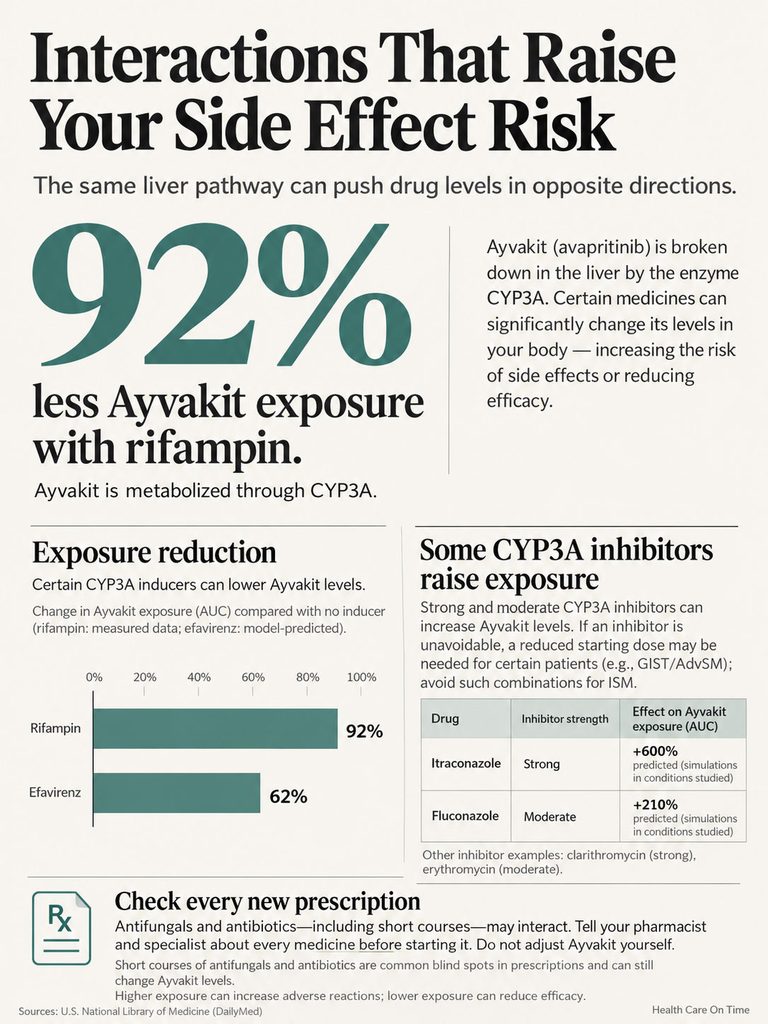
Drugs that raise Ayvakit levels (CYP3A inhibitors):
- Itraconazole, a strong antifungal: predicted to raise Ayvakit exposure by 600%.
- Fluconazole, a common antifungal: predicted to raise exposure by 210%.
- Certain antibiotics such as clarithromycin, some HIV drugs, and grapefruit act on the same enzyme.
The label says to avoid strong and moderate CYP3A inhibitors. If a moderate one cannot be avoided, the starting dose drops to 100 mg for GIST or 50 mg for AdvSM. For ISM, avoid them altogether.
Drugs that lower Ayvakit levels (CYP3A inducers): Rifampin cut Ayvakit exposure by 92%. Efavirenz is predicted to cut it by 62%. That could make the drug stop working.
Other interactions to know:
- Estrogen birth control: Ayvakit raised peak ethinyl estradiol levels by about 46%. The label suggests 20 mcg or less, or a non-estrogen method.
- Blood thinners: These add to the bleeding risk. Tell your doctor before starting any anticoagulant.
- Food: A high-fat meal raised peak drug levels by 59%. Take Ayvakit at least 1 hour before or 2 hours after eating.
- Antacids and acid reducers: No meaningful effect, according to the label.
- Alcohol: Not listed as a direct interaction, but it can worsen drowsiness and confusion.
Our medical reviewers flag short courses of antifungals and antibiotics as the most common blind spot. They get prescribed at urgent care or a dentist’s office, far from your specialist. Ask the pharmacist to check every new prescription against Ayvakit.
Is Ayvakit Worth the Side Effects? What the Trials Show
Side effects only make sense next to what the drug does. Here is the benefit side, from the same FDA label.
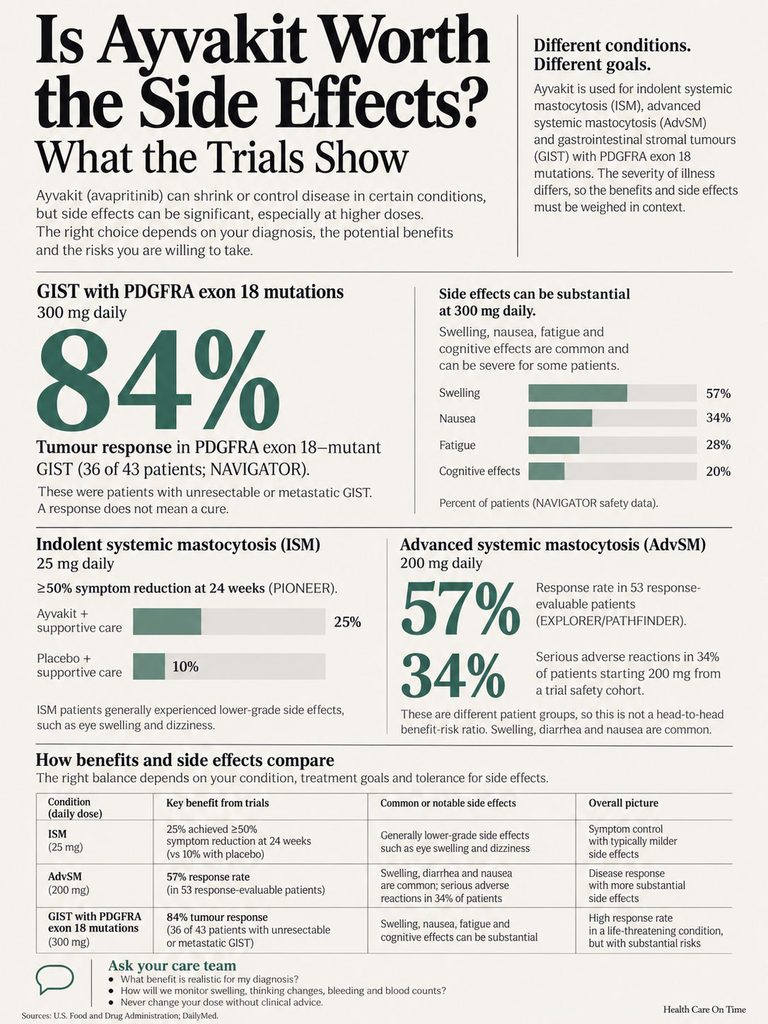
ISM (25 mg):
- Symptom scores fell by 15.3 points on Ayvakit vs 9.6 points on placebo over 24 weeks.
- 25% of patients cut their symptom score in half, vs 10% on placebo.
- Serum tryptase, a blood marker of mast cell burden, dropped by half or more in 53.9% of patients, and in none on placebo.
AdvSM (200 mg):
- 57% of evaluable patients responded.
- The median response lasted 38.3 months.
GIST with PDGFRA exon 18 mutations (300 mg):
- 84% had their tumors shrink.
- With the D842V mutation, 89% had their tumors shrink.
The trade-off differs by condition. With ISM, you are weighing mild, mostly placebo-level side effects against daily symptom relief. With GIST and AdvSM, heavier side effects are weighed against controlling a life-threatening disease.
How to Manage the Most Common Side Effects
Most Ayvakit side effects are manageable. Talk to your care team before trying anything new, and never adjust your dose yourself.
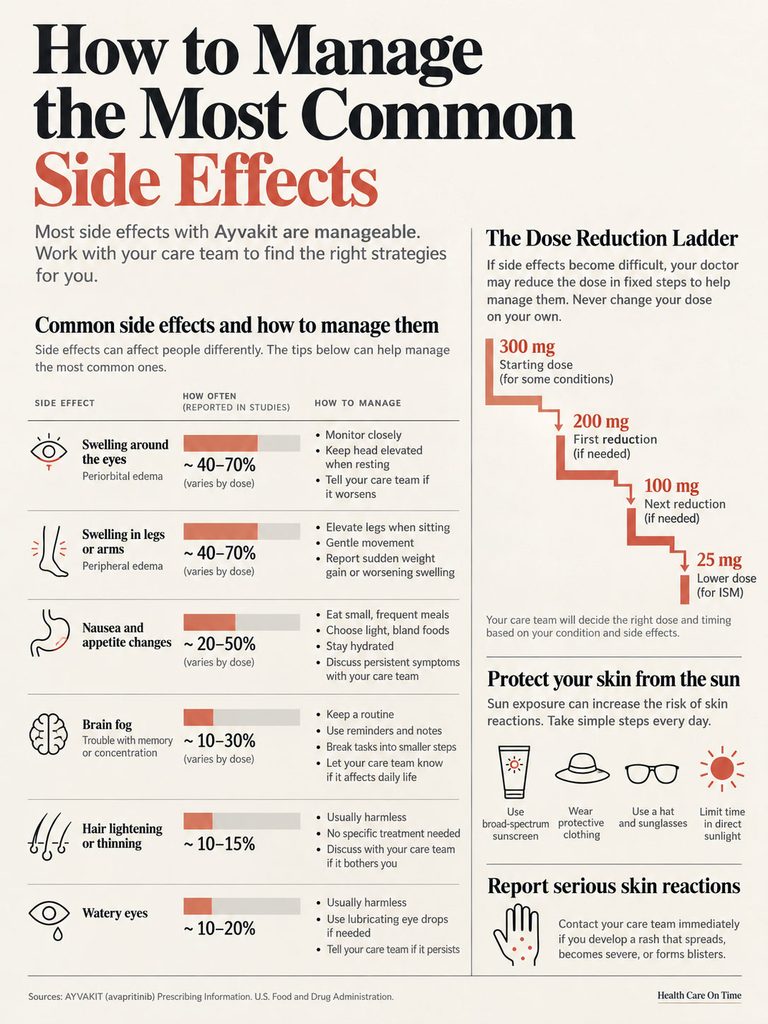
Swelling Around the Eyes and Legs
- Sleep with your head slightly raised to reduce morning eyelid puffiness.
- Cool compresses can help puffy eyes.
- Raise your legs when sitting, and ask whether compression socks suit you.
- Weigh yourself at the same time each day, and report a sudden jump of several pounds over a few days.
- Report shortness of breath right away. It can signal fluid around the lungs.
Nausea and Appetite Changes
- Take your dose on an empty stomach as directed. Eating with it raises drug levels and may worsen side effects.
- Small, bland meals spread through the day are often easier.
- Ask about anti-nausea medicine, and check it against the interaction list above.
- If you vomit after a dose, do not take another. Take the next one at the normal time.
Brain Fog: Practical Steps
- Use phone reminders, lists, and a pill organizer.
- Avoid driving while you feel foggy or drowsy.
- Ask a family member to tell you, and your doctor, if they notice changes.
- Report symptoms early. Mild ones may only need monitoring, while moderate ones usually mean a pause until you improve.
Hair, Skin, Tearing, and Sun Protection
Hair lightening and watery eyes are common at the GIST dose and are usually harmless. Use broad-spectrum sunscreen and covering clothing. Report any rash that spreads or blisters.
The Dose Reduction Ladder
When side effects become a problem, doctors step the dose down in fixed amounts:
- GIST: 300 mg, then 200 mg, then 100 mg. If 100 mg is not tolerated, the drug is stopped.
- AdvSM: 200 mg, then 100 mg, then 50 mg, then 25 mg. If 25 mg is not tolerated, the drug is stopped.
- Grade 3 or 4 side effects: Ayvakit is paused until they improve to grade 2 or lower, then restarted at the same or a lower dose.
- Severe liver problems (Child-Pugh C): starting doses are lower, including 25 mg every other day for ISM.
When to Call Your Doctor vs Go to the ER
Use this table as a quick guide. When in doubt, call your care team or 911.
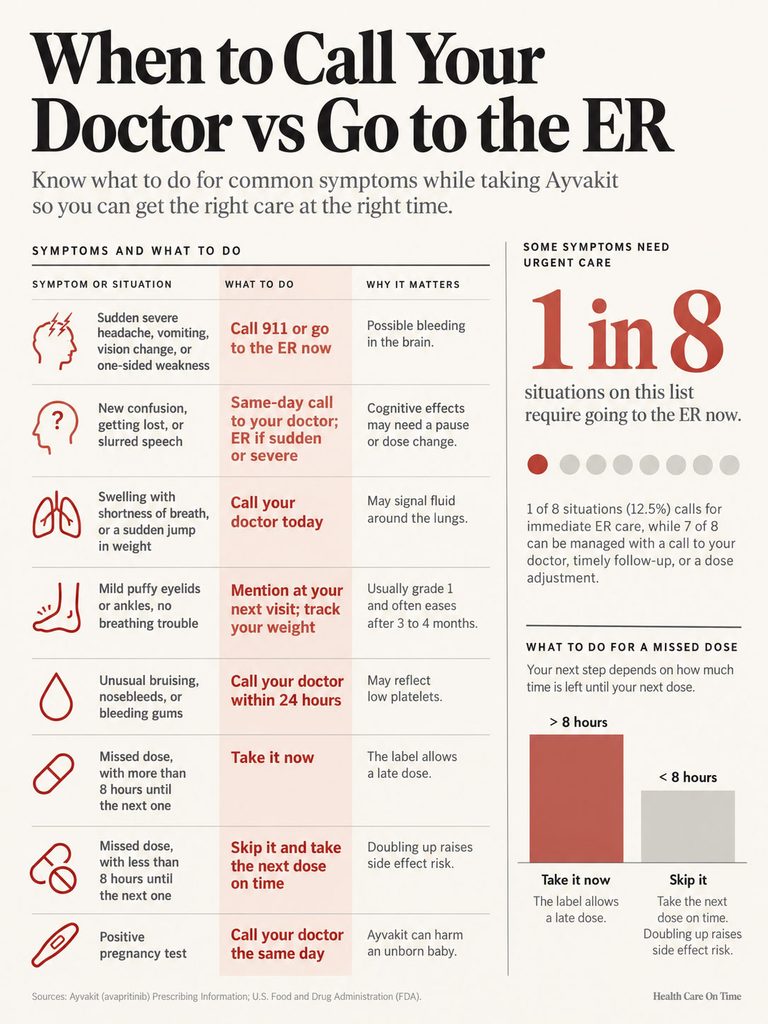
| Scenario | Recommended action | Why it matters |
| Sudden severe headache, vomiting, vision change, or one-sided weakness | Call 911 or go to the ER now | Possible bleeding in the brain, which needs emergency imaging |
| New confusion, getting lost, or slurred speech | Same-day call to your doctor; ER if sudden or severe | Cognitive effects may need a pause or dose change |
| Swelling with shortness of breath, or a sudden jump in weight | Call your doctor today | May signal fluid around the lungs |
| Mild puffy eyelids or ankles, no breathing trouble | Mention at your next visit; track your weight | Usually grade 1 and often eases after 3 to 4 months |
| Unusual bruising, nosebleeds, or bleeding gums | Call your doctor within 24 hours | May reflect low platelets; may need a blood count |
| Missed dose, with more than 8 hours until the next one | Take it now | The label allows a late dose outside the 8-hour window |
| Missed dose, with less than 8 hours until the next one | Skip it and take the next dose on time | Doubling up raises side effect risk |
| Vomited after taking a dose | Do not repeat; take the next dose as scheduled | An extra dose may overshoot your drug level |
| Prescribed a new antifungal or antibiotic | Call your specialist or pharmacist before starting | Some raise Ayvakit levels 2 to 7 times |
| Positive pregnancy test | Call your doctor the same day | Ayvakit can harm an unborn baby |
Cost, Access, and What’s Coming Next
Ayvakit is expensive, and the price is about the same at every strength. A January 2025 pricing disclosure from Blueprint listed an average wholesale price of $49,004.40 for 30 tablets of 25 mg. Drugs.com lists a cash price of around $41,002 per month.
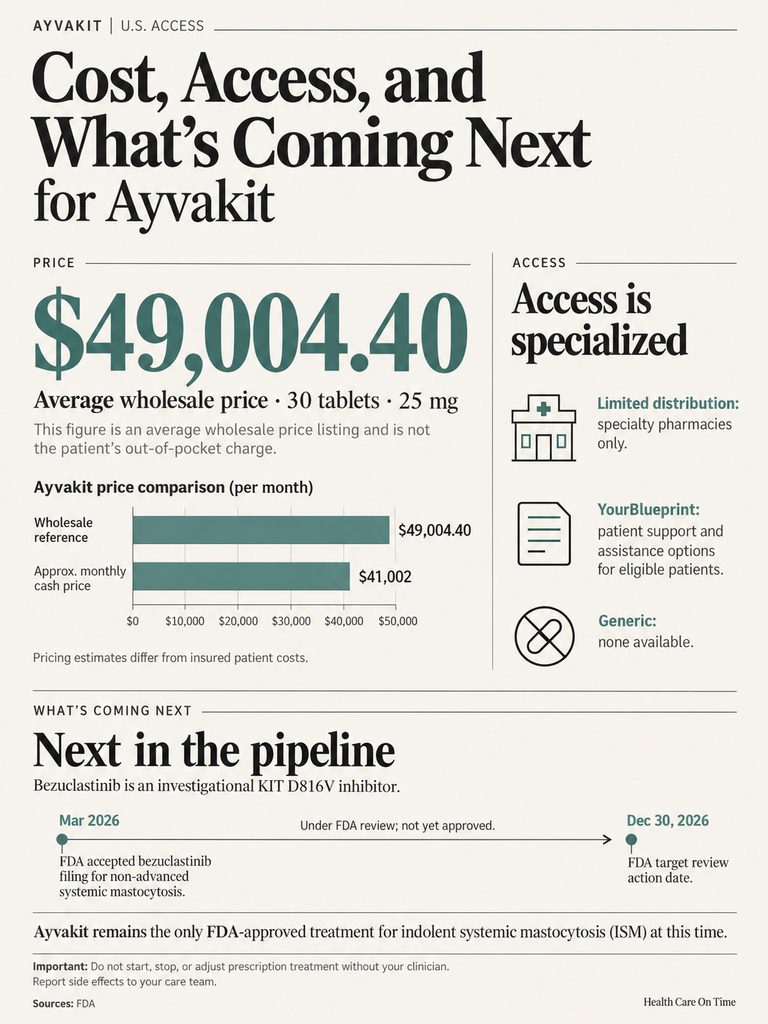
It is a limited-distribution drug, so it ships through specialty pharmacies, not retail stores. The maker’s YourBlueprint program offers several kinds of help:
- Copay help for commercially insured patients
- A free 15-day QuickStart supply during insurance delays
- Free drug for eligible uninsured patients
There is no generic version.
What’s coming: A newer KIT D816V drug, bezuclastinib from Cogent Biosciences, is under FDA review. Target decision dates are:
- GIST: November 30, 2026
- Non-advanced SM: December 30, 2026
- Advanced SM: June 29, 2027
Until any approval, Ayvakit remains the only FDA-approved option for ISM.
What the evidence can and cannot tell you:
- The ISM data come from a 24-week randomized, placebo-controlled trial plus a 96-week open-label extension.
- The GIST and AdvSM data come from single-arm studies with no placebo group.
- Only 6% of PIONEER patients were 65 or older, so older adults with ISM have less data to go on.
Frequently Asked Questions
What are the most common side effects of Ayvakit?
It depends on the dose. At 25 mg for ISM, the most common are swelling around the eyes, dizziness, swelling in the arms or legs, and flushing. At 200 mg or 300 mg, swelling, nausea, fatigue, diarrhea, and brain fog are most common. GIST patients also often report watery eyes and hair color changes.
Does Ayvakit cause weight gain?
Ayvakit does not cause fat gain, but fluid retention can make the scale go up. At the higher doses, swelling affects over 70% of patients. Report a sudden jump of several pounds over a few days. In GIST patients, weight loss (13%) was actually more common, often from nausea and low appetite.
Does Ayvakit cause hair loss?
Hair thinning was reported in 13% of GIST patients and 9% of AdvSM patients, and hair color changes were more common. At the 25 mg ISM dose, hair loss was not among the side effects listed above placebo. Hair changes usually are not dangerous, but mention them to your care team.
How long does Ayvakit brain fog last?
Brain fog usually starts within 2 to 3 months. For moderate cases, the median time to improvement was about 8 weeks, often after a dose pause or reduction. In the ISM trial, brain fog was nearly as common on placebo. Report any new memory or thinking changes early so your doctor can act.
Is Ayvakit a type of chemotherapy?
No. Ayvakit is a targeted therapy called a tyrosine kinase inhibitor. Traditional chemotherapy attacks all fast-growing cells. Ayvakit instead blocks specific faulty proteins (KIT D816V and PDGFRA) that drive mast cell disease and certain GIST tumors. It still has real side effects that need regular monitoring.
Can you drink alcohol while taking Ayvakit?
The FDA label does not list alcohol as a direct interaction. But Ayvakit can cause drowsiness, dizziness, and confusion, and alcohol can make all three worse. Alcohol is also hard on the liver, and Ayvakit can raise bilirubin and liver enzymes. Ask your doctor what amount, if any, is safe for you.
Can you eat grapefruit on Ayvakit?
It’s best to avoid grapefruit and grapefruit juice. Grapefruit slows the CYP3A liver enzyme that breaks down Ayvakit. That can raise drug levels and increase the risk of side effects like swelling, bleeding, and brain fog. Ask your pharmacist about other foods and supplements that act on the same enzyme.
What happens if you miss a dose of Ayvakit?
Take it as soon as you remember, unless your next dose is due within 8 hours. If it is, skip the missed dose and take the next one at your usual time. Never take two doses together. If you vomit after a dose, don’t take an extra one.
Does Ayvakit cause bleeding?
It can. Bleeding in the brain occurred in 2.9% of GIST and AdvSM patients in trials, and none in the 246 people treated for ISM. Minor bleeding such as nosebleeds or bruising is more common. Low platelets and blood thinners raise the risk, so tell your doctor about both.
Is the 25 mg dose safer than higher doses?
Based on trial data, yes. At 25 mg, serious side effects occurred in 0.7% of ISM patients, compared with 34% to 52% at the higher cancer doses. Most ISM side effects were mild and only slightly more common than with placebo. The higher doses treat more aggressive diseases, where more risk is accepted.
How much does Ayvakit cost without insurance?
Cash prices run roughly $41,000 to $49,000 for a 30-day supply, and the price is about the same at every strength. Most patients pay far less through insurance. The maker’s YourBlueprint program offers copay help, a free QuickStart supply during coverage delays, and free drug for eligible uninsured patients.
Can you take Ayvakit while pregnant or breastfeeding?
No. Ayvakit can harm an unborn baby. Use effective birth control during treatment and for 6 weeks after the last dose; this applies to men with female partners too. Do not breastfeed during treatment or for 2 weeks after the last dose. Tell your doctor right away if you become pregnant.
Disclaimer: This article is for general information only and is not medical advice. Ayvakit is a prescription medicine that must be managed by your oncologist, hematologist, or allergist-immunologist. Never stop, skip, or change your dose without talking to your care team. If you have a sudden severe headache, confusion, vision changes, or one-sided weakness, call 911. Report side effects to the FDA through MedWatch at 1-800-FDA-1088.
References
- U.S. Food and Drug Administration: AYVAKIT (avapritinib) Prescribing Information, revised November 2024
- Gotlib J, et al. Avapritinib versus Placebo in Indolent Systemic Mastocytosis. NEJM Evidence, 2023
- HCPLive: Avapritinib Demonstrates Durable Improvements in Indolent Systemic Mastocytosis Symptoms, QoL (September 2025)
- The ASCO Post: FDA Approves Avapritinib for Indolent Systemic Mastocytosis
- Sanofi: Sanofi to Acquire Blueprint Medicines (June 2025)
- Blueprint Medicines: AYVAKIT Pricing Transparency Disclosure (January 2025)
- Drugs.com: Ayvakit Price Guide
- HCPLive: FDA Accepts Bezuclastinib NDA for Advanced Systemic Mastocytosis (September 2026)
- FDA MedWatch: Safety Information and Adverse Event Reporting Program