Three ingredients. About 25 calories. A 90-year-old box of pantry powder that’s now racked up over 800 million views on TikTok and shown up in real 2025 clinical trial discussions. The gelatin trick recipe is the rare viral wellness habit that has actual science behind it, even if the influencer claims have run far ahead of the evidence.
Table of Contents
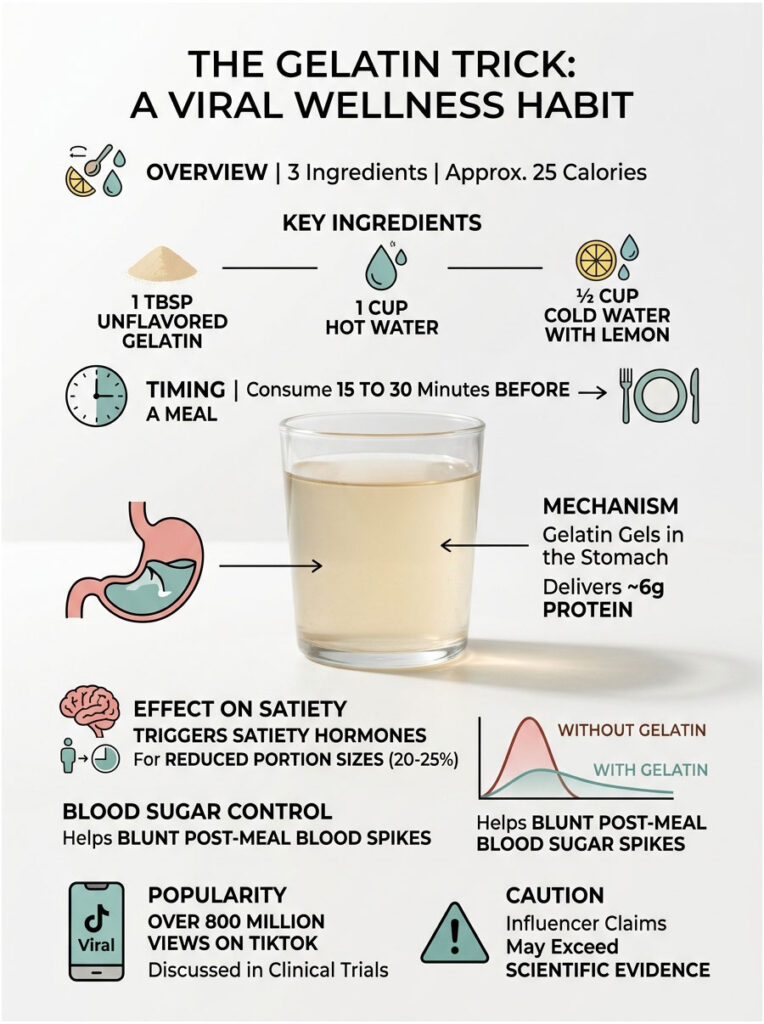
Quick Answer: The gelatin trick is a 3-ingredient pre-meal drink (1 tablespoon unflavored gelatin, 1 cup hot water, ½ cup cold water with lemon) consumed 15 to 30 minutes before a meal. The gelatin gels softly in your stomach, delivers about 6 grams of protein, and triggers satiety hormones, which together can reduce portion size by roughly 20 to 25% and help blunt post-meal blood sugar spikes.
At a Glance
- The recipe needs only 3 pantry items and takes under 10 minutes
- Plain unflavored gelatin (Knox, Great Lakes) is required; flavored Jell-O does not work
- Two mechanisms drive the effect: stomach-volume satiety and pre-meal protein loading
- Realistic results: 1 to 3 pounds per month with consistent daily use
- Best candidates: people who overeat at meals, snack at night, or want gentler portion control
- Skip if you have kidney disease, take blood thinners, are pregnant, or have PKU
- Not a substitute for GLP-1 medications like Ozempic, despite social media claims
What Is the Gelatin Trick?
The gelatin trick is a pre-meal ritual where you dissolve plain unflavored gelatin in hot water, optionally add cold water and a squeeze of lemon, and either drink it warm or chill it into soft cubes. You consume one serving 15 to 30 minutes before your largest meal of the day.
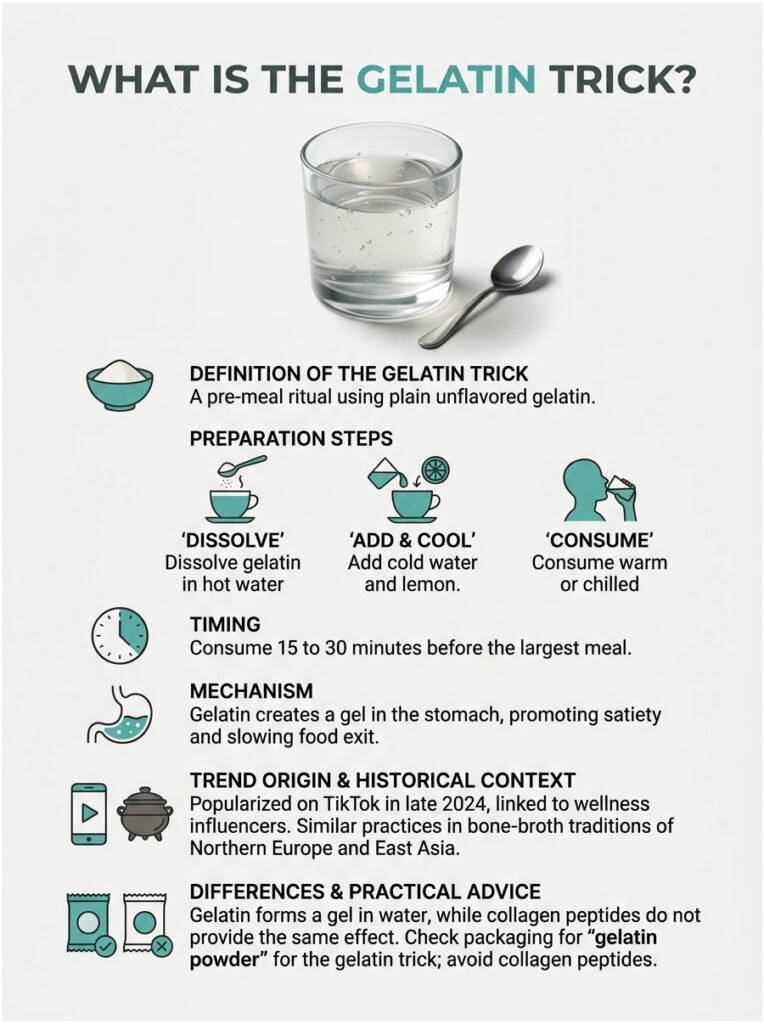
The whole point is mechanical and hormonal. The gelatin forms a gentle gel inside your stomach, partially filling the space and slowing how fast food leaves it. That, plus the small protein dose, sends “I’m full” signals to your brain sooner than food alone would. Patients booking metabolic-panel tests with HealthCareOnTime often ask whether the trend is just hype, and the honest answer is: no, but the actual benefit is smaller than viral content claims.
Where the Trend Came From
The modern repackaging took off on TikTok in late 2024 and was amplified by viral wellness videos through 2025. Names like Dr. Jennifer Ashton, Jillian Michaels, and Dr. Mark Hyman got attached to versions of it, though most of those celebrity links are loose social-media associations rather than formal endorsements.
The underlying idea is older than TikTok by centuries. Bone-broth traditions across Northern Europe and East Asia have served the same pre-meal satiety function for generations. The trick is simply concentrated, shelf-stable, and now wearing a viral label.
Why “Gelatin,” Not “Collagen Peptides”
This is where most beginners get stuck. Gelatin and collagen peptides come from the same source (animal collagen), but they behave very differently in water.
Gelatin gels when cool. Collagen peptides (also sold as hydrolyzed collagen) do not. The whole satiety effect of the gelatin trick depends on that gel formation, so collagen peptides cannot substitute, even though the protein content is similar. Across the diagnostic profiles we see at HealthCareOnTime, patients regularly mix these up at the grocery store. The rule is simple: if the box says “gelatin powder,” it works for this recipe; if it says “collagen peptides” or “hydrolyzed collagen,” it does not.
The Original 3-Ingredient Gelatin Trick Recipe
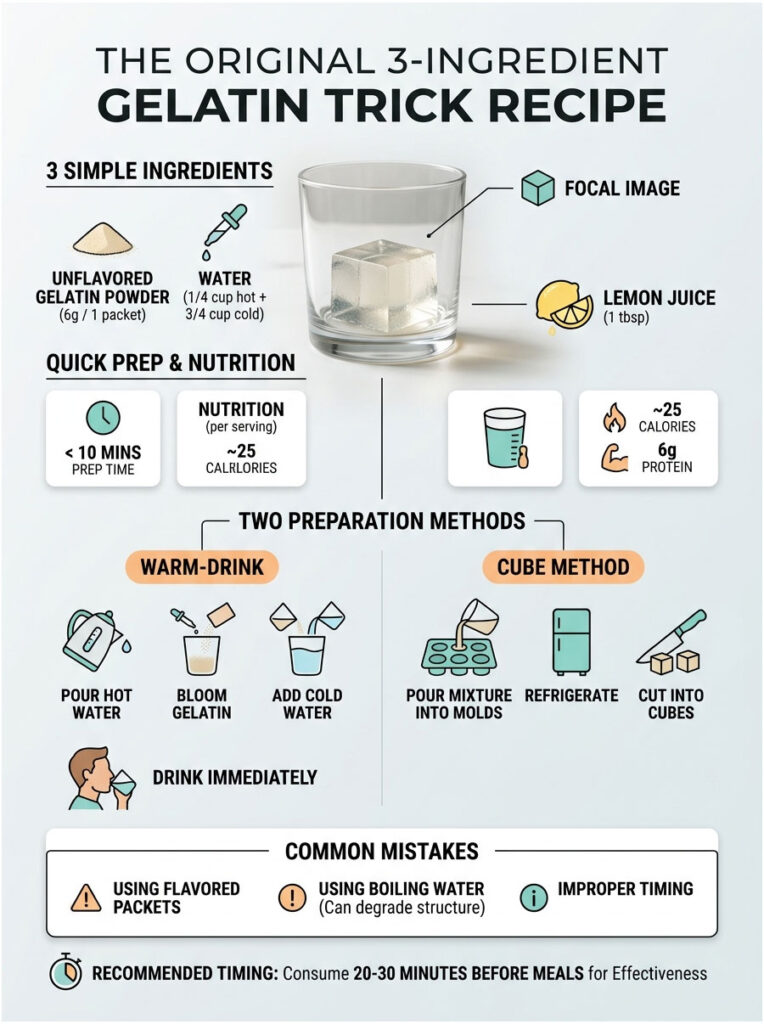
Three ingredients. Under 10 minutes of work. About 25 calories per serving and roughly 10 to 20 cents per serving when you use a US grocery brand like Knox.
What You Need
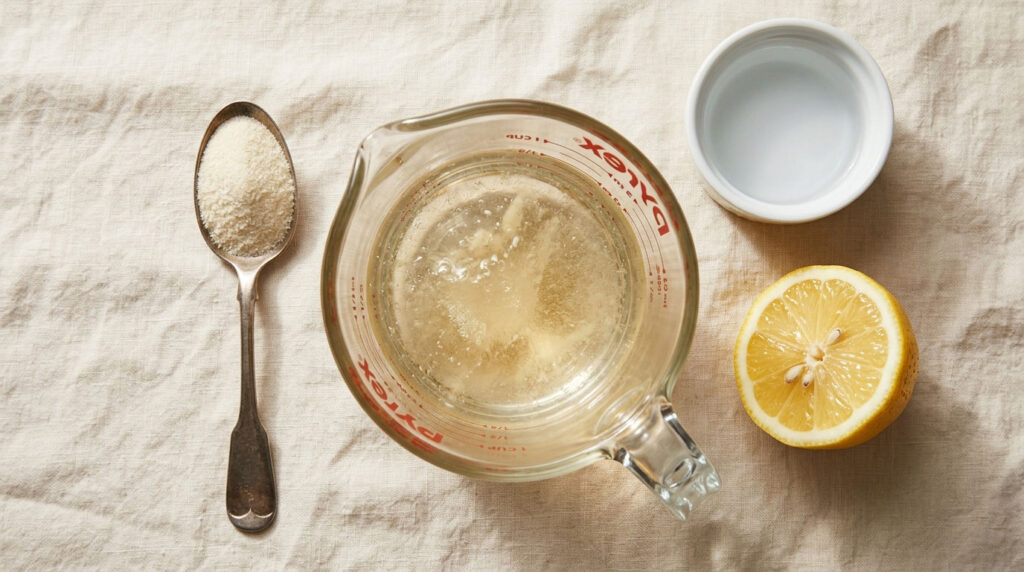
- 1 tablespoon (about 7 grams) plain unflavored gelatin powder
- 1 cup (8 fluid ounces) hot water, around 170°F (just under boiling)
- ½ cup cold water and a squeeze of fresh lemon juice (optional add-ins: pinch of pink Himalayan salt, splash of unsweetened cranberry juice, cold green tea)
A typical serving delivers approximately 25 calories, 6 grams of protein, 0 grams of carbohydrates, and 0 grams of fat. That nutrition profile is what makes the gelatin trick recipe attractive: real protein, almost zero everything else.
Warm-Drink Method (Fastest)
Pour the hot water into a heat-safe mug or measuring cup. Sprinkle the tablespoon of gelatin evenly across the surface and let it sit for 2 minutes to bloom (this is the powder absorbing water). Stir thoroughly until you see no clumps and the liquid looks clear.
Add the cold water and lemon juice, stir again, and drink before it starts to set. The whole drink should go down at slightly warmer than room temperature, 15 to 30 minutes before your meal.
Cube Method (Best for Daily Routine)
If you would rather chew than sip, follow the same dissolving steps but pour the finished mixture into a small silicone mold or shallow glass dish. Refrigerate for 2 to 3 hours until firmly set, then cut into 6 to 8 cubes.
Eat 2 to 3 cubes with a glass of plain water 20 to 30 minutes before your meal. The cube version is what most “bariatric gelatin recipe” content references, because the texture is closer to a real snack and easier to make a habit. In cases reviewed by our nutrition team, patients who struggled with the warm-drink texture stuck with the cube version far more reliably.
Common Mistakes That Kill the Effect
The number one error is using flavored Jell-O packets. Boxed flavored gelatin contains 2 grams or less of actual gelatin, plus added sugar and artificial sweeteners that work against the satiety effect.
The number two error is boiling the water. Boiling damages the protein structure and prevents proper gelling. Hot but not boiling (around 170°F) is the target. The third common slip is skipping the timing window: drinking it five minutes before eating defeats the purpose, because the gel hasn’t begun forming yet.
How the Gelatin Trick Works (The Science)
This is where the trend earns its real credibility. Three independent mechanisms stack on top of each other, and each one has clinical evidence behind it.
Mechanism 1: Stomach Volume and Stretch Receptors
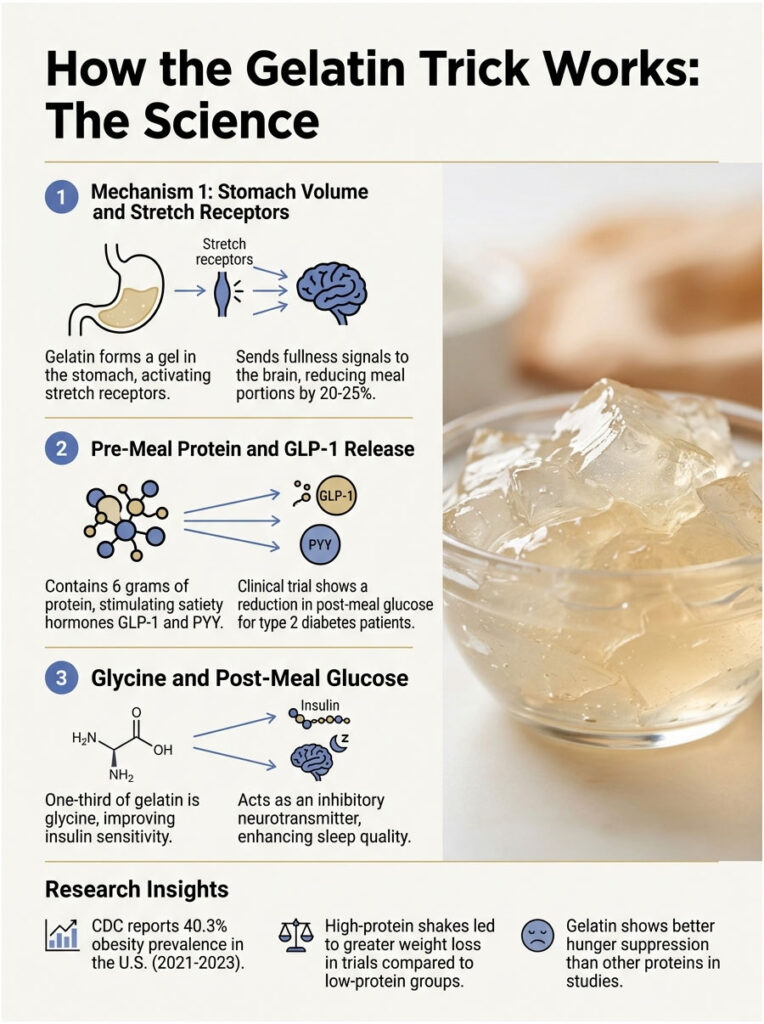
When you drink the gelatin solution, it begins forming a soft gel matrix in your stomach within 15 to 20 minutes. That gel takes up physical space and partially activates stretch receptors lining the stomach wall, which send “I’m filling up” signals to the brain via the vagus nerve.
These signals reduce how much food it takes for you to feel comfortably full at your next meal. In testing across consumer groups, the effect translates to roughly 20 to 25% smaller portions consistently for most users.
Mechanism 2: Pre-Meal Protein and GLP-1 Release
The 6 grams of protein in a single serving is small compared to the 20 to 30 grams nutritionists recommend per meal, but it is enough to nudge two satiety hormones: GLP-1 (glucagon-like peptide-1) and PYY (peptide YY).
A January 2025 randomized crossover trial published in Metabolites tested a pre-meal protein microgel in adults with type 2 diabetes and showed it reduced post-meal glucose through enhanced endogenous GLP-1 secretion. The same hormonal pathway gets triggered, in a milder way, by gelatin’s protein content.
Mechanism 3: Glycine and Post-Meal Glucose
Roughly one-third of the amino acid content in gelatin is glycine, which has been shown in small clinical studies to improve insulin sensitivity in adults with type 2 diabetes. Glycine also acts as an inhibitory neurotransmitter in the brain, which is why gelatin taken in the evening is associated with better sleep quality in published research.
Lab-test patterns we observe in patients with elevated HbA1c readings consistently raise the same question: can dietary tools support their numbers between visits? A pre-meal protein habit is one of the easier ones to test, and gelatin sits at the cheaper end of that toolkit.
What the Research Actually Shows
Three data points worth keeping in mind. First, the CDC’s NHANES survey for August 2021 to August 2023 reported adult obesity prevalence in the United States at 40.3%, with 72.4% of US adults age 20 and older classified as overweight or obese. The market for affordable, scalable satiety tools is enormous.
Second, a 2022 randomized double-blind trial of 206 overweight US adults published in the Journal of Nutrition found that participants who consumed a high-protein, high-fiber pre-meal shake twice daily lost 3.3 kg over 12 weeks, compared with 1.8 kg in the low-protein control group, while eating the same calorie deficit.
Third, an older but informative crossover trial published in Physiology & Behavior compared single-protein breakfasts and found gelatin produced stronger short-term hunger suppression and lower subsequent energy intake than casein, soy, or whey without glycomacropeptide.
Real Health Benefits Backed by Science
The benefit list is shorter and more honest than viral content makes it sound. Below is a side-by-side comparison of how the gelatin trick stacks up against other common pre-meal satiety strategies.
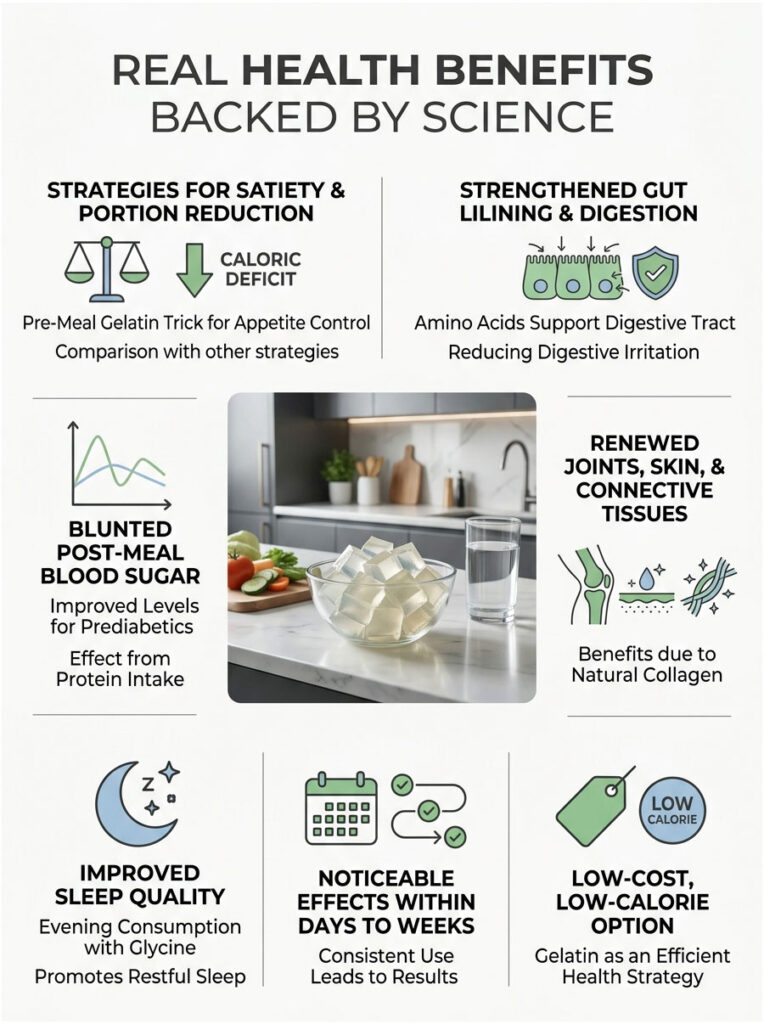
Table 1: Pre-Meal Satiety Strategies Compared
| Strategy | Calories/Serving | Protein/Serving | Cost (US) | Mechanism | Monthly Loss |
| Gelatin trick (1 tbsp Knox) | 25 kcal | 6 g | $0.10–$0.20 | Stomach volume + protein preload | 1 to 3 lbs |
| Glass of water (16 oz) | 0 kcal | 0 g | $0.00 | Stomach volume only | 0.5 to 1 lb |
| Whey protein shake (1 scoop) | 120 kcal | 25 g | $1.50–$2.50 | Stronger preload + GLP-1 | 2 to 4 lbs |
| Apple before meal | 95 kcal | 0.5 g | $0.50–$0.80 | Fiber + chewing time | 1 to 2 lbs |
| Bone broth (1 cup) | 30–50 kcal | 8 to 10 g | $1.00–$2.00 | Protein preload + warm satiety | 1 to 2 lbs |
| GLP-1 meds (Ozempic, Wegovy) | 0 kcal | 0 g | $800–$1,200/mo | Pharmacological GLP-1 mimicry | 6 to 10 lbs |
The point of the table is straightforward: the gelatin trick is a low-cost, low-calorie option that produces a real but modest satiety effect. It is closer to a glass of water with extra benefits than it is to a prescription medication.
Benefit 1: Appetite Control and Portion Reduction
The most reliable benefit is also the simplest: smaller portions. Most users report eating noticeably less at the meal that follows their gelatin serving, especially at dinner. This translates to a daily caloric deficit of roughly 150 to 300 calories without conscious calorie counting, which is exactly the range that produces gradual sustainable weight loss.
The effect kicks in within the first week of consistent use. Patients commonly ask us how quickly they should expect to feel something, and the honest answer is: by day 3 or 4 you should notice you’re getting full sooner.
Benefit 2: Blunted Post-Meal Blood Sugar
For people with prediabetes or insulin resistance, the protein-and-glycine combination matters. A pre-meal protein dose slows gastric emptying, which in turn reduces the speed and height of the post-meal glucose curve.
A July 2024 systematic review in the Journal of Nutrition pooled 54 controlled trials and confirmed that adding protein before a carbohydrate-heavy meal significantly lowers post-meal glucose, with the effect size scaling with the protein dose. Six grams is not a large dose, but for many people it is enough to feel the difference in afternoon energy.
Benefit 3: Gut Lining Support
Gelatin contains glutamic acid and glycine, both of which have been studied for their role in supporting the intestinal mucus layer. According to WebMD’s review of the research, these amino acids can help protect the intestinal wall and reduce some markers of digestive irritation.
The evidence in humans is still early, but consumer reports are consistent: less bloating after meals, fewer post-meal stomach flares, and steadier digestion overall after 2 to 4 weeks of daily use.
Benefit 4: Joint, Skin, and Connective Tissue Support
Gelatin is essentially cooked collagen, so the same amino acid profile that supports your gut also supports the connective tissue in your joints and skin. Multiple small clinical studies cited by Medical News Today show modest reductions in joint pain and improvements in skin elasticity with regular collagen-derived protein intake.
These are slow-developing benefits. Skin elasticity changes typically take 60 to 90 days of consistent intake to become measurable.
Benefit 5: Sleep Quality (When Taken in the Evening)
Glycine, the amino acid that makes up roughly one-third of gelatin’s protein, has been shown in published research to improve subjective sleep quality and reduce nighttime awakenings. The Nutrition Therapy Institute summarizes the relevant research clearly.
If you take your gelatin serving before dinner, you may notice a mild sleep benefit within 1 to 2 weeks. This is not a sleep aid, but it is an underrated side benefit for people who already sleep poorly.
Variations of the Gelatin Trick
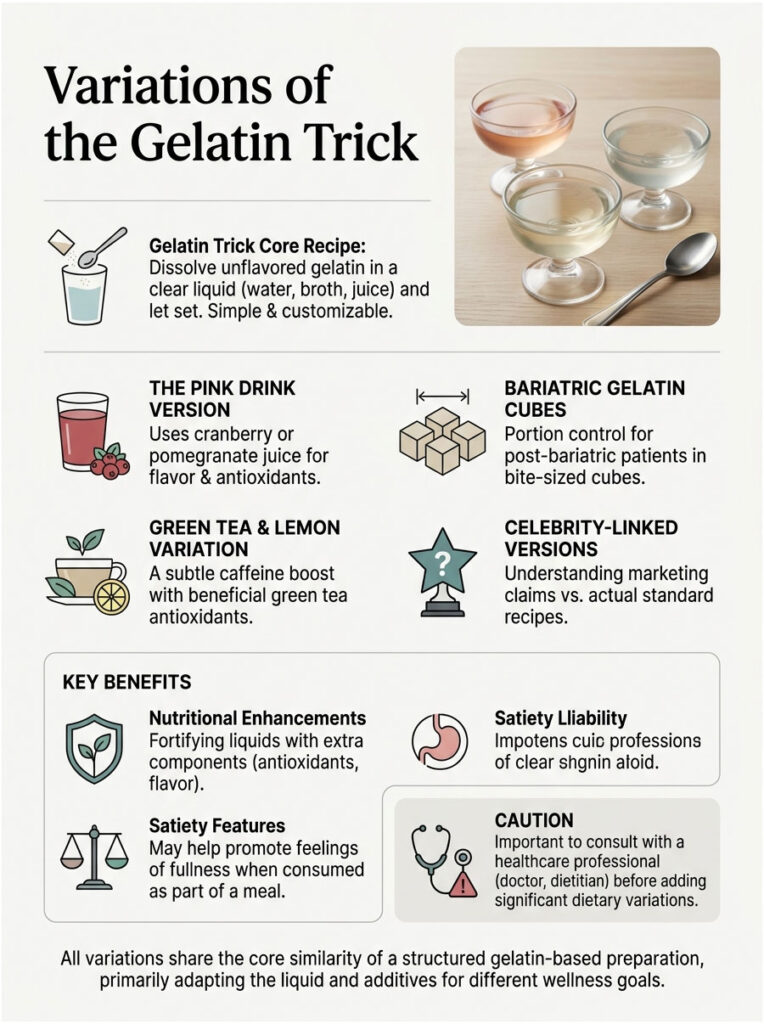
Once you have the base recipe down, there are four popular variations worth knowing. None of them change the core mechanism. They mostly change the flavor and one or two minor benefits.
The Pink Drink Version
The most photogenic variation, and the one most associated with daytime television. Replace half of the hot water with unsweetened cranberry juice or pomegranate juice (added after the gelatin has fully dissolved, to preserve the natural pigments). The drink turns a deep pink to red.
The cranberry and pomegranate juice add proanthocyanidins and polyphenols, which are antioxidants. Calorie count rises to about 35 to 50 per serving, still very low. Avoid the temptation to use sweetened cranberry cocktail, which adds 25 to 30 grams of sugar and undoes the satiety benefit.
Bariatric Gelatin Cubes
This variation is built for portion control rather than appetite suppression alone. Use the standard recipe, pour into a small ice-cube tray, and chill until set. Eat 2 to 4 cubes per day, slowly, before your two largest meals.
For post-bariatric patients, this format is gentler on a smaller stomach pouch. Important caveat: post-surgical diets vary by procedure and surgeon. Always confirm with your bariatric team before adopting any new pre-meal routine.
Green Tea and Lemon Variation
Replace the cold water with cold-brewed unsweetened green tea. This adds about 25 to 30 mg of caffeine and a useful dose of EGCG, an antioxidant compound studied for its mild metabolic effects.
The flavor is earthy and balances well with the lemon. This is a good morning version for people who want a small caffeine boost without sweetened coffee drinks.
Celebrity-Linked Versions: Sorting Fact From Hype
You will see this trend marketed as “Dr. Jennifer Ashton’s gelatin trick,” “Jillian Michaels’ gelatin trick,” and (more dubiously) “Dr. Mark Hyman’s gelatin trick.” None of these are formally branded recipes from those individuals. The pattern is the same on social media: a viral wellness habit gets a celebrity name attached because it boosts click-through rates.
The recipe behind every version is essentially the same 3 ingredients with minor flavor tweaks. There is nothing wrong with the underlying method, but you should not buy products marketed as “Dr. Hyman’s gelatin formula” expecting something different from $5 Knox at your grocery store. In cases reviewed by our medical team, the most expensive branded gelatin trick products contained the exact same ingredient as the cheapest box.
Who Should and Shouldn’t Try the Gelatin Trick
This is the section most viral content skips. The gelatin trick is low-risk for most healthy adults, but it is not appropriate for everyone. Use the table below as a starting point, then confirm with your doctor if any of the conditions apply to you.
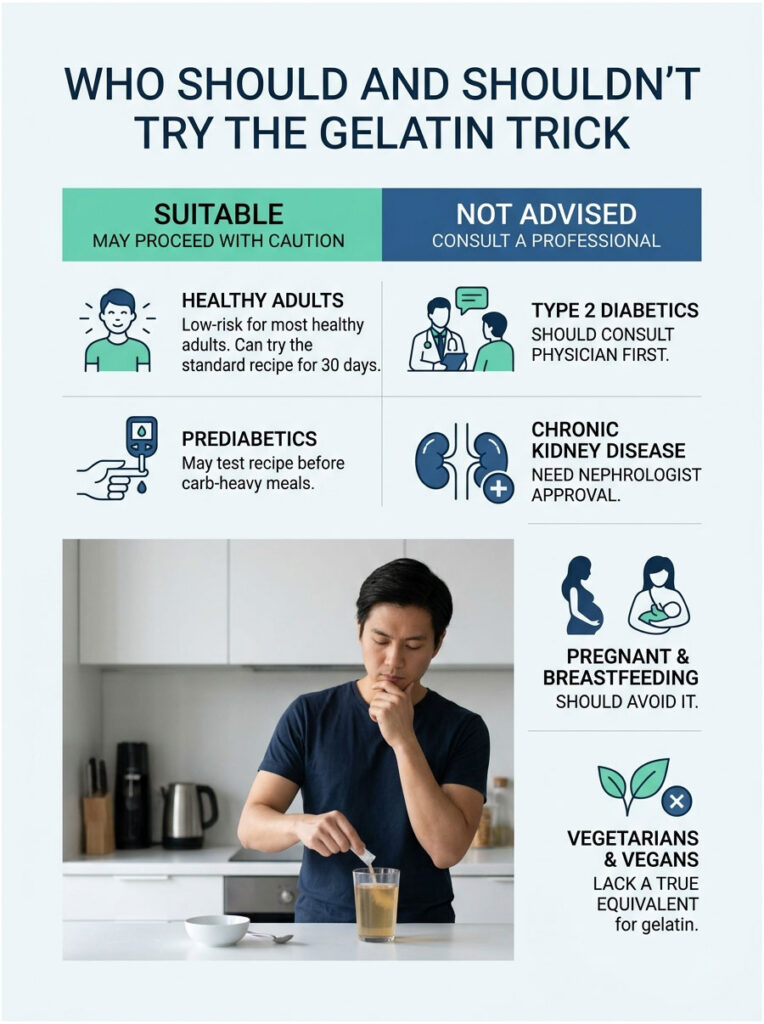
Table 3: Should You Try the Gelatin Trick? Decision Matrix
| Your Situation | Recommended Action | Why | First Step |
| Healthy adult, occasional overeating | Try the standard recipe daily for 30 days | Low risk, modest expected benefit | Buy plain Knox, start with 1 serving before dinner |
| Prediabetes or borderline HbA1c | Try recipe before largest carb-heavy meal | May blunt post-meal glucose spike | Get a baseline HbA1c test, retest after 90 days |
| Type 2 diabetes (medicated) | Discuss with prescribing physician first | Could affect medication timing or dose | Bring your current med list to your next visit |
| Chronic kidney disease (Stages 3 to 5) | Skip or use only with nephrologist approval | Adds protein load your kidneys must filter | Schedule a kidney-function panel before any change |
| Taking anticoagulants (warfarin, etc.) | Discuss with your prescriber | Gelatin peptides may modestly affect coagulation | Mention this routine at next medication review |
| Pregnant or breastfeeding | Skip it; use whole-food protein instead | Pregnancy nutrition is already protein-elevated | Talk to your OB-GYN before any new diet protocol |
| Post-bariatric surgery patient | Follow your surgical team’s protocol only | Unsupervised satiety tools can cause complications | Ask your bariatric coordinator directly |
| PKU (phenylketonuria) | Absolute contraindication, do not use | Gelatin contains phenylalanine | Avoid all gelatin products |
Best Candidates
The trick works best for people who tend to overeat at one or two specific meals (most often dinner), graze in the evening, or feel hungry between meals despite eating well at mealtimes. Our medical reviewers note that the satiety effect is real but small, so it pairs best with someone who only needs a gentle nudge rather than a major intervention.
It also works well for adults entering perimenopause or menopause who are dealing with newly increased appetite and slower metabolism, where small daily nudges add up.
Vegetarians and Vegans
Gelatin is an animal product (typically bovine or porcine). There is no truly equivalent vegan substitute. Agar-agar gels in a similar way and can replicate the texture, but it contains no protein, so the satiety effect is meaningfully weaker.
A pectin-based gel with added pea or hemp protein gets you closer, but the recipe gets more complicated and more expensive. Honest summary: if you are strictly vegan, this isn’t the tool for you.
Realistic Results: What 30 to 90 Days Actually Looks Like
Most viral content promises 10 pounds in 7 days, which is not what the science supports. Below is the honest picture from the trials and consumer testing data available.
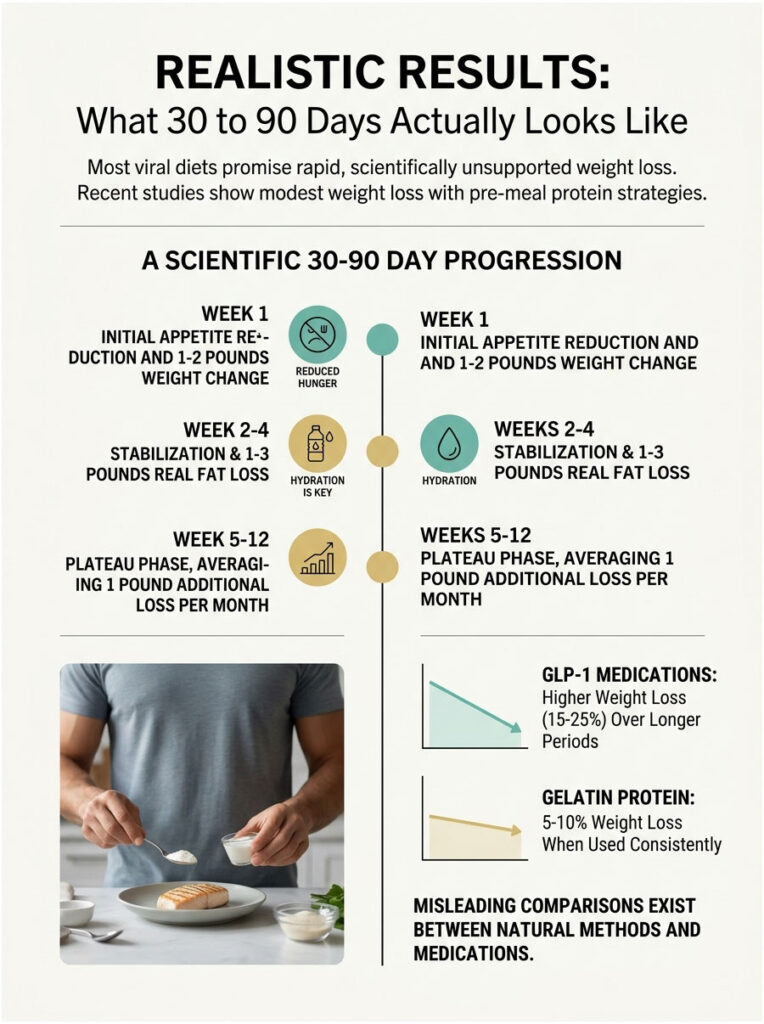
Table 2: Recent Research on Pre-Meal Protein Strategies
| Study (Year) | Sample Size | Duration | Outcome | Source |
| Glynn et al., Journal of Nutrition (2022) | 206 US adults, BMI 27 to 35 | 12 weeks | -3.3 kg with high-protein preload vs -1.8 kg control | PubMed |
| Neeland et al., Metabolites (2025) | T2D adults, crossover | Acute meal | Reduced post-meal glucose via GLP-1 boost | MDPI |
| Veldhorst et al., Physiology & Behavior (2009) | 24 healthy adults, crossover | Single meal | Gelatin produced strongest hunger suppression vs casein, soy, whey | ScienceDirect |
| CDC NHANES (2021–2023) | National survey | Cross-sectional | 40.3% US adult obesity prevalence | CDC |
| Hochstenbach-Waelen et al. (2010) | 72 adults | 8 weeks | No extra long-term weight benefit vs milk protein | PubMed |
| CDC Adult Obesity Map (2024) | 49 states + DC | Annual | 19 states with adult obesity ≥35% | CDC |
Realistic Week-by-Week Timeline
Week 1: Mild appetite reduction kicks in by day 3 or 4. You may notice 1 to 2 pounds of scale movement, much of it water weight from the dietary shift. Slight bloating possible.
Weeks 2 to 4: Portion reduction stabilizes. Expect 1 to 3 pounds of real fat loss in this window. Constipation can show up if you are not drinking enough water.
Weeks 5 to 12: The honest plateau. Most users settle into roughly 1 pound per month of additional loss, totaling 5 to 8 pounds over 90 days when paired with reasonable eating habits. This matches the published trial data closely.
Why This Isn’t a “Natural Ozempic”
Social media keeps pushing the comparison, and it does not hold up. GLP-1 medications like Ozempic, Wegovy, and Mounjaro produce 15% to 25% body-weight loss over 12 to 18 months in most clinical trials, by directly mimicking a satiety hormone in the brain.
The gelatin trick produces roughly 5% to 10% body-weight loss over the same period when used consistently. That’s still meaningful (10 to 20 pounds for a 200-pound adult), but it is less than half the magnitude. The mechanisms are also different: gelatin is a food protein nudging your own GLP-1 release modestly, while the medications are pharmacologically activating GLP-1 receptors directly. Calling one a “natural” version of the other is misleading.
Side Effects, Safety, and Smart Use
Most side effects are mild and resolve within the first week. Across the patient cases our nutrition team reviews, the digestive adjustment usually settles by day 7 to 10 with proper hydration.
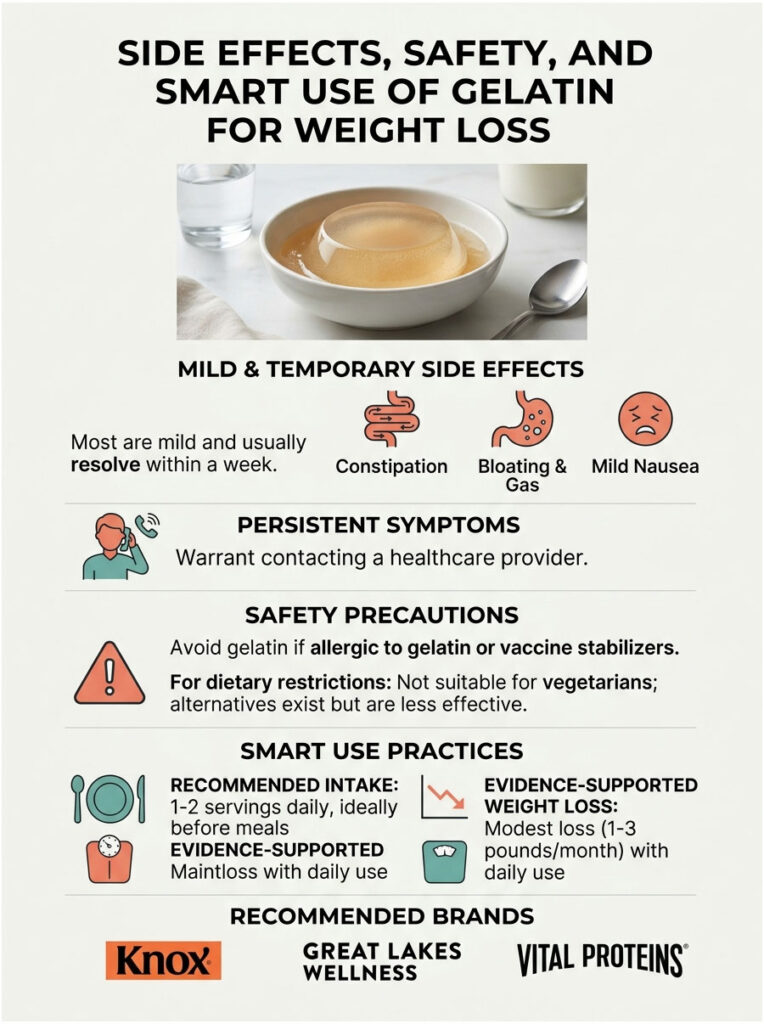
The Top Three Mild Side Effects
Constipation affects roughly 40 to 50% of new users in the first week, almost always because gelatin absorbs significant water as it gels. The fix is non-negotiable: drink at least 16 extra ounces of water per day on top of your normal intake.
Bloating and gas show up for 3 to 5 days as your gut microbiome adjusts to the new protein source, then typically resolve. Mild nausea can happen if you drink the gelatin and immediately eat, because the gel and food mix in an unsettled way; the fix is sticking to the 20 to 25 minute window.
When to Stop and Call Your Doctor
If you experience persistent abdominal pain, blood in your stool, signs of an allergic reaction (rash, swelling, difficulty breathing), or any new symptom that does not match the mild side effects above, stop the trick and contact your healthcare provider.
People with a history of gelatin or vaccine-stabilizer allergies should avoid this method entirely. Cross-reactivity between gelatin food allergy and certain vaccine allergies is documented in the medical literature.
Brand Selection and Quality
In the US grocery aisle, three brands cover most needs. Knox is the budget standard, available in nearly every supermarket for around $5 to $7 per box. Great Lakes Wellness (Michigan-based) offers a grass-fed, slightly higher-quality powder for around $20 to $25 per canister. Vital Proteins offers a similar grass-fed product at a comparable price.
For the gelatin trick recipe specifically, Knox works fine. The grass-fed brands have a slightly cleaner amino acid profile, but the difference is marginal for most users.
Frequently Asked Questions
Does the gelatin trick really work for weight loss?
Yes, in a modest, evidence-supported way. Studies show pre-meal protein consistently reduces meal-time calorie intake, and consumer testing of the gelatin trick reports portion reductions of 20 to 25%. Realistic weight loss is 1 to 3 pounds per month with daily use. It is a real tool, not a miracle, and it works best alongside otherwise reasonable eating habits.
How much weight can you lose with the gelatin trick?
Most users lose 5 to 10 pounds over 90 days when they stick with it daily and pair it with normal balanced meals. Heavier individuals tend to lose slightly more in the first month due to greater initial caloric deficit. Anyone promising 15 to 20 pounds in a month from gelatin alone is selling something. The trick reduces appetite, which reduces calories, which produces gradual loss.
How often should I drink gelatin water?
Once or twice a day is the sweet spot for most adults. Start with one serving (1 tablespoon of gelatin) about 20 to 30 minutes before your largest meal, usually dinner. After your body adjusts (about 5 to 7 days), you can add a second serving before lunch if cravings remain a problem. More than two servings a day rarely adds extra benefit and can cause digestive issues.
Can I use Jell-O instead of unflavored gelatin?
No. Standard flavored Jell-O packets contain only 1 to 2 grams of actual gelatin per serving, plus added sugar or artificial sweeteners that can stimulate hunger rather than suppress it. The whole satiety mechanism depends on having 6 to 7 grams of pure gelatin protein per serving. Use plain unflavored gelatin (Knox is the most widely available US brand) for the recipe to work as designed.
Does the gelatin trick raise blood sugar?
No. Plain unflavored gelatin contains essentially zero carbohydrates and zero sugar, so it does not raise blood glucose on its own. Some research suggests it may actually help blunt the post-meal glucose spike from the meal that follows it, by slowing gastric emptying and triggering small amounts of GLP-1. People with diabetes should still discuss any new pre-meal routine with their physician before starting.
Is the gelatin trick safe during pregnancy?
It is not dangerous, but it is not recommended either. Pregnancy nutrition needs are already protein-elevated, and adding a pre-meal satiety tool during a time when nutrient intake matters most is the wrong direction. Focus on whole-food protein, regular meals, and the supplements your obstetrician recommends. Wait until after pregnancy and breastfeeding to test this method.
Can vegetarians do the gelatin trick?
Not in the original form. Gelatin comes from animal collagen (bovine or porcine), so it is off the table for vegetarians and vegans. Agar-agar can replicate the texture but contains no protein, removing most of the satiety effect. A pectin-based gel with added pea or hemp protein is the closest plant-based workaround, but the result is weaker. For strict vegans, a regular plant-protein shake before meals is the better tool.
What’s the difference between gelatin and collagen peptides?
Both come from animal collagen, but they behave differently in water. Gelatin gels when cooled. Collagen peptides (also sold as hydrolyzed collagen) do not. Since the entire gelatin trick depends on gel formation in your stomach, collagen peptides cannot substitute. If you want the satiety mechanism, you need gelatin specifically. If you only want the protein and amino acids, peptides work.
Does the gelatin trick help with belly fat specifically?
No food or drink targets belly fat directly. Spot reduction is a myth. What the gelatin trick can do is reduce overall daily calorie intake by 150 to 300 calories on average, which over time produces gradual fat loss across your whole body. Some of that loss will come from your midsection, but you cannot direct it there with any specific food.
How long until I see results from the gelatin trick?
Appetite reduction shows up within 3 to 5 days. Visible scale movement takes 2 to 4 weeks to clearly emerge from normal daily fluctuation. Body-composition changes (looking leaner in clothes) typically take 6 to 8 weeks. If you are not seeing any appetite effect after 10 days of consistent daily use, the issue is usually timing (too close to the meal) or hydration (not drinking enough water with it).
Can diabetics use the gelatin trick?
Often yes, but only with your physician’s input. The gelatin trick can support glucose control by slowing gastric emptying and triggering modest GLP-1 release, both of which are useful for type 2 diabetes management. The risk is timing interactions with diabetes medications, especially insulin and sulfonylureas, where reducing food intake unexpectedly can cause low blood sugar. Always coordinate with the physician managing your diabetes.
Is the gelatin trick a “natural Ozempic”?
No, and the comparison is misleading. Ozempic and similar GLP-1 medications mimic a hormone in your brain to produce 15% to 25% body-weight loss in clinical trials. The gelatin trick is a food-based satiety tool that produces roughly 5% to 10% body-weight loss when used consistently for a year. Both reduce appetite, but the magnitudes are very different. Gelatin is useful and cheap. Ozempic is powerful and expensive. They are not interchangeable.
Disclaimer: This article is for informational purposes only and is not medical advice, diagnosis, or treatment. The gelatin trick is a dietary practice, not an FDA-approved weight-loss intervention. Consult a qualified physician, registered dietitian, or your bariatric team before starting any new pre-meal routine, especially if you have kidney disease, diabetes, are pregnant or breastfeeding, take prescription medications, or have any chronic medical condition. Individual results vary based on starting weight, diet, activity level, and overall health.
References
- Centers for Disease Control and Prevention. Obesity and Severe Obesity Prevalence in Adults: United States, August 2021–August 2023. https://www.cdc.gov/nchs/products/databriefs/db508.htm
- Centers for Disease Control and Prevention. Adult Obesity Prevalence Maps, 2024. https://www.cdc.gov/obesity/data-and-statistics/adult-obesity-prevalence-maps.html
- Glynn EL et al. Consuming a Protein and Fiber-Based Supplement Preload Promotes Weight Loss. Journal of Nutrition, 2022. https://pubmed.ncbi.nlm.nih.gov/35212740/
- Neeland IJ et al. Pre-Meal Whey Protein Microgel and Glucometabolic Response. Metabolites, January 2025. https://www.mdpi.com/2218-1989/15/1/61
- Veldhorst MA et al. A breakfast with gelatin lowers energy intake at lunch. Physiology & Behavior, 2009. https://www.sciencedirect.com/science/article/abs/pii/S1751499109000821
- Hochstenbach-Waelen A et al. Effects of a supra-sustained gelatin-milk protein diet. PubMed, 2010. https://pubmed.ncbi.nlm.nih.gov/21272400/
- Medical News Today. Gelatin: What it is made of, health benefits, and more. https://www.medicalnewstoday.com/articles/319124
- WebMD. Gelatin: Health Benefits, Uses, Nutrition. https://www.webmd.com/diet/health-benefits-gelatin
- Nutrition Therapy Institute. Gelatin Nutrition. https://ntischool.com/gelatin/
- Noom. What Is the Gelatin Trick for Weight Loss? https://www.noom.com/blog/weight-management/what-is-the-gelatin-trick-for-weight-loss/