Broccoli sits near the top of nearly every “healthiest foods” list in America, and rightly so. But ask a cardiologist managing a warfarin patient, or an endocrinologist treating hypothyroidism, and you’ll hear a different story. The same vegetable that lowers cancer risk in one person can quietly sabotage thyroid hormones or blood-clotting medication in another.
Table of Contents
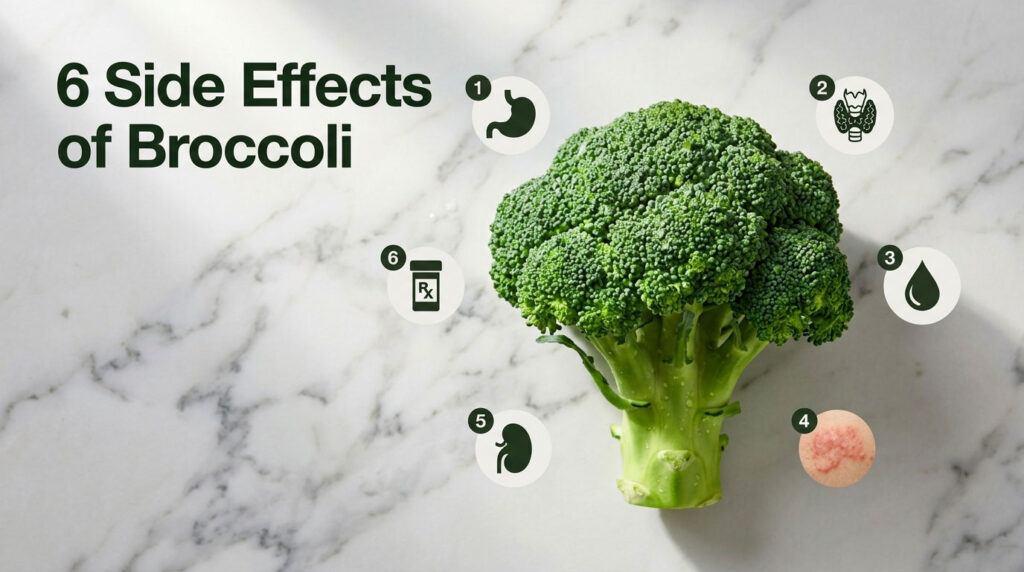
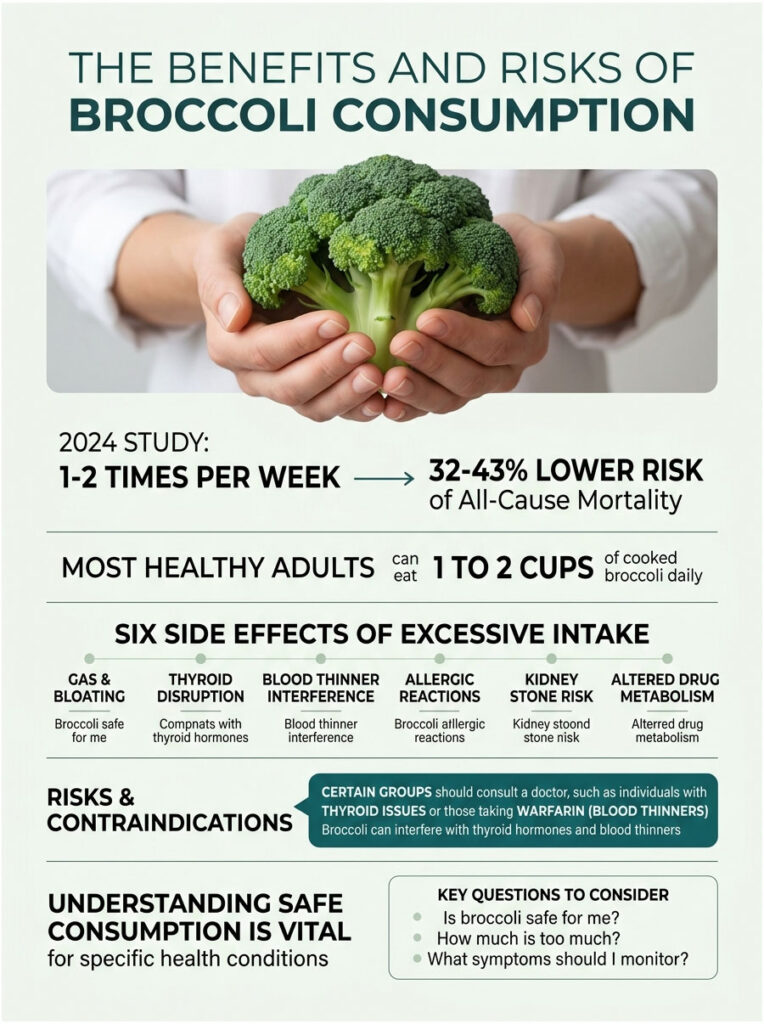
Quick Answer: Broccoli isn’t bad for most people, but eating too much can cause six specific side effects: gas and bloating, thyroid disruption, blood thinner interference, allergic reactions, kidney stone risk, and altered drug metabolism. Healthy adults can safely eat 1 to 2 cups of cooked broccoli daily. People with thyroid disease, kidney issues, IBS, or those on warfarin should consult a doctor first.
At a Glance
- About 20 million Americans have a thyroid condition that can be aggravated by raw broccoli.
- Broccoli’s vitamin K can throw off warfarin and increase clotting or bleeding risk.
- Raffinose and FODMAPs in broccoli are the main causes of gas and bloating.
- Cooking broccoli reduces goitrogens by up to 90 percent.
- 1 to 2 cups of cooked broccoli per day is the typical safe limit for healthy adults.
- Broccoli sprouts are 50 to 100 times more concentrated in sulforaphane than mature florets.
- Lab tests like TSH and INR can confirm whether broccoli is affecting you.
A 2024 prospective cohort study published in Frontiers in Nutrition followed more than 12,000 American adults and found that eating broccoli 1 to 2 times per week was tied to a 32 to 43 percent lower all-cause mortality risk. That’s powerful evidence in favor of eating it. So why this article? Because the same study, and dozens like it, also flag clear groups for whom too much broccoli causes real harm.
Patients booking thyroid panels and INR tests through HealthCareOnTime ask the same questions every week: is broccoli safe for me, how much is too much, and what symptoms should I watch for? The six side effects of eating broccoli below are the answers our medical reviewers see most often.
Is Broccoli Actually Bad for You? The Honest Answer
For roughly 80 percent of US adults, broccoli is not just safe but genuinely protective. The other 20 percent (people on certain medications, those with thyroid or kidney disease, and people with sensitive guts) need to think more carefully about portion size and preparation method.
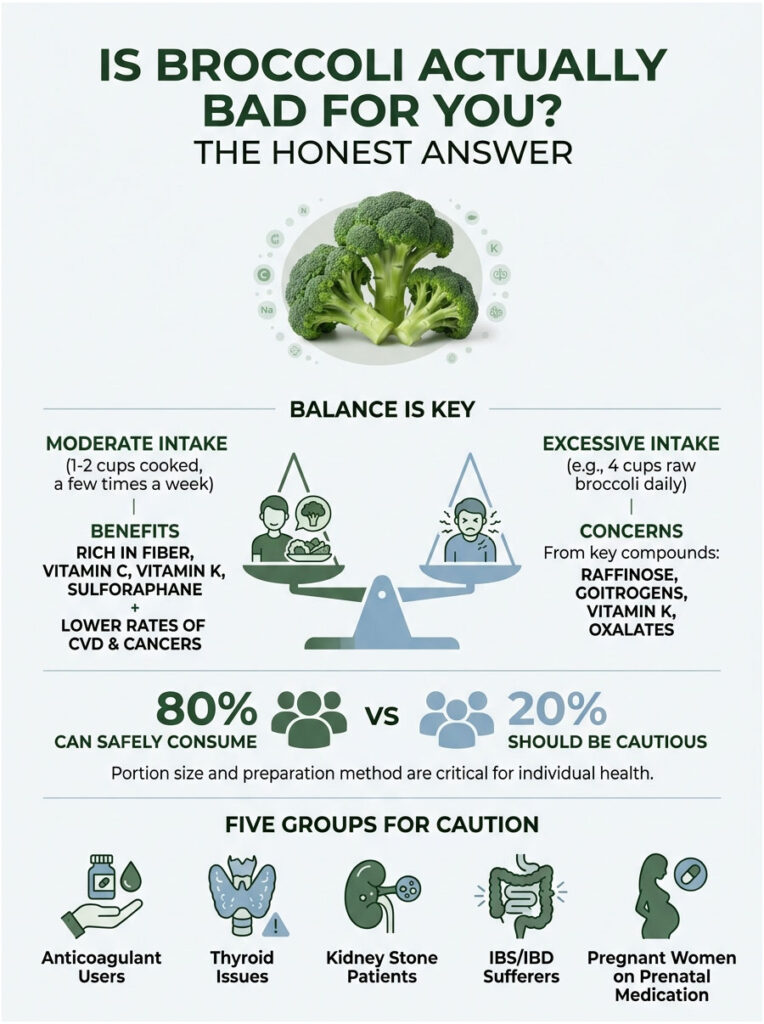
The honest answer is dose-dependent. A cup or two of cooked broccoli a day, a few times a week, is fine for most. A daily juice with raw broccoli sprouts, or four cups at every dinner, is where problems start.
What Broccoli Does Right (Quick Benefits Recap)
One cup of cooked broccoli (156 grams) delivers about 5 grams of fiber, 101 mg of vitamin C (well over your daily need), 220 mcg of vitamin K, and a trace of plant protein, according to USDA FoodData Central. It also carries sulforaphane, a sulfur compound studied for its anti-cancer and anti-inflammatory effects.
The cohort data is hard to argue with. Regular broccoli eaters in the US show lower rates of cardiovascular disease, certain cancers, and overall mortality. None of that disappears just because side effects exist.
When Broccoli Becomes a Problem
Three factors flip broccoli from helper to hindrance: dose, preparation, and your individual health profile. Eating four cups of raw broccoli daily affects your body very differently from eating a cup of steamed broccoli twice a week.
The compounds responsible for the side effects (raffinose, goitrogens, vitamin K, oxalates) are present in every floret. They become a problem only when intake outpaces what your liver, gut, or thyroid can comfortably process.
Who Should Be Most Cautious
Five US groups need to pay closer attention. People on warfarin or other anticoagulants, anyone with diagnosed hypothyroidism or Hashimoto’s, those with kidney stones or chronic kidney disease, people with IBS or IBD, and pregnant women on prenatal medication.
Across patients who book digestive panels through HealthCareOnTime, these are the same five groups whose results most often correlate with high cruciferous vegetable intake. Knowing which group you fall into is half the battle.
The 6 Side Effects of Eating Too Much Broccoli
The six side effects below are ranked by how often they show up in clinical literature and patient reports, not by severity. Each section explains the cause, the at-risk group, the warning signs, and the fix.
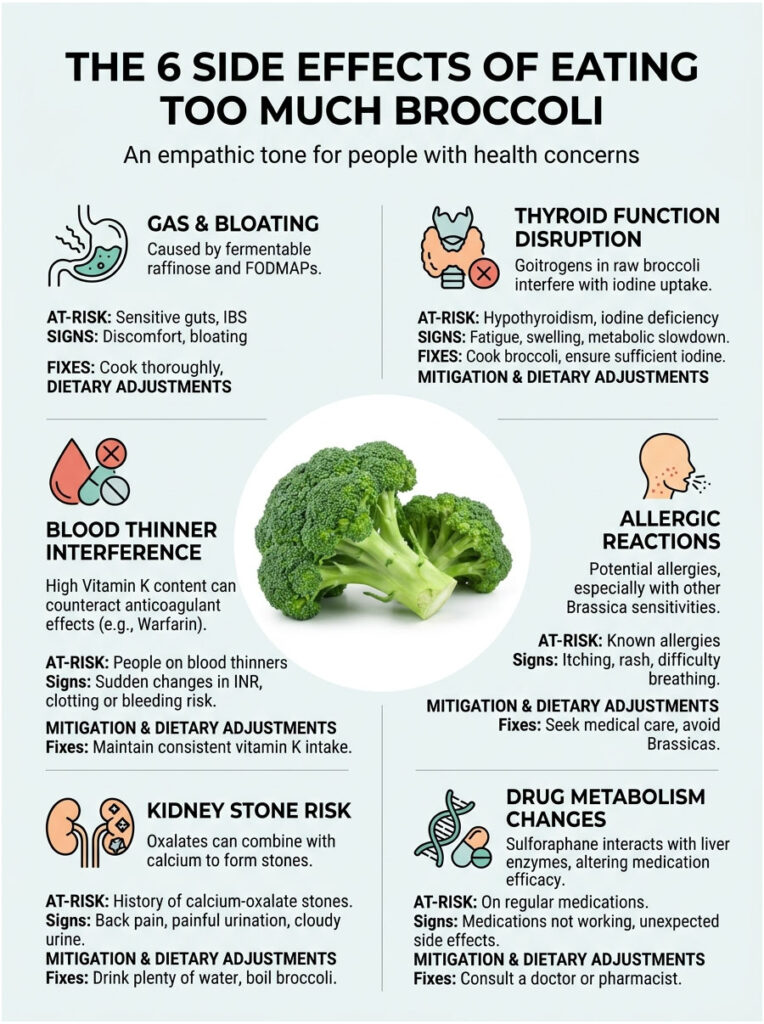
Side Effect 1: Gas, Bloating, and Digestive Discomfort
This is the most common broccoli side effect by a wide margin. Broccoli contains raffinose, a complex sugar your small intestine can’t break down. Bacteria in your large intestine ferment it, producing methane and hydrogen gas, the source of bloating, flatulence, and cramps.
Broccoli is also high in FODMAPs (fermentable carbohydrates), which can trigger flares in people with IBS or sensitive guts. The American College of Gastroenterology lists cruciferous vegetables among the top FODMAP-heavy foods.
Most at risk: People with IBS, IBD, SIBO, lactose intolerance, or anyone increasing fiber intake suddenly.
Warning signs: Gas within 30 to 90 minutes of eating, abdominal distension, cramping, sometimes diarrhea.
What to do: Cook broccoli thoroughly (steam or roast), start with 1/2 cup portions, drink more water, and consider an alpha-galactosidase enzyme supplement (like Beano) before meals.
Side Effect 2: Thyroid Function Disruption (Goitrogens)
Broccoli contains goitrogens, plant compounds that can interfere with iodine uptake by the thyroid gland. Raw broccoli has the highest goitrogen load. Cooking deactivates roughly 90 percent of these compounds.
For people with normal thyroid function and adequate iodine intake, this rarely matters. For the 20 million Americans with thyroid disease, particularly those with hypothyroidism or autoimmune Hashimoto’s, daily large servings of raw broccoli or broccoli sprouts can lower thyroid hormone production further.
Most at risk: People with hypothyroidism, Hashimoto’s, iodine deficiency, or anyone on levothyroxine.
Warning signs: Fatigue, unexplained weight gain, cold intolerance, dry skin, brain fog, hair thinning.
What to do: Always cook broccoli before eating, limit raw broccoli sprouts to small amounts, ensure adequate iodine through iodized salt or seafood, and book a TSH test if symptoms appear.
Side Effect 3: Blood Thinner Interference (Vitamin K + Warfarin)
This side effect is small in scale but high in clinical impact. Broccoli is one of the richest food sources of vitamin K, with one cup of cooked broccoli supplying around 184 percent of the daily recommended intake.
Vitamin K activates clotting factors. Warfarin (Coumadin) blocks vitamin K to thin the blood. Suddenly eating much more or much less broccoli can swing your INR (the lab number that measures clotting) into dangerous territory in either direction.
Most at risk: Anyone on warfarin, dabigatran, rivaroxaban, apixaban, or edoxaban.
Warning signs: Easy bruising, prolonged bleeding from cuts, blood in urine or stool, sudden swelling or pain in a leg.
What to do: Don’t avoid broccoli. Keep your weekly intake consistent. The Cleveland Clinic guidance is to maintain a steady vitamin K intake rather than swing high or low. Get your INR tested regularly, and tell your prescriber about any major dietary shift.
Side Effect 4: Allergic Reactions
Broccoli allergy is rare but real. It typically shows up in people who already react to other Brassica vegetables (cabbage, mustard, kale) or to mugwort and birch pollen (oral allergy syndrome).
Symptoms range from mild itching of the lips and throat to hives, swelling, and in rare cases anaphylaxis. The American College of Allergy, Asthma & Immunology tracks cruciferous allergies as a small but growing category.
Most at risk: Anyone with known plant or pollen allergies, oral allergy syndrome, or family history of food allergies.
Warning signs: Itchy mouth, hives, lip or tongue swelling, wheezing, difficulty breathing.
What to do: Stop eating broccoli, take an antihistamine for mild symptoms, seek emergency care for swelling or breathing trouble, and book an IgE food allergy panel for confirmation.
Side Effect 5: Kidney Stone Risk (Oxalates)
Broccoli contains moderate amounts of oxalates, naturally occurring compounds that can bind with calcium in the urine to form kidney stones. The risk is modest compared with foods like spinach and rhubarb, but it adds up for people who form stones regularly.
The National Kidney Foundation advises people prone to calcium oxalate stones to limit oxalate-rich foods and pair them with calcium-containing foods.
Most at risk: People with a history of calcium oxalate kidney stones, chronic kidney disease, or hyperoxaluria.
Warning signs: Sharp pain in the side or back, blood in urine, painful urination, nausea.
What to do: Pair broccoli with a calcium source (cheese, milk, yogurt, fortified plant milk), drink at least 64 ounces of water daily, and consider a basic kidney function panel through HealthCareOnTime.
Side Effect 6: Drug Metabolism Changes (Liver Enzymes)
Broccoli’s sulforaphane and other isothiocyanates speed up certain liver enzymes (CYP1A2 and others). That means medications cleared by these enzymes can leave your system faster than expected, weakening their effect.
The list includes some statins, certain antidepressants, beta-blockers, and acetaminophen. The interaction is mild for most people but matters when timing or dosage is critical.
Most at risk: People on multiple prescription medications, those with narrow-therapeutic-index drugs, or anyone starting a new medication.
Warning signs: Reduced effectiveness of a usually reliable medication, return of symptoms the drug normally controls.
What to do: Tell your doctor and pharmacist about heavy cruciferous vegetable intake. Don’t stop your medication; ask whether dosage needs adjustment.
Side-by-Side: Broccoli Compared to Other Cruciferous Vegetables
Broccoli isn’t the only Brassica with these issues. Comparing it to its cousins helps you decide which to rotate, swap, or limit.
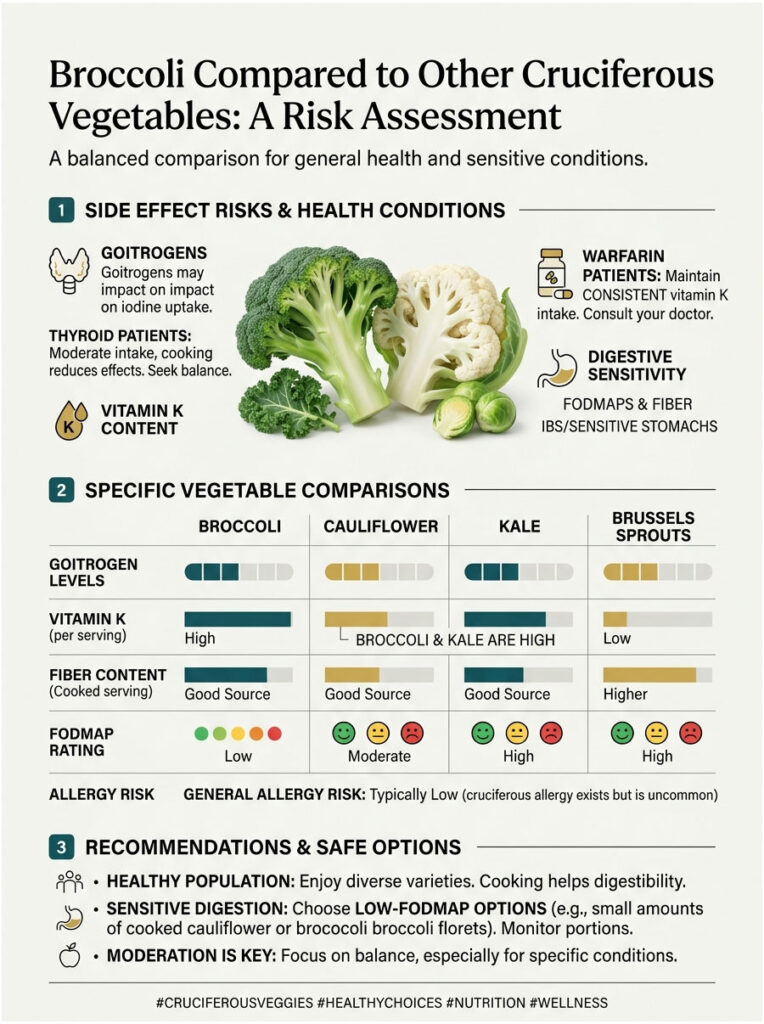
Table 1: Broccoli vs. Other Cruciferous Vegetables (Side Effect Risk)
| Vegetable | Goitrogen Level | Vitamin K (per cooked cup) | Fiber (per cooked cup) | FODMAP Rating | Allergy Risk |
| Broccoli | Moderate | 220 mcg | 5.1 g | Moderate-High | Low |
| Kale | Moderate-High | 1,062 mcg | 2.6 g | Low | Low |
| Cauliflower | Moderate | 17 mcg | 2.9 g | High | Low |
| Brussels Sprouts | High | 219 mcg | 4.1 g | Moderate-High | Low |
| Cabbage (cooked) | Moderate | 73 mcg | 2.9 g | High | Low |
| Bok Choy | Low | 58 mcg | 1.7 g | Low | Low |
For warfarin patients, kale is by far the bigger concern (almost five times the vitamin K of broccoli). For thyroid patients, Brussels sprouts and kale carry slightly higher goitrogen loads than broccoli. For IBS or sensitive guts, bok choy is the safest cruciferous option.
How Much Broccoli Is Too Much? Safe Daily Amounts by Person
The USDA’s MyPlate recommends 2 to 3 cups of vegetables per day for most US adults. Broccoli alone shouldn’t fill that entire allotment. Variety matters.
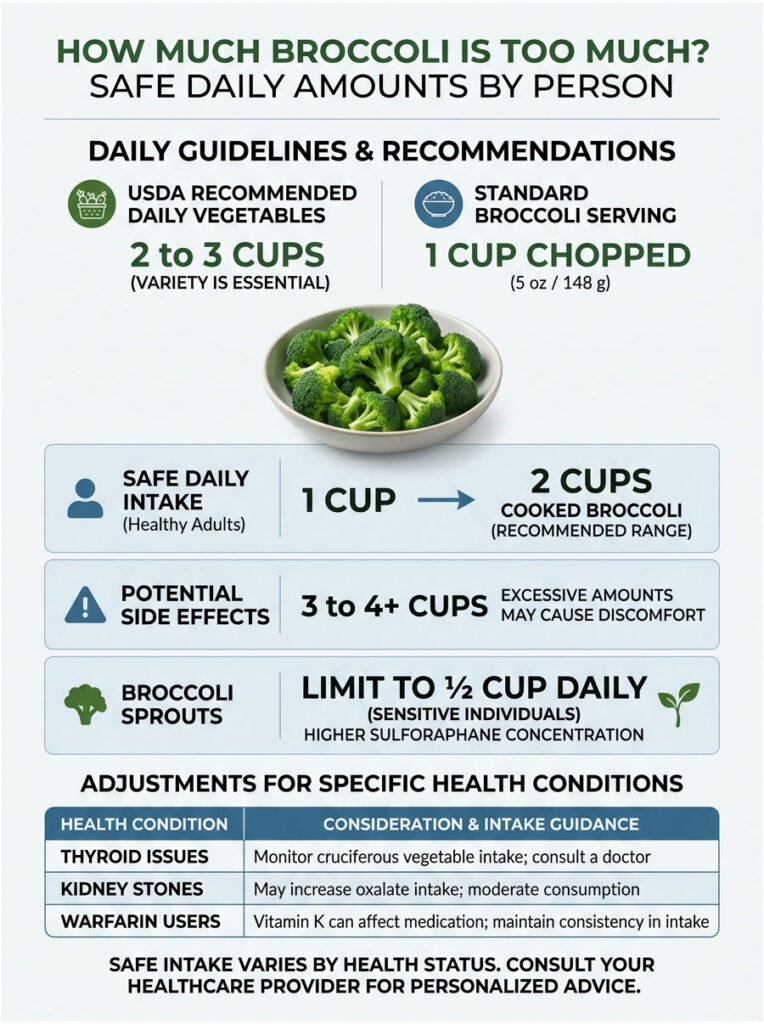
USDA Vegetable Guidelines vs. Real Broccoli Servings
A standard serving of broccoli is 1 cup chopped or about 5 ounces (148 grams). For most healthy adults, 1 to 2 cups of cooked broccoli daily fits well within the USDA target. Hitting 3 to 4 cups daily, or more, is where side effects climb.
Broccoli sprouts are a different story. Because they pack 50 to 100 times more sulforaphane than mature florets, even a half cup of sprouts daily can trigger thyroid or liver effects in sensitive people.
Adjustments for Thyroid, Kidney, and Heart Patients
People with hypothyroidism should cap raw broccoli at small amounts and stick to cooked. Kidney stone formers should keep broccoli to 1 cup daily and pair it with calcium. Warfarin patients should aim for the same amount of vitamin K every day, not zero one week and lots the next.
Table 2: US-Specific Safe Broccoli Intake by Health Status
| Group | Safe Daily Amount | Frequency | Source / Notes |
| Healthy US adults | 1 to 2 cups cooked | Daily, varied with other veggies | USDA MyPlate |
| Adults with hypothyroidism | 1 cup cooked maximum | 3 to 4 times a week | American Thyroid Association |
| Adults on warfarin | Consistent 1 cup cooked | Same amount every day | Cleveland Clinic |
| Adults with kidney stones | 1 cup cooked | Daily, paired with calcium | National Kidney Foundation |
| IBS or sensitive gut | 1/2 to 1 cup cooked | 3 to 4 times a week | Monash University Low FODMAP Diet |
| Pregnant women | 1 cup cooked | Daily | Most prenatal guidance considers this safe |
| Children (4 to 12 years) | 1/2 to 1 cup cooked | 3 to 5 times a week | American Academy of Pediatrics |
In tests booked through HealthCareOnTime, the most common broccoli-related lab finding is INR variability in patients who increase or decrease their cruciferous vegetable intake suddenly. Consistency matters more than avoidance.
Raw vs. Cooked Broccoli: Which Is Worse for Side Effects?
Raw broccoli is the bigger problem if you’re worried about side effects. Cooking changes the chemistry of the vegetable in ways that reduce nearly every risk discussed above.
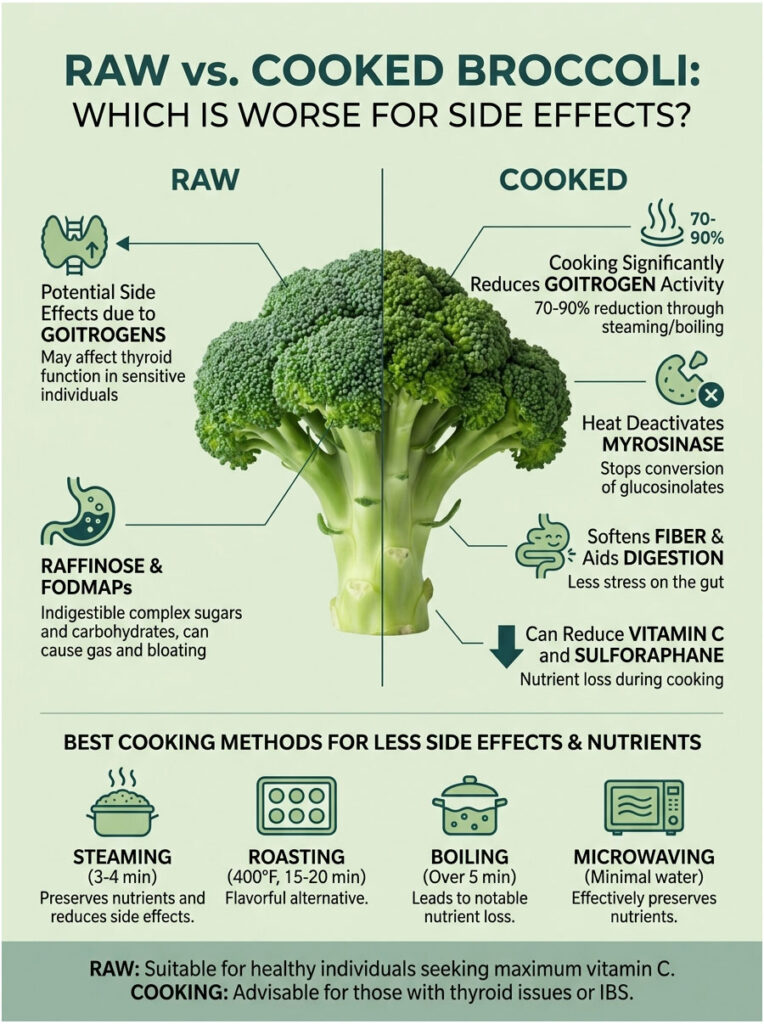
How Heat Changes Goitrogens, Raffinose, and FODMAPs
Heat deactivates myrosinase, the enzyme that converts glucosinolates into goitrogens. A 2024 Mayo Clinic nutrition review confirms that steaming or boiling broccoli reduces goitrogen activity by 70 to 90 percent.
Cooking also breaks down some of the raffinose and softens fiber, easing digestion. The trade-off: high heat and long boiling can cut vitamin C by up to 50 percent and reduce sulforaphane.
Best Cooking Methods to Reduce Side Effects
Steaming for 3 to 4 minutes is the sweet spot. It deactivates most goitrogens, softens fiber for easier digestion, and preserves the bulk of vitamin C and sulforaphane. Roasting at 400°F for 15 to 20 minutes is a close second.
Boiling for more than 5 minutes destroys the most nutrients. Microwaving with a small amount of water for 2 to 3 minutes preserves nutrients well, despite the bad reputation it sometimes gets.
When to Choose Raw, Steamed, or Roasted
Raw broccoli is fine occasionally for healthy people who want maximum vitamin C and sulforaphane. People with thyroid issues, IBS, or who eat broccoli most days should always cook it. Steamed is the safest default; roasted offers more flavor.
Drug Interactions and Medical Conditions to Watch
The drug interactions below are the ones US pharmacists flag most often when reviewing supplement and food intake.
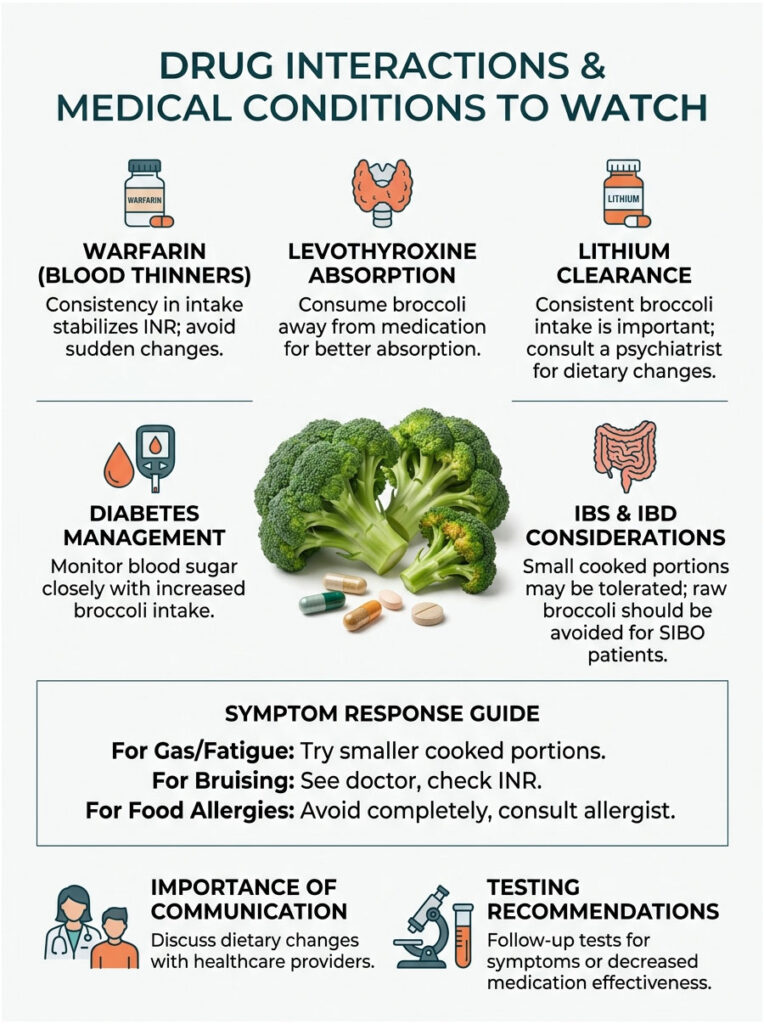
Broccoli + Warfarin (and Other Anticoagulants)
Warfarin is the classic concern. The fix is consistency, not avoidance. The American Heart Association notes that patients who keep their weekly cruciferous intake steady have stable INR readings. Sudden shifts (a holiday week of heavy salads, then back to nothing) cause dangerous swings.
Direct oral anticoagulants like apixaban and rivaroxaban are far less affected by vitamin K, but heavy cruciferous intake can still alter clotting in some patients.
Broccoli + Levothyroxine (Thyroid Medication)
Broccoli’s goitrogens can compete with levothyroxine absorption when eaten close to the dose. Take levothyroxine on an empty stomach, at least 30 to 60 minutes before food. Spread broccoli intake away from the morning dose.
Broccoli + Lithium and Diabetes Medications
Broccoli is mildly diuretic, which can affect lithium clearance. Patients on lithium for bipolar disorder should keep cruciferous intake consistent and discuss any major dietary change with their psychiatrist.
For diabetes medications, broccoli’s fiber and sulforaphane can lower blood glucose. People on insulin or sulfonylureas should monitor blood sugar more closely if they significantly increase broccoli intake.
IBS, IBD, and SIBO Considerations
Broccoli is high FODMAP and can trigger flares. People with diagnosed IBS should follow Monash University’s low-FODMAP guidance: small portions of cooked broccoli (about 1/2 cup) tend to be tolerated; larger servings trigger symptoms. SIBO patients should avoid raw broccoli entirely during treatment.
Table 3: Symptom or Condition to Action Decision Guide
| Your Symptom or Condition | Recommended Action | When to Get Tested |
| Frequent gas and bloating after broccoli | Switch to cooked, smaller portions, try Beano | If symptoms persist 4+ weeks, book a digestive panel |
| Unexplained fatigue, weight gain, cold intolerance | Limit raw broccoli; cook all servings | Book a TSH test |
| Easy bruising or bleeding while on warfarin | Keep broccoli intake consistent; talk to your prescriber | Get INR retested within 7 to 10 days |
| Itchy mouth or throat after broccoli | Stop eating broccoli; antihistamine if needed | Book an IgE food allergy panel |
| Sharp side or back pain, history of stones | Limit broccoli to 1 cup; pair with calcium | Book a kidney function and urine oxalate test |
| Reduced effectiveness of a regular medication | Inform your doctor and pharmacist | Drug-level testing if available |
| Pregnant and unsure about portion | Stick to 1 cup cooked daily | Discuss with prenatal care provider |
Warning Signs You’re Eating Too Much Broccoli
Most broccoli side effects build slowly. Catching them early prevents bigger problems later.
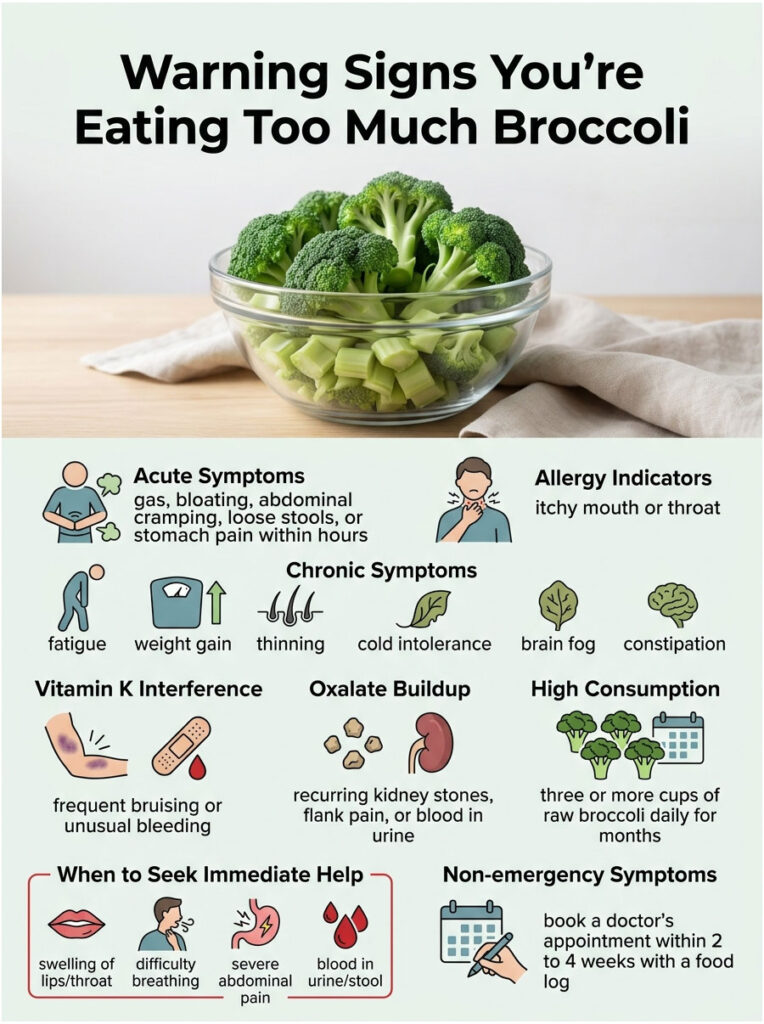
Acute Symptoms (Same Day)
Gas, bloating, abdominal cramping, loose stools, or stomach pain within hours of eating broccoli are the most common acute signs. Itchy mouth or throat points to allergy. None of these is dangerous on its own, but persistent symptoms mean it’s time to cut back.
Chronic Symptoms (Weeks to Months)
Persistent fatigue, unexplained weight gain, hair thinning, cold intolerance, brain fog, or constipation can point to thyroid disruption from chronic high broccoli intake. Frequent bruising or unusual bleeding suggests vitamin K is interfering with anticoagulant medication.
Recurring kidney stone episodes, persistent flank pain, or blood in urine point to oxalate buildup. Across patient cases reviewed at HealthCareOnTime, these chronic patterns often appear in people consuming three or more cups of raw broccoli daily for months.
When to Call Your Doctor
Call if you experience swelling of the lips or throat, difficulty breathing, sudden severe abdominal pain, blood in urine or stool, or unexplained bleeding that won’t stop. These warrant immediate medical attention, not a dietary tweak.
For non-emergency symptoms (chronic fatigue, persistent bloating, gradual weight gain), book an appointment within 2 to 4 weeks and bring a food log.
How to Eat Broccoli Safely (Practical Daily Rules)
You don’t have to give up broccoli to avoid its side effects. The rules below cover 95 percent of cases.
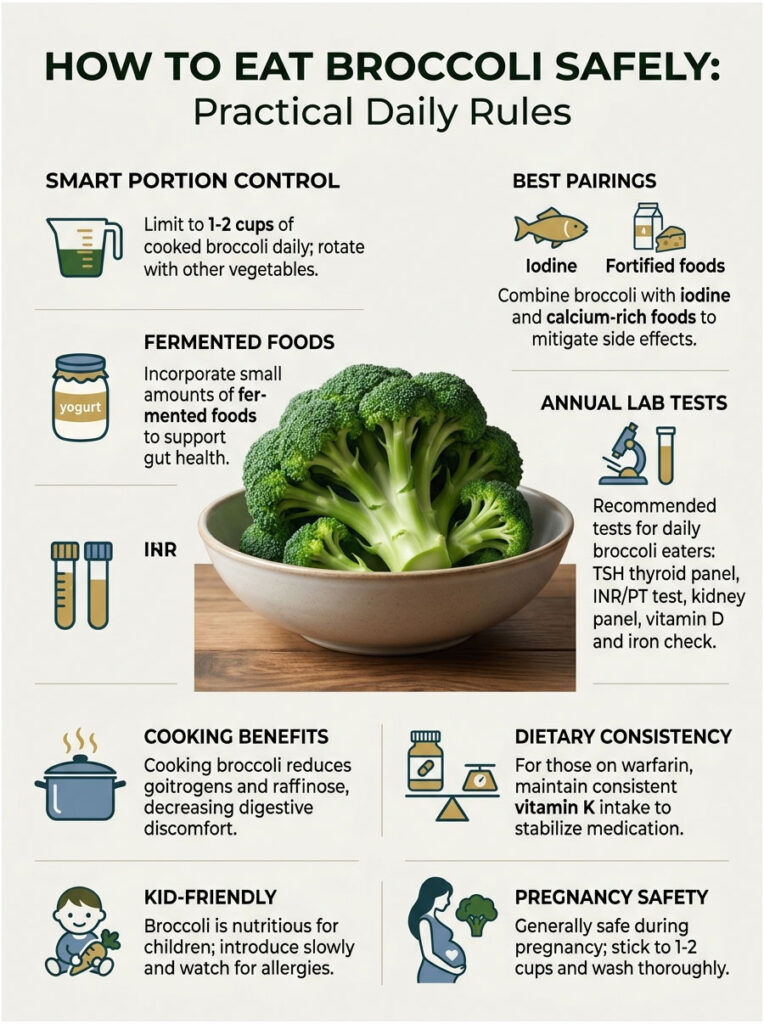
Smart Portion Control
Stick to 1 to 2 cups of cooked broccoli daily. Rotate with other vegetables (carrots, spinach, peppers, sweet potato) instead of eating broccoli at every meal. If you eat broccoli sprouts, cap them at 1/4 cup daily.
Best Pairings to Reduce Side Effects
Pair broccoli with iodine sources (iodized salt, seafood, dairy) to offset goitrogen effects. Pair with calcium-rich foods (cheese, yogurt, fortified plant milk) to reduce oxalate absorption. Add olive oil or avocado for fat-soluble vitamin uptake.
A small amount of fermented food (sauerkraut, kimchi, plain yogurt) alongside broccoli supports gut bacteria and reduces gas over time.
Lab Tests Worth Booking If You Eat Broccoli Daily
For broccoli-heavy eaters, our medical team often suggests four basic tests on a yearly cycle: a TSH thyroid panel, an INR or PT test if on anticoagulants, a basic kidney function panel, and a vitamin D plus iron check. These four catch the vast majority of food-related metabolic shifts before they become problems.
Frequently Asked Questions
Is broccoli bad for your thyroid?
Only in large, mostly raw amounts and only for people with existing thyroid issues. Cooking deactivates 70 to 90 percent of broccoli’s goitrogens. Most healthy adults can eat 1 to 2 cups of cooked broccoli daily without affecting thyroid function. People with hypothyroidism should still limit raw intake.
How much broccoli is too much in a day?
For most healthy US adults, eating more than 3 cups of cooked broccoli daily is the threshold where side effects become more likely. For people on warfarin, anyone with thyroid disease, or those with kidney stones, the limit is usually closer to 1 cup per day. Variety in vegetables is more important than maxing out broccoli.
Can broccoli cause gas and bloating?
Yes, this is the most common broccoli side effect. The cause is raffinose, a complex sugar humans can’t digest, plus high FODMAP content. Cooking helps. Smaller portions, drinking more water, and slowly increasing intake all reduce gas. An alpha-galactosidase enzyme (Beano) before meals helps in stubborn cases.
Is it safe to eat broccoli every day?
For most healthy adults, yes. Eating 1 to 2 cups of cooked broccoli daily is linked to lower mortality, better heart health, and improved gut function. People with thyroid disease, those on anticoagulants, kidney stone formers, and IBS sufferers should cap intake at smaller amounts and prioritize cooked over raw.
Can I eat broccoli on warfarin?
Yes, but consistency is key. Don’t eat huge amounts one week and zero the next. The Cleveland Clinic recommends keeping vitamin K intake steady so warfarin dosing stays stable. Get your INR tested regularly, especially after any major dietary change. Talk to your prescriber before starting or stopping cruciferous vegetables.
Is raw broccoli worse than cooked broccoli?
Raw broccoli carries higher goitrogen activity, more raffinose (more gas), and a tougher texture that’s harder to digest. Cooking deactivates most goitrogens, softens fiber, and reduces FODMAP impact. The trade-off is a moderate vitamin C loss. For people with thyroid or gut sensitivities, cooked is almost always safer.
Can broccoli cause kidney stones?
Broccoli has moderate oxalate levels, lower than spinach or rhubarb but still relevant for stone formers. People with calcium oxalate kidney stones should pair broccoli with calcium-rich foods to bind oxalates in the gut. Drinking 64+ ounces of water daily and limiting broccoli to 1 cup also helps reduce stone risk.
Is broccoli safe during pregnancy?
Yes, broccoli is generally safe and beneficial during pregnancy. It provides folate, fiber, vitamin C, and iron. Stick to 1 to 2 cups of well-cooked broccoli daily. Wash it thoroughly to reduce bacterial contamination risk. Pregnant women on prenatal medication should mention any large dietary shift to their OB-GYN.
Can broccoli trigger an allergic reaction?
Broccoli allergy is rare but possible, especially in people with mugwort or birch pollen allergies (oral allergy syndrome) or known reactions to other Brassica vegetables. Symptoms range from itchy mouth to hives or breathing trouble. Stop eating broccoli, take an antihistamine for mild symptoms, and seek emergency care for swelling or wheezing.
Does broccoli interfere with thyroid medication?
It can, in two ways. Goitrogens compete with iodine, which the thyroid needs to make hormones. And eating broccoli within 30 to 60 minutes of taking levothyroxine can reduce drug absorption. Take thyroid medication on an empty stomach in the morning, and eat broccoli later in the day for best results.
Are broccoli sprouts more dangerous than broccoli?
Broccoli sprouts contain 50 to 100 times more sulforaphane than mature florets. That makes them more potent for cancer prevention but also more likely to cause thyroid suppression, liver enzyme changes, or stomach irritation. Cap broccoli sprout intake at 1/4 cup daily, especially if you have thyroid disease or take prescription medication.
Should kids avoid broccoli?
No. Broccoli is one of the most nutritious vegetables for children. The American Academy of Pediatrics recommends 1/2 to 1 cup of cooked broccoli, 3 to 5 times a week, for kids ages 4 to 12. Cook it well to reduce gas, and introduce it slowly. Watch for any signs of allergy on first exposure.
Disclaimer
The information in this article is intended for general education only. It is not medical advice and is not a substitute for diagnosis or treatment by a licensed physician. People with chronic illness, those taking prescription medication (especially anticoagulants, thyroid medication, or lithium), pregnant or nursing women, and parents of young children should consult a qualified healthcare provider before making major dietary changes. HealthCareOnTime offers diagnostic lab testing services and does not provide direct medical treatment.
References
- USDA FoodData Central: Broccoli
- USDA MyPlate: Vegetables
- Frontiers in Nutrition: Prospective cohort study of broccoli consumption and mortality
- American Thyroid Association: Press Room
- Cleveland Clinic: Warfarin (Coumadin)
- Mayo Clinic: Cruciferous Vegetables
- National Kidney Foundation: Diet and Kidney Stones
- American College of Allergy, Asthma & Immunology: Food Allergies
- American Heart Association: Diet and Lifestyle Recommendations
- NCBI: Broccoli Sprouts and Thyroid Function
- Johns Hopkins Medicine: Anti-Inflammatory Diet