Nearly half of all Americans will deal with hemorrhoids by the time they hit 50. So if you’re reading this while shifting uncomfortably in your seat, you’re in very common company, and the good news is that relief is usually closer than you think.
Table of Contents
Most hemorrhoids calm down within days using simple steps you can start today. The trick is knowing which remedy works fastest for your situation.
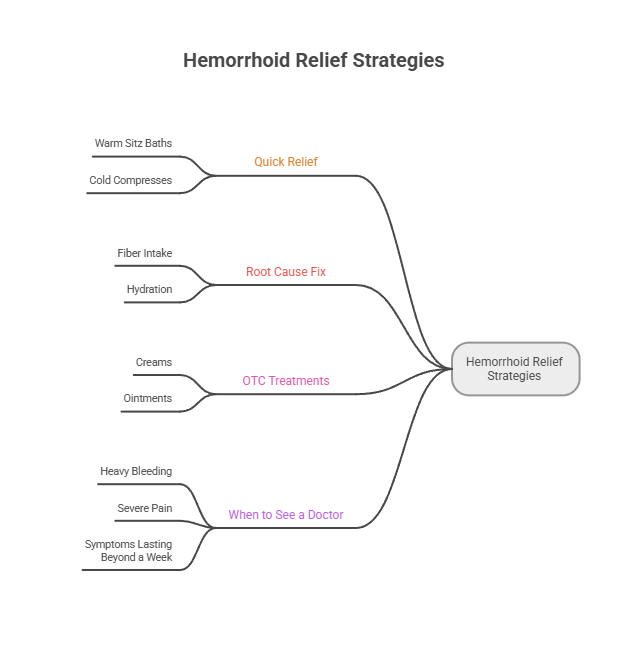
Quick Answer: To get rid of hemorrhoids fast, soak in a warm sitz bath for 15 minutes a few times a day, apply a cold compress to reduce swelling, and use an over-the-counter cream like Preparation H or hydrocortisone. Add fiber and water to soften stools and stop straining. Most hemorrhoids ease within a few days and clear within a week. See a doctor for heavy bleeding, severe pain, or symptoms lasting beyond a week.
At a Glance
Warm sitz baths and cold compresses bring the quickest at-home relief.
Fiber and hydration fix the root cause, straining, so flares stop returning.
OTC creams ease itching and pain but don’t shrink hemorrhoids overnight.
External and thrombosed hemorrhoids hurt more; internal ones tend to bleed.
Most cases clear within a week; bleeding or severe pain needs a doctor.
About 1 in 20 Americans currently has hemorrhoids, so you’re far from alone.
What Hemorrhoids Are (and Why They Flare)
Hemorrhoids, sometimes called piles, are swollen and inflamed veins around the anus or in the lower rectum. Everyone has hemorrhoidal tissue; the problem starts when those veins stretch and bulge.
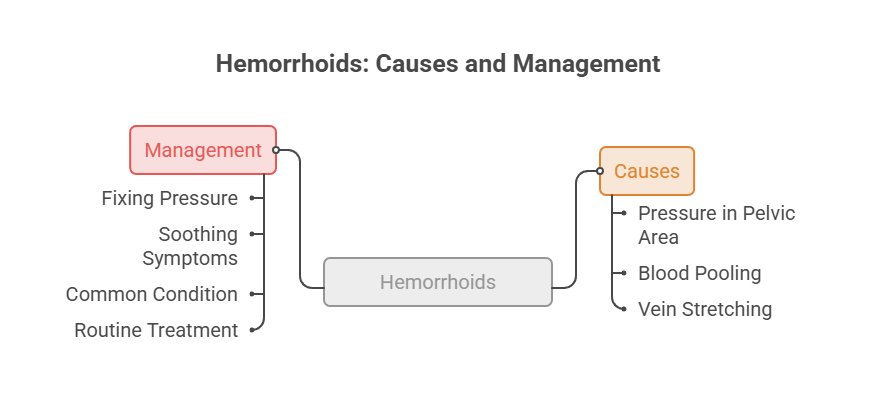
When pressure builds in the pelvic area, blood pools and the vessels swell. That pressure is the common thread behind nearly every flare, which is why fixing the pressure matters as much as soothing the symptom.
Patients booking digestive tests through HealthCareOnTime often feel embarrassed to bring hemorrhoids up. There’s no need; they’re one of the most common conditions in American adults, and treating them is routine.
Internal vs External Hemorrhoids
Internal hemorrhoids form above a point in the anal canal called the dentate line. They usually don’t hurt, since that area has few pain nerves, but they often bleed, leaving bright red streaks on toilet paper or in the bowl.
External hemorrhoids form below that line, under skin that does feel pain. These are the itchy, swollen, tender lumps most people notice and want gone fast.
Knowing which type you have shapes the approach. Bleeding without pain usually points to internal hemorrhoids, while a sore, swollen bump points to external ones.
What a Thrombosed Hemorrhoid Is
Sometimes a blood clot forms inside an external hemorrhoid. This is a thrombosed hemorrhoid, and it can produce sudden, intense pain and a hard purple-blue lump.
Our medical reviewers note that thrombosed hemorrhoids are the ones most likely to send someone looking for relief at 2 a.m. They often need a doctor’s attention, and clot removal works best within the first two or three days.
Common Triggers
Straining during bowel movements is the leading cause, usually driven by constipation and low fiber. Sitting for long stretches, whether on the toilet or at a desk, adds steady pressure.
Pregnancy, heavy lifting, obesity, and aging all raise the risk too. According to the National Institute of Diabetes and Digestive and Kidney Diseases, hemorrhoids affect about 1 in 20 Americans, and roughly half of adults older than 50.
How Fast Is “Fast”? Realistic Timelines
Here’s an honest answer most articles skip. “Fast” doesn’t mean instant. You can ease the pain and itching within hours, but actually shrinking a hemorrhoid takes days.
Setting the right expectation keeps you from panicking or jumping to surgery when patience and good home care would have done the job.
What You Can Ease in Hours
A warm sitz bath, a cold compress, and a numbing or soothing cream can take the edge off discomfort the same day. These calm symptoms; they buy comfort while the healing happens underneath.
What Clears in Days to a Week
With consistent fiber, water, and warm soaks, most mild to moderate hemorrhoids settle down within a few days and resolve within a week. The swelling shrinks as straining stops and the veins recover.
When It Won’t Resolve on Its Own
Large, prolapsing, or thrombosed hemorrhoids may not clear with home care alone. In tests booked through HealthCareOnTime, patients with symptoms dragging past a week are the ones who most often end up needing a quick procedure.
| Remedy | How Fast | Best For | Effort | What It Does |
| Warm sitz bath | Soothes in minutes | Pain, itching, spasm | Low | Relaxes muscles, eases swelling |
| Cold compress | Soothes in minutes | Swelling, sharp pain | Low | Numbs and reduces inflammation |
| OTC cream (Preparation H) | Relief in hours | Itching, irritation | Low | Calms surface symptoms |
| Witch hazel pads | Relief in hours | Itching, mild bleeding | Low | Astringent, soothes tissue |
| Fiber plus water | Works over days | Root cause, prevention | Medium | Softens stool, stops straining |
| Medical procedure | Days to weeks | Severe or persistent cases | High | Removes or shrinks hemorrhoid |
Fast Home Remedies That Actually Work
The best treatments for hemorrhoids are often things you can do at home. Most cases never need a doctor, and these remedies target both the discomfort and the underlying strain.
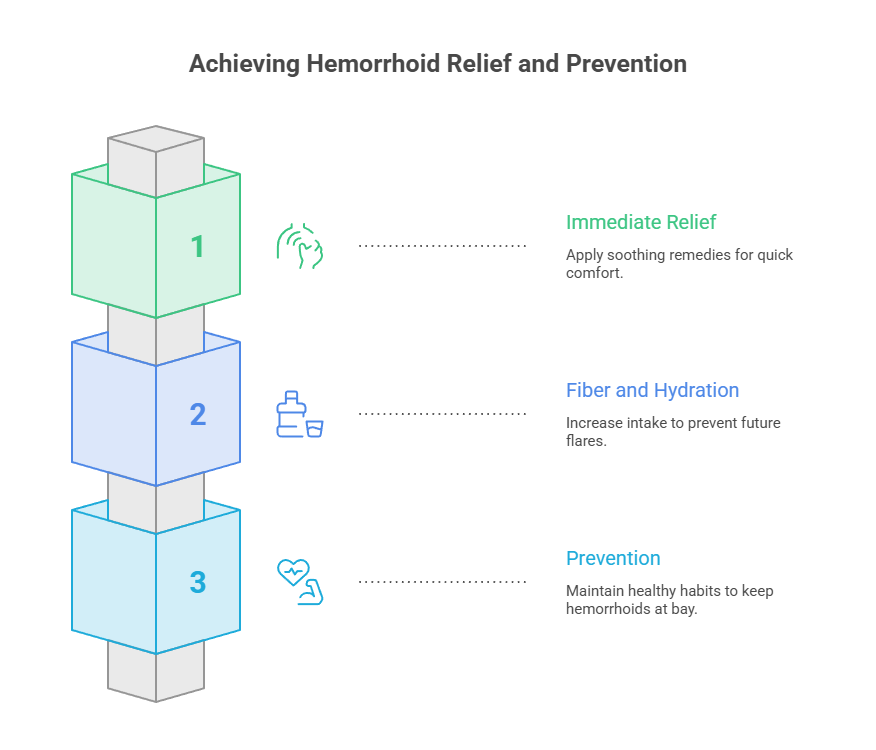
Start with the soothing steps for immediate relief, then layer in the fiber and hydration that keep flares from coming back. Think of it as comfort now plus prevention for later.
Sitz Baths and Warm Soaks
A sitz bath is one of the most reliable hemorrhoid home remedies. Sit in about three inches of warm water for 10 to 15 minutes, several times a day, especially after a bowel movement.
The warm water relaxes the clenched muscles around the anus and eases swelling. You can use a small basin that fits over the toilet, available at any pharmacy, or just sit in a shallow tub.
Pat dry gently afterward with a soft towel; don’t rub. If you want to wash the area, use unscented soap and a light touch.
Cold Compresses
For sharp pain and visible swelling, a cold compress works fast. Wrap an ice pack in a thin cloth and apply it to the area for a few minutes at a time, never directly on bare skin.
Cold narrows the blood vessels and numbs the discomfort. Alternating cold compresses with warm sitz baths gives many people the quickest comfort, since one calms swelling while the other relaxes muscle.
Fiber and Hydration
This is the part that actually gets rid of hemorrhoids rather than just masking them. Soft, easy-to-pass stools mean less straining and less pressure on those veins.
Build up to 25 to 35 grams of fiber a day from fruits, vegetables, whole grains, and legumes. Add fiber slowly over a week or two to avoid gas and bloating. Drink plenty of water throughout the day so the fiber can do its job.
Our medical reviewers note that people who treat the straining, not just the swelling, are the ones who stop seeing hemorrhoids return month after month.
Witch Hazel and Topical Soothers
Witch hazel is a natural astringent that calms itching and minor bleeding. Dab it on with a cotton pad, or use pre-soaked pads sold for this purpose.
Pure aloe vera gel, without added fragrance or alcohol, can also soothe irritated skin. These remedies won’t shrink a hemorrhoid, but they make the wait far more comfortable.
Gentle Hygiene and Movement
Keep the area clean with unscented wipes or a quick rinse, and avoid dry, scratchy toilet paper. Wear loose cotton underwear so the area stays dry and aired out.
Don’t sit for hours, and don’t linger on the toilet scrolling your phone, which adds pressure. A brisk 20 to 30 minute daily walk keeps your digestion moving and reduces the constipation that starts the whole cycle.
| Statistic | Figure | Source |
| Americans currently affected by hemorrhoids | About 1 in 20 | NIDDK (NIH) |
| Adults over 50 who have hemorrhoids | About half | NIDDK (NIH) |
| Recommended sitz bath duration | 10 to 15 minutes per session | Clinical guidance |
| Common fiber supplement dose | 5 to 10 g per day | Clinical guidance |
| New US hemorrhoid cases per year | About 1 million | Epidemiology of Hemorrhoids |
| Global pooled prevalence of hemorrhoid disease | About 26% | Systematic review and meta-analysis |
Over-the-Counter Treatments
When home soaks aren’t quite enough, the pharmacy aisle has options that ease symptoms quickly. These don’t cure hemorrhoids, but they make daily life bearable while healing happens.
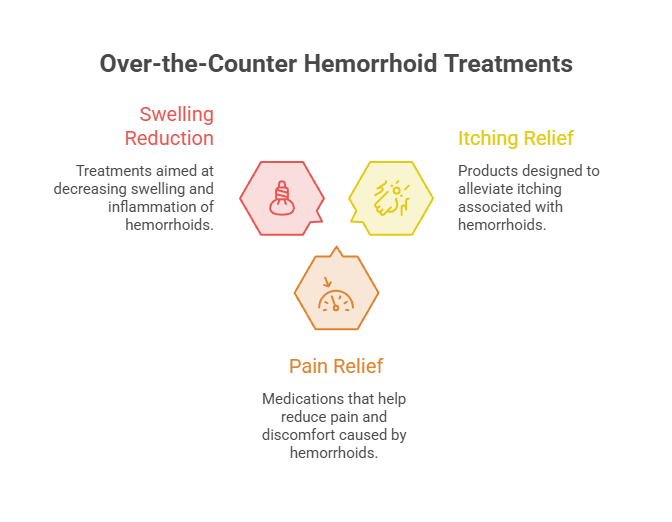
Patients commonly ask us which product to grab. The answer depends on whether itching, pain, or swelling is bothering you most.
Creams and Ointments
Preparation H and similar products reduce surface irritation and itching. Hydrocortisone 1% creams calm inflammation and are useful for short stretches of a few days.
Don’t use hydrocortisone for more than about a week without medical advice, since extended use can thin the skin. These are symptom relievers, not overnight shrink solutions, so pair them with the soaking and fiber steps.
Numbing Agents
Products with lidocaine, often around 2% in rectal formulations, numb the area and dull pain. They pair well with a sitz bath routine for thrombosed or very tender external hemorrhoids.
Apply as directed and stop if irritation increases. Numbing creams treat the sensation, not the cause, so they work best as part of a fuller routine.
Fiber Supplements
If you can’t hit your fiber target through food, a supplement helps. Psyllium husk (Metamucil) and methylcellulose (Citrucel) soften stools and cut down straining.
Start with a small dose and increase gradually, always with a full glass of water. Our lab partners report that consistent fiber supplementation is one of the simplest ways to prevent repeat flares.
What to Avoid
Skip harsh soaps, scented wipes, and vigorous wiping, all of which irritate inflamed tissue. Avoid sitting on the toilet for long periods, and don’t ignore the urge to go, since waiting hardens stool and makes the next trip worse.
When Home Care Isn’t Enough: Medical Treatments
Most hemorrhoids respond to home care, but some need a professional. If yours bleed heavily, hurt severely, bulge and won’t go back, or persist despite a week of remedies, it’s time for medical treatment.
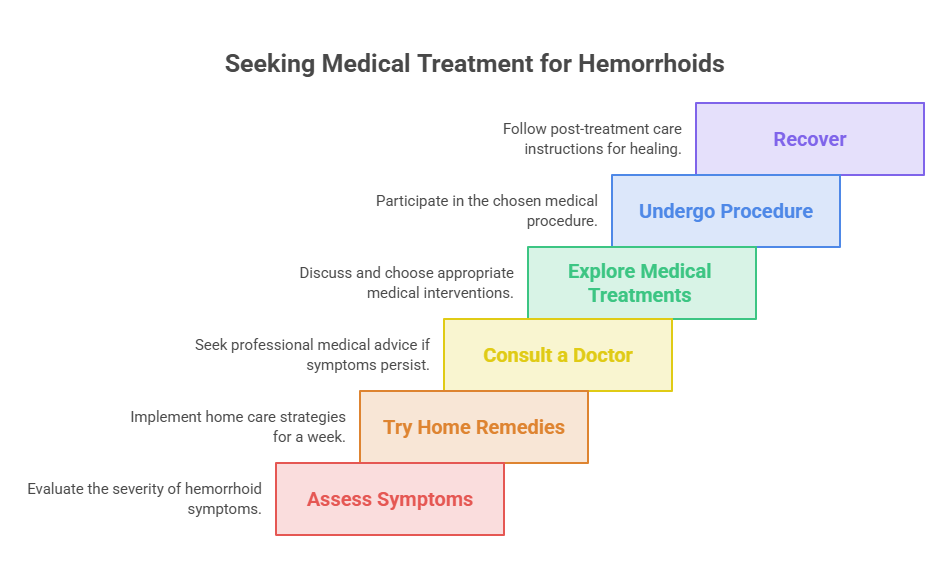
These procedures sound intimidating but are mostly quick, office-based, and highly effective. Knowing your options removes a lot of the fear that keeps people from getting help.
Office-Based Procedures
Rubber band ligation places a small elastic band at the base of an internal hemorrhoid, cutting off its blood supply so it withers and falls off within days. It’s the most common in-office treatment.
Sclerotherapy injects a solution that scars and shrinks the tissue. Infrared coagulation uses targeted heat to cut off the blood supply. All three are minimally invasive, done without general anesthesia, and usually take only a few minutes.
Recovery is generally quick, with mild discomfort for a day or two. A doctor typically chooses the procedure based on the hemorrhoid’s size, type, and grade.
Surgery
For large or stubborn hemorrhoids, a hemorrhoidectomy surgically removes them. It’s the most effective option and is usually reserved for severe or recurring cases that haven’t responded to anything else.
Stapled hemorrhoidopexy staples and repositions the tissue, often with a faster recovery than traditional surgery. Both are done in an operating room, and your surgeon weighs the trade-offs with you, since recovery from a full hemorrhoidectomy can take a couple of weeks.
Prescription Options
Doctors may prescribe stronger hydrocortisone formulations, hydrocortisone plus lidocaine, or nitroglycerin ointment to relax vessels and ease the pain of a thrombosed hemorrhoid. Nifedipine ointment serves a similar purpose.
These are short-term tools aimed at specific situations, not long-term fixes. The underlying habits still need attention once the acute pain settles.
When to See a Doctor (Red Flags)
Hemorrhoids are rarely dangerous, but a few signs mean you shouldn’t wait. Knowing them protects you from mistaking something more serious for a simple flare.
Rectal bleeding deserves particular attention. Hemorrhoids are a common cause, but so are other conditions, so new or heavy bleeding should always be checked.
Symptoms That Need Prompt Attention
Seek care for severe pain, heavy or persistent bleeding, a hard painful lump (possible thrombosis), or symptoms that don’t improve after a week of home treatment. Our medical reviewers stress that bright red blood should never simply be assumed to be hemorrhoids without an exam, especially after age 40 or with any change in bowel habits.
| Scenario | Recommended Action | Why It Helps |
| Mild itching and swelling, no bleeding | Start sitz baths, fiber, and OTC cream | Most mild cases clear within a week |
| Sudden severe pain with a hard lump | See a doctor within 1 to 2 days | May be a thrombosed hemorrhoid needing care |
| Bright red bleeding for the first time | Get evaluated promptly | Rules out other causes of rectal bleeding |
| Symptoms lasting beyond a week | Book a medical visit | May need a procedure or prescription |
| Hemorrhoid bulges and won’t go back | Seek medical advice | Prolapse may require ligation or surgery |
| Recurring flares every few weeks | Address fiber, hydration, and habits | Treats the root cause, not just symptoms |
How to Prevent Hemorrhoids From Coming Back
Getting rid of hemorrhoids fast is only half the battle. Keeping them gone comes down to a handful of daily habits that lower the pressure on those veins.
The same fiber and hydration that speed healing also prevent the next flare. Treat prevention as the long game, not a one-time fix.
The Core Habits
Eat enough fiber, aiming for 25 to 35 grams daily, and drink water consistently through the day. Don’t strain or push during bowel movements, and go when you feel the urge rather than holding it.
Keep toilet time short, stand and move regularly if you sit for work, and stay active with daily walking or exercise. In cases reviewed by our medical team, these basics prevent the majority of repeat episodes.
Bathroom Habits That Matter
Avoid reading or scrolling on the toilet, which encourages prolonged sitting and straining. If stools are hard, a fiber supplement or a doctor-approved stool softener can help in the short term.
A small footstool that raises your knees while you go can also ease passage and reduce straining. Small adjustments like these add up to fewer flares over time.
Frequently Asked Questions
What gets rid of hemorrhoids fast?
Warm sitz baths, cold compresses, and over-the-counter creams like Preparation H or hydrocortisone bring the quickest symptom relief, often within hours. To actually shrink them, add fiber and water to soften stools and stop straining. Most hemorrhoids ease within a few days and clear within a week.
How long do hemorrhoids take to go away?
Mild hemorrhoids often improve within a few days and resolve within a week with home care. Larger or thrombosed ones can take several weeks. Complicated cases that bulge, bleed heavily, or persist may not clear without a medical procedure, so persistent symptoms warrant a doctor’s visit.
Can hemorrhoids go away on their own?
Yes, many small hemorrhoids resolve on their own within days, especially once you stop straining and add fiber and water. Larger or prolapsing hemorrhoids are less likely to disappear without treatment. If symptoms last beyond a week or worsen, see a healthcare provider.
How do you get rid of external hemorrhoids fast?
For external hemorrhoids, alternate warm sitz baths with cold compresses, apply a soothing cream or witch hazel, and take an oral pain reliever if needed. Soften stools with fiber and water to reduce straining. A thrombosed external hemorrhoid with severe pain should be seen by a doctor quickly.
What shrinks hemorrhoids the fastest?
Nothing shrinks hemorrhoids instantly, but the fastest combination is warm sitz baths several times daily, cold compresses for swelling, and consistent fiber and hydration to stop straining. OTC creams ease symptoms while the swelling goes down. For rapid shrinkage of severe cases, a doctor can perform a quick procedure.
Is Preparation H or hydrocortisone better?
They do different jobs. Preparation H mainly soothes irritation and itching, while hydrocortisone reduces inflammation. Hydrocortisone can be more effective for swelling but shouldn’t be used longer than about a week without medical advice, since prolonged use can thin the skin. Many people use creams alongside sitz baths.
How many times a day should I take a sitz bath?
Most guidance suggests soaking for 10 to 15 minutes, two or three times a day, and after each bowel movement. Warm water relaxes the muscles and eases swelling. Consistency matters more than duration, so several short soaks daily tend to bring faster relief than one long one.
Are hemorrhoids dangerous?
Hemorrhoids are common and rarely dangerous. Serious complications are uncommon, and deaths are extremely rare. The main concern is that rectal bleeding can sometimes signal other conditions, so new or heavy bleeding should be evaluated. Otherwise, most hemorrhoids are uncomfortable but harmless and treatable at home.
What foods make hemorrhoids worse?
Low-fiber, processed foods that cause constipation are the biggest culprits, since hard stools increase straining. Excess alcohol and inadequate water intake also contribute. Spicy foods may aggravate symptoms for some people. Focus on fiber-rich fruits, vegetables, whole grains, and legumes, paired with plenty of water, to keep stools soft.
When should I worry about hemorrhoid bleeding?
Light, bright red bleeding on toilet paper is common with hemorrhoids. Worry if bleeding is heavy, persistent, dark, mixed into the stool, or paired with weight loss or a change in bowel habits. These can point to other conditions, so any new or significant bleeding should be checked by a doctor.
Do hemorrhoids come back after treatment?
They can, especially if the underlying cause continues. Studies suggest recurrence rates above 30% in some groups. The best protection is ongoing prevention: enough fiber, steady hydration, short toilet visits, no straining, and regular movement. Treating the habits that caused them is what keeps hemorrhoids from returning.
Medical Disclaimer: This article is for general informational purposes only and does not replace professional medical advice, diagnosis, or treatment. Rectal bleeding and anal symptoms can have causes other than hemorrhoids, some of them serious. Always consult a qualified healthcare provider about your specific symptoms before starting any treatment, and seek prompt care for severe pain or heavy bleeding.
References
- National Institute of Diabetes and Digestive and Kidney Diseases (NIDDK), Definition & Facts of Hemorrhoids
- Cleveland Clinic, How to Get Rid of Hemorrhoids
- WebMD, Home Treatment and Remedies for Hemorrhoid Relief
- GoodRx, How to Get Rid of Hemorrhoids Fast
- NIDDK, Burden of Digestive Diseases in the United States: Hemorrhoids
- Worldwide Prevalence of Haemorrhoids: A Systematic Review and Meta-Analysis