You take the antacid. You take the PPI your doctor prescribed. You sleep propped up on three pillows. And the burning still shows up after dinner like an unwelcome guest who ignores every hint to leave.
Table of Contents
That pattern, reflux that shrugs off the usual fixes, is one of the clearest signals that bile, not just stomach acid, may be behind your discomfort.
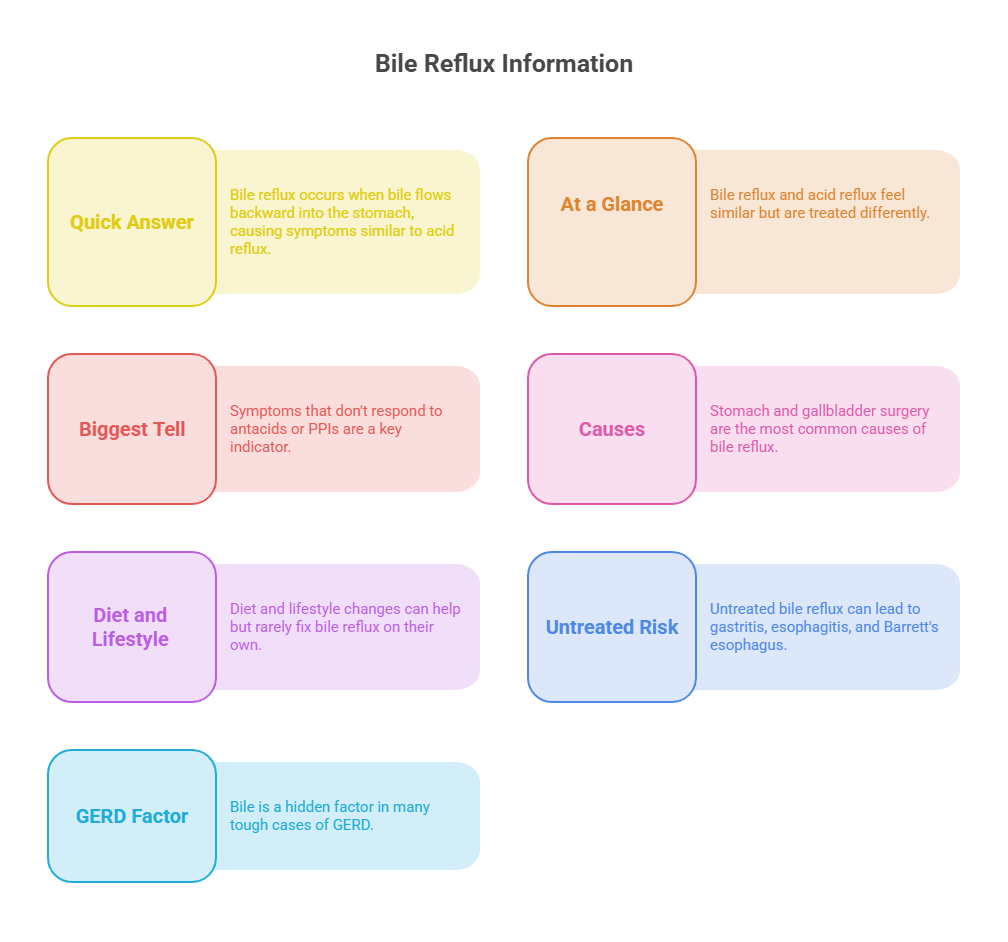
Quick Answer: Bile reflux happens when bile, a digestive fluid made by the liver, flows backward from the small intestine into the stomach and sometimes the esophagus. It causes burning, nausea, and upper-belly pain that often mimics acid reflux. Unlike acid reflux, it rarely improves with diet alone or over-the-counter antacids, and it usually needs prescription medication or, in stubborn cases, surgery.
At a Glance
Bile reflux and acid reflux feel nearly identical, but they are treated differently.
The biggest tell: symptoms that don’t respond to antacids or PPIs.
Stomach and gallbladder surgery cause most bile reflux cases.
Diet and lifestyle changes help, but rarely fix it on their own.
Untreated bile reflux raises the risk of gastritis, esophagitis, and Barrett’s esophagus.
Roughly 20% of US adults live with GERD, and bile is a hidden factor in many tough cases.
What Bile Reflux Actually Is
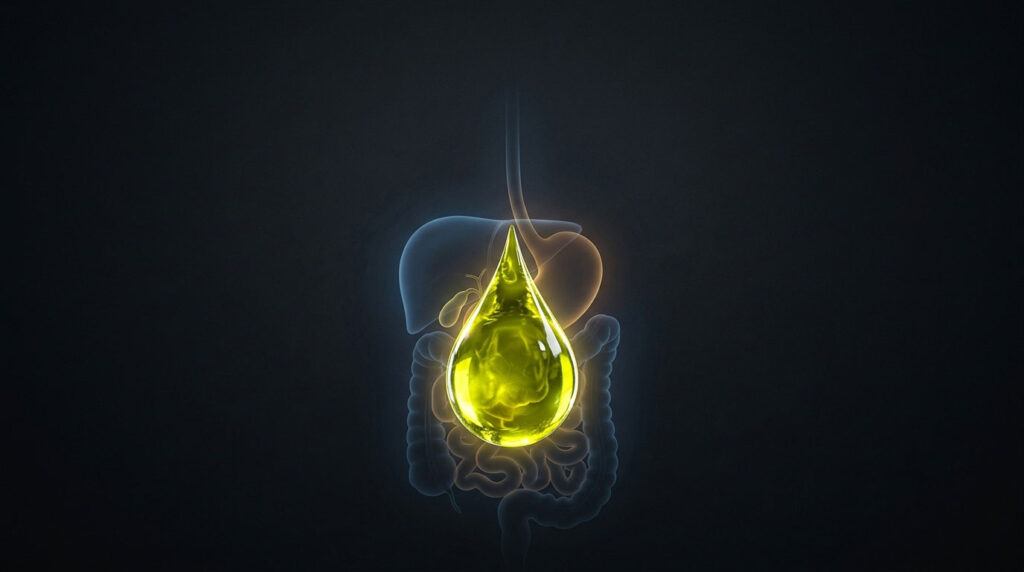
Bile reflux is the backflow of bile into the stomach and, in some people, up into the esophagus. Bile is a yellow-green fluid your liver produces and your gallbladder stores. Its job is to break down fats in the small intestine, not to sit in your stomach or splash into your throat.
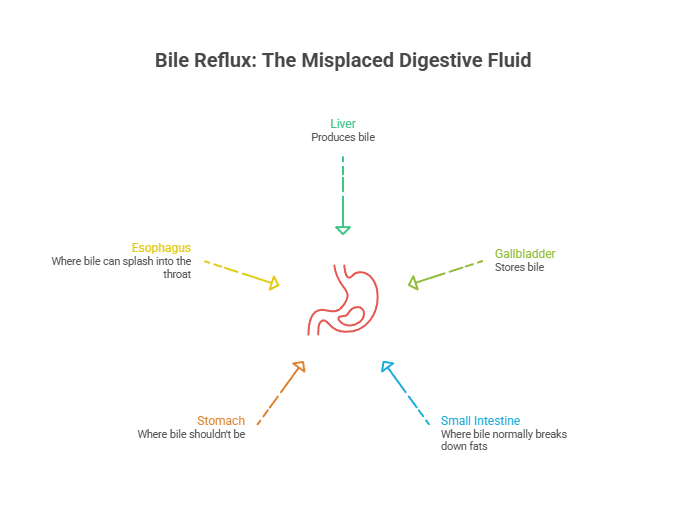
When bile travels in the wrong direction, it lands in places the body never designed it to touch. That misplacement is what triggers the irritation, pain, and inflammation people feel.
Patients booking digestive tests through HealthCareOnTime often describe a confusing situation: they were told they had acid reflux, treated for it, and got little relief. Bile reflux frequently hides inside that exact story.
The Role of Bile and How the System Normally Works
After you eat, your stomach releases partly digested food into the small intestine through a muscular ring called the pyloric valve. Bile and food mix in the duodenum, the first stretch of the small intestine, to keep digestion moving.
The pyloric valve normally opens only slightly, enough to release a small amount of liquefied food at a time, but not enough to let digestive juices flow back up into the stomach. It works like a one-way gate.
Higher up, a second muscular ring called the lower esophageal sphincter sits between the stomach and the esophagus. It opens just long enough to let food pass, then closes to keep stomach contents from rising.
When the Valves Fail
In bile reflux, the pyloric valve does not close properly. Bile washes back into the stomach instead of staying in the intestine where it belongs.
If the lower esophageal sphincter is also weak or relaxes too much, that bile (often mixed with stomach acid) can climb into the esophagus. This is when the burning and chest discomfort start.
Our medical reviewers note that this double-valve problem explains why bile reflux can feel so persistent. Two separate gates are failing, and one pill rarely closes both at once.
Bile Reflux Gastritis Explained
When bile pools in the stomach over time, it inflames the stomach lining. Doctors call this bile reflux gastritis.
This inflammation produces a gnawing or burning pain in the upper abdomen, sometimes paired with nausea or a feeling of fullness. It can be steady rather than the after-meal-only timing many people expect from heartburn.
According to the National Institute of Diabetes and Digestive and Kidney Diseases, about 20% of people in the United States live with GERD, and bile contributes to a meaningful share of cases that resist standard acid treatment.
Bile Reflux vs Acid Reflux: Telling Them Apart
Here is the frustrating truth. Bile reflux and acid reflux cause symptoms that are practically identical. Both bring heartburn, regurgitation, and that sour or bitter taste in your mouth.
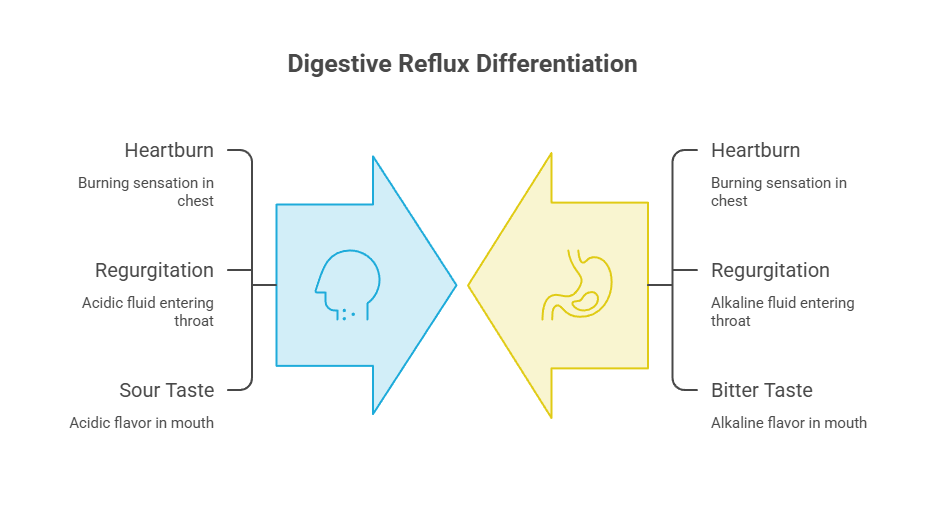
The chemistry, though, is opposite. Stomach acid is acidic. Bile is alkaline. That difference matters enormously for treatment, even though it changes very little about how the two feel day to day.
Why They Feel Almost Identical
Both conditions irritate the same tissues through the same route. When acid and bile reflux together, which happens often, the symptoms blur into one experience that no patient could reasonably untangle on their own.
The Cleveland Clinic notes that doctors usually cannot tell which fluid you are regurgitating without actual testing. Symptoms alone are simply not enough to separate them.
The Key Clue: When Treatment Doesn’t Work
This is the signal worth remembering. Acid reflux usually responds well to antacids, diet changes, and acid-blocking medication. Bile reflux often does not, because none of those tools neutralize bile.
If you have done everything right and your reflux still flares, bile is a strong suspect. In cases reviewed by our medical team, that failure-to-respond pattern is the single most useful clue patients bring in, more telling than any one symptom.
| Feature | Bile Reflux | Acid Reflux (GERD) | Overlap | What It Means for You |
| Fluid involved | Bile (alkaline) | Stomach acid (acidic) | Both can occur together | Different chemistry, different treatment |
| Main trigger | Failed pyloric valve, often post-surgery | Weak lower esophageal sphincter | Both involve valve dysfunction | Surgery history points toward bile |
| Response to antacids | Poor to none | Usually good | Mixed cases respond partially | No relief from antacids is a red flag |
| Diet and lifestyle impact | Limited improvement | Often significant improvement | Smaller meals help both | Bile rarely fixed by diet alone |
| Common warning sign | Upper-belly pain, bilious vomiting | Classic chest heartburn | Sour taste, regurgitation | Belly pain leans toward bile |
| Diagnosis method | Endoscopy, specialized testing | Symptoms, pH monitoring, endoscopy | Endoscopy used for both | Bile needs targeted testing |
Symptoms: What Bile Reflux Feels Like
Bile reflux symptoms tend to center on the upper abdomen more than the chest, though chest burning is common too. The discomfort often feels deeper and more persistent than ordinary heartburn.
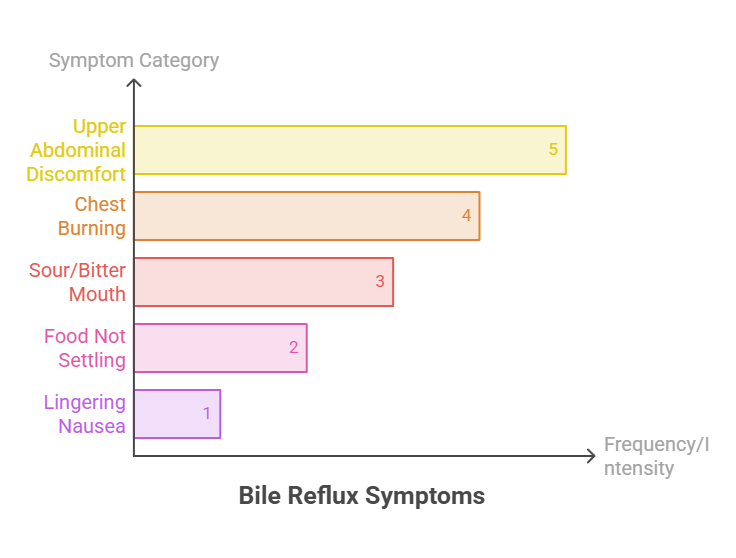
People describe it as a gnawing ache behind the breastbone, a sour or bitter mouth, and a sense that food won’t settle. Some experience nausea that lingers well after eating.
Common Symptoms
The typical bile reflux symptoms include upper abdominal pain that may be severe, frequent heartburn, and nausea. A bitter taste in the mouth shows up often, along with occasional vomiting of greenish-yellow bile.
Some people also notice a persistent cough, hoarseness, or unintended weight loss. These overlap heavily with acid reflux, which is exactly why testing matters before settling on a treatment.
Red-Flag Symptoms That Need a Doctor Now
Certain symptoms call for prompt medical attention rather than another trip to the pharmacy. Vomiting bile, difficulty swallowing, and unexplained weight loss all belong in that category.
Black or bloody stools, vomiting blood, or chest pain that feels like pressure should be treated as emergencies. Patients commonly ask us where the line sits, and these signs are firmly on the see-a-doctor side of it.
Symptoms After Gallbladder or Stomach Surgery
If your symptoms began after gallbladder removal, gastric surgery, or weight-loss surgery, bile reflux moves to the top of the list of explanations. Surgery changes how digestive fluids flow through the system.
Our lab partners report that a notable share of post-surgical reflux complaints turn out to involve bile rather than acid alone. The timing, symptoms starting after an operation, is a clue worth flagging to your doctor.
| Statistic | Figure | Source |
| US adults with GERD | About 20% | NIDDK (NIH) |
| US adults reporting weekly GERD symptoms | Up to 30% | National Gastrointestinal Survey, Gastroenterology |
| Daily PPI users with persistent symptoms | About 54% | National Gastrointestinal Survey |
| US population reporting GERD symptoms in the past | About 44% | National Gastrointestinal Survey |
| Leading cause of bile reflux | Stomach and gallbladder surgery | Mayo Clinic |
What Causes Bile Reflux
Bile reflux is not common in people without other health problems. It is a recognized complication of specific surgeries and conditions, which is what separates its causes from ordinary acid reflux.
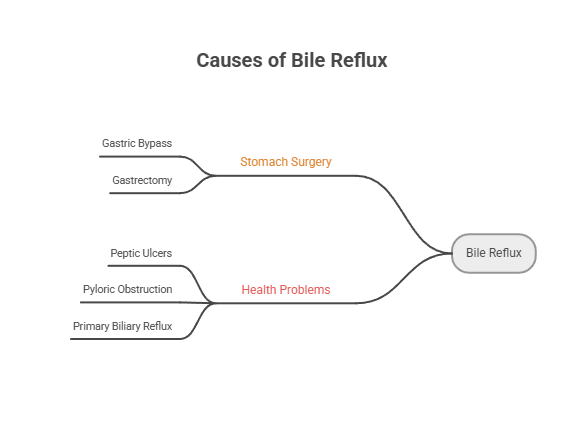
The Mayo Clinic reports that stomach surgery accounts for most bile reflux cases. Understanding the cause usually points the way toward the right treatment.
Surgery-Related Causes
Stomach surgery is the leading driver. This includes total or partial removal of the stomach and gastric bypass surgery performed for weight loss. These procedures alter the normal route digestive fluids travel.
Gallbladder removal also raises the risk. Once the gallbladder is gone, bile is no longer stored and released in coordinated bursts, and that steadier flow can back up in some people, producing persistent reflux.
When bile reflux follows surgery, medication may control it, but a follow-up procedure is sometimes needed to correct the underlying flow problem. That distinction is worth raising with your surgical team.
Peptic Ulcers and Pyloric Obstruction
A peptic ulcer can block the pyloric valve or interfere with how it opens and closes. Scar tissue from a healed ulcer can do the same, narrowing the outlet the stomach uses to empty.
When the valve cannot empty the stomach properly, pressure builds and bile is pushed backward. Impaired motility, where the valve works too slowly, produces a similar backup even without a physical blockage.
Primary Biliary Reflux
Some people develop bile reflux without surgery or an obvious structural problem. Doctors call this primary biliary reflux, and it is only beginning to be well understood by researchers.
It often takes specialized testing to identify, since there is no surgical history to point to. Our medical reviewers note that these cases are the hardest to pin down and the most often mislabeled as ordinary GERD, which delays the right treatment.
How Doctors Diagnose Bile Reflux
Diagnosis is genuinely difficult, and being honest about that helps set expectations. Because bile reflux mimics acid reflux so closely, symptoms alone cannot confirm it, and a single test rarely settles the question.
Upper Endoscopy
An upper endoscopy is usually the first specialized test. A thin, flexible tube with a camera lets a doctor look directly at the lining of the esophagus and stomach.
This exam checks for inflammation, ulcers, and tissue changes, and it can rule out other problems that produce similar symptoms. Visible bile pooling in the stomach is one of the findings that raises suspicion.
pH and Bile Monitoring
Ambulatory acid testing measures how much acid reaches the esophagus over roughly 24 hours. This helps confirm or rule out acid reflux as the main driver.
Specialized bile-monitoring devices can detect bile specifically rather than just acid. Availability varies by facility, so not every clinic offers this directly, which is part of why diagnosis can take time.
Gastric Emptying Studies
If a slow-emptying stomach is suspected, a gastric emptying study can measure how quickly food leaves the stomach. Delayed emptying contributes to the backward pressure that drives bile upward.
The Mayo Clinic notes there is limited evidence on the single best way to confirm bile reflux, partly because it is hard to prove the bile itself is causing symptoms. Bile is often suspected when someone responds poorly to strong acid-suppressing medicine.
Patients booking diagnostic workups through HealthCareOnTime are sometimes surprised that the path involves several tests rather than one. That layered approach is normal for a condition this elusive.
How to Find Relief: Treatment That Works
Here is where bile reflux and acid reflux part ways most sharply. Acid reflux often responds beautifully to lifestyle changes and acid blockers. Bile reflux is harder to treat, and the evidence behind any single therapy is thinner.
That does not mean relief is out of reach. It means the approach has to be more deliberate, usually combining medication with daily habits rather than relying on one fix.
Medications That Target Bile
Several prescription options work on bile directly. Ursodeoxycholic acid can reduce how often and how severely symptoms hit, and it is one of the more commonly tried first steps.
Sucralfate forms a protective coating over the stomach and esophageal lining, shielding the tissue from bile. Bile acid sequestrants disrupt the circulation of bile, though studies suggest they work less reliably than other options and can cause bloating.
Baclofen may help by keeping the lower esophageal sphincter from relaxing at the wrong moment. Proton pump inhibitors are frequently added because most people have some acid reflux mixed in. Treatment commonly stacks several of these together.
Diet and Lifestyle Relief You Can Start Today
Diet does not cure bile reflux the way it can ease acid reflux, but it still reduces overall irritation, especially when both fluids are involved. These are the steps you can begin without a prescription.
Eat smaller, more frequent meals to lower pressure on the valves. Stay upright for two to three hours after eating, and avoid lying down right after a meal. Limit high-fat and fried foods, which relax the lower esophageal sphincter and slow stomach emptying.
Cut back on alcohol, caffeine, and carbonated drinks, since these loosen the sphincter. Stopping smoking matters too, because smoking increases stomach acid and dries up the saliva that normally protects the esophagus. Building meals around vegetables, whole grains, and lean proteins tends to trigger fewer flares.
When Surgery Becomes the Answer
If medication fails to control severe symptoms, or if precancerous changes appear in the stomach or esophagus, surgery may be recommended. Some procedures work better than others, so the trade-offs deserve a careful conversation with your care team.
Diversion surgery creates a new path for bile drainage farther down the small intestine, routing bile away from the stomach entirely. Anti-reflux surgery wraps the upper part of the stomach around the lower esophageal sphincter to strengthen that valve and reduce backflow.
| Scenario | Recommended Action | Why It Helps |
| Antacids and PPIs aren’t working | Ask your doctor to evaluate for bile reflux | Treatment-resistant reflux is the top bile clue |
| Symptoms started after gallbladder or stomach surgery | Mention surgical history at your visit | Surgery causes most bile reflux cases |
| Vomiting bile, weight loss, or trouble swallowing | Seek prompt medical care | These are red-flag symptoms |
| Mild, occasional reflux with no alarm signs | Try smaller meals, stay upright, limit fatty foods | Lifestyle eases mixed reflux first |
| Severe symptoms despite medication | Discuss surgical options with a specialist | Diversion or anti-reflux surgery may be needed |
| Bitter taste plus upper-belly pain after eating | Track symptoms and book an evaluation | Helps your doctor distinguish bile from acid |
Complications: Why You Shouldn’t Ignore It
Bile reflux is not just uncomfortable. Left untreated, it can damage tissue in ways that carry real long-term risk, which is why managing it properly beats living with it.
Gastritis, Esophagitis, and Barrett’s Esophagus
Chronic inflammation of the stomach lining can lead to ulcers and is linked to a higher risk of stomach cancer. In the esophagus, ongoing irritation can cause esophagitis, with ulcers and scarring over time.
That sustained damage can produce cellular changes called Barrett’s esophagus, which is sometimes a precursor to esophageal cancer. The change is silent, which is what makes it dangerous.
The Bile-Plus-Acid Cancer Risk Multiplier
These risks exist with chronic acid reflux too. The concerning part is that research shows bile reflux appears to multiply the risk when it is combined with acid, rather than simply adding to it.
Our medical reviewers stress that this is the real reason to take persistent reflux seriously rather than managing it indefinitely with whatever happens to be in the medicine cabinet.
Living With Bile Reflux: Daily Management
Day-to-day management is about consistency more than any single dramatic change. Small habits, repeated, make the biggest difference over weeks and months.
Meal Timing and Sleep Position
Finish eating at least two to three hours before bed so the stomach has time to empty. Raising the head of your bed can help when acid reflux is part of the picture.
Chewing thoroughly and drinking non-carbonated water with meals supports smoother digestion. A short walk after eating, rather than reclining on the couch, keeps things moving in the right direction.
Tracking Your Triggers
Keep a simple log of what you eat, when you eat it, and when symptoms flare. Patterns often emerge that no general food list could predict for you specifically.
Bring that log to your appointments. In tests booked through HealthCareOnTime, patients who track their symptoms tend to reach an accurate diagnosis faster, because they hand their doctor real evidence instead of vague recollection.
Managing Expectations
Bile reflux is often a condition you manage rather than one you cure outright, particularly when surgery is the underlying cause. That reality can feel discouraging, but steady management keeps symptoms and long-term risk in check.
Work with a gastroenterologist rather than cycling through over-the-counter products on your own. A specialist can adjust medication, order the right tests, and catch tissue changes early.
Frequently Asked Questions
Is bile reflux serious?
Bile reflux can be serious if ignored. While mild cases cause discomfort, chronic bile reflux inflames the stomach and esophagus and raises the risk of gastritis, esophagitis, and Barrett’s esophagus. Because it often resists standard treatment, getting an accurate diagnosis and proper care matters more than with ordinary heartburn.
Can you have bile reflux and acid reflux at the same time?
Yes, and it is common. Many people experience both together, which is one reason the two are hard to separate. When bile and acid reflux occur at once, symptoms intensify and the combination appears to raise tissue-damage risk more than either fluid alone.
What does bile reflux feel like?
Bile reflux usually feels like a burning or gnawing pain in the upper abdomen, often with nausea and a bitter taste in the mouth. Some people vomit greenish-yellow bile. The discomfort tends to sit deeper and last longer than typical heartburn, and it frequently ignores antacids.
Can bile reflux be cured?
Bile reflux can often be controlled, though a permanent cure depends on the cause. Surgery-related bile reflux sometimes needs follow-up surgery to correct. Medication and lifestyle changes manage symptoms for many people, but bile reflux is generally harder to fully resolve than acid reflux.
What foods should you avoid with bile reflux?
Limit high-fat and fried foods, which relax the valve and slow stomach emptying. Cut back on caffeine, alcohol, carbonated drinks, chocolate, citrus, tomato-based foods, and onions. Smaller, more frequent meals built around low-fat, high-fiber options like vegetables, whole grains, and lean proteins tend to cause fewer flares.
Why doesn’t my reflux respond to medication?
Reflux that resists antacids and proton pump inhibitors is a classic sign that bile, not just acid, may be involved. Acid-blocking drugs do nothing to stop bile. If standard medication fails, ask your doctor to evaluate specifically for bile reflux.
How is bile reflux diagnosed?
Doctors use upper endoscopy to inspect the stomach and esophagus, plus acid and bile monitoring tests and gastric emptying studies. Because bile reflux mimics acid reflux, no single symptom confirms it. Diagnosis often involves ruling out other conditions and noting poor response to acid treatment.
Does bile reflux happen after gallbladder removal?
It can. Removing the gallbladder changes how bile flows into the digestive tract, and some people develop persistent bile reflux afterward. If reflux symptoms began following gallbladder or stomach surgery, mention that history to your doctor, since surgery is the leading cause of bile reflux.
What is bile reflux gastritis?
Bile reflux gastritis is inflammation of the stomach lining caused by bile washing back into the stomach. It produces upper-abdominal burning, pain, and sometimes nausea. Persistent gastritis can lead to ulcers and is associated with a higher risk of stomach cancer, so it warrants medical evaluation.
Can diet alone fix bile reflux?
Usually not. Unlike acid reflux, bile reflux seems largely unrelated to lifestyle and rarely resolves through diet changes alone. Eating habits can still reduce overall irritation, especially when acid reflux is also present, but most cases need prescription medication and sometimes surgery.
Is bile reflux linked to cancer?
Chronic bile reflux can contribute to Barrett’s esophagus, a condition that is sometimes a precursor to esophageal cancer. Research suggests bile reflux multiplies the cancer risk when combined with acid reflux. This long-term risk is the main reason persistent reflux should not be ignored.
When should I see a doctor about reflux?
See a doctor if reflux symptoms persist despite over-the-counter medication, or if you have upper-belly pain, bilious vomiting, trouble swallowing, or unexplained weight loss. Blood in vomit or stool and pressure-like chest pain need emergency care. Treatment-resistant reflux especially deserves a professional evaluation.
Medical Disclaimer: This article is for general informational purposes only and does not replace professional medical advice, diagnosis, or treatment. Bile reflux shares symptoms with several other digestive conditions, some of them serious. Always consult a qualified healthcare provider about your specific symptoms before making decisions about testing, medication, or treatment.
References
- National Institute of Diabetes and Digestive and Kidney Diseases (NIDDK), Definition & Facts for GER & GERD
- Mayo Clinic, Bile Reflux Symptoms & Causes
- Mayo Clinic, Bile Reflux Diagnosis & Treatment
- Cleveland Clinic, Bile Reflux: Symptoms, Treatment, Causes
- Medical News Today, Bile Reflux: Symptoms, Causes, Treatment
- Gastroenterology, Prevalence of GERD and PPI-Refractory Symptoms (National Gastrointestinal Survey)
- Harvard Health, GERD Diet: Foods to Avoid