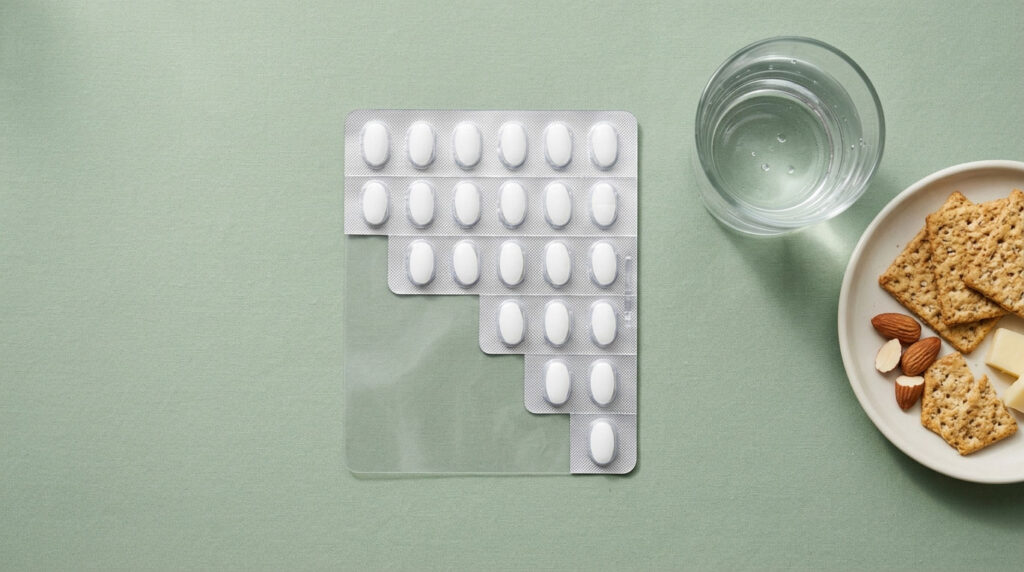
Most prescriptions tell you to take the same pill every day. A Medrol Dose Pack does the opposite. You start with six tablets, then take one fewer each morning until the pack is empty. That shrinking schedule isn’t a packaging gimmick. It’s a deliberate plan to calm a flare fast, then ease your body off the steroid before your adrenal glands notice it’s gone.
Table of Contents
Quick Answer: A Medrol Dose Pack is a six-day, pre-measured course of methylprednisolone, a corticosteroid that quickly reduces inflammation and calms an overactive immune response. It treats flare-ups like severe allergies, asthma attacks, joint or skin inflammation, and back pain. You take six 4 mg tablets on day one and one fewer each day. Relief often starts within hours to days, but it isn’t an antibiotic.
At a Glance
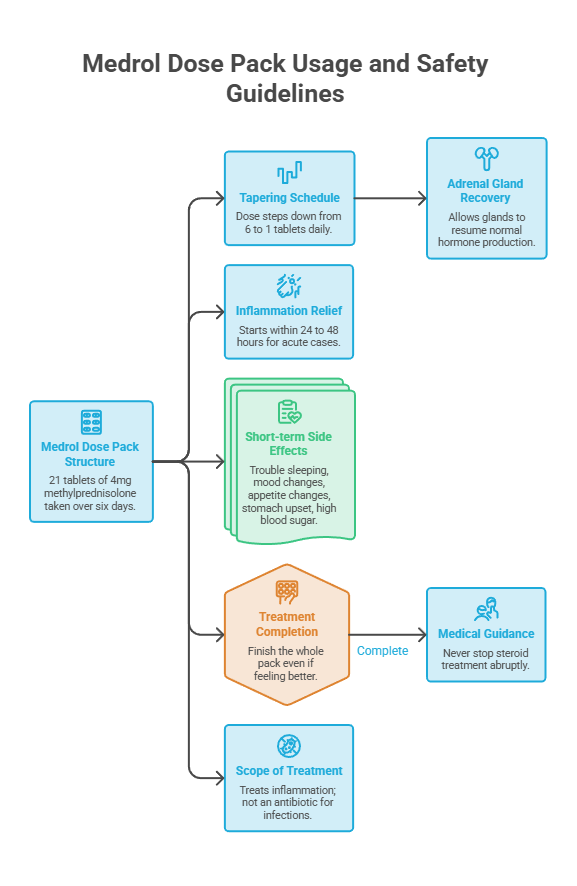
- A Medrol Dose Pack contains 21 tablets of methylprednisolone (4 mg each), taken over six days on a tapering schedule.
- The dose steps down (6, 5, 4, 3, 2, 1) so your adrenal glands can resume normal hormone production safely.
- Relief often starts within 24 to 48 hours for acute inflammation; chronic conditions take longer.
- Common short-term effects include trouble sleeping, mood and appetite changes, stomach upset, and higher blood sugar.
- Finish the whole pack even if you feel better, and never stop a steroid abruptly without medical guidance.
- It treats inflammation; it does not treat infections and is not an antibiotic.
What Is a Medrol Dose Pack?
A Medrol Dose Pack is a short, ready-to-use course of the prescription steroid methylprednisolone, arranged on a day-by-day card that tapers the dose down over six days. Medrol is the brand name; methylprednisolone is the active drug inside. The “Dosepak” simply organizes the tablets into a printed grid so you know exactly how many to take each day.
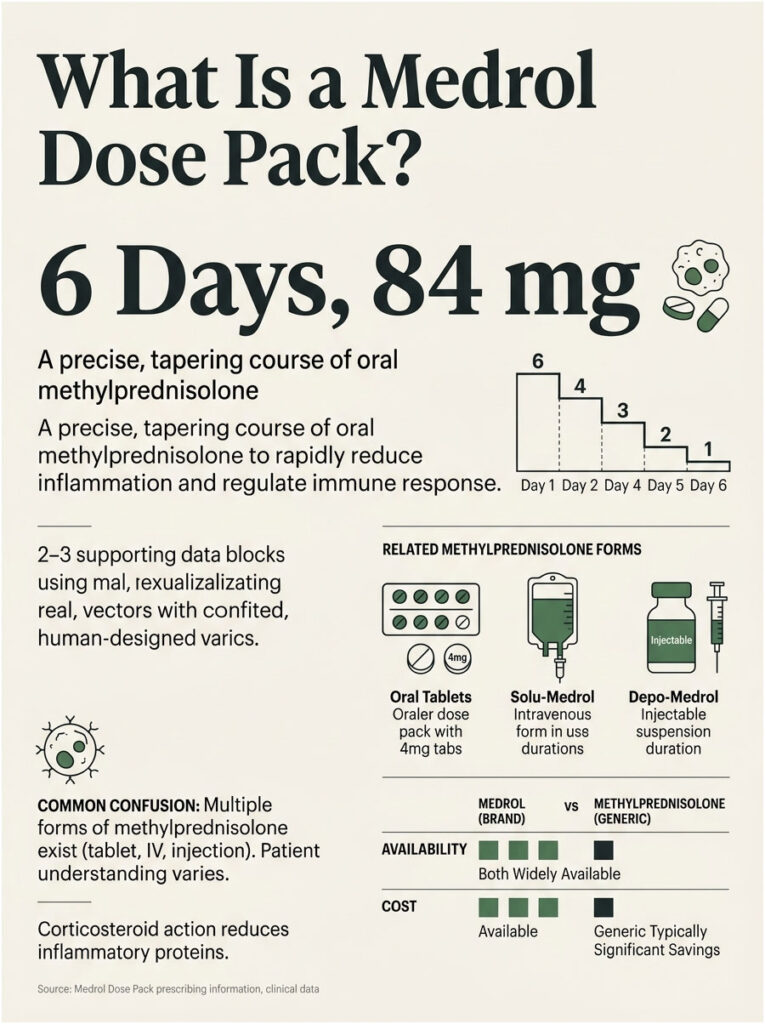
The original version is made by Pfizer, through Pharmacia & Upjohn, and sold as the Medrol Dosepak. Generic methylprednisolone dose packs are widely stocked at US pharmacies and work the same way. Whether the label says Medrol or methylprednisolone, the medicine and the taper are identical.
As a generic, methylprednisolone is one of the more affordable prescriptions you’ll fill, though the exact price varies by pharmacy and insurance. It’s worth checking a discount tool like GoodRx for current local pricing, since the brand-name Medrol pack usually costs more than the generic.
The 4 mg Tablet and the Six-Day Plan
Each tablet in the standard pack holds 4 mg of methylprednisolone. The classic Dosepak holds 21 of them, which adds up to 84 mg across the six days. According to the FDA-approved labeling for Medrol, all six day-one tablets may be taken at once or split into smaller doses through the day.
That front-loaded design is the point. You hit the inflammation hard on day one, then taper down gradually. Patients booking lab work through HealthCareOnTime often ask why the pack starts so high; the answer is that a strong opening dose does the heavy lifting before the body is gently weaned off.
Where It Fits Among Steroids
Methylprednisolone is a corticosteroid, specifically a glucocorticoid. These are lab-made versions of cortisol, the hormone your adrenal glands release in response to stress and inflammation. They are not the anabolic steroids some athletes misuse to build muscle, which is a completely different class of drug.
The Cleveland Clinic notes that methylprednisolone works by decreasing inflammation, slowing an overactive immune system, or replacing cortisol the body normally makes. That triple action is why one medicine treats conditions as different as poison ivy, asthma, and arthritis. The dose pack is just one convenient way to deliver it.
The Medrol Family
You may also see related products with similar names. Solu-Medrol is the injectable form given in hospitals or clinics, and Depo-Medrol is a longer-acting injection often placed into a joint or muscle. The Dose Pack is the oral tablet version you take at home. All three are the same drug delivered in different ways.
Our medical reviewers note that confusion between these forms is common, since the “Medrol” name appears on each. If your prescription is a card of pills with a day-by-day chart, you have the oral Dose Pack, not an injection. When in doubt, your pharmacist can confirm which form you’re holding.
How a Medrol Dose Pack Works in Your Body
Inflammation is your immune system doing its job, sending chemicals that cause swelling, redness, heat, and pain. That response is helpful when it’s controlled and harmful when it overreacts. A Medrol Dose Pack steps in to dial that reaction back down quickly.
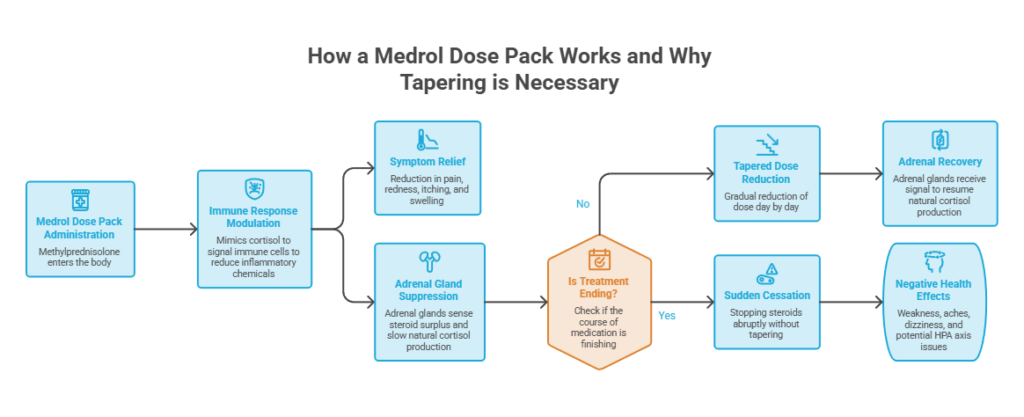
Methylprednisolone mimics cortisol and signals your immune cells to release fewer inflammatory chemicals. The GoodRx pharmacy team explains that it calms the immune response and lowers the inflammatory compounds that drive pain, redness, itching, and swelling. Less of those chemicals means faster relief from the flare.
Think of an overactive immune response as an alarm that won’t stop ringing. The steroid doesn’t fix the wiring; it quiets the alarm so the rest of your body can settle. That’s why it’s so effective at symptom relief and why it doesn’t, on its own, cure the condition that set the alarm off.
Why the Dose Steps Down
Here’s the part that trips people up. Your adrenal glands constantly make cortisol on their own. When you flood your system with a steroid, those glands sense the surplus and slow their own production. That’s normal and expected during treatment.
If you stopped a steroid suddenly, your sleepy adrenal glands wouldn’t restart fast enough, and you could feel weak, achy, dizzy, or worse. The taper avoids that gap. By stepping the dose down day by day, the pack gives your adrenal glands a clear signal to wake back up and resume their job.
This is why the Mayo Clinic advises not to suddenly stop a corticosteroid taken for a while, and to lower the dose gradually instead. The Dose Pack builds that gradual reduction right into the packaging. With a short six-day course, the built-in taper is usually enough on its own.
A Quick Word on the HPA Axis
The system that manages cortisol is called the hypothalamic-pituitary-adrenal axis, or HPA axis for short. Think of it as a thermostat connecting your brain to your adrenal glands. Steroids turn that thermostat down temporarily, and the taper turns it back up.
For a six-day pack, suppression is usually mild and short-lived. Longer or repeated courses can suppress the HPA axis more, which is one reason these packs are meant for brief use. In cases reviewed by our medical team, the patients who do best are the ones who follow the taper exactly rather than improvising the schedule.
What a Medrol Dose Pack Is Used For
A Medrol Dose Pack treats conditions driven by inflammation or an overactive immune system. It’s a short-term tool for calming a flare, not a daily medication for ongoing disease. The list of approved uses is long because inflammation shows up almost everywhere in the body.
Common Medical Uses
Doctors prescribe methylprednisolone for a wide range of inflammatory problems. The Drugs.com monograph lists conditions affecting the skin, eyes, lungs, stomach, nervous system, and blood, along with arthritis, lupus, psoriasis, ulcerative colitis, allergic disorders, and gland (endocrine) disorders.
Grouped by body system, the most frequent reasons you’ll see a Dose Pack include:
- Allergic reactions: severe seasonal allergies, hives, drug reactions, and contact rashes like poison ivy
- Respiratory flares: asthma and COPD attacks, where it eases airway swelling and makes breathing easier
- Musculoskeletal inflammation: acute joint, tendon, or back pain, including sciatica and nerve-related flares
- Skin conditions: eczema and psoriasis flares that aren’t responding to creams alone
- Post-procedure swelling: after oral, sinus, or other surgeries to limit pain and inflammation
Off-Label and Everyday Uses
Plenty of prescriptions fall outside the formal approved list. Research on US prescribing found that the most common reasons for short steroid courses were upper respiratory tract infections, spinal conditions, and allergies. Many of these are everyday complaints rather than rare diseases.
That said, the evidence is thinner for some popular uses, like nonspecific muscle pain or routine sinus congestion. Patients commonly ask us whether a Dose Pack will fix a sinus infection, and the honest answer is that it may ease swelling but won’t kill the bacteria or virus causing it.
It’s not an antibiotic, and using it where it isn’t needed adds risk without much payoff. A good prescriber will reserve it for inflammation that genuinely calls for it. If your symptoms point to a straightforward infection, a different treatment may serve you better.
How to Take a Medrol Dose Pack (Day by Day)
The pack does the math for you. Each row of the card is labeled with a day and shows how many tablets to take. Following that printed day-by-day schedule, in order, is the single most important thing you can do.
Below is the standard six-day pattern for a 21-tablet, 4 mg Dose Pack. Your exact timing instructions may differ slightly depending on what your prescriber writes, so the printed card and pharmacy label always win.
| Day | 4 mg Tablets | Total Daily Dose | Suggested Timing |
| Day 1 | 6 tablets | 24 mg | 2 before breakfast, 1 after lunch, 1 after dinner, 2 at bedtime |
| Day 2 | 5 tablets | 20 mg | 1 before breakfast, 1 after lunch, 1 after dinner, 2 at bedtime |
| Day 3 | 4 tablets | 16 mg | 1 before breakfast, 1 after lunch, 1 after dinner, 1 at bedtime |
| Day 4 | 3 tablets | 12 mg | 1 before breakfast, 1 after lunch, 1 at bedtime |
| Day 5 | 2 tablets | 8 mg | 1 before breakfast, 1 at bedtime |
| Day 6 | 1 tablet | 4 mg | 1 before breakfast |
Source: dosing pattern based on the FDA-approved Medrol labeling.
Take It With Food, and Mind the Timing
Methylprednisolone can irritate your stomach, so take each dose with food or milk. A snack is enough; you don’t need a full meal. Many people do best taking the day’s tablets in the morning, which lines up with your body’s natural cortisol rhythm and may help you sleep better.
Steroids and alcohol both irritate the stomach lining, so it’s smart to skip drinking during the course. The drug can also make some people dizzy, and alcohol makes that worse. If your stomach feels off, tell your pharmacist before reaching for an over-the-counter remedy, since some antacids and pain relievers interact with steroids.
If You Miss a Dose
Take a missed dose as soon as you remember. If it’s nearly time for the next one, skip the missed dose rather than doubling up. Two doses at once raises your side-effect risk without giving you any extra benefit, so when in doubt, call your pharmacist for tailored advice.
Finish the Whole Pack
Feeling better by day three is common, and it’s tempting to stop. Don’t. The taper is designed as a complete unit, and quitting early can let your symptoms come roaring back or leave your adrenal glands in the lurch.
For perspective on dose strength, the full pack delivers 84 mg of methylprednisolone, which is roughly equivalent to 105 mg of prednisone spread across six days. Because 4 mg of methylprednisolone equals about 5 mg of prednisone, the two drugs are close cousins doing the same job.
Medrol Dose Pack Side Effects
Even a short course can cause side effects, though most are mild and fade once you finish. Knowing what’s normal versus what needs a phone call helps you stay calm and safe through the six days.
Common Short-Term Effects
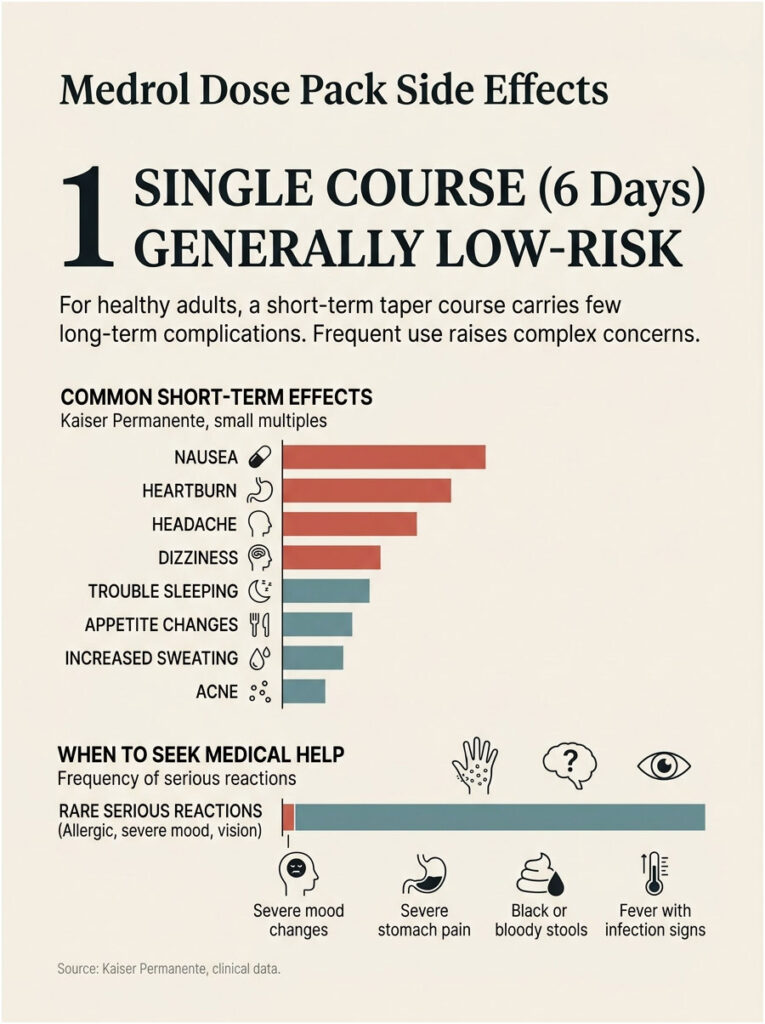
The Kaiser Permanente drug guide lists nausea, heartburn, headache, dizziness, trouble sleeping, appetite changes, increased sweating, and acne as possible effects. These tend to be temporary and ease as your body adjusts to the medication.
You may also notice a few other short-term shifts:
- Mood changes, from feeling wired or anxious to irritable
- A bump in appetite or some fluid retention
- Higher blood sugar, which matters most if you have diabetes
- A burst of energy on the high-dose days, followed by fatigue as the dose drops
Across the patients we serve, sleep disruption and a “buzzy” feeling are the complaints we hear most. Taking the dose earlier in the day often softens both. Light meals and steady hydration help with the stomach and appetite changes.
Serious Effects and Red Flags
Serious reactions are uncommon with a six-day pack, but they happen. Get emergency help for signs of a severe allergic reaction, such as hives, trouble breathing, or swelling of the face, lips, tongue, or throat. Steroids can also lower your defenses, which the Drugs.com guide notes can make an infection easier to catch or worsen one you already have.
Call your prescriber promptly for severe mood changes, vision problems, severe stomach pain, black or bloody stools, or a fever with signs of infection. These aren’t reasons to panic, but they are reasons to stop guessing and get medical input quickly.
A Note on Repeated Courses
One pack is generally low-risk for most healthy adults. The picture changes with frequent repeat courses. Our medical reviewers note that cumulative steroid exposure adds up over time, raising concerns about bone health, blood sugar, and infection that a single short pack rarely causes.
If you find yourself getting Dose Pack after Dose Pack for the same problem, that’s a signal to dig into the root cause with your doctor. A pattern of flares may need a different long-term plan, not another taper. Tracking markers like blood sugar and inflammation over time can help that conversation.
How Fast It Works and How Long It Stays in Your System
Speed is a big reason these packs get prescribed. People want relief, and they want to know when to expect it.
Onset of Relief
For acute inflammation like an allergic reaction or an asthma flare, relief often begins within 24 to 48 hours. Some people feel a difference the same day, especially with that high day-one dose doing the heavy lifting up front.
Chronic conditions, such as long-standing arthritis, can take longer to respond. If you reach the end of the pack and feel no better, that’s worth a call to your prescriber rather than a reason to restart on your own.
How Long It Lingers
The methylprednisolone in your bloodstream clears fairly quickly, generally within about a day after your last tablet. Its anti-inflammatory effects can outlast the drug itself, because of how steroids act inside your cells. That’s normal, and it’s part of why a tapered finish works.
Patients commonly ask us whether the steroid is “still in there” days later. For practical purposes, the active medicine is gone soon after the pack ends, even if the calming effect on inflammation fades a little more gradually.
What to Expect After You Finish the Pack
Wrapping up the last tablet doesn’t always mean the story is over. Most people feel steady improvement through the course and stay better afterward, especially when the flare was a one-time event like a poison ivy rash or a short allergic reaction.
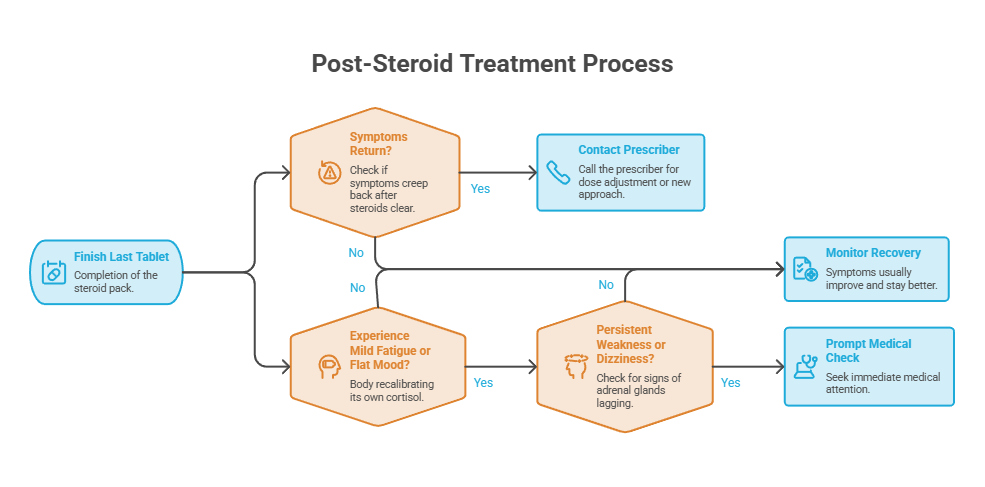
Sometimes symptoms creep back once the steroid clears. If that happens, resist the urge to dig out a leftover pack or restart anything on your own. Returning or worsening symptoms are a signal to call your prescriber, who may adjust the dose, extend treatment, or look for a cause that needs a different approach.
A few people notice mild fatigue or a flat mood in the days after finishing, as the body recalibrates its own cortisol. With a short six-day course this is usually brief and minor. Persistent weakness, dizziness, or feeling unwell deserves a prompt medical check, since it can occasionally signal the adrenal glands lagging behind.
Medrol Dose Pack vs Prednisone Dose Pack
You may have a friend who took a prednisone pack and wonder how it compares. The two are very similar steroids with the same purpose: a short, tapered course to fight inflammation.
The main difference is potency. As pharmacist guidance explains, 4 mg of methylprednisolone is equivalent to 5 mg of prednisone, so you need slightly less methylprednisolone for the same effect. The taper logic, the cautions, and the side effects are otherwise nearly identical.
Which one you get often comes down to your doctor’s preference, what your pharmacy stocks, and how your body has responded to steroids before. Neither is automatically “stronger” in a meaningful way once the dose equivalence is accounted for. Both demand the same respect for finishing the taper as written.
Safety, Interactions, and Who Should Be Cautious
A Dose Pack is generally safe for short-term use, but a few situations call for extra care. A quick heads-up to your prescriber or pharmacist clears most of these up before you start.
Vaccines, Alcohol, and Drug Interactions
Don’t get a “live” vaccine while taking a Dose Pack. The Drugs.com guide warns that the vaccine may not work as well, listing live vaccines like MMR (measles, mumps, rubella), nasal flu, chickenpox (varicella), and others. Standard inactivated shots are usually fine, but check first.
Methylprednisolone interacts with a number of drugs, including certain seizure medications, blood thinners, diabetes drugs, and some antifungals. Keep a current list of everything you take, prescription and over-the-counter, and share it with your pharmacist before you start the pack.
Who Should Take Extra Care
Some health conditions raise the stakes. Tell your provider if you have diabetes, an active infection, high blood pressure, glaucoma, stomach ulcers, or a weakened immune system. Older adults may face a higher risk of effects on bone and blood pressure, and the Rupa Health overview suggests closer monitoring in that group.
If you’re pregnant, breastfeeding, or trying to conceive, that’s a conversation to have before filling the prescription. The decision weighs the benefit of treatment against any risk, which is exactly what your prescriber is trained to balance for you.
The table below covers the situations patients ask about most.
| Your Situation | What to Do | Why It Matters |
| You feel better by Day 3 | Finish the full pack as scheduled | Stopping early can trigger symptom rebound and stress your adrenal glands |
| You miss a dose | Take it when you remember; don’t double up; ask your pharmacist | Doubling raises side-effect risk with no added benefit |
| You have diabetes | Check your blood sugar more often during the course | Methylprednisolone can push glucose higher while you take it |
| You’re due for a live vaccine | Postpone it and tell your provider | The vaccine may not protect you well during steroid use |
| Symptoms return or worsen after the pack | Call your prescriber; don’t restart on your own | You may need a different dose or a longer treatment plan |
How Common Are Steroid Packs, and What Are the Real Risks?
Short steroid courses are far more common than most people realize, and that popularity is exactly why their risks deserve a closer look. The convenience of a pre-packaged taper can make it feel casual, but the medicine is still powerful.
A landmark US study tracked more than 1.5 million privately insured adults and found that about 1 in 5 received a short-term oral steroid over a three-year stretch. Within 30 days of starting, those patients showed higher rates of serious problems, even at modest doses. The risks faded over the following months but were real in that first month.
That doesn’t mean a single Dose Pack is dangerous for a healthy adult. It means short courses aren’t risk-free, and they shouldn’t be treated as throwaway prescriptions. The numbers below put the research in context.
| Metric | Figure | Source |
| US adults prescribed a short-term oral steroid over 3 years | About 1 in 5 (21.1%) | Waljee et al., BMJ 2017 |
| Increased sepsis risk within 30 days of starting | 5.3x higher | Waljee et al., BMJ 2017 |
| Increased blood-clot (VTE) risk within 30 days | 3.3x higher | Waljee et al., BMJ 2017 |
| Increased fracture risk within 30 days | 1.9x higher | Waljee et al., BMJ 2017 |
| Average annual US oral corticosteroid use (2009 to 2018) | 6.8% of the population | Wallace et al., Clin Transl Sci 2023 |
A separate decade-long analysis found that US oral steroid use kept climbing, driven largely by short courses prescribed to otherwise healthy adults. The takeaway isn’t fear; it’s respect. A Dose Pack is a useful tool when the inflammation justifies it and a poor choice when it doesn’t.
Frequently Asked Questions
What is a Medrol dose pack used for?
It treats short-term inflammation and overactive immune responses. Common uses include severe allergic reactions, asthma or COPD flares, joint and back inflammation, skin flares, and post-surgical swelling. It calms the flare quickly but is not an antibiotic and won’t cure the condition behind your symptoms.
How quickly does a Medrol dose pack start working?
For acute inflammation like allergies or an asthma flare, many people feel relief within 24 to 48 hours, sometimes the same day. Chronic conditions such as arthritis can take longer. If you finish the pack with no improvement, contact your prescriber rather than restarting it yourself.
How long does a Medrol dose pack stay in your system?
The active methylprednisolone clears your bloodstream fairly quickly, generally within about a day after your last tablet. Its anti-inflammatory effects can linger a little longer because of how steroids act inside cells. For most practical purposes, the drug is gone soon after the pack ends.
Can you drink alcohol while taking a Medrol dose pack?
It’s best to avoid alcohol during the course. Both alcohol and methylprednisolone irritate the stomach lining, raising your risk of upset stomach or ulcers. Alcohol can also worsen the dizziness some people feel. If you have questions about timing, your pharmacist can give specific guidance.
Is a Medrol dose pack a strong steroid?
Methylprednisolone is a moderately potent corticosteroid, slightly stronger per milligram than prednisone (4 mg equals about 5 mg of prednisone). The standard pack delivers a meaningful but short course of 84 mg over six days. Overall strength depends on the dose and how long you take it.
Is methylprednisolone the same as prednisone?
They’re close cousins, not identical. Both are corticosteroids used in tapered short courses for inflammation, with nearly identical cautions and side effects. The main difference is potency: methylprednisolone is a bit stronger, so you need slightly less of it for the same anti-inflammatory effect.
Can I take a Medrol dose pack for a sinus infection?
A doctor may prescribe one to reduce sinus swelling, but it won’t treat the infection itself. Methylprednisolone is not an antibiotic and does nothing to kill bacteria or viruses. If an infection is the cause, you may need an antibiotic or time, with the steroid easing symptoms only.
What should I avoid while on a Medrol dose pack?
Avoid alcohol, live vaccines (like MMR or nasal flu), and stopping the pack early. Take each dose with food to protect your stomach, and tell your pharmacist about every other medication you use. People with diabetes should watch their blood sugar closely during the course.
Will a Medrol dose pack cause weight gain?
A six-day pack rarely causes lasting weight gain. You might notice temporary fluid retention or a bigger appetite while taking it, which usually settles after you finish. Significant steroid-related weight gain is mostly tied to long-term or repeated use, not a single short taper.
Can I stop a Medrol dose pack early if I feel better?
No. Finish the full pack as scheduled even if your symptoms clear up. Stopping early can let the inflammation rebound and may leave your adrenal glands unprepared. The taper is built as one complete unit, so each day matters. Call your prescriber before changing anything.
Is a Medrol dose pack safe during pregnancy?
That’s a decision for your doctor, who will weigh the benefit against any risk. Corticosteroids are sometimes used in pregnancy when clearly needed. Tell your provider if you’re pregnant, breastfeeding, or trying to conceive before filling the prescription, so they can choose the safest approach for you.
Can I get a vaccine while taking a Medrol dose pack?
Avoid live vaccines, such as MMR, chickenpox, and nasal flu, while on the pack, since they may not work well and can carry added risk. Inactivated shots are usually fine, but confirm with your provider. If a vaccine is scheduled, mention your steroid course first.
Disclaimer: This article is for general educational purposes only and is not a substitute for professional medical advice, diagnosis, or treatment. Always follow the instructions on your prescription and the guidance of your doctor or pharmacist. Never start, stop, or change a medication without consulting a qualified healthcare provider. If you experience signs of a severe allergic reaction or other medical emergency, seek immediate care.
References
- Medrol (methylprednisolone) FDA labeling, DailyMed (NLM)
- Methylprednisolone (oral route), Mayo Clinic
- Methylprednisolone (Medrol): Uses & Side Effects, Cleveland Clinic
- Medrol Dosepak Uses, Side Effects & Warnings, Drugs.com
- Methylprednisolone (Medrol): What Is It, GoodRx
- Medrol (Pak) 4 mg tablets drug encyclopedia, Kaiser Permanente
- Waljee AK et al. Short term use of oral corticosteroids and related harms among adults in the United States, BMJ 2017
- Wallace BI et al. Prevalence and prescribing patterns of oral corticosteroids in the United States, Clinical and Translational Science 2023