Your meter reads 180 mg/dL. You feel sick to your stomach, a little short of breath, and more tired than a normal Tuesday should allow. Nothing looks like an emergency. With an SGLT2 inhibitor on board and type 1 diabetes underneath, that picture can still be diabetic ketoacidosis.
Table of Contents
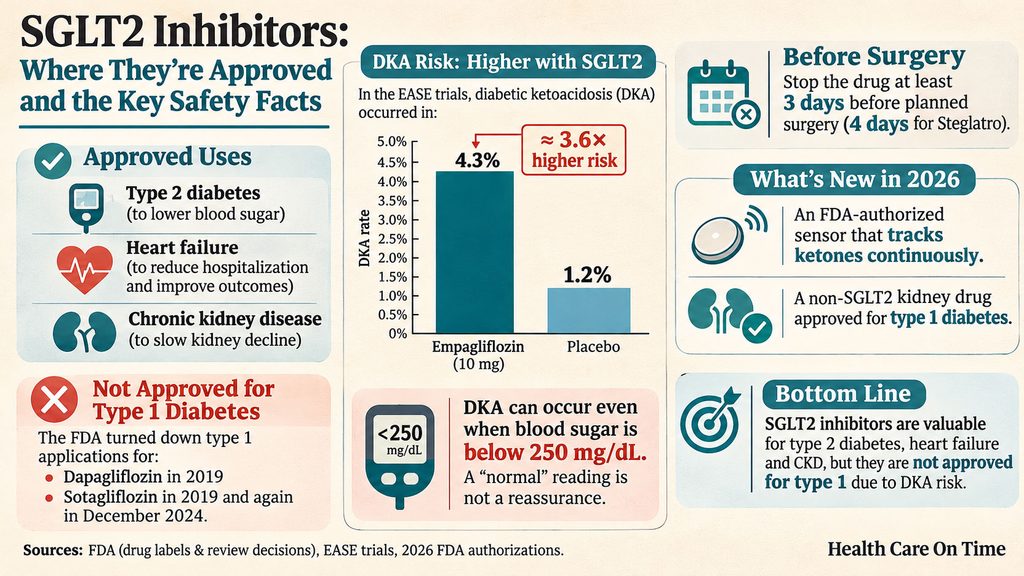
Quick Answer: No. No SGLT2 inhibitor is FDA approved to treat type 1 diabetes. Jardiance, Farxiga, Invokana and Steglatro all carry a label limit saying they are not recommended for blood sugar control in type 1, because they markedly raise the risk of diabetic ketoacidosis (DKA), sometimes with blood sugar below 250 mg/dL. Some specialists still prescribe them off-label with ketone monitoring. Never start or stop one without your diabetes team.
About 2.1 million Americans live with diagnosed type 1 diabetes, including 314,000 children and teens, according to the CDC. Many of them hear that SGLT2 drugs protect the heart and kidneys in type 2 diabetes and wonder why nobody offers the same pill to them.
Readers often ask us that exact question. This guide gives the full answer: what the FDA labels say, why DKA is the deal-breaker, what the trials found, and what to ask your doctor.
At a Glance
- SGLT2 inhibitors are approved for type 2 diabetes, heart failure and chronic kidney disease, not for type 1 diabetes.
- The FDA turned down two type 1 applications: dapagliflozin in 2019 and sotagliflozin in 2019 and again in December 2024.
- In the EASE trials, DKA hit 4.3% of people on empagliflozin 10 mg versus 1.2% on placebo.
- DKA on these drugs can occur with blood sugar below 250 mg/dL, so a “normal” reading is not reassurance.
- Labels say to stop the drug at least 3 days before planned surgery (4 days for Steglatro).
- New in 2026: an FDA-authorized sensor that tracks ketones continuously, and a non-SGLT2 kidney drug approved for type 1.
What SGLT2 Inhibitors Are and Why People With Type 1 Ask About Them
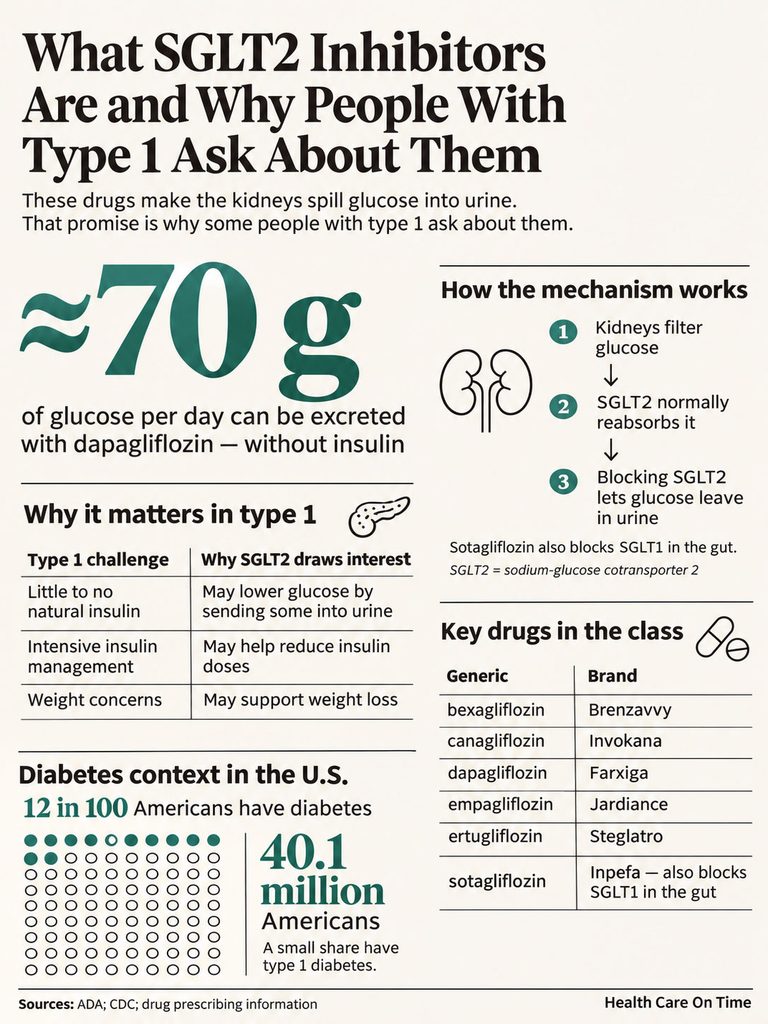
SGLT2 inhibitors are oral medicines that make the kidneys pass extra glucose into the urine. Cleveland Clinic lists five: bexagliflozin (Brenzavvy), canagliflozin (Invokana), dapagliflozin (Farxiga), empagliflozin (Jardiance) and ertugliflozin (Steglatro). A related dual drug, sotagliflozin (Inpefa), also blocks SGLT1 in the gut.
How the drugs lower blood sugar
SGLT2 is a transporter in the kidney’s filtering tubes. Normally it pulls filtered glucose back into the blood. Block it, and that glucose leaves in the urine instead.
Per the Farxiga prescribing information, dapagliflozin 5 or 10 mg pushes out roughly 70 grams of glucose a day in people with type 2 diabetes. That works without any insulin from the pancreas, which is exactly why the class caught the eye of type 1 researchers.
Why the idea appeals in type 1
Type 1 diabetes is an autoimmune disease that destroys insulin-making beta cells (our guide to type 1 diabetes causes explains the process). Insulin is the only standard treatment, and hitting targets with insulin alone is hard.
The CDC counts 40.1 million Americans with diabetes, about 12.0% of the population, and only a small share have type 1. Most SGLT2 research and marketing targets the type 2 majority, so the heart and kidney headlines rarely mention the type 1 exception.
An add-on pill that lowers glucose, trims weight and shaves insulin doses sounds ideal. The trials confirmed those benefits were real. They also confirmed the cost.
Are SGLT2 Inhibitors Approved for Type 1 Diabetes? Drug by Drug
Our medical content team pulled the current U.S. labels for each drug rather than relying on summaries. Here’s what they say.
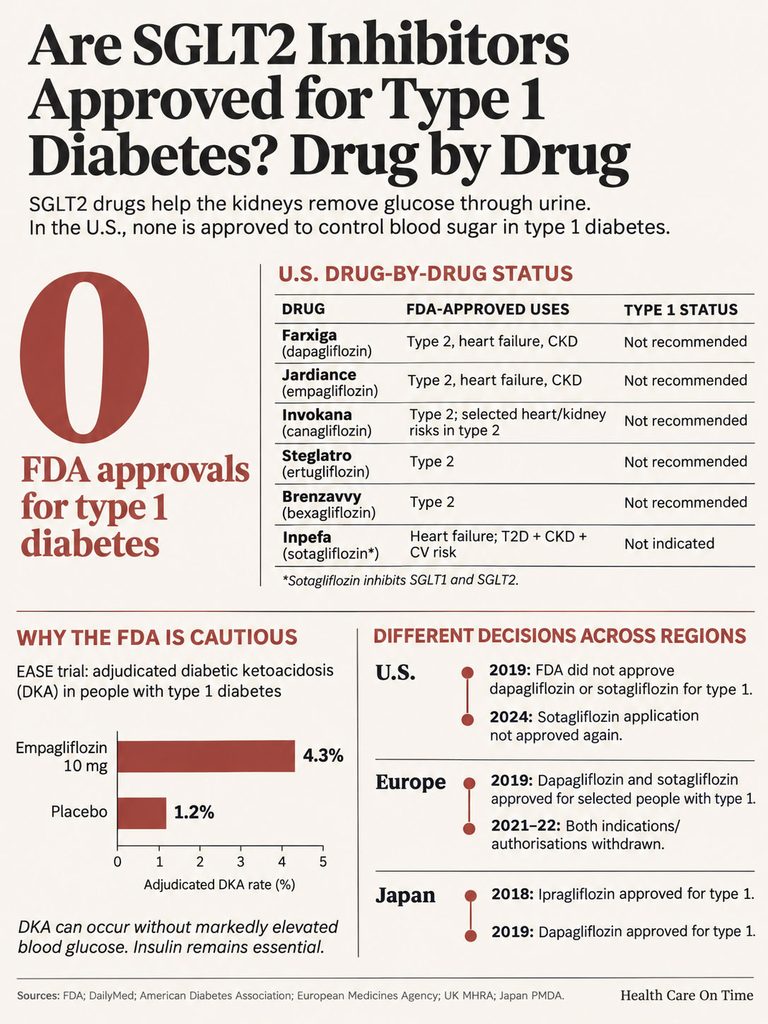
| Drug (brand) | FDA-approved uses | Status for type 1 diabetes | What the label or FDA record says |
| Dapagliflozin (Farxiga) | Type 2 diabetes in adults and children 10+; heart failure; chronic kidney disease; heart failure risk in type 2 | Not approved; FDA declined a type 1 application on July 15, 2019 | “Not recommended” for glycemic control in type 1; DKA risk raised “beyond the background rate” |
| Empagliflozin (Jardiance) | Type 2 diabetes in adults and children 10+; heart failure; chronic kidney disease; cardiovascular death in type 2 with heart disease | Not approved | Not recommended in type 1; label states fatal ketoacidosis has occurred |
| Canagliflozin (Invokana) | Type 2 diabetes; major cardiac events in type 2 with heart disease; kidney failure risk in type 2 kidney disease | Not approved | Not recommended in type 1; DKA risk “may be greater with higher doses” |
| Ertugliflozin (Steglatro) | Type 2 diabetes in adults only | Not approved | Not recommended in type 1; stop at least 4 days before surgery |
| Sotagliflozin (Inpefa) | Heart failure, or type 2 with kidney disease and heart risk (approved May 2023) | Rejected for type 1 in 2019 and again on December 20, 2024 | FDA advisers voted 11 to 3 that benefits did not outweigh risks |
| Bexagliflozin (Brenzavvy) | Type 2 diabetes in adults (20 mg tablet) | Not approved | Listed by Cleveland Clinic among SGLT2 drugs that are not a type 1 treatment |
Sources: Farxiga label, Jardiance label, Invokana label, Steglatro label, Patient Care on sotagliflozin.
Why the labels say “not recommended”
The wording is deliberate. The Farxiga label says that in type 1 diabetes the drug “significantly increases the risk of diabetic ketoacidosis,” a life-threatening event, “beyond the background rate.” Jardiance and Invokana carry matching cautions.
The labels also describe how long the effect can last. After postmarketing reports, the Farxiga label notes that ketoacidosis and glucose loss in the urine have sometimes lasted more than 6 days, and in some cases up to 2 weeks, after the last dose. Stopping the pill does not switch the risk off overnight.
The U.S. decisions in order
- May 2015: The FDA warned that Invokana, Farxiga and Jardiance may cause ketoacidosis after 20 cases between March 2013 and June 2014, all needing an ER visit or hospital stay. It noted the drugs were not approved for type 1.
- March 2019: First rejection of sotagliflozin (Zynquista) for type 1.
- July 15, 2019: The FDA declined dapagliflozin as an add-on to insulin in type 1, per the Maffei review.
- October 31, 2024: FDA advisers voted 11 to 3 against sotagliflozin for adults with type 1 and chronic kidney disease.
- December 20, 2024: The FDA issued a second rejection letter for that use.
Europe and Japan: approved, then pulled back
Some older pages still say Farxiga is approved for type 1 in Europe. That was true in 2019, when Europe cleared dapagliflozin 5 mg and sotagliflozin for adults with type 1 and a BMI of 27 or higher. It is not true today.
On October 29, 2021, AstraZeneca and European regulators ended the type 1 authorization for dapagliflozin, citing DKA in at least 1 in 100 trial patients. The UK’s NICE withdrew its guidance in November 2021, and Europe withdrew sotagliflozin’s authorization on August 16, 2022. Japan approved dapagliflozin for type 1, as Beyond Type 1 reported, but that does not change U.S. labeling.
The European limit to a BMI of 27 or higher was not random. The Maffei review describes a meta-regression in which DKA risk began to climb above that BMI, and the weight-loss benefit was most useful in that group. Even with that guardrail, DKA rates stayed high enough for the approval to be withdrawn.
Why SGLT2 Inhibitors Raise DKA Risk in Type 1 Diabetes
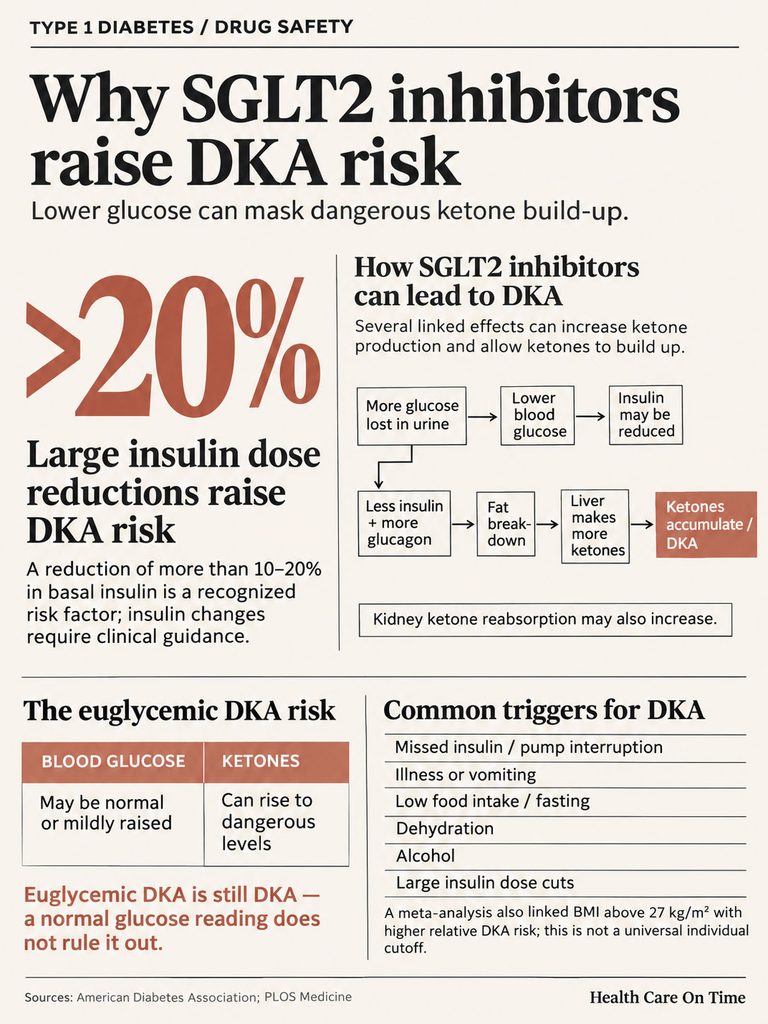
DKA happens when the body lacks enough insulin to move glucose into cells. The liver burns fat instead, and the byproducts, called ketones, pile up and turn the blood acidic. The CDC notes DKA is most common in type 1 diabetes even without any SGLT2 drug.
The insulin shortfall problem
The Maffei review lays out three ways these drugs tip the balance. Lower blood sugar leads people to cut insulin, and less insulin means less brake on fat breakdown. The drugs also raise glucagon, which speeds ketone production. They may reduce how many ketones the kidneys clear.
In type 2 diabetes, the pancreas still makes some insulin, which keeps ketones in check. In type 1, there is little or no backup. That is why every current label calls out type 1 by name.
Euglycemic DKA: dangerous ketones, near-normal sugar
Classic DKA comes with very high blood sugar. On SGLT2 inhibitors, the kidneys keep dumping glucose, so the meter can look calm while ketones climb. Doctors call this euglycemic DKA.
The Farxiga, Jardiance, Invokana and Steglatro labels all say blood sugar at presentation may be below 250 mg/dL (13.9 mmol/L). In one sotagliflozin trial, nearly half of DKA episodes happened at or below that level.
Even Cleveland Clinic’s SGLT2 page lists “very high blood sugar levels” as a DKA symptom. That is true for classic DKA but can mislead someone on these drugs. When our editors checked this against the FDA labels, the message was clear: judge by symptoms and ketones, not by the glucose number alone.
Who carries the highest risk
The labels name these triggers: missed or reduced insulin doses, fever or acute illness, eating much less, a ketogenic diet, surgery, dehydration and heavy alcohol use. A history of pancreatitis also raises risk (see our article on SGLT2 inhibitors and pancreatitis).
A 2025 American College of Diabetology update adds insulin pump users and people who cut insulin by more than 20%. A meta-regression summarized by Maffei found DKA risk started rising above a BMI of 27.
What the Trials Showed: Real Benefits, Real Harms
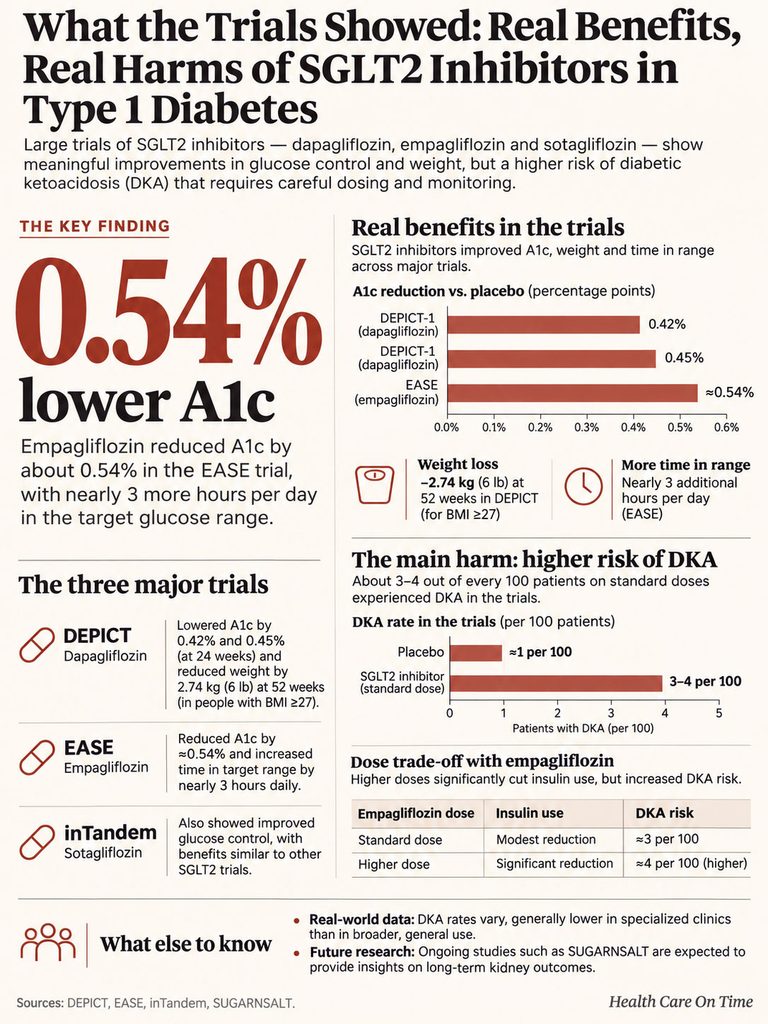
Three large programs tested these drugs as add-ons to insulin: DEPICT (dapagliflozin), EASE (empagliflozin) and inTandem (sotagliflozin). Each ran 24 to 52 weeks.
The benefits were modest
In DEPICT-1, A1c fell 0.42% with dapagliflozin 5 mg and 0.45% with 10 mg versus placebo at 24 weeks, and total insulin dropped 8.8% and 13.2%. In people with a BMI of 27 or more, weight fell 2.74 kg (about 6 pounds) at 52 weeks versus a gain on placebo.
The EASE program enrolled 1,707 adults. Empagliflozin 10 and 25 mg cut A1c by about 0.54%, trimmed weight by 3.0 to 3.4 kg (6.6 to 7.5 pounds) and added nearly 3 hours a day in target range.
The other programs landed in the same range. DEPICT-2 reported A1c drops of 0.37% and 0.42% with dapagliflozin 5 and 10 mg. In inTandem1, sotagliflozin lowered A1c by 0.36% and 0.41% at its two doses.
Dose details from EASE show where the trade-off sits. The 2.5 mg dose cut A1c by only 0.28%, insulin by 6.4% and added about 1 hour a day in range. The 10 and 25 mg doses cut insulin by 13.3% and 12.7% and added roughly 3 hours a day in range, with far more DKA.
In the pooled DEPICT data for people with a BMI of 27 or more, A1c fell 0.26% at 52 weeks while it rose 0.08% on placebo. Insulin use dropped 10.5% versus 1.4%, and time in range rose 2.2 hours a day.
Those gains matter, but they are smaller than most people expect. A drop of half a point in A1c is helpful, not transformative.
The DKA numbers, drug by drug
| Measure | Number | Source |
| Americans with diagnosed type 1 diabetes | 2.1 million (1.8 million adults; 314,000 under 20) | CDC National Diabetes Statistics Report, updated Sept 2026 |
| DKA with empagliflozin 10 mg vs placebo | 4.3% vs 1.2% | EASE trials, Diabetes Care 2018 |
| DKA with empagliflozin 25 mg | 3.3% | EASE trials |
| DKA with empagliflozin 2.5 mg (unapproved low dose) | 0.8%, similar to placebo | EASE trials |
| DKA in one sotagliflozin trial vs placebo | 3% vs 0.4% | Beyond Type 1 summary of trial data |
| DKA frequency cited to end Europe’s dapagliflozin type 1 approval | At least 1 in 100 patients | Maffei review, 2023 |
| Early FDA ketoacidosis reports, Mar 2013 to Jun 2014 | 20 cases, all needing ER or hospital care | FDA warning via Healio, 2015 |
| FDA advisory vote on sotagliflozin for type 1 with kidney disease | 11 against, 3 for | Patient Care Online, 2025 |
Put plainly, roughly 3 to 4 of every 100 people on standard doses developed DKA during these 24- to 52-week trials. That risk lands on a population already prone to DKA.
What the evidence can’t tell you yet
The main type 1 trials are from 2017 to 2019 and were not built to test kidney or heart outcomes. A real-world European cohort reported DKA in 3.5% of users, while a small Danish group of 134 people saw none over 222 patient-years. The SUGARNSALT trial on sotagliflozin and kidney outcomes is not expected to report until late 2028.
Real-world numbers that look reassuring often come from carefully chosen patients in specialist clinics. They tell you what is possible under close supervision, not what happens when the drug is used casually.
Off-Label Use: What It Means If Your Doctor Brings It Up
Off-label means a doctor prescribes an FDA-approved drug for a use the FDA has not approved. It is legal and common, but the safety checks behind the label do not cover that use.
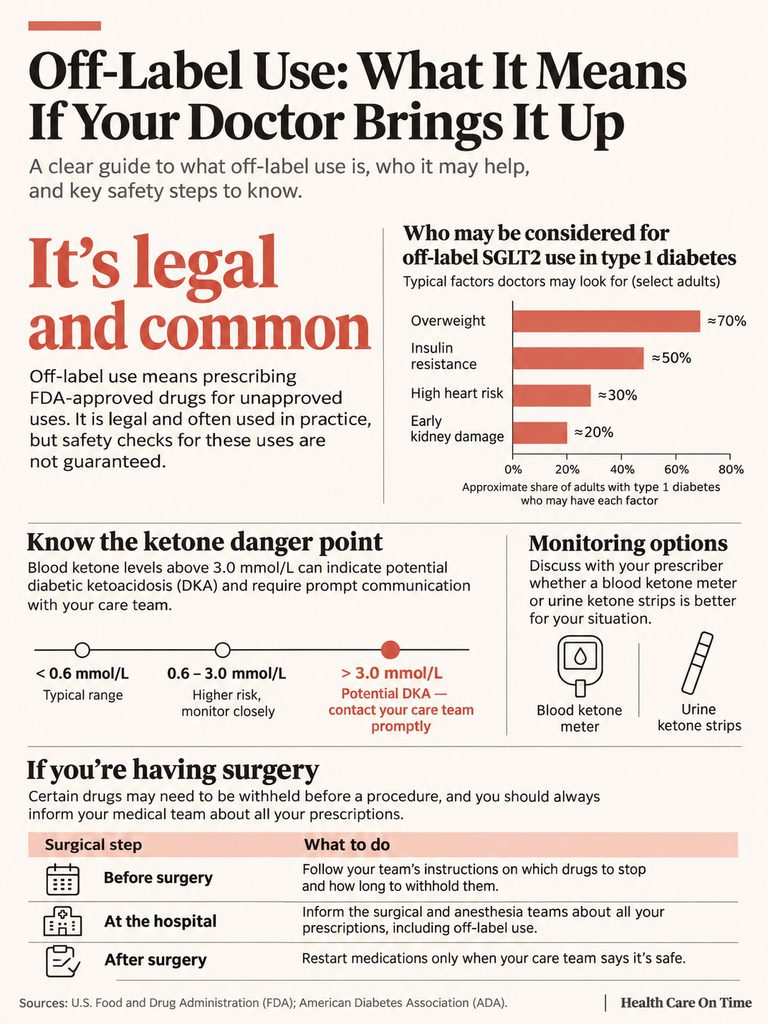
Some endocrinologists do prescribe SGLT2 inhibitors to selected adults with type 1. The ACD update describes candidates as people with overweight or insulin resistance, early kidney damage with good filtering function, or high heart risk.
How specialists reduce the risk
When our team reviews lab reports and specialist notes, the off-label plans that look safest share a few features:
- The lowest available dose, never a self-chosen one.
- Written ketone testing rules, with a meter for blood ketones at home.
- Small, planned insulin changes rather than big cuts.
- A clear sick-day plan to pause the drug.
- Avoidance in people who are underweight, eat very little, follow keto diets or have had DKA.
What a ketone reading means
The Maffei review uses a blood ketone level above 3.0 mmol/L as part of the DKA definition in the trials. That is a diagnostic line, not a safe ceiling. Any rising reading with symptoms deserves a call to your care team.
Blood ketone meters give a number in mmol/L. Urine strips show a color range and can lag behind blood levels. Ask your prescriber which tool to use and write the action thresholds down before the first dose.
Surgery and sick-day rules from the labels
Farxiga, Jardiance and Invokana labels say to withhold the drug for at least 3 days before surgery or procedures with long fasting. Steglatro says 4 days. The drug effect lingers: Farxiga’s label notes glucose loss in the urine lasts about 3 days after stopping, and some ketoacidosis has persisted up to 2 weeks.
Tell every surgeon, anesthesiologist and colonoscopy team that you take one. Bowel prep and fasting are exactly the conditions the labels flag.
DKA Warning Signs Every SGLT2 User Should Know
The labels list nausea, vomiting, belly pain, general malaise and shortness of breath. The CDC adds early signs of heavy thirst and frequent urination, then later fast deep breathing, dry mouth, flushed face, fruity breath, headache, muscle aches and extreme tiredness.
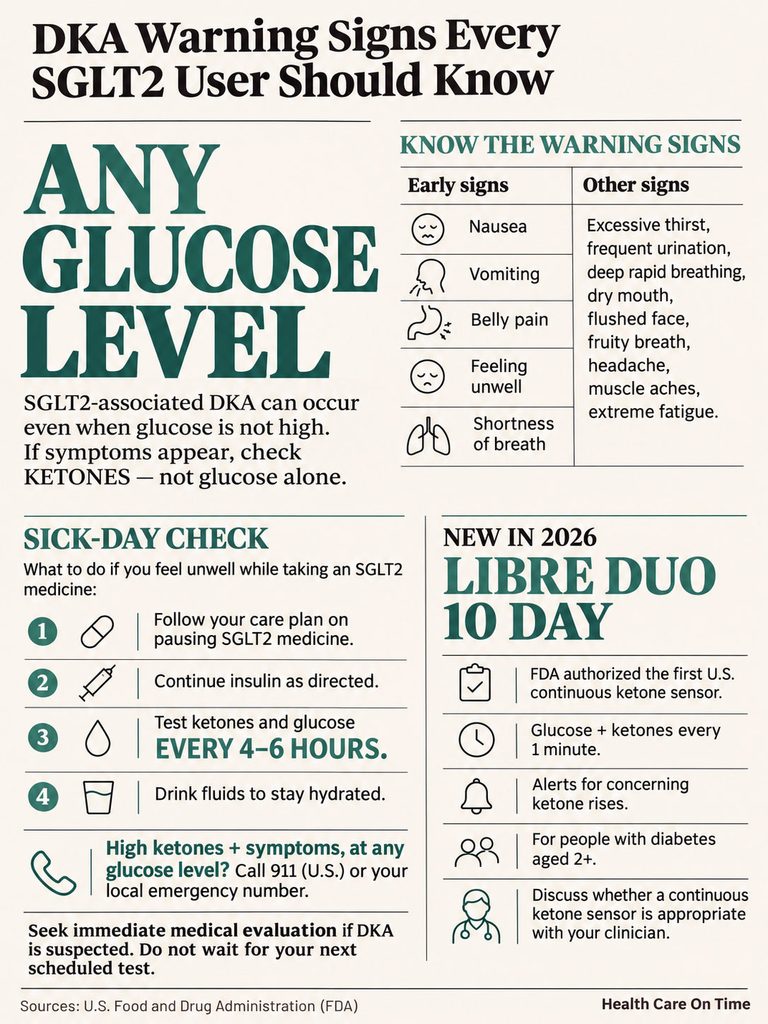
On an SGLT2 inhibitor, check ketones whenever these show up, even if glucose looks fine. The CDC advises checking ketones and testing glucose every 4 to 6 hours whenever you are sick or your blood sugar is 250 mg/dL or above.
A sick-day routine that fits the labels
Illness is the classic setup for DKA. Appetite drops, fluids run low and insulin needs often rise. That is the moment people are tempted to skip insulin, which the labels list as a trigger.
A safer routine follows the CDC and label advice. Pause the SGLT2 drug if your plan says so. Keep taking insulin as your care team directs. Test ketones and check glucose every 4 to 6 hours, and sip fluids steadily. Call your doctor early rather than waiting to see if it passes.
When to call 911
Per the CDC, go to the ER or call 911 right away if:
- Your blood sugar stays at 300 mg/dL (16.7 mmol/L) or above.
- Your breath smells fruity.
- You are vomiting and can’t keep food or drinks down.
- You are having trouble breathing.
- You have several DKA symptoms at once.
On an SGLT2 drug, add one more: high ketones with symptoms, at any glucose level. Our explainer on what blood sugar level is dangerous covers the glucose side.
New: a sensor that tracks ketones continuously
On August 25, 2026, the FDA authorized the Libre Duo 10 Day, the first U.S. wearable that measures ketones continuously. It reads ketones and glucose every minute, can alert users when ketones rise, and is cleared for ages 2 and up.
The authorization drew on six studies with more than 600 participants. The FDA reviewed it through its De Novo pathway and gave it Breakthrough Device designation. This does not make SGLT2 drugs approved for type 1, but it addresses the exact blind spot that makes euglycemic DKA dangerous.
If you already take an SGLT2 drug off-label, ask whether a continuous ketone sensor fits your plan and whether your insurance covers it. A finger-stick ketone meter remains the standard backup.
Safer Options for the Goals Behind the Question
Most people ask about SGLT2 inhibitors for one of three reasons. Each has an answer that does not require an unapproved drug.
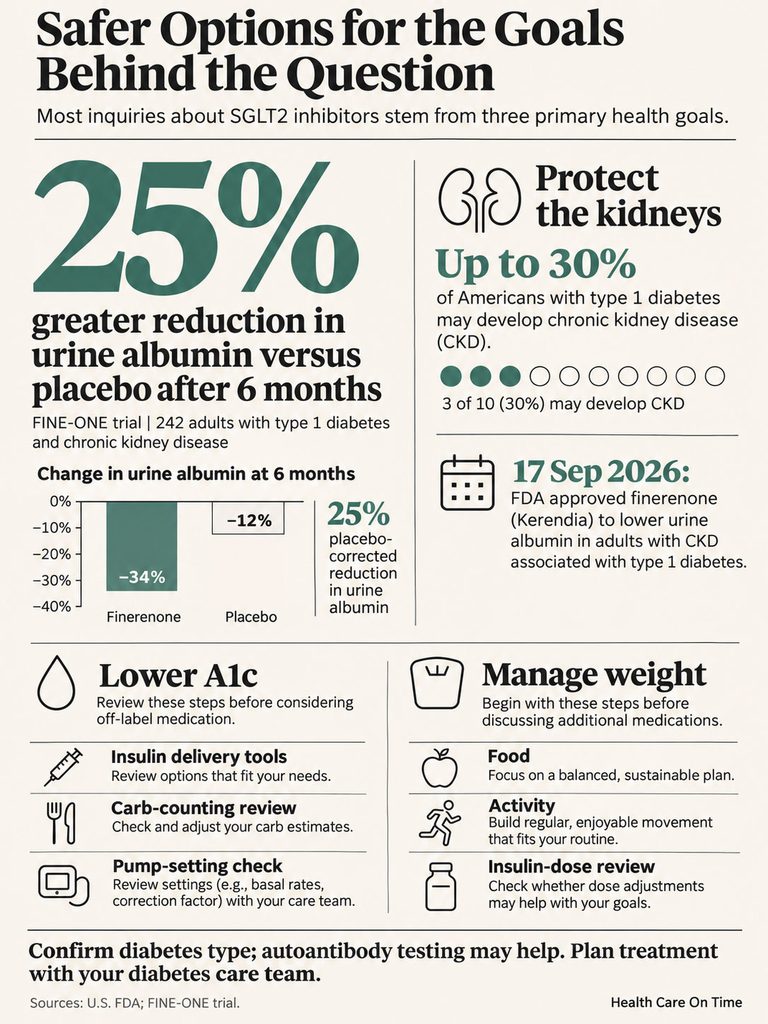
Protecting the kidneys. About 30% of Americans with type 1 develop chronic kidney disease. On September 17, 2026, the FDA approved finerenone (Kerendia) for kidney disease tied to type 1. In the FINE-ONE trial of 242 adults, it cut urine albumin by 25% versus placebo at 6 months. Our guide to diabetic nephropathy explains the urine and blood tests that track kidney damage.
Lowering A1c. Insulin delivery tools, carb-counting refreshers and pump setting reviews are the approved first levers. Ask your team which one fits your pattern of highs and lows before considering any off-label add-on.
Weight. Diet, activity and a review of insulin doses are the first steps. Any medicine beyond that needs a type 1-specific discussion with your endocrinologist.
Also make sure the diagnosis is confirmed, because the right drugs differ by diabetes type. Our article on types of diabetes and the type 1 diabetes autoantibody test explain how doctors tell them apart.
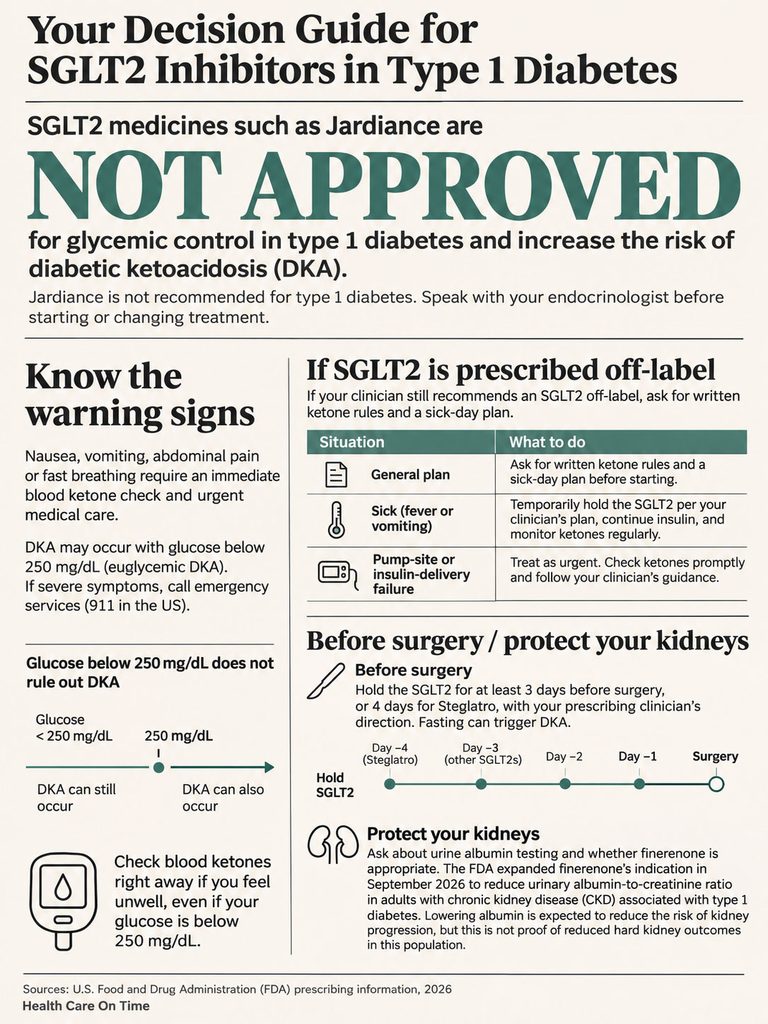
Your Decision Guide
| Your situation | Recommended action | Why it matters |
| You have type 1 and a friend suggests trying their Jardiance | Do not take it; raise the topic with your endocrinologist | Not approved for type 1; DKA ran about 3.6 times placebo at 10 mg in EASE |
| Your doctor offers an SGLT2 inhibitor off-label | Ask for written ketone rules, a blood ketone meter and a sick-day plan before the first dose | Labels advise ketone monitoring in type 1; DKA can occur below 250 mg/dL |
| You take one and have nausea, belly pain or fast breathing | Check blood ketones now, whatever your glucose reads; call 911 if high or if you can’t keep fluids down | Euglycemic DKA hides behind normal numbers |
| You have surgery or a colonoscopy coming up | Stop the drug at least 3 days before (4 for Steglatro), with your prescriber’s sign-off | Fasting and prep are listed DKA triggers |
| You want kidney protection with type 1 | Ask about urine albumin testing and whether finerenone fits | FDA approved it for type 1 kidney disease in Sept 2026 |
| You are sick with fever or vomiting | Pause the drug per your plan, keep taking insulin, test ketones every few hours | Missed insulin and low intake are top DKA triggers |
| You use an insulin pump | Treat site failures as urgent and check ketones fast | Pump users carry higher DKA risk on these drugs |
Questions to Ask Your Doctor
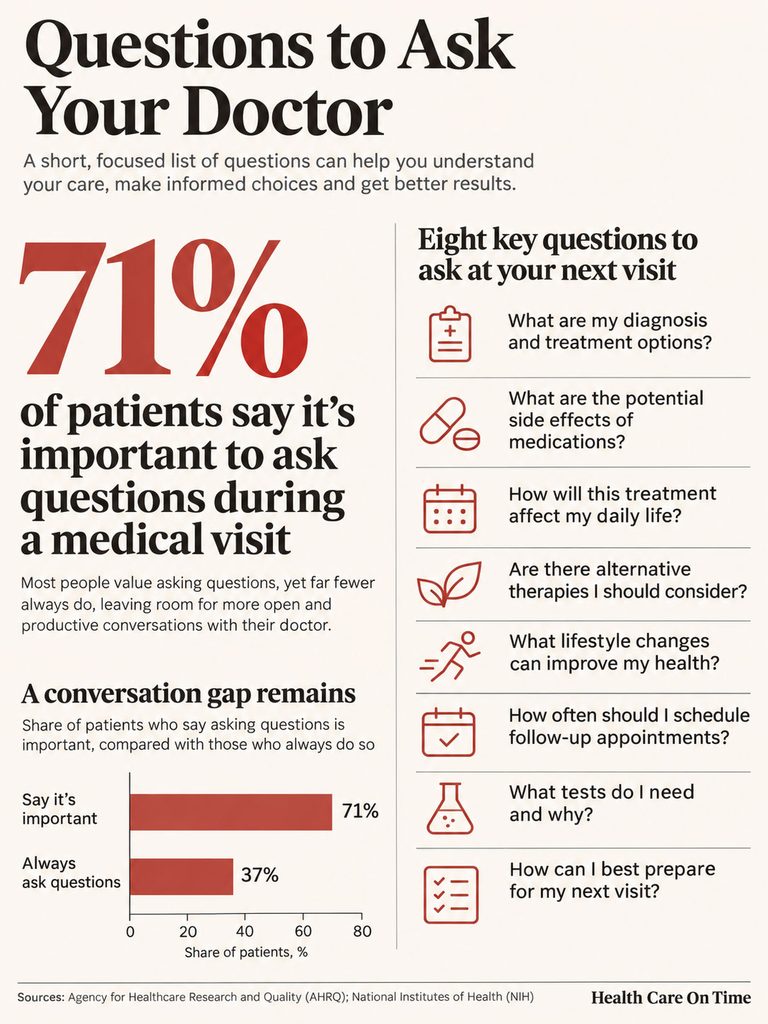
Bring this list to your next visit:
- Is this drug approved for type 1 diabetes, or would it be off-label?
- What benefit do you expect in A1c points, weight or kidney protection?
- How should the insulin plan change, and by how much at most?
- Which blood ketone meter is best, and what reading means call the office versus go to the ER?
- When exactly should the drug be paused for illness, travel, fasting or surgery?
- Would a continuous ketone sensor make sense in this case?
- Is finerenone or another kidney-protecting option a better fit instead?
- What follow-up labs will we check, and how often?
Common Mistakes to Avoid
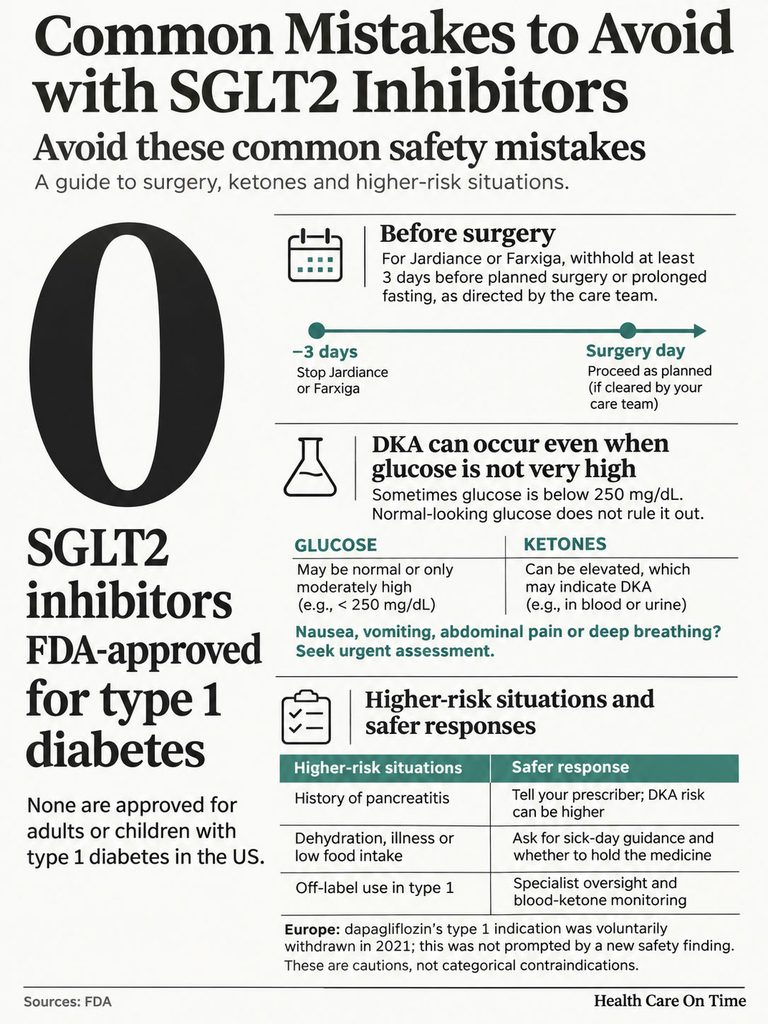
- Trusting a normal glucose reading. On these drugs, ketones can be high while sugar looks fine.
- Cutting insulin aggressively. Large cuts remove the brake on ketone production.
- Skipping ketone checks when sick. Illness is the most common trigger.
- Forgetting to tell the surgical team. The pause must start days before, not the morning of.
- Borrowing a type 2 relative’s pills. Dosing, monitoring and safety planning were never set up for you.
- Pairing the drug with a keto diet. The labels list ketogenic diets as a precipitating condition.
Our editors cross-checked every number in this guide against the original FDA labels, CDC pages and trial reports listed below.
Frequently Asked Questions
Are SGLT2 inhibitors approved for type 1 diabetes?
No. None is FDA approved for type 1. Farxiga, Jardiance, Invokana and Steglatro labels all say the drugs are not recommended for blood sugar control in type 1 because they raise DKA risk. The FDA also rejected sotagliflozin for type 1 twice, most recently in December 2024. Some doctors prescribe them off-label with close ketone monitoring.
Why is SGLT2 contraindicated in type 1 diabetes?
Technically the labels say “not recommended” rather than contraindicated. The reason is DKA. These drugs lower glucose without insulin, so people reduce insulin, and glucagon rises. With almost no natural insulin in type 1, ketones build fast. Trials showed DKA rates of about 3% to 4% on standard doses.
Why can’t type 1 diabetics take Jardiance?
The Jardiance label says it is not recommended for type 1 because it may increase DKA risk, and fatal ketoacidosis has occurred. In the EASE trials, DKA struck 4.3% of people on 10 mg versus 1.2% on placebo. A 2.5 mg dose looked safer, but that strength is not sold or approved in the U.S.
Who cannot take SGLT2 inhibitors?
People with a serious allergy to the drug cannot take it. The labels also advise against glycemic use in type 1 diabetes and caution people with pancreatitis history, very low food intake, ketogenic diets, heavy alcohol use or dehydration risk. Use for blood sugar is not recommended when kidney function is very low, with cutoffs that differ by drug.
Can you get DKA with normal blood sugar on an SGLT2 inhibitor?
Yes. The labels warn blood sugar may be below 250 mg/dL at presentation. This is called euglycemic DKA. The kidneys keep removing glucose, so the meter looks reassuring while ketones rise. Check blood ketones whenever you feel nauseated, have belly pain or breathe fast, regardless of the glucose reading.
How long before surgery should you stop Farxiga or Jardiance?
The Farxiga, Jardiance and Invokana labels say to withhold the drug for at least 3 days before surgery or procedures with prolonged fasting. Steglatro’s label says at least 4 days. Restart only when you are eating and drinking normally and your care team agrees.
Is Farxiga approved for type 1 diabetes anywhere?
Europe approved dapagliflozin 5 mg for some adults with type 1 in 2019, then ended that approval in October 2021 over DKA frequency. Japan approved it for type 1, per Beyond Type 1. In the U.S., the FDA declined it in July 2019, and the label says it is not recommended for type 1.
What is sotagliflozin, and is it approved for type 1?
Sotagliflozin blocks both SGLT1 and SGLT2. The FDA approved it as Inpefa in May 2023 for heart failure risk reduction, not for type 1. Its type 1 application was rejected in 2019 and again in December 2024 after advisers voted 11 to 3 that benefits did not outweigh risks.
Do SGLT2 inhibitors protect the kidneys in type 1 diabetes?
Possibly, but it is unproven in type 1. The main type 1 trials were not designed to test kidney outcomes, and SUGARNSALT will not report until late 2028. For now, the FDA-approved option for type 1 kidney disease is finerenone, cleared in September 2026 after cutting urine albumin by 25% in the FINE-ONE trial.
Should you check ketones while taking an SGLT2 inhibitor with type 1?
Yes. The Farxiga and Jardiance labels tell doctors to consider ketone monitoring in type 1. The American College of Diabetology advises ketone testing education and, when possible, real-time ketone monitoring for off-label users. A continuous glucose and ketone sensor, the Libre Duo 10 Day, received FDA authorization in August 2026.
Can children with type 1 diabetes take SGLT2 inhibitors?
No SGLT2 inhibitor is approved for type 1 at any age. Farxiga and Jardiance are approved only for type 2 diabetes in children 10 and older. No child with type 1 should take one outside a doctor’s supervised plan or a clinical trial, because the DKA risk applies at every age.
Medical Disclaimer: This article is for general education and does not replace advice from your doctor, endocrinologist or pharmacist. Do not start, stop or change any medicine, including insulin or an SGLT2 inhibitor, without your care team. If you think you have DKA, call 911 or go to the nearest emergency room.
References
- Centers for Disease Control and Prevention. National Diabetes Statistics Report. Updated September 16, 2026.
- Centers for Disease Control and Prevention. Diabetic Ketoacidosis.
- AstraZeneca. FARXIGA (dapagliflozin) prescribing information, DailyMed. Updated June 3, 2026.
- Boehringer Ingelheim. JARDIANCE (empagliflozin) prescribing information.
- Janssen. INVOKANA (canagliflozin) prescribing information, DailyMed.
- Merck. STEGLATRO (ertugliflozin) prescribing information. Revised June 2026.
- U.S. Food and Drug Administration. FDA Authorizes First Wearable Device That Continuously Monitors Both Ketone Levels and Blood Sugar. August 25, 2026.
- Maffei P, Bettini S, Busetto L, Dassie F. SGLT2 Inhibitors in the Management of Type 1 Diabetes: An Update on Current Evidence and Recommendations. Diabetes, Metabolic Syndrome and Obesity. 2023;16:3579-3598.
- Rosenstock J, et al. Empagliflozin as Adjunctive to Insulin Therapy in Type 1 Diabetes: The EASE Trials. Diabetes Care. 2018.
- Myshko D. Lexicon Receives Complete Response Letter for Sotagliflozin in Type 1 Diabetes and Chronic Kidney Disease. Patient Care Online. January 3, 2025.
- Jennings S. FDA Approves Finerenone for CKD Associated With Type 1 Diabetes. Patient Care Online. September 17, 2026.
- Healio. FDA: SGLT2 inhibitors may lead to ketoacidosis. May 15, 2015.
- Cleveland Clinic. SGLT2 Inhibitors. Updated July 31, 2025.
- Haider Z. SGLT2 Inhibitors in Type 1 Diabetes: Where Do We Stand in 2025? American College of Diabetology.
- Beyond Type 1. All About SGLT Inhibitors for T1D.