You started Wegovy or Zepbound three months ago, you’re down 30 pounds, and your doctor is thrilled. Then one morning you stand up from the couch and the room tilts.
Table of Contents
That scenario is exactly what Northwestern Medicine researchers set out to study in GLP-1 users who also take blood pressure pills. Their findings support the combination. But “safe” comes with a condition most articles skip.
Quick Answer: Yes, you can take GLP-1 with blood pressure medication. Drugs like Ozempic, Wegovy, Mounjaro and Zepbound have no direct chemical clash with these pills, and large trials enrolled thousands of people on blood pressure pills. The real risk is additive: GLP-1 drugs lower blood pressure on their own, and nausea, vomiting or diarrhea can dehydrate you. Together, that can push your pressure too low. Watch for dizziness on standing, and never adjust doses yourself.
At a Glance
- GLP-1 drugs and blood pressure pills don’t have a direct chemical interaction, but their effects stack.
- In FDA label data, low blood pressure was more common in GLP-1 users who also took blood pressure medicine.
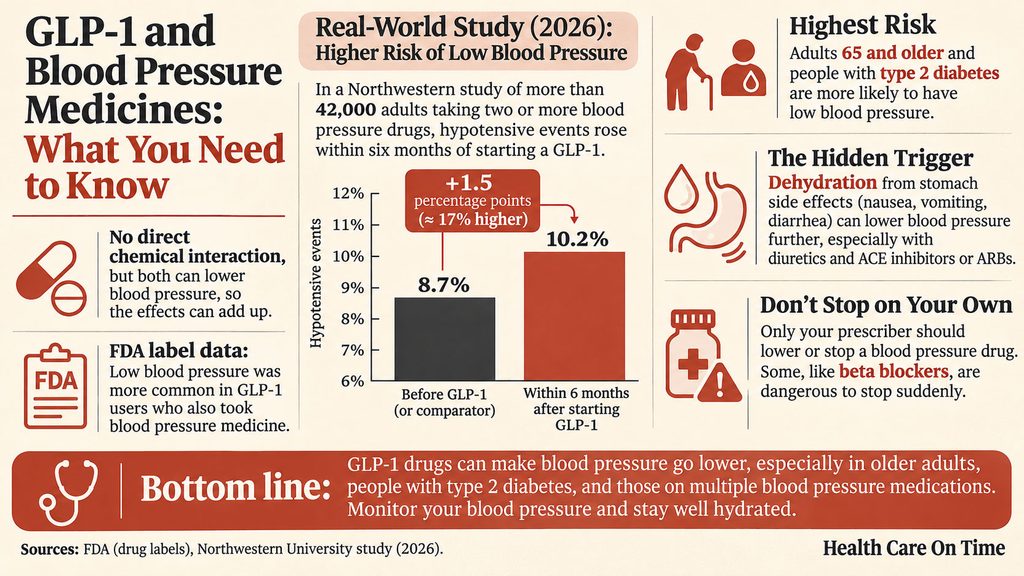
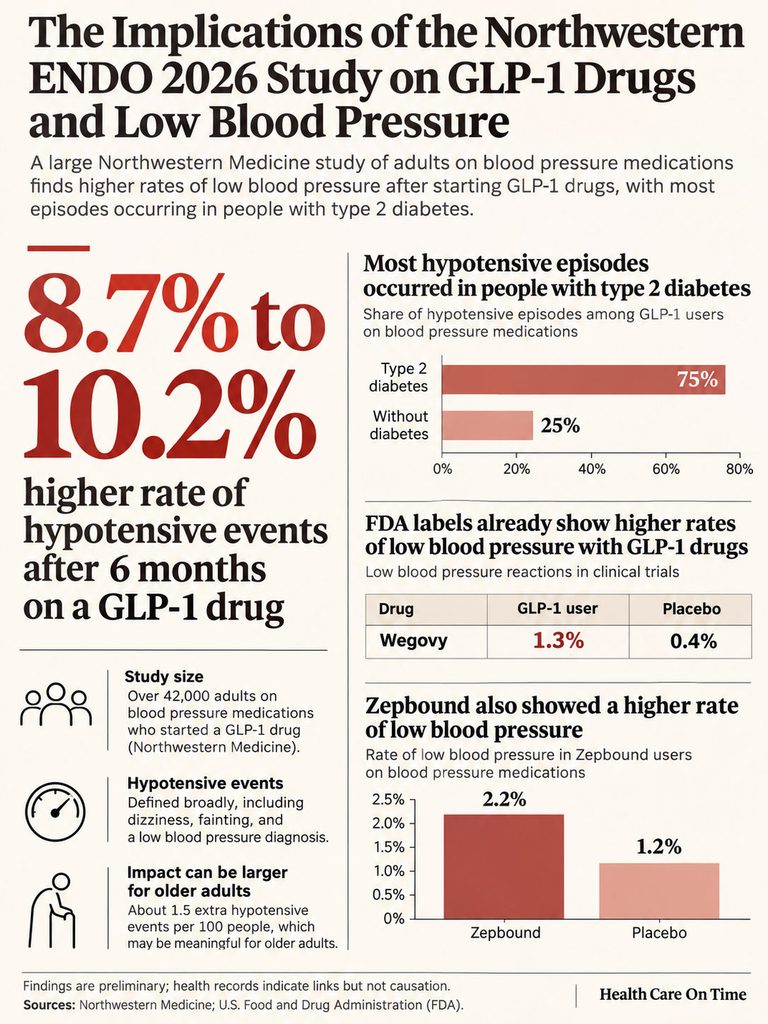
- A 2026 Northwestern study of more than 42,000 adults on two or more blood pressure drugs found hypotensive events rose from 8.7% to 10.2% within six months of starting a GLP-1.
- Adults 65 and older and people with type 2 diabetes carry the highest risk.
- Dehydration from stomach side effects is the hidden trigger, especially with diuretics and ACE inhibitors or ARBs.
- Only your prescriber should lower or stop a blood pressure drug. Some, like beta blockers, are dangerous to stop suddenly.
The Short Answer: Yes, With One Real Caveat
Readers often ask us some version of this question: will a weekly GLP-1 shot fight with a daily lisinopril pill? The honest answer is no, not in the way people fear. And yes, in a way most people never hear about.
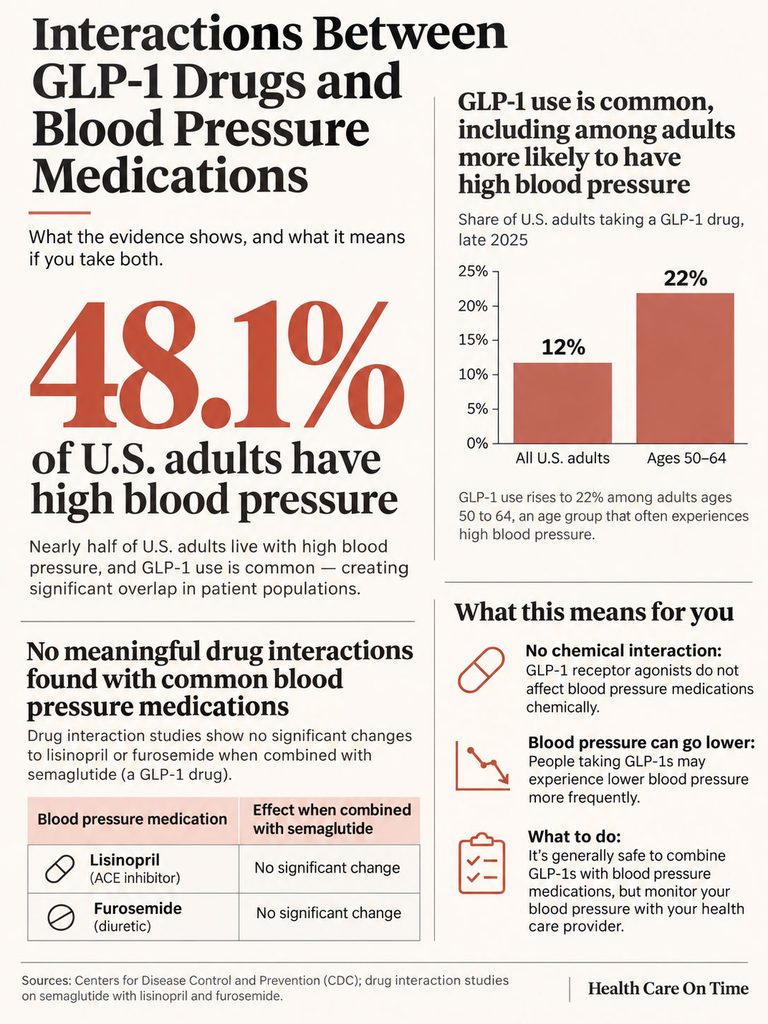
GLP-1 receptor agonists don’t block, boost or break down blood pressure drugs in the body. In a drug interaction study listed on the FDA-approved Wegovy label, semaglutide caused no clinically significant change in how the body handled lisinopril or furosemide. That’s reassuring.
Why “No Known Interactions” Is Only Half True
Some popular health sites tell readers there are “no known interactions” between GLP-1s and blood pressure medications. GoodRx says exactly that in its FAQ. On a strict chemical level, that’s correct. In real life, it leaves out what the FDA labels actually report.
When our medical content team reviewed the prescribing information for Wegovy and Zepbound, both labels flagged the same pattern. Low blood pressure showed up more often in people taking a GLP-1 together with blood pressure medicine. That’s not a classic drug interaction. It’s an effect interaction, and it’s the one that can land someone on the bathroom floor.
Who This Matters To
This isn’t a niche concern. According to the CDC, nearly half of U.S. adults (48.1%, or 119.9 million people) have high blood pressure.
At the same time, a KFF Health Tracking Poll found 12% of U.S. adults were currently taking a GLP-1 drug in late 2025, rising to 22% of adults ages 50 to 64. That age group is also where high blood pressure becomes common. The overlap is huge, which is why “can you take GLP-1 with blood pressure medication” is one of the most searched safety questions about these drugs.
How GLP-1 Drugs Lower Blood Pressure on Their Own
To understand the risk, you need to know why these drugs move your blood pressure at all. They weren’t designed as blood pressure medicines, and the FDA hasn’t approved them for hypertension. Yet the drop is real and measurable.
Weight, Sodium and Blood Vessels
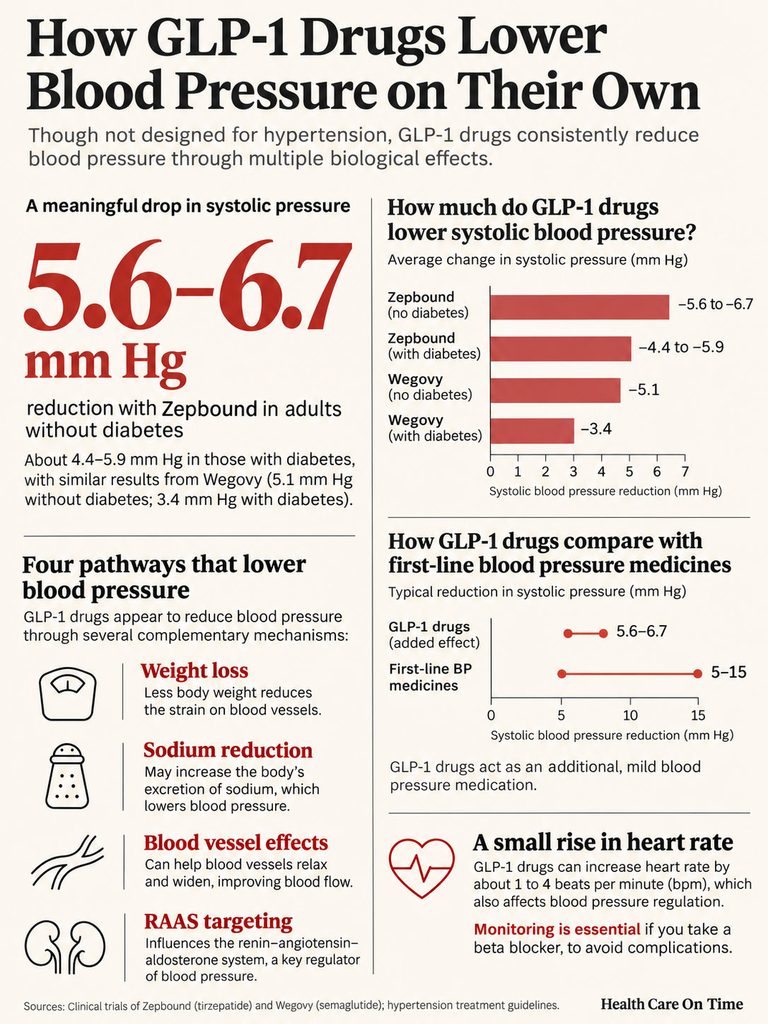
A December 2025 review in *Reviews in Cardiovascular Medicine* by cardiologists at Northwell Health laid out four main pathways:
- Weight loss. Losing body fat improves insulin sensitivity and lowers the load on your heart and vessels.
- Sodium loss. GLP-1 receptors in the kidneys push more sodium and water out in the urine, which shrinks blood volume.
- Lower RAAS activity. The renin-angiotensin-aldosterone system, a major blood pressure control loop, appears to quiet down.
- Relaxed blood vessels. GLP-1 activity improves the lining of blood vessels and helps them widen.
Notice something? Two of those pathways overlap with how common blood pressure drugs work. Diuretics also drain sodium and water. ACE inhibitors and ARBs also target the RAAS. That’s why the effects stack.
How Big Is the Drop?
The FDA labels give real numbers. In the main Zepbound trial in adults without diabetes, systolic pressure (the top number) fell 5.6 to 6.7 mm Hg more than placebo, depending on dose. In people with type 2 diabetes, the extra drop was 4.4 to 5.9 mm Hg, per the Zepbound prescribing information.
For Wegovy 2.4 mg, the label reports a 5.1 mm Hg greater systolic drop than placebo in adults without diabetes, and 3.4 mm Hg in adults with type 2 diabetes. In the large SELECT heart trial, the gap was 3.3 mm Hg.
Older diabetes-dose trials showed smaller changes. The Northwell review lists systolic drops of 1.2 mm Hg with liraglutide (LEADER), 1.7 mm Hg with dulaglutide (REWIND) and 2.6 mm Hg with semaglutide 1 mg (SUSTAIN-6).
For context, the same review notes that first-line blood pressure drugs like ACE inhibitors, ARBs, thiazides and calcium channel blockers lower systolic pressure by roughly 5 to 15 mm Hg. So a GLP-1 can act like adding a mild extra blood pressure pill, on top of the ones you already take.
The Heart Rate Twist
GLP-1 drugs nudge your resting heart rate up slightly. The Wegovy label reports average increases of 1 to 4 beats per minute; Zepbound reports 1 to 3. That’s small, but labels advise reporting a racing heartbeat at rest.
Why mention this here? A faster heart rate is one way your body tries to hold up falling pressure. If you also take a beta blocker, which slows the heart, that backup system may be blunted. It’s a reason to watch symptoms closely, not a reason to panic.
GLP-1 and Each Blood Pressure Drug Class
Here’s the part no top-ranking article lays out: how a GLP-1 plays with each type of blood pressure medicine. Our team built this from the FDA labels and the latest research. None of these combinations is forbidden. Each simply has its own thing to watch.
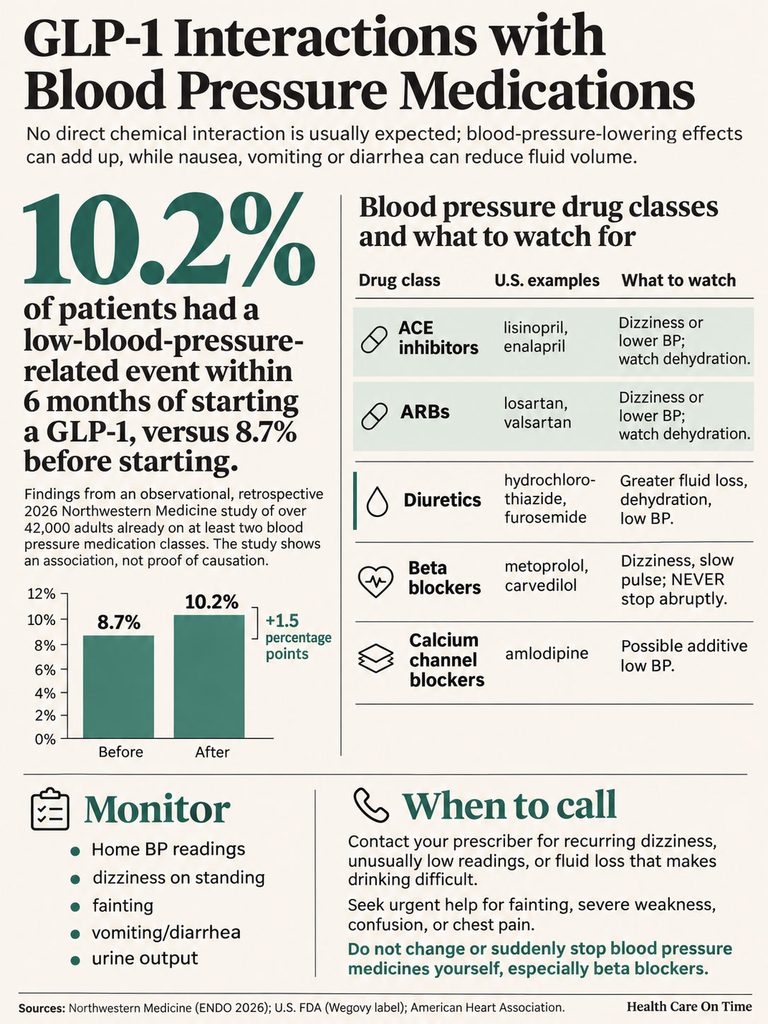
| Blood pressure drug class | Common U.S. examples | Main concern with a GLP-1 | Warning signs | When to call your prescriber |
| ACE inhibitors | Lisinopril, enalapril, benazepril | Extra blood pressure drop; label warns vomiting, diarrhea or dehydration can cause an excessive fall in pressure | Lightheadedness when standing, fainting | Vomiting or diarrhea lasting more than a day, or any fainting |
| ARBs | Losartan, valsartan, olmesartan | Same as ACE inhibitors; dehydration plus RAAS blockade can strain the kidneys | Dizziness, low urine output | Peeing much less than usual, or dizziness that keeps returning |
| Diuretics | Hydrochlorothiazide, chlorthalidone, furosemide | Double fluid loss: the diuretic plus GI side effects | Dry mouth, thirst, muscle cramps, weakness, fast heartbeat | Cramps, confusion or very dark urine; ask whether the diuretic needs review |
| Beta blockers | Metoprolol, carvedilol, atenolol | Additive lowering; blunted heart rate response to low pressure | Fatigue, faintness, slow or irregular pulse | Before ever skipping a dose; never stop on your own |
| Calcium channel blockers | Amlodipine, diltiazem, nifedipine | Additive lowering; no specific interaction listed on Wegovy or Zepbound labels | Lightheadedness, swelling changes | Home readings repeatedly below the target your doctor set |
| Two or more of the above | Any combination | Highest risk group in the 2026 Northwestern study | Dizziness, falls, near-fainting | Within days of any new dizziness, especially after a dose increase |
ACE Inhibitors and ARBs
These are the most common blood pressure pills in America, so this combination is everywhere. In the SELECT trial of 17,604 adults with heart disease, 74% were already on an ACE inhibitor or ARB when they started Wegovy or placebo, according to the label.
The concern isn’t the pairing itself. It’s what happens on a bad stomach day. The lisinopril and hydrochlorothiazide label warns that excessive sweating, dehydration, vomiting or diarrhea can lead to an excessive fall in blood pressure. GLP-1 drugs cause exactly those stomach side effects, especially during dose increases. If you take losartan, our guide to losartan side effects covers its own warning signs.
Diuretics
This is the pairing our editors would watch most closely. Water pills like hydrochlorothiazide already pull fluid from your body on purpose. Add GLP-1 nausea that keeps you from drinking, or diarrhea that drains more fluid, and the losses stack quickly.
The hydrochlorothiazide label lists the warning signs of fluid and electrolyte imbalance: dry mouth, thirst, weakness, drowsiness, muscle pains or cramps, low blood pressure, low urine output and a fast heartbeat. Women on this drug may also want to read our breakdown of hydrochlorothiazide side effects in women.
Beta Blockers
Beta blockers such as metoprolol add to the blood pressure drop and dull the heart’s speed-up reflex. The bigger danger is what people do next.
When readings fall, some people quietly stop their pills. The Toprol-XL (metoprolol) label carries a boxed warning: stopping beta blockers abruptly has triggered worsening chest pain and, in some cases, heart attacks. When they’re stopped, doses are tapered over one to two weeks under medical supervision.
Calcium Channel Blockers
Amlodipine and its cousins relax blood vessels. Neither the Wegovy nor the Zepbound label lists a specific interaction with this class; the drug interaction sections focus on insulin, sulfonylureas and oral medicines affected by slower stomach emptying.
The practical concern is the same additive lowering. If you notice new lightheadedness after your GLP-1 dose goes up, this class is often one your prescriber will look at.
Two or More Blood Pressure Drugs
This is where the newest research points. People who need two, three or four blood pressure medicines have less room for error. Each drug takes a share of the pressure down, and the GLP-1 adds one more share.
What the Newest Research Shows
For years, the low blood pressure signal sat quietly in the fine print of drug labels. In June 2026, a large real-world study pulled it into the headlines.
The Northwestern ENDO 2026 Study
Researchers at Northwestern Medicine analyzed health records from more than 42,000 adults who were already taking at least two classes of blood pressure medication and then started semaglutide, tirzepatide or liraglutide. They compared low blood pressure events before and after the GLP-1 began.
“Hypotensive events” were defined broadly: dizziness, fainting, falls, low blood pressure diagnoses, systolic readings below 90 mm Hg and prescriptions for drugs that treat low blood pressure. The results were presented at ENDO 2026, the Endocrine Society’s annual meeting.
| Statistic | Number | Source |
| U.S. adults with high blood pressure | 48.1% (119.9 million) | CDC, High Blood Pressure Facts (updated June 2026) |
| U.S. adults currently taking a GLP-1 | 12% (22% of ages 50 to 64) | KFF Health Tracking Poll, November 2025 |
| GLP-1 users who got the drug from an online provider | 17% | KFF Health Tracking Poll, November 2025 |
| Hypotensive events before vs. 6 months after starting a GLP-1 | 8.7% vs. 10.2% | Northwestern Medicine, ENDO 2026 |
| Share of hypotensive events in adults 65 and older | 53% (vs. 37% of study group) | Northwestern Medicine, ENDO 2026 |
| Low blood pressure reactions, Wegovy vs. placebo | 1.3% vs. 0.4% | FDA Wegovy label |
| Low blood pressure, Zepbound users on vs. off blood pressure drugs | 2.2% vs. 1.2% | FDA Zepbound label |
| Fainting (syncope), Wegovy vs. placebo | 0.8% vs. 0.2% | FDA Wegovy label |
The key findings went further. Patients with type 2 diabetes made up 63% of the group but 75% of the hypotensive episodes. The higher risk persisted at 12 months, with events rising from 13.6% to 14.3%. And in secondary analyses, weight loss alone didn’t explain the increase.
The study’s senior author, cardiologist Dr. Micah Eimer, stressed that he’s a strong supporter of GLP-1 drugs. His message was about watching select patients, not avoiding the drugs. He also voiced concern about people who get GLP-1s without ongoing medical follow-up.
What the FDA Labels Already Showed
Our editors checked this against the current FDA labels, and the signal isn’t new. In Wegovy’s weight-loss trials, reactions related to low blood pressure occurred in 1.3% of patients versus 0.4% on placebo, and fainting in 0.8% versus 0.2%. The label notes these events were more frequent in patients on blood pressure medication.
Zepbound’s label is even more specific. Low blood pressure occurred in 1.6% of Zepbound users versus 0.1% on placebo. Among Zepbound users, it hit 2.2% of those on blood pressure drugs versus 1.2% of those who weren’t. Both labels tie some cases to stomach side effects and dehydration.
Limits of the Evidence
Honesty matters here. The Northwestern findings come from a meeting abstract, and research presented at meetings is generally considered preliminary until it’s published in a peer-reviewed journal. Health record studies can show links, not prove cause.
The absolute numbers are also modest. A rise from 8.7% to 10.2% means about 1.5 extra events per 100 people over six months. That’s small for most people and meaningful for an 80-year-old who could break a hip in a fall.
The Hidden Risk: Dehydration and Your Kidneys
Most articles on this topic stop at “your blood pressure might drop.” The more dangerous chain reaction runs through your stomach and ends at your kidneys.
Why Vomiting and Diarrhea Change the Math
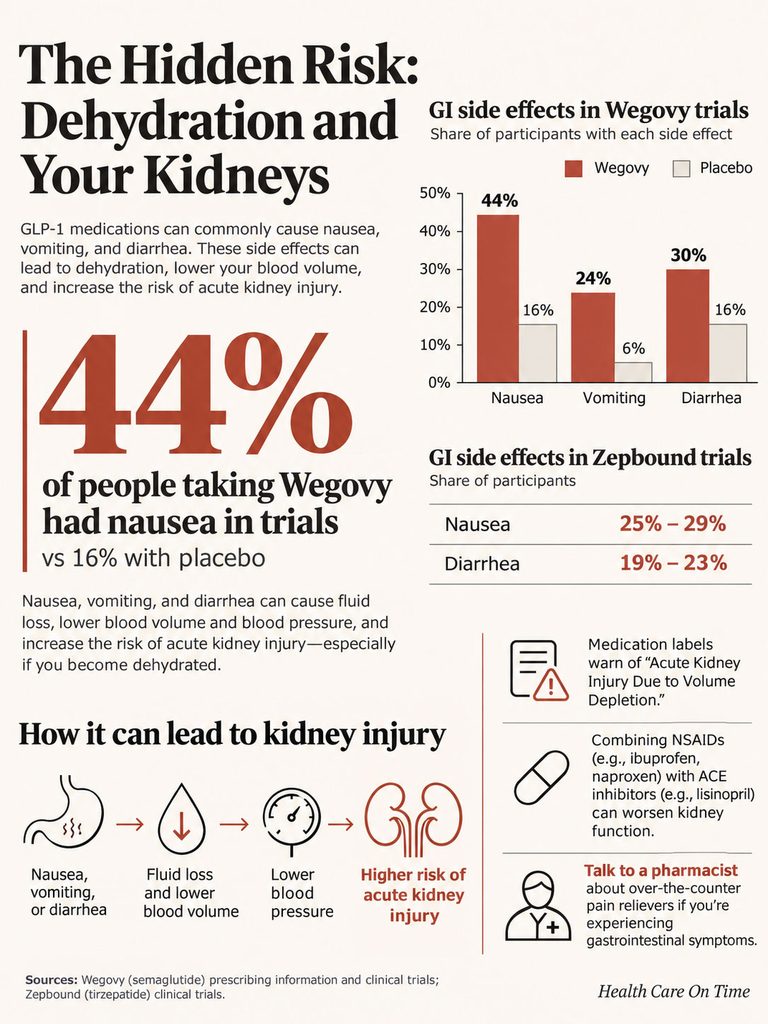
GLP-1 stomach side effects are common. In Wegovy’s weight-loss trials, 44% of patients had nausea, 24% had vomiting and 30% had diarrhea, compared with 16%, 6% and 16% on placebo. For Zepbound, nausea ran 25% to 29% and diarrhea 19% to 23%, depending on dose.
These effects cluster during dose increases. When you can’t keep fluids down, your blood volume shrinks. Blood pressure pills that were fine yesterday can be too strong today.
Both labels now carry a warning titled “Acute Kidney Injury Due to Volume Depletion.” Some reported cases required dialysis, and most occurred in people with dehydrating stomach side effects. The Zepbound label specifically advises patients to avoid fluid depletion and promptly report persistent nausea, vomiting or diarrhea.
The NSAID Trap
Here’s a combination people rarely think about. You feel achy, so you take ibuprofen or naproxen. The lisinopril label warns that in older or volume-depleted patients, including those on diuretics, combining NSAIDs with ACE inhibitors can worsen kidney function, including possible acute kidney failure.
Now add a GLP-1 that’s causing diarrhea. That’s a stacked strain on the kidneys. On a sick day, ask a pharmacist before reaching for an over-the-counter pain reliever.
Warning Signs of Low Blood Pressure on a GLP-1
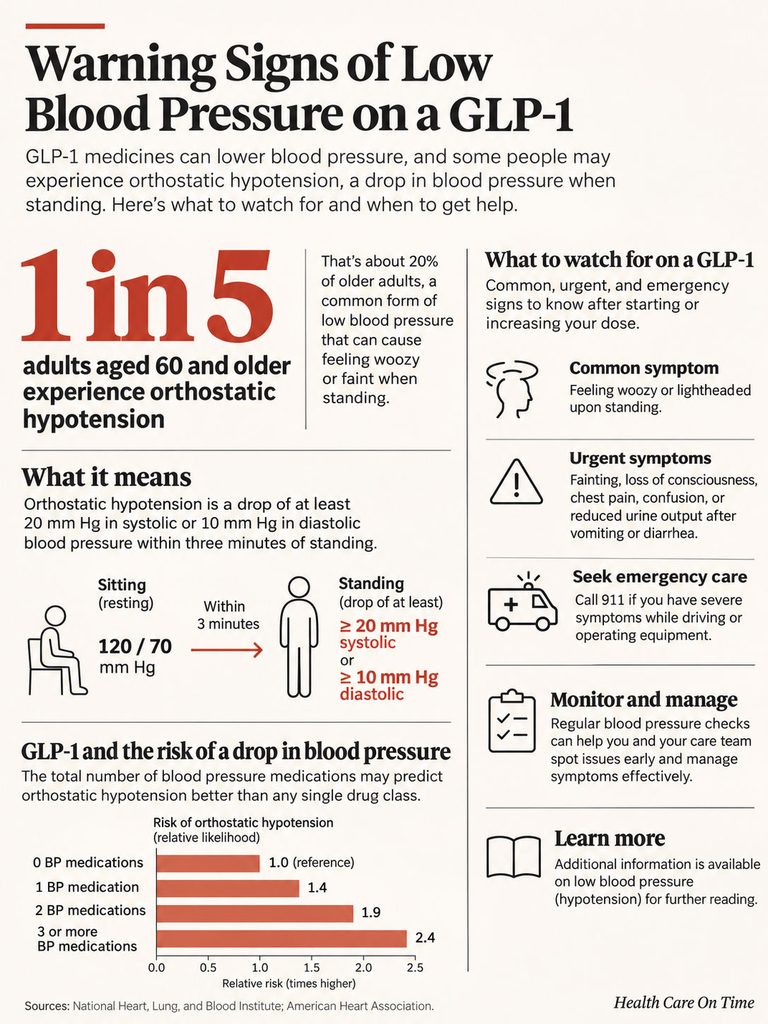
Low blood pressure doesn’t always announce itself. When our team reviews reader questions, the most common description is simple: feeling woozy right after standing up. That has a name.
Orthostatic Hypotension, Explained
Orthostatic hypotension is a drop of at least 20 mm Hg in systolic pressure, or 10 mm Hg in diastolic pressure, within three minutes of standing. According to the NIH’s StatPearls review, about 1 in 5 adults 60 and older living in the community have it.
That same review makes a point that fits this topic perfectly. The total number of blood pressure medicines a person takes may predict orthostatic hypotension better than any single drug class. A GLP-1 effectively adds to that count.
Signs to Watch
Northwestern Medicine lists these symptoms, especially in the weeks after starting or increasing a GLP-1 dose:
- Dizziness or lightheadedness, especially when standing up quickly
- Feeling faint, or fainting
- Unusual fatigue
- Blurred vision
- Nausea
- A rapid or weak pulse
When to Call 911
Call 911 or get emergency care right away if you faint, lose consciousness, or feel these symptoms while driving or operating equipment. Also seek urgent care for chest pain, confusion, or almost no urine output after days of vomiting or diarrhea.
For more on the condition itself, see our overview of low blood pressure (hypotension).
Who Is Most at Risk
Not everyone faces the same odds. Based on the Northwestern data and the labels, the higher-risk profile looks like this:
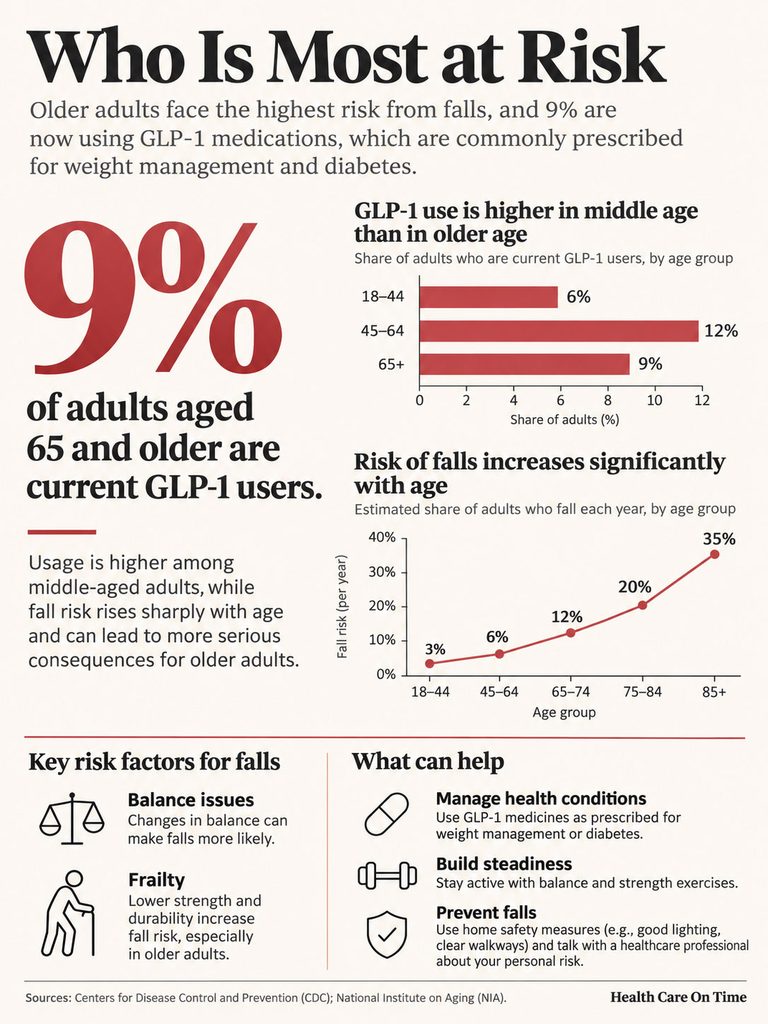
- Adults 65 and older. They made up 37% of the Northwestern group but 53% of the low blood pressure events. StatPearls notes orthostatic hypotension climbs with age, from under 5% at ages 45 to 49 to more than 25% at 85 and older.
- People with type 2 diabetes. Diabetes can damage the nerves that regulate blood pressure, a complication called autonomic dysfunction.
- People on two or more blood pressure drugs. Every study participant in the Northwestern analysis was in this group.
- People on diuretics. Fluid losses stack with GLP-1 stomach side effects.
- People with kidney disease. The Wegovy label notes kidney problems were more frequent in patients with a history of kidney impairment.
- People without regular follow-up. KFF found 17% of GLP-1 users got the drug from an online provider, where blood pressure checks may not happen.
KFF found 9% of adults 65 and older were current GLP-1 users. That share is smaller than in middle age, but this is the group where a fall does the most damage.
Your Safety Plan
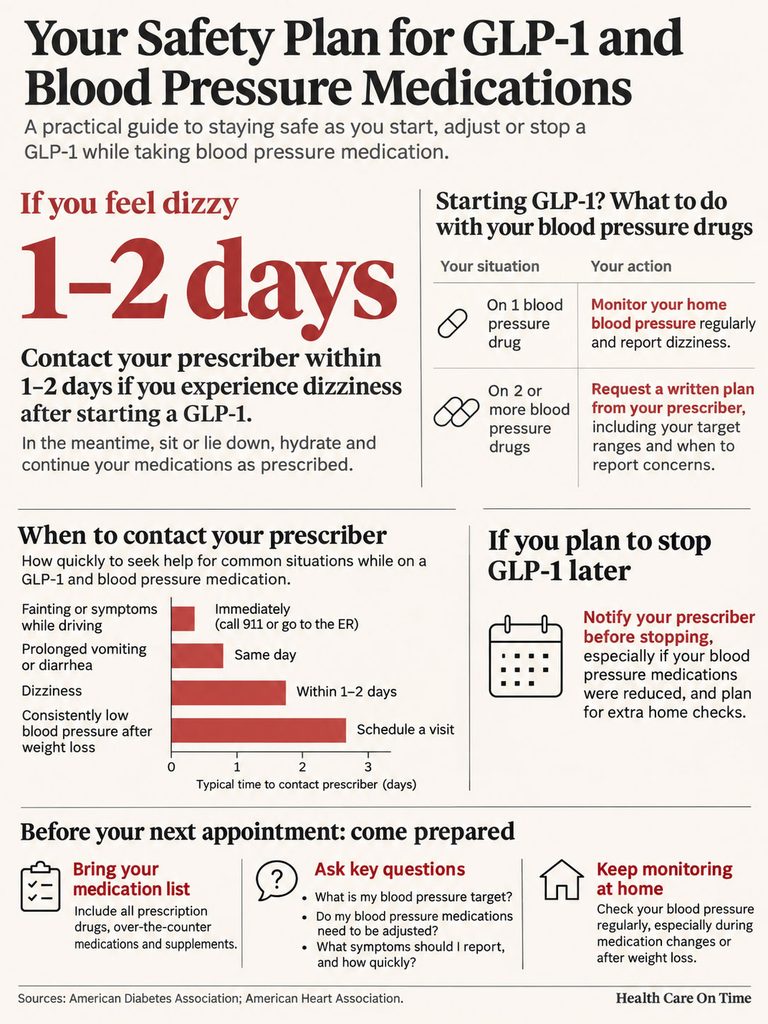
The goal isn’t to scare anyone off a drug that cut major heart events by 20% in the SELECT trial. It’s to make the combination boring and uneventful. If you take GLP-1 with blood pressure medication, this table shows what to do in the most common situations.
| Scenario | What it may mean | Recommended action |
| Starting a GLP-1 while on 1 blood pressure drug | Low to moderate added risk | Check home blood pressure a few times a week for the first months; report new dizziness |
| Starting a GLP-1 while on 2 or more blood pressure drugs | Highest-risk group in the Northwestern study | Ask your prescriber for a written plan: target range, which readings to report, and follow-up timing |
| Dizzy when standing, home readings lower than usual | Possible orthostatic hypotension | Sit or lie down, hydrate, and call your prescriber within 1 to 2 days; don’t skip pills on your own |
| Vomiting or diarrhea for more than 24 hours | Dehydration; kidney strain, especially with diuretics, ACE inhibitors or ARBs | Call your prescriber the same day; ask whether any blood pressure medicine should be paused and whether you need kidney labs |
| Fainted, or symptoms while driving | Possible dangerous low blood pressure | Call 911 or go to the ER |
| Readings steadily below your target after weight loss | Your blood pressure meds may now be too strong | Book a visit; let the prescriber decide which drug to lower first |
| Stopping the GLP-1 after your blood pressure meds were reduced | Blood pressure may climb back | Tell the prescriber before stopping and plan extra home checks |
Before You Start
Bring a full medication list to the appointment where your GLP-1 is prescribed, including over-the-counter pain relievers. Ask four questions. What blood pressure range is too low in this case? Which home readings should be reported? Does the diuretic need review? And who adjusts the blood pressure pills: the GLP-1 prescriber or the cardiologist?
A validated home cuff makes this plan work. Our guide to home blood pressure monitors explains which features matter.
During Dose Increases
Most stomach side effects and many dizzy spells cluster around dose escalation. During those weeks, drink fluids steadily, eat smaller meals, rise slowly from bed, and take a home reading if you feel off. Our article on Zepbound side effects covers the typical timeline.
StatPearls also lists simple steps that reduce orthostatic symptoms: changing position in stages, staying hydrated, avoiding alcohol, hot showers and very large meals, and tensing your leg muscles after standing.
If You Stop the GLP-1
This is the step almost nobody plans for. In a Zepbound withdrawal trial, people who switched to placebo after 36 weeks on the drug saw systolic pressure rise by an average of 8.2 mm Hg over the next 52 weeks. Those who stayed on Zepbound rose just 2.0 mm Hg.
If your blood pressure medicine was lowered because of the GLP-1, stopping the GLP-1 can leave you under-treated. Tell your prescriber before you stop, whether the reason is cost, side effects or a shortage, and resume regular home checks.
Common Mistakes to Avoid
A common question our team hears is whether it’s fine to “just skip the water pill” on a queasy day. That decision belongs to your prescriber, every time. These are the mistakes worth avoiding:
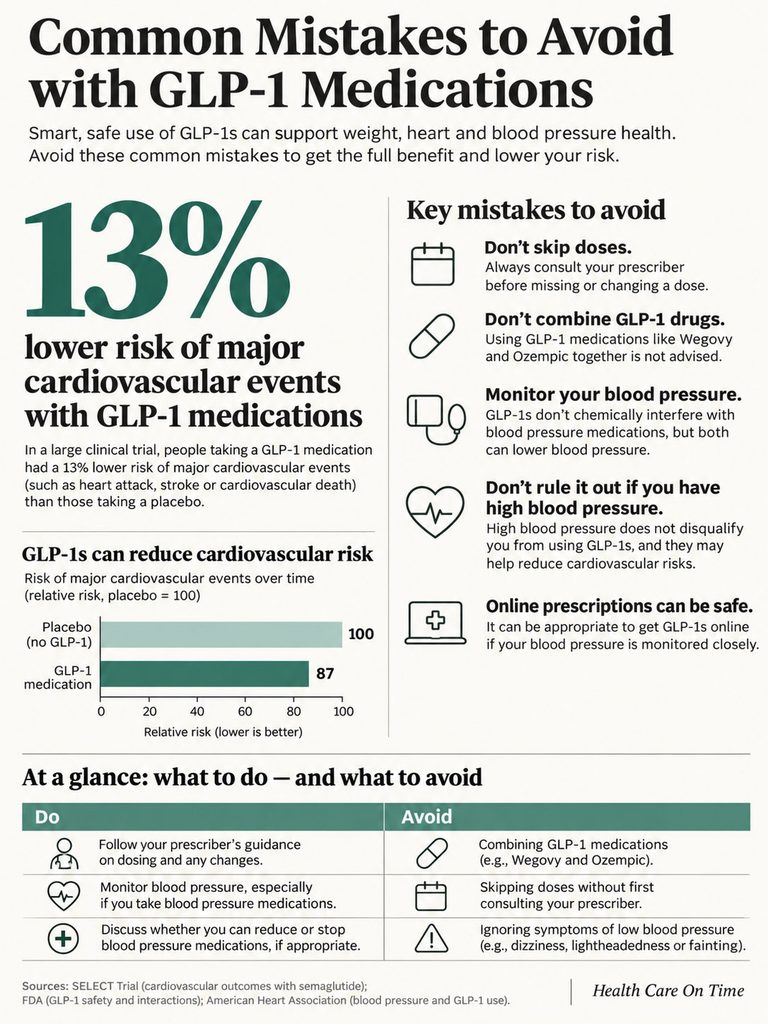
- Stopping a blood pressure drug on your own. Abruptly stopping a beta blocker can trigger chest pain or a heart attack, per its boxed warning.
- Pushing through days of vomiting or diarrhea. That’s the setup for both low blood pressure and kidney injury.
- Taking NSAIDs freely on sick days. With an ACE inhibitor or ARB and dehydration, they add kidney risk.
- Never checking blood pressure at home. You can’t spot a downward trend without numbers.
- Using an online prescriber without telling your regular doctor. Your blood pressure prescriber needs to know about the GLP-1.
- Assuming low readings mean you’re “cured.” They often mean your medications need rebalancing, not removal.
Frequently Asked Questions
Does GLP-1 interfere with blood pressure meds?
Not chemically. Semaglutide didn’t meaningfully change how the body handles lisinopril or furosemide in label studies. But GLP-1 drugs lower blood pressure on their own, so the effects add up. FDA labels for Wegovy and Zepbound report low blood pressure more often in people also taking blood pressure medicine.
What medications can you not take with a GLP-1?
Labels advise against combining two GLP-1 products, such as Wegovy plus Ozempic. Insulin and sulfonylureas raise low blood sugar risk and may need dose changes. Zepbound can reduce oral birth control effectiveness during dose increases. Blood pressure drugs aren’t on the “do not combine” list, but they need monitoring.
Does high blood pressure disqualify you from GLP-1 drugs?
No. High blood pressure isn’t a contraindication. The Wegovy and Zepbound labels list a personal or family history of medullary thyroid carcinoma, MEN 2, and serious allergy to the drug. In fact, about 42% of Wegovy weight-loss trial participants had high blood pressure.
What GLP-1 can you take with high blood pressure?
Any approved GLP-1 can be prescribed with high blood pressure. Wegovy carries an FDA indication to reduce heart attack, stroke and cardiovascular death in adults with heart disease and overweight. Zepbound lowered systolic pressure by about 4 to 7 mm Hg more than placebo in trials. Your prescriber chooses based on your full health picture.
Can you take Ozempic with lisinopril?
Yes, many people do. Ozempic contains semaglutide, the same ingredient as Wegovy, and semaglutide didn’t alter lisinopril levels in label studies. The caution is dehydration: the lisinopril label warns vomiting or diarrhea can drop blood pressure too far. Call your prescriber if stomach side effects last more than a day.
Can you take Zepbound with losartan or amlodipine?
Yes. Neither drug appears in Zepbound’s interaction section. The concern is additive lowering: low blood pressure occurred in 2.2% of Zepbound users on blood pressure drugs versus 1.2% of those who weren’t. Check home readings during dose increases and report dizziness when standing.
Will you be able to stop your blood pressure medicine on a GLP-1?
Possibly, but only your prescriber can decide. As weight comes down, some people need lower doses. Some drugs, especially beta blockers, must be tapered rather than stopped. And if you later stop the GLP-1, blood pressure can rise again, so plan follow-up checks.
What blood pressure is too low on a GLP-1?
There’s no single cutoff for everyone; your doctor should set your personal range. The Northwestern study counted systolic readings below 90 mm Hg as a hypotensive event. A drop of 20 mm Hg systolic or more within three minutes of standing meets the definition of orthostatic hypotension.
Do GLP-1 drugs raise heart rate?
Slightly. The Wegovy label reports average resting heart rate increases of 1 to 4 beats per minute, and Zepbound 1 to 3. Report a racing heartbeat at rest. If you take a beta blocker, your heart’s ability to compensate for low pressure may be dulled, so watch for dizziness.
What happens to blood pressure if you stop a GLP-1?
It tends to rise. In a Zepbound withdrawal trial, systolic pressure climbed an average of 8.2 mm Hg in people switched to placebo, compared with 2.0 mm Hg in those who stayed on the drug. If your blood pressure pills were reduced earlier, talk to your prescriber before stopping.
Is it safe to get a GLP-1 from an online prescriber if you take blood pressure pills?
It can be, if someone is monitoring your blood pressure. KFF found 17% of GLP-1 users got the drug from an online provider. Northwestern researchers raised concern that these services may not check blood pressure. Keep your regular doctor informed and track home readings.
Medical Disclaimer: This article is for general education and isn’t a substitute for professional medical advice, diagnosis or treatment. HealthCareOnTime does not prescribe medication or provide treatment. Don’t start, stop or change the dose of any medicine without talking to your prescriber or pharmacist. If you faint, have chest pain or feel severe dizziness, call 911.
References
- Centers for Disease Control and Prevention. High Blood Pressure Facts. Updated June 2, 2026. https://www.cdc.gov/high-blood-pressure/data-research/facts-stats/
- KFF. KFF Health Tracking Poll: Prescription Drug Costs, Views on Trump Administration Actions, and GLP-1 Use. November 14, 2025. https://www.kff.org/public-opinion/kff-health-tracking-poll-prescription-drug-costs-views-on-trump-administration-actions-and-glp-1-use/
- Northwestern Now. GLP-1 drugs tied to elevated risk of low blood pressure episodes. June 2026. https://news.northwestern.edu/stories/2026/06/glp-1s-tied-to-elevated-risk-of-low-blood-pressure-episodes-such-as-fainting-and-dizziness
- Northwestern Medicine HealthBeat. Are GLP-1 Medications Linked to Dizziness and Fainting? July 2026. https://www.nm.org/healthbeat/medical-advances/science-and-research/are-glp-1-medications-linked-to-dizziness-and-fainting
- U.S. National Library of Medicine, DailyMed. WEGOVY (semaglutide) prescribing information. Revised June 2026. https://dailymed.nlm.nih.gov/dailymed/drugInfo.cfm?setid=ee06186f-2aa3-4990-a760-757579d8f77b
- U.S. National Library of Medicine, DailyMed. ZEPBOUND (tirzepatide) prescribing information. Revised August 2026. https://dailymed.nlm.nih.gov/dailymed/drugInfo.cfm?setid=487cd7e7-434c-4925-99fa-aa80b1cc776b
- Gala D, Botros F, Makaryus AN. The Beneficial Effects of Glucagon-Like Peptide-1 Agonists on Blood Pressure. Reviews in Cardiovascular Medicine. 2025;26(12):45204. https://www.imrpress.com/journal/RCM/26/12/10.31083/RCM45204
- Ringer M, Hashmi MF, Lappin SL. Orthostatic Hypotension. StatPearls, NCBI Bookshelf. Updated January 17, 2025. https://www.ncbi.nlm.nih.gov/books/NBK448192/
- Lisinopril and hydrochlorothiazide tablets, prescribing information (precautions and drug interactions). https://ndclist.com/ndc/61919-970/label
- TOPROL-XL (metoprolol succinate) prescribing information, boxed warning. https://medlibrary.org/lib/rx/meds/toprol-xl-5/
- GoodRx. GLP-1 Medications and Blood Pressure: Benefits, Risks, and More. May 15, 2026. https://www.goodrx.com/conditions/hypertension/glp-1-blood-pressure