
In the United States, 30% to 40% of children are already in diabetic ketoacidosis (DKA) when doctors first diagnose their type 1 diabetes, according to the CDC. Yet the disease usually leaves a trail in the blood years before that emergency.
Table of Contents
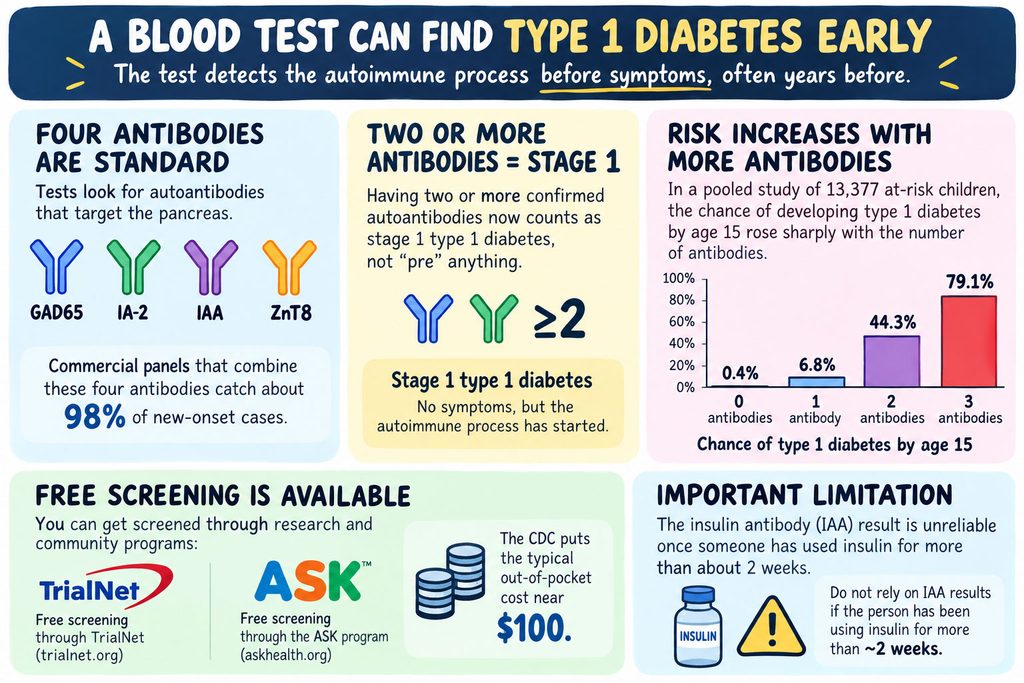
That trail is a set of autoantibodies. A simple blood draw can find them, and the result can tell you whether type 1 diabetes has already started, quietly, with no symptoms at all.
Quick Answer: A type 1 diabetes autoantibody test is a blood test that looks for four immune markers, GAD65, IA-2, insulin autoantibodies (IAA) and ZnT8, that attack insulin-making cells. Zero antibodies means low risk. One confirmed antibody means higher risk. Two or more confirmed antibodies means early-stage type 1 diabetes, even with normal blood sugar. Doctors order it through Labcorp or Quest, TrialNet screens relatives free, and self-pay usually runs about $100 to $155.
At a Glance
- The test finds autoimmune type 1 diabetes before symptoms, often years before.
- Four antibodies are standard: GAD65, IA-2, IAA and ZnT8. Commercial panels combined catch about 98% of new-onset cases.
- Two or more confirmed antibodies now count as stage 1 type 1 diabetes, not “pre” anything.
- In a pooled study of 13,377 at-risk children, diabetes by age 15 rose from 0.4% (no antibodies) to 79.1% (three antibodies).
- Free screening exists through TrialNet and the ASK program; the CDC puts typical out-of-pocket cost near $100.
- The insulin antibody result is unreliable once someone has used insulin for more than about 2 weeks.
What Is a Type 1 Diabetes Autoantibody Test?
A type 1 diabetes autoantibody test measures proteins your immune system makes when it mistakenly targets the beta cells in your pancreas. Labs call it a diabetes autoantibody panel, an islet autoantibody test, or a diabetes autoimmune profile. All three names describe the same idea: islet autoantibodies are antibodies aimed at the pancreatic islets, where insulin is made.
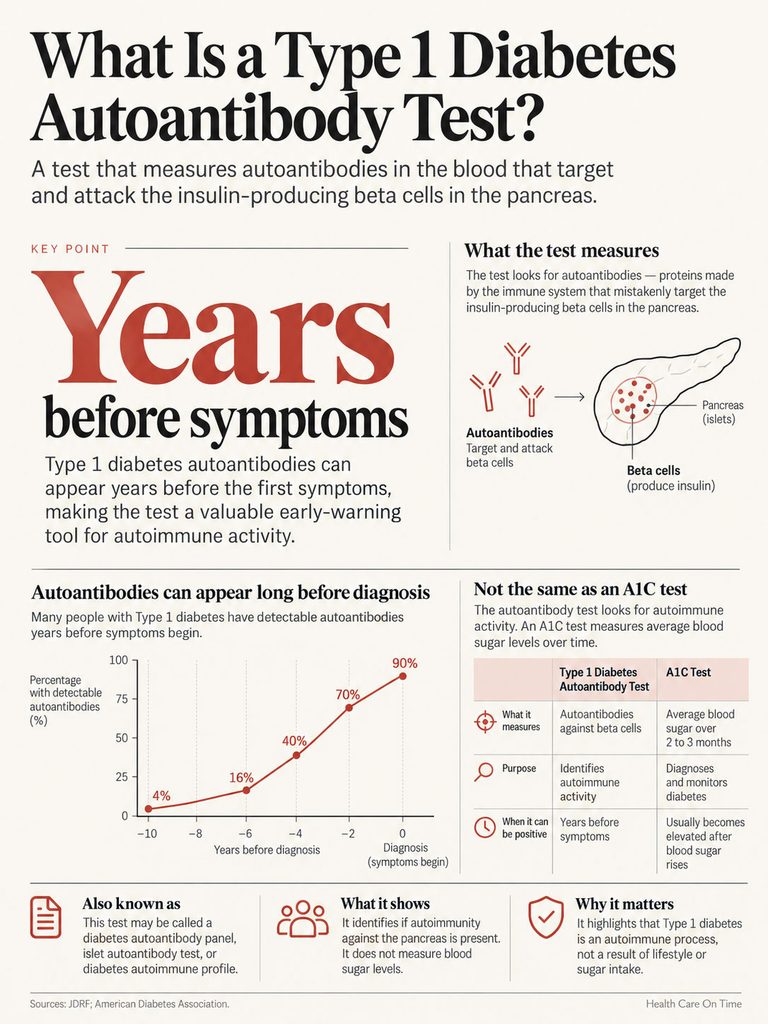
Type 1 diabetes is not caused by sugar or lifestyle. It’s an autoimmune process, and these antibodies are its fingerprints. They often appear years before symptoms begin, which is why the test works as an early-warning tool.
What the test does, and what it doesn’t do
The panel answers one question: is autoimmunity against the pancreas present? It does not measure blood sugar. Glucose, A1C and the oral glucose tolerance test (OGTT) still diagnose diabetes itself, as our guide to types of diabetes tests explains.
Doctors use the autoantibody test for two different jobs:
- Screening people without symptoms who have higher risk, such as relatives of someone with type 1 diabetes.
- Classifying diabetes that’s already diagnosed, mainly to tell type 1 apart from type 2 or rarer forms like MODY.
Readers often ask us whether this is the same as an A1C. It isn’t. An A1C reflects average blood sugar over 2 to 3 months. The autoantibody panel can be positive while every sugar reading is still perfectly normal.
The 4 Autoantibodies, One by One
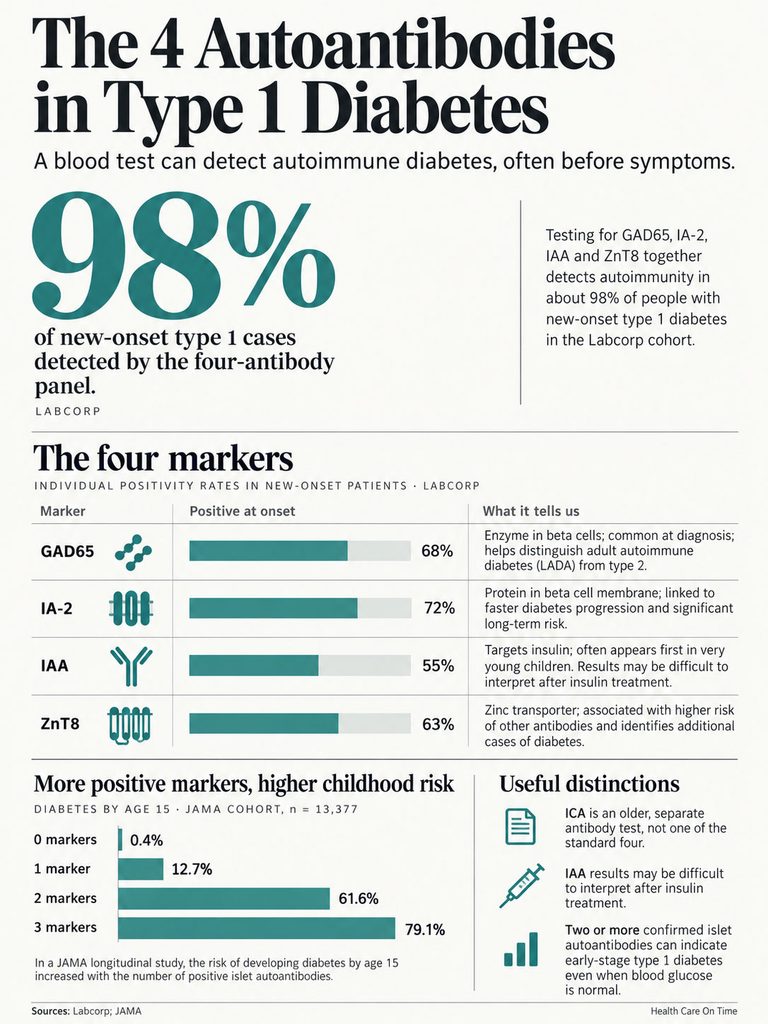
Most US labs test the same four markers. Each one targets a different protein inside or around the insulin-making beta cell.
GAD65 (glutamic acid decarboxylase 65)
GAD65 is an enzyme found in beta cells. GAD65 antibodies are common at diagnosis. In adults, a GAD65 result also helps doctors separate slower, adult-onset autoimmune diabetes, sometimes called LADA, from type 2, according to ARUP Laboratories. In young children, Quest notes that GAD65 antibodies most often appear first between ages 3 and 5.
IA-2 (insulinoma-associated antigen 2)
IA-2, once called ICA512, is a protein in the beta cell membrane. Quest notes that IA-2 antibodies usually signal faster progression toward type 1 diabetes. In the landmark pooled study, children with IA-2 as their only antibody had a 40.5% 10-year risk of diabetes, roughly three times the risk seen with a single GAD65 or IAA antibody.
That finding now shapes US guidelines. The 2026 ADA Standards of Care added a recommendation that people with a confirmed single IA-2 antibody be monitored much like people with stage 2 disease.
IAA (insulin autoantibodies)
IAA targets insulin itself. In children 2 years old and younger, it is usually the first antibody to appear. It has one major limit: once someone starts insulin therapy, the body can form antibodies to the injected insulin, and the test can’t tell the two apart.
ARUP Laboratories advises against IAA testing in people who have taken insulin for more than 2 weeks because of false positives.
ZnT8 (zinc transporter 8)
ZnT8 is a protein beta cells need to make and release insulin. It’s the newest of the four standard markers. In the pooled cohort, adding ZnT8 found 7 more children (6%) who went on to diabetes, and Quest notes people positive for ZnT8 are more likely to develop other antibodies.
What about ICA, the fifth antibody?
Islet cell cytoplasmic antibodies (ICA) are an older test read under a microscope. Some labs and TrialNet still use it, which is why you may see “five antibodies” mentioned. Most commercial screening panels now rely on the four protein-specific markers above.
Our medical content team pulled the numbers below from Labcorp’s test listing and the pooled JAMA cohort so you can compare the four side by side.
| Antibody | What it targets | Positive at type 1 onset* | When it tends to appear | What a single positive suggests |
| GAD65 | Enzyme inside beta cells | 68% | Often first at ages 3 to 5 | 12.9% 10-year diabetes risk in at-risk children |
| IA-2 | Beta cell membrane protein | 72% | Signals faster progression | 40.5% 10-year risk; ADA now advises closer monitoring |
| IAA | Insulin itself | 55% | Often first in children 2 and under | 13.1% 10-year risk; invalid after more than 2 weeks of insulin |
| ZnT8 | Zinc transporter in insulin granules | 63% | Often followed by other antibodies | Higher risk than a single IAA, GAD65 or IA-2, per Quest |
| All four combined | Any of the above | 98% detected | Not applicable | About 1.8% of new cases stay antibody-negative |
*Labcorp published positivity rates in new-onset type 1 diabetes. Single-antibody risks from Ziegler et al., JAMA, in genetically at-risk children.
What Your Results Mean: 0, 1, or 2+ Antibodies
The count matters more than any single number on the report. Here’s how US guidance reads each outcome.
Zero antibodies (negative)
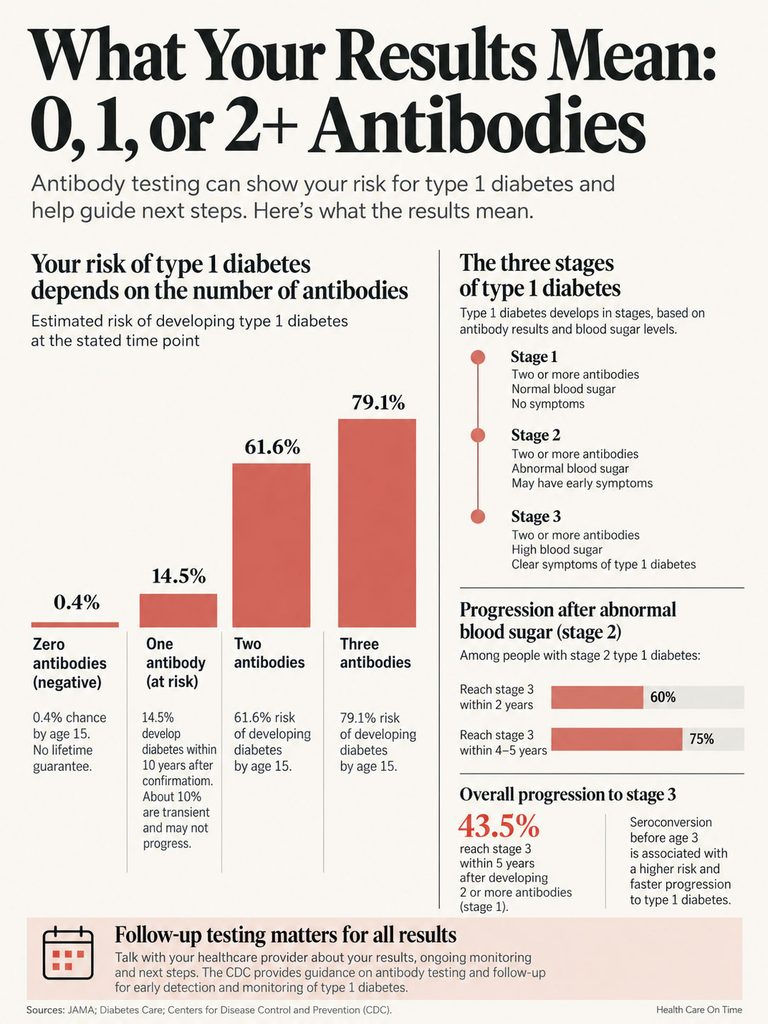
A negative result means low near-term risk. In the pooled cohort, children with no antibodies had a 0.4% chance of diabetes by age 15.
It is not a lifetime guarantee. Antibodies can appear later, especially when the first test was done in early childhood. The CDC says there is no set rule yet for when to repeat a negative screen, so talk with your doctor.
One antibody (at risk)
A single antibody is the result that worries families most, and it’s often less alarming than it feels. The first step is confirmation on a second sample, because some single antibodies are transient. In the pooled study, about 10% of children screened at least yearly had antibodies that came and went, and almost all of those were single.
Once confirmed, one antibody means higher risk, not disease. In that same research, 14.5% of children with a single antibody developed diabetes within 10 years. ARUP notes a single antibody in a healthy person has low predictive value on its own.
Two or more antibodies (early-stage type 1 diabetes)
Two or more confirmed antibodies mean type 1 diabetes has begun. The ADA, the Endocrine Society and Breakthrough T1D now classify this as stage 1, according to TrialNet.
Risk climbs with each added marker. By age 15, children in the pooled study had a 61.6% risk with two antibodies and 79.1% with three. TrialNet puts the lifetime risk of reaching clinical diagnosis at close to 100%.
The three stages of type 1 diabetes
| Stage | Autoantibodies | Blood sugar | Symptoms |
| Stage 1 | 2 or more | Normal | None |
| Stage 2 | 2 or more | Abnormal (dysglycemia) | Usually none |
| Stage 3 | Usually 2 or more | High, diabetes range | Thirst, urination, weight loss, fatigue |
Progression speed varies a lot. In the pooled analysis of 585 children with multiple antibodies, 43.5% reached stage 3 within 5 years, 69.7% within 10 years and 84.2% within 15 years. Seroconversion before age 3 pushed the 10-year figure to 74.9%.
Once blood sugar turns abnormal at stage 2, the clock speeds up. A 2024 review cites a 60% risk of stage 3 within 2 years and 75% within 4 to 5 years.
How the Test Works, Step by Step
Our editors walked through the process from order to report so nothing surprises you. The islet autoantibody test itself is quick. Most of the waiting happens in the lab.
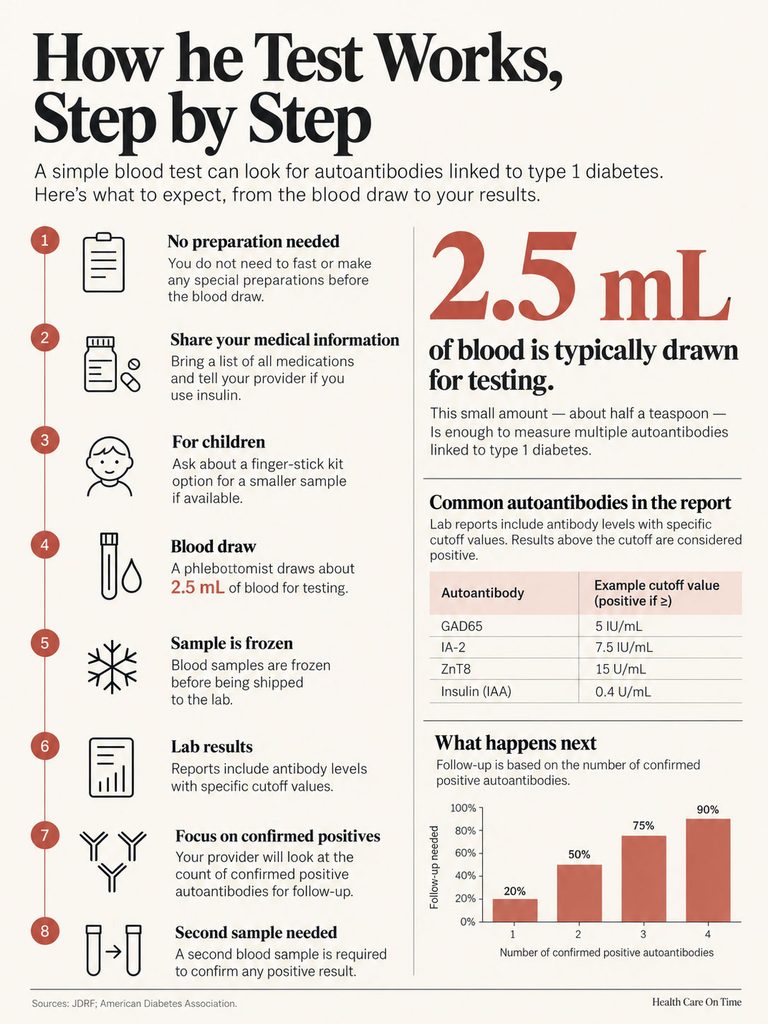
Before the draw
No fasting or special preparation is needed. Bring a list of your medicines, and say clearly if you have ever used insulin, because that changes how the IAA result is read.
If a child is being tested, ask whether a finger-stick kit is an option. TrialNet’s home kit uses a small finger-stick sample instead of a vein draw.
During the draw
A phlebotomist takes a tube of blood from a vein in your arm. Labcorp asks for about 2.5 mL of serum, which the lab freezes before shipping to its specialty testing site. The whole visit usually takes a few minutes.
Reading the report
Each antibody gets its own line with a number and a lab cutoff. Labcorp reports insulin antibodies in uU/mL and the other three in U/mL, then adds a written type 1 diabetes interpretation. Values above the cutoff are flagged positive.
Don’t fixate on how far above the cutoff a number sits. For screening, the count of confirmed positive islet autoantibodies drives the next step far more than the size of any one value. Bring the full report, not a screenshot of one line, to your follow-up visit.
Confirming a positive
US guidance asks for a second sample before any positive result is treated as real, per the CDC. That repeat often happens weeks to months later, and it’s when a single transient antibody can disappear.
Why Screening Matters More Than Ever
For decades, autoantibody testing lived inside research studies. Two changes moved it into everyday care: an FDA-approved drug for stage 2 and new screening language from the ADA.
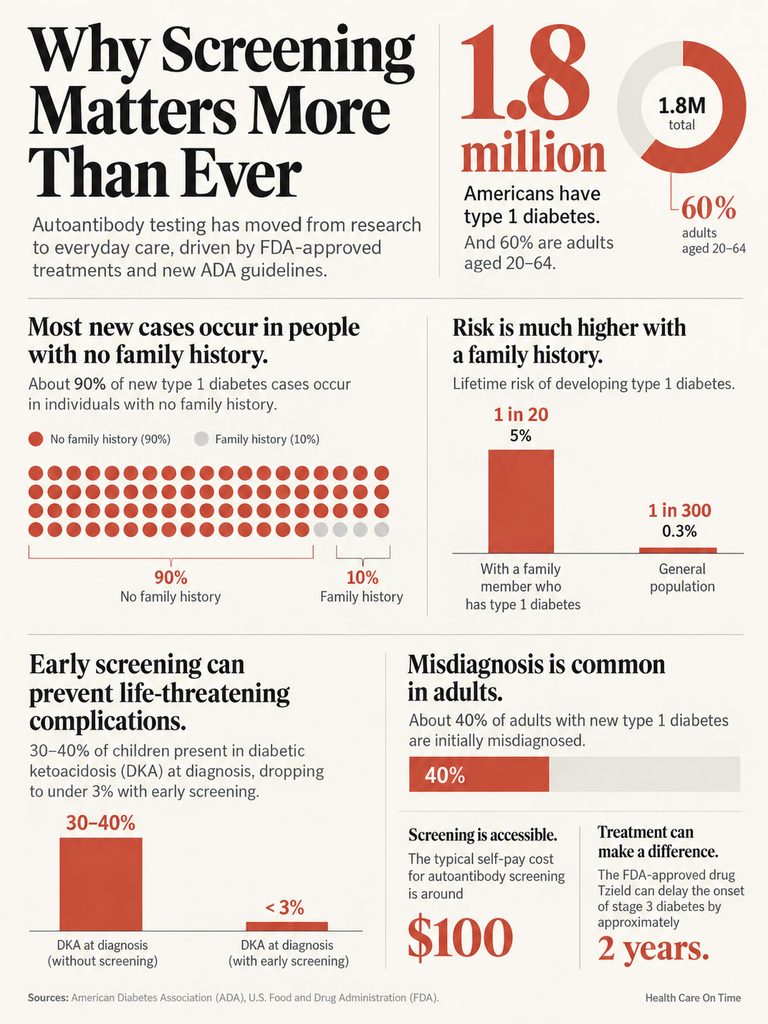
When our team reviews lab reports, a common question is “Why would anyone want to know this early?” The data below is the short answer.
| US data point | Number | Source |
| Americans living with type 1 diabetes | Over 1.8 million (1.6 million adults, 244,000 under 20) | Moore et al., Int J Gen Med, 2024 |
| New type 1 cases each year | About 64,000; 58% are adults aged 20 to 64 | Moore et al., citing Rogers, BMC Med |
| New cases with no family history | About 90% | FDA, citing Sims et al., Diabetes, 2022 |
| Risk with a family member who has type 1 | 1 in 20 vs 1 in 300 (15 times higher) | TrialNet; CDC |
| Children in DKA at diagnosis | 30% to 40% | CDC |
| DKA at diagnosis in people followed in research | Drops from 30% to under 3% | TrialNet |
| Adults with new type 1 first misdiagnosed | About 40% | Moore et al., 2024 |
| Typical self-pay screening cost | Around $100 | CDC |
The ADA’s current advice
The ADA now says screening for presymptomatic type 1 diabetes should be offered to people with a family history or other known high genetic risk, using IAA, GAD, IA-2 or ZnT8, as summarized in a 2026 Standards factsheet.
Anyone with one or more positive antibodies should be checked for stage 3 with urine or blood sugar testing. People with multiple confirmed antibodies but no overt diabetes should see a specialist for staging, education and possible treatment.
A treatment that can buy time
The FDA has approved Tzield (teplizumab) to delay stage 3 type 1 diabetes in people 8 and older who are already in stage 2. It’s given by IV once a day for 14 days.
In the trial of 76 people, 45% of those on Tzield reached stage 3 over a median 51 months, compared with 72% on placebo. The FDA described a delay of about 2 years (50 vs 25 months). It does not prevent or cure the disease, and common side effects include low lymphocyte counts, rash and headache.
None of this is possible without an autoantibody result first. That’s the practical reason screening matters now.
Who Should Get Tested?
Most people who develop type 1 diabetes have no relative with it, so family history alone misses many cases. Still, current US recommendations focus on higher-risk groups.
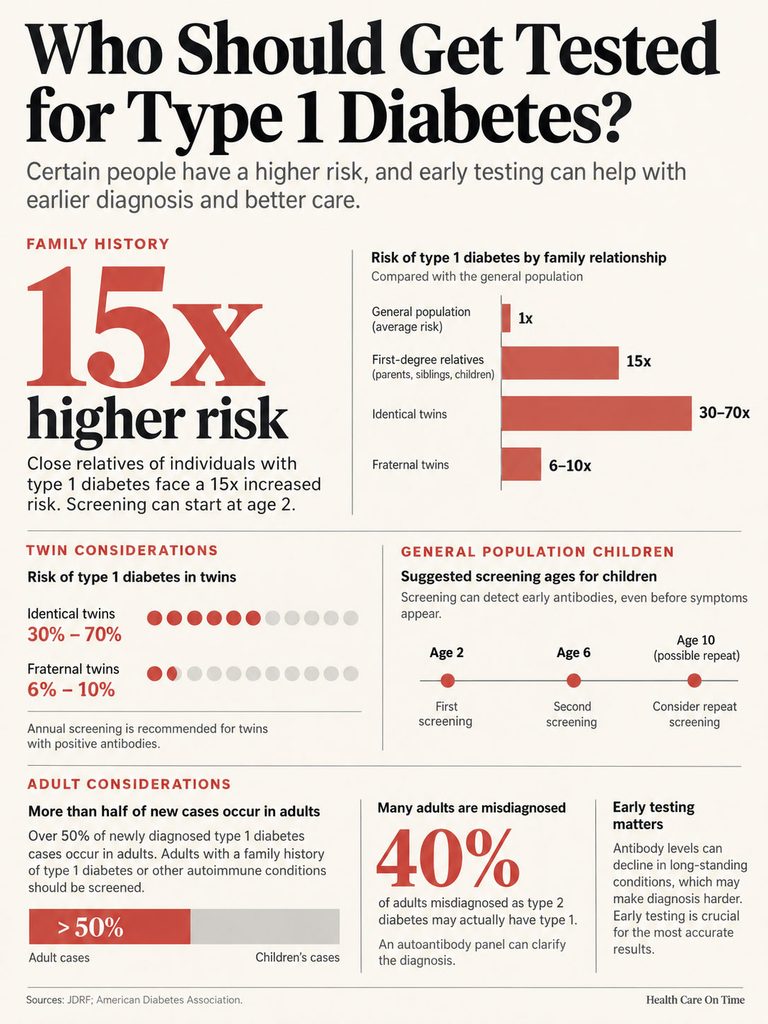
People with a close relative who has type 1
Parents, siblings and children of someone with type 1 diabetes carry about 15 times the general population’s risk, according to the CDC. Screening can start at age 2. Second-degree relatives, like cousins, aunts and grandparents, also qualify for free TrialNet screening up to age 20.
Twins of someone with type 1 diabetes
Readers often ask us about twins. The 2024 review reports that identical twins of a person with type 1 diabetes have a 30% to 70% risk, while fraternal twins have about the same risk as other siblings, roughly 6% to 10%.
Because of that higher risk, the review advises that a twin with even one positive antibody be screened at least once a year, and that care for an identical twin be discussed with a specialist.
Children in the general population
Researchers have suggested screening at ages 2 and 6 for the best prediction of diabetes by age 15. If a child tested negative early, a repeat around age 10 can catch antibodies that appear near puberty, per Moore and colleagues.
Adults with autoimmune red flags
Type 1 diabetes isn’t only a childhood disease. More than half of new cases now occur in adults. The same review recommends screening adults who have a family history of type 1 diabetes or a personal or family history of another autoimmune condition, such as:
- Autoimmune thyroiditis (Hashimoto’s)
- Celiac disease
- Addison’s disease
- Autoimmune gastritis or pernicious anemia
Adults diagnosed with “type 2” that doesn’t behave like type 2
If you were labeled type 2 but you’re lean, young, losing weight, or failing pills quickly, ask about a diabetes autoantibody panel. Roughly 40% of adults with new type 1 are first misclassified, and the correct label changes treatment. Our explainer on tests for diabetes diagnosis and monitoring covers the companion tests, including C-peptide.
Timing matters here. Antibodies tend to fade in long-standing disease, so testing close to diagnosis gives the clearest answer.
How to Get Tested in the US and What It Costs
You have three routes: your doctor, a free research program, or a direct-to-consumer lab. Each has trade-offs in cost, age limits and follow-up.
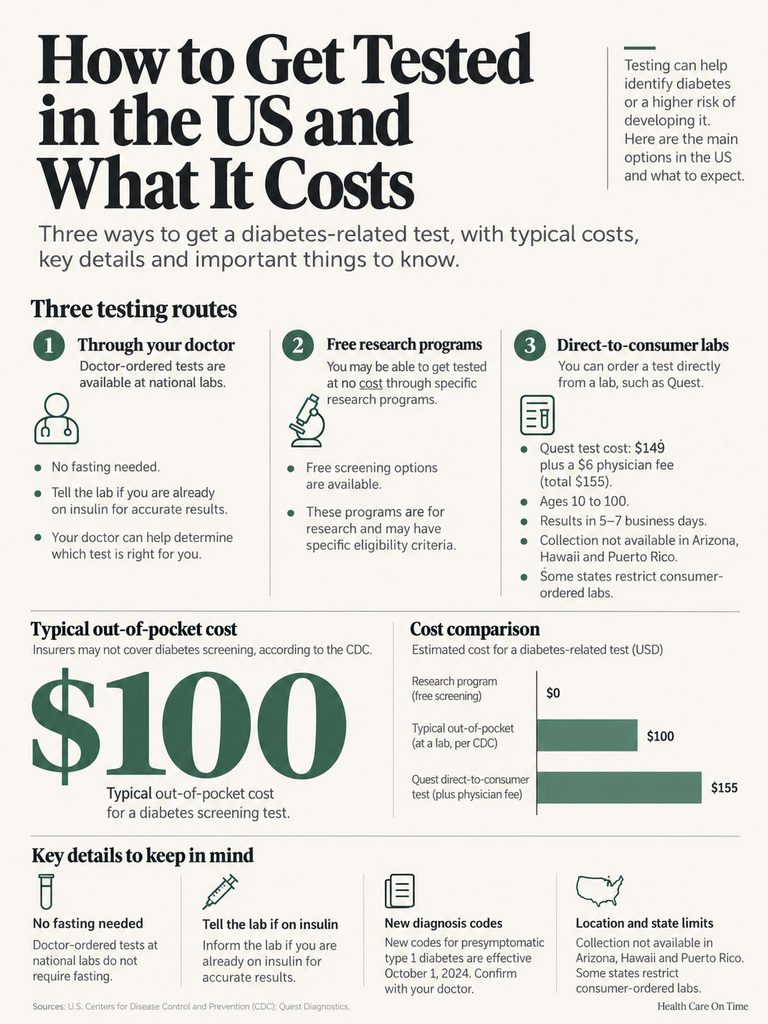
Through your doctor at a commercial lab
Your primary care doctor, pediatrician or endocrinologist can order the panel at a national lab. Two common options:
- Labcorp test 504050, Diabetes Autoimmune Profile. It includes insulin antibodies, GAD65, IA-2 and ZnT8 plus an interpretation. The Labcorp listing shows CPT codes 86337 (x1) and 86341 (x3), frozen serum, and an 8 to 15 day turnaround.
- Quest Diagnostics. Quest also runs doctor-ordered islet autoantibody testing for all ages on a serum sample, as listed in the 2024 screening review. Most commercial labs test GAD65, IA-2, IAA and ZnT8.
No fasting is needed. If you’re already on insulin, tell the lab and your doctor, since the IAA part may not be valid.
Free screening through research programs
- TrialNet Pathway to Prevention. Free for ages 2 to 45 with a parent, sibling or child with type 1, or ages 2 to 20 with a second-degree relative. You can use a finger-stick home kit or take a free kit to a Quest or Labcorp site. TrialNet offers follow-up and trial access for positives. Phone: 1-800-425-8361.
- ASK (Autoimmunity Screening for Kids). Run by the Barbara Davis Center in Colorado, ASK now offers no-cost screening for type 1 diabetes and celiac disease to US children ages 1 to 17 and to adults, with or without family history.
Direct-to-consumer testing
Quest sells a Type 1 Diabetes Autoantibody Screening Test online for $149 plus a $6 physician service fee, with no doctor’s visit. It covers ages 10 to 100, returns results in 5 to 7 business days, accepts HSA and FSA cards, and doesn’t bill insurance. Collection isn’t available in Arizona, Hawaii or Puerto Rico.
Some states limit consumer-ordered labs in general. Our guide to states that restrict ordering your own blood tests explains the rules.
Insurance and cost tips
The CDC says not all insurers pay for screening, and the typical out-of-pocket cost without coverage is around $100. Before a doctor-ordered test, ask:
- Is the panel (CPT 86337 and 86341) covered for screening based on family history?
- Does it need prior authorization?
- What’s the cash price if the claim is denied?
One detail can help your follow-up claims. Since October 1, 2024, US diagnosis codes include E10.A0, E10.A1 and E10.A2 for presymptomatic type 1 diabetes, unspecified, stage 1 and stage 2, according to the 2024 review. Ask your doctor’s office whether they apply after a confirmed positive.
4 Mistakes That Lead to the Wrong Conclusion
Our editors checked common online claims against lab guidance and the original studies. These four errors come up again and again.
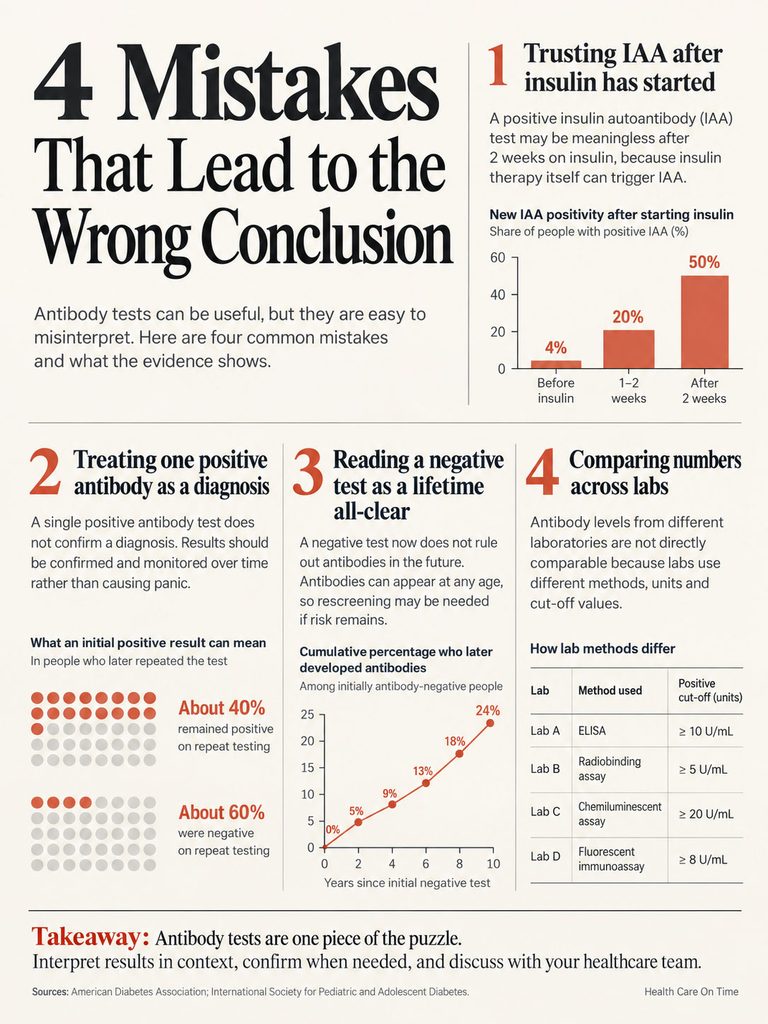
Mistake 1: Trusting IAA after insulin has started
The insulin autoantibody test can’t tell your own antibodies from antibodies to injected insulin. After more than about 2 weeks on insulin, a positive IAA may be meaningless. The URMC health encyclopedia puts it plainly: taking insulin before the test prevents an accurate result. Rely on GAD65, IA-2 and ZnT8 instead.
Mistake 2: Treating one positive antibody as a diagnosis
A single antibody raises risk, but most people with one never progress in a decade. The 10-year risk in at-risk children was 14.5%, and lower-risk adults appear to progress even less. Confirm it, monitor it, and don’t panic.
Mistake 3: Reading a negative test as a lifetime all-clear
Antibodies can appear at any age. A negative test in a 3-year-old says little about age 13. Children with ongoing risk often need rescreening, and some people with true type 1 diabetes test negative on every marker.
Mistake 4: Comparing numbers across labs
Labs use different methods, including radiobinding assays, ELISA and electrochemiluminescence. The 2024 review stresses these methods are not directly comparable. A “high” GAD65 titer from one lab can’t be lined up against a value from another. Follow trends within the same lab, and let a specialist read borderline results.
What Happens After a Positive Result
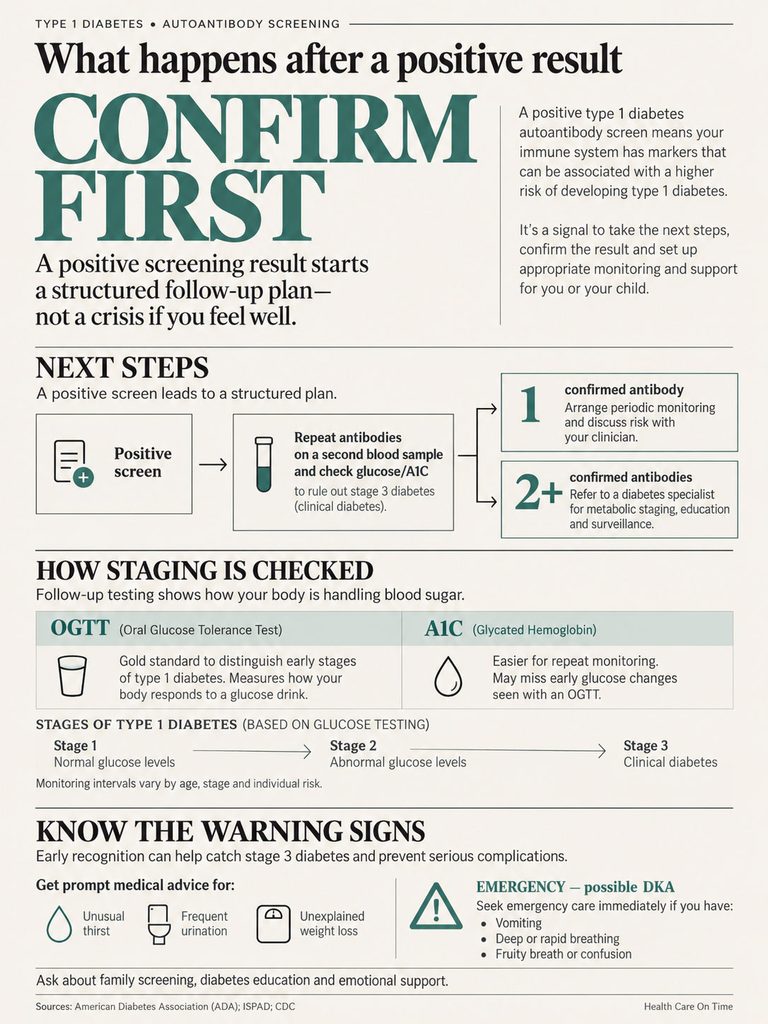
A positive screen starts a plan, not a crisis. Here’s what US guidance and expert reviews recommend, step by step.
| Your result | What to do next | Typical timing |
| Negative, child with family history | Rescreen; ask about a repeat around age 10 if first tested at 2 to 6 | Every 3 years to yearly until 18, per expert review |
| Negative, adult with no family or autoimmune history | No routine repeat needed | Only if symptoms appear |
| One antibody, child | Confirm on a second sample, then rescreen | 6 months to 2 years |
| One antibody, adult with family history | Confirm, then rescreen | Every 3 to 5 years |
| Single IA-2 antibody | Ask about closer monitoring, like stage 2 | Per ADA 2026 recommendation 2.9 |
| Two or more antibodies, normal sugar (stage 1) | Specialist referral; A1C, with or without OGTT or CGM | A1C every 3 to 6 months |
| Two or more antibodies, abnormal sugar (stage 2) | Endocrinologist; discuss Tzield (age 8+) or a TrialNet study | A1C every 3 months plus intermittent CGM |
Monitoring blood sugar the right way
The 2-hour OGTT is the gold standard for staging. A1C is easier because it needs no fasting, but it can miss early changes, especially in young children who progress fast. Continuous glucose monitors are increasingly used to spot stage 2. For context on A1C numbers, see our article on what happens when A1C is too high.
Learn the warning signs
Families who know the symptoms catch stage 3 early. For people taking part in research follow-up, TrialNet reports DKA at diagnosis falls from 30% to under 3%.
Get same-day care if you notice increased thirst, frequent urination, unexplained weight loss, slow-healing sores, blurred vision or unusual fatigue.
Go to the ER or call 911 for signs of DKA: fruity-smelling breath, nausea or vomiting, stomach pain, fast breathing, confusion or drowsiness.
Look after the emotional side
A positive result can bring real anxiety, especially for parents. The 2024 review notes that families given education after an early-stage diagnosis report better quality of life and less parental stress when stage 3 arrives. Ask your care team for a diabetes educator early, and remember that knowing first is what makes a calmer diagnosis possible.
If type 1 runs in your family, our type 1 diabetes causes guide and health screenings by age checklist can help you plan the rest of your family’s testing.
Frequently Asked Questions
Is there an autoantibody test for type 1 diabetes?
Yes. It’s a standard blood test, usually called a diabetes autoantibody panel or islet autoantibody test. It checks for GAD65, IA-2, insulin autoantibodies and ZnT8. Doctors can order it at Labcorp or Quest, TrialNet and ASK offer free screening to eligible people, and Quest sells a self-pay version for ages 10 and up.
What are the four markers for type 1 diabetes?
The four standard markers are GAD65 (glutamic acid decarboxylase), IA-2 (insulinoma-associated antigen 2), IAA (insulin autoantibodies) and ZnT8 (zinc transporter 8). Some labs and TrialNet also run ICA, an older fifth test. Two or more confirmed markers mean early-stage type 1 diabetes, even with normal blood sugar.
What does it mean if the insulin autoantibody level is high?
If you’ve never used insulin, a positive IAA suggests autoimmunity against your own insulin and higher type 1 risk, especially in young children. If you’ve used insulin for more than about 2 weeks, the result may only reflect antibodies to injected insulin. Your doctor will look at the other three markers before drawing conclusions.
What autoimmune disease goes with type 1 diabetes?
Celiac disease is the most common partner, according to Quest. Autoimmune thyroid disease, Addison’s disease, autoimmune gastritis, pernicious anemia, lupus, vitiligo and rheumatoid arthritis are also linked. Having one of these, or a relative with them, is a reason adults may be offered autoantibody screening.
How much does a type 1 diabetes antibody test cost?
The CDC puts typical out-of-pocket cost at around $100 when insurance doesn’t pay. Quest’s direct-to-consumer test costs $149 plus a $6 physician fee. TrialNet and ASK screen eligible people at no cost. With insurance, coverage depends on your plan and whether you have a family history.
Can you have type 1 diabetes without antibodies?
Yes, though it’s uncommon. Labcorp reports about 1.8% of new-onset cases test negative on all four markers. Antibodies also fade over years of established disease. A negative panel doesn’t rule out type 1 diabetes, so doctors may add a C-peptide test to check how much insulin you still make.
Does a positive GAD65 antibody mean you have type 1 diabetes?
Not by itself. A single confirmed GAD65 antibody means higher risk, and in at-risk children about 13% progressed to diabetes within 10 years. In an adult who already has diabetes, a positive GAD65 points to autoimmune diabetes, such as type 1 or LADA, rather than type 2.
At what age should a child be screened?
The CDC says screening can begin at age 2. Expert reviews suggest testing around ages 2 and 6, with a repeat near age 10 if earlier results were negative. Children with a parent or sibling with type 1 diabetes may need repeat screening every 1 to 3 years until 18.
Do you need to fast before the test?
No. The diabetes autoantibody panel doesn’t require fasting or other preparation. It’s a regular blood draw from a vein, or a finger-stick sample for some TrialNet home kits. Do tell the lab if you take insulin, because that affects how the insulin autoantibody result should be read.
How long do results take?
Labcorp lists a turnaround of 8 to 15 days for its Diabetes Autoimmune Profile. Quest’s consumer test reports in about 5 to 7 business days. Research programs like TrialNet mail results on their own schedules and contact you directly for follow-up visits if anything is positive.
Can type 1 diabetes be delayed after a positive test?
For some people, yes. Tzield (teplizumab) is FDA-approved for people 8 and older in stage 2, meaning two or more antibodies plus abnormal blood sugar. In its trial it delayed stage 3 by about 2 years. TrialNet also runs prevention studies for people at earlier stages.
Medical Disclaimer: This article is for general education and is not medical advice. It doesn’t replace a diagnosis or treatment plan from a licensed clinician. Test availability, prices and eligibility rules can change. Talk with your doctor or an endocrinologist about your results, and seek emergency care right away for symptoms of diabetic ketoacidosis.
References
- Centers for Disease Control and Prevention. Screening for Type 1 Diabetes. Updated April 17, 2026.
- Type 1 Diabetes TrialNet. Pathway to Prevention risk screening.
- Type 1 Diabetes TrialNet. T1D Facts.
- Moore DJ, Leibel NI, Polonsky W, Rodriguez H. Recommendations for Screening and Monitoring the Stages of Type 1 Diabetes in the Immune Therapy Era. Int J Gen Med. 2024;17:3003-3014.
- Ziegler AG, Rewers M, Simell O, et al. Seroconversion to Multiple Islet Autoantibodies and Risk of Progression to Diabetes in Children. JAMA. 2013;309(23):2473-2479 (author manuscript).
- US Food and Drug Administration. FDA approves first drug that can delay onset of type 1 diabetes (FDA Update).
- Labcorp. Test 504050: Diabetes Autoimmune Profile.
- Quest. Type 1 Diabetes Autoantibody Screening Test (consumer).
- ARUP Consult. Diabetes-Associated Autoantibodies test fact sheet. Updated May 2025.
- University of Rochester Medical Center Health Encyclopedia. Diabetes Autoantibody Panel.
- DiabetesontheNet. The 2026 ADA Standards of Care: What’s new?
- Guideline Central. ADA Standards of Care 2026 guideline spotlight.
- ASK: Autoimmunity Screening for Kids, Barbara Davis Center for Diabetes.
- Screen for Type 1. About T1D screening.