
You glance in the toilet and freeze. The stool staring back isn’t brown. It’s black, maybe shiny, maybe sticky. Your mind jumps straight to the worst case. Take a breath, because the answer is often something ordinary, and this guide will show you exactly how to tell ordinary from urgent.
Table of Contents
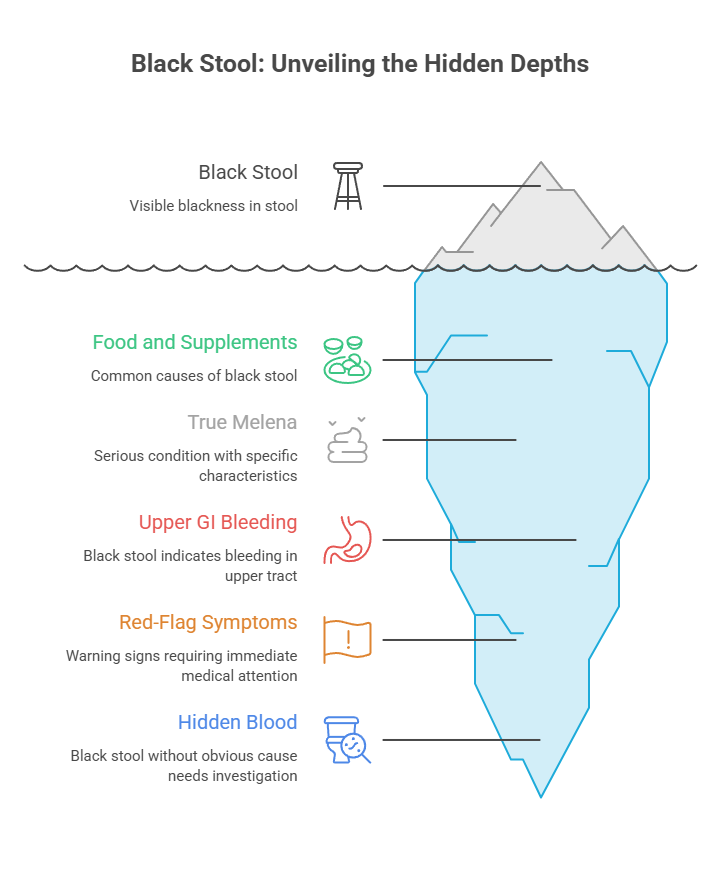
Quick Answer: Black poop is usually harmless and traced back to iron pills, Pepto-Bismol, or dark foods like black licorice and blueberries. But black, sticky, tar-like stool with a strong foul odor can mean digested blood from upper-gastrointestinal bleeding, a condition doctors call melena. That kind of black stool needs prompt medical care, especially alongside dizziness, vomiting blood, or belly pain.
At a Glance
- Most black stool comes from food, iron supplements, or bismuth medicines and clears up on its own.
- True melena is jet black, tarry, sticky, and smells unusually foul.
- Bright red blood points to the lower GI tract; black points to the upper GI tract.
- Red-flag symptoms include dizziness, weakness, vomiting blood, and severe stomach pain.
- Black stool with no iron or bismuth use deserves a call to your doctor.
- When in doubt, get it checked. A simple stool test can rule out hidden blood.
What Black Poop Actually Means
Normal poop runs some shade of brown, and that color comes from bile. Your liver makes bile, your gut breaks it down, and the leftover pigments tint your stool brown by the time it leaves your body.
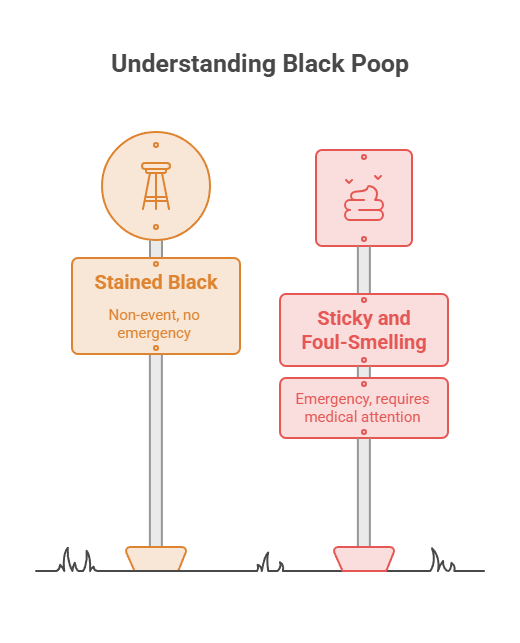
Black stool means something disrupted that normal process. Sometimes the cause sits in your medicine cabinet or on last night’s dinner plate. Other times, it signals blood that has been digested on its way through your system.
The single most useful question to ask is simple: is the stool just stained black, or is it black, sticky, and foul-smelling? That one distinction separates a non-event from an emergency, and our medical reviewers lean on it first with every case.
How Your Stool Gets Its Color
Food travels from your stomach through your small intestine to your colon, picking up bile and bacteria along the way. That mix usually lands somewhere in the brown family.
Change the inputs and you change the output. Heavy pigments, certain metals like iron, and digested blood can each override the usual brown and push stool toward black.
Color also hints at where a problem sits. Black points high in the tract, while bright red points low, near the rectum and anus. The reason is timing: the longer blood travels and gets digested, the darker it becomes.
“Stained Black” vs. True Melena
Stained-black stool looks dark but keeps a fairly normal texture, and it usually shows up a day or so after a dark food or a new supplement. It fades once the cause leaves your body.
Melena is different. Cleveland Clinic describes classic melena as jet black with a tarry, sticky consistency and a particularly strong, offensive odor, because the smell is a byproduct of blood being broken down inside your gut.
The table below is the fastest way to tell which camp your stool falls into.
| Feature | Harmless (Food or Medicine) | Melena (Digested Blood) | What It Suggests |
| Color & sheen | Dark, flat, or slightly dark-brown | Deep black, often shiny like asphalt | Sheen leans toward bleeding |
| Texture | Mostly normal, formed | Tarry, sticky, soft | Tarriness is a warning sign |
| Odor | Usual stool smell | Unusually foul, pungent | Strong odor leans toward bleeding |
| Onset | A day after dark food or new pill | Can appear without any diet change | No trigger raises concern |
| How long it lasts | 1 to 3 days, then clears | Persists or worsens | Persistence needs evaluation |
| Other symptoms | None, you feel fine | Dizziness, weakness, belly pain | Symptoms mean call a doctor |
Patients booking tests through HealthCareOnTime often ask whether texture really matters that much. It does. A formed, dark stool after a blueberry smoothie tells a very different story than a sticky black stool that coats the bowl.
Harmless Causes of Black Stool
Here’s the reassuring part. A large share of black-stool cases trace back to something you ate or a product you took, with no bleeding involved at all.
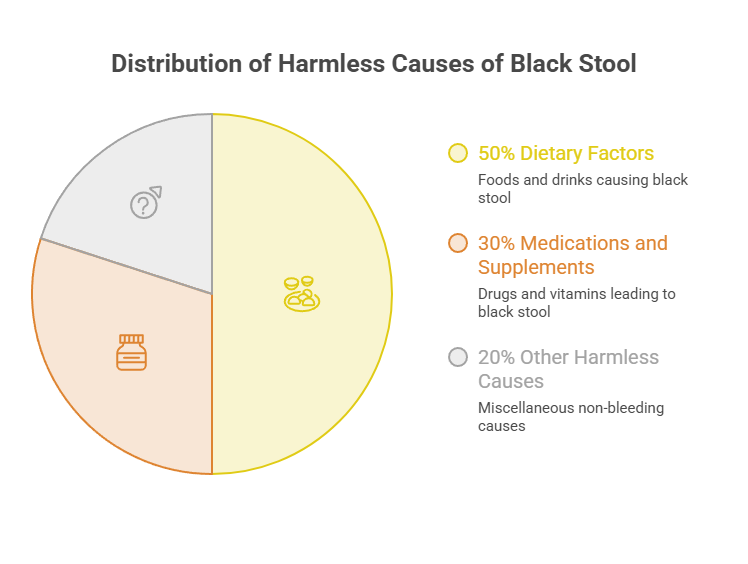
These causes share a pattern: the color shows up within a day or so, the stool stays reasonably normal in texture, and everything returns to brown once you stop the trigger.
Foods That Turn Stool Black
Dark, heavily pigmented foods are common culprits. Medical News Today points to blueberries, licorice, and blood sausage as foods that can darken stool, and the effect is purely cosmetic.
Black licorice is a frequent offender because of its dense pigment. Blood sausage contains actual blood, which darkens once digested, and large servings of blueberries can do the same. Dark chocolate sandwich cookies, blackberries, and grape juice round out the usual suspects.
Beets and foods loaded with dark or red dye can also shift stool color, sometimes toward red rather than black. Across the patients we serve, a quick diet recap from the previous 24 to 48 hours often solves the mystery on the spot.
Iron Supplements
Iron is one of the most common reasons for black stool, and it’s also one of the most benign. Your body absorbs only part of the iron in a supplement, and the rest oxidizes as it passes through, turning stool dark or black.
This is expected, not dangerous. People taking iron for anemia frequently see darker stool within two to three days of starting, and it continues for as long as they take the pills.
One caution matters here. Don’t stop prescribed iron on your own, especially if you’re being treated for anemia. Talk with your doctor first, because the discoloration alone isn’t a reason to quit a needed medicine. If iron upsets your stomach, your provider may switch the formulation rather than stop it.
Bismuth Subsalicylate (Pepto-Bismol, Kaopectate)
This is a classic. The People’s Pharmacy explains that Pepto-Bismol often causes black stools because bismuth combines with sulfur in your digestive tract to create bismuth sulfide, a dark compound.
The same goes for Kaopectate and other bismuth products used for upset stomach, heartburn, and diarrhea. The darkening is harmless and fades within several days after you stop.
Bismuth can also temporarily darken your tongue, which is another giveaway that the medicine, not bleeding, is behind the color. If both your tongue and stool turned dark after a few doses, the math usually adds up to bismuth.
Activated Charcoal
Activated charcoal, sold as a supplement and used medically for certain poisonings, is black by nature. What goes in black comes out dark, so charcoal-related black stool is simply the product passing through.
If you’ve taken charcoal capsules, a charcoal detox drink, or a charcoal-based remedy, that’s very likely your answer. The color clears within a day or two once the charcoal works its way out, and it carries none of the tarry texture or foul odor of melena.
Serious Causes: When Black Stool Signals Bleeding
Now the part that deserves your full attention. When black stool isn’t from food or medicine, the leading concern is bleeding high up in your digestive tract, in the esophagus, stomach, or first part of the small intestine.
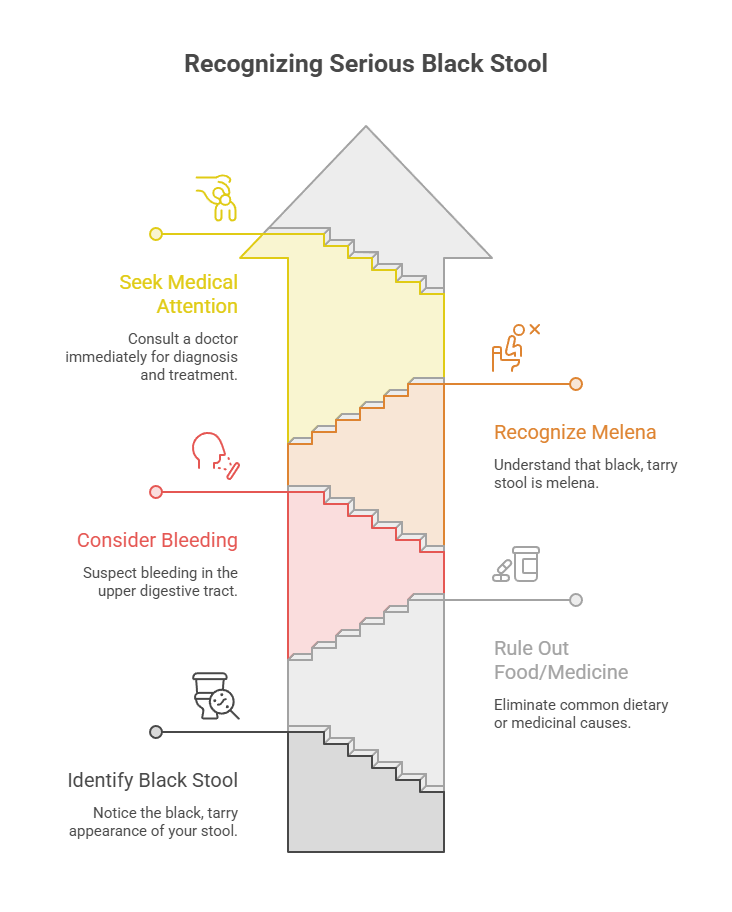
Blood from that region gets digested as it travels, which turns it black and tarry by the time it leaves your body. That digested-blood stool is melena, and it’s a recognized medical warning sign.
Peptic Ulcers
Peptic ulcers are open sores in the stomach lining or the upper small intestine, and they’re the most common source of upper-GI bleeding. They can erode a blood vessel and leak blood into your digestive tract.
Two big drivers stand out: infection with the bacterium H. pylori and long-term use of NSAID pain relievers. Ulcer bleeding may come with burning stomach pain, bloating, and nausea, and the pain sometimes eases briefly after eating.
Esophageal & Gastric Varices
Varices are swollen veins in the esophagus or stomach, usually linked to advanced liver disease such as cirrhosis. When they rupture, bleeding can be heavy and fast.
This is a medical emergency. If you have known liver disease and notice black, tarry stool, treat it as urgent and seek care right away rather than waiting to see what happens.
Gastritis & Esophagitis
Gastritis is inflammation of the stomach lining, and esophagitis is inflammation of the esophagus. Both can irritate tissue enough to bleed, sometimes from acid reflux, heavy alcohol use, or infection.
The bleeding here is often slower than a ruptured varix, but it can still produce melena. Persistent reflux or stomach pain alongside dark stool is worth a conversation with your provider.
Mallory-Weiss Tears
A Mallory-Weiss tear is a rip in the lining where the esophagus meets the stomach, typically caused by forceful or repeated vomiting. The tear can bleed and show up as melena.
Anyone who has had a bout of violent vomiting, then notices black stool, should mention both details to a doctor. The timeline usually connects the dots quickly.
Abnormal Blood Vessels and GI Cancers
Less common sources include angiodysplasia, which are fragile, abnormal blood vessels in the GI lining that can ooze blood over time. These show up more often in older adults.
Rarely, cancers of the esophagus, stomach, or upper small intestine can bleed and cause black stool. Warning clues include trouble swallowing, unexplained weight loss, persistent fatigue, and ongoing dark stool. The possibility is uncommon, but it’s the reason doctors take unexplained melena seriously, since early evaluation matters most when the cause turns out to be significant.
Medications That Trigger Bleeding
Several common medicines raise bleeding risk in the upper GI tract. NSAIDs like ibuprofen, naproxen, and aspirin top the list, followed by blood thinners (anticoagulants), corticosteroids, and certain antidepressants known as SSRIs.
These don’t darken stool directly. Instead, they can cause the bleeding that produces melena, which is a very different and more serious mechanism than the harmless darkening from iron or bismuth.
| Metric | US Figure | Source |
| Annual upper-GI-bleeding incidence | ~80 to 150 per 100,000 people | NCBI StatPearls |
| Hospital admissions per year | Over 200,000 | NCBI / PMC |
| Most common cause | Peptic ulcer disease | NCBI StatPearls |
| Where most melena originates | ~90% above the ligament of Treitz | Clinician.com review |
| Estimated mortality range | ~2% to 10% | NCBI StatPearls |
| GI bleeds that stop on their own | ~80% to 85% | PMC multicenter study |
Symptoms to Watch For
Black stool rarely shows up alone when bleeding is involved. The symptoms that travel with it are what tell you how worried to be.
Research summarized in clinical reviews shows that melenic stool found on exam strongly raises the likelihood that a patient has an upper-GI bleed. In other words, true tarry stool is a meaningful signal, not background noise.
Our lab partners report that the patients who do best are the ones who notice the accompanying symptoms early and act, rather than waiting to see if it goes away.
Emergency Warning Signs
Call 911 or go to the nearest emergency room if black stool comes with any of these:
- Vomiting blood, or vomit that looks like coffee grounds
- Dizziness, lightheadedness, or fainting
- A racing or pounding heartbeat
- Severe or worsening abdominal pain
- Shortness of breath or unusual weakness
- Confusion or cold, clammy skin
These point to active or significant blood loss, and minutes can matter. The coffee-grounds look comes from blood that sat in the stomach and partly digested, which is its own red flag. Don’t try to ride it out at home.
How To Check at Home: Is It Truly Black?
Before you panic, do a quick check. Bathroom lighting can make dark-brown stool look black, so look again in good natural light near a window.
Try the tissue test: smear a small amount on white toilet paper. Truly black, tar-like stool reads very differently from dark brown, which often shows a brownish edge.
Then notice the smell. Melena carries an unusually foul, distinctive odor that stands apart from a normal bowel movement. Patients commonly ask us how they’ll know, and the honest answer is that the smell of melena tends to be hard to mistake once encountered.
When To Worry and What To Do
Knowing the cause is helpful, but most people really want a clear answer to one question: what should you actually do right now? The grid below maps common situations to next steps.
| Your Situation | What It Might Mean | What To Do |
| Black stool, taking iron or Pepto-Bismol, feel fine | Likely harmless discoloration | Watch 1 to 2 days; call doctor if it turns tarry |
| Black stool after dark food yesterday | Food pigment passing through | Recheck next bowel movement; no action if it clears |
| Tarry, sticky, foul-smelling stool | Possible upper-GI bleeding (melena) | Contact a doctor promptly, same day |
| Black stool plus dizziness or vomiting blood | Significant active bleeding | Call 911 or go to the ER now |
| Black stool lasting more than 3 days | Cause not explained by diet or pills | Schedule a medical evaluation |
| Black stool with severe belly pain | Possible ulcer or perforation | Seek urgent care immediately |
When It’s Safe To Wait and Watch
If you started iron or a bismuth product recently, ate something dark, feel completely well, and the stool isn’t tarry, it’s usually fine to watch for a day or two. Normal color typically returns once the trigger clears.
Keep an eye on texture and symptoms during that window. Any shift toward sticky, tarry stool or any new dizziness changes the plan immediately.
When To Call Your Doctor
Reach out to your provider if black stool lasts beyond a couple of days, if you’re not on iron or bismuth and can’t explain it, or if you have nagging stomach symptoms. A stool test can quickly check for hidden blood.
WebMD’s guidance is direct: always call your doctor about black poop, especially if it’s also sticky or tarry. That’s a reasonable rule of thumb when the cause isn’t obvious.
When To Go to the ER
Skip the wait-and-see approach entirely if you have vomiting of blood, fainting, severe pain, or signs of heavy blood loss. These situations call for emergency evaluation, not a next-week appointment.
In cases reviewed by our medical team, the difference between a good and a bad outcome with GI bleeding often comes down to how fast someone gets to care. When the warning signs stack up, faster is safer.
How Doctors Diagnose the Cause
If your black stool needs a workup, the process is usually straightforward and starts with simple tests before moving to anything invasive.
Your provider will ask about your diet, medications, supplements, and other symptoms first. That history alone resolves many cases, especially when iron, bismuth, or a dark food is in the picture.
Stool Tests
A fecal occult blood test (FOBT) or fecal immunochemical test (FIT) checks for blood you can’t see. MedlinePlus notes that a provider can test the stool with a chemical to check for the presence of blood, which separates true bleeding from harmless discoloration.
This is often the first step and can be done quickly, sometimes with a sample you collect at home. A negative test is reassuring; a positive one guides the next move.
Endoscopy and Colonoscopy
If bleeding is confirmed or strongly suspected, doctors look directly inside. An upper endoscopy (EGD) uses a thin, flexible camera to inspect the esophagus, stomach, and upper small intestine, the usual sources of melena.
A colonoscopy examines the lower tract when the upper exam is clear. These procedures can both find and, in many cases, treat the bleeding source during the same session, by clipping a vessel or cauterizing an ulcer.
Blood Work
A complete blood count (CBC) checks your hemoglobin and red blood cell levels to gauge whether you’ve lost significant blood. Other tests assess clotting and how your liver and kidneys are working.
Patients booking a CBC and related panels through HealthCareOnTime often do so on a doctor’s request after a positive stool test. The numbers help quantify how much bleeding has occurred and how urgently it needs attention, and they give your provider a baseline to track recovery.
Special Situations
Black stool doesn’t mean the same thing in every body or every life stage. A few specific scenarios come up again and again, and each has its own context.
Black Stool in Pregnancy
Prenatal vitamins and iron supplements are the usual reason for black stool during pregnancy. The added iron commonly darkens bowel movements, and that’s expected throughout all three trimesters.
Still, pregnancy doesn’t make true melena any less serious. If stool turns tarry or you feel unwell, contact your OB or provider rather than assuming it’s just the vitamins, since reflux and ulcers can occur in pregnancy too.
Black Stool in Babies & Newborns
A newborn’s first stools, called meconium, are naturally dark, sticky, and greenish-black. That’s normal in the first few days of life and clears as feeding gets established.
Beyond the newborn stage, iron-fortified formula can darken a baby’s stool, and swallowed blood (from a cracked nipple during breastfeeding, for example) can too. UF Health notes that in children, a small amount of blood in the stool is most often not serious, but any tarry stool, or an infant who seems unwell, warrants a prompt call to the pediatrician.
Black Stool After Surgery or a Nosebleed
Swallowed blood has to go somewhere, and it can come out as dark stool. A heavy nosebleed, a tonsillectomy, a dental procedure, or recent abdominal surgery can all introduce blood that gets digested.
If the timing lines up and you feel well otherwise, this is often the explanation. Mention the recent event to your doctor so they can connect it to the stool change and decide whether any check is needed.
Black Stool on Blood Thinners
If you take anticoagulants or daily aspirin, treat black stool with extra caution. These medicines raise the risk of GI bleeding, so melena in this group deserves a faster response than usual.
Don’t stop a prescribed blood thinner on your own. Call your provider, who can weigh the bleeding risk against the reason you’re taking the medication in the first place.
How To Prevent and Manage Black Stool
You can’t prevent every cause, but you can handle the common, harmless ones and lower your risk of the serious kind with a few practical habits.
If It’s From Food or Supplements
When a food or pill is the obvious trigger, the fix is simple: expect the color to clear within a few days of stopping or finishing the cause. Iron-related darkening continues as long as you take the supplement, which is normal and not a reason to stop.
Keep a short note of what you ate and took, including OTC products. That record turns a scary moment into an easy answer the next time it happens, and it saves your doctor time if you do call.
Protecting Your Gut
To lower the odds of bleeding-related black stool, use NSAID pain relievers sparingly and at the lowest effective dose, since heavy or daily use irritates the stomach lining. If you need them often, ask your doctor about stomach-protective options like a proton pump inhibitor.
Get H. pylori treated if you’ve tested positive, manage acid reflux instead of ignoring it, and limit heavy alcohol use, which inflames the gut. Keep up with care for any liver condition. Most preventable upper-GI bleeds trace back to one of these manageable risks left unaddressed, which is why our medical reviewers flag them at routine checkups.
Frequently Asked Questions
Should I worry if my poop is black but I feel fine?
Often, no. If you recently started iron or Pepto-Bismol, ate dark food, and the stool isn’t tarry, it’s usually harmless and clears in a day or two. Still, watch the texture, and call your doctor if it turns sticky or persists beyond three days.
Can iron pills really turn my poop black?
Yes, very commonly. Your body absorbs only some of the iron, and the rest oxidizes as it passes through, darkening stool. This is expected and harmless. Don’t stop prescribed iron on your own, though; check with your doctor if the color worries you.
Does Pepto-Bismol cause black stool?
Yes. Bismuth subsalicylate, the active ingredient in Pepto-Bismol and Kaopectate, reacts with sulfur in your gut to form a dark compound. The result is temporary black stool, and sometimes a dark tongue. Color returns to normal within several days after you stop taking it.
How long does black poop last after stopping iron or Pepto?
Bismuth-related darkening usually fades within a few days of stopping the medicine. Iron-related darkening lasts as long as you take the supplement and clears shortly after you finish. If black stool continues well beyond that window, contact your provider.
What’s the difference between black stool and melena?
Melena is a specific type of black stool caused by digested blood from upper-GI bleeding. It’s jet black, tarry, sticky, and foul-smelling. Ordinary black stool from food or pills looks darker but keeps a normal texture and lacks that distinctive odor.
Is black poop a sign of cancer?
Rarely, but it can be. Cancers of the esophagus, stomach, or upper small intestine may bleed and cause black stool, usually alongside weight loss, swallowing trouble, or fatigue. The possibility is uncommon, yet it’s why doctors evaluate unexplained, persistent melena promptly.
Can stress or anxiety cause black stool?
No. Stress and anxiety don’t directly turn stool black. Factors like iron supplements, bismuth medicines, dark foods, or actual bleeding are the real causes. If your stool is black and you can’t tie it to diet or medication, get it checked rather than blaming stress.
Why is my poop black and sticky with a strong smell?
That combination strongly suggests melena, meaning digested blood from upper-GI bleeding. Tarry texture plus a foul, unusual odor is a recognized warning sign. Contact a doctor promptly the same day, and seek emergency care if you also feel dizzy or are vomiting blood.
Should I go to the ER for black stool?
Go to the ER if black stool comes with vomiting blood or coffee-ground vomit, fainting, severe abdominal pain, a racing heart, or extreme weakness. These signal significant bleeding. Black stool alone, with no symptoms and an obvious food or iron cause, usually doesn’t need the ER.
Is black stool normal in pregnancy?
Frequently, yes. Prenatal iron supplements commonly darken stool during pregnancy, which is expected. But pregnancy doesn’t make tarry, foul-smelling stool harmless. If stool becomes truly black and sticky or you feel unwell, contact your OB or provider right away.
What does black poop mean in a baby or newborn?
A newborn’s first stools (meconium) are normally dark and sticky for the first few days. Later, iron-fortified formula or swallowed blood can darken stool. Any tarry stool, or a baby who seems unwell, should be reported to the pediatrician promptly.
Can certain foods make my poop look black?
Yes. Black licorice, blueberries, blood sausage, beets, and foods with heavy dark or red dye can all darken stool. The change is cosmetic and clears within a day or two. Food-related black stool keeps a normal texture, unlike the tarry stool seen with bleeding.
Medical Disclaimer: This article is for general information only and isn’t a substitute for professional medical advice, diagnosis, or treatment. Black or tarry stool can signal a serious condition. Always talk with a qualified healthcare provider about your symptoms, and seek emergency care for warning signs like vomiting blood, dizziness, fainting, or severe abdominal pain.
References
- Cleveland Clinic: Melena (Black Stool), What It Means and When To Worry
- MedlinePlus (NIH): Black or Tarry Stools
- NCBI StatPearls: Upper Gastrointestinal Bleeding
- WebMD: Why Is My Poop Black? Causes of Black or Tarry Stool
- Medical News Today: Possible Causes of Black Stool and When To Get Help
- UF Health: Black or Tarry Stools
- The People’s Pharmacy: Should You Worry About Black Stools?
- Clinician.com: Evidence-Based Review of GI Bleeding