Two people get the same lab result printed as “8.” One is perfectly healthy. The other needs a workup this week.
The difference has nothing to do with their bodies. It comes down to whether their laboratory printed the number in mg/L or mg/dL, and almost no health article explains that.
Table of Contents
That single unit gap causes more unnecessary panic about C-reactive protein than any actual disease does. So start there, then work through what your number means, what raised it, and what happens next.
Quick Answer: A high CRP level means inflammation is active somewhere in your body, but it does not reveal where or why. Measured in mg/L, results under 3 are typical, 3 to 10 suggest low-grade inflammation, and anything above 10 usually points to infection, injury, or an active inflammatory condition. Values above 50 mg/L most often mean bacterial infection. For heart risk assessment, hs-CRP must be measured twice, two weeks apart.
At a Glance
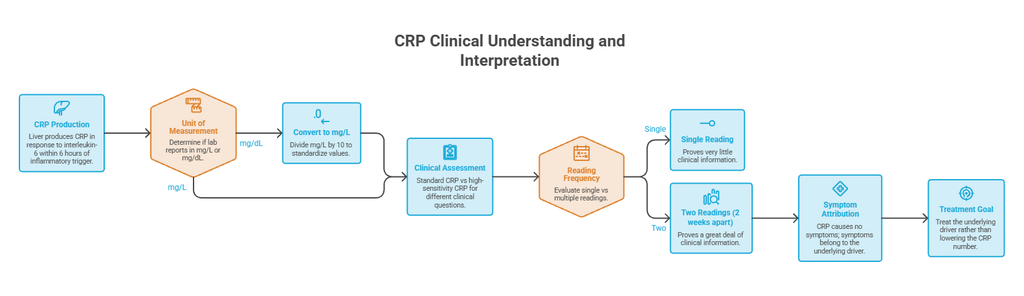
▪ Your liver produces CRP in response to interleukin-6, and levels climb within about 6 hours of any inflammatory trigger.
▪ Most US labs report in mg/L; some report in mg/dL. Divide mg/L by 10 to convert. That “5” can mean two very different things.
▪ Standard CRP and high-sensitivity CRP measure the same protein on different scales for different clinical questions.
▪ A single elevated reading proves very little. Two readings two weeks apart prove a great deal.
▪ Roughly 52% of US adults carry an hs-CRP of 2 mg/L or higher, so “elevated” is common rather than alarming.
▪ CRP causes no symptoms. Every symptom people blame on it belongs to whatever raised it.
▪ Lowering the number is not the goal. Treating the driver is.
What a High CRP Level Actually Means
C-reactive protein is an acute phase reactant. Your liver cells manufacture it on demand whenever the cytokine interleukin-6 signals that something has gone wrong somewhere in the body.
That “somewhere” might be a sinus infection, an inflamed knee, a healing surgical incision, an artery wall, or a growing tumor. CRP treats all of them identically.
CRP Is a Signal, Not a Diagnosis
Picture a smoke detector wired to an entire house with no room indicator. It confirms smoke exists. It says nothing about whether the source is a birthday candle or an electrical fire in the basement.
This is why a CRP result almost never travels alone on a lab order. Our medical reviewers note that the most persistent misunderstanding among patients booking inflammatory marker panels is the belief that CRP identifies a disease. It identifies a process.
The practical consequence: a high CRP is the beginning of a question, not the end of one.
How Fast CRP Rises and Falls
The timing of CRP explains most of what makes it useful and most of what makes it confusing.
After a single inflammatory stimulus, serum CRP climbs above 5 mg/L within roughly 6 hours and peaks near 48 hours, according to the reference review by Pepys and Hirschfield in the Journal of Clinical Investigation.
Its plasma half-life is about 19 hours, and that half-life stays constant in health and in disease. Because clearance never varies, your blood concentration is a direct readout of how hard your liver is producing CRP at this moment.
Nothing carries over from last week. A CRP drawn today reflects today, which is precisely why a value drawn during a head cold tells you nothing about your arteries.
Following an acute stimulus, values can climb from under 0.05 mg/L to more than 500 mg/L. That is a 10,000-fold range, wider than almost any other routine blood test.
Standard CRP vs. High-Sensitivity CRP
Two versions of this test exist. They measure the identical protein using different assay sensitivity, and they answer completely different questions.
Standard CRP is built to detect moderate and large elevations. Clinicians order it when they suspect infection, an autoimmune flare, appendicitis, or a post-surgical complication.
High-sensitivity CRP resolves small differences down near 0.2 mg/L. It exists for one job: estimating cardiovascular risk from the low-grade vascular inflammation a standard assay would simply report as normal.
Running hs-CRP during a chest infection produces an accurate number that means nothing for your heart. Running standard CRP to assess cardiac risk produces a number too coarse to be useful.
Patients commonly ask us which one they should order. The answer depends entirely on the question being asked, and it is worth settling before the blood draw rather than after.
The mg/L vs. mg/dL Trap
Here is where most confusion originates, and where several of the highest-ranking pages on this topic actively make things worse.
The overwhelming majority of US laboratories report CRP in milligrams per liter (mg/L). A minority, along with several widely read health encyclopedias, use milligrams per deciliter (mg/dL).
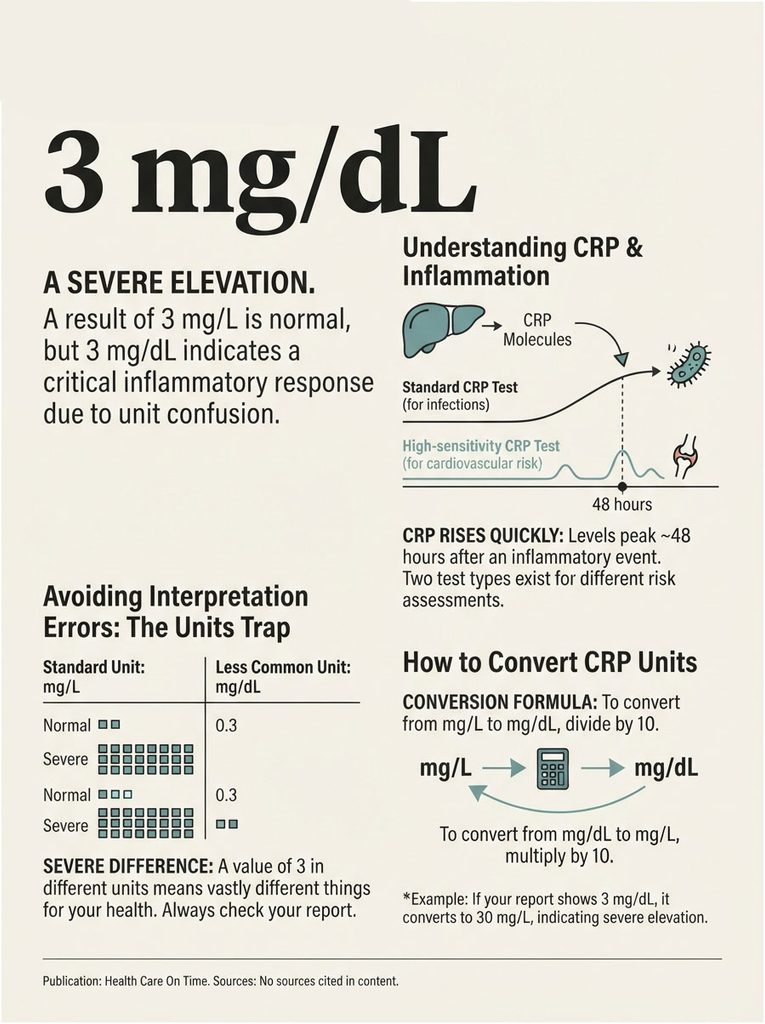
One mg/dL equals 10 mg/L. A result of “3” is unremarkable in mg/L and markedly elevated in mg/dL.
The problem is not theoretical. One major hospital health library currently describes severe elevation as above 50 mg/dL, then states in the very next sentence that results over 50 mg/L are linked to bacterial infection about 90% of the time. Those two sentences are ten-fold apart.
Converting Your Number in Five Seconds
To convert mg/L to mg/dL, divide by 10. To convert mg/dL to mg/L, multiply by 10.
Check the unit column on your own report before comparing your number to anything you read online, including this page. Across the reports our diagnostic partners process, the unit sits directly beside the value, usually in small type that is easy to skip past.
If your report reads 8 mg/L, you are in mild territory. If it reads 8 mg/dL, that equals 80 mg/L and a very different conversation.
What Do CRP Levels Mean? A Range-by-Range Guide
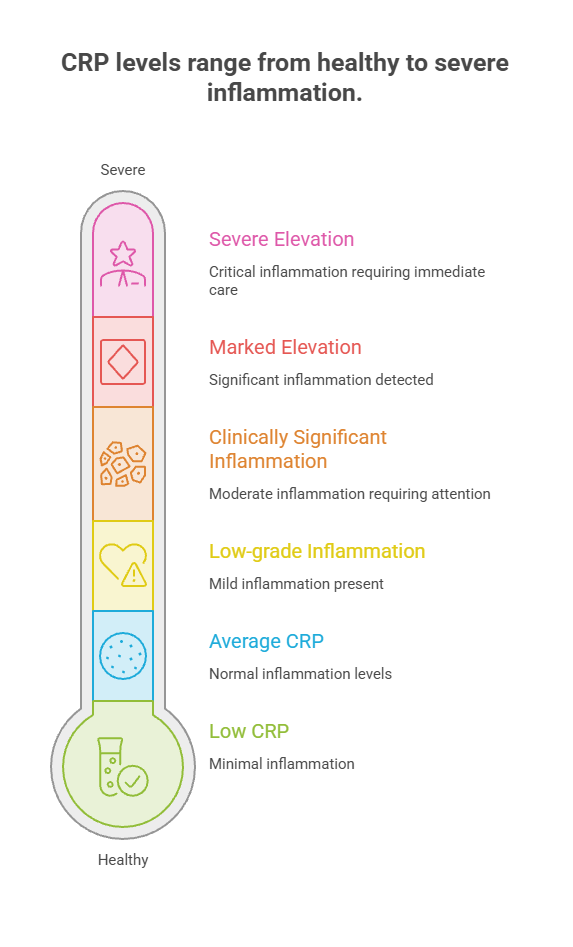
Everything below is stated in mg/L, with the mg/dL equivalent shown so you can match whichever unit your laboratory used.
For context, healthy young adult blood donors show a median CRP of 0.8 mg/L, a 90th percentile of 3.0 mg/L, and a 99th percentile of 10 mg/L.
| Result (mg/L) | Same value (mg/dL) | Typical interpretation | What usually drives it | Usual next step |
| Under 1.0 | Under 0.1 | Low. No detectable systemic inflammation | Normal metabolic state | None. Routine care |
| 1.0 to 3.0 | 0.1 to 0.3 | Average range for US adults | Baseline variation, age, sex, body composition | None if you feel well |
| 3.0 to 10.0 | 0.3 to 1.0 | Low-grade inflammation | Obesity, smoking, metabolic syndrome, gum disease, mild viral illness, early autoimmune activity | Repeat in 2 weeks, review history |
| 10 to 50 | 1.0 to 5.0 | Clinically significant inflammation | Active infection, autoimmune flare, tissue injury, recent surgery | Clinical evaluation, targeted testing |
| 50 to 100 | 5.0 to 10.0 | Marked elevation | Bacterial infection in roughly 90% of cases, major trauma, vasculitis | Prompt medical assessment |
| Over 100 | Over 10.0 | Severe elevation | Serious bacterial infection, sepsis, severe burns, extensive tissue necrosis | Urgent evaluation |
Table 1. CRP levels chart: what each range typically means.
The hs-CRP Cardiovascular Risk Bands
For heart risk, a separate and far narrower scale applies. These bands come from cardiovascular epidemiology, not from infection medicine, and mixing the two scales is a frequent source of error.
Below 1.0 mg/L indicates low relative cardiovascular risk. Between 1.0 and 3.0 mg/L indicates average risk. Above 3.0 mg/L indicates higher relative risk.
The 2025 American College of Cardiology Scientific Statement on Inflammation and Cardiovascular Disease applies a cutoff of hs-CRP above 2 mg/L for patients who already have established cardiovascular disease.
That statement, published in the Journal of the American College of Cardiology, describes residual inflammation measured by hs-CRP as strongly predictive of recurrent events even among patients already taking statins.
Why a CRP Above 10 mg/L Should Not Be Scored for Heart Risk
This rule appears in clinical references and almost never in consumer content, which is unfortunate because it prevents a great deal of misplaced worry.
If your hs-CRP returns above 10 mg/L, the result is not usable as a cardiovascular risk estimate. Something acute is almost certainly interfering, and the vascular signal is buried.
The right response is to wait until you feel well, then retest. Treating a 14 mg/L reading drawn during a sinus infection as evidence of dangerous arterial inflammation is a common and entirely avoidable mistake.
What Counts as Normal Varies by Person
Reference ranges are population averages, and several stable traits shift where an individual sits.
Women tend to run slightly higher than men at the same age. CRP also rises modestly with each decade of life, independent of disease.
Body composition matters more than either. Two people the same age and sex can differ several-fold in baseline CRP purely on fat mass.
None of this makes a high result meaningless. It means your own trend over time carries more information than a single comparison against a reference interval.
What Causes High CRP Levels
The causes sort into six groups, ordered here roughly by how often each explains a given result.
Acute Infections
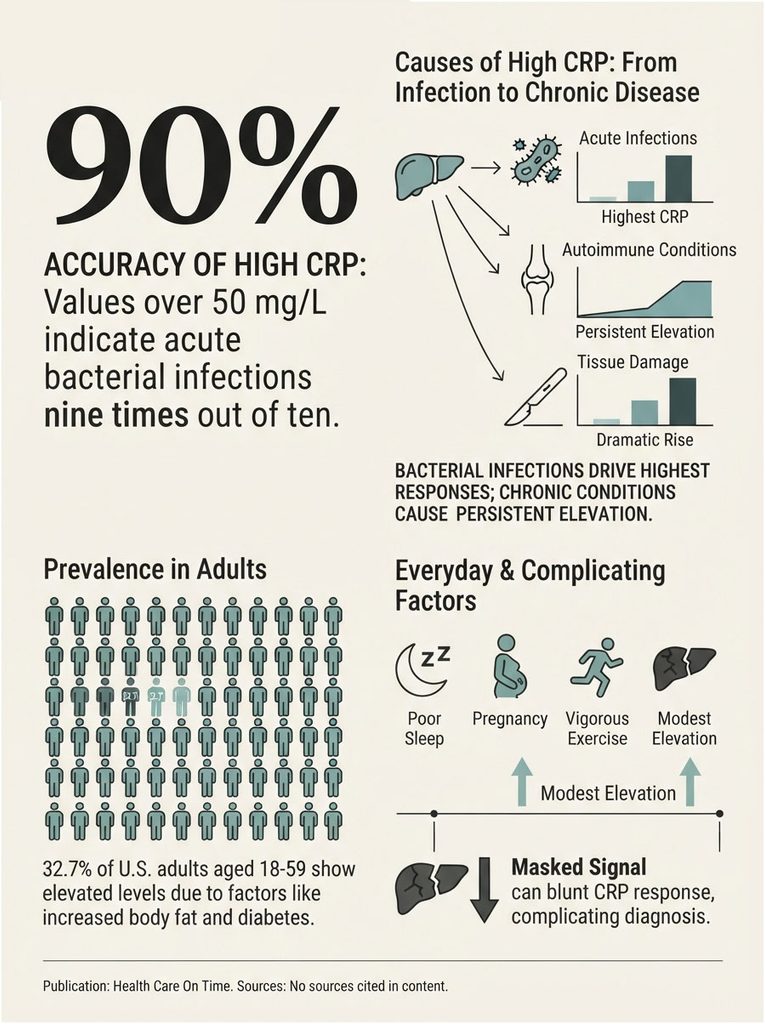
Bacterial infections produce the largest CRP responses of anything in clinical medicine. Pneumonia, urinary tract infections, cellulitis, osteomyelitis, and sepsis routinely drive values into the hundreds.
Viral infections raise CRP too, usually more modestly, often staying under 50 mg/L. The ranges overlap enough that CRP alone cannot reliably separate bacterial from viral illness.
Results above 50 mg/L are associated with acute bacterial infections roughly 90% of the time, according to Cleveland Clinic.
Because CRP falls fast once the trigger clears, serial measurements are genuinely useful for judging whether an antibiotic is working. A value that stops falling on day three deserves attention.
Autoimmune and Chronic Inflammatory Conditions
Rheumatoid arthritis, inflammatory bowel disease, systemic vasculitis, polymyalgia rheumatica, and giant cell arteritis all raise CRP, often persistently.
In rheumatoid arthritis, CRP tracks disease activity closely enough to serve as a monitoring tool during treatment. Rising values frequently precede a clinically obvious flare by days.
Ankylosing spondylitis, psoriatic arthritis, and adult-onset Still’s disease belong in this group as well. So does polymyalgia rheumatica, where a high CRP alongside new shoulder and hip girdle stiffness in an adult over 50 is a recognized pattern.
The Lupus Exception Most Pages Get Wrong
Systemic lupus erythematosus is the notable outlier, and almost no consumer article mentions it.
Autoimmune diseases driven by a Type I interferon gene signature, including SLE, primary Sjögren’s syndrome, and the inflammatory myopathies, often produce only modest CRP elevations even during genuinely active disease.
A normal CRP does not rule out a lupus flare. In cases reviewed by our medical team, the more useful clinical signal runs the other way: when CRP climbs sharply in someone with known lupus, clinicians often suspect a superimposed infection rather than the lupus itself.
Cardiometabolic Drivers
This group explains a very large share of the mildly elevated results seen in otherwise healthy Americans.
Adipose tissue is metabolically active and secretes interleukin-6 directly into circulation. More fat mass means more baseline IL-6 signaling, which means more hepatic CRP production, with no illness involved at all.
An NHANES analysis published in the American Journal of Preventive Cardiology identified the independent predictors of hs-CRP at or above 3 mg/L. Each additional unit of BMI carried an odds ratio of 1.12, female sex 1.57, each decade of age 1.09, and each 1,000 cells/µL rise in white blood cell count 1.21.
Insulin resistance, type 2 diabetes, metabolic syndrome, and current smoking all push CRP upward through overlapping pathways.
Analysis of NHANES 2017 to 2018 data found elevated hs-CRP above 3.0 mg/L in 32.7% of adults aged 18 to 59, climbing to 43.6% among those with both elevated BMI and high body fat percentage.
Injury, Surgery, and Tissue Damage
Tissue necrosis is a powerful CRP stimulus. Any operation produces a predictable rise that peaks around 48 hours and then declines on a reliable curve.
Surgical teams use this pattern deliberately. A CRP that fails to fall on schedule after an operation, or that rises again on day four or five, is a recognized early signal of postoperative infection.
Heart attacks generate a substantial CRP response, and the peak value at roughly 48 hours carries prognostic weight. Fractures, burns, and significant soft tissue trauma follow the same shape.
Cancer
Some malignancies raise CRP, particularly lymphomas, renal cell carcinoma, and advanced solid tumors.
Elevated CRP also shows up in cancer patients from infection, thrombosis, drug reactions, and infarction rather than from the tumor itself, which makes interpretation harder rather than easier.
CRP is not a cancer screening test and performs badly as one. It is far too nonspecific to carry that load. Persistent unexplained elevation combined with weight loss, drenching night sweats, or unexplained fevers is the pattern that prompts investigation, not a number in isolation.
Everyday Factors That Nudge CRP Upward
Several ordinary things raise CRP modestly and deserve checking before anyone assumes something serious is happening.
Periodontal disease and chronic gingivitis rank among the most underappreciated contributors. Poor sleep and insomnia sit close behind.
Pregnancy raises CRP. So do estrogen-containing oral contraceptives and hormone therapy, which surprises many people reviewing their first abnormal result.
Vigorous exercise within 24 hours of a blood draw can elevate the value. Most direct-to-consumer labs now advise skipping hard training the day before an hs-CRP for exactly this reason.
Cleveland Clinic also notes that approximately 1 in 20 healthy people will return a result outside the reference range purely by statistical chance.
When Liver Disease Masks the Signal
One reverse scenario is worth knowing. All circulating CRP is produced by hepatocytes.
In severe liver failure, the CRP response can be blunted even during significant infection. A reassuringly normal number in that setting is not reassuring at all.
Symptoms: Why a High CRP Has None of Its Own
This deserves a direct answer, because search results on this question are unusually evasive.
A high CRP level produces no symptoms. CRP is a circulating protein. It does not cause pain, swelling, fatigue, or fever.
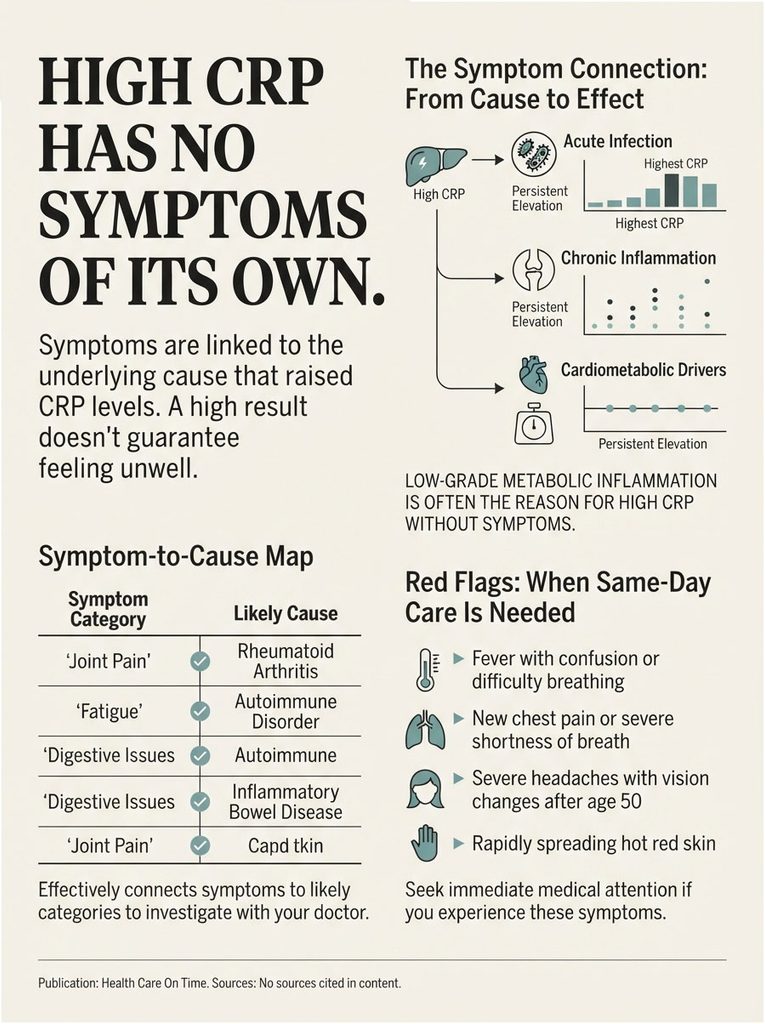
Every symptom people attribute to high CRP actually belongs to whatever raised the CRP. That distinction changes what you should do next, so it is worth holding onto.
The question our medical team hears most often is some version of “my CRP is high but I feel completely fine.” That combination is common, and it usually points toward the low-grade metabolic causes rather than anything acute.
Symptom-to-Cause Map
| Symptoms alongside high CRP | Likely category | Typical CRP (mg/L) | Reasonable next test |
| Fever, chills, fast heart rate, feeling unwell | Acute bacterial infection | 50 to 300+ | CBC with differential, cultures, imaging |
| Cough, chest pain, shortness of breath | Respiratory infection or lung inflammation | 20 to 200 | Chest imaging, CBC, oxygen saturation |
| Joint pain and stiffness lasting over 30 minutes each morning | Inflammatory arthritis | 10 to 60 | ESR, rheumatoid factor, anti-CCP, ANA |
| Abdominal pain, diarrhea, blood in stool, weight loss | Inflammatory bowel disease | 10 to 80 | Fecal calprotectin, CBC, colonoscopy referral |
| New headache, scalp tenderness, jaw pain after age 50 | Giant cell arteritis | 30 to 100+ | ESR, urgent rheumatology referral |
| Shoulder and hip stiffness, worse in the morning, after age 50 | Polymyalgia rheumatica | 20 to 80 | ESR, clinical assessment |
| No symptoms at all | Low-grade metabolic inflammation | 3 to 10 | Repeat hs-CRP in 2 weeks, lipids, A1c |
Table 2. Matching your symptoms to the likely source of inflammation.
Red Flags That Need Same-Day Care
Certain combinations should not wait for a routine follow-up appointment.
Fever with confusion, a racing heart, low blood pressure, or difficulty breathing can indicate sepsis, and CRP is often extremely high in that setting.
New chest pain, severe shortness of breath, a new severe headache with vision changes after age 50, or a rapidly spreading area of hot red skin all warrant emergency evaluation regardless of what any lab value says.
What a High CRP Says About Your Heart Risk
This is where the evidence has shifted most in the past two years, and where consumer content lags furthest behind.
| Study or source | Population and year | Key finding | Source |
| Ridker et al., Women’s Health Study | 27,939 healthy US women, 30-year follow-up, published 2024 | Adjusted HR 1.70 (95% CI 1.52 to 1.90) for top vs bottom hs-CRP quintile, exceeding LDL-C at 1.36 | NEJM 2024;391:2087 |
| Same cohort, three biomarkers combined | 3,662 first major CV events over 30 years | HR 2.63 when hs-CRP, LDL-C, and Lp(a) all sat in quintile 5 | ACC Journal Scan |
| 2025 ACC Scientific Statement | Consensus review, published September 2025 | Residual inflammation by hs-CRP predicts recurrent events even in statin-treated patients; cutoff above 2 mg/L in established CVD | JACC 2025 |
| ZEUS trial (ziltivekimab) | 6,376 patients with ASCVD, CKD, hs-CRP 2 mg/L or above; topline 2026 | Drug lowered IL-6 and hs-CRP as designed, yet HR for MACE was 0.99 (95% CI 0.88 to 1.11) | TCTMD, 2026 |
| SELECT hs-CRP analysis | 17,604 patients with overweight or obesity and ASCVD | Semaglutide cut hs-CRP 38% vs placebo, with reductions appearing before meaningful weight loss | Circulation 2026 |
| NHANES population estimate | General US adult population | Roughly 52% of US adults carry hs-CRP at or above 2 mg/L | PMC9792413 |
Table 3. Recent US evidence on CRP and cardiovascular outcomes. Full citations appear in the References section.
The 30-Year Evidence in American Women
The Women’s Health Study followed 27,939 initially healthy US women for three decades, one of the longest biomarker follow-ups ever completed.
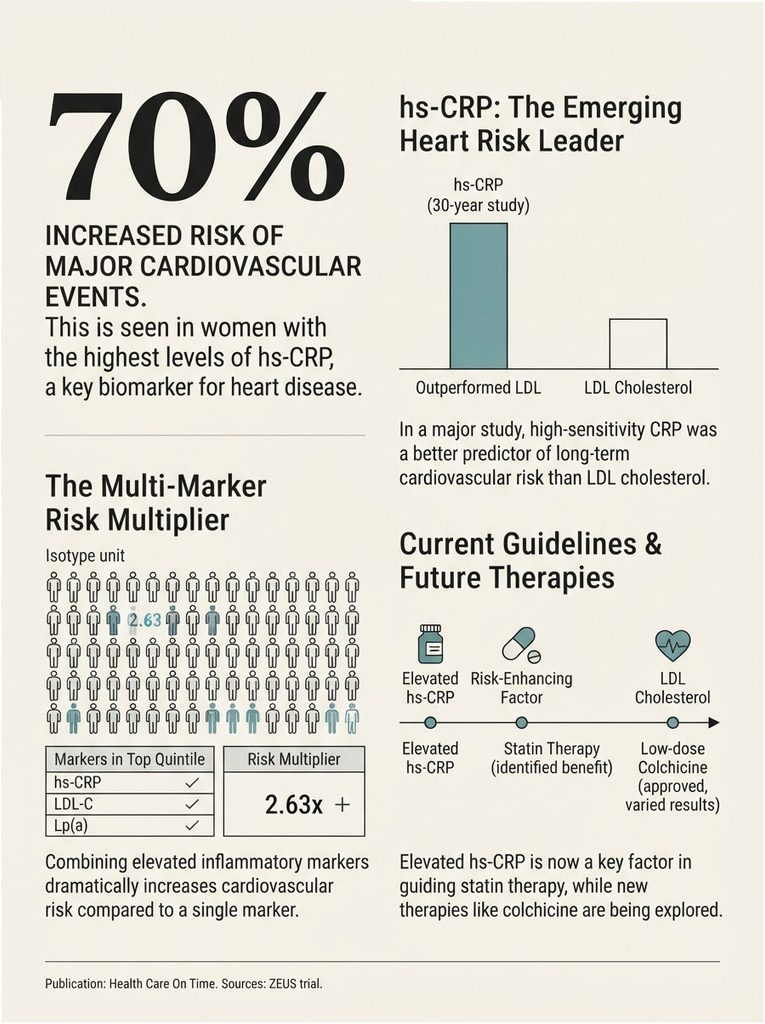
Baseline hs-CRP predicted major cardiovascular events across all 30 years. Women in the highest quintile carried a 70% higher adjusted risk than those in the lowest.
hs-CRP outperformed LDL cholesterol in that head-to-head comparison. Each biomarker contributed independent information, and women with all three markers in the top quintile carried 2.63 times the risk of women with none.
Lead author Paul Ridker of Brigham and Women’s Hospital argued at the European Society of Cardiology Congress that these results support routine screening of all three markers.
What the ZEUS Result Changed
Then came a genuine complication, and it is absent from every consumer page currently ranking on this topic.
ZEUS tested whether directly suppressing the inflammatory pathway would reduce cardiovascular events. It enrolled 6,376 patients with atherosclerotic disease, chronic kidney disease, and hs-CRP at or above 2 mg/L, with a median baseline hs-CRP of 4.5 mg/L.
Ziltivekimab, an interleukin-6 inhibitor, lowered both IL-6 and hs-CRP exactly as intended. The hazard ratio for cardiovascular death, heart attack, or stroke came back at 0.99, sitting essentially on the line of no effect. Serious infections occurred more often in the treatment arm.
The lesson is precise and worth stating carefully. A marker that predicts risk is not automatically a target worth attacking directly.
High CRP still identifies people at elevated risk. Pushing the number down with an IL-6 blocker did not, in this population, translate into fewer events. Prediction and causation are different things.
Where hs-CRP Sits in US Prevention Guidance
Current US primary prevention guidance treats persistently elevated inflammatory markers as a risk-enhancing factor, which can tip a borderline statin decision toward treatment.
Statins lower CRP substantially alongside LDL. That dual effect explains why elevated hs-CRP with normal cholesterol still identifies people who benefit from statin therapy.
Low-dose colchicine at 0.5 mg daily received FDA approval in June 2023 under the brand name Lodoco, the first anti-inflammatory drug cleared to reduce cardiovascular events. The LoDoCo2 trial reported a primary endpoint rate of 6.8% versus 9.6% on placebo over a median 28.6 months.
Later trials have been less consistent. CLEAR SYNERGY returned a neutral primary result. The inflammation story in cardiology is real, and it is no longer simple.
What Doctors Do After a High CRP
The Two-Week Repeat Rule
For cardiovascular purposes, a single hs-CRP is close to worthless.
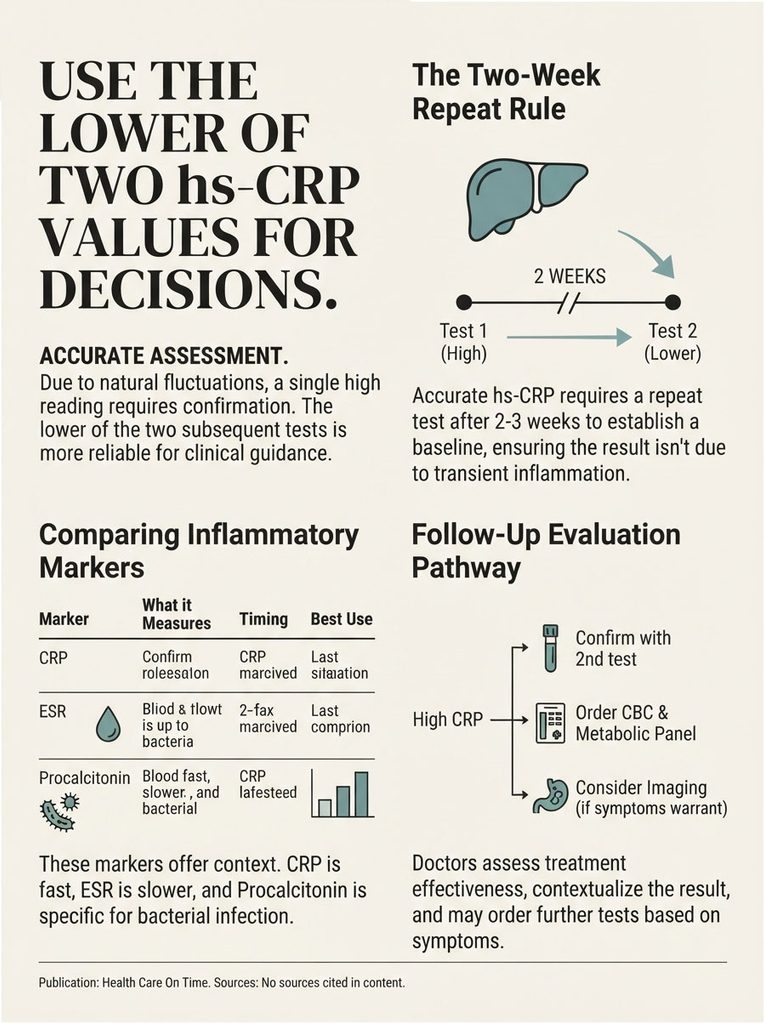
Because the half-life is only 19 hours and any minor illness can raise the value a hundred-fold, hs-CRP should be measured at least twice, two weeks apart, while you are metabolically stable and free of acute illness.
The lower of the two values, or their average, is what clinicians work from. Across the reports our diagnostic partners handle, single-draw hs-CRP results are the single most frequent cause of avoidable alarm.
Tests Ordered Alongside CRP
CRP rarely settles anything on its own. A typical follow-up workup includes several of the following.
A complete blood count with differential shows whether white cells are elevated and which population is driving it. An erythrocyte sedimentation rate offers a slower-moving second view of the same process.
A comprehensive metabolic panel checks liver and kidney function. Ferritin adds a further acute phase marker. Urinalysis screens for occult infection.
If joint or connective tissue disease is suspected, ANA, rheumatoid factor, and anti-CCP antibodies get added. Imaging follows whatever the symptoms point toward.
CRP vs. ESR vs. Procalcitonin
| Feature | CRP | ESR | Procalcitonin |
| What it measures | Liver-produced acute phase protein | Rate red cells settle, driven by fibrinogen | Precursor peptide released in bacterial infection |
| Time to rise | 4 to 6 hours | 24 to 48 hours | 3 to 6 hours |
| Time to fall | Hours to 2 days | 1 to 2 weeks | 1 to 2 days |
| Best use | Tracking active inflammation day to day | Chronic conditions, giant cell arteritis, polymyalgia rheumatica | Separating bacterial from viral infection |
| Main weakness | Nonspecific | Slow, affected by anemia and age | Higher cost, limited outpatient availability |
Table 4. How the three main inflammatory markers compare.
CRP moves fast in both directions, which makes it the better tool for judging whether treatment is working. ESR lags behind and is affected by anemia, age, and pregnancy, yet retains real value in specific rheumatologic settings.
Procalcitonin is considerably more selective for bacterial infection and gets used where that distinction directly changes antibiotic decisions.
How to Lower a High CRP Level
The framing matters here. The number is not the disease. Treat the driver and the number follows.
Lifestyle Levers With Real Numbers
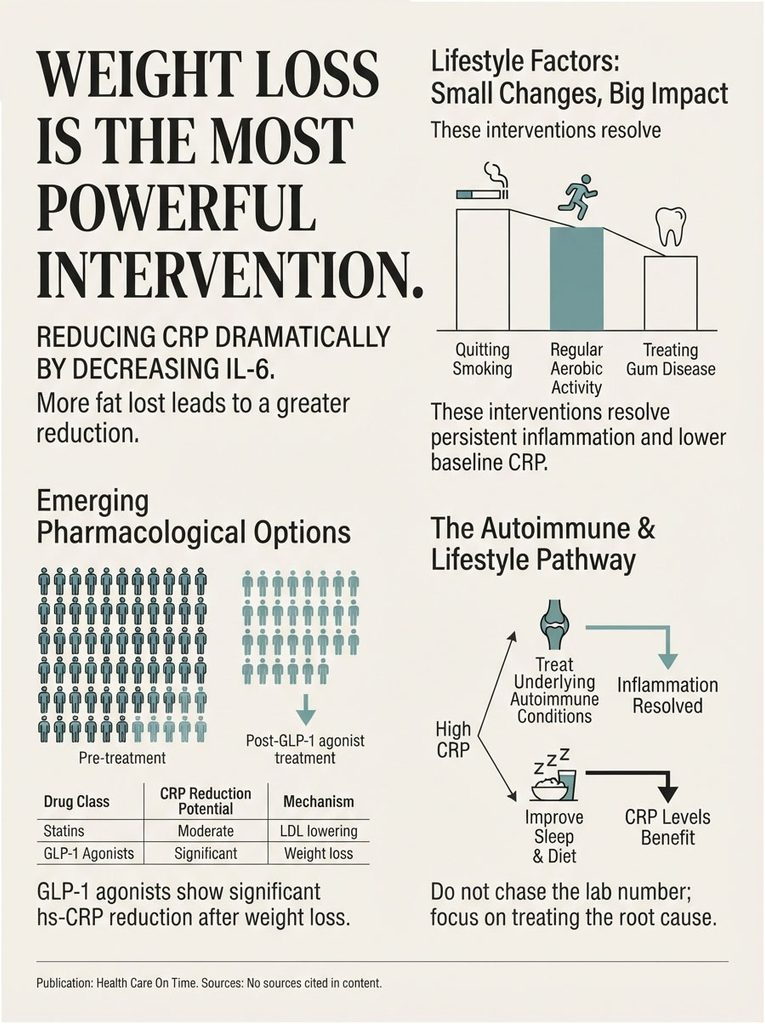
Weight loss is the most reliable lever for low-grade elevation, because adipose tissue is a direct IL-6 source. Even modest loss reduces CRP, and the effect scales with the amount lost.
Quitting smoking lowers CRP over months. Current smoking shows up as an independent predictor of elevated levels in every large population dataset.
Regular aerobic activity reduces baseline CRP across weeks to months, though a single hard session temporarily raises it. Train consistently, and skip the workout the day before a blood draw.
Treating gum disease is badly underrated. Periodontitis maintains a persistent inflammatory load that shows up plainly in blood work and resolves with dental care.
Improving sleep duration and quality helps. So does shifting toward a dietary pattern built on whole foods and fiber with fewer sugar-sweetened beverages.
Medications That Lower CRP
Statins reduce CRP alongside LDL cholesterol, part of why they benefit people with elevated inflammation and unremarkable lipids.
GLP-1 receptor agonists produce substantial reductions. In the SELECT trial, semaglutide cut hs-CRP by 38% versus placebo, with roughly 12% reduction visible by week 4 and 20% by week 8, before major weight loss had occurred.
Low-dose colchicine holds FDA approval for cardiovascular event reduction in established atherosclerotic disease.
Disease-specific treatments do the heavy lifting when an autoimmune condition is the cause. Methotrexate, biologics, and targeted therapies lower CRP by controlling the underlying disease.
None of these should be started to chase a lab number. They are prescribed for a condition, and the CRP responds as a consequence.
What the Evidence Does Not Support
Treating CRP as a target in its own right has now failed in a large, well-designed trial. ZEUS lowered the marker convincingly and changed nothing about outcomes.
Most anti-inflammatory supplement claims rest on small studies with soft endpoints. Turmeric, fish oil, and similar products show modest and inconsistent effects on CRP, and none has demonstrated event reduction.
Money spent on repeated self-ordered CRP panels while blood pressure, A1c, and lipids go unaddressed is money pointed in the wrong direction.
Getting Tested in the US: Codes, Cost, and Prep
CPT 86140 vs 86141
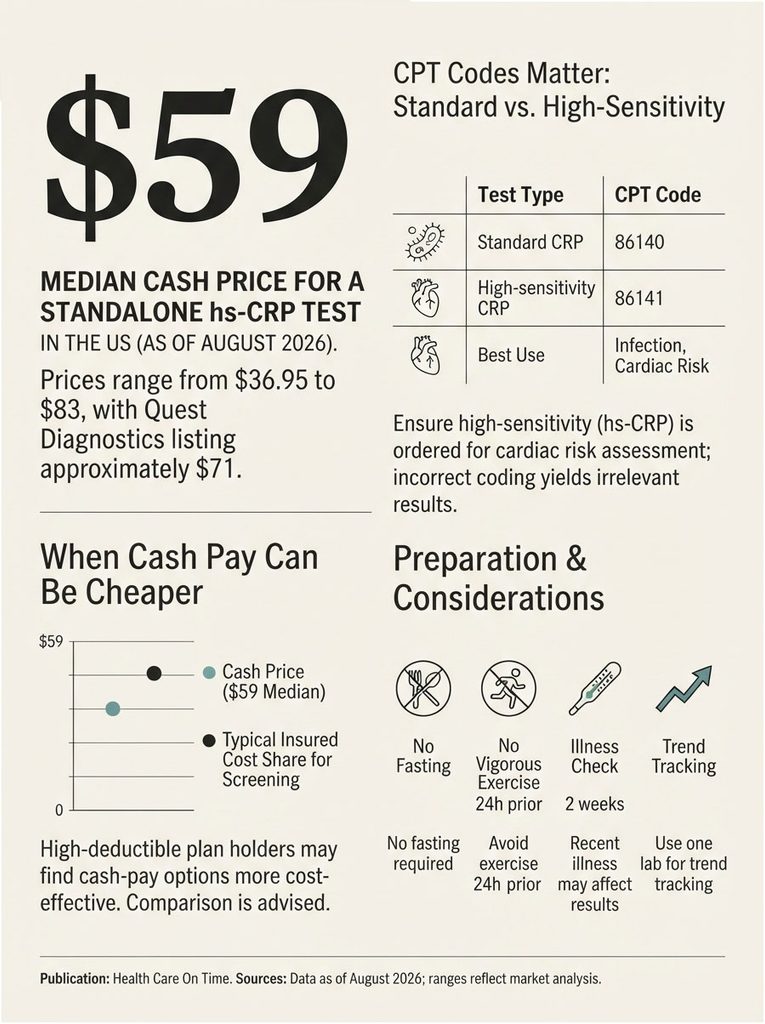
Standard CRP bills under CPT 86140. High-sensitivity CRP bills under CPT 86141.
Ordering the wrong code is a common source of a technically accurate but clinically useless result. If the goal is cardiac risk, confirm the order reads high-sensitivity before the draw.
What It Costs
As of August 2026, advertised cash prices for a standalone hs-CRP at direct-to-consumer labs ranged from about $36.95 to $83, with a median near $59. Quest Diagnostics listed roughly $71 for a standalone order.
When a physician orders CRP for a medical reason, insurance usually covers it, though many plans limit frequency. Screening hs-CRP in asymptomatic adults is frequently not covered.
For people on high-deductible plans, cash-pay sometimes costs less than the insured share. Comparing before booking is worth the five minutes.
How to Prepare
No fasting is required for either version of the test.
Avoid vigorous exercise for 24 hours beforehand. Postpone an hs-CRP if you have been ill within the past two weeks, since the result will reflect the illness rather than your baseline.
If you are tracking a trend, use the same laboratory each time. Assay platforms differ slightly, and consistency makes the comparison meaningful.
Your Next Step, by Scenario
| Your situation | Most likely meaning | Recommended action | Timeframe |
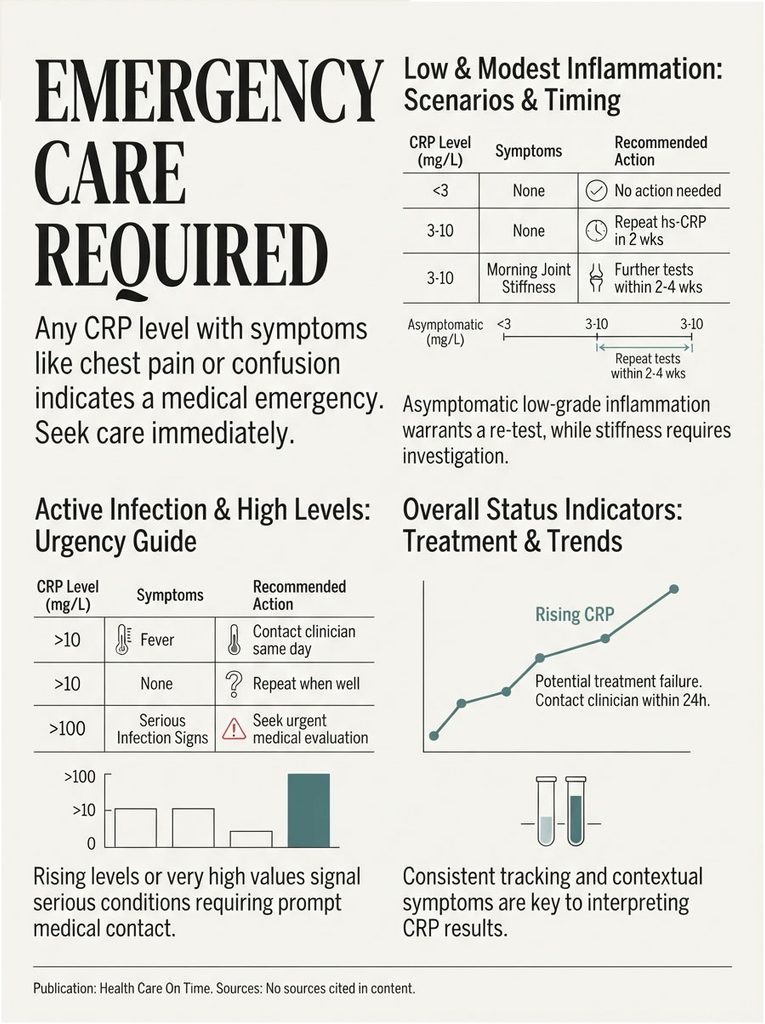
| Under 3 mg/L, feeling well | Normal to average range | No action needed | Routine care |
| 3 to 10 mg/L, no symptoms | Low-grade inflammation, often metabolic | Repeat hs-CRP; review weight, smoking, dental health, A1c, lipids | Repeat in 2 weeks |
| 3 to 10 mg/L with morning joint stiffness over 30 minutes | Possible early inflammatory arthritis | Ask about ESR, RF, anti-CCP, ANA | Within 2 to 4 weeks |
| Over 10 mg/L with fever or feeling unwell | Active infection likely | Contact your clinician | Same day or next day |
| Over 10 mg/L with no symptoms at all | Unexplained; may be timing or an occult process | Repeat when well, investigate if still high | Repeat in 2 weeks |
| Over 100 mg/L | Serious bacterial infection until proven otherwise | Seek urgent medical evaluation | Immediately |
| Rising across serial tests during treatment | Treatment may be failing, or a complication has developed | Contact the treating clinician | Within 24 hours |
| Any level with chest pain, confusion, breathlessness, or spreading skin redness | Potential emergency regardless of the number | Emergency care | Now |
Table 5. Scenario-based action guide.
Frequently Asked Questions
What is the most common cause of a high CRP level?
For dramatic elevations, acute bacterial infection leads. For the mild 3 to 10 mg/L elevations most people actually see, obesity and metabolic inflammation account for the largest share, followed by smoking and untreated gum disease.
Is a CRP of 5 mg/L something to worry about?
By itself, usually not. A value of 5 mg/L falls in the low-grade band and is common among US adults. It matters only if it persists across two readings two weeks apart, or if symptoms accompany it. Confirm your unit first.
What is considered a dangerously high CRP level?
Values above 100 mg/L generally indicate serious bacterial infection or extensive tissue damage and warrant urgent evaluation. Anything above 50 mg/L links to acute bacterial infection roughly 90% of the time. How sick you feel matters more than the number itself.
Can high CRP mean cancer?
Some cancers raise CRP, particularly lymphoma, renal cell carcinoma, and advanced solid tumors. CRP is far too nonspecific to screen for cancer and should never be used that way. Persistent unexplained elevation with weight loss or night sweats prompts investigation.
How long does CRP stay elevated after an infection?
With a 19-hour half-life, CRP drops quickly once the trigger clears. Most people see values return toward baseline within 3 to 7 days after an infection resolves. If yours stays high past two weeks, something is still driving production.
Can stress or anxiety raise CRP?
Chronic psychological stress associates with modestly higher CRP, likely through disrupted sleep, cortisol signaling, and behavior change. Short-term acute anxiety does not meaningfully move the number. The effect is small next to obesity or smoking.
Why is my CRP high when I feel completely fine?
This pattern is common and usually reflects low-grade metabolic inflammation rather than illness. Body composition, smoking, dental health, sleep, and age all raise baseline CRP silently. A repeat test with lipids and A1c is the sensible next step.
Does exercise raise CRP levels?
A single strenuous session raises CRP for 24 to 48 hours through muscle tissue stress. Regular aerobic training lowers baseline CRP over weeks. Skip hard workouts the day before a blood draw to avoid a falsely elevated reading.
Can you have inflammation with a normal CRP?
Yes. Active lupus, Sjögren’s syndrome, and inflammatory myopathies often show only modest elevation despite real disease activity. Severe liver failure blunts the response, since hepatocytes make all circulating CRP. A normal result never rules inflammation out.
Does a high CRP mean I will have a heart attack?
No. Elevated hs-CRP raises statistical risk across a population; it does not predict an individual event. In the Women’s Health Study, the highest quintile carried 70% higher relative risk over 30 years, and most of those women stayed event-free.
How quickly can lifestyle changes lower CRP?
Smoking cessation and dental treatment show measurable effects within weeks to a few months. Weight loss lowers CRP proportionally as fat mass falls. Exercise training typically shows benefit over 8 to 12 weeks. Retesting before 8 weeks rarely tells you much.
Should healthy people get an hs-CRP test?
Universal screening is not currently standard practice. The test adds most value for people at intermediate calculated cardiovascular risk, where the result could change a treatment decision. Some cardiologists now argue for broader screening alongside LDL and Lp(a).
Medical Disclaimer: This article provides general information and does not replace advice from a licensed clinician. CRP results must be interpreted alongside your symptoms, history, physical examination, and other laboratory findings. Never start, stop, or adjust any medication based on a lab value alone. If you have symptoms suggesting serious infection, chest pain, breathing difficulty, or confusion, seek emergency care immediately.
References
- Ridker PM, Moorthy MV, Cook NR, et al. Inflammation, Cholesterol, Lipoprotein(a), and 30-Year Cardiovascular Outcomes in Women. N Engl J Med. 2024;391(22):2087-2097. https://www.nejm.org/doi/abs/10.1056/NEJMoa2405182
- Mensah GA, Arnold N, Prabhu SD, Ridker PM, Welty FK. Inflammation and Cardiovascular Disease: 2025 ACC Scientific Statement. J Am Coll Cardiol. https://www.jacc.org/doi/10.1016/j.jacc.2025.08.047
- Pepys MB, Hirschfield GM. C-reactive protein: a critical update. J Clin Invest. 2003;111(12):1805-1812. https://pmc.ncbi.nlm.nih.gov/articles/PMC161431/
- Cleveland Clinic. C-Reactive Protein (CRP) Test: What It Is, Purpose and Results. https://my.clevelandclinic.org/health/diagnostics/23056-c-reactive-protein-crp-test
- MedlinePlus, National Library of Medicine. C-Reactive Protein (CRP) Test. https://medlineplus.gov/lab-tests/c-reactive-protein-crp-test/
- Nehring SM, Goyal A, Patel BC. C Reactive Protein. StatPearls, National Center for Biotechnology Information. https://www.ncbi.nlm.nih.gov/books/NBK441843/
- TCTMD. ZEUS Trial: Ziltivekimab Fails to Reduce MACE in ASCVD Patients. https://www.tctmd.com/news/zeus-trial-ziltivekimab-fails-reduce-mace-ascvd-patients
- Ridker PM, Baeres FMM, Hveplund A, et al. Rationale, Design, and Baseline Clinical Characteristics of the Ziltivekimab Cardiovascular Outcomes Trial. JAMA Cardiol. 2026;11(1):89-97. https://pubmed.ncbi.nlm.nih.gov/41369941/
- Plutzky J, et al. Effect of Semaglutide on the Inflammatory Biomarker High-Sensitivity CRP in SELECT: A Prespecified Secondary Analysis. Circulation. 2026;154. https://www.ahajournals.org/doi/10.1161/CIRCULATIONAHA.125.074482
- Demographic, behavioral, dietary, and clinical predictors of high-sensitivity C-reactive protein: NHANES. Am J Prev Cardiol. https://www.sciencedirect.com/science/article/pii/S2666602222001136
- More evidence of the health risks of normal weight obesity: the association with systemic inflammation. PMC12670252. https://www.ncbi.nlm.nih.gov/pmc/articles/PMC12670252/
- High-sensitivity C-reactive protein elevation in patients with prior myocardial infarction in the United States. PMC9792413. https://pmc.ncbi.nlm.nih.gov/articles/PMC9792413/
- Harvard Health Publishing. C-reactive protein: Should healthy people be tested for it? https://www.health.harvard.edu/preventive-care/c-reactive-protein-should-healthy-people-be-tested-for-it
- Low-dose colchicine for management of coronary artery disease. Cleve Clin J Med. 2025;92(10):609. https://www.ccjm.org/content/92/10/609
- The Complex Role of C-Reactive Protein in Systemic Lupus Erythematosus. PMC8708507. https://www.ncbi.nlm.nih.gov/pmc/articles/PMC8708507/